




The National Testing Agency (NTA) conducted the CUET PG 2026 Art & Aesthetics (HUQP04) examination on March 24, 2026, during Shift 2 from 12:30 PM to 02:00 PM.
Students who appeared for the exam reported that the overall difficulty level of the paper was moderate. CUET PG 2026 Art & Aesthetics Question Paper with Solutions PDF is available here for download. The marking scheme is +4 for correct answers and -1 for wrong answers, totaling 300 marks.
CUET PG 2026 Art & Aesthetics Question Paper with Solutions PDF
| CUET PG 2026 Art & Aesthetics Question Paper with Answer Key | Download PDF | Check Solutions |
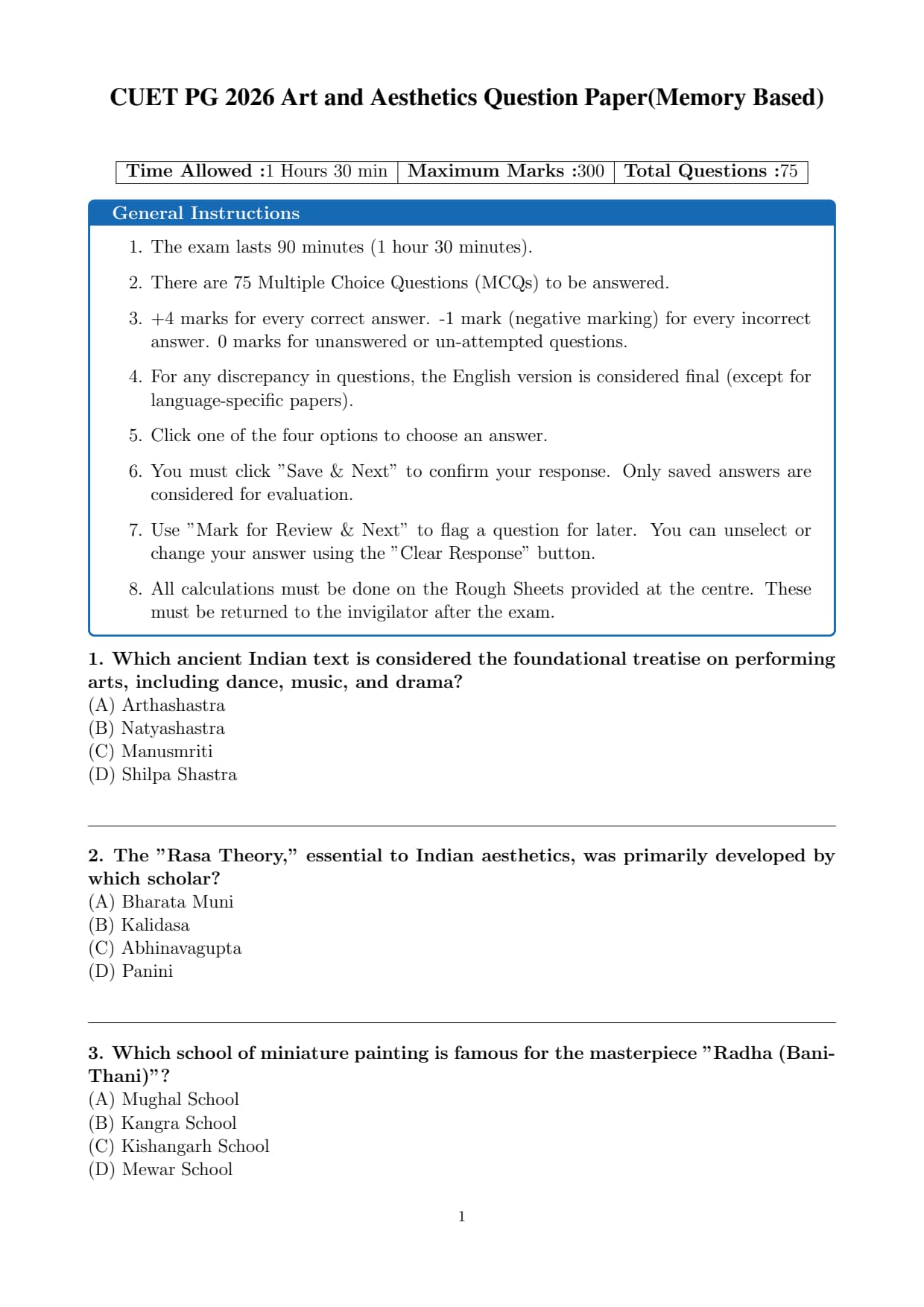
Which ancient Indian text is considered the foundational treatise on performing arts, including dance, music, and drama?
The "Rasa Theory," essential to Indian aesthetics, was primarily developed by which scholar?
Which school of miniature painting is famous for the masterpiece "Radha (Bani-Thani)"?
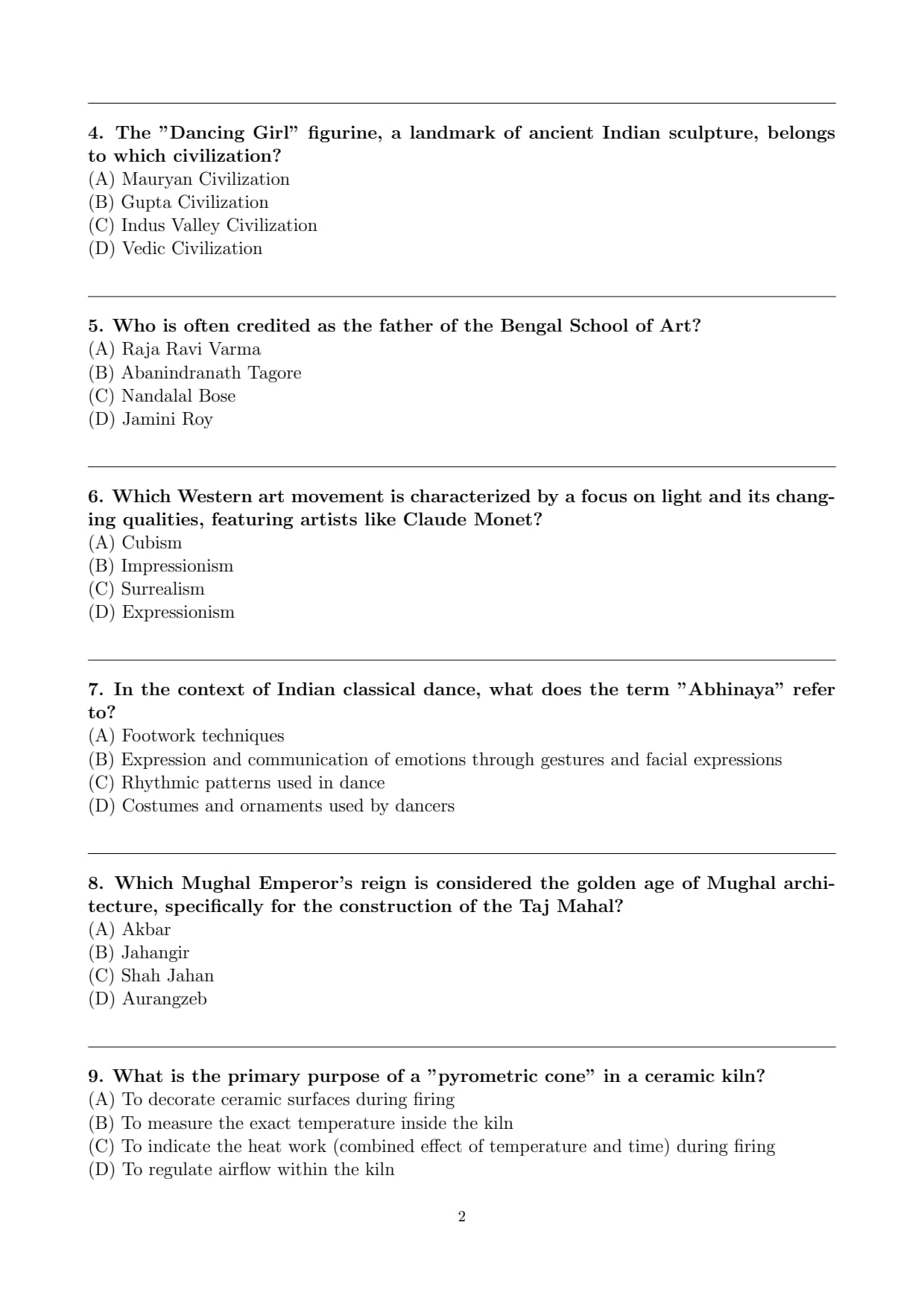
The "Dancing Girl" figurine, a landmark of ancient Indian sculpture, belongs to which civilization?
Who is often credited as the father of the Bengal School of Art?
Which Western art movement is characterized by a focus on light and its changing qualities, featuring artists like Claude Monet?
In the context of Indian classical dance, what does the term "Abhinaya" refer to?
Which Mughal Emperor's reign is considered the golden age of Mughal architecture, specifically for the construction of the Taj Mahal?
What is the primary purpose of a "pyrometric cone" in a ceramic kiln?
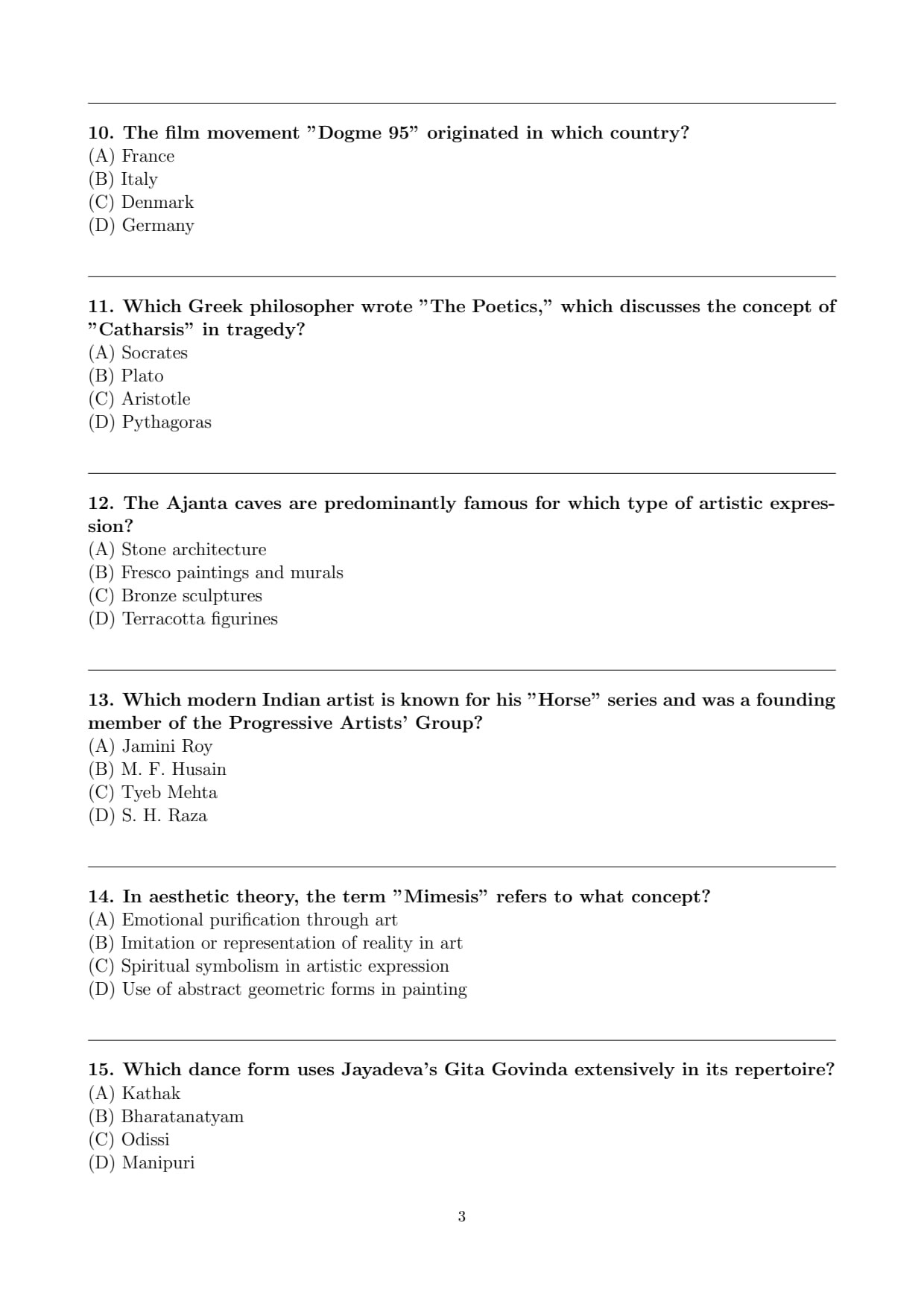
The film movement "Dogme 95" originated in which country?
Which Greek philosopher wrote "The Poetics," which discusses the concept of "Catharsis" in tragedy?
The Ajanta caves are predominantly famous for which type of artistic expression?
Which modern Indian artist is known for his "Horse" series and was a founding member of the Progressive Artists' Group?
In aesthetic theory, the term "Mimesis" refers to what concept?
Which dance form uses Jayadeva’s Gita Govinda extensively in its repertoire?




Comments