




The National Testing Agency (NTA) conducted the CUET PG 2026 Environmental Sciences (SCQP11) examination on March 24, 2026, during Shift 1 from 09:00 AM to 10:30 AM.
Students who appeared for the exam reported that the overall difficulty level of the paper was moderate. CUET PG 2026 Environmental Sciences Question Paper with Solutions PDF is available here for download. The marking scheme is +4 for correct answers and -1 for wrong answers, totaling 300 marks.
CUET PG 2026 Environmental Sciences Question Paper with Solutions PDF
| CUET PG 2026 Environmental Sciences Question Paper with Answer Key | Download PDF | Check Solutions |
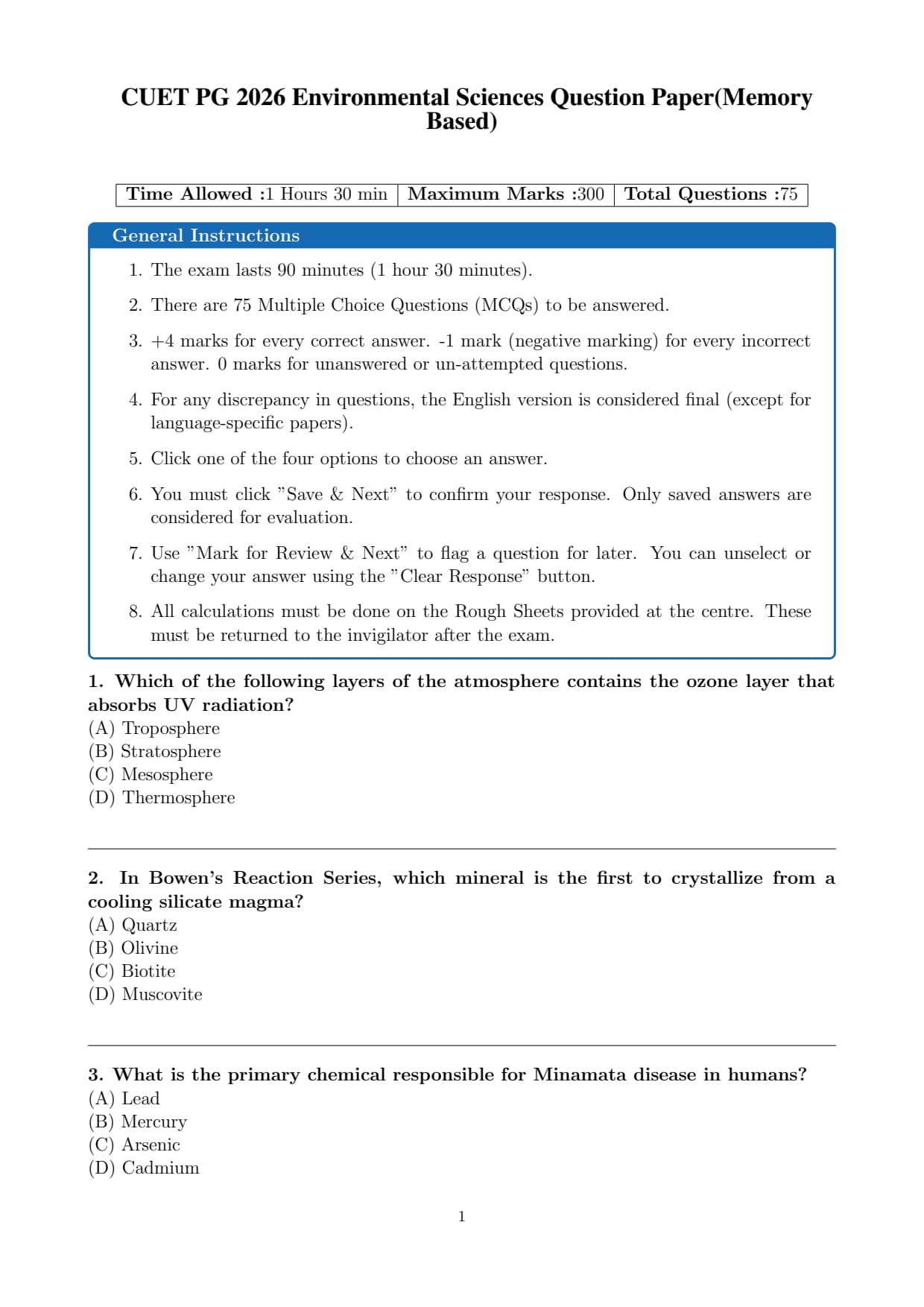
Which of the following layers of the atmosphere contains the ozone layer that absorbs UV radiation?
In Bowen’s Reaction Series, which mineral is the first to crystallize from a cooling silicate magma?
What is the primary chemical responsible for Minamata disease in humans?
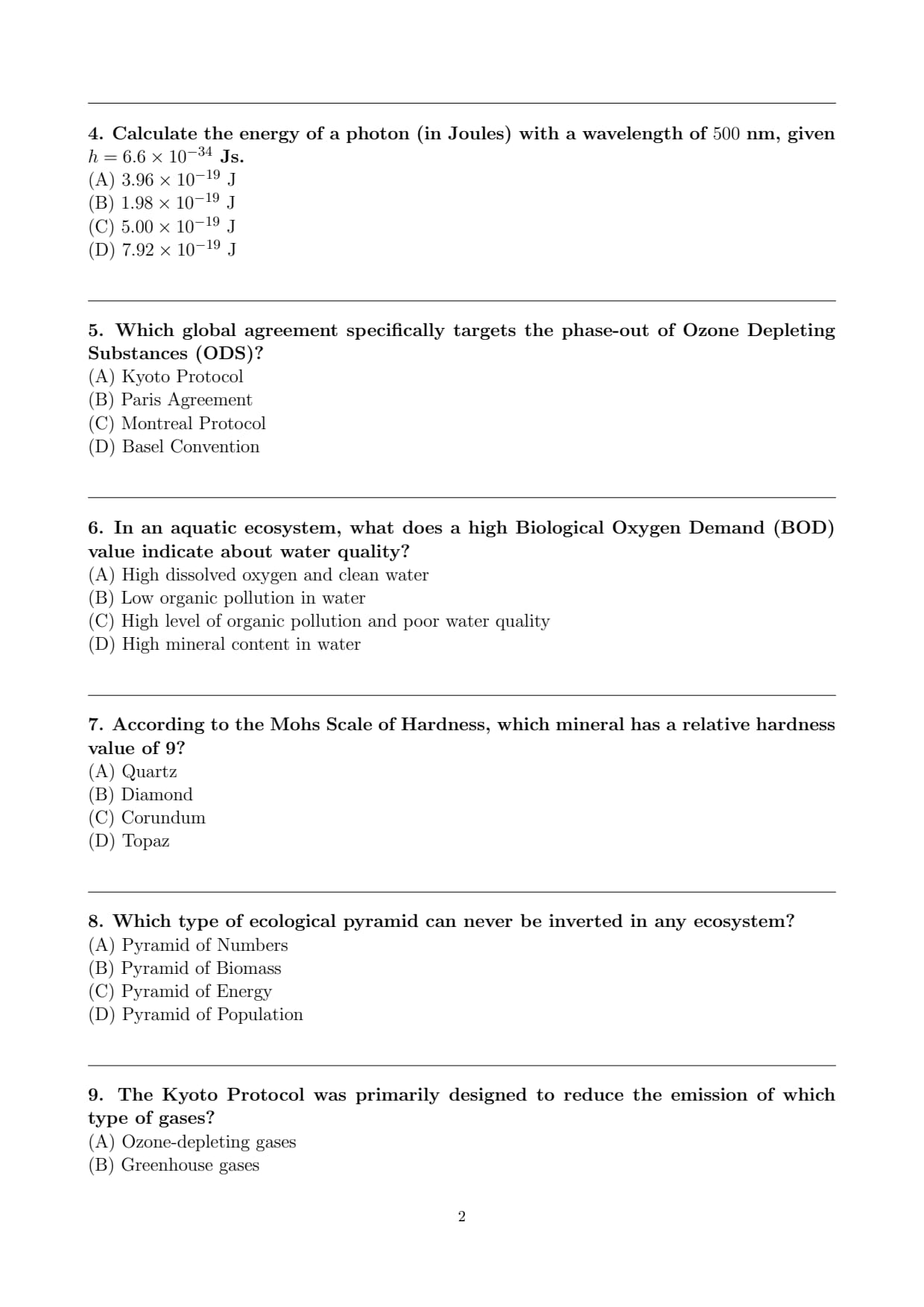
Calculate the energy of a photon (in Joules) with a wavelength of \(500\ nm\), given \(h = 6.6 \times 10^{-34}\ Js\).
Which global agreement specifically targets the phase-out of Ozone Depleting Substances (ODS)?
In an aquatic ecosystem, what does a high Biological Oxygen Demand (BOD) value indicate about water quality?
According to the Mohs Scale of Hardness, which mineral has a relative hardness value of 9?
Which type of ecological pyramid can never be inverted in any ecosystem?
The Kyoto Protocol was primarily designed to reduce the emission of which type of gases?
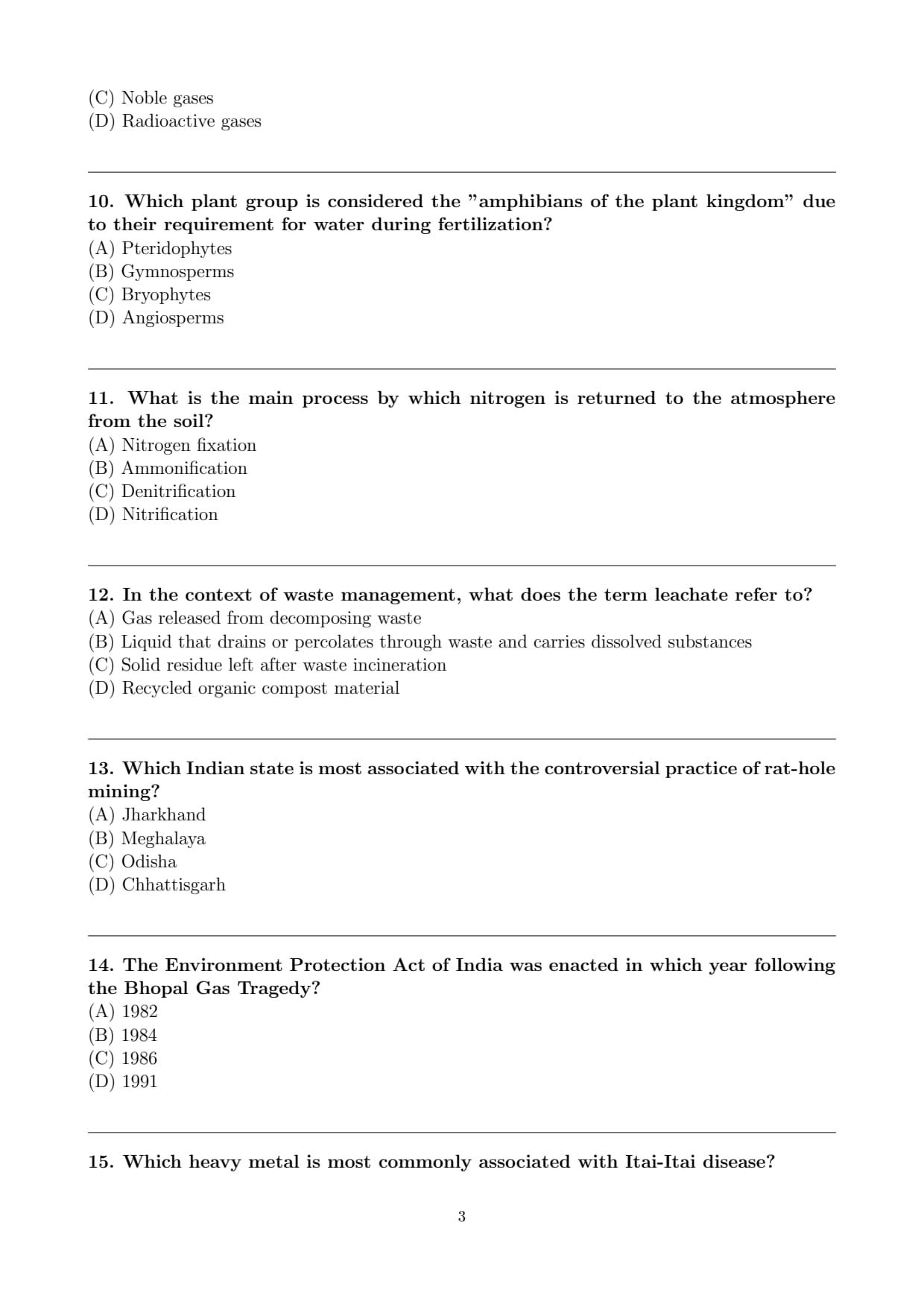
Which plant group is considered the "amphibians of the plant kingdom" due to their requirement for water during fertilization?
What is the main process by which nitrogen is returned to the atmosphere from the soil?
In the context of waste management, what does the term leachate refer to?
Which Indian state is most associated with the controversial practice of rat-hole mining?
The Environment Protection Act of India was enacted in which year following the Bhopal Gas Tragedy?




Comments