AP PGECET 2024 Food Technology Question Paper is available for download here. Sri Venkateswara University, Tirupati on behalf of APSCHE conducted AP PGECET 2024 Food Technology on May 30 in Shift 2 from 2.30 PM to 4.30 PM. AP PGECET Question Paper 2024 consists of 120 MCQ-based questions in total carrying 1 mark each to be attempted in the duration of 2 hours.
AP PGECET 2024 Food Technology Question Paper with Answer Key PDF
Question 1:
Zeaxanthin is a
- (1) Bacteriochlorophyll
- (2) Carotenoid
- (3) Steroid
- (4) Protein
Question 2:
The disease pellagra is due to a deficiency of
- (1) Vitamin C
- (2) Biotin
- (3) Folic acid
- (4) Niacin
Question 3:
Enantiomers are
- (1) Stereoisomers that are non-superimposable mirror images
- (2) Optical isomers that are superimposable mirror images
- (3) Stereoisomers that are non-superimposable and non-mirror images
- (4) Isomers which differ in their configuration around a single carbon atom
Question 4:
Rhombic plate like osazones are formed by
- (1) Glucose
- (2) Galactose
- (3) Maltose
- (4) Sucrose
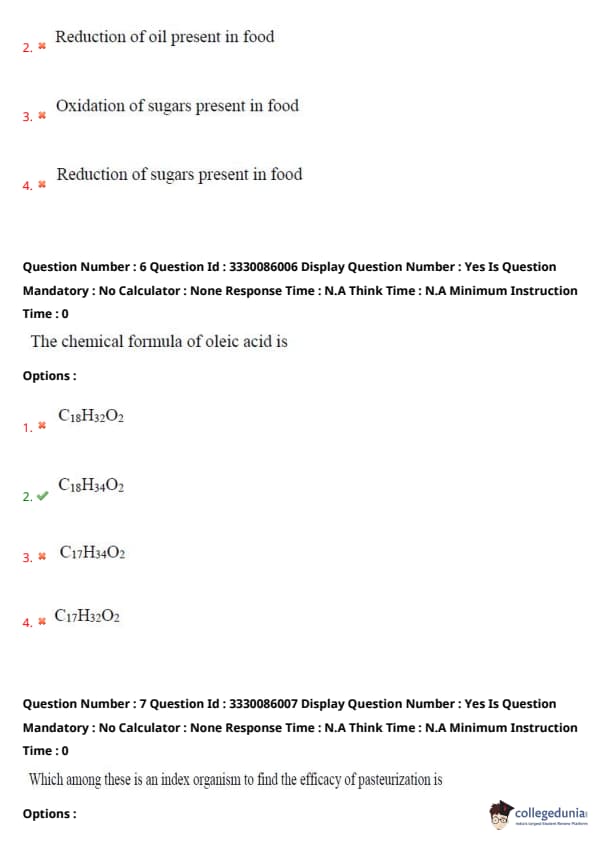
Question 5:
Which of the following is true about the rancidity?
- (1) Oxidation of oil present in food
- (2) Reduction of oil present in food
- (3) Oxidation of sugars present in food
- (4) Reduction of sugars present in food
Question 6:
The chemical formula of oleic acid is
- (1) C\(_{18}\)H\(_{32}\)O\(_2\)
- (2) C\(_{18}\)H\(_{34}\)O\(_2\)
- (3) C\(_{17}\)H\(_{34}\)O\(_2\)
- (4) C\(_{17}\)H\(_{32}\)O\(_2\)
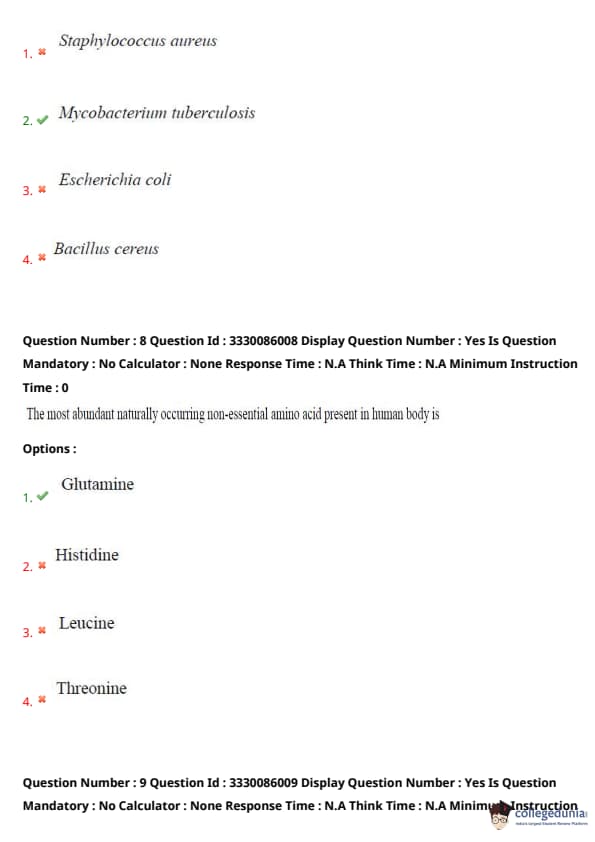
Question 7:
Which among these is an index organism to find the efficacy of pasteurization is
- (1) Staphylococcus aureus
- (2) Mycobacterium tuberculosis
- (3) Escherichia coli
- (4) Bacillus cereus
Question 8:
The most abundant naturally occurring non-essential amino acid present in human body is
- (1) Glutamine
- (2) Histidine
- (3) Leucine
- (4) Threonine
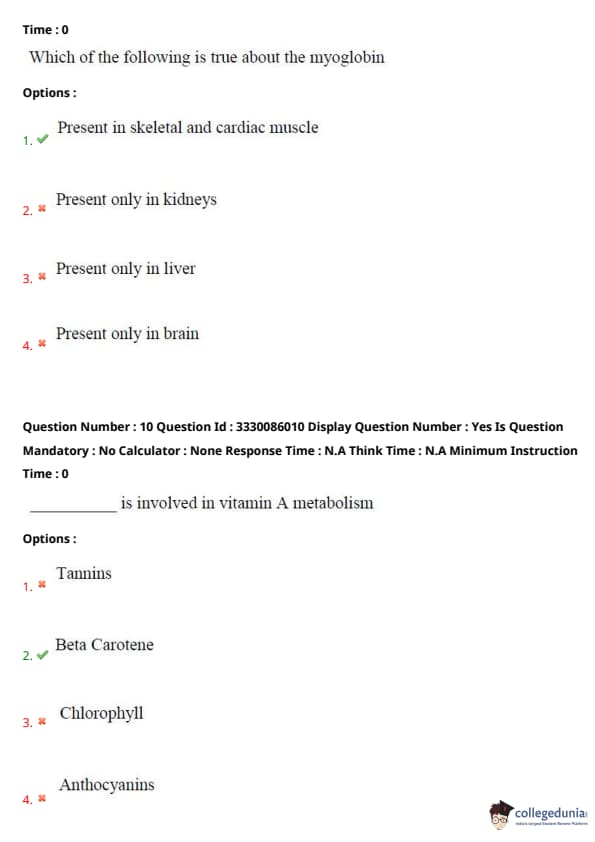
Question 9:
Which of the following is true about the myoglobin?
- (1) Present in skeletal and cardiac muscle
- (2) Present only in kidneys
- (3) Present only in liver
- (4) Present only in brain
Question 10:
...... is involved in vitamin A metabolism
- (1) Tannins
- (2) Beta Carotene
- (3) Chlorophyll
- (4) Anthocyanins
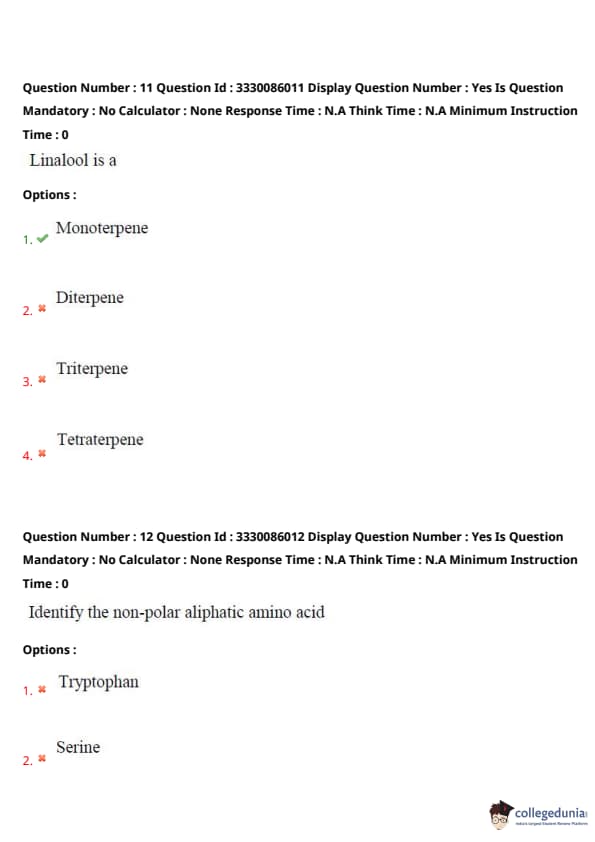
Question 11:
Linalool is a
- (1) Monoterpene
- (2) Diterpene
- (3) Triterpene
- (4) Tetraterpene
Question 12:
Identify the non-polar aliphatic amino acid
- (1) Tryptophan
- (2) Serine
- (3) Histidine
- (4) Valine
Question 13:
Cellulose is a polymer of
- (1) Branched chain of glucose monomers joined by \(\beta\) 1-4 glycosidic linkages
- (2) Unbranched chain of glucose monomers joined by \(\beta\) 1-4 glycosidic linkages
- (3) Branched chain of glucose monomers joined by \(\alpha\) 1-4 glycosidic linkages
- (4) Unbranched chain of glucose monomers joined by \(\alpha\) 1-4 glycosidic linkages
Question 14:
Ceramides are
- (1) Protein synthesized by endoplasmic reticulum
- (2) Sphingolipid synthesized by endoplasmic reticulum
- (3) Carbohydrate synthesized by endoplasmic reticulum
- (4) Sphingolipid synthesized by Golgi apparatus
Question 15:
Which of the following is the precursor of testosterone?
- (1) Cholesterol
- (2) Terpenoid
- (3) Thyroxine
- (4) Glucose
Question 16:
In an \(\alpha\)-helix hydrogen bonds are present
- (1) Between chains that run side by side
- (2) Only between amino acids of opposite charge
- (3) Within a single chain
- (4) Between polar amino acid and water
Question 17:
Which of the following has the lowest melting point?
- (1) Fatty acids with sites of unsaturation with \(cis\) double bonds
- (2) Fatty acids with sites of unsaturation with \(trans\) double bonds
- (3) Fatty acids with no sites of unsaturation
- (4) Fatty acids with longer hydrophobic tails
Question 18:
Which of the following is not true about the following?
- (1) Chlorophyll ‘b’ contains aldehyde groups in their side chains
- (2) Chlorophyll ‘a’ contains methyl groups in their side chains
- (3) Chlorophyll ‘a’ contains aldehyde groups in their side chains
- (4) Chlorophyll ‘a’ and chlorophyll ‘b’ contains the metal ion magnesium
Question 19:
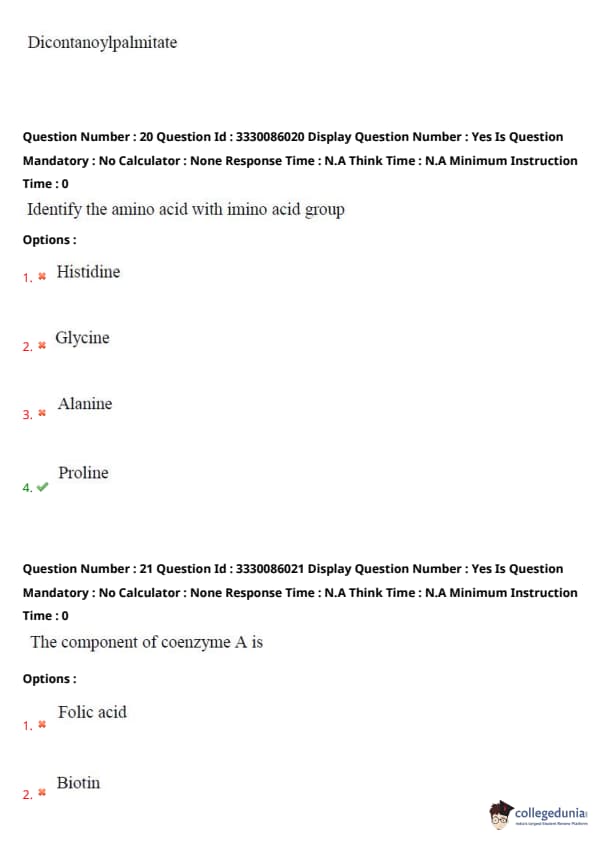
The major component of bee wax is
- (1) Triacontanoylpalmitate
- (2) Tripalmitate
- (3) Contanoyl acetate
- (4) Diconanoylpalmitate
Question 20:
Identify the amino acid with imino acid group
- (1) Histidine
- (2) Glycine
- (3) Alanine
- (4) Proline
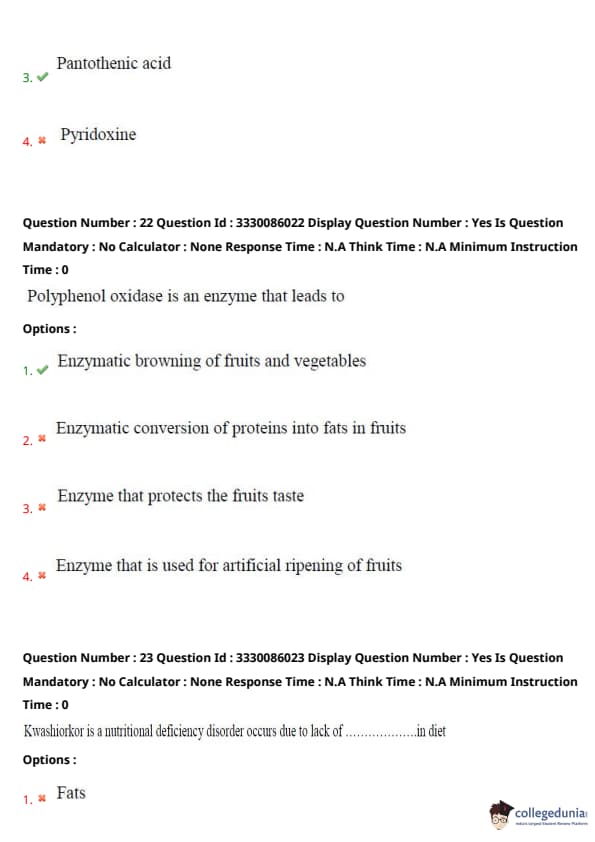
Question 21:
The component of coenzyme A is
- (1) Folic acid
- (2) Biotin
- (3) Pantothenic acid
- (4) Pyridoxine
Question 22:
Polyphenol oxidase is an enzyme that leads to
- (1) Enzymatic browning of fruits and vegetables
- (2) Enzymatic conversion of proteins into fats in fruits
- (3) Enzyme that protects the fruits taste
- (4) Enzyme that is used for artificial ripening of fruits
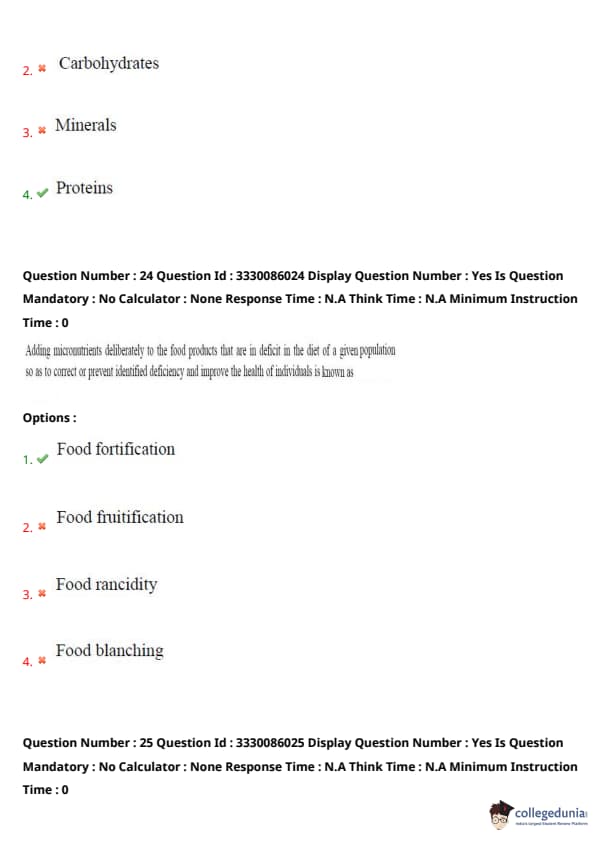
Question 23:
Kwashiorkor is a nutritional deficiency disorder occurs due to lack of ......... in diet
- (1) Fats
- (2) Carbohydrates
- (3) Minerals
- (4) Proteins
Question 24:
Adding micronutrients deliberately to the food products that are in deficit in the diet of a given population so as to correct or prevent identified deficiency and improve the health of individuals is known as
- (1) Food fortification
- (2) Food fruitification
- (3) Food rancidity
- (4) Food blanching
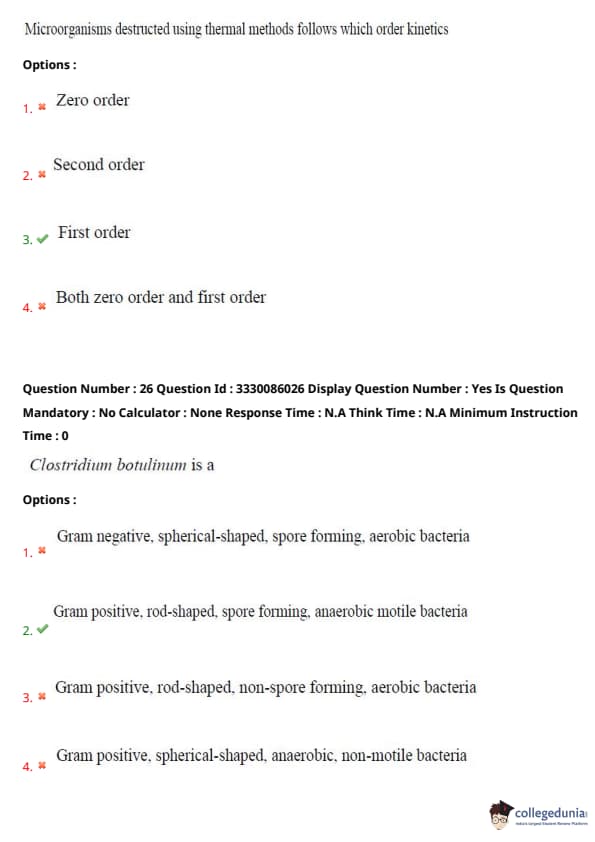
Question 25:
Microorganisms destroyed using thermal methods follows which order kinetics
- (1) Zero order
- (2) Second order
- (3) First order
- (4) Both zero order and first order
Question 26:
Clostridium botulinum is a
- (1) Gram negative, spherical-shaped, spore forming, aerobic bacteria
- (2) Gram positive, rod-shaped, spore forming, anaerobic motile bacteria
- (3) Gram positive, rod-shaped, non-spore forming bacteria
- (4) Gram positive, spherical-shaped, anaerobic, non-motile bacteria
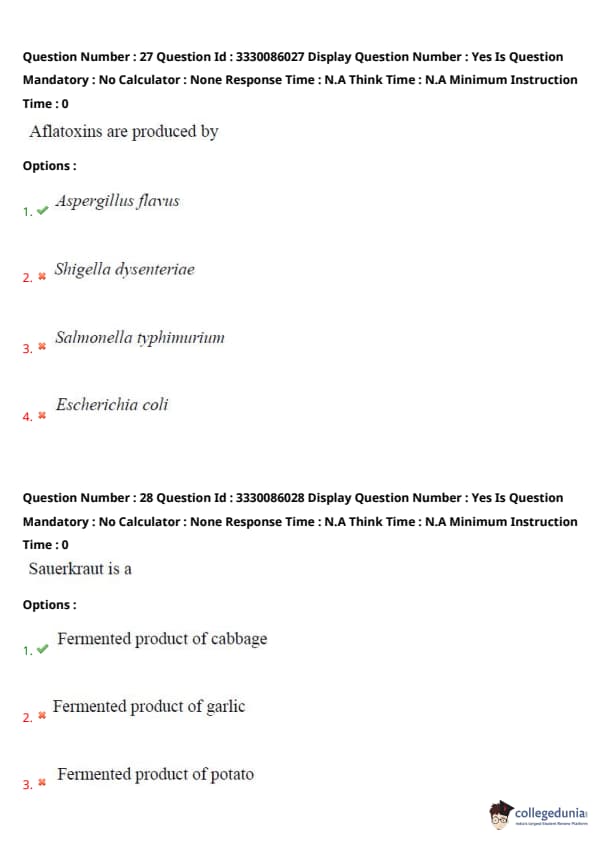
Question 27:
Aflatoxins are produced by
- (1) Aspergillus flavus
- (2) Shigella dysenteriae
- (3) Salmonella typhimurium
- (4) Escherichia coli
Question 28:
Sauerkraut is a
- (1) Fermented product of cabbage
- (2) Fermented product of garlic
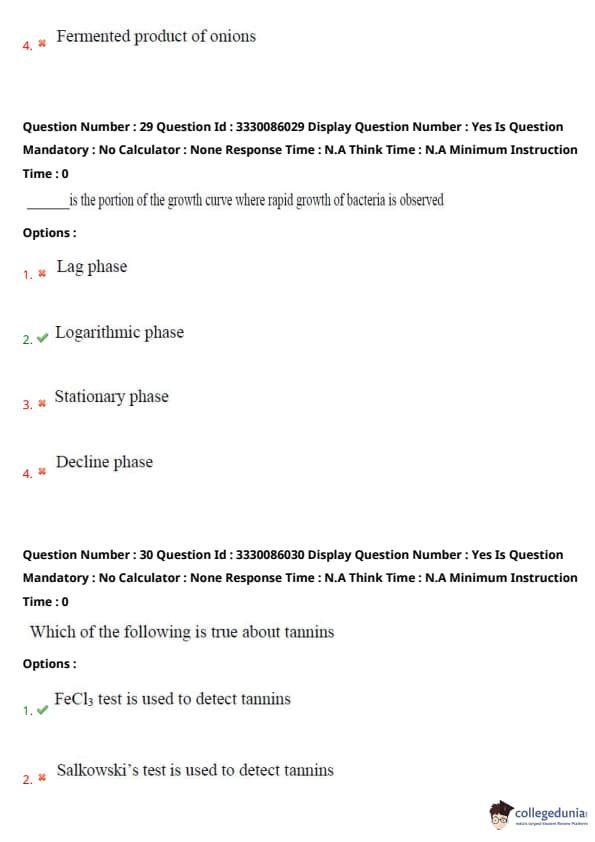
- (3) Fermented product of potato
- (4) Fermented product of onions
Question 29:
....... is the portion of the growth curve where rapid growth of bacteria is observed
- (1) Lag phase
- (2) Logarithmic phase
- (3) Stationary phase
- (4) Decline phase
Question 30:
Which of the following is true about tannins
- (1) FeCl\(_3\) test is used to detect tannins
- (2) Salkowski’s test is used to detect tannins
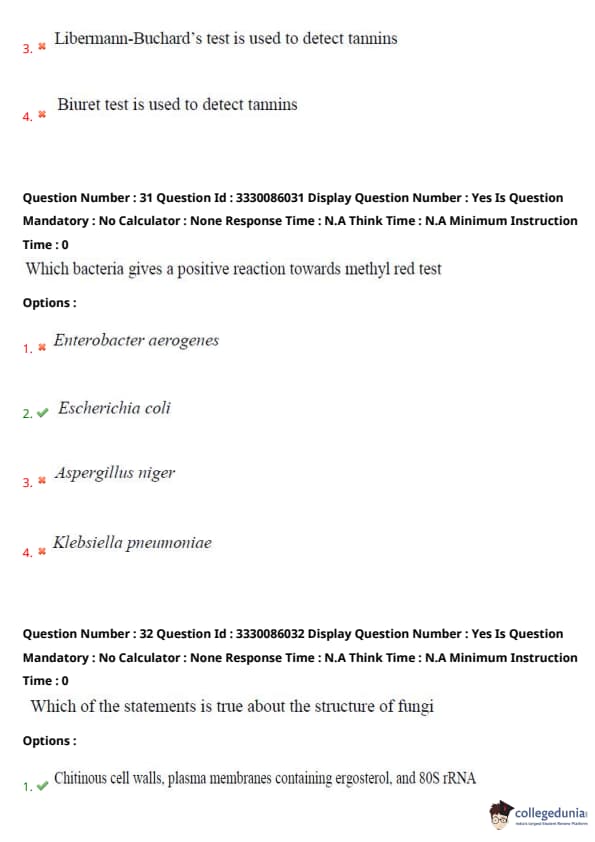
- (3) Libermann-Buchard’s test is used to detect tannins
- (4) Biuret test is used to detect tannins
Question 31:
Which bacteria gives a positive reaction towards methyl red test
- (1) Enterobacter aerogenes
- (2) Escherichia coli
- (3) Aspergillus niger
- (4) Klebsiella pneumoniae
Question 32:
Which of the statements is true about the structure of fungi
- (1) Chitinous cell walls, plasma membranes containing ergosterol, and 80S rRNA
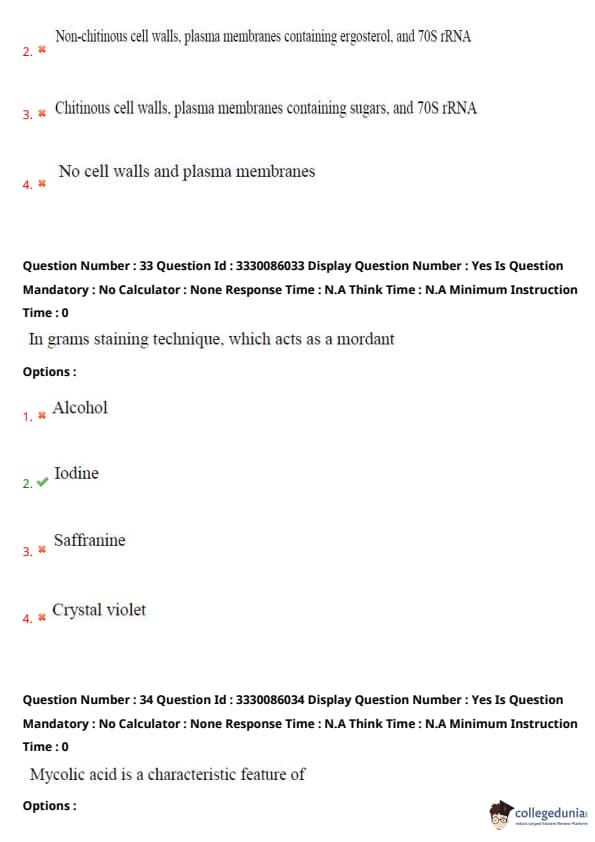
- (2) Non-chitinous cell walls, plasma membranes containing ergosterol, and 70S rRNA
- (3) Chitinous cell walls, plasma membranes containing sugars, and 70S rRNA
- (4) No cell walls and plasma membranes
Question 33:
In Gram's staining technique, which acts as a mordant
- (1) Alcohol
- (2) Iodine
- (3) Saffranine
- (4) Crystal violet
Question 34:
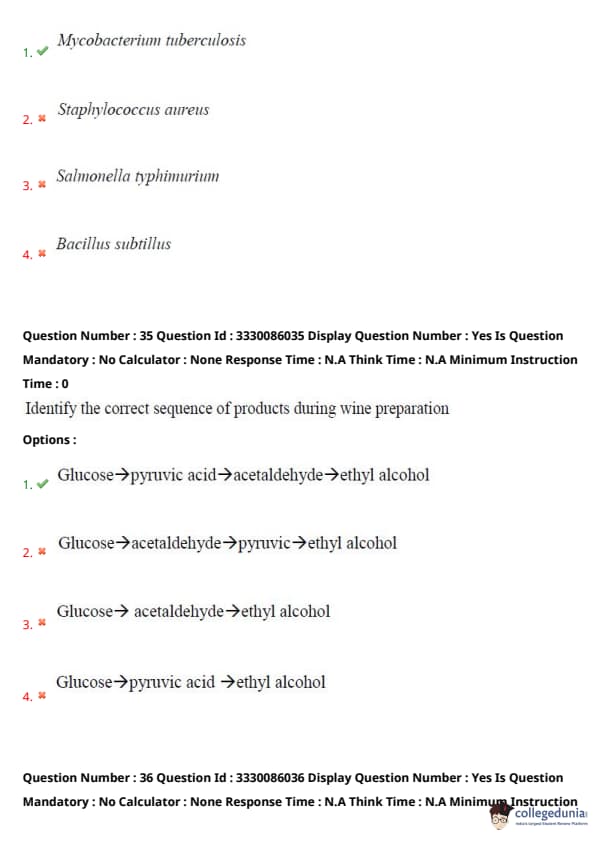
Mycolic acid is a characteristic feature of
- (1) Mycobacterium tuberculosis
- (2) Staphylococcus aureus
- (3) Salmonella typhimurium
- (4) Bacillus subtilis
Question 35:
Identify the correct sequence of products during wine preparation
- (1) Glucose \(\rightarrow\) pyruvic acid \(\rightarrow\) acetaldehyde \(\rightarrow\) ethyl alcohol
- (2) Glucose \(\rightarrow\) acetaldehyde \(\rightarrow\) pyruvic acid \(\rightarrow\) ethyl alcohol
- (3) Glucose \(\rightarrow\) acetaldehyde \(\rightarrow\) ethyl alcohol
- (4) Glucose \(\rightarrow\) pyruvic acid \(\rightarrow\) ethyl alcohol
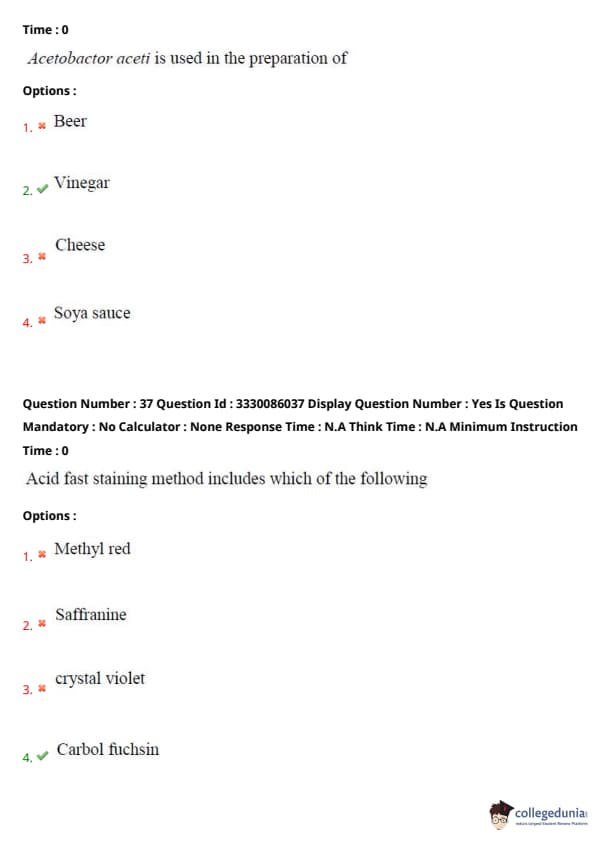
Question 36:
Acetobacter aceti is used in the preparation of
- (1) Beer
- (2) Vinegar
- (3) Cheese
- (4) Soya sauce
Question 37:
Acid fast staining method includes which of the following
- (1) Methyl red
- (2) Safranine
- (3) Crystal violet
- (4) Carbol fuchsin
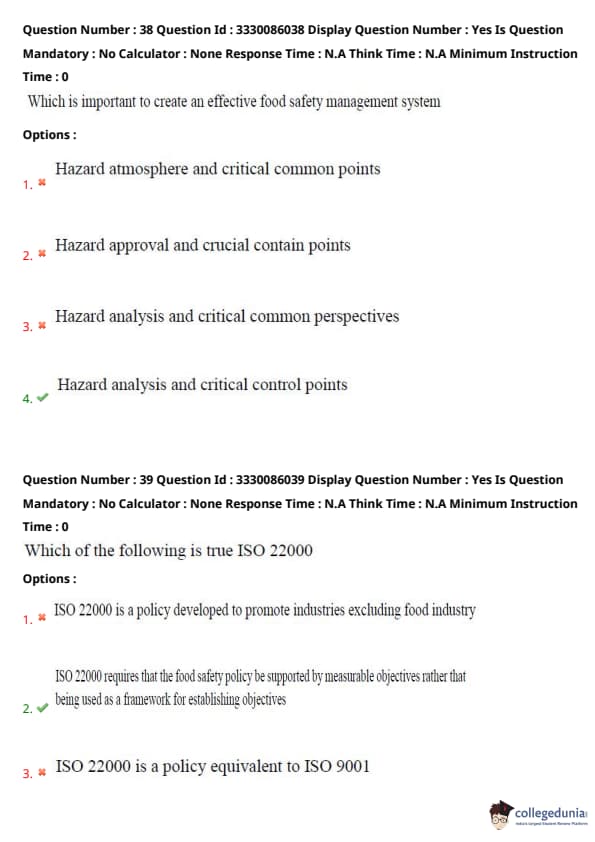
Question 38:
Which is important to create an effective food safety management system
- (1) Hazard analysis and critical control points
- (2) Hazard approval and crucial contain points
- (3) Hazard analysis and critical common perspectives
- (4) Hazard analysis and critical common points
Question 39:
Which of the following is true ISO 22000
- (1) ISO 22000 is a policy developed to promote industries excluding food industry
- (2) ISO 22000 requires that the food safety policy be supported by measurable objectives rather than being used as a framework for establishing objectives
- (3) ISO 22000 is a policy equivalent to ISO 9001
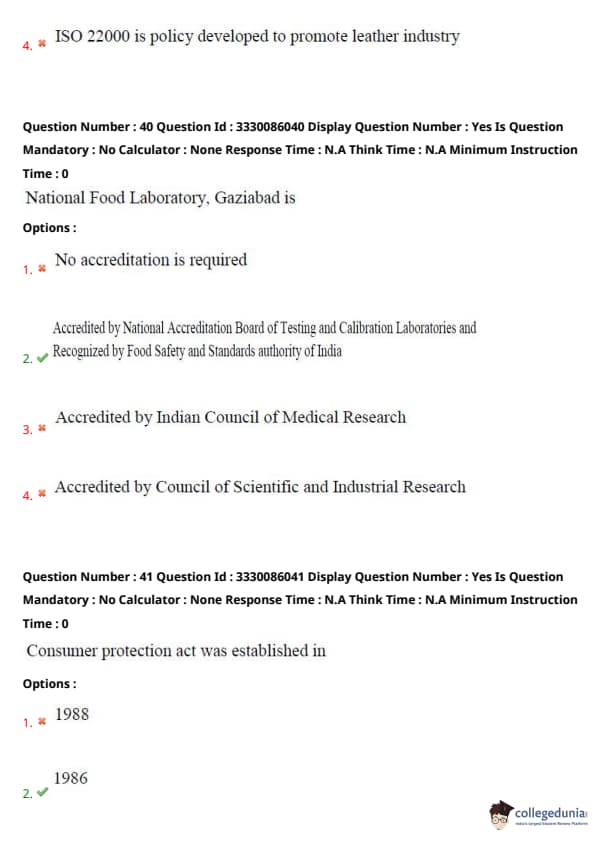
- (4) ISO 22000 is policy developed to promote leather industry
Question 40:
National Food Laboratory, Ghaziabad is
- (1) No accreditation is required
- (2) Accredited by National Accreditation Board of Testing and Calibration Laboratories and
- (3) Recognized by Food Safety and Standards authority of India
- (4) Accredited by Council of Scientific and Industrial Research
Question 41:
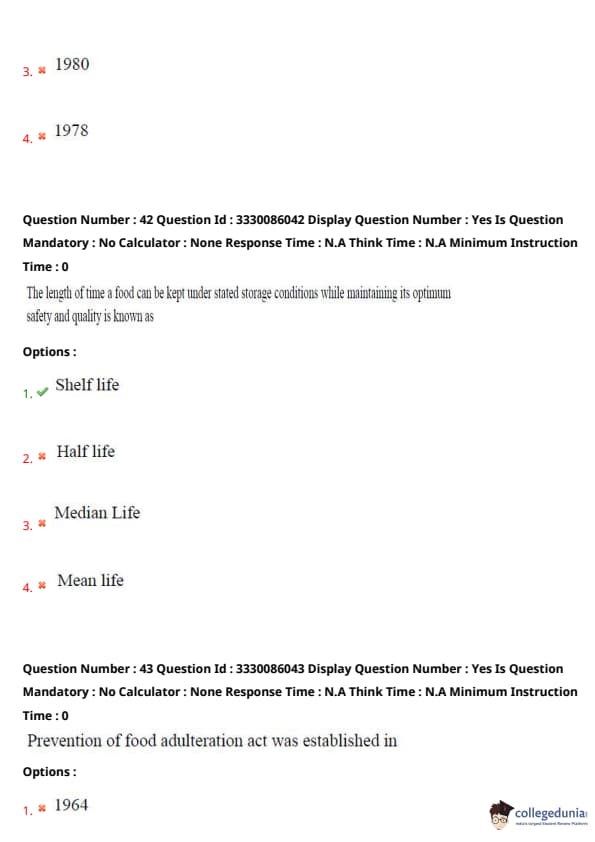
Consumer Protection Act was established in
- (1) 1988
- (2) 1986
- (3) 1980
- (4) 1978
Question 42:
The length of time a food can be kept under stated storage conditions while maintaining its optimum safety and quality is known as
- (1) Shelf life
- (2) Half life
- (3) Median life
- (4) Mean life
Question 43:
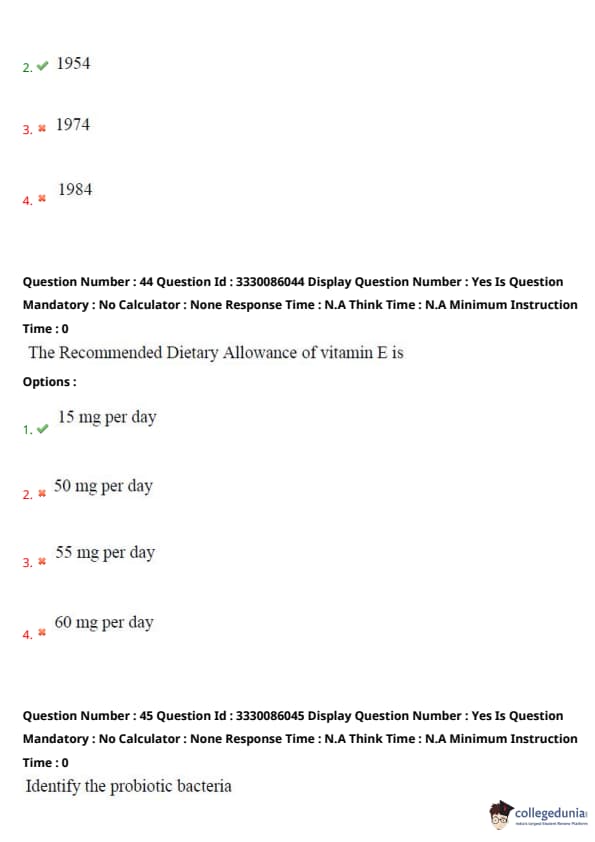
Prevention of Food Adulteration Act was established in
- (1) 1964
- (2) 1954
- (3) 1974
- (4) 1984
Question 44:
The Recommended Dietary Allowance of vitamin E is
- (1) 15 mg per day
- (2) 50 mg per day
- (3) 55 mg per day
- (4) 60 mg per day
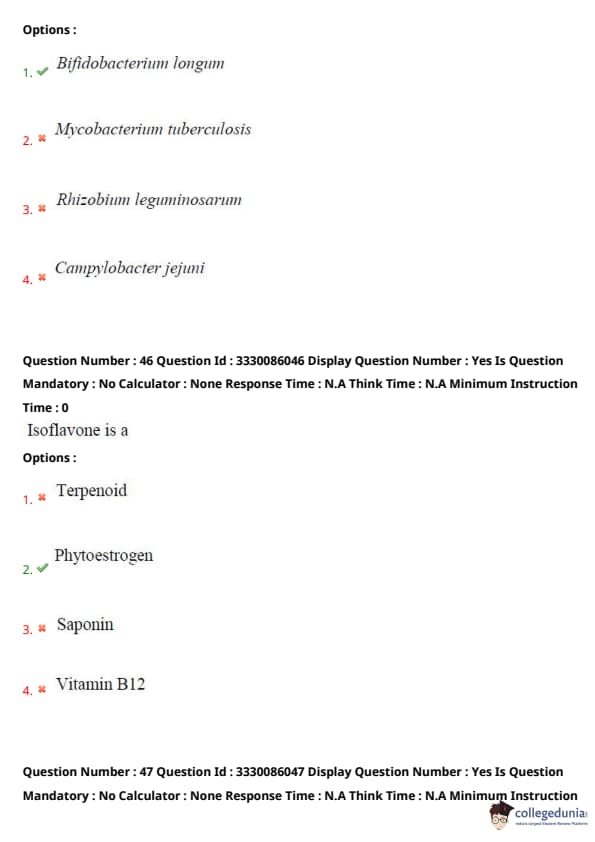
Question 45:
Identify the probiotic bacteria
- (1) Bifidobacterium longum
- (2) Mycobacterium tuberculosis
- (3) Rhizobium leguminosarum
- (4) Campylobacter jejuni
Question 46:
Isoflavone is a
- (1) Terpenoid
- (2) Phytoestrogen
- (3) Saponin
- (4) Vitamin B12
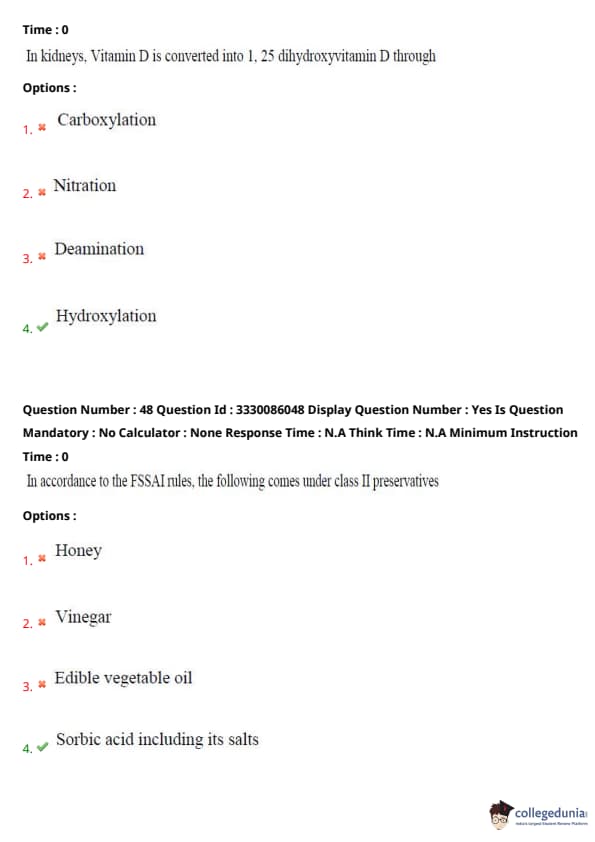
Question 47:
In kidneys, Vitamin D is converted into 1, 25 dihydroxyvitamin D through
- (1) Carboxylation
- (2) Nitration
- (3) Deamination
- (4) Hydroxylation
Question 48:
In accordance to the FSSAI rules, the following comes under class II preservatives
- (1) Honey
- (2) Vinegar
- (3) Edible vegetable oil
- (4) Sorbic acid including its salts
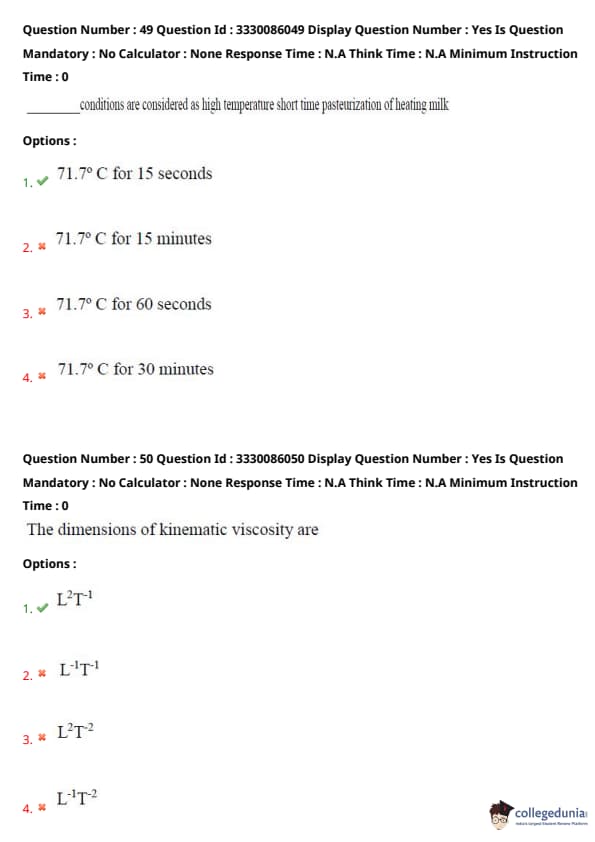
Question 49:
....... conditions are considered as high temperature short time pasteurization of heating milk
- (1) 71.7°C for 15 seconds
- (2) 71.7°C for 15 minutes
- (3) 71.7°C for 60 seconds
- (4) 71.7°C for 30 minutes
Question 50:
The dimensions of kinematic viscosity are
- (1) L\(^2\)T\(^{-1}\)
- (2) L\(^1\)T\(^{-1}\)
- (3) L\(^2\)T\(^{-2}\)
- (4) L\(^1\)T\(^{-2}\)
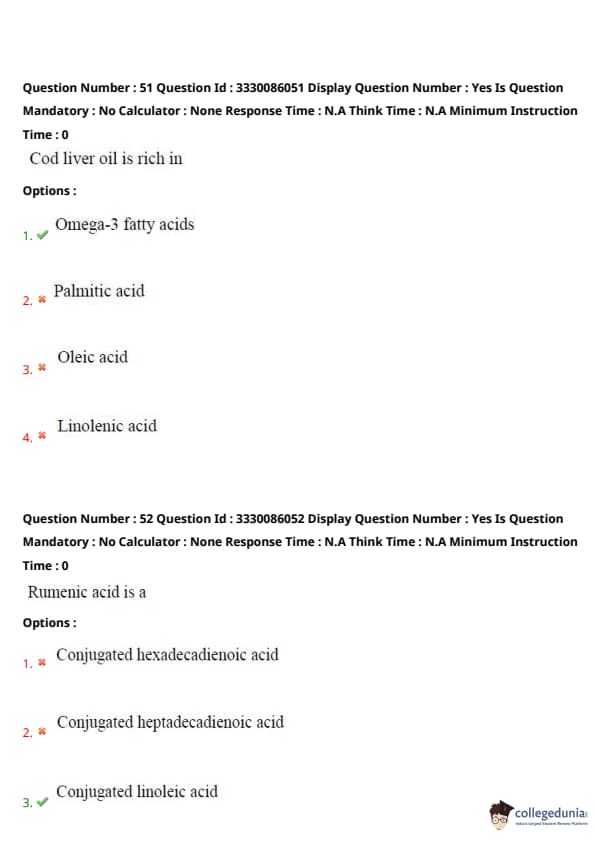
Question 51:
Cod liver oil is rich in
- (1) Omega-3 fatty acids
- (2) Palmitic acid
- (3) Oleic acid
- (4) Linolenic acid
Question 52:
Rumenic acid is a
- (1) Conjugated hexadecenoic acid
- (2) Conjugated heptadecenoic acid
- (3) Conjugated linoleic acid
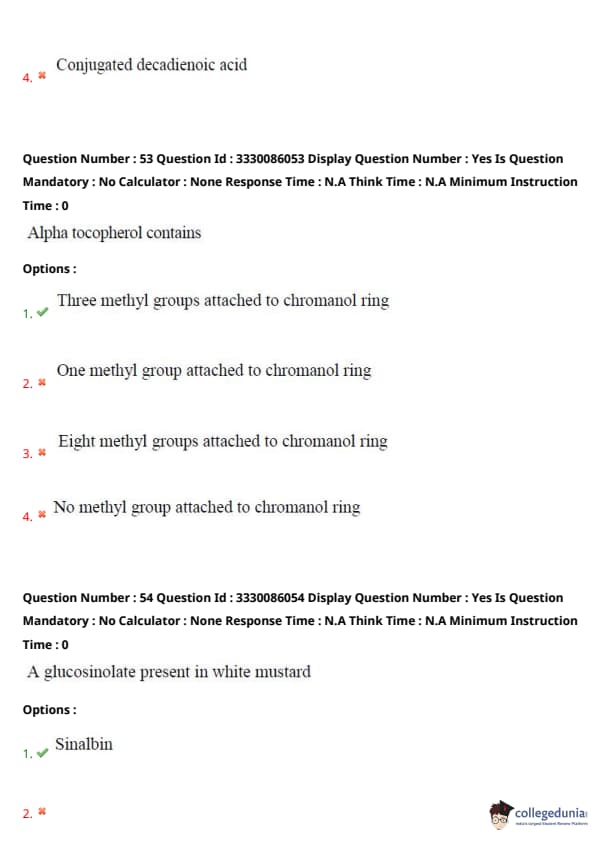
- (4) Conjugated decadienoic acid
Question 53:
Alpha tocopherol contains
- (1) Three methyl groups attached to chromanol ring
- (2) One methyl group attached to chromanol ring
- (3) Eight methyl groups attached to chromanol ring
- (4) No methyl group attached to chromanol ring
Question 54:
A glucosinolate present in white mustard
- (1) Sinaplin
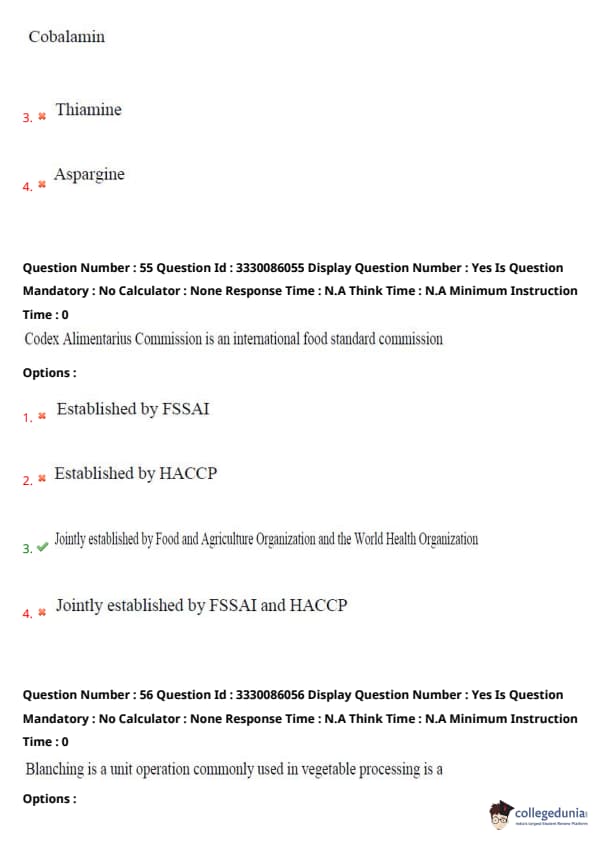
- (2) Cobalamin
- (3) Thiamine
- (4) Aspargine
Question 55:
Codex Alimentarius Commission is an international food standard commission
- (1) Established by FSSAI
- (2) Established by HACCP
- (3) Jointly established by Food and Agriculture Organization and the World Health Organization
- (4) Jointly established by FSSAI and HACCP
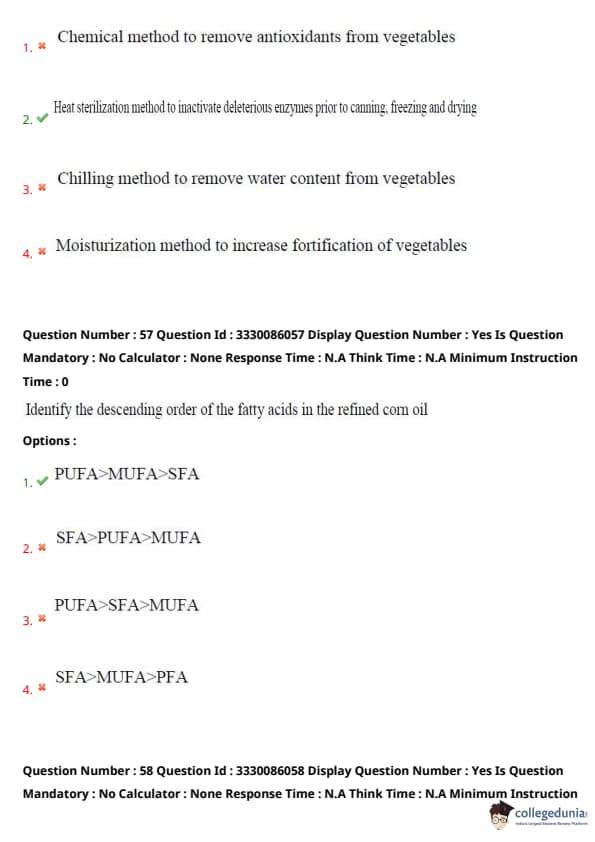
Question 56:
Blanching is a unit operation commonly used in vegetable processing is
- (1) Chemical method to remove antioxidants from vegetables
- (2) Heat sterilization method to inactivate deleterious enzymes prior to canning, freezing and drying
- (3) Chilling method to remove water content from vegetables
- (4) Moisturization method to increase fortification of vegetables
Question 57:
Identify the descending order of the fatty acids in the refined corn oil
- (1) PUFA > MUFA > SFA
- (2) SFA > PUFA > MUFA
- (3) PUFA > SFA > MUFA
- (4) SFA > MUFA > PFA
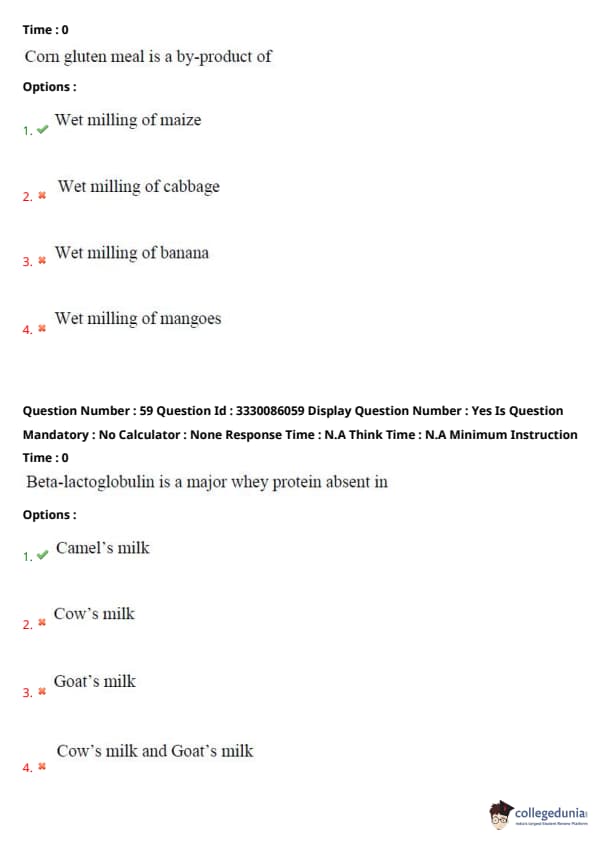
Question 58:
Corn gluten meal is a by-product of
- (1) Wet milling of maize
- (2) Wet milling of cabbage
- (3) Wet milling of banana
- (4) Wet milling of mangoes
Question 59:
Beta-lactoglobulin is a major whey protein absent in
- (1) Camel’s milk
- (2) Cow’s milk
- (3) Goat’s milk
- (4) Cow’s milk and Goat’s milk
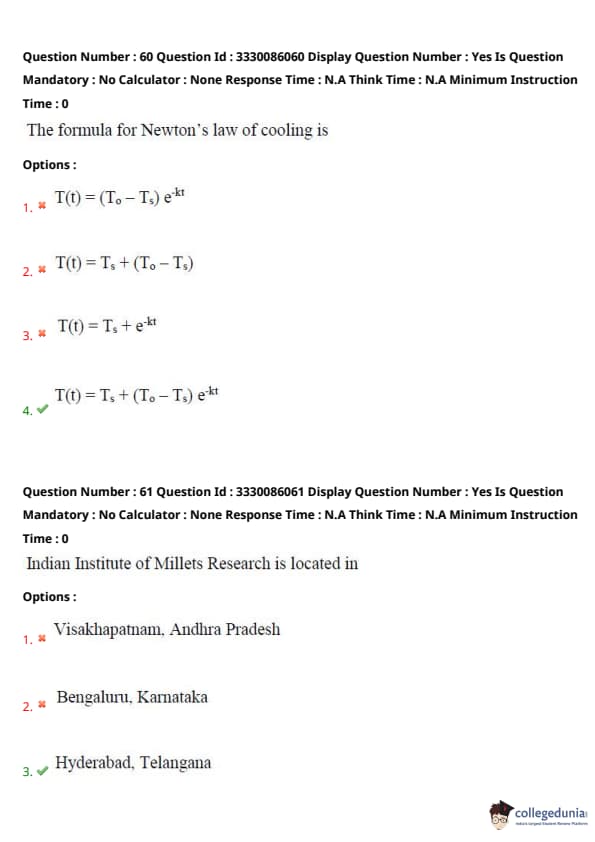
Question 60:
The formula for Newton’s law of cooling is
- (1) T(t) = (Tₒ - Tₛ) e^kt
- (2) T(t) = Tₛ + (Tₒ - Tₛ)
- (3) T(t) = Tₛ + (Tₒ - Tₛ) e^kt
- (4) T(t) = Tₛ + (Tₒ - Tₛ) e^kt
Question 61:
Indian Institute of Millets Research is located in
- (1) Visakhapatnam, Andhra Pradesh
- (2) Bengaluru, Karnataka
- (3) Hyderabad, Telangana
- (4) Chennai, Tamilnadu
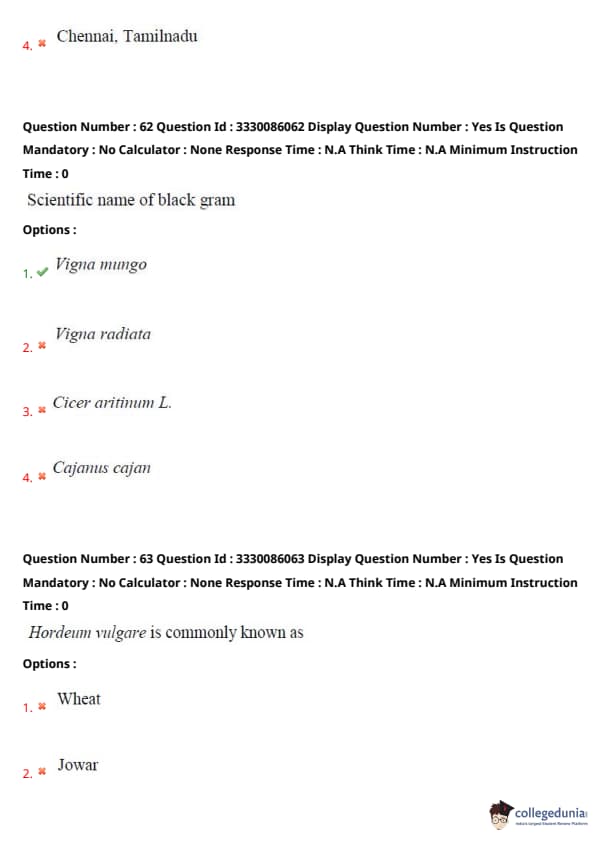
Question 62:
Scientific name of black gram
- (1) Vigna mungo
- (2) Vigna radiata
- (3) Cicer arietinum L.
- (4) Cajanus cajan
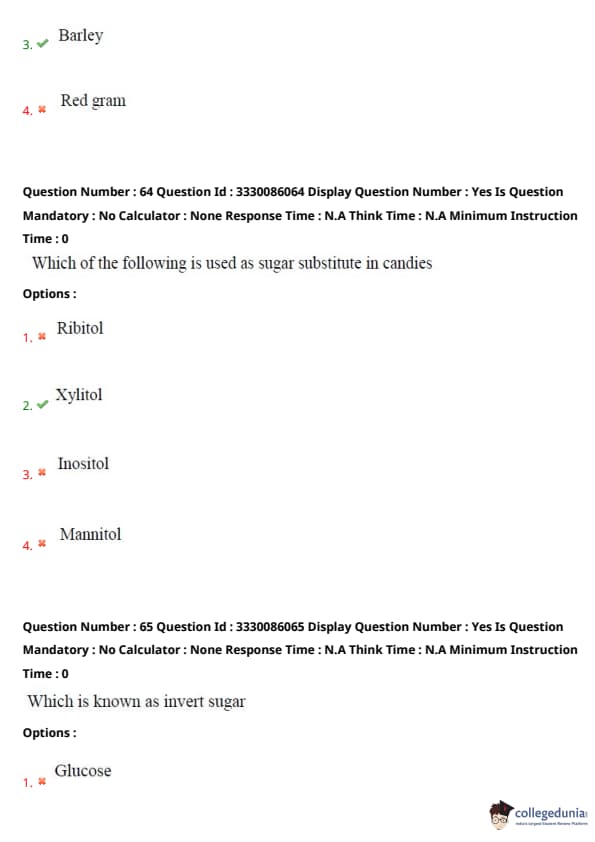
Question 63:
Hordeum vulgare is commonly known as
- (1) Wheat
- (2) Jowar
- (3) Barley
- (4) Red gram
Question 64:
Which of the following is used as sugar substitute in candies
- (1) Ribitol
- (2) Xylitol
- (3) Inositol
- (4) Mannitol
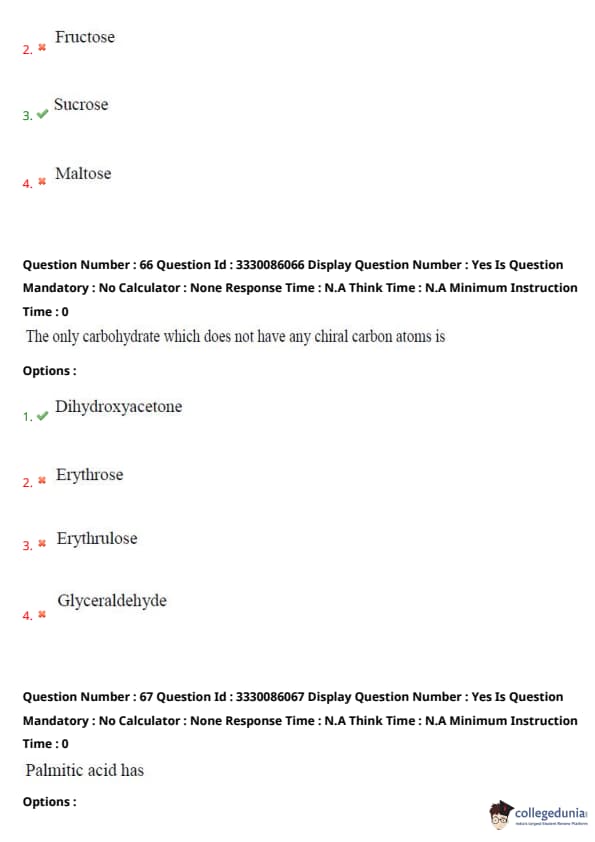
Question 65:
Which is known as invert sugar
- (1) Glucose
- (2) Fructose
- (3) Sucrose
- (4) Maltose
Question 66:
The only carbohydrate which does not have any chiral carbon atoms is
- (1) Dihydroxyacetone
- (2) Erythrose
- (3) Erythrulose
- (4) Glyceraldehyde
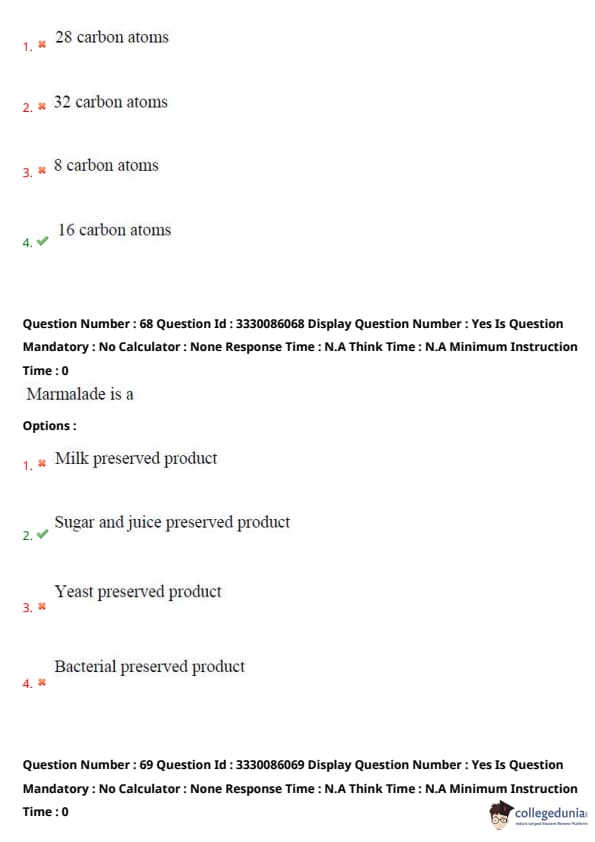
Question 67:
Palmitic acid has
- (1) 28 carbon atoms
- (2) 32 carbon atoms
- (3) 8 carbon atoms
- (4) 16 carbon atoms
Question 68:
Marmalade is a
- (1) Milk preserved product
- (2) Sugar and juice preserved product
- (3) Yeast preserved product
- (4) Bacterial preserved product
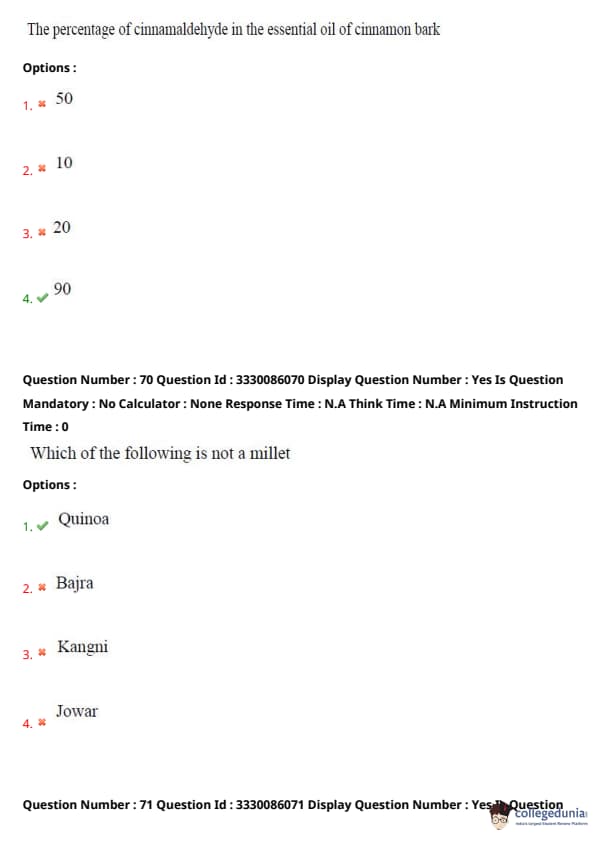
Question 69:
The percentage of cinnamaldehyde in the essential oil of cinnamon bark
- (1) 50
- (2) 10
- (3) 20
- (4) 90
Question 70:
Which of the following is not a millet
- (1) Quinoa
- (2) Bajra
- (3) Kangni
- (4) Jowar
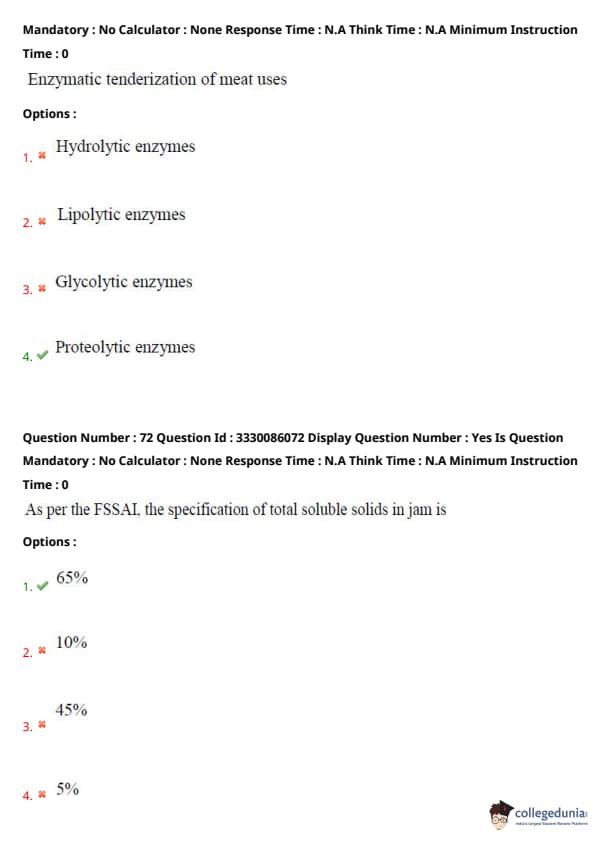
Question 71:
Enzymatic tenderization of meat uses
- (1) Hydrolytic enzymes
- (2) Lipolytic enzymes
- (3) Glycolytic enzymes
- (4) Proteolytic enzymes
Question 72:
As per the FSSAI, the specification of total soluble solids in jam is
- (1) 65%
- (2) 10%
- (3) 45%
- (4) 5%
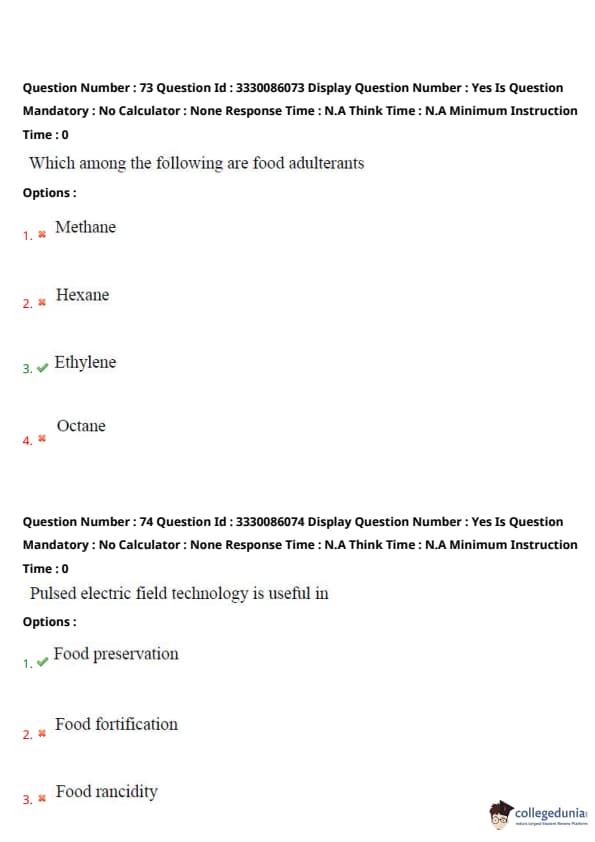
Question 73:
Which among the following are food adulterants
- (1) Methane
- (2) Hexane
- (3) Ethylene
- (4) Octane
Question 74:
Pulsed electric field technology is useful in
- (1) Food preservation
- (2) Food fortification
- (3) Food rancidity
- (4) Food adulteration
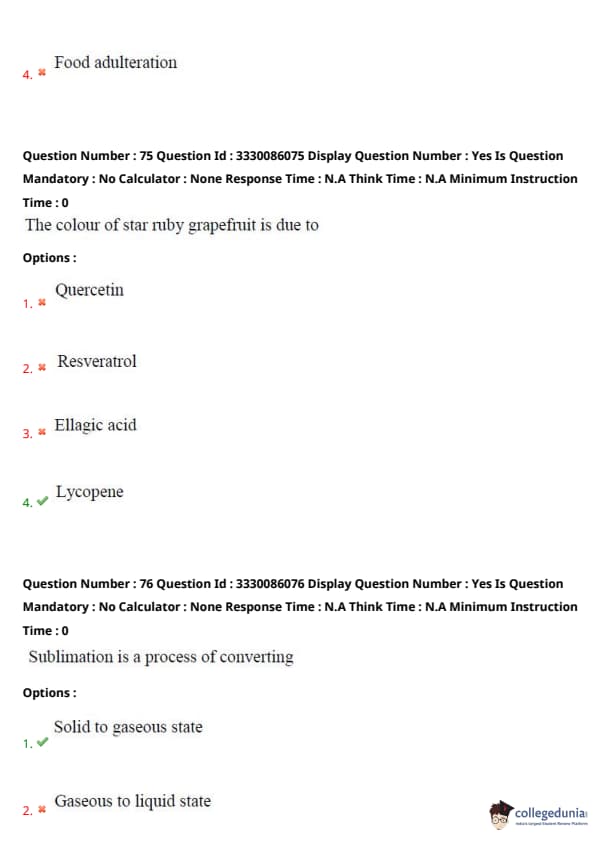
Question 75:
The colour of star ruby grapefruit is due to
- (1) Quercetin
- (2) Resveratrol
- (3) Ellagic acid
- (4) Lycopene
Question 76:
Sublimation is a process of converting
- (1) Solid to gaseous state
- (2) Gaseous to liquid state
- (3) Liquid to solid state
- (4) Solid to solid state
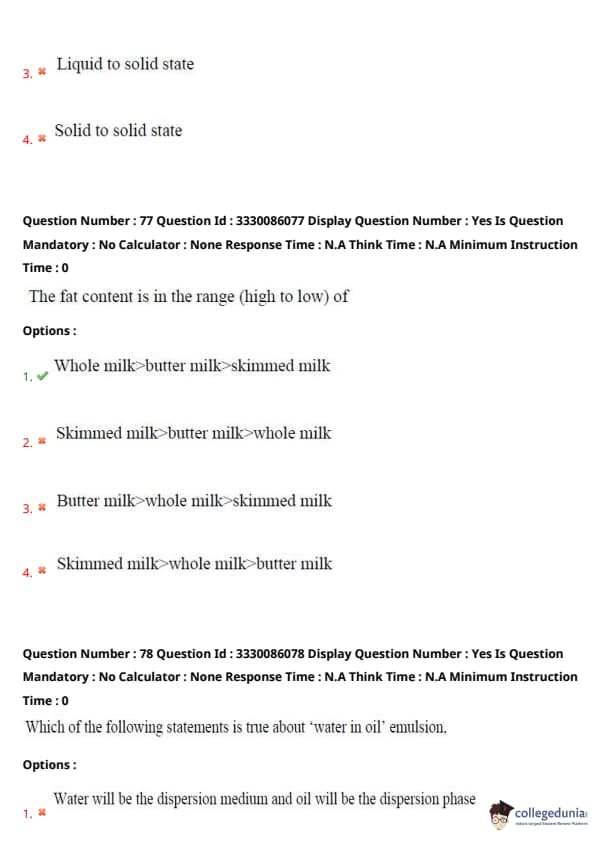
Question 77:
The fat content is in the range (high to low) of
- (1) Whole milk > butter milk > skimmed milk
- (2) Skimmed milk > butter milk > whole milk
- (3) Butter milk > whole milk > skimmed milk
- (4) Skimmed milk > whole milk > butter milk
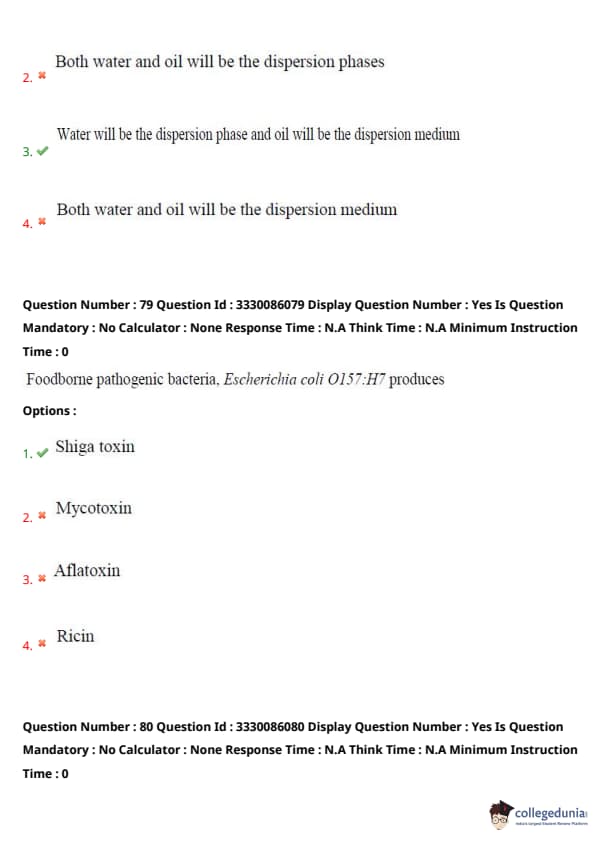
Question 78:
Which of the following statements is true about 'water in oil' emulsion
- (1) Water will be the dispersion medium and oil will be the dispersion phase
- (2) Both water and oil will be the dispersion phases
- (3) Water will be the dispersion phase and oil will be the dispersion medium
- (4) Both water and oil will be the dispersion medium
Question 79:
Foodborne pathogenic bacteria, Escherichia coli O157:H7, produces
- (1) Shiga toxin
- (2) Mycotoxin
- (3) Aflatoxin
- (4) Ricin
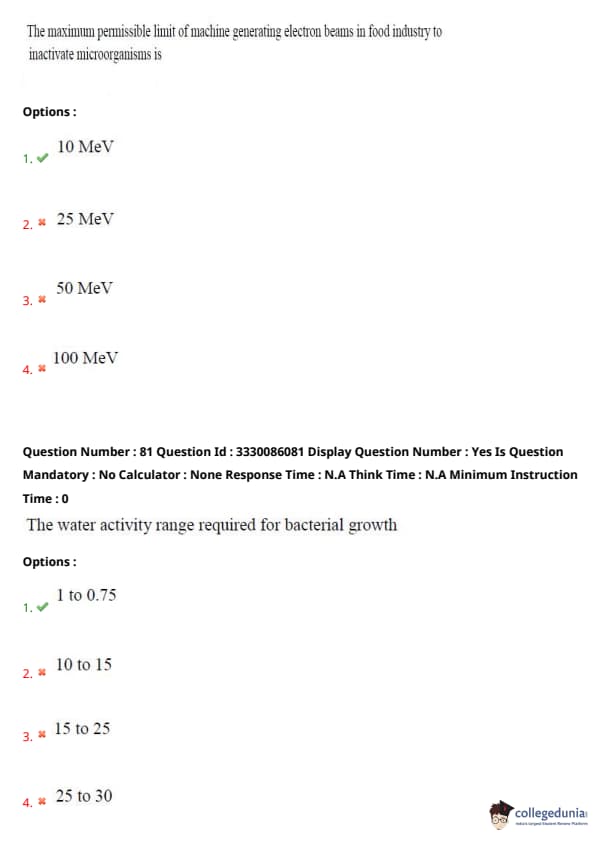
Question 80:
The maximum permissible limit of machine generating electron beams in food industry to inactivate microorganisms is
- (1) 10 MeV
- (2) 25 MeV
- (3) 50 MeV
- (4) 100 MeV
Question 81:
The water activity range required for bacterial growth
- (1) 1 to 0.75
- (2) 10 to 15
- (3) 15 to 25
- (4) 25 to 30
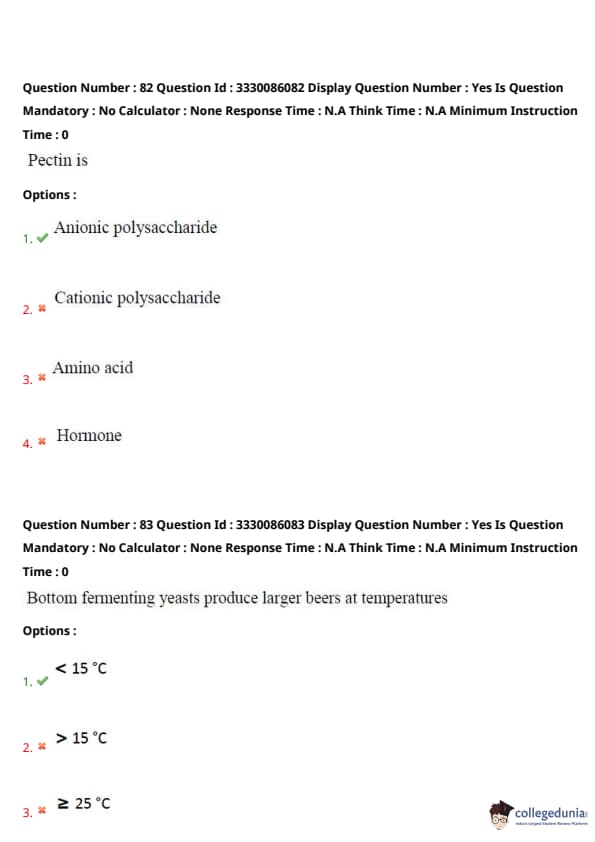
Question 82:
Pectin is
- (1) Anionic polysaccharide
- (2) Cationic polysaccharide
- (3) Amino acid
- (4) Hormone
Question 83:
Bottom fermenting yeasts produce larger beers at temperatures
- (1) < 15°C
- (2) > 15°C
- (3) ≥ 25°C
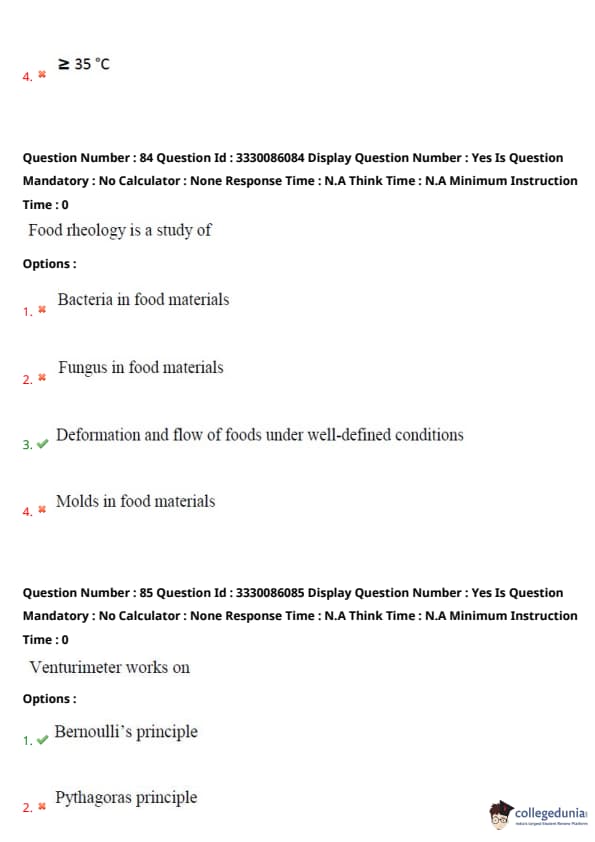
- (4) ≥ 35°C
Question 84:
Food rheology is a study of
- (1) Bacteria in food materials
- (2) Fungus in food materials
- (3) Deformation and flow of foods under well-defined conditions
- (4) Molds in food materials
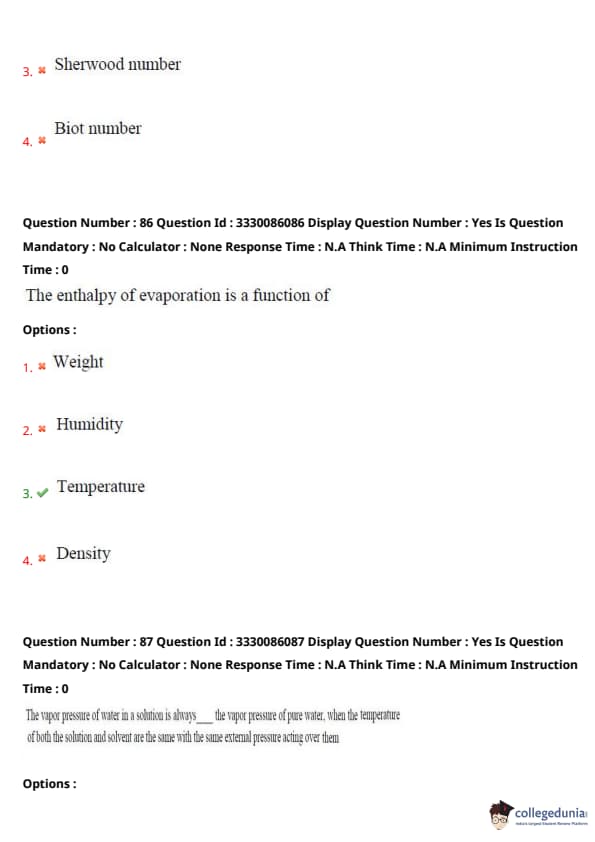
Question 85:
Venturi meter works on
- (1) Bernoulli’s principle
- (2) Pythagoras principle
- (3) Sherwood number
- (4) Biot number
Question 86:
The enthalpy of evaporation is a function of
- (1) Weight
- (2) Humidity
- (3) Temperature
- (4) Density
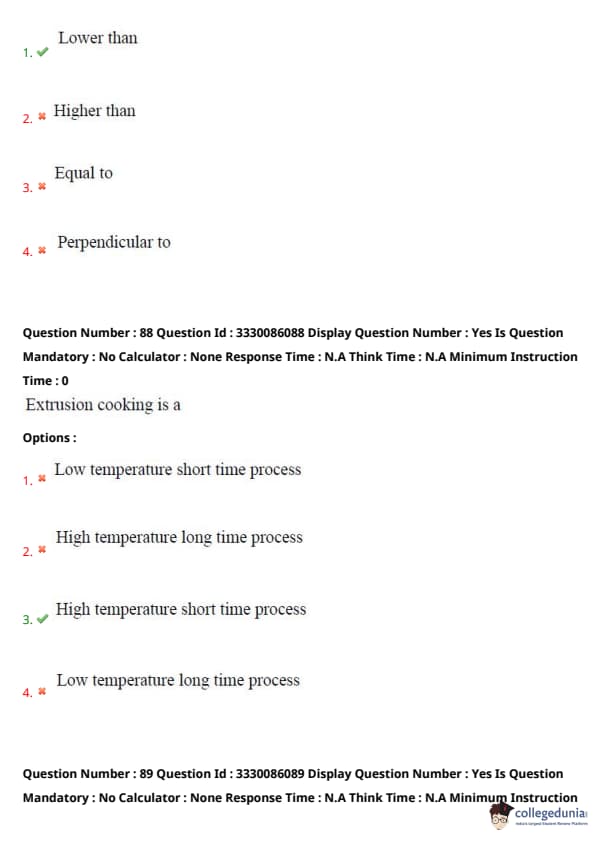
Question 87:
The vapor pressure of water in a solution is always ......... the vapor pressure of pure water, when the temperature
of both the solution and solvent are the same with the same external pressure acting over them
- (1) Lower than the vapor pressure of pure water
- (2) Higher than the vapor pressure of pure water
- (3) Equal to the vapor pressure of pure water
- (4) Perpendicular to the vapor pressure of pure water
Question 88:
Extrusion cooking is a
- (1) Low temperature short time process
- (2) High temperature long time process
- (3) High temperature short time process
- (4) Low temperature long time process
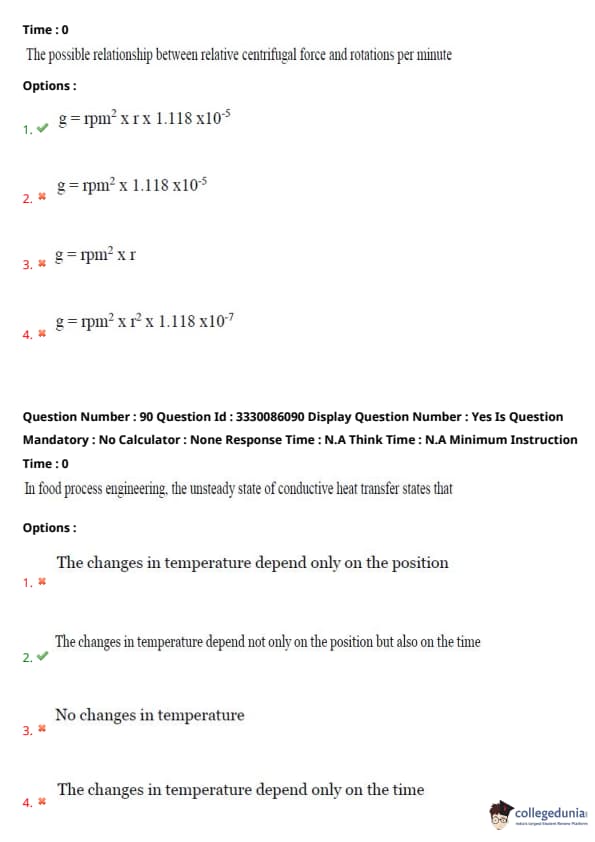
Question 89:
The possible relationship between relative centrifugal force and rotations per minute
- (1) g = rpm² × r × 1.118 × 10⁻⁵
- (2) g = rpm² × r × 1.118 × 10⁻⁵
- (3) g = rpm² × r
- (4) g = rpm² × r² × 1.118 × 10⁻⁷
Question 90:
In food process engineering, the unsteady state of conductive heat transfer states that
- (1) The changes in temperature depend only on the position
- (2) The changes in temperature depend not only on the position but also on the time
- (3) No changes in temperature
- (4) The changes in temperature depend only on the time
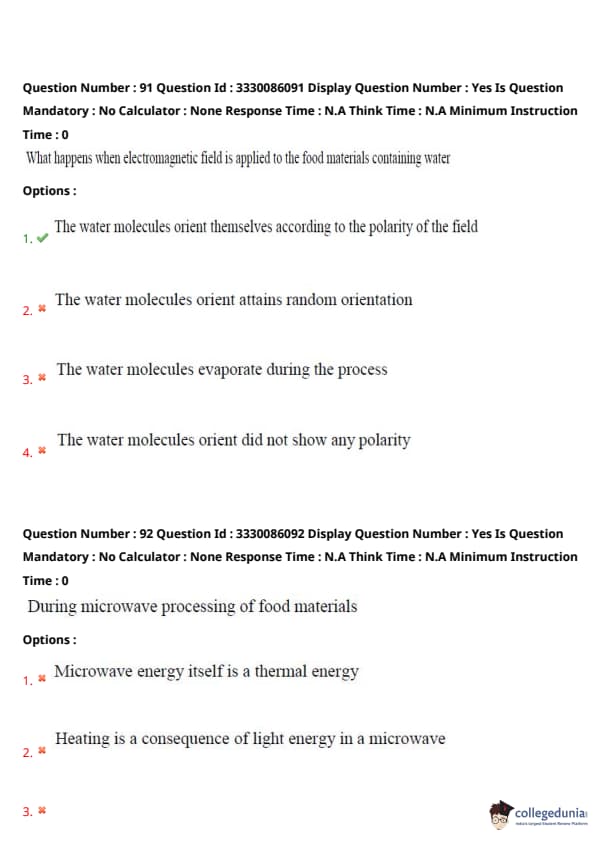
Question 91:
What happens when electromagnetic field is applied to the food materials containing water
- (1) The water molecules orient themselves according to the polarity of the field
- (2) The water molecules orient attains random orientation
- (3) The water molecules evaporate during the process
- (4) The water molecules orient did not show any polarity
Question 92:
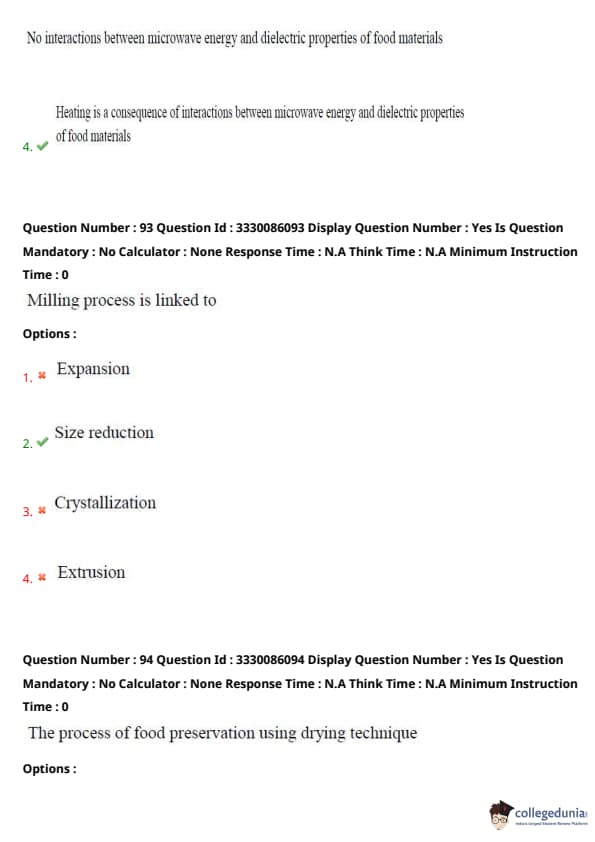
During microwave processing of food materials
- (1) Microwave energy itself is a thermal energy
- (2) Heating is a consequence of light energy in a microwave
- (3) No interactions between microwave energy and dielectric properties of food materials
- (4) Heating is a consequence of interactions between microwave energy and dielectric properties of food materials
Question 93:
Milling process is linked to
- (1) Expansion
- (2) Size reduction
- (3) Crystallization
- (4) Extrusion
Question 94:
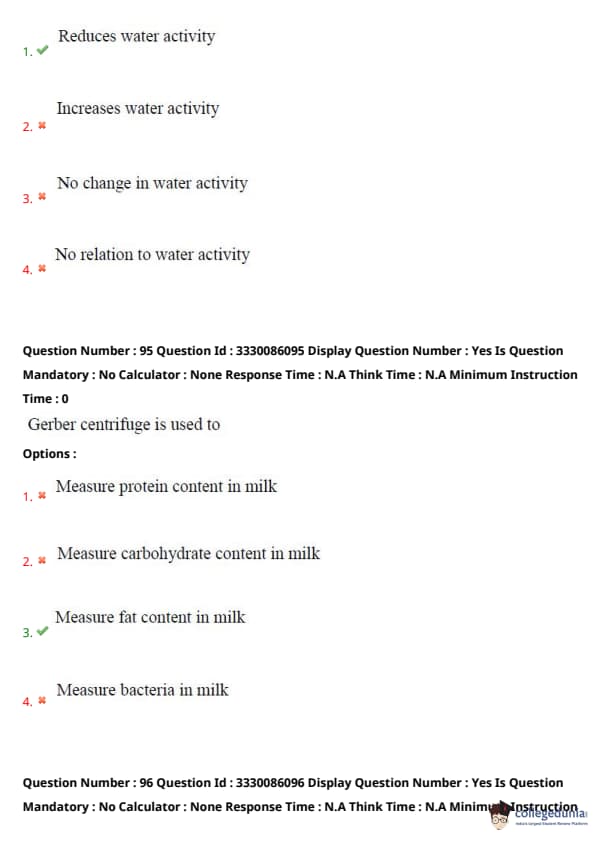
The process of food preservation using drying technique
- (1) Reduces water activity
- (2) Increases water activity
- (3) No change in water activity
- (4) No relation to water activity
Question 95:
Gerber centrifuge is used to
- (1) Measure protein content in milk
- (2) Measure carbohydrate content in milk
- (3) Measure fat content in milk
- (4) Measure bacteria in milk
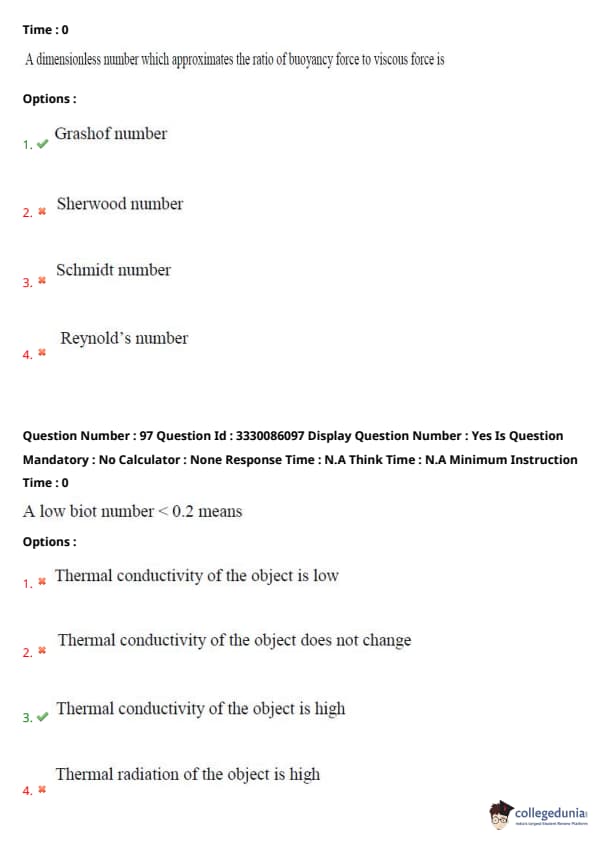
Question 96:
A dimensionless number which approximates the ratio of buoyancy force to viscous force is
- (1) Grashof number
- (2) Sherwood number
- (3) Schmidt number
- (4) Reynolds number
Question 97:
A low Biot number < 0.2 means
- (1) Thermal conductivity of the object is low
- (2) Thermal conductivity of the object does not change
- (3) Thermal conductivity of the object is high
- (4) Thermal radiation of the object is high
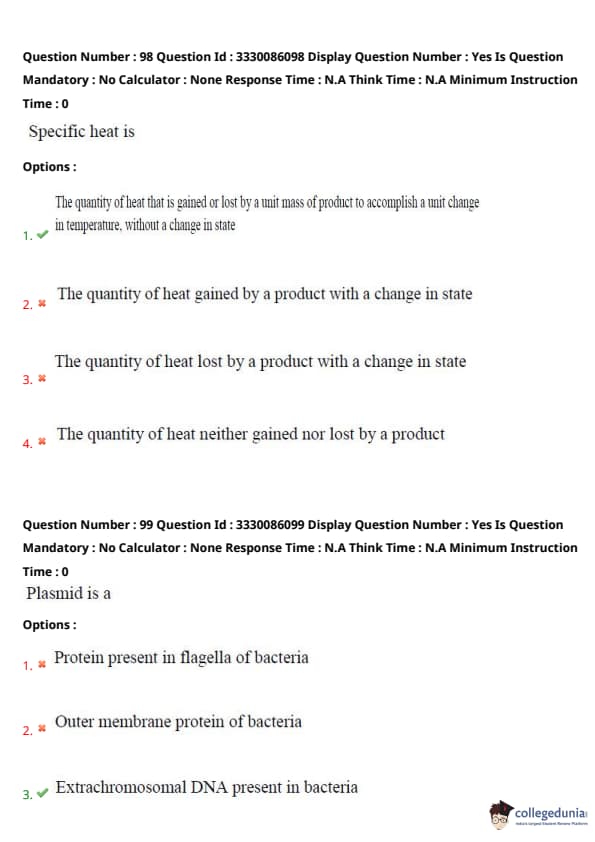
Question 98:
Specific heat is
- (1) The quantity of heat that is gained or lost by a unit mass of product to accomplish a unit change in temperature, without a change in state
- (2) The quantity of heat gained by a product with a change in state
- (3) The quantity of heat lost by a product with a change in state
- (4) The quantity of heat neither gained nor lost by a product
Question 99:
Plasmid is a
- (1) Protein present in flagella of bacteria
- (2) Outer membrane protein of bacteria
- (3) Extrachromosomal DNA present in bacteria
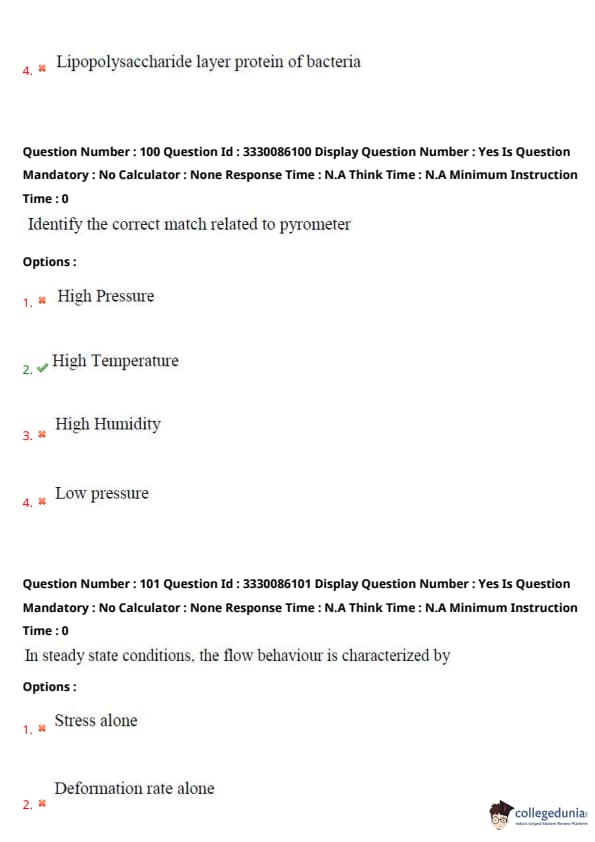
- (4) Lipopolysaccharide layer protein of bacteria
Question 100:
Identify the correct match related to pyrometer
- (1) High Pressure
- (2) High Temperature
- (3) High Humidity
- (4) Low Pressure
Question 101:
In steady state conditions, the flow behavior is characterized by
- (1) Stress alone
- (2) Deformation rate alone
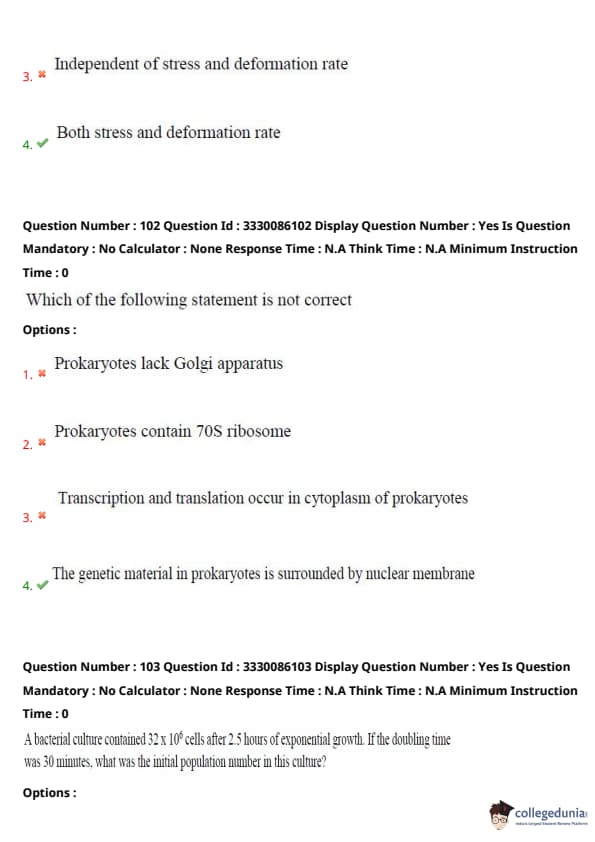
- (3) Independent of stress and deformation rate
- (4) Both stress and deformation rate
Question 102:
Which of the following statements is not correct
- (1) Prokaryotes lack Golgi apparatus
- (2) Prokaryotes contain 70S ribosome
- (3) Transcription and translation occur in cytoplasm of prokaryotes
- (4) The genetic material in prokaryotes is surrounded by nuclear membrane
Question 103:
A bacterial culture contained 32 × 10⁶ cells after 2.5 hours of exponential growth. If the doubling time was 30 minutes, what was the initial population number in this culture?
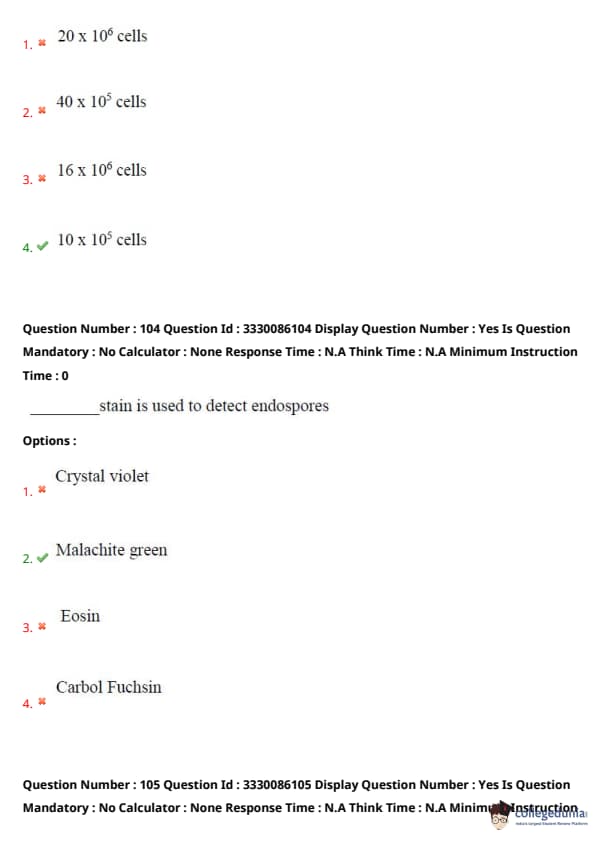
- (1) 20 × 10⁶ cells
- (2) 40 × 10⁵ cells
- (3) 16 × 10⁶ cells
- (4) 10 × 10⁵ cells
Question 104:
....... stain is used to detect endospores
- (1) Crystal violet
- (2) Malachite green
- (3) Eosin
- (4) Carbol Fuchsin
Question 105:
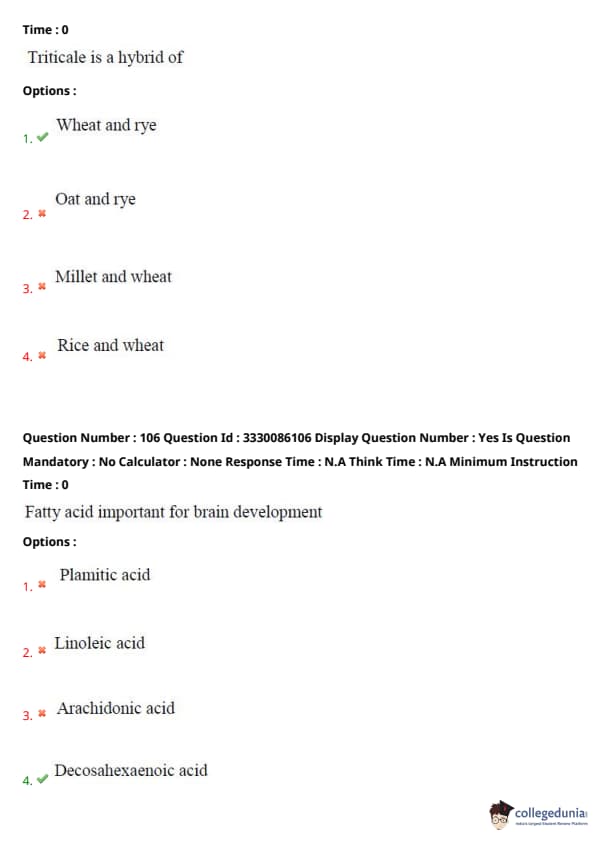
Triticale is a hybrid of
- (1) Wheat and rye
- (2) Oat and rye
- (3) Millet and wheat
- (4) Rice and wheat
Question 106:
Fatty acid important for brain development
- (1) Palmitic acid
- (2) Linoleic acid
- (3) Arachidonic acid
- (4) Decosahexaenoic acid
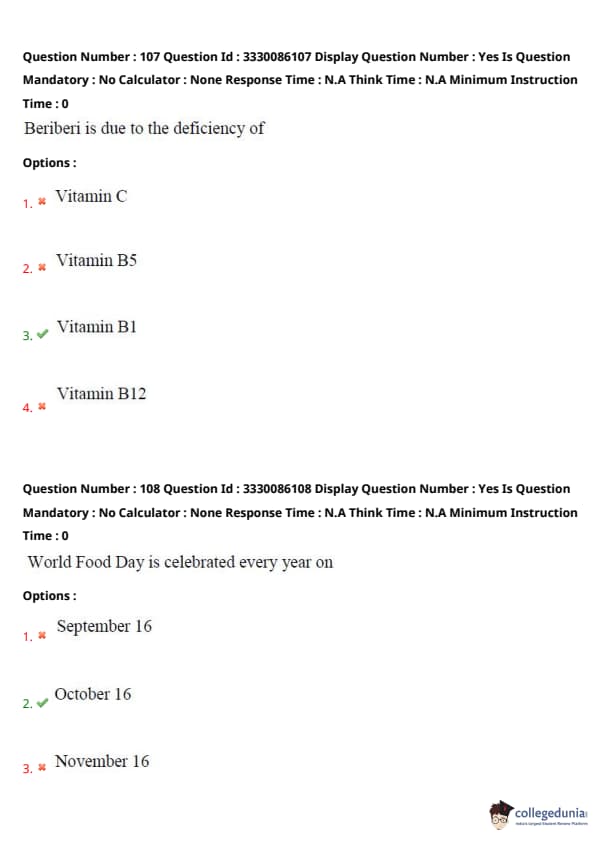
Question 107:
Beriberi is due to the deficiency of
- (1) Vitamin C
- (2) Vitamin B5
- (3) Vitamin B1
- (4) Vitamin B12
Question 108:
World Food Day is celebrated every year on
- (1) September 16
- (2) October 16
- (3) November 16
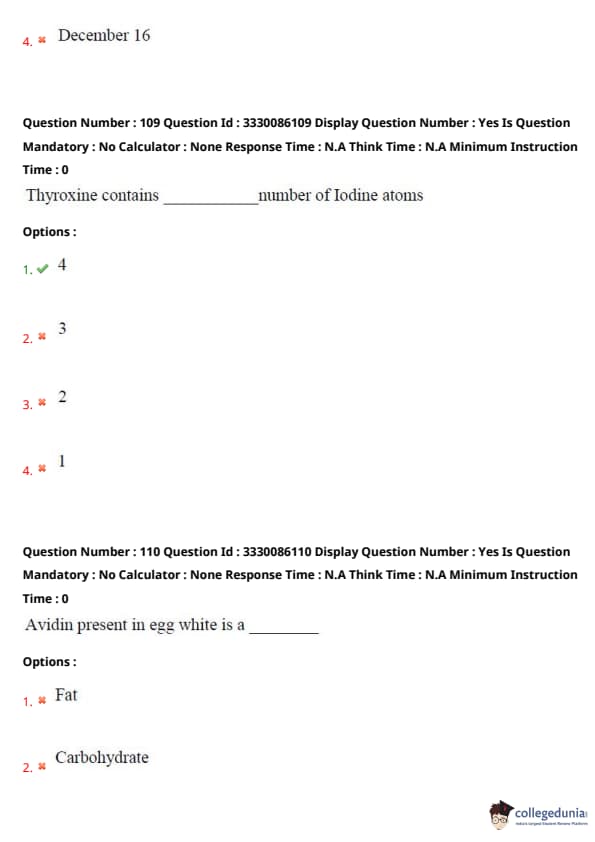
- (4) December 16
Question 109:
Thyroxine contains ........ number of Iodine atoms
Question 110:
Avidin present in egg white is a .........
- (1) Fat
- (2) Carbohydrate
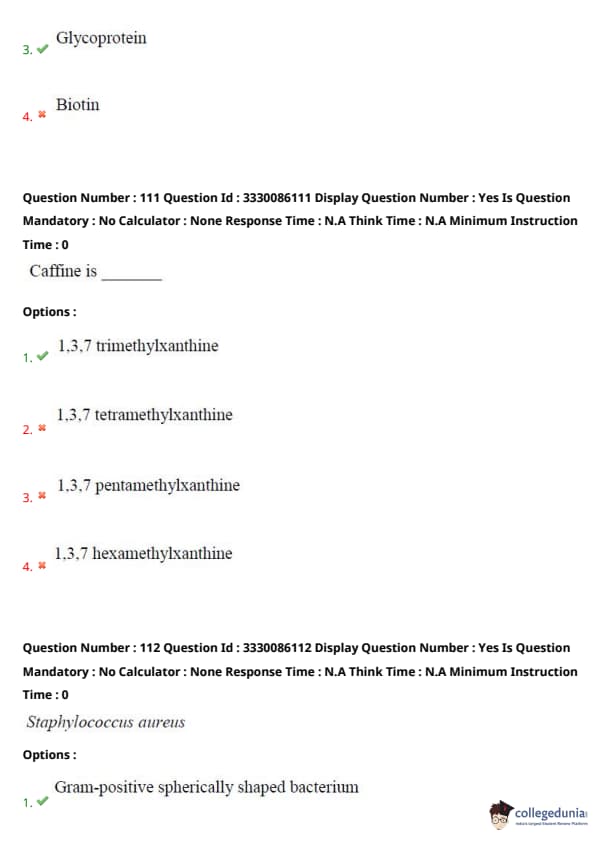
- (3) Glycoprotein
- (4) Biotin
Question 111:
Caffeine is .......
- (1) 1,3,7 trimethylxanthine
- (2) 1,3,7 tetramethylxanthine
- (3) 1,3,7 pentamethylxanthine
- (4) 1,3,7 hexamethylxanthine
Question 112:
Staphylococcus aureus is
- (1) Gram-positive spherically shaped bacterium
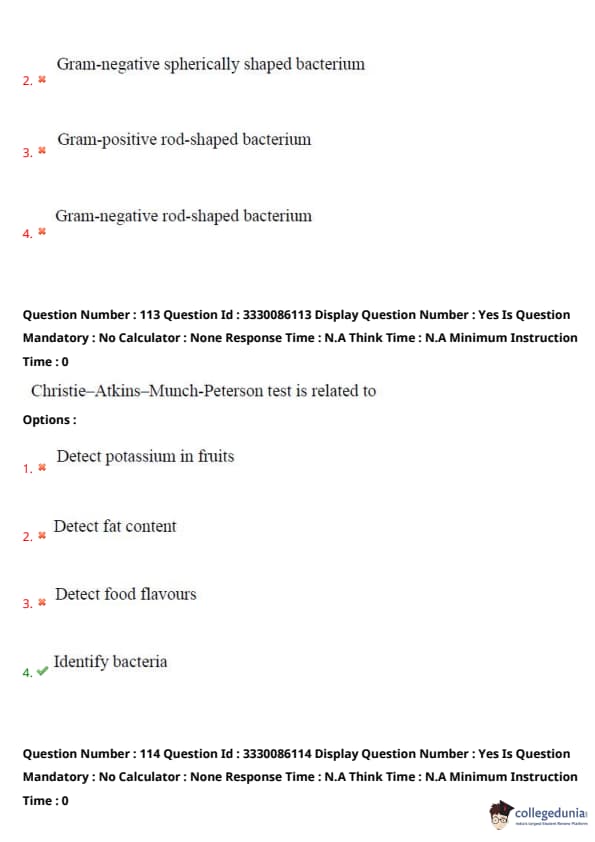
- (2) Gram-negative spherically shaped bacterium
- (3) Gram-positive rod-shaped bacterium
- (4) Gram-negative rod-shaped bacterium
Question 113:
Christie–Atkins–Munch-Peterson test is related to
- (1) Detect potassium in fruits
- (2) Detect fat content
- (3) Detect food flavours
- (4) Identify bacteria
Question 114:
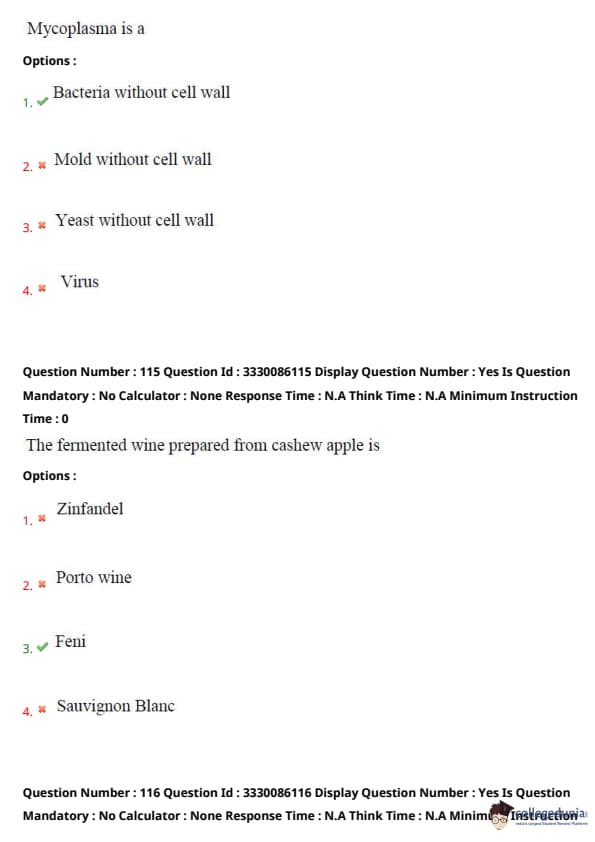
Mycoplasma is a
- (1) Bacteria without cell wall
- (2) Mold without cell wall
- (3) Yeast without cell wall
- (4) Virus
Question 115:
The fermented wine prepared from cashew apple is
- (1) Zinfandel
- (2) Porto wine
- (3) Feni
- (4) Sauvignon Blanc
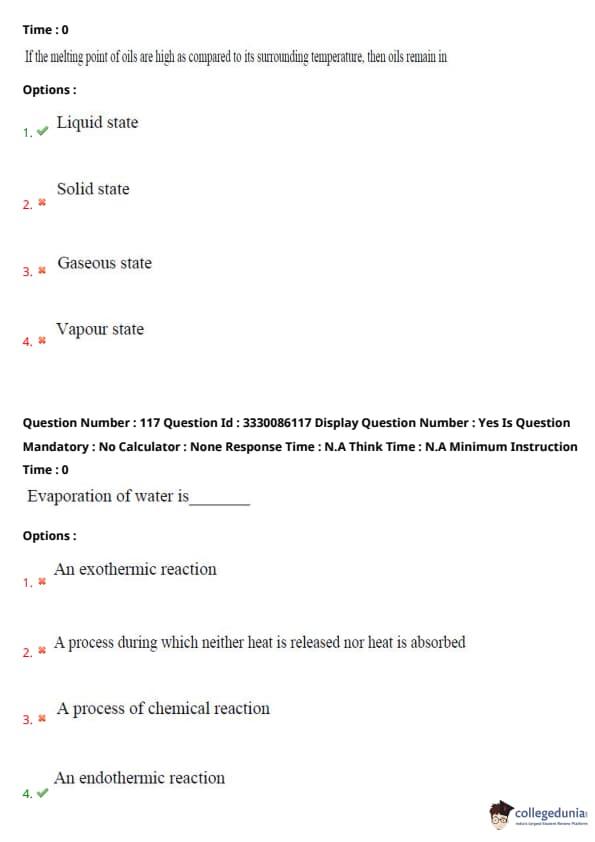
Question 116:
If the melting point of oils are high as compared to its surrounding temperature, then oils remain in
- (1) Liquid state
- (2) Solid state
- (3) Gaseous state
- (4) Vapour state
Question 117:
Evaporation of water is
- (1) An exothermic reaction
- (2) A process during which neither heat is released nor heat is absorbed
- (3) A process of chemical reaction
- (4) An endothermic reaction
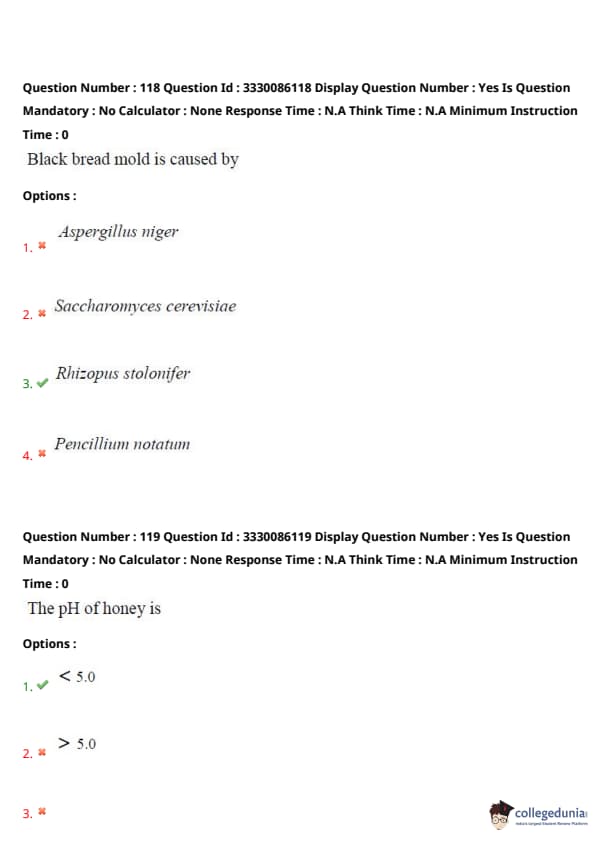
Question 118:
Black bread mold is caused by
- (1) Aspergillus niger
- (2) Saccharomyces cerevisiae
- (3) Rhizopus stolonifer
- (4) Penicillium notatum
Question 119:
The pH of honey is
- (1) < 5.0
- (2) > 5.0
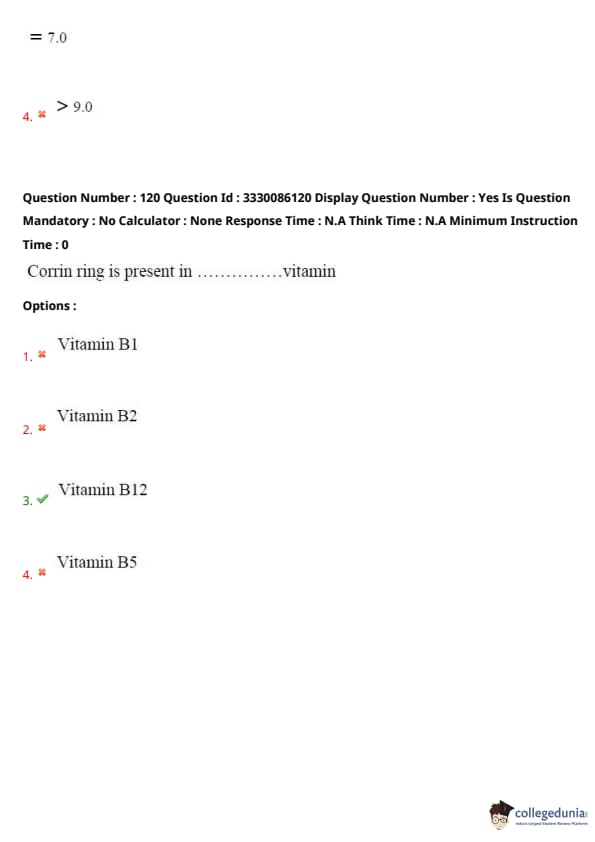
- (3) = 7.0
- (4) > 9.0
Question 120:
Corrin ring is present in ...........vitamin
- (1) Vitamin B1
- (2) Vitamin B2
- (3) Vitamin B12
- (4) Vitamin B5





 Download



Comments