AP PGECET Question Paper 2025 for Biotechnology is available for download here with answer key and solution PDF. AP PGECET 2025 was conducted from June 6 to June 8 in two shifts.
AP PGECET Question Paper 2025 consists of 120 MCQ-based questions in total carrying 1 mark each to be attempted in the duration of 2 hours.
AP PGECET Biotechnology Question Paper
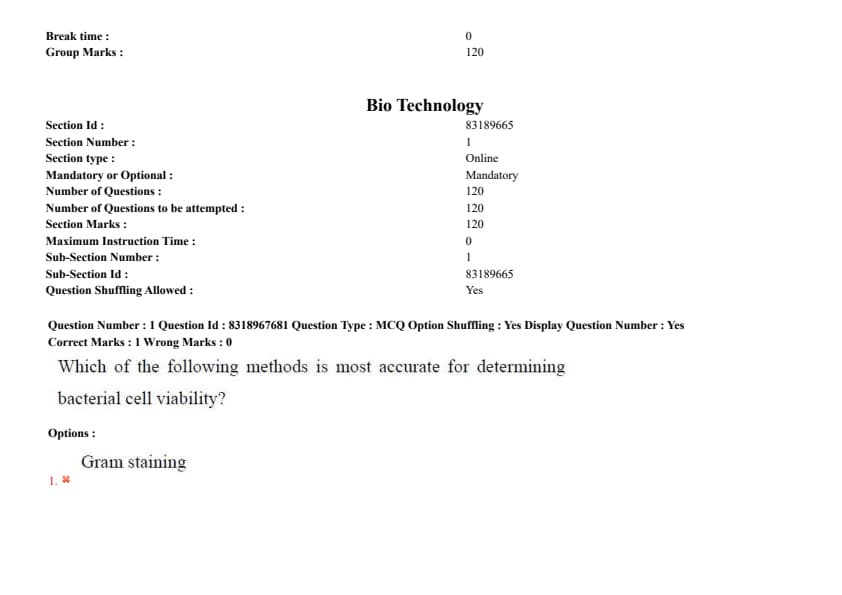
Question 1:
Which one of the following is most accurate for determining bacterial cell viability?
- (1) Gram staining
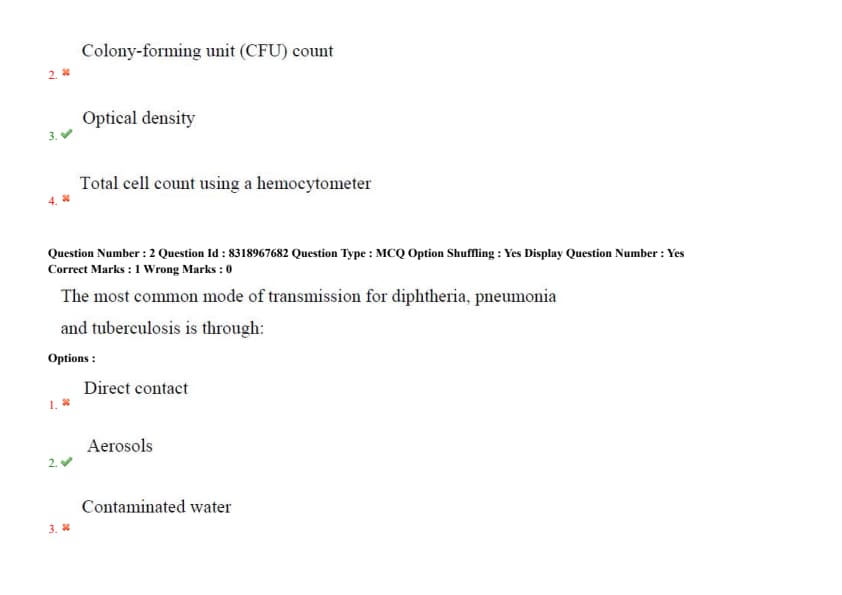
- (2) Colony-forming unit (CFU) count
- (3) Optical density
- (4) Total cell count using a hemocytometer
Question 2:
The most common mode of transmission for diphtheria, pneumonia, and tuberculosis is through:
- (1) Direct contact
- (2) Aerosols
- (3) Contaminated water
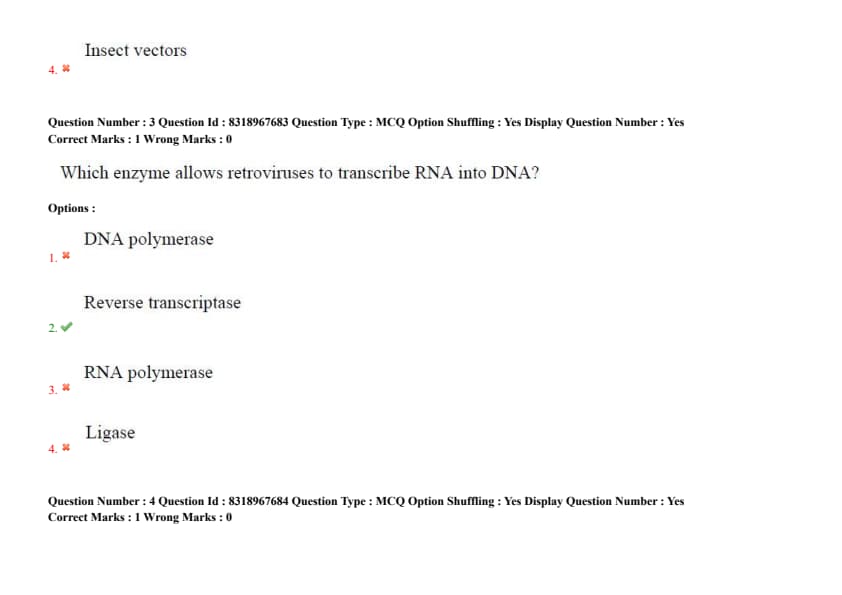
- (4) Insect vectors
Question 3:
Which enzyme allows retroviruses to transcribe RNA into DNA?
- (1) DNA polymerase
- (2) Reverse transcriptase
- (3) RNA polymerase
- (4) Ligase
Question 4:
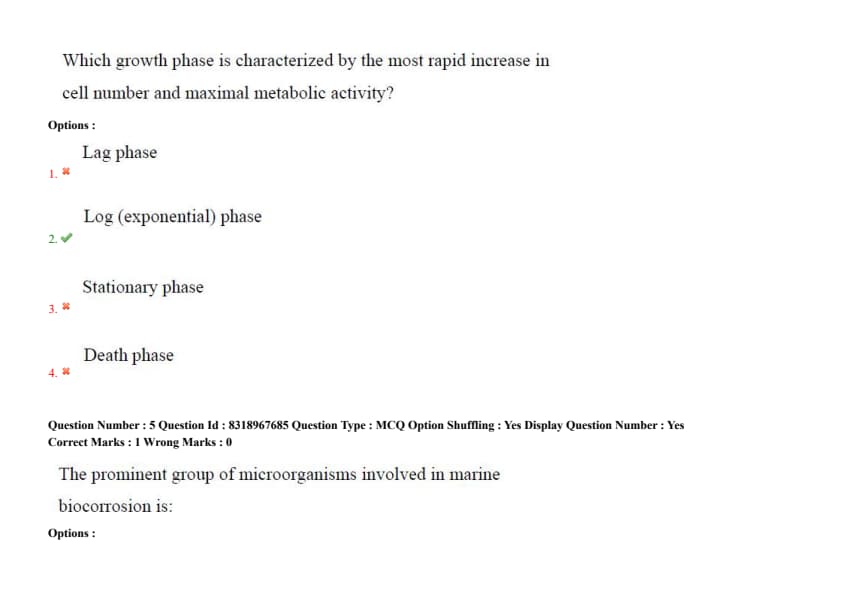
Which growth phase is characterized by the most rapid increase in cell number and maximal metabolic activity?
- (1) Lag phase
- (2) Log (exponential) phase
- (3) Stationary phase
- (4) Death phase
Question 5:
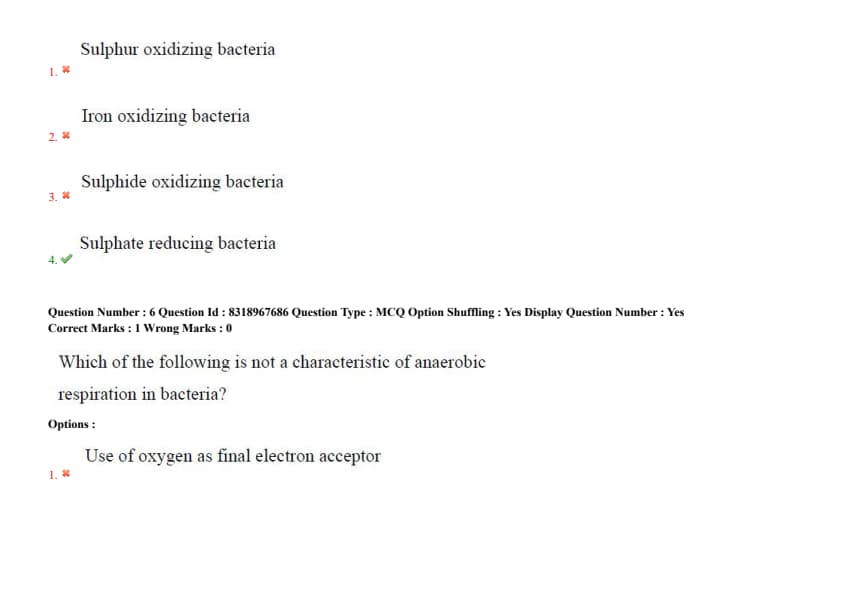
The prominent group of microorganisms involved in marine biocorrosion is:
- (1) Sulphur oxidizing bacteria
- (2) Iron oxidizing bacteria
- (3) Sulphide oxidizing bacteria
- (4) Sulphate reducing bacteria
Question 6:
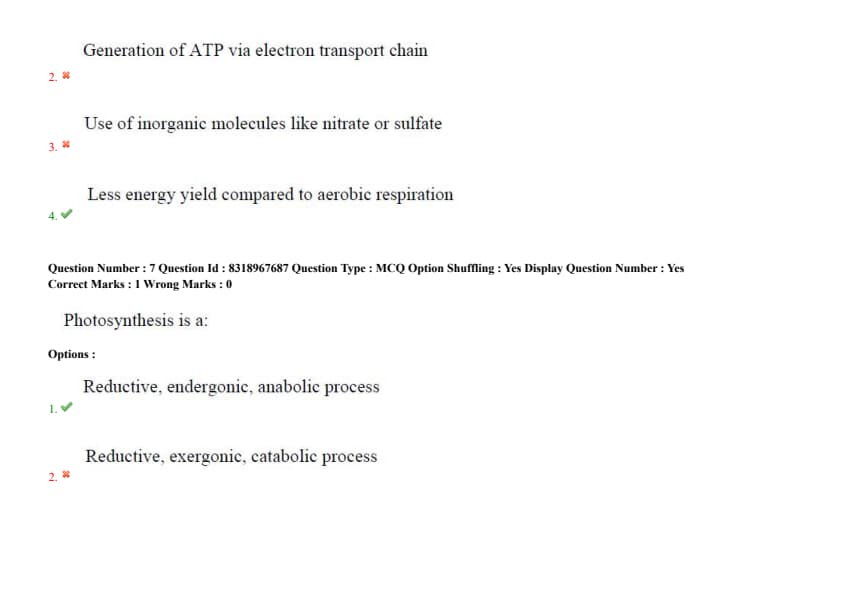
Which of the following is not a characteristic of anaerobic respiration in bacteria?
- (1) Use of oxygen as final electron acceptor
- (2) Generation of ATP via electron transport chain
- (3) Use of inorganic molecules like nitrate or sulfate
- (4) Less energy yield compared to aerobic respiration
Question 7:
Photosynthesis is a:
- (1) Reductive, endergonic, anabolic process
- (2) Reductive, exergonic, catabolic process
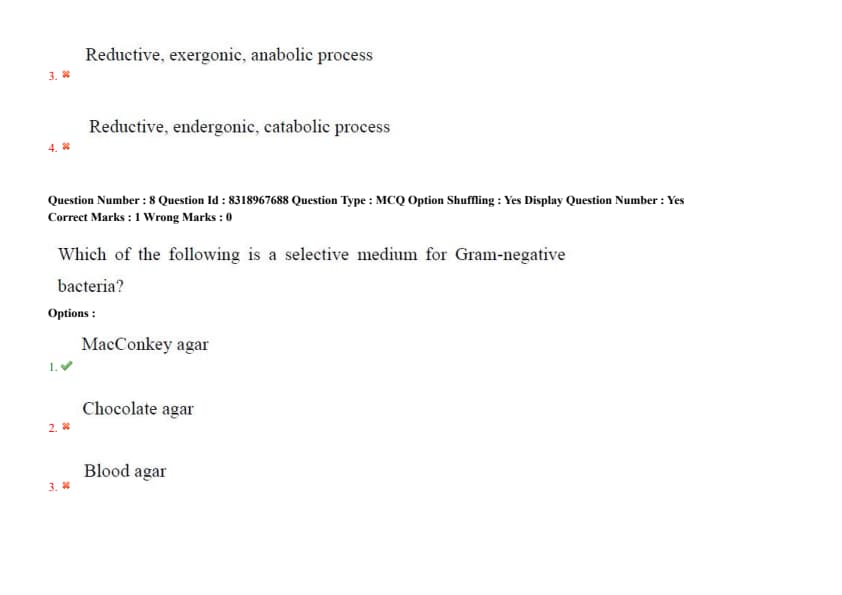
- (3) Reductive, exergonic, anabolic process
- (4) Reductive, endergonic, catabolic process
Question 8:
Which of the following is a selective medium for Gram-negative bacteria?
- (1) MacConkey agar
- (2) Chocolate agar
- (3) Blood agar
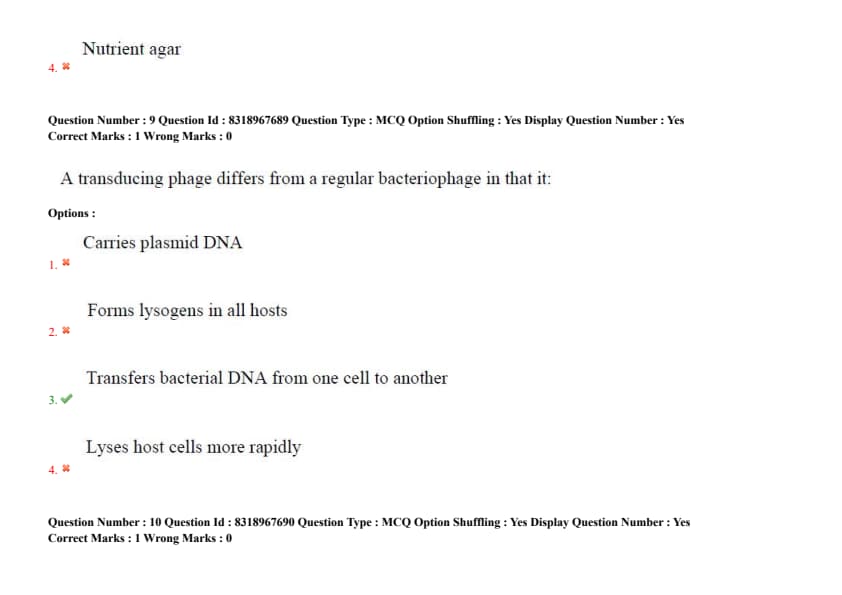
- (4) Nutrient agar
Question 9:
A transducing phage differs from a regular bacteriophage in that it:
- (1) Carries plasmid DNA
- (2) Forms lysogens in all hosts
- (3) Transfers bacterial DNA from one cell to another
- (4) Lyses host cells more rapidly
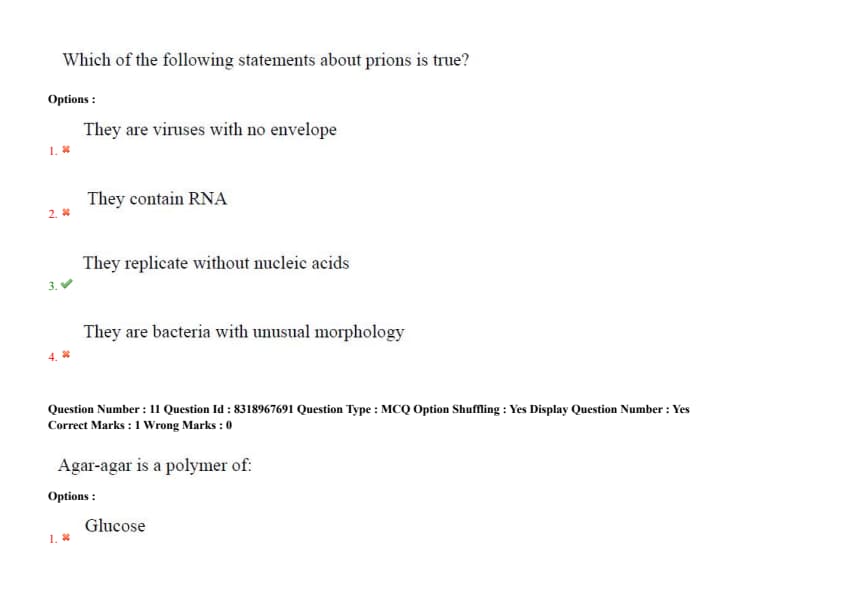
Question 10:
Which of the following statements about prions is true?
- (1) They are viruses with no envelope
- (2) They contain RNA
- (3) They replicate without nucleic acids
- (4) They are bacteria with unusual morphology
Question 11:
Agar-agar is a polymer of:
- (1) Glucose
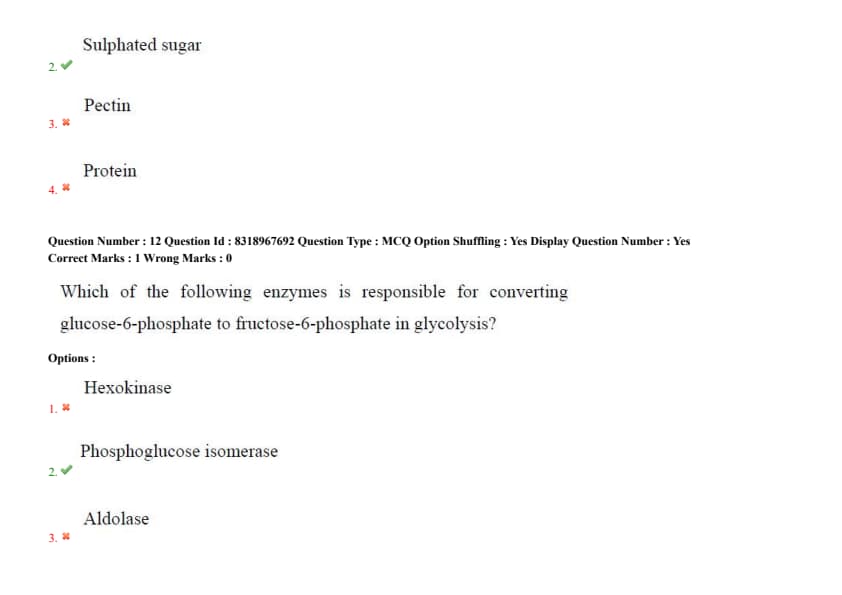
- (2) Sulphated sugar
- (3) Pectin
- (4) Protein
Question 12:
Which of the following enzymes is responsible for converting glucose-6-phosphate to fructose-6-phosphate in glycolysis?
- (1) Hexokinase
- (2) Phosphoglucose isomerase
- (3) Aldolase
- (4) Phosphofructokinase-1
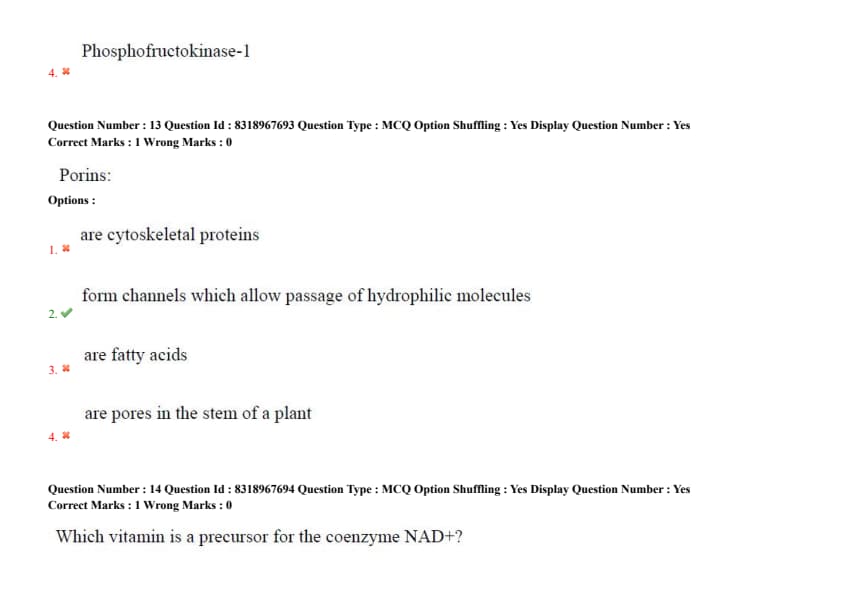
Question 13:
Porins:
- (1) Are cytoskeletal proteins
- (2) Form channels which allow passage of hydrophilic molecules
- (3) Are fatty acids
- (4) Are pores in the stem of a plant
Question 14:
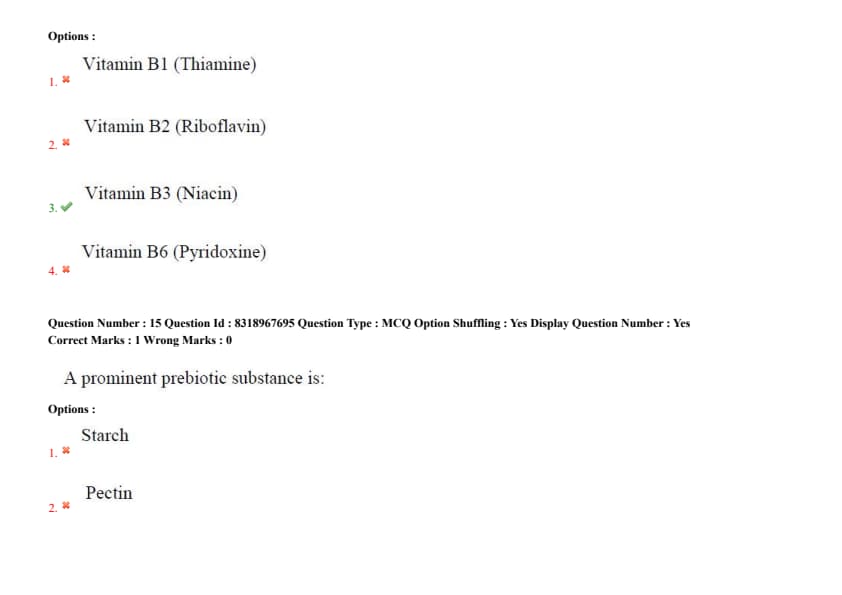
Which vitamin is a precursor for the coenzyme NAD+?
- (1) Vitamin B1 (Thiamine)
- (2) Vitamin B2 (Riboflavin)
- (3) Vitamin B3 (Niacin)
- (4) Vitamin B6 (Pyridoxine)
Question 15:
A prominent prebiotic substance is:
- (1) Starch
- (2) Pectin
- (3) Fructo oligosaccharide
- (4) Cellulose
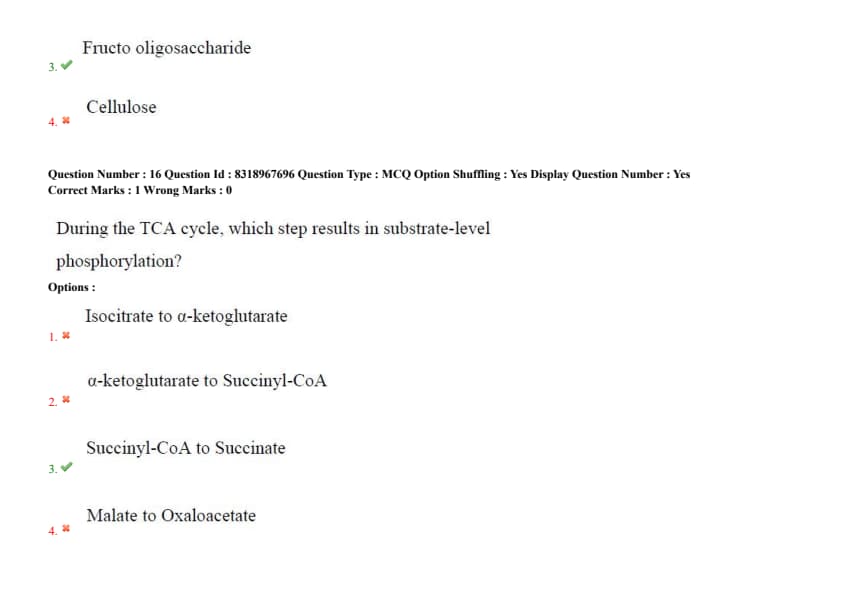
Question 16:
During the TCA cycle, which step results in substrate-level phosphorylation?
- (1) Isocitrate to α-ketoglutarate
- (2) α-ketoglutarate to Succinyl-CoA
- (3) Succinyl-CoA to Succinate
- (4) Malate to Oxaloacetate
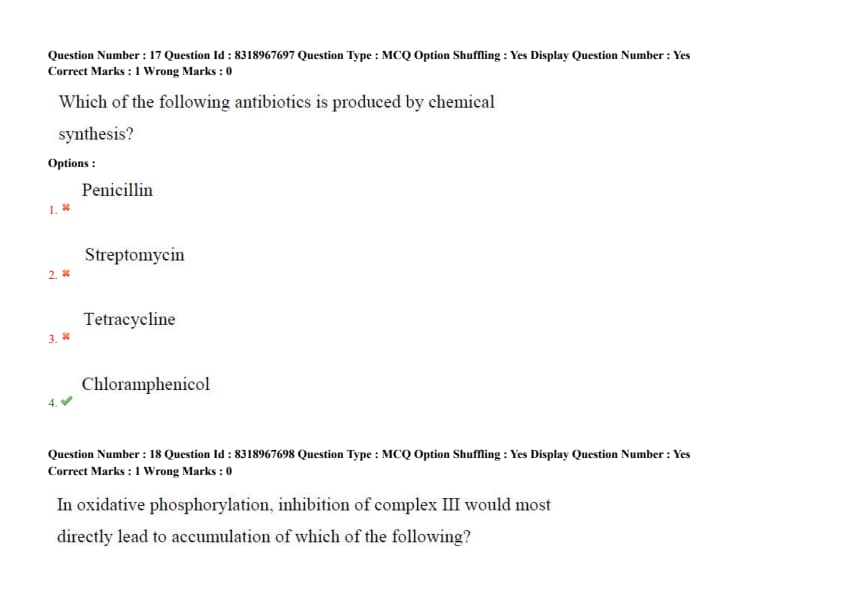
Question 17:
Which of the following antibiotics is produced by chemical synthesis?
- (1) Penicillin
- (2) Streptomycin
- (3) Tetracycline
- (4) Chloramphenicol
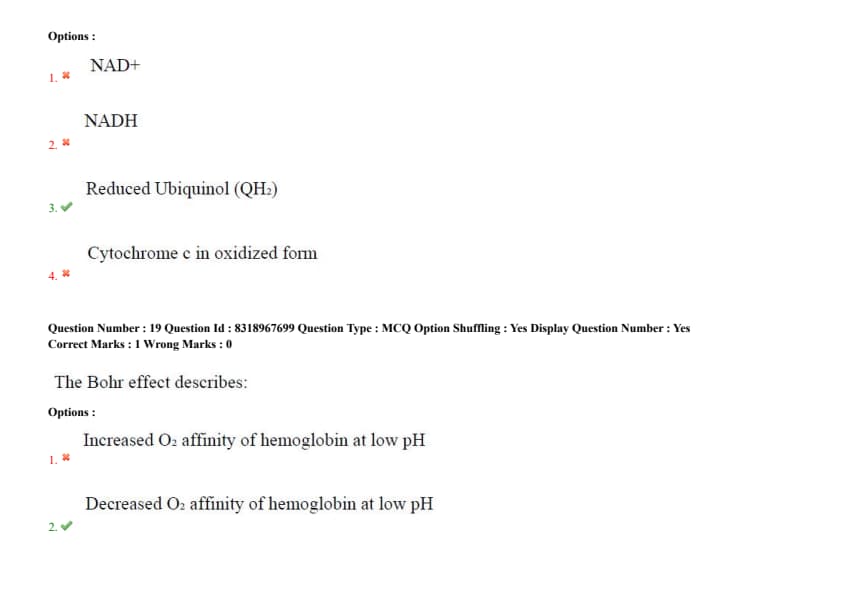
Question 18:
In oxidative phosphorylation, inhibition of complex III would most directly lead to accumulation of which of the following?
- (1) NAD+
- (2) NADH
- (3) Reduced Ubiquinol (QH2)
- (4) Cytochrome c in oxidized form
Question 19:
The Bohr effect describes:
- (1) Increased O\(_2\) affinity of hemoglobin at low pH
- (2) Decreased O\(_2\) affinity of hemoglobin at low pH
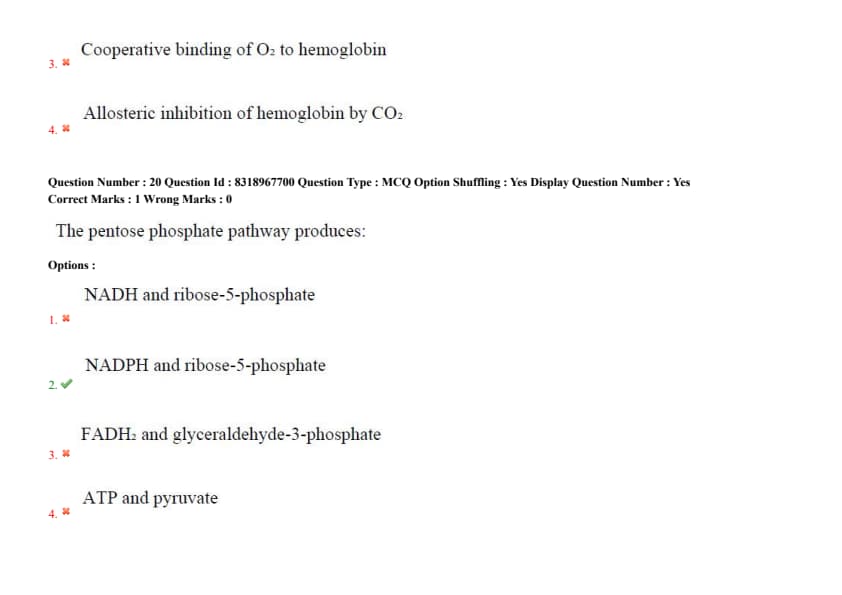
- (3) Cooperative binding of O\(_2\) to hemoglobin
- (4) Allosteric inhibition of hemoglobin by CO\(_2\)
Question 20:
The pentose phosphate pathway produces:
- (1) NADH and ribose-5-phosphate
- (2) NADPH and ribose-5-phosphate
- (3) FADH\(_2\) and glyceraldehyde-3-phosphate
- (4) ATP and pyruvate
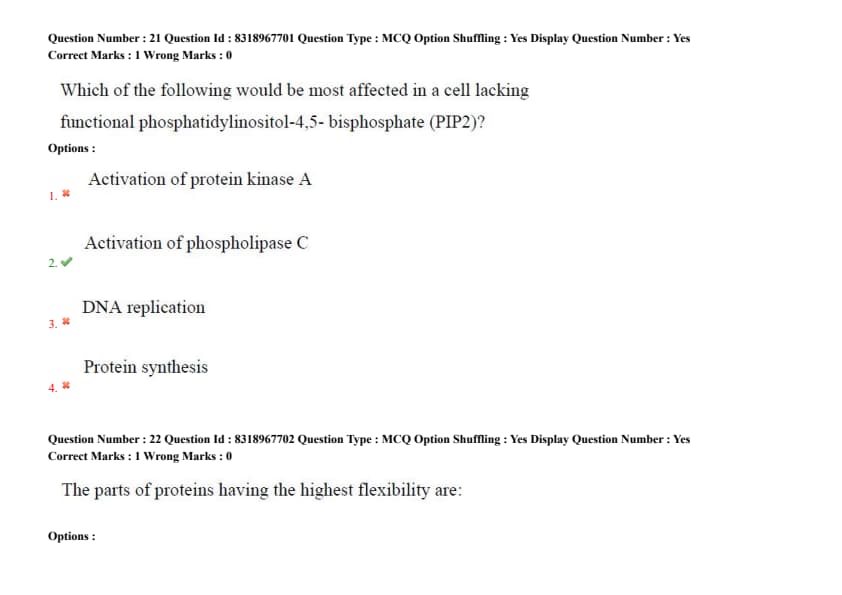
Question 21:
Which of the following would be most affected in a cell lacking functional phosphatidylinositol-4,5-bisphosphate (PIP2)?
- (1) Activation of protein kinase A
- (2) Activation of phospholipase C
- (3) DNA replication
- (4) Protein synthesis
Question 22:
The parts of proteins having the highest flexibility are:
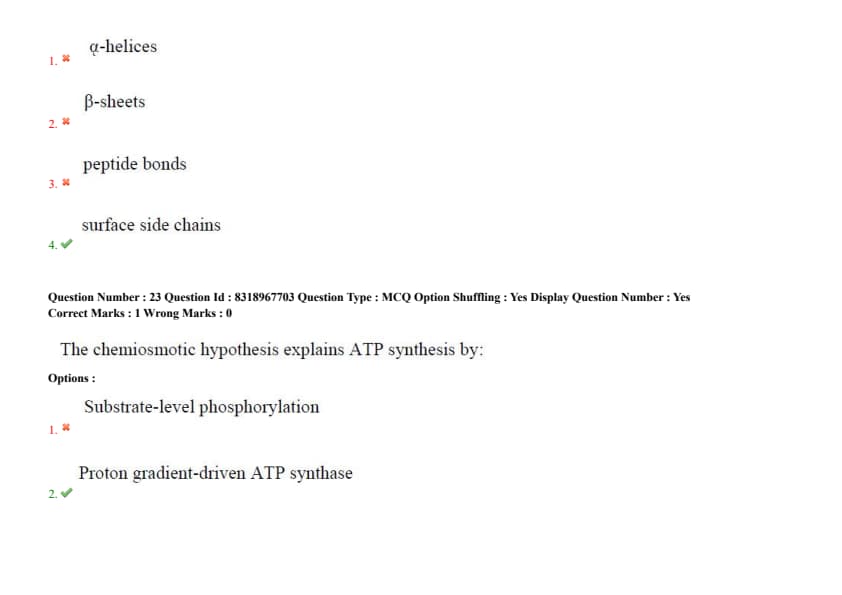
- (1) α-helices
- (2) β-sheets
- (3) Peptide bonds
- (4) Surface side chains
Question 23:
The chemiosmotic hypothesis explains ATP synthesis by:
- (1) Substrate-level phosphorylation
- (2) Proton gradient-driven ATP synthase
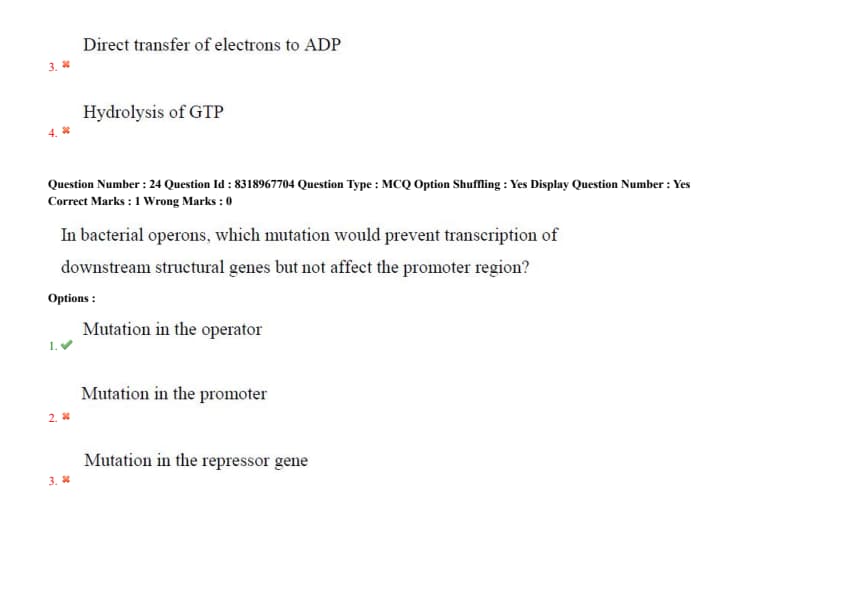
- (3) Direct transfer of electrons to ADP
- (4) Hydrolysis of GTP
Question 24:
In bacterial operons, which mutation would prevent transcription of downstream structural genes but not affect the promoter region?
- (1) Mutation in the operator
- (2) Mutation in the promoter
- (3) Mutation in the repressor gene
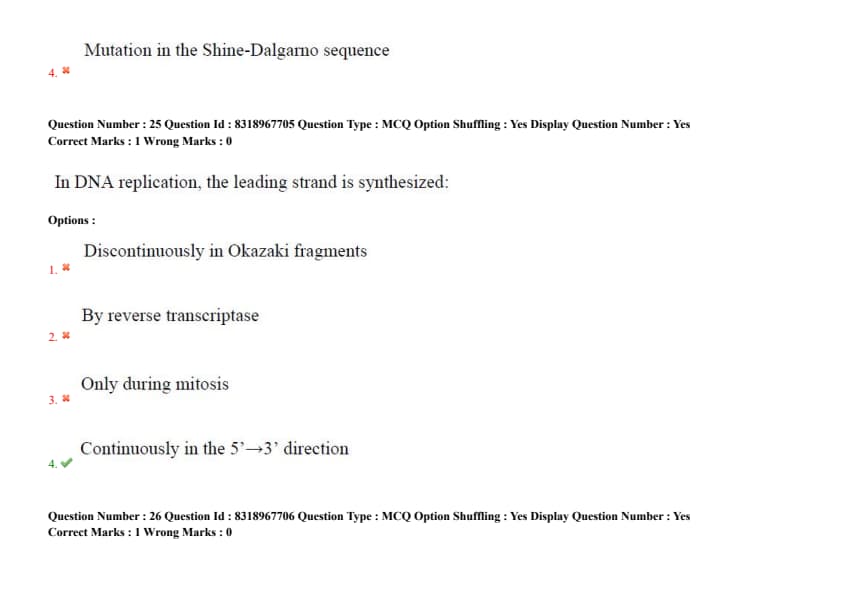
- (4) Mutation in the Shine-Dalgarno sequence
Question 25:
In DNA replication, the leading strand is synthesized:
- (1) Discontinuously in Okazaki fragments
- (2) By reverse transcriptase
- (3) Only during mitosis
- (4) Continuously in the 5' → 3' direction
Question 26:
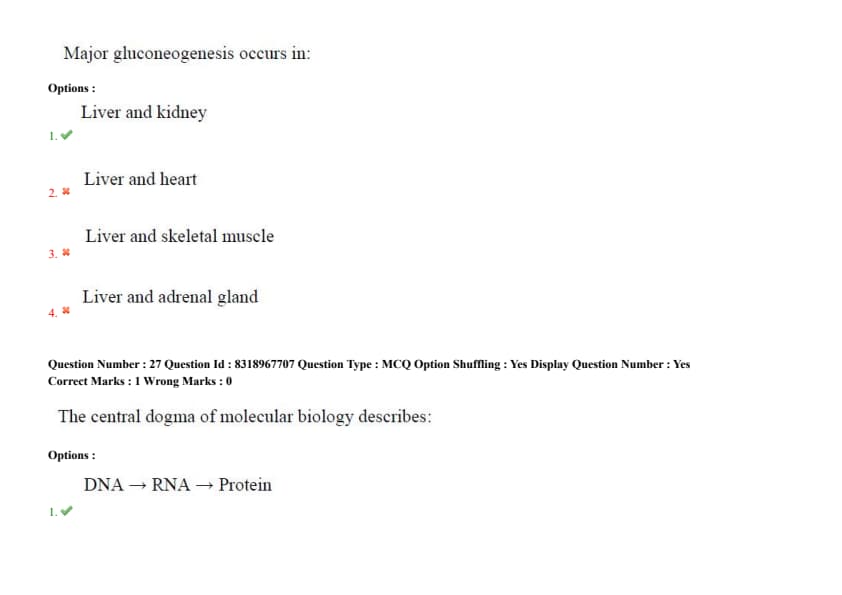
Major gluconeogenesis occurs in:
- (1) Liver and kidney
- (2) Liver and heart
- (3) Liver and skeletal muscle
- (4) Liver and adrenal gland
Question 27:
The central dogma of molecular biology describes:
- (1) DNA \(\rightarrow\) RNA \(\rightarrow\) Protein
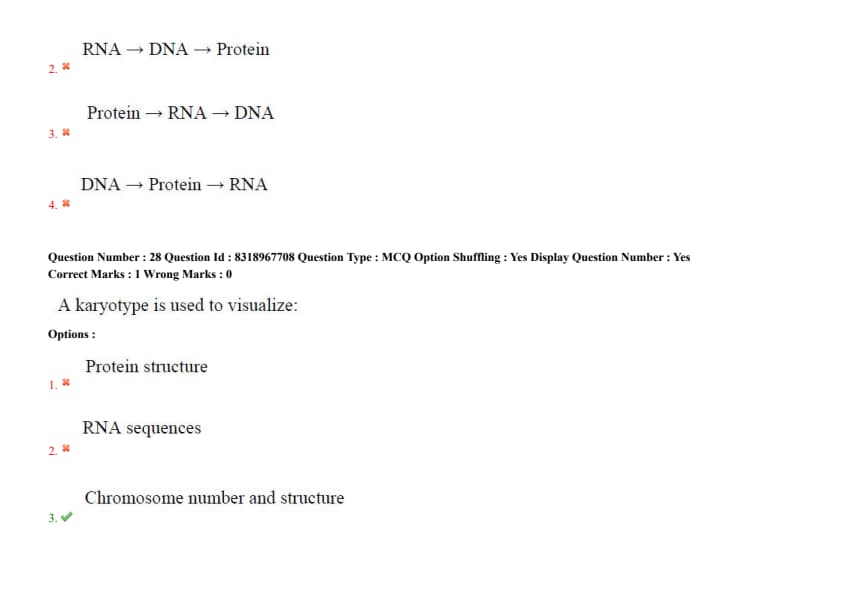
- (2) RNA \(\rightarrow\) DNA \(\rightarrow\) Protein
- (3) Protein \(\rightarrow\) RNA \(\rightarrow\) DNA
- (4) DNA \(\rightarrow\) Protein \(\rightarrow\) RNA
Question 28:
A karyotype is used to visualize:
- (1) Protein structure
- (2) RNA sequences
- (3) Chromosome number and structure
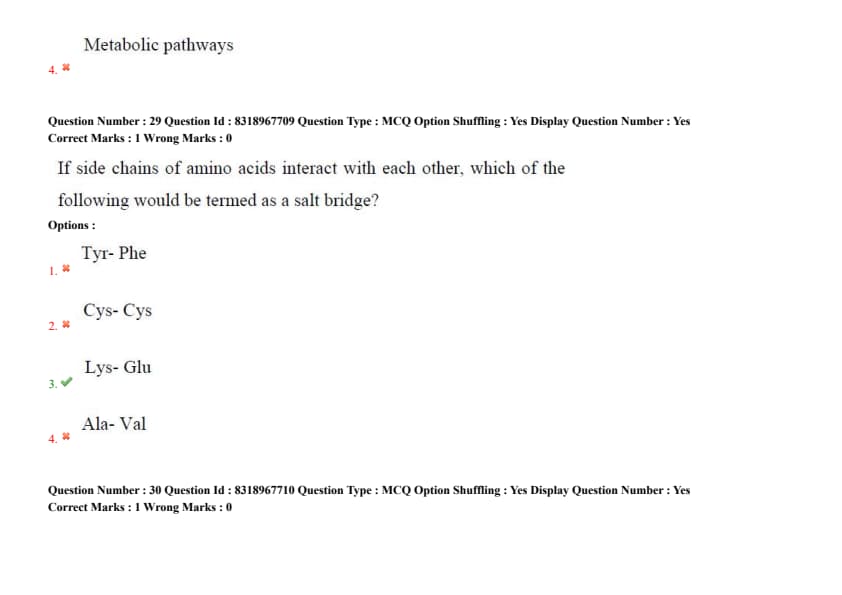
- (4) Metabolic pathways
Question 29:
If side chains of amino acids interact with each other, which of the following would be termed as a salt bridge?
- (1) Tyr - Phe
- (2) Cys - Cys
- (3) Lys - Glu
- (4) Ala - Val
Question 30:
In eukaryotic transcription, the carboxy-terminal domain (CTD) of RNA polymerase II is essential for:
- (1) DNA binding specificity
- (2) Sigma factor recruitment
- (3) RNA splicing, capping, and polyadenylation coordination
- (4) Enhancer binding
Question 31:
Which of the following organisms typically get their carbon for biosynthesis from carbon dioxide?
- (1) Glucose fermenting bacteria
- (2) Anaerobic glucose respiring bacteria
- (3) Aerobic glucose respiring bacteria
- (4) Ammonia oxidizing bacteria
Question 32:
The Ti plasmid, used in plant genetic engineering, is naturally found in:
- (1) Agrobacterium tumefaciens
- (2) Escherichia coli
- (3) Bacillus thuringiensis
- (4) Saccharomyces cerevisiae
Question 33:
A child inherits two different mutant alleles for a recessive disease gene from each parent. This condition is known as:
- (1) Compound heterozygosity
- (2) Homozygosity
- (3) Dominant negative mutation
- (4) Heteroplasmy
Question 34:
Which of the following are components of a phospholipid?
- (1) Cholesterol, glycerol, fatty acids
- (2) Fatty acids, phosphate group, glycerol
- (3) Glycerol, amino acids, phosphate group
- (4) Phosphate group, cholesterol, monosaccharides
Question 35:
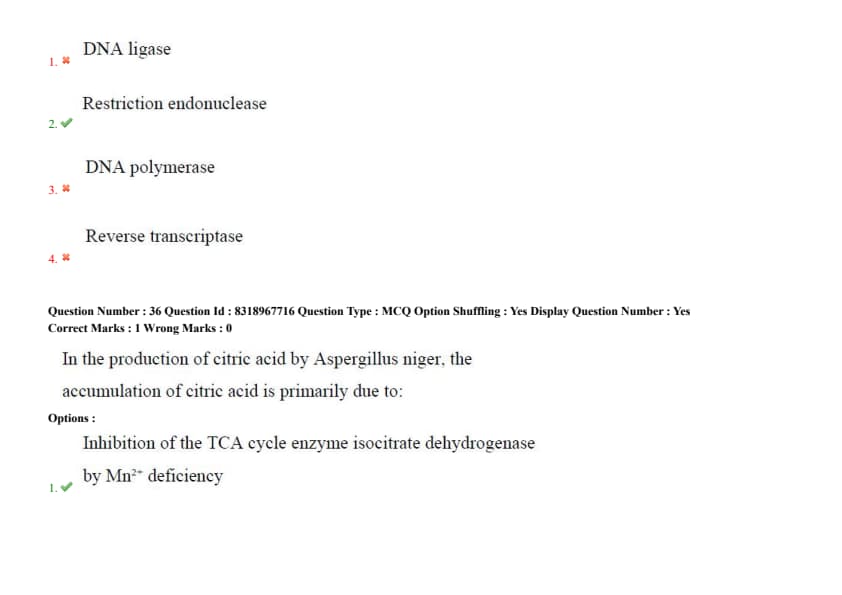
Which enzyme is crucial for the cleavage of DNA at specific sites in genetic engineering?
- (1) DNA ligase
- (2) Restriction endonuclease
- (3) DNA polymerase
- (4) Reverse transcriptase
Question 36:
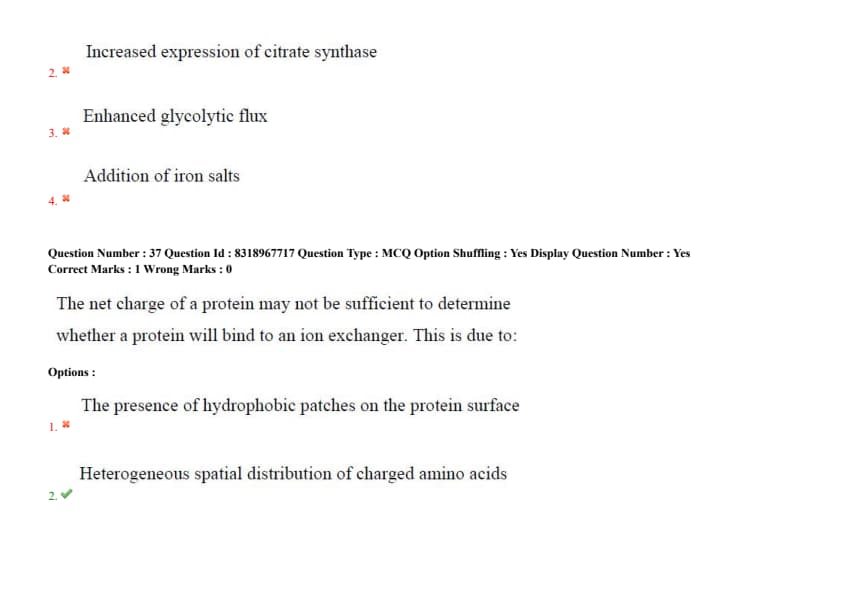
In the production of citric acid by Aspergillus niger, the accumulation of citric acid is primarily due to:
- (1) Inhibition of the TCA cycle enzyme isocitrate dehydrogenase by Mn\(^{2+}\) deficiency
- (2) Increased expression of citrate synthase
- (3) Enhanced glycolytic flux
- (4) Addition of iron salts
Question 37:
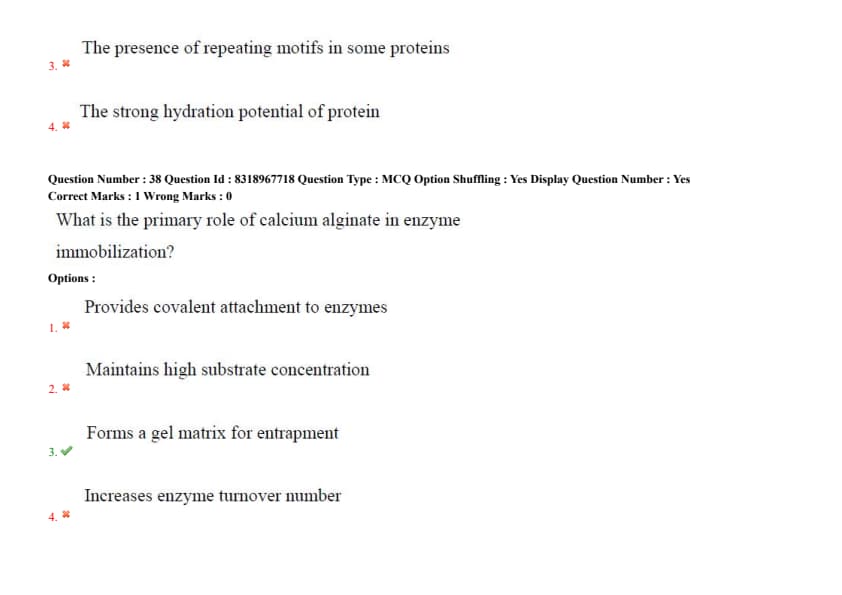
The net charge of a protein may not be sufficient to determine whether a protein will bind to an ion exchanger. This is due to:
- (1) The presence of hydrophobic patches on the protein surface
- (2) Heterogeneous spatial distribution of charged amino acids
- (3) The presence of repeating motifs in some proteins
- (4) The strong hydration potential of protein
Question 38:
What is the primary role of calcium alginate in enzyme immobilization?
- (1) Provides covalent attachment to enzymes
- (2) Maintains high substrate concentration
- (3) Forms a gel matrix for entrapment
- (4) Increases enzyme turnover number
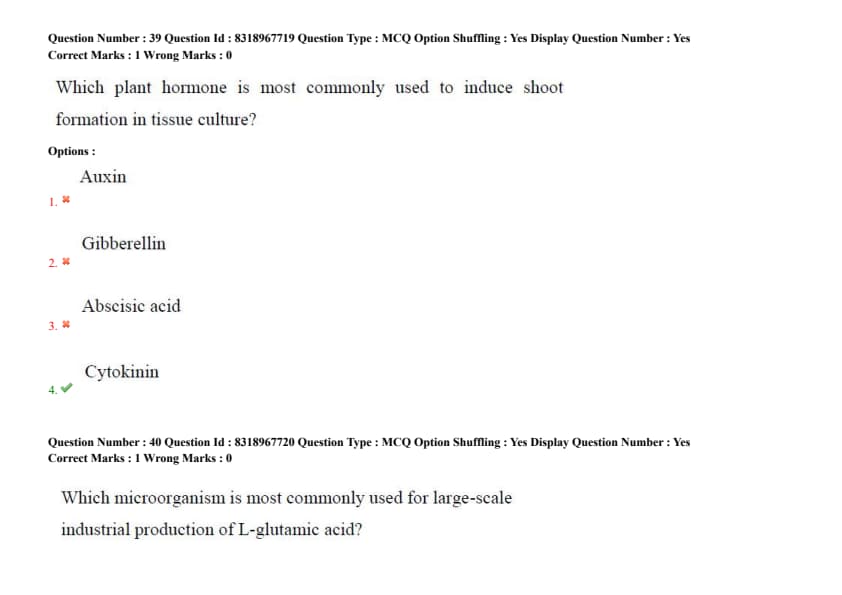
Question 39:
Which plant hormone is most commonly used to induce shoot formation in tissue culture?
- (1) Auxin
- (2) Gibberellin
- (3) Abscisic acid
- (4) Cytokinin
Question 40:
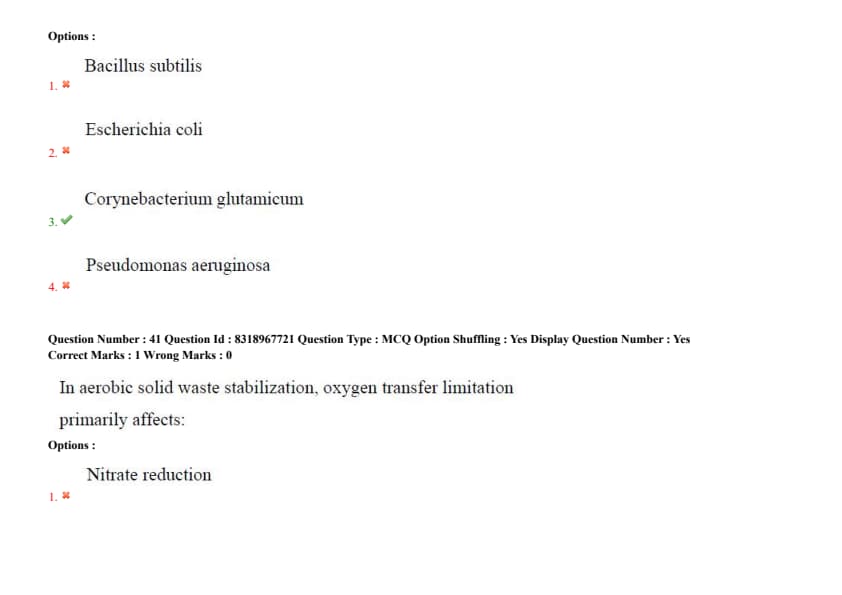
Which microorganism is most commonly used for large-scale industrial production of L-glutamic acid?
- (1) Bacillus subtilis
- (2) Escherichia coli
- (3) Corynebacterium glutamicum
- (4) Pseudomonas aeruginosa
Question 41:
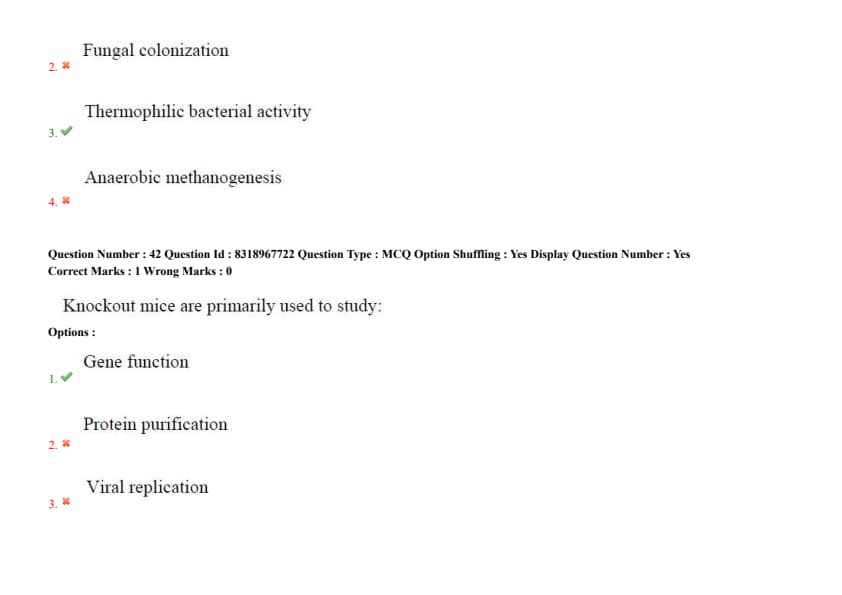
In aerobic solid waste stabilization, oxygen transfer limitation primarily affects:
- (1) Nitrate reduction
- (2) Fungal colonization
- (3) Thermophilic bacterial activity
- (4) Anaerobic methanogenesis
Question 42:
Knockout mice are primarily used to study:
- (1) Gene function
- (2) Protein purification
- (3) Viral replication
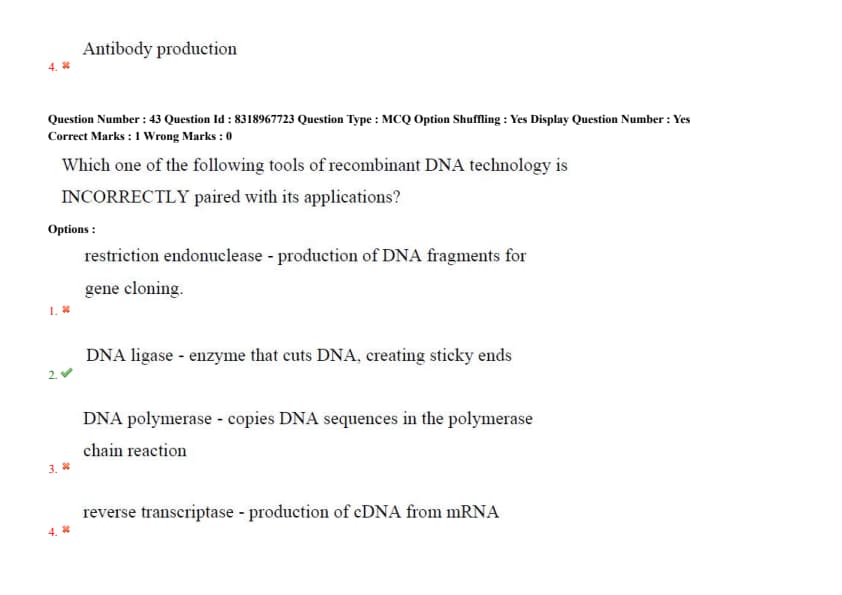
- (4) Antibody production
Question 43:
Which one of the following tools of recombinant DNA technology is INCORRECTLY paired with its applications?
- (1) restriction endonuclease - production of DNA fragments for gene cloning.
- (2) DNA ligase - enzyme that cuts DNA, creating sticky ends
- (3) DNA polymerase - copies DNA sequences in the polymerase chain reaction
- (4) reverse transcriptase - production of cDNA from mRNA
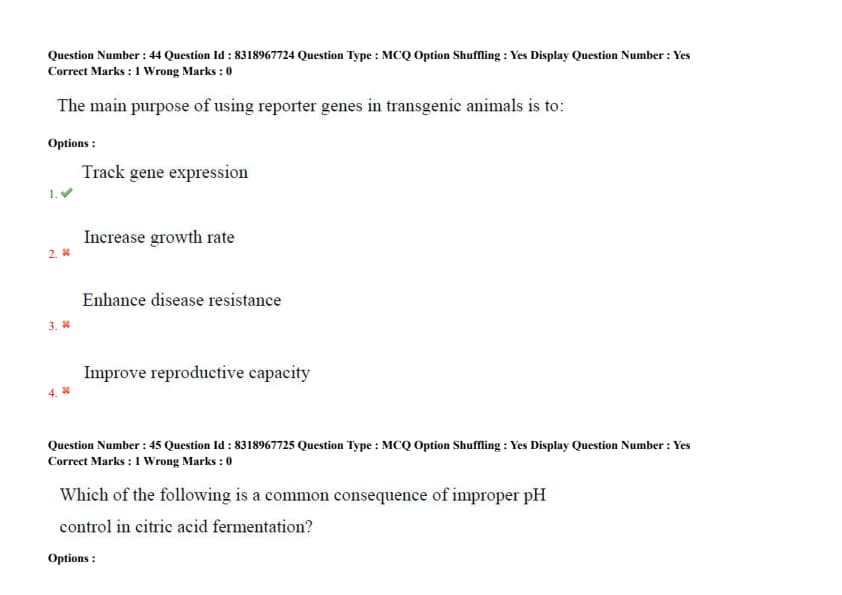
Question 44:
The main purpose of using reporter genes in transgenic animals is to:
- (1) Track gene expression
- (2) Increase growth rate
- (3) Enhance disease resistance
- (4) Improve reproductive capacity
Question 45:
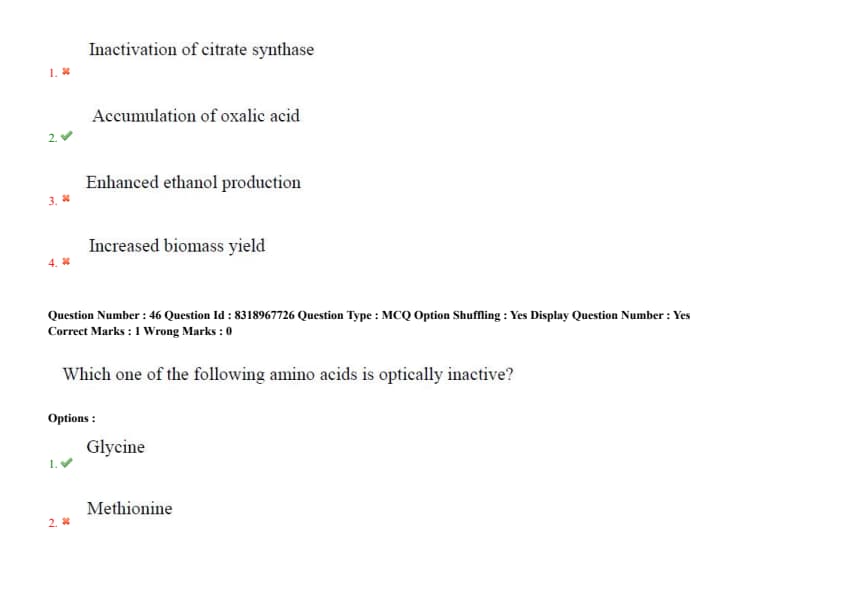
Which of the following is a common consequence of improper pH control in citric acid fermentation?
- (1) Inactivation of citrate synthase
- (2) Accumulation of oxalic acid
- (3) Enhanced ethanol production
- (4) Increased biomass yield
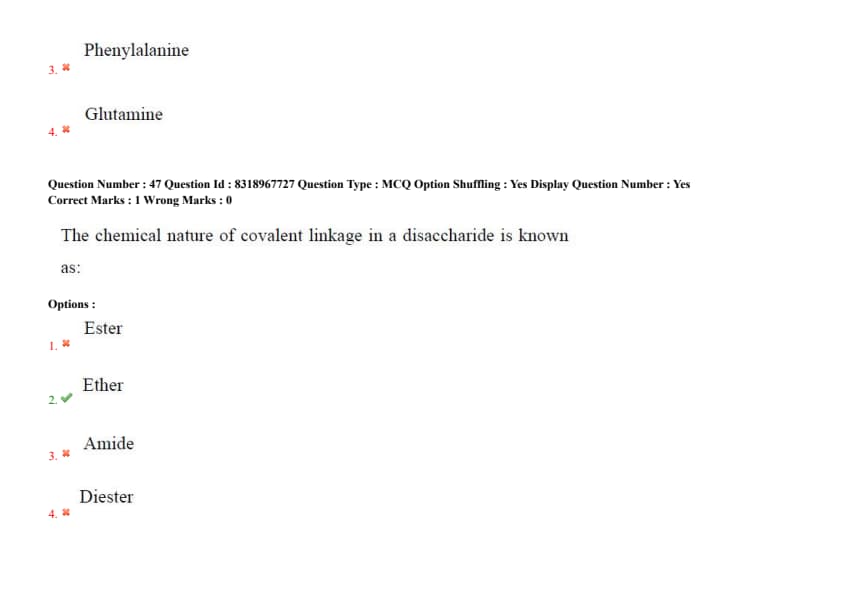
Question 46:
Which one of the following amino acids is optically inactive?
- (1) Glycine
- (2) Methionine
- (3) Phenylalanine
- (4) Glutamine
Question 47:
The chemical nature of covalent linkage in a disaccharide is known as:
- (1) Ester
- (2) Ether
- (3) Amide
- (4) Diester
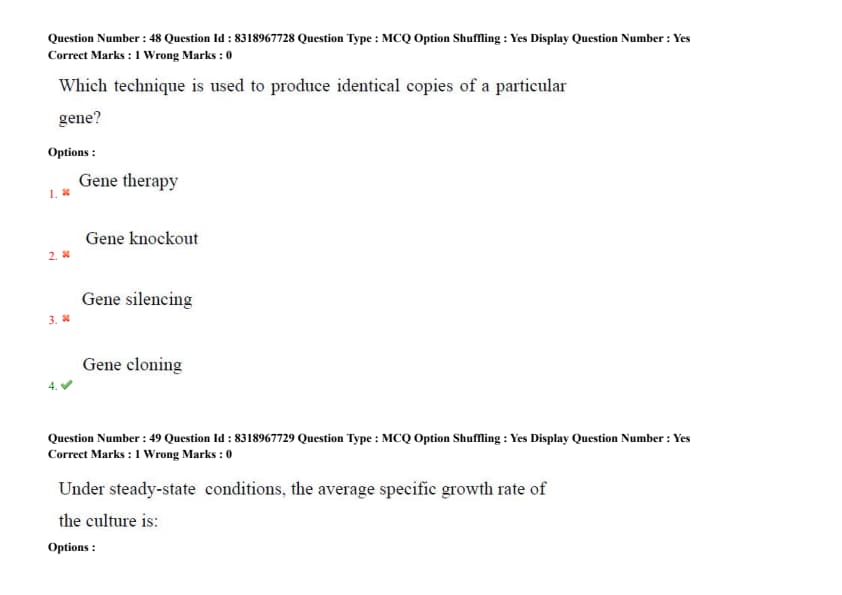
Question 48:
Which technique is used to produce identical copies of a particular gene?
- (1) Gene therapy
- (2) Gene knockout
- (3) Gene silencing
- (4) Gene cloning
Question 49:
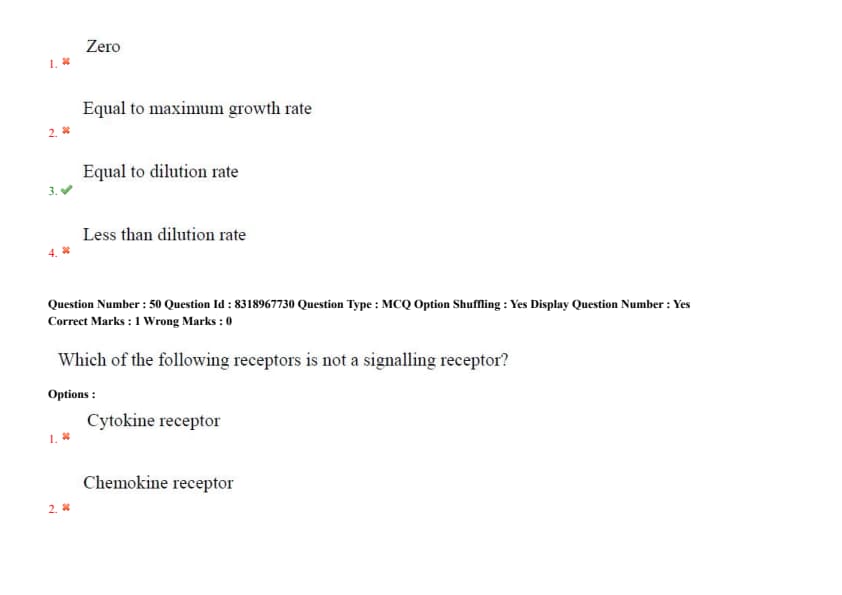
Under steady-state conditions, the average specific growth rate of the culture is:
- (1) Zero
- (2) Equal to maximum growth rate
- (3) Equal to dilution rate
- (4) Less than dilution rate
Question 50:
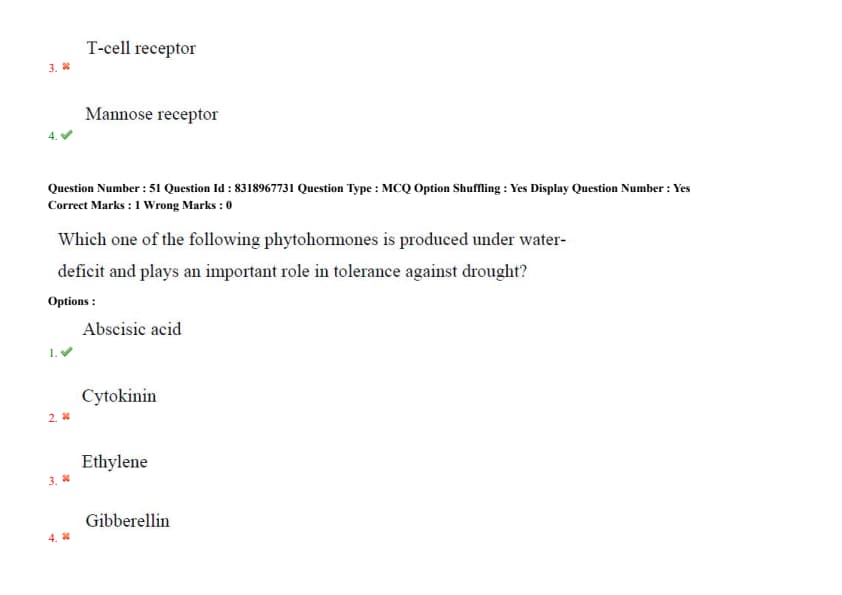
Which of the following receptors is not a signalling receptor?
- (1) Cytokine receptor
- (2) Chemokine receptor
- (3) T-cell receptor
- (4) Mannose receptor
Question 51:
Which one of the following phytohormones is produced under water-deficit and plays an important role in tolerance against drought?
- (1) Abscisic acid
- (2) Cytokinin
- (3) Ethylene
- (4) Gibberellin
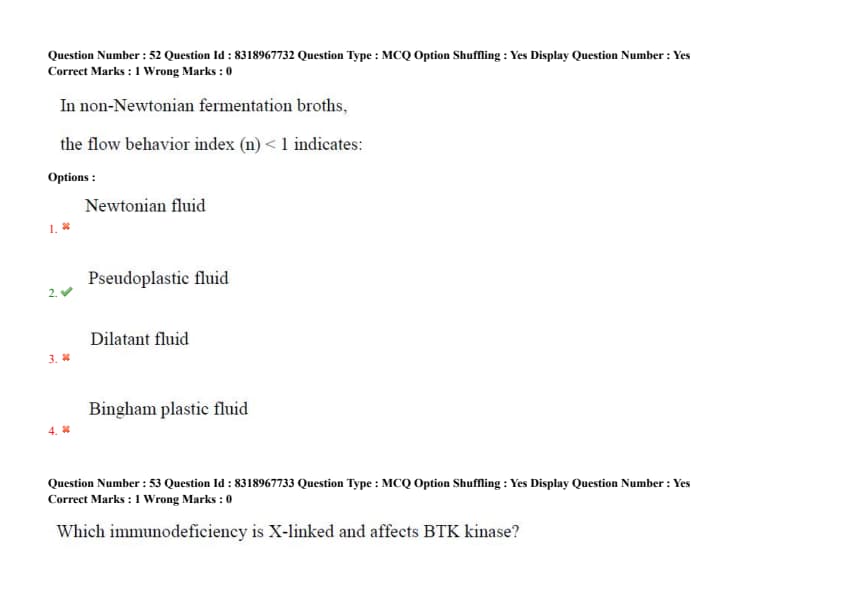
Question 52:
In non-Newtonian fermentation broths, the flow behavior index (n) < 1 indicates:
- (1) Newtonian fluid
- (2) Pseudoplastic fluid
- (3) Dilatant fluid
- (4) Bingham plastic fluid
Question 53:
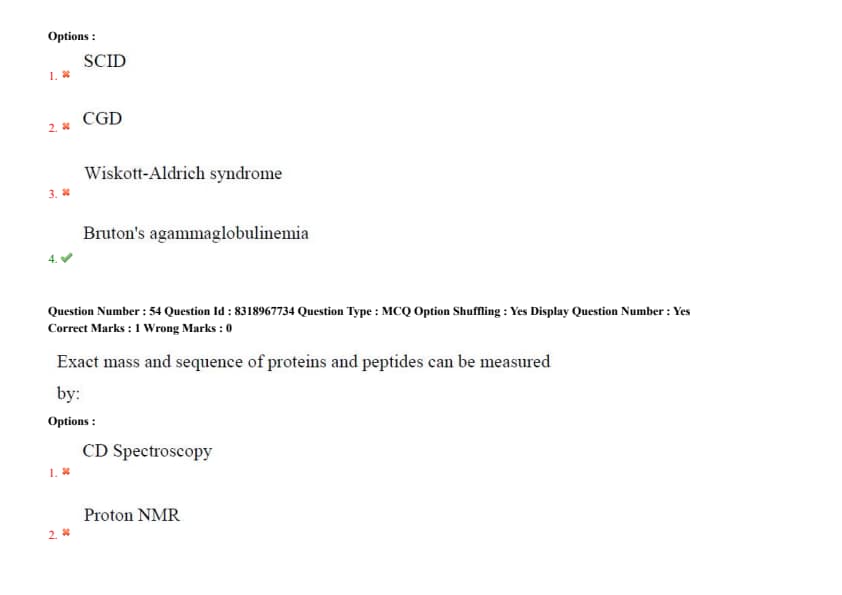
Which immunodeficiency is X-linked and affects BTK kinase?
- (1) SCID
- (2) CGD
- (3) Wiskott-Aldrich syndrome
- (4) Bruton's agammaglobulinemia
Question 54:
Exact mass and sequence of proteins and peptides can be measured by:
- (1) CD Spectroscopy
- (2) Proton NMR
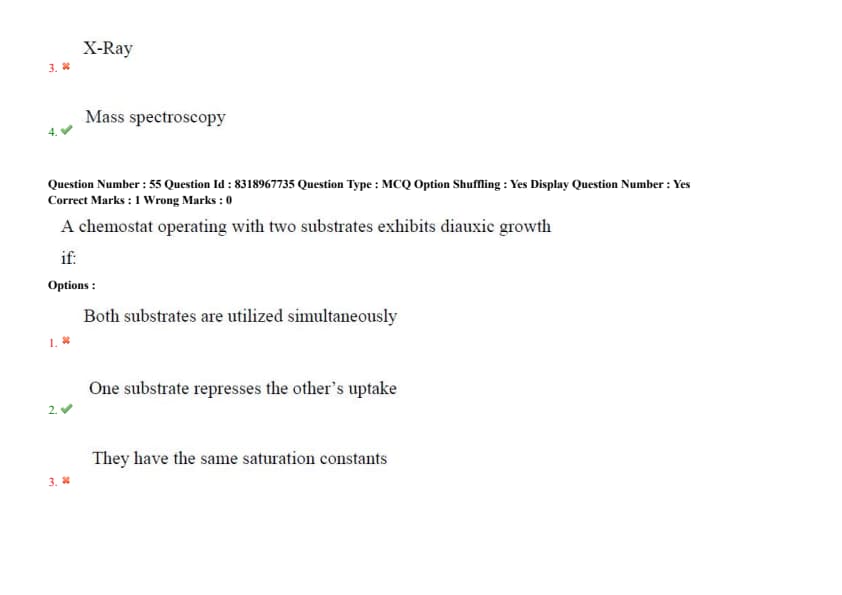
- (3) X-Ray
- (4) Mass spectroscopy
Question 55:
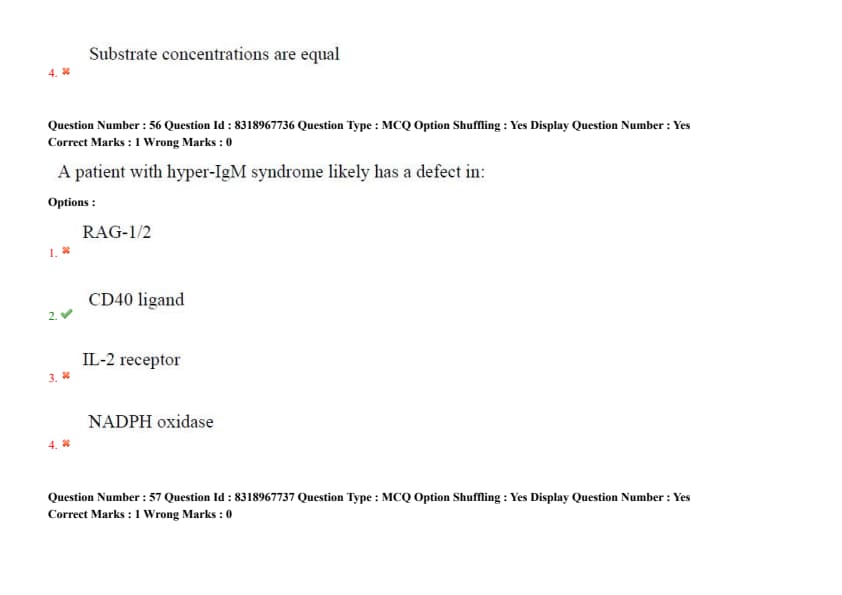
A chemostat operating with two substrates exhibits diauxic growth if:
- (1) Both substrates are utilized simultaneously
- (2) One substrate represses the other’s uptake
- (3) They have the same saturation constants
- (4) Substrate concentrations are equal
Question 56:
A patient with hyper-IgM syndrome likely has a defect in:
- (1) RAG-1/2
- (2) CD40 ligand
- (3) IL-2 receptor
- (4) NADPH oxidase
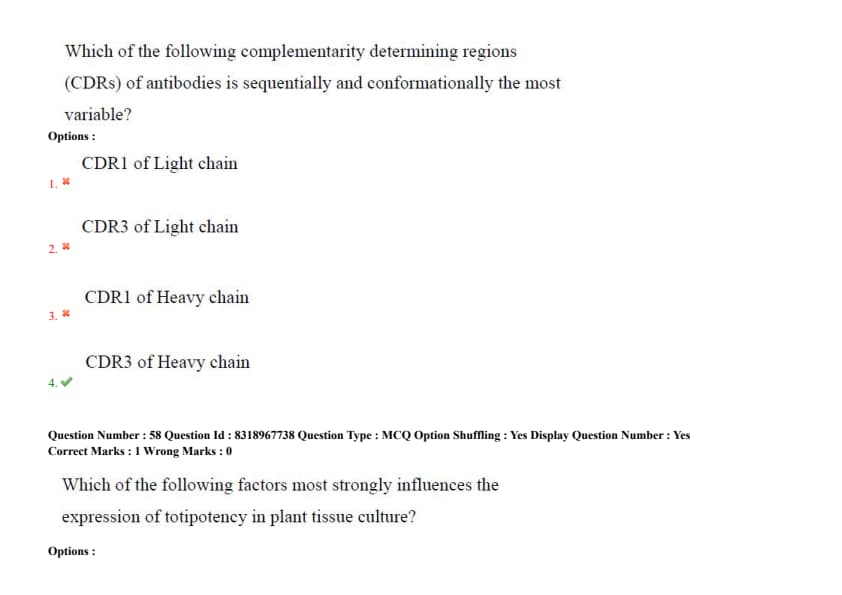
Question 57:
Which of the following complementarity determining regions (CDRs) of antibodies is sequentially and conformationally the most variable?
- (1) CDR1 of Light chain
- (2) CDR3 of Light chain
- (3) CDR1 of Heavy chain
- (4) CDR3 of Heavy chain
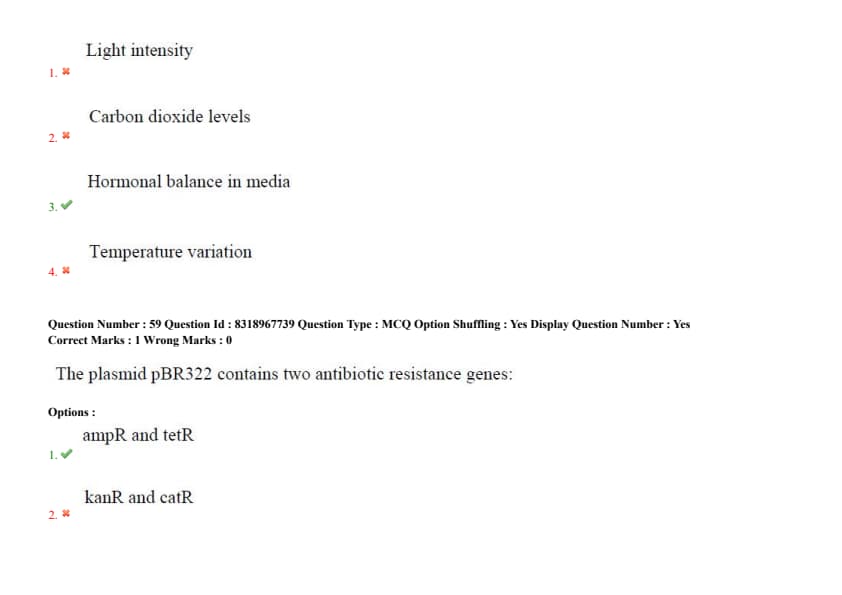
Question 58:
Which of the following factors most strongly influences the expression of totipotency in plant tissue culture?
- (1) Light intensity
- (2) Carbon dioxide levels
- (3) Hormonal balance in media
- (4) Temperature variation
Question 59:
The plasmid pBR322 contains two antibiotic resistance genes:
- (1) ampR and tetR
- (2) kanR and catR
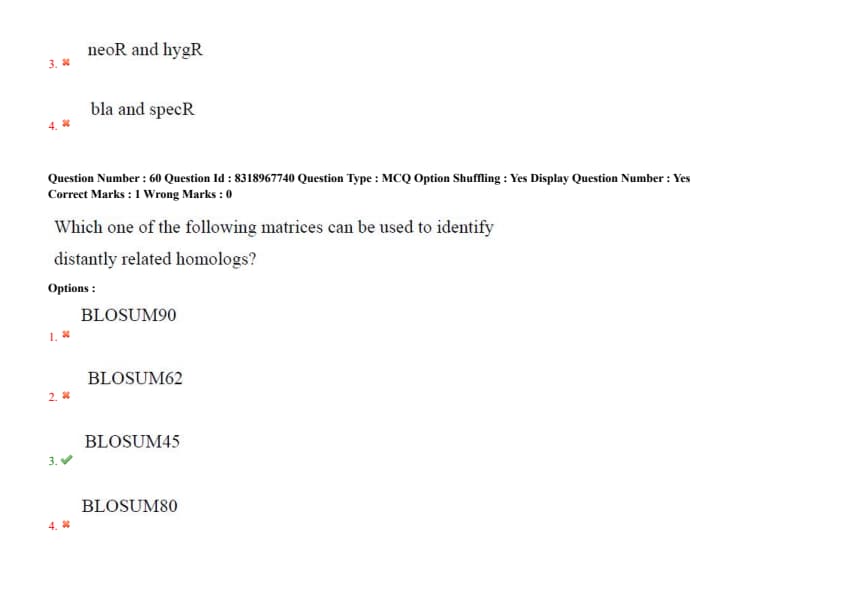
- (3) neoR and hygR
- (4) bla and specR
Question 60:
Which one of the following matrices can be used to identify distantly related homologs?
- (1) BLOSUM90
- (2) BLOSUM62
- (3) BLOSUM45
- (4) BLOSUM80
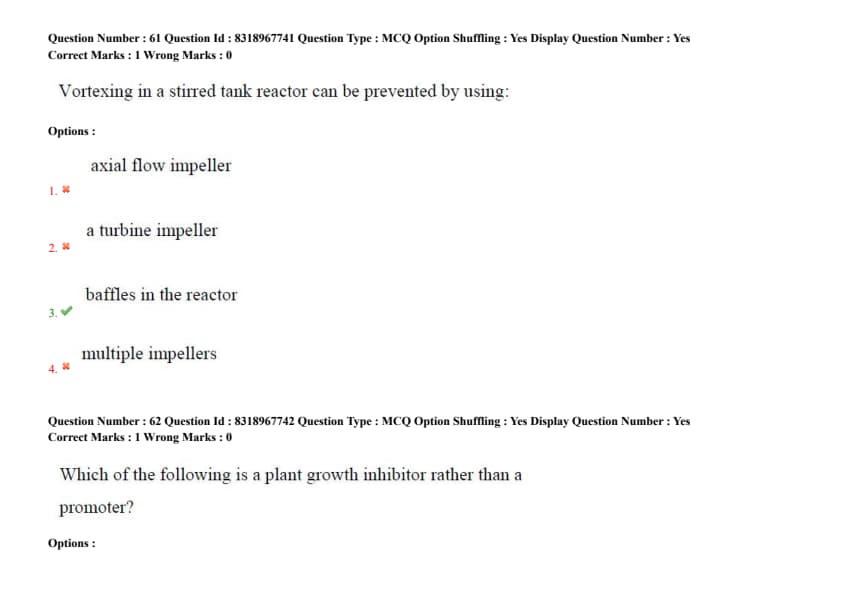
Question 61:
Vortexing in a stirred tank reactor can be prevented by using:
- (1) axial flow impeller
- (2) a turbine impeller
- (3) baffles in the reactor
- (4) multiple impellers
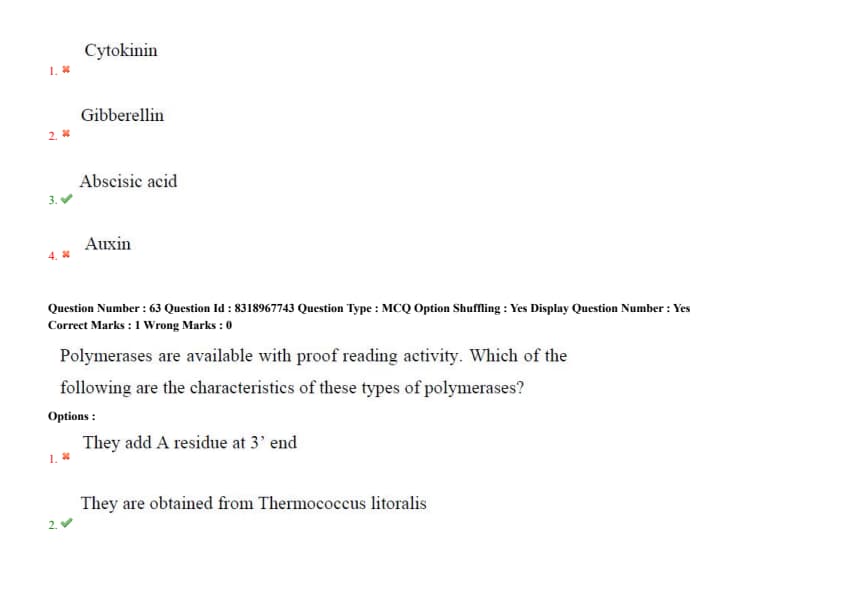
Question 62:
Which of the following is a plant growth inhibitor rather than a promoter?
- (1) Cytokinin
- (2) Gibberellin
- (3) Abscisic acid
- (4) Auxin
Question 63:
Polymerases are available with proof reading activity. Which of the following are the characteristics of these types of polymerases?
- (1) They add A residue at 3' end
- (2) They are obtained from Thermococcus litoralis
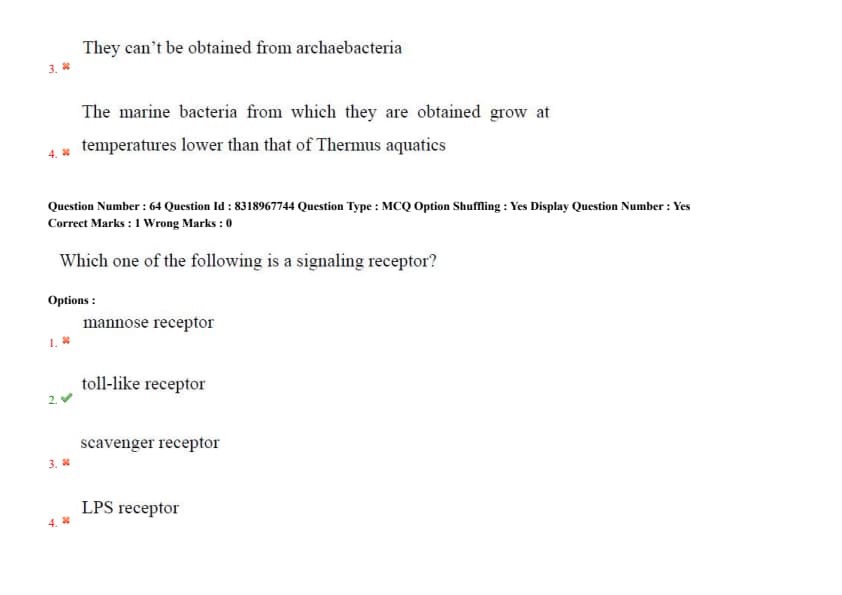
- (3) They can't be obtained from archaebacteria
- (4) The marine bacteria from which they are obtained grow at temperatures lower than that of Thermus aquatics
Question 64:
Which one of the following is a signaling receptor?
- (1) mannose receptor
- (2) toll-like receptor
- (3) scavenger receptor
- (4) LPS receptor
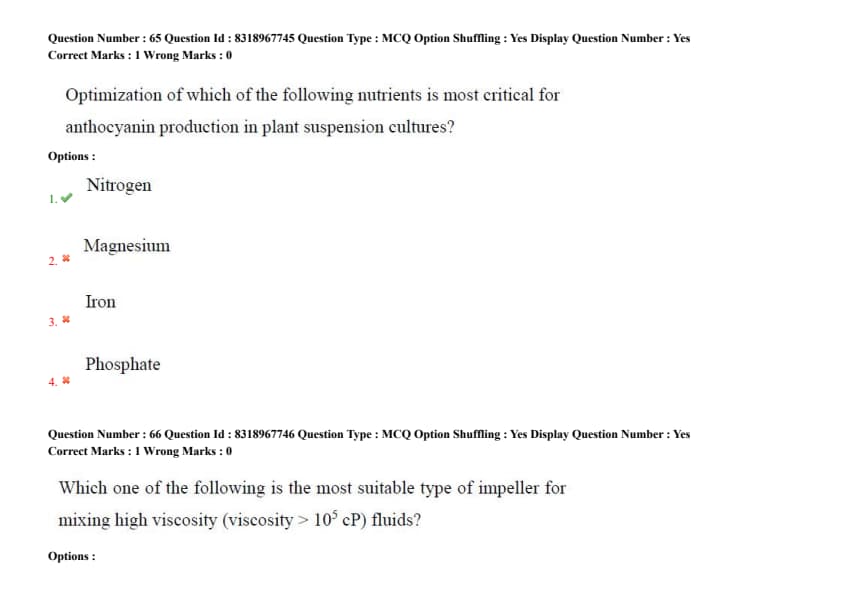
Question 65:
Optimization of which of the following nutrients is most critical for anthocyanin production in plant suspension cultures?
- (1) Nitrogen
- (2) Magnesium
- (3) Iron
- (4) Phosphate
Question 66:
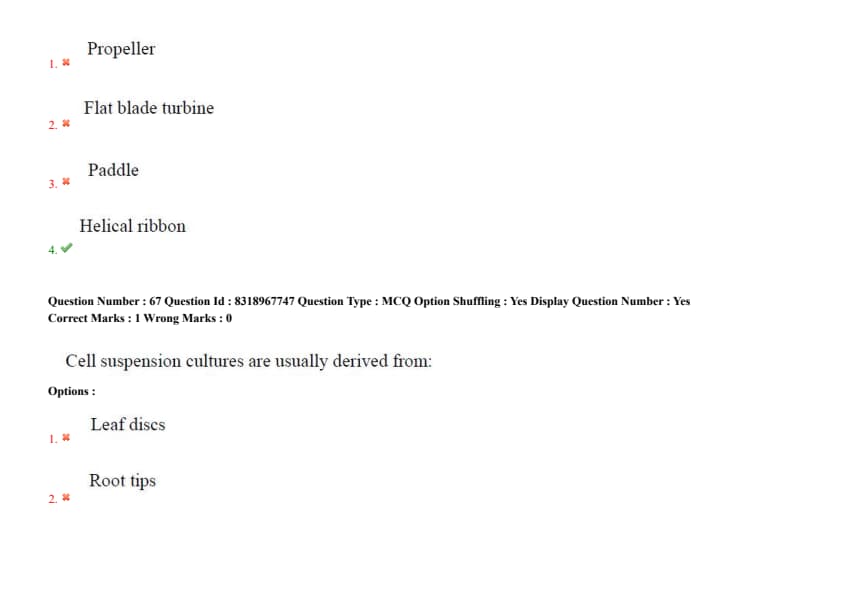
Which one of the following is the most suitable type of impeller for mixing high viscosity (viscosity is greater than 10 power 5 cP) fluids?
- (1) Propeller
- (2) Flat blade turbine
- (3) Paddle
- (4) Helical ribbon
Question 67:
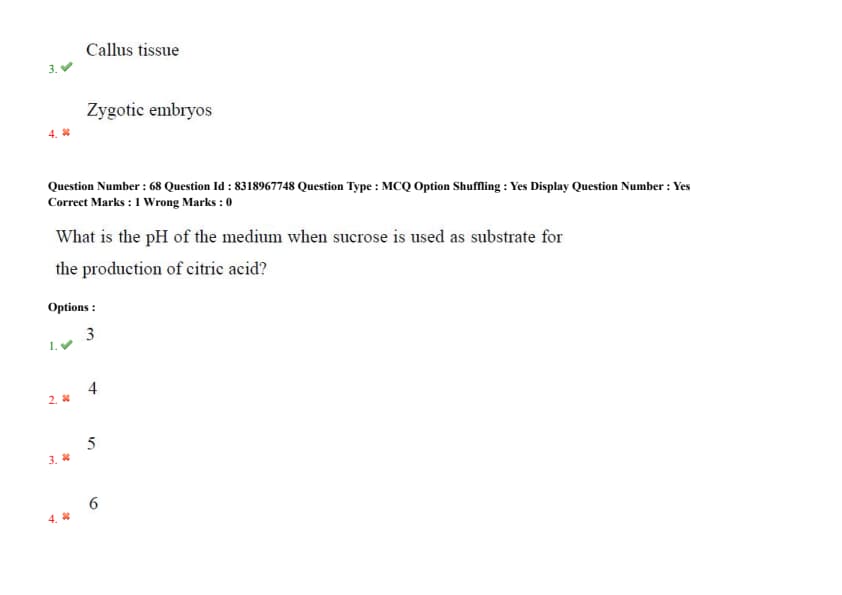
Cell suspension cultures are usually derived from:
- (1) Leaf discs
- (2) Root tips
- (3) Callus tissue
- (4) Zygotic embryos
Question 68:
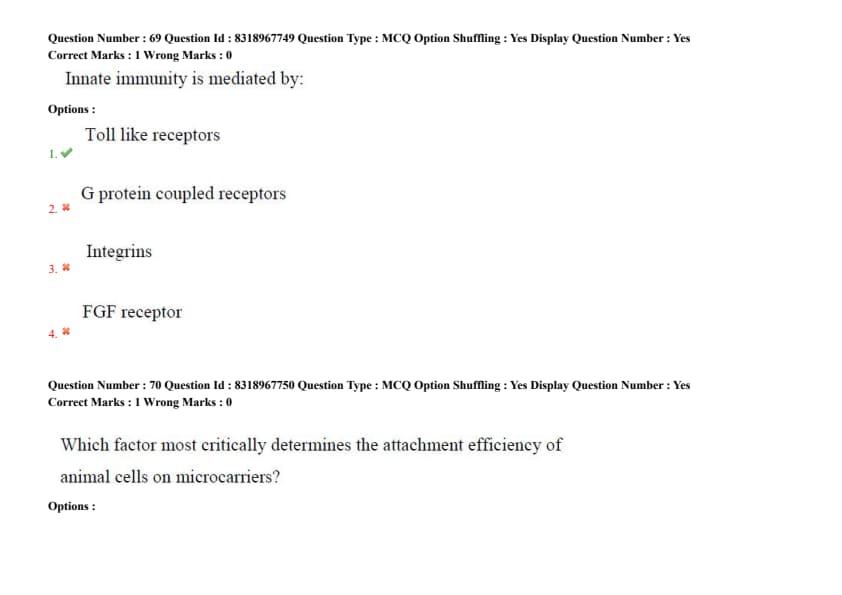
What is the pH of the medium when sucrose is used as substrate for the production of citric acid?
Question 69:
Innate immunity is mediated by:
- (1) Toll like receptors
- (2) G protein coupled receptors
- (3) Integrins
- (4) FGF receptor
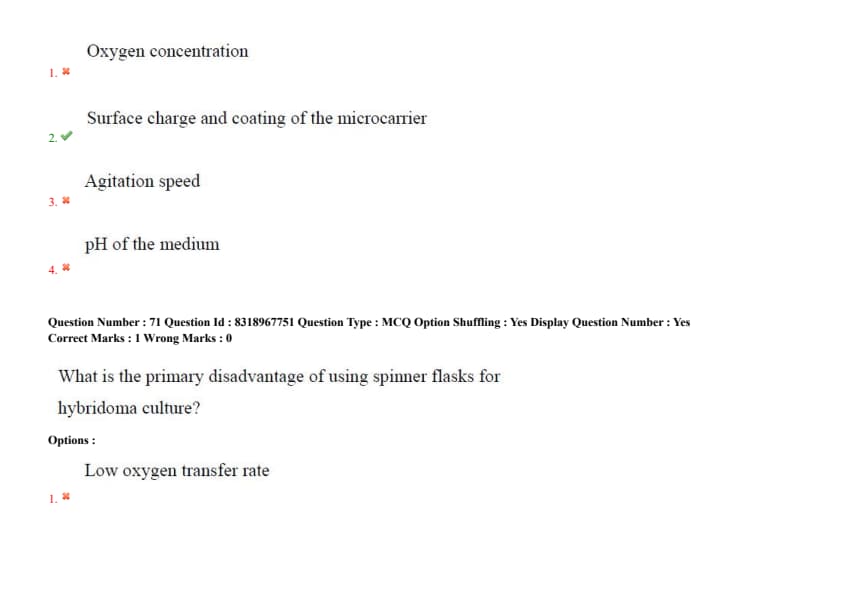
Question 70:
Which factor most critically determines the attachment efficiency of animal cells on microcarriers?
- (1) Oxygen concentration
- (2) Surface charge and coating of the microcarrier
- (3) Agitation speed
- (4) pH of the medium
Question 71:
What is the primary disadvantage of using spinner flasks for hybridoma culture?
- (1) Low oxygen transfer rate
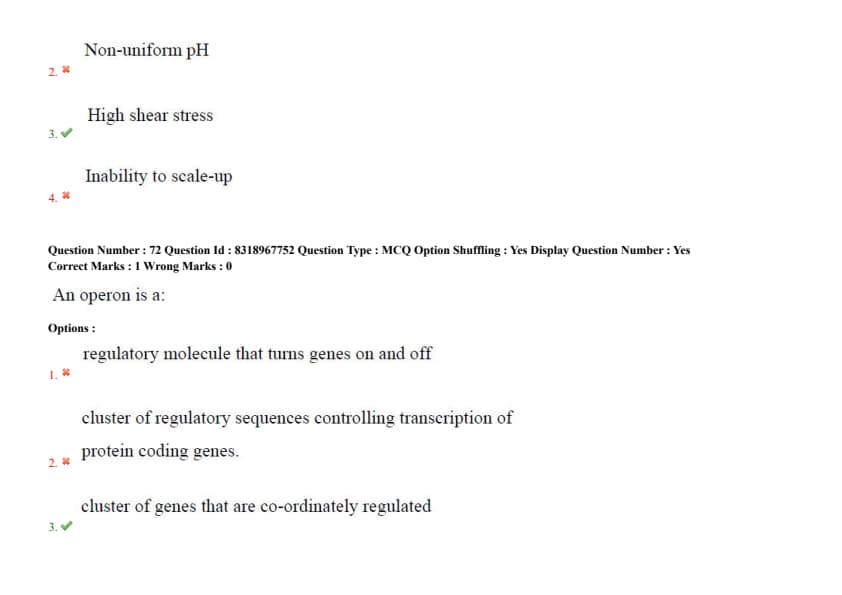
- (2) Non-uniform pH
- (3) High shear stress
- (4) Inability to scale-up
Question 72:
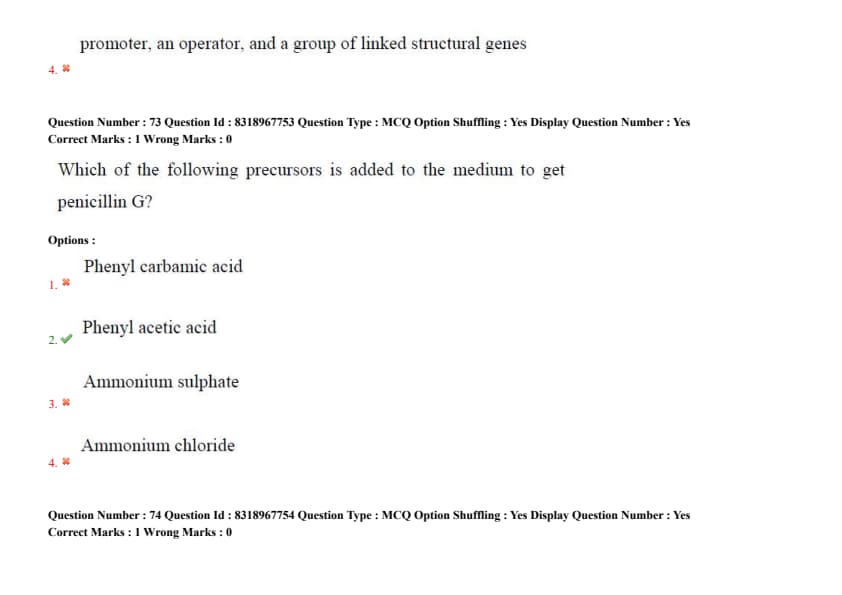
An operon is:
- (1) Regulatory molecule that turns genes on and off
- (2) Cluster of regulatory sequences controlling transcription of protein coding genes.
- (3) Cluster of genes that are co-ordinately regulated
- (4) Promoter, an operator, and a group of linked structural genes
Question 73:
Which of the following precursors is added to the medium to get penicillin G?
- (1) Phenyl carbamic acid
- (2) Phenyl acetic acid
- (3) Ammonium sulphate
- (4) Ammonium chloride
Question 74:
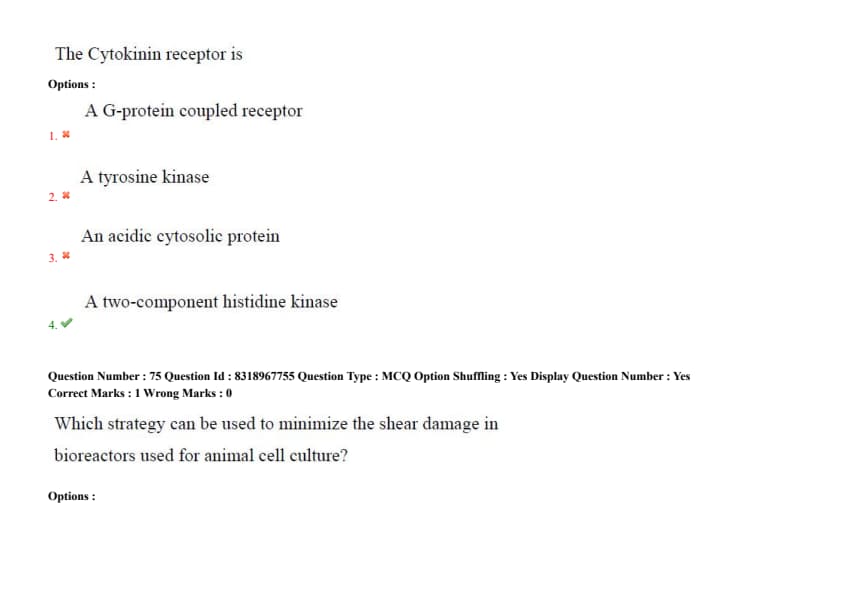
The Cytokinin receptor is:
- (1) A G-protein coupled receptor
- (2) A tyrosine kinase
- (3) An acidic cytosolic protein
- (4) A two-component histidine kinase
Question 75:
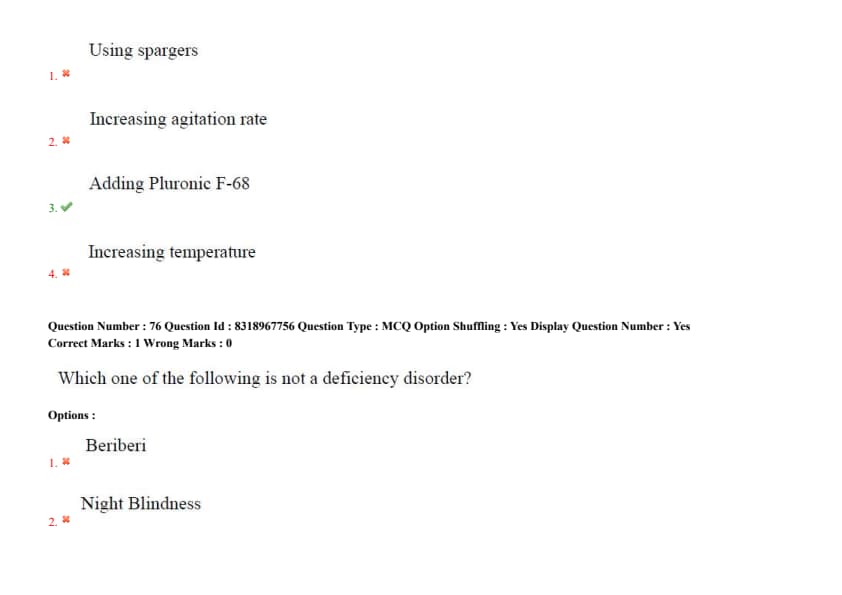
Which strategy can be used to minimize the shear damage in bioreactors used for animal cell culture?
- (1) Using spargers
- (2) Increasing agitation rate
- (3) Adding Pluronic F-68
- (4) Increasing temperature
Question 76:
Which one of the following is not a deficiency disorder?
- (1) Beriberi
- (2) Night Blindness
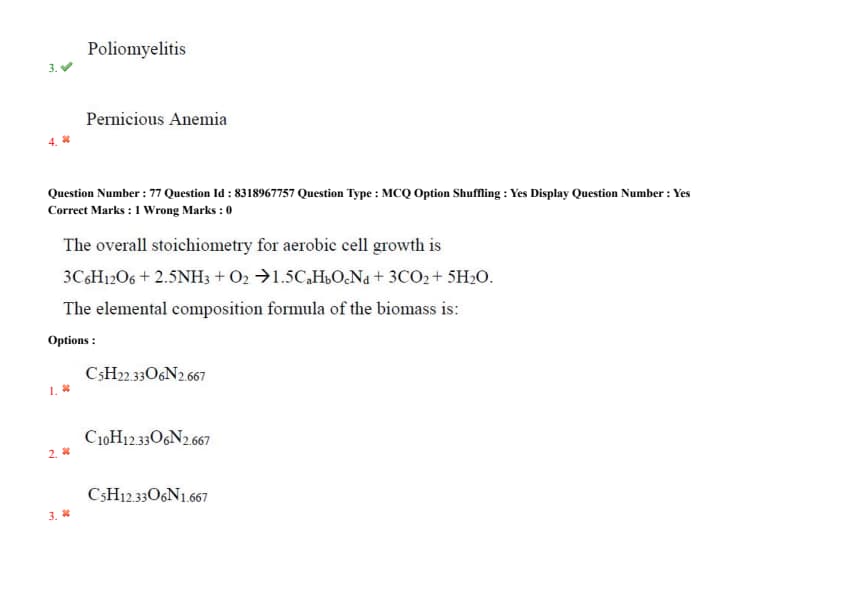
- (3) Poliomyelitis
- (4) Pernicious Anemia
Question 77:
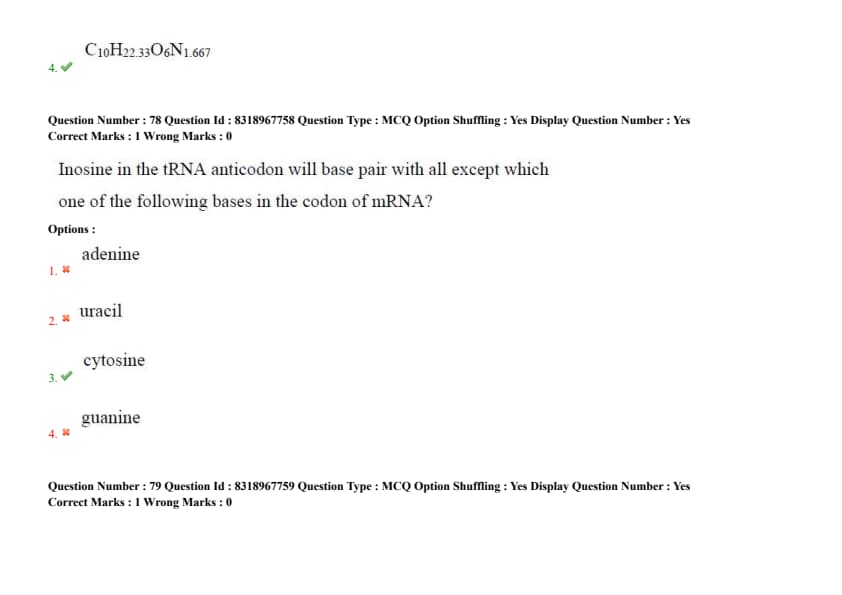
The overall stoichiometry for aerobic cell growth is:
3C\textsubscript{6}H\textsubscript{12}O\textsubscript{6} + 2.5NH\textsubscript{3} + O\textsubscript{2} \(\rightarrow\) 1.5C\textsubscript{6H\textsubscript{8O\textsubscript{4Na + 3CO\textsubscript{2 + 5H\textsubscript{2O
The elemental composition formula of the biomass is:
- (1) C\textsubscript{5}H\textsubscript{22}O\textsubscript{6}N\textsubscript{1.667}
- (2) C\textsubscript{10}H\textsubscript{12}O\textsubscript{6}N\textsubscript{2.667}
- (3) C\textsubscript{5}H\textsubscript{12}O\textsubscript{6}N\textsubscript{1.667}
- (4) C\textsubscript{10}H\textsubscript{22}O\textsubscript{6}N\textsubscript{1.667}
Question 78:
Inosine in the tRNA anticodon will base pair with all except which one of the following bases in the codon of mRNA?
- (1) Adenine
- (2) Uracil
- (3) Cytosine
- (4) Guanine
Question 79:
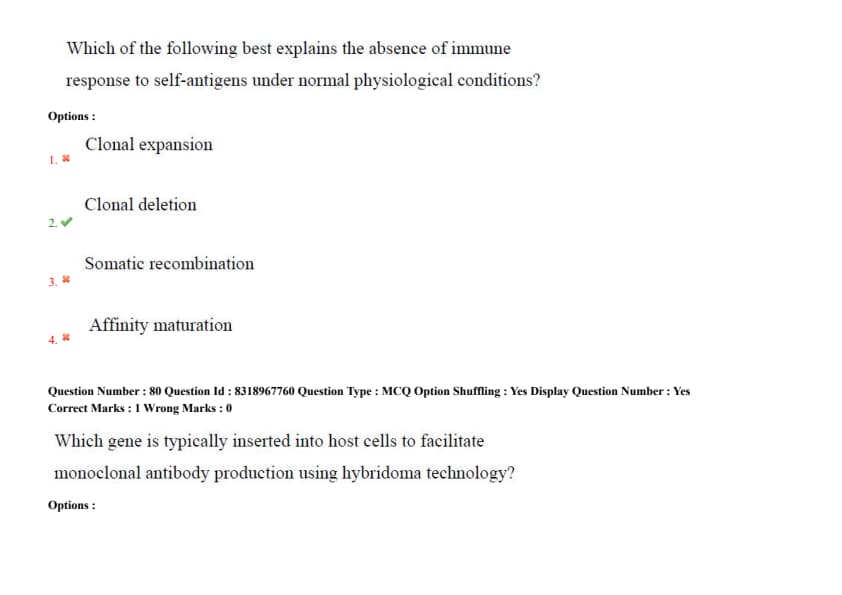
Which of the following best explains the absence of immune response to self-antigens under normal physiological conditions?
- (1) Clonal expansion
- (2) Clonal deletion
- (3) Somatic recombination
- (4) Affinity maturation
Question 80:
Which gene is typically inserted into host cells to facilitate monoclonal antibody production using hybridoma technology?
- (1) IgG heavy chain
- (2) Myc oncogene
- (3) HAT resistance gene
- (4) DHFR gene
Question 81:
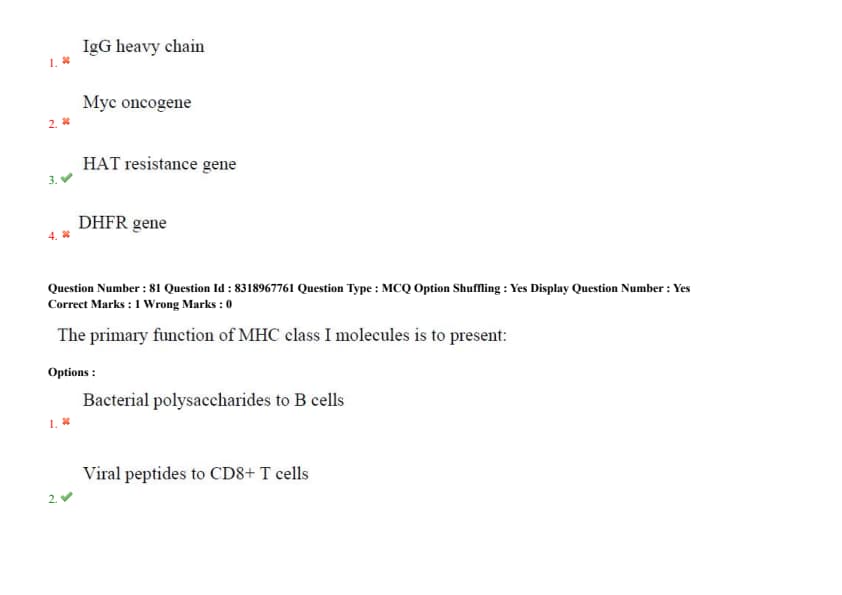
The primary function of MHC class I molecules is to present:
- (1) Bacterial polysaccharides to B cells
- (2) Viral peptides to CD8+ T cells
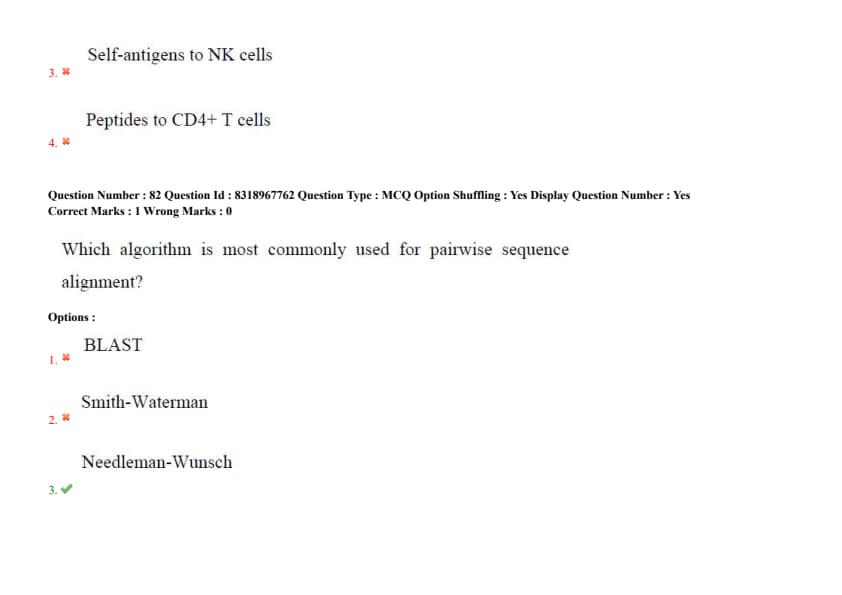
- (3) Self-antigens to NK cells
- (4) Peptides to CD4+ T cells
Question 82:
Which algorithm is most commonly used for pairwise sequence alignment?
- (1) BLAST
- (2) Smith-Waterman
- (3) Needleman-Wunsch
- (4) Hidden Markov Model
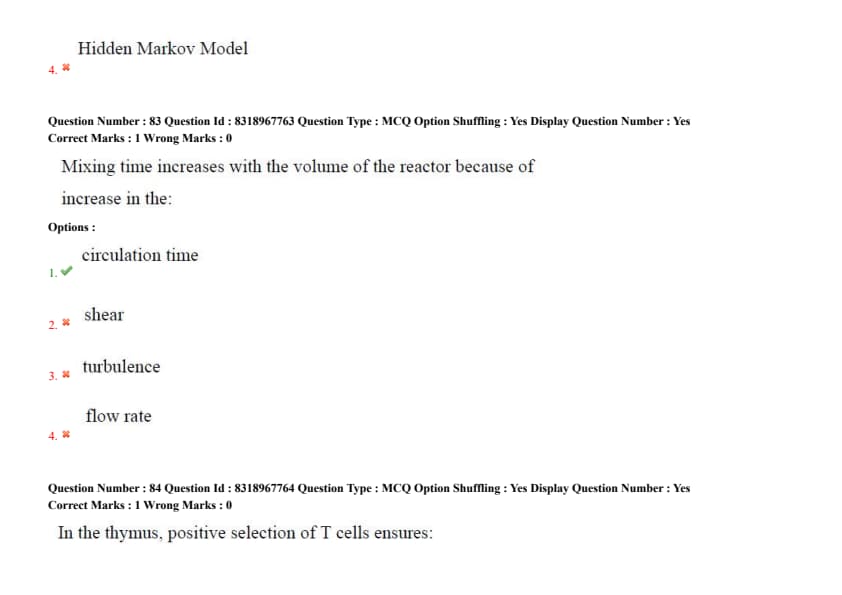
Question 83:
Mixing time increases with the volume of the reactor because of increase in the:
- (1) Circulation time
- (2) Shear
- (3) Turbulence
- (4) Flow rate
Question 84:
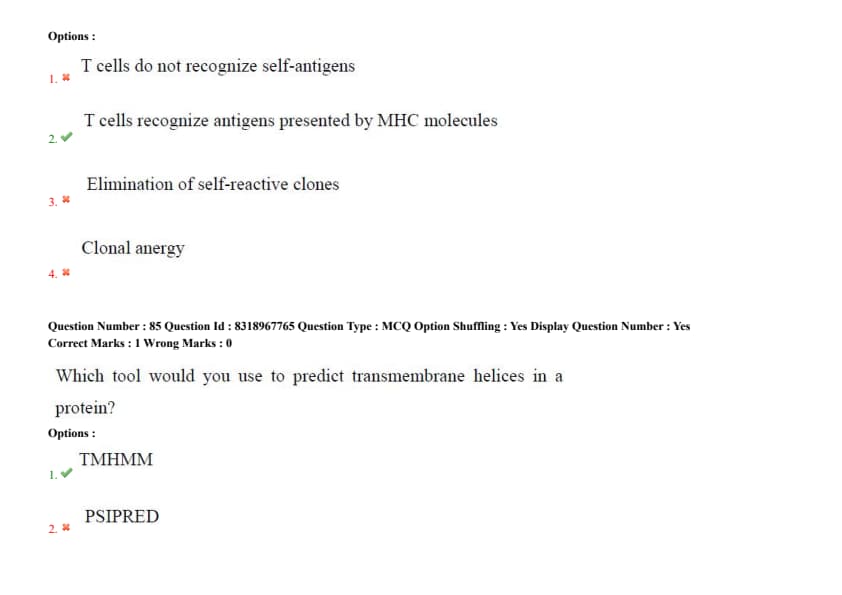
In the thymus, positive selection of T cells ensures:
- (1) T cells do not recognize self-antigens
- (2) T cells recognize antigens presented by MHC molecules
- (3) Elimination of self-reactive clones
- (4) Clonal anergy
Question 85:
Which tool would you use to predict transmembrane helices in a protein?
- (1) TMHMM
- (2) PSIPRED
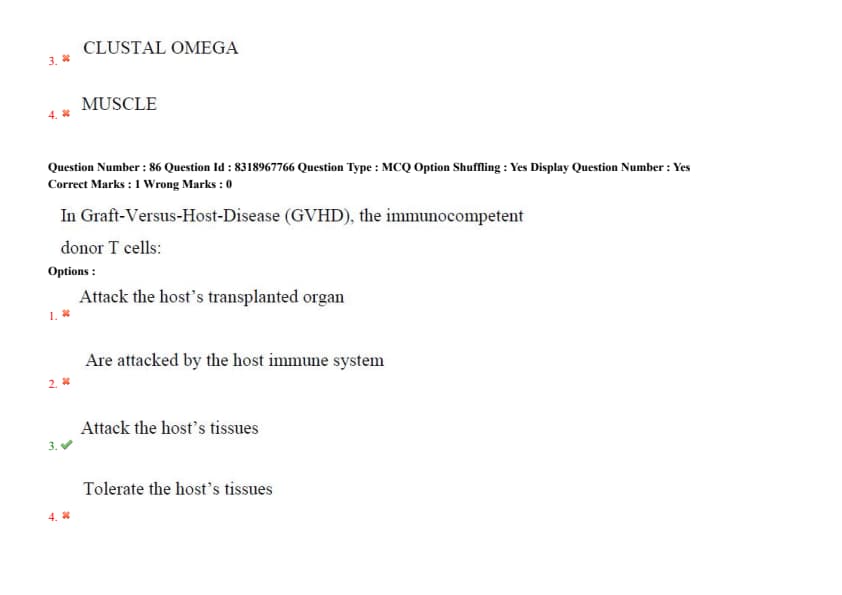
- (3) CLUSTAL OMEGA
- (4) MUSCLE
Question 86:
In Graft-Versus-Host-Disease (GVHD), the immunocompetent donor T cells:
- (1) Attack the host's transplanted organ
- (2) Are attacked by the host immune system
- (3) Attack the host's tissues
- (4) Tolerate the host's tissues
Question 87:
Genome-Wide Association Studies primarily identifies:
- (1) Protein-protein interactions
- (2) SNPs linked to phenotypes
- (3) Alternative splicing events
- (4) Horizontal gene transfer
Question 88:
Amphotericin B is clinically used against which one of the following pathogens?
- (1) Herpes simplex virus I
- (2) M. tuberculosis
- (3) Candida spp.
- (4) P. vivax
Question 89:
The ENCODE project aims to:
- (1) Annotate all functional elements in the human genome
- (2) Sequence all prokaryotic genomes
- (3) Develop new sequencing technologies
- (4) Catalog protein structures
Question 90:
Match the items in Group 1 with an appropriate description in Group 2:
![]()
- (1) P-4, Q-1, R-2, S-3
- (2) P-2, Q-4, R-1, S-3
- (3) P-2, Q-3, R-1, S-4
- (4) P-2, Q-1, R-4, S-3
Question 91:
Which of the following vectors can accommodate the largest foreign DNA insert?
- (1) Plasmid
- (2) Cosmid
- (3) Bacteriophage lambda
- (4) Yeast artificial chromosome (YAC)
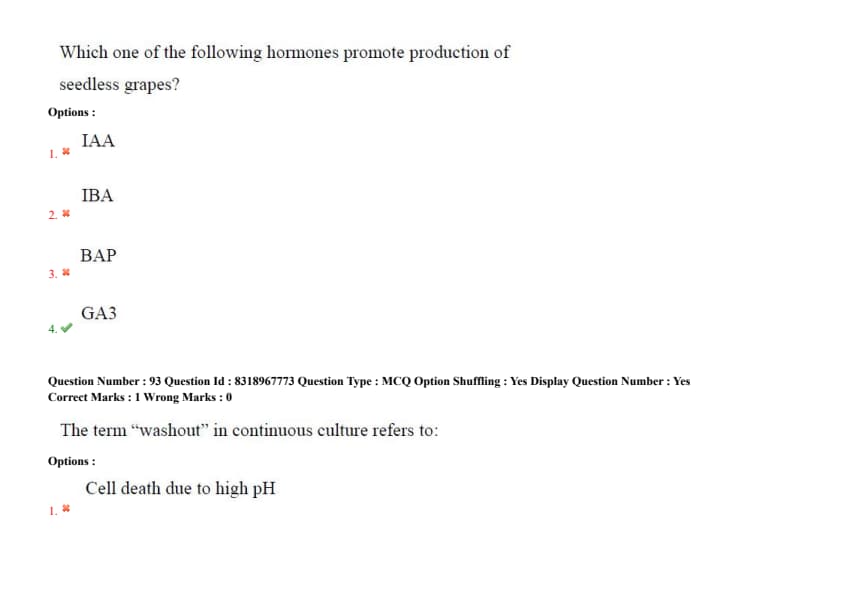
Question 92:
Which one of the following hormones promotes production of seedless grapes?
- (1) IAA
- (2) IBA
- (3) BAP
- (4) GA3
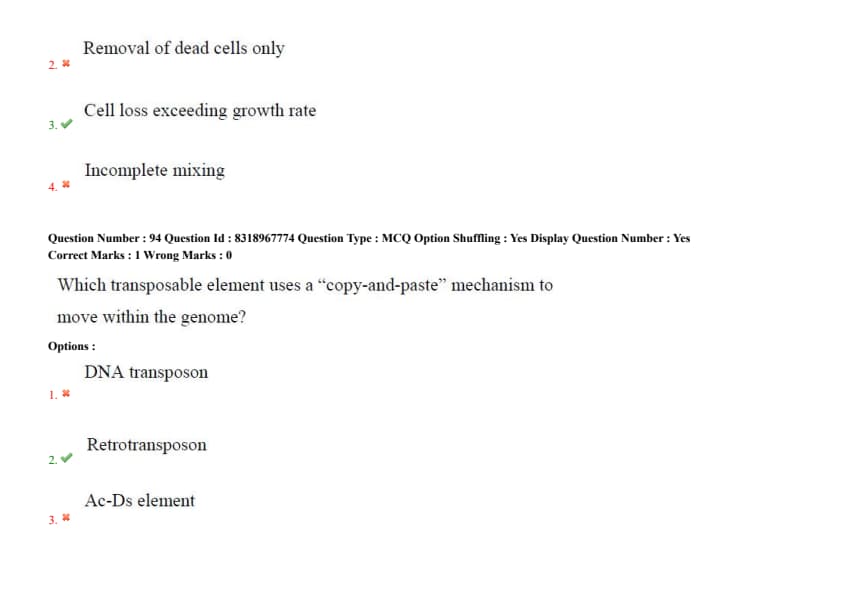
Question 93:
The term "washout" in continuous culture refers to:
- (1) Cell death due to high pH
- (2) Removal of dead cells only
- (3) Cell loss exceeding growth rate
- (4) Incomplete mixing
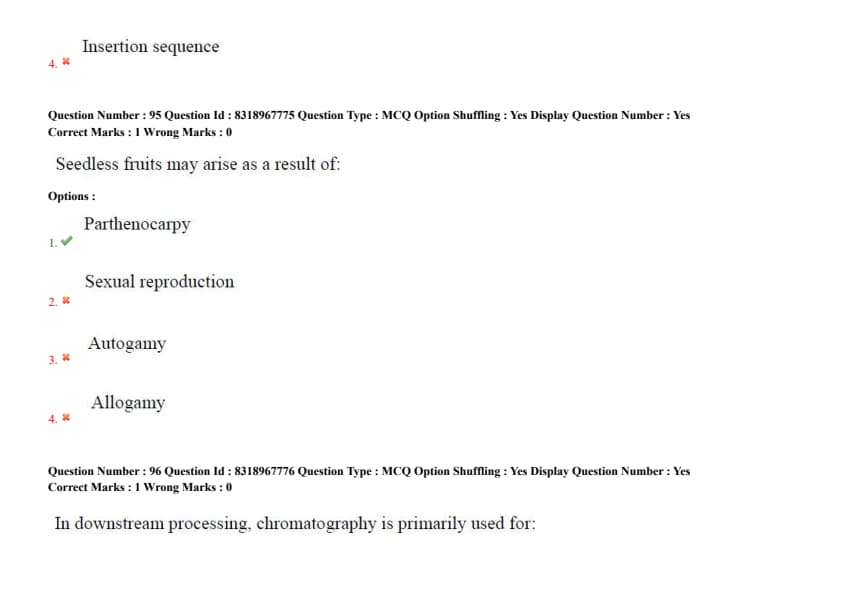
Question 94:
Which transposable element uses a “copy-and-paste” mechanism to move within the genome?
- (1) DNA transposon
- (2) Retrotransposon
- (3) Ac-Ds element
- (4) Insertion sequence
Question 95:
Seedless fruits may arise as a result of:
- (1) Parthenocarpy
- (2) Sexual reproduction
- (3) Autogamy
- (4) Allogamy
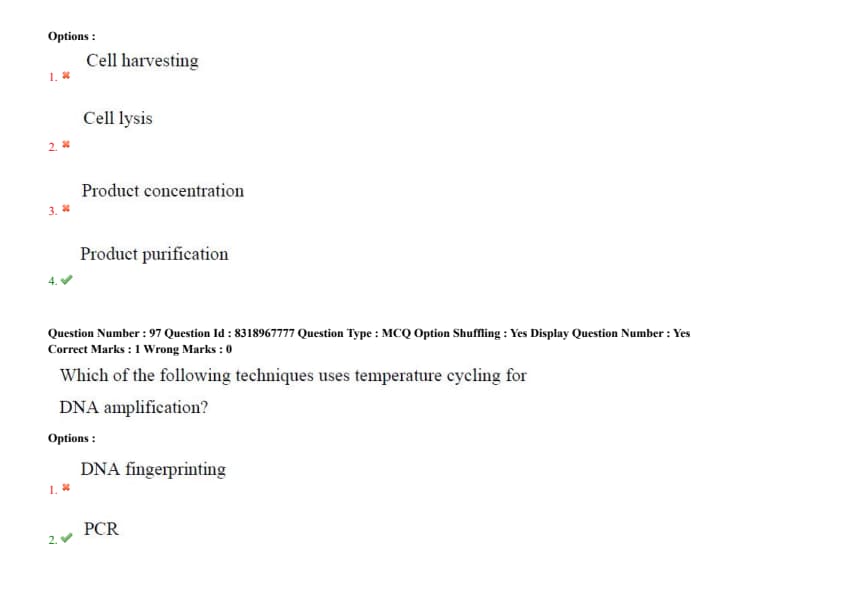
Question 96:
In downstream processing, chromatography is primarily used for:
- (1) Cell harvesting
- (2) Cell lysis
- (3) Product concentration
- (4) Product purification
Question 97:
Which of the following techniques uses temperature cycling for DNA amplification?
- (1) DNA fingerprinting
- (2) PCR
- (3) RAPD
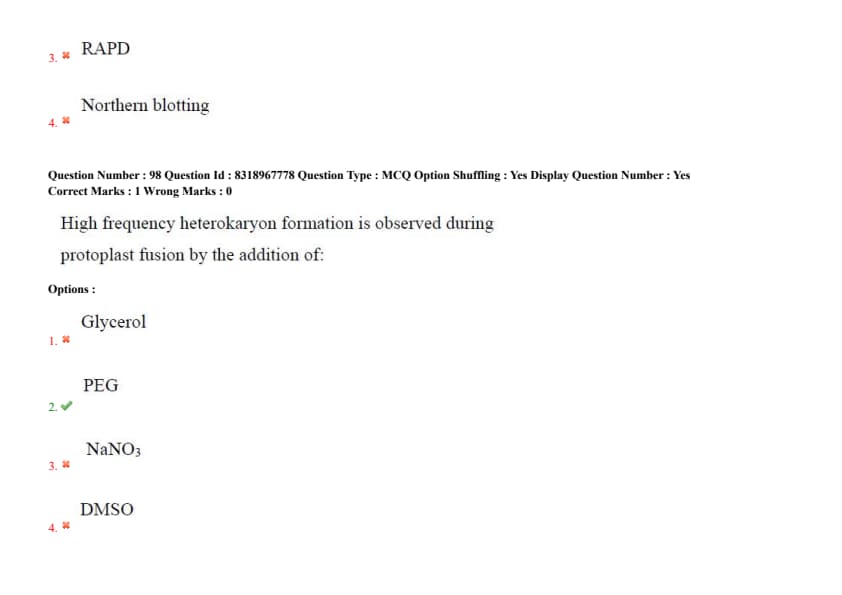
- (4) Northern blotting
Question 98:
High frequency heterokaryon formation is observed during protoplast fusion by the addition of:
- (1) Glycerol
- (2) PEG
- (3) NaNO₃
- (4) DMSO
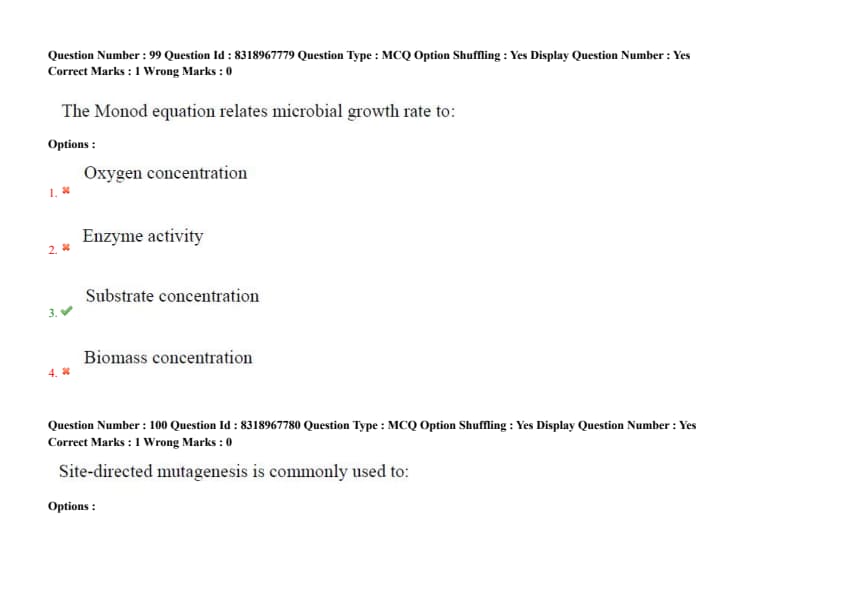
Question 99:
The Monod equation relates microbial growth rate to:
- (1) Oxygen concentration
- (2) Enzyme activity
- (3) Substrate concentration
- (4) Biomass concentration
Question 100:
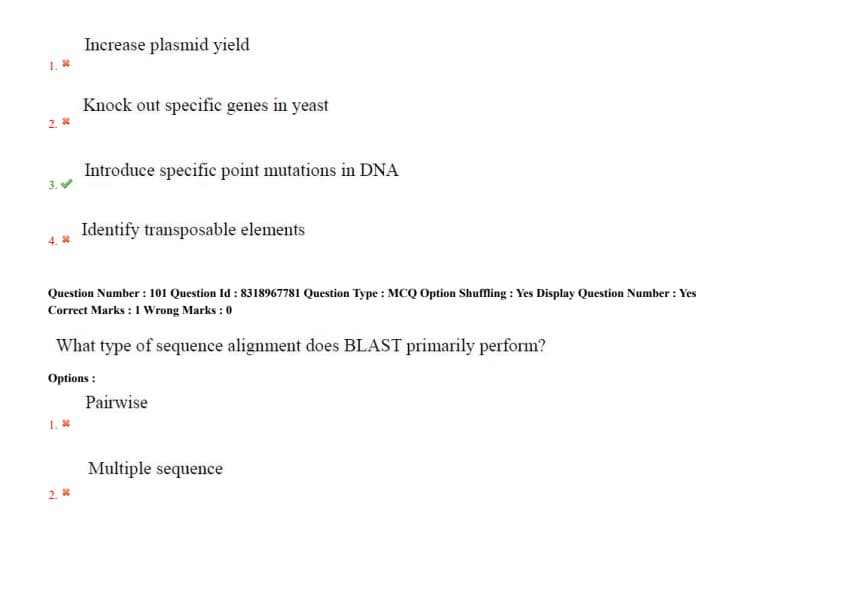
Site-directed mutagenesis is commonly used to:
- (1) Increase plasmid yield
- (2) Knock out specific genes in yeast
- (3) Introduce specific point mutations in DNA
- (4) Identify transposable elements
Question 101:
What type of sequence alignment does BLAST primarily perform?
- (1) Pairwise
- (2) Multiple sequence
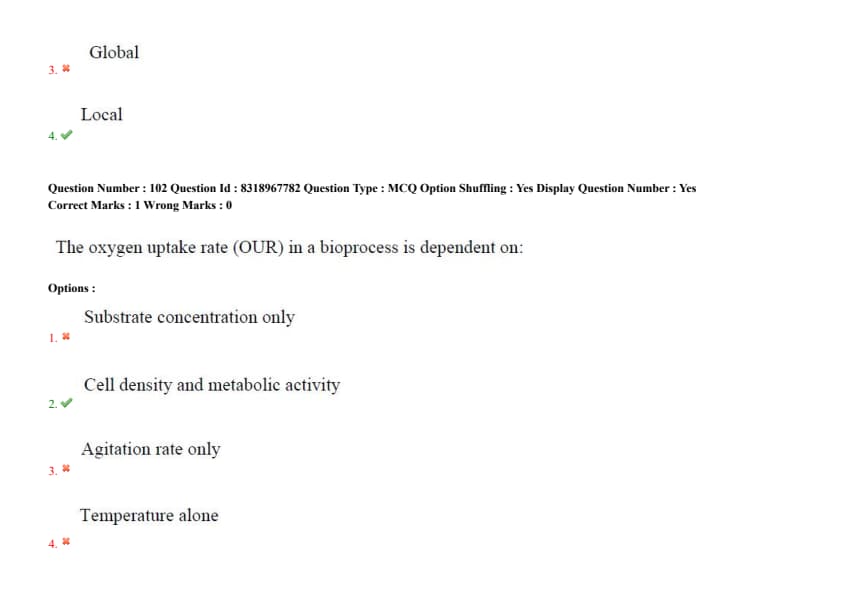
- (3) Global
- (4) Local
Question 102:
The oxygen uptake rate (OUR) in a bioprocess is dependent on:
- (1) Substrate concentration only
- (2) Cell density and metabolic activity
- (3) Agitation rate only
- (4) Temperature alone
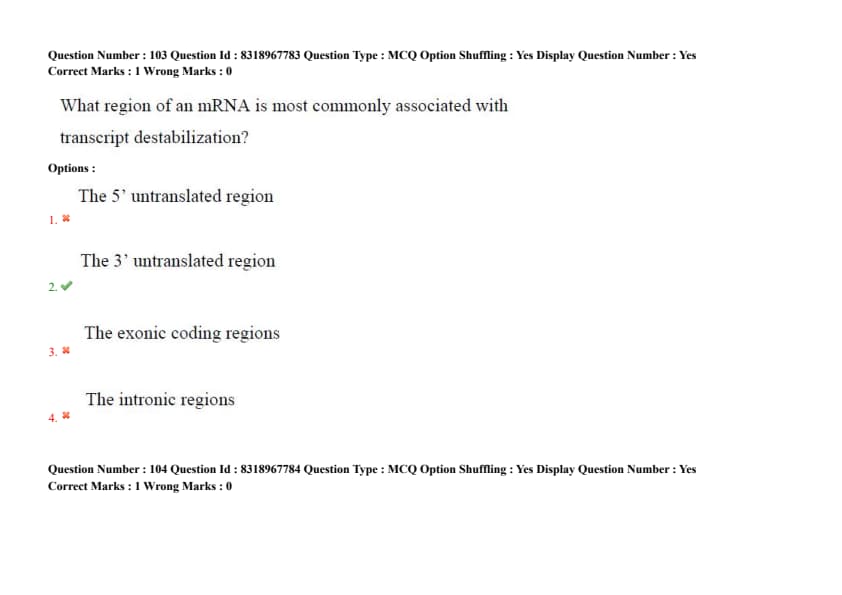
Question 103:
What region of an mRNA is most commonly associated with transcript destabilization?
- (1) The 5' untranslated region
- (2) The 3' untranslated region
- (3) The exonic coding regions
- (4) The intronic regions
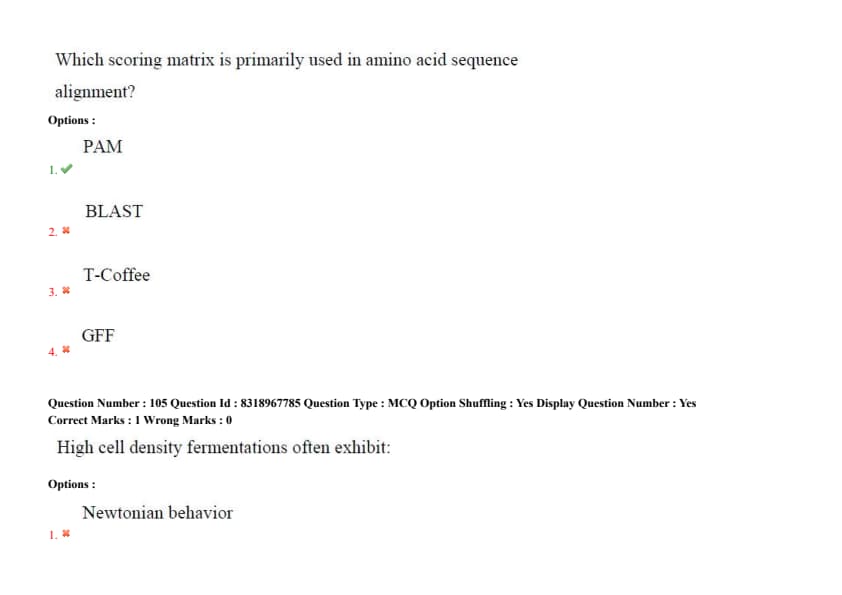
Question 104:
Which scoring matrix is primarily used in amino acid sequence alignment?
- (1) PAM
- (2) BLAST
- (3) T-Coffee
- (4) GFF
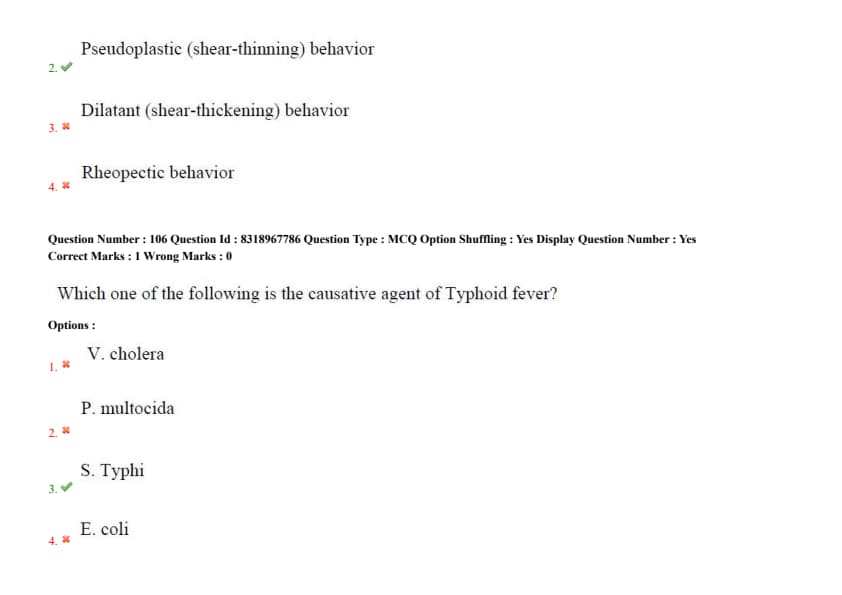
Question 105:
High cell density fermentations often exhibit:
- (1) Newtonian behavior
- (2) Pseudoplastic (shear-thinning) behavior
- (3) Dilatant (shear-thickening) behavior
- (4) Rheopectic behavior
Question 106:
Which one of the following is the causative agent of Typhoid fever?
- (1) V. cholera
- (2) P. multocida
- (3) S. Typhi
- (4) E. coli
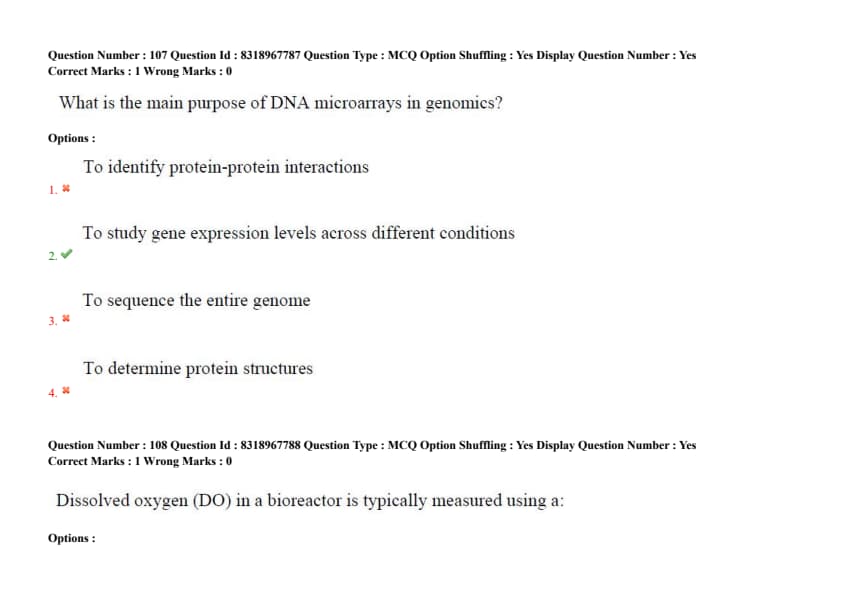
Question 107:
What is the main purpose of DNA microarrays in genomics?
- (1) To identify protein-protein interactions
- (2) To study gene expression levels across different conditions
- (3) To sequence the entire genome
- (4) To determine protein structures
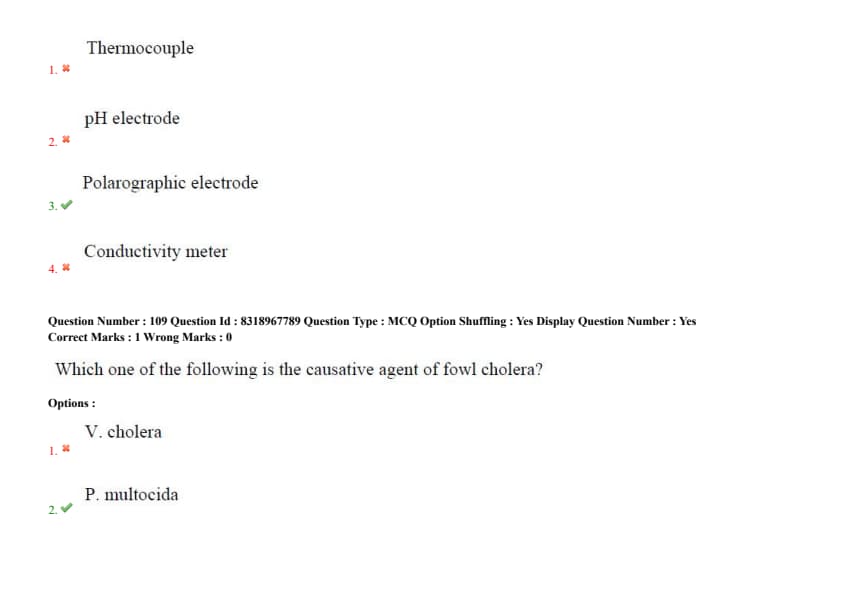
Question 108:
Dissolved oxygen (DO) in a bioreactor is typically measured using a:
- (1) Thermocouple
- (2) pH electrode
- (3) Polarographic electrode
- (4) Conductivity meter
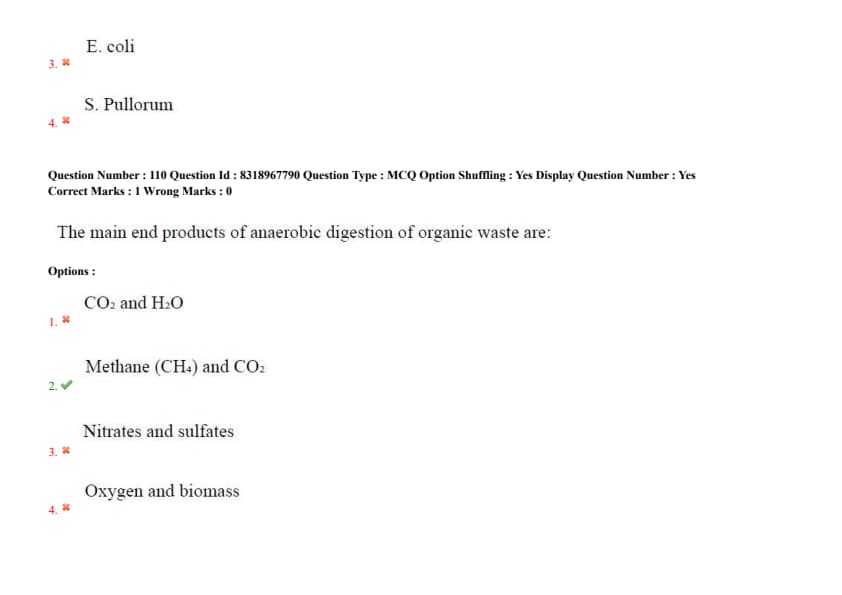
Question 109:
Which one of the following is the causative agent of fowl cholera?
- (1) V. cholera
- (2) P. multocida
- (3) E. coli
- (4) S. Pullorum
Question 110:
The main end products of anaerobic digestion of organic waste are:
- (1) CO\textsubscript{2} and H\textsubscript{2}O
- (2) Methane (CH\textsubscript{4}) and CO\textsubscript{2}
- (3) Nitrates and sulfates
- (4) Oxygen and biomass
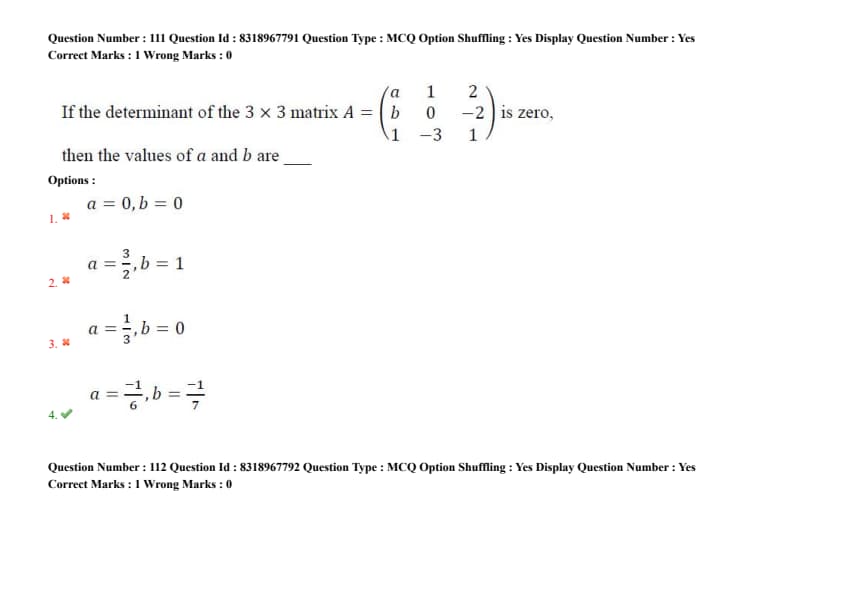
Question 111:
If the determinant of the 3 x 3 matrix A = \(\begin{pmatrix} a & 1 & 2
b & 0 & -2
1 & -3 & 1 \end{pmatrix}\) is zero, then the values of a and b are:
- (1) a = 0, b = 0
- (2) a = \(\frac{3}{2}\), b = 1
- (3) a = \(\frac{1}{3}\), b = 0
- (4) a = \(-\frac{1}{6}\), b = \(-\frac{1}{7}\)
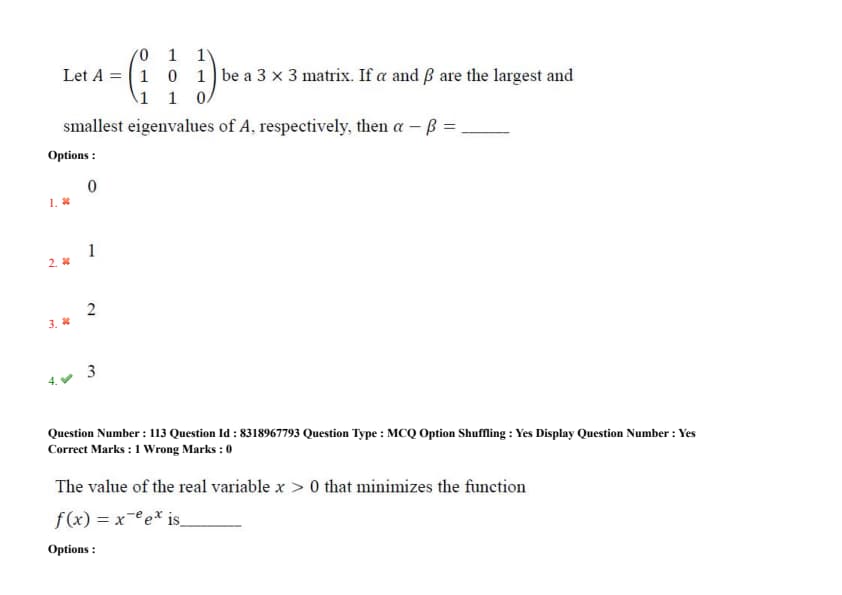
Question 112:
Let A = \(\begin{pmatrix} 0 & 1 & 1
1 & 0 & 1
1 & 1 & 0 \end{pmatrix}\) be a 3 x 3 matrix. If \(\alpha\) and \(\beta\) are the largest and smallest eigenvalues of A, respectively, then \(\alpha - \beta\) = ___
Question 113:
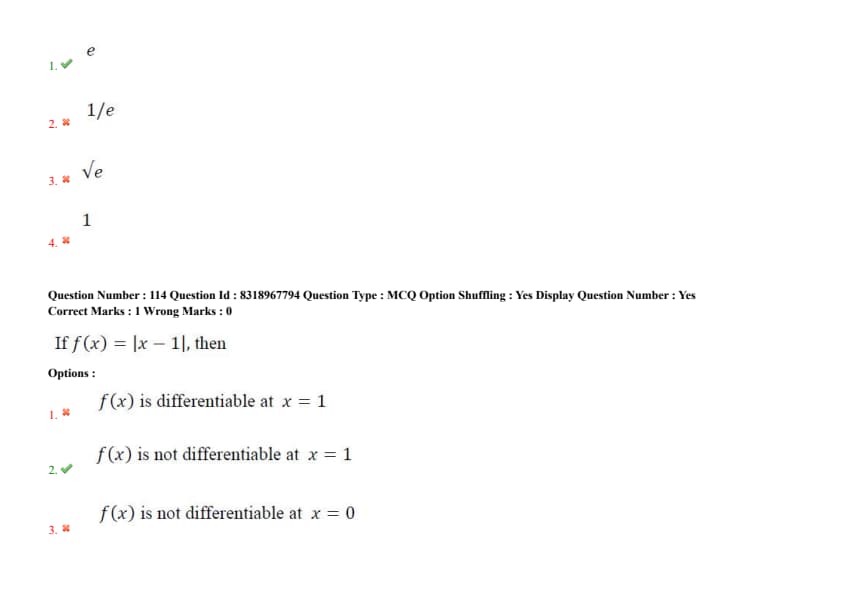
The value of the real variable x > 0 that minimizes the function \(f(x) = x^{-x}e^{x}\) is
- (1) e
- (2) \( \frac{1}{e} \)
- (3) \( \sqrt{e} \)
- (4) 1
Question 114:
If \(f(x) = |x - 1|\), then
- (1) \( f(x) \) is differentiable at \(x = 1\)
- (2) \( f(x) \) is not differentiable at \(x = 1\)
- (3) \( f(x) \) is not differentiable at \(x = 0\)
- (4) \( f(x) \) is not continuous at \(x = 0\)
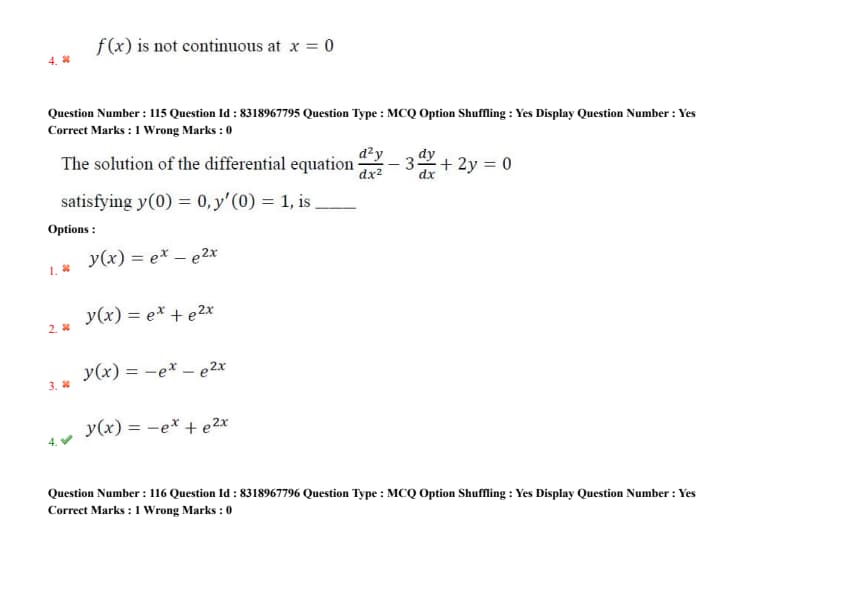
Question 115:
The solution of the differential equation \(\frac{d^2y}{dx^2} - 3 \frac{dy}{dx} + 2y = 0\) satisfying \(y(0) = 0\), \(y'(0) = 1\), is
- (1) \( y(x) = e^x - e^{2x} \)
- (2) \( y(x) = e^x + e^{2x} \)
- (3) \( y(x) = -e^x - e^{2x} \)
- (4) \( y(x) = -e^x + e^{2x} \)
Question 116:
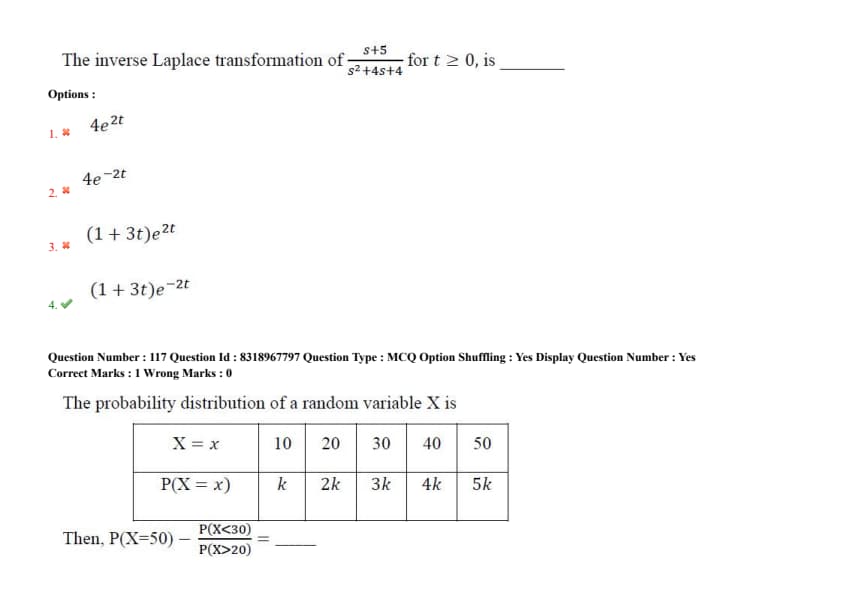
The inverse Laplace transformation of \( \frac{s+5}{s^2 + 4s + 4} \) for \( t \geq 0 \), is
- (1) \( 4e^{2t} \)
- (2) \( 4e^{-2t} \)
- (3) \( (1 + 3t)e^{2t} \)
- (4) \( (1 + 3t)e^{-2t} \)
Question 117:
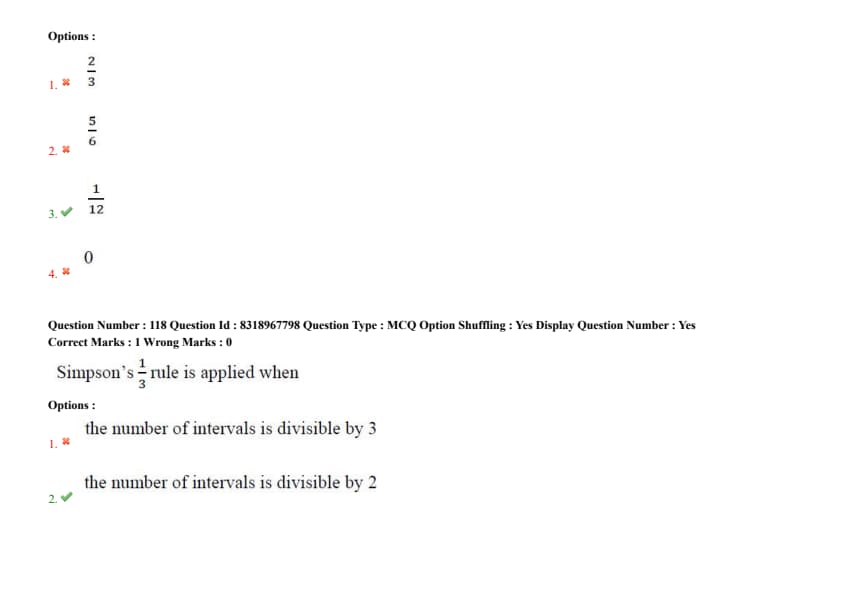
The probability distribution of a random variable \( X \) is given as follows. Then, \( P(X = 50) - \frac{P(X \leq 30)}{P(X \geq 20)} \) =
- (1) \( \frac{2}{3} \)
- (2) \( \frac{5}{6} \)
- (3) \( \frac{1}{12} \)
- (4) 0
Question 118:
Simpson's \( \frac{1}{3} \) rule is applied when
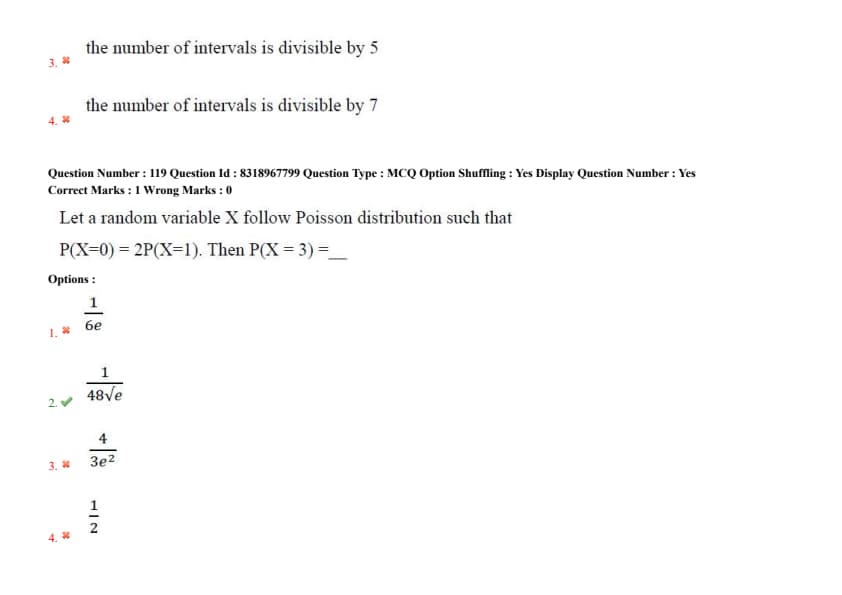
- (1) the number of intervals is divisible by 3
- (2) the number of intervals is divisible by 2
- (3) the number of intervals is divisible by 5
- (4) the number of intervals is divisible by 7
Question 119:
Let a random variable \( X \) follow Poisson distribution such that \( P(X = 0) = 2P(X = 1) \). Then, \( P(X = 3) = ______
- (1) \( \frac{1}{6e} \)
- (2) \( \frac{1}{48\sqrt{e}} \)
- (3) \( \frac{4}{3e^2} \)
- (4) \( \frac{1}{2} \)
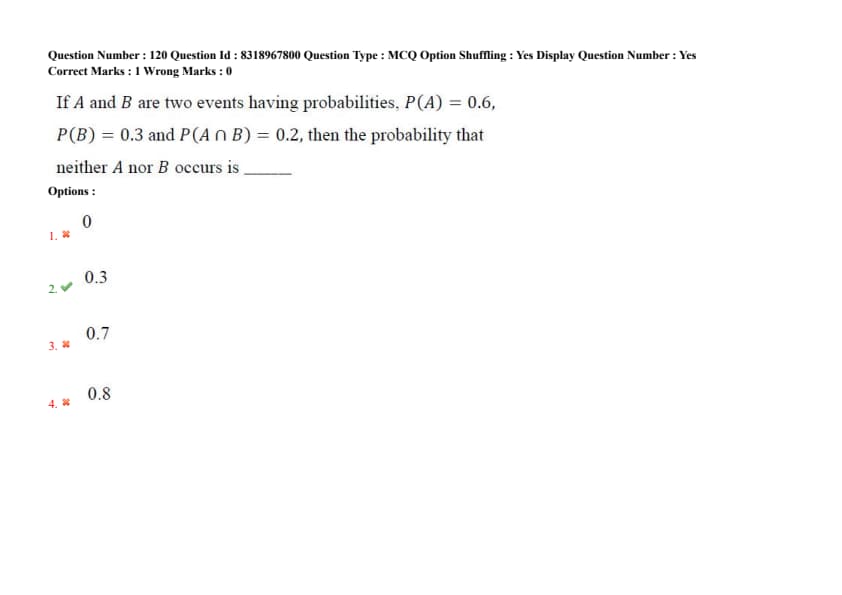
Question 120:
If \( A \) and \( B \) are two events having probabilities, \( P(A) = 0.6 \), \( P(B) = 0.3 \), and \( P(A \cap B) = 0.2 \), then the probability that neither \( A \) nor \( B \) occurs is ______
- (1) 0
- (2) 0.3
- (3) 0.7
- (4) 0.8










Comments