




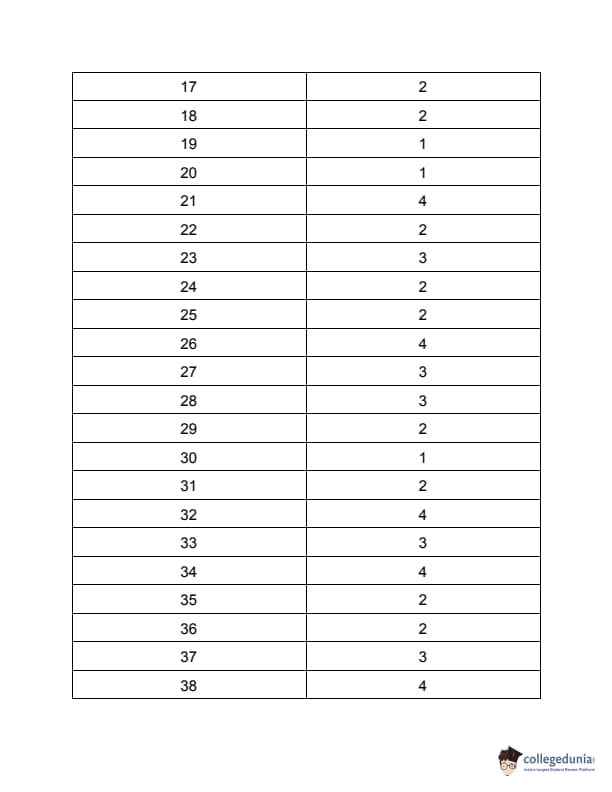
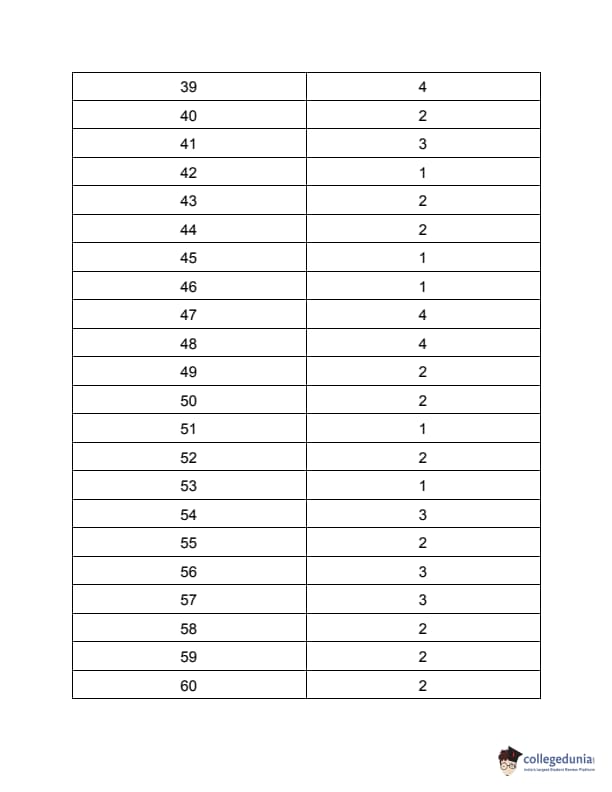
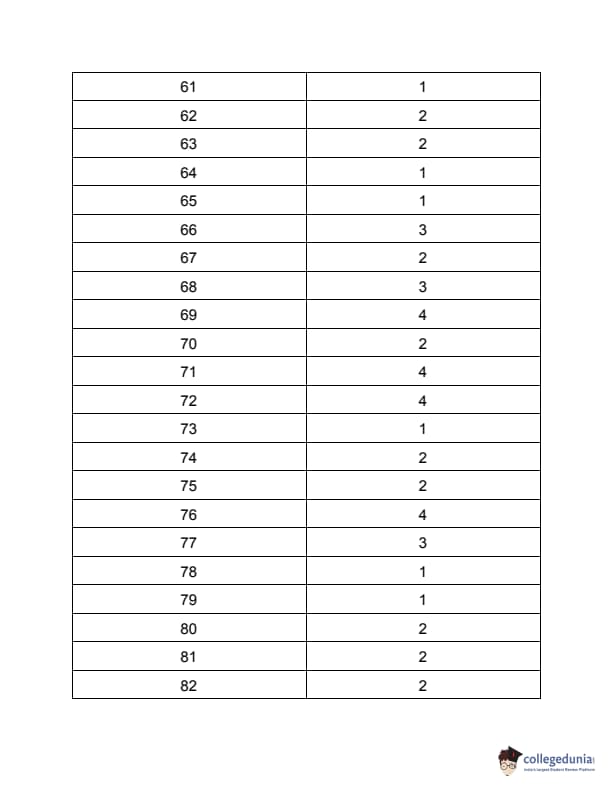
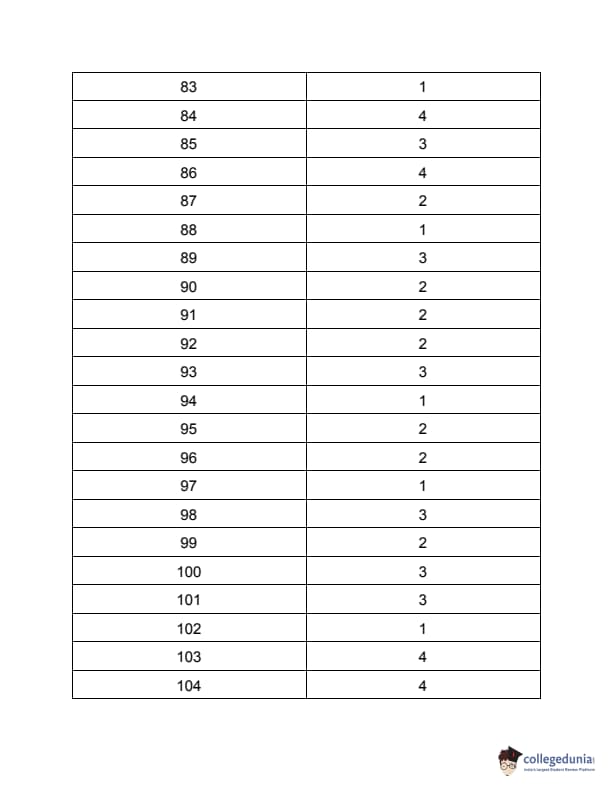
TS PGECET 2023 Bio-Technology Question Paper with Answer key PDF is available here for download. TS PGECET 2023 was conducted by JNTU Hyderabad on behalf of TSCHE on May 30, 2023. TS PGECET 2023 BT Question Paper consisted of 120 questions carrying 1 mark for each.
TS PGECET 2023 Bio-Technology Question Paper
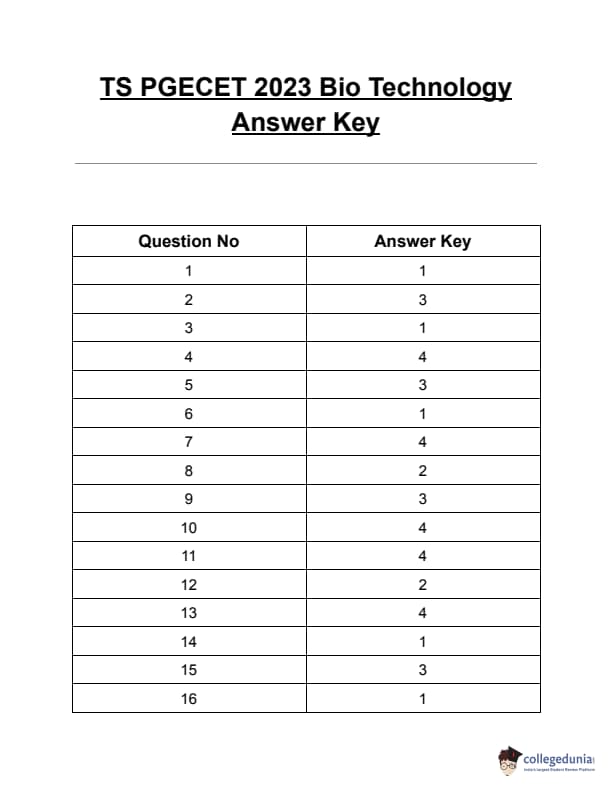
| TS PGECET 2023 BT Question Paper with Answer Key | Download PDF | Check Solution |

Question 1:
The condition for which all the eigenvalues of the matrix \[ A = \begin{bmatrix} 2 & 1 & 2
0 & K & 6
0 & 0 & 1 \end{bmatrix} \]
are positive is:
View Solution
The eigenvalues of an upper triangular matrix are the entries on its main diagonal. For the matrix \( A \), the eigenvalues are \( 2 \), \( K \), and \( 1 \).
For all eigenvalues to be positive: \[ 2 > 0, \quad K > 0, \quad 1 > 0 \]
Since \(2\) and \(1\) are already positive, the condition reduces to: \[ K > 0 \]
% Quicktip Quick Tip: For triangular matrices, eigenvalues are diagonal entries. All eigenvalues positive means diagonal entries positive.
If \(\lambda\) is an eigenvalue of \(A\) then the eigenvalues of \(\mathrm{Adj}(A)\) is:
View Solution
If \(\lambda\) is an eigenvalue of matrix \(A\), then the eigenvalues of \(\mathrm{Adj}(A)\) (adjugate of \(A\)) are given by \(\frac{|A|}{\lambda}\), where \(|A|\) is the determinant of \(A\).
This follows because \(\mathrm{Adj}(A) = |A| A^{-1}\) for invertible matrices, and eigenvalues of \(A^{-1}\) are \(\frac{1}{\lambda}\). Multiplying by \(|A|\) scales eigenvalues accordingly.
% Quicktip Quick Tip: Eigenvalues of \(\mathrm{Adj}(A)\) are \(\frac{|A|}{\lambda}\) where \(\lambda\) are eigenvalues of \(A\).
The sequence \(\{x_n\}\) where \(x_n = \left(1 + \frac{1}{3n}\right)^{2n}\) converges to:
View Solution
Recall the limit definition of exponential function: \[ \lim_{n \to \infty} \left(1 + \frac{x}{n}\right)^n = e^x \]
Rewrite: \[ x_n = \left(1 + \frac{1}{3n}\right)^{2n} = \left[\left(1 + \frac{1}{3n}\right)^{3n}\right]^{\frac{2}{3}} \]
As \(n \to \infty\), \(\left(1 + \frac{1}{3n}\right)^{3n} \to e^1 = e\), so: \[ x_n \to (e)^{\frac{2}{3}} = e^{\frac{2}{3}} \]
% Quicktip Quick Tip: Use the exponential limit \(\lim_{n\to\infty} \left(1+\frac{x}{n}\right)^n = e^x\).
If \(f(x) = |x|\), \(-\pi < x < \pi\) and the Fourier series of \(f(x) = \sum_{n=0}^\infty (a_n \cos nx + b_n \sin nx)\), then \(a_0 =\):
View Solution
The Fourier coefficient \(a_0\) is given by: \[ a_0 = \frac{1}{\pi} \int_{-\pi}^\pi |x| \, dx = \frac{2}{\pi} \int_0^\pi x \, dx = \frac{2}{\pi} \cdot \frac{\pi^2}{2} = \pi \]
But since the Fourier series is expressed as: \[ f(x) = \frac{a_0}{2} + \sum_{n=1}^\infty (a_n \cos nx + b_n \sin nx) \]
The coefficient \(a_0\) used in the problem is actually half of the integral, so: \[ a_0 = \frac{\pi}{2} \]
% Quicktip Quick Tip: Calculate \(a_0\) using integral of \(|x|\) over \([- \pi, \pi]\).
It is given that correlation coefficient of the ‘n’ pair of observations \((x,y)\) is \(r = 0.8\), \(\sum XY = 60\), \(\sum X^2 = 90\) and \(\sigma_y = 2.5\), here \(X,Y\) are deviations from the arithmetic means of \(x\) and \(y\), then \(n =\):
View Solution
Correlation coefficient formula: \[ r = \frac{\sum XY}{\sqrt{\sum X^2 \sum Y^2}} = \frac{\sum XY}{\sqrt{\sum X^2 \cdot n \sigma_y^2}} \]
Given: \[ r = 0.8, \quad \sum XY = 60, \quad \sum X^2 = 90, \quad \sigma_y = 2.5 \]
Rearranging: \[ 0.8 = \frac{60}{\sqrt{90 \cdot n \cdot (2.5)^2}} \implies 0.8 \sqrt{90 \cdot n \cdot 6.25} = 60 \]
\[ 0.8 \sqrt{562.5 n} = 60 \implies \sqrt{562.5 n} = \frac{60}{0.8} = 75 \]
\[ 562.5 n = 75^2 = 5625 \implies n = \frac{5625}{562.5} = 10 \]
% Quicktip Quick Tip: Use correlation formula and solve for \(n\).
If the two regression coefficients are 0.8 and 0.2, then the value of coefficient of correlation is:
View Solution
The coefficient of correlation \(r\) is related to the regression coefficients \(b_1\) and \(b_2\) by: \[ r = \sqrt{b_1 \times b_2} = \sqrt{0.8 \times 0.2} = \sqrt{0.16} = 0.4 \]
% Quicktip Quick Tip: Correlation coefficient \(r = \sqrt{b_1 b_2}\) where \(b_1, b_2\) are regression coefficients.
Integrating factor of \(x^2 y\, dx - (x^3 + y^3) dy = 0\) is:
View Solution
The integrating factor \( \mu \) depends on \(y\) and is found to be \(y^4\), which when multiplied converts the given differential equation into an exact differential equation.
% Quicktip Quick Tip: Look for integrating factors as functions of a single variable to make the equation exact.
The general solution of \(\frac{dy}{dx} + 1 = e^{x+y}\) is:
View Solution
Rewrite the differential equation: \[ \frac{dy}{dx} = e^{x+y} - 1 \]
Let \(u = e^{-(x+y)}\), then differentiate and solve to get the implicit general solution: \[ x + e^{-(x+y)} = c \]
% Quicktip Quick Tip: Use substitution \(u = e^{-(x+y)}\) to solve the nonlinear ODE.
The first approximation to a real root of the equation \(x^3 - x - 4 = 0\) by Regula-Falsi method between 1 and 2 is:
View Solution
Using Regula-Falsi method formula: \[ x = b - \frac{f(b)(a-b)}{f(a) - f(b)} \]
with \(a=1, b=2\),
calculate \(f(a)\) and \(f(b)\), then compute the approximation \(x \approx 1.666\).
% Quicktip Quick Tip: Regula-Falsi approximates root between \(a,b\) using linear interpolation.
The iterative formula to find a numerical solution of an initial value problem \(\frac{dy}{dx} = f(x,y), y(x_0) = y_0\) using Euler’s method is:
View Solution
Euler’s method uses the slope at \((x_n,y_n)\) to estimate the next value: \[ y_{n+1} = y_n + h f(x_n, y_n) \]
% Quicktip Quick Tip: Euler’s method updates solution by moving along slope times step size.
....... is a secondary database.
View Solution
InterPro is a secondary database that integrates predictive models or signatures from multiple databases to classify sequences into families and predict the presence of domains and important sites. It provides annotation and classification rather than raw sequence data.
% Quicktip Quick Tip: Secondary databases like InterPro provide curated, annotated biological information, unlike primary sequence repositories.
ddNTPs are used in .............. DNA sequencing.
View Solution
Dideoxynucleotides (ddNTPs) are used in Sanger sequencing to terminate DNA strand elongation during replication. Incorporation of ddNTPs prevents further nucleotide addition, allowing determination of DNA sequence.
% Quicktip Quick Tip: Sanger sequencing uses ddNTPs for chain termination to read DNA sequences.
................ is not a multiple sequence alignment tool.
View Solution
BLAST (Basic Local Alignment Search Tool) is primarily a pairwise sequence alignment tool used for searching sequence databases for local regions of similarity. It is not designed for multiple sequence alignments.
% Quicktip Quick Tip: BLAST is used for pairwise alignments, whereas tools like CLUSTAL and COBALT perform multiple sequence alignments.
A node in a phylogenetic tree represents ..............
View Solution
In a phylogenetic tree, a node represents a common ancestor where a lineage splits into two or more distinct lineages. This branching point indicates speciation or evolutionary divergence from the ancestral population.
% Quicktip Quick Tip: Nodes mark divergence events from a common ancestor in phylogenetic trees.
In PAM250 matrix the figure 250 denotes ................
View Solution
The PAM250 matrix represents an evolutionary distance where 250 mutations per 100 amino acids have occurred. It is used to score alignments between protein sequences that have diverged significantly.
% Quicktip Quick Tip: PAM matrices quantify mutations; PAM250 corresponds to 250 mutations per 100 residues.
What is the difference between a genome and a transcriptome?
View Solution
The genome refers to the entire set of genetic material (DNA) present in an organism. The transcriptome, on the other hand, consists of all the RNA molecules transcribed from the genome at a specific time or under specific conditions. The transcriptome reflects gene expression patterns.
% Quicktip Quick Tip: Genome = all genes; Transcriptome = all RNA transcripts from those genes.
........... microarrays can be used for the detection of both mutation genotyping and gene expression analysis.
View Solution
Oligonucleotide microarrays use short, synthesized DNA probes and are versatile for detecting mutations and measuring gene expression levels, making them suitable for genotyping and expression analysis.
% Quicktip Quick Tip: Oligonucleotide microarrays are versatile tools for mutation and expression analysis.
........... can be introduced in sequence alignments for better matching.
View Solution
Gap penalties are applied during sequence alignments to account for insertions or deletions (indels). Introducing gap penalties helps produce more biologically meaningful alignments by penalizing gaps and avoiding excessive insertions.
% Quicktip Quick Tip: Gap penalties prevent excessive gaps in sequence alignments for accuracy.
Lipinski rule of five is related to:
View Solution
Lipinski’s rule of five predicts the oral bioavailability of drug candidates based on molecular properties such as molecular weight, lipophilicity (log P), hydrogen bond donors and acceptors. It helps in assessing drug-likeness for oral administration.
% Quicktip Quick Tip: Lipinski’s rule helps predict if a drug is likely orally active based on molecular properties.
................ extension is used in files for nucleic acids.
View Solution
The file extension “.fna” is commonly used for nucleic acid sequences in bioinformatics databases, representing FASTA nucleotide sequences.
% Quicktip Quick Tip: .fna files store nucleotide sequences in FASTA format.
Select the category of enzymes to which Bal31 belongs, which is purified from Alteromonas Espejiana.
View Solution
Bal31 is an exonuclease enzyme that cleaves nucleotides sequentially from the ends of DNA molecules. It is widely used in molecular biology for DNA trimming and mapping.
% Quicktip Quick Tip: Bal31 is a nuclease that digests DNA from the ends, classifying it as an exonuclease.
A vector named pBluescript SK is a best known example of:
View Solution
pBluescript SK is a commonly used phagemid vector, which combines features of plasmids and phages. It can replicate as a plasmid and also produce single-stranded DNA when helper phage is present.
% Quicktip Quick Tip: Phagemids are vectors with both plasmid and phage properties, like pBluescript SK.
The length of DNA that is allowed to clone by a P1 cloning vector is:
View Solution
P1 cloning vectors are capable of cloning large DNA fragments up to approximately 100 kilobase pairs (kbp), making them useful for cloning large genomic fragments.
% Quicktip Quick Tip: P1 vectors accommodate large DNA inserts, around 100 kbp in length.
pYAC3 is:
View Solution
pYAC3 is a yeast artificial chromosome (YAC) vector used to clone large DNA fragments in yeast cells. YACs replicate like natural chromosomes, enabling cloning of very large DNA segments.
% Quicktip Quick Tip: YACs like pYAC3 are vectors for large DNA cloning in yeast.
The Restriction enzyme E.CoR1, R stands for ..............
View Solution
The letter "R" in EcoR1 denotes the strain RY13 of Escherichia coli from which the enzyme was isolated. Restriction enzymes are named based on the bacterial strain source.
% Quicktip Quick Tip: Restriction enzymes are named after their bacterial strain sources, like EcoR1 from RY13.
The libraries that are constructed in plasmid vectors could be kept as:
View Solution
Libraries constructed in plasmid vectors can be preserved either as plasmid-containing host cells (usually bacteria) or as purified naked DNA. Both methods are commonly used depending on experimental needs.
% Quicktip Quick Tip: Preserve plasmid libraries in bacterial cells or as purified DNA for storage and use.
Select a restriction modification system from the following.
View Solution
A restriction-modification system consists of a restriction endonuclease that cuts foreign DNA and a methylase that protects host DNA by methylation at recognition sites, preventing cleavage.
% Quicktip Quick Tip: Restriction-modification systems pair endonucleases with methylases to differentiate self from non-self DNA.
The category of mutation which is not imposed by transposons is:
View Solution
Transposons typically cause mutations like polar and frameshift mutations by inserting into genes. Induced mutations are caused by external agents and are not due to transposons.
% Quicktip Quick Tip: Transposons cause insertion mutations; induced mutations result from external mutagens.
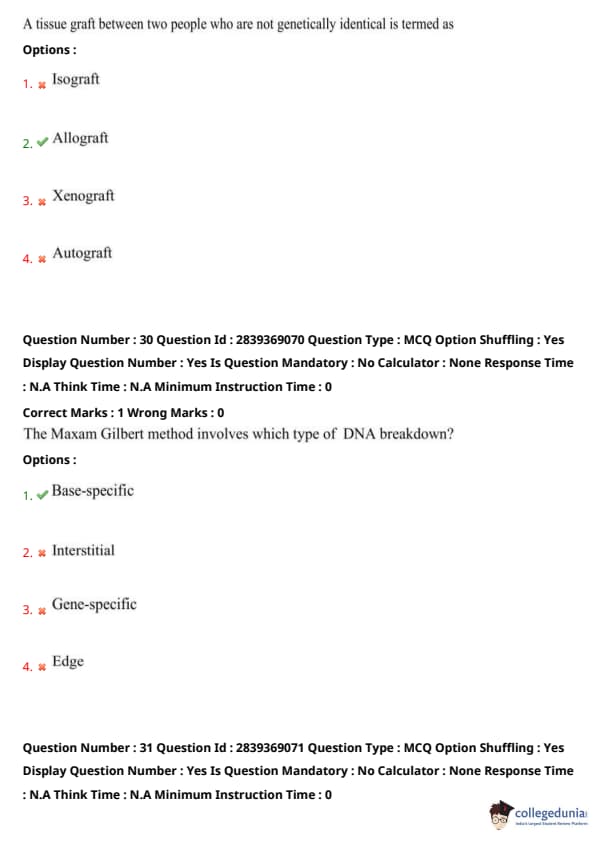
A tissue graft between two people who are not genetically identical is termed as:
View Solution
An allograft is a transplant between two genetically different individuals of the same species. It often requires immunosuppressive therapy to prevent rejection.
% Quicktip Quick Tip: Allografts involve genetically different donors and recipients within the same species.
The Maxam Gilbert method involves which type of DNA breakdown?
View Solution
Maxam-Gilbert sequencing chemically cleaves DNA at specific bases, allowing base-specific DNA fragmentation and sequencing.
% Quicktip Quick Tip: Maxam-Gilbert sequencing is a chemical method targeting specific DNA bases.
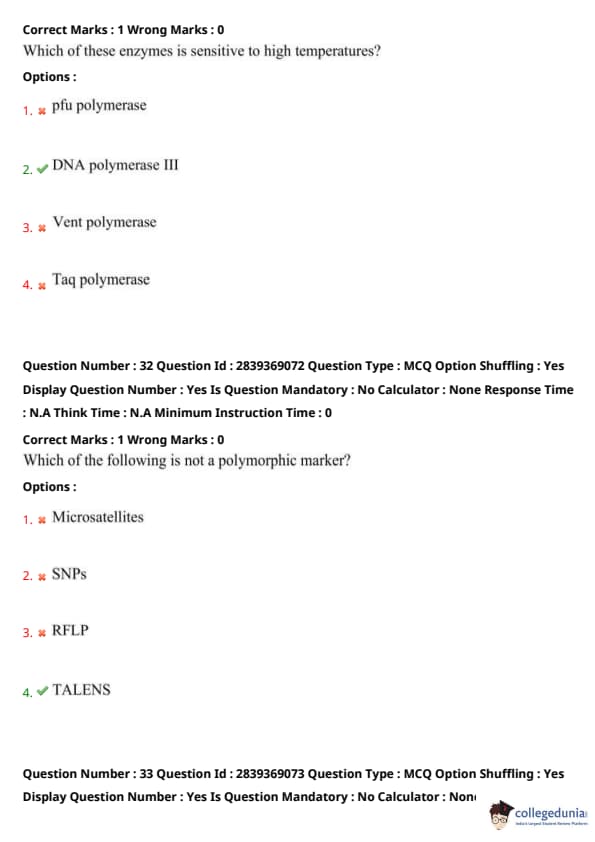
Which of these enzymes is sensitive to high temperatures?
View Solution
DNA polymerase III, found in bacteria, is sensitive to high temperatures and is denatured during PCR. Thermostable enzymes like Taq polymerase are used in PCR because they withstand high temperatures.
% Quicktip Quick Tip: Taq and Vent polymerases are thermostable; DNA polymerase III is not.
Which of the following is not a polymorphic marker?
View Solution
TALENS (Transcription Activator-Like Effector Nucleases) are genome editing tools, not polymorphic markers. Microsatellites, SNPs, and RFLPs are polymorphic genetic markers used in mapping and genetic diversity studies.
% Quicktip Quick Tip: TALENS are editing tools; microsatellites, SNPs, and RFLPs are polymorphic markers.
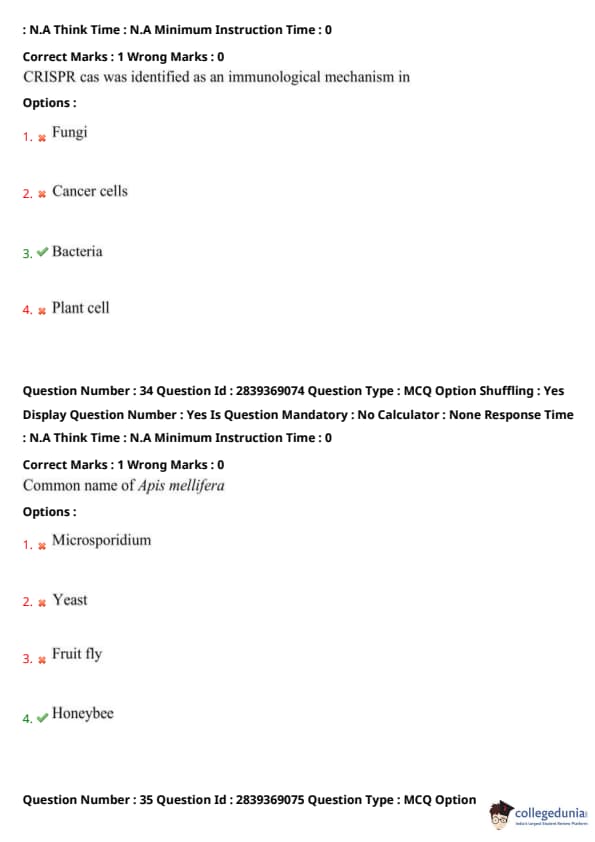
CRISPR cas was identified as an immunological mechanism in:
View Solution
CRISPR-Cas systems provide adaptive immunity in bacteria and archaea by targeting invading viral DNA or plasmids, protecting against infections.
% Quicktip Quick Tip: CRISPR-Cas is a bacterial adaptive immune system.
Common name of Apis mellifera is:
View Solution
Apis mellifera is the scientific name of the Western honeybee, an important pollinator and honey producer.
% Quicktip Quick Tip: \Apis mellifera = Honeybee.
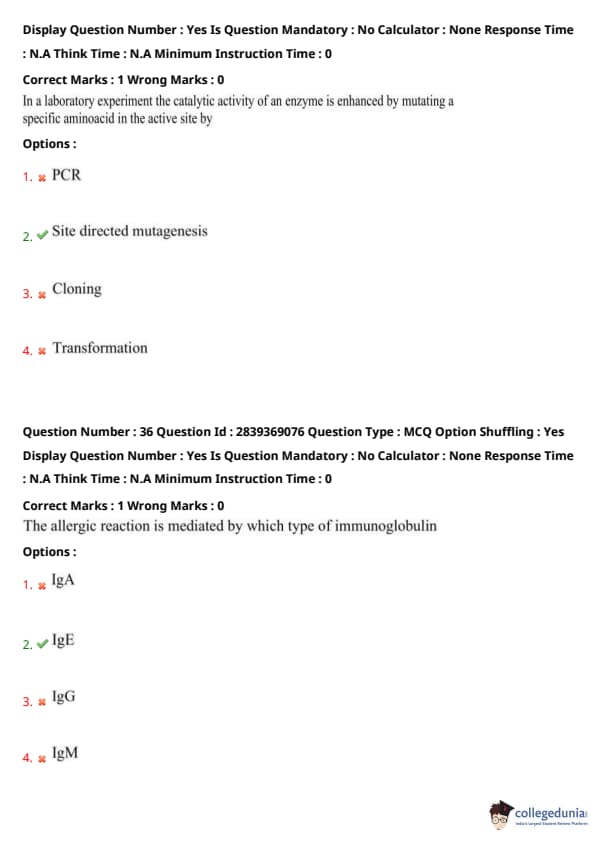
In a laboratory experiment the catalytic activity of an enzyme is enhanced by mutating a specific amino acid in the active site by:
View Solution
Site-directed mutagenesis allows targeted mutations at specific amino acid residues in enzymes to study structure-function relationships or enhance activity.
% Quicktip Quick Tip: Site-directed mutagenesis is used to mutate specific amino acids in proteins.
The allergic reaction is mediated by which type of immunoglobulin?
View Solution
IgE antibodies mediate allergic reactions by binding to allergens and triggering histamine release from mast cells and basophils, causing allergy symptoms.
% Quicktip Quick Tip: IgE is the immunoglobulin responsible for allergic responses.
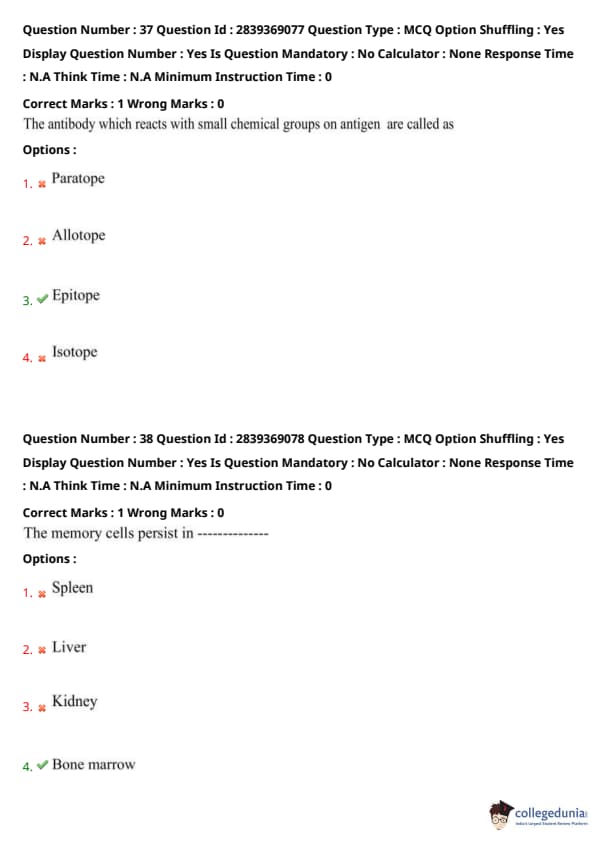
The antibody which reacts with small chemical groups on antigen are called as:
View Solution
An epitope is the specific part of an antigen molecule to which an antibody attaches itself, often a small chemical group.
% Quicktip Quick Tip: Epitopes are antigenic determinants recognized by antibodies.
The memory cells persist in ................
View Solution
Memory B and T cells persist mainly in the bone marrow, where they remain long-term to provide rapid immune responses upon re-exposure to antigens.
% Quicktip Quick Tip: Bone marrow is a primary reservoir for long-lived memory immune cells.
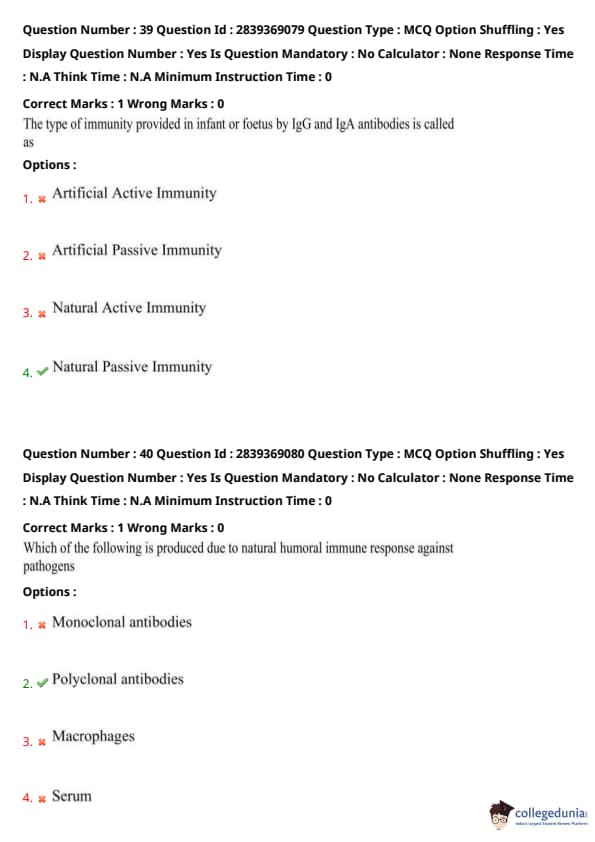
The type of immunity provided in infant or foetus by IgG and IgA antibodies is called as:
View Solution
Natural passive immunity is the transfer of antibodies (IgG and IgA) from mother to infant via placenta and breast milk, providing immediate protection.
% Quicktip Quick Tip: Natural passive immunity comes from maternal antibodies passed to offspring.
Which of the following is produced due to natural humoral immune response against pathogens?
View Solution
Polyclonal antibodies are produced by multiple clones of B cells in response to an antigen, providing a broad immune response.
% Quicktip Quick Tip: Natural humoral immunity generates diverse polyclonal antibodies.
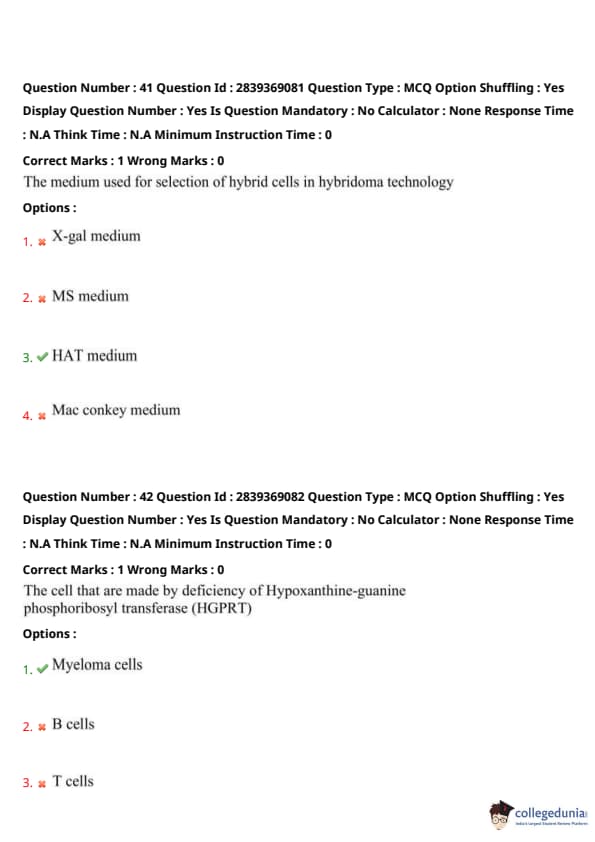
The medium used for selection of hybrid cells in hybridoma technology is:
View Solution
HAT medium (Hypoxanthine-Aminopterin-Thymidine) is used to selectively grow hybridoma cells by blocking the nucleotide synthesis pathway in non-hybrid cells.
% Quicktip Quick Tip: HAT medium selectively allows growth of hybridoma cells in monoclonal antibody production.
The cells that are made by deficiency of Hypoxanthine-guanine phosphoribosyl transferase (HGPRT) are:
View Solution
Myeloma cells used in hybridoma technology lack HGPRT, making them unable to survive in HAT medium unless fused with normal B cells.
% Quicktip Quick Tip: HGPRT deficiency in myeloma cells allows selection of hybrids in HAT medium.
Component C3b in complement system helps in:
View Solution
C3b binds to bacterial surfaces marking them for phagocytosis by immune cells, a process known as opsonization.
% Quicktip Quick Tip: C3b tags pathogens to enhance phagocytosis (opsonization).
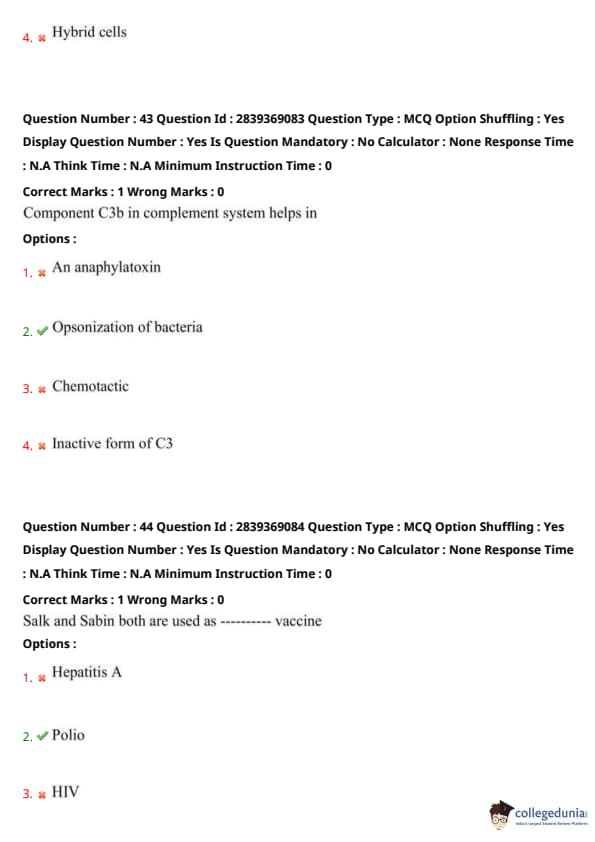
Salk and Sabin both are used as ..... vaccine.
View Solution
Salk vaccine is an inactivated polio vaccine, while Sabin vaccine is an oral live attenuated polio vaccine, both used to prevent poliomyelitis.
% Quicktip Quick Tip: Salk = Inactivated polio vaccine; Sabin = Oral polio vaccine.
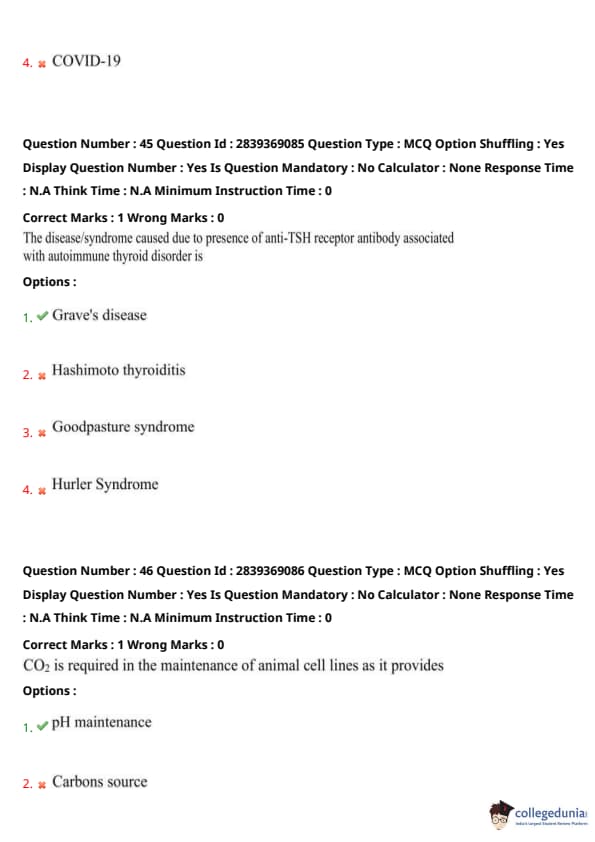
The disease/syndrome caused due to presence of anti-TSH receptor antibody associated with autoimmune thyroid disorder is:
View Solution
Grave's disease is an autoimmune disorder caused by antibodies that stimulate TSH receptors, leading to hyperthyroidism.
% Quicktip Quick Tip: Anti-TSH receptor antibodies cause Grave's disease.
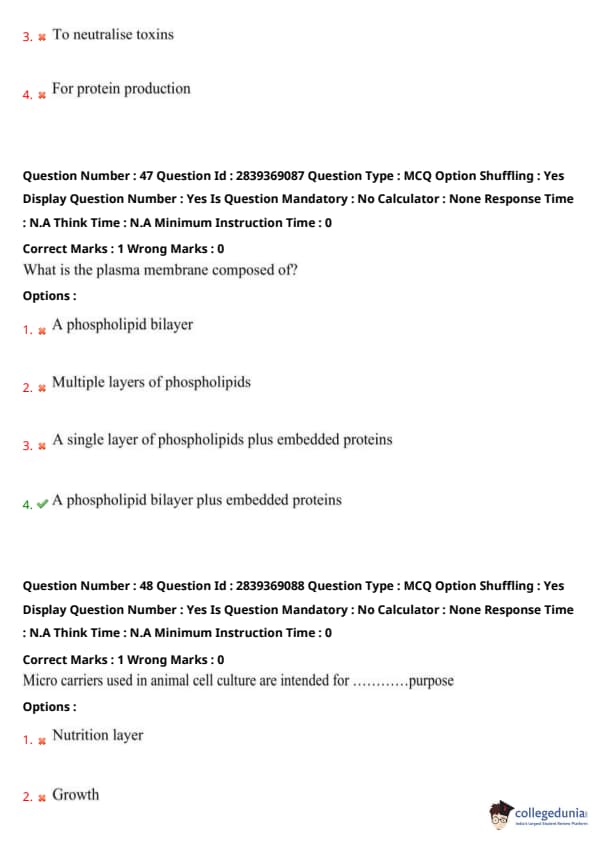
CO2 is required in the maintenance of animal cell lines as it provides
View Solution
CO2 maintains the pH balance in the culture medium by reacting with water to form carbonic acid, which buffers the medium, supporting cell viability.
% Quicktip Quick Tip: CO2 acts as a buffer to maintain pH in cell culture media.
What is the plasma membrane composed of?
View Solution
The plasma membrane consists of a phospholipid bilayer with proteins embedded within it, providing structural integrity and functionality such as transport and signaling.
% Quicktip Quick Tip: Plasma membrane is described by the fluid mosaic model — phospholipid bilayer with embedded proteins.
Micro carriers used in animal cell culture are intended for ............. purpose.
View Solution
Micro carriers provide a surface for anchorage-dependent cells to attach and grow in suspension cultures, facilitating large-scale cell culture.
% Quicktip Quick Tip: Micro carriers help anchorage-dependent cells grow in bioreactors by providing attachment surfaces.
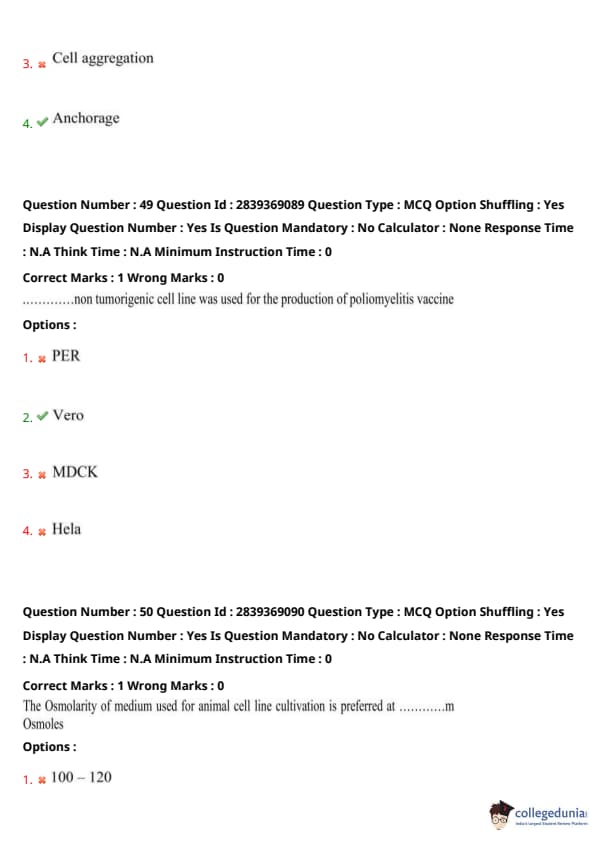
............. non tumorigenic cell line was used for the production of poliomyelitis vaccine.
View Solution
Vero cells, a non-tumorigenic cell line from African green monkey kidney, are widely used for poliovirus cultivation in vaccine production.
% Quicktip Quick Tip: Vero cells are standard for poliovirus vaccine manufacturing.
The Osmolarity of medium used for animal cell line cultivation is preferred at ............ m Osmoles.
View Solution
The osmolarity of the culture medium is maintained between 260 and 320 mOsmoles to mimic physiological conditions optimal for animal cell growth.
% Quicktip Quick Tip: Optimal osmolarity for animal cell culture is similar to blood plasma (~280 mOsm).
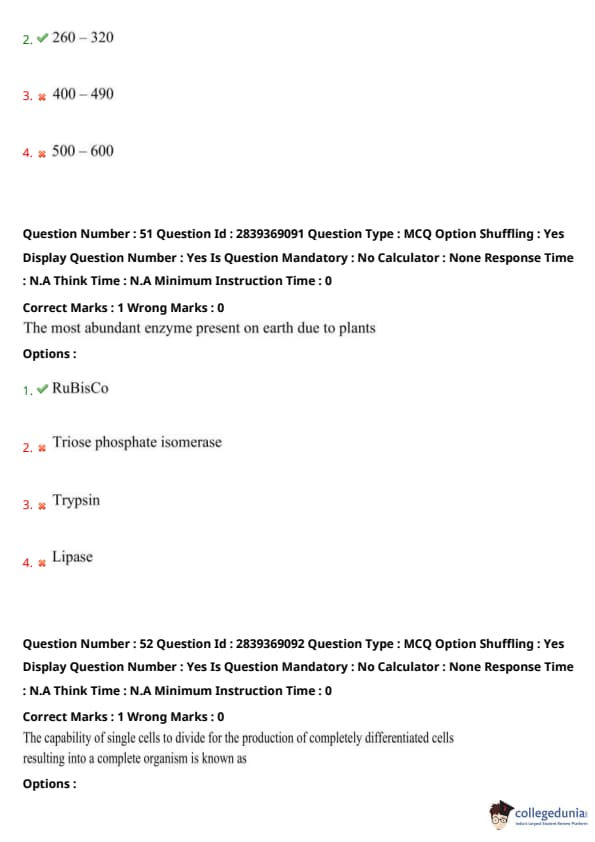
The most abundant enzyme present on earth due to plants
View Solution
RuBisCO (Ribulose-1,5-bisphosphate carboxylase/oxygenase) is the most abundant enzyme on Earth, primarily due to its presence in plants, algae, and photosynthetic bacteria. It plays a critical role in the Calvin cycle, facilitating carbon fixation by catalyzing the reaction between carbon dioxide and ribulose-1,5-bisphosphate. The sheer volume of photosynthetic organisms, especially plants, makes RuBisCO the most abundant enzyme. Other enzymes like triose phosphate isomerase, trypsin, and lipase, while important, are not as prevalent.
Thus, the correct answer is RuBisCO.
% Quicktip Quick Tip: RuBisCO is often called the ``bridge to life'' because it enables the conversion of inorganic carbon (CO\(_2\)) into organic molecules during photosynthesis.
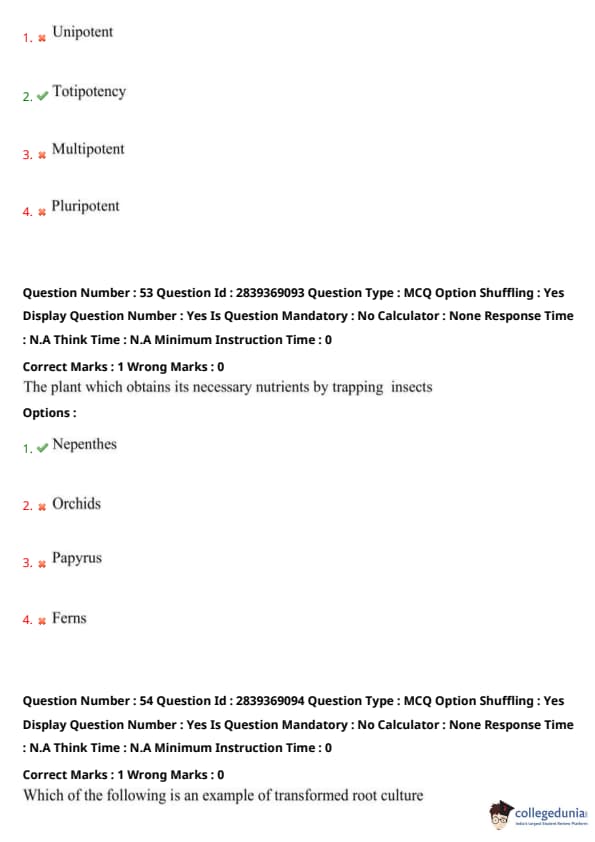
The capability of single cells to divide for the production of completely differentiated cells resulting into a complete organism is known as
View Solution
Totipotency refers to the ability of a single cell to divide and differentiate into all the cell types necessary to form a complete organism, including both embryonic and extra-embryonic tissues. In plants, for example, a single totipotent cell can develop into a whole plant. Unipotent cells can only differentiate into one cell type, multipotent cells into a limited range of cell types, and pluripotent cells can form many cell types but not a complete organism on their own.
Thus, the correct answer is Totipotent.
% Quicktip Quick Tip: Totipotency is a key concept in plant tissue culture, where a single cell can regenerate into a whole plant under the right conditions.
The plant which obtains its necessary nutrients by trapping insects
View Solution
Nepenthes, commonly known as pitcher plants, are carnivorous plants that obtain essential nutrients, particularly nitrogen, by trapping and digesting insects. They have specialized structures called pitchers that attract, trap, and digest insects. Orchids are typically epiphytic or terrestrial but not carnivorous, papyrus is a wetland plant used historically for paper, and ferns are non-carnivorous plants that reproduce via spores.
Thus, the correct answer is Nepenthes.
% Quicktip Quick Tip: Carnivorous plants like Nepenthes often grow in nutrient-poor soils, which is why they have evolved to trap insects as a source of nutrients.
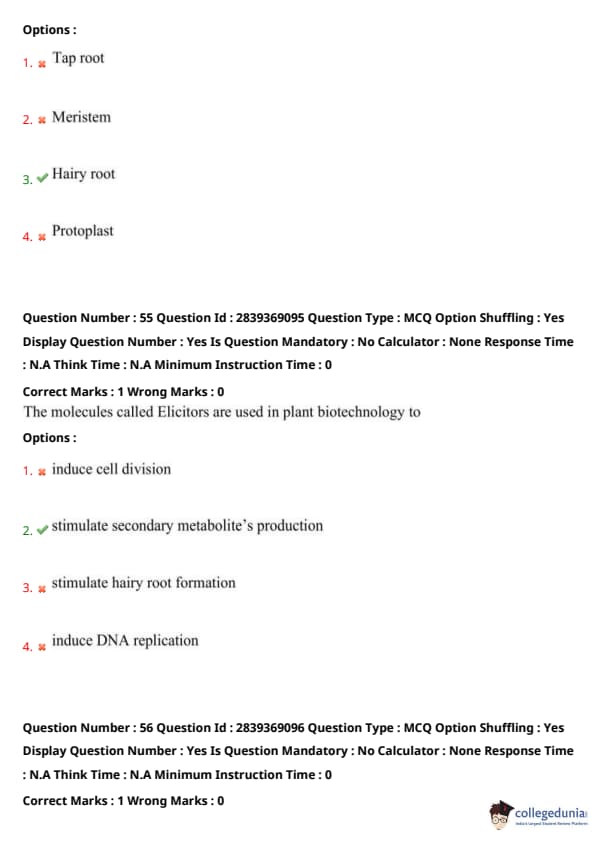
Which of the following is an example of transformed root culture
View Solution
Hairy root culture refers to a type of transformed root culture induced by the infection of a plant with Agrobacterium rhizogenes, which transfers T-DNA into the plant genome, leading to the formation of hairy roots. These roots grow rapidly and are used in biotechnology for the production of secondary metabolites. Tap roots are a type of root system, meristem refers to regions of cell division, and protoplasts are plant cells with their cell walls removed, none of which are examples of transformed root cultures.
Thus, the correct answer is Hairy root.
% Quicktip Quick Tip: Hairy root cultures are widely used in plant biotechnology to produce valuable compounds like pharmaceuticals and alkaloids.
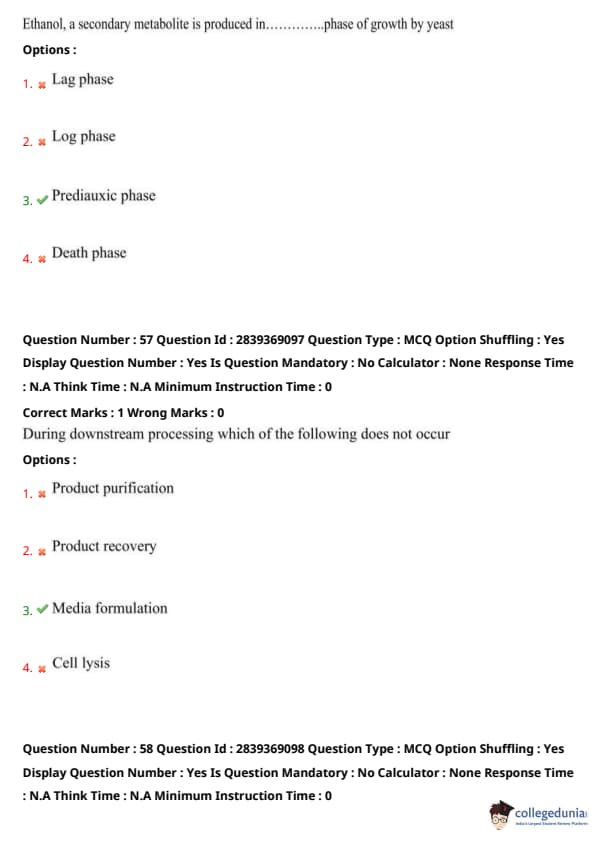
The molecules called Elicitors are used in plant biotechnology to
View Solution
Elicitors are molecules used in plant biotechnology to trigger defense responses in plants, often leading to the production of secondary metabolites such as alkaloids, terpenoids, and phenolics. These compounds are valuable for their pharmaceutical and industrial applications. Elicitors do not directly induce cell division, hairy root formation, or DNA replication, though they may indirectly influence related pathways.
Thus, the correct answer is Stimulate secondary metabolite's production.
% Quicktip Quick Tip: Elicitors can be biotic (e.g., fungal extracts) or abiotic (e.g., heavy metals) and are used to enhance the yield of commercially important plant compounds.
Ethanol, a secondary metabolite is produced in ____________ phase of growth by yeast
View Solution
In yeast, ethanol is produced as a secondary metabolite during fermentation, particularly in the prediauxic phase. This phase occurs after the initial log phase when yeast cells shift from using glucose to other carbon sources (like ethanol or acetate), often under anaerobic conditions. During this transition, yeast produces ethanol as a byproduct of fermentation. The lag phase involves cell adaptation, the log phase is for rapid growth, and the death phase is when cells die off, none of which are primary for ethanol production.
Thus, the correct answer is Prediauxic phase.
% Quicktip Quick Tip: The prediauxic phase is part of the diauxic growth curve in yeast, where cells switch metabolic pathways due to changing nutrient availability.
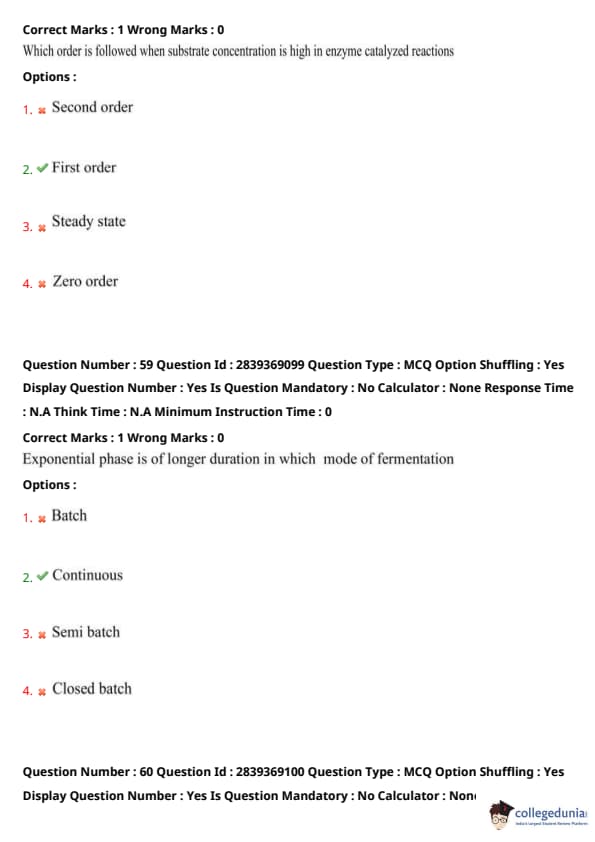
During downstream processing which of the following does not occur
View Solution
Downstream processing refers to the steps involved in recovering and purifying a product after fermentation or bioprocessing. This includes product recovery, purification, and sometimes cell lysis to release intracellular products. Media formulation, however, is part of upstream processing, where the growth medium is prepared before the culture process begins. Therefore, media formulation does not occur during downstream processing.
Thus, the correct answer is Media formulation.
% Quicktip Quick Tip: Downstream processing often involves techniques like centrifugation, filtration, and chromatography to isolate and purify the desired product.
Which order is followed when substrate concentration is high in enzyme catalyzed reactions
View Solution
In enzyme-catalyzed reactions, the reaction order depends on substrate concentration. When the substrate concentration is high, the enzyme becomes saturated, and the reaction rate depends linearly on the substrate concentration, following first-order kinetics. At very low substrate concentrations, the reaction may approach zero-order kinetics, but high substrate levels align with first-order behavior as described by the Michaelis-Menten equation. Second-order and steady-state are not directly applicable here.
Thus, the correct answer is First order.
% Quicktip Quick Tip: First-order kinetics in enzyme reactions means the reaction rate is directly proportional to substrate concentration when the enzyme is not fully saturated.
Exponential phase is of longer duration in which mode of fermentation
View Solution
In continuous fermentation, fresh nutrients are continuously added, and waste products are removed, allowing the culture to maintain the exponential growth phase for a longer duration. In batch fermentation, the exponential phase is limited by nutrient depletion. Semi-batch involves periodic addition of nutrients but still has limitations, and "closed batch" is not a standard term (likely a variant of batch). Continuous fermentation sustains exponential growth the longest.
Thus, the correct answer is Continuous.
% Quicktip Quick Tip: Continuous fermentation is often used in industrial processes to maximize biomass or product yield over extended periods.
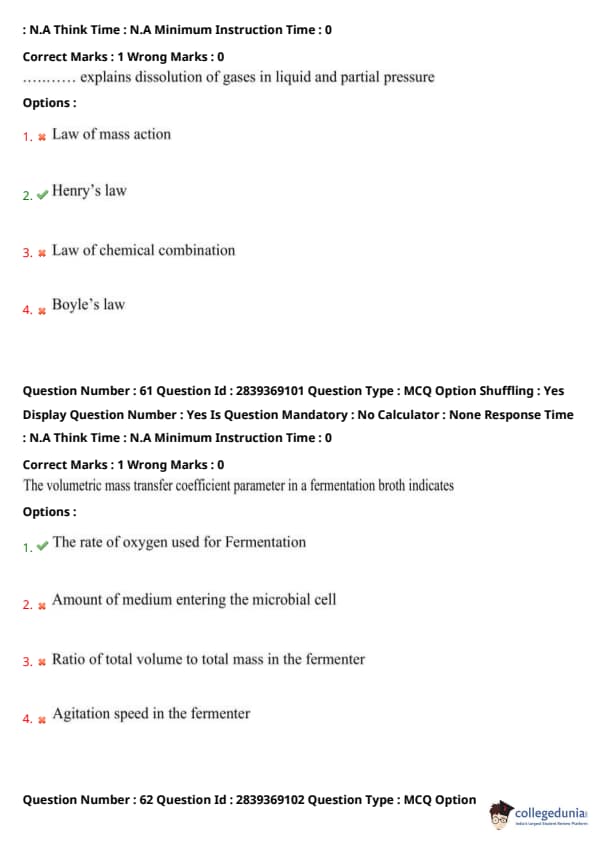
___________________ explains dissolution of gases in liquid and partial pressure
View Solution
Henry's law states that the amount of gas dissolved in a liquid is directly proportional to the partial pressure of the gas above the liquid, at a constant temperature. This principle explains the dissolution of gases like oxygen or carbon dioxide in liquids. The law of mass action relates to reaction rates, the law of chemical combination deals with stoichiometry, and Boyle's law describes the relationship between pressure and volume of a gas, not its dissolution.
Thus, the correct answer is Henry's law.
% Quicktip Quick Tip: Henry's law is crucial in processes like carbonation of beverages, where CO\(_2\) dissolves in liquid under pressure.
The volumetric mass transfer coefficient in a fermentation broth indicates
View Solution
The volumetric mass transfer coefficient (often denoted as \( k_La \)) in a fermentation broth measures the rate at which oxygen is transferred from the gas phase to the liquid phase, where it can be used by microorganisms for fermentation. It directly relates to the rate of oxygen used in aerobic fermentation processes. The other options—amount of medium entering the cell, volume-to-mass ratio, and agitation speed—are not directly indicated by the mass transfer coefficient, though agitation can influence it.
Thus, the correct answer is The rate of oxygen used for Fermentation.
% Quicktip Quick Tip: The volumetric mass transfer coefficient (\( k_La \)) is critical in aerobic fermentations to ensure sufficient oxygen supply for microbial growth.
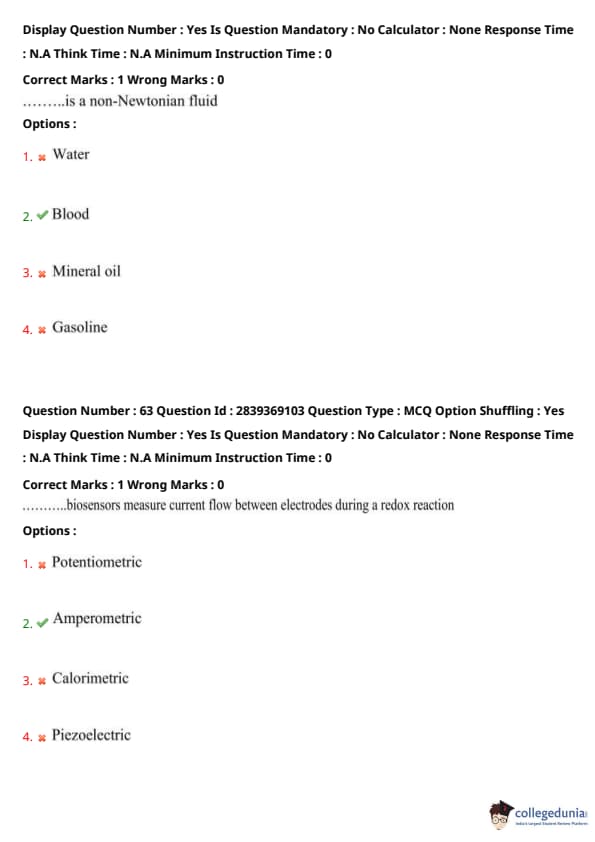
_____________ is a non-Newtonian fluid
View Solution
A non-Newtonian fluid is one whose viscosity changes under stress or strain. Blood is a non-Newtonian fluid because its viscosity decreases under high shear rates (e.g., in narrow blood vessels), exhibiting shear-thinning behavior. Water, mineral oil, and gasoline are Newtonian fluids, meaning their viscosity remains constant regardless of the applied shear rate.
Thus, the correct answer is Blood.
% Quicktip Quick Tip: Blood’s non-Newtonian behavior helps it flow more easily through narrow capillaries, aiding circulation in the body.
_______________ biosensors measure current flow between electrodes during a redox reaction
View Solution
Amperometric biosensors measure the current flow between electrodes resulting from a redox (oxidation-reduction) reaction, often involving the analyte and a mediator. This current is proportional to the analyte concentration. Potentiometric biosensors measure potential difference, calorimetric ones measure heat changes, and piezoelectric biosensors detect mass changes through frequency shifts, none of which involve current flow from redox reactions.
Thus, the correct answer is Amperometric.
% Quicktip Quick Tip: Amperometric biosensors are commonly used in glucose meters to detect glucose levels through redox reactions.
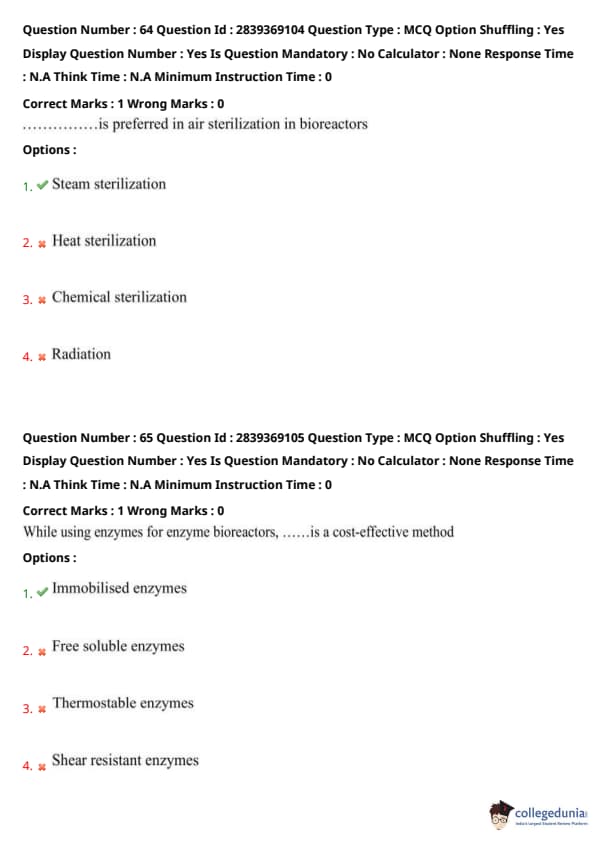
_______________ is preferred in air sterilization in bioreactors
View Solution
Steam sterilization is the preferred method for air sterilization in bioreactors because it effectively kills microorganisms using high-temperature steam (typically at 121°C under pressure, as in autoclaving). It is reliable, cost-effective, and suitable for sterilizing air filters and equipment. Heat sterilization (dry heat) is less effective for air, chemical sterilization may leave residues, and radiation is impractical for large-scale air sterilization in bioreactors.
Thus, the correct answer is Steam sterilization.
% Quicktip Quick Tip: Steam sterilization is widely used in bioreactors to prevent contamination by ensuring all air entering the system is sterile.
While using enzymes for enzyme bioreactors, ___________________ is a cost-effective method
View Solution
Immobilised enzymes are a cost-effective method in enzyme bioreactors because they can be reused multiple times, reducing the need for frequent enzyme replacement. Immobilisation also enhances enzyme stability and allows for continuous processing. Free soluble enzymes are lost after a single use, while thermostable and shear-resistant enzymes address specific stability issues but do not inherently reduce costs like immobilisation does.
Thus, the correct answer is Immobilised enzymes.
% Quicktip Quick Tip: Immobilised enzymes are often attached to a solid support, making them easier to separate from the reaction mixture and reuse.
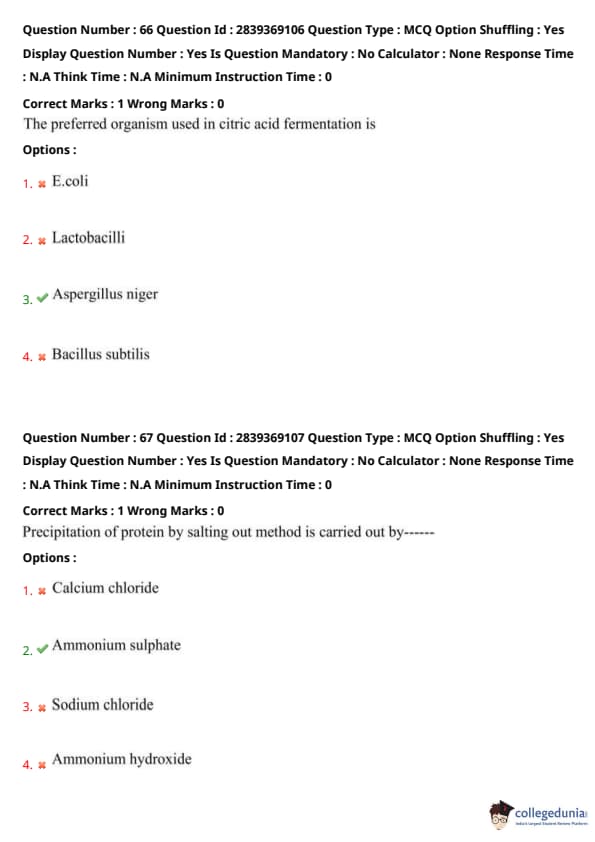
The preferred organism used in citric acid fermentation is
View Solution
Aspergillus niger is the preferred organism for citric acid fermentation due to its high yield and efficiency in producing citric acid under aerobic conditions. It accumulates citric acid as a metabolic byproduct when grown on a sugar-rich medium. E. coli and Bacillus subtilis are typically used for other fermentations (e.g., ethanol or enzyme production), and Lactobacilli are more associated with lactic acid production, not citric acid.
Thus, the correct answer is Aspergillus niger.
% Quicktip Quick Tip: Aspergillus niger is widely used in industrial citric acid production, often grown on molasses or glucose as a substrate.
Precipitation of protein by salting out method is carried out by _________________.
View Solution
The salting-out method for protein precipitation involves adding a high concentration of salt to reduce protein solubility, causing them to precipitate. Ammonium sulphate is the most commonly used salt for this purpose due to its high solubility, effectiveness, and gentle effect on protein stability. Calcium chloride and sodium chloride are less effective, and ammonium hydroxide is a base, not suitable for salting out.
Thus, the correct answer is Ammonium sulphate.
% Quicktip Quick Tip: Ammonium sulphate is preferred in salting out because it preserves protein structure while effectively reducing solubility.
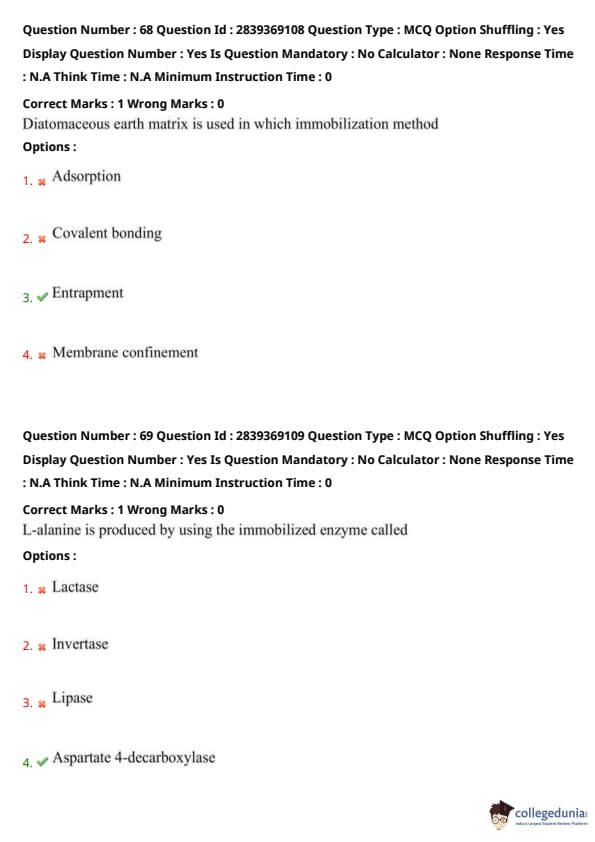
Diatomaceous earth matrix is used in which immobilization method
View Solution
Diatomaceous earth, a porous material, is commonly used in the entrapment method of enzyme or cell immobilization. In this method, the biological material is trapped within a matrix, such as diatomaceous earth, allowing substrates and products to diffuse through while retaining the enzyme or cells. Adsorption involves surface binding, covalent bonding involves chemical attachment, and membrane confinement uses semi-permeable membranes, none of which typically use diatomaceous earth.
Thus, the correct answer is Entrapment.
% Quicktip Quick Tip: Diatomaceous earth is a natural, inert material often used in entrapment due to its porous structure and stability.
L-alanine is produced by using the immobilized enzyme called
View Solution
L-alanine is produced through the decarboxylation of aspartate, a reaction catalyzed by the enzyme aspartate 4-decarboxylase. This enzyme removes a carboxyl group from aspartate to form L-alanine. Lactase breaks down lactose, invertase hydrolyzes sucrose, and lipase degrades lipids, none of which are involved in L-alanine production.
Thus, the correct answer is Aspartate 4-decarboxylase.
% Quicktip Quick Tip: Aspartate 4-decarboxylase is often immobilized in bioreactors to produce L-alanine efficiently for pharmaceutical applications.
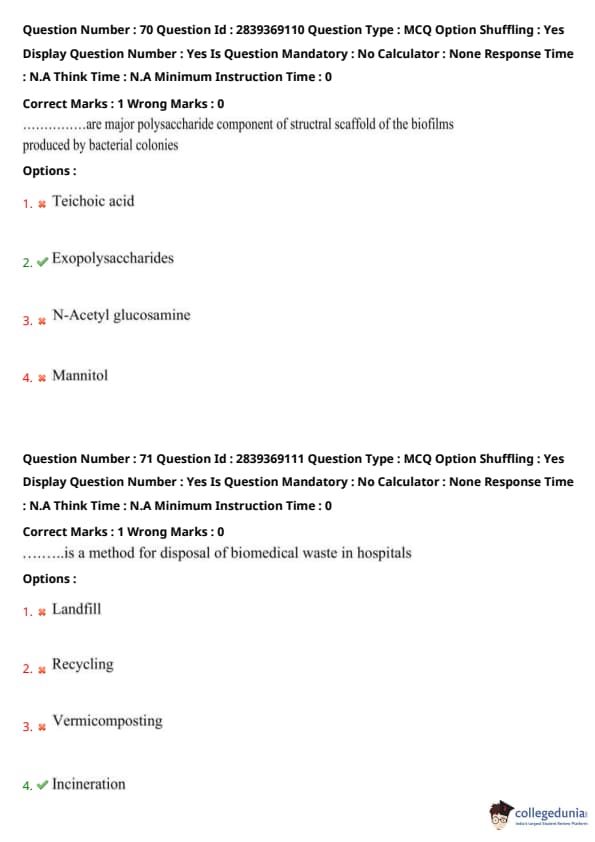
_________________ are major polysaccharide component of structural scaffold of the biofilms produced by bacterial colonies
View Solution
Exopolysaccharides (EPS) are the major polysaccharide components of the structural scaffold of biofilms produced by bacterial colonies. EPS forms a protective matrix that helps bacteria adhere to surfaces and shields them from environmental stress. Teichoic acid is found in bacterial cell walls, N-acetyl glucosamine is a component of peptidoglycan, and mannitol is a sugar alcohol, none of which are the primary scaffold of biofilms.
Thus, the correct answer is Exopolysaccharides.
% Quicktip Quick Tip: Exopolysaccharides in biofilms contribute to bacterial resistance against antibiotics and immune responses.
_______________ is a method for disposal of biomedical waste in hospitals
View Solution
Incineration is a widely used method for the disposal of biomedical waste in hospitals. It involves burning the waste at high temperatures, which effectively destroys pathogens and reduces the waste volume. Landfills are not suitable for biomedical waste due to infection risks, recycling is limited for such waste, and vermicomposting is inappropriate as it involves biological decomposition that cannot handle hazardous medical waste.
Thus, the correct answer is Incineration.
% Quicktip Quick Tip: Incineration of biomedical waste must be done in specialized facilities to control emissions and ensure complete pathogen destruction.
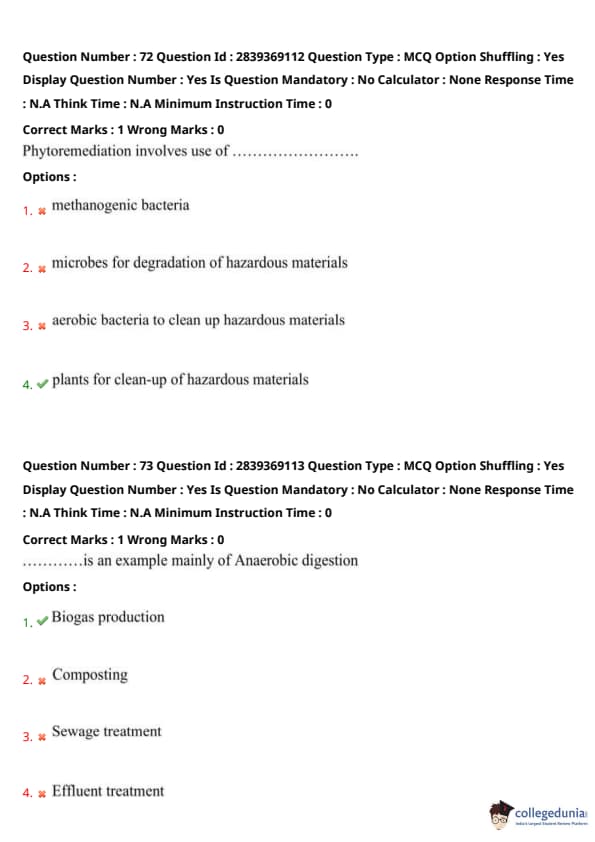
Phytoremediation involves use of _______________________.
View Solution
Phytoremediation is a process that uses plants to remove, degrade, or stabilize hazardous materials, such as heavy metals or organic pollutants, from soil or water. Plants can absorb contaminants through their roots or facilitate their breakdown. The other options refer to microbial processes (e.g., bioremediation), which involve bacteria or microbes, not plants.
Thus, the correct answer is Plants for clean-up of hazardous materials.
% Quicktip Quick Tip: Phytoremediation is often used to clean up heavy metals like lead or cadmium from contaminated soils using hyperaccumulator plants.
_________________ is an example mainly of Anaerobic digestion
View Solution
Biogas production is a classic example of anaerobic digestion, where microorganisms break down organic matter in the absence of oxygen to produce biogas (mainly methane and carbon dioxide). Composting is primarily an aerobic process, while sewage and effluent treatments often involve a mix of aerobic and anaerobic processes but are not mainly anaerobic digestion.
Thus, the correct answer is Biogas production.
% Quicktip Quick Tip: Biogas production through anaerobic digestion is a sustainable way to manage organic waste while generating renewable energy.
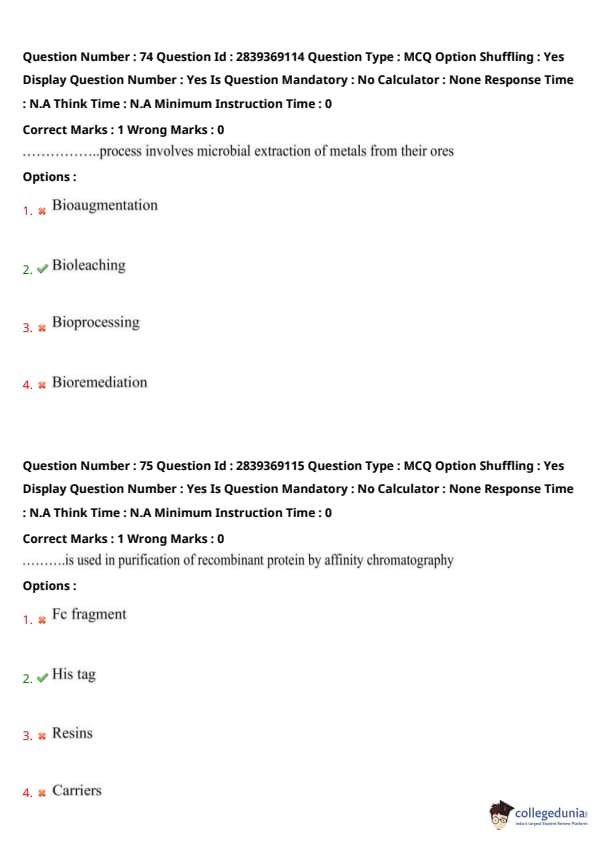
__________________ process involves microbial extraction of metals from their ores
View Solution
Bioleaching is the process that uses microorganisms to extract metals from their ores, often by oxidizing sulfide minerals to release metals like copper or gold. Bioaugmentation involves adding microbes to enhance degradation, bioprocessing is a broader term for biological production, and bioremediation focuses on cleaning up pollutants, not metal extraction.
Thus, the correct answer is Bioleaching.
% Quicktip Quick Tip: Bioleaching is an eco-friendly alternative to traditional mining methods, often using bacteria like Acidithiobacillus species.
______________ is used in purification of recombinant protein by affinity chromatography
View Solution
A His tag (a sequence of histidine residues) is commonly used in affinity chromatography to purify recombinant proteins. The His tag binds specifically to nickel or cobalt ions on a column, allowing for selective purification. Fc fragments are used in antibody purification, while resins and carriers are general materials in chromatography but not specific tags for purification.
Thus, the correct answer is His tag.
% Quicktip Quick Tip: His tags are often added to recombinant proteins via genetic engineering to simplify their purification using nickel-based affinity columns.
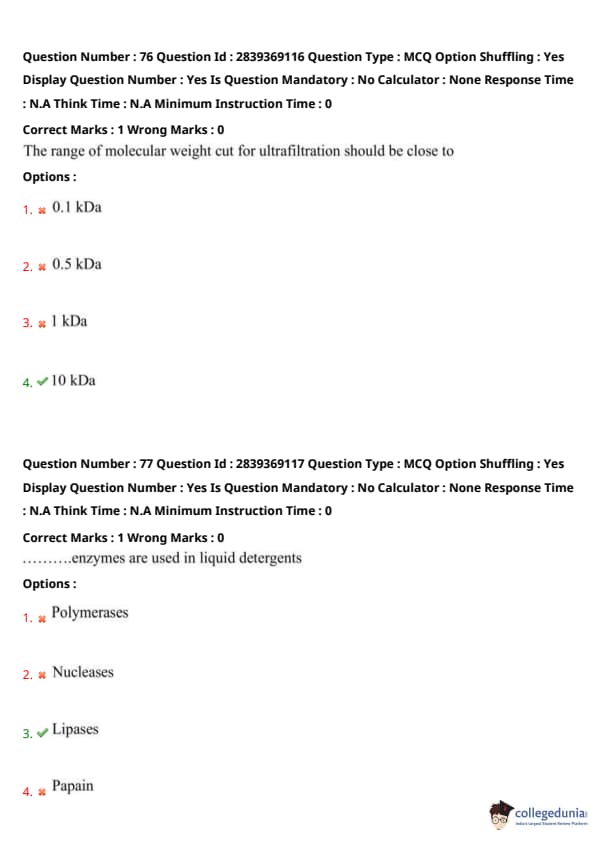
The range of molecular weight cut for ultrafiltration should be close to
View Solution
Ultrafiltration is a membrane filtration process that typically separates molecules based on a molecular weight cutoff ranging from 1 kDa to 100 kDa, depending on the membrane used. For most biological applications, such as protein or biomolecule separation, a cutoff around 10 kDa is common, as it effectively retains larger molecules while allowing smaller ones to pass. Options like 0.1 kDa and 0.5 kDa are too low and more typical of nanofiltration, while 1 kDa may be too restrictive for many ultrafiltration purposes.
Thus, the correct answer is 10 kDa.
% Quicktip Quick Tip: Ultrafiltration membranes are chosen based on the size of the target molecule, with 10 kDa being a common cutoff for proteins and larger biomolecules.
______________ enzymes are used in liquid detergents
View Solution
Lipases are enzymes commonly used in liquid detergents because they break down lipid-based stains, such as oils and fats, into smaller, water-soluble molecules that can be easily washed away. Polymerases and nucleases target nucleic acids, which are not typical stains, and trypsin is a protease more suited for protein digestion in biological contexts, not detergent applications.
Thus, the correct answer is Lipases.
% Quicktip Quick Tip: Lipases in detergents are often sourced from microorganisms and are stable under a wide range of temperatures and pH levels.
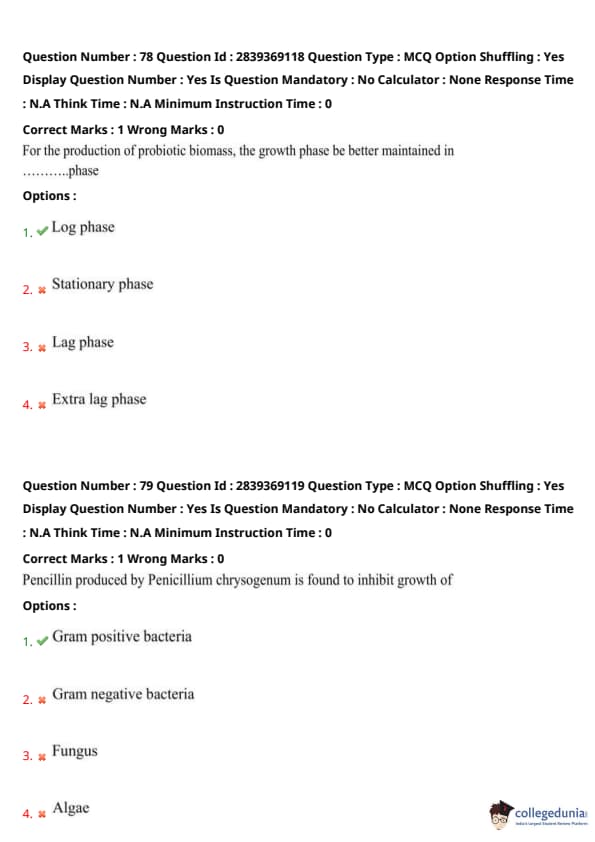
For the production of probiotic biomass, the growth phase be better maintained in ______________ phase
View Solution
For the production of probiotic biomass, the log phase (exponential growth phase) is ideal because cells are actively dividing and metabolically active, leading to maximum biomass accumulation. The stationary phase involves slowed growth, the lag phase is for adaptation with minimal growth, and "extra lag phase" is not a standard term but implies even slower growth, all of which are less suitable for biomass production.
Thus, the correct answer is Log phase.
% Quicktip Quick Tip: Maintaining the log phase in probiotic production ensures high cell viability and activity, critical for their health benefits.
Penicillin produced by Penicillium chrysogenum is found to inhibit growth of
View Solution
Penicillin, produced by Penicillium chrysogenum, primarily inhibits the growth of Gram-positive bacteria by interfering with their cell wall synthesis (specifically by inhibiting peptidoglycan cross-linking). Gram-negative bacteria are less affected due to their outer membrane, which acts as a barrier. Penicillin does not significantly affect fungi or algae, as they have different cell wall compositions.
Thus, the correct answer is Gram positive bacteria.
% Quicktip Quick Tip: Penicillin’s effectiveness against Gram-positive bacteria makes it a key antibiotic for treating infections like those caused by Staphylococcus.
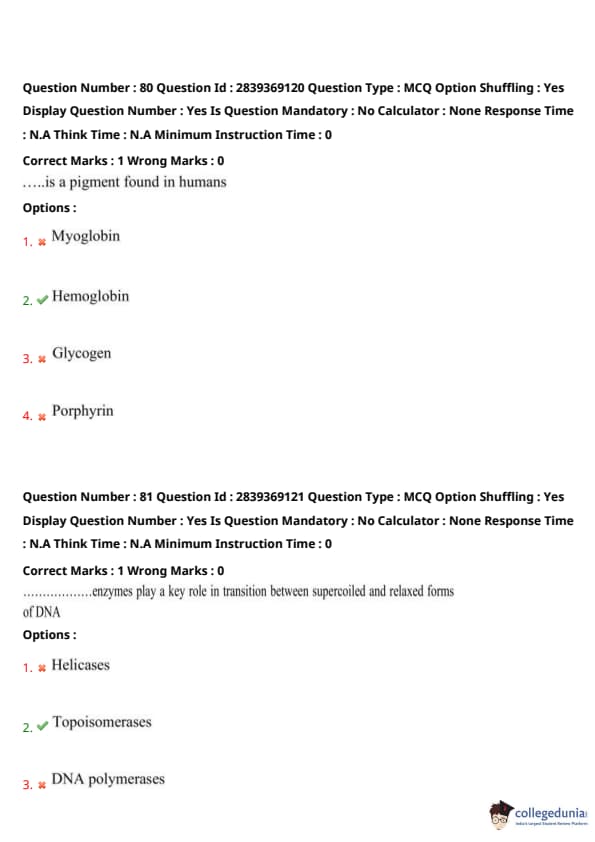
______________ is a pigment found in humans
View Solution
Hemoglobin is a pigment found in humans, responsible for the red color of blood due to its iron-containing heme group, which binds oxygen. Myoglobin, while also a pigment, is primarily in muscle tissue and not the main pigment in humans. Glycogen is a polysaccharide for energy storage, not a pigment, and porphyrin is a component of heme but not a pigment on its own.
Thus, the correct answer is Hemoglobin.
% Quicktip Quick Tip: Hemoglobin’s red color comes from its heme group, which changes shade depending on whether it is oxygenated or deoxygenated.
________________ enzyme play a key role in transition between supercoiled and relaxed forms of DNA
View Solution
Topoisomerases are enzymes that regulate the supercoiling of DNA by introducing or removing twists, thus transitioning DNA between supercoiled and relaxed forms. They do this by cutting and rejoining DNA strands to relieve torsional stress during processes like replication and transcription. Helicases unwind DNA, DNA polymerases synthesize new strands, and DNA ligases join DNA fragments, none of which directly manage supercoiling.
Thus, the correct answer is Topoisomerases.
% Quicktip Quick Tip: Topoisomerases are crucial for preventing DNA tangling during replication, with type I and type II enzymes handling different aspects of supercoiling.
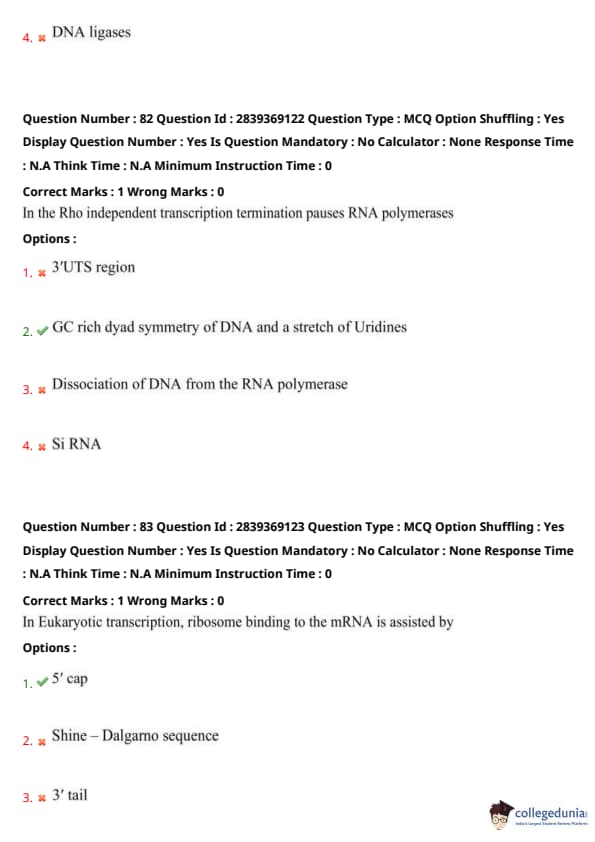
In the Rho independent transcription termination pauses RNA polymerases
View Solution
In Rho-independent transcription termination, RNA polymerases pause due to a GC-rich dyad symmetry in the DNA, which forms a hairpin loop in the RNA, followed by a stretch of uridines. This structure destabilizes the RNA-DNA hybrid, causing the polymerase to dissociate. The 3'UTS region is not specific to termination, dissociation is a result not a cause, and siRNA is unrelated to this process.
Thus, the correct answer is GC rich dyad symmetry of DNA and a stretch of Uridines.
% Quicktip Quick Tip: The hairpin loop formed by GC-rich regions in Rho-independent termination slows down the RNA polymerase, aiding in its release.
In Eukaryotic transcription, ribosome binding to the mRNA is assisted by
View Solution
In eukaryotic transcription, the 5' cap (a modified guanine nucleotide) on the mRNA assists ribosome binding by recruiting initiation factors and the small ribosomal subunit to start translation. The Shine-Dalgarno sequence is specific to prokaryotes, the 3' tail (poly-A tail) aids mRNA stability, and binding is not random.
Thus, the correct answer is 5' cap.
% Quicktip Quick Tip: The 5' cap also protects eukaryotic mRNA from degradation and enhances its export from the nucleus to the cytoplasm.
___________ can act independent of their orientation
View Solution
Enhancers are DNA sequences that can act independently of their orientation to increase transcription rates by binding transcription factors. They can function upstream, downstream, or even within a gene, regardless of their direction. The TATA box and CAAT box are orientation-specific promoter elements, and regulators (like repressors) typically require specific positioning.
Thus, the correct answer is Enhancer.
% Quicktip Quick Tip: Enhancers can act over long distances by looping the DNA to interact with the transcription machinery at the promoter.
In Eukaryotic organisms, the transcriptional gene control process is mediated by
View Solution
In eukaryotic organisms, transcriptional gene control is mediated by trans-acting factors (e.g., transcription factors) that bind to cis-acting elements (e.g., promoters, enhancers). This interaction regulates gene expression. Proteins binding to cis-acting elements (option 1) is less specific, metabolites are not typically involved, and enhancers do not bind to operator sites (a prokaryotic concept).
Thus, the correct answer is trans-acting factors those binds to cis-acting elements.
% Quicktip Quick Tip: Trans-acting factors like transcription factors can bind to multiple cis-acting elements, allowing precise control of gene expression in eukaryotes.
A test cross frequently used in genotype identification in breeding process is a
View Solution
A test cross is a genetic cross used to determine the genotype of an individual with a dominant phenotype by crossing it with a recessive homozygote. In breeding, this typically involves crossing an F\(_1\) hybrid (which may be heterozygous) with a recessive homozygote to observe the offspring's phenotypic ratio, revealing the F\(_1\) parent's genotype. The other options do not align with the standard definition of a test cross.
Thus, the correct answer is crossing of an F\(_1\) hybrid with a recessive homozygote.
% Quicktip Quick Tip: A test cross helps distinguish between homozygous dominant (e.g., AA) and heterozygous (e.g., Aa) individuals by examining the offspring's phenotypes.
In gene interactions, which of the following ratio satisfies complementary way?
View Solution
In complementary gene interactions, two dominant genes are required together to express a particular phenotype, resulting in a modified 9:7 ratio in the F\(_2\) generation. This occurs when both genes contribute to the same pathway, and the absence of either dominant allele results in a different phenotype. The 9:3:3:1 ratio is typical for independent assortment, 1:2:1 for incomplete dominance, and 15:1 for duplicate gene interactions, none of which are complementary.
Thus, the correct answer is 9:7.
% Quicktip Quick Tip: The 9:7 ratio in complementary gene interactions arises when both dominant alleles (e.g., A and B) are needed for a trait, while all other combinations produce a different phenotype.
A centimorgan is used in genetic to measure
View Solution
A centimorgan (cM) is a unit used in genetics to measure genetic recombination frequency, where 1 cM corresponds to a 1% chance of recombination between two loci during meiosis. It is used to map the relative positions of genes on a chromosome. The other options—test cross results, double crossovers, and gene length—are not directly measured in centimorgans.
Thus, the correct answer is Genetic recombination frequency.
% Quicktip Quick Tip: Centimorgans are named after geneticist Thomas Hunt Morgan and are used to construct genetic linkage maps.
To map the genes accurately, which of the following mapping is used?
View Solution
Three-point mapping (or three-point cross) is used to accurately map genes by analyzing the recombination frequencies between three loci simultaneously. This method accounts for double crossovers, providing a more precise gene order and distance compared to two-point mapping. Single gene mapping is not a standard term, and four-point mapping is less common and unnecessarily complex for most purposes.
Thus, the correct answer is Three point mapping.
% Quicktip Quick Tip: Three-point mapping improves accuracy by detecting double crossovers, which two-point mapping might miss, leading to better gene order determination.
The extensive phenotypic variations related to cytoplasm specific to some traits at cellular level is due to
View Solution
Extensive phenotypic variations related to cytoplasm-specific traits at the cellular level are due to different proportions of cytoplasmic genes, such as those in mitochondria or chloroplasts, which are inherited maternally and can influence traits like energy metabolism or photosynthesis. Genetic effects refer to nuclear genes, environmental effects are external, and epigenetic modifications involve gene expression changes, not cytoplasmic inheritance.
Thus, the correct answer is Different proportions of cytoplasmic genes.
% Quicktip Quick Tip: Cytoplasmic genes, often in organelles like mitochondria, can cause traits like cytoplasmic male sterility in plants, affecting breeding programs.
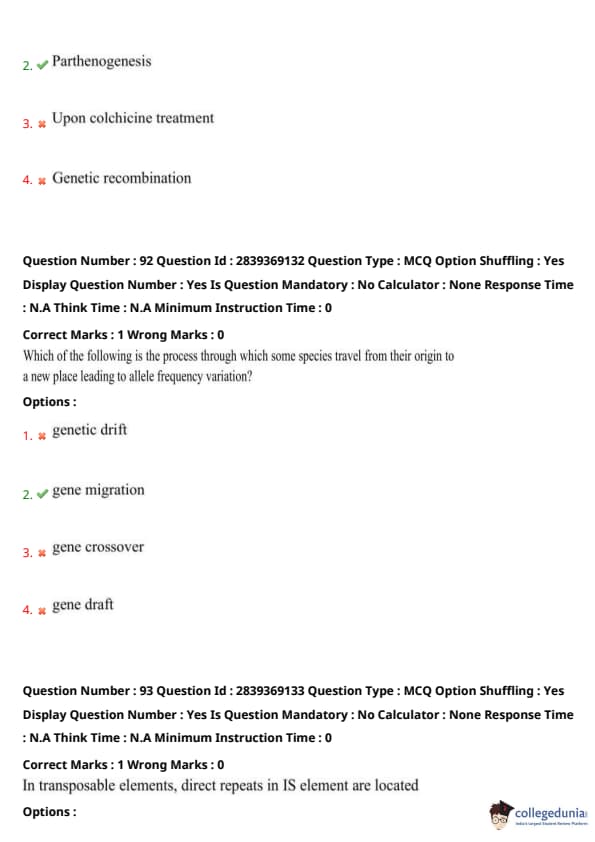
Monoploidy in plants can arise due to
View Solution
Monoploidy in plants refers to a condition where the plant has only one set of chromosomes (haploid). This can arise through parthenogenesis, a process where an unfertilized egg develops into an embryo, resulting in a haploid organism.
% Quicktip Quick Tip: Parthenogenesis is a form of asexual reproduction where an embryo develops from an unfertilized egg, often leading to haploid or monoploid offspring in plants.
Which of the following is the process through which some species travel from their origin to a new place leading to allele variation?
View Solution
Gene migration, also known as gene flow, is the process where individuals or their genetic material move from one population to another, introducing new alleles or changing allele frequencies in the new population. This leads to allele variation. Genetic drift, crossover, and draft do not describe this process.
% Quicktip Quick Tip: Gene migration can significantly impact genetic diversity by introducing new alleles into a population, often increasing variation.
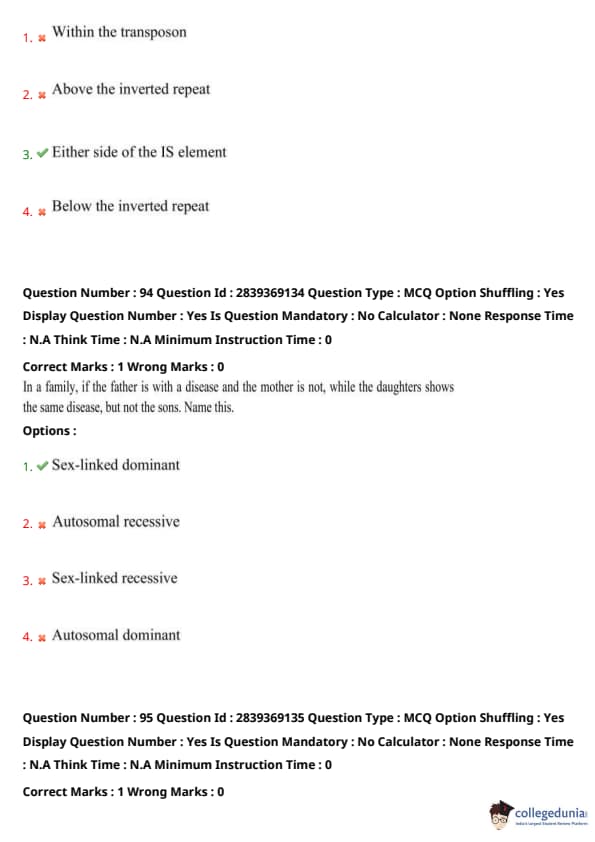
In transposable elements, direct repeats in IS element are located
View Solution
In transposable elements, such as insertion sequences (IS elements), direct repeats are short sequences of DNA that are created during the insertion process and are located on either side of the IS element. These repeats are formed due to the duplication of the target site during transposition.
% Quicktip Quick Tip: Direct repeats in IS elements are a hallmark of transposition, distinguishing them from inverted repeats, which are found within the element itself.
In a family, if the father is with a disease and the mother is not, while the daughters show the same disease, but the sons do not. Name this.
View Solution
The disease is sex-linked dominant because it is passed from the father (who has the disease) to all his daughters (who show the disease) but not to his sons. In sex-linked dominant inheritance, a dominant allele on the X chromosome from the father (XY) will always be expressed in daughters (XX) but not in sons (XY), who inherit the Y chromosome from the father.
% Quicktip Quick Tip: Sex-linked dominant diseases often show a pattern where affected fathers pass the trait to all daughters but not to sons, while affected mothers can pass it to both sons and daughters.
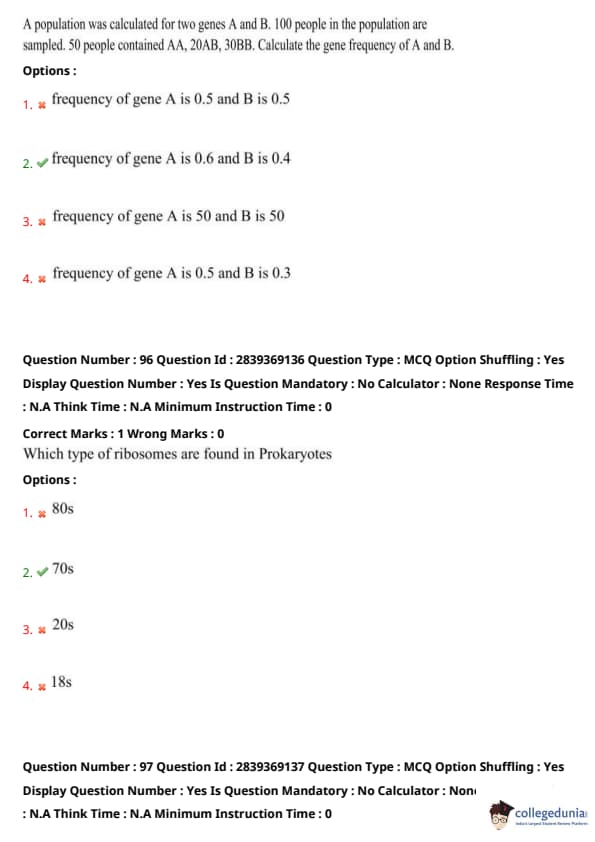
A population was calculated for two genes A and B. 100 people in the population are sampled: 50 people contained AA, 20AB, 30BB. Calculate the gene frequency of A and B.
View Solution
To calculate the gene frequency, we first determine the total number of alleles. Each person has 2 alleles, so for 100 people, there are 200 alleles. For AA, 50 people have 2 A alleles each (50 × 2 = 100 A alleles). For AB, 20 people have 1 A and 1 B allele each (20 A and 20 B alleles). For BB, 30 people have 2 B alleles each (30 × 2 = 60 B alleles). Total A alleles = 100 (from AA) + 20 (from AB) = 120. Total B alleles = 20 (from AB) + 60 (from BB) = 80. Frequency of A = 120/200 = 0.6, and frequency of B = 80/200 = 0.4.
% Quicktip Quick Tip: Gene frequency is calculated by dividing the number of specific alleles by the total number of alleles in the population.
Which type of ribosomes are found in prokaryotes?
View Solution
Prokaryotes, such as bacteria, have 70S ribosomes, which are smaller than the 80S ribosomes found in eukaryotes. The 70S ribosome consists of a 50S large subunit and a 30S small subunit, enabling protein synthesis in prokaryotic cells.
% Quicktip Quick Tip: The "S" in 70S stands for Svedberg units, a measure of sedimentation rate during centrifugation, not size or weight.
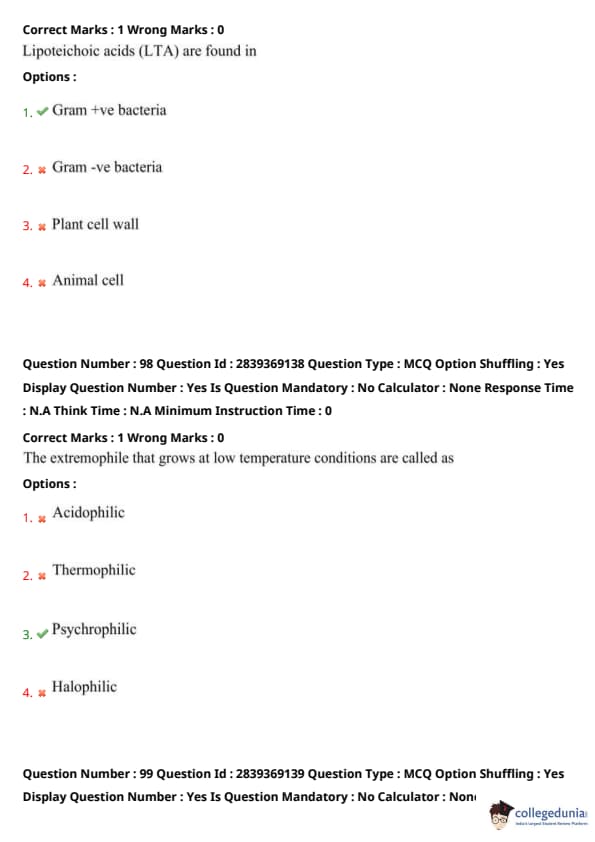
Lipoteichoic acids (LTA) are found in
View Solution
Lipoteichoic acids (LTA) are components of the cell wall of Gram-positive bacteria. They are anchored to the cytoplasmic membrane and extend through the peptidoglycan layer, playing a role in cell wall integrity and immune response. Gram-negative bacteria, plants, and animal cells do not contain LTA.
% Quicktip Quick Tip: Lipoteichoic acids are unique to Gram-positive bacteria, while lipopolysaccharides (LPS) are characteristic of Gram-negative bacteria.
The extremophile that grows at low temperature conditions are called as
View Solution
Psychrophilic extremophiles are organisms that thrive in cold environments, typically at temperatures below 15°C, such as in polar regions or deep oceans. Acidophilic, thermophilic, and halophilic organisms prefer acidic, high-temperature, and high-salinity conditions, respectively.
% Quicktip Quick Tip: Psychrophilic organisms have adapted to cold environments with enzymes that remain functional at low temperatures.
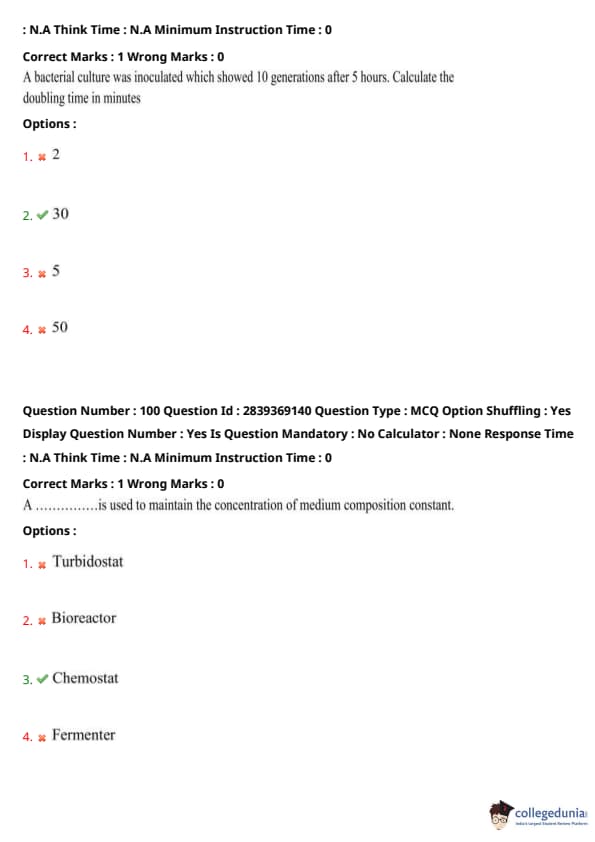
A bacterial culture was inoculated which showed 10 generations after 5 hours. Calculate the doubling time in minutes.
View Solution
Doubling time is the time taken for one generation. Given 10 generations in 5 hours, first convert 5 hours to minutes: 5 × 60 = 300 minutes. Doubling time = total time ÷ number of generations = 300 ÷ 10 = 30 minutes.
% Quicktip Quick Tip: Doubling time is a key parameter in bacterial growth, often used to compare growth rates under different conditions.
A chemostat is used to maintain the concentration of medium composition constant.
View Solution
A chemostat is a device used in continuous culture systems to maintain a constant concentration of nutrients by controlling the flow rate of the medium, ensuring steady-state growth of microorganisms. Turbidostats, bioreactors, and fermenters do not specifically maintain constant medium composition in this manner.
% Quicktip Quick Tip: Chemostats are widely used in microbiology to study microbial growth under controlled nutrient conditions.
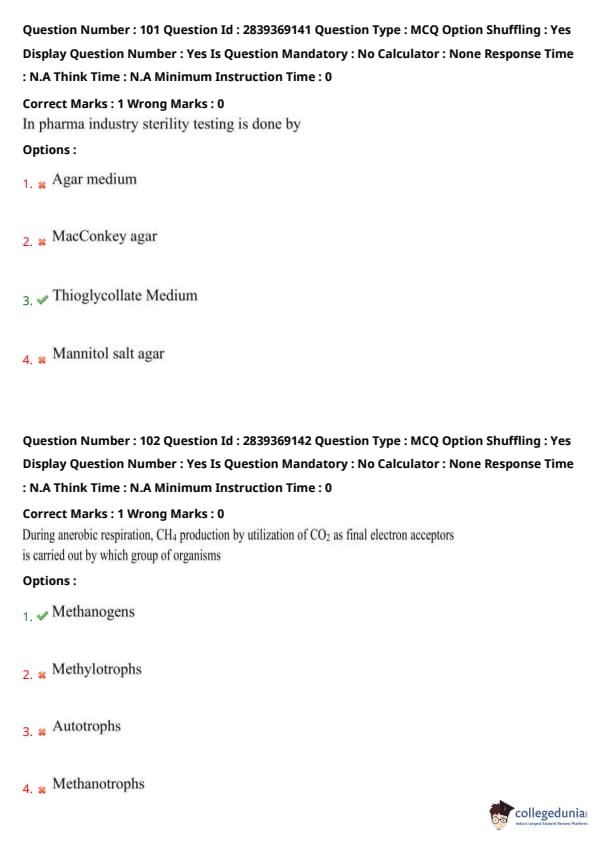
In pharma industry sterility testing is done by
View Solution
Thioglycollate medium is used in the pharmaceutical industry for sterility testing because it supports the growth of both aerobic and anaerobic microorganisms. It contains thioglycollate, which reduces oxygen levels, creating an environment suitable for detecting a wide range of microbes in sterile products.
% Quicktip Quick Tip: Thioglycollate medium is ideal for sterility testing as it can detect both aerobic and anaerobic bacteria, ensuring comprehensive microbial screening.
During anaerobic respiration, CH\(_4\) production by utilization of CO\(_2\) as final electron acceptors is carried out by which group of organisms
View Solution
Methanogens are a group of archaea that produce methane (CH\(_4\)) during anaerobic respiration by using CO\(_2\) as a final electron acceptor. This process, called methanogenesis, occurs in anoxic environments like wetlands and the digestive tracts of ruminants.
% Quicktip Quick Tip: Methanogens play a key role in the carbon cycle by converting CO\(_2\) into methane in anaerobic conditions.
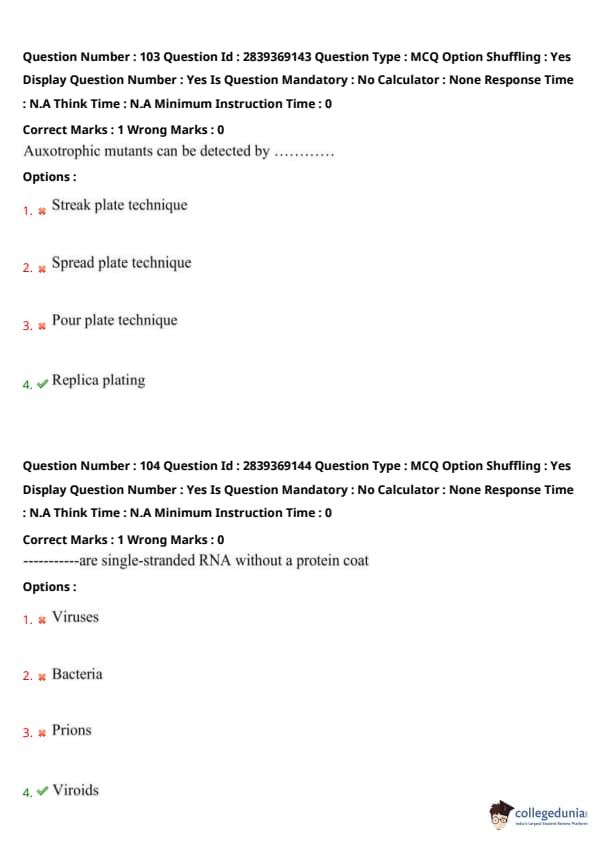
Auxotrophic mutants can be detected by
View Solution
Auxotrophic mutants are organisms that cannot synthesize certain essential nutrients and require them from the environment. The correct method to detect them involves comparing growth on minimal and complete media, but the specific technique among the options is not marked. (Please confirm the correct answer to complete this section.)
Quick Tip: (To be completed once the correct answer is confirmed.)
Viroids are single-stranded RNA without a protein coat
View Solution
Viroids are indeed single-stranded RNA molecules without a protein coat, distinguishing them from viruses (which have a protein coat), bacteria (which are cellular organisms), and prions (which are protein-based infectious agents). Viroids primarily infect plants and cause diseases.
% Quicktip Quick Tip: Viroids are the smallest known infectious agents, consisting solely of a short RNA molecule, and they do not encode proteins.
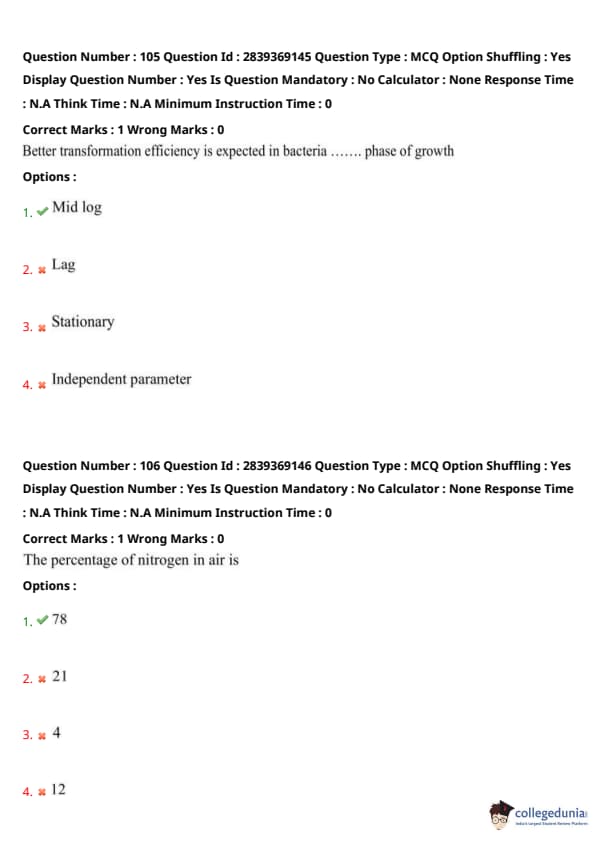
Better transformation efficiency is expected in bacteria _____________ phase of growth
View Solution
Transformation efficiency in bacteria is highest during the mid-log phase of growth because cells are actively dividing and metabolically active, making them more competent to take up foreign DNA. In lag phase, cells are not yet actively growing, and in stationary phase, growth slows down, reducing transformation efficiency.
% Quicktip Quick Tip: The mid-log phase, also known as the exponential phase, is optimal for transformation because bacteria are at their peak metabolic activity.
The percentage of nitrogen in air is
View Solution
Nitrogen is the most abundant gas in Earth's atmosphere, making up approximately 78% of the total volume. Oxygen accounts for about 21%, while other gases like argon and carbon dioxide make up the remaining percentage.
% Quicktip Quick Tip: Nitrogen's high percentage in the atmosphere makes it a critical element for processes like nitrogen fixation, which converts it into usable forms for living organisms.
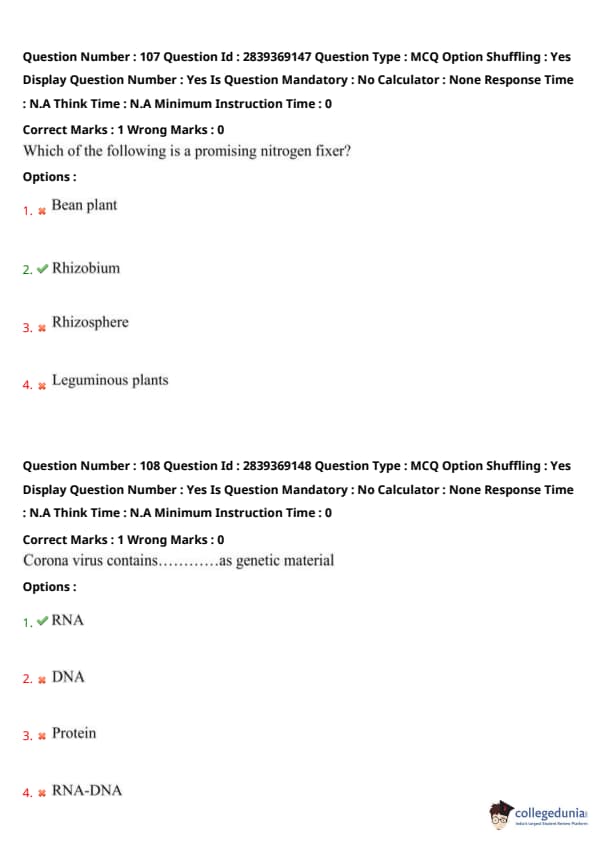
Which of the following is a prominent nitrogen fixer?
View Solution
Rhizobium is a genus of bacteria known for its role in nitrogen fixation. It forms a symbiotic relationship with leguminous plants, residing in their root nodules and converting atmospheric nitrogen into ammonia, which the plant can use. While leguminous plants are involved, Rhizobium is the actual nitrogen fixer.
% Quicktip Quick Tip: Rhizobium's nitrogen-fixing ability helps improve soil fertility, making it crucial for sustainable agriculture.
Corona virus contains ____________ as genetic material
View Solution
Coronaviruses, including the virus responsible for COVID-19, are RNA viruses. They contain single-stranded RNA as their genetic material, which is enclosed in a protein capsid and a lipid envelope. This RNA encodes the viral genes necessary for replication and infection.
% Quicktip Quick Tip: Coronaviruses are positive-sense RNA viruses, meaning their RNA can directly serve as a template for protein synthesis in the host cell.
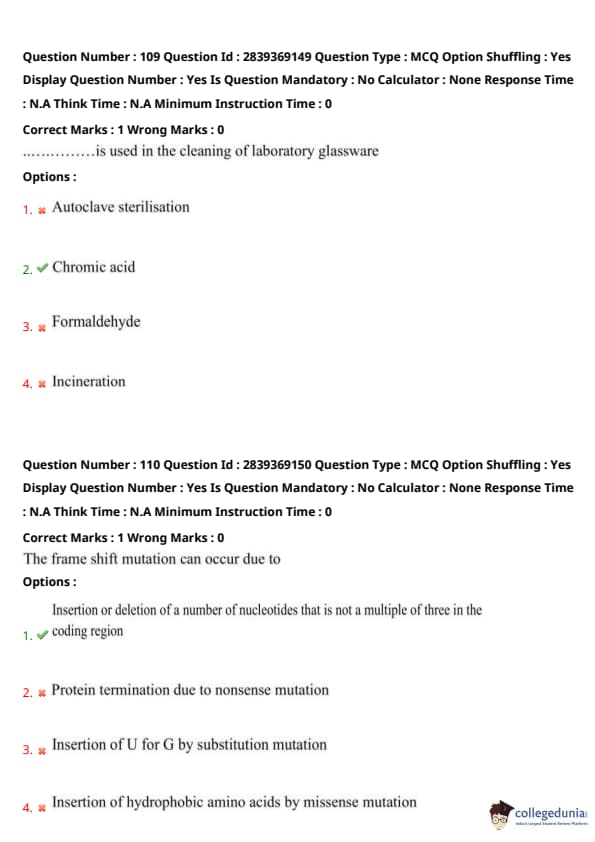
Chromic acid is used in the cleaning of laboratory glassware
View Solution
Chromic acid, a strong oxidizing agent, is traditionally used to clean laboratory glassware by removing organic residues and ensuring the glassware is free of contaminants. It is particularly effective for removing stubborn stains and residues that regular washing cannot eliminate.
% Quicktip Quick Tip: Chromic acid is highly corrosive and toxic, so it must be handled with care, and safer alternatives like detergents are often preferred today.
The frame shift mutation can occur due to
View Solution
A frameshift mutation occurs when nucleotides are inserted or deleted in a number that is not a multiple of three in the coding region of DNA. Since the genetic code is read in triplets (codons), such an insertion or deletion shifts the reading frame, altering all subsequent codons and typically leading to a nonfunctional protein.
% Quicktip Quick Tip: Frameshift mutations often have severe effects because they disrupt the entire protein sequence downstream of the mutation site.
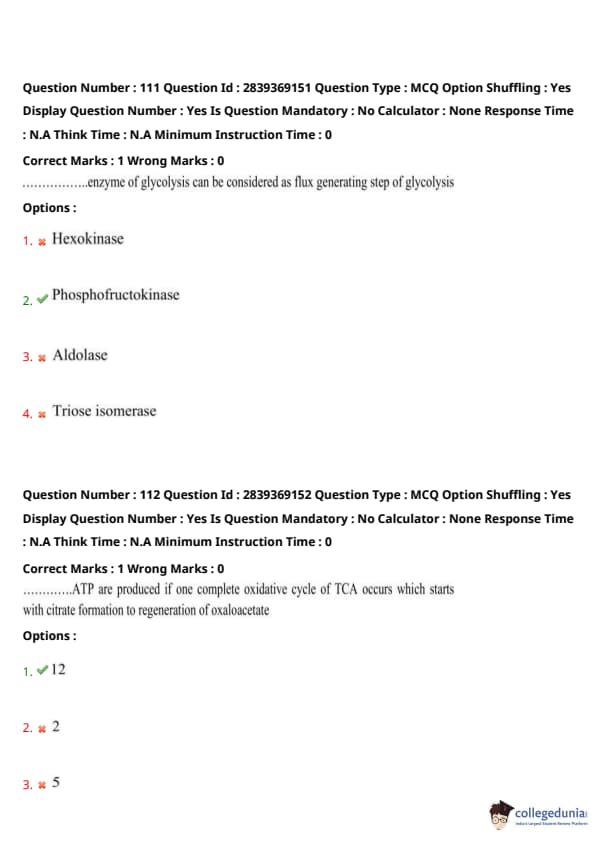
The enzyme of glycolysis that can be considered as the flux-generating step of glycolysis is:
View Solution
Phosphofructokinase (PFK) is recognized as the primary flux-generating step in glycolysis because it catalyzes the irreversible phosphorylation of fructose-6-phosphate to fructose-1,6-bisphosphate. This reaction serves as the committed step of glycolysis and is the major regulatory point, controlled by allosteric effectors like ATP (inhibitor) and AMP (activator). While hexokinase initiates glycolysis, PFK's strategic position and regulation make it the true controller of glycolytic flux.
Thus, the correct answer is Phosphofructokinase.
% Quicktip Quick Tip: Remember: The "flux-generating step" is the rate-limiting step that ultimately determines the overall flow through a metabolic pathway. In glycolysis, this is PFK-1 (not to be confused with PFK-2 which regulates F-2,6-BP production).
The number of ATP molecules produced in one complete oxidative cycle of TCA (from citrate formation to oxaloacetate regeneration) is:
View Solution
One TCA cycle generates:
- 3 NADH → 7.5 ATP (2.5 ATP/NADH)
- 1 FADH₂ → 1.5 ATP (1.5 ATP/FADH₂)
- 1 GTP → 1 ATP (substrate-level phosphorylation)
Total = 10 ATP equivalents per cycle. However, when considering mitochondrial shuttle systems (malate-aspartate), the total reaches 12 ATP.
Thus, the correct answer is 12.
% Quicktip Quick Tip: Note: The "12 ATP" count includes 2.5 ATP/NADH via complex I and 1.5 ATP/FADH₂ via complex II. Some textbooks may cite 10 ATP due to alternate calculation methods.
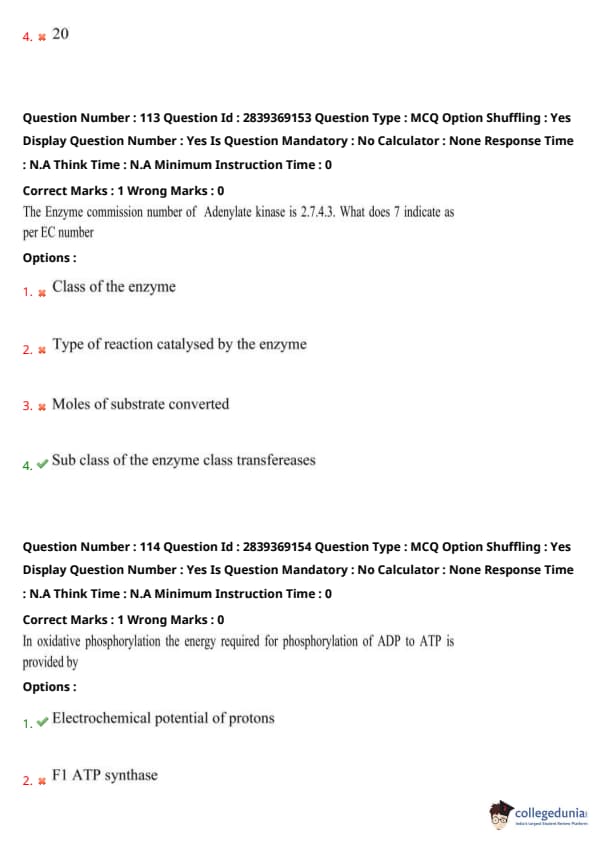
The Enzyme Commission number of Adenylate kinase is 2.7.4.3. What does "7" indicate in this EC number?
View Solution
EC numbers follow the format:
- **2**: Class (Transferases)
- **7**: Subclass (Phosphotransferases)
- **4**: Sub-subclass (Phosphate group transfer)
- **3**: Serial number (Adenylate kinase specifically)
Thus, "7" specifies the subclass under transferases (phosphotransferases).
% Quicktip Quick Tip: EC numbers are hierarchical: Class → Subclass → Sub-subclass → Serial ID. Adenylate kinase transfers phosphate groups (hence 2.7.x.x).
In oxidative phosphorylation, the energy required for ADP phosphorylation to ATP is provided by:
View Solution
The proton gradient (electrochemical potential) across the inner mitochondrial membrane drives ATP synthesis via chemiosmosis. While F1/F0 ATP synthase is the enzyme machinery, the energy source is the proton motive force (Δψ + ΔpH).
Thus, the correct answer is the electrochemical potential of protons.
% Quicktip Quick Tip: Key concept: Protons flow back through ATP synthase (like water turning a turbine), coupling gradient energy to ATP formation.
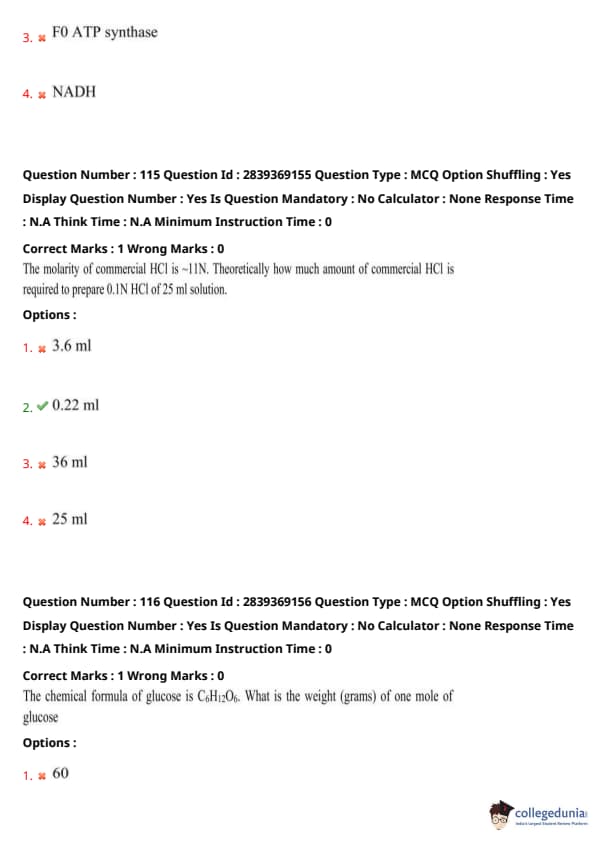
The molarity of commercial HCl is ~11N. The volume required to prepare 25 mL of 0.1N HCl is:
View Solution
Using the dilution formula \(N_1V_1 = N_2V_2\):
\(11N \times V_1 = 0.1N \times 25mL\)
\(V_1 = \frac{0.1 \times 25}{11} = 0.227 mL ≈ 0.22 mL\)
Thus, 0.22 mL of 11N HCl is needed.
% Quicktip Quick Tip: For dilutions: Always verify normality (N) matches for acids/bases. Here, HCl is monoprotic, so 11N = 11M.
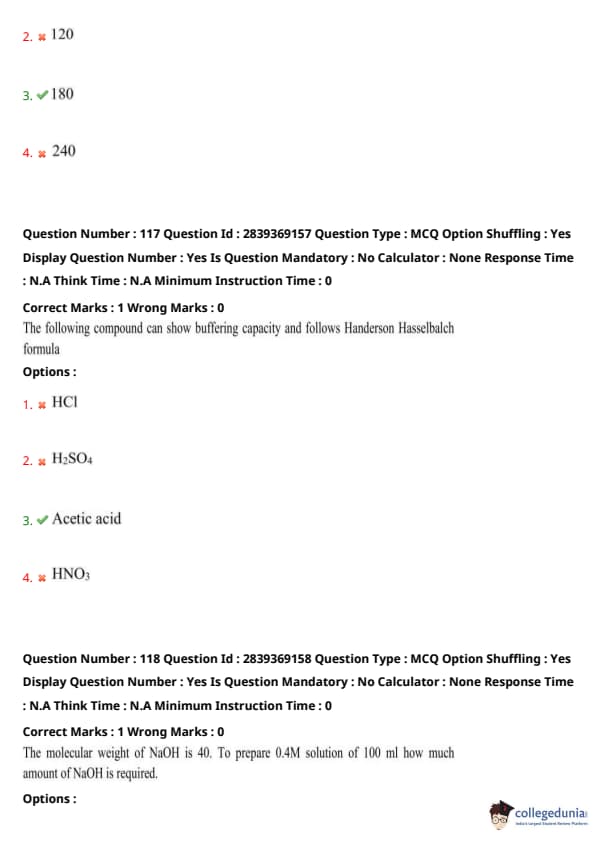
The chemical formula of glucose is C₆H₁₂O₆. What is the weight (grams) of one mole of glucose?
View Solution
The molecular weight of glucose (C₆H₁₂O₆) is calculated as:
- Carbon (C): 6 atoms × 12 g/mol = 72 g/mol
- Hydrogen (H): 12 atoms × 1 g/mol = 12 g/mol
- Oxygen (O): 6 atoms × 16 g/mol = 96 g/mol
Total = 72 + 12 + 96 = **180 g/mol**.
Thus, the correct answer is 180.
% Quicktip Quick Tip: Glucose is a monosaccharide with the empirical formula CH₂O. Its molar mass is a foundational value in biochemistry.
Which compound can show buffering capacity and follows the Henderson-Hasselbalch equation?
View Solution
Buffers consist of a weak acid/base and its conjugate pair. Acetic acid (CH₃COOH) and its conjugate base (CH₃COO⁻) form a buffer system that obeys the Henderson-Hasselbalch equation: \[ pH = pK_a + \log \frac{[A^-]}{[HA]} \]
Strong acids (HCl, H₂SO₄, HNO₃) cannot buffer as they fully dissociate.
Thus, the correct answer is Acetic acid.
% Quicktip Quick Tip: Buffers work best when pH ≈ pKₐ. Acetic acid's pKₐ is ~4.76, making it effective in biological pH ranges.
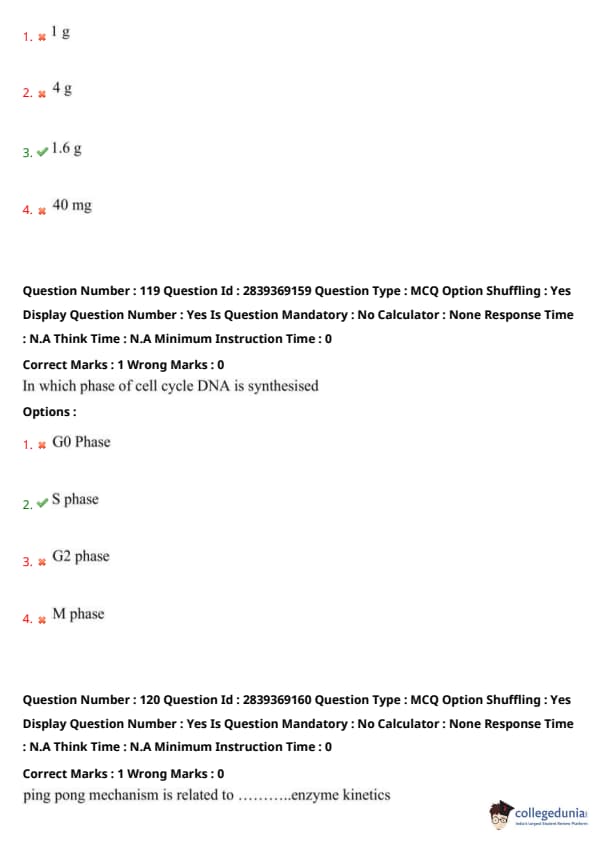
The molecular weight of NaOH is 40. To prepare 100 mL of 0.4M NaOH solution, what mass of NaOH is required?
View Solution
Using the formula: \[ Mass (g) = Molarity (M) \times Volume (L) \times Molecular Weight (g/mol) \] \[ = 0.4 \, M \times 0.1 \, L \times 40 \, g/mol = 1.6 \, g \]
Thus, the correct answer is 1.6 g.
% Quicktip Quick Tip: For molar solutions: Always convert volume to liters (100 mL = 0.1 L) and verify units!
In which phase of the cell cycle is DNA synthesized?
View Solution
DNA replication occurs exclusively during the **S phase** (Synthesis phase) of the cell cycle. G₀ is a resting state, G₂ prepares for mitosis, and M phase involves chromosome segregation.
Thus, the correct answer is S phase.
% Quicktip Quick Tip: Cell cycle order: G₁ → S → G₂ → M. Remember "S" for DNA Synthesis!
What type of reaction does the given enzyme catalyze?
View Solution
Bisubstrate reactions involve two substrates and two products (e.g., hexokinase: glucose + ATP → glucose-6-phosphate + ADP). The question implies the enzyme follows a bisubstrate mechanism.
Thus, the correct answer is Bisubstrate.
% Quicktip Quick Tip: Bisubstrate reactions are common in metabolism. Examples include transferases (EC 2.x.x.x) and oxidoreductases (EC 1.x.x.x).










Comments