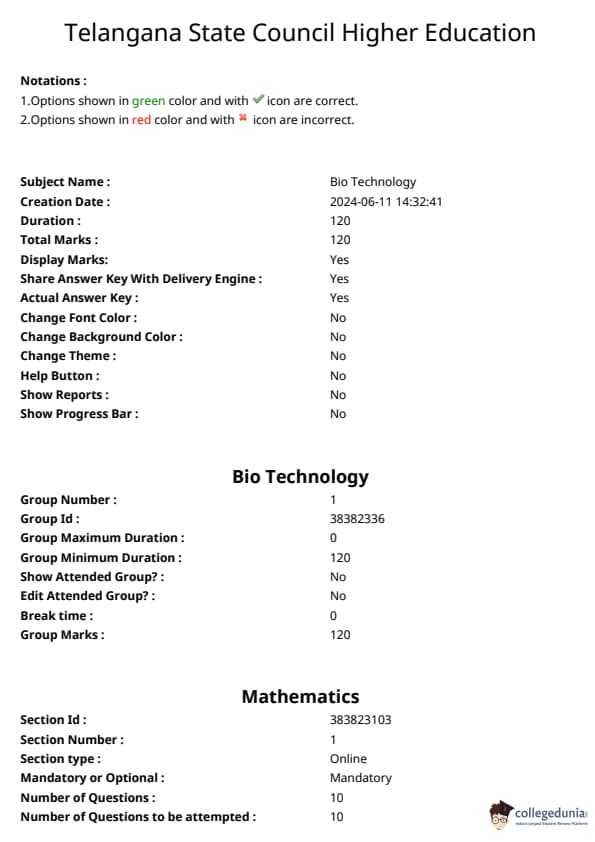
TS PGECET 2024 Biotechnology Question Paper is available for download here. Jawaharlal Nehru Technological University Hyderabad on behalf of Telangana Council of Higher Education (TGCHE) conducted TS PGECET 2024 Biotechnology on June 11 in Shift 1 from 10 AM to 12 PM. TS PGECET Question Paper 2024 consists of 120 MCQ-based questions in total carrying 1 mark each to be attempted in the duration of 2 hours.
TS PGECET 2024 Biotechnology Question Paper with Answer Key PDF
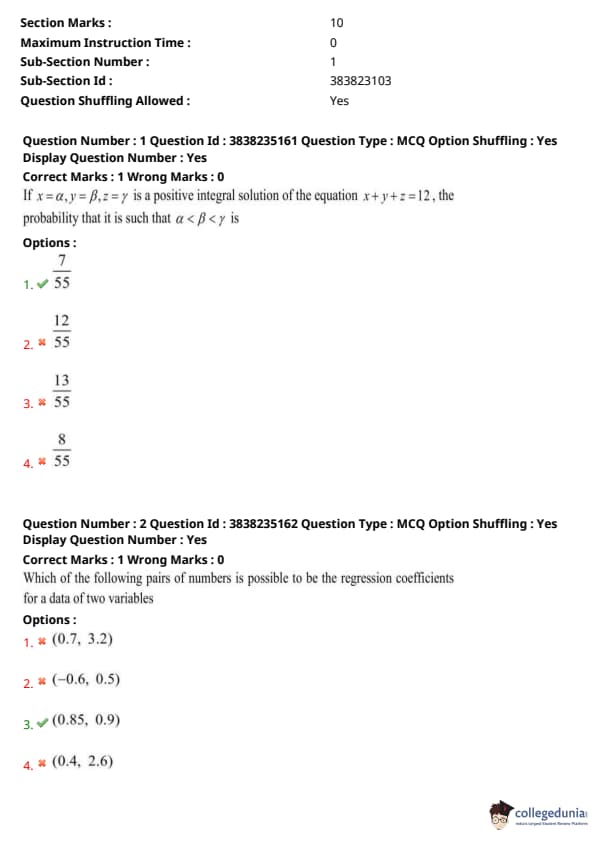
Question 1:
If \( x=\alpha, y=\beta, z=\gamma \) is a positive integral solution of the equation \( x+y+z=12 \), the probability that it is such that \( \alpha < \beta < \gamma \) is
- (a) \( \frac{7}{55} \)
- (b) \( \frac{12}{55} \)
- (c) \( \frac{13}{55} \)
- (d) \( \frac{8}{55} \)
Question 2:
Which of the following pairs of numbers is possible to be the regression coefficients for a data of two variables
- (a) (0.7, 3.2)
- (b) (--0.6, 0.5)
- (c) (0.85, 0.9)
- (d) (0.4, 2.6)
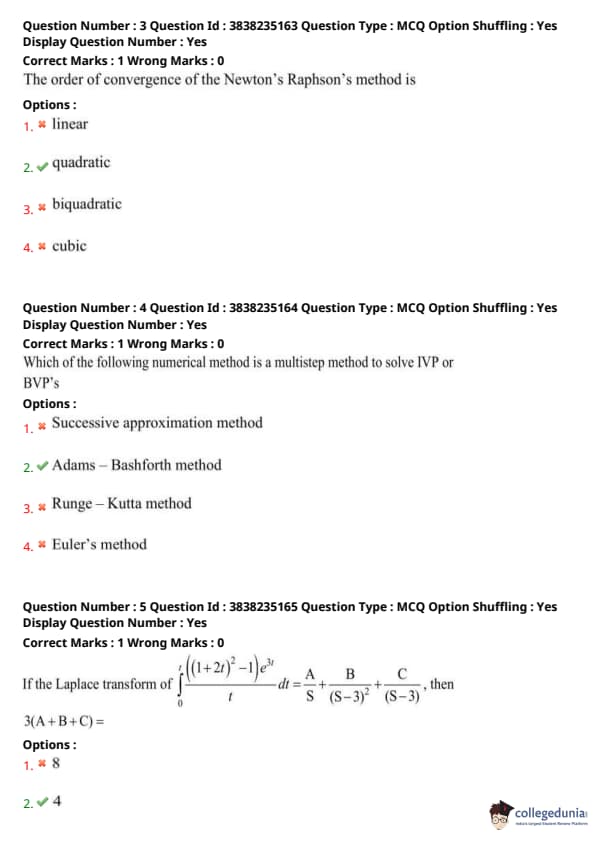
Question 3:
The order of convergence of the Newton's Raphson's method is
- (a) linear
- (b) quadratic
- (c) biquadratic
- (d) cubic
Question 4:
Which of the following numerical method is a multistep method to solve IVP or BVP's
(IVP: Initial Value Problem, BVP: Boundary Value Problem. Multistep methods are typically for IVPs of ODEs.)
- (a) Successive approximation method
- (b) Adams - Bashforth method
- (c) Runge - Kutta method
- (d) Euler's method
Question 5:
If the Laplace transform of \( \int_0^t \frac{((1+2t)^2-1)e^{3t}}{t} dt = \frac{A}{S-3} + \frac{B}{(S-3)^2} + \frac{C}{(S-3)^3} \) then \(3(A+B+C)=\)
(Typo: S should be s in Laplace domain variables)
- (a) 8
- (b) 4
- (c) 12
- (d) 15
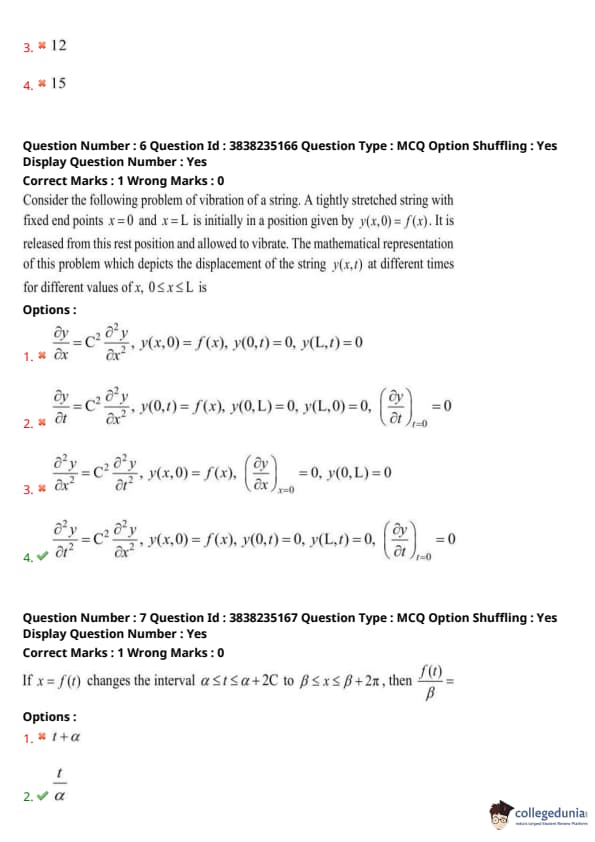
Question 6:
Consider the following problem of vibration of a string. A tightly stretched string with fixed end points \(x=0\) and \(x=L\) is initially in a position given by \(y(x,0) = f(x)\). It is released from this rest position and allowed to vibrate. The mathematical representation of this problem which depicts the displacement of the string \(y(x,t)\) at different times for different values of \(x, 0 \le x \le L\) is
- (a) \( \frac{\partial y}{\partial x} = C^2 \frac{\partial^2 y}{\partial t^2}, y(x,0)=f(x), y(0,t)=0, y(L,t)=0 \)
- (b) \( \frac{\partial y}{\partial t} = C^2 \frac{\partial^2 y}{\partial x^2}, y(0,t)=f(x), y(0,L)=0, y(L,0)=0, (\frac{\partial y}{\partial t})_{t=0}=0 \)
- (c) \( \frac{\partial^2 y}{\partial x^2} = C^2 \frac{\partial^2 y}{\partial t^2}, y(x,0)=f(x), (\frac{\partial y}{\partial x})_{x=0}=0, y(0,L)=0 \)
- (d) \( \frac{\partial^2 y}{\partial t^2} = C^2 \frac{\partial^2 y}{\partial x^2}, y(x,0)=f(x), y(0,t)=0, y(L,t)=0, (\frac{\partial y}{\partial t})_{t=0}=0 \)
Question 7:
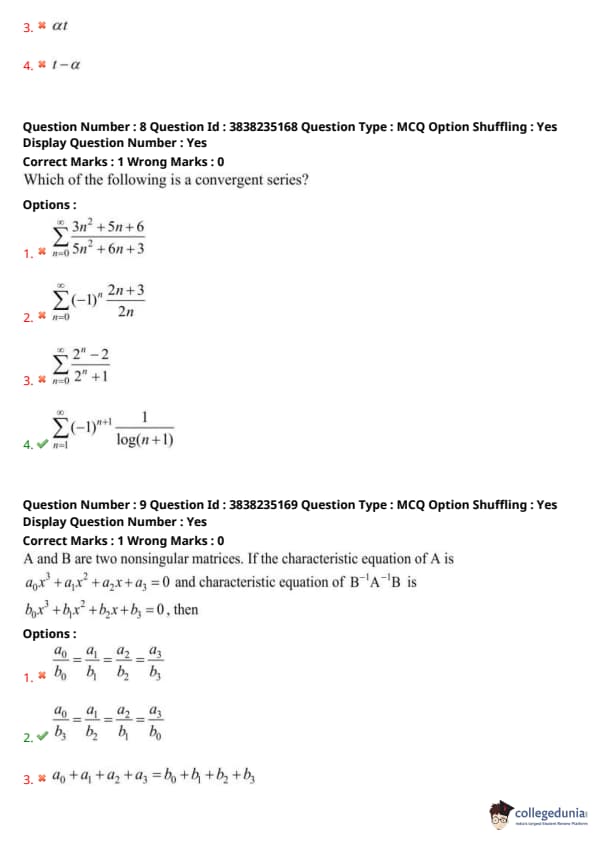
Which of the following is a convergent series?
- (a) \( \sum_{n=0}^{\infty} \frac{3n^2+5n+6}{5n^2+6n+3} \)
- (b) \( \sum_{n=0}^{\infty} (-1)^n \frac{2n+3}{2n} \)
- (c) \( \sum_{n=0}^{\infty} \frac{2^n-2}{2^n+1} \)
- (d) \( \sum_{n=1}^{\infty} \frac{(-1)^{n+1}}{\log(n+1)} \)
Question 8:
A and B are two nonsingular matrices. If the characteristic equation of A is \( a_0\lambda^3 + a_1\lambda^2 + a_2\lambda + a_3 = 0 \) and characteristic equation of \( B^{-1}AB \) is \( b_0\lambda^3 + b_1\lambda^2 + b_2\lambda + b_3 = 0 \), then
- (a) \( \frac{a_0}{b_0} = \frac{a_1}{b_1} = \frac{a_2}{b_2} = \frac{a_3}{b_3} \)
- (b) \( \frac{a_0}{b_0} = \frac{a_1}{b_1} = \frac{a_2}{b_2} = \frac{a_3}{b_3} \)
- (c) \( a_0+a_1+a_2+a_3 = b_0+b_1+b_2+b_3 \)
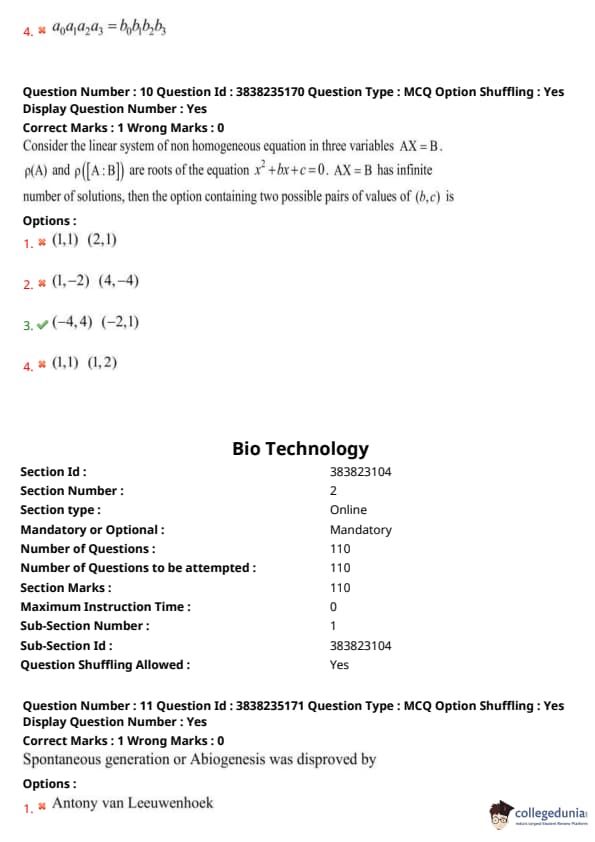
- (d) \( a_0a_1a_2a_3 = b_0b_1b_2b_3 \)
Question 9:
Consider the linear system of non homogeneous equation in three variables AX = B. \(\rho(A)\) and \(\rho([A:B])\) are roots of the equation \(x^2+bx+c=0\). AX = B has infinite number of solutions, then the option containing two possible pairs of values of (b,c) is
(Note: \(\rho\) denotes rank.)
- (a) (1,1) (2,1)
- (b) (1,--2) (4,--4)
- (c) (--4,4) (--2,1)
- (d) (1,1) (1,2)
Question 10:
Spontaneous generation or Abiogenesis was disproved by
- (a) Antony van Leeuwenhoek
- (b) Aristotle
- (c) Louis Pasteur
- (d) Ferdinand Cohn
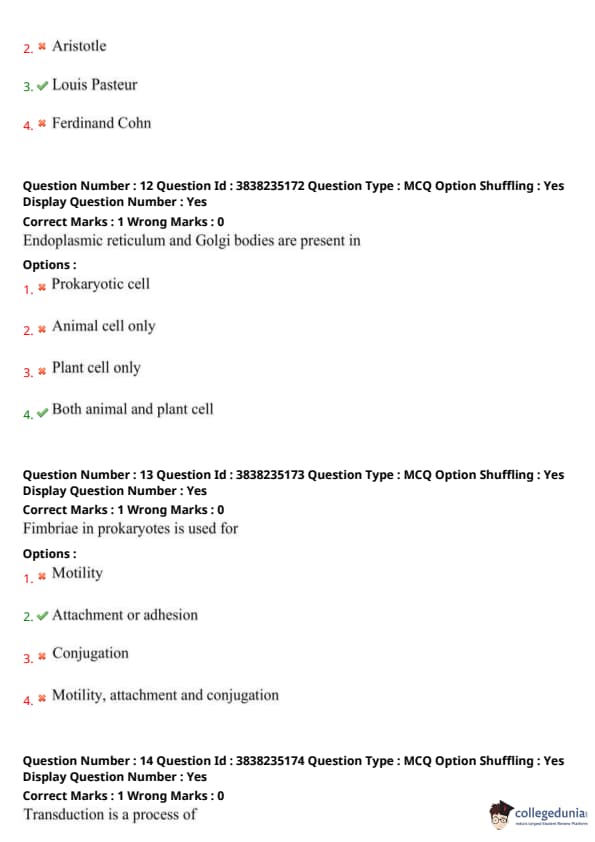
Question 11:
Endoplasmic reticulum and Golgi bodies are present in
- (a) Prokaryotic cell
- (b) Animal cell only
- (c) Plant cell only
- (d) Both animal and plant cell
Question 12:
Fimbriae in prokaryotes is used for
- (a) Motility
- (b) Attachment or adhesion
- (c) Conjugation
- (d) Motility, attachment and conjugation
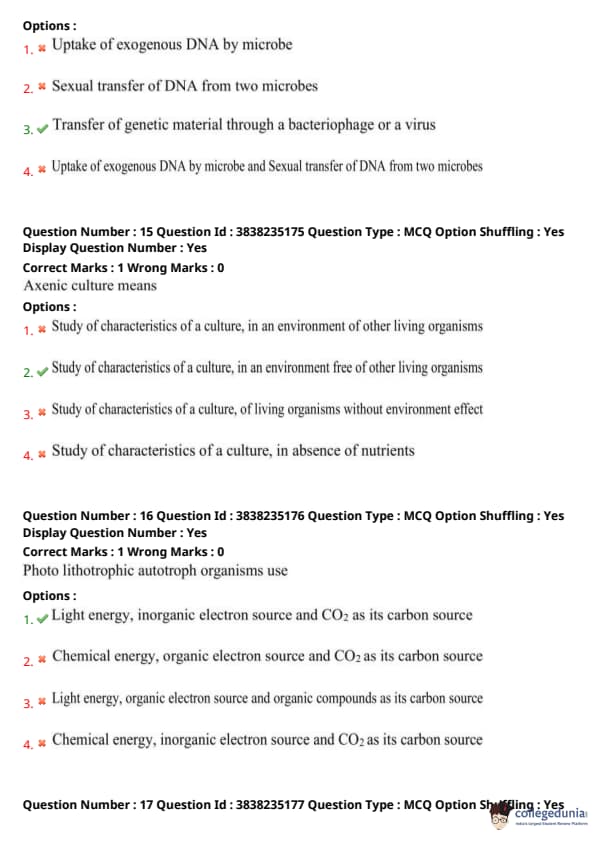
Question 13:
Transduction is a process of
- (a) Uptake of exogenous DNA by microbe
- (b) Sexual transfer of DNA from two microbes
- (c) Transfer of genetic material through a bacteriophage or a virus
- (d) Uptake of exogenous DNA by microbe and Sexual transfer of DNA from two microbes
Question 14:
Axenic culture means
- (a) Study of characteristics of a culture, in an environment of other living organisms
- (b) Study of characteristics of a culture, in an environment free of other living organisms
- (c) Study of characteristics of a culture, of living organisms without environment effect
- (d) Study of characteristics of a culture, in absence of nutrients
Question 15:
Photo lithotrophic autotroph organisms use
- (a) Light energy, inorganic electron source and CO\(_2\) as its carbon source
- (b) Chemical energy, organic electron source and CO\(_2\) as its carbon source
- (c) Light energy, organic electron source and organic compounds as its carbon source
- (d) Chemical energy, inorganic electron source and CO\(_2\) as its carbon source
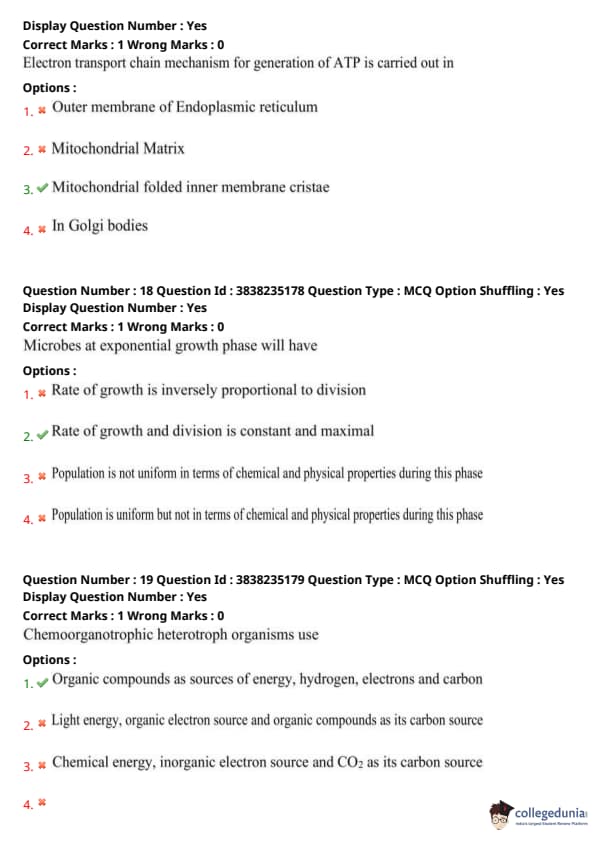
Question 16:
Electron transport chain mechanism for generation of ATP is carried out in
- (a) Outer membrane of Endoplasmic reticulum
- (b) Mitochondrial Matrix
- (c) Mitochondrial folded inner membrane cristae
- (d) In Golgi bodies
Question 17:
Microbes at exponential growth phase will have
- (a) Rate of growth is inversely proportional to division
- (b) Rate of growth and division is constant and maximal
- (c) Population is not uniform in terms of chemical and physical properties during this phase
- (d) Population is uniform but not in terms of chemical and physical properties during this phase
Question 18:
Chemoorganotrophic heterotroph organisms use
(Typo in image: Chemoorganotrophic, not Chetroorganotrophic)
- (a) Organic compounds as sources of energy, hydrogen, electrons and carbon
- (b) Light energy, organic electron source and organic compounds as its carbon source
- (c) Chemical energy, inorganic electron source and CO\(_2\) as its carbon source
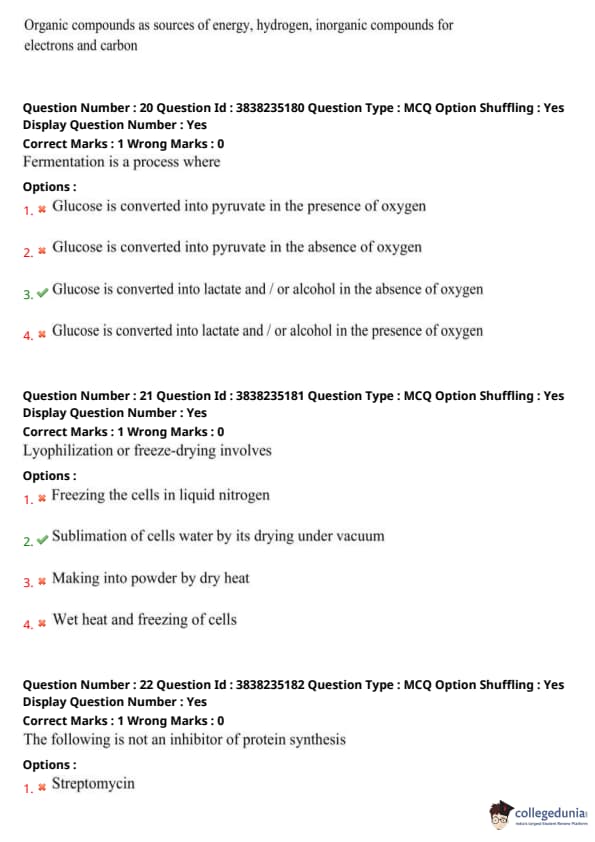
- (d) Organic compounds as sources of energy, hydrogen, inorganic compounds for electrons and carbon
Question 19:
Fermentation is a process where
- (a) Glucose is converted into pyruvate in the presence of oxygen
- (b) Glucose is converted into pyruvate in the absence of oxygen
- (c) Glucose is converted into lactate and / or alcohol in the absence of oxygen
- (d) Glucose is converted into lactate and / or alcohol in the presence of oxygen
Question 20:
Lyophilization or freeze-drying involves
- (a) Freezing the cells in liquid nitrogen
- (b) Sublimation of cells water by its drying under vacuum
- (c) Making into powder by dry heat
- (d) Wet heat and freezing of cells
Question 21:
The following is not an inhibitor of protein synthesis
- (a) Streptomycin
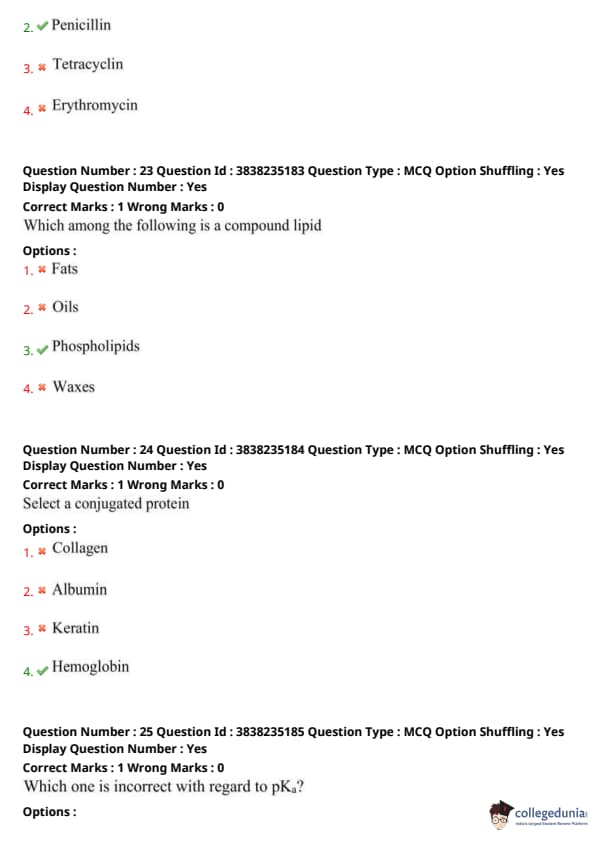
- (b) Penicillin
- (c) Tetracyclin
- (d) Erythromycin
Question 22:
Which among the following is a compound lipid
- (a) Fats
- (b) Oils
- (c) Phospholipids
- (d) Waxes
Question 23:
Select a conjugated protein
- (a) Collagen
- (b) Albumin
- (c) Keratin
- (d) Hemoglobin
Question 24:
Which one is incorrect with regard to pK\(_a\)?
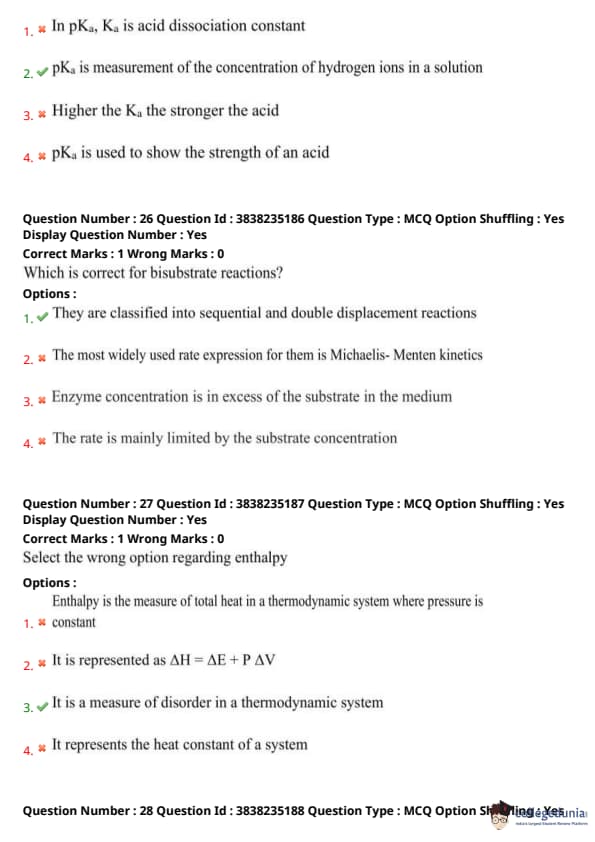
- (a) In pK\(_a\), K\(_a\) is acid dissociation constant
- (b) pK\(_a\) is measurement of the concentration of hydrogen ions in a solution
- (c) Higher the K\(_a\) the stronger the acid
- (d) pK\(_a\) is used to show the strength of an acid
Question 25:
Which is correct for bisubstrate reactions?
- (a) They are classified into sequential and double displacement reactions
- (b) The most widely used rate expression for them is Michaelis- Menten kinetics
- (c) Enzyme concentration is in excess of the substrate in the medium
- (d) The rate is mainly limited by the substrate concentration
Question 26:
Select the wrong option regarding enthalpy
- (a) Enthalpy is the measure of total heat in a thermodynamic system where pressure is constant
- (b) It is represented as \(\Delta H = \Delta E + P \Delta V\)
- (c) It is a measure of disorder in a thermodynamic system
- (d) It represents the heat constant of a system
Question 27:
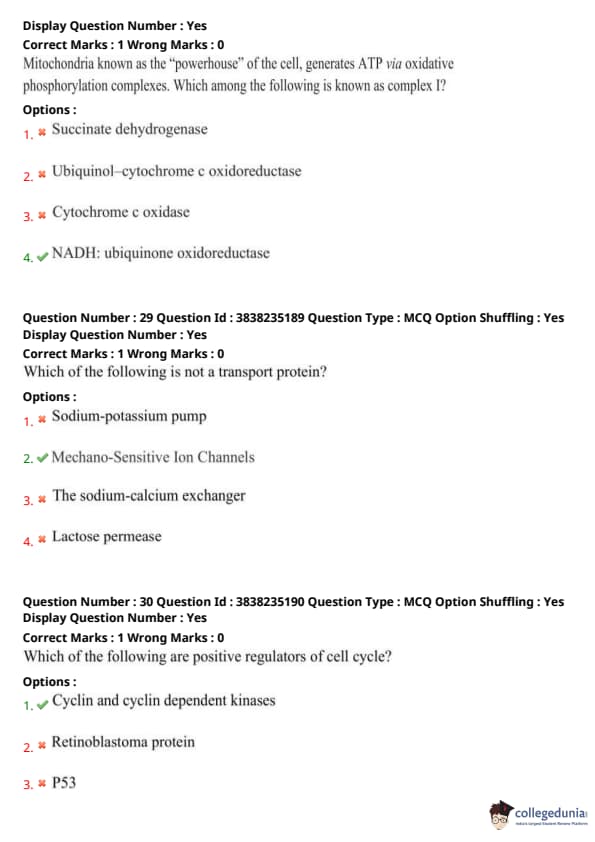
Mitochondria known as the "powerhouse" of the cell, generates ATP via oxidative phosphorylation complexes. Which among the following is known as complex I?
- (a) Succinate dehydrogenase
- (b) Ubiquinol-cytochrome c oxidoreductase
- (c) Cytochrome c oxidase
- (d) NADH: ubiquinone oxidoreductase
Question 28:
Which of the following is not a transport protein?
- (a) Sodium-potassium pump
- (b) Mechano-Sensitive ion Channels
- (c) The sodium-calcium exchanger
- (d) Lactose permease
Question 29:
Which of the following are positive regulators of cell cycle?
- (a) Cyclin and cyclin dependent kinases
- (b) Retinoblastoma protein
- (c) P53
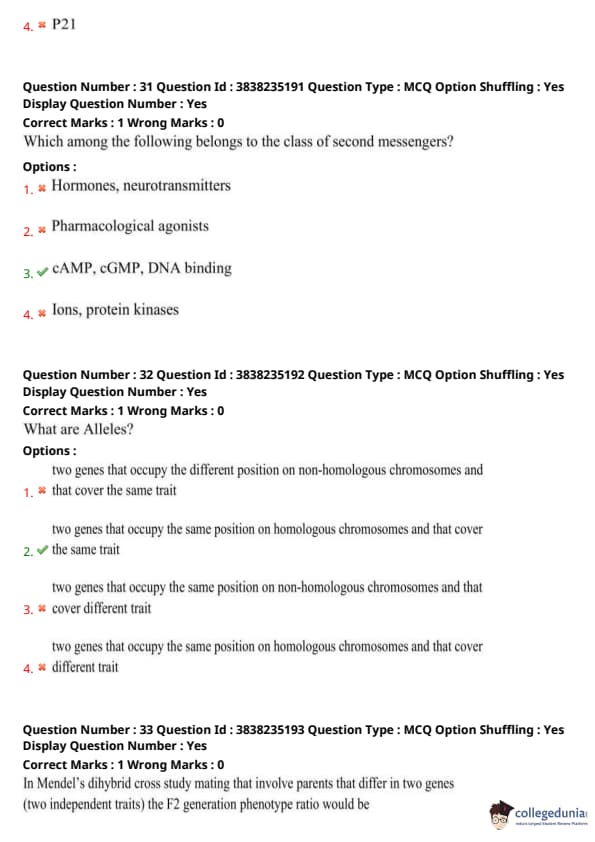
- (d) P21
Question 30:
Which among the following belongs to the class of second messengers?
- (a) Hormones, neurotransmitters
- (b) Pharmacological agonists
- (c) cAMP, cGMP, DNA binding
- (d) Ions, protein kinases
Question 31:
What are Alleles?
- (a) two genes that occupy the different position on non-homologous chromosomes and that cover the same trait
- (b) two genes that occupy the same position on homologous chromosomes and that cover the same trait
- (c) two genes that occupy the same position on non-homologous chromosomes and that cover different trait
- (d) two genes that occupy the same position on homologous chromosomes and that cover different trait
Question 32:
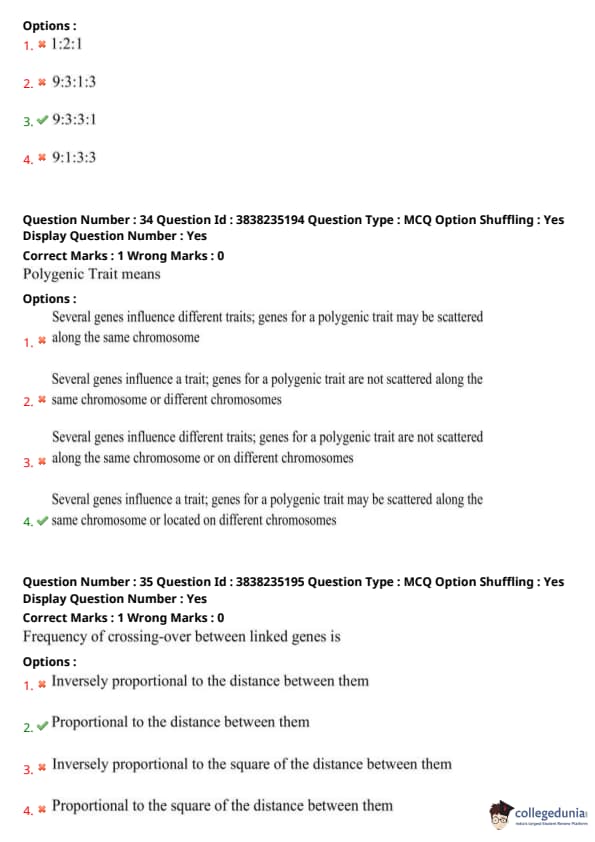
In Mendel's dihybrid cross study mating that involve parents that differ in two genes (two independent traits) the F2 generation phenotype ratio would be
- (a) 1:2:1
- (b) 9:3:1:3
- (c) 9:3:3:1
- (d) 9:1:3:3
Question 33:
Polygenic Trait means
- (a) Several genes influence different traits; genes for a polygenic trait may be scattered along the same chromosome
- (b) Several genes influence a trait; genes for a polygenic trait are not scattered along the same chromosome or different chromosomes
- (c) Several genes influence different traits; genes for a polygenic trait are not scattered along the same chromosome or on different chromosomes
- (d) Several genes influence a trait; genes for a polygenic trait may be scattered along the same chromosome or located on different chromosomes
Question 34:
Frequency of crossing-over between linked genes is
- (a) Inversely proportional to the distance between them
- (b) Proportional to the distance between them
- (c) Inversely proportional to the square of the distance between them
- (d) Proportional to the square of the distance between them
Question 35:
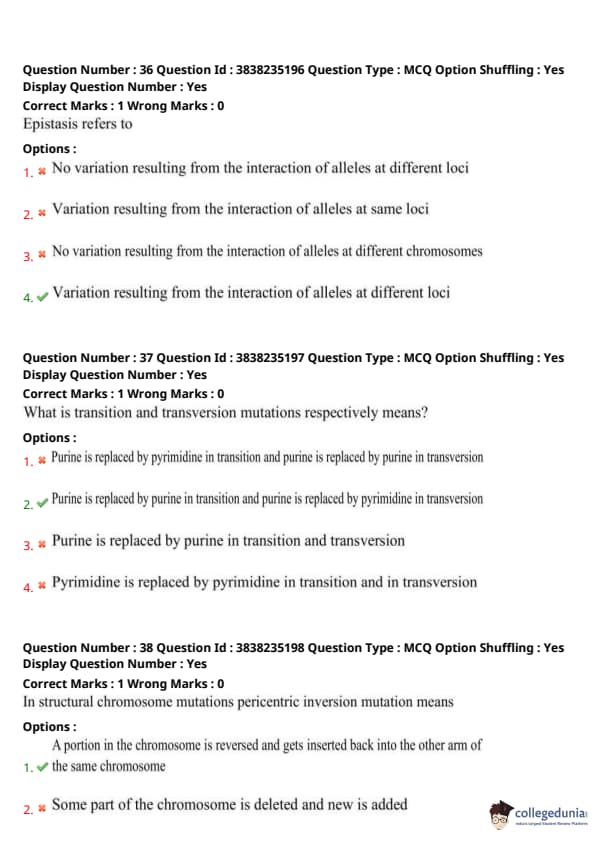
Epistasis refers to
- (a) No variation resulting from the interaction of alleles at different loci
- (b) Variation resulting from the interaction of alleles at same loci
- (c) No variation resulting from the interaction of alleles at different chromosomes
% "different chromosomes" is too specific, it's about different loci.
- (d) Variation resulting from the interaction of alleles at different loci
Question 36:
What is transition and transversion mutations respectively means?
- (a) Purine is replaced by pyrimidine in transition and purine is replaced by purine in transversion
- (b) Purine is replaced by purine in transition and purine is replaced by pyrimidine in transversion
- (c) Purine is replaced by purine in transition and transversion
- (d) Pyrimidine is replaced by pyrimidine in transition and in transversion
Question 37:
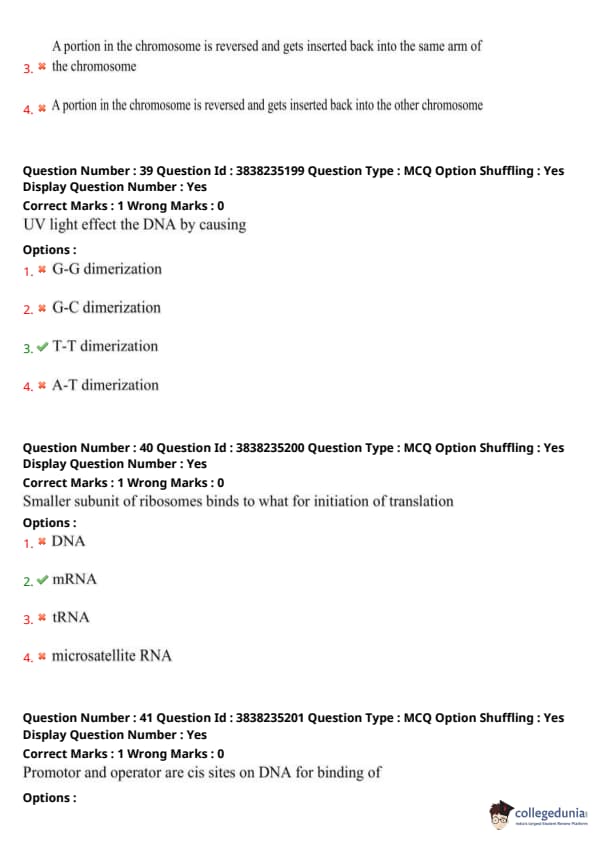
In structural chromosome mutations pericentric inversion mutation means
- (a) A portion in the chromosome is reversed and gets inserted back into the other arm of the same chromosome
- (b) Some part of the chromosome is deleted and new is added
- (c) A portion in the chromosome is reversed and gets inserted back into the same arm of the chromosome
- (d) A portion in the chromosome is reversed and gets inserted back into the other chromosome
Question 38:
UV light effect the DNA by causing
- (a) G-G dimerization
- (b) G-C dimerization
- (c) T-T dimerization
- (d) A-T dimerization
Question 39:
Smaller subunit of ribosomes binds to what for initiation of translation
- (a) DNA
- (b) mRNA
- (c) tRNA
- (d) microsatellite RNA
Question 40:
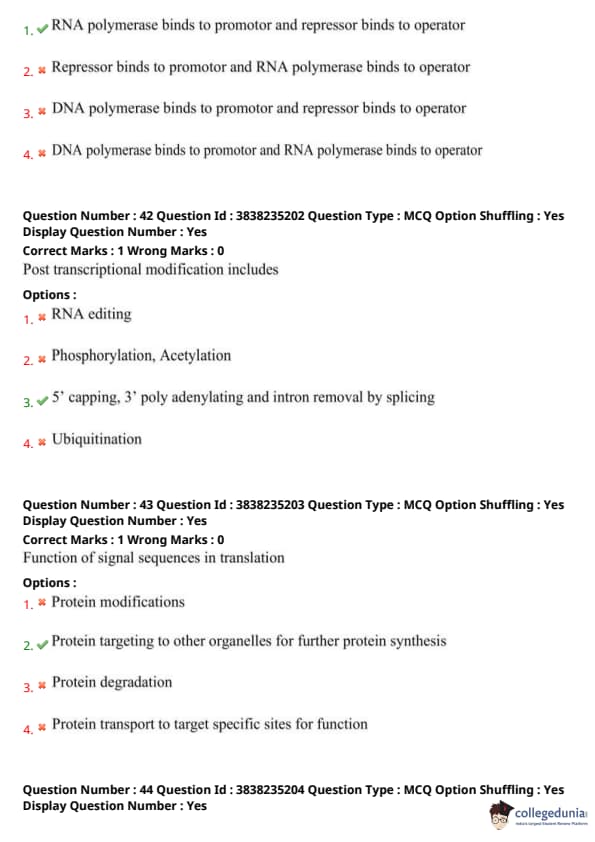
Promotor and operator are cis sites on DNA for binding of
(Typo: "Promotor" should be "Promoter")
- (a) RNA polymerase binds to promotor and repressor binds to operator
- (b) Repressor binds to promotor and RNA polymerase binds to operator
- (c) DNA polymerase binds to promotor and repressor binds to operator
- (d) DNA polymerase binds to promotor and RNA polymerase binds to operator
Question 41:
Post transcriptional modification includes
- (a) RNA editing
- (b) Phosphorylation, Acetylation
- (c) 5' capping, 3' poly adenylating and intron removal by splicing
- (d) Ubiquitination
Question 42:
Function of signal sequences in translation
- (a) Protein modifications
- (b) Protein targeting to other organelles for further protein synthesis
- (c) Protein degradation
- (d) Protein transport to target specific sites for function
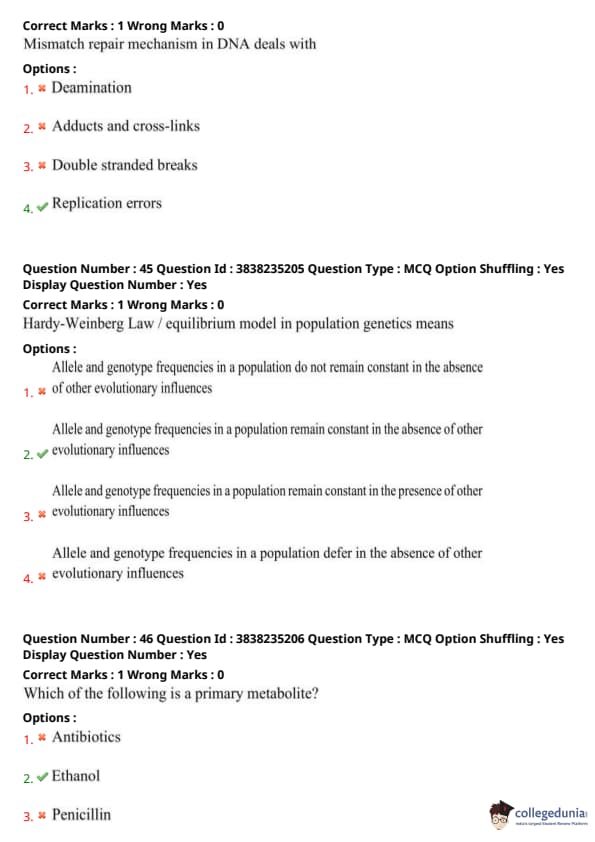
Question 43:
Mismatch repair mechanism in DNA deals with
- (a) Deamination
- (b) Adducts and cross-links
- (c) Double stranded breaks
- (d) Replication errors
Question 44:
Hardy-Weinberg Law / equilibrium model in population genetics means
- (a) Allele and genotype frequencies in a population do not remain constant in the absence of other evolutionary influences
- (b) Allele and genotype frequencies in a population remain constant in the absence of other evolutionary influences
- (c) Allele and genotype frequencies in a population remain constant in the presence of other evolutionary influences
- (d) Allele and genotype frequencies in a population defer in the absence of other evolutionary influences
Question 45:
Which of the following is a primary metabolite?
- (a) Antibiotics
- (b) Ethanol
- (c) Penicillin
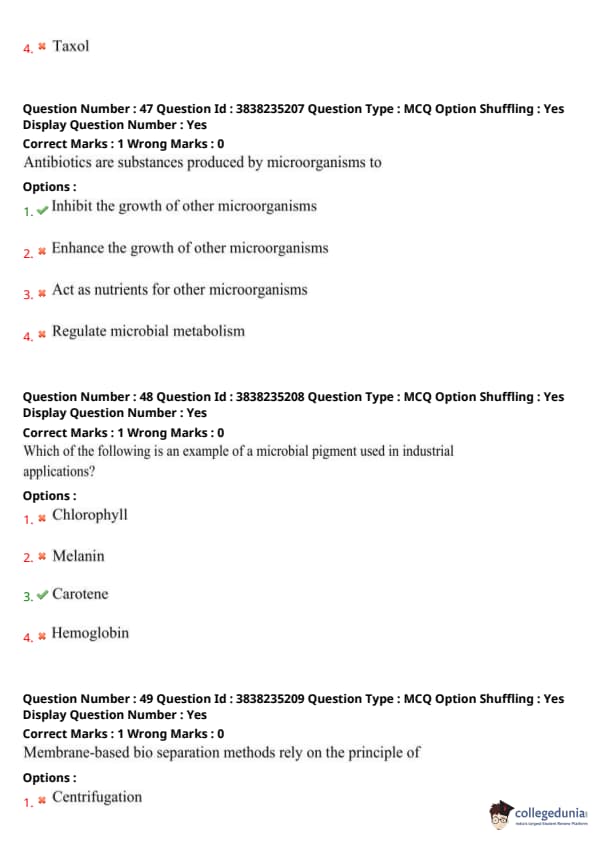
- (d) Taxol
Question 46:
Antibiotics are substances produced by microorganisms to
- (a) Inhibit the growth of other microorganisms
- (b) Enhance the growth of other microorganisms
- (c) Act as nutrients for other microorganisms
- (d) Regulate microbial metabolism
Question 47:
Which of the following is an example of a microbial pigment used in industrial applications?
- (a) Chlorophyll
- (b) Melanin
- (c) Carotene
- (d) Hemoglobin
Question 48:
Membrane-based bio separation methods rely on the principle of
- (a) Centrifugation
- (b) Filtration
- (c) Precipitation
- (d) Sedimentation
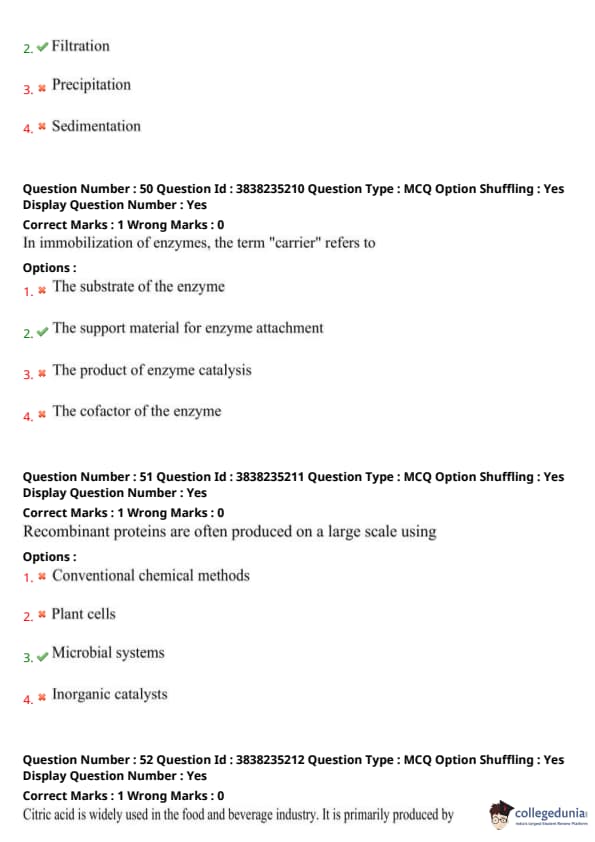
Question 49:
In immobilization of enzymes, the term "carrier" refers to
- (a) The substrate of the enzyme
- (b) The support material for enzyme attachment
- (c) The product of enzyme catalysis
- (d) The cofactor of the enzyme
Question 50:
Recombinant proteins are often produced on a large scale using
- (a) Conventional chemical methods
- (b) Plant cells
- (c) Microbial systems
- (d) Inorganic catalysts
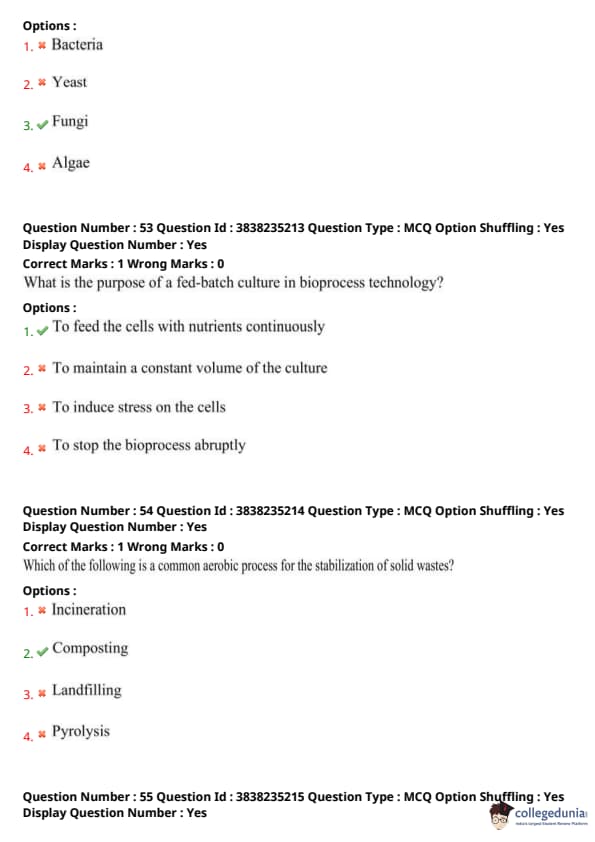
Question 51:
Citric acid is widely used in the food and beverage industry. It is primarily produced by
- (a) Bacteria
- (b) Yeast
- (c) Fungi
- (d) Algae
Question 52:
What is the purpose of a fed-batch culture in bioprocess technology?
- (a) To feed the cells with nutrients continuously
- (b) To maintain a constant volume of the culture
- (c) To induce stress on the cells
- (d) To stop the bioprocess abruptly
Question 53:
Which of the following is a common aerobic process for the stabilization of solid wastes?
- (a) Incineration
- (b) Composting
- (c) Landfilling
- (d) Pyrolysis
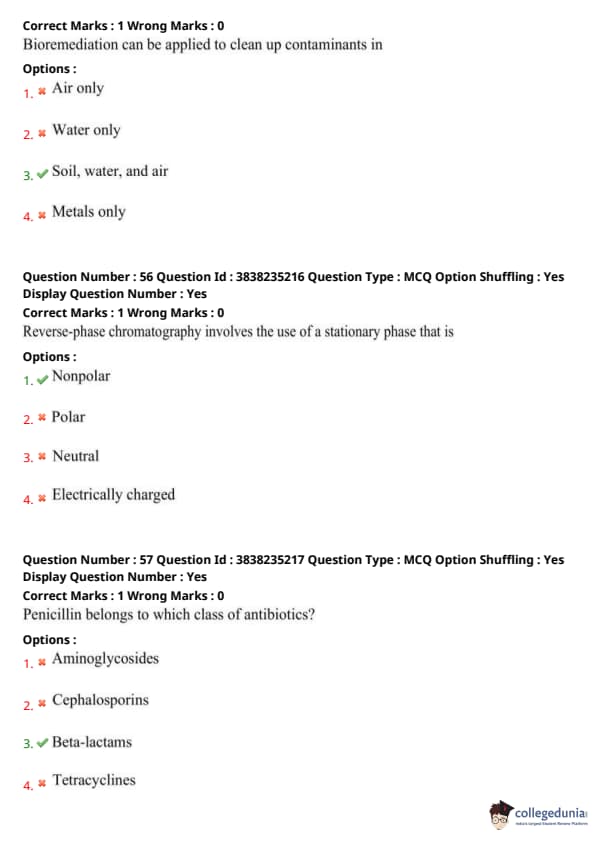
Question 54:
Bioremediation can be applied to clean up contaminants in
- (a) Air only
- (b) Water only
- (c) Soil, water, and air
- (d) Metals only
Question 55:
Reverse-phase chromatography involves the use of a stationary phase that is
- (a) Nonpolar
- (b) Polar
- (c) Neutral
- (d) Electrically charged
Question 56:
Penicillin belongs to which class of antibiotics?
- (a) Aminoglycosides
- (b) Cephalosporins
- (c) Beta-lactams
- (d) Tetracyclines
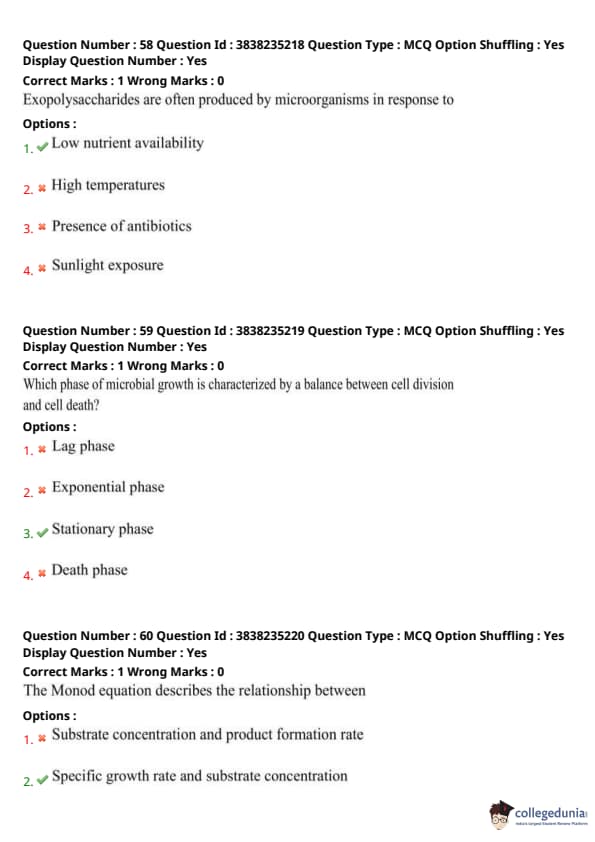
Question 57:
Exopolysaccharides are often produced by microorganisms in response to
- (a) Low nutrient availability
- (b) High temperatures
- (c) Presence of antibiotics
- (d) Sunlight exposure
Question 58:
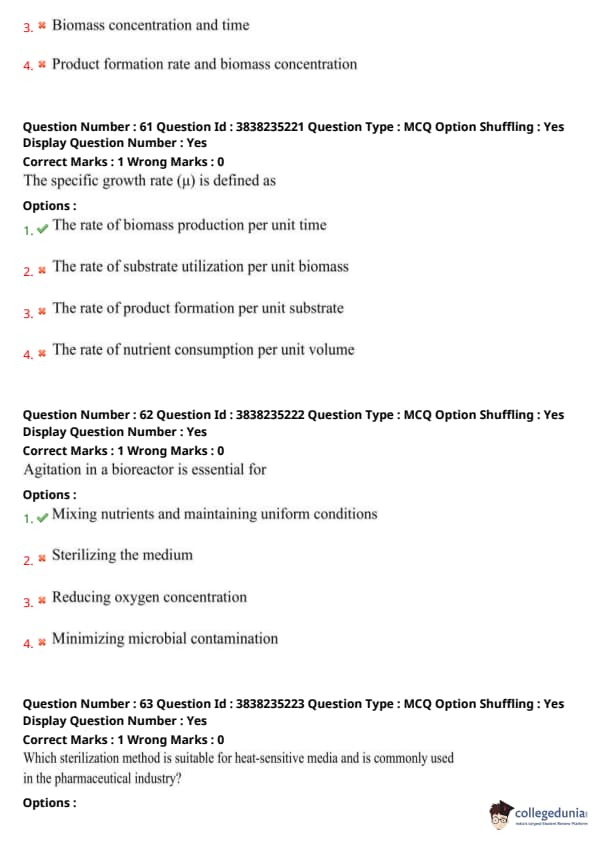
Which phase of microbial growth is characterized by a balance between cell division and cell death?
- (a) Lag phase
- (b) Exponential phase
- (c) Stationary phase
- (d) Death phase
Question 59:
The Monod equation describes the relationship between
- (a) Substrate concentration and product formation rate
- (b) Specific growth rate and substrate concentration
- (c) Biomass concentration and time
- (d) Product formation rate and biomass concentration
Question 60:
The specific growth rate (\(\mu\)) is defined as
- (a) The rate of biomass production per unit time
- (b) The rate of substrate utilization per unit biomass
- (c) The rate of product formation per unit substrate
- (d) The rate of nutrient consumption per unit volume
Question 61:
Agitation in a bioreactor is essential for
- (a) Mixing nutrients and maintaining uniform conditions
- (b) Sterilizing the medium
- (c) Reducing oxygen concentration
- (d) Minimizing microbial contamination
Question 62:
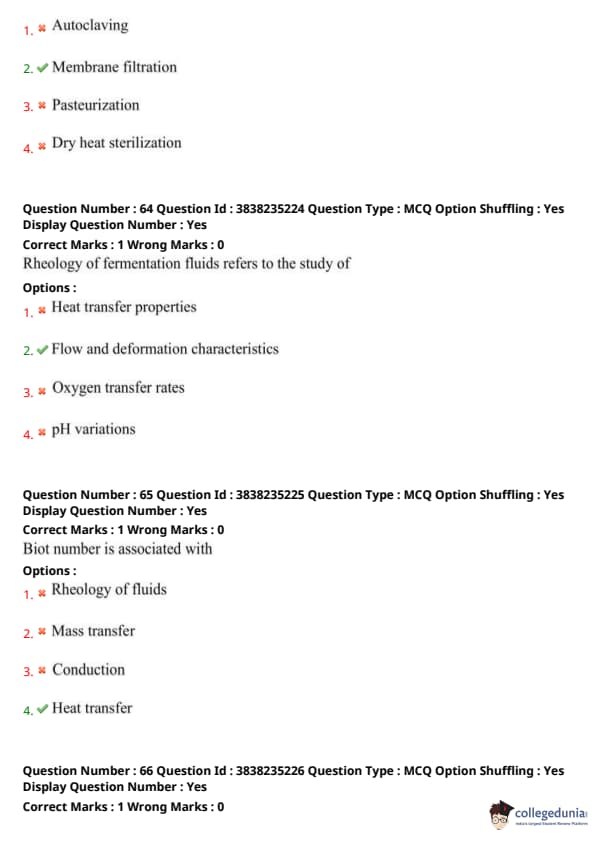
Which sterilization method is suitable for heat-sensitive media and is commonly used in the pharmaceutical industry?
- (a) Autoclaving
- (b) Membrane filtration
- (c) Pasteurization
- (d) Dry heat sterilization
Question 63:
Rheology of fermentation fluids refers to the study of
- (a) Heat transfer properties
- (b) Flow and deformation characteristics
- (c) Oxygen transfer rates
- (d) pH variations
Question 64:
Biot number is associated with
- (a) Rheology of fluids
- (b) Mass transfer
- (c) Conduction
- (d) Heat transfer
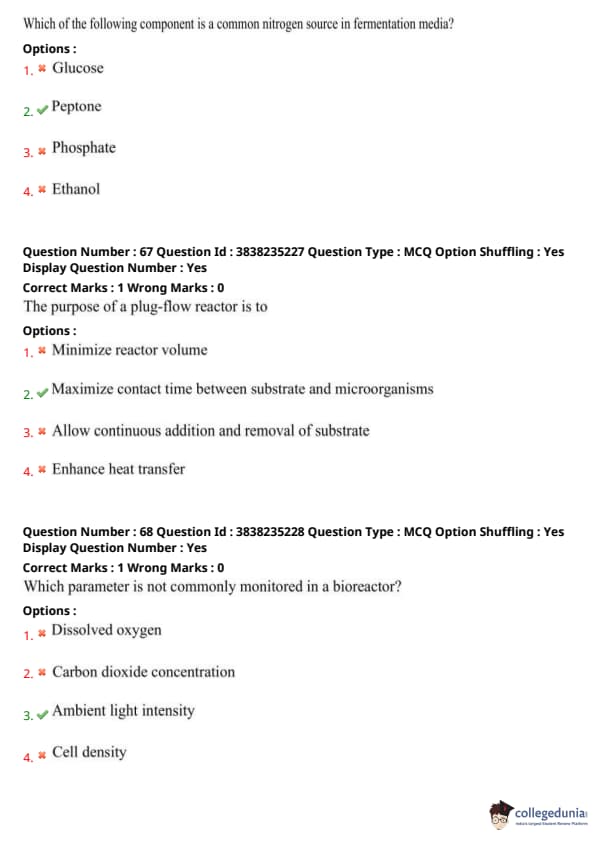
Question 65:
Which of the following component is a common nitrogen source in fermentation media?
- (a) Glucose
- (b) Peptone
- (c) Phosphate
- (d) Ethanol
Question 66:
The purpose of a plug-flow reactor is to
- (a) Minimize reactor volume
- (b) Maximize contact time between substrate and microorganisms
- (c) Allow continuous addition and removal of substrate
- (d) Enhance heat transfer
Question 67:
Which parameter is not commonly monitored in a bioreactor?
- (a) Dissolved oxygen
- (b) Carbon dioxide concentration
- (c) Ambient light intensity
- (d) Cell density
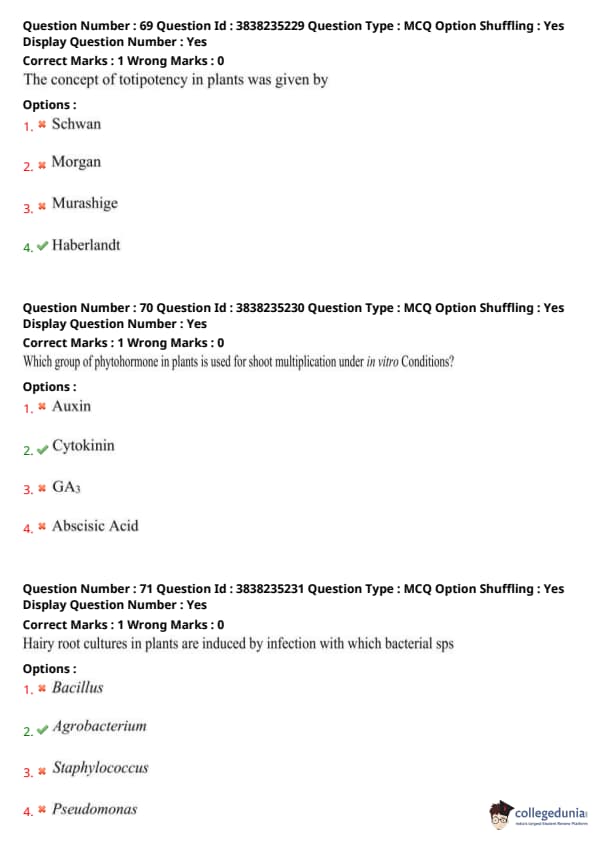
Question 68:
The concept of totipotency in plants was given by
- (a) Schwan
- (b) Morgan
- (c) Murashige
- (d) Haberlandt
Question 69:
Which group of phytohormone in plants is used for shoot multiplication under in vitro conditions?
- (a) Auxin
- (b) Cytokinin
- (c) GA\(_3\)
- (d) Abscisic Acid
Question 70:
Hairy root cultures in plants are induced by infection with which bacterial sps
- (a) Bacillus
- (b) Agrobacterium
- (c) Staphylococcus
- (d) Pseudomonas
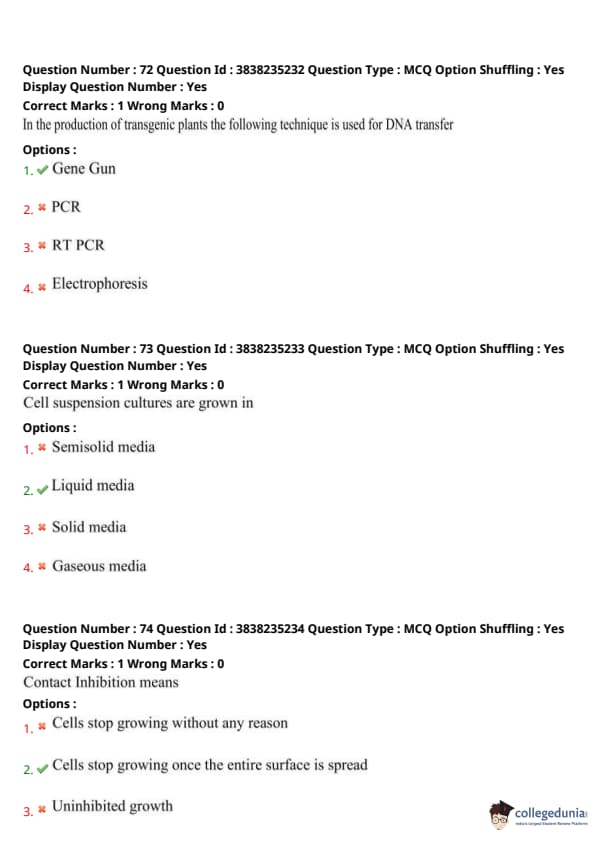
Question 71:
In the production of transgenic plants the following technique is used for DNA transfer
- (a) Gene Gun
- (b) PCR
- (c) RT PCR
- (d) Electrophoresis
Question 72:
Cell suspension cultures are grown in
- (a) Semisolid media
- (b) Liquid media
- (c) Solid media
- (d) Gaseous media
Question 73:
Contact Inhibition means
- (a) Cells stop growing without any reason
- (b) Cells stop growing once the entire surface is spread
- (c) Uninhibited growth
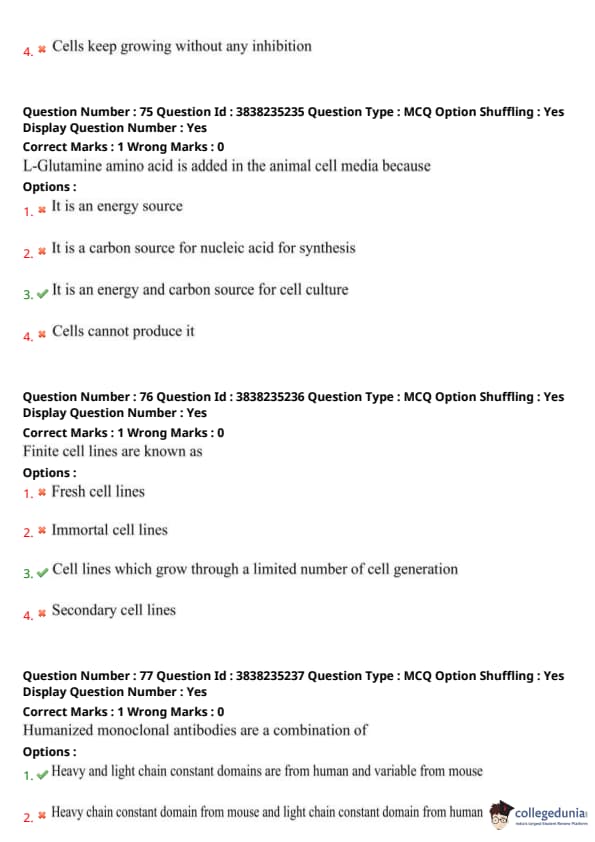
Question 74:
L-Glutamine amino acid is added in the animal cell media because
- (a) It is an energy source
- (b) It is a carbon source for nucleic acid for synthesis
- (c) It is an energy and carbon source for cell culture
- (d) Cells cannot produce it
Question 75:
Finite cell lines are known as
- (a) Fresh cell lines
- (b) Immortal cell lines
- (c) Cell lines which grow through a limited number of cell generation
- (d) Secondary cell lines
Question 76:
Humanized monoclonal antibodies are a combination of
- (a) Heavy and light chain constant domains are from human and variable from mouse
- (b) Heavy chain constant domain from mouse and light chain constant domain from human
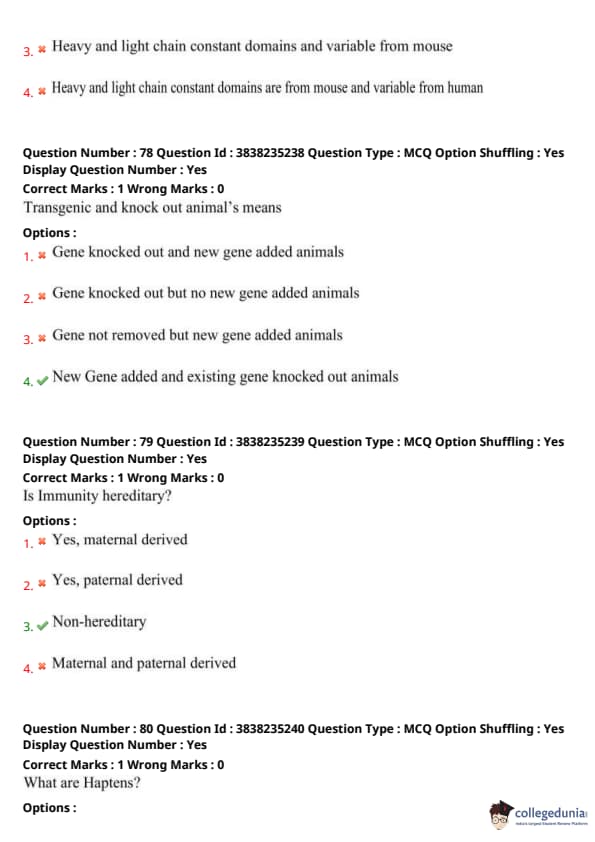
- (c) Heavy and light chain constant domains and variable from mouse
% "and variable" reads oddly. Should be "variable domains from mouse"
- (d) Heavy and light chain constant domains are from mouse and variable from human
Question 77:
Transgenic and knock out animal's means
- (a) Gene knocked out and new gene added animals
- (b) Gene knocked out but no new gene added animals
- (c) Gene not removed but new gene added animals
- (d) New Gene added and existing gene knocked out animals
Question 78:
Is immunity hereditary?
- (a) Yes, maternal derived
- (b) Yes, paternal derived
- (c) Non-hereditary
- (d) Maternal and paternal derived
Question 79:
What are Haptens?
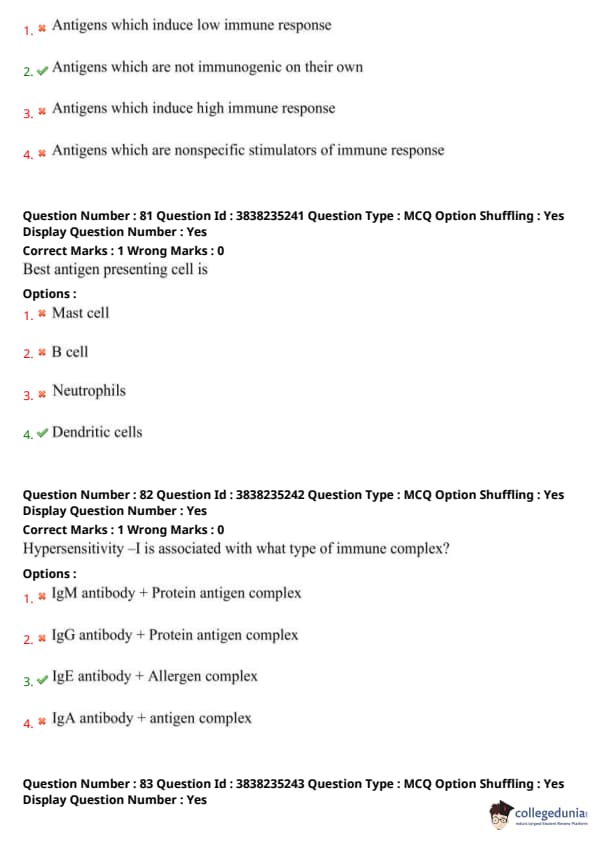
- (a) Antigens which induce low immune response
- (b) Antigens which are not immunogenic on their own
- (c) Antigens which induce high immune response
- (d) Antigens which are nonspecific stimulators of immune response
Question 80:
Best antigen presenting cell is
- (a) Mast cell
- (b) B cell
- (c) Neutrophils
- (d) Dendritic cells
Question 81:
Hypersensitivity - I is associated with what type of immune complex?
(Note: Type I Hypersensitivity is immediate hypersensitivity / allergy.)
- (a) IgM antibody + Protein antigen complex
- (b) IgG antibody + Protein antigen complex
- (c) IgE antibody + Allergen complex
- (d) IgA antibody + antigen complex
Question 82:
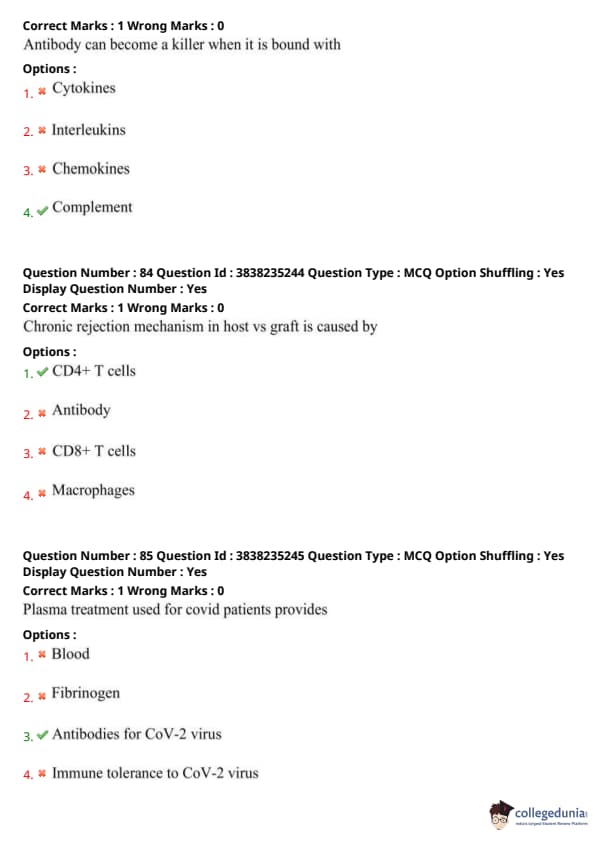
Antibody can become a killer when it is bound with
- (a) Cytokines
- (b) Interleukins
- (c) Chemokines
- (d) Complement
Question 83:
Chronic rejection mechanism in host vs graft is caused by
(Host vs Graft implies transplant rejection)
- (a) CD4+ T cells
- (b) Antibody
- (c) CD8+ T cells
- (d) Macrophages
Question 84:
Plasma treatment used for covid patients provides
(Referring to Convalescent Plasma treatment)
- (a) Blood
- (b) Fibrinogen
- (c) Antibodies for CoV-2 virus
- (d) Immune tolerance to CoV-2 virus
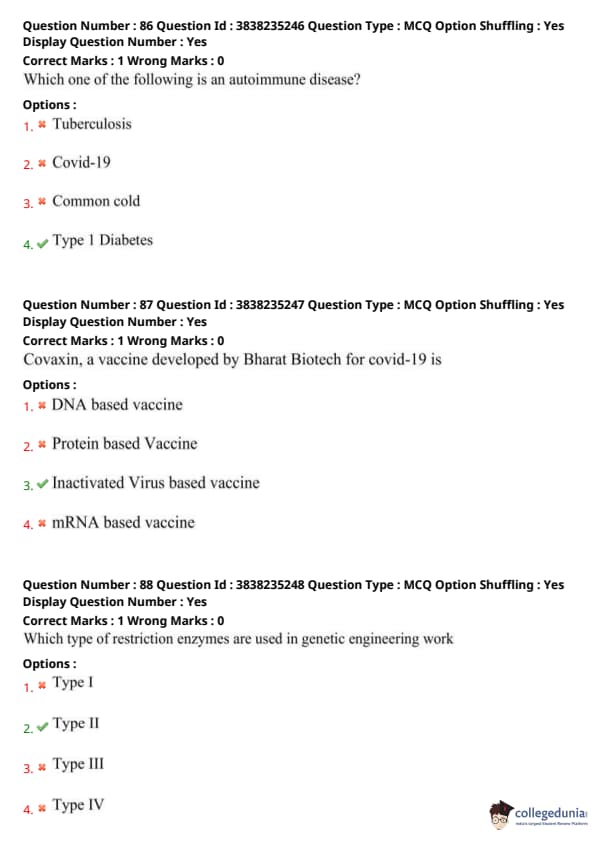
Question 85:
Which one of the following is an autoimmune disease?
- (a) Tuberculosis
- (b) Covid-19
- (c) Common cold
- (d) Type 1 Diabetes
Question 86:
Covaxin, a vaccine developed by Bharat Biotech for covid-19 is
- (a) DNA based vaccine
- (b) Protein based Vaccine
- (c) Inactivated Virus based vaccine
- (d) mRNA based vaccine
Question 87:
Which type of restriction enzymes are used in genetic engineering work
- (a) Type I
- (b) Type II
- (c) Type III
- (d) Type IV
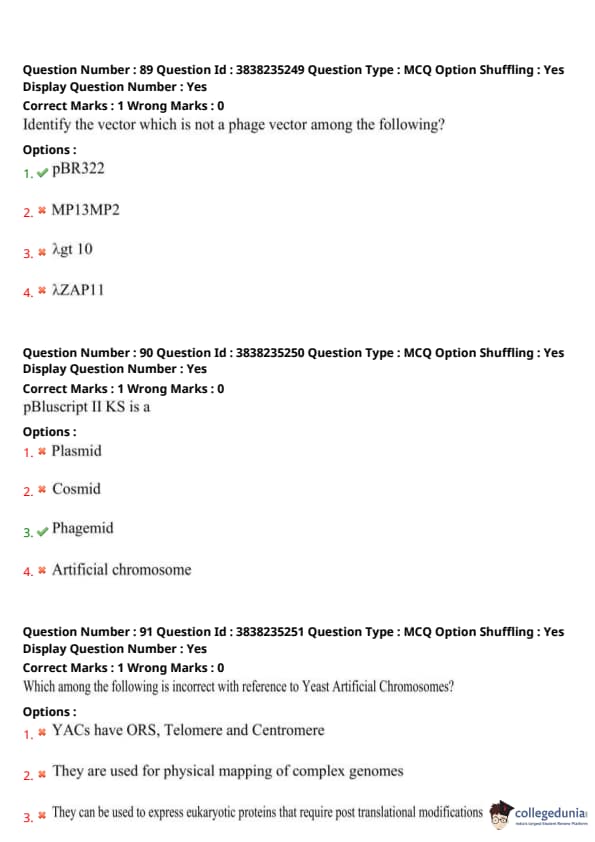
Question 88:
Identify the vector which is not a phage vector among the following?
- (a) pBR322
- (b) MP13MP2
% Likely typo for M13mp series, e.g., M13mp18/19
- (c) \(\lambda\)gt 10
- (d) \(\lambda\)ZAPII
Question 89:
pBluescript II KS is a
- (a) Plasmid
- (b) Cosmid
- (c) Phagemid
- (d) Artificial chromosome
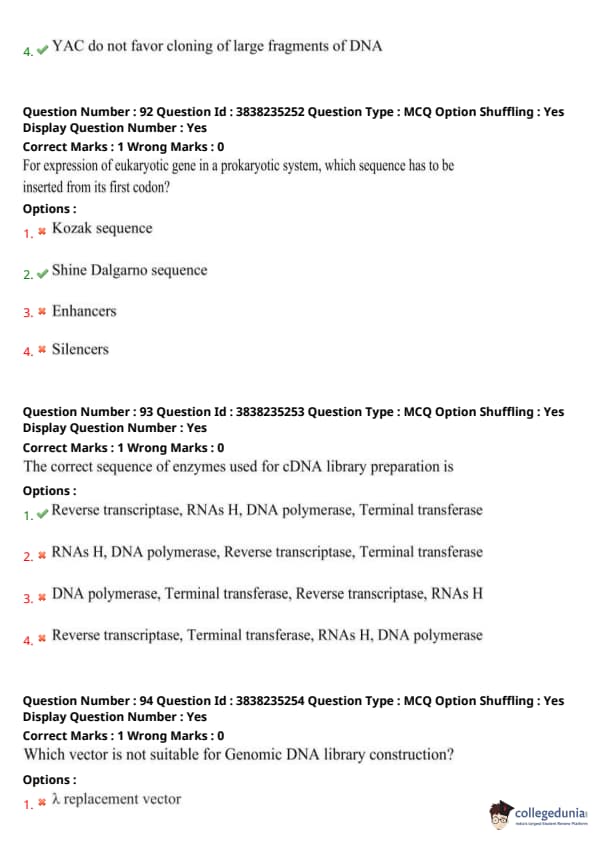
Question 90:
Which among the following is incorrect with reference to Yeast Artificial Chromosomes?
- (a) YACs have ORS, Telomere and Centromere
- (b) They are used for physical mapping of complex genomes
- (c) They can be used to express eukaryotic proteins that require post translational modifications
- (d) YAC do not favor cloning of large fragments of DNA
Question 91:
For expression of eukaryotic gene in a prokaryotic system, which sequence has to be inserted from its first codon?
(The question phrasing "inserted from its first codon" is a bit unusual. It likely means "inserted *before* its first codon" or what sequence is needed upstream for prokaryotic expression machinery to recognize it.)
- (a) Kozak sequence
- (b) Shine Dalgarno sequence
- (c) Enhancers
- (d) Silencers
Question 92:
The correct sequence of enzymes used for cDNA library preparation is
- (a) Reverse transcriptase, RNAs H, DNA polymerase, Terminal transferase
- (b) RNAs H, DNA polymerase, Reverse transcriptase, Terminal transferase
- (c) DNA polymerase, Terminal transferase, Reverse transcriptase, RNAs H
- (d) Reverse transcriptase, Terminal transferase, RNAs H, DNA polymerase
Question 93:
Which vector is not suitable for Genomic DNA library construction?
- (a) \(\lambda\) replacement vector
- (b) Yeast Artificial Chromosomes
- (c) Bacterial Artificial Chromosomes
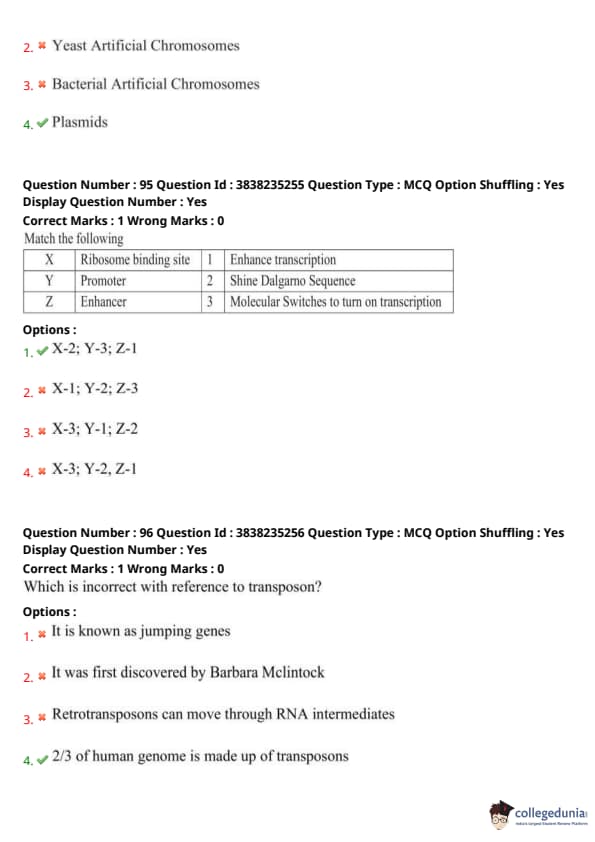
- (d) Plasmids
Question 94:
Match the following
X Ribosome binding site 1 Enhance transcription
Y Promoter 2 Shine Dalgarno Sequence
Z Enhancer 3 Molecular Switches to turn on transcription
- (a) X-2; Y-3; Z-1
- (b) X-1; Y-2; Z-3
- (c) X-3; Y-1; Z-2
- (d) X-3; Y-2; Z-1
Question 95:
Which is incorrect with reference to transposon?
- (a) It is known as jumping genes
- (b) It was first discovered by Barbara McClintock
- (c) Retrotransposons can move through RNA intermediates
- (d) 2/3 of human genome is made up of transposons
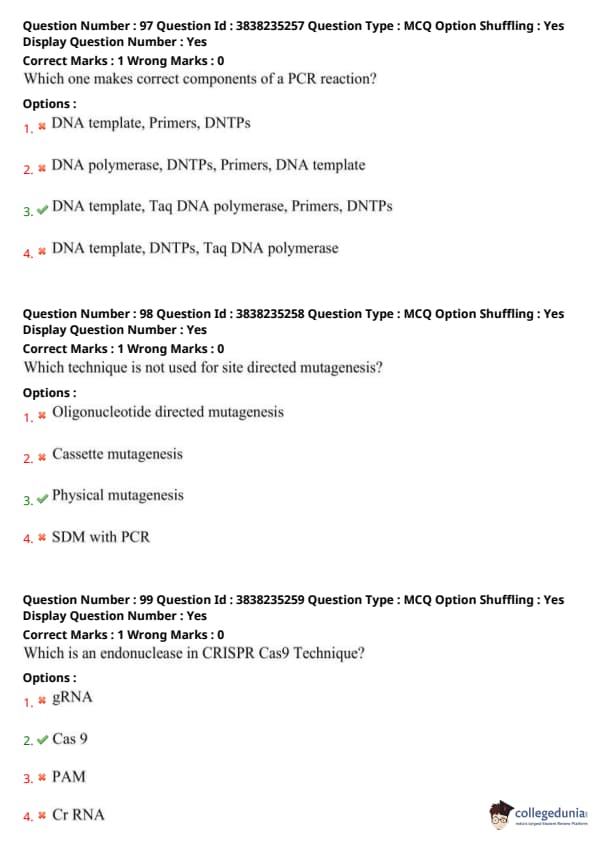
Question 96:
Which one makes correct components of a PCR reaction?
- (a) DNA template, Primers, DNTPs
- (b) DNA polymerase, DNTPs, Primers, DNA template
- (c) DNA template, Taq DNA polymerase, Primers, DNTPs
- (d) DNA template, DNTPs, Taq DNA polymerase
Question 97:
Which technique is not used for site directed mutagenesis?
- (a) Oligonucleotide directed mutagenesis
- (b) Cassette mutagenesis
- (c) Physical mutagenesis
- (d) SDM with PCR
Question 98:
Which is an endonuclease in CRISPR Cas9 Technique?
- (a) gRNA
- (b) Cas 9
- (c) PAM
- (d) Cr RNA
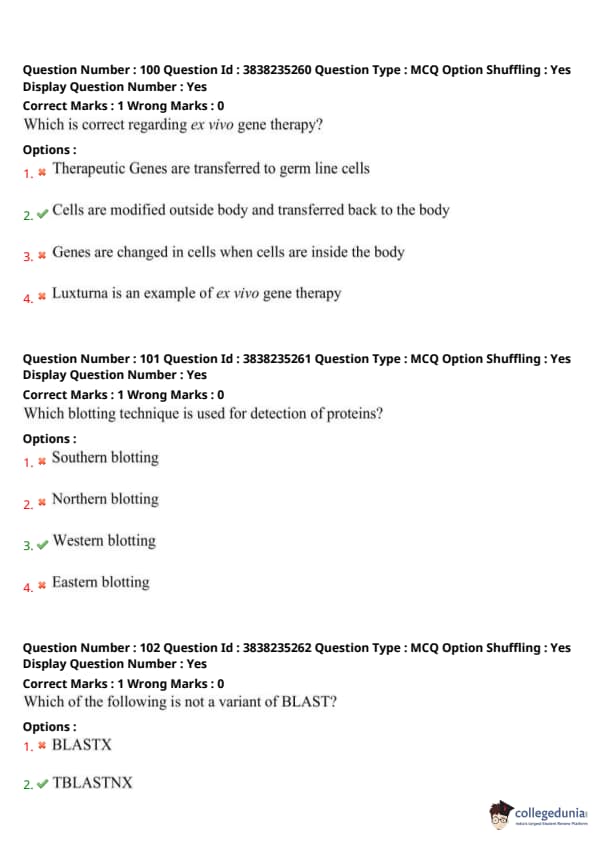
Question 99:
Which is correct regarding ex vivo gene therapy?
- (a) Therapeutic Genes are transferred to germ line cells
- (b) Cells are modified outside body and transferred back to the body
- (c) Genes are changed in cells when cells are inside the body
- (d) Luxturna is an example of ex vivo gene therapy
Question 100:
Which blotting technique is used for detection of proteins?
- (a) Southern blotting
- (b) Northern blotting
- (c) Western blotting
- (d) Eastern blotting
Question 101:
Which of the following is not a variant of BLAST?
- (a) BLASTX
- (b) TBLASTNX
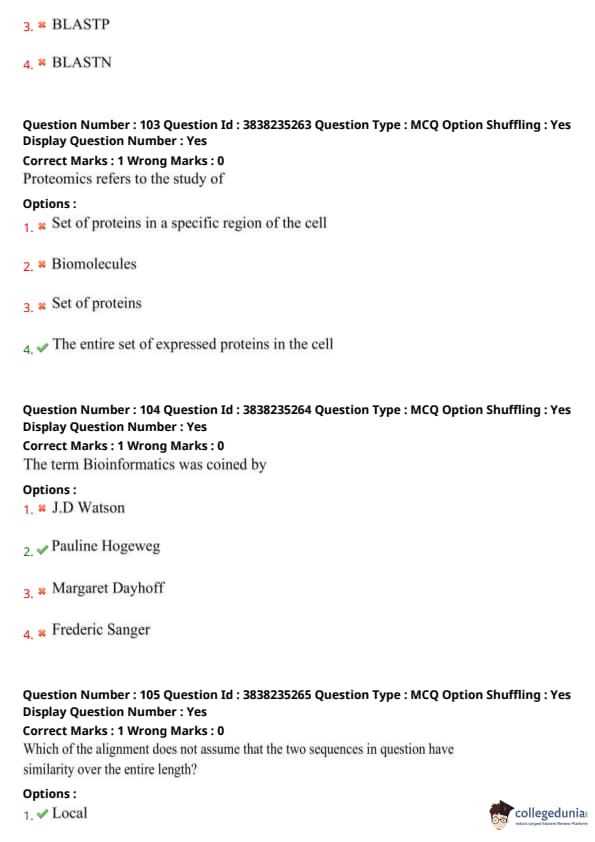
- (c) BLASTP
- (d) BLASTN
Question 102:
Proteomics refers to the study of
- (a) Set of proteins in a specific region of the cell
- (b) Biomolecules
- (c) Set of proteins
- (d) The entire set of expressed proteins in the cell
Question 103:
The term Bioinformatics was coined by
- (a) J.D Watson
- (b) Pauline Hogeweg
- (c) Margaret Dayhoff
- (d) Frederic Sanger
Question 104:
Which of the alignment does not assume that the two sequences in question have similarity over the entire length?
- (a) Local
- (b) Global
- (c) Heuristic
- (d) Clustal
Question 105:
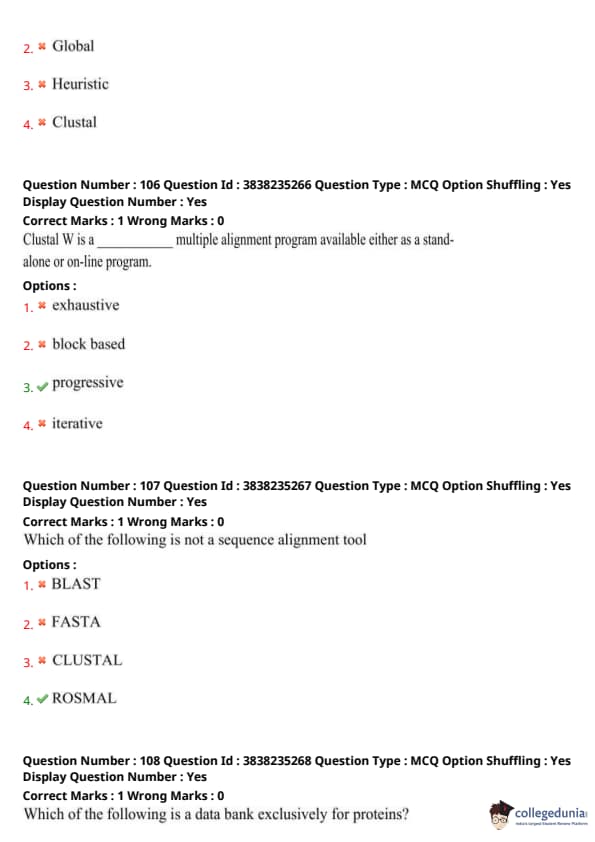
Clustal W is a \rule{1cm}{0.15mm} multiple alignment program available either as a stand-alone or on-line program.
- (a) exhaustive
- (b) block based
- (c) progressive
- (d) iterative
Question 106:
Which of the following is not a sequence alignment tool
- (a) BLAST
- (b) FASTA
- (c) CLUSTAL
- (d) ROSMAL
Question 107:
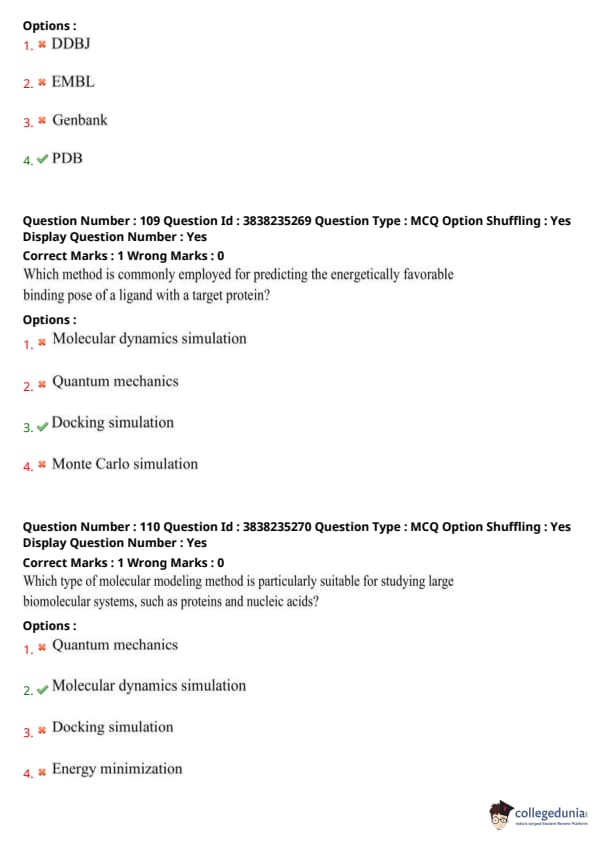
Which of the following is a data bank exclusively for proteins?
- (a) DDBJ
- (b) EMBL
- (c) Genbank
- (d) PDB
Question 108:
Which method is commonly employed for predicting the energetically favorable binding pose of a ligand with a target protein?
- (a) Molecular dynamics simulation
- (b) Quantum mechanics
- (c) Docking simulation
- (d) Monte Carlo simulation
Question 109:
Which type of molecular modeling method is particularly suitable for studying large biomolecular systems, such as proteins and nucleic acids?
- (a) Quantum mechanics
- (b) Molecular dynamics simulation
- (c) Docking simulation
- (d) Energy minimization
Question 110:
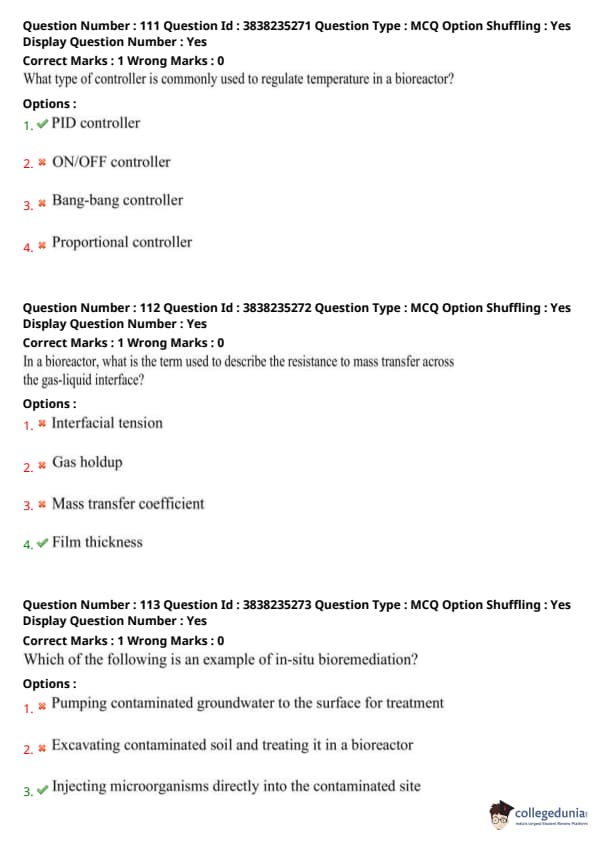
What type of controller is commonly used to regulate temperature in a bioreactor?
- (a) PID controller
- (b) ON/OFF controller
- (c) Bang-bang controller
- (d) Proportional controller
Question 111:
In a bioreactor, what is the term used to describe the resistance to mass transfer across the gas-liquid interface?
- (a) Interfacial tension
- (b) Gas holdup
- (c) Mass transfer coefficient
- (d) Film thickness
Question 112:
Which of the following is an example of in-situ bioremediation?
- (a) Pumping contaminated groundwater to the surface for treatment
- (b) Excavating contaminated soil and treating it in a bioreactor
- (c) Injecting microorganisms directly into the contaminated site
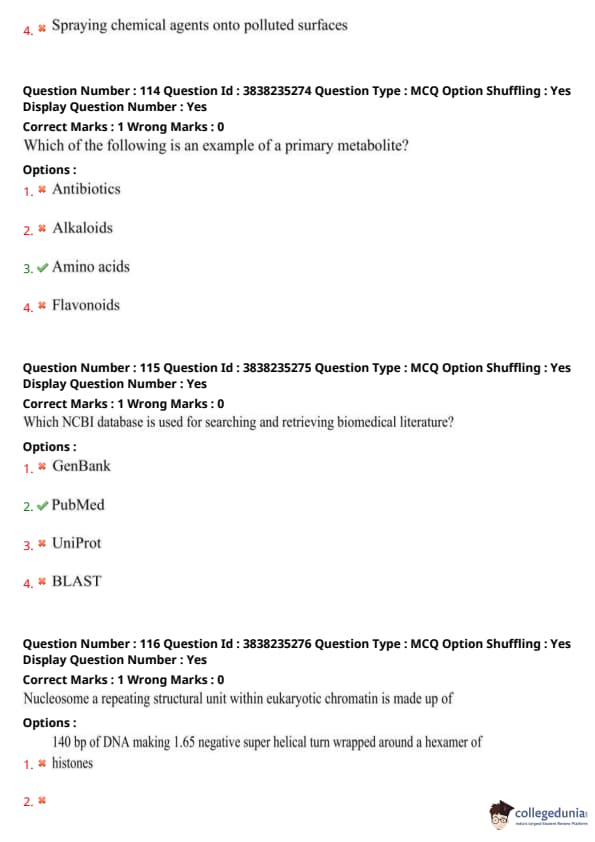
- (d) Spraying chemical agents onto polluted surfaces
Question 113:
Which of the following is an example of a primary metabolite?
- (a) Antibiotics
- (b) Alkaloids
- (c) Amino acids
- (d) Flavonoids
Question 114:
Which NCBI database is used for searching and retrieving biomedical literature?
- (a) GenBank
- (b) PubMed
- (c) UniProt
- (d) BLAST
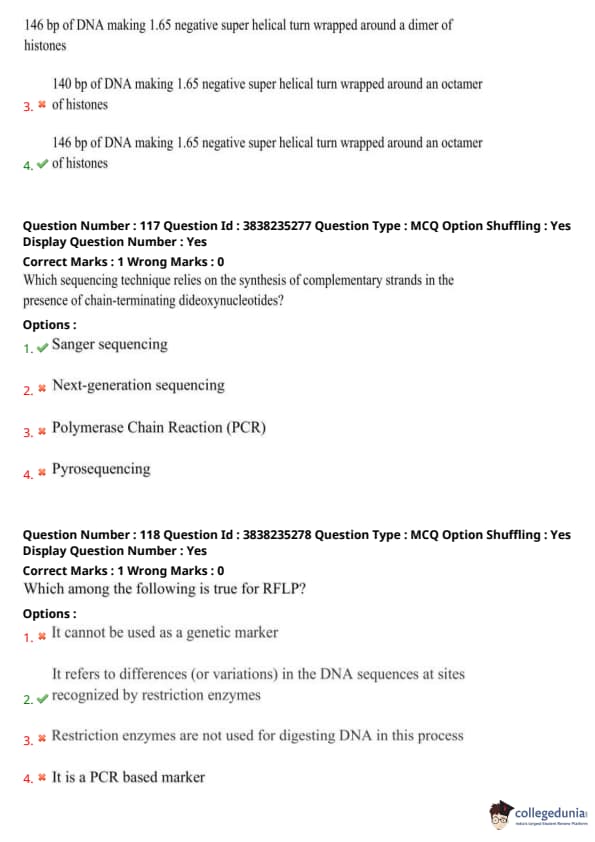
Question 115:
Nucleosome a repeating structural unit within eukaryotic chromatin is made up of
- (a) 140 bp of DNA making 1.65 negative super helical turn wrapped around a hexamer of histones
- (b) 146 bp of DNA making 1.65 negative super helical turn wrapped around a dimer of histones
- (c) 140 bp of DNA making 1.65 negative super helical turn wrapped around an octamer of histones
% The bp length is closer to 146-147 for core.
- (d) 146 bp of DNA making 1.65 negative super helical turn wrapped around an octamer of histones
Question 116:
Which sequencing technique relies on the synthesis of complementary strands in the presence of chain-terminating dideoxynucleotides?
- (a) Sanger sequencing
- (b) Next-generation sequencing
- (c) Polymerase Chain Reaction (PCR)
- (d) Pyrosequencing
Question 117:
Which among the following is true for RFLP?
- (a) It cannot be used as a genetic marker
- (b) It refers to differences (or variations) in the DNA sequences at sites recognized by restriction enzymes
- (c) Restriction enzymes are not used for digesting DNA in this process
- (d) It is a PCR based marker
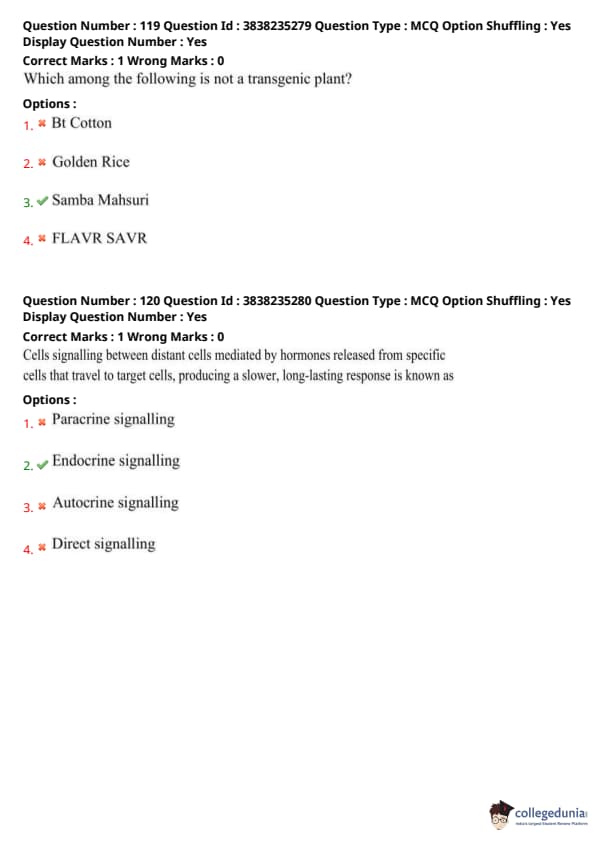
Question 118:
Which among the following is not a transgenic plant?
- (a) Bt Cotton
- (b) Golden Rice
- (c) Samba Mahsuri
- (d) FLAVR SAVR
Question 119:
Cells signalling between distant cells mediated by hormones released from specific cells that travel to target cells, producing a slower, long-lasting response is known as
- (a) Paracrine signalling
- (b) Endocrine signalling
- (c) Autocrine signalling
- (d) Direct signalling









Comments