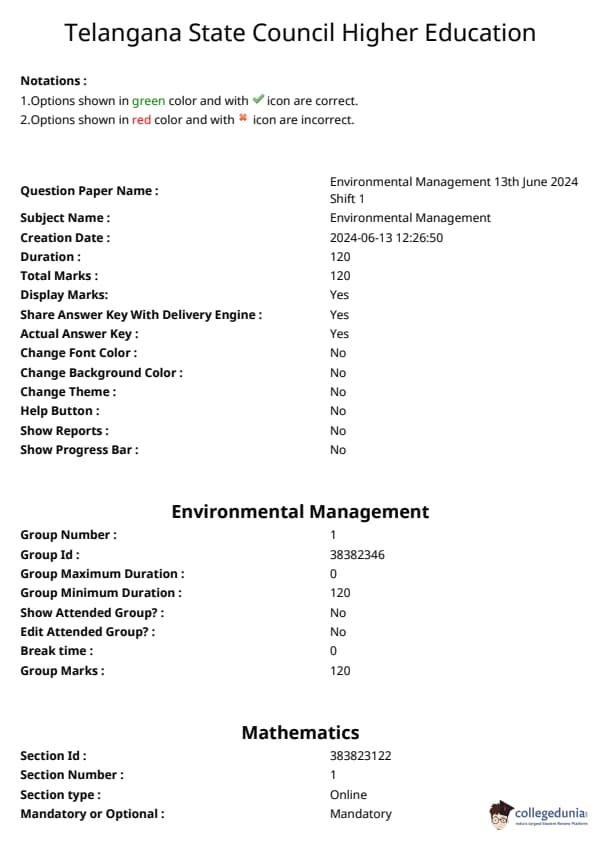
TS PGECET 2024 Environmental Management Question Paper is available for download here. Jawaharlal Nehru Technological University Hyderabad on behalf of Telangana Council of Higher Education (TGCHE) conducted TS PGECET 2024 Environmental Management on June 13 in Shift 1 from 10 AM to 12 PM. TS PGECET Question Paper 2024 consists of 120 MCQ-based questions in total carrying 1 mark each to be attempted in the duration of 2 hours.
TS PGECET 2024 Environmental Management Question Paper with Answer Key PDF
Question 1:
If \(l > 0, K < 0\) are roots of \(x^2 + x - 20 = 0\), the system of linear equations \(3x - y + 4z = 3\), \(x + 2y - 3z = -2\) and \(6x + 5y + Pz = -3\) has?
- (a) unique solution when \(P = K\)
- (b) infinite number of solutions when \(P = l\)
- (c) no solution when \(P = K + l\)
- (d) unique solution when \(P = l\)
Question 2:
The number of positive integral solutions of \(x+y+z = 12\), \(x \le y \le z\) is?
- (a) 55
- (b) 36
- (c) 11
- (d) 13
Question 3:
If the equations \(x^2+2x+K=0\) and \(x^2+Kx+2=0\) have one root in common, then the product of the other two roots is?
- (a) \(2K\)
- (b) \(12+K\)
- (c) \(K+1\)
- (d) \(3K\)
Question 4:
If for a progression, sum of the first \(n\) terms is \(2n^2+5n+6\) and \(T_n\) is the \(n^{th}\) term of the progression, then \(\sum_{k=1}^{10} T_{3k} = \)?
- (a) \(690\)
- (b) \(270\)
- (c) \(780\)
- (d) \(460\)
Question 5:
Let \(X\) be a discrete random variable with probability mass function \(P(X=x_i)\) where \(x \in \{x_1, x_2, \dots, x_n\}\). If \(\sum_{i=1}^{n} (x_i-2)^2 P(X=x_i) = 28\) and \(\sum_{i=1}^{n} (x_i+2)^2 P(X=x_i) = 12\). Then variance of \(X\) is?
- (a) \(20\)
- (b) \(12\)
- (c) \(8\)
- (d) \(40\)
Question 6:
If \(b_{yx}\) and \(b_{xy}\) are regression coefficients and they are equal, then?
- (a) correlation coefficient is one
- (b) variance of \(x\) and variance of \(y\) are equal
- (c) Mean of \(x\) and mean of \(y\) are equal
- (d) Standard deviation of \(x\) is greater than standard deviation of \(y\)
Question 7:
If the probability density function of a continuous random variable X is \(f(X=x) = Ke^{-3x}\), \(0 < x < \infty\), then a solution of \(\frac{P^2+1}{P} = \frac{K}{\sqrt{2}}\) is?
- (a) \(\frac{1}{\sqrt{2}}\)
- (b) \(\sqrt{3}\)
- (c) \(2\)
- (d) \(\frac{1}{\sqrt{3}}\)
Question 8:
For a bivariate data \((x_i, y_i)\) (\(i=1,2,3,\dots,10\)), \(\sum x_i y_i = 6200\), \(\sum x_i = 400\), \(\sum y_i = 1220\), \(\sum x_i^2 = 1800\), then equation of line of best fit is?
- (a) \(y = 0.2x+0.3\)
- (b) \(y = 3x+1\)
- (c) \(y = 2x+3\)
- (d) \(y = 3x+2\)
Question 9:
In large sample, the critical value for the single tailed test at 5% level of significance is?
- (a) \(2.58\)
- (b) \(1.96\)
- (c) \(1.642\) (Often 1.645)
- (d) \(1.28\)
Question 10:
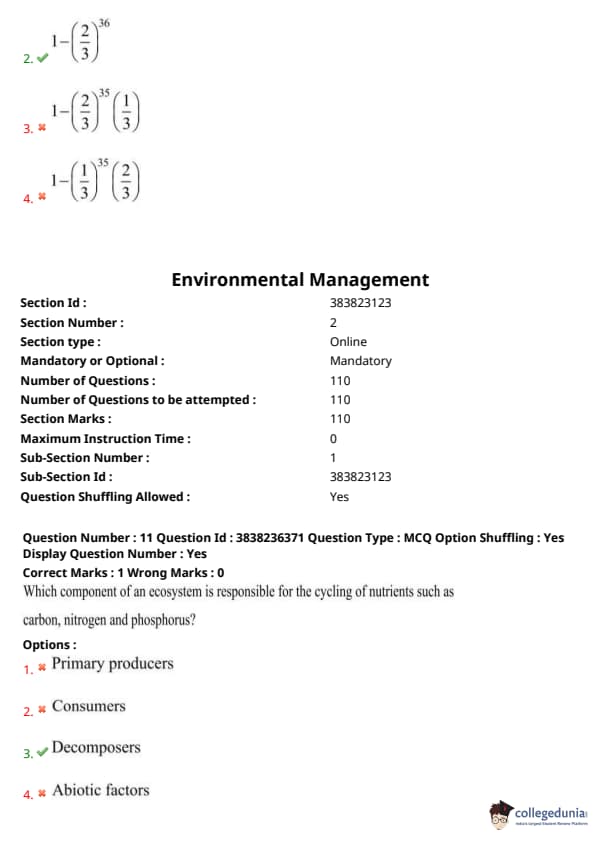
Mean of a binomial distribution 12 and variance is 8. The probability of having at least one success is?
- (a) \(1 - \left(\frac{1}{3}\right)^{36}\)
- (b) \(1 - \left(\frac{2}{3}\right)^{36}\)
- (c) \(1 - \left(\frac{2}{3}\right)^{35} \left(\frac{1}{3}\right)\)
- (d) \(1 - \left(\frac{1}{3}\right)^{35} \left(\frac{2}{3}\right)\)
Question 11:
Which component of an ecosystem is responsible for the cycling of nutrients such as carbon, nitrogen and phosphorus?
- (a) Primary producers
- (b) Consumers
- (c) Decomposers
- (d) Abiotic factors
Question 12:
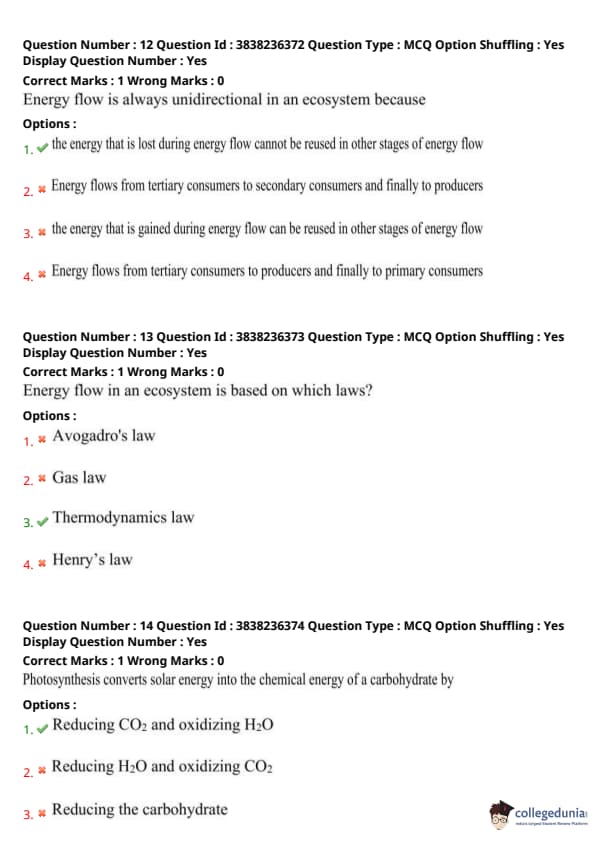
Energy flow is always unidirectional in an ecosystem because?
- (a) the energy that is lost during energy flow cannot be reused in other stages of energy flow
- (b) Energy flows from tertiary consumers to secondary consumers and finally to producers
- (c) the energy that is gained during energy flow can be reused in other stages of energy flow
- (d) Energy flows from tertiary consumers to producers and finally to primary consumers
Question 13:
Energy flow in an ecosystem is based on which laws?
- (a) Avogadro's law
- (b) Gas law
- (c) Thermodynamics law
- (d) Henry's law
Question 14:
Photosynthesis converts solar energy into the chemical energy of a carbohydrate by?
- (a) Reducing CO\(_2\) and oxidizing H\(_2\)O
- (b) Reducing H\(_2\)O and oxidizing CO\(_2\)
- (c) Reducing the carbohydrate
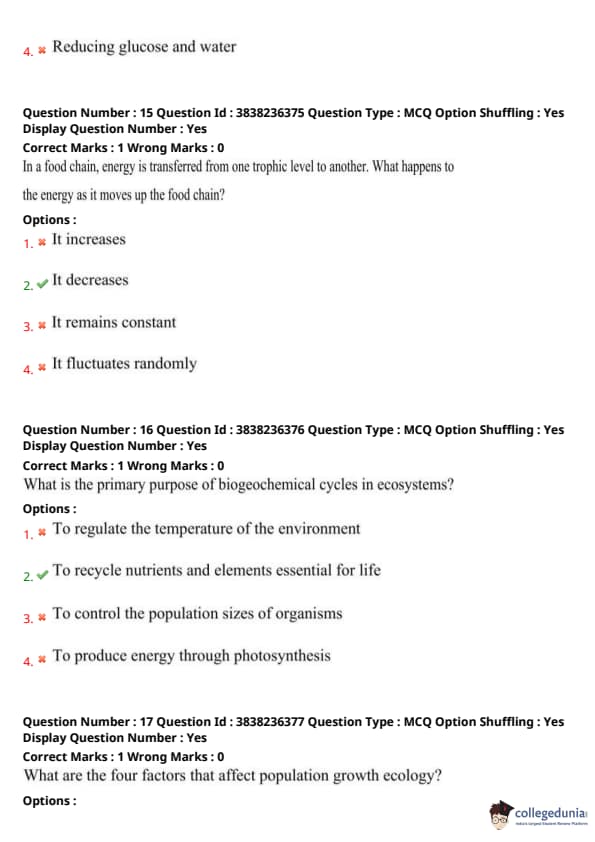
- (d) Reducing glucose and water
Question 15:
In a food chain, energy is transferred from one trophic level to another. What happens to the energy as it moves up the food chain?
- (a) It increases
- (b) It decreases
- (c) It remains constant
- (d) It fluctuates randomly
Question 16:
What is the primary purpose of biogeochemical cycles in ecosystems?
- (a) To regulate the temperature of the environment
- (b) To recycle nutrients and elements essential for life
- (c) To control the population sizes of organisms
- (d) To produce energy through photosynthesis
Question 17:
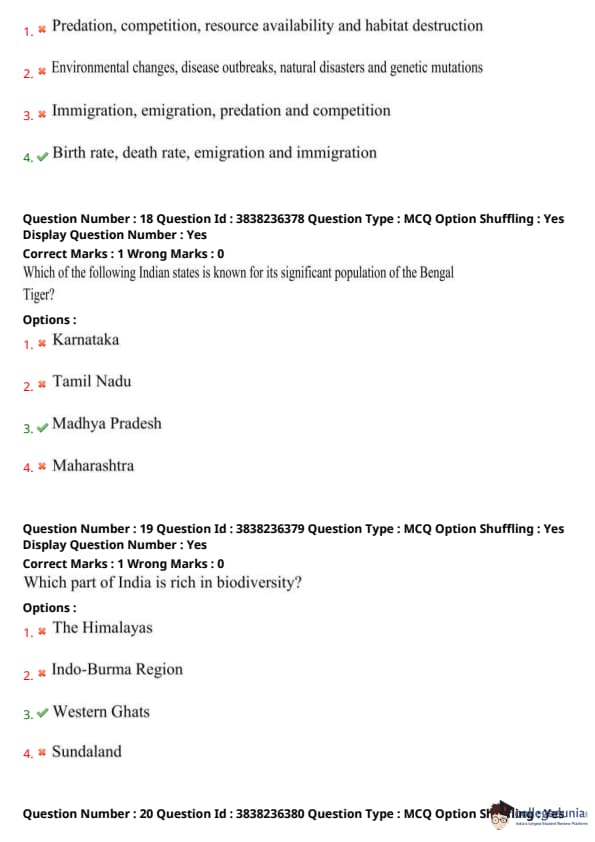
What are the four factors that affect population growth ecology?
- (a) Predation, competition, resource availability and habitat destruction
- (b) Environmental changes, disease outbreaks, natural disasters and genetic mutations
- (c) Immigration, emigration, predation and competition
- (d) Birth rate, death rate, emigration and immigration
Question 18:
Which of the following Indian states is known for its significant population of the Bengal Tiger?
- (a) Karnataka
- (b) Tamil Nadu
- (c) Madhya Pradesh
- (d) Maharashtra
Question 19:
Which part of India is rich in biodiversity?
- (a) The Himalayas
- (b) Indo-Burma Region
- (c) Western Ghats
- (d) Sundaland
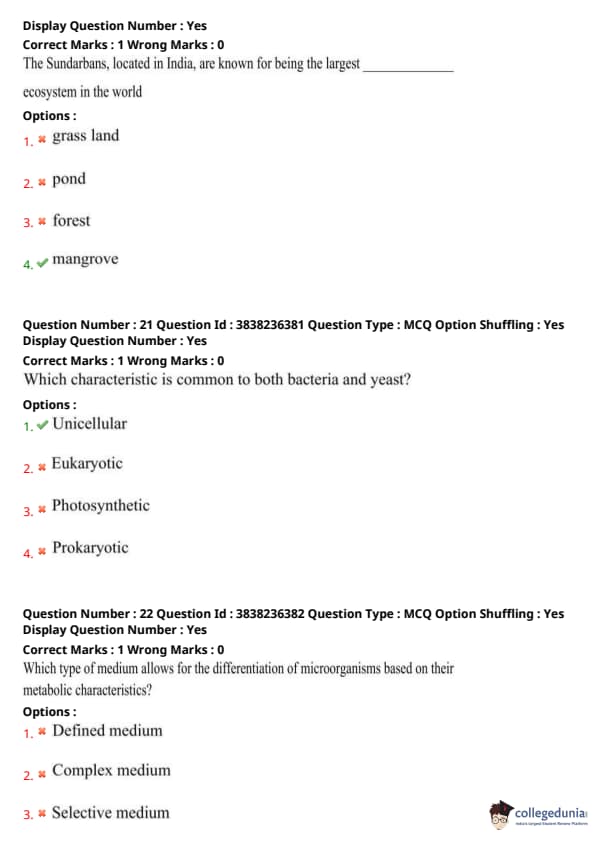
Question 20:
The Sundarbans, located in India, are known for being the largest _________________ ecosystem in the world.
- (a) grass land
- (b) pond
- (c) forest
- (d) mangrove
Question 21:
Which characteristic is common to both bacteria and yeast?
- (a) Unicellular
- (b) Eukaryotic
- (c) Photosynthetic
- (d) Prokaryotic
Question 22:
Which type of medium allows for the differentiation of microorganisms based on their metabolic characteristics?
- (a) Defined medium
- (b) Complex medium
- (c) Selective medium
- (d) Differential medium
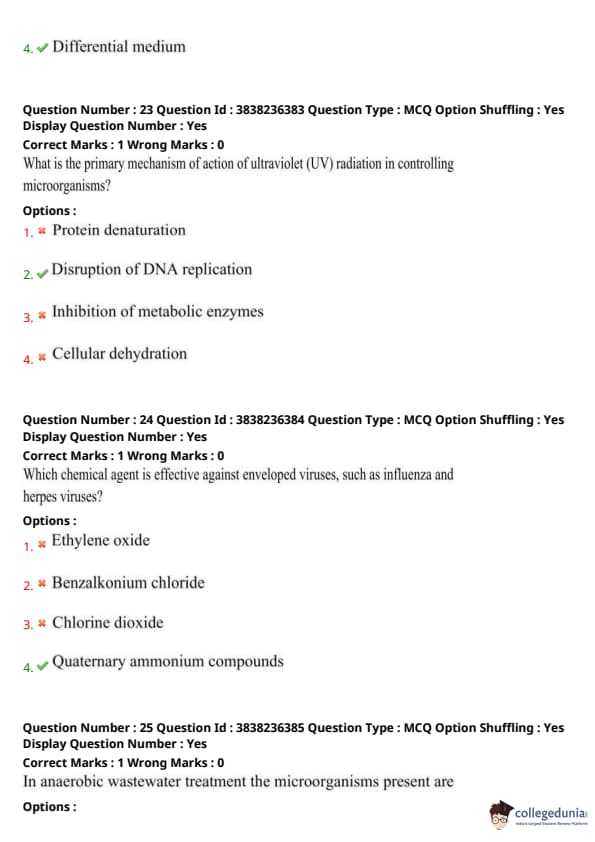
Question 23:
What is the primary mechanism of action of ultraviolet (UV) radiation in controlling microorganisms?
- (a) Protein denaturation
- (b) Disruption of DNA replication
- (c) Inhibition of metabolic enzymes
- (d) Cellular dehydration
Question 24:
Which chemical agent is effective against enveloped viruses, such as influenza and herpes viruses?
- (a) Ethylene oxide
- (b) Benzalkonium chloride
- (c) Chlorine dioxide
- (d) Quaternary ammonium compounds
Question 25:
In anaerobic wastewater treatment the microorganisms present are?
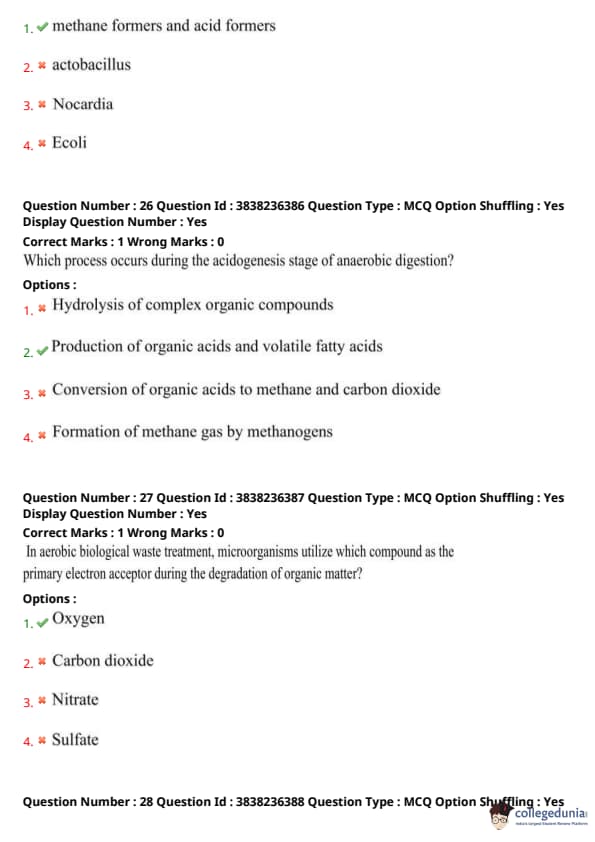
- (a) methane formers and acid formers
- (b) actobacillus
- (c) Nocardia
- (d) Ecoli
Question 26:
Which process occurs during the acidogenesis stage of anaerobic digestion?
- (a) Hydrolysis of complex organic compounds
- (b) Production of organic acids and volatile fatty acids
- (c) Conversion of organic acids to methane and carbon dioxide
- (d) Formation of methane gas by methanogens
Question 27:
In aerobic biological waste treatment, microorganisms utilize which compound as the primary electron acceptor during the degradation of organic matter?
- (a) Oxygen
- (b) Carbon dioxide
- (c) Nitrate
- (d) Sulfate
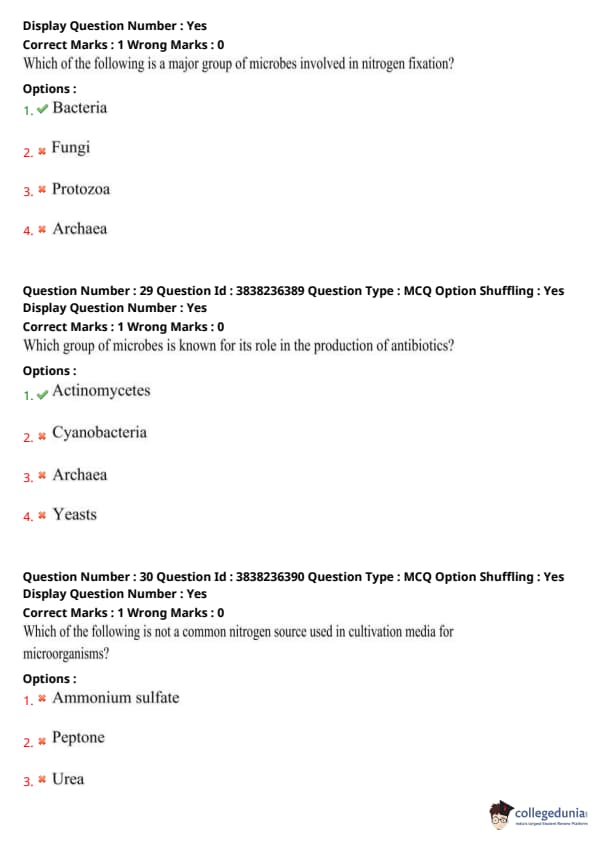
Question 28:
Which of the following is a major group of microbes involved in nitrogen fixation?
- (a) Bacteria
- (b) Fungi
- (c) Protozoa
- (d) Archaea
Question 29:
Which group of microbes is known for its role in the production of antibiotics?
- (a) Actinomycetes
- (b) Cyanobacteria
- (c) Archaea
- (d) Yeasts
Question 30:
Which of the following is not a common nitrogen source used in cultivation media for microorganisms?
- (a) Ammonium sulfate
- (b) Peptone
- (c) Urea
- (d) Glucose
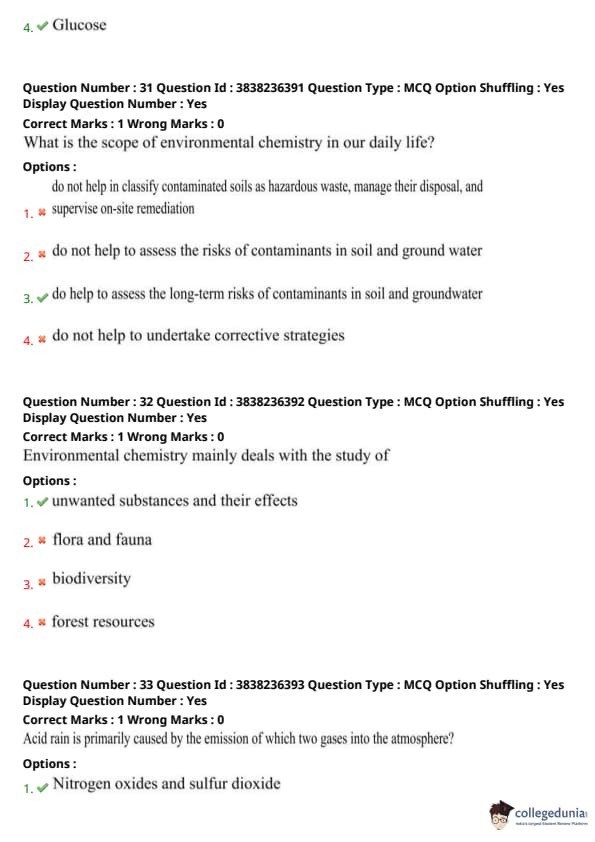
Question 31:
What is the scope of environmental chemistry in our daily life?
- (a) do not help in classify contaminated soils as hazardous waste, manage their disposal, and supervise on-site remediation
- (b) do not help to assess the risks of contaminants in soil and ground water
- (c) do help to assess the long-term risks of contaminants in soil and groundwater
- (d) do not help to undertake corrective strategies
Question 32:
Environmental chemistry mainly deals with the study of
- (a) unwanted substances and their effects
- (b) flora and fauna
- (c) biodiversity
- (d) forest resources
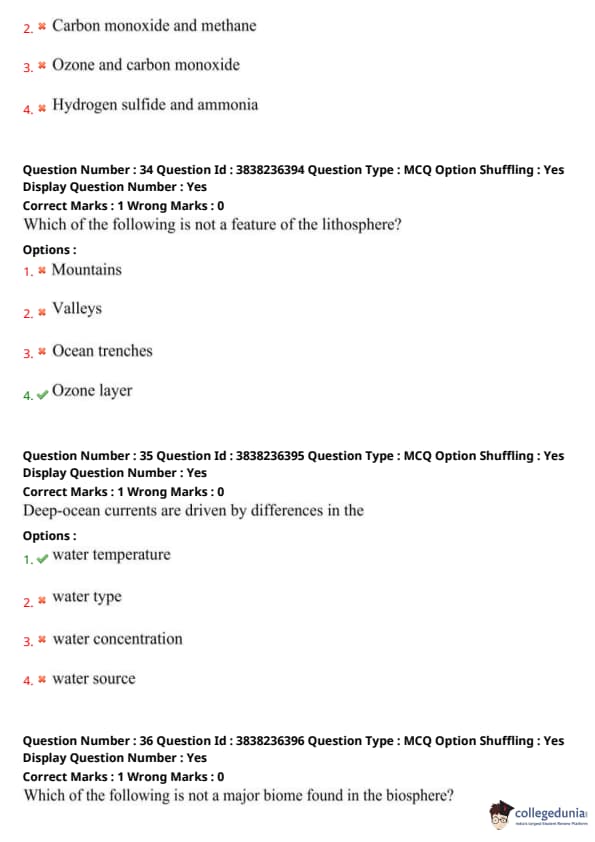
Question 33:
Acid rain is primarily caused by the emission of which two gases into the atmosphere?
- (a) Nitrogen oxides and sulfur dioxide
- (b) Carbon monoxide and methane
- (c) Ozone and carbon monoxide
- (d) Hydrogen sulfide and ammonia
Question 34:
Which of the following is not a feature of the lithosphere?
- (a) Mountains
- (b) Valleys
- (c) Ocean trenches
- (d) Ozone layer
Question 35:
Deep-ocean currents are driven by differences in the
- (a) water temperature
- (b) water type
- (c) water concentration
- (d) water source
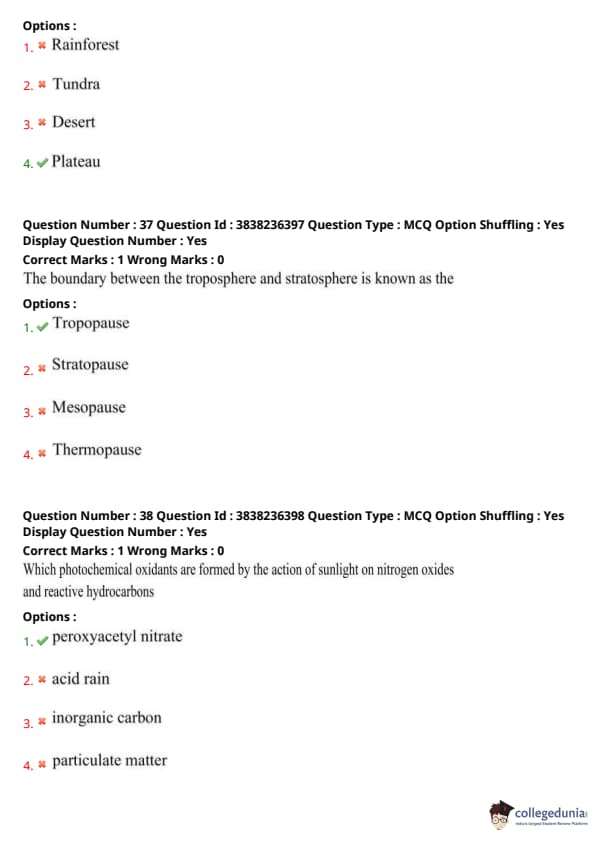
Question 36:
Which of the following is not a major biome found in the biosphere?
- (a) Rainforest
- (b) Tundra
- (c) Desert
- (d) Plateau
Question 37:
The boundary between the troposphere and stratosphere is known as the
- (a) Tropopause
- (b) Stratopause
- (c) Mesopause
- (d) Thermopause
Question 38:
Which photochemical oxidants are formed by the action of sunlight on nitrogen oxides and reactive hydrocarbons?
- (a) peroxyacetyl nitrate
- (b) acid rain
- (c) inorganic carbon
- (d) particulate matter
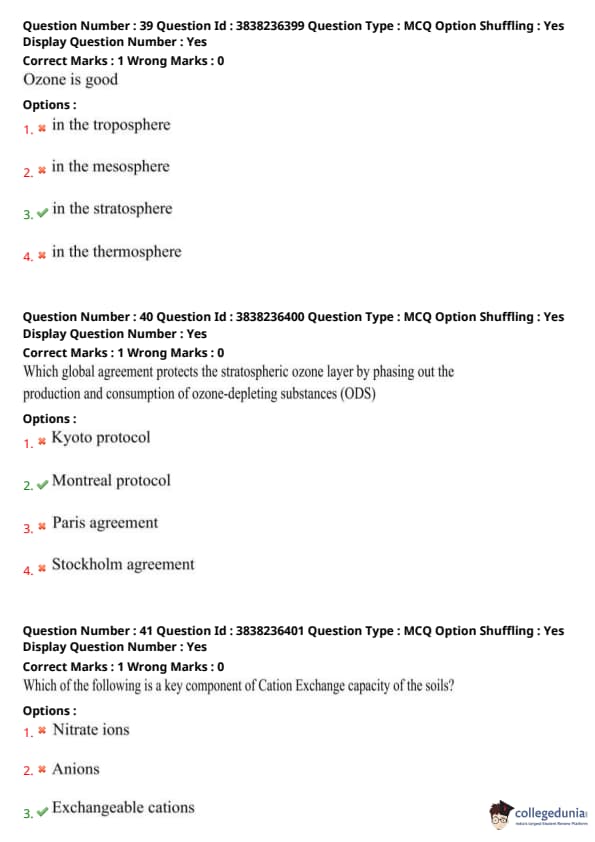
Question 39:
Ozone is good
- (a) in the troposphere
- (b) in the mesosphere
- (c) in the stratosphere
- (d) in the thermosphere
Question 40:
Which global agreement protects the stratospheric ozone layer by phasing out the production and consumption of ozone-depleting substances (ODS)?
- (a) Kyoto protocol
- (b) Montreal protocol
- (c) Paris agreement
- (d) Stockholm agreement
Question 41:
Which of the following is a key component of Cation Exchange Capacity of the soils?
- (a) Nitrate ions
- (b) Anions
- (c) Exchangeable cations
- (d) Soil water content
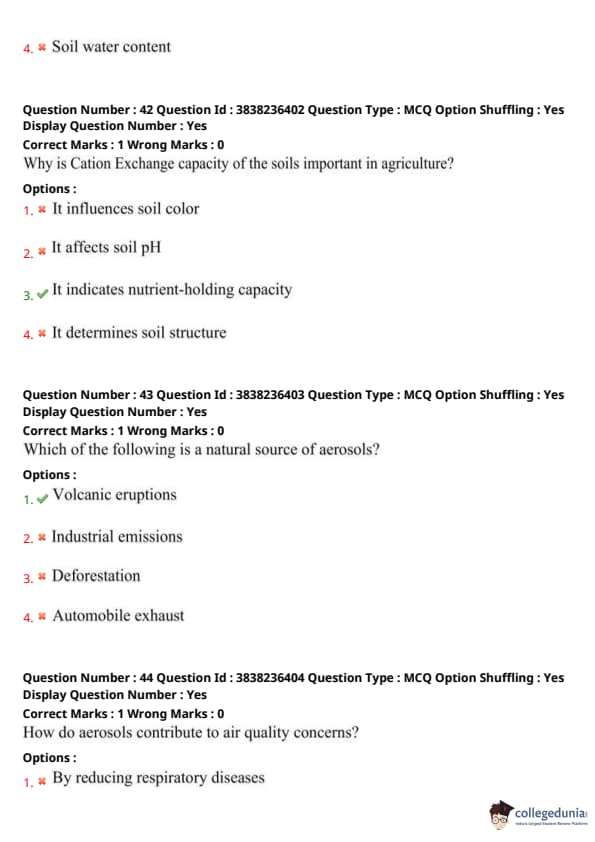
Question 42:
Why is Cation Exchange Capacity of the soils important in agriculture?
- (a) It influences soil color
- (b) It affects soil pH
- (c) It indicates nutrient-holding capacity
- (d) It determines soil structure
Question 43:
Which of the following is a natural source of aerosols?
- (a) Volcanic eruptions
- (b) Industrial emissions
- (c) Deforestation
- (d) Automobile exhaust
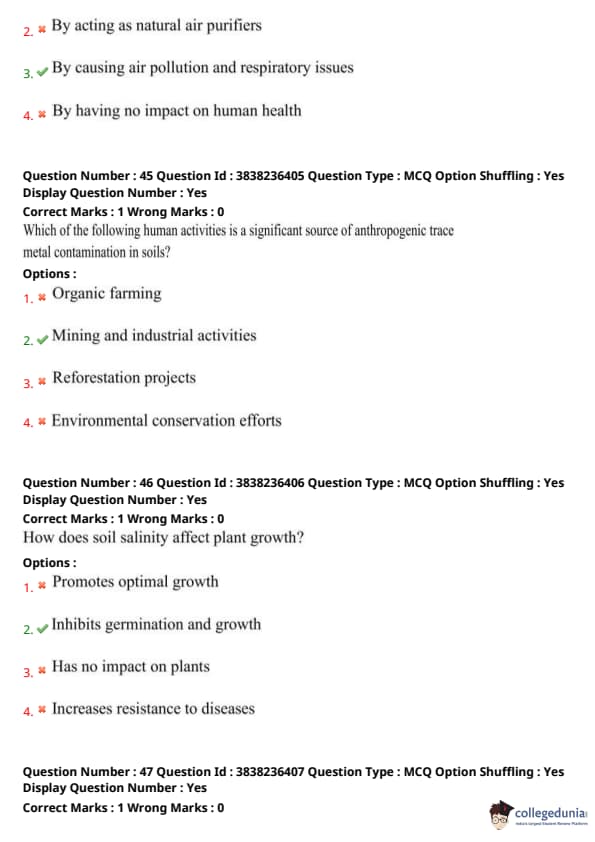
Question 44:
How do aerosols contribute to air quality concerns?
- (a) By reducing respiratory diseases
- (b) By acting as natural air purifiers
- (c) By causing air pollution and respiratory issues
- (d) By having no impact on human health
Question 45:
Which of the following human activities is a significant source of anthropogenic trace metal contamination in soils?
- (a) Organic farming
- (b) Mining and industrial activities
- (c) Reforestation projects
- (d) Environmental conservation efforts
Question 46:
How does soil salinity affect plant growth?
- (a) Promotes optimal growth
- (b) Inhibits germination and growth
- (c) Has no impact on plants
- (d) Increases resistance to diseases
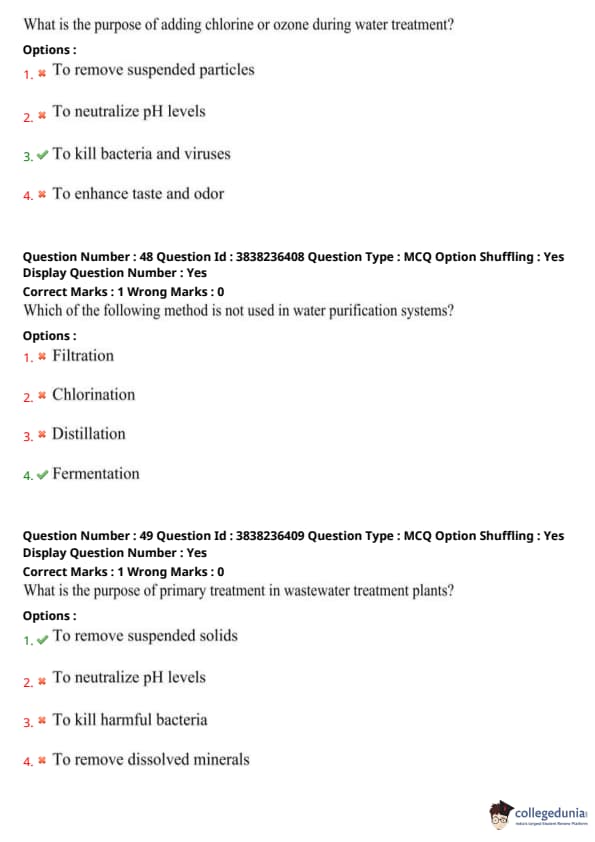
Question 47:
What is the purpose of adding chlorine or ozone during water treatment?
- (a) To remove suspended particles
- (b) To neutralize pH levels
- (c) To kill bacteria and viruses
- (d) To enhance taste and odor
Question 48:
Which of the following method is not used in water purification systems?
- (a) Filtration
- (b) Chlorination
- (c) Distillation
- (d) Fermentation
Question 49:
What is the purpose of primary treatment in wastewater treatment plants?
- (a) To remove suspended solids
- (b) To neutralize pH levels
- (c) To kill harmful bacteria
- (d) To remove dissolved minerals
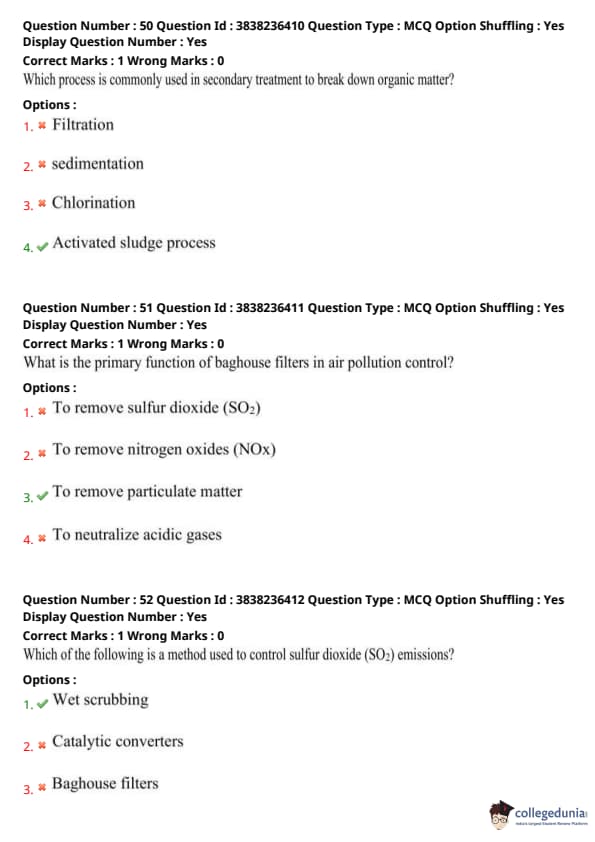
Question 50:
Which process is commonly used in secondary treatment to break down organic matter?
- (a) Filtration
- (b) sedimentation
- (c) Chlorination
- (d) Activated sludge process
Question 51:
What is the primary function of baghouse filters in air pollution control?
- (a) To remove sulfur dioxide (SO\(_2\))
- (b) To remove nitrogen oxides (NOx)
- (c) To remove particulate matter
- (d) To neutralize acidic gases
Question 52:
Which of the following is a method used to control sulfur dioxide (SO\(_2\)) emissions?
- (a) Wet scrubbing
- (b) Catalytic converters
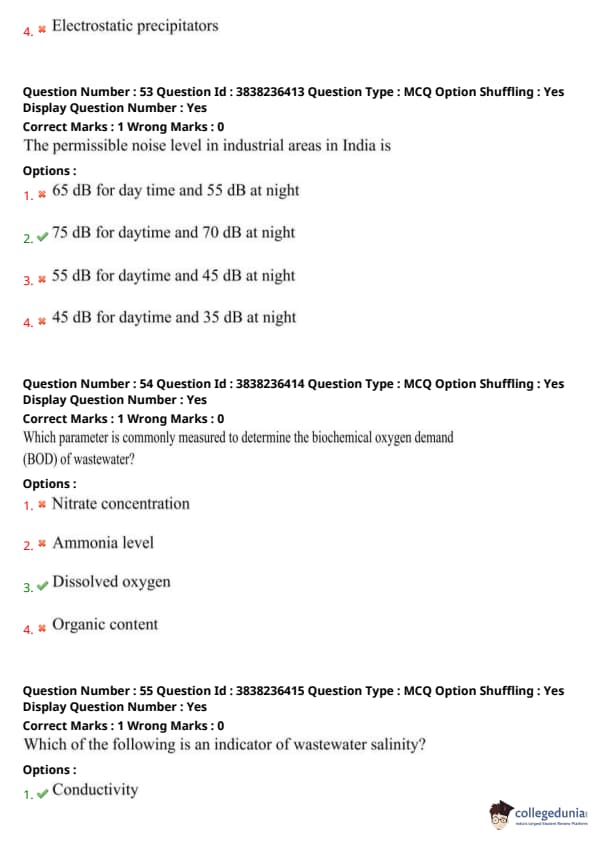
- (c) Baghouse filters
- (d) Electrostatic precipitators
Question 53:
The permissible noise level in industrial areas in India is
- (a) 65 dB for day time and 55 dB at night
- (b) 75 dB for daytime and 70 dB at night
- (c) 55 dB for daytime and 45 dB at night
- (d) 45 dB for daytime and 35 dB at night
Question 54:
Which parameter is commonly measured to determine the biochemical oxygen demand (BOD) of wastewater?
- (a) Nitrate concentration
- (b) Ammonia level
- (c) Dissolved oxygen
- (d) Organic content
Question 55:
Which of the following is an indicator of wastewater salinity?
- (a) Conductivity
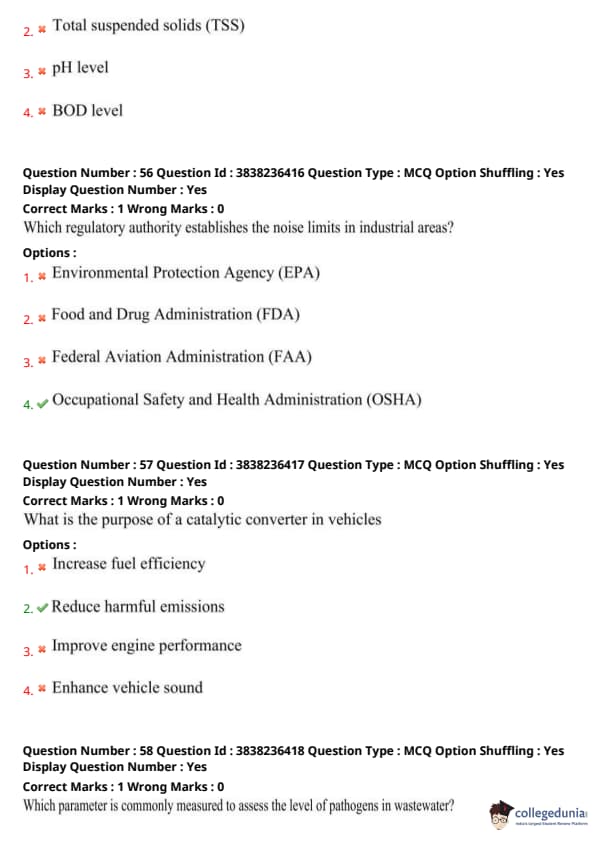
- (b) Total suspended solids (TSS)
- (c) pH level
- (d) BOD level
Question 56:
Which regulatory authority establishes the noise limits in industrial areas?
- (a) Environmental Protection Agency (EPA)
- (b) Food and Drug Administration (FDA)
- (c) Federal Aviation Administration (FAA)
- (d) Occupational Safety and Health Administration (OSHA)
Question 57:
What is the purpose of a catalytic converter in vehicles?
- (a) Increase fuel efficiency
- (b) Reduce harmful emissions
- (c) Improve engine performance
- (d) Enhance vehicle sound
Question 58:
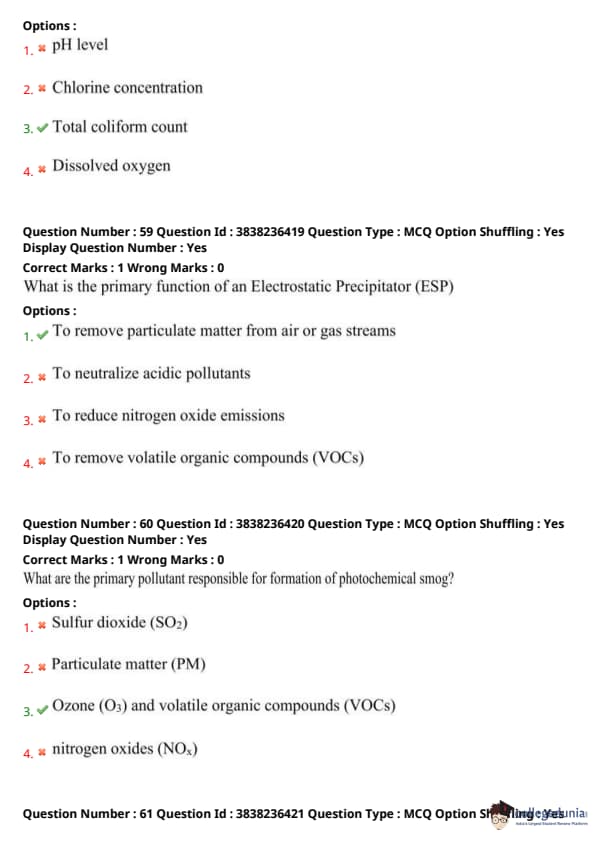
Which parameter is commonly measured to assess the level of pathogens in wastewater?
- (a) pH level
- (b) Chlorine concentration
- (c) Total coliform count
- (d) Dissolved oxygen
Question 59:
What is the primary function of an Electrostatic Precipitator (ESP)?
- (a) To remove particulate matter from air or gas streams
- (b) To neutralize acidic pollutants
- (c) To reduce nitrogen oxide emissions
- (d) To remove volatile organic compounds (VOCs)
Question 60:
What are the primary pollutant responsible for formation of photochemical smog?
- (a) Sulfur dioxide (SO\(_2\))
- (b) Particulate matter (PM)
- (c) Ozone (O\(_3\)) and volatile organic compounds (VOCs)
- (d) nitrogen oxides (NO\(_x\))
Question 61:
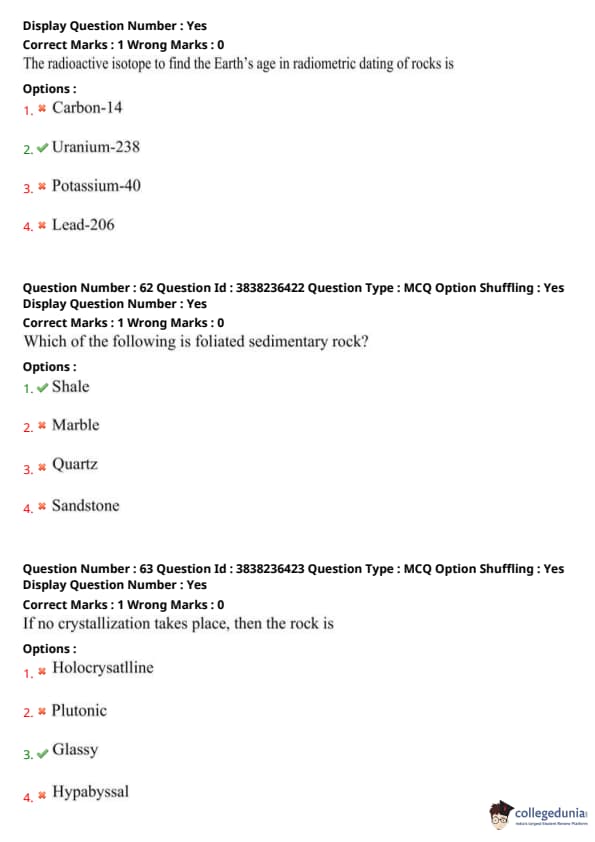
The radioactive isotope to find the Earth's age in radiometric dating of rocks is
- (a) Carbon-14
- (b) Uranium-238
- (c) Potassium-40
- (d) Lead-206
Question 62:
Which of the following is foliated sedimentary rock?
- (a) Shale
- (b) Marble
- (c) Quartz
- (d) Sandstone
Question 63:
If no crystallization takes place, then the rock is
- (a) Holocrystalline
- (b) Plutonic
- (c) Glassy
- (d) Hypabyssal
Question 64:
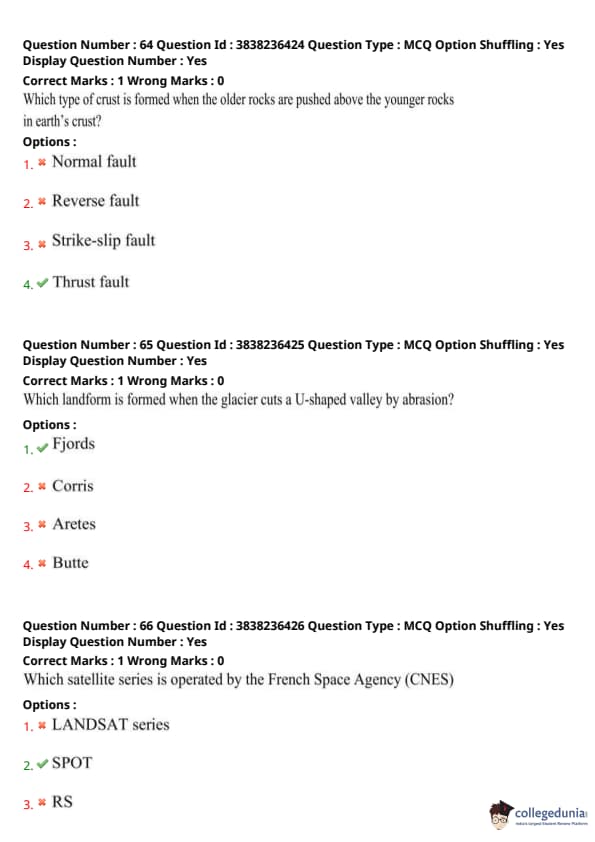
Which type of crust is formed when the older rocks are pushed above the younger rocks in earth's crust?
- (a) Normal fault
- (b) Reverse fault
- (c) Strike-slip fault
- (d) Thrust fault
Question 65:
Which landform is formed when the glacier cuts a U-shaped valley by abrasion?
- (a) Fjords
- (b) Corris
- (c) Aretes
- (d) Butte
Question 66:
Which satellite series is operated by the French Space Agency (CNES)?
- (a) LANDSAT series
- (b) SPOT
- (c) RS
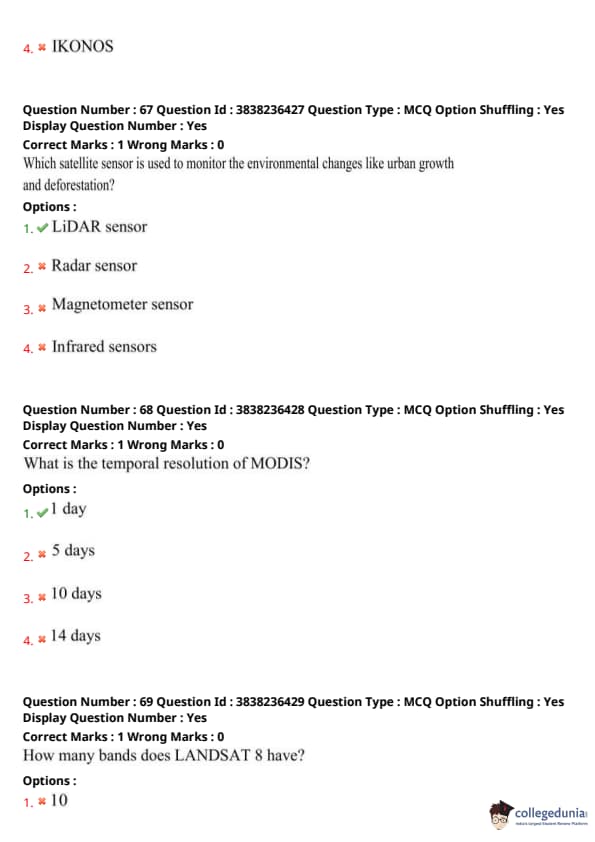
- (d) IKONOS
Question 67:
Which satellite sensor is used to monitor the environmental changes like urban growth and deforestation?
- (a) LiDAR sensor
- (b) Radar sensor
- (c) Magnetometer sensor
- (d) Infrared sensors
Question 68:
What is the temporal resolution of MODIS?
- (a) 1 day
- (b) 5 days
- (c) 10 days
- (d) 14 days
Question 69:
How many bands does LANDSAT 8 have?
- (a) 10
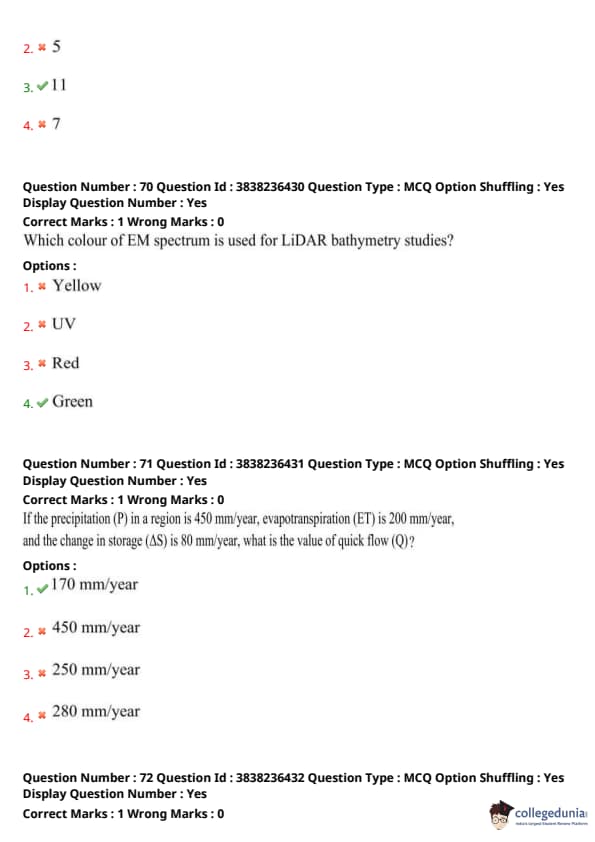
- (b) 5
- (c) 11
- (d) 7
Question 70:
Which colour of EM spectrum is used for LiDAR bathymetry studies?
- (a) Yellow
- (b) UV
- (c) Red
- (d) Green
Question 71:
If the precipitation (P) in a region is 450 mm/year, evapotranspiration (ET) is 200 mm/year, and the change in storage (\(\Delta\)S) is 80 mm/year, what is the value of quick flow (Q)?
- (a) 170 mm/year
- (b) 450 mm/year
- (c) 250 mm/year
- (d) 280 mm/year
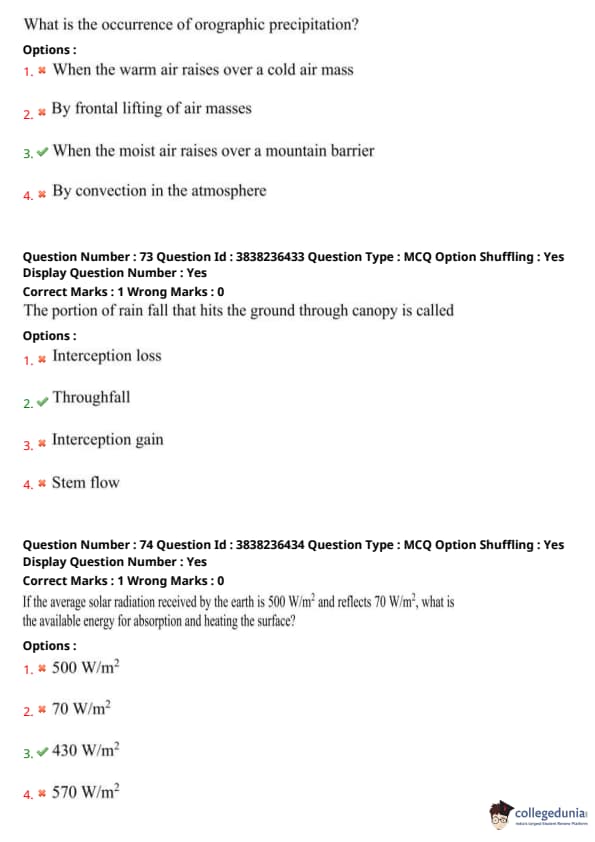
Question 72:
What is the occurrence of orographic precipitation?
- (a) When the warm air raises over a cold air mass
- (b) By frontal lifting of air masses
- (c) When the moist air raises over a mountain barrier
- (d) By convection in the atmosphere
Question 73:
The portion of rain fall that hits the ground through canopy is called
- (a) Interception loss
- (b) Throughfall
- (c) Interception gain
- (d) Stem flow
Question 74:
If the average solar radiation received by the earth is 500 W/m\(^2\) and reflects 70 W/m\(^2\), what is the available energy for absorption and heating the surface?
- (a) 500 W/m\(^2\)
- (b) 70 W/m\(^2\)
- (c) 430 W/m\(^2\)
- (d) 570 W/m\(^2\)
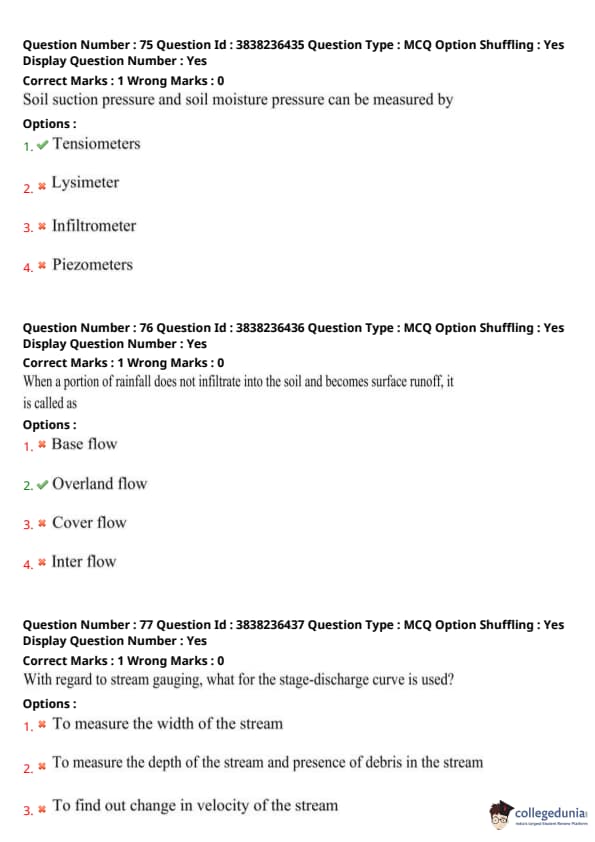
Question 75:
Soil suction pressure and soil moisture pressure can be measured by
- (a) Tensiometers
- (b) Lysimeter
- (c) Infiltrometer
- (d) Piezometers
Question 76:
When a portion of rainfall does not infiltrate into the soil and becomes surface runoff, it is called as
- (a) Base flow
- (b) Overland flow
- (c) Cover flow
- (d) Inter flow
Question 77:
With regard to stream gauging, what for the stage-discharge curve is used?
- (a) To measure the width of the stream
- (b) To measure the depth of the stream and presence of debris in the stream
- (c) To find out change in velocity of the stream
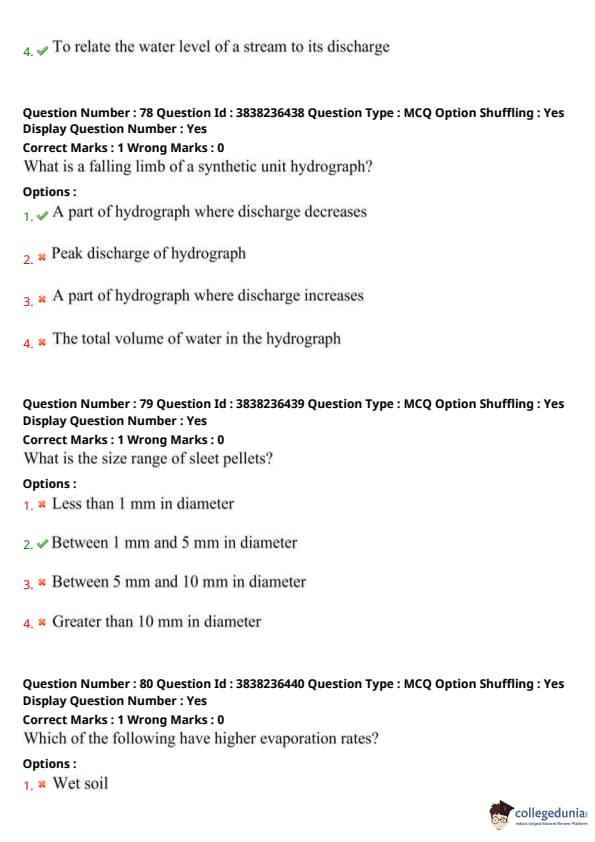
- (d) To relate the water level of a stream to its discharge
Question 78:
What is a falling limb of a synthetic unit hydrograph?
- (a) A part of hydrograph where discharge decreases
- (b) Peak discharge of hydrograph
- (c) A part of hydrograph where discharge increases
- (d) The total volume of water in the hydrograph
Question 79:
What is the size range of sleet pellets?
- (a) Less than 1 mm in diameter
- (b) Between 1 mm and 5 mm in diameter
- (c) Between 5 mm and 10 mm in diameter
- (d) Greater than 10 mm in diameter
Question 80:
Which of the following have higher evaporation rates?
- (a) Wet soil
- (b) Dry soil
- (c) Grassland
- (d) Concrete pavement
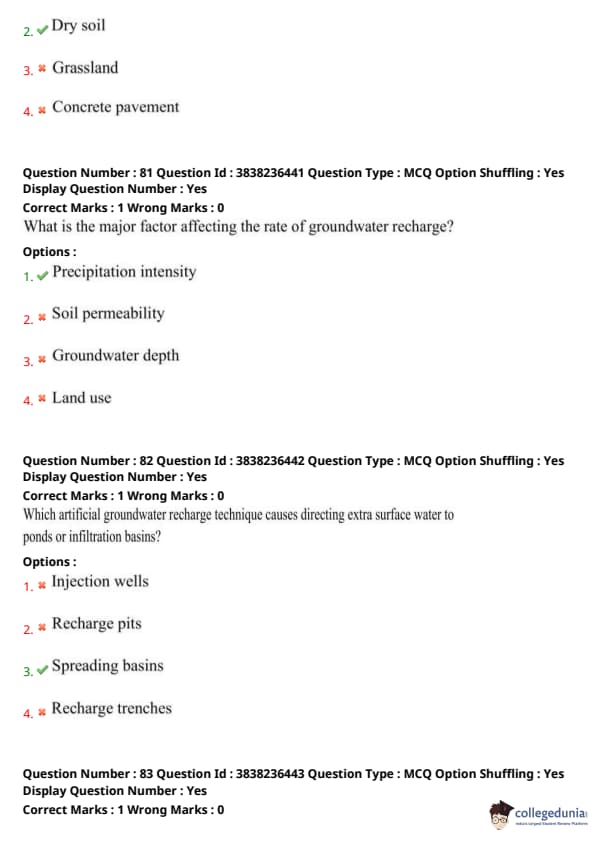
Question 81:
What is the major factor affecting the rate of groundwater recharge?
- (a) Precipitation intensity
- (b) Soil permeability
- (c) Groundwater depth
- (d) Land use
Question 82:
Which artificial groundwater recharge technique causes directing extra surface water to ponds or infiltration basins?
- (a) Injection wells
- (b) Recharge pits
- (c) Spreading basins
- (d) Recharge trenches
Question 83:
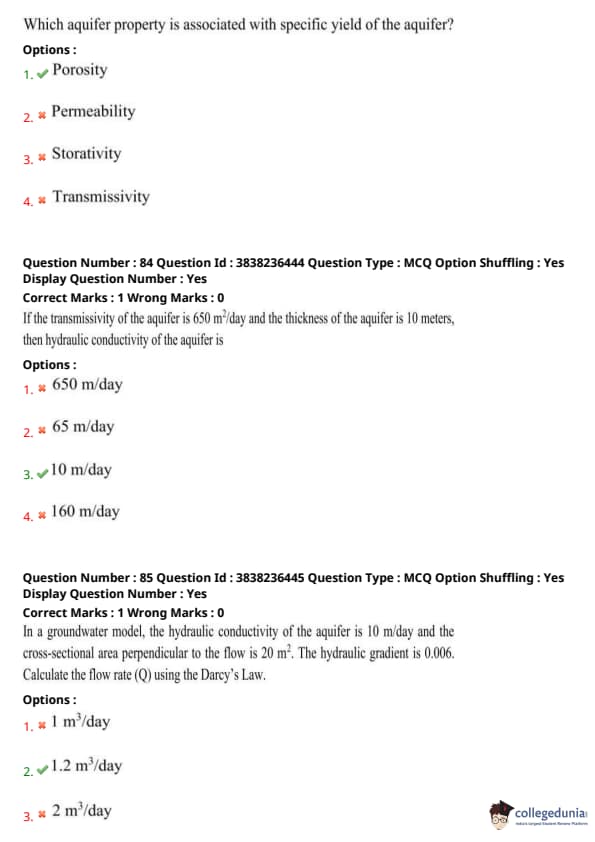
Which aquifer property is associated with specific yield of the aquifer?
- (a) Porosity
- (b) Permeability
- (c) Storativity
- (d) Transmissivity
Question 84:
If the transmissivity of the aquifer is 650 m\(^2\)/day and the thickness of the aquifer is 10 meters, then hydraulic conductivity of the aquifer is
- (a) 650 m/day
- (b) 65 m/day
- (c) 10 m/day
- (d) 160 m/day
Question 85:
In a groundwater model, the hydraulic conductivity of the aquifer is 10 m/day and the cross-sectional area perpendicular to the flow is 20 m\(^2\). The hydraulic gradient is 0.006. Calculate the flow rate (Q) using the Darcy's Law.
- (a) 1 m\(^3\)/day
- (b) 1.2 m\(^3\)/day
- (c) 2 m\(^3\)/day
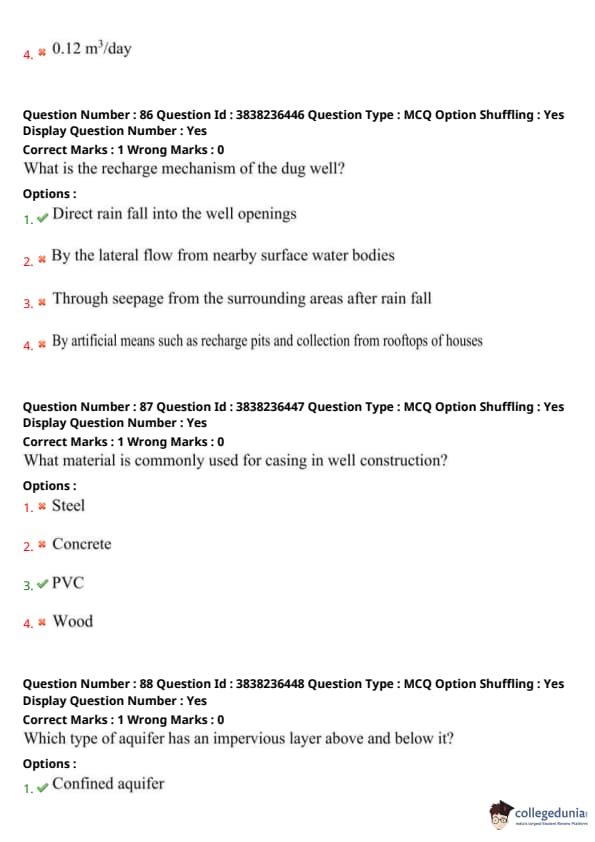
- (d) 0.12 m\(^3\)/day
Question 86:
What is the recharge mechanism of the dug well?
- (a) Direct rain fall into the well openings
- (b) By the lateral flow from nearby surface water bodies
- (c) Through seepage from the surrounding areas after rain fall
- (d) By artificial means such as recharge pits and collection from rooftops of houses
Question 87:
What material is commonly used for casing in well construction?
- (a) Steel
- (b) Concrete
- (c) PVC
- (d) Wood
Question 88:
Which type of aquifer has an impervious layer above and below it?
- (a) Confined aquifer
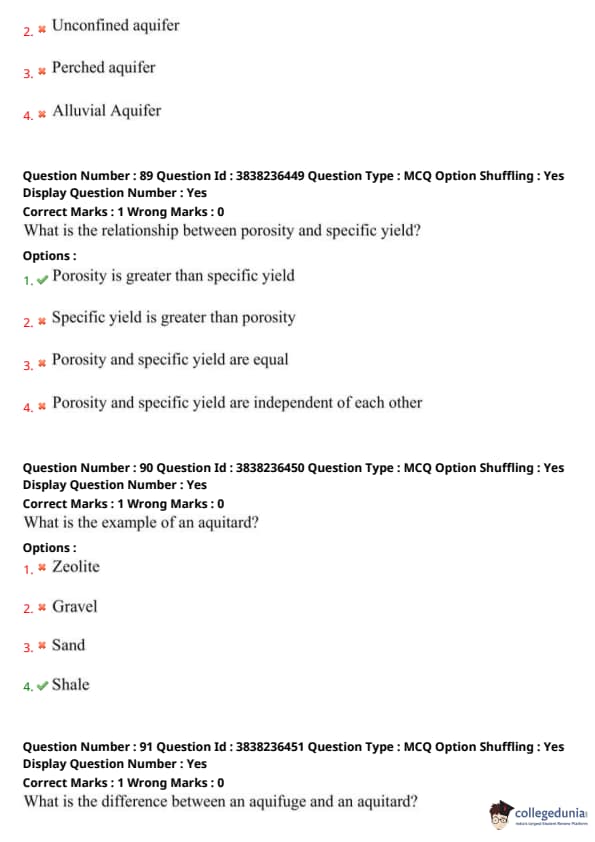
- (b) Unconfined aquifer
- (c) Perched aquifer
- (d) Alluvial Aquifer
Question 89:
What is the relationship between porosity and specific yield?
- (a) Porosity is greater than specific yield
- (b) Specific yield is greater than porosity
- (c) Porosity and specific yield are equal
- (d) Porosity and specific yield are independent of each other
Question 90:
What is the example of an aquitard?
- (a) Zeolite
- (b) Gravel
- (c) Sand
- (d) Shale
Question 91:
What is the difference between an aquifuge and an aquitard?
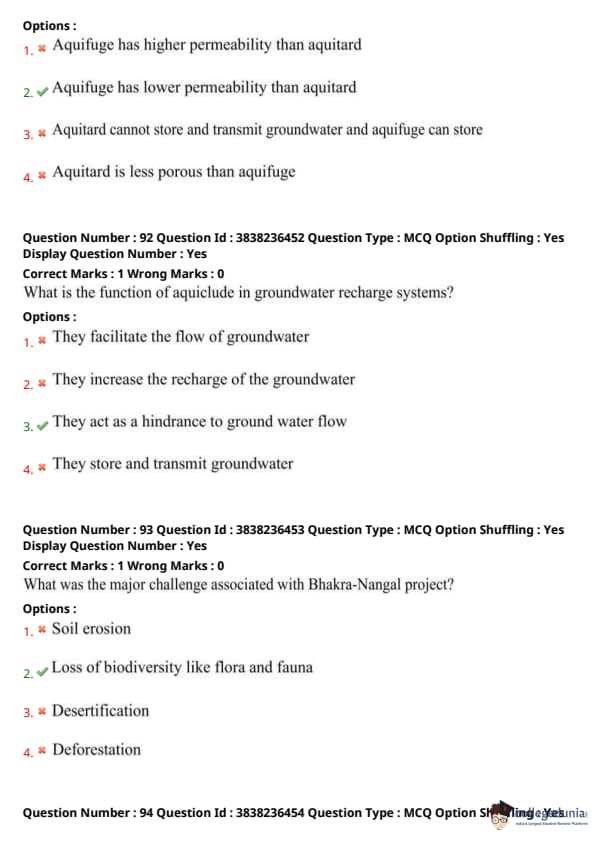
- (a) Aquifuge has higher permeability than aquitard
- (b) Aquifuge has lower permeability than aquitard
- (c) Aquitard cannot store and transmit groundwater and aquifuge can store
- (d) Aquitard is less porous than aquifuge
Question 92:
What is the function of aquiclude in groundwater recharge systems?
- (a) They facilitate the flow of groundwater
- (b) They increase the recharge of the groundwater
- (c) They act as a hindrance to ground water flow
- (d) They store and transmit groundwater
Question 93:
What was the major challenge associated with Bhakra-Nangal project?
- (a) Soil erosion
- (b) Loss of biodiversity like flora and fauna
- (c) Desertification
- (d) Deforestation
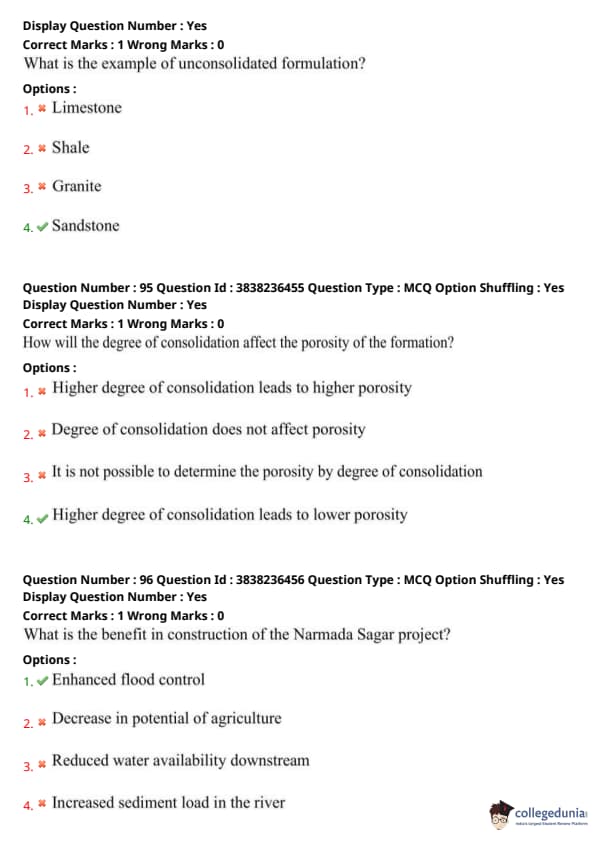
Question 94:
What is the example of unconsolidated formulation?
- (a) Limestone
- (b) Shale
- (c) Granite
- (d) Sandstone
Question 95:
How will the degree of consolidation affect the porosity of the formation?
- (a) Higher degree of consolidation leads to higher porosity
- (b) Degree of consolidation does not affect porosity
- (c) It is not possible to determine the porosity by degree of consolidation
- (d) Higher degree of consolidation leads to lower porosity
Question 96:
What is the benefit in construction of the Narmada Sagar project?
- (a) Enhanced flood control
- (b) Decrease in potential of agriculture
- (c) Reduced water availability downstream
- (d) Increased sediment load in the river
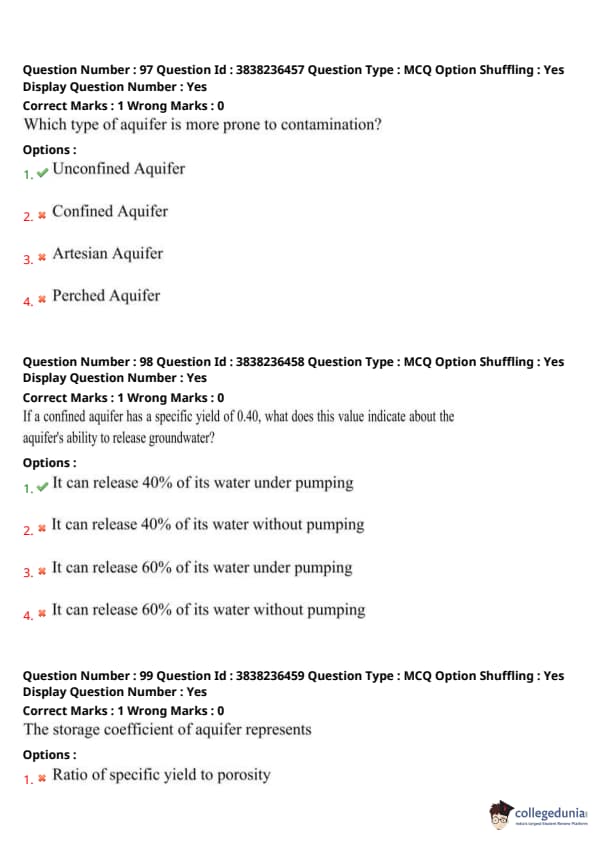
Question 97:
Which type of aquifer is more prone to contamination?
- (a) Unconfined Aquifer
- (b) Confined Aquifer
- (c) Artesian Aquifer
- (d) Perched Aquifer
Question 98:
If a confined aquifer has a specific yield of 0.40, what does this value indicate about the aquifer's ability to release groundwater?
- (a) It can release 40% of its water under pumping
- (b) It can release 40% of its water without pumping
- (c) It can release 60% of its water under pumping
- (d) It can release 60% of its water without pumping
Question 99:
The storage coefficient of aquifer represents
- (a) Ratio of specific yield to porosity
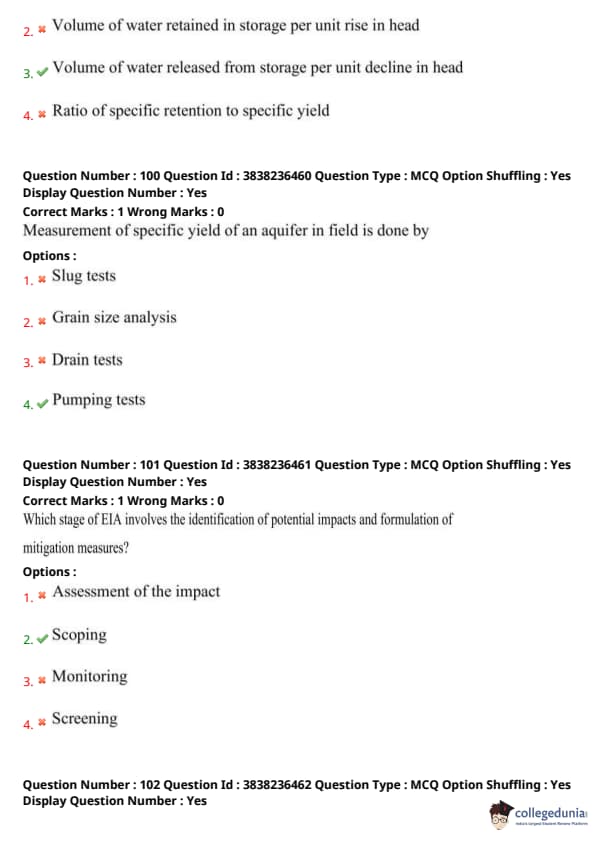
- (b) Volume of water retained in storage per unit rise in head
- (c) Volume of water released from storage per unit decline in head
- (d) Ratio of specific retention to specific yield
Question 100:
Measurement of specific yield of an aquifer in field is done by
- (a) Slug tests
- (b) Grain size analysis
- (c) Drain tests
- (d) Pumping tests
Question 101:
Which stage of EIA involves the identification of potential impacts and formulation of mitigation measures?
- (a) Assessment of the impact
- (b) Scoping
- (c) Monitoring
- (d) Screening
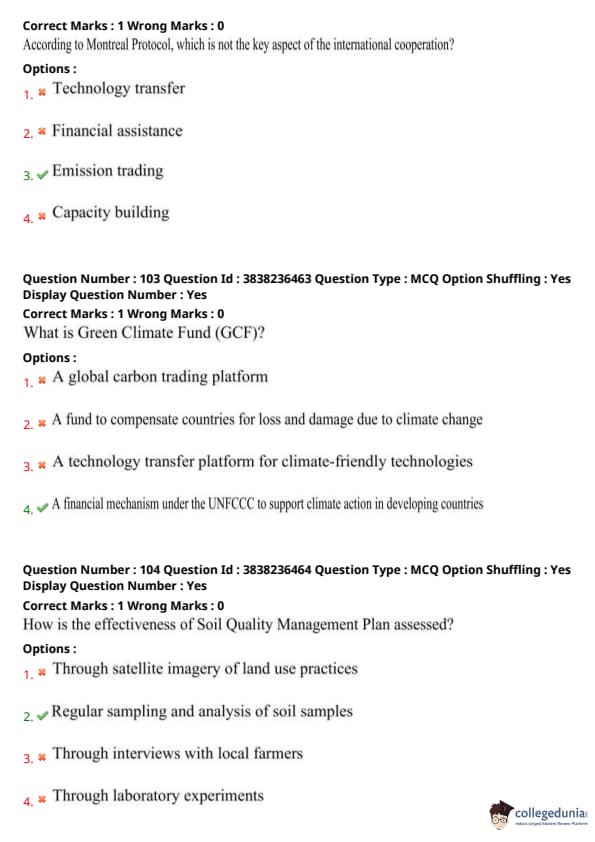
Question 102:
According to Montreal Protocol, which is not the key aspect of the international cooperation?
- (a) Technology transfer
- (b) Financial assistance
- (c) Emission trading
- (d) Capacity building
Question 103:
What is Green Climate Fund (GCF)?
- (a) A global carbon trading platform
- (b) A fund to compensate countries for loss and damage due to climate change
- (c) A technology transfer platform for climate-friendly technologies
- (d) A financial mechanism under the UNFCCC to support climate action in developing countries
Question 104:
How is the effectiveness of Soil Quality Management Plan assessed?
- (a) Through satellite imagery of land use practices
- (b) Regular sampling and analysis of soil samples
- (c) Through interviews with local farmers
- (d) Through laboratory experiments
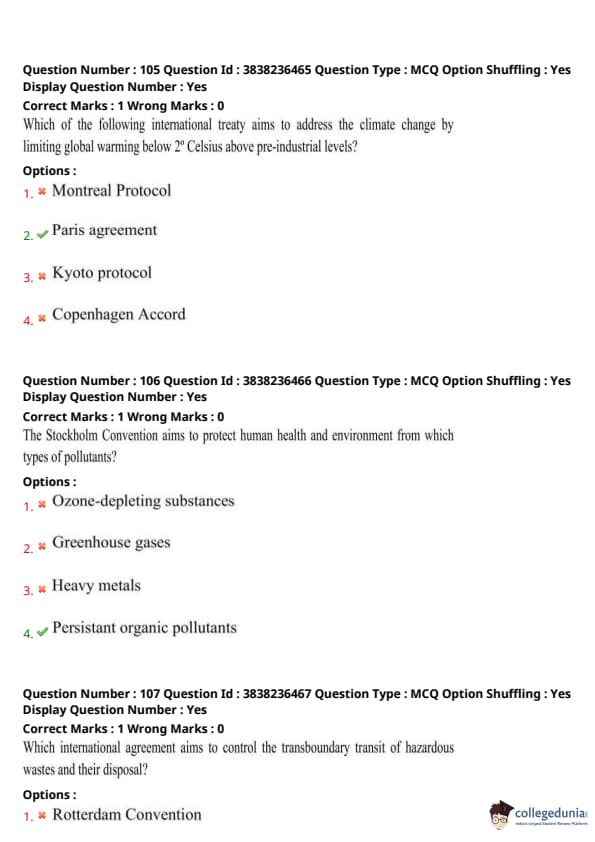
Question 105:
Which of the following international treaty aims to address the climate change by limiting global warming below 2\(^\circ\) Celsius above pre-industrial levels?
- (a) Montreal Protocol
- (b) Paris agreement
- (c) Kyoto protocol
- (d) Copenhagen Accord
Question 106:
The Stockholm Convention aims to protect human health and environment from which types of pollutants?
- (a) Ozone-depleting substances
- (b) Greenhouse gases
- (c) Heavy metals
- (d) Persistent organic pollutants
Question 107:
Which international agreement aims to control the transboundary transit of hazardous wastes and their disposal?
- (a) Rotterdam Convention
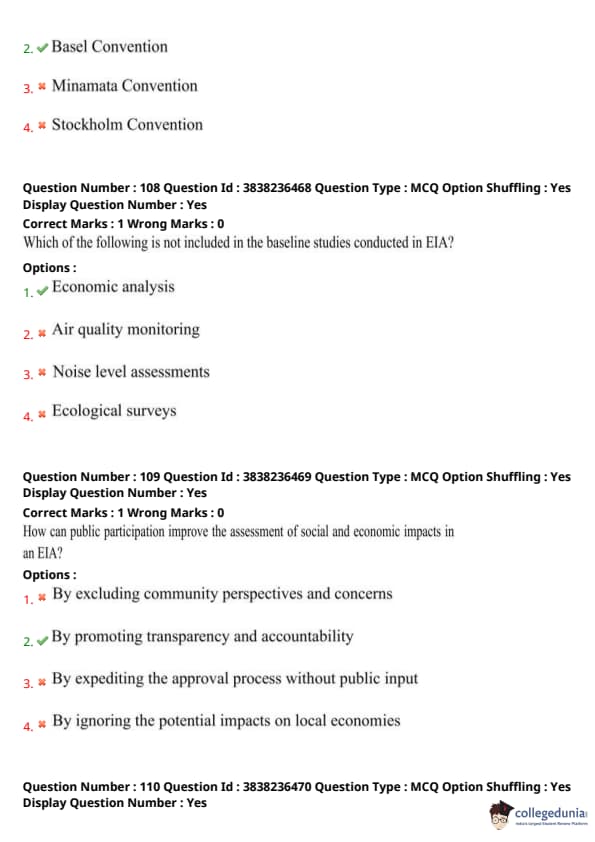
- (b) Basel Convention
- (c) Minamata Convention
- (d) Stockholm Convention
Question 108:
Which of the following is not included in the baseline studies conducted in EIA?
- (a) Economic analysis
- (b) Air quality monitoring
- (c) Noise level assessments
- (d) Ecological surveys
Question 109:
How can public participation improve the assessment of social and economic impacts in an EIA?
- (a) By excluding community perspectives and concerns
- (b) By promoting transparency and accountability
- (c) By expediting the approval process without public input
- (d) By ignoring the potential impacts on local economies
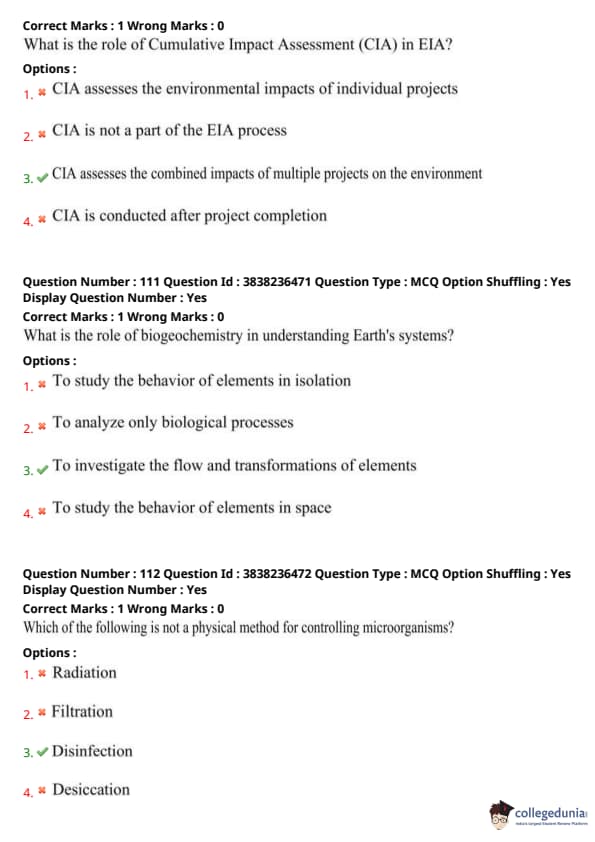
Question 110:
What is the role of Cumulative Impact Assessment (CIA) in EIA?
- (a) CIA assesses the environmental impacts of individual projects
- (b) CIA is not a part of the EIA process
- (c) CIA assesses the combined impacts of multiple projects on the environment
- (d) CIA is conducted after project completion
Question 111:
What is the role of biogeochemistry in understanding Earth's systems?
- (a) To study the behavior of elements in isolation
- (b) To analyze only biological processes
- (c) To investigate the flow and transformations of elements
- (d) To study the behavior of elements in space
Question 112:
Which of the following is not a physical method for controlling microorganisms?
- (a) Radiation
- (b) Filtration
- (c) Disinfection
- (d) Desiccation
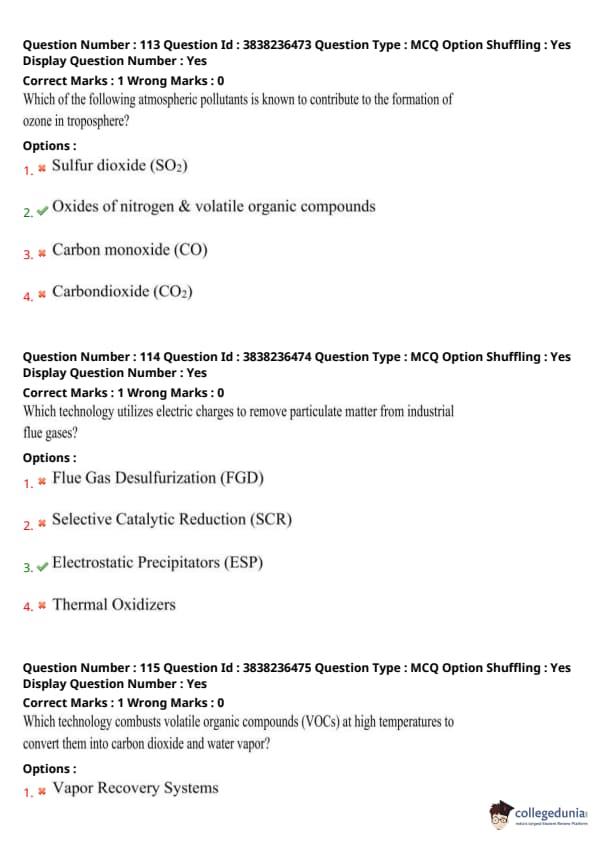
Question 113:
Which of the following atmospheric pollutants is known to contribute to the formation of ozone in troposphere?
- (a) Sulfur dioxide (SO\(_2\))
- (b) Oxides of nitrogen \& volatile organic compounds
- (c) Carbon monoxide (CO)
- (d) Carbondioxide (CO\(_2\))
Question 114:
Which technology utilizes electric charges to remove particulate matter from industrial flue gases?
- (a) Flue Gas Desulfurization (FGD)
- (b) Selective Catalytic Reduction (SCR)
- (c) Electrostatic Precipitators (ESP)
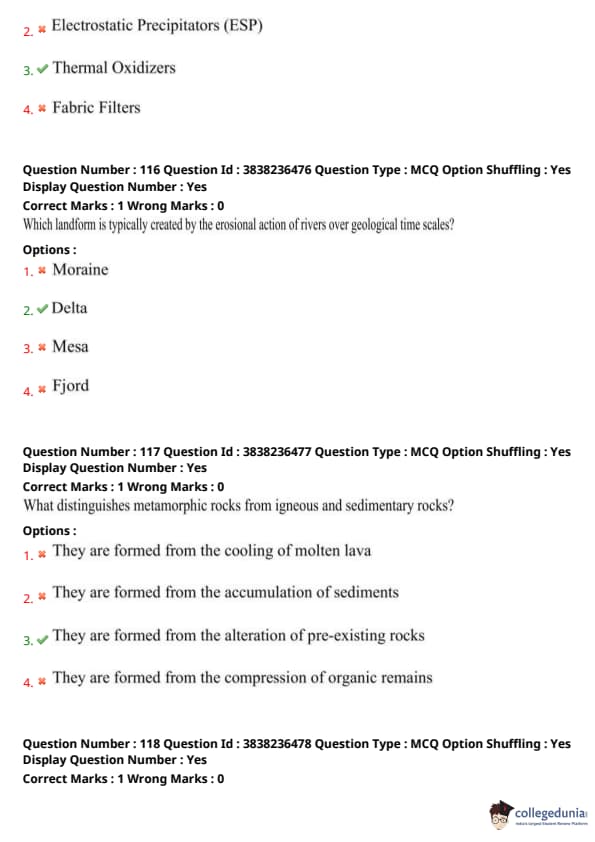
- (d) Thermal Oxidizers
Question 115:
Which technology combusts volatile organic compounds (VOCs) at high temperatures to convert them into carbon dioxide and water vapor?
- (a) Vapor Recovery Systems
- (b) Electrostatic Precipitators (ESP)
- (c) Thermal Oxidizers
- (d) Fabric Filters
Question 116:
Which landform is typically created by the erosional action of rivers over geological time scales?
- (a) Moraine
- (b) Delta
- (c) Mesa
- (d) Fjord
Question 117:
What distinguishes metamorphic rocks from igneous and sedimentary rocks?
- (a) They are formed from the cooling of molten lava
- (b) They are formed from the accumulation of sediments
- (c) They are formed from the alteration of pre-existing rocks
- (d) They are formed from the compression of organic remains
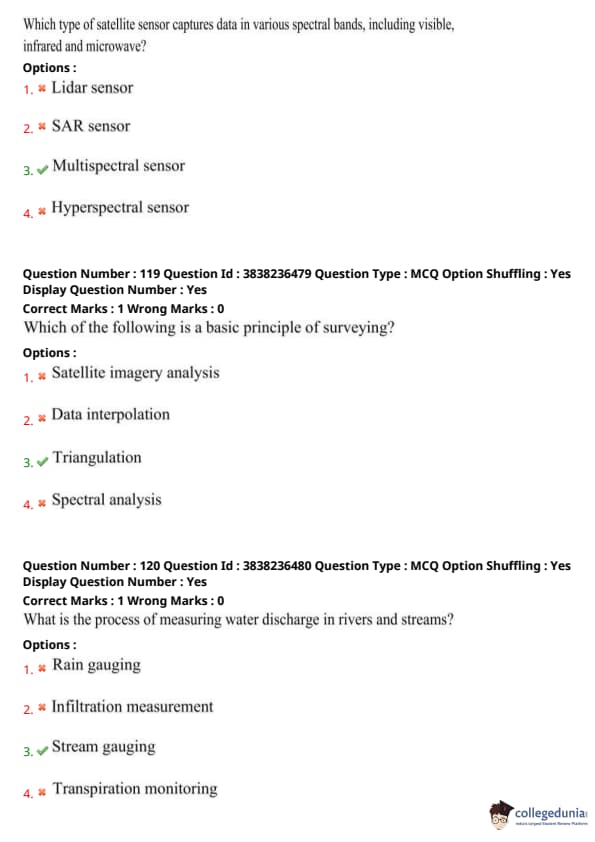
Question 118:
Which type of satellite sensor captures data in various spectral bands, including visible, infrared and microwave?
- (a) Lidar sensor
- (b) SAR sensor
- (c) Multispectral sensor
- (d) Hyperspectral sensor
Question 119:
Which of the following is a basic principle of surveying?
- (a) Satellite imagery analysis
- (b) Data interpolation
- (c) Triangulation
- (d) Spectral analysis
Question 120:
What is the process of measuring water discharge in rivers and streams?
- (a) Rain gauging
- (b) Infiltration measurement
- (c) Stream gauging
- (d) Transpiration monitoring













Comments