TS PGECET 2024 Pharmacy Question Paper is available for download here. Jawaharlal Nehru Technological University Hyderabad on behalf of Telangana Council of Higher Education (TGCHE) conducted TS PGECET 2024 Pharmacy on June 10 in Shift 1 from 10 AM to 12 PM. TS PGECET Question Paper 2024 consists of 120 MCQ-based questions in total carrying 1 mark each to be attempted in the duration of 2 hours.
TS PGECET 2024 Pharmacy Question Paper with Answer Key PDF
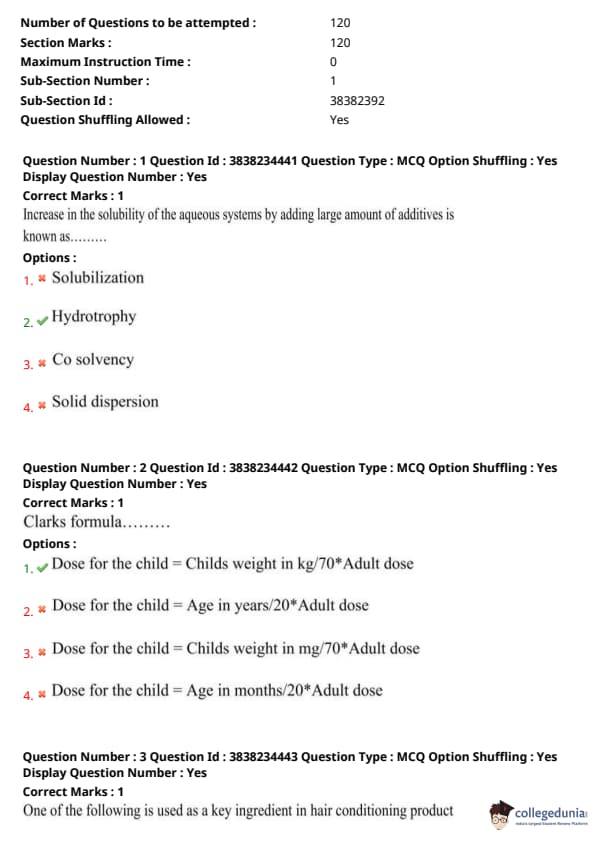
Question 1:
Increase in the solubility of the aqueous systems by adding large amount of additives is known as.........
- (1) Solubilization
- (2) Hydrotrophy
- (3) Co solvency
- (4) Solid dispersion
Question 2:
Clark's formula………
- (1) Dose for the child = Child's weight in kg / 70 * Adult dose
- (2) Dose for the child = Age in years / 20 * Adult dose
- (3) Dose for the child = Child's weight in mg / 70 * Adult dose
- (4) Dose for the child = Age in months / 20 * Adult dose
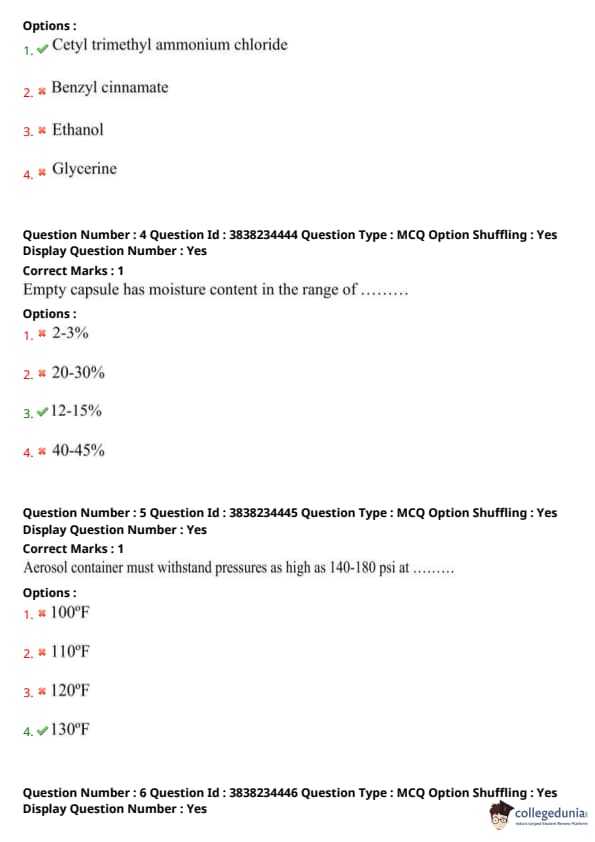
Question 3:
One of the following is used as a key ingredient in hair conditioning product
- (1) Cetyl trimethyl ammonium chloride
- (2) Benzyl cinnamate
- (3) Ethanol
- (4) Glycerine
Question 4:
Empty capsule has moisture content in the range of ………
- (1) 2–3%
- (2) 20–30%
- (3) 12–15%
- (4) 40–45%
Question 5:
Aerosol container must withstand pressures as high as 140–180 psi at ………
- (1) 100°F
- (2) 110°F
- (3) 120°F
- (4) 130°F
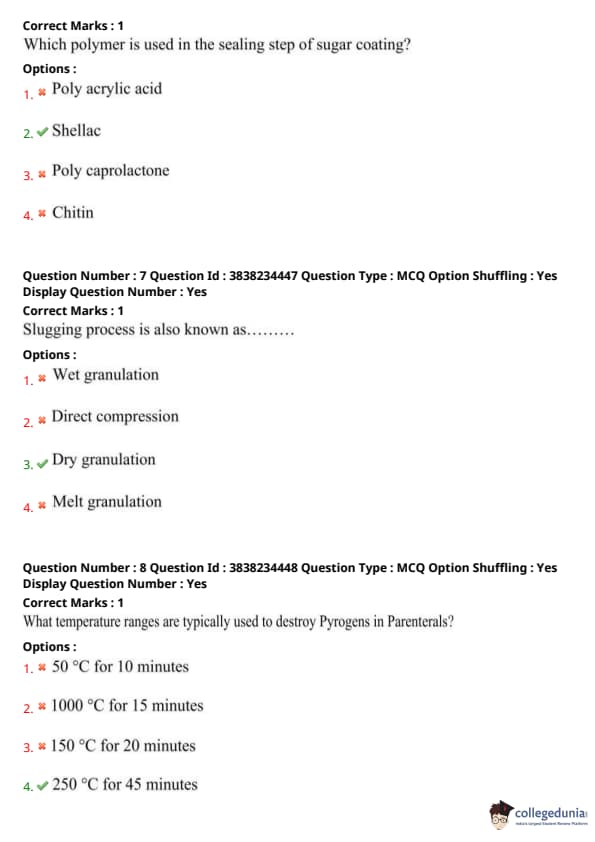
Question 6:
Which polymer is used in the sealing step of sugar coating?
- (1) Poly acrylic acid
- (2) Shellac
- (3) Poly caprolactone
- (4) Chitin
Question 7:
Slugging process is also known as………
- (1) Wet granulation
- (2) Direct compression
- (3) Dry granulation
- (4) Melt granulation
Question 8:
What temperature ranges are typically used to destroy Pyrogens in Parenterals?
- (1) 50\textdegree C for 10 minutes
- (2) 1000\textdegree C for 15 minutes
- (3) 150\textdegree C for 20 minutes
- (4) 250\textdegree C for 45 minutes
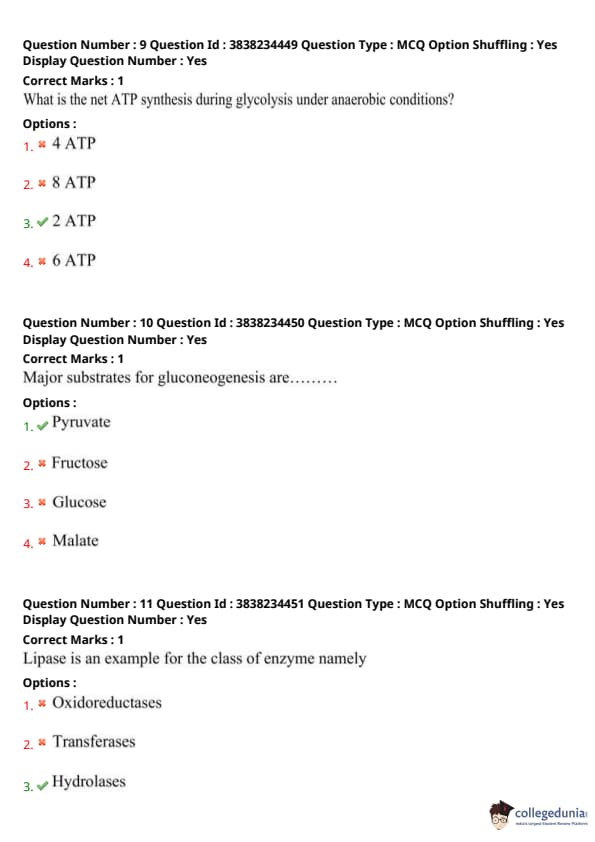
Question 9:
What is the net ATP synthesis during glycolysis under anaerobic conditions?
- (1) 4 ATP
- (2) 8 ATP
- (3) 2 ATP
- (4) 6 ATP
Question 10:
Major substrates for gluconeogenesis are………
- (1) Pyruvate
- (2) Fructose
- (3) Glucose
- (4) Malate
Question 11:
Lipase is an example for the class of enzyme namely
- (1) Oxidoreductases
- (2) Transferases
- (3) Hydrolases
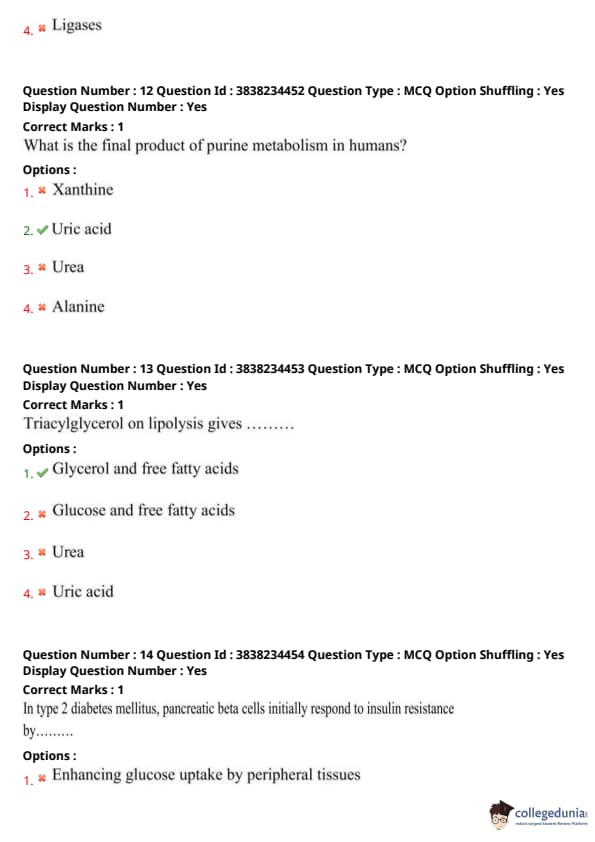
- (4) Ligases
Question 12:
What is the final product of purine metabolism in humans?
- (1) Xanthine
- (2) Uric acid
- (3) Urea
- (4) Alanine
Question 13:
Triacylglycerol on lipolysis gives ………
- (1) Glycerol and free fatty acids
- (2) Glucose and free fatty acids
- (3) Urea
- (4) Uric acid
Question 14:
In type 2 diabetes mellitus, pancreatic beta cells initially respond to insulin resistance by………
- (1) Enhancing glucose uptake by peripheral tissues
- (2) Decreasing insulin secretion
- (3) Suppressing glucagon secretion
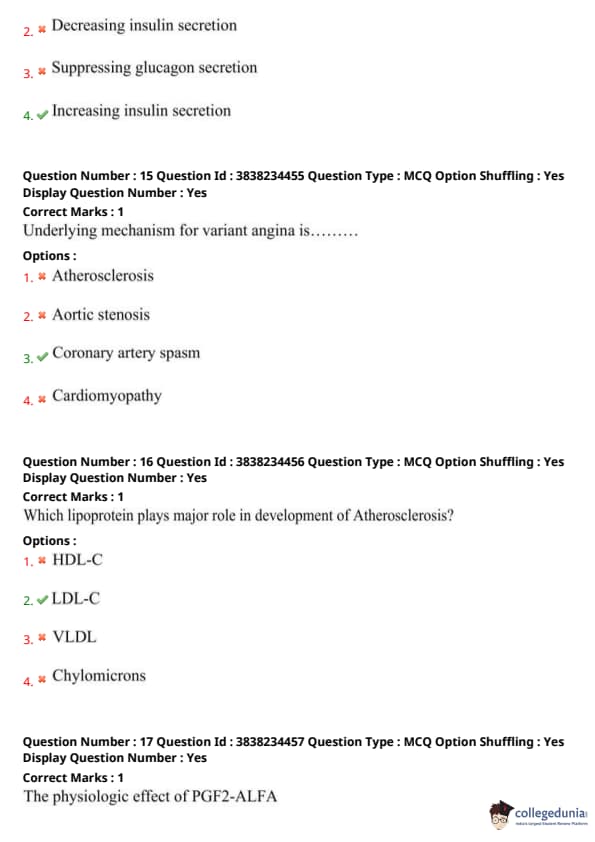
- (4) Increasing insulin secretion
Question 15:
Underlying mechanism for variant angina is………
- (1) Atherosclerosis
- (2) Aortic stenosis
- (3) Coronary artery spasm
- (4) Cardiomyopathy
Question 16:
Which lipoprotein plays major role in development of Atherosclerosis?
- (1) HDL-C
- (2) LDL-C
- (3) VLDL
- (4) Chylomicrons
Question 17:
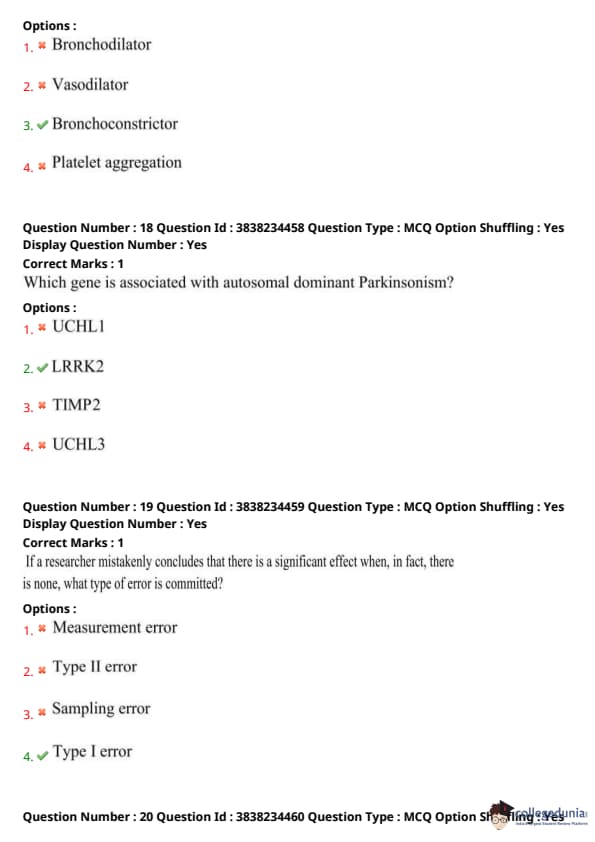
The physiologic effect of PGF2-ALFA
- (1) Bronchodilator
- (2) Vasodilator
- (3) Bronchoconstrictor
- (4) Platelet aggregation
Question 18:
Which gene is associated with autosomal dominant Parkinsonism?
- (1) UCHL1
- (2) LRRK2
- (3) TIMP2
- (4) UCHL3
Question 19:
If a researcher mistakenly concludes that there is a significant effect when, in fact, there is none, what type of error is committed?
- (1) Measurement error
- (2) Type II error
- (3) Sampling error
- (4) Type I error
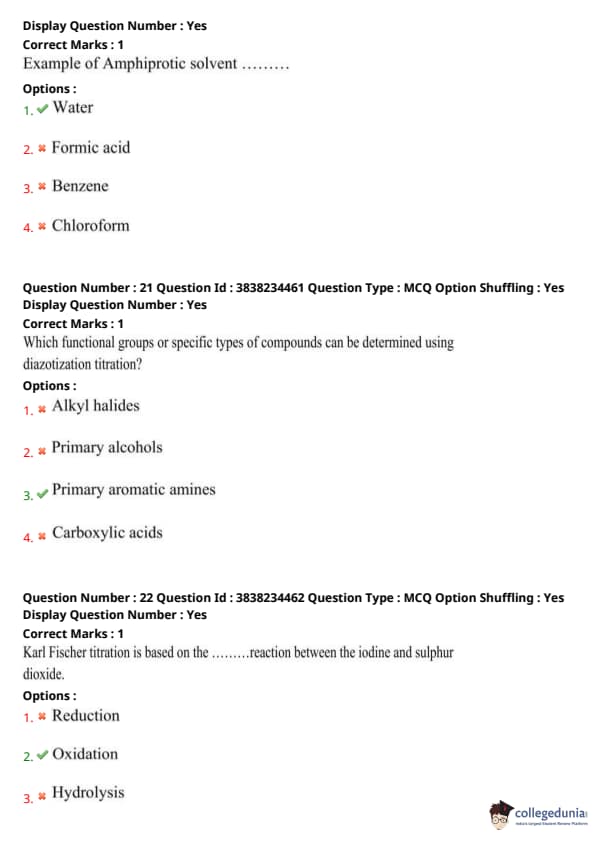
Question 20:
Example of Amphiprotic solvent ………
- (1) Water
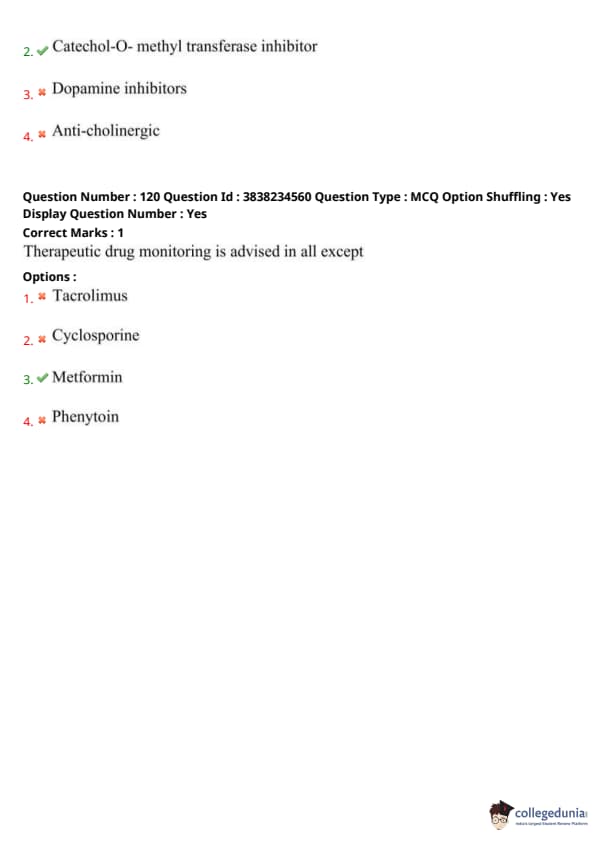
- (2) Formic acid
- (3) Benzene
- (4) Chloroform
Question 21:
Which functional groups or specific types of compounds can be determined using diazotization titration?
- (1) Alkyl halides
- (2) Primary alcohols
- (3) Primary aromatic amines
- (4) Carboxylic acids
Question 22:
Karl Fischer titration is based on the ……… reaction between the iodine and sulphur dioxide.
- (1) Reduction
- (2) Oxidation
- (3) Hydrolysis
- (4) Condensation
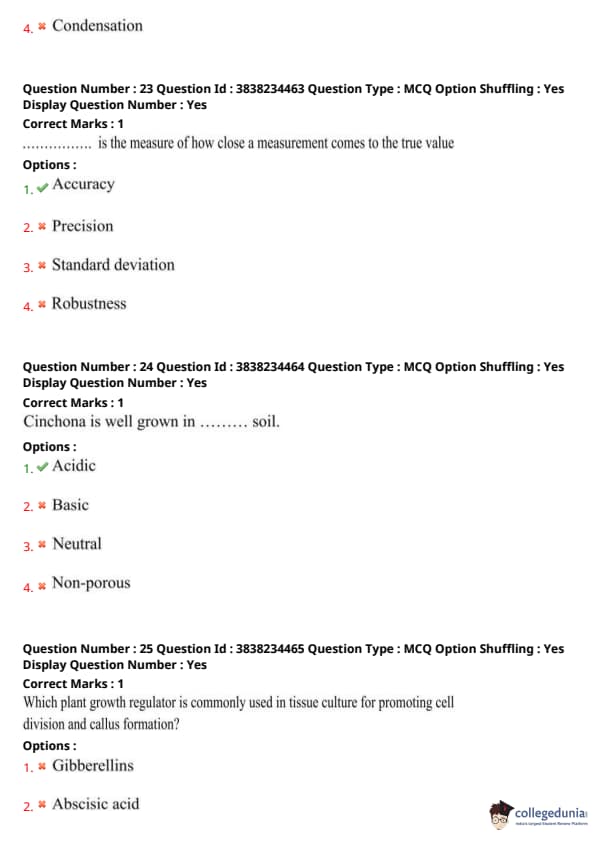
Question 23:
……………. is the measure of how close a measurement comes to the true value
- (1) Accuracy
- (2) Precision
- (3) Standard deviation
- (4) Robustness
Question 24:
Cinchona is well grown in ……… soil.
- (1) Acidic
- (2) Basic
- (3) Neutral
- (4) Non-porous
Question 25:
Which plant growth regulator is commonly used in tissue culture for promoting cell division and callus formation?
- (1) Gibberellins
- (2) Abscisic acid
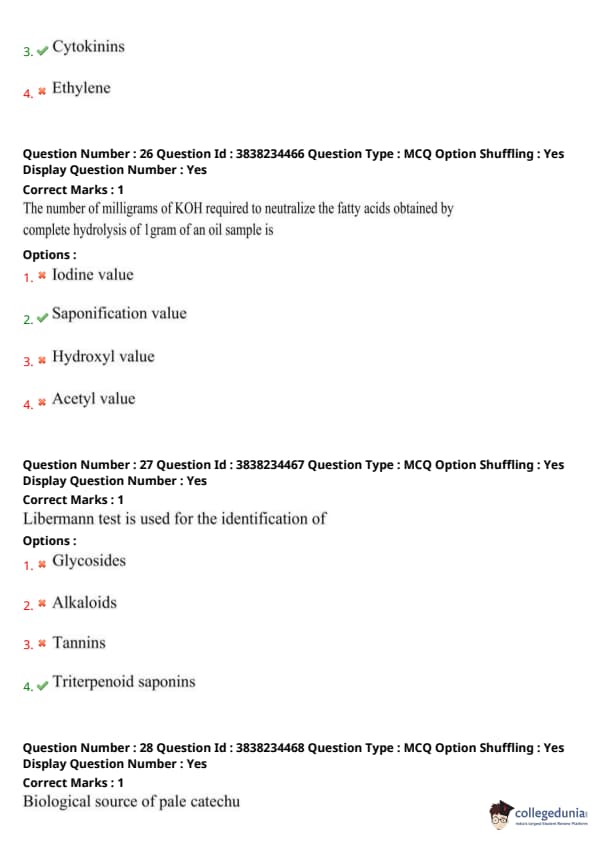
- (3) Cytokinins
- (4) Ethylene
Question 26:
The number of milligrams of KOH required to neutralize the fatty acids obtained by complete hydrolysis of 1 gram of an oil sample is
- (1) Iodine value
- (2) Saponification value
- (3) Hydroxyl value
- (4) Acetyl value
Question 27:
Libermann test is used for the identification of
- (1) Glycosides
- (2) Alkaloids
- (3) Tannins
- (4) Triterpenoid saponins
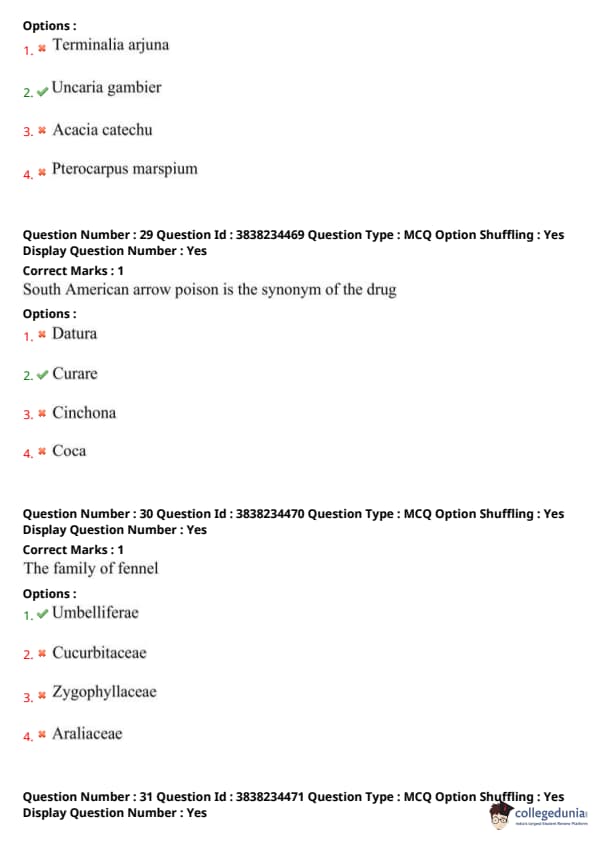
Question 28:
Biological source of pale catechu
- (1) Terminalia arjuna
- (2) Uncaria gambier
- (3) Acacia catechu
- (4) Pterocarpus marsupium
Question 29:
South American arrow poison is the synonym of the drug
- (1) Datura
- (2) Curare
- (3) Cinchona
- (4) Coca
Question 30:
The family of fennel
- (1) Umbelliferae
- (2) Cucurbitaceae
- (3) Zygophyllaceae
- (4) Araliaceae
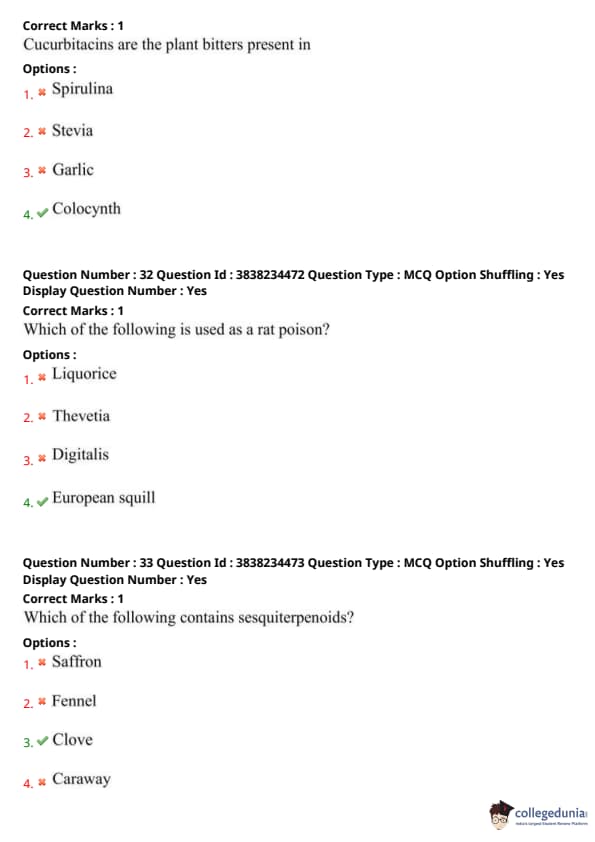
Question 31:
Cucurbitacins are the plant bitters present in
- (1) Spirulina
- (2) Stevia
- (3) Garlic
- (4) Colocynth
Question 32:
Which of the following is used as a rat poison?
- (1) Liquorice
- (2) Thevetia
- (3) Digitalis
- (4) European squill
Question 33:
Which of the following contains sesquiterpenoids?
- (1) Saffron
- (2) Fennel
- (3) Clove
- (4) Caraway
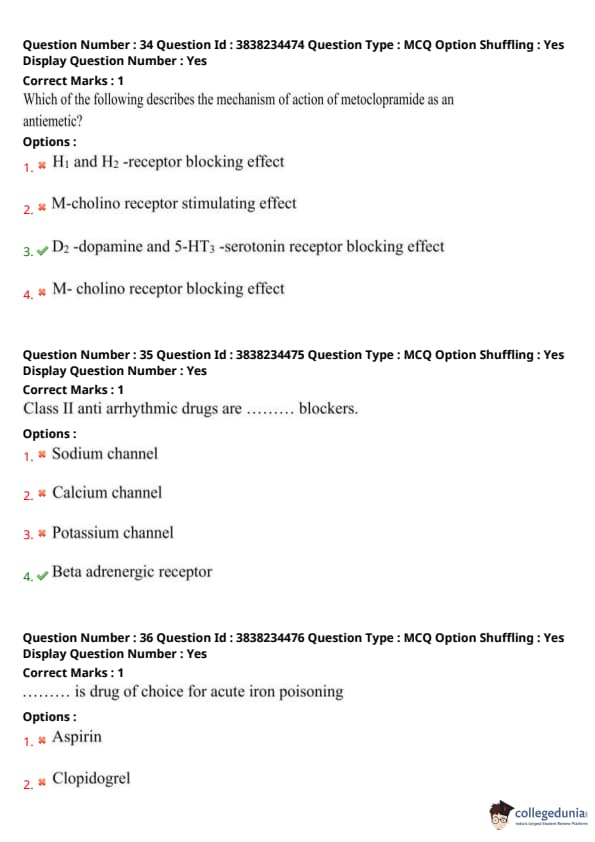
Question 34:
Which of the following describes the mechanism of action of metoclopramide as an antiemetic?
- (1) H\textsubscript{1} and H\textsubscript{2}-receptor blocking effect
- (2) M-cholino receptor stimulating effect
- (3) D\textsubscript{2}-dopamine and 5-HT\textsubscript{3}-serotonin receptor blocking effect
- (4) M-cholino receptor blocking effect
Question 35:
Class II antiarrhythmic drugs are ……… blockers.
- (1) Sodium channel
- (2) Calcium channel
- (3) Potassium channel
- (4) Beta adrenergic receptor
Question 36:
……… is drug of choice for acute iron poisoning
- (1) Aspirin
- (2) Clopidogrel
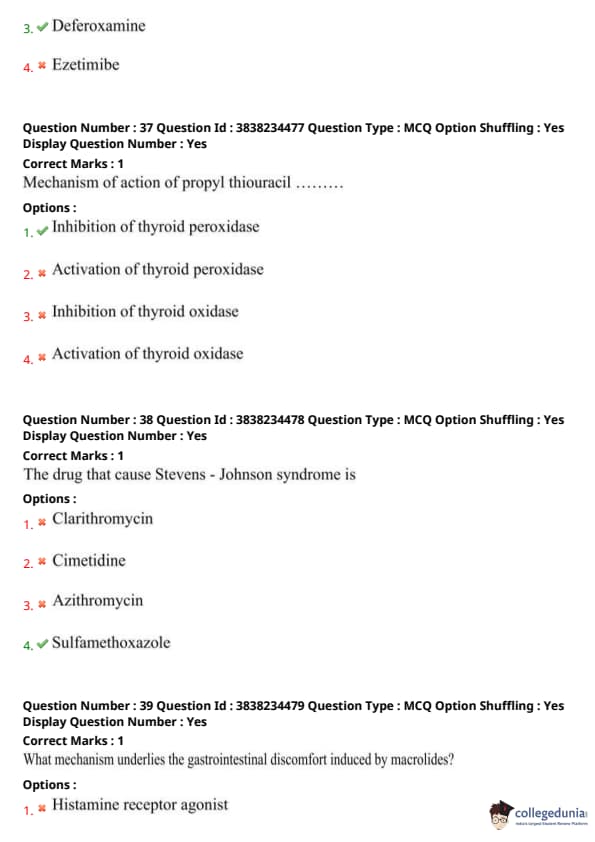
- (3) Deferoxamine
- (4) Ezetimibe
Question 37:
Mechanism of action of propyl thiouracil ………
- (1) Inhibition of thyroid peroxidase
- (2) Activation of thyroid peroxidase
- (3) Inhibition of thyroid oxidase
- (4) Activation of thyroid oxidase
Question 38:
The drug that cause Stevens-Johnson syndrome is
- (1) Clarithromycin
- (2) Cimetidine
- (3) Azithromycin
- (4) Sulfamethoxazole
Question 39:
What mechanism underlies the gastrointestinal discomfort induced by macrolides?
- (1) Histamine receptor agonist
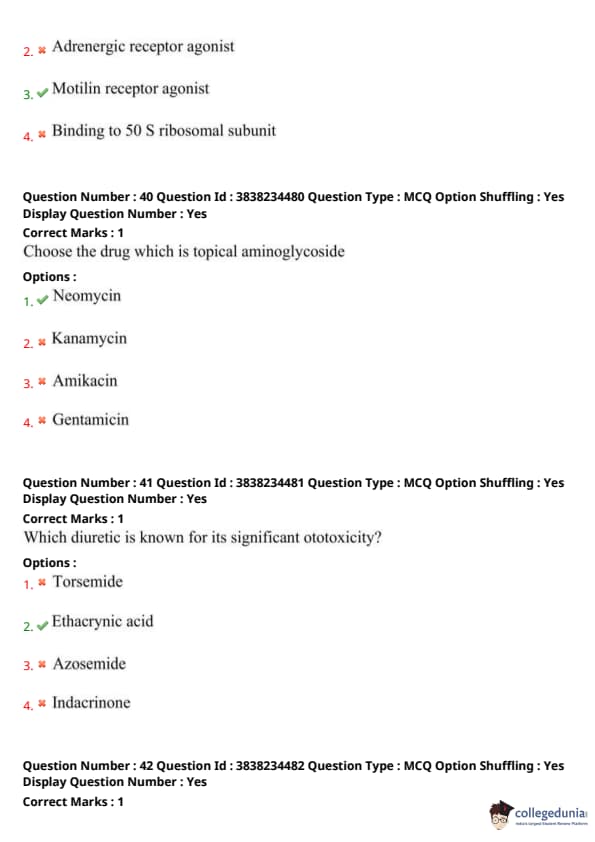
- (2) Adrenergic receptor agonist
- (3) Motilin receptor agonist
- (4) Binding to 50 S ribosomal subunit
Question 40:
Choose the drug which is topical aminoglycoside
- (1) Neomycin
- (2) Kanamycin
- (3) Amikacin
- (4) Gentamicin
Question 41:
Which diuretic is known for its significant ototoxicity?
- (1) Torsemide
- (2) Ethacrynic acid
- (3) Azosemide
- (4) Indacrinone
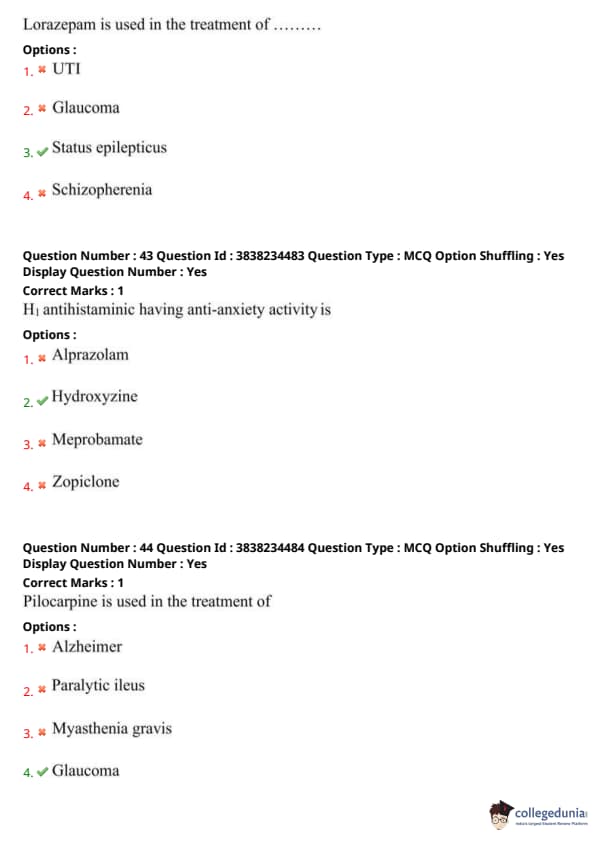
Question 42:
Lorazepam is used in the treatment of ………
- (1) UTI
- (2) Glaucoma
- (3) Status epilepticus
- (4) Schizophrenia
Question 43:
H\textsubscript{1 antihistaminic having anti-anxiety activity is
- (1) Alprazolam
- (2) Hydroxyzine
- (3) Meprobamate
- (4) Zopiclone
Question 44:
Pilocarpine is used in the treatment of
- (1) Alzheimer
- (2) Paralytic ileus
- (3) Myasthenia gravis
- (4) Glaucoma
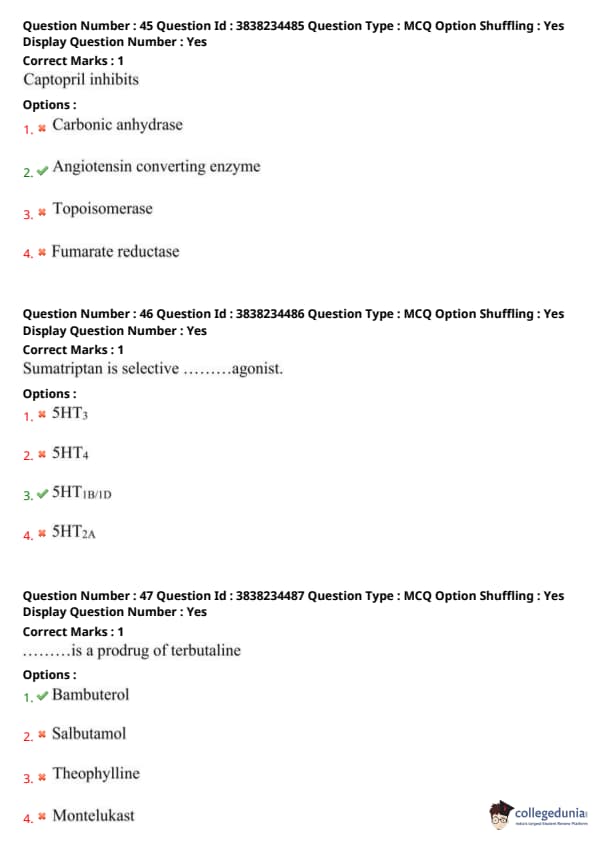
Question 45:
Captopril inhibits
- (1) Carbonic anhydrase
- (2) Angiotensin converting enzyme
- (3) Topoisomerase
- (4) Fumarate reductase
Question 46:
Sumatriptan is selective ……… agonist.
- (1) 5HT\textsubscript{3}
- (2) 5HT\textsubscript{4}
- (3) 5HT\textsubscript{1B/1D}
- (4) 5HT\textsubscript{2A}
Question 47:
……… is a prodrug of terbutaline
- (1) Bambuterol
- (2) Salbutamol
- (3) Theophylline
- (4) Montelukast
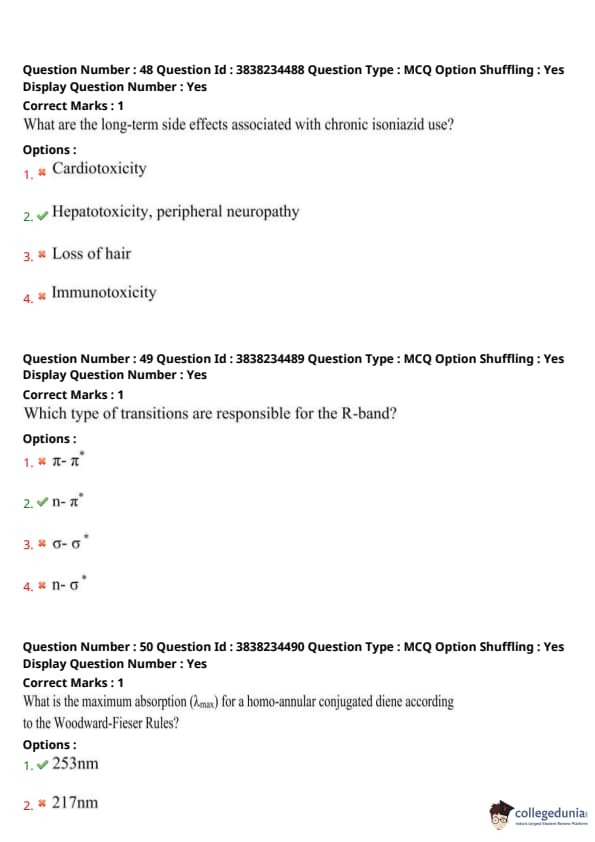
Question 48:
What are the long-term side effects associated with chronic isoniazid use?
- (1) Cardiotoxicity
- (2) Hepatotoxicity, peripheral neuropathy
- (3) Loss of hair
- (4) Immunotoxicity
Question 49:
Which type of transitions are responsible for the R-band?
- (1) \(\pi \rightarrow \pi^*\)
- (2) \(n \rightarrow \pi^*\)
- (3) \(\sigma \rightarrow \sigma^*\)
- (4) \(n \rightarrow \sigma^*\)
Question 50:
What is the maximum absorption (\(\lambda_{max}\)) for a homo-annular conjugated diene according to the Woodward-Fieser Rules?
- (1) 253 nm
- (2) 217 nm
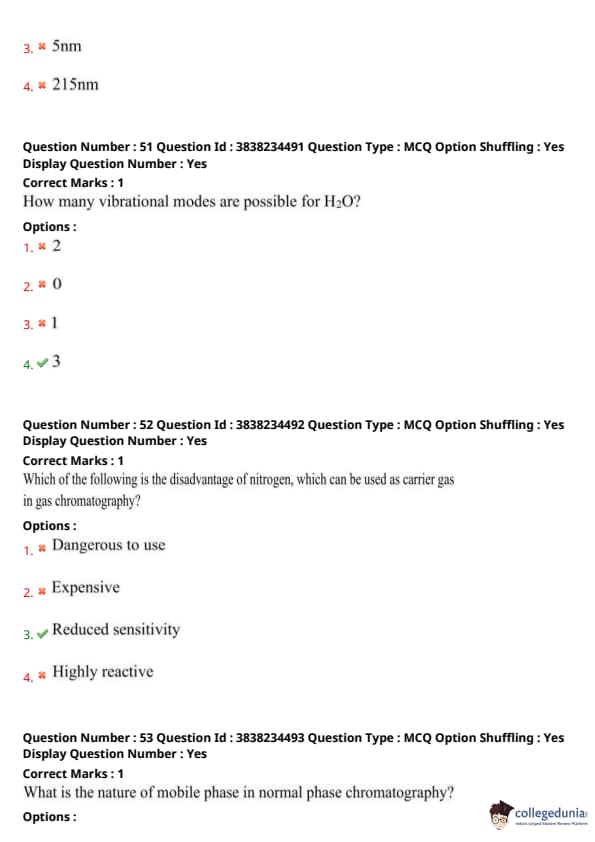
- (3) 5 nm
- (4) 215 nm
Question 51:
How many vibrational modes are possible for H\textsubscript{2O?
Question 52:
Which of the following is the disadvantage of nitrogen, which can be used as carrier gas in gas chromatography?
- (1) Dangerous to use
- (2) Expensive
- (3) Reduced sensitivity
- (4) Highly reactive
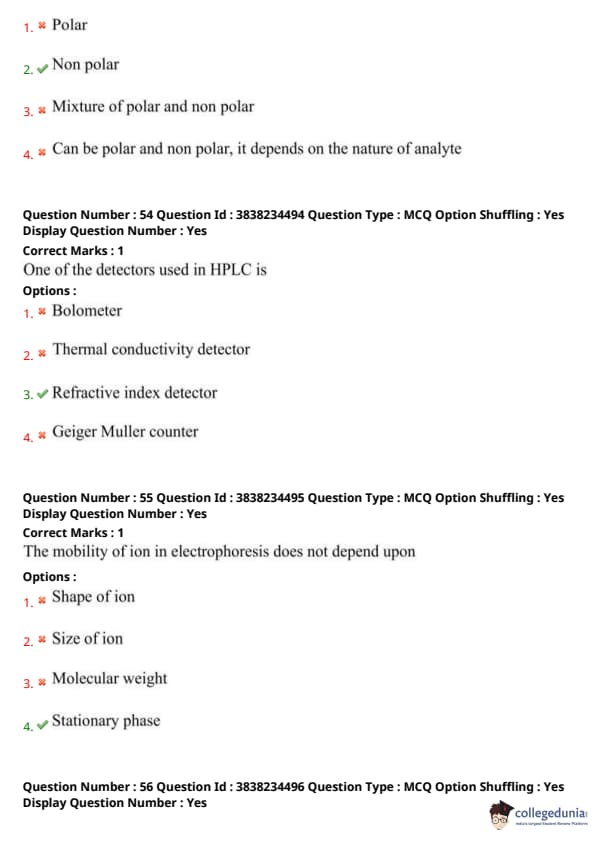
Question 53:
What is the nature of mobile phase in normal phase chromatography?
- (1) Polar
- (2) Non-polar
- (3) Mixture of polar and non-polar
- (4) Can be polar and non-polar, it depends on the nature of analyte
Question 54:
One of the detectors used in HPLC is
- (1) Bolometer
- (2) Thermal conductivity detector
- (3) Refractive index detector
- (4) Geiger Muller counter
Question 55:
The mobility of ion in electrophoresis does not depend upon
- (1) Shape of ion
- (2) Size of ion
- (3) Molecular weight
- (4) Stationary phase
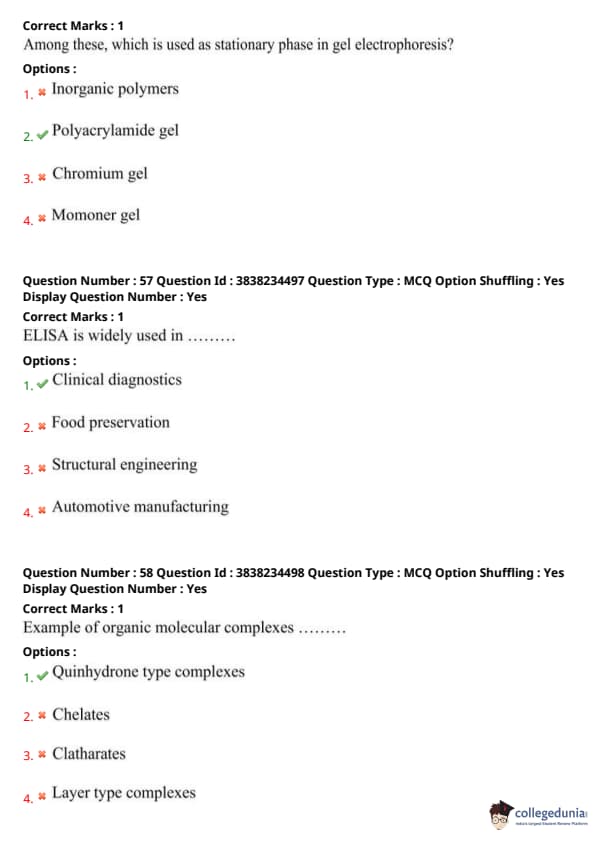
Question 56:
Among these, which is used as stationary phase in gel electrophoresis?
- (1) Inorganic polymers
- (2) Polyacrylamide gel
- (3) Chromium gel
- (4) Momoner gel
Question 57:
ELISA is widely used in ………
- (1) Clinical diagnostics
- (2) Food preservation
- (3) Structural engineering
- (4) Automotive manufacturing
Question 58:
Example of organic molecular complexes ………
- (1) Quinhydrone type complexes
- (2) Chelates
- (3) Clatharates
- (4) Layer type complexes
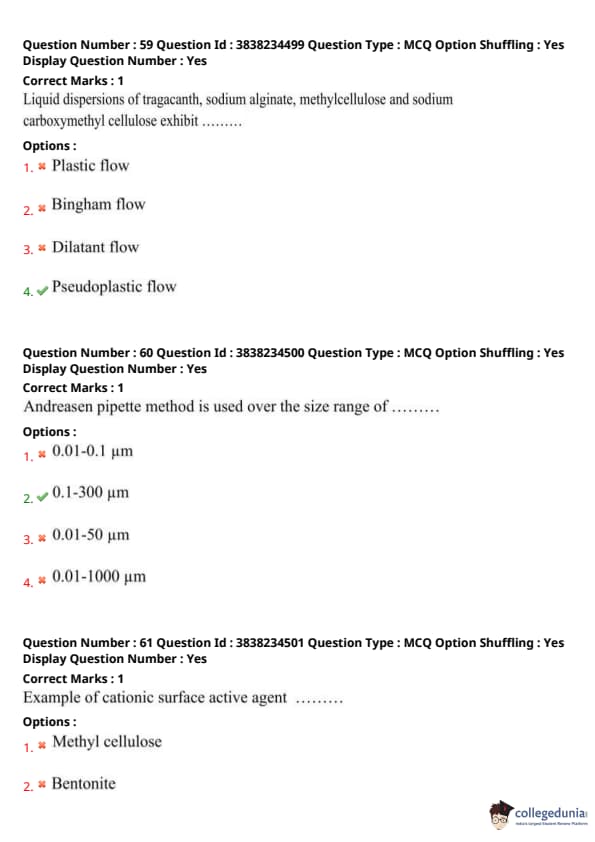
Question 59:
Liquid dispersions of tragacanth, sodium alginate, methylcellulose and sodium carboxymethyl cellulose exhibit ………
- (1) Plastic flow
- (2) Bingham flow
- (3) Dilatant flow
- (4) Pseudoplastic flow
Question 60:
Andreasen pipette method is used over the size range of ………
- (1) 0.01–0.1 µm
- (2) 0.1–300 µm
- (3) 0.01–50 µm
- (4) 0.01–1000 µm
Question 61:
Example of cationic surface active agent ………
- (1) Methyl cellulose
- (2) Bentonite
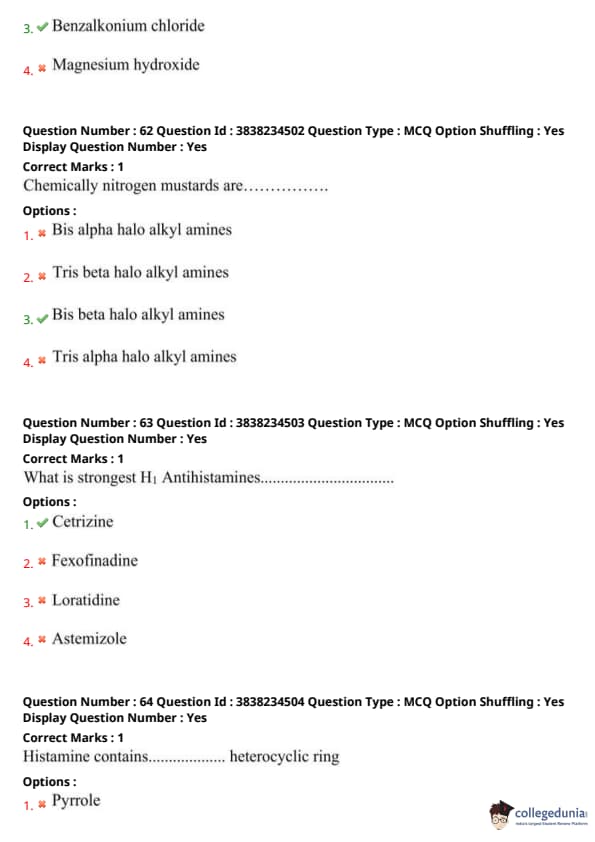
- (3) Benzalkonium chloride
- (4) Magnesium hydroxide
Question 62:
Chemically nitrogen mustards are ……………..
- (1) Bis alpha halo alkyl amines
- (2) Tris beta halo alkyl amines
- (3) Bis beta halo alkyl amines
- (4) Tris alpha halo alkyl amines
Question 63:
What is strongest H\textsubscript{1 Antihistamines?
- (1) Cetrizine
- (2) Fexofinadine
- (3) Loratidine
- (4) Astemizole
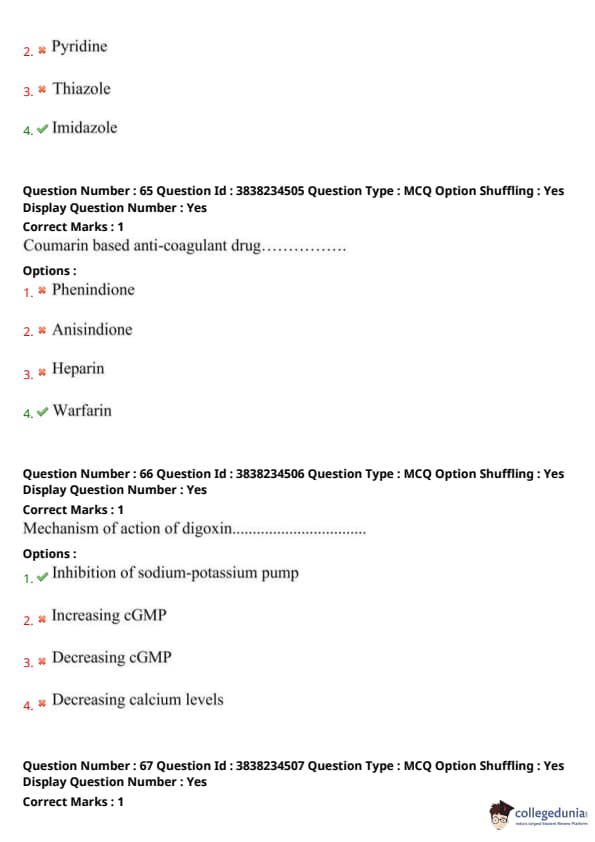
Question 64:
Histamine contains .................... heterocyclic ring
- (1) Pyrrole
- (2) Pyridine
- (3) Thiazole
- (4) Imidazole
Question 65:
Coumarin based anti-coagulant drug ……………..
- (1) Phenindione
- (2) Anisindione
- (3) Heparin
- (4) Warfarin
Question 66:
Mechanism of action of digoxin …………………………….
- (1) Inhibition of sodium-potassium pump
- (2) Increasing cGMP
- (3) Decreasing cGMP
- (4) Decreasing calcium levels
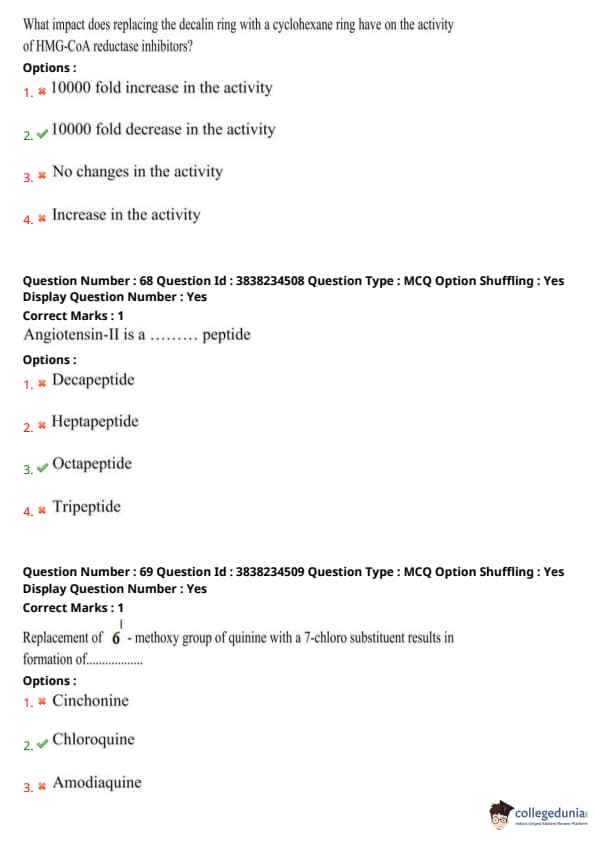
Question 67:
What impact does replacing the decalin ring with a cyclohexane ring have on the activity of HMG-CoA reductase inhibitors?
- (1) 10000 fold increase in the activity
- (2) 10000 fold decrease in the activity
- (3) No changes in the activity
- (4) Increase in the activity
Question 68:
Angiotensin-II is a ……… peptide
- (1) Decapeptide
- (2) Heptapeptide
- (3) Octapeptide
- (4) Tripeptide
Question 69:
Replacement of 6-methoxy group of quinine with a 7-chloro substituent results in formation of ………………
- (1) Cinchonine
- (2) Chloroquine
- (3) Amodiaquine
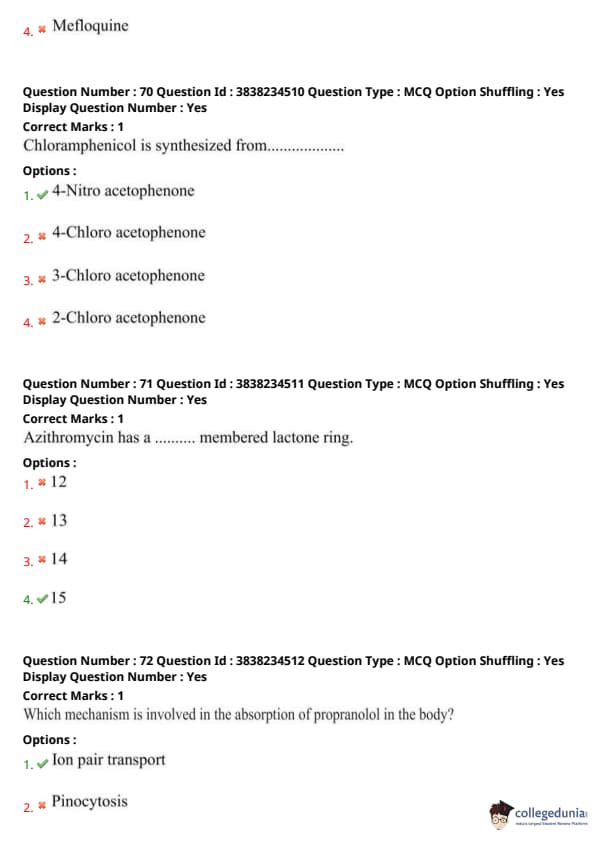
- (4) Mefloquine
Question 70:
Chloramphenicol is synthesized from ………………
- (1) 4-Nitro acetophenone
- (2) 4-Chloro acetophenone
- (3) 3-Chloro acetophenone
- (4) 2-Chloro acetophenone
Question 71:
Azithromycin has a ………. membered lactone ring.
- (1) 12
- (2) 13
- (3) 14
- (4) 15
Question 72:
Which mechanism is involved in the absorption of propranolol in the body?
- (1) Ion pair transport
- (2) Pinocytosis
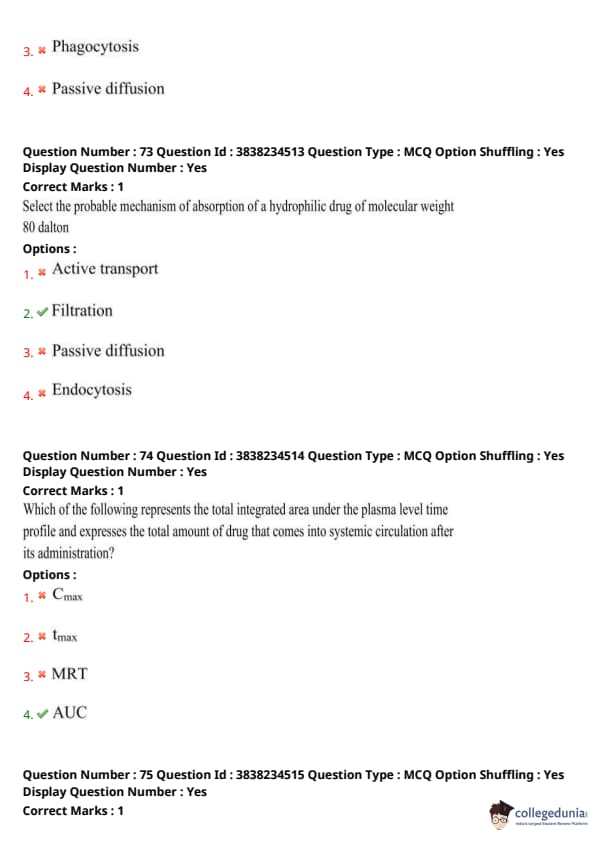
- (3) Phagocytosis
- (4) Passive diffusion
Question 73:
Select the probable mechanism of absorption of a hydrophilic drug of molecular weight 80 dalton.
- (1) Active transport
- (2) Filtration
- (3) Passive diffusion
- (4) Endocytosis
Question 74:
Which of the following represents the total integrated area under the plasma level time profile and expresses the total amount of drug that comes into systemic circulation after its administration?
- (1) C\textsubscript{max}
- (2) t\textsubscript{max}
- (3) MRT
- (4) AUC
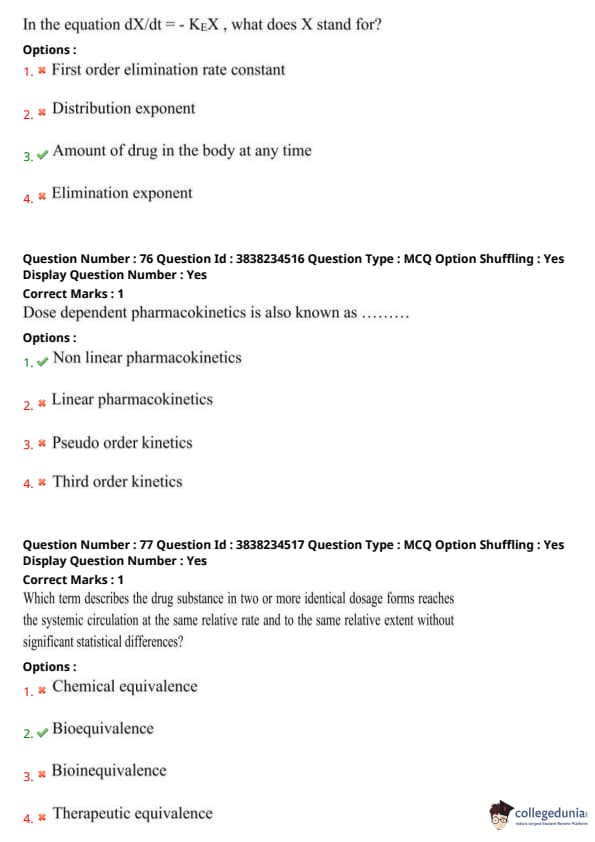
Question 75:
In the equation dX/dt = – K\textsubscript{EX, what does X stand for?
- (1) First order elimination rate constant
- (2) Distribution exponent
- (3) Amount of drug in the body at any time
- (4) Elimination exponent
Question 76:
Dose dependent pharmacokinetics is also known as ……….
- (1) Non linear pharmacokinetics
- (2) Linear pharmacokinetics
- (3) Pseudo order kinetics
- (4) Third order kinetics
Question 77:
Which term describes the drug substance in two or more identical dosage forms reaches the systemic circulation at the same relative rate and to the same relative extent without significant statistical differences?
- (1) Chemical equivalence
- (2) Bioequivalence
- (3) Bioinequivalence
- (4) Therapeutic equivalence
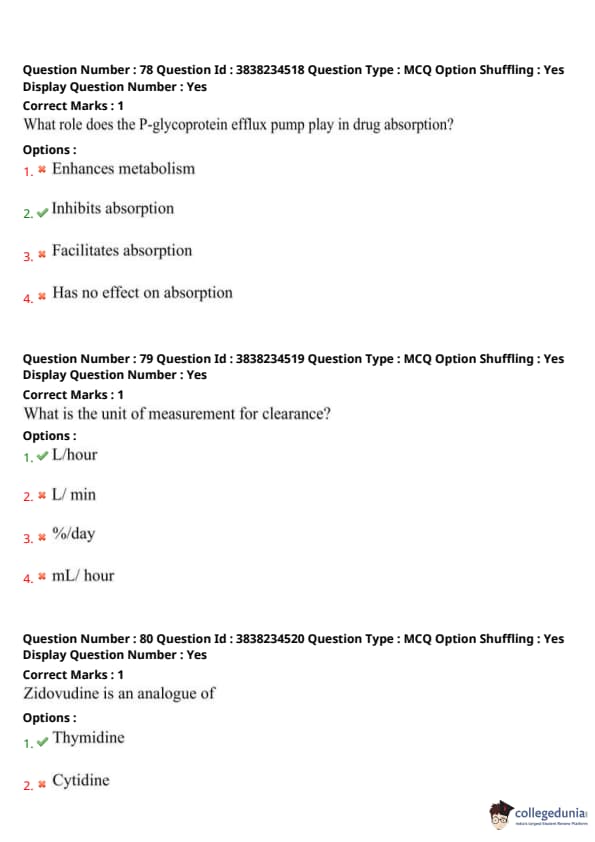
Question 78:
What role does the P-glycoprotein efflux pump play in drug absorption?
- (1) Enhances metabolism
- (2) Inhibits absorption
- (3) Facilitates absorption
- (4) Has no effect on absorption
Question 79:
What is the unit of measurement for clearance?
- (1) L/hour
- (2) L/min
- (3) %/day
- (4) mL/hour
Question 80:
Zidovudine is an analogue of
- (1) Thymidine
- (2) Cytidine
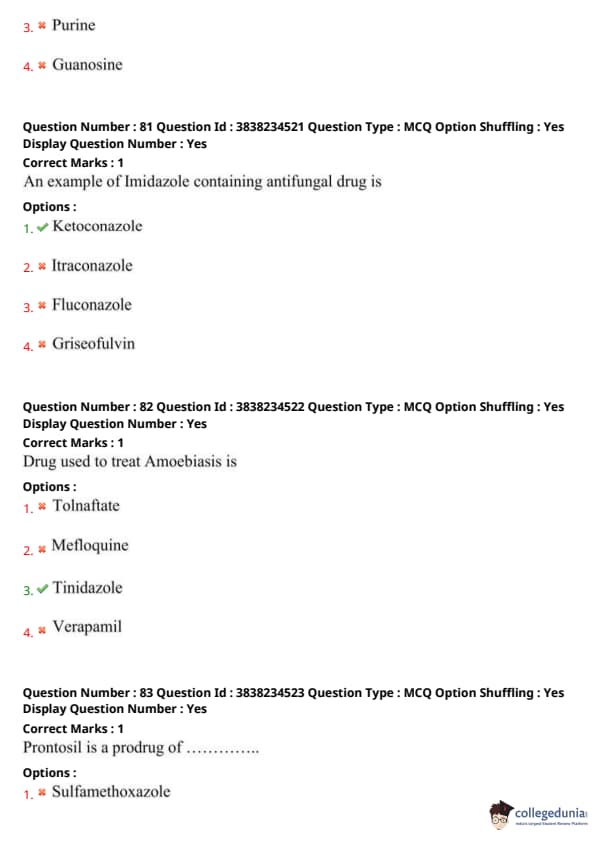
- (3) Purine
- (4) Guanosine
Question 81:
An example of Imidazole containing antifungal drug is
- (1) Ketoconazole
- (2) Itraconazole
- (3) Fluconazole
- (4) Griseofulvin
Question 82:
Drug used to treat Amoebiasis is
- (1) Tolnaftate
- (2) Mefloquine
- (3) Tinidazole
- (4) Verapamil
Question 83:
Prontosil is a prodrug of _______
- (1) Sulfamethoxazole
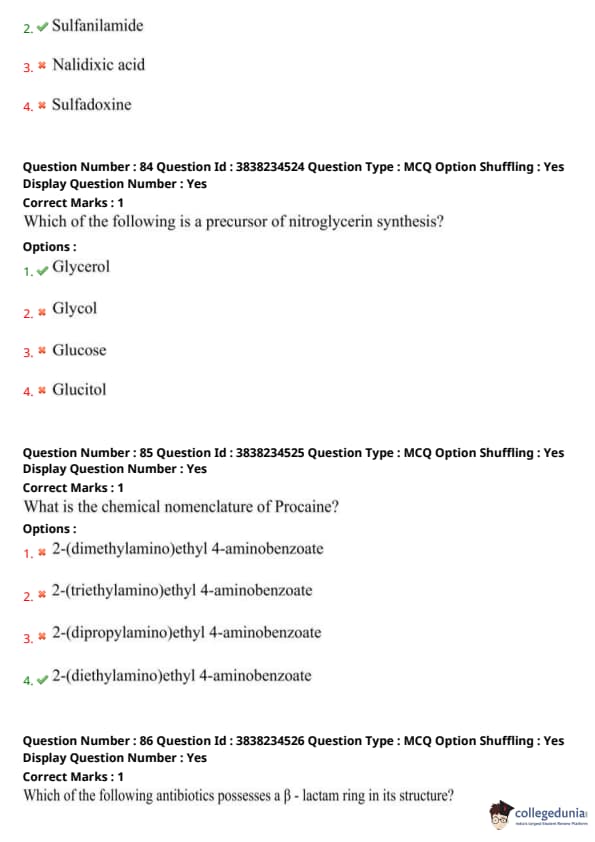
- (2) Sulfanilamide
- (3) Nalidixic acid
- (4) Sulfadoxine
Question 84:
Which of the following is a precursor of nitroglycerin synthesis?
- (1) Glycerol
- (2) Glycol
- (3) Glucose
- (4) Glucitol
Question 85:
What is the chemical nomenclature of Procaine?
- (1) 2-(dimethylamino)ethyl 4-aminobenzoate
- (2) 2-(triethylamino)ethyl 4-aminobenzoate
- (3) 2-(dipropylamino)ethyl 4-aminobenzoate
- (4) 2-(diethylamino)ethyl 4-aminobenzoate
Question 86:
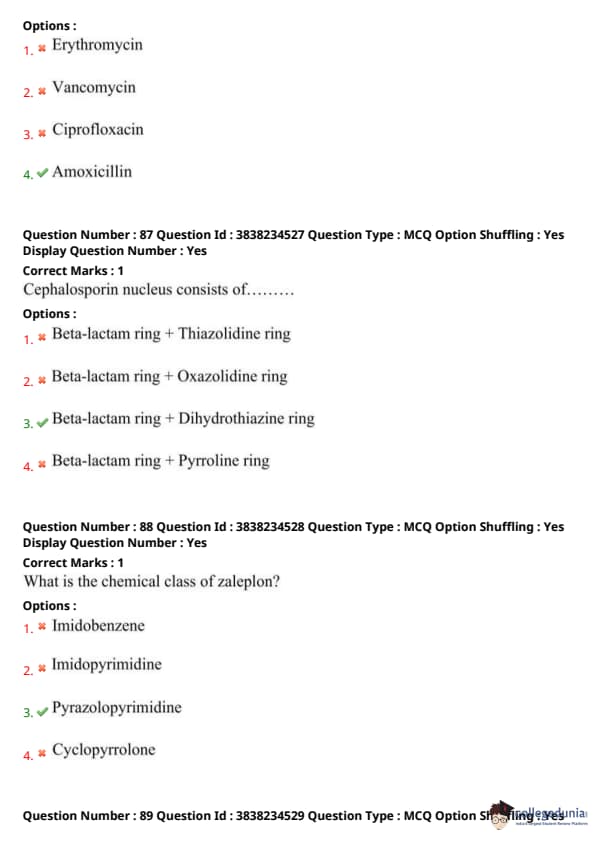
Which of the following antibiotics possesses a \(\beta\)-lactam ring in its structure?
- (1) Erythromycin
- (2) Vancomycin
- (3) Ciprofloxacin
- (4) Amoxicillin
Question 87:
Cephalosporin nucleus consists of \ldots
- (1) Beta-lactam ring + Thiazolidine ring
- (2) Beta-lactam ring + Oxazolidine ring
- (3) Beta-lactam ring + Dihydrothiazine ring
- (4) Beta-lactam ring + Pyrrole ring
Question 88:
What is the chemical class of Zaleplon?
- (1) Imidobenzene
- (2) Imidopyrimidine
- (3) Pyrazolopyrimidine
- (4) Cycloppyrolone
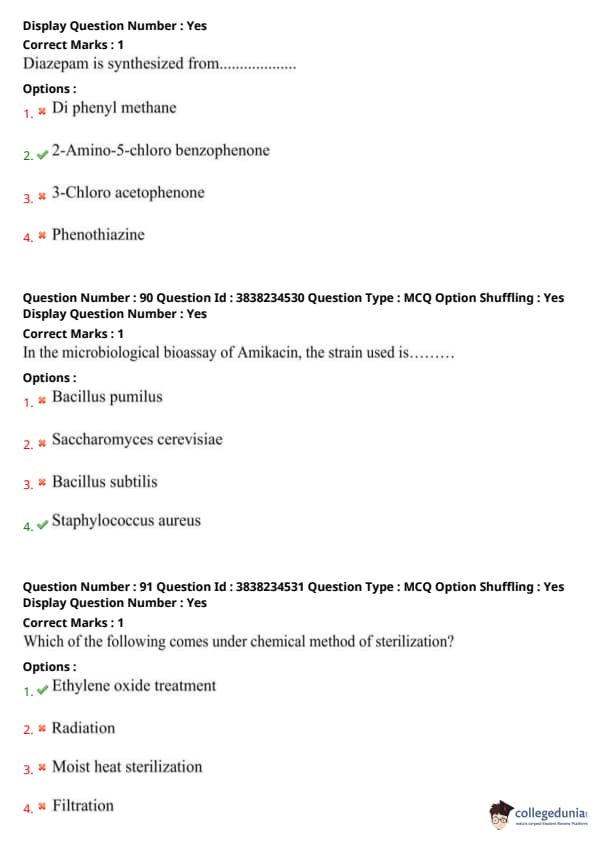
Question 89:
Diazepam is synthesized from \ldots
- (1) Diphenyl methane
- (2) 2-Amino-5-chloro benzophenone
- (3) 3-Chloro acetophenone
- (4) Phenothiazine
Question 90:
In the microbial bioassay of Amikacin, the strain used is \ldots
- (1) Bacillus pumilus
- (2) Saccharomyces cerevisiae
- (3) Bacillus subtilis
- (4) Staphylococcus aureus
Question 91:
Which of the following comes under chemical method of sterilization?
- (1) Ethylene oxide treatment
- (2) Radiation
- (3) Moist heat sterilization
- (4) Filtration
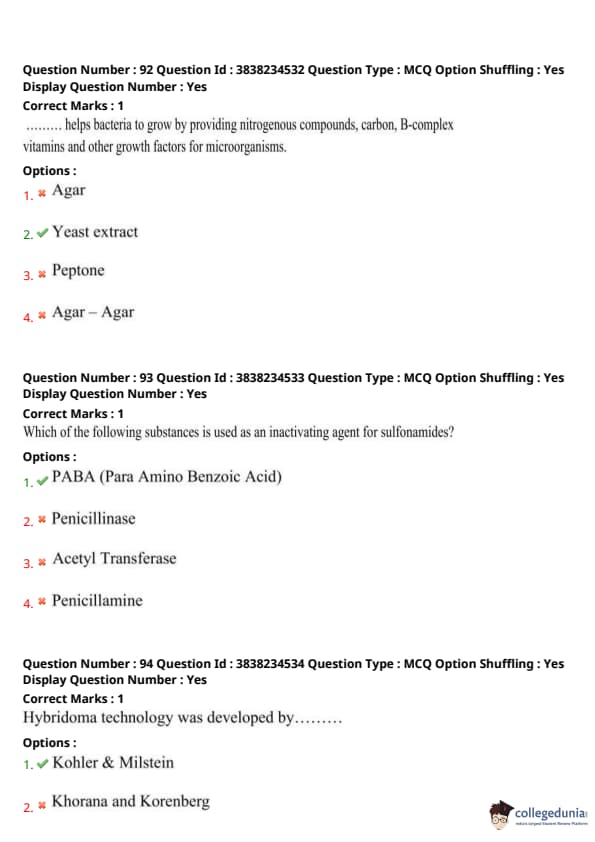
Question 92:
……… helps bacteria to grow by providing nitrogenous compounds, carbon, B-complex vitamins and other growth factors for microorganisms.
- (1) Agar
- (2) Yeast extract
- (3) Peptone
- (4) Agar–Agar
Question 93:
Which of the following substances is used as an inactivating agent for sulfonamides?
- (1) PABA (Para Amino Benzoic Acid)
- (2) Penicillinase
- (3) Acetyl Transferase
- (4) Penicillamine
Question 94:
Hybridoma technology was developed by……….
- (1) Kohler \& Milstein
- (2) Khorana and Korenberg
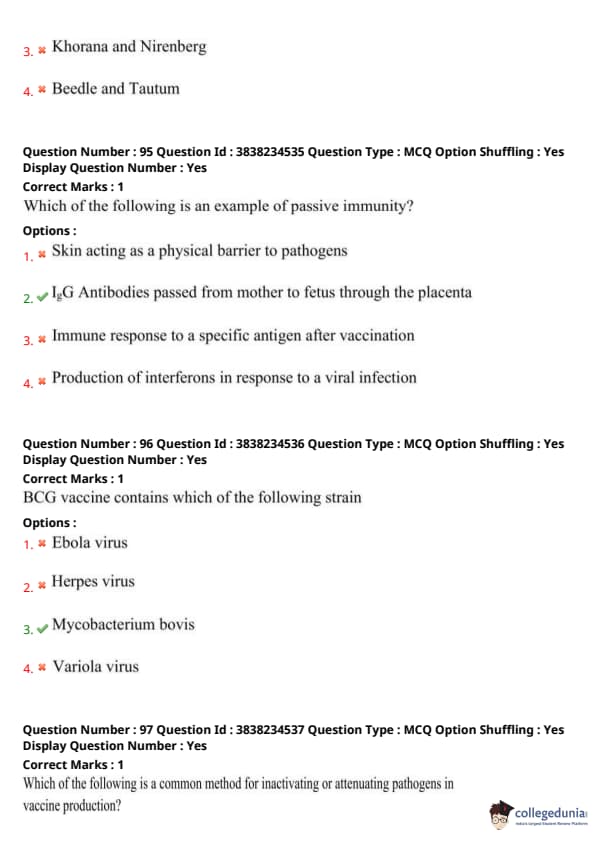
- (3) Khorana and Nirenberg
- (4) Beedle and Tautum
Question 95:
Which of the following is an example of passive immunity?
- (1) Skin acting as a physical barrier to pathogens
- (2) IgG Antibodies passed from mother to fetus through the placenta
- (3) Immune response to a specific antigen after vaccination
- (4) Production of interferons in response to a viral infection
Question 96:
BCG vaccine contains which of the following strain?
- (1) Ebola virus
- (2) Herpes virus
- (3) Mycobacterium bovis
- (4) Variola virus
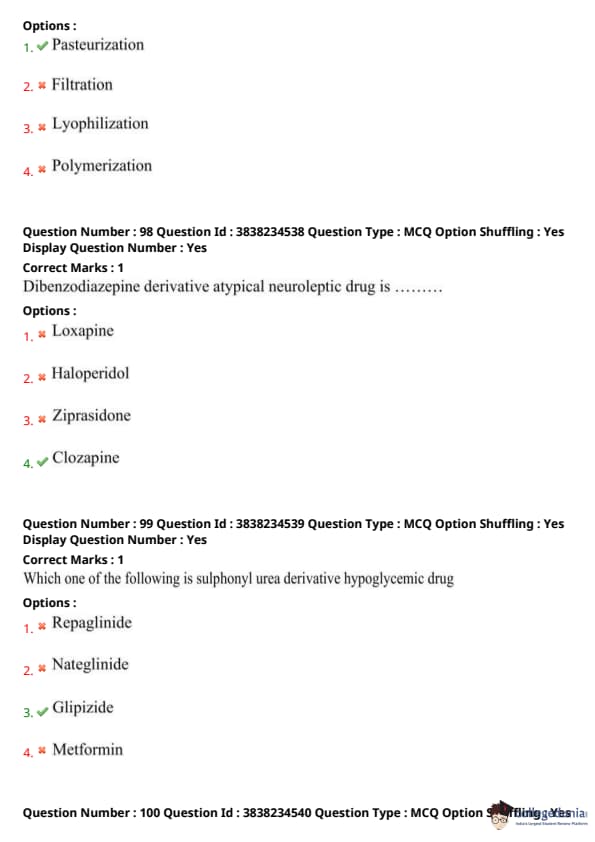
Question 97:
Which of the following is a common method for inactivating or attenuating pathogens in vaccine production?
- (1) Pasteurization
- (2) Filtration
- (3) Lyophilization
- (4) Polymerization
Question 98:
Dibenzodiazepine derivative atypical neuroleptic drug is ……….
- (1) Loxapine
- (2) Haloperidol
- (3) Ziprasidone
- (4) Clozapine
Question 99:
Which one of the following is sulphonyl urea derivative hypoglycemic drug?
- (1) Repaglinide
- (2) Nateglinide
- (3) Glipizide
- (4) Metformin
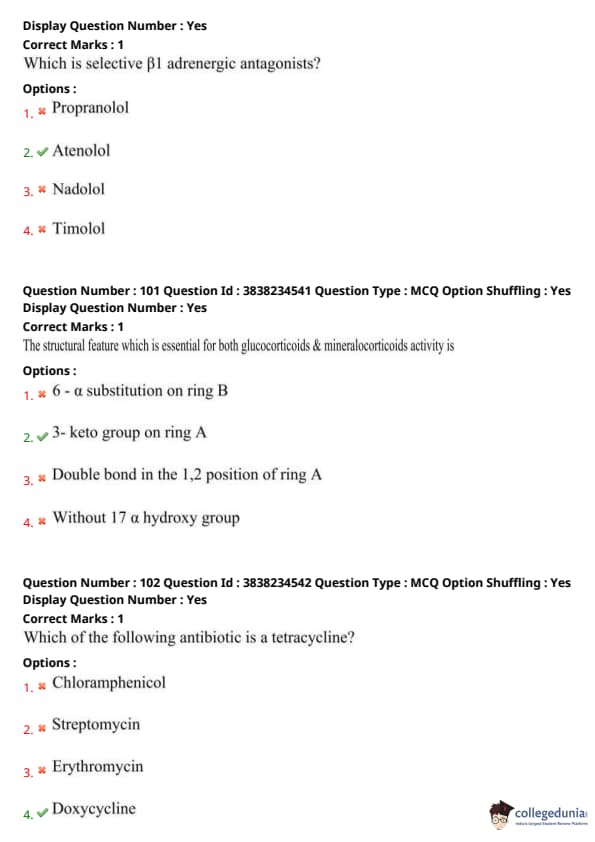
Question 100:
Which is selective \(\beta_1\) adrenergic antagonist?
- (1) Propranolol
- (2) Atenolol
- (3) Nadolol
- (4) Timolol
Question 101:
The structural feature which is essential for both glucocorticoids and mineralocorticoids activity is
- (1) 6-\(\alpha\) substitution on ring B
- (2) 3-keto group on ring A
- (3) Double bond in the 1,2 position of ring A
- (4) Without 17\(\alpha\) hydroxy group
Question 102:
Which of the following antibiotics is a tetracycline?
- (1) Chloramphenicol
- (2) Streptomycin
- (3) Erythromycin
- (4) Doxycycline
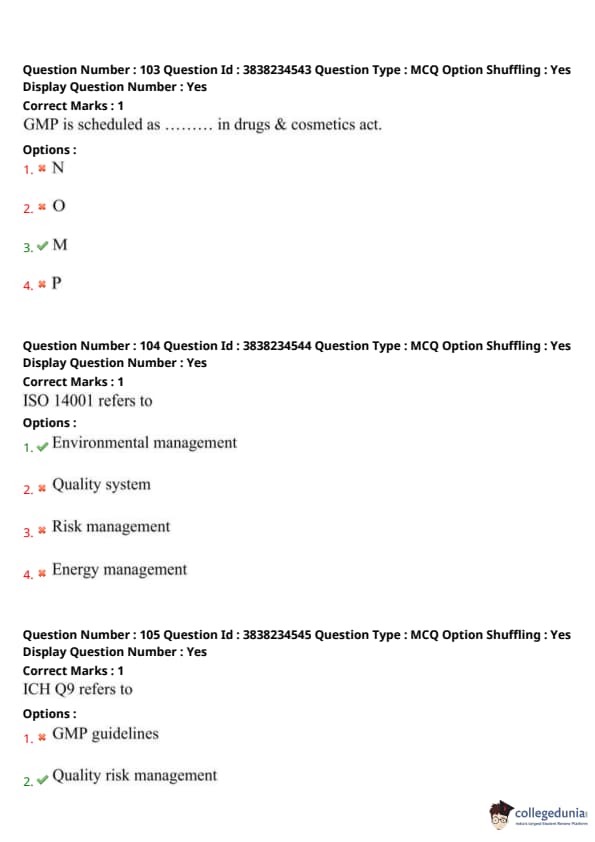
Question 103:
GMP is scheduled as ………. in drugs & cosmetics act.
Question 104:
ISO 14001 refers to
- (1) Environmental management
- (2) Quality system
- (3) Risk management
- (4) Energy management
Question 105:
ICH Q9 refers to
- (1) GMP guidelines
- (2) Quality risk management
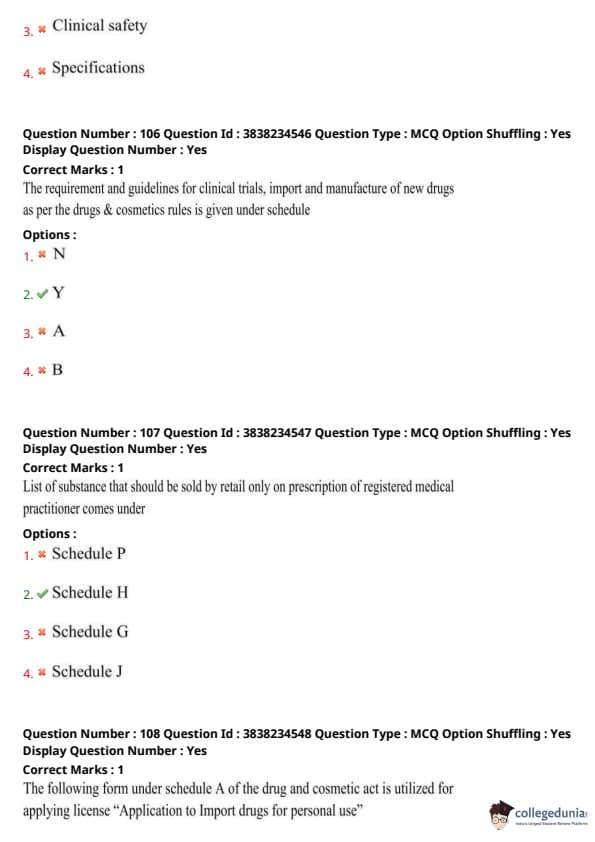
- (3) Clinical safety
- (4) Specifications
Question 106:
The requirement and guidelines for clinical trials, import and manufacture of new drugs as per the drugs & cosmetics rules is given under schedule
Question 107:
List of substances that should be sold by retail only on prescription of registered medical practitioner comes under
- (1) Schedule P
- (2) Schedule H
- (3) Schedule G
- (4) Schedule J
Question 108:
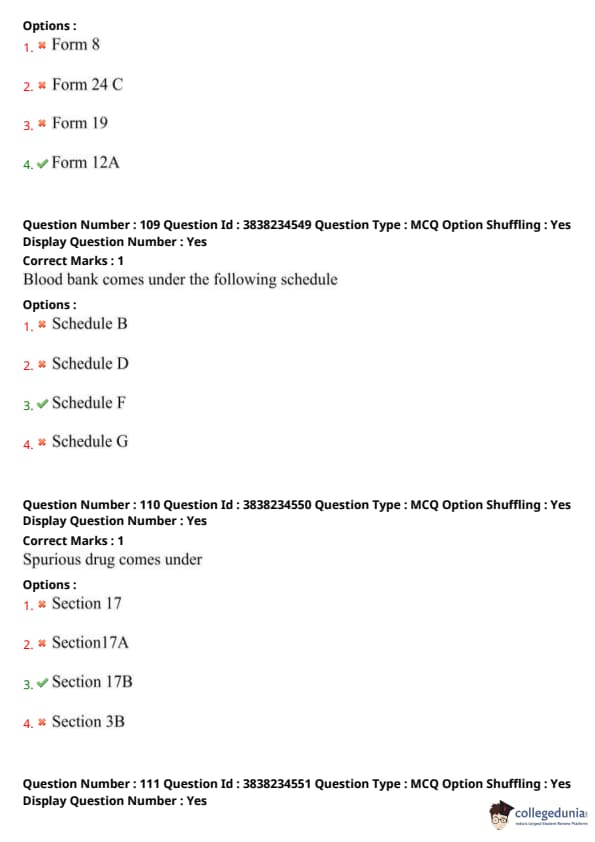
The following form under Schedule A of the Drug and Cosmetic Act is utilized for applying license “Application to Import drugs for personal use”
- (1) Form 8
- (2) Form 24 C
- (3) Form 19
- (4) Form 12A
Question 109:
Blood bank comes under the following schedule
- (1) Schedule B
- (2) Schedule D
- (3) Schedule F
- (4) Schedule G
Question 110:
Spurious drug comes under
- (1) Section 17
- (2) Section 17A
- (3) Section 17B
- (4) Section 3B
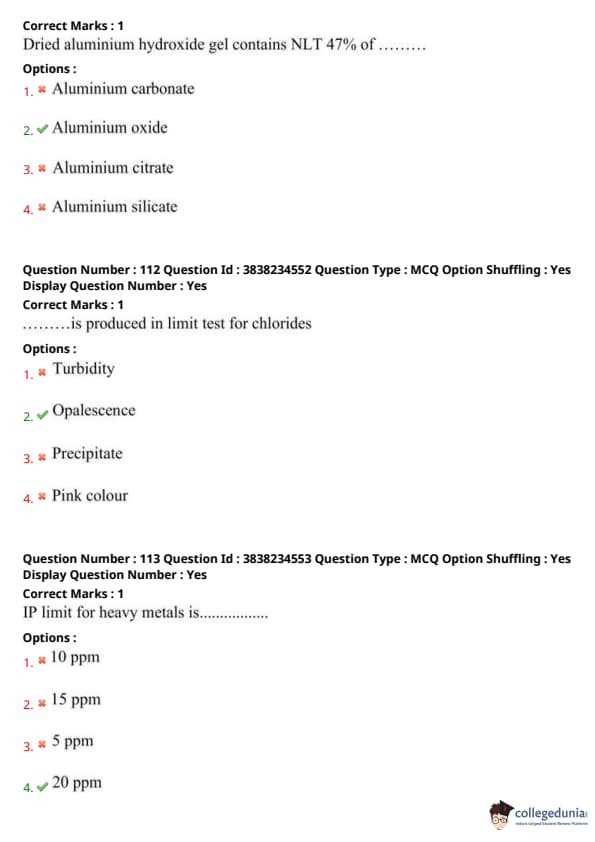
Question 111:
Dried aluminium hydroxide gel contains NLT 47% of ………
- (1) Aluminium carbonate
- (2) Aluminium oxide
- (3) Aluminium citrate
- (4) Aluminium silicate
Question 112:
………. is produced in limit test for chlorides
- (1) Turbidity
- (2) Opalescence
- (3) Precipitate
- (4) Pink colour
Question 113:
IP limit for heavy metals is………………
- (1) 10 ppm
- (2) 15 ppm
- (3) 5 ppm
- (4) 20 ppm
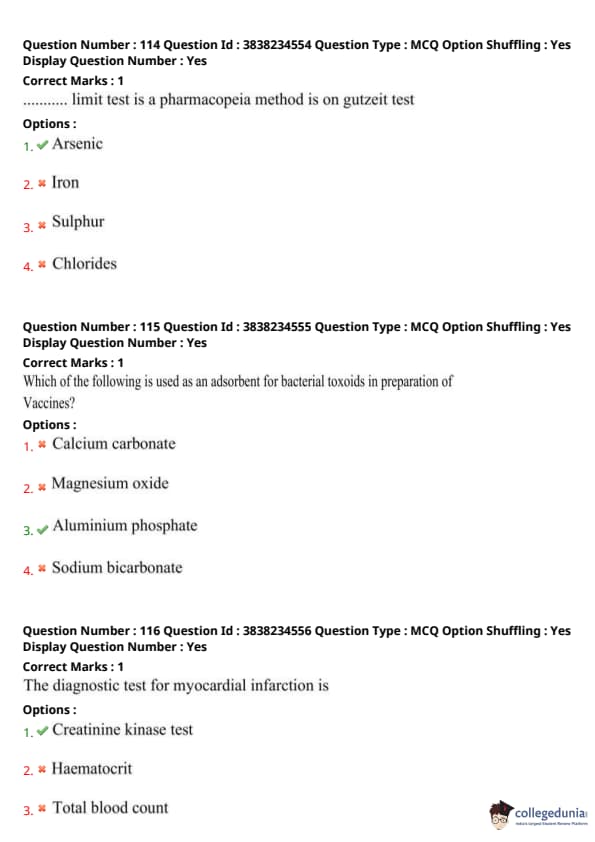
Question 114:
………. limit test is a pharmacopoeia method based on Gutzeit test
- (1) Arsenic
- (2) Iron
- (3) Sulphur
- (4) Chlorides
Question 115:
Which of the following is used as an adsorbent for bacterial toxoids in preparation of vaccines?
- (1) Calcium carbonate
- (2) Magnesium oxide
- (3) Aluminium phosphate
- (4) Sodium bicarbonate
Question 116:
The diagnostic test for myocardial infarction is
- (1) Creatinine kinase test
- (2) Haematocrit
- (3) Total blood count
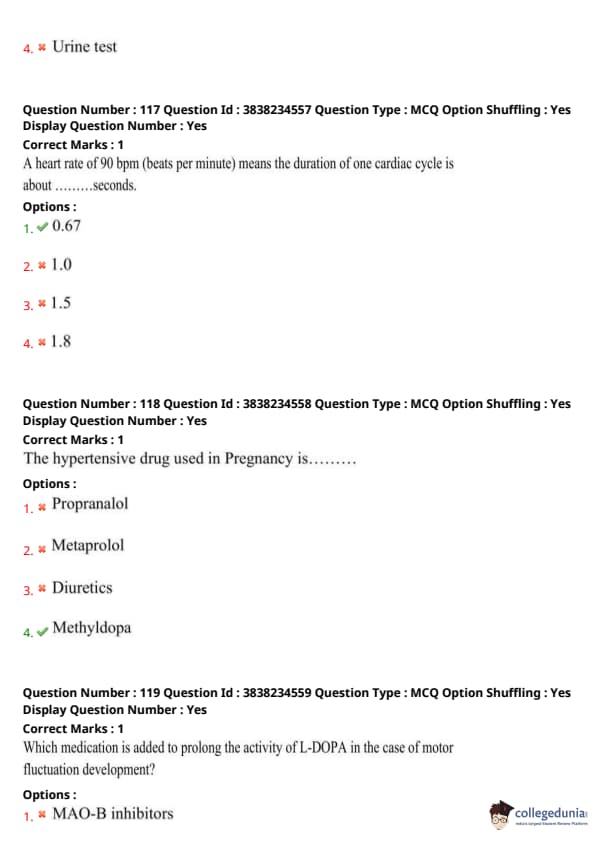
- (4) Urine test
Question 117:
A heart rate of 90 bpm (beats per minute) means the duration of one cardiac cycle is about ………seconds.
- (1) 0.67
- (2) 1.0
- (3) 1.5
- (4) 1.8
Question 118:
The hypertensive drug used in pregnancy is………
- (1) Propranalol
- (2) Metaprolol
- (3) Diuretics
- (4) Methyldopa
Question 119:
Which medication is added to prolong the activity of L-DOPA in the case of motor fluctuation development?
- (1) MAO-B inhibitors
- (2) Catechol-O-methyl transferase inhibitor
- (3) Dopamine inhibitors
- (4) Anti-cholinergic
Question 120:
Therapeutic drug monitoring is advised in all except
- (1) Tacrolimus
- (2) Cyclosporine
- (3) Metformin
- (4) Phenytoin









Comments