




Kerala Plus Two 2025 History (SY-634) Model Question Paper with solutions PDFs are now available for download. The Kerala Plus Two Physics Model Examination 2025 was conducted by the Directorate of Higher Secondary Education (DHSE), Kerala, to help students prepare for the final board exams. The paper is designed as per the latest syllabus and exam pattern prescribed for the academic year 2025–26.
Kerala Plus Two 2025 History (SY-634) Model Question Paper with solutions
| Kerala Plus Two 2025 History (SY-634) Model Question Paper |  Download Download |
Check Solutions |
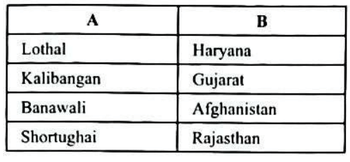
Match column ‘A’ with appropriate items from column ‘B’.
View Solution
Matching the columns:
% Solution
Solution:
The matching of the items in column A with the correct locations in column B is as follows:
1. Lothal - Gujarat:
Lothal is one of the prominent cities of the Harappan (Indus Valley) Civilization, located in the state of Gujarat, India. It is particularly known for its dockyard, which suggests that Lothal was an important port city, involved in trade and maritime activities. The site also yielded numerous artifacts and evidence of advanced urban planning, including a well-designed drainage system. The discovery of seals, beads, and pottery further supports the idea of Lothal being a thriving center of trade. Lothal's strategic location along the trade routes indicates its role in linking the Harappan Civilization with regions in the Persian Gulf and beyond.
2. Kalibangan - Rajasthan:
Kalibangan, located in the state of Rajasthan, is an important archaeological site of the Harappan Civilization. Excavations have revealed evidence of both early and mature Harappan cultures. Kalibangan is notable for its early use of fire altars, which may have been associated with religious rituals. The site also revealed a planned settlement with streets laid out in a grid pattern, typical of the Harappan urban planning style. Additionally, the discovery of pottery and seals at Kalibangan further corroborates its role as a key settlement in the Indus Valley Civilization. Kalibangan provides insight into the agricultural practices and the extent of the Harappan Civilization in the northwestern part of India.
3. Banawali - Haryana:
Banawali, located in the present-day state of Haryana, is another important site of the Harappan Civilization. Excavations at Banawali have revealed a thriving urban settlement with evidence of well-planned structures, including a drainage system. The site is also famous for its unique discovery of a large granary, which points to advanced agricultural practices and grain storage. The presence of pottery, beads, and seals at Banawali further supports the idea that it was a significant center of trade and commerce within the Harappan Civilization. Banawali provides valuable insights into the lifestyle and trade practices of the people living in the region.
4. Shortughai - Afghanistan:
Shortughai, located in present-day Afghanistan, is an important archaeological site that shows the extent of the Harappan Civilization's trade and cultural exchange with Central Asia. Shortughai was part of a trade network that linked the Harappan Civilization to the region around modern-day Afghanistan. Excavations at Shortughai have revealed evidence of Harappan-style pottery, beads, and seals, which suggests that the people of Shortughai were involved in trade with the Indus Valley. The site also shows evidence of early urbanization and cultural influences that helped connect South Asia with the broader ancient world.
Conclusion:
The matching of the sites from column A with their respective locations in column B reveals the widespread reach and influence of the Harappan Civilization across South Asia and into Central Asia. Sites like Lothal, Kalibangan, Banawali, and Shortughai illustrate the cultural, economic, and trade networks that existed during the time of the Harappan Civilization. These cities were not isolated, but were connected through complex trade routes and cultural exchanges, contributing to the growth of the civilization.
Quick Tip: The Harappan Civilization, also known as the Indus Valley Civilization, has sites spread across the present-day countries of India, Pakistan, and Afghanistan.
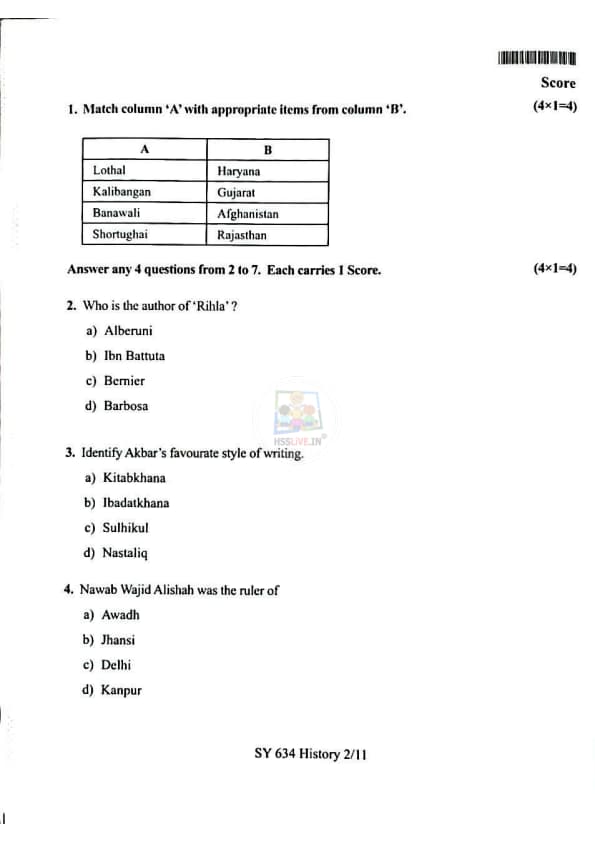
Who is the author of 'Rihla'?
View Solution
Step 1: Understand the term 'Rihla'.
'Rihla' is an Arabic word meaning 'journey'It is a famous travelogue written by the Moroccan traveler Ibn Battuta, who extensively traveled across the Muslim world in the 14th century
Step 2: Identify the correct author.
Ibn Battuta is the author of 'Rihla', a detailed account of his travels that covers various regions including Africa, Asia, and the Middle East
Step 3: Eliminate incorrect options.
- Alberuni was a Persian scholar and traveler but not the author of 'Rihla'
- Bernier was a French physician and traveler but did not write 'Rihla'
- Barbosa was a Portuguese traveler but did not author 'Rihla'
Step 4: Conclusion.
Therefore, the author of 'Rihla' is Ibn Battuta
Final Answer:
Ibn Battuta Quick Tip: Ibn Battuta’s 'Rihla' provides detailed insights into the cultures, societies, and politics of the regions he visited.
Identify Akbar's favourite style of writing
View Solution
Step 1: Understand the term Nasta'liq.
Nasta'liq is a cursive style of writing Persian script, and it became very popular during the Mughal era, particularly during Akbar's reignAkbar himself favored this calligraphy style and encouraged its use for official and artistic purposes
Step 2: Analyze the other options.
- Kitabkhana refers to the royal library during Akbar's reign but is not a style of writing
- Ibadatkhana was a place for religious discussions but not related to writing style
- Sulhikul refers to Akbar's policy of religious tolerance, not a writing style
Step 3: Conclusion.
Akbar's favorite style of writing was Nasta'liq, a distinctive Persian calligraphy style
Final Answer:
Nasta'liq Quick Tip: Nasta'liq is one of the most elegant and flowing styles of Persian calligraphy, favored by many Mughal emperors, including Akbar.
Nawab Wajid Alishah was the ruler of
View Solution
Step 1: Identify Nawab Wajid Alishah's role.
Nawab Wajid Alishah was the last ruler of Awadh (also known as Oudh), a region in northern IndiaHis reign ended in 1856, when the British annexed Awadh during the Indian Rebellion of 1857
Step 2: Analyze the other options.
- Jhansi was ruled by Rani Lakshmibai, not Nawab Wajid Alishah
- Delhi was ruled by the Mughal emperors, with Bahadur Shah Zafar being the last emperor during the British colonial period
- Kanpur was a major site of the rebellion but was not ruled by Nawab Wajid Alishah
Step 3: Conclusion.
Nawab Wajid Alishah was the ruler of Awadh
Final Answer:
Awadh Quick Tip: Nawab Wajid Alishah's reign marked the end of the independent rule of Awadh, which was annexed by the British in 1856.
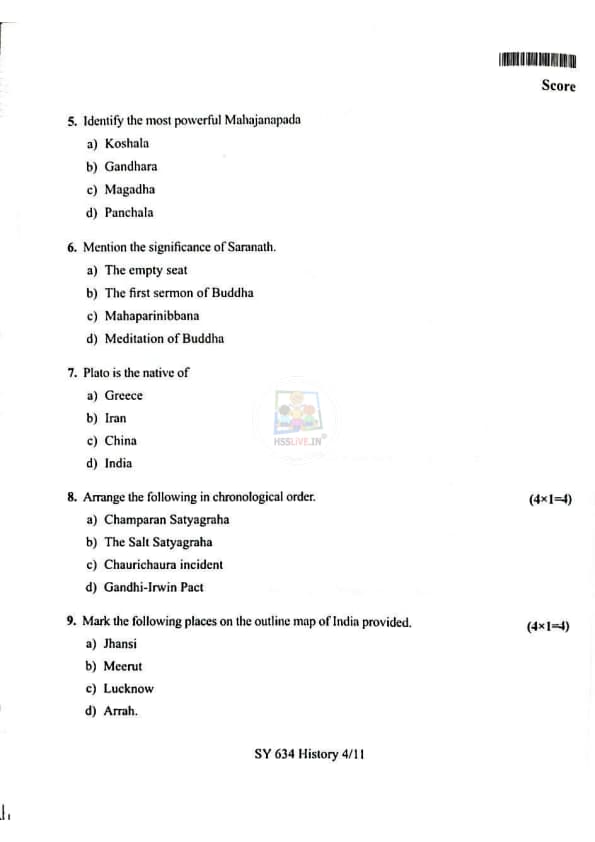
Identify the most powerful Mahajanapada
View Solution
Step 1: Understand Mahajanapadas.
Mahajanapadas were the sixteen great kingdoms or republics that existed during the 6th century BCE in ancient India
Step 2: Identify the most powerful Mahajanapada.
Magadha is considered the most powerful and prosperous MahajanapadaIt later became the core of the Maurya and Gupta empires, two of India's greatest empires
Step 3: Eliminate incorrect options.
- Koshala was a significant kingdom but did not reach the power of Magadha
- Gandhara was located in the northwestern region, not as dominant as Magadha
- Panchala was a smaller kingdom compared to Magadha
Step 4: Conclusion.
Magadha was the most powerful Mahajanapada, known for its military strength and economic prosperity
Final Answer:
Magadha Quick Tip: Magadha played a central role in the formation of ancient Indian empires and was key to the rise of Buddhism and Jainism.
Mention the significance of Sarnath.
View Solution
Step 1: Understand the significance of Sarnath.
Sarnath is a significant Buddhist site located near Varanasi, IndiaIt is where Lord Buddha gave his first sermon, known as the "Dhammacakkappavattana Sutta", after attaining enlightenment at Bodh Gaya
Step 2: Identify the first sermon.
In Sarnath, Buddha delivered his first sermon to his five former companions, marking the beginning of his teaching journey and the establishment of Buddhism
Step 3: Eliminate incorrect options.
- The empty seat refers to the seat of meditation in Buddhist culture but is not specifically tied to Sarnath
- Mahaparinibbana refers to the death and final Nirvana of Buddha, which occurred in Kushinagar
- Meditation of Buddha refers to the process of Buddha's enlightenment but is not associated with Sarnath directly
Step 4: Conclusion.
Therefore, the correct significance of Sarnath is that it is the site where Buddha delivered his first sermon
Final Answer:
The first sermon of Buddha Quick Tip: Sarnath remains one of the most important pilgrimage sites for Buddhists due to its association with Buddha's teachings.
Plato is the native of
View Solution
Step 1: Identify Plato's origins.
Plato was a classical Greek philosopher, born in Athens, Greece, around 428-348 BCEHe is considered one of the most important figures in Western philosophy
Step 2: Eliminate incorrect options.
- Iran, China, and India were not the places of Plato's birth or origin
Step 3: Conclusion.
Therefore, Plato's native place is Greece
Final Answer:
Greece Quick Tip: Plato founded the Academy in Athens, one of the first institutions of higher learning in the Western world.
Arrange the following in chronological order.
View Solution
Step 1: Identify the chronological order.
The sequence of events is as follows:
- (A) Champaran Satyagraha: This was the first major Satyagraha movement led by Mahatma Gandhi in 1917 to address the grievances of indigo farmers in Champaran, Bihar.
- (B) The Salt Satyagraha: This was the next major movement in 1930 led by Gandhi, aimed at protesting the British salt tax.
- (C) Chaurichaura incident: This incident occurred in 1922 during the Non-Cooperation Movement, where a violent clash between the police and the protesters led to the deaths of 22 police officers.
- (D) Gandhi-Irwin Pact: The pact was signed in 1931, which marked a significant political development during the Salt Satyagraha, leading to the suspension of civil disobedience and the release of political prisoners.
Step 2: Conclusion.
The chronological order is:
1. (A) Champaran Satyagraha
2. (C) Chaurichaura incident
3. (B) The Salt Satyagraha
4. (D) Gandhi-Irwin Pact
Final Answer:
Champaran Satyagraha, Chaurichaura incident, The Salt Satyagraha, Gandhi-Irwin Pact Quick Tip: The Salt Satyagraha and the Gandhi-Irwin Pact were key moments in the Indian independence movement, marking Gandhi's leadership and the shift in the nature of the freedom struggle.
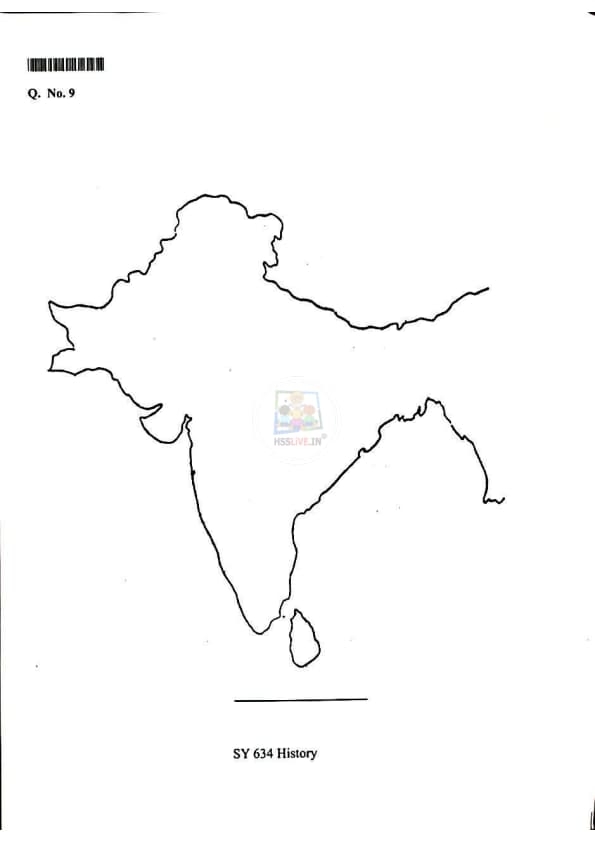
Mark the following places on the outline map of India provided.
View Solution
Step 1: Marking locations on the map.
- Jhansi: Located in the state of Uttar Pradesh, known for its significance during the 1857 Rebellion.
- Meerut: Also in Uttar Pradesh, it played a crucial role in the 1857 Rebellion, where it began.
- Lucknow: The capital city of Uttar Pradesh, which was an important center of resistance during the 1857 Rebellion.
- Arrah: Located in Bihar, it was also an important site during the 1857 Rebellion, where a significant battle took place.
Step 2: Conclusion.
Mark these places on the map as per the details above. These locations are significant for their role in Indian history, particularly during the Revolt of 1857.
Final Answer:
Mark Jhansi, Meerut, Lucknow, and Arrah on the map. Quick Tip: These locations were significant during the First War of Indian Independence (1857), which played a pivotal role in India's freedom struggle.
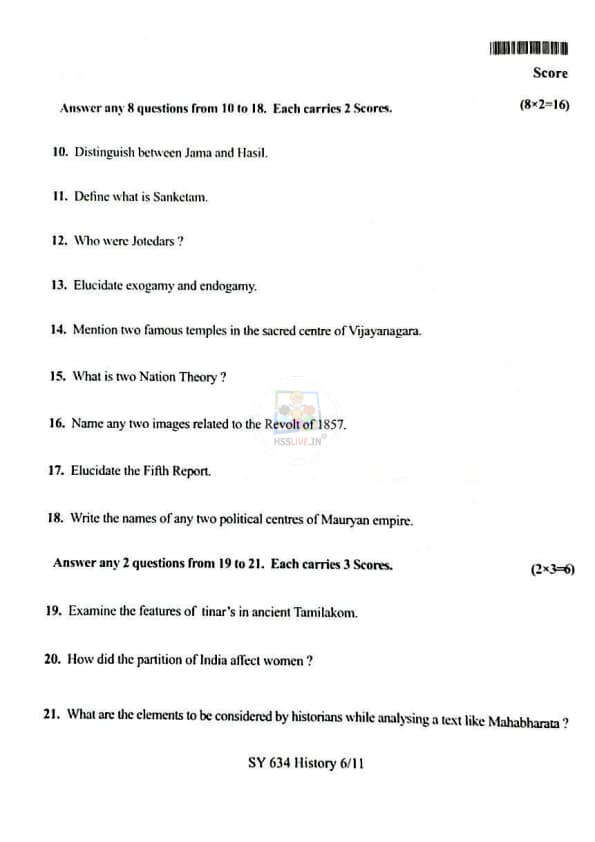
Distinguish between Jama and Hasil.
View Solution
The terms Jama and Hasil are key concepts in accounting and financial record-keeping, particularly in historical contexts related to tax collection and revenue management. They both refer to amounts of money but differ in the way they are calculated and interpreted. Below is a detailed distinction between the two:
Jama:
Jama refers to the total or gross amount of money collected or accumulated. In the context of revenue or tax collection, Jama represents the total sum before any deductions, costs, or expenses are subtracted. It is essentially the gross income or total receipts. This term was commonly used in ancient records to denote the total revenue from taxes or other government sources. For instance, if the tax collectors report the total amount collected from a district, that amount is referred to as Jama. It gives an overview of the gross income, without considering any deductions that may have occurred in the process.
Hasil:
Hasil, on the other hand, refers to the net amount of money after deductions, expenses, or losses have been accounted for. This is the actual revenue or profit that remains after all costs (such as administrative fees, tax collection expenses, etc.) are subtracted from the total (Jama). Hasil gives a clearer picture of the actual income or funds available after all necessary deductions, providing a more accurate representation of what is ultimately received or available for further use.
Key Differences:
1. Jama is the gross amount, whereas Hasil is the net amount after accounting for deductions.
2. Jama gives an overview of total receipts or income, while Hasil represents the actual income or profit.
3. In historical accounts, Jama could represent total tax collection, whereas Hasil would indicate the net amount after deducting any necessary administrative or collection costs.
Example:
For example, if the total amount of tax collected from a region (Jama) was Rs. 1,00,000, and the tax collection costs amounted to Rs. 10,000, the Hasil would be Rs. 90,000, which is the net amount available after expenses. This shows the difference between gross and net revenue.
Conclusion:
In summary, Jama refers to the gross income or total amount collected, while Hasil represents the net income or the actual amount left after deducting expenses or losses. Understanding these terms is crucial for analyzing historical financial records, particularly in the context of tax collection and revenue management.
Quick Tip: Jama is the total collected amount, while Hasil is the net amount left after deducting expenses and costs.
Define what is Sanketam.
View Solution
Sanketam is a term commonly used to refer to a system of signs, symbols, or codes that represent information or ideas in a condensed form. In various ancient texts, particularly in India, Sanketam was used as a shorthand or symbolic system to convey philosophical, mathematical, or religious ideas in a more concise manner. Sanketam can be seen as a form of communication that simplifies complex information into easily understandable symbols or codes, which can then be decoded by the intended audience.
The word Sanketam comes from the Sanskrit language and has been traditionally used in contexts such as cryptic writing, symbolic representation in sacred texts, and in mathematical or astronomical calculations. The main purpose of Sanketam was to communicate complex ideas more efficiently and to make the process of writing and interpreting easier. Below is a deeper look at how Sanketam was used in various fields:
1. Sanketam in Religious Texts:
In many ancient Indian religious texts, Sanketam was used to represent spiritual or philosophical concepts in symbolic form. For example, in the Vedic scriptures, certain codes and symbols were used to represent divine powers or cosmic principles. These were often used in rituals and prayers, allowing for a more profound connection between the practitioner and the divine, beyond the literal meanings of words.
2. Sanketam in Mathematics and Astronomy:
In the fields of mathematics and astronomy, Sanketam was used to simplify calculations and astronomical observations. Ancient Indian scholars, such as Aryabhata and Brahmagupta, used Sanketam to denote mathematical operations, distances, or time cycles, enabling quicker and more efficient computation.
3. Sanketam in Architecture:
In the context of ancient Indian architecture, Sanketam was used in the form of symbolic representations to depict measurements, designs, and construction techniques. These symbolic representations helped in communicating complex architectural details, especially in large-scale temple or palace constructions, where written language was insufficient.
4. Sanketam in Linguistics:
Sanketam was also used in linguistics, especially in terms of cryptography and shorthand. The symbolic codes allowed people to write messages quickly, especially in administrative and royal records, which were needed for day-to-day communication in ancient societies.
Conclusion:
In a broader sense, Sanketam refers to any symbolic system that simplifies and condenses ideas, concepts, or instructions into a form that is easier to understand or interpret. It is a vital tool in many fields, enabling efficient communication and recording of knowledge. The usage of Sanketam continues to hold significance in modern cryptography, where symbolic codes and ciphers are still in use.
Quick Tip: Sanketam is a symbolic system used for condensing complex ideas into simpler forms, often used in ancient texts, mathematics, and cryptography.
Who were Jotedars?
View Solution
Jotedars were a class of wealthy landowners in rural Bengal during the British colonial era. They were part of the zamindari system that existed under British rule, where the land was primarily owned by a few large landholders who exercised control over the peasants working on the land. Jotedars were significant landowners who held substantial tracts of land, but unlike the zamindars, they were typically smaller landowners who played an intermediary role between the peasants and the British authorities.
The Jotedars' primary function was to collect revenue from the peasants who worked on their land and then remit that revenue to the colonial government. However, their role went beyond simply collecting taxes. In many cases, they were seen as exploitative figures who imposed heavy rents on the peasants, which often led to widespread economic distress. The Jotedars had control over the agricultural production in their areas and used their power to maintain dominance over the local economy.
In addition to their landownership and economic role, Jotedars also had social and political power. They were influential in local affairs, and their influence extended beyond just the agricultural sector. They often played a crucial role in shaping the social structure of rural Bengal, reinforcing the hierarchical caste-based system that existed at the time. They could manipulate the system to their advantage by maintaining the poverty of the peasants, ensuring a steady flow of revenue and labor to sustain their wealth.
However, this exploitation led to resentment from the peasants, which eventually resulted in several uprisings and revolts during the colonial period. One of the most significant movements that targeted the Jotedars was the peasant movement in Bengal, where the tenants and laborers began to resist the oppressive practices of these landowners. As a result of these movements, the Jotedars gradually lost much of their power, especially after the abolition of the zamindari system post-independence.
To summarize, Jotedars were wealthy landowners in rural Bengal who played a significant role in the economic and social structure during the colonial period, often exploiting peasants for their own gain. Their role in the colonial economy was complex, as they were both agents of the British government and figures of local authority who maintained control over the rural populace. Quick Tip: The Jotedars were an important part of the colonial agrarian system in Bengal. Their role was marked by both economic exploitation and social control over the rural population, leading to resistance movements by the peasants.
Elucidate exogamy and endogamy.
View Solution
Exogamy and endogamy are terms used to describe the social rules and customs regarding marriage and relationships between individuals from different social, cultural, or ethnic groups. They reflect the norms and boundaries of whom individuals are allowed to marry and form relationships with, based on social, cultural, and sometimes religious considerations. Below is a detailed elucidation of both concepts:
Exogamy:
Exogamy refers to the social rule or custom of marrying outside a specific social, cultural, religious, or ethnic group. In exogamous societies, individuals are encouraged or required to marry someone from a different group. This practice helps to form alliances between different social groups, enhances diversity, and can prevent the risks of inbreeding. Exogamy fosters the blending of different cultural traditions, beliefs, and practices.
Example: In some tribal societies, individuals are encouraged to marry someone from a different tribe, thereby creating stronger ties between tribes and promoting genetic diversity.
Endogamy:
Endogamy, on the other hand, refers to the social rule or custom of marrying within a specific social, cultural, religious, or ethnic group. In endogamous societies, individuals are expected or required to marry someone from their own group, ensuring that cultural, religious, or ethnic traditions and practices remain intact. Endogamy maintains the purity of group identity and prevents the dilution of cultural norms.
Example: In some religious or caste-based societies, people are required to marry within their own religion or caste. For instance, in some Hindu communities, marriage within the same caste is preferred or mandated by social norms.
Comparison of Exogamy and Endogamy:
- Exogamy promotes intergroup marriages and alliances, whereas endogamy encourages or mandates marriages within the same group.
- Exogamy increases social interaction, cultural exchange, and diversity, while endogamy helps preserve cultural identity and group unity.
- Exogamous practices are more common in societies that emphasize social alliances and diversity, whereas endogamous practices are typically observed in communities that prioritize group continuity and cohesion.
Conclusion:
In summary, exogamy and endogamy represent opposite marriage practices. Exogamy involves marrying outside one's social or cultural group, fostering broader social connections and diversity. Endogamy, by contrast, emphasizes marrying within one's group, preserving cultural traditions and social unity. Both practices play significant roles in the social structure of different societies.
Quick Tip: Exogamy promotes diversity and social alliances, while endogamy strengthens group identity and cultural continuity.
Mention two famous temples in the sacred centre of Vijayanagara.
View Solution
The sacred centre of Vijayanagara, located in present-day Hampi, is home to several famous temples that reflect the grandeur of the Vijayanagara Empire. Two of the most notable temples are:
Step 1: Virupaksha Temple.
The Virupaksha Temple is one of the most famous temples in Hampi, dedicated to Lord Shiva. It is one of the oldest functioning temples in India and serves as the main center of worship in the Vijayanagara Empire. It has beautiful architecture with intricate carvings and a large central hall.
Step 2: Vittala Temple.
The Vittala Temple is another iconic temple in the sacred center, dedicated to Lord Vishnu. It is renowned for its stone chariot and musical pillars. The temple complex is an architectural marvel and reflects the religious and cultural importance of the Vijayanagara Empire.
Step 3: Conclusion.
Both of these temples are architectural and religious treasures that highlight the prosperity of Vijayanagara during its peak.
Quick Tip: The temples in the sacred center of Vijayanagara are significant not only for their religious importance but also for their architectural brilliance.
What is Two Nation Theory?
View Solution
The Two Nation Theory was the ideological foundation for the creation of Pakistan. The theory posits that Hindus and Muslims are two distinct nations, with their own customs, religion, and traditions, and therefore, they cannot live together in a unified nation. This theory was first articulated by Sir Syed Ahmad Khan and later popularized by Muhammad Ali Jinnah.
Step 1: Historical Context.
The Two Nation Theory emerged during the British colonial period in India. The increasing political and social divide between Hindus and Muslims, especially after the failure of the Congress Party to address Muslim concerns, led to the formulation of this theory.
Step 2: Impact on Partition.
The theory ultimately led to the demand for a separate Muslim state, which culminated in the creation of Pakistan in 1947. The partition of India into two nations—India and Pakistan—was based on the belief that Hindus and Muslims could not coexist in a single nation.
Step 3: Conclusion.
The Two Nation Theory was a significant factor in the partition of India and the creation of Pakistan, marking a critical juncture in the subcontinent's history.
Quick Tip: The Two Nation Theory played a central role in the political discourse of British India and its subsequent partition.
Name any two images related to the Revolt of 1857.
View Solution
The Revolt of 1857, also known as the First War of Indian Independence, was a significant event in Indian history. Several images and illustrations have been associated with this revolt, depicting the struggles, leaders, and major events. Two notable images related to the Revolt of 1857 are:
1. Image of the Siege of Delhi:
One of the most iconic images shows the British forces during the siege of Delhi, where the sepoys and their leaders, like Bahadur Shah Zafar, fought against the British forces. This image captures the intense battle that took place as the British attempted to recapture the city.
2. Image of Rani Lakshmibai Leading Her Troops:
Rani Lakshmibai, the queen of Jhansi, became a symbol of resistance during the revolt. The image of her leading her troops in battle against the British is widely recognized as an emblem of bravery and valor.
These images represent the courage and sacrifice shown by Indian leaders and common people during the revolt. Quick Tip: The Revolt of 1857 was not only a military uprising but also a symbol of India's struggle for independence, making it an important historical event.
Elucidate the Fifth Report.
View Solution
Step 1: Introduction to the Fifth Report.
The Fifth Report, officially known as the "Fifth Report on the Affairs of the East India Company," was presented in 1812 by the British Parliament. This report was a critical document that provided detailed information about the functioning of the East India Company and its operations in India. The report aimed to examine the impact of the Company’s rule on India and the welfare of its citizens.
Step 2: Main Highlights of the Fifth Report.
- The Fifth Report emphasized the East India Company’s exploitation of Indian resources and the corruption among its officials. It highlighted the financial benefits that the British were reaping from India while the local population faced poverty and deprivation.
- The report pointed out the systematic mismanagement of the revenue collection system, which led to widespread suffering and economic instability in India.
- It was instrumental in laying the groundwork for reforms in the administration of the British East India Company, although many of these reforms were designed to benefit the British rather than the Indian population.
Step 3: Long-term Impact.
The Fifth Report helped shape public opinion in Britain and was one of the factors that led to the subsequent reforms in India, including the introduction of the Regulation Act of 1833 and the eventual administrative changes after the revolt of 1857. It also contributed to the growing sentiment against the East India Company’s monopoly over Indian affairs. Quick Tip: The Fifth Report is significant as it exposed the flaws in the administration of the East India Company and called for reforms, though it was still in the interests of the British rulers.
Write the names of any two political centres of Mauryan empire.
View Solution
The Mauryan Empire, one of the most prominent empires in ancient India, had several important political centres. Two of the main political centres of the Mauryan Empire were:
1. Pataliputra:
Pataliputra (modern-day Patna) was the capital of the Mauryan Empire and served as the political and administrative heart of the empire. It was strategically located at the confluence of the Ganges and Son rivers. The city flourished under the reign of Chandragupta Maurya and later under Ashoka. Pataliputra was also a cultural and intellectual hub during the Mauryan period.
2. Taxila:
Taxila, located in modern-day Pakistan, was another major political and educational centre of the Mauryan Empire. It played a crucial role in trade, administration, and governance during the Mauryan era. Taxila was known for its university, where students from all over the world came to study. It was strategically located along the trade routes connecting Central Asia and India.
These two cities were pivotal in the functioning of the Mauryan Empire and were key in its administration, governance, and economic development.
Quick Tip: Pataliputra and Taxila were major centres of political power and cultural growth during the Mauryan Empire.
Examine the features of tinai’s in ancient Tamilakam.
View Solution
In ancient Tamilakam, the concept of Tinai was a key feature of the classical Tamil literature and society. It referred to the idea of natural or geographical divisions of land and the corresponding way of life, with each Tinai representing a specific landscape and its associated human activities, emotions, and practices. The concept of Tinai was prominently featured in Sangam literature, which is one of the oldest collections of Tamil poems. The Tinais are classified into five distinct categories, each associated with a specific environment and type of human activity.
1. Mullai (Forest):
This Tinai represents the forest region, where pastoral activities and the life of shepherds are depicted. It is associated with themes of love, longing, and separation. The forest is often considered a place of beauty and tranquility.
2. Marutham (Agricultural Land):
Marutham represents the cultivated or agricultural land, where farming is the primary activity. It symbolizes wealth, prosperity, and the settled lifestyle of rural farmers. This Tinai is also linked to themes of domestic life, peace, and harmony.
3. Neithal (Coastal Land):
Neithal refers to the coastal region, associated with fishermen and their lifestyle. It is often connected with themes of departure, longing, and emotional separation, given the connection to the sea and travel.
4. Palai (Desert or Arid Land):
Pali represents the barren or desert land, characterized by hardship and struggle. This Tinai reflects themes of war, battle, and survival, as well as the difficulty of life in a harsh environment.
5. Kurinji (Hilly or Mountainous Region):
Kurinji is the mountainous region, associated with themes of love and beauty. The hilly terrains were often depicted as places of intense emotion, separation, and devotion.
Conclusion:
The concept of Tinai is significant in understanding the connection between the environment and human life in ancient Tamilakam. It reflects the harmony between nature and society, with each landscape influencing the culture, emotions, and activities of its inhabitants.
Quick Tip: The concept of \textbf{Tinai} in ancient Tamilakam highlights the close relationship between geography, lifestyle, and emotional expressions in Tamil literature.
How did the partition of India affect women?
View Solution
The partition of India in 1947 was a significant event in the history of South Asia, resulting in the division of British India into two independent nations, India and Pakistan. While the partition was a political and territorial divide, it had a profound impact on women, with many experiencing physical, emotional, and psychological trauma. Below is an analysis of how the partition of India affected women:
1. Physical Violence and Rape:
One of the most severe consequences for women during the partition was widespread violence, including sexual assault and rape. Women became victims of communal riots, and many were abducted, raped, and tortured by people from the opposite community. The violence was used as a tool of humiliation and dominance, particularly in regions where large-scale migration occurred between India and Pakistan.
2. Displacement and Migration:
With the partition, millions of people were forced to migrate from one country to another, often under extreme conditions. Women, particularly those from marginalized communities, faced additional hardships during the migration. The displacement led to a loss of homes, security, and a sense of belonging, as women were forced to leave behind their homes, land, and social networks.
3. Loss of Identity and Status:
During the partition, many women were separated from their families and lost their identities. Some women were forcefully married to strangers, while others were abandoned by their families. The social stigma attached to women who had been abducted or raped during the partition was profound, and many of them had to live with the shame and isolation.
4. Role in Rebuilding Society:
Despite the trauma and challenges, many women played an essential role in rebuilding their communities and society after the partition. Some women became leaders of organizations that focused on the rehabilitation and rescue of abducted women, while others supported their families through the hardships of displacement. Their resilience contributed to the post-partition recovery process, but the trauma endured by many women was long-lasting.
Conclusion:
The partition of India had devastating consequences for women, as they were disproportionately affected by the violence, displacement, and social upheaval. While many women showed incredible strength in the face of these challenges, the long-term effects of the partition on women's lives are still felt in South Asia today.
Quick Tip: Women suffered deeply during the partition, facing violence, displacement, and social stigma, which had a long-lasting impact on their lives and identities.
What are the elements to be considered by historians while analyzing a text like Mahabharata?
View Solution
When historians analyze a text like the Mahabharata, it is crucial to approach the text from various perspectives to understand its historical, cultural, and social implications. Here are some key elements that historians should consider:
1. Historical Context:
Understanding the historical context of the Mahabharata is essential for interpreting the events, characters, and messages within the text. Historians need to investigate the time period when the Mahabharata was written, the socio-political conditions, and the historical events that may have influenced the narrative. While the Mahabharata is an epic, it may also contain historical references to ancient kingdoms, rulers, and battles.
2. Cultural and Religious Significance:
The Mahabharata is not just a story of conflict; it is deeply intertwined with religious and cultural values. Historians must examine how the text reflects the spiritual and philosophical ideas of ancient India, such as dharma (duty), karma (action), and moksha (liberation). The Mahabharata also plays a crucial role in Hindu mythology and can provide insights into the religious practices and beliefs of the time.
3. Literary Structure and Genre:
Historians should consider the literary aspects of the Mahabharata, including its poetic style, structure, and narrative techniques. The Mahabharata is composed in Sanskrit and is a combination of prose and verse, with complex storytelling techniques. The epic’s allegorical and symbolic meanings are also significant in understanding its deeper messages.
4. Social and Political Implications:
The Mahabharata explores themes of power, leadership, justice, and conflict, which are relevant to the study of ancient Indian society. Historians must analyze how the text reflects the social norms, caste system, gender roles, and political dynamics of its time. The characters in the Mahabharata, particularly the Pandavas and Kauravas, represent different ideals of leadership, justice, and morality, providing valuable lessons on governance and social order.
5. Interdisciplinary Approaches:
Historians should adopt interdisciplinary methods, drawing from fields such as archaeology, anthropology, and sociology, to analyze the Mahabharata. Studying ancient art, inscriptions, and archaeological findings can offer physical evidence of the historical events or places mentioned in the epic. Additionally, understanding the oral traditions and folk versions of the Mahabharata can provide insights into its transmission and evolution over time.
Conclusion:
Historians must take a multifaceted approach when analyzing a text like the Mahabharata, considering its historical, cultural, religious, and literary elements. By doing so, they can better understand the epic’s significance in ancient Indian society and its continued relevance in modern times.
Quick Tip: When analyzing ancient texts like the Mahabharata, consider the historical, cultural, and literary aspects to fully understand its societal implications.
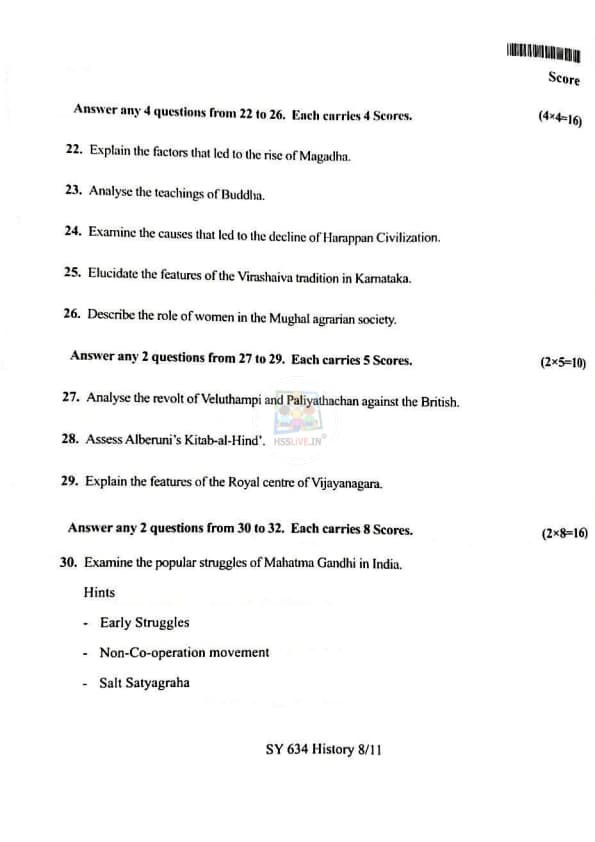
Explain the factors that led to the rise of Magadha.
View Solution
The rise of Magadha as a powerful kingdom in ancient India can be attributed to several key factors. Magadha, located in the eastern part of India, became the center of political, economic, and cultural activity in ancient India. The following are the major factors that contributed to the rise of Magadha:
Factor 1: Strategic Location
Magadha's geographical location played a crucial role in its rise. Situated between the Ganges and the Son river, the region had fertile land, which helped in agriculture and contributed to a stable economy. Its location also allowed control over important trade routes, facilitating economic exchanges and cultural interactions.
Factor 2: Strong Leadership
Magadha benefited from a series of powerful and capable rulers who consolidated the region's power. Kings like Bimbisara and Ajatashatru played a pivotal role in strengthening the kingdom. Bimbisara, for instance, formed alliances with neighboring kingdoms, while Ajatashatru expanded the kingdom's territories and strengthened its military forces.
Factor 3: Military Strength
Magadha had a well-organized and strong military that helped it expand its boundaries and maintain control over its territories. The military strength of Magadha enabled it to overpower other small republics and kingdoms in the region. This military prowess was crucial in establishing Magadha as the dominant force in ancient India.
Factor 4: Economic Prosperity
The economic prosperity of Magadha was another significant factor in its rise. The kingdom had access to resources like iron, which was important for making weapons and tools. Magadha's agriculture was also highly productive, and it engaged in trade with other regions, further strengthening its economy.
Factor 5: Religious and Cultural Influence
Magadha played an important role in the religious and cultural history of India. It became a major center for the spread of Buddhism under the patronage of King Ashoka. The religious significance of the region attracted scholars, pilgrims, and intellectuals, contributing to its cultural growth.
Factor 6: Administrative Efficiency
Magadha had an effective administrative system that facilitated its governance. The kingdom was divided into regions, and a system of taxation was implemented, ensuring a steady flow of revenue. This helped in maintaining stability and funding the military, infrastructure, and cultural activities.
Thus, the rise of Magadha was a result of its strategic location, strong leadership, military power, economic prosperity, cultural influence, and effective administration. These factors combined to make Magadha one of the most powerful kingdoms of ancient India. Quick Tip: The rise of Magadha can be attributed to a combination of favorable geography, strong leadership, military strength, economic prosperity, and cultural influence, which allowed it to dominate ancient India.
Analyse the teachings of Buddha.
View Solution
The teachings of Buddha form the foundation of Buddhism, a religion and philosophy that emphasizes the path to enlightenment through self-awareness, ethical conduct, and mental discipline. The Buddha's teachings are encapsulated in the Four Noble Truths and the Eightfold Path. Here's a detailed analysis of his teachings:
Step 1: The Four Noble Truths
The core of Buddha’s teachings revolves around the Four Noble Truths, which describe the nature of suffering and the path to its cessation:
1. The Truth of Suffering (Dukkha):
Buddha taught that life is filled with suffering, which is inherent in the human condition. This suffering can be physical, emotional, or psychological, and it arises from the impermanence and changeability of life.
2. The Truth of the Origin of Suffering (Samudaya):
Buddha explained that the cause of suffering is craving or desire (tanha). Our attachment to material things, desires for pleasure, and aversion to pain lead to a cycle of birth, death, and rebirth (samsara).
3. The Truth of the Cessation of Suffering (Nirodha):
The Buddha taught that it is possible to end suffering by eliminating craving and attachment. This leads to the cessation of the cycle of rebirth and the achievement of Nirvana, a state of liberation and peace.
4. The Truth of the Path Leading to the Cessation of Suffering (Magga):
The Buddha outlined the Eightfold Path as the way to end suffering and achieve enlightenment. This path involves right understanding, right intention, right speech, right action, right livelihood, right effort, right mindfulness, and right concentration.
Step 2: The Eightfold Path
The Eightfold Path provides practical guidelines for ethical conduct, mental discipline, and wisdom. It is divided into three categories: wisdom (Prajna), ethical conduct (Sila), and mental discipline (Samadhi):
1. Right Understanding (Samma Ditthi):
Understanding the Four Noble Truths and seeing life as it really is, free from illusions and misconceptions.
2. Right Intention (Samma Sankappa):
Having the right intentions or thoughts, free from desires, ill-will, or harmful intentions towards oneself and others.
3. Right Speech (Samma Vaca):
Speaking truthfully and avoiding harmful speech, such as lying, gossiping, or slandering.
4. Right Action (Samma Kammanta):
Engaging in ethical actions, such as avoiding killing, stealing, and harmful behaviors, and promoting compassion and kindness.
5. Right Livelihood (Samma Ajiva):
Earning a living in an ethical manner that does not harm others, such as avoiding professions that involve deceit, violence, or exploitation.
6. Right Effort (Samma Vayama):
Making a continuous effort to cultivate wholesome qualities and abandon unwholesome ones, leading to the development of a peaceful and disciplined mind.
7. Right Mindfulness (Samma Sati):
Developing awareness and mindfulness of the body, feelings, mind, and mental states to cultivate wisdom and self-control.
8. Right Concentration (Samma Samadhi):
Cultivating deep meditation and concentration, leading to mental clarity and insight into the true nature of reality.
Step 3: The Middle Way
Buddha also emphasized the concept of the Middle Way, which is a balanced approach to life that avoids the extremes of self-indulgence and self-mortification. It is the path that leads to enlightenment without falling into excess or deprivation.
Thus, Buddha’s teachings provide a comprehensive framework for understanding the nature of suffering, the causes of suffering, and the path to liberation through ethical living, mental discipline, and wisdom. Quick Tip: Buddha's teachings emphasize practical wisdom and ethical living through the Four Noble Truths and the Eightfold Path, offering a way to end suffering and achieve enlightenment.
Examine the causes that led to the decline of Harappan Civilization.
View Solution
The decline of the Harappan Civilization remains a subject of debate among historians and archaeologists. Several factors may have contributed to its downfall:
Step 1: Environmental Changes.
One of the leading theories is that environmental changes, including a shift in the course of the river Indus, led to a disruption of agriculture. The reduction in the river’s flow would have resulted in poor crop yields, leading to food shortages.
Step 2: Deforestation and Soil Erosion.
Deforestation, resulting from the need for timber to build houses and ships, may have caused soil erosion, further diminishing agricultural productivity. This would have led to economic instability.
Step 3: Natural Disasters.
Some historians suggest that natural disasters like floods, earthquakes, and climate changes could have weakened the urban infrastructure of the Harappan cities, leading to the collapse of trade networks and loss of urbanization.
Step 4: Invasion or Internal Conflict.
Although there is limited evidence of invasions, some scholars argue that conflicts or invasions from outside forces could have contributed to the decline. Alternatively, internal social or political instability could have led to disintegration.
Step 5: Conclusion.
The decline of the Harappan Civilization likely resulted from a combination of environmental, economic, and social factors. The exact cause remains uncertain, but the evidence points to multiple interconnected factors.
Quick Tip: The decline of civilizations is often multifaceted, involving a combination of environmental, social, and economic factors.
Elucidate the features of the Virshaiva tradition in Karnataka.
View Solution
The Virshaiva tradition in Karnataka is a prominent religious and social movement that emerged in the 12th century and played a significant role in the spiritual and cultural development of the region. Its key features are:
Step 1: Origin and Philosophy.
The Virshaiva movement, also known as Lingayatism, was founded by Basava, a 12th-century philosopher and statesman. The central tenet of the movement is devotion to Lord Shiva as the supreme god, worshiped in the form of the linga. The movement emphasized the rejection of ritualistic practices and promoted the concept of personal devotion and direct connection with God.
Step 2: Rejection of Caste System.
The Virshaiva tradition rejected the traditional caste system, promoting equality among all followers, irrespective of their social or economic status. This egalitarian approach helped create a sense of unity and brotherhood among its followers.
Step 3: Emphasis on Bhakti (Devotion).
Bhakti or personal devotion to Lord Shiva was central to the Virshaiva movement. Followers were encouraged to engage in practices of prayer, meditation, and selfless service as means of attaining spiritual liberation.
Step 4: Social and Political Influence.
The Virshaiva movement had a significant impact on the social fabric of Karnataka. It influenced the politics and governance during the rule of the Bhakti kings and helped to shape the social reforms of the time.
Step 5: Conclusion.
The Virshaiva tradition played a crucial role in shaping the religious, social, and cultural life of Karnataka. It continues to influence the region today and remains a vibrant part of Indian spiritual life.
Quick Tip: The Virshaiva tradition's focus on devotion, equality, and rejection of caste made it a powerful social and spiritual movement in Karnataka.
Describe the role of women in the Mughal agrarian society.
View Solution
The role of women in the Mughal agrarian society was complex and varied, with women playing essential roles both within the household and in the broader economic and social fabric of the empire. While their roles were often confined to the domestic sphere, some women had considerable influence, particularly within the Mughal court and among the nobility.
Step 1: Domestic Role of Women.
In the Mughal agrarian society, most women were primarily involved in managing household affairs. They were responsible for tasks such as overseeing domestic work, managing servants, and ensuring the welfare of children and elders. Women in rural areas contributed significantly to agricultural activities, including sowing, harvesting, and managing livestock. Women also played a central role in the food economy, preparing meals and preserving food.
Step 2: Political and Social Influence.
While many women’s roles were confined to the home, some women of the Mughal nobility exercised considerable political influence. Notable women like Empress Noor Jahan, who wielded significant political power during the reign of her husband, Emperor Jahangir, are examples of women who played a vital role in court politics and governance. Women also influenced social and cultural practices, including patronizing art, literature, and architecture.
Step 3: Role in the Agrarian Economy.
In the rural agrarian society, women were integral to agricultural production. They worked alongside men in the fields, planting, weeding, and harvesting crops. Women also played a key role in the cottage industry, including spinning, weaving, and pottery, which contributed to the local economy. Their labor was essential in ensuring the economic stability of agrarian communities.
Step 4: Restrictions and Challenges.
Despite their contributions, women in Mughal agrarian society faced many restrictions. The practice of purdah (seclusion) limited the public visibility and active participation of women in political, economic, and social affairs. The status of women was often defined by their relationship to men, whether as daughters, wives, or mothers. Social norms, however, began to shift over time as some Mughal queens and empresses gained influence.
Quick Tip: While the roles of women in the Mughal agrarian society were often limited by social norms, women played an essential role in both the household and the economy, particularly in rural settings.
Analyse the revolt of Veluthampi and Paliyathachan against the British.
View Solution
The revolt of Veluthampi and Paliyathachan was an important episode in the history of colonial resistance in India. Both leaders were significant figures in the Kerala region and their revolts against British colonial rule highlight the local struggles that occurred in response to British economic policies, social oppression, and interference in local governance. Below is an analysis of the revolts led by these two leaders:
1. Veluthampi’s Revolt (1800-1809):
Veluthampi was a nobleman from the Kingdom of Travancore, and he became a prominent figure in the revolt against the British in the early 19th century. His rebellion was triggered by the imposition of heavy taxes by the British in the Travancore region, which strained the local economy. The British had also interfered with the sovereignty of the Travancore state by introducing reforms that diminished the authority of the local rulers and nobles. Veluthampi, who held a strong sense of pride in his kingdom’s autonomy, led a revolt against British rule in 1808. Despite initial success, the revolt was suppressed in 1809, and Veluthampi was forced to flee, eventually dying in exile.
2. Paliyathachan’s Revolt:
Paliyathachan, a leader of the local community in Kerala, also resisted the British presence in the region. His resistance was part of a larger discontent with the British economic exploitation and the breakdown of traditional governance systems. Paliyathachan’s revolt was characterized by attacks on British installations and the mobilization of local peasants who were dissatisfied with British rule. Though not as well-known as Veluthampi’s revolt, Paliyathachan’s resistance was crucial in the context of local uprisings against colonial domination.
Key Points:
- Both revolts were part of the larger anti-British sentiment that was brewing across India, and they highlighted the role of regional leaders in resisting British policies.
- These revolts were driven by the economic burden placed on the local population, the undermining of traditional political structures, and the British desire to consolidate power.
- Although these revolts were suppressed, they contributed to the growth of nationalist sentiments in the region, laying the foundation for future movements against British rule.
Conclusion:
The revolts of Veluthampi and Paliyathachan were significant in the context of early anti-colonial resistance in Kerala. These uprisings, although unsuccessful in the short term, were an important part of India’s long struggle for independence, and they reflected the broader discontent with British colonial rule.
Quick Tip: Revolts like those of Veluthampi and Paliyathachan were crucial in challenging British authority, even if they were eventually suppressed.
Assess Alberuni’s Kitab-al-Hind.
View Solution
Alberuni’s Kitab-al-Hind is a key historical work written by the Persian scholar and polymath Alberuni, who traveled to India in the early 11th century during the reign of Mahmud of Ghazni. The book, also known as The India of Alberuni, is a detailed account of Indian culture, society, religion, and science, written from the perspective of an outsider. It provides valuable insights into the intellectual history of India during that period and serves as an important source for understanding medieval Indian society. Below is an assessment of this significant work:
1. Comprehensive Account of Indian Society:
Alberuni’s Kitab-al-Hind offers a detailed analysis of Indian customs, traditions, religion, and philosophy. Alberuni, having spent several years in India, provided a firsthand account of various aspects of Indian life, including the social hierarchy, the caste system, religious practices, and the scientific knowledge of the time. He also made observations about the differences between Indian and Islamic culture, providing a comparative perspective that was rare for that time.
2. Religious Insights:
Alberuni's book is especially significant for its objective analysis of Hinduism. He meticulously documented the religious practices, philosophies, and beliefs of Hindus, despite the fact that he was a Muslim and often critical of the religion. He delves into the complexities of Hindu rituals, gods, and the significance of the Vedas and other sacred texts. His impartial approach is notable, as it reflects his deep respect for Indian intellectual and cultural traditions.
3. Scientific and Mathematical Contributions:
Alberuni was deeply interested in Indian science and mathematics, and the \textit{Kitab-al-Hind provides an extensive account of the scientific knowledge of the time. Alberuni wrote about Indian astronomy, mathematics, and medicine, and he compared Indian and Greek scientific concepts. His observations on Indian numerals and their use in mathematical calculations are considered particularly insightful, as he was one of the first scholars to note the importance of the decimal system and the concept of zero.
4. Cultural Exchange and Knowledge Transfer:
The work of Alberuni highlights the intellectual exchange between India and the Islamic world. Alberuni’s travels and writings facilitated the flow of knowledge between the two cultures. His curiosity and systematic approach to documenting Indian traditions were part of a larger trend of cultural and intellectual curiosity that existed during the medieval period.
Conclusion:
Alberuni’s \textit{Kitab-al-Hind is an invaluable source for historians, scholars, and anyone interested in the study of medieval Indian culture and society. His work provides a thorough and balanced account of the scientific, religious, and cultural landscape of India during the 11th century, and it continues to be a key resource in understanding the interactions between the Islamic world and India.
Quick Tip: Alberuni’s \textit{Kitab-al-Hind is one of the earliest and most important works that provide insights into medieval Indian culture from the perspective of a foreign scholar.
Explain the features of the Royal centre of Vijayanagara.
View Solution
The Royal Centre of Vijayanagara, also known as the Vijayanagara Empire, was a flourishing kingdom in Southern India, and its capital, Vijayanagara, was one of the most magnificent cities of its time. The royal centre of Vijayanagara had several important features that contributed to the grandeur of the empire:
Feature 1: Strategic Location
The royal centre of Vijayanagara was located on the southern banks of the Tungabhadra River in modern-day Karnataka, India. The location was strategically chosen for its natural fortifications, with rocky hills on all sides, making the city difficult to conquer. The river also provided water resources for the city’s residents.
Feature 2: Urban Planning and Architecture
The royal centre was known for its well-planned urban layout and advanced architecture. The city was divided into distinct sections: the royal centre, the religious centre, and the market centre. The royal centre was home to grand palaces, temples, and administrative buildings. The architecture combined traditional South Indian styles with influences from Persian and Islamic designs.
Feature 3: Royal Palaces and Administrative Buildings
The royal centre of Vijayanagara housed several palaces, including the famous Mahanavami Dibba and the Hazara Rama Temple. These were architectural marvels, with intricately carved stone structures and ornamental pillars. The palaces were adorned with fine decorations, including gold and silver, and were the sites for royal ceremonies and administrative activities.
Feature 4: Temples and Religious Centres
Religion played a central role in the royal centre. Vijayanagara was known for its large and majestic temples, many of which were located in the royal centre. The Virupaksha Temple, dedicated to Lord Shiva, was one of the most important religious sites in the city. The religious centre also had numerous shrines, which attracted pilgrims and priests.
Feature 5: Water Management and Infrastructure
Vijayanagara had an advanced water management system, which included tanks, reservoirs, and canals to support the city’s population and agricultural activities. The water supply was managed through a network of aqueducts and wells, ensuring that the city had enough water for both domestic and agricultural use.
Feature 6: Markets and Economy
The royal centre also featured bustling markets, where goods from across India and beyond were traded. The economy of the Vijayanagara Empire was based on agriculture, trade, and industry, and the royal centre played a significant role in its economic activities. The markets were well-organized and offered a variety of goods, including textiles, spices, and precious metals.
Feature 7: Cultural and Artistic Flourishing
The royal centre of Vijayanagara was not just a political hub but also a cultural and artistic centre. It attracted scholars, poets, and artists from all over India. Literature, music, and dance flourished in the city. The empire’s rulers were patrons of the arts, and the royal centre became a melting pot of diverse cultural influences.
Feature 8: Fortifications and Defence
The royal centre was protected by massive fortifications, including a series of walls and gates. The city was also surrounded by a system of defensive structures, including watchtowers and fortified walls. The defences were critical in protecting the city from external invasions and ensured the safety of the royal family and the citizens.
Thus, the royal centre of Vijayanagara was a marvel of medieval urban planning, architecture, and governance. It was the heart of the Vijayanagara Empire, serving as a political, cultural, and economic centre that attracted people from all walks of life. Quick Tip: The royal centre of Vijayanagara was a well-planned urban space that combined grand palaces, temples, water management systems, and vibrant markets, showcasing the empire’s political, cultural, and economic strength.
Examine the popular struggles of Mahatma Gandhi in India.
View Solution
Mahatma Gandhi played a pivotal role in India’s struggle for independence from British rule. His methods of non-violent protest and civil disobedience were highly influential. Some of the popular struggles led by Gandhi include:
Step 1: Early Struggles.
Mahatma Gandhi’s early struggles were focused on fighting discrimination against Indians, especially in South Africa, where he first used his non-violent methods to advocate for Indian rights. In India, he began organizing peasants and farmers against oppressive policies like the Indigo cultivation system in Champaran (1917) and the salt tax in Kheda (1918).
Step 2: Non-Cooperation Movement.
The Non-Cooperation Movement (1920-1922) was one of Gandhi's most significant struggles. It called for Indians to boycott British institutions, including schools, courts, and government services. The movement aimed at paralyzing the British administration by refusing to cooperate with their rule. This mass movement received widespread support but was temporarily suspended by Gandhi after the Chauri Chaura incident, where protesters turned violent.
Step 3: Salt Satyagraha.
The Salt Satyagraha, or Salt March (1930), was a critical movement in India's struggle for independence. Gandhi led a 240-mile march to the coastal village of Dandi, where he made salt in defiance of British laws that imposed a salt tax. This peaceful protest gained nationwide attention and was a turning point in India’s fight for freedom. It sparked mass civil disobedience and led to the arrest of thousands of Indians.
Step 4: Conclusion.
These movements, among others, helped unite India against British colonial rule and were instrumental in gaining India's independence in 1947. Gandhi’s unique approach of non-violent protest continues to inspire movements worldwide.
Quick Tip: Gandhi’s strategies of non-violence and civil disobedience made his struggles effective and became a model for other independence movements across the world.
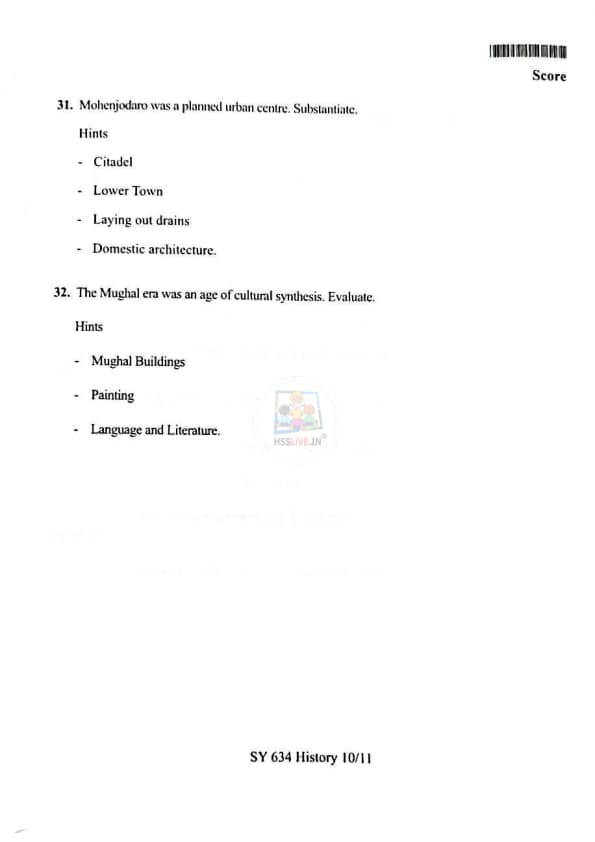
Mohenjodaro was a planned urban centre. Substantiate.
View Solution
Mohenjodaro, one of the prominent cities of the Indus Valley Civilization, is a remarkable example of urban planning and engineering. The archaeological evidence from the site clearly supports its status as a well-planned urban center. The following points substantiate this claim:
Step 1: Citadel.
Mohenjodaro was divided into two main sections, one of which was the Citadel. The Citadel was built on an elevated platform, and it contained important public buildings and structures. This high elevation not only provided a strategic view of the surroundings but also served to protect the more vital parts of the city from floods and other potential threats. The Citadel housed large structures, including the Great Bath, which was used for ritual purposes, and the assembly halls.
Step 2: Lower Town.
The Lower Town of Mohenjodaro consisted of residential and commercial buildings, which were carefully arranged in a grid-like pattern. The streets in the Lower Town were laid out in a north-south and east-west direction, facilitating easy movement within the city. This systematic layout indicates a high level of urban planning. Houses in the Lower Town were built with uniformity, and they were typically made of baked bricks.
Step 3: Laying Out Drains.
One of the most impressive features of Mohenjodaro's urban planning is its drainage system. The city had an advanced and well-organized drainage system, which was far ahead of its time. The drains were made of brick and ran along the streets, ensuring that wastewater was efficiently channeled away from the living areas. Each house had its own private drain connected to the main drainage system, indicating a high level of civic concern for sanitation and hygiene.
Step 4: Domestic Architecture.
The domestic architecture in Mohenjodaro reflects the city's planning and organization. Houses were typically built around central courtyards, providing privacy and light. The buildings were equipped with flat roofs, and some houses even had wells for water supply. The standardization of house sizes and layouts further reinforces the notion that the city was well-planned.
Quick Tip: Mohenjodaro’s advanced drainage system and organized city layout demonstrate the high level of urban planning and engineering achieved by the Indus Valley Civilization.
The Mughal era was an age of cultural synthesis. Evaluate.
View Solution
The Mughal era (1526–1857) in India is often regarded as a period of significant cultural synthesis, wherein the confluence of various cultural, religious, and artistic traditions resulted in the creation of a new, unified cultural identity. The Mughals, especially during the reigns of Akbar, Jahangir, Shah Jahan, and Aurangzeb, played a key role in blending Indo-Islamic and Persian cultures, fostering an environment of cultural exchange and cooperation. The following aspects highlight the synthesis of culture during the Mughal period:
1. Mughal Buildings:
Mughal architecture is one of the most prominent symbols of cultural synthesis during the Mughal era. It combined elements from Persian, Turkish, Central Asian, and Indian architectural styles, resulting in the creation of monumental structures that reflect a blend of different traditions. The use of Persian calligraphy, Islamic motifs, and Indian art forms created a distinctive Mughal architectural style. Notable examples include the Taj Mahal, the Red Fort, and the Jama Masjid, which reflect the blend of Islamic and Indian architectural techniques, including the use of domes, arches, minarets, and intricate carvings. These buildings are not only a symbol of Mughal power and grandeur but also a testament to the cultural and architectural fusion that took place under their rule.
2. Painting:
Mughal painting represents another crucial example of cultural synthesis. The Mughal emperors, especially Akbar, Jahangir, and Shah Jahan, patronized Persian and Indian artists, leading to the development of a distinct style of painting that merged the Persian miniature tradition with indigenous Indian artistic traditions. The Mughal style of painting is characterized by vivid colors, intricate details, and the depiction of courtly life, battles, nature, and religious scenes. The works of artists like Bichitr, Ustad Mansur, and Abu'l-Hasan reflect a fusion of Persian artistic techniques and Indian themes, contributing to the creation of a unique art form. The influence of Mughal painting can also be seen in the development of Rajput and Deccan painting styles, showcasing the cultural exchange between different regions.
3. Language and Literature:
The Mughal period also saw the growth of new literary forms and languages, reflecting cultural synthesis. Persian became the court language of the Mughal Empire, but it was enriched by the inclusion of Sanskrit, Turkish, and local dialects. Mughal rulers, particularly Akbar, promoted the translation of important Sanskrit texts into Persian, which helped preserve and transmit Indian knowledge. Additionally, the blending of Persian with local vernacular languages resulted in the emergence of a new language, Urdu, which became an important medium for poetry, literature, and communication in the Mughal courts.
Mughal literature, which was influenced by Persian poetry, saw the rise of notable poets such as Mirza Ghalib, Siraj-ud-Din Ali Khan Arzu, and Sauda, who wrote in Persian and Urdu. The synthesis of Persian poetic forms with Indian themes resulted in a vibrant literary tradition that reflected the social, political, and cultural life of the Mughal Empire.
Conclusion:
The Mughal era was undoubtedly an age of cultural synthesis, with various aspects of Mughal life and governance fostering the merging of Islamic, Persian, and Indian cultural traditions. This cultural fusion resulted in a unique artistic, architectural, literary, and social legacy that continues to shape the cultural identity of South Asia. The Mughals’ ability to blend diverse cultural elements into a unified whole helped create a rich, lasting cultural heritage that contributed to India’s diverse and pluralistic society.
Quick Tip: The Mughal era fostered cultural synthesis through the fusion of Persian, Indian, and Islamic traditions, particularly in art, architecture, and literature.








Comments