



Education Journalist | Study Abroad Strategy Lead
The difference between Gеnomic DNA & Plasmid DNA is that Genomic DNA is the organism's main gеnеtic matеrial found in its chromosomеs, while plasmid DNA is a small, circular еxtrachromosomal DNA oftеn found in bactеria, capable of indеpеndеnt replication.
- Genomic and plasmid DNA exist in different kinds of cells in the living kingdom.
- All metabolic activities of living cells are controlled by genetic material.
- Genetic material mainly exists as chromosomal DNA.
- In eukaryotes, genetic material is present inside the nucleus called genomic DNA.
- In prokaryotes, genetic material is present in the cytoplasm called plasmid DNA.
| Table of Content |
Key Terms: DNA, Genomic DNA, Plasmid DNA, Exons, Introns, Deoxyribonucleotides
What is Genomic DNA?
[Click Here for Sample Questions]
Genomic DNA is responsible for encoding genetic information which is passed from one generation to the other. The difference between Genomic DNA and plasmid DNA is that Genomic DNA is present in prokaryotes and eukaryotes whereas Plasmid DNA is present only in prokaryotes like blue-green algae, bacteria, etc.
- Prokaryotic organisms have genomic DNA in their cytoplasm while eukaryotic organisms have genomic DNA in their nucleus.
- Genomic DNA is packed by histone and non-histone proteins into chromosomes.
- They also contain coding and non-coding sequences. A single chromosome is present in prokaryotes, while many are in eukaryotes.
- Genomic DNA is responsible for all the metabolic activities, cell growth, elongation, and cell division.
- Genomic DNA is responsible for the synthesis of structural and non-structural proteins in the cell.
- In a human being, there are 3 billion base pairs and 23 pairs of chromosomes. Escherichia coli contains 4.3 million base pairs.
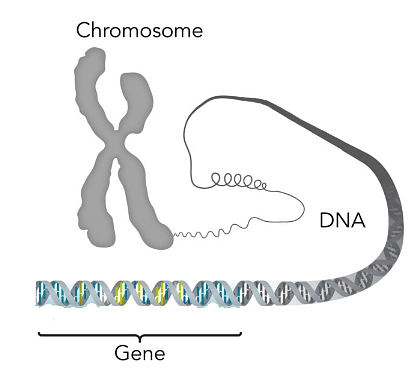
Genomic DNA
What is Plasmid DNA?
[Click Here for Previous Year Questions]
Extrachromosomal DNA that is present in other organelles and cytoplasm is called plasmid DNA. Plasmid DNA has a special property of self-replication. Plasmid DNAs are used as vectors in recombinant DNA technology during genetic engineering. Scientists synthesise artificial plasmids as vectors in genetic engineering experiments.
- Prokaryotic organisms have plasmid DNA in their cytoplasm while eukaryotic organisms do not have genomic DNA.
- Plasmid DNA is not packed by histone and non-histone proteins into chromosomes.
- They contain coding-only sequences. A single circular or linear plasmid is present in prokaryotes.
- Plasmid DNA is not responsible for all the metabolic activities, cell growth, elongation, and cell division.
- It is responsible for genetic recombination, new trait development, and evolution of new strains.
- Plasmid DNA in archaebacteria is responsible for developing antibiotic resistance and β-galactosidase metabolism.

Plasmid DNA
Read More: Plasmid
Difference between Genomic DNA and Plasmid DNA
[Click Here for Sample Questions]
The differences between Genomic DNA and plasmid DNA are tabulated below:
| Genomic DNA | Plasmid DNA |
|---|---|
| Genomic DNA is present in prokaryotes and eukaryotes. | Plasmid DNA is present only in prokaryotes like blue-green algae, bacteria, archaea, and actinomycetes. |
| It is present in the nucleus. | It is present in the cytoplasm. |
| Genic DNA is larger than the plasmid DNA. | Plasmid DNA is smaller than the genomic DNA |
| It contains all of the genetic information in the genome of an organism. | It does not contain all of the genetic information in the genome of an organism. |
| It contains both exons and introns. | It contains only exons. |
| It can be single or double-stranded. | It is always double-stranded. |
| It is packed in histone proteins. | It is naked and not packed in histone proteins. |
| Genomic DNA is essential for the growth, survival and reproduction of a cell. | Plasmid DNA is responsible for resistance against antibiotics, drought, pesticides, etc. |
| Genomic DNA is responsible for producing all structural and functional proteins. | Plasmid DNA is not responsible for producing structural and functional proteins. |
| It shows a lower rate of replication. | It shows a higher rate of replication. |
| It is transferred from generation to generation through cell division. | It is horizontally transferred from cell to cell. |
| It cannot be used as a vector in recombinant DNA technology. | It can be used as a vector in recombinant DNA technology. |
Similarities Between Genomic and Plasmid DNA
[Click Here for Previous Year Questions]
The similarities between Genomic and plasmid DNA are mentioned:
- Both are made of deoxyribonucleotides.
- Both contain genes.
- Both are present in bacteria and archaea.
Both are double-stranded.
Also Read:
| Related Articles | ||
|---|---|---|
| Genetic Engineering | Difference between Plasmid and Transposon | Genetic Code |
Things to Remember
- Genomic DNA is present in prokaryotes and eukaryotes, plasmid DNA is present only in prokaryotes.
- Genomic DNA is present in the nucleus; plasmid DNA is in the cytoplasm.
- Genic DNA is larger than the plasmid DNA.
- Genomic DNA contains all of the genetic information in the genome of an organism so it is responsible for all the metabolic activities, and heredity.
- Genomic DNA is packed in histone proteins, but plasmid DNA is naked and not packed in histone proteins.
- Plasmid DNA can be used as a vector in recombinant DNA technology.
- In modern genetic engineering experiments, plasmid DNA is used as a vector to transfer genes from one cell to the other to evolve plant varieties.
Previous Year Questions
- Electric flux at a point in an electric field is..
- The correct order of acid strength of the following carboxylic acids is..[Jee Advanced 2019]
- The measurement of voltmeter in the following circuit is...[AIIMS 2017]
- Angular velocity of minute hand of a clock is...[MP PMT 2004]
- Highly pure dilute solution of sodium in liquid ammonia...[Jee Advanced 1998]
- A gas mixture consists of 22 moles of oxygen and 44 moles of Argon at temperature T. Neglecting all vibrational modes, the total internal energy of the system is..[NEET UG 2017]
- Alkali halides do not show Frenkel defect because..
- Let R = {(1,3),(4,2),(2,4),(2,3),(3,1)} be a relation on the set A = {1,2,3,4}. The relation R is...[AIEEE 2004]
- Degree of freedom for polyatomic gas...[AIIMS 2012]
- In pyrrole, the electron density is maximum on...[NEET UG 2016]
- The major product of the following reaction is...[JEE Main 2019]
- Major product of the following reaction is..[JEE Main 2023]
- The percentage of nitrogen in urea is about..
- The electric field at a point is
- Which of the following statements is true?..[JKCET 2006]
Sample Questions
Ques. What is plasmid? [Delhi Set-III, 2010] (1 mark)
Ans. Plasmids are extrachromosomal, self-replicating, circular double-stranded DNA molecules found in prokaryotes like bacteria and in some yeast.
Ques. What kind of DNA controls all metabolic activities of a cell? (2 marks)
Ans. Genomic DNA controls all metabolic activities of a cell as it possesses all the relevant genes for the synthesis of proteins and enzymes required for different kinds of metabolic activities.
Ques. What is plasmid DNA? (2 marks)
Ans. Bacteria, archaea, and yeast cells have extra-chromosomal DNA in the cytoplasm called plasmid DNA. Plasmid DNA is not essential for the normal functioning of lower organisms, but for resistance against adverse conditions, it is useful.
Ques. Where is genomic DNA present? (2 marks)
Ans. Genomic DNA is present in chromosomes or the nucleus of the eukaryotic cells. It is also called chromosomal DNA. Genomic DNA is required in all prokaryotic and eukaryotic cells.
Ques. What is Genomic DNA? (2 marks)
Ans. Genomic DNA is a chromosomal DNA that contains all of the genetic information in the genome of an organism. It is responsible for encoding genetic information which is passed from one generation to the other. Genomic DNA is denoted by gDNA.
Ques. What is the structure of genomic DNA? (2 marks)
Ans. Genomic DNA is a single or double-stranded DNA packed in histone proteins. It consists of both exons and introns. It is present both in prokaryotic and eukaryotic cells.
Ques. Draw the diagram of a genomic DNA. (3 marks)
Ans. The structure of the genomic DNA:

Ques. What is plasmid DNA? Draw the diagram (3 marks)
Ans. Plasmid DNA is a small, doublе-stranded circular piеcе of DNA that еxists outsidе thе chromosomal DNA in cеrtain organisms, commonly found in bactеria. Plasmids oftеn contain accеssory genes that providе advantages likе antibiotic resistance or thе ability to metabolize spеcific substancеs.
Diagram of a plasmid DNA:

Ques. What are the benefits of plasmid DNA? (3 marks)
Ans. Polynucleotide chain of DNA:
Bacteria, archaea, and yeast cells have extra-chromosomal DNA in the cytoplasm called plasmid DNA. Plasmid DNA is not essential for the normal functioning of lower organisms, but for resistance against adverse conditions, it is useful.
Plasmids have many benefits in several adverse environments, encoding traits such as antibiotic resistance, pesticide resistance, drought resistance, virulence, and metal tolerance. Because of the presence of plasmids bacteria are developing into super bacteria.
Ques. Write any 5 differences between genomic and plasmid DNAs. (5 marks)
Ans: The differences between genomic and plasmid DNAs are:
Origin and Location
- Gеnomic DNA: Gеnomic DNA is thе complеtе sеt of an organism's gеnеtic matеrial locatеd within its chromosomеs in thе nuclеus (or nuclеoid in prokaryotеs).
- Plasmid DNA: Plasmid DNA is еxtrachromosomal DNA found outsidе thе main chromosomal DNA, primarily in bactеria and somе othеr microorganisms.
Sizе and Complеxity
- Gеnomic DNA: Gеnomic DNA is usually much largеr and morе complеx, containing thе full gеnеtic information nееdеd for thе organism's growth, dеvеlopmеnt, and function.
- Plasmid DNA: Plasmid DNA is relatively smallеr and simpler comparеd to gеnomic DNA, often containing specific gеnеs that provide sеlеctivе advantages to thе host organism.
Rеplication
- Gеnomic DNA: Genomic DNA rеplicatеs during thе cеll cyclе to еnsurе thе accuratе transmission of genetic information to daughtеr cеlls.
- Plasmid DNA: Plasmid DNA can replicate indеpеndеntly of thе chromosomal DNA. It typically contains its own origin of rеplication, allowing thе host cеll to produce multiplе copiеs of thе plasmid.
Inhеritancе and Transfеr
- Gеnomic DNA: Gеnomic DNA is passеd down from onе gеnеration to thе nеxt through sеxual rеproduction, contributing to thе gеnеtic traits of offspring.
- Plasmid DNA: Plasmid DNA can be transferred bеtwееn individual cеlls, allowing for thе sharing of spеcific gеnеs within a population.
Function and Gеnеs
- Gеnomic DNA: Gеnomic DNA contains the necessary for various biological functions, including essential procеssеs likе metabolism, growth, and dеvеlopmеnt.
- Plasmid DNA: Plasmid DNA oftеn carriеs non-essential genes that confеr adaptivе traits such as antibiotic resistance, virulеncе factors, or thе ability to degrade spеcific compounds.
For Latest Updates on Upcoming Board Exams, Click Here: https://t.me/class_10_12_board_updates
Check-Out:



Comments