



Exams Prep Master
Lichens are found in a wide diversity of climates and habitats from forests to mountains to deserts. It is formed as a result of a symbiotic partnership between two microorganisms; a fungus and an alga. The majority of characteristics in these plant types are from fungus. Lichens are also known as nonvascular plants. Basically, the animal kingdom in Biology provides all that information about Lichens. These most unique and beautiful symbioses have great economic importance. In this article, the economic importance of Lichens is discussed in detail along with related solved questions.
| Table of Content |
Key terms: Lichens, Economic importance of Lichens, Biology, Animal Kingdom.
What are Lichens?
[Click Here for Sample Questions]
Lichens grow in different places, such as on rocks, walls, gravestones, tree barks, soil, moist floors, roofs, soil, etc. A clean moist atmosphere with sufficient air is a prerequisite for their growth. They are actually a group of terrestrial organisms observed in different colours, shapes, forms and sizes. On the basis of their physical features, Lichens are then classified into different types of kinds.
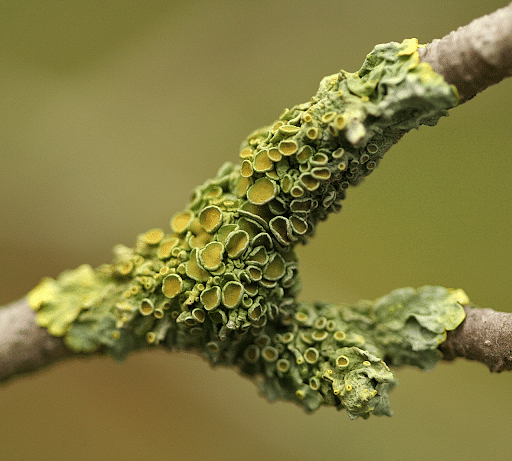
Lichens
On the basis of their mode of nutrition, lichens are in a symbiotic relationship between green algae and fungus. Either one photobiont or more than one photobiont and one mycobiont, with variance, are the Lichen forming partners. Lichens don't have roots, stems or leaves. Moreover, their chloroplasts are contained only in the algae just on the top surface of the lichen.
According to the United States Department of Agriculture, approximately 3,600 species of lichens exist there in North America. One research estimation tells that around 4 to 5 percent of the Earth’s surface area is covered by lichens. Examples of Lichens are Beard lichens, dog lichens, Iceland moss, oakmoss, etc. to name a few. Lichens are not just one of the unique and beautiful symbioses, but they also have great economic importance.
Read more:
| Related Links | ||
|---|---|---|
| Chromoplasts | Schistosomiasis life cycle | Difference between endoskeleton and exoskeleton |
| Facts about octopus | Mcqs on animal kingdom | Close Type Circulatory System |
Economic importance of Lichens
[Click Here for Previous Year's Questions]
Lichens holds a considerable economic value for the entire ecosystem right from animals to human beings to the earth. The economic importance of lichens can be discussed in these points.
- Formation of fertile soil
- An important component in the nitrogen cycle
- Food source
- Age teller of rocks
- Natural dyes
- Biodegradation agent
- Medicine
Formation of Fertile Soil
Along with growing on the surface of the rocks, Lichens are also known for their ability to convert rocks into soil. Indeed, Lichens are helpful information about the fertile soil and improving along with enriching the overall quality of the soil. It is apparent that the world is facing a lack of fertile soils. In that case, Lichens play a significant role in the formation of Fertile Soil.
Nitrogen Cycle
Nitrogen is converted into various forms, from consecutively passing from the atmosphere then to the soil and to the organism in order to again come back to the atmosphere. This overall biogeochemical process of nitrogen gas is known as the Nitrogen cycle. Lichens maintain a balance of nitrogen by fixing it from the environment. Due to this ability of lichens, they are also able to survive in a poor nutrition environment.
Food Source
Lichens are usually a primary food source for animals. It is certainly a key aspect of our ecosystem keeping animals from dying out of hunger. Because food becomes scarce in some regions and forests, especially in winters. But, Lichens can exist in almost any kind of environmental condition.
Besides being a food source for animals, some Lichens such as Iceland moss is an important food source for humans in certain parts of Northern Europe and American continents as well. However, due to the availability of a wide variety of Lichens, all of them are not edible and some can actually be poisonous.

Food Source
Age tellers of rocks
Along with being a food source, fixing the nitrogen cycle and forming fertile soil; listens are also age tellers of rocks and other surfaces. It is a fact that petrologists and geologists study and time the age and other features of rocks and their surfaces with the help of lichens. The study method that geologists use for the study of rocks is known as Lichenometry. Lichens are indeed multi-taskers.
Natural dyes and colour
Lichens are one of the oldest wildflowers. Descriptions of using lichens are found in various inscriptions and written texts as well as oral history. These species are actually considered for their natural colouring agents and dyes. Since ancient times, Lichens have been used for making colours and dyes. Moreover, Many tribal communities use them as natural dyes even today. In fact, the pH indicator, litmus test and other significant dyes are also extracted from different species of Lichens.
Biodegradation agent
All the pollutants such as polyester, lead, copper radionuclides and many other pollutants that harm the blue planet i.e. Earth by increasing the pollution are degraded by the biodegradation agent Lichens. Other than that, some species of lichens also have the ability of the degradation of pathogens along with other environmental reservoirs. Lichens are necessary there because these and environmental reservoirs cause certain dreadful infectious diseases both in plants and animals as well as in humans. Lichens do not grow in polluted areas. Hence, they can also be used as Air pollution indicators.
Medicine
Lichens do not just prevent diseases by degrading them but they can also cure them. The pharmaceutical industry uses lichens as anti-infective agents. These industries used lichens to produce antibiotics, antiviral, anti-inflammatory and antimycobacterial products. Many houses also use various species of lichens as natural medicines for various types of skin acne, rashes and diseases. Due to this skin curing property of Lichens, it is also added to various skincare products.
Read more:
Things to Remember
- Lichens grow in different places, such as on rocks, walls, gravestones, tree barks, soil, moist floors, roofs, soil, etc.
- Examples of Lichens: Beard lichens, dog lichens, Iceland moss, oakmoss.
- The economic importance of lichens can be discussed in these points.
- Formation of fertile soil, Important components in the nitrogen cycle, a good source, age teller of rocks, natural dyes, biodegradation agent, medicine.
- Iceland moss is an important food source for humans in certain parts of Northern Europe and the American continents.
Sample Questions
Question 1: Lichens are described as indicators of ___? (2 marks)
Answer: Lichens are described as indicators of air pollution. It is because lichens do not grow in polluted areas. That is also the reason why relationships are found in forests and not in highly air-polluted cities.
Question 2: Which organisms live in symbiosis to make a lichen? (2 marks)
Answer: Fungi and algae are the organisms that live in symbiosis to make a lichen. Fungi are prominent in Lichens as lichens derive many of their features from fungi.
Question 3: What is the most common species found in lichens? (2 marks)
Answer: Single-celled green algae of the genus trebouxia is the most common species found in Lichens.
Question 4: Why do you think lichens are economically important to humans? Give any three reasons. (3 marks)
Answer: Lichens are economically important to humans because they are used in various things related to human life.
- Lichens are used as natural dyes and colouring agents. Many tribal communities used them as natural dyes even today. Industries, too, use them for colouring and dying.
- Lichens are good air pollution indicators. So even if the person doesn't have any technology or any machine with them, then too with the presence or absence of lichens. One can easily know if the area is air polluted or not.
- Pharmaceutical industries use Lichens for producing various anti-inflammatory, antibiotic, antimycobacterial products.
Question 5: Can Lichens treat diarrhoea, jaundice, fevers, epilepsy, and hydrophobia kind of diseases? (2 marks)
Answer: Yes, lichens can treat diarrhoea, jaundice, fever, epilepsy, hydrophobia and other kinds of diseases. Naturopathic, as well as allopathic literature, suggests their use for medicine and cure.
Question 6: What is the use of lichens for laboratories? (2 marks)
Answer: The pH indicator, litmus test and other significant dyes are extracted from different species of lichens which are extremely important for laboratories. As labs cannot perform experiments without these indicators.
Question 7: Are all Lichens edible or a source of food? (1 mark)
Answer: No, some of them are poisonous as well. Letharia and Vulpicida are the best examples of poisonous lichens.
Question 8: What is the economic importance of lichens? (3 marks)
Answer: Lichens are the symbiotic partnership of algae and fungi. The economic importance of lichens is as described below:
- Lichens are good pollution indicators. Because they do not grow in air polluted areas.
- Lichens grow on rocks and then release some chemicals that can disintegrate rocks and convert them into the soil. They improve and enrich the overall quality of the soil.
- Lichens are also known as good food sources. For example, Parmelia, one of the species of lichens, is used as curry powder in India and Asian continents.
- Lichens are also a source of medicine. Pharmaceutical industries use them for producing various anti-inflammatory, antibiotic, antimycobacterial products.
Also Read:




Comments