



Content Writer-SME
Acid rain is a type of precipitation reaction that occurs as a result of the release of harmful gases composed of sulphur and nitrogen into the atmosphere. The primary cause of acid rain includes excessive human activities to run their commercial businesses, which has also given rise to a major environmental problem called global warming.
Due to the emissions of organic acids, sulphur, nitrogen and carbon dioxides, the ph of rainwater becomes acidic. Everything from acid rain to air pollution to global warming is connected and occurring through a long series of chemical reactions in the atmosphere. If it is not treated now, it can cause serious harm to life and biodiversity in the long run.
Acid Rain
Source of Gases Causing Acid Rain
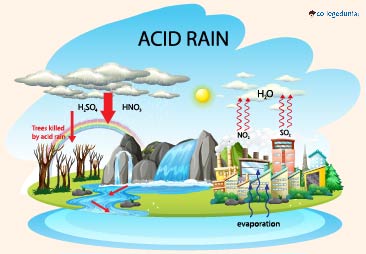
To meet the daily needs of human beings, huge amounts of fossil fuels are burnt which releases large amounts of harmful gases. For example, the combustion of fossil fuels releases carbon and its compounds as well as sulphur dioxide and nitrogen oxides. These oxides of nitrogen and sulphur react with water, oxygen and other chemicals which are further converted into nitric acid and sulfuric acid. These acids in turn react with the air before falling to the ground as acid rain.
Sulphur Dioxide (SO2)
The oxidation of gaseous sulphur dioxide results in the formation of hydrogen sulphate (HSO3) free radicals. This reaction occurs when gaseous sulphur dioxide participates in an intermolecular reaction with atmospheric hydroxyl radicals. HSO3 radicals react with atmospheric oxygen to produce sulphur trioxide as their end product.
When it comes in contact with water vapour present in the Earth's atmosphere it forms sulfuric acid. The formation of corrosive sulphuric acid lowers the pH of rainwater by increasing its acidity.
Nitrogen Dioxide (NO2)
Nitrogen is the most abundant gas present in the atmosphere. Exhaust of cars, buses, and other vehicles are primary sources of nitrogen dioxide in the atmosphere. Apart from this, other sources of nitrogen dioxide are as:
- Indoor Sources: Internal source of nitrogen dioxide comes from human activities like burning of fossil fuels, manufacturing of food etc.
- Natural Sources: Large-scale forest fires and biomass burning also produce nitrogen dioxide in the atmosphere.
- Photochemical Reaction: When nitric oxide reacts with an air pollutant in the presence of sunlight, it produces a corrosive, acidic gas called nitrogen dioxide or NO2.
Carbon Dioxide (CO2)
Although it is not the main cause of acid rain, CO₂ can dissolve in water to produce carbonic acid (H₂CO₃), which makes raindrops naturally acidic. However, its effect is much weaker than that of SO₂ and NOₓ. Acid rain damages plants, aquatic life, and microbes by lowering the pH of soil and water bodies.
Conclusion
Thus, from the above article, it can be concluded that the two major gases that cause acid rain are sulphur dioxide and nitrogen dioxide. The negative effects of acid rain can be seen on soil, plants and animals. Man-made structures also face the effects of acid rain, an example of this is the discoloration of the Taj Mahal, a symbol of beauty located in Agra.
Apart from this, harmful effects of acid rain can also be seen on human health like breathing problems and skin diseases etc. The consequences of acid rain can be controlled or mitigated by:
- Adopting permanent or sustainable solutions,
- Creating awareness among people about the effects of acid rain,
- Reducing the use of harmful gases that cause various problems associated with acid rain.



Comments