


.png?h=35&w=35&mode=stretch)
Study Abroad Content Specialist
Preparing for your journey from India to the UK as a student is an exciting yet detailed process that requires careful planning. Securing your visa and gathering the right health and financial documents are essential first steps that ensure a smooth transition. Don’t forget to pack appropriately for different seasons, as the UK’s weather can be unpredictable, and have all your academic materials ready to dive into university life. Arranging transportation and accommodation before arrival helps ease the initial settling-in phase, while staying organized with a comprehensive checklist will keep last-minute surprises at bay. Prioritize health precautions, financial planning, and communication arrangements to focus fully on your academic journey once you arrive.
Check Out: Top Universities in UK
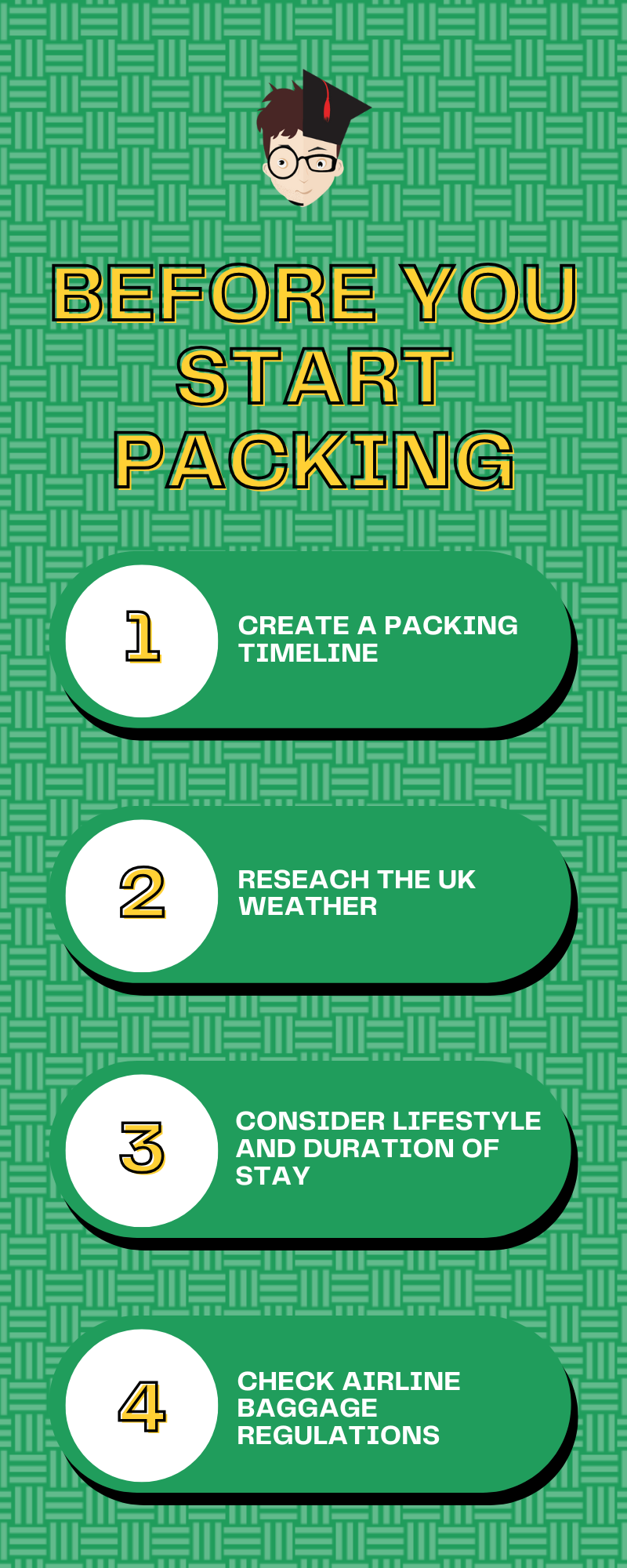
Before You Start Packing
- Create a Packing Timeline: Start packing at least one month before departure. This gives you ample time to shop, organize documents, and arrange essentials.
- Research UK Weather: The UK weather can be unpredictable. Winters are cold, so pack layers and winter essentials. Make sure you also bring waterproof clothing due to frequent rain.
- Consider Lifestyle and Duration of Stay: Depending on your stay length, pack accordingly. For a longer stay, you can purchase some items like winter coats after arrival in the UK.
- Check Airline Baggage Regulations: Confirm the baggage allowances with your airline. Most flights allow two checked bags (23kg each) and one carry-on (7kg).
Check Out: Why Study in the UK?
Important Documents to Pack
| Document | Purpose |
|---|---|
| Passport and Visa | Required for entry and stay |
| CAS Letter and Offer Letters | For university admission and immigration |
| Proof of Funds and Financial Docs | Required by UKVI for visa and emergencies |
| Health and Travel Insurance | Ensures medical coverage abroad |
| Prescriptions and Medical Records | For healthcare access in the UK |
| Driving License | Useful for identification and driving |
Check Out:
| Study in UK – Student Guide | ||
|---|---|---|
| UK Student Visa Documents | UK Student Visa Requirements | CAS Letter |
| BRP Card in UK | UK University Application Deadlines | Exams to Study in UK |
Health and Medical Preparations
- Medication:
Carry essential prescription medications with a translated note from your doctor. This will help with customs and healthcare services.
- Long-Term Medical Treatment:
If you are undergoing long-term medical treatment, bring a letter from your doctor or specialist outlining your condition and treatment plan. Once in the UK, register with a university doctor for continued care.
- Health Insurance:
While the UK’s National Health Service (NHS) provides some services for students, having comprehensive health insurance ensures you are fully covered, especially for private medical treatments or emergencies.
Check Out:
Financial Preparations
- Inform Your Bank:
Notify your bank about your travel plans to avoid any issues with international transactions. Apply for an international debit or credit card.
- Carry GBP and INR:
Avoid carrying large amounts of cash. Bring between £300 (₹32,730) to £500 (₹54,550) in GBP for immediate expenses upon arrival.
- Traveller’s Cheques or Forex Cards:
Consider carrying traveller’s cheques or a prepaid Forex card for additional funds. This is a safer alternative to cash.
Clothing and Accessories
- Versatile Clothing for All Seasons:
Pack clothes that can be layered, as UK weather can change rapidly. Bring formal attire for university events and casual outfits for daily wear.
- Footwear:
Include comfortable shoes for walking and formal shoes for official events.
- Accessories:
Carry essentials like belts, bags, and a few personal items that make you feel at home.
Check: Cost of Living in UK
Electronic Devices
1. Laptop and Phone:
These are essential for academics and staying connected. Make sure you have an adapter for UK plugs (Type G) and a voltage converter if needed.
2. Chargers and Power Banks:
Always carry extra chargers and power banks for your electronics.
Essential Toiletries and Medications
Pack travel-sized toiletries like shampoo, soap, toothpaste, and personal hygiene products. You can buy larger quantities once settled in the UK.
- First-Aid Kit: Carry basic medical supplies such as pain relievers, bandages, and antiseptics.
- Prescription Medications: Carry a supply for at least a few months, with a doctor’s prescription and medical records for verification.
Accommodation and Communication
- Secure Accommodation:
Ensure that your accommodation is finalized before your flight. Whether it's on-campus or off-campus housing, know the exact address and have a contact person in case of emergencies.
- Set Up International Roaming or Get a UK SIM:
You’ll need a working phone when you arrive, so either activate international roaming or buy a UK SIM card at the airport.
- Local SIM Card:
Buy a SIM card in the UK for affordable calls and data plans. This will help you stay connected and avoid costly roaming charges.
Also Check:
University Arrival Guide
- CAS Letter and Student Visa:
The CAS (Confirmation of Acceptance for Studies) letter is crucial for obtaining your student visa. Apply for your visa as soon as possible, as processing may take longer during peak seasons.
- Set Up Your University Account and Complete MFA:
Many UK universities require you to set up a university account and complete Multi-Factor Authentication (MFA) before arrival.
- Face-to-Face Registration:
Once you arrive, schedule a face-to-face registration at your university.
- Open a UK Bank Account:
Opening a UK bank account is essential for managing your finances. Most banks will require your passport, CAS letter, and proof of address.
Carry-On Essentials
Your carry-on bag should include the following for easy access during your journey:
- Passport, visa, and CAS letter
- Travel insurance documents
- Prescription medications
- Electronics (laptop, phone)
- A change of clothes for emergencies
Checked-In Luggage Essentials
Your checked-in luggage should contain:
- Clothing for all seasons
- Shoes (casual and formal)
- Basic toiletries for the first few days
- Chargers and electronic accessories
- Books and academic supplies
What Not to Pack for the UK
- Avoid bulky items such as heavy winter coats; you can buy these in the UK.
- Prohibited Items: Avoid carrying large liquid containers (above 100ml in carry-on) or food items restricted by UK customs.
Tips for Smart Packing
- Plan for Laundry Facilities:
Pack enough clothes for 10-14 days, as you’ll likely have access to laundry.
- Roll Instead of Fold:
Rolling clothes saves space and reduces wrinkles.
- Follow the 80% Rule:
Leave 20% of your luggage space empty for items you may buy in the UK.
Post-Arrival Guide
- Passing Through Immigration:
Ensure all documents (passport, visa, CAS letter) are easily accessible. Answer any questions from UK border control officers clearly and confidently.
- Student Discount Card:
Apply for a student discount card like TOTUM to save on transportation, food, and shopping.
- Biometric Residence Permit (BRP):
Collect your BRP within 10 days of arriving in the UK.
- Healthcare Registration:
Register with a local doctor as part of the NHS to access healthcare.
- Dealing with Homesickness and Cultural Adjustment:
Join university clubs, make new friends, and immerse yourself in local culture. Stay connected with family and friends back home to ease homesickness.
Also check: Student Guide to Study in UK
Preparing for your journey to the UK as a student can be an enriching and smooth process if done right. From packing the right essentials and arranging financial documents to securing accommodation and preparing for cultural adjustments, this guide ensures you have all the tools you need for a successful academic experience abroad. With careful planning, you can make the most of.
FAQs
Ques. What things I shouldn't forget to pack while moving from India to the UK for a long-term stay?
Ans. Make sure to pack all your essential documents (passport, visa, CAS letter, and proof of funds), medications with prescriptions, layers of clothing for all seasons, a universal plug adapter (Type G), some ready-to-eat food, and your favorite spices if you love Indian cooking! Don't forget to bring some sentimental items to make your new place feel like home.
Ques. If I'm going to London to study, what are all the things I should carry from my home in India?
Ans. Pack a mix of casual and formal clothes, sturdy walking shoes, academic supplies (laptop and stationery), toiletries for initial days, and prescription meds. Bring winter essentials like thermals and a scarf—you can buy heavy coats after arrival. A few packets of masalas and homemade snacks can make a big difference when you miss home!
Ques. What things you shouldn't forget to take while traveling to the UK from India for a long-term stay?
Ans. Key things include your travel and academic documents, an international debit/credit card or Forex card, £300-£500 in cash for immediate expenses, a SIM card for international roaming, and a small first-aid kit. Don’t forget waterproof clothing for those rainy days!
Ques. Must-have things that an Indian student should carry while moving to the UK for studies?
Ans. Your essentials include:
- Important documents.
- Versatile clothing for layering.
- Gadgets with adapters and power banks.
- Toiletries and some basic kitchen items (like a small pressure cooker if you’ll cook often).
- Indian snacks and spices for those nostalgic days.
Ques. What are the items better to get from India to the UK?
Ans. Here’s a list:
- Spices: Indian spices are costlier in the UK.
- Toiletries: Some Indian brands like hair oils, skincare products, etc.
- Cookware: A small pressure cooker or favorite utensils if you’ll cook often.
- Clothes: Traditional Indian outfits (for festivals/events) and everyday thermals.
- Medicines: Stock up on over-the-counter meds for colds, fevers, or allergies, along with prescriptions.





1691239268.png?tr=w-305,h-145,c-force?h=175&w=350&mode=stretch)

_(3)1717761901.png?tr=w-305,h-145,c-force?h=175&w=350&mode=stretch)

1691488602.png?tr=w-305,h-145,c-force?h=175&w=350&mode=stretch)




Comments