



Education Journalist | Study Abroad Strategy Lead | Updated On - Jan 17, 2026
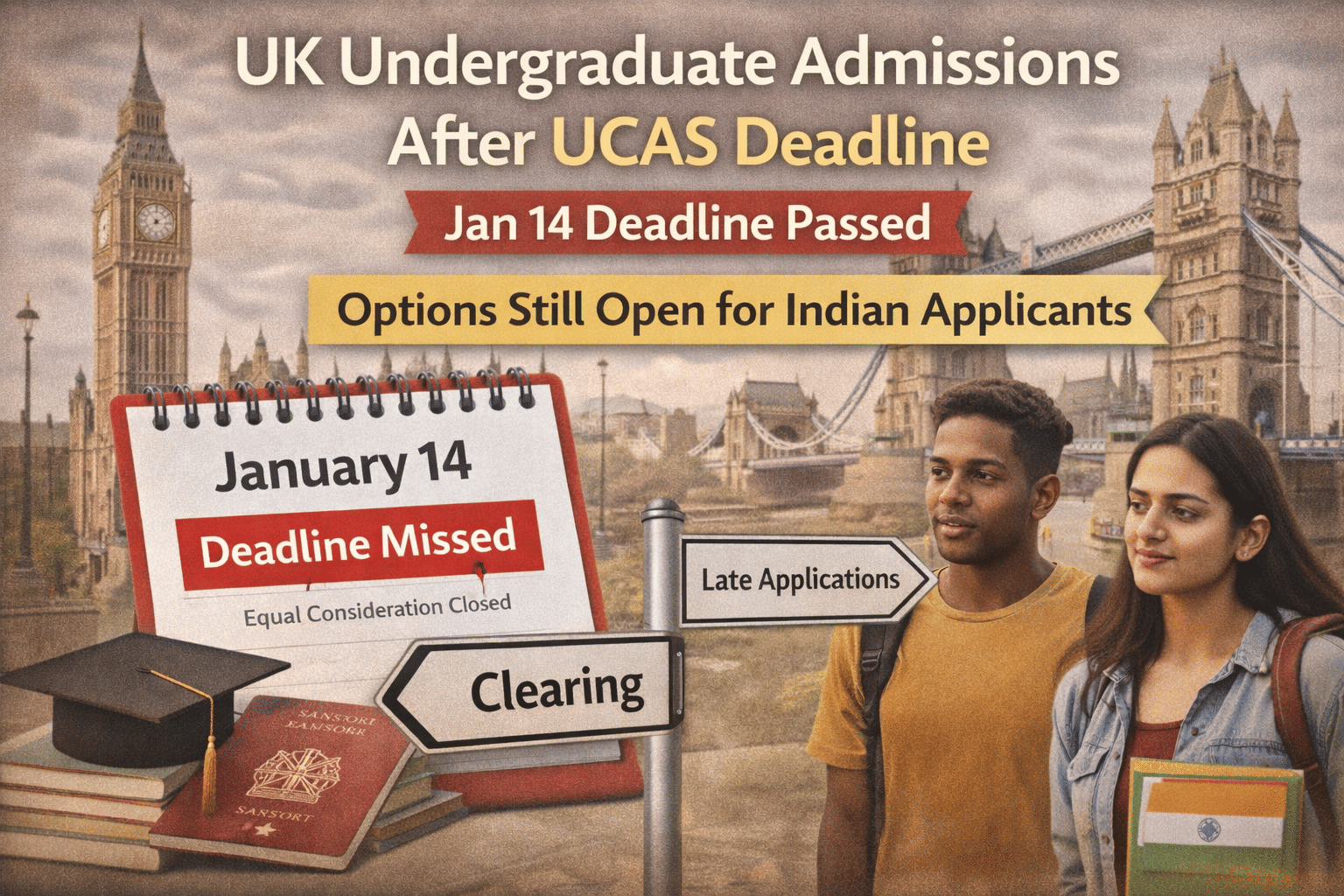
The UCAS equal consideration deadline for most UK undergraduate courses closed on January 14, 2026, but Indian students who missed the cutoff still have viable pathways to secure admission for the 2026 entry cycle. While universities are no longer required to consider applications equally, thousands of seats typically remain available across UK institutions in the months that follow.
For Indian applicants, the post–January 14 phase is less about speed and more about strategy, course availability, and realistic offer targeting.
What changes after January 14?
Under UCAS rules, universities must give equal consideration only to applications submitted by the January deadline. After January 14, applications are still accepted, but universities can process them only if seats remain available.
This means:
- Competitive courses at top universities may fill quickly
- Mid-tier and regional universities continue to assess applications well into spring
- Decisions can be faster, but outcomes vary by course and institution
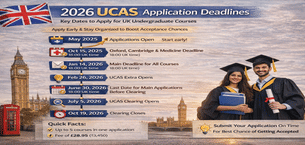
Key UCAS deadlines Indian students should track (2026 entry)
| UCAS stage | Key date | What it means for students |
|---|---|---|
| Equal consideration deadline | 14 Jan 2026 | Universities required to consider all applications equally |
| Late application window | 15 Jan – 30 Jun 2026 | Applications accepted only if courses have vacancies |
| Clearing opens | 5 July 2026 | Unfilled courses officially listed; direct offers possible |
| Final UCAS deadline | 30 Jun 2026 | Applications after this go directly to Clearing |
Where Indian students still have strong chances?
Historically, UK universities outside the Russell Group and several post-1992 institutions retain availability after January. Indian students applying for courses in business, management, computing, data science, engineering, and life sciences often continue to receive offers during the late application phase.
Universities assess:
- Academic eligibility against entry requirements
- Subject relevance rather than ranking alone
- Availability of remaining seats
Late applications are not automatically weaker, but course selectivity matters more after January.
Clearing: a major opportunity, not a fallback
UCAS Clearing, opening in July 2026, remains one of the most significant admission routes for Indian students. Each year, tens of thousands of undergraduate seats are filled through Clearing, including at well-ranked universities.
Clearing allows students to:
- See real-time course availability
- Speak directly with universities before applying
- Secure conditional or unconditional offers quickly
For students still awaiting results or rethinking course choices, Clearing often offers better clarity than speculative early applications.
How late applicants should adjust their strategy
After equal consideration, successful applicants typically:
- Apply to fewer, better-matched courses rather than multiple aspirational choices
- Prioritise universities with a history of international intake growth
- Prepare documents (SOPs, transcripts, predicted scores) for rapid turnaround
UK universities often issue decisions faster in this phase, especially where visa timelines are a factor for international students.
What this means for UK visa planning?
Late UCAS applicants can still meet UK student visa timelines, provided they:
- Receive offers by early summer
- Secure Confirmation of Acceptance for Studies (CAS) promptly
- Apply for visas as soon as CAS is issued
The UK’s visa system does not penalise late UCAS applicants, but delays in decision-making can compress preparation timelines.
Missing the January 14 deadline does not close the door on UK undergraduate study in 2026. Instead, it shifts the process from equal competition to availability-based selection. For Indian students, the key question after January is not “Is it too late?” but “Which universities and courses still align with my academic profile, budget, and career goals?”
With informed choices and timely follow-up, UK entry for 2026 remains very much achievable—even after equal consideration has closed.







1718112873.jpg?tr=w-305,h-145,c-force?h=175&w=350&mode=stretch)



Comments