






What Students Say
Likes
- Most of the class were international students so getting to learn & collaborate in a diverse team environment
- We had a shuttle bus that took students between all 3 campuses
- Getting opportunity to collaborate with Snapchat & their products for a research project
Dislikes
- Structure of our schedule/curriculum was sometimes very unorganized
- Masters was too short and condensed for 1 year
- Not having our final grad show in a proper venue outside of campus in London
Course Curriculum
- The course was extremely rigorous with time being the biggest constraint, as the curriculum was designed to be for 2 years but it was crammed into 1 year.
- The most negative part of the course was that it was very demanding till the day of graduation and I had no time to look into building my website and applying for jobs - the university does not help with opportunities after graduation.
Admission Experience
-
I only applied to 2 colleges for Masters
1) I was admitted to both colleges
2) I got confirmed admission to both University College London & Royal College of Art.
3) I did not receive any rejection from my applications
4) This question is not applicable, as I had very strong applications for both universities that I applied for and got accepted into -
I had studied at an engineering school for my undergrad and I wanted to have an art school degree for my postgraduate to show that I have a multidisciplinary skillset; also the RCA is the #1 art school in the world
-
I had to submit my portfolio, motivation letter, a video about my personal creative journey, as well as a recommendation letter.
-
The eligibility criteria was having a Bachelor's degree and if you are not a national of a majority English-speaking country you will need the equivalent of an IELTS Academic or UKVI score of 6.5 with a 6.0 in the Test of Written English (TWE) and at least 5.5 in other skills.
Waiting to hear back regarding admission was very stressful, as there was a huge delay and I heard back almost 2 months after the decision date. -
The Masters courses at the RCA only start in the Fall semester so I was in the Fall Intake. I applied in the last Round 4 of applications in mid-February. I was supposed to hear back in the beginning of April but the decision was very delayed till late June, which is when I received my acceptance. In total, the admission process took around 4-5 months.
Class Schedule
- There could be 1-3 classes in a day; however, some classes could last for 3 hours, as they were like workshops & discussions.
- Some classes depended on the number of students, as it could be from 15 to the entire class of 80 students.
- There were around about 5 other Indians in my course.
Faculty
- The faculty-to-ratio depended on the class and how many students there were. It was very occasionally 1:1 or between 15:1 and 80:1; this can affect the quality of education since you get more attention to your area of concerns as a student.
- The teaching was mostly done orally; however, we had a lot of time in class or on campus to spend it on projects so it was very practical. We had some classes that would contain group input when we were showcasing different points of our project. Although I learned a lot in the course, the university does not help with building your CV & portfolio and how to apply for jobs, which is generally lacking in most UK universities.
- I personally do not know any faculty members that assisted in find students any type of jobs. My tutor from my one-to-one sessions were the best, as it really helped me communicate my concerns or issues in a private session & environment and get feedback.
Campus Life
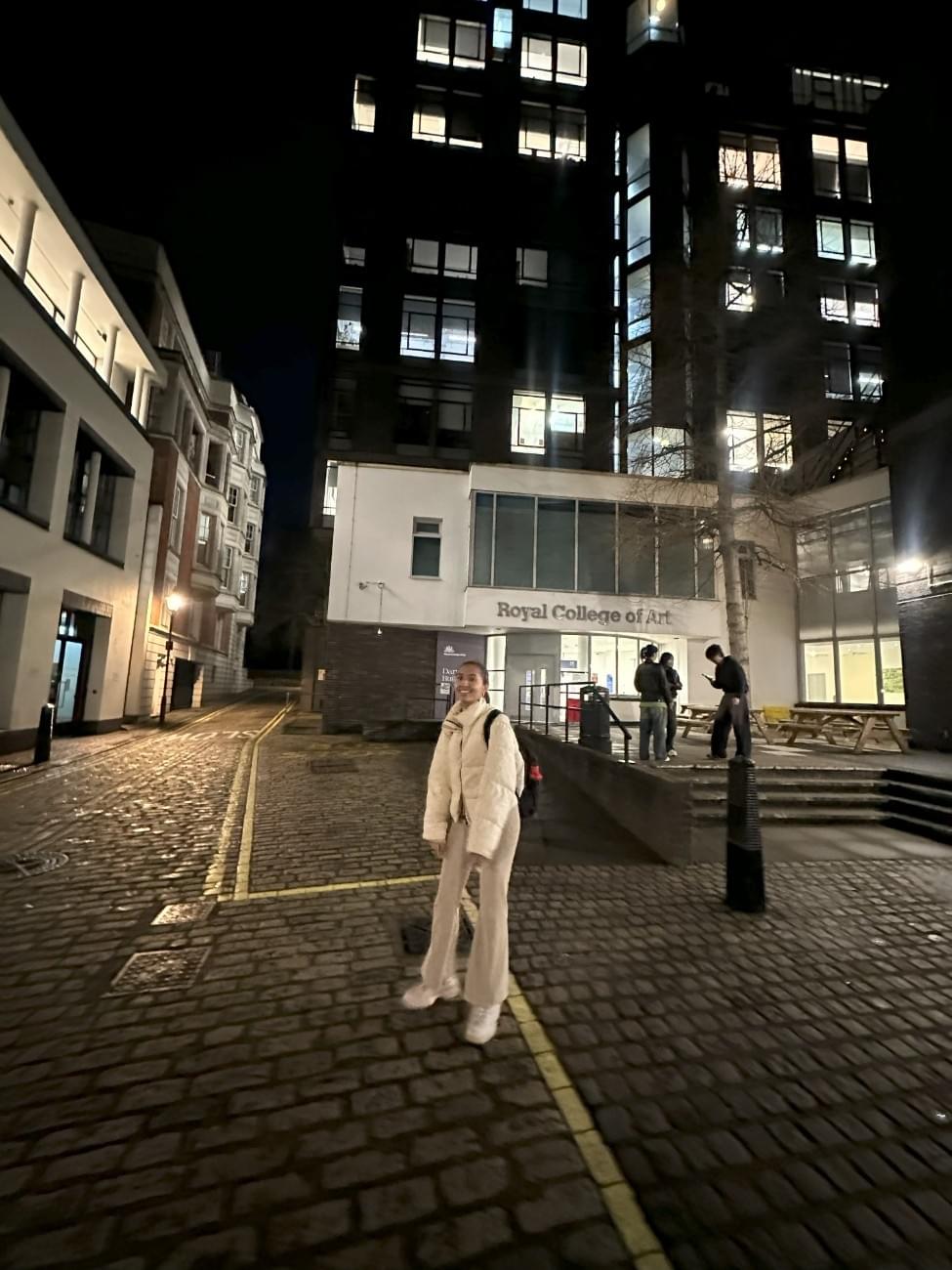
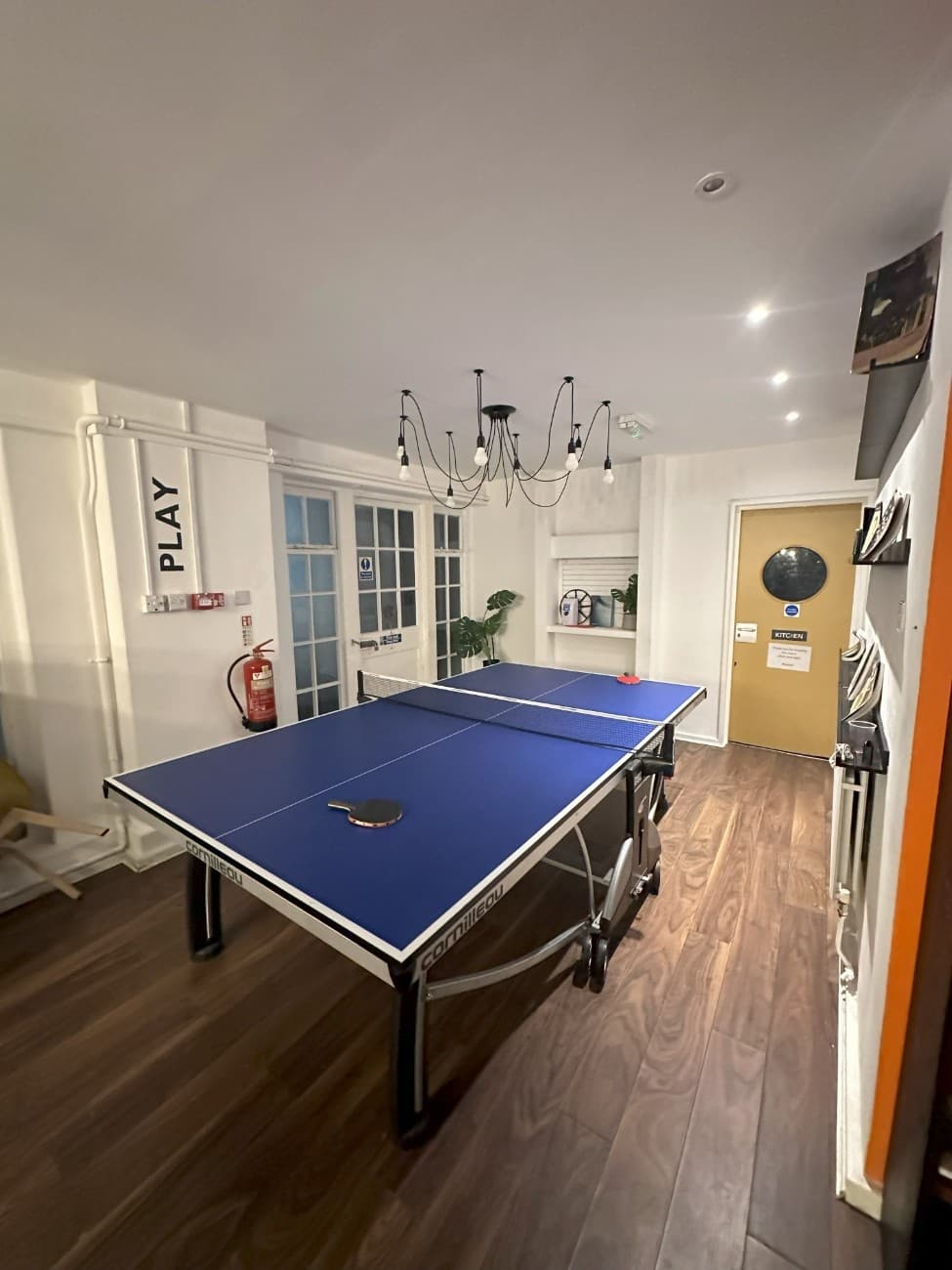
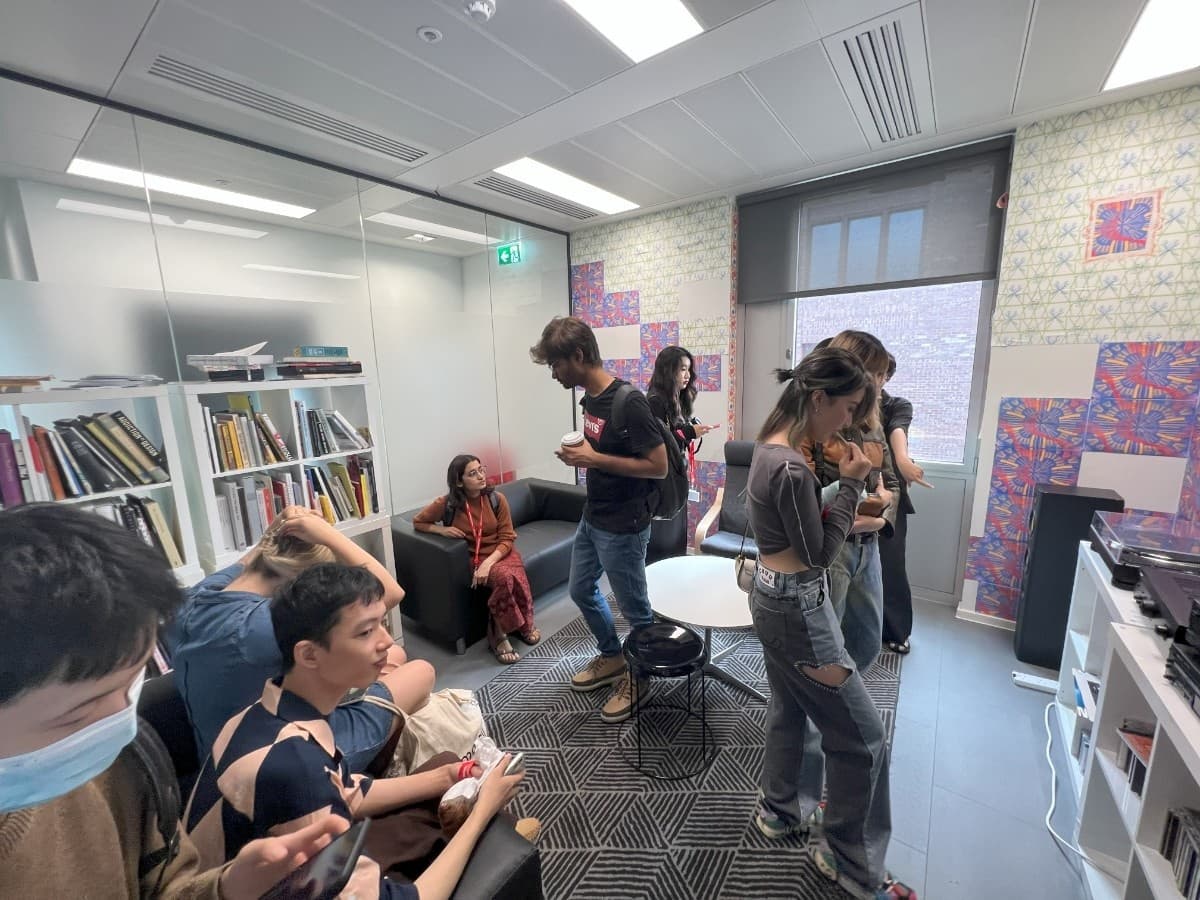
- We have 3 campuses total in South Kensington, White City, and Battersea. There was no sports facility or medical services; however, there was a library, multiple cafes, bar, many different types of studios, and communal spaces.
- There were some clubs like Drawing Society, Queer Society, and more but they were not a huge part of the campus events.
- There were no campus festivals or clubs that took place at the college. There were sometimes cultural fairs, especially at the beginning of the school year. There was also a student representative organization.
Part Time Jobs
- I only knew of one student who was a Teaching Assistant. I do not know the pay range but I assume it is between 10-13 GBP. Some people worked at restaurants, bars, or stores and were getting paid around the same price. UK International students are only allowed to work for a maximum of 20 hours per week according to visa rules and are not allowed to do any paid hourly or freelance work from overseas. I do not know of many on campus part time jobs that were available so I would say moderately difficult.
- I personally did not know any Indian students that worked part time; some of them were doing freelance work in the UK. I also knew of some students who did internships and work full-time in the summer but received approval to work over 20 hours per week. I do not think it is difficult for students to secure part-time jobs, as a lot of service or retail jobs do not require prior experience or a degree.
Placement
- I do not have a percentage but most students that I knew from my batch were unemployed within 6 months of completing the course. The economy and job market is very bad in London, and it is very hard for recent grads to secure jobs, as a lot of roles are more senior and require work experience.
- The average salary range would be between 30,000 to 40,000 GBP. There is no campus recruitment but people can get jobs through networking and applying on company websites or Linkedin.
Accommodation
- My university did not have any on-campus accommodation so I went with off-campus housing with a private company; I just searched on Google to find my student housing. My monthly rent was around 1100 GBP, which included power, water & wifi and full furnished apartment with bed, study desk, sink, 2 closets.
- We also had communal bathrooms, cinema room, and a common room. Due to the housing crisis in London, it is very difficult to find a room, especially within the month of August - I was able to secure one of the last rooms in my house.
- I recommend student housing as you can easily book a room online without a viewing; it also allows international students to meet a lot of new people from around the world really fast.
- Depending on the campus, my accommodation was between 20-40 minutes away from all 3 locations. Most of the Indian students that I knew personally were staying in student accommodation.
Exams
- IELTS is required for students who are not nationals from an English-speaking majority country.
- I had to submit a Personal Statement, a video about my Personal Creative Journey, my projects in my portfolio, and a recommendation letter. Interviews sometimes happen after submitting the application if the admissions team wants more information about you; however, I did not have any interview.
Fees
- The university only charged for tuition, which was 28,000 GBP for one year total consisting of 3 semesters.
- Fees were charged semester-wise; we paid first of tuition before the start of the first semester and the remainder at the beginning of the second semester.
- Monthly expenses: rent (1100 GBP); transportation (110 GBP); food & other expenses (1500-2000 GBP)
Scholarship
- No, I did not receive any scholarship. My university did not offer many opportunities and they were mostly for domestic students.
- A few of my batchmates had the Apple scholarship, which paid for their entire tuition fees.
- My university currently has over 300 scholarship opportunities for this incoming year and they vary in amounts (partial amount of tuition fees, full amount, full amount plus living costs)


