GITAM PhD Physics FAQs
Q1: What is the difference between full-time and extramural PhD programs at GITAM?
Ans. Full-time PhD scholars are required to be on campus, conduct research full-time, and are eligible for the GITAM PhD Fellowship of INR 33,000 per month. Extramural PhD is designed for industry professionals with minimum 2 years of experience. Extramural scholars pay higher annual fees (INR 1,00,000) and complete the program in 4 years without fellowship support.
Q2: What topics are covered in the PhD Physics program?
Ans. The program covers advanced topics including aerospace, biomedical research and development, telecommunications, IoT devices, thin film technology, nuclear physics, semiconductor physics, biophysics, light-matter interactions, computational physics, quantum technology, nanophysics, photonics, and atmospheric physics.
Q3: What are the career prospects after completing PhD in Physics?
Ans. PhD graduates can pursue diverse career paths including Principal Research Scientist, Senior Observation Scientist, Lead Interface Engineer, Aerospace Engineering Researcher, Telecommunications Strategy Specialist, Senior Automotive Industry Consultant, Data Science Leader, Chief Medical Physicist, Director of Technical Innovation, and Academic Professor.
Q4: What research facilities are available for Physics PhD students?
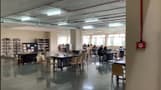
Ans. Students have access to world-class laboratories, DST FIST Physics Research Lab, MURTI Multidisciplinary Research Center, and state-of-the-art instrumentation for cutting-edge research in physics and related fields.
Q5: What is the Venture Development Centre course requirement?
Ans. The Venture Development Centre is a mandatory 2-credit course that focuses on hands-on learning for innovative product creation with business potential. This helps PhD scholars develop entrepreneurial skills alongside their research expertise in physics.
Q6: What industry collaborations does GITAM have for Physics research?
Ans. GITAM collaborates with leading organizations including Bhabha Atomic Research Centre (BARC), Centre For Materials For Electronics Technology (C-MET), Defence Metallurgical Research Laboratory (DMRL), and Andhra Pradesh Medtech Zone, providing students with exposure to industry practices and research opportunities in advanced physics and technology development.




 (1).png?h=78&w=78&mode=stretch)







.png?h=42.55&w=42.98&mode=stretch)


 (1).png?h=72&w=72&mode=stretch)


.png?h=72&w=72&mode=stretch)





Comments