



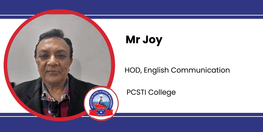
Mr. Joy Mukherjee has been working as the Head of English Communication Department at Pravesh Cruising, Shipping and Hotel Management Training Institute, Dehradun, Uttarakhand. He has done MA in English Literature from H.N.B Garhwal University of Dehradun. Also, before joining PCSTI, he has worked as an English and History Teacher with Ajmer based Lawrence and Mayo College and as a Communication Lecturer with Dehradun based Government Institute of Hotel Management for 5 years. He is well versed in reading, writing and speaking 3 languages including Hindi, English and Bengali and reading novels and magazines followed by gardening are his favorite hobbies.

What advice would you give to aspiring students who want to improve their English speaking skills?
In today’s time where Technologies are driving the world, learning the English language has become much easier than ever for students and adults with the availability of a plethora of online resources and platforms. So I would advise my dear students to give a try to platforms and apps like Cambly where they can connect with native English speakers from all over the world over video chat, develop required speaking, reading and writing skills and gain confidence. In addition to this, they can use Grammarly to verify and update their written communication, Sleekly wherein exercises are recommended to learners based on their progress, Rosetta Stone to learn a foreign language through immersive lessons and learning tools etc. Lastly, they can use Fluent to gain access to real-world videos. Also, always verify for updates and reviews, because practical communication with native speakers is crucial for enhancing language skills.
Which factors make the programs of your department the best for students?
We not only provide the best learning programs, but also the much needed comprehensive content, interactive lessons and an adaptable environment to improve proficiency of students in the English language. In addition to this, for the purpose of promoting an engaging learning experience for students, we provide them real-life applications, user-friendly interface and instant feedback. And to accommodate diverse learning needs of our young minds, we have incorporated advanced technologies like Artificial Intelligence in curriculum and a supportive community has been built to facilitate interaction between students and English native speakers. Last but not the least, they are educated about the latest trends and developments in the English field.
Which best practices have been adopted by your department for the courses it is offering to students?
Our department has adopted various unique approaches and methods including regular practice to effectively teach the English language to students and help them confidently read, write, listen and speak it. Interactive activities are also held from time to time on campus and feedback we provide to students during these sessions improve their proficiency to a great extent. Then there is media consumption through which we aim to teach and promote diverse vocabulary and accents among students, because cultural understanding is very crucial for context-appropriate communication in today’s time. And we also encourage students to make best use of the latest technologies, join language communities and stay patient and persistent throughout the whole learning process.
What are some valuable insights of the programs students are pursuing in your department?
It’s a well known fact that effective language learning often revolves around tailored learning paths, multimodal approaches, and real-time feedback. Therefore, cultural contexts and practical applications have been integrated in programs which students are pursuing in our department. In addition to this, technologies, digital platforms and community support have been of great help in improving the English language proficiency of students and giving them a dynamic learning experience. We also connect with other institutions who offer the same program to students to get more accurate details and update of English domain.
How do the programs of your English department ensure the future readiness of students?
Our department courses inculcate global communication skills, digital literacy and critical thinking capabilities in students to bridge the gaps and ensure their future preparedness. Apart from this, inclusion of cultural competence and adaptable opportunities prepare them for a diverse and rapidly changing environment. In other words, career-relevant content of our department programs have been aligned with future needs of the corporate sector. We also engage students in collaborative activities from time to time to instill in them a mindset crucial for success in an evolving world. And our assessment strategies are mainly focused on developing much needed creativity and problem-solving competencies in students.
Check PCSTI College Courses & Fees
How did you train your faculty in order to ensure effective delivery of programs to students?
We regularly organize professional development programs and workshops for our teachers to enhance their core skills, educate them about the latest teaching methodologies and on integration of technologies in education and make them culturally competent so that they can deliver the finest quality education to students. In addition to this, they collaborate with their peers for knowledge sharing and design a student-centric teaching approach and they are also exposed to a competitive environment to make themselves adaptable with respect to the ever evolving educational landscape.
How do you build a strong connection between your institution courses and industry demands?
With the aim to establish a strong connection between our programs and corporate requirements, our college has constituted special Advisory Boards who help us connect and collaborate with leading industry professionals on a regular basis in order to align our curriculum as per their needs, developments and trends. Along with this, this partnership helps us to offer diverse kinds of internships, industry-driven projects and amazing placement opportunities to our students. Guest lectures are also held on our campus as and when needed and collaborative research projects followed by partnerships with businesses contribute to mutual advancements. Then we have a very strong Alumni network who help their juniors in their smooth transition to the industrial world and faculty members' presence in professional development workshops ensures they are aware of industry trends.
What challenges do you face while adding a language course in your college’s curriculum?
For us, as far as the implementation of a language program into the curriculum is concerned, scarcity of resources including competent faculty and latest technologies, complexities involved in the designing and update process of curriculum and regular training of available teachers to keep them in sync with ever changing world, are some key challenges. Apart from this, integration of technology in the curriculum and ensuring cultural sensitivity are some additional hurdles. And since crafting effective assessment methods to monitor students progress, maintaining their engagement in college’s activities and events, and aligning the program with real-world applications demand careful planning. Hence we have maintained good relationships with industry stakeholders for providing good internships and placements opportunities to students.
On what types of projects students of your department usually work on?
Students of our department work on an extensive range of projects related to cultural exchanges, industry-specific communication tasks, and the development of language-learning resources. They also engage themselves in translation and localization projects, community outreach initiatives, and the creation of multimedia content to enhance their language proficiency and creative expression. Then there are cross-disciplinary collaborations, research endeavors, and public speaking events that contribute to our students' holistic development. Last but not the least, some students lead language teaching initiatives to foster peer education and community involvement.
What benefits and career options would be available to students after pursuing a language course from your college?
As we all know, completing a language course enhances communication skills and cultural competence of students and also offers them networking and job opportunities not only on national but global levels. Hence I would say that after successfully finishing a program from our institution and improving their language proficiency, students can work as Language Translators, interpreters or Teachers with leading institutions, universities and international schools. Apart from this, they can join the diplomatic world, journalism or tourism sector. Also, since language skills are valuable in diverse sectors, including public relations, localization, and humanitarian work, this versatility fosters personal development, cognitive abilities, and adaptability of youths and provides them a solid foundation for a dynamic and impactful career in today’s interconnected and multicultural world.
.png?h=132&w=263&mode=stretch)
.png?h=132&w=263&mode=stretch)










Comments