




ISC Class 12 History Question Paper 2026 is available for download here. Council For The Indian School Certificate Examinations (CISCE) conducted ISC Class 12 History exam on February 25, 2026 from 2 PM to 5 PM. ISC Class 12 History is divided into three sections: Section A (16 Marks), Section B (32 Marks) and Section C (32 Marks). The theory paper have a total of 80 Marks while Project Work is of 20 Marks.
ISC Class 12 History Question Paper 2026 with Solution PDF
| ISC Class 12 History Question Paper 2026 | Download PDF | Check Solutions |

In 2017, the 75th Anniversary of a historic Indian Movement was commemorated. Identify the movement.
View Solution
\textcolor{red{Step 1: Recall the year of the Quit India Movement.
The Quit India Movement (also known as the August Kranti Movement) was launched by Mahatma Gandhi on August 8-9, 1942, during World War II. It was a civil disobedience movement demanding an end to British rule in India [citation:5].
\textcolor{red{Step 2: Calculate the 75th anniversary year.
1942 + 75 = 2017
Therefore, the 75th anniversary of the Quit India Movement fell in the year 2017.
\textcolor{red{Step 3: Verify with historical records.
Multiple official sources confirm that the 75th anniversary of the Quit India Movement was commemorated in 2017:
Prime Minister Narendra Modi, in his 'Mann Ki Baat' address on July 30, 2017, specifically mentioned that "This year we are celebrating 75th anniversary of Quit India Movement" [citation:1].
The Ministry of Culture inaugurated an exhibition titled "Quit India and Azad Hind Fauj – 75th Anniversary (1942-2017)" in the National Archives of India on August 9, 2017 [citation:2].
The President of India hosted an 'At Home' reception for freedom fighters on August 9, 2017, to mark the occasion [citation:7].
A special discussion was held in both Houses of Parliament on the 75th anniversary of the Quit India Movement [citation:5][citation:8][citation:10].
\textcolor{red{Step 4: Analyze other options.
(a) The JP Movement: Incorrect. The JP Movement (led by Jayaprakash Narayan) occurred in 1974-75, so its 75th anniversary would be around 2049-50.
(b) The Quit India Movement: \textcolor{red{Correct. As established, 1942 + 75 = 2017.
(c) The Civil Disobedience Movement: Incorrect. This movement was launched in 1930, so its 75th anniversary would have been in 2005.
(d) The Movement for Women's Rights: Incorrect. This is not a specific movement with a fixed date that would have a 75th anniversary in 2017.
\textcolor{red{ Final Answer: (b) The Quit India Movement Quick Tip: Key movements and their years: Non-Cooperation Movement: 1920 Civil Disobedience Movement: 1930 Quit India Movement: 1942 Independence: 1947 JP Movement: 1974-75 To find anniversary years, simply add the number of years to the original year.
Which one of the following features of the Mizo movement was SIMILAR to that of the Naga movement?
View Solution
\textcolor{red{Step 1: Understand the historical context of both movements.
Both the Naga and Mizo movements were significant insurgencies in Northeast India that shared some common features while also having distinct differences.
\textcolor{red{Step 2: Analyze the Naga movement.
The Naga insurgency began in the 1950s (1954) under the leadership of the Naga National Council (NNC) led by A.Z. Phizo [citation:3].
It involved a prolonged armed conflict with the Indian government that continued for decades.
Multiple agreements were attempted (Nine-point agreement 1947, 1960 agreement leading to Nagaland statehood, Shillong Accord 1975), but peace remained elusive.
The conflict continued with factions like NSCN-IM and NSCN-K, and despite ceasefire agreements in 1996, a final peace settlement has not been achieved [citation:3].
\textcolor{red{Step 3: Analyze the Mizo movement.
The Mizo insurgency began in 1966 with the Mizo National Front (MNF) led by Laldenga launching "Operation Jericho" [citation:7].
It involved a prolonged armed conflict with the Indian government lasting two decades (1966-1986) [citation:6].
The movement was triggered by government apathy during the Mautam famine of 1959 [citation:7].
Unlike the Naga movement, it concluded successfully with the Mizo Accord of 1986, after which the MNF gave up arms and joined the political mainstream [citation:1][citation:6][citation:7].
\textcolor{red{Step 4: Compare each option to find the similarity.
(a) It began in the 1960s: \textcolor{red{Not similar. The Naga movement began in the 1950s (1954), while the Mizo movement began in 1966. Different starting periods.
(b) Mizoram acquired statehood in the 1980s: \textcolor{red{Not similar. Nagaland acquired statehood in 1963, while Mizoram became a state in 1987. Different timelines.
(c) It involved a prolonged armed conflict with the Indian government: \textcolor{red{Correct similarity. Both movements involved decades of armed insurgency against the Indian government. The Naga conflict lasted from the 1950s onward, and the Mizo conflict lasted from 1966 to 1986 [citation:1][citation:6].
(d) A peace settlement ended decades of insurgency: \textcolor{red{Not similar. The Mizo movement ended with the 1986 peace accord [citation:1][citation:7], but the Naga movement, despite various agreements, has not achieved a final peace settlement [citation:1][citation:3].
\textcolor{red{Step 5: Conclusion.
The key similarity between the Naga and Mizo movements is that both involved prolonged armed conflict with the Indian government. As noted in academic analysis, while the Mizo movement successfully settled into peace and development, the Naga movement continued without a final resolution [citation:1].
\textcolor{red{ Final Answer: (c) It involved a prolonged armed conflict with the Indian government. Quick Tip: Key differences between Naga and Mizo movements: Naga insurgency began earlier (1950s), Mizo later (1966) Both involved prolonged armed conflict ✓ (similarity) Mizo movement ended with 1986 peace accord; Naga movement continues Nagaland statehood (1963); Mizoram statehood (1987)
Which one of the following features of the Mizo movement was SIMILAR to that of the Naga movement?
View Solution
\textcolor{red{Step 1: Understand the historical context of both movements.
Both the Naga and Mizo movements were significant insurgencies in Northeast India that shared some common features while also having distinct differences.
\textcolor{red{Step 2: Analyze the Naga movement.
The Naga insurgency began in the 1950s (1954) under the leadership of the Naga National Council (NNC) led by A.Z. Phizo [citation:3].
It involved a prolonged armed conflict with the Indian government that continued for decades.
Multiple agreements were attempted (Nine-point agreement 1947, 1960 agreement leading to Nagaland statehood, Shillong Accord 1975), but peace remained elusive.
The conflict continued with factions like NSCN-IM and NSCN-K, and despite ceasefire agreements in 1996, a final peace settlement has not been achieved [citation:3].
\textcolor{red{Step 3: Analyze the Mizo movement.
The Mizo insurgency began in 1966 with the Mizo National Front (MNF) led by Laldenga launching "Operation Jericho" [citation:7].
It involved a prolonged armed conflict with the Indian government lasting two decades (1966-1986) [citation:6].
The movement was triggered by government apathy during the Mautam famine of 1959 [citation:7].
Unlike the Naga movement, it concluded successfully with the Mizo Accord of 1986, after which the MNF gave up arms and joined the political mainstream [citation:1][citation:6][citation:7].
\textcolor{red{Step 4: Compare each option to find the similarity.
(a) It began in the 1960s: \textcolor{red{Not similar. The Naga movement began in the 1950s (1954), while the Mizo movement began in 1966. Different starting periods.
(b) Mizoram acquired statehood in the 1980s: \textcolor{red{Not similar. Nagaland acquired statehood in 1963, while Mizoram became a state in 1987. Different timelines.
(c) It involved a prolonged armed conflict with the Indian government: \textcolor{red{Correct similarity. Both movements involved decades of armed insurgency against the Indian government. The Naga conflict lasted from the 1950s onward, and the Mizo conflict lasted from 1966 to 1986 [citation:1][citation:6].
(d) A peace settlement ended decades of insurgency: \textcolor{red{Not similar. The Mizo movement ended with the 1986 peace accord [citation:1][citation:7], but the Naga movement, despite various agreements, has not achieved a final peace settlement [citation:1][citation:3].
\textcolor{red{Step 5: Conclusion.
The key similarity between the Naga and Mizo movements is that both involved prolonged armed conflict with the Indian government. As noted in academic analysis, while the Mizo movement successfully settled into peace and development, the Naga movement continued without a final resolution [citation:1].
\textcolor{red{ Final Answer: (c) It involved a prolonged armed conflict with the Indian government. Quick Tip: Key differences between Naga and Mizo movements: Naga insurgency began earlier (1950s), Mizo later (1966) Both involved prolonged armed conflict ✓ (similarity) Mizo movement ended with 1986 peace accord; Naga movement continues Nagaland statehood (1963); Mizoram statehood (1987)
Appeasement as a diplomatic policy was followed by Britain and France with the objective of:
View Solution
\textcolor{red{Step 1: Understand the policy of appeasement.
Appeasement was a diplomatic policy followed primarily by Britain (under Prime Ministers Stanley Baldwin and Neville Chamberlain) and France in the 1930s towards aggressive nations, particularly Nazi Germany under Hitler and Fascist Italy under Mussolini.
\textcolor{red{Step 2: Key characteristics of appeasement.
It involved making concessions to aggressive powers to avoid conflict.
The underlying belief was that satisfying the "legitimate" grievances of aggrieved nations would prevent another world war.
It was rooted in the traumatic memories of World War I and the strong desire to avoid another devastating conflict.
Examples include accepting Hitler's rearmament of the Rhineland (1936), the Anschluss with Austria (1938), and the Munich Agreement (1938) which allowed Germany to annex the Sudetenland region of Czechoslovakia.
\textcolor{red{Step 3: Analyze each option.
(a) avoiding war with aggressive nations at any cost: \textcolor{red{Correct. This was precisely the objective of appeasement. Britain and France hoped that by giving in to Hitler's demands, they could avoid another catastrophic war. Chamberlain famously declared "peace for our time" after the Munich Agreement.
(b) encouraging economic cooperation for mutual benefit: \textcolor{red{Incorrect. While economic factors played a role, appeasement was primarily political and territorial, not aimed at economic cooperation.
(c) checking the spread of communism in western Europe: \textcolor{red{Incorrect. Some historians argue that appeasement was partly motivated by the desire to strengthen Germany as a buffer against Soviet communism, but this was not the primary or stated objective. The main goal was avoiding war with Germany, not containing communism.
(d) establishing friendly relations with the neighbouring countries: \textcolor{red{Incorrect. Appeasement was specifically directed at aggressive, revisionist powers (Germany, Italy), not at establishing general friendly relations with all neighbours.
\textcolor{red{Step 4: Historical assessment of appeasement.
Appeasement ultimately failed because it encouraged Hitler's aggression rather than satisfying his ambitions. He continued his expansionist policies, leading to the invasion of Poland in 1939 and the outbreak of World War II. The policy is now widely criticized as a misguided attempt to avoid war at any cost.
\textcolor{red{ Final Answer: (a) avoiding war with aggressive nations at any cost. Quick Tip: Appeasement (1930s): Policy of making concessions to aggressive powers Goal: Avoid another world war at all costs Key example: Munich Agreement (1938) Result: Failed; encouraged Hitler's aggression Lesson: Appeasing dictators often leads to more aggression, not peace
Which one of the following statements is NOT true about the Movements for Women's Rights in the USA and India? ______ [1]
View Solution
\textcolor{red{Step 1: Understand the Women's Rights Movements in USA and India.
Both the USA and India witnessed significant women's rights movements, especially in the 20th century, aiming to address various forms of discrimination and inequality.
\textcolor{red{Step 2: Analyze each statement.
(a) Both demanded the end to domestic violence against women: \textcolor{red{True. Both movements have consistently campaigned against domestic violence, leading to laws like the Protection of Women from Domestic Violence Act (2005) in India and the Violence Against Women Act (1994) in the USA.
(b) They protested against the traditional notion that a woman's place was at home: \textcolor{red{True. Both movements challenged traditional gender roles and the idea that women should be confined to domestic spheres, advocating for women's participation in education, employment, and public life.
(c) They emphasised the importance of achieving gender equality and equal opportunities: \textcolor{red{True. Gender equality and equal opportunities in education, employment, and political representation have been central demands of both movements.
(d) Both the movements highlighted the complete dependence of women on men for economic support: \textcolor{red{NOT True. This statement is incorrect because:
Women's rights movements have actually worked to challenge and reduce women's economic dependence on men, not highlight it as a desirable or acceptable condition.
The movements advocate for economic independence through equal pay, employment opportunities, property rights, and financial literacy.
Highlighting dependence would contradict the core feminist goal of women's empowerment and autonomy.
While movements may acknowledge that economic dependence exists as a problem, they do not "highlight" it as a positive or acceptable feature - they work to overcome it.
\textcolor{red{Step 3: Identify the NOT true statement.
Statement (d) is false because women's rights movements aim to reduce economic dependence, not highlight or endorse it.
\textcolor{red{ Final Answer: (d) Both the movements highlighted the complete dependence of women on men for economic support. Quick Tip: Women's Rights Movements - Key Goals: Economic independence and equal pay ✓ End to domestic violence ✓ Gender equality and equal opportunities ✓ Challenge traditional gender roles ✓ NOT to highlight dependence on men ✗
Which one of the following battles during the Second World War proved to be a turning point in the fight for control of the Pacific? ______ [1]
View Solution
\textcolor{red{Step 1: Understand the major battles of WWII and their theaters.
World War II had multiple theaters of war - European, North African, and Pacific. Different battles were turning points in different theaters.
\textcolor{red{Step 2: Identify the theater for each battle.
(a) Stalingrad: \textcolor{red{European theater. This battle (1942-1943) was the turning point on the Eastern Front, where the Soviet Union defeated Nazi Germany, marking the beginning of Germany's retreat.
(b) El Alamein: \textcolor{red{North African theater. This battle (1942) was the turning point in North Africa, where British forces under Montgomery defeated Rommel's Afrika Korps.
(c) Midway Island: \textcolor{red{Pacific theater. This battle (June 1942) was the decisive turning point in the Pacific. The US Navy defeated the Imperial Japanese Navy, destroying four Japanese aircraft carriers and halting Japanese expansion.
(d) Battle of Britain: \textcolor{red{European theater. This air battle (1940) prevented Germany from invading Britain but was not in the Pacific.
\textcolor{red{Step 3: Significance of the Battle of Midway.
The Battle of Midway was crucial because:
It occurred just six months after Pearl Harbor
The US sank four Japanese aircraft carriers (Akagi, Kaga, Soryu, Hiryu) while losing only one (Yorktown)
It crippled Japan's naval aviation capability
It shifted the balance of power in the Pacific from Japan to the US
It marked the end of Japanese offensive operations and put Japan on the defensive for the remainder of the war
\textcolor{red{Step 4: Conclusion.
The Battle of Midway Island was the turning point in the Pacific theater of World War II.
\textcolor{red{ Final Answer: (c) Midway Island Quick Tip: WWII Turning Points by Theater: \textbf{Pacific:} Battle of Midway (1942) - US victory halts Japanese expansion \textbf{Europe (Eastern Front):} Battle of Stalingrad (1942-43) - Soviet victory \textbf{North Africa:} Battle of El Alamein (1942) - British victory \textbf{Western Europe:} D-Day/Normandy (1944) - Allied invasion
Given below are two statements marked Assertion and Reason. Read the two statements carefully and choose the correct option.
Assertion: The Truman doctrine made it clear that the USA had no intention of returning to isolation as it had done after the First World War.
Reason: The USA was committed to a policy of containing communism throughout the world.
View Solution
\textcolor{red{Step 1: Understand the historical context of the Truman Doctrine.
The Truman Doctrine was announced by US President Harry S. Truman on March 12, 1947. It was a response to the communist threats in Greece and Turkey.
\textcolor{red{Step 2: Analyze Assertion (A).
Assertion: "The Truman doctrine made it clear that the USA had no intention of returning to isolation as it had done after the First World War."
After World War I, the USA had returned to a policy of isolationism, refusing to join the League of Nations and avoiding international commitments.
After World War II, the Truman Doctrine marked a fundamental shift in US foreign policy.
By pledging to support "free peoples who are resisting attempted subjugation by armed minorities or by outside pressures," the USA abandoned isolationism and committed to global engagement.
\textcolor{red{Therefore, Assertion (A) is TRUE.
\textcolor{red{Step 3: Analyze Reason (R).
Reason: "The USA was committed to a policy of containing communism throughout the world."
The Truman Doctrine was the cornerstone of the US policy of "containment" of communism.
This policy, articulated by diplomat George Kennan, aimed to prevent the spread of Soviet influence and communism globally.
The doctrine provided military and economic aid to countries threatened by communism.
\textcolor{red{Therefore, Reason (R) is TRUE.
\textcolor{red{Step 4: Check if Reason (R) correctly explains Assertion (A).
The USA abandoned isolationism BECAUSE it was committed to containing communism.
The threat of communist expansion required active US engagement worldwide, making isolationism impossible.
The Truman Doctrine specifically framed US intervention as necessary to counter communist aggression.
\textcolor{red{Thus, Reason (R) is the correct explanation of Assertion (A).
\textcolor{red{ Final Answer: (a) Both Assertion and Reason are true and Reason is the correct explanation for Assertion. Quick Tip: Truman Doctrine (1947): Marked end of US isolationism ✓ Commitment to contain communism ✓ Provided aid to Greece and Turkey Foundation of Cold War foreign policy "Support free peoples resisting subjugation"
The ______ Mission Proposals, condemned by Gandhi as a "postdated cheque on a failing Bank", were rejected by the Congress.
View Solution
\textcolor{red{Step 1: Recall the historical context.
In March 1942, the British government sent a mission to India headed by Sir Stafford Cripps, a senior minister in Winston Churchill's War Cabinet. The purpose of this mission was to secure Indian cooperation and support for the British war effort during World War II, as Japan was advancing towards India's borders.
\textcolor{red{Step 2: Understand the proposals.
The Cripps Mission offered India dominion status after the war, with the right to secede from the Commonwealth. It proposed that a constituent assembly would be formed to frame India's constitution, and provinces would have the right to opt out of the Indian Union. However, all these promises were to be implemented only after the war ended.
\textcolor{red{Step 3: Gandhi's famous condemnation.
Mahatma Gandhi was deeply dissatisfied with these proposals as they offered nothing immediate and depended on Britain winning the war - which was far from certain at that time. He famously described the Cripps offer as:
\[ \boxed{"a post-dated cheque on a failing bank"} \]
Some accounts suggest that while Gandhi made the initial remark, the phrase "on a failing bank" was added by a journalist, A.S. Iyengar, and the combined statement became attributed to Gandhi. The phrase powerfully conveyed that the promise of future independence was worthless if Britain itself might lose the war.
\textcolor{red{Step 4: Congress rejection.
The Indian National Congress rejected the Cripps proposals primarily because:
They offered only a future promise with no immediate transfer of power
The Viceroy's executive council would remain unchanged in structure
Defence matters remained entirely under British control
The provision for provinces to opt out was seen as encouraging partition
\textcolor{red{Step 5: Final answer.
The blank should be filled with:
\[ \boxed{Cripps} \] Quick Tip: The Cripps Mission (1942) offered India dominion status after WWII. Gandhi dismissed it as a "post-dated cheque on a failing bank" because the promises depended on a British victory, which was uncertain at the time. Congress rejected the proposals, leading to the Quit India Movement later that year.
The signatories of the Sykes-Picot Pact were Britain and ______.
View Solution
\textcolor{red{Step 1: Recall the historical context.
The Sykes-Picot Agreement (officially the Asia Minor Agreement) was a secret 1916 treaty between the governments of the United Kingdom and France, with the assent of Russia. It defined their proposed spheres of influence and control in Western Asia after the expected downfall of the Ottoman Empire during World War I.
\textcolor{red{Step 2: Identify the signatories.
The agreement was negotiated by the British diplomat Sir Mark Sykes and the French diplomat François Georges-Picot. Therefore, the signatories were:
\[ \boxed{France} \] Quick Tip: Sykes-Picot Pact (1916): Secret agreement between Britain and France to divide Ottoman territories after WWI. Named after negotiators Sir Mark Sykes (Britain) and François Georges-Picot (France).
Who was the author of The Historic Eight Documents?
Chau Mau Mafam
View Solution
\textcolor{red{Step 1: Identify the correct spelling and context.
The name appears to be misspelled. The reference is likely to Chau Mau Mafam which might be a typographical error.
\textcolor{red{Step 2: Recall the author of The Historic Eight Documents.
The Historic Eight Documents refers to a collection of important documents related to Vietnamese revolutionary history. These documents were authored by Phan Bội Châu, a pioneering Vietnamese nationalist and revolutionary.
\textcolor{red{Step 3: Correct identification.
The name "Chau Mau Mafam" appears to be a corrupted version of "Phan Bội Châu". Phan Bội Châu was a key figure in Vietnamese independence movement and wrote several influential works.
\[ \boxed{Phan Bội Châu \] Quick Tip: Phan Bội Châu (1867-1940) was a Vietnamese revolutionary who wrote "The Historic Eight Documents" and played a crucial role in Vietnam's independence movement against French colonial rule.
Name the activist who died after a fifty-six day hunger strike demanding the creation of a Telugu-speaking state.
View Solution
\textcolor{red{Step 1: Recall the historical context.
In the early 1950s, there was a strong movement in India for the creation of linguistic states. The demand for a separate Telugu-speaking state (Andhra Pradesh) to be carved out of the Madras Presidency gained momentum.
\textcolor{red{Step 2: Identify the activist.
Potti Sriramulu, a devoted Gandhian and social activist, undertook a hunger strike (fast unto death) starting on 19 October 1952, demanding the formation of a separate state for Telugu-speaking people (Andhra State).
\textcolor{red{Step 3: Outcome of the hunger strike.
Potti Sriramulu continued his fast for 56 days despite failing health. He died on 15 December 1952, which led to widespread protests and riots across the Telugu-speaking regions.
\textcolor{red{Step 4: Impact of his death.
His death had a profound impact on the Indian government. Prime Minister Jawaharlal Nehru announced the formation of Andhra State on 19 December 1952, just four days after Sriramulu's death.
\[ \boxed{Potti Sriramulu} \] Quick Tip: Potti Sriramulu's 56-day hunger strike and death in 1952 led to the formation of Andhra State (first linguistic state in India). His sacrifice was a turning point in India's linguistic reorganization movement.
What was the title of the report filed by the Committee on the status of Indian women in 1974?
View Solution
\textcolor{red{Step 1: Recall the committee and its purpose.
In 1974, the Government of India established the Committee on the Status of Women in India to examine the social, educational, and economic conditions of women in the country.
\textcolor{red{Step 2: Identify the report title.
The committee, chaired by Dr. Phulrenu Guha, submitted its comprehensive report in 1974 (published in 1975). The report was titled "Towards Equality" [citation:1][citation:4].
\textcolor{red{Step 3: Final answer.
\[ \boxed{Towards Equality} \] Quick Tip: The "Towards Equality" report (1974) was a landmark document on the status of Indian women, highlighting gender disparities and influencing policy and legal reforms.
Which country's takeover by the Communists destroyed the 'bridge' between the East and West Europe and completed the 'iron curtain'?
View Solution
\textcolor{red{Step 1: Understand the historical context.
The term "Iron Curtain" was popularized by Winston Churchill in his 1946 Fulton speech, referring to the ideological and physical division of Europe between the Soviet-dominated East and the democratic West [citation:5]. The process of Soviet domination over Eastern Europe was gradual, occurring after World War II.
\textcolor{red{Step 2: Identify the key event.
A critical event that solidified this division was the communist takeover in Czechoslovakia in February 1948. Before this, Czechoslovakia had maintained some democratic institutions and was seen as a potential "bridge" between East and West. The coup d'état established a Soviet-aligned communist government, effectively sealing the Iron Curtain.
\textcolor{red{Step 3: Final answer.
\[ \boxed{Czechoslovakia} \] Quick Tip: The 1948 communist coup in Czechoslovakia completed the Iron Curtain, eliminating the last democratic "bridge" in Eastern Europe.
One of the reasons for the defeat of the Axis Powers in the Second World War was the tactical errors made by them. Mention any one serious tactical mistake made by Japan.
View Solution
\textcolor{red{Step 1: Identify Japanese tactical errors.
Japan made several critical errors during World War II. One of the most significant was the attack on Pearl Harbor [citation:3].
\textcolor{red{Step 2: Explain why it was a mistake.
While tactically successful, this attack was a grave strategic error because it:
Awakened and unified American public opinion against Japan
Brought the full industrial might of the United States into the war
Failed to destroy vital targets like aircraft carriers and fuel storage facilities
\textcolor{red{Step 3: Alternative mistake.
Another serious error was the failure to adapt aircraft design and pilot training as the war progressed. Japan's overconfidence in its elite pilots and the "silver bullet" Zero fighter left it unable to replace losses with adequately trained personnel or competitive aircraft [citation:6].
\textcolor{red{Step 4: Final answer.
\[ \boxed{The attack on Pearl Harbor, which brought the United States into the war.} \] Quick Tip: Pearl Harbor was a tactical success but a strategic disaster, uniting America against Japan. Other errors included inflexible pilot training and failure to update aircraft technology.
In the context of America's foreign policy, what was the significance of the formation of NATO (1949)?
View Solution
\textcolor{red{Step 1: Understand NATO's purpose.
The North Atlantic Treaty Organization (NATO) was formed in April 1949 as a collective defense alliance between the United States, Canada, and Western European nations [citation:7].
\textcolor{red{Step 2: Significance for American foreign policy.
Its formation marked a fundamental shift in U.S. foreign policy:
Abandoned the traditional American policy of isolationism and non-entanglement in European affairs
Committed the U.S. to permanent peacetime military alliances for the first time
Formalized the doctrine of containment against Soviet expansion
\textcolor{red{Step 3: Key strategic role.
NATO served to "Keep the Germans Down, the Soviets Out, and the Americans In" [citation:7]. It provided:
A unified military command structure under U.S. leadership (SACEUR)
Collective security guarantee (Article 5)
Framework for rearming and integrating West Germany into Western defense
\textcolor{red{Step 4: Final answer.
\[ \boxed{NATO formalized America's commitment to European defense, ending isolationism and establishing collective security against Soviet expansion.} \] Quick Tip: NATO (1949) marked America's permanent military commitment to Europe, institutionalizing containment and collective defense. It remains the cornerstone of transatlantic security.
Discuss any four steps taken by Subhash Chandra Bose to revive and reorganise the Indian National Army after taking over as its Supreme Commander.
View Solution
\textcolor{red{Step 1: Context of Bose's takeover.
Subhash Chandra Bose arrived in Singapore in July 1943 and took over the leadership of the Indian National Army (INA) from Rash Behari Bose on July 4, 1943. At that time, the INA was in disarray, lacking vision and clear leadership.
\textcolor{red{Step 2: Step 1 - Massive recruitment and expansion.
Bose immediately began recruiting and expanding the INA. He appealed to the Indian diaspora in Southeast Asia for both men and material. His call touched a chord with expatriates - from barristers to plantation workers - who had no military experience but joined the INA. The strength grew from about 12,000 to more than 40,000 personnel, including a separate women's unit called the Rani of Jhansi Regiment, which was the first of its kind in Asia.
\textcolor{red{Step 3: Step 2 - Establishment of the Provisional Government of Azad Hind.
On October 21, 1943, Bose established the Arzi Hukumat-e-Azad Hind (Provisional Government of Free India) in Singapore. This government had its own currency, court, and civil code, and it declared war against Britain and the United States. It gained diplomatic recognition from nine countries including Japan, Germany, and Italy, giving greater legitimacy to the independence struggle.
\textcolor{red{Step 4: Step 3 - Mobilizing financial resources and public support.
Bose carried out what historians describe as a "public relations masterpiece." He gathered massive financial support from the Indian diaspora in Japanese-occupied Southeast Asia. Many Indians donated their life savings for the cause. His famous slogan "Give me blood, and I shall give you freedom" became a rallying cry that energized the Indian communities.
\textcolor{red{Step 5: Step 4 - Reorganizing military structure and launching offensive.
Bose reorganized the INA's military structure with key appointments including Lt. Col. Shah Nawaz Khan as Chief of General Staff and Major P.K. Sahgal as Military Secretary. He launched the Imphal offensive in 1944 with the strategic objective of capturing Indian territory. The INA successfully raised the Indian tricolor at Moirang in Manipur - the first time on Indian soil. Though militarily unsuccessful, this demonstrated the INA's capability and commitment. Quick Tip: Bose revived INA through: (1) mass recruitment (40,000+ troops, Rani of Jhansi Regiment), (2) Provisional Government of Azad Hind (with currency, court), (3) mobilizing funds from Indian diaspora, (4) military reorganization and Imphal offensive.
Name the resolution that the All India Congress Committee passed on the 8th August, 1942. Why did Gandhi demand complete freedom immediately?
View Solution
\textcolor{red{Step 1: Name of the resolution.
The resolution passed by the All India Congress Committee (AICC) on August 8, 1942 at the Gowalia Tank Maidan in Bombay was the Quit India Resolution. This movement is also known as the August Revolution or August Kranti.
\textcolor{red{Step 2: Reason 1 - Failure of Cripps Mission.
The immediate trigger was the failure of the Cripps Mission in March 1942. Sir Stafford Cripps was sent by the British government with proposals for Indian constitutional reforms after the war, but these were unsatisfactory and offered only a future promise. Gandhi famously described the Cripps offer as "a post-dated cheque on a failing bank."
\textcolor{red{Step 3: Reason 2 - Threat of Japanese invasion.
By early 1942, Japan had rapidly advanced through Southeast Asia, capturing Malaya, Singapore, and Burma. There was a real threat of Japanese invasion of India. Gandhi believed that only a free India could effectively resist Japanese aggression. A government that Indians felt was their own would inspire them to defend their country.
\textcolor{red{Step 4: Reason 3 - British unwillingness to part with power.
Even in Britain's desperate situation during World War II, the British government under Churchill was unwilling to grant India immediate independence. This obduracy convinced Gandhi that only a final, mass struggle would compel the British to leave.
\textcolor{red{Step 5: Reason 4 - Need for Indian unity and participation in war.
Gandhi argued that if India felt the glow of freedom, it would willingly cooperate with the Allied powers and throw its resources into the struggle against fascism and Nazism. The Quit India resolution declared that free India would assure success in the war for freedom against aggression.
\textcolor{red{Step 6: Gandhi's famous call.
In his historic speech on August 8, 1942, Gandhi gave the mantra: "Do or Die" (Karo Ya Maro). Quick Tip: Quit India Resolution (August 8, 1942). Gandhi demanded immediate freedom due to: Cripps Mission failure, Japanese invasion threat, British unwillingness to transfer power, and need for Indian participation in WWII. His slogan: "Do or Die."
In the context of India's First General Elections (1952), discuss any four steps followed by the Indian Election Commission during the preparation process, to establish India's first democratic government.
View Solution
\textcolor{red{Step 1: Context of the first general election.
India's first general election was a monumental exercise held between October 25, 1951, and February 21, 1952 . With approximately 17 crore eligible voters, of which only 15% were literate, the Election Commission of India (ECI), under Chief Election Commissioner Sukumar Sen, faced the daunting task of conducting the world's largest democratic exercise .
\textcolor{red{Step 2: Step 1 - Preparation of electoral rolls.
The ECI undertook the massive task of preparing accurate electoral rolls for universal adult suffrage. This process began as early as 1948, with house-to-house inquiries conducted by enumerators . The eligibility criteria required voters to be Indian citizens, at least 21 years old, and residents of a constituency for at least 180 days . Special provisions were made to include displaced persons and refugees from Partition based on a simple declaration of intent to reside permanently in India . The final rolls, published by November 1951, enrolled 17.32 crore voters - approximately 96% of the eligible adult population .
\textcolor{red{Step 3: Step 2 - Training of election personnel.
The ECI trained over 3 lakh officers and polling staff to conduct the election across the country . This massive training program was essential to ensure that polling officials understood the procedures, could handle the voting equipment, and could manage polling stations in remote and diverse terrains.
\textcolor{red{Step 4: Step 3 - Design and procurement of ballot boxes.
With over 2 million ballot boxes needed, the ECI partnered with Godrej \& Boyce to manufacture tamper-proof steel ballot boxes . After more than 50 prototypes, a cost-effective design with an internal locking mechanism was developed. Godrej's plant worked in three shifts, producing 15,000 ballot boxes daily . These were transported to remote corners of 23 states via special "election special" trains from Mumbai's Vikhroli railway station . Each candidate was assigned a separate ballot box with their election symbol painted on it, as voters dropped a pre-printed ballot paper into the box of their chosen candidate .
\textcolor{red{Step 5: Step 4 - Voter education and awareness campaigns.
Given that 85% of voters were illiterate and had no prior voting experience, the ECI conducted a massive public education campaign . All India Radio (AIR) became a key partner in educating people about the mechanics of democracy . Candidates were identified by symbols assigned to each party and independent candidate, which were painted on ballot boxes to help illiterate voters identify their preferred candidate . Mock elections were held in various parts of the country in September 1951 to familiarize voters with the voting process . The government also released a comprehensive 271-page book compiling election rules and constitutional provisions . Quick Tip: The first general election (1951-52) was India's bold experiment in democracy. Key steps: (1) preparing electoral rolls for 17.3 crore voters, (2) training 3 lakh polling staff, (3) procuring 2 million+ tamper-proof ballot boxes from Godrej, and (4) voter education using symbols, radio broadcasts, and mock polls to reach an illiterate electorate.
"There comes a time in the life of every nation when it stands on the crossroads of History and must choose which way to go," Lal Bahadur Shastri.
Enumerate any four contributions of Prime Minister Lal Bahadur Shastri, with reference to the path he chose to fulfil his vision of a socialist, democratic and prosperous India.
View Solution
\textcolor{red{Step 1: Context of Shastri's leadership.
Lal Bahadur Shastri became the second Prime Minister of India in June 1964, after the death of Jawaharlal Nehru. He led the nation during a critical period marked by food shortages, economic challenges, and the 1965 war with Pakistan. His vision for India combined democratic socialism with pragmatic economic reforms and self-sufficiency.
\textcolor{red{Step 2: Contribution 1 - The Green Revolution and agricultural transformation.
Shastri laid the foundation for the Green Revolution to address India's acute food crisis. He promoted the use of high-yielding variety seeds, modern farming techniques, and expanded irrigation facilities. He established the Agricultural Prices Commission and the Food Corporation of India in 1965 to ensure fair prices and distribution of food grains. His policies, continued after his death, transformed India from a food-deficient nation to one on the path to self-sufficiency in food grain production.
\textcolor{red{Step 3: Contribution 2 - The White Revolution and dairy development.
Shastri promoted the White Revolution by supporting the Amul milk cooperative in Anand, Gujarat. He established the National Dairy Development Board (NDDB) in 1965 to replicate the Amul model across the country. This institutional framework empowered millions of small-scale dairy farmers, increased milk production, and laid the foundation for India to become the world's largest milk producer.
\textcolor{red{Step 4: Contribution 3 - Leadership during the 1965 war and national security.
During the Indo-Pakistan War of 1965, Shastri provided firm and courageous leadership. Despite being a follower of Gandhi's principles of non-violence, he authorized the Indian Army to cross the international border and march towards Lahore - the first time India took the battle to enemy territory. He gave the iconic slogan "Jai Jawan, Jai Kisan" ("Hail the soldier, Hail the farmer"), which unified the nation and recognized the dual pillars of national security and food security.
\textcolor{red{Step 5: Contribution 4 - Economic reforms and liberalization.
Shastri initiated significant economic reforms, moving away from excessive state control towards a more market-driven approach. He relaxed regulations in sectors like steel and cement, ordered a review of public sector projects, and sought to decentralize governance by transferring decision-making powers from the Planning Commission to individual ministries. His economic team included reform-minded officials who believed in liberating the economy, modernizing agriculture, and granting the private sector relative freedom. These reforms anticipated the broader liberalization that would come decades later.
\textcolor{red{Step 6: Additional contributions (for reference).
Shastri also contributed to India's nuclear program, encouraging scientist Homi Bhabha to continue work on nuclear explosions for peaceful purposes. He strengthened farmer cooperatives, introduced the Minimum Support Price (MSP) system to protect farmers from market fluctuations, and expanded rural electrification to transform agricultural practices. Quick Tip: Lal Bahadur Shastri's key contributions: (1) Green Revolution foundation (agricultural self-sufficiency), (2) White Revolution (NDDB, dairy development), (3) 1965 war leadership and "Jai Jawan, Jai Kisan" slogan, (4) Early economic reforms and liberalization. His vision combined democratic socialism with pragmatic institution-building for a prosperous India.
For the first time since independence, the Congress party was defeated in the elections of 1977 and a new party came into power at the Centre. In this context, discuss any four measures adopted by the newly established non-Congress government to restore the civil liberties of the people of India.
View Solution
\textcolor{red{Step 1: Context of the Janata Government's formation.
The Janata Party, a coalition of opposition parties, came to power in March 1977 following the controversial Emergency period (1975-77) imposed by Indira Gandhi's Congress government. The new government, led by Prime Minister Morarji Desai, made the restoration of democratic freedoms and civil liberties its top priority, aiming to undo the authoritarian excesses of the Emergency [citation:2][citation:5].
\textcolor{red{Step 2: Measure 1 - Release of political prisoners and revocation of MISA.
One of the first actions of the Janata government was to order the release of thousands of political prisoners detained during the Emergency under the Maintenance of Internal Security Act (MISA). The government directed that MISA should be used in the future only in exceptional cases, effectively dismantling the main weapon used to detain individuals without trial [citation:7]. Official sources confirmed that the wide powers given to police and security agencies to keep surveillance over private citizens, including telephone tapping and monitoring with listening devices, were withdrawn [citation:5].
\textcolor{red{Step 3: Measure 2 - Repeal of repressive press laws.
The government repealed the Prevention of Publication of Objectionable Matters Act, which had been used to regulate and censor the press during the Emergency [citation:1][citation:5]. It also lifted press censorship and restored the right of free expression to the media [citation:1][citation:7]. Reporting of legislative proceedings, which had been suspended, was restored, and the government took steps to encourage independent journalism [citation:1][citation:2].
\textcolor{red{Step 4: Measure 3 - Constitutional amendments through the 43rd and 44th Amendments.
The Janata government introduced major constitutional reforms to undo the damage caused by the 42nd Amendment (often called the "Mini Constitution"). The 43rd Amendment (1977) deleted provisions that had restricted the powers of the judiciary and curtailed fundamental freedoms [citation:3]. The more comprehensive 44th Amendment (1978) restored fundamental rights, ensured that the right to life and personal liberty (Article 21) could not be suspended even during an Emergency, and amended Article 352 to prevent the abuse of the power to declare Emergency [citation:1][citation:10]. It also restored the original term of five years for Parliament and state legislatures [citation:3].
\textcolor{red{Step 5: Measure 4 - Establishment of inquiry commissions and restoration of judicial review.
The government established a number of inquiry commissions, including the Shah Commission, to investigate allegations of abuse of power by central and state government officials during the Emergency [citation:2][citation:5]. The Janata government also worked to restore the authority of the judiciary by repealing provisions that had limited the Supreme Court and High Courts' powers of judicial review [citation:3]. The restoration of writ jurisdiction under Article 226 enabled citizens to seek relief for their legitimate grievances [citation:3]. Quick Tip: The Janata government's restoration of civil liberties included: (1) releasing political prisoners and revoking MISA, (2) repealing press censorship laws, (3) passing the 43rd and 44th Constitutional Amendments to prevent future Emergency abuses, and (4) establishing inquiry commissions and restoring judicial review powers.
The cartoon titled Good Hunting by Bernard Partridge, depicting Hitler and Mussolini, reflects a major shift in Italy's foreign policy after 1934. Study it carefully and answer the question that follows.

View Solution
\textcolor{red{Step 1: Context of Italy's foreign policy shift after 1934.
Prior to 1934, Italy under Mussolini had maintained a cautious relationship with Nazi Germany. In fact, Italy had opposed German ambitions in Austria. In July 1934, Mussolini mobilized troops on the Brenner Pass when Austrian Nazis assassinated Chancellor Engelbert Dollfuss, threatening Austrian independence. However, by the mid-1930s, Mussolini's foreign policy began shifting towards an alignment with Hitler's Germany.
\textcolor{red{Step 2: Reasons for the shift in Italy's foreign policy.
Several factors contributed to this realignment:
Abyssinian Crisis (1935-36): Italy's invasion of Ethiopia faced strong opposition from Britain and France in the League of Nations, while Germany supported Italy, creating a diplomatic rift with Western democracies .
Spanish Civil War (1936-39): Italy and Germany jointly supported General Franco's Nationalist forces, fostering military cooperation and ideological alignment against communism .
Common ideological ground: Both regimes shared fascist ideology, anti-communism, and revisionist ambitions against the post-WWI settlement .
Rome-Berlin Axis (October 1936): Formalized the growing partnership, with Mussolini declaring that the two countries had formed an "axis" around which other European states could collaborate .
\textcolor{red{Step 4: Interpretation of the cartoon "Good Hunting".
The cartoon by Bernard Partridge (published in \textit{Punch magazine) typically reflects the British perspective on European affairs. "Good Hunting" suggests that Hitler and Mussolini are depicted as hunters pursuing prey together, symbolizing:
The predatory nature of the Axis partnership
Their joint ambitions for territorial expansion
The shift from Mussolini's earlier opposition to Hitler to their active collaboration
The threat this partnership posed to European peace and stability
\textcolor{red{Step 5: Significance of the shift for international relations.
The alignment of Italy with Germany fundamentally altered the European balance of power:
It ended the Stresa Front (1935) where Britain, France, and Italy had united against German rearmament
It isolated Italy from Western democracies and strengthened the Axis
It paved the way for the Pact of Steel (1939) and Italy's entry into World War II on Germany's side
It demonstrated how international rivalries and the failure of collective security enabled the rise of aggressive fascist powers Quick Tip: The cartoon "Good Hunting" symbolizes the predatory Axis partnership after 1934. Key events driving Italy's shift: Abyssinian Crisis (Western condemnation), Spanish Civil War (joint intervention), and Rome-Berlin Axis (formal alliance). This realignment shattered collective security and led to WWII.
Refer to the given image depicting Kennedy and Khrushchev during the Cuban Missile Crisis.
(i) Explain any two diplomatic measures that were taken to defuse this situation.
(ii) Discuss any two significant consequences that followed.

View Solution
\textcolor{red{Step 1: Context of the Cuban Missile Crisis.
The Cuban Missile Crisis (October 1962) was a 13-day confrontation between the United States and the Soviet Union over Soviet ballistic missiles deployed in Cuba. It is widely considered the closest the Cold War came to escalating into a full-scale nuclear war. The crisis was defused through intense diplomatic efforts .
\textcolor{red{Part (i): Diplomatic measures to defuse the situation
\textcolor{red{Step 2: Measure 1 - The naval quarantine (blockade) with diplomatic signaling.
President Kennedy announced a naval "quarantine" (a carefully chosen term to avoid the legally more aggressive "blockade") around Cuba on October 22, 1962, to prevent further Soviet shipments of offensive weapons . This was both a military measure and a diplomatic signal. It gave Khrushchev time and space to reconsider, rather than an immediate military strike which would have triggered war . The U.S. Navy was authorized to intercept ships, but only after exhausting hailing and warning shots, demonstrating restraint .
\textcolor{red{Step 3: Measure 2 - Secret backchannel negotiations (the "Trollope Ploy").
While public tensions were high, the two sides engaged in crucial backchannel communications. On October 26, Khrushchev sent a long, emotional letter proposing to remove the missiles in exchange for a U.S. pledge not to invade Cuba . The next day, a second, tougher letter demanded the removal of U.S. Jupiter missiles from Turkey . Attorney General Robert Kennedy met secretly with Soviet Ambassador Anatoly Dobrynin and agreed to ignore the second letter and respond to the first. In this secret deal, the U.S. promised to remove the Jupiter missiles from Turkey (though publicly this was not announced for several months) .
\textcolor{red{Part (ii): Significant consequences that followed
\textcolor{red{Step 4: Consequence 1 - Establishment of the Moscow-Washington hotline (1963).
One of the most immediate consequences was the realization that the slow pace of diplomatic communication (messages took hours) had nearly caused catastrophe. In June 1963, the U.S. and Soviet Union signed an agreement to establish a direct communications link, the "Hotline," between Washington and Moscow . This allowed instant communication between leaders to prevent misunderstandings and reduce the risk of accidental nuclear war .
\textcolor{red{Step 5: Consequence 2 - The Partial Nuclear Test Ban Treaty (1963).
The crisis highlighted the dangers of radioactive fallout from nuclear testing. It created momentum for arms control agreements. In August 1963, the U.S., Soviet Union, and Britain signed the Limited Test Ban Treaty, which prohibited nuclear weapons tests in the atmosphere, outer space, and underwater . This was the first significant arms control agreement of the Cold War and marked a thaw in U.S.-Soviet relations .
\textcolor{red{Step 6: Additional consequences (for reference).
Other significant consequences included:
Detente: The crisis led both superpowers to seek ways to manage the Cold War more carefully, leading to a period of détente .
Weakening of Khrushchev: Khrushchev's perceived retreat in the crisis weakened his position within the Soviet leadership, contributing to his ouster in 1964 .
Soviet military buildup: Humiliated by the outcome, the Soviet Union embarked on a massive nuclear weapons buildup to achieve parity with the U.S., leading to the arms race of the late 1960s and 1970s . Quick Tip: Cuban Missile Crisis (1962) defused by: (1) naval quarantine (signaling restraint), (2) secret backchannel deal (removing Jupiter missiles from Turkey). Consequences: (1) Moscow-Washington Hotline (instant communication), (2) Partial Test Ban Treaty (1963) - first nuclear arms control agreement.
‘Kwame Nkrumah was both a visionary and a victim of his own ideals.’ In this context, evaluate any four reasons for Nkrumah's overthrow by a militia coup in 1966.
View Solution
\textcolor{red{Step 1: Context of Nkrumah's overthrow.
On February 24, 1966, while President Kwame Nkrumah was on a peace mission to Hanoi, the Ghanaian military and police, led by Colonel E.K. Kotoka and Major A.A. Afrifa, staged a coup that overthrew his government [citation:10]. The National Liberation Council (NLC) cited multiple reasons for their action, ranging from economic mismanagement to authoritarian governance.
\textcolor{red{Step 2: Reason 1 - Economic mismanagement and declining reserves.
By the time of the coup, Ghana's economy was in a precarious state. In 1957, Ghana had over £2 million in reserves, but by 1961 these had significantly dwindled due to extensive spending [citation:2]. By 1965, reserves had fallen to about £500,000, and by 1966, they stood at a staggering negative £39 million [citation:2]. General Kotoka himself cited "the downward trend in our economic affairs resulting in high cost of living" and "extravagant use of the country's funds on prestige projects" as key justifications for the takeover [citation:4]. The combination of high inflation, food shortages, and mounting debt created widespread public discontent [citation:2][citation:3].
\textcolor{red{Step 3: Reason 2 - Authoritarian governance and suppression of opposition.
Nkrumah's government introduced the Preventive Detention Act (PDA) in 1958, which allowed imprisonment without trial for up to five years (later extended to ten) [citation:10]. This was used to detain political opponents, including J.B. Danquah, one of the "Big Six" who had struggled alongside Nkrumah for independence. Danquah's death in detention proved to be "the last straw that broke the camel's back," turning public opinion decisively against Nkrumah [citation:1]. The regime was characterized by "injustice, suppression and detention of political opponents and general disregard for the constitution" [citation:4]. Nkrumah's move towards a one-party state and his declaration as "President for Life" further alienated those who valued democratic freedoms [citation:3][citation:10].
\textcolor{red{Step 4: Reason 3 - Nepotism and exclusionary policies.
As the economy declined, opportunities became increasingly restricted to Convention People's Party (CPP) loyalists. Factories and companies were manned by CPP members rather than those with technical competence, creating a partisan system that excluded many Ghanaians [citation:3]. This "special treatment to party activists" and the perception that many were earning undeserved rewards bred resentment among the broader population [citation:4]. The equitable sharing of national resources was compromised, generating "a lot of ill feeling economically" [citation:3].
\textcolor{red{Step 5: Reason 4 - Alienation of traditional authorities and elites.
Nkrumah's policies alienated powerful traditional leaders. Documents reveal that Sir Agyemang Prempeh II commended the NLC after the coup because Nkrumah had "forced and seized their lands," depriving traditional authorities of their sources of income [citation:2]. This loss of support from influential traditional figures, combined with discontent among military and police leadership, created a powerful coalition against the regime. The plotters, including Police Commissioner J.W.K. Harley and military officers, had been planning the coup for some time, keeping Western intelligence agencies briefed on their intentions [citation:7].
\textcolor{red{Step 6: Additional factors (for reference).
Historians also note the role of Cold War dynamics. Nkrumah's alignment with the Soviet bloc and his pan-African activism made him a target for Western intelligence agencies. Declassified CIA documents confirm that the US government had been seeking collaborators to remove Nkrumah since 1964, and the agency reportedly provided support to the plotters [citation:7][citation:9]. The coup occurred while Nkrumah was out of the country, giving the plotters the opportunity they had been waiting for [citation:10]. Quick Tip: Four key reasons for Nkrumah's overthrow: (1) Economic decline (reserves fell from £2M to -£39M), (2) Authoritarian rule (Preventive Detention Act, deaths in detention), (3) Nepotism and exclusionary CPP patronage, (4) Alienation of traditional authorities and elites. Combined with Cold War pressures, these factors led to the 1966 coup.
With reference to Kashmir as the bone of contention between India and Pakistan, analyse any four causes of the first Indo-Pak War of 1947-48.
View Solution
\textcolor{red{Step 1: Context of the first Indo-Pak War.
The first war between India and Pakistan began in October 1947 and ended with a UN-brokered ceasefire on January 1, 1949 [citation:1]. The conflict originated from the disputed status of the princely state of Jammu and Kashmir following the partition of British India in August 1947 [citation:3].
\textcolor{red{Step 2: Cause 1 - The Maharaja's indecision and desire for independence.
Maharaja Hari Singh, the Hindu ruler of Muslim-majority Kashmir, faced a difficult choice at the time of partition. While the British scheme called for princely states to accede to either India or Pakistan based on geography and demographics, Singh wanted to keep his principality completely independent [citation:3][citation:5]. He signed a standstill agreement with Pakistan to continue trade and travel, but India did not sign a similar agreement [citation:3]. His prolonged indecision frustrated both Pakistan and pro-Pakistani factions within Kashmir, creating uncertainty that invited intervention [citation:1].
\textcolor{red{Step 3: Cause 2 - Uprising in Poonch and communal violence in Jammu.
Before the tribal invasion, significant disturbances had already begun within Kashmir. Muslims in the Poonch jagir (a semi-autonomous region in western Jammu Province) launched an anti-Maharaja uprising, soon joined by Muslims in neighbouring Mirpur District [citation:8]. These rebels objected to excessive taxation and sought to ensure that the princely state would join newly-created Pakistan. Additionally, in September-October 1947, significant inter-religious violence erupted in Jammu Province between pro-Indian Hindus and Sikhs and pro-Pakistan Muslims, with all communities suffering death and destruction [citation:8]. This internal instability weakened the Maharaja's control over western districts.
\textcolor{red{Step 4: Cause 3 - Invasion of Pashtun tribal militias from Pakistan (Operation Gulmarg).
On October 22, 1947, approximately 5,000 Pashtun tribesmen from Pakistan's North-West Frontier Province, armed and supported by Pakistani authorities, launched an invasion of Kashmir [citation:1][citation:9]. This operation, codenamed "Operation Gulmarg" by the Pakistani Army, was designed to capture Srinagar and force Kashmir's accession to Pakistan [citation:9][citation:10]. The tribal forces advanced rapidly, committing widespread atrocities including looting, rape, and murder as they moved towards the capital [citation:5]. By October 26, they were within a few miles of Srinagar, causing the Maharaja to flee to Jammu [citation:1].
\textcolor{red{Step 5: Cause 4 - The Instrument of Accession and subsequent military intervention.
Facing imminent defeat, Maharaja Hari Singh appealed to India for military assistance on October 26, 1947. India's Governor-General Lord Mountbatten responded that India could only send troops if Kashmir acceded to India [citation:1][citation:3]. Singh signed the Instrument of Accession on October 26, and Sheikh Abdullah, leader of Kashmir's National Conference, assented to it [citation:4]. Indian troops were immediately airlifted to Srinagar the next day, arriving just in time to prevent the fall of the capital [citation:1]. Pakistan, in turn, sent its regular army to support the tribal forces, escalating the conflict into a full-scale war [citation:7].
\textcolor{red{Step 6: Cause 5 - The role of British officers and conflicting commands (additional cause).
The presence of British officers commanding both Indian and Pakistani armies created a unique dynamic. When Pakistan's Governor-General Muhammad Ali Jinnah ordered Pakistani troops into Kashmir on October 27-28, 1947, the acting Commander-in-Chief of the Pakistan Army, British General Sir Douglas Gracey, refused to comply [citation:1][citation:5]. Field Marshal Auchinleck, Supreme Commander of both armed forces, flew to Pakistan and threatened that if Pakistani troops were deployed, all British officers would be withdrawn, crippling Pakistan's command structure [citation:1][citation:5]. Jinnah was forced to cancel the mobilisation orders, giving India a critical advantage in securing Srinagar. Quick Tip: The first Indo-Pak War (1947-48) was caused by: (1) Maharaja Hari Singh's indecision on accession, (2) Muslim uprisings in Poonch and communal violence in Jammu, (3) Pakistan-backed tribal invasion (Operation Gulmarg), (4) India's conditional military aid requiring Kashmir's accession. British officers' refusal to obey Jinnah's orders also shaped the conflict's outcome.
Discuss any four consequences of this War to highlight how the unresolved issue of Kashmir continues to be a flash point in Indo-Pak relations.
View Solution
\textcolor{red{Step 1: Context of the consequences.
The first Indo-Pak War of 1947-48 ended with a UN-mediated ceasefire on January 1, 1949, but it did not resolve the underlying dispute over Kashmir. The consequences of this war established patterns of conflict and unresolved grievances that continue to poison relations between India and Pakistan to this day.
\textcolor{red{Step 2: Consequence 1 - Creation of the Line of Control (LoC) and territorial division.
The ceasefire line established in 1949, later renamed the Line of Control (LoC) after the 1972 Shimla Agreement, divided Kashmir into territories administered by India (Jammu and Kashmir, Ladakh) and Pakistan (Azad Kashmir and Gilgit-Baltistan) . This division was never formalized as an international border, creating a legally ambiguous and heavily militarized zone . The LoC has since become a flash point for regular ceasefire violations, cross-border shelling, and infiltration attempts by militants, resulting in thousands of casualties on both sides. The lack of a recognized boundary means that even minor incidents can quickly escalate into major military confrontations .
\textcolor{red{Step 3: Consequence 2 - Entrenchment of national identities and mutual hostility.
The war embedded Kashmir as a core national issue in both countries' identities. For Pakistan, which was created as a homeland for South Asian Muslims, the Muslim-majority status of Kashmir made its accession to India ideologically unacceptable . Pakistan's founding father Muhammad Ali Jinnah had insisted that Kashmir "should go to Pakistan" based on its Muslim majority . For India, Kashmir's accession under the Instrument of Accession validated its secular, multi-religious identity and its claim to be the legitimate successor state of British India . This ideological clash has made the Kashmir dispute non-negotiable in fundamental terms, as any compromise is seen as a threat to each nation's raison d'être .
\textcolor{red{Step 4: Consequence 3 - Militarization and the nuclear dimension.
The ongoing Kashmir dispute has been a primary driver of the arms race between India and Pakistan. Both nations have devoted significant portions of their national budgets to military buildup along the Kashmir frontier. Pakistan's military, in particular, gained disproportionate influence in national politics, leading to repeated military coups and the eventual domination of the army over civilian institutions . The conflict also contributed to both countries becoming nuclear powers: Pakistan's nuclear program was explicitly developed as a deterrent against India's conventional military superiority, with Prime Minister Zulfikar Ali Bhutto famously declaring that Pakistanis would "eat grass" but build the bomb . The presence of nuclear weapons in a region of active territorial dispute makes Kashmir one of the most dangerous potential flash points for nuclear escalation .
\textcolor{red{Step 5: Consequence 4 - Internationalization of the dispute and UN involvement.
India's decision to take the Kashmir issue to the United Nations in January 1948 internationalized the conflict, a decision that successive Indian governments have regretted . The UN Security Council passed resolutions calling for a plebiscite to determine Kashmir's future, subject to conditions including Pakistan's withdrawal of its forces. These resolutions, never implemented, have provided diplomatic ammunition to Pakistan at international forums for decades . Pakistan consistently raises Kashmir at the UN General Assembly and other international platforms, while India insists that the 1972 Shimla Agreement made Kashmir a bilateral issue. This ongoing diplomatic battle ensures that Kashmir remains a persistent irritant in international diplomacy and prevents normalization of bilateral relations .
\textcolor{red{Step 6: Consequence 5 - Sponsorship of insurgency and cross-border terrorism (additional).
In the decades following the first war, Pakistan began supporting armed insurgencies in Indian-administered Kashmir, particularly after 1989 when a violent uprising erupted in the Valley. Pakistan provided training, weapons, and logistical support to militant groups, viewing them as a means to "bleed India through a thousand cuts" . This proxy war has resulted in tens of thousands of deaths, devastated Kashmir's economy and society, and created a climate of fear and violence that persists today . India, in turn, accuses Pakistan of waging a "covert war" and has developed counter-insurgency and cross-border counter-terrorism capabilities, leading to events like the 2016 and 2019 surgical strikes . Quick Tip: Four lasting consequences of the 1947-48 Kashmir War: (1) Creation of LoC (militarized, disputed border), (2) Entrenchment in national identities (ideological clash), (3) Arms race and nuclearization (dangerous escalation risk), (4) Internationalization (UN involvement, diplomatic battles). These factors ensure Kashmir remains a perpetual flash point.
In the context of the Sino-Indian War of 1962, answer the following questions:
(a) Discuss any four causes of the War.
View Solution
\textcolor{red{Step 1: Historical background of the border dispute.
The Sino-Indian War of 1962 had deep historical roots dating back to the colonial period. During British rule in India, the imperial government unilaterally asserted territorial claims along the Indo-Tibetan boundary without a clearly demarcated border, creating multiple alternative frontier lines [citation:2]. The most contentious was the "McMahon Line" established at the 1914 Simla Convention, which China never accepted, viewing it as an imperial relic that became invalid with the end of British colonialism [citation:4].
\textcolor{red{Step 2: Cause 1 - The unresolved border dispute and conflicting claims.
The fundamental cause of the war was the absence of a clearly defined and mutually recognized border between India and China. India insisted on the McMahon Line as the legal boundary, while China refused to accept it, particularly in the western sector where it claimed the Aksai Chin region [citation:4]. India's maps showed large areas as Indian territory that China considered its own. The disputed territory covered approximately 125,000 square kilometers. China was especially concerned about Aksai Chin because it contained a strategic road connecting its western provinces with Tibet, which India's claims threatened [citation:4].
\textcolor{red{Step 3: Cause 2 - The Tibet factor and refugee issue.
Tibet played a crucial role in escalating tensions. After China consolidated control over Tibet in 1950-51, India maintained special privileges there inherited from the British, including trade agencies and a military escort at Gyantse. The 1954 Panchsheel Agreement nominally resolved these issues, but tensions remained [citation:4]. The situation dramatically worsened when the 14th Dalai Lama fled to India in 1959 following a failed uprising in Lhasa. India granted him political asylum, which China viewed as interference in its internal affairs [citation:4]. The Dalai Lama subsequently established a government-in-exile in Dharamsala, becoming a permanent irritant in bilateral relations. Chinese sources indicate that from 1959 onward, the CIA used Indian territory as a staging ground for covert operations in Tibet, including training Tibetan insurgents [citation:1].
\textcolor{red{Step 4: Cause 3 - India's "Forward Policy" and military provocations.
From 1961 onwards, the Indian government adopted the "Forward Policy," ordering the military to establish patrol posts and outposts in areas claimed by China, often advancing beyond existing positions. This policy aimed to assert Indian control over disputed territory and force China to negotiate [citation:6]. Official Indian history records that senior military commanders like Lt. Gen. S.P.P. Thorat warned that India was unprepared for conflict with China, but their concerns were ignored by political leadership [citation:8]. The army was ordered to establish positions in inhospitable terrain with inadequate logistics. By 1962, Indian and Chinese patrols were confronting each other across the border, creating a volatile situation where any incident could trigger escalation. By October 1962, Indian forces had established approximately 40 new posts in disputed territory [citation:6].
\textcolor{red{Step 5: Cause 3 (continued) - Nationalist rhetoric and miscalculation.
Indian political leaders made increasingly provocative statements that created a climate of nationalism and overconfidence. Home Minister Lal Bahadur Shastri declared in February 1962 that if China did not withdraw from disputed areas, India would forcibly expel them [citation:8]. Prime Minister Nehru himself made similar statements shortly before the Chinese attack. These declarations, widely reported in the press, created public expectations of military action and limited the government's diplomatic flexibility. They also provided China with a justification for its subsequent attack as "self-defense" against Indian aggression [citation:8].
\textcolor{red{Step 6: Cause 4 - Geopolitical factors and Cold War dynamics.
The Cold War context significantly influenced the conflict. By 1962, the Sino-Soviet split had become increasingly pronounced, with the Soviet Union adopting a more neutral stance on the border dispute [citation:2]. Simultaneously, the United States under Kennedy was actively courting India as a counterweight to China, providing economic and military assistance. Declassified documents reveal that CIA conducted covert operations in Tibet using Indian territory as a staging ground, training Tibetan guerrillas [citation:1]. Some scholars argue that American strategy aimed to drive a wedge between India and China, with one Indian researcher concluding that "the secret operations achieved far more than expected, as they did lead India and China toward confrontation" [citation:1]. The crisis coincided almost exactly with the Cuban Missile Crisis in October 1962, distracting global attention and limiting great power intervention [citation:2].
\textcolor{red{Step 7: Cause 4 (continued) - Mutual miscalculation and intelligence failures.
Both sides miscalculated the other's intentions and capabilities. India's intelligence agencies, relying heavily on CIA briefings and media reports, concluded that China's internal economic difficulties and international isolation would prevent any military response to the Forward Policy [citation:8]. They failed to anticipate China's capacity for swift, decisive action. China, for its part, underestimated India's willingness to defend its territorial claims and perhaps believed that a sharp military blow would force India to negotiate. Indian intelligence also failed to appreciate China's logistical advantages in the high-altitude border regions [citation:8]. The result was a catastrophic misreading that led both sides to believe they could achieve their objectives without triggering full-scale war. Quick Tip: Four key causes of the 1962 Sino-Indian War: (1) Unresolved border dispute (McMahon Line, Aksai Chin), (2) Tibet factor (Dalai Lama's asylum, CIA covert operations), (3) India's Forward Policy (military provocations, nationalist rhetoric), (4) Cold War geopolitics (Sino-Soviet split, US-India alignment) and mutual miscalculations.
In the context of the Sino-Indian War of 1962, answer the following questions:
(b) How did the outcome of the War impact the Congress leadership?
View Solution
\textcolor{red{Step 1: Context of the impact.
The humiliating defeat in the Sino-Indian War of 1962 shattered the aura of invincibility surrounding Prime Minister Jawaharlal Nehru and the Indian National Congress. The war exposed military unpreparedness and diplomatic failures, leading to significant political consequences for the Congress leadership both immediately and in the years that followed [citation:1][citation:2].
\textcolor{red{Step 2: Impact 1 - Weakening of Nehru's authority and first no-confidence motion.
For the first time in independent India's history, the Nehru government faced a no-confidence motion in August 1963, moved by Acharya J.B. Kripalani of the Praja Socialist Party [citation:1]. The Opposition united on a common platform, with leaders like Dr. Ram Manohar Lohia and Deendayal Upadhyaya criticizing the government's failures. Though the motion was defeated due to Congress's majority, it demonstrated that Nehru's political invincibility had been seriously undermined [citation:1].
\textcolor{red{Step 3: Impact 2 - Electoral setbacks and declining popularity.
The Congress party's electoral performance deteriorated sharply after the war. Of the 10 bypolls held between the 1962 general elections and July 1963, the Congress could win only four, down from the eight it had won in 1962 [citation:1]. Prominent Opposition leaders including Lohia and Kripalani defeated Congress candidates, signaling a shift in public mood. While Congress had won 361 of 494 seats in the 1962 elections, the war eroded its popular mandate [citation:1][citation:2].
\textcolor{red{Step 4: Impact 3 - The Kamraj Plan and internal party churn.
In September 1963, Madras Chief Minister K. Kamraj proposed the "Kamraj Plan" to revitalize the party by asking senior ministers and chief ministers to resign and devote themselves to organizational work [citation:1]. Nehru sought resignations from all Union ministers and chief ministers. While the plan was ostensibly for party rejuvenation, it reflected the need to address growing internal dissent and diminishing clout. Only a few leaders like Kamraj (who became Congress President), Jagjivan Ram, and Lal Bahadur Shastri retained their prominence, while others gradually lost relevance [citation:1].
\textcolor{red{Step 5: Impact 4 - Leadership transition after Nehru's death.
Nehru's health declined rapidly after the war, and he passed away on May 27, 1964 [citation:1][citation:2]. The third Lok Sabha (1962-67) witnessed an unprecedented five swearing-in ceremonies for four Prime Ministers: Jawaharlal Nehru, Gulzarilal Nanda (acting twice), Lal Bahadur Shastri, and Indira Gandhi [citation:2]. This instability reflected the leadership vacuum created by the war's political fallout. Shastri's sudden death in Tashkent in 1966 further compounded the crisis, leading to Indira Gandhi's ascent [citation:2].
\textcolor{red{Step 6: Impact 5 - Rise of internal factionalism and regional challenges.
The war marked the beginning of enduring internal conflict and factionalism within the Congress party [citation:2]. Regional parties gained strength, with the DMK emerging as a "solid strong Opposition" in Tamil Nadu and the CPI making a comeback in Andhra Pradesh [citation:2]. The Congress could no longer "regard itself as secure even where it has a large majority in the legislature as long as there is a vigorous opposition" [citation:2]. By the 1967 elections, non-Congress governments came to power in several states including UP, Bihar, Haryana, and Punjab [citation:1].
\textcolor{red{Step 7: Impact 6 - Long-term reputational damage and political weaponization.
The 1962 defeat became a permanent political liability for the Congress. For decades, Opposition parties, particularly the BJP, have used the war to attack the Congress's legacy, blaming Nehru's "Hindi-Chini bhai bhai" policy and Defence Minister Krishna Menon for the humiliating defeat [citation:3][citation:6][citation:7]. The demand to declassify the Henderson Brooks report, which reportedly blamed Nehru's "Forward Policy" for the debacle, has been repeatedly raised to embarrass the Congress [citation:7][citation:8]. The war thus became a lasting symbol of Congress's alleged failure on national security. Quick Tip: The 1962 war's impact on Congress leadership: (1) First no-confidence motion against Nehru, (2) Electoral setbacks in bypolls, (3) Kamraj Plan revealing internal dissent, (4) Leadership instability with four PMs in five years, (5) Rise of regional parties and factionalism, (6) Long-term political weaponization of the defeat against Congress.
According to famous historian Ramachandra Guha, "The Emergency was a script jointly authored by Indira Gandhi and Jayaprakash Narayan." In the context of the above statement, analyse the roles played by both the leaders in the events leading up to the Emergency of 1975.
View Solution
\textcolor{red{Step 1: Context of the Emergency.
The Emergency imposed by Prime Minister Indira Gandhi on June 25, 1975, was a 21-month period when civil liberties were suspended, opposition leaders jailed, and the press censored [citation:1]. Historian Ramachandra Guha's observation that it was a "script jointly authored" suggests that both Indira Gandhi and Jayaprakash Narayan (JP) played significant roles in creating the conditions that led to this authoritarian interlude [citation:3].
\textcolor{red{Step 2: Jayaprakash Narayan's role - The Total Revolution Movement.
JP, a veteran Gandhian socialist, launched the "Total Revolution" (Sampoorna Kranti) movement from Patna's Gandhi Maidan on June 5, 1974 [citation:5]. The movement demanded the dissolution of the Bihar Legislative Assembly and targeted the Congress government for corruption, price rise, and misgovernance [citation:2]. JP asked students to boycott classes and leave their schools and colleges for one year to mobilize people, declaring that they would "have to make sacrifices, undergo sufferings face lathis and bullets and fill up jails" [citation:9].
\textcolor{red{Step 3: JP's radicalization and institutional erosion.
As the movement gained momentum, JP's stance became increasingly confrontational. He appealed to government employees, including police and armed forces, to disobey "illegal and immoral orders" [citation:3][citation:5]. This call, made at Delhi's Ramlila Maidan on June 25, 1975, directly challenged state authority [citation:5]. Historian Srinath Raghavan notes that it was "JP's failure to suggest a way to meet the students' demands without endangering the State's stability, and his admonition to the army and police to disobey 'illegal orders' that pushed her to declare the Emergency" [citation:4].
\textcolor{red{Step 4: JP's political coalition and extra-parliamentary pressure.
JP brought together diverse opposition parties, including the Jan Sangh and socialists, under a common anti-Congress platform [citation:9]. In Gujarat, Morarji Desai's "fast unto death" in March 1975 forced fresh elections, where the Congress was defeated [citation:9]. The movement's slogan, "Sinhasan Khali Karo Ki Janata Aati Hai" (Vacate the throne, the people are coming), from poet Ramdhari Singh Dinkar, symbolized the demand for Indira Gandhi's resignation [citation:5]. JP's declaration that her remaining in office was "incompatible with the survival of democracy in India" left little room for compromise [citation:9].
\textcolor{red{Step 5: Indira Gandhi's role - The Allahabad High Court verdict.
On June 12, 1975, Justice Jagmohanlal Sinha of the Allahabad High Court found Indira Gandhi guilty of electoral malpractices in her 1971 Lok Sabha election, invalidating her victory and disqualifying her from holding elective office for six years [citation:1][citation:10]. The charges included using government resources for election rallies [citation:9]. While the Supreme Court granted a conditional stay on June 24, allowing her to remain Prime Minister but barring her from voting in Parliament, her political authority was severely weakened [citation:6][citation:10].
\textcolor{red{Step 6: Indira Gandhi's perception of threat and decision-making.
Following the verdict, JP and opposition leaders intensified demands for her resignation [citation:9]. Morarji Desai declared on June 25: "We intend to overthrow her, force her to resign… The lady won't survive our movement… Thousands of us will surround her house to prevent her from going out" [citation:9]. The government cited JP's appeal to security forces as a justification for invoking Article 352, claiming threats to national stability [citation:8][citation:10]. West Bengal Chief Minister Siddhartha Shankar Ray suggested imposing an "internal Emergency" on grounds of internal disturbance [citation:8].
\textcolor{red{Step 7: Indira Gandhi's imposition of Emergency.
On the night of June 25, 1975, President Fakhruddin Ali Ahmed signed the Emergency proclamation under Article 352, bypassing Cabinet approval [citation:1][citation:9]. Over 110,000 people were arrested, including opposition leaders like Morarji Desai, L.K. Advani, and JP himself [citation:1][citation:10]. Fundamental rights under Articles 14, 19, 21, and 22 were suspended [citation:10]. JP was detained in Chandigarh and later released on medical grounds, his health permanently damaged [citation:2].
\textcolor{red{Step 8: Historiographical assessment - The "joint authorship" thesis.
Ramachandra Guha argues that both leaders must bear responsibility: "Because Mrs Gandhi had the instruments of state at her command and because she grossly abused them through the Emergency, she would be the greater culprit. But one can't let JP off the hook either. One placed too much faith in the state, and the other placed too little faith in the state and in representative institutions. One said I am Parliament, I am India, the other said disband Parliament" [citation:3]. British sociologist Joe Elder, after visiting India in 1975, similarly concluded that "JP erred in launching a mass movement without a cadre of disciplined, non-violent volunteers... On the other hand, the Prime Minister clearly over-reacted in imposing the Emergency" [citation:9].
\textcolor{red{Step 9: Balanced conclusion.
The Emergency was thus the culmination of a dialectical confrontation: JP's extra-parliamentary agitation, which increasingly threatened institutional stability, met with Indira Gandhi's authoritarian overreaction, which sought to preserve power by dismantling democratic norms. As Guha notes, "JP was naïve, he was irresponsible, and of course Indira Gandhi over-reacted" [citation:3]. The "script" was jointly authored, but with Indira Gandhi wielding the far heavier pen, as she controlled the state apparatus that ultimately inflicted 21 months of authoritarian rule on India's democracy. Quick Tip: JP's role: Total Revolution movement, student boycotts, call to security forces to disobey orders, demand for PM's resignation. Indira Gandhi's role: Allahabad HC verdict, perception of threat, imposition of Emergency under Article 352, suspension of rights and mass arrests. Historians view both as contributors to the crisis, with Indira bearing greater responsibility for abusing state power.
In the brief period between August 1988 and December 1991, communism in Eastern Europe was dramatically swept away. In this context, discuss any four events leading to the downfall of communism in East Germany.
View Solution
\textcolor{red{Step 1: Context of the East German Revolution.
The collapse of communism in East Germany (GDR) was part of the wider wave of revolutions in Eastern Europe in 1989. The East German uprising, known as the \textit{Friedliche Revolution (Peaceful Revolution), was driven by mass protests, a mass exodus of citizens, and the eventual opening of the Berlin Wall [citation:8].
\textcolor{red{Step 2: Event 1 - Mass Emigration via Hungary and Czechoslovakia.
In May 1989, Hungary began dismantling its "iron curtain" border with Austria [citation:3]. By September, Hungary had fully opened its border, allowing thousands of East German "tourists" to flee to the West [citation:3][citation:8]. Subsequently, tens of thousands more occupied the West German embassy in Prague, leading to an agreement where East Germany allowed its citizens to leave via special trains, further destabilizing the regime [citation:8].
\textcolor{red{Step 3: Event 2 - The Monday Demonstrations in Leipzig.
Beginning on September 4, 1989, weekly "Monday Demonstrations" erupted at St. Nicholas Church in Leipzig [citation:5]. Initially small, they grew rapidly despite Stasi repression. On October 9, 70,000 people marched, and security forces notably refused to fire on them. By late October, the crowd had swelled to 300,000, chanting "Wir sind das Volk!" ("We are the people!") [citation:5][citation:8].
\textcolor{red{Step 4: Event 3 - The Fall of the Berlin Wall (November 9, 1989).
On November 9, Politburo member Günter Schabowski announced new travel regulations at a press conference. Unclear on the details, he responded "from now" when asked when they took effect [citation:1]. West German media broadcast that the Wall was open. Thousands of East Berliners converged on the checkpoints, and overwhelmed guards eventually opened the gates, leading to scenes of jubilation and the physical dismantling of the Wall [citation:1][citation:8].
\textcolor{red{Step 5: Event 4 - The End of the SED Monopoly and Free Elections.
Following the Wall's fall, the ruling Socialist Unity Party (SED) rapidly lost control. On December 3, the entire East German government resigned [citation:3]. Forced by public pressure, the SED agreed to a "Round Table" with opposition groups. This paved the way for the first and only free elections in East Germany on March 18, 1990, which resulted in a landslide victory for parties favoring rapid reunification with West Germany [citation:8]. Quick Tip: The downfall of East German communism was triggered by: (1) Mass emigration via Hungary, (2) Leipzig Monday Demonstrations, (3) The Berlin Wall opening, and (4) Free elections ending SED rule.
Analyse any four political developments that eventually led to the disintegration of the USSR.
View Solution
\textcolor{red{Step 1: Context of the Soviet Collapse.
The disintegration of the USSR in December 1991 was the culmination of several deep-seated political transformations initiated under Mikhail Gorbachev's leadership. The process involved both the collapse of the Communist Party's monopoly on power and the fragmentation of the federal state itself [citation:2][citation:10].
\textcolor{red{Step 2: Development 1 - Liberalization and Democratization (Perestroika).
Gorbachev's policies of political liberalization and democratization inadvertently created space for dissent. In 1988, he pushed the Communist Party to agree to contested elections for a new legislature, the Congress of People's Deputies [citation:2]. The 1989 elections resulted in defeats for many party officials and victories for critics like Boris Yeltsin, breaking the party's monopoly on power and legitimizing political opposition [citation:2].
\textcolor{red{Step 3: Development 2 - Rise of Nationalist Movements.
The new climate of openness (\textit{glasnost) allowed long-suppressed nationalist sentiments to flourish. In the Baltic states (Lithuania, Latvia, Estonia), popular fronts demanded sovereignty and independence [citation:2][citation:10]. The sight of Eastern European nations successfully claiming independence in 1989 further inspired these republics to push for secession from the "inner empire" [citation:2][citation:9].
\textcolor{red{Step 4: Development 3 - The "War of Laws" and Republican Sovereignty.
In 1990, emboldened by nationalist movements, the Russian Federation itself, under Boris Yeltsin, declared its "sovereignty," asserting the primacy of Russian laws over Soviet laws [citation:2][citation:6]. This triggered a "parade of sovereignties," where other republics followed suit, fundamentally challenging the authority of the central Kremlin government and creating a constitutional crisis [citation:6][citation:10].
\textcolor{red{Step 5: Development 4 - The Failed August 1991 Coup.
The final blow was the coup attempt by hardline communists in August 1991 against Gorbachev [citation:2]. The coup failed due to public resistance led by Yeltsin, but it fatally weakened Gorbachev's authority and discredited the central government [citation:2][citation:6]. In its aftermath, Yeltsin moved swiftly, recognizing the independence of the Baltic states and effectively winding up the USSR, which formally dissolved on December 26, 1991 [citation:2][citation:7]. Quick Tip: The USSR's disintegration resulted from: (1) Gorbachev's democratization, (2) rising nationalism, (3) republican sovereignty declarations, and (4) the failed August 1991 coup.
The Egyptian President Colonel Nasser was aggressively in favour of Arab unity and independence. In this context, discuss any four hostile measures adopted by him to counter the increasing Anglo-French control of the Suez Canal.
View Solution
\textcolor{red{Step 1: Context of the Suez Canal dispute.
The Suez Canal had been controlled by the British and French since its construction in 1869 through the Suez Canal Company. After the 1952 Egyptian Revolution, President Gamal Abdel Nasser sought to end this colonial-era control and assert Egyptian sovereignty. The immediate trigger came in July 1956 when the United States and Britain withdrew their offer to fund the Aswan High Dam project [citation:1].
\textcolor{red{Step 2: Measure 1 - Nationalization of the Suez Canal Company.
On July 26, 1956, Nasser announced the nationalization of the Suez Canal Company, which had been owned and operated by British and French interests [citation:1][citation:4]. In his speech, Nasser declared that the company was an Egyptian company subject to Egyptian authority and that canal revenues would be used to finance the Aswan High Dam project [citation:5]. This was a direct and hostile measure to end Anglo-French economic control.
\textcolor{red{Step 3: Measure 2 - Rejection of international proposals and conferences.
Nasser refused to attend the First London Conference (August 1956) which proposed international control of the canal. He explained that the conference was biased and that the Menzies mission sent to negotiate had no authority to consider counter-proposals [citation:3]. He firmly rejected any plan that would compromise Egyptian sovereignty over the canal.
\textcolor{red{Step 4: Measure 3 - Immediate rejection of the Suez Canal Users' Association (SCUA).
When Britain and France proposed the creation of a Suez Canal Users' Association (SCUA) in September 1956, Nasser promptly rejected it. He stated that the proposal, presented in a threatening manner by British Prime Minister Eden, was designed to rob Egypt of its rightful canal dues and violated the 1888 Constantinople Convention [citation:3][citation:5]. His swift rejection demonstrated defiance against Anglo-French attempts to maintain influence.
\textcolor{red{Step 5: Measure 4 - Mobilization of nationalist sentiment and resistance.
Nasser mobilized Egyptian and Arab nationalist sentiment against the colonial powers. In his speeches, he declared that Egypt would defend its sovereignty and that those who attacked Egypt would "never leave Egypt alive," warning that Egypt would fight "a regular war, a total war, a guerrilla war" [citation:5]. He also reached out to the Soviet bloc for arms, directly challenging Western dominance in the region [citation:8]. Quick Tip: Nasser's hostile measures against Anglo-French control: (1) Nationalization of the Suez Canal Company (July 26, 1956), (2) Rejection of London Conference and international control proposals, (3) Swift rejection of SCUA, and (4) Mobilization of nationalist resistance and Soviet arms deals.
Examine America's role in escalating tensions that eventually led to the outbreak of the Suez War of 1956.
View Solution
\textcolor{red{Step 1: Context of American involvement.
The United States under President Dwight D. Eisenhower sought to balance its Cold War objectives with its relationships with European allies and emerging Arab nationalist movements. However, several American actions inadvertently contributed to escalating the crisis.
\textcolor{red{Step 2: Escalation 1 - Withdrawal of Aswan Dam funding.
The immediate trigger for the crisis was the U.S. decision, along with Britain, to withdraw the offer of financial aid for Egypt's Aswan High Dam project in July 1956 [citation:1]. Secretary of State John Foster Dulles conveyed this withdrawal, which Nasser perceived as an attempt to humiliate Egypt and undermine his leadership. This directly provoked Nasser's nationalization of the canal [citation:1][citation:7].
\textcolor{red{Step 3: Escalation 2 - Creation of the Suez Canal Users' Association (SCUA).
In September 1956, Dulles proposed the SCUA as an alternative to Anglo-French military action. However, the proposal was ambiguous and satisfied neither side [citation:1][citation:4]. Britain and France saw it as too weak, while Nasser rejected it as an infringement on Egyptian sovereignty. The proposal failed to resolve the crisis and actually increased tensions by raising false expectations.
\textcolor{red{Step 4: Escalation 3 - Mixed signals and diplomatic missteps.
Throughout the crisis, American diplomacy sent confusing signals. While publicly opposing the use of force, the U.S. failed to clearly communicate this opposition privately to its allies until late in the crisis [citation:1]. Britain and France, believing the U.S. would eventually acquiesce, proceeded with their secret planning with Israel. Historians note that the U.S. was distracted by the impending presidential election and the Hungarian uprising, allowing the collusion to proceed undetected [citation:1].
\textcolor{red{Step 5: Escalation 4 - Failure to anticipate and prevent the Anglo-French-Israeli collusion.
The Eisenhower administration failed to anticipate the secret Protocol of Sèvres, where Britain, France, and Israel colluded to attack Egypt [citation:1][citation:4]. U.S. officials believed the assurances of their allies that no attack was imminent, and they were caught off-guard when Israel invaded the Sinai on October 29, 1956 [citation:1]. This intelligence failure allowed the crisis to escalate into open warfare. Quick Tip: America's role in escalating tensions included: (1) Withdrawal of Aswan Dam funding (provoking nationalization), (2) Ambiguous SCUA proposal (satisfying no one), (3) Mixed diplomatic signals, and (4) Failure to detect the secret collusion between Britain, France, and Israel.


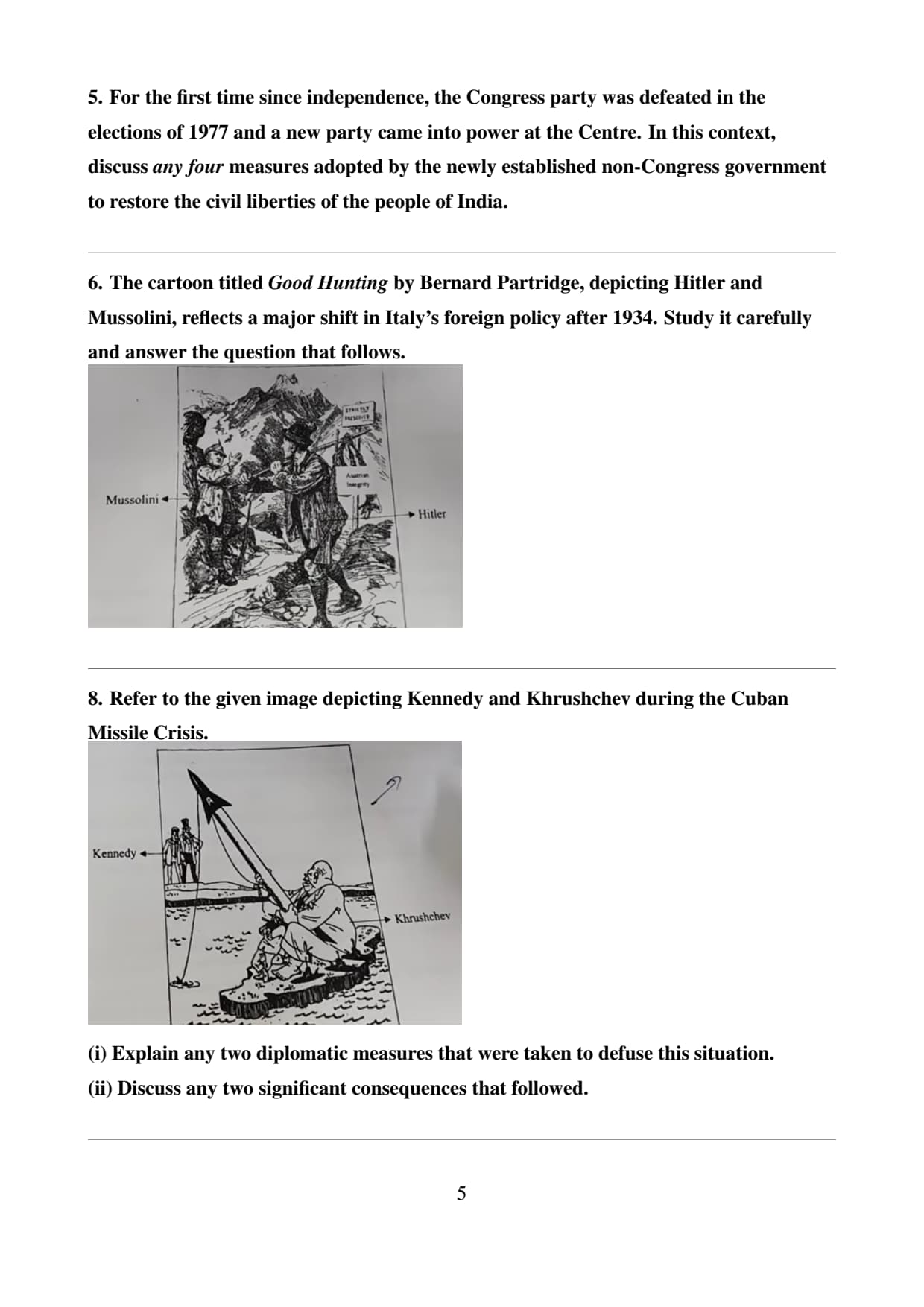
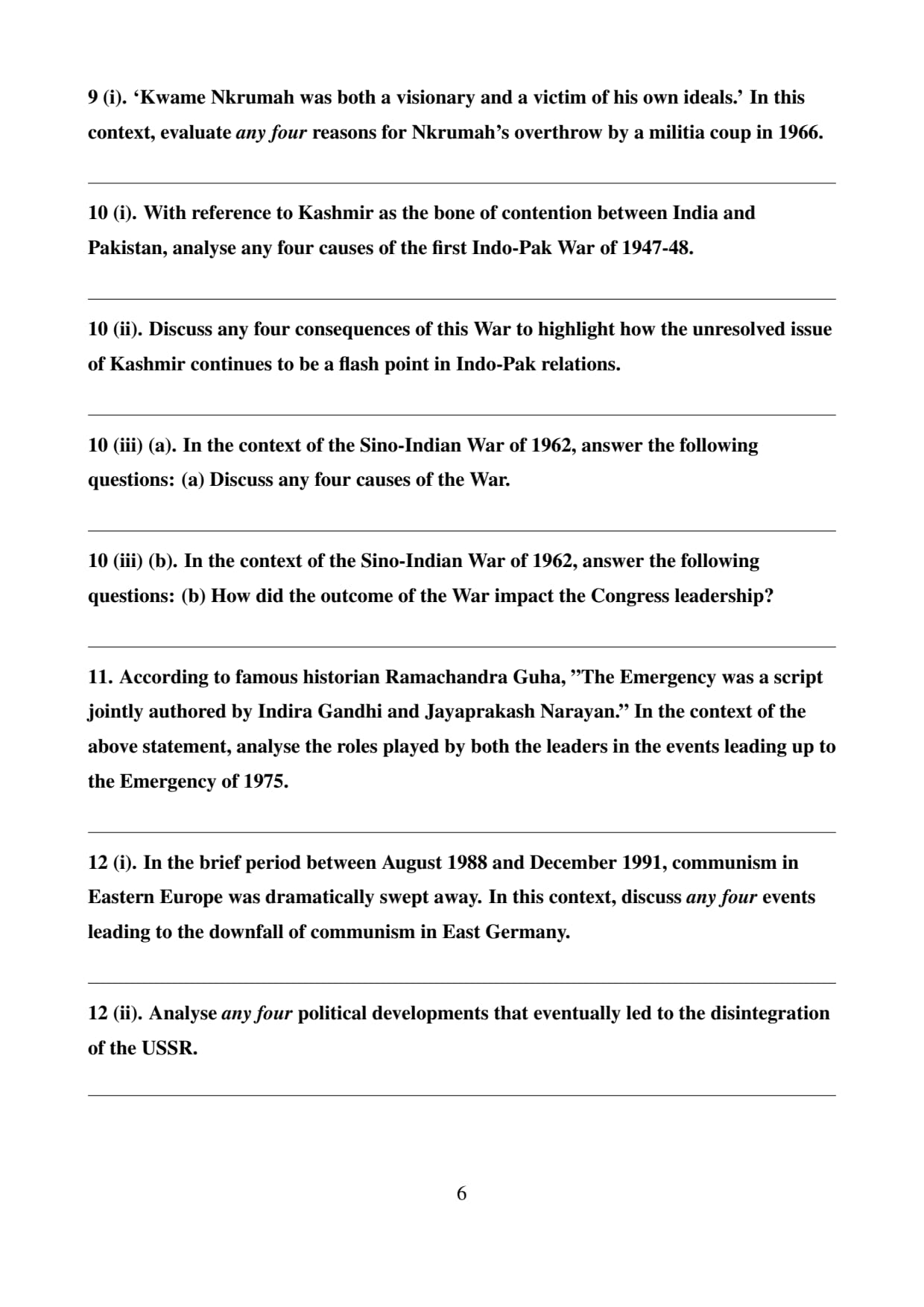



Comments