




ISC Class 12 Psychology Question Paper 2026 is available for download here. Council For The Indian School Certificate Examinations (CISCE) conducted ISC Class 12 Psychology exam on February 12, 2026 from 2 PM to 5 PM. ISC Class 12 Psychology is divided into three sections: Objective Questions, Short Answer and Long Answer Questions. The Theory paper will have a total of 70 Marks while Project Work is of 30 Marks.
ISC Class 12 Psychology Question Paper 2026 with Solution PDF
| ISC Class 12 Psychology Question Paper 2026 with Solution PDF | Download PDF | Check Solutions |

Ravi possesses expertise in science subjects and in mathematics. He also has the skill to apply complex formulas of statistics. According to Charles Spearman’s theory, what type of intelligence does Ravi display?
View Solution
Charles Spearman proposed the Two-Factor Theory of intelligence, which consists of the 'g' factor (general) and 's' factor (specific).
The 'g' factor represents a common mental energy required for all cognitive tasks.
The 's' factor represents specific abilities that are unique to certain tasks or domains.
Since Ravi shows specialized expertise in science, mathematics, and statistics, these are distinct skills beyond general mental ability.
Therefore, according to Spearman, Ravi is displaying the Specific factor (\(s\)) of intelligence.
Quick Tip: Remember that 'g' is universal and innate, while 's' factors are learned, specific to particular activities, and vary from task to task.
Sigmund Freud believed in a driving force within the psyche that comprised pleasure-seeking behaviours of the Id. What term did he use to denote this force?
View Solution
Sigmund Freud's psychoanalytic theory identifies the Id as the primitive part of the personality that operates on the pleasure principle.
He proposed that the Id is powered by a life instinct (Eros) which seeks gratification and survival.
The psychic energy associated with these life-seeking and pleasure-seeking drives is termed 'Libido'.
Thanatos refers to the death instinct, while archetypes are concepts from Carl Jung's theory.
Thus, Libido is the correct term for the driving force of the Id mentioned in the question.
Quick Tip: Libido is not just sexual energy; in Freud's broader view, it encompasses all life-sustaining and creative energy of the psyche.
Jaspreet, aged ten years, asks her friend, Reema to help her clean her room. Reema readily agrees and helps Jaspreet as she does not want to upset her. She wants to be liked and appreciated. According to Lawrence Kohlberg, name the sub-stage of the orientation of moral development that Reema is displaying.
View Solution
Lawrence Kohlberg's theory of moral development consists of three levels and six stages.
In Stage 3, which is part of the Conventional Level, morality is based on interpersonal harmony and social approval.
At this stage, individuals act to please others, be helpful, and win the appreciation of their peers or family.
Reema's behavior of helping Jaspreet specifically to be liked and to avoid upsetting her friend perfectly matches the "Good boy-Nice girl" orientation.
This stage is also known as the "Interpersonal Concordance" orientation.
Quick Tip: To identify Stage 3, look for keywords like "being liked," "approval," "good intentions," or "social harmony."
Name the theory of Intelligence that is represented by a three-dimensional cube with many sub-categories and is difficult to measure.
View Solution
The Structure of Intellect (SI) model was developed by J.P. Guilford.
Guilford organized intellectual abilities into three dimensions: Operations, Contents, and Products.
These three dimensions are visually represented as a three-dimensional cube.
Each cell in the cube represents a specific intellectual ability resulting from a combination of the three dimensions.
Because it involves up to 180 different factors, the theory is often criticized for being overly complex and difficult to measure empirically.
Quick Tip: Associate Guilford with the 'Cube' and '180 factors' (initially 120, then 150, finally 180) to quickly identify the SI model.
Hannah failed her dance audition. She blamed the Judge as being biased. When her friend, Sabha failed, she said it was due to Sabha’s lack of preparation. Name the type of bias displayed by Hannah.
View Solution
In social psychology, attribution refers to how we explain the causes of behavior.
The Actor-observer bias occurs when we attribute our own actions (as the actor) to situational factors while attributing others' actions (as the observer) to internal personal traits.
In this scenario, Hannah attributes her own failure to a situational factor (the judge's bias).
However, she attributes Sabha's failure to an internal personal factor (lack of preparation).
This discrepancy in attribution between self and others is the hallmark of the Actor-observer bias.
Quick Tip: Self-serving bias only involves taking credit for success and blaming failure on external factors; Actor-observer bias involves a comparison between how you judge yourself versus others.
Given below are two statements marked as Assertion and Reason. Read the statements carefully and choose the correct option.
Assertion: People tend to change their attitudes when their behaviour conflicts with their beliefs.
Reason: Cognitive dissonance creates physical discomfort and motivates individuals to reduce it.
View Solution
Leon Festinger's theory of Cognitive Dissonance states that individuals experience psychological tension when they hold two conflicting cognitions (e.g., a belief and a behavior).
This state of dissonance is uncomfortable and creates a drive or motivation to reduce the discomfort.
One primary way to reduce this dissonance is by changing one's attitude to align with the behavior that has already occurred.
Therefore, the Assertion that people change attitudes due to behavioral conflict is true.
The Reason explaining that dissonance creates discomfort which motivates change is also true and directly explains the mechanism behind the Assertion.
Quick Tip: Cognitive Dissonance is often resolved by the path of least resistance; since behaviors usually cannot be undone, the internal attitude is changed instead.
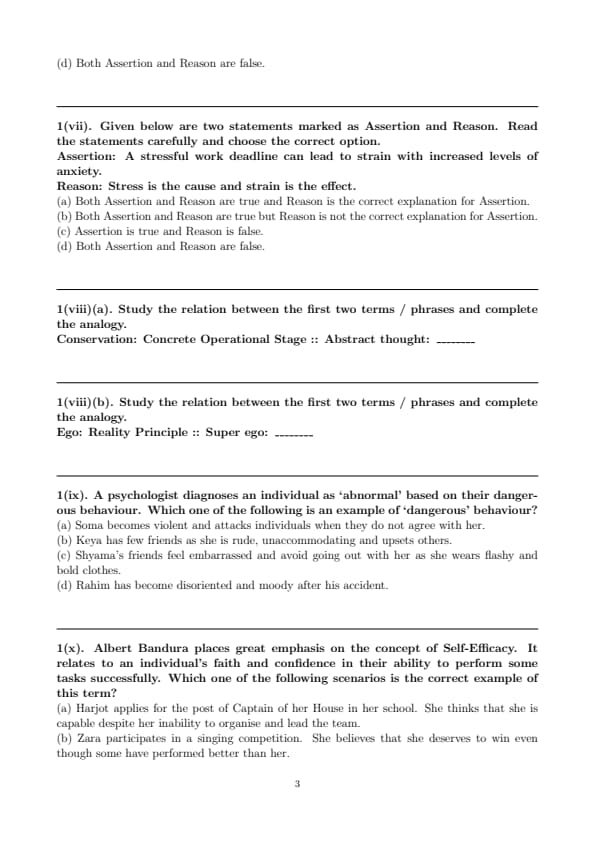
Given below are two statements marked as Assertion and Reason. Read the statements carefully and choose the correct option.
Assertion: A stressful work deadline can lead to strain with increased levels of anxiety.
Reason: Stress is the cause and strain is the effect.
View Solution
In the psychology of stress, the external demand or event is referred to as the 'stressor' or 'stress'.
The psychological and physiological reaction of the individual to that stressor is referred to as 'strain'.
A work deadline is a classic environmental stressor. The resulting anxiety and physical tension represent the strain on the individual.
The Assertion is true because it describes a common relationship between a stressor (deadline) and its outcome (anxiety/strain).
The Reason is true because it defines the fundamental conceptual link where stress serves as the independent variable (cause) and strain as the dependent variable (effect).
Since the Reason defines why the Assertion occurs (the process of cause and effect), it is the correct explanation.
Quick Tip: Think of stress as the 'load' placed on a bridge and strain as the 'bending' or 'cracking' of the bridge under that load.
Study the relation between the first two terms / phrases and complete the analogy.
Conservation: Concrete Operational Stage :: Abstract thought: ________
View Solution
The analogy is based on Jean Piaget's stages of cognitive development and the hallmark abilities associated with each.
'Conservation' (the understanding that quantity doesn't change with physical appearance) is the key milestone achieved during the 'Concrete Operational Stage' (approx. 7 to 11 years).
'Abstract thought' (the ability to think about hypothetical situations and logical reasoning without physical objects) is the hallmark milestone of the final stage.
According to Piaget, this development of abstract and systematic thinking occurs during the 'Formal Operational Stage' (approx. 11 years and above).
Therefore, the missing term that completes the analogy is 'Formal Operational Stage'.
Quick Tip: Piaget's stages: Sensorimotor (Object Permanence) -> Preoperational (Egocentrism) -> Concrete Operational (Conservation) -> Formal Operational (Abstract thought).
Study the relation between the first two terms / phrases and complete the analogy.
Ego: Reality Principle :: Super ego: ________
View Solution
This analogy refers to Sigmund Freud's structural model of personality (Id, Ego, Superego).
The 'Ego' acts as the rational mediator and operates on the 'Reality Principle', delaying gratification until socially appropriate outlets are found.
The 'Superego' represents the internalised moral standards and values of society.
It strives for perfection and judges actions based on whether they are 'right' or 'wrong'.
Therefore, the 'Superego' operates on the 'Moral Principle' (or the perfection principle).
Quick Tip: Id = Pleasure Principle; Ego = Reality Principle; Superego = Moral Principle.
A psychologist diagnoses an individual as ‘abnormal’ based on their dangerous behaviour. Which one of the following is an example of ‘dangerous’ behaviour?
View Solution
In abnormal psychology, one of the '4 Ds' used to define abnormality is 'Danger'.
Dangerousness refers to behavior that poses a threat to the safety of the individual or others.
Option (a) describes physical violence and attacks on others, which is a direct threat to safety and fits the definition of dangerous behavior.
Option (b) describes poor social skills or rudeness, which is 'dysfunctional' or 'deviant' but not inherently dangerous.
Option (c) describes social non-conformity or 'deviance' in dress, which is not dangerous.
Option (d) describes cognitive disorientation and mood shifts, which indicate 'distress' or 'dysfunction' but do not necessarily imply a danger to life or safety.
Thus, Soma’s violent behavior is the correct example of 'dangerous' behavior.
Quick Tip: The 4 Ds of abnormality are: Deviance, Distress, Dysfunction, and Danger.
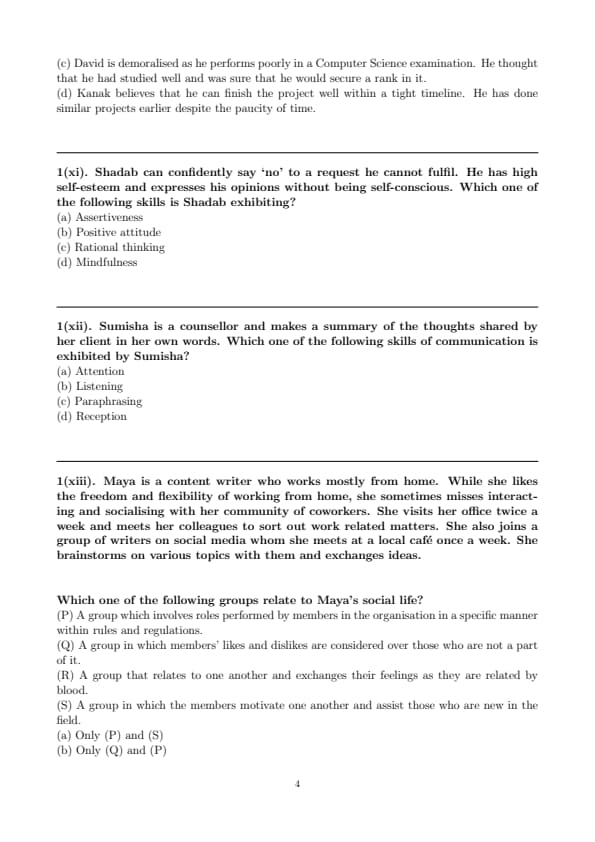
Albert Bandura places great emphasis on the concept of Self-Efficacy. It relates to an individual’s faith and confidence in their ability to perform some tasks successfully. Which one of the following scenarios is the correct example of this term?
View Solution
Self-efficacy is the belief in one's capability to organize and execute the courses of action required to manage prospective situations.
It is task-specific and often built upon past successes (mastery experiences).
In option (d), Kanak’s belief is based on his history of doing similar projects successfully, which is a primary source of self-efficacy.
Option (a) describes overconfidence or a lack of self-awareness, as she lacks the actual ability.
Option (b) describes a sense of entitlement or high self-esteem, rather than specific task-based efficacy.
Option (c) describes a blow to self-esteem or a mismatch between expectations and results, leading to low efficacy in that moment.
Kanak's scenario best illustrates the concept because his confidence is linked to his ability to perform a specific task under specific constraints.
Quick Tip: Self-efficacy is "I can do this specific task," whereas self-esteem is "I am a valuable person."
Shadab can confidently say ‘no’ to a request he cannot fulfil. He has high self-esteem and expresses his opinions without being self-conscious. Which one of the following skills is Shadab exhibiting?
View Solution
Assertiveness is a communication skill where an individual expresses their needs, opinions, and feelings in a direct, honest, and appropriate manner.
A key component of assertiveness is the ability to say 'no' to unreasonable requests without feeling guilty or overly self-conscious.
It involves standing up for one's rights while respecting the rights of others.
Shadab's ability to say 'no' and express himself confidently is a textbook definition of assertive behavior.
Positive attitude, rational thinking, and mindfulness are related psychological traits but do not specifically define the behavioral skill of stating one's boundaries.
Quick Tip: Assertiveness is the healthy middle ground between passive behavior (saying yes when you want to say no) and aggressive behavior (denying others' rights).
Sumisha is a counsellor and makes a summary of the thoughts shared by her client in her own words. Which one of the following skills of communication is exhibited by Sumisha?
View Solution
In therapeutic communication, paraphrasing is the process of restating the client's message using the counsellor's own words.
The purpose of paraphrasing is to clarify the message and demonstrate to the client that they have been understood correctly.
It focuses on the cognitive or factual content of the client's speech.
Sumisha's act of making a summary of the client's thoughts in her own words is the exact definition of paraphrasing.
While listening and attention are prerequisites for this, 'Paraphrasing' is the specific technical skill being used to communicate understanding back to the client.
Quick Tip: Paraphrasing focuses on the content of what was said, while 'Reflecting' usually focuses on the feelings behind what was said.
Maya is a content writer who works mostly from home. While she likes the freedom and flexibility of working from home, she sometimes misses interacting and socialising with her community of coworkers. She visits her office twice a week and meets her colleagues to sort out work related matters. She also joins a group of writers on social media whom she meets at a local café once a week. She brainstorms on various topics with them and exchanges ideas.
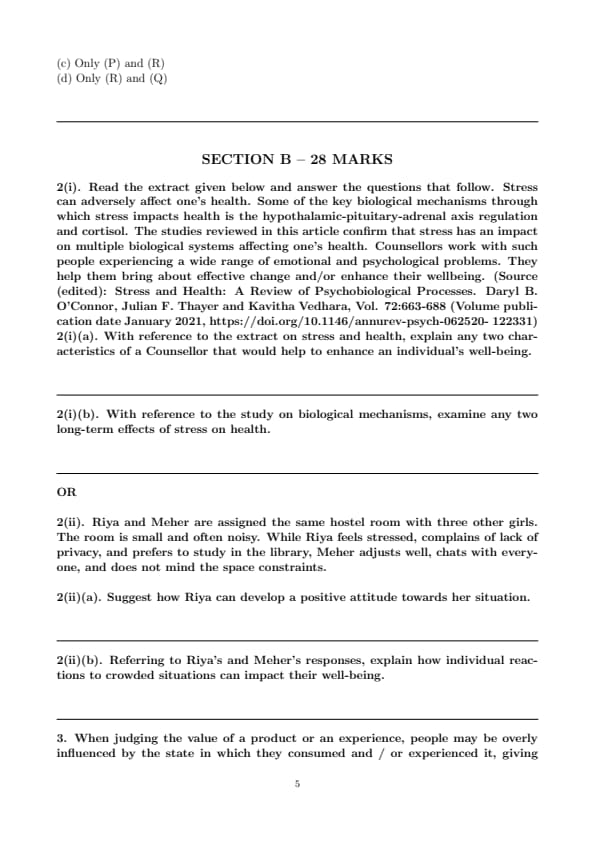
Which one of the following groups relate to Maya’s social life?
(P) A group which involves roles performed by members in the organisation in a specific manner within rules and regulations.
(Q) A group in which members’ likes and dislikes are considered over those who are not a part of it.
(R) A group that relates to one another and exchanges their feelings as they are related by blood.
(S) A group in which the members motivate one another and assist those who are new in the field.
View Solution
The scenario describes two distinct group settings in Maya's life.
First, she visits her office to meet colleagues and sort out work matters. This represents a formal group within an organization governed by rules and roles, which corresponds to statement (P).
Second, she meets a group of writers from social media at a café to brainstorm and exchange ideas. This is a secondary group of peers based on shared interests where they motivate and assist each other, which corresponds to statement (S).
Statement (Q) describes the 'in-group' vs 'out-group' dynamic, which isn't the primary focus of the description.
Statement (R) describes a 'primary group' or 'kinship group' (family), which is not mentioned in the text.
Therefore, statements (P) and (S) correctly identify the types of groups that constitute the described social life of Maya.
Quick Tip: Workplaces are typically 'Formal Groups' (P), while interest-based meetups are 'Secondary/Interest Groups' (S).
With reference to the extract on stress and health, explain any two characteristics of a Counsellor that would help to enhance an individual’s well-being.
View Solution
As mentioned in the extract, counsellors help people with emotional problems to enhance their well-being. Two key characteristics are:
1. Empathy: This is the ability of the counsellor to understand the client's experience from the client's perspective (to "step into their shoes"). By feeling understood, a stressed individual feels supported, which helps regulate emotional distress.
2. Unconditional Positive Regard: The counsellor shows total acceptance and non-judgmental warmth towards the client regardless of their problems or behaviors. This creates a safe environment that allows the individual to open up and work towards positive change without fear of criticism.
These qualities help mitigate the psychological impact of stress mentioned in the study.
Quick Tip: Empathy is different from sympathy; empathy is feeling with the person, while sympathy is feeling for the person.
With reference to the study on biological mechanisms, examine any two long-term effects of stress on health.
View Solution
The extract mentions biological mechanisms like the hypothalamic-pituitary-adrenal (HPA) axis and cortisol. Long-term activation of these leads to:
1. Immune System Suppression: Chronic high levels of cortisol (the stress hormone) interfere with the activity of white blood cells. Over time, this makes the body more vulnerable to infections and slows down the healing process.
2. Cardiovascular Issues: Prolonged stress leads to increased heart rate and blood pressure (hypertension). Constant activation of the cardiovascular system can cause damage to blood vessels and increase the risk of heart attacks or strokes.
These long-term effects confirm how stress impacts multiple biological systems as stated in the text.
Quick Tip: Cortisol is helpful for short-term "fight-or-flight" responses but "toxic" to the body's systems when present over long periods.
Suggest how Riya can develop a positive attitude towards her situation.
View Solution
Riya's stress stems from her perception of the situation as a lack of control and privacy.
To develop a positive attitude, Riya can use Cognitive Restructuring, which involves identifying her negative thoughts and replacing them with positive or neutral ones.
Instead of focusing on "lack of privacy," she can view the room as a place for social bonding and the library as her dedicated, quiet academic zone.
She can also practice 'Positive Reappraisal' by seeing the noisy environment as an opportunity to build concentration skills or tolerance.
Communicating her needs effectively to her roommates to establish "quiet hours" could also give her a sense of control, leading to a more positive outlook.
Quick Tip: Developing a positive attitude often involves shifting focus from "what is wrong" to "what can be managed or gained" in a situation.
Referring to Riya’s and Meher’s responses, explain how individual reactions to crowded situations can impact their well-being.
View Solution
This scenario distinguishes between 'density' (the physical number of people in a space) and 'crowding' (the psychological feeling of being cramped).
Meher exhibits high tolerance and a positive appraisal; her well-being is maintained because she interprets the situation as a social opportunity, leading to social support and lower stress.
Riya experiences 'crowding' as a stressor because she perceives a loss of privacy and personal space, leading to negative emotional states like anxiety and irritation.
When an individual feels they have no control over their environment, it can lead to increased cortisol levels and long-term health issues, negatively impacting their psychological well-being.
Therefore, the same physical environment (density) has different impacts on well-being based on individual subjective appraisal and coping mechanisms.
Quick Tip: Crowding is a subjective feeling of stress, while density is the objective physical measurement of people per unit area.
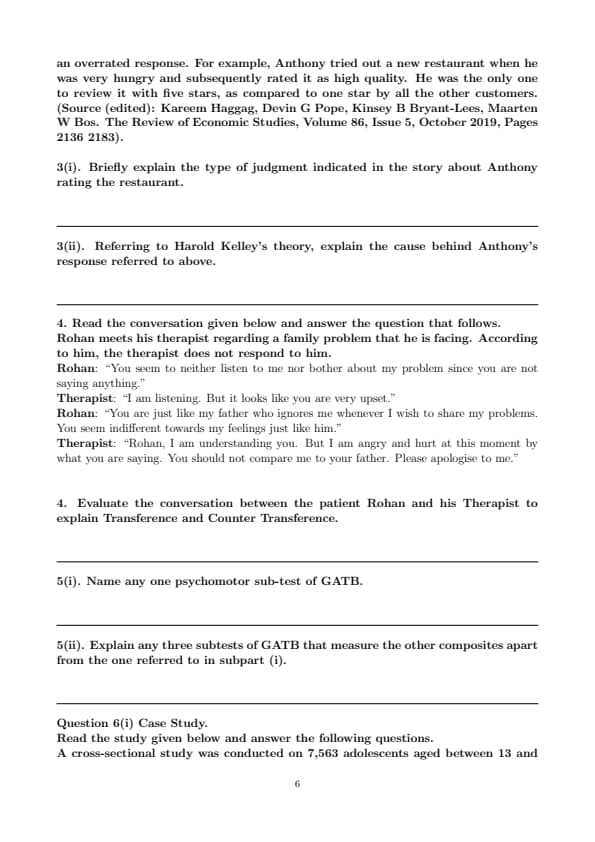
Briefly explain the type of judgment indicated in the story about Anthony rating the restaurant.
View Solution
The passage describes how people's judgments of value are "overly influenced by the state in which they consumed" the experience.
In Anthony's case, his internal physiological state of extreme hunger acted as a bias.
Because the food satisfied a high level of deprivation (hunger), his brain associated the restaurant with extremely high quality.
This is a form of subjective judgment where the current visceral state (hunger) distorts the objective evaluation of the product.
While others rated it one star based on objective quality, Anthony's rating was skewed by his internal need-satisfaction.
Quick Tip: Never go grocery shopping when you are hungry! This is the same psychological principle—your state of hunger will bias your judgment of what you "need."
Referring to Harold Kelley’s theory, explain the cause behind Anthony’s response referred to above.
View Solution
Harold Kelley's Attribution Theory uses three factors: Consensus, Distinctiveness, and Consistency.
'Consensus' refers to whether other people behave the same way in the same situation.
In this case, the consensus is very low because Anthony gave five stars while all other customers gave only one star.
According to Kelley's model, when consensus is low (only one person reacts that way), we attribute the cause to the person's internal factors rather than the external object (the restaurant).
Therefore, the cause of the high rating is Anthony’s internal state (his hunger) rather than the actual quality of the restaurant.
Quick Tip: High Consensus = External Attribution (The thing is good); Low Consensus = Internal Attribution (The person is biased).
Evaluate the conversation between the patient Rohan and his Therapist to explain Transference and Counter Transference.
View Solution
1. Transference: This occurs when a patient shifts feelings and expectations from a significant person in their past (like a parent) onto the therapist. Rohan says, “You are just like my father who ignores me... You seem indifferent... just like him.” Rohan is not seeing the therapist as a professional but is transferring his unresolved feelings of neglect from his father onto the therapist.
2. Counter-transference: This occurs when the therapist loses their professional objectivity and reacts emotionally to the patient’s transference. The therapist says, “I am angry and hurt... You should not compare me to your father. Please apologise to me.”
By taking Rohan's comments personally and demanding an apology, the therapist is reacting out of their own emotional needs/conflicts rather than maintaining a therapeutic stance.
An effective therapist would instead analyze why Rohan feels this way to help him gain insight.
Quick Tip: Transference is the client's "ghosts" appearing in the room; Counter-transference is when the therapist's "ghosts" start arguing back.
Name any one psychomotor sub-test of GATB.
View Solution
The General Aptitude Test Battery (GATB) consists of several subtests grouped into composite aptitudes.
Psychomotor aptitudes involve the coordination of physical movements with mental processes.
'Finger Dexterity' is a specific psychomotor subtest that measures the ability to move small objects with the fingers rapidly and accurately.
Other examples include 'Manual Dexterity' (moving larger objects with hands) or 'Motor Coordination' (eye-hand coordination).
Quick Tip: GATB is widely used for vocational counseling to match individuals' specific aptitude profiles with job requirements.
Explain any three subtests of GATB that measure the other composites apart from the one referred to in subpart (i).
View Solution
Apart from psychomotor skills, GATB measures several cognitive and perceptual composites:
1. Verbal Aptitude (V): This measures the ability to understand the meanings of words and use them effectively. It often involves finding synonyms or antonyms.
2. Numerical Aptitude (N): This measures the ability to perform arithmetic operations quickly and accurately. It tests basic mathematical reasoning and computation.
3. Spatial Aptitude (S): This measures the ability to visualize three-dimensional objects from two-dimensional drawings and understand how parts fit together to form a whole.
Other composites include General Learning Ability (G), Clerical Perception (Q), and Form Perception (P).
Quick Tip: Memorize the letters: G, V, N, S, P, Q, K, F, M. These represent the 9 aptitudes measured by the GATB.
With reference to the given study, explain the possible symptoms of substance abuse among the adolescents referred to above.
View Solution
Step 1: Understanding the Concept:
Substance abuse refers to the harmful use of psychoactive substances.
In adolescents, this often manifests as a collection of signs that impact their daily functioning and health.
Step 2: Detailed Explanation:
According to psychological standards, the symptoms of substance abuse among adolescents can be observed in three primary areas:
1. Physical Symptoms: These include sudden weight changes, bloodshot eyes, slurred speech, and a lack of concern for personal hygiene.
2. Behavioral Symptoms: A significant drop in academic performance, increased absenteeism from school, withdrawal from family activities, and secretive behavior.
3. Psychological Symptoms: Increased irritability, unprovoked outbursts of anger, or a general state of lethargy and lack of motivation (amotivational syndrome).
Step 3: Final Answer:
The possible symptoms include poor school performance, physical changes like red eyes or weight loss, and behavioral changes such as increased secrecy and irritability.
Quick Tip: When answering about symptoms, always categorize them into Physical, Behavioral, and Psychological groups to ensure a comprehensive response that covers all aspects of the individual's life.
In your opinion, how would such behaviours of adolescents lead to delinquency?
View Solution
Step 1: Understanding the Concept:
Delinquency refers to criminal or anti-social acts committed by minors.
There is a strong correlation between substance use and the breakdown of social and legal boundaries.
Step 2: Detailed Explanation:
Substance abuse leads to delinquency through the following mechanisms:
1. Financial Desperation: Since adolescents usually do not have a steady income, they may resort to theft, robbery, or shoplifting to fund their expensive drug habits.
2. Loss of Inhibition: Drugs affect the prefrontal cortex, which is responsible for decision-making. This leads to impulsive and aggressive behaviors, potentially resulting in physical assaults or vandalism.
3. Social Deviance: Using illegal substances brings adolescents into contact with criminal elements, reinforcing a "deviant" identity and distancing them from law-abiding society.
Step 3: Final Answer:
Adolescent substance abuse leads to delinquency by creating a need for money (leading to theft), impairing moral judgment, and encouraging association with deviant peer groups.
Quick Tip: Delinquency is often viewed as a "gateway" behavior. Mentioning the loss of impulse control due to chemical influence is a key psychological point for examiners.
According to Bronfenbrenner, explain two ecological systems that young children brought up in an orphanage are deprived of.
View Solution
Step 1: Understanding the Concept:
Bronfenbrenner’s Ecological Systems Theory explains how different layers of the environment influence child development.
Step 2: Detailed Explanation:
Children in orphanages are deprived of:
1. The Microsystem: This is the immediate environment with which the child interacts (family, caregivers). In an orphanage, the lack of a consistent, affectionate "mother figure" or primary caregiver means the child lacks a stable microsystem, which is crucial for emotional attachment.
2. The Mesosystem: This system consists of the interconnections between different microsystems (e.g., the relationship between parents and teachers). Since the orphanage environment is often isolated and lacks traditional family structures, these vital interconnections are absent.
Step 3: Final Answer:
Children in orphanages are primarily deprived of a nurturing Microsystem (lack of primary caregivers) and a functional Mesosystem (lack of connections between different life settings).
Quick Tip: Remember: The Microsystem is about direct interaction. The Mesosystem is about the link between those interactions. Lack of "mothering" is a direct hit to the Microsystem.
Based on the study as stated above, discuss any two points to highlight the importance of understanding lifespan development.
View Solution
Step 1: Understanding the Concept:
Lifespan development studies the patterns of growth and change from conception to death.
Step 2: Detailed Explanation:
Based on the text:
1. Early Experience and Critical Periods: The study highlights that the first six months are a "vulnerable" period. This proves why understanding development is vital—early deficits can create long-term psychological and physical gaps.
2. Plasticity and Modification: The text mentions that moving to a supportive environment reduces negative effects. This emphasizes that development is plastic (modifiable); change is possible even after early trauma if the environment improves.
Step 3: Final Answer:
Understanding lifespan development is important to identify critical periods (like the first 6 months) and to recognize that human development is plastic and can be improved by environmental intervention.
Quick Tip: The term "Plasticity" is a core concept in lifespan development. It refers to the capacity for change in response to influential experiences.
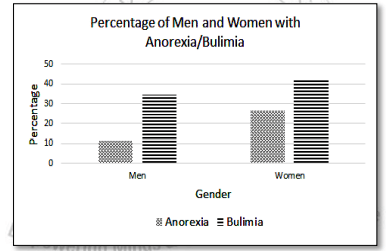
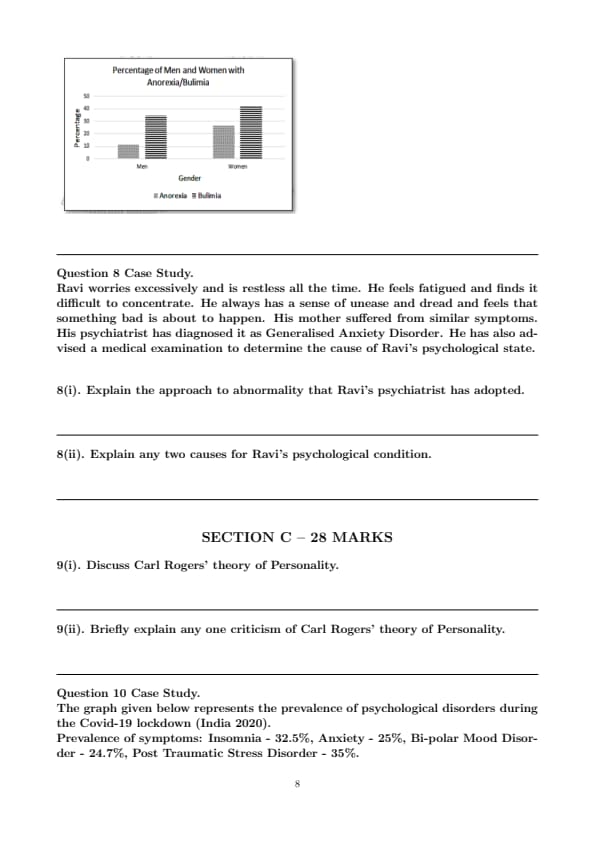
Study the graph given below that represents the percentage of cases of males and females suffering from Bulimia Nervosa and Anorexia Nervosa and answer the question that follows. Interpret the graph given above and compare the symptoms of the two disorders.
View Solution
Step 1: Understanding the Concept:
Anorexia Nervosa and Bulimia Nervosa are eating disorders characterized by abnormal eating habits and body image issues.
Step 2: Detailed Explanation:
1. Graph Interpretation:
- For both disorders, the percentage of females is higher than males.
- Bulimia Nervosa is significantly more prevalent than Anorexia Nervosa in both genders (approx. 45% vs 25% in women).
2. Symptom Comparison:
- Anorexia Nervosa: Defined by extreme food restriction, refusal to maintain a healthy body weight, and an intense fear of gaining weight despite being underweight.
- Bulimia Nervosa: Characterized by episodes of "binge eating" (consuming large amounts of food) followed by "purging" (self-induced vomiting or use of laxatives) to prevent weight gain.
Step 3: Final Answer:
The graph shows that females are more affected by both disorders, with Bulimia being more common. Anorexia is characterized by self-starvation, whereas Bulimia is characterized by a binge-and-purge cycle.
Quick Tip: In graph interpretation, always provide a "comparison" (which is more/less) and a "contrast" (how the symptoms differ).
Explain the approach to abnormality that Ravi’s psychiatrist has adopted.
View Solution
Step 1: Understanding the Concept:
The medical model views psychological disorders through a biological lens, similar to physical illnesses.
Step 2: Detailed Explanation:
The psychiatrist has adopted the Medical/Biological Model for the following reasons:
1. Biological Investigation: The psychiatrist ordered a "medical examination," suggesting they are looking for physiological causes like hormonal or neurochemical imbalances.
2. Genetic Inheritance: The case mentions Ravi’s mother had similar symptoms, pointing toward the belief that the disorder is hereditary and biologically transmitted.
Step 3: Final Answer:
The psychiatrist has adopted the Medical Model, as evidenced by the focus on heredity and the requirement for a physical medical examination.
Quick Tip: Whenever a case mentions "family history," "genetics," or "medical tests" for a mental disorder, the answer is almost always the Biological or Medical Model.
Explain any two causes for Ravi’s psychological condition.
View Solution
Step 1: Understanding the Concept:
Generalised Anxiety Disorder (GAD) is caused by a mix of biological, psychological, and environmental factors.
Step 2: Detailed Explanation:
Based on the biological approach identified in the case:
1. Genetic Factors: Ravi's mother suffered from similar symptoms, indicating a genetic vulnerability or high "heritability" factor for anxiety disorders.
2. Neurochemical Imbalance: GAD is often linked to the malfunctioning of the neurotransmitter GABA (Gamma-Aminobutyric Acid). If GABA activity is low, the brain cannot effectively "calm down" the nervous system, leading to chronic anxiety and restlessness.
Step 3: Final Answer:
Two causes for Ravi’s condition are Genetic Predisposition (inherited from his mother) and likely Neurochemical Imbalance (deficiency in GABA).
Quick Tip: For exams, associate GABA specifically with Anxiety disorders, and Serotonin/Norepinephrine with Depression.
Discuss Carl Rogers' theory of Personality.
View Solution
Step 1: Understanding the Concept:
Carl Rogers was a humanistic psychologist who proposed that personality development is centered around the concept of the "Self."
His theory emphasizes that every individual has an innate tendency to move toward growth, known as self-actualization.
Step 2: Detailed Explanation:
1. The Concept of Self: Rogers defined the self-concept as an organized, consistent set of perceptions and beliefs about oneself. It consists of the "Real Self" (who we actually are) and the "Ideal Self" (who we want to be).
2. Self-Actualization: This is the motivational force that drives an individual to reach their full potential. A person who achieves this is called a "Fully Functioning Person."
3. Congruence and Incongruence: When there is a high degree of overlap between the Real Self and the Ideal Self, the person is in a state of congruence. Significant differences between the two lead to incongruence, causing anxiety and maladjustment.
4. Unconditional Positive Regard: Rogers argued that for a person to grow, they need an environment that provides them with genuineness, acceptance, and empathy. Unconditional positive regard means being accepted and valued regardless of behavior.
5. The Role of Experience: Personality is shaped by how an individual perceives and interprets their life experiences within their "phenomenal field."
Step 3: Final Answer:
Rogers' theory posits that personality is driven by the self-actualizing tendency. A healthy personality is achieved through congruence between the real and ideal self, fostered by unconditional positive regard.
Quick Tip: To score well on Rogers' theory, use key terms like "Congruence," "Ideal Self," "Real Self," and "Unconditional Positive Regard."
Briefly explain any one criticism of Carl Rogers' theory of Personality.
View Solution
Step 1: Understanding the Concept:
Criticisms of Rogers' theory usually focus on its methodology and philosophical outlook.
Step 2: Detailed Explanation:
One major criticism of Carl Rogers' theory is its Lack of Empirical Evidence.
Because the theory relies heavily on subjective experiences (the phenomenal field) and self-reporting, it is difficult to test or verify using objective scientific methods.
Critics argue that concepts like "self-actualization" are vague and cannot be measured easily in a laboratory setting.
Step 3: Final Answer:
A primary criticism is that the theory is highly subjective and lacks rigorous scientific/empirical validation of its core concepts.
Quick Tip: Humanistic theories are often critiqued for ignoring the "darker" side of human nature (like aggression) and biological factors.
Question 33:
Case Study.
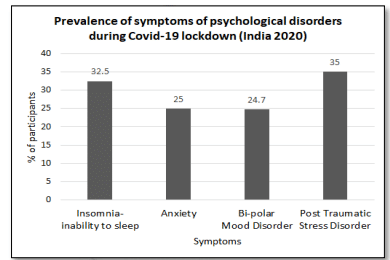
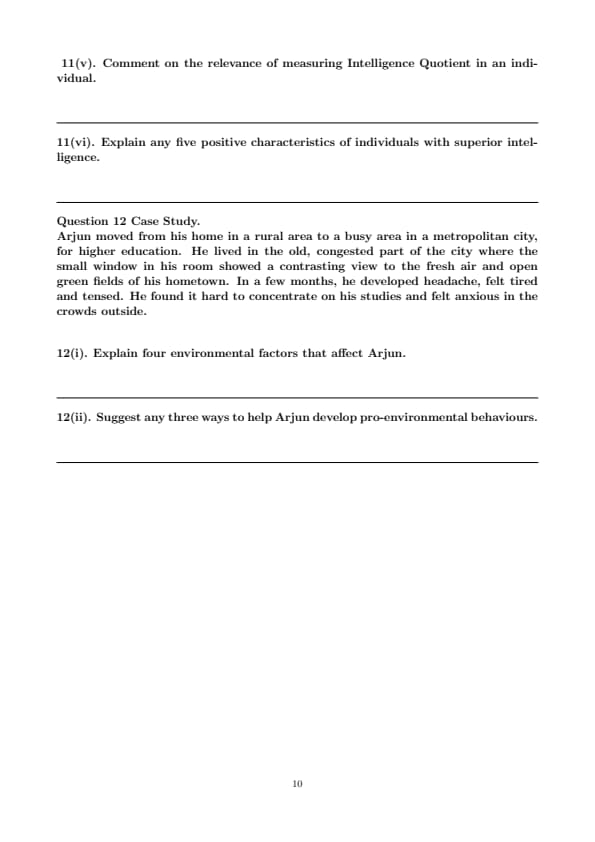
The graph given below represents the prevalence of psychological disorders during
the Covid-19 lockdown (India 2020).
Prevalence of symptoms: Insomnia - 32.5%, Anxiety - 25%, Bi-polar Mood Disor-
der - 24.7%, Post Traumatic Stress Disorder - 35%.
(Source (edited): Coronavirus lockdown — Rise in post-traumatic stress disor-
der: survey. The web-based study reveals that COVID lockdown has affected the
psychological profile of people Updated - November 28, 2021 12:54 pm Ist - New
Delhi)
From the given data, identify the psychological disorder that has the highest reported percentage. State any two of its symptoms.
View Solution
Step 1: Understanding the Concept:
Data interpretation requires identifying the highest bar on the provided chart, which corresponds to the most prevalent disorder.
Step 2: Detailed Explanation:
1. Identification: According to the graph, Post Traumatic Stress Disorder (PTSD) has the highest reported percentage at 35%.
2. Symptoms of PTSD:
- Re-experiencing: Having flashbacks, intrusive thoughts, or nightmares related to the traumatic event (the lockdown/pandemic).
- Avoidance: Trying to avoid people, places, or thoughts that serve as reminders of the trauma.
- Hyperarousal: Feeling "on edge," being easily startled, or having difficulty sleeping and concentrating.
Step 3: Final Answer:
The disorder with the highest percentage is PTSD (35%). Two symptoms are flashbacks/nightmares and emotional numbness/avoidance.
Quick Tip: When asked to identify data from a graph, always state the specific percentage value along with the name of the disorder for accuracy.
State the two stages of the disorder with the lowest percentage as shown in the graph. Discuss any three causes of this disorder.
View Solution
Step 1: Understanding the Concept:
Bipolar disorder is characterized by extreme shifts in mood, energy, and activity levels.
Step 2: Detailed Explanation:
1. Identification and Stages: The disorder with the lowest percentage is Bi-polar Mood Disorder (24.7%). The two primary stages (poles) are:
- Manic Stage: Characterized by high energy, euphoria, racing thoughts, and decreased need for sleep.
- Depressive Stage: Characterized by deep sadness, hopelessness, lack of energy, and loss of interest in activities.
2. Causes of Bipolar Disorder:
- Genetic Factors: It often runs in families, suggesting a strong hereditary component.
- Neurochemical Imbalance: Imbalances in neurotransmitters like norepinephrine, dopamine, and serotonin play a significant role.
- Environmental Stressors: High-stress events (like a pandemic or lockdown) can trigger episodes in predisposed individuals.
Step 3: Final Answer:
The lowest percentage disorder is Bipolar Disorder. Its two stages are Mania and Depression. Causes include genetics, neurochemical imbalances, and environmental stress.
Quick Tip: "Stages" in mood disorders often refer to the different states of the mood cycle. For Bipolar, think of "two poles" (bi-polar).
What is emotional intelligence?
View Solution
Step 1: Understanding the Concept:
Emotional Intelligence (EI or EQ) is a psychological construct first popularized by Salovey and Mayer, and later Daniel Goleman.
Step 2: Detailed Explanation:
Emotional Intelligence is defined as the ability to:
- Monitor one's own and others' feelings and emotions.
- Discriminate among different emotions and label them appropriately.
- Use emotional information to guide thinking and behavior.
Step 3: Final Answer:
Emotional intelligence is the capacity to recognize, understand, and manage our own emotions while also recognizing and influencing the emotions of others.
Quick Tip: Mentioning the ability to "label" and "manage" emotions is crucial for a complete definition of EI.
Comment on the relevance of assessing Emotional Intelligence of candidates for a job.
View Solution
Step 1: Understanding the Concept:
Modern organizations value soft skills as much as technical skills (IQ).
Step 2: Detailed Explanation:
Assessing EI is relevant because:
1. Teamwork: Employees with high EI can collaborate effectively and resolve conflicts maturely.
2. Leadership: High EI is a hallmark of good leaders who can motivate others and remain calm under pressure.
3. Stress Management: It allows candidates to handle work-related stress without burning out.
Step 3: Final Answer:
Assessing EI is essential because it indicates how a candidate will interact with colleagues, handle workplace stress, and lead teams effectively.
Quick Tip: Focus on "interpersonal relations" and "stress tolerance" when discussing EI in a professional context.
Explain five characteristics of Emotionally Intelligent persons that organisations use as criteria to select suitable candidates.
View Solution
Step 1: Understanding the Concept:
Daniel Goleman identified five components of emotional intelligence that are highly valued in professional settings.
Step 2: Detailed Explanation:
1. Self-awareness: The ability to recognize one's own emotions, strengths, weaknesses, and their impact on others.
2. Self-regulation: The capacity to control impulsive feelings and behaviors, and adapt to changing circumstances.
3. Motivation: A strong drive to achieve for the sake of achievement rather than just rewards, showing persistence and initiative.
4. Empathy: The ability to understand the emotional makeup of other people and treat them according to their emotional reactions.
5. Social Skills: Proficiency in managing relationships and building networks to move people in desired directions.
Step 3: Final Answer:
Organisations look for self-awareness, self-control, intrinsic motivation, empathy, and adept social skills in candidates.
Quick Tip: Use Goleman's five pillars as your framework for answering questions about the traits of an EI-rich person.
What is intelligence quotient?
View Solution
Step 1: Understanding the Concept:
The concept of IQ was introduced by William Stern and further developed by Terman.
Step 2: Key Formula or Approach:
The Intelligence Quotient (IQ) is calculated using the formula:
\[ IQ = \frac{MA}{CA} \times 100 \]
Where \( MA \) is Mental Age and \( CA \) is Chronological Age.
Step 3: Final Answer:
IQ is a score derived from standardized tests that represents a person's mental ability relative to their chronological age.
Quick Tip: Always include the formula \( \frac{MA}{CA} \times 100 \) when defining IQ to get full marks.
Comment on the relevance of measuring Intelligence Quotient in an individual.
View Solution
Step 1: Understanding the Concept:
IQ tests are tools used to assess cognitive potential and academic readiness.
Step 2: Detailed Explanation:
Measuring IQ is relevant for:
1. Educational Planning: Identifying gifted children who need acceleration or children with intellectual disabilities who need special support.
2. Vocational Guidance: Helping individuals choose careers that match their cognitive strengths.
3. Clinical Diagnosis: Assisting in diagnosing developmental delays or cognitive decline.
Step 3: Final Answer:
Measuring IQ helps in academic streaming, identifying special education needs, and predicting potential for success in cognitively demanding tasks.
Quick Tip: Clarify that IQ measures "potential" for learning, not just acquired knowledge.
Explain any five positive characteristics of individuals with superior intelligence.
View Solution
Step 1: Understanding the Concept:
Superior intelligence (often IQ \(>\) 130) manifests as distinct cognitive and behavioral patterns.
Step 2: Detailed Explanation:
1. Abstract Thinking: Ability to understand complex concepts and see patterns that others might miss.
2. Curiosity: An intense desire to learn and explore new ideas beyond standard requirements.
3. Problem-Solving: Exceptional skill in breaking down complex issues and finding logical, efficient solutions.
4. High Concentration: The capacity to focus intensely on a task for long periods (flow state).
5. Rapid Learning: Ability to grasp new information quickly with minimal instruction.
Step 3: Final Answer:
Individuals with superior intelligence typically exhibit advanced logical reasoning, creative problem-solving, high persistence, deep curiosity, and quick information processing.
Quick Tip: Distinguish between "giftedness" (innate ability) and "talent" (developed skill) when discussing superior intelligence.
Explain four environmental factors that affect Arjun.
View Solution
Step 1: Understanding the Concept:
Environment-behavior relationships explain how physical surroundings impact mental and physical health.
Step 2: Detailed Explanation:
Based on the passage, the four factors are:
1. Crowding: Arjun lives in a "congested part" and feels "anxious in crowds." High density leads to stress and loss of privacy.
2. Noise: A "busy area in a metropolitan city" implies high noise levels, which causes the headache and tension Arjun experiences.
3. Poor Air Quality/Lack of Ventilation: The "small window" and lack of "fresh air" suggest he is affected by indoor and outdoor air pollution typical of old, congested city areas.
4. Lack of Natural Environment: He lacks the "green fields" of his hometown. Absence of nature is linked to higher fatigue and lower concentration (Restoration Theory).
Step 3: Final Answer:
The factors are Crowding (social density), Noise pollution (metropolitan bustle), Lack of fresh air (ventilation), and Aesthetic/Nature deprivation (lack of green space).
Quick Tip: "Crowding" is a subjective feeling of stress caused by too many people in a small space, whereas "Density" is the objective number of people. Use "Crowding" here.
Suggest any three ways to help Arjun develop pro-environmental behaviours.
View Solution
Step 1: Understanding the Concept:
Pro-environmental behaviors (PEB) are actions taken to protect or improve the natural environment.
Step 2: Detailed Explanation:
To help Arjun reconnect and take action:
1. Plantation/Greenery: Arjun can keep indoor plants or join community gardening projects to recreate the "greenery" he misses.
2. Waste Management/Conservation: Practicing the 3 Rs (Reduce, Reuse, Recycle) in his hostel/room to reduce the environmental load of the congested city.
3. Advocacy and Awareness: Joining college environmental clubs to promote clean air initiatives or reduce noise pollution in his locality, turning his anxiety into constructive action.
Step 3: Final Answer:
Arjun can engage in urban gardening, practice strict energy and water conservation, and participate in community awareness programs to promote a cleaner, quieter environment.
Quick Tip: Pro-environmental behavior starts with personal actions (recycling) and extends to community actions (awareness drives).



Comments