




Maharashtra Board conducted the Class 10 Science and Technology Board Paper 2026 on March 11, 2026. Students can analyse their performance as SSC Board Science and Technology Question Paper 2026 with Solution PDF is available here for download.
The Maharashtra SSC Board Class 10 Science and Technology paper covered key topics from physics, chemistry, biology, and technology. The question paper of Maharashtra SSC Board Class 10 Science and Technology Board Exam 2026 is provided below.
Maharashtra Board Class 10 2026 Science and Technology Question Paper with Solution PDF
| Maharashtra Board Class 10 Science and Technology Question Paper 2026 | Download PDF | Check Solution |
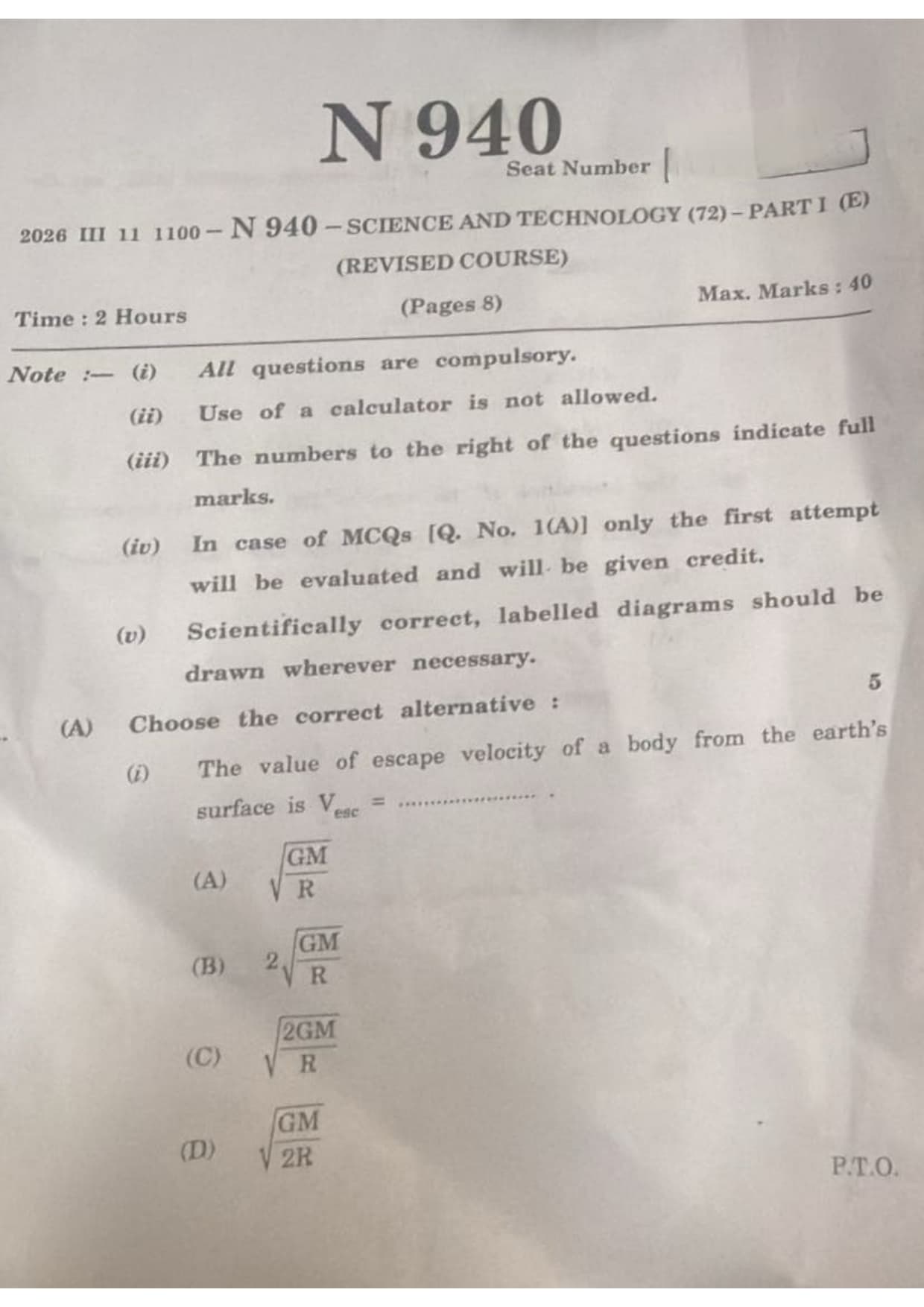
The value of escape velocity of a body from the Earth's surface is \( V_{esc} = \dots \)
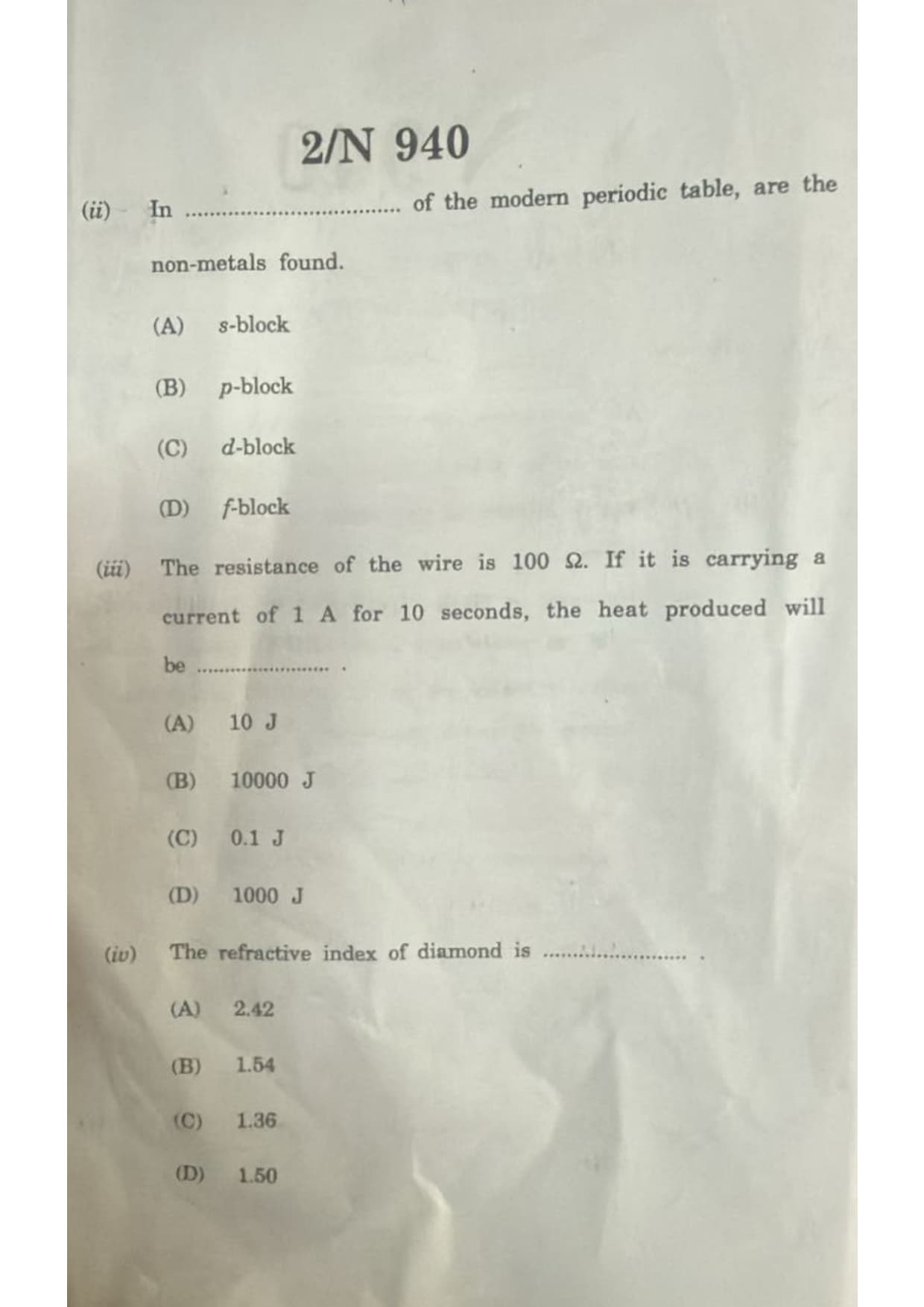
In ______ of the modern periodic table, are the non-metals found.
The resistance of the wire is 100 \(\Omega\). If it is carrying a current of 1 A for 10 seconds, the heat produced will be ______.
The refractive index of diamond is _______ .
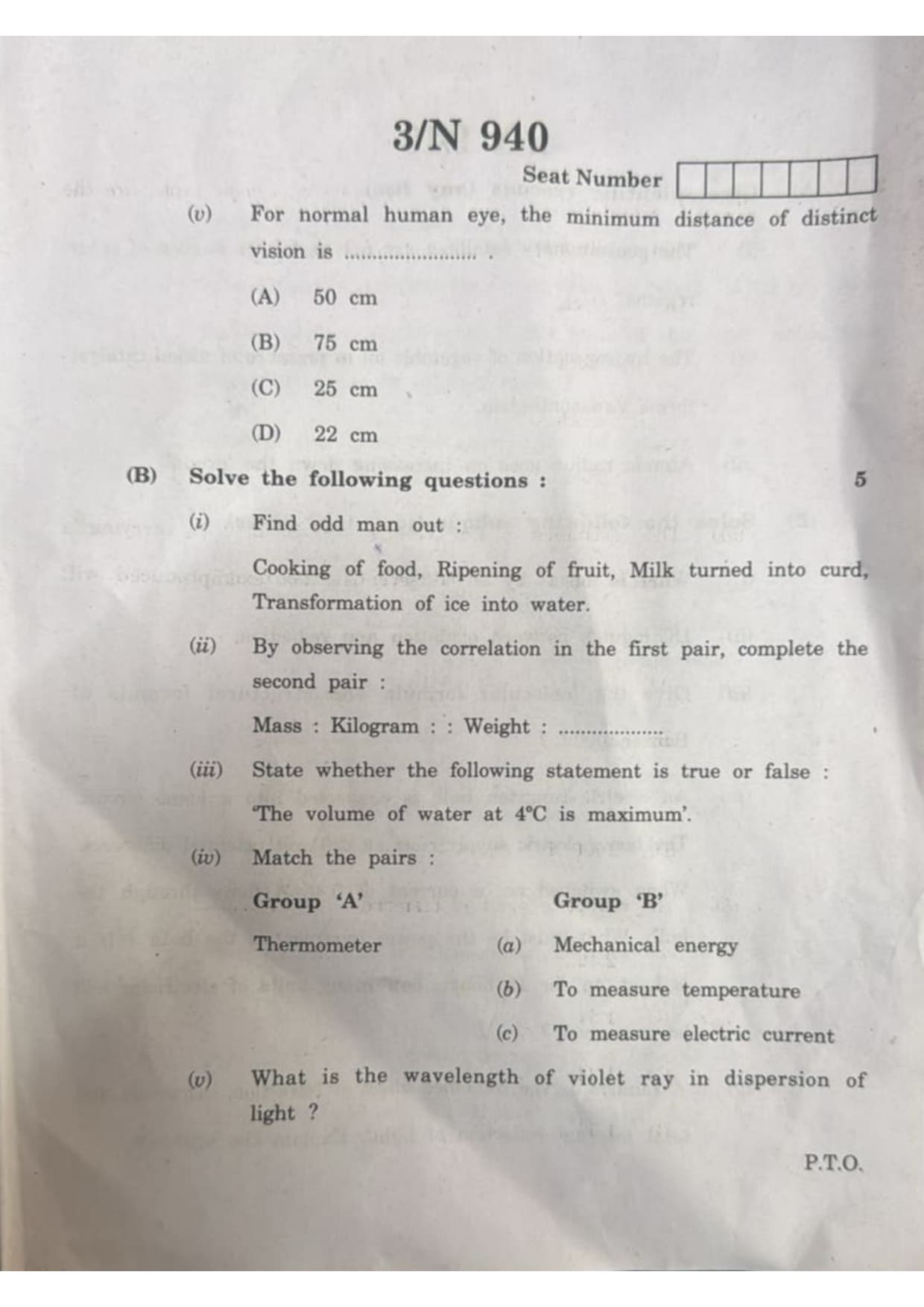
For normal human eye, the minimum distance of distinct vision is _______ .
Find the odd man out:
Cooking of food, Ripening of fruit, Milk turned into curd, Transformation of ice into water.
View Solution
Step 1: Analyzing the options.
- Cooking of food: A process where heat is applied to raw food to make it edible.
- Ripening of fruit: A natural process where a fruit matures and changes color.
- Milk turned into curd: A process of fermentation where milk turns into curd by adding a
starter culture.
- Transformation of ice into water: A physical change where solid ice melts into liquid
water.
Step 2: Odd one out.
The odd one out is Transformation of ice into water as it is a physical change, while the
others are chemical or biological processes.
Quick Tip: Remember: Physical changes like the melting of ice don't form a new substance, while chemical and biological processes like cooking, ripening, and fermentation do.
By observing the correlation in the first pair, complete the second pair:
Mass : Kilogram : : Weight : ?
State whether the following statement is true or false:
The volume of water at 4°C is maximum.
Match the pairs:

What is the wavelength of violet ray in dispersion of light?
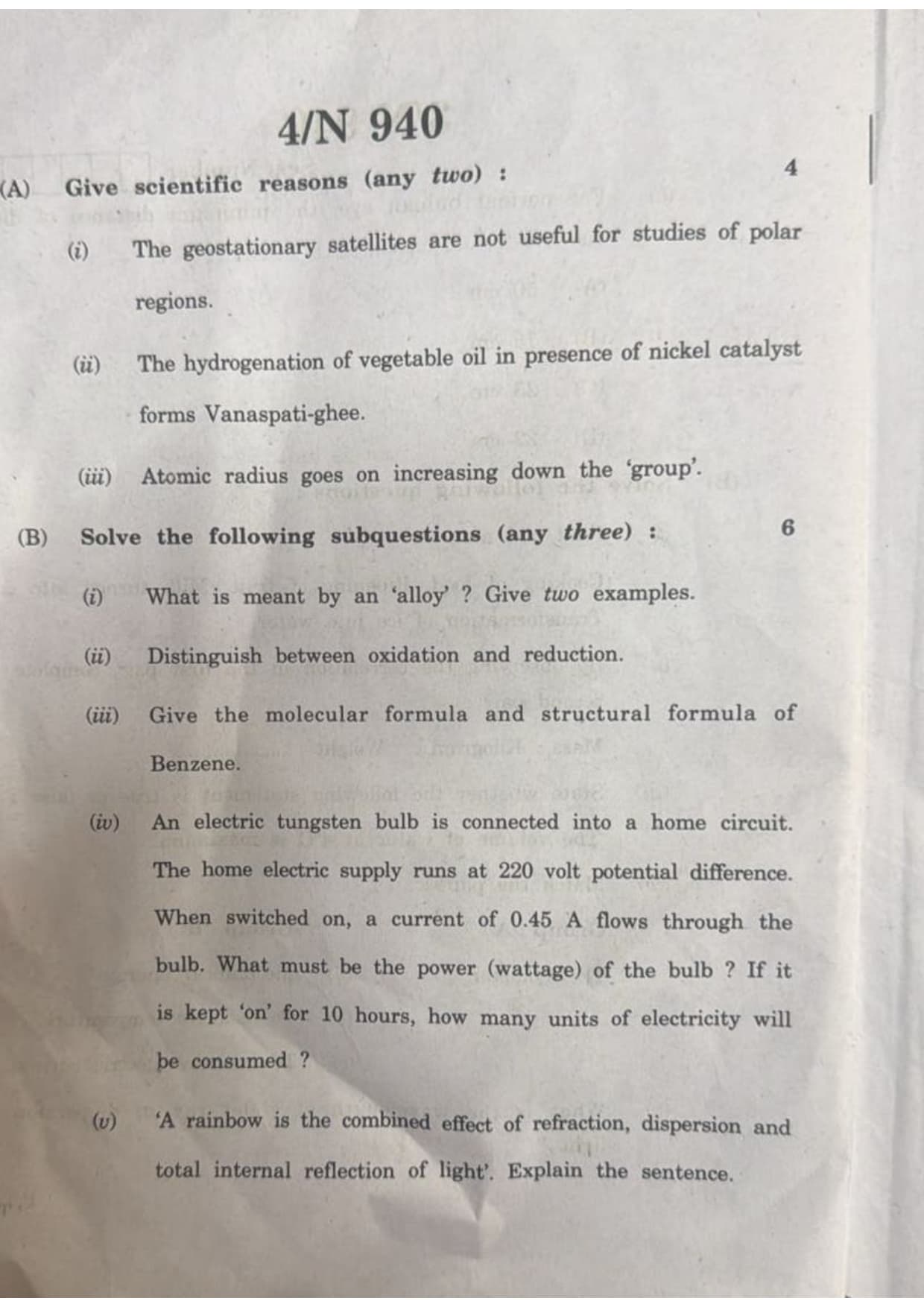
The geostationary satellites are not useful for studies of polar regions.
The hydrogenation of vegetable oil in the presence of nickel catalyst forms Vanaspati-ghee.
Atomic radius goes on increasing down the 'group'.
What is meant by an 'alloy'? Give two examples.
Distinguish between oxidation and reduction.
Give the molecular formula and structural formula of Benzene.
An electric tungsten bulb is connected into a home circuit. The home electric supply runs at 220 volt potential difference. When switched on, a current of 0.45 A flows through the bulb. What must be the power (wattage) of the bulb? If it is kept ‘on’ for 10 hours, how many units of electricity will be consumed?
‘A rainbow is the combined effect of refraction, dispersion, and total internal reflection of light’. Explain the sentence.
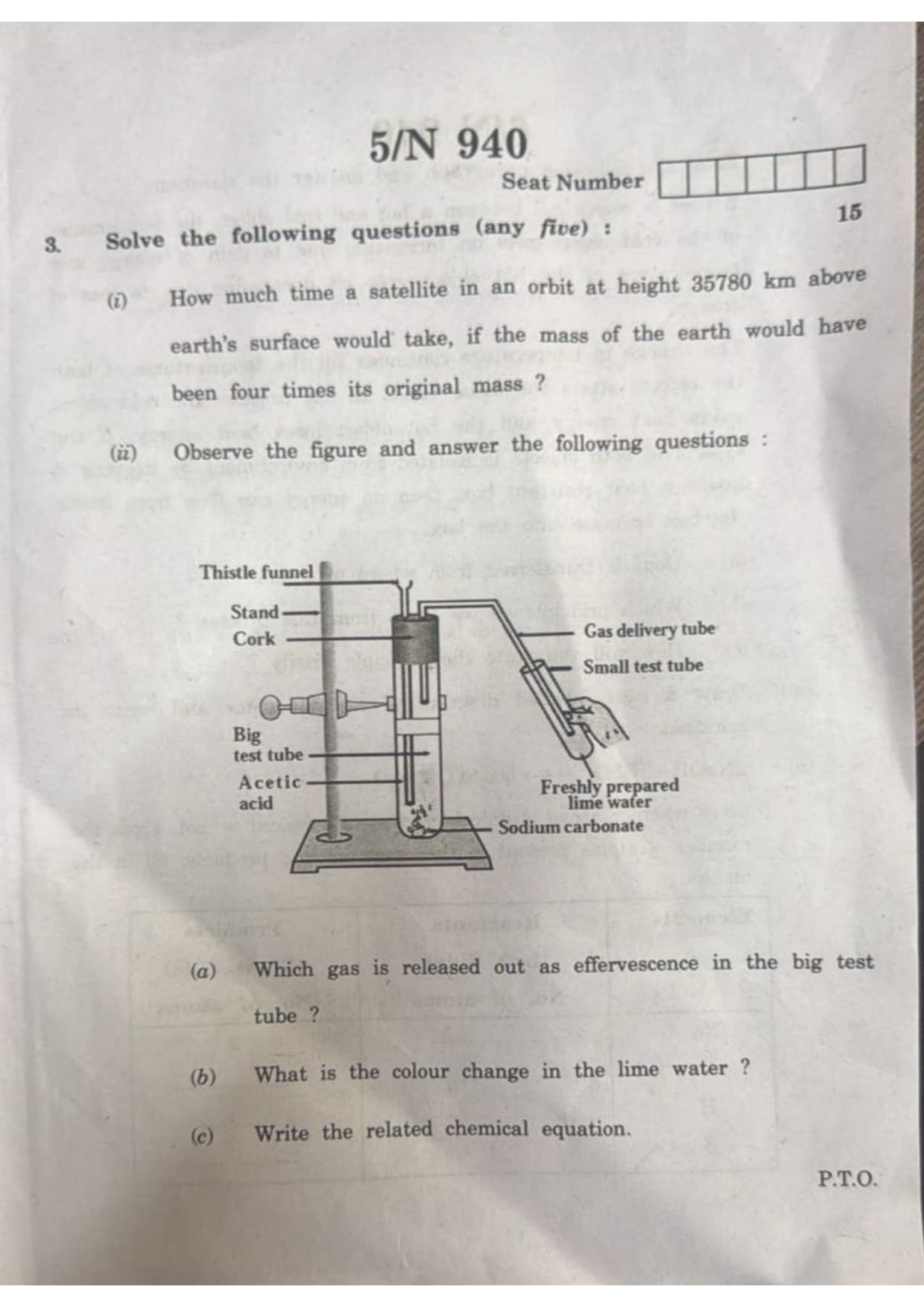
How much time a satellite in an orbit at height 35780 km above earth's surface would take, if the mass of the earth would have been four times its original mass?
Observe the figure and answer the following questions:

(a) Which gas is released as effervescence in the big test tube?
(b) What is the colour change in the lime water?
(c) Write the related chemical equation.
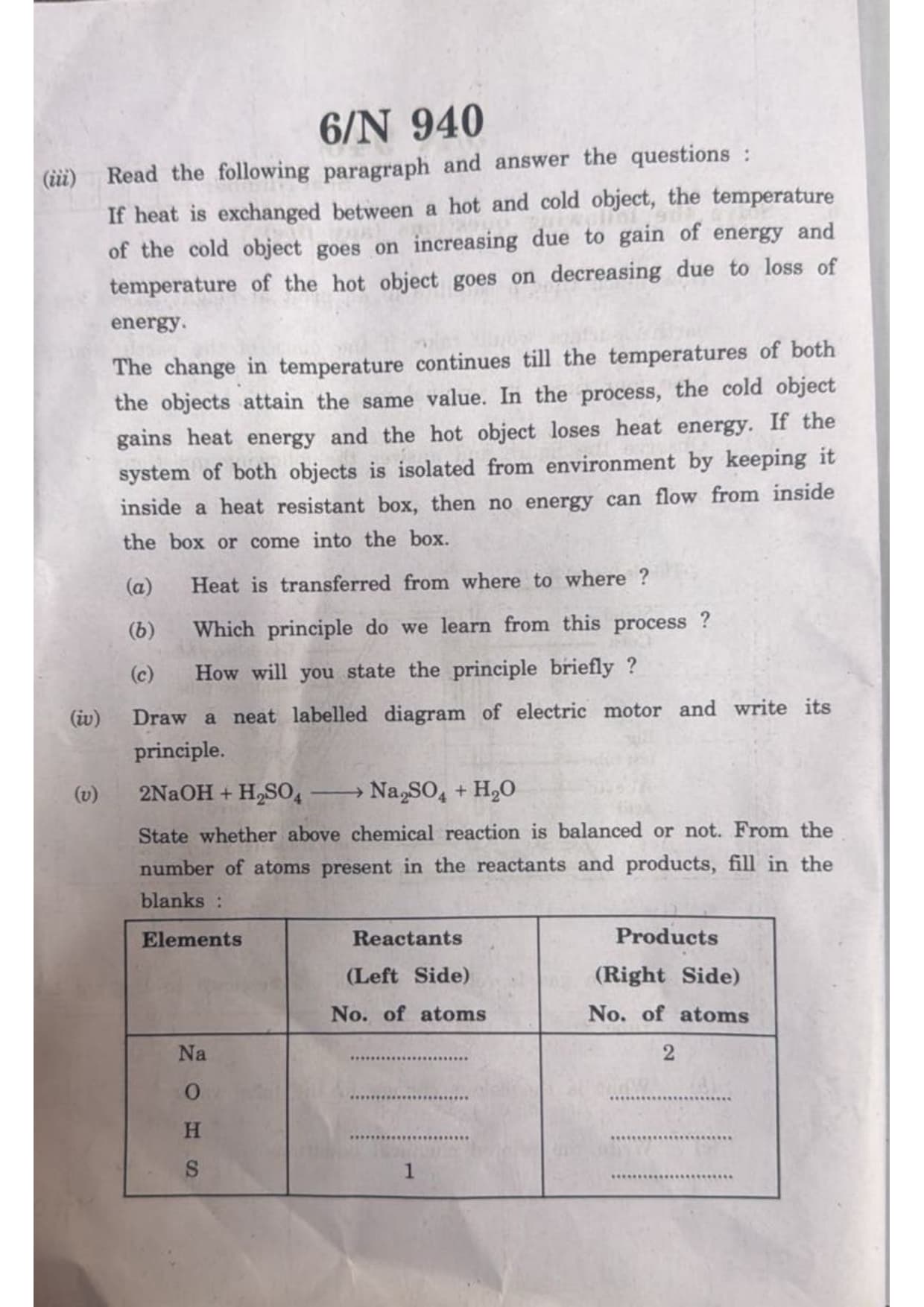
Heat is transferred from where to where?
Which principle do we learn from this process?
How will you state the principle briefly?
State whether the above chemical reaction is balanced or not. From the number of atoms present in the reactants and products, fill in the blanks:

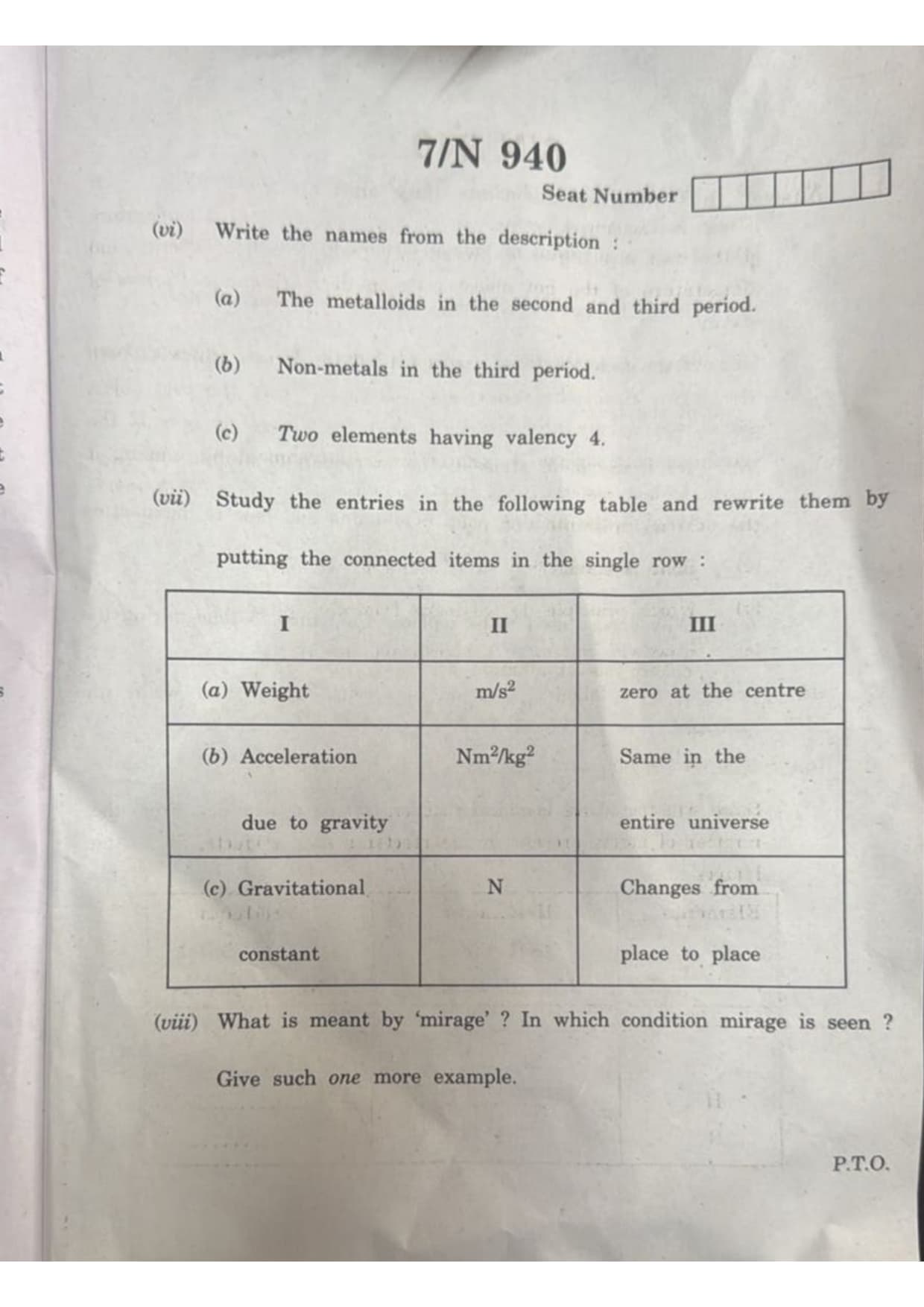
Write the names from the description:
Study the entries in the following table and rewrite them by putting the connected items in the single row:

What is meant by ‘mirage’? In which condition mirage is seen?
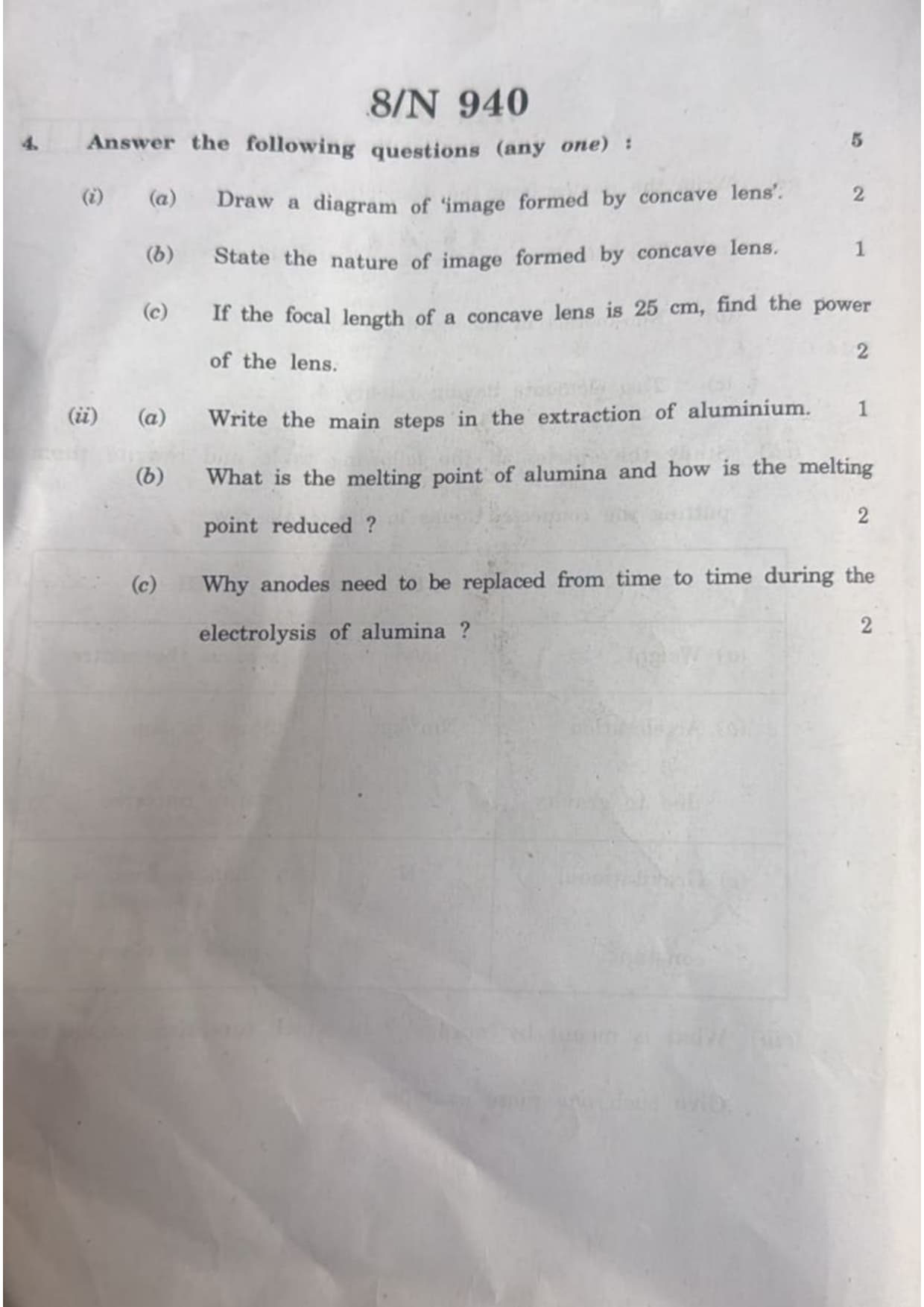
Draw a diagram of 'image formed by concave lens'.
State the nature of image formed by concave lens.
If the focal length of a concave lens is 25 cm, find the power of the lens.
Write the main steps in the extraction of aluminium.
What is the melting point of alumina and how is the melting point reduced?
Write the main steps in the extraction of aluminium.
What is the melting point of alumina and how is the melting point reduced?
Why do anodes need to be replaced from time to time during the electrolysis of alumina?



Comments