




Maharashtra Board Class 10 Science and Technology Part-1 Question Paper 2025 PDF (Code N 840) is available for download here. The Science and Technology exam was conducted on March 11, 2025 from 11:00 AM to 2:00 PM. The Maharashtra State Board of Secondary and Higher Secondary Education (MSBSHSE) conducted the Class 10 examination for a total duration of 3 hours, and the question paper had a total of 80 marks.
Maharashtra Board Class 10 Science and Technology Part-1 Question Paper 2025 (Code N 840) with Solutions
| UP Board Class Science and Technology Question Paper with Answer Key |  Download Download |
Check Solutions |
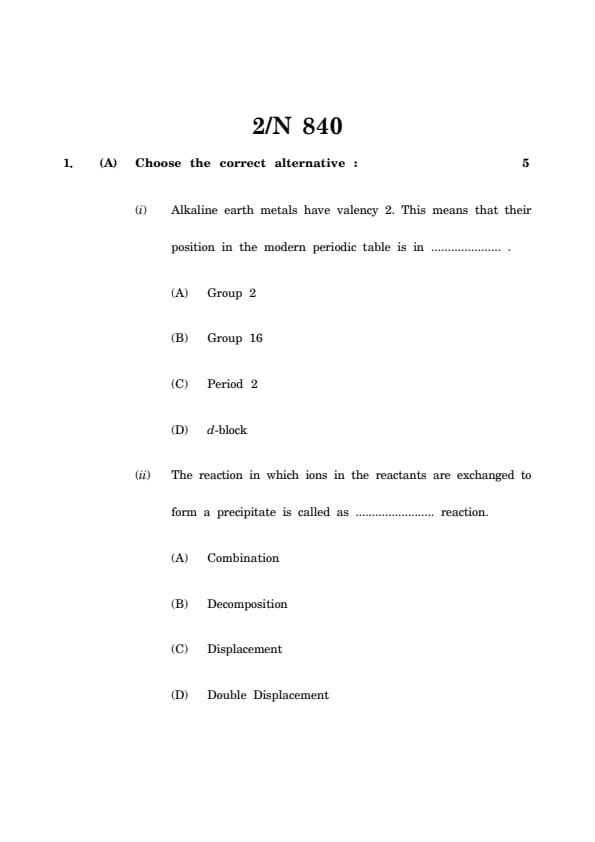
(A) Choose the correct alternative:
(i) Alkaline earth metals have valency 2. This means that their position in the modern periodic table is in ________ .
(ii) The reaction in which ions in the reactants are exchanged to form a precipitate is called as ______ reaction.
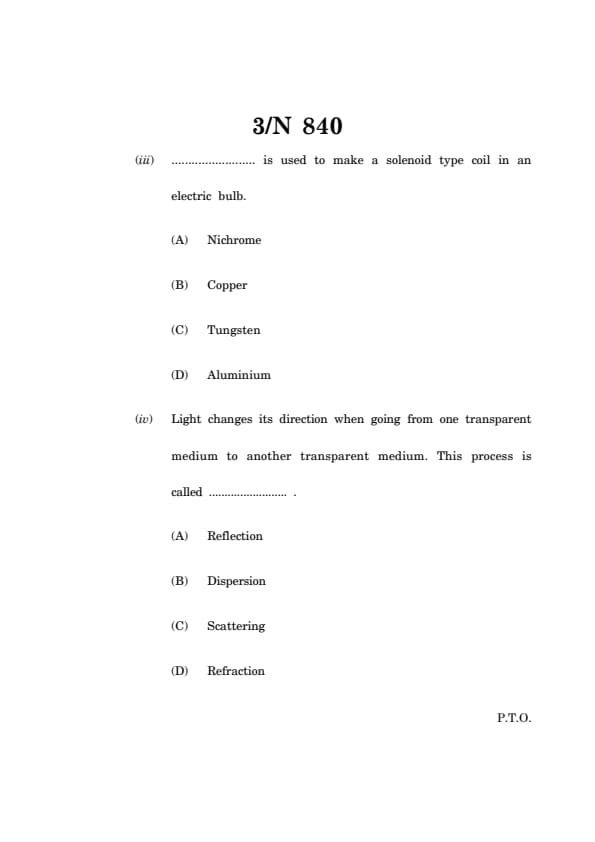
(iii) _______ is used to make a solenoid type coil in an electric bulb.
(iv) Light changes its direction when going from one transparent medium to another transparent medium. This process is called _______ .
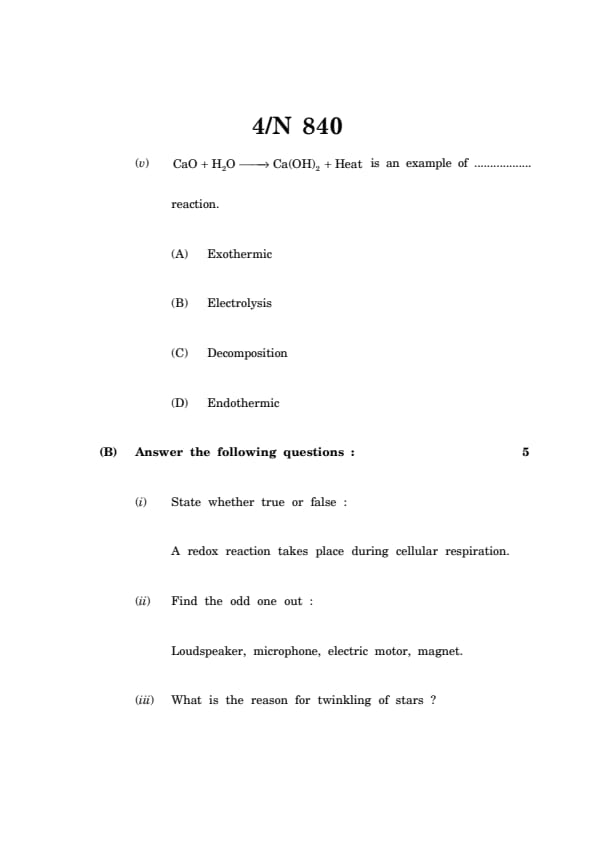
(v) CaO + H\(_2\)O \(\rightarrow\) Ca(OH)\(_2\) + Heat is an example of ................. reaction.
(i) State whether true or false:
A redox reaction takes place during cellular respiration.
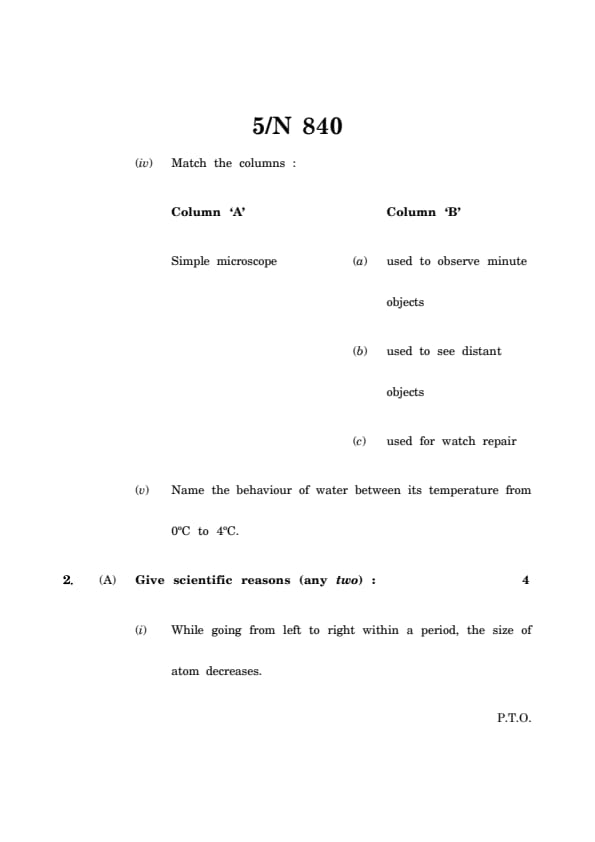
(v) Name the behaviour of water between its temperature from 0°C to 4°C.
(i) While going from left to right within a period, the size of the atom decreases.
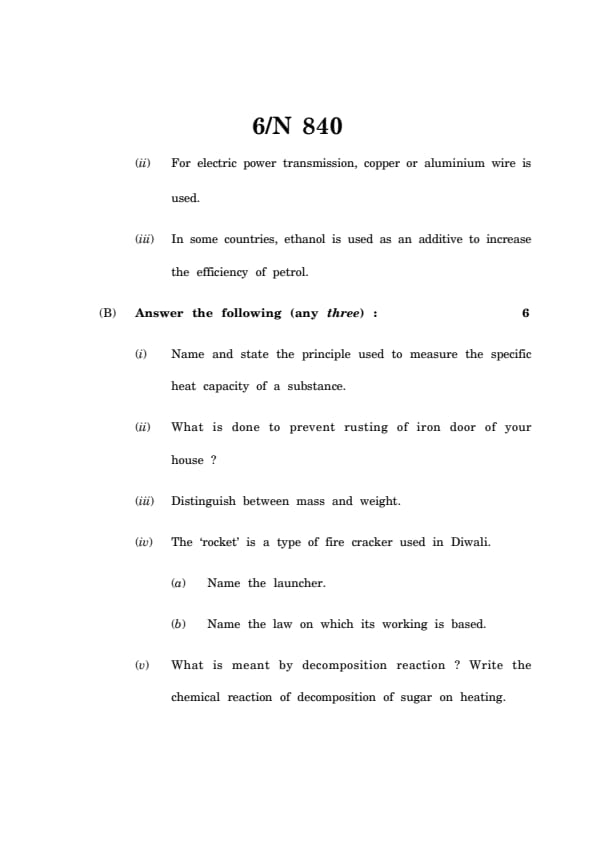
(ii) For electric power transmission, copper or aluminium wire is used.
(i) Name and state the principle used to measure the specific heat capacity of a substance.
(ii) What is done to prevent rusting of iron door of your house?
(iv) The ‘rocket’ is a type of fire cracker used in Diwali.
View Solution
N/A Quick Tip: Quick Tip:} Newton’s Third Law is not only essential in rocketry but also explains many everyday phenomena, such as the recoil of a gun or the pushback when you jump off a boat.
(v) What is meant by decomposition reaction? Write the chemical reaction of decomposition of sugar on heating.
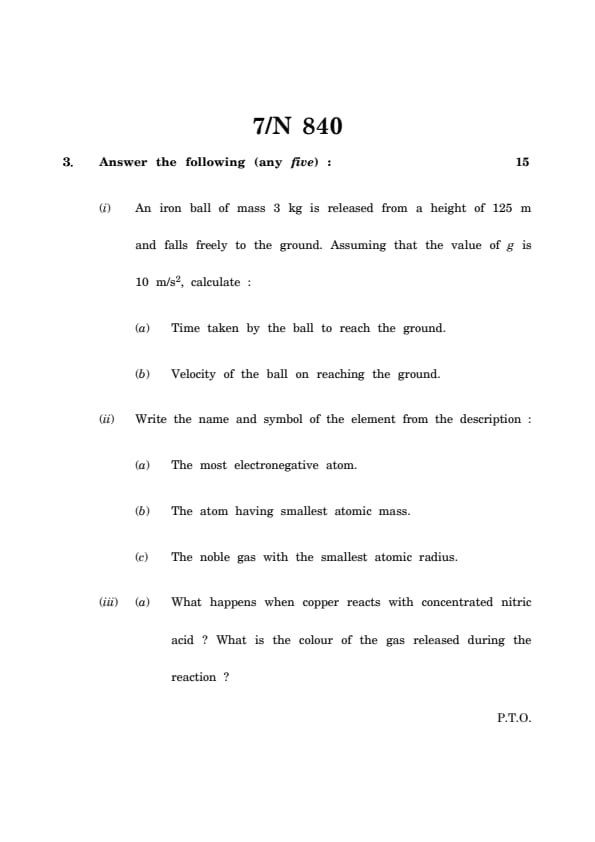
(i) An iron ball of mass 3 kg is released from a height of 125 m and falls freely to the ground. Assuming that the value of \(g\) is 10 m/s\(^2\), calculate:
(ii) Write the name and symbol of the element from the description:
View Solution
N/A Quick Tip: Quick Tip:} Nitrogen dioxide (\(NO_2\)) is a toxic gas, so reactions involving concentrated nitric acid should be performed in a well-ventilated area or under a fume hood.
(vi) Name the following:



Comments