




The KMAT Kerala 2026 Session 1 Question Paper PDF is now available for download to assist MBA aspirants in their exam preparation. This comprehensive resource includes the solved question paper, official answer keys, and a detailed section-wise analysis to help students master the exam pattern and identifying high-weightage topics.
By practicing with the KMAT Kerala 2026 solved paper, candidates can refine their speed and accuracy in Quantitative Aptitude, English Usage, and Logical Reasoning. Utilizing the latest marking scheme and expert solutions ensures a strategic approach to time management, helping students secure a high percentile for admission into top management institutes across Kerala.
KMAT Kerala 2026 Session 1 Question Paper PDF – Memory Based
| KMAT Kerala 2026 Session 1 Question Paper PDF | Download PDF | Check Solutions |

The word “Obfuscate” means
View Solution
Concept:
Understanding vocabulary requires knowing the precise meaning of a word and how it is commonly used in context. The word \textit{obfuscate comes from the Latin word \textit{obfuscare, which means “to darken” or “to make obscure.” In modern English, it is often used in formal or academic contexts.
Explanation:
To \textit{obfuscate means to deliberately make something unclear, confusing, or difficult to understand. It is usually used when someone intentionally tries to hide the truth or complicate an explanation.
For example:
The speaker tried to obfuscate the issue by using complicated technical terms.
The report was written in a way that seemed to obfuscate the real problem.
Option (A) is incorrect because \textit{clarify means the opposite — to make something clear.
Option (C) refers to exaggeration, which is unrelated to confusion or lack of clarity.
Option (D) means to shorten or condense information, which also does not match the meaning of \textit{obfuscate.
Therefore, the correct answer is (B), as it accurately reflects the meaning of the word. Quick Tip: When solving vocabulary MCQs, try to think of the word in a sentence. Eliminating opposite meanings first often helps in selecting the correct option.
The word “Pernicious” means
View Solution
Concept:
The word \textit{pernicious is a formal English vocabulary term derived from the Latin word \textit{perniciosus, meaning “deadly” or “destructive.” It is commonly used in academic writing, essays, and comprehension passages.
Explanation:
\textit{Pernicious refers to something that causes harm in a subtle, gradual, or hidden way. Unlike immediate or visible harm, pernicious effects develop slowly over time and may not be easily noticed at first.
For example:
Smoking has pernicious effects on long-term health.
The spread of misinformation can have a pernicious impact on society.
Option (A) is incorrect because \textit{harmless is the opposite of pernicious.
Option (C) suggests aggression, but pernicious harm is usually indirect or gradual rather than openly violent.
Option (D) refers to confusion, which relates more to words like \textit{obscure or \textit{bewildering.
Thus, option (B) correctly captures the meaning of the word. Quick Tip: Words like pernicious, insidious, and detrimental often describe slow or hidden harm — watch for clues like “gradual” or “long-term.”
The word “Recalcitrant” means
View Solution
Concept:
The word \textit{recalcitrant comes from the Latin \textit{recalcitrare, meaning “to kick back.” It is commonly used to describe people who resist rules, control, or authority.
Explanation:
A \textit{recalcitrant person is stubbornly defiant and refuses to obey instructions, discipline, or authority. The word is often used in contexts involving students, employees, or individuals who resist discipline or social norms.
For example:
The recalcitrant student refused to follow the school rules.
The manager struggled to control the recalcitrant employee.
Option (A) is incorrect because someone easily persuaded is the opposite of recalcitrant.
Option (C) relates to intelligence, which is unrelated to obedience.
Option (D) refers to forgetfulness, which does not match the meaning of the word.
Therefore, option (B) correctly defines the term. Quick Tip: Words like stubborn, defiant, and rebellious often indicate meanings similar to recalcitrant.
The word “Equivocal” means
View Solution
Concept:
The word \textit{equivocal originates from the Latin \textit{aequivocus, meaning “having equal voice.” In English, it refers to something that is ambiguous or unclear in meaning.
Explanation:
\textit{Equivocal describes statements, actions, or expressions that can be understood in more than one way. Such statements are often vague or deliberately unclear, making it difficult to determine the exact intention or meaning.
For example:
His equivocal answer made everyone unsure about his true opinion.
The politician gave an equivocal response to avoid controversy.
Option (A) is incorrect because “clearly expressed” is the opposite of equivocal.
Option (B) relates to emotional intensity, which is unrelated to ambiguity.
Option (D) means completely false, whereas equivocal refers to uncertainty, not falsity.
Thus, option (C) correctly captures the meaning of the word. Quick Tip: If a word suggests ambiguity, vagueness, or double meaning, it is often similar to equivocal.
The word “Treacherous” means
View Solution
Concept:
The word \textit{treacherous comes from the noun \textit{treachery, meaning betrayal or deceit. It is used to describe people, behaviour, or situations that cannot be trusted.
Explanation:
\textit{Treacherous refers to someone or something that is likely to betray trust or cause harm in a deceptive way. It can describe both people (who betray others) and situations (that are dangerous or unstable).
For example:
He proved to be a treacherous friend who revealed secrets.
The mountain roads become treacherous during heavy snowfall.
Option (A) is incorrect because loyal is the opposite of treacherous.
Option (B) refers to responsibility, which is unrelated.
Option (D) means true, which again is the opposite of betrayal.
Thus, option (C) best matches the meaning because something treacherous is not dependable or trustworthy. Quick Tip: Treacherous often appears in contexts involving betrayal, danger, or lack of trust — think of “betrayal” as the root clue.
Which one of the following is a correctly spelled word?
View Solution
Concept:
Spelling-based questions test familiarity with correct word formation. The word \textit{consanguineous comes from Latin roots: \textit{con (together) + \textit{sanguis (blood), meaning “related by blood.”
Explanation:
\textit{Consanguineous is a formal English word used in biology, law, and social sciences to describe people who share a common ancestor or are related by blood.
For example:
They belong to a consanguineous family line.
Consanguineous marriages are studied in genetics.
Option (B) is incorrect due to the wrong vowel placement (“segu”).
Option (C) is incorrect because it omits the “e” before the ending.
Option (D) is incorrect due to missing letters and incorrect vowel order.
Thus, only option (A) represents the correct spelling. Quick Tip: For long spellings, try breaking the word into roots or familiar parts to identify the correct form.
Which one of the following is a correctly spelled word?
View Solution
Concept:
The word garrulous means excessively talkative, especially about trivial matters. It comes from the Latin word \textit{garrire, meaning “to chatter.”
Explanation:
The correct spelling is garrulous, which contains double \textit{r and double \textit{l. The incorrect options either misspell the vowel sequence or alter the double consonants. Quick Tip: Pay attention to double consonants in tricky spellings (e.g., garrulous has double \textit{r and double l).
Which one of the following is a correctly spelled word?
View Solution
Concept:
The word \textit{polyphiloprogenitive means producing many offspring. It is formed from Greek roots: \textit{poly (many), \textit{philo (loving), and \textit{progeny (offspring).
Explanation:
Option (A) correctly maintains the proper vowel sequence and spelling structure. The other options contain incorrect vowel placements or extra letters, making them misspelled forms. Quick Tip: For long words, understand their roots and prefixes to remember correct spelling (e.g., polyphiloprogenitive: poly = many, progeny = offspring).
Which one of the following is a correctly spelled word?
View Solution
Concept:
The word surreptitious means secretive or done in a stealthy manner. It comes from the Latin \textit{surrepticius, meaning “stolen” or “secretly obtained.”
Explanation:
The correct spelling is surreptitious, which includes the consonant cluster \textit{ptit. The incorrect options either omit letters, rearrange vowels, or simplify the structure incorrectly. Quick Tip: Break difficult words into recognizable letter clusters to remember correct spelling (e.g., surreptitious contains the cluster \textit{ptit).
Which one of the following is a correctly spelled word?
View Solution
Concept:
The word vicissitude refers to a change of circumstances, typically sudden or unexpected. It is commonly used in literature and formal writing.
Explanation:
The correct spelling contains double \textit{s and the sequence \textit{ssit. The other options either add extra letters or omit necessary consonants, making them incorrect spellings. Quick Tip: For difficult spellings, remember common letter patterns and double consonants (e.g., vicissitude has double \textit{s and the pattern ssit).
Which one of the following is an antonym to the word timid?
View Solution
Concept:
An antonym is a word that has the opposite meaning of another word.
Explanation:
\textit{Timid means shy, lacking courage, or easily frightened. The opposite of this would be someone brave or bold. Among the options, fearless means without fear and is the direct opposite of timid. Quick Tip: Look for a word that directly expresses the opposite meaning of the given word (e.g., timid → fearless).
Which one of the following is an antonym to the word wane?
View Solution
Concept:
To find an antonym, identify the core meaning of the given word.
Explanation:
\textit{Wane means to decrease, fade, or become weaker. The opposite would be to increase or become stronger. Among the options, grow best represents this opposite meaning. Quick Tip: Identify the core meaning of the word and choose an antonym that shows the opposite direction (e.g., wane → grow).
Which one of the following is an antonym to the word reverence?
View Solution
Concept:
Understanding antonyms requires identifying the emotional tone of the word.
Explanation:
\textit{Reverence means deep respect or admiration. The opposite would be disrespect or mockery. Among the options, ridicule means to mock or make fun of someone, making it the correct antonym. Quick Tip: When finding antonyms, focus on the emotional tone of the word and select one with the opposite feeling (e.g., reverence → ridicule).
Which one of the following is an antonym to the word daunt?
View Solution
Concept:
To find an antonym, first understand the meaning of the given word.
Explanation:
\textit{Daunt means to make someone feel intimidated, discouraged, or fearful. The opposite would be to inspire confidence or motivate someone. Among the options, encourage is the correct antonym because it means to give support, confidence, or hope. Quick Tip: Understand the meaning of the word first, then choose an antonym that expresses the opposite idea (e.g., daunt → encourage).
Which one of the following is an antonym to the word ferocious?
View Solution
Concept:
Antonyms require identifying the emotional intensity of the original word.
Explanation:
\textit{Ferocious means savage, fierce, or violently aggressive. The opposite would describe gentleness or mildness. Among the options, soft best conveys the opposite meaning. Quick Tip: To find an antonym, identify the intensity and meaning of the original word and choose a word that expresses the opposite quality (e.g., ferocious → soft).
Change the present simple sentence “She boils water for tea” into past simple sentence.
View Solution
Concept:
The present simple tense describes habitual or general actions, while the past simple tense describes actions completed in the past.
Explanation:
The verb \textit{boils is the present simple form of the verb \textit{boil. To convert it into past simple tense, we use the past form \textit{boiled. Therefore, the correct transformation is She boiled water for tea. The other options either use incorrect grammar or different tenses. Quick Tip: To change present simple to past simple, replace the present verb with its past form (e.g., boils → boiled).
Change the present simple sentence: “The students enter the hall without making noise” into past simple sentence.
View Solution
Concept:
To convert a sentence from present simple to past simple, change the main verb into its past form.
Explanation:
The verb \textit{enter in present simple becomes \textit{entered in past simple. Option (C) correctly uses the past tense while keeping the rest of the sentence grammatically correct. Other options either use incorrect tense forms or contain grammatical errors. Quick Tip: To change a sentence from present simple to past simple, convert the main verb into its past form (e.g., enter → entered).
Which one of the following sentences is correct?
View Solution
Concept:
A correct sentence must maintain consistency in tense and verb forms.
Explanation:
All actions in the sentence occur in the past, so all verbs must be in past tense. Option (D) correctly uses \textit{ate, \textit{took, and \textit{went, maintaining tense consistency. The other options mix present and past tense forms, making them grammatically incorrect. Quick Tip: Keep verb tenses consistent within a sentence. If the actions happened in the past, use past tense verbs throughout (e.g., ate, took, went).
Which one of the following sentences is correct?
View Solution
Concept:
A grammatically correct sentence must maintain proper tense consistency, especially in conditional sentences.
Explanation:
The sentence uses a past conditional structure: “If he got the job… he would have to travel… so he decided…”. All verbs must remain logically consistent in past tense. Option (D) maintains correct verb agreement and tense flow. Other options mix present and past tenses, making them incorrect. Quick Tip: Maintain tense consistency in conditional sentences. If the condition is in the past (e.g., If he got the job), keep the rest of the sentence in a logically matching tense.
Which one of the following sentences is correct?
View Solution
Concept:
A correct sentence requires proper verb tense and correct use of conjunctions like “even though.”
Explanation:
Option (A) correctly uses the past tense verbs went and \textit{was, maintaining grammatical consistency. The other options contain tense errors or incorrect verb forms such as “go,” “has sick,” or “had sick,” which are grammatically incorrect. Quick Tip: Ensure tense consistency in a sentence. When using conjunctions like \textit{even though, keep verbs in the correct and matching tense (e.g., went, was).
Find out the correct preposition.
He was looking ______ all the different possibilities.
View Solution
Concept:
Certain verbs are commonly used with fixed prepositions, known as collocations.
Explanation:
The phrase look for means to search or examine possibilities. Therefore, “He was looking for all the different possibilities” is grammatically correct. The other options do not form meaningful verb-preposition combinations. Quick Tip: Learn common verb-preposition collocations. For example, use \textit{look for when you mean to search or explore possibilities.
Find out the correct preposition.
He arrived early, so he had to wait _____ his friend.
View Solution
Concept:
Some verbs are always followed by specific prepositions.
Explanation:
The correct phrase is wait for, which means to remain until someone arrives. Thus, “He had to wait for his friend” is correct. The other options do not fit standard usage. Quick Tip: Some verbs take fixed prepositions. For example, use \textit{wait for to mean staying until someone or something arrives.
Find out the correct preposition.
She has been working on it _____ last week.
View Solution
Concept:
The present perfect continuous tense uses since and \textit{for to describe duration.
Explanation:
\textit{Since is used with a specific point in time (e.g., last week), while \textit{for is used with a duration (e.g., for two weeks). Therefore, “She has been working on it since last week” is correct. Quick Tip: Use \textit{since with a specific starting point in time and for with a duration (e.g., since Monday, for two weeks).
Find out the correct preposition.
He will qualify ______ a year of entering the campus.
View Solution
Concept:
Prepositions related to time must match the intended meaning of duration or deadline.
Explanation:
Within is used to indicate a time limit before a certain period ends. The sentence means he will qualify before one year is completed. Therefore, “He will qualify within a year of entering the campus” is correct. The other options do not convey the correct time relationship. Quick Tip: Use \textit{within to show that something will happen before a certain period ends (e.g., within a year, within two days).
Find out the correct preposition.
I will complete all my assignments ______ Saturday.
View Solution
Concept:
Different prepositions are used for different time expressions.
Explanation:
The preposition on is used with specific days and dates (e.g., on Monday, on 5th June). Since Saturday is a specific day, the correct sentence is “I will complete all my assignments on Saturday.” Other options do not fit standard usage. Quick Tip: Use the preposition \textit{on with specific days and dates (e.g., on Monday, on Saturday, on 5th June).
Change the sentence “He enjoys reading historical novels” into an interrogative sentence.
View Solution
Concept:
To change a present simple sentence into an interrogative form, use the auxiliary verb do/does at the beginning of the sentence.
Explanation:
The subject “He” is third person singular, so we use \textit{does. When \textit{does is used, the main verb returns to its base form. Therefore, “enjoys” becomes “enjoy.”
Hence, the correct interrogative form is: Does he enjoy reading historical novels? Quick Tip: In present simple interrogative sentences, use \textit{does for singular subjects and change the main verb to its base form.
Change the sentence “They have completed the work” into an interrogative sentence.
View Solution
Concept:
In present perfect tense, the auxiliary verb have/has is placed before the subject to form a question.
Explanation:
The sentence is in present perfect tense (“have completed”). To convert it into interrogative form, we invert the auxiliary verb and subject.
Thus, the correct sentence is: Have they completed the work? Quick Tip: In present perfect interrogatives, place \textit{have/has before the subject without changing the past participle form.
Convert the sentence into DIRECT SPEECH: He said that he would meet me in the library.
View Solution
Concept:
When converting indirect speech to direct speech, restore the original pronouns and tense.
Explanation:
In indirect speech, “he would meet me” changes back to “I will meet you” in direct speech.
The pronoun “he” becomes “I” (original speaker), and “me” becomes “you” (listener).
The modal “would” changes back to “will.”
Therefore, the correct direct speech form is: He said, “I will meet you in the library.” Quick Tip: When changing from indirect to direct speech, restore original pronouns and reverse tense back to its original form.
Convert the sentence into DIRECT SPEECH: They told us they were going to the theatre.
View Solution
Concept:
While converting indirect speech into direct speech, restore the original pronouns and tense.
Explanation:
In indirect speech, “they were going” changes back to present continuous “we are going.”
The pronoun “they” becomes “we” (original speakers), and the tense shifts back from past to present.
Hence, the correct direct speech form is: They said, “we are going to the theatre.” Quick Tip: In direct speech conversion, change reported pronouns back to original speakers and restore the original tense.
Convert the sentence into DIRECT SPEECH: He said he had been working.
View Solution
Concept:
Past perfect in indirect speech often converts back to present perfect continuous in direct speech.
Explanation:
The phrase “he had been working” becomes “I have been working” when converted to direct speech.
The pronoun changes from third person (“he”) to first person (“I”), and the tense returns to its original form.
Thus, option (A) is correct. Quick Tip: When converting indirect to direct speech, change past perfect back to present perfect if the original speech is implied in present context.
Convert the sentence into Passive Voice: She lights the lamp.
View Solution
Concept:
To convert active voice into passive voice, make the object the subject and adjust the verb using the correct tense.
Explanation:
The active sentence is in present simple tense (“lights”).
In passive voice, present simple becomes: is + past participle.
The object “the lamp” becomes the subject, and “she” becomes “by her.”
Thus, the correct passive form is: The lamp is lighted by her. Quick Tip: For present simple passive voice, use \textit{is/am/are + past participle and shift the object to the subject position.
Convert the sentence into Passive Voice: He is not driving a car.
View Solution
Concept:
Present continuous tense in passive voice follows the structure:
is/am/are + being + past participle.
Explanation:
The active sentence is in present continuous (“is driving”).
In passive voice, the object “a car” becomes the subject.
The verb changes to “is being driven,” and “he” becomes “by him.”
Thus, the correct passive form is: A car is not being driven by him. Quick Tip: For present continuous passive voice, use \textit{is/am/are + being + past participle.
Convert the sentence into Active Voice: The assignment had been completed by her.
View Solution
Concept:
Past perfect passive converts to past perfect active.
Explanation:
The passive form “had been completed” changes to active “had completed.”
The doer “her” becomes the subject “she.”
Thus, the correct active form is: She had completed the assignment. Quick Tip: In passive-to-active conversion, identify the agent (by + person) and make it the subject.
Convert the sentence into Active Voice: Our home-work shall have been completed by us.
View Solution
Concept:
Future perfect passive converts into future perfect active form.
Explanation:
The passive phrase “shall have been completed” becomes active “shall have completed.”
The agent “by us” becomes the subject “we,” and the object remains “our home-work.”
Therefore, the correct active form is: We shall have completed our home-work. Quick Tip: For future perfect active voice, use shall/will have + past participle.
Choose the words for each blank that best fit the meaning of the sentence as a whole:
Seventy two year old man _____ half his time in India and the _____ in the US
View Solution
Concept:
Sentence completion requires correct subject-verb agreement and logical meaning.
Explanation:
The subject is singular (“Seventy two year old man”), so the verb must also be singular — \textit{spends.
The second blank logically completes the phrase “the rest,” which refers to the remaining time.
Thus, the correct sentence is:
\textit{Seventy two year old man spends half his time in India and the rest in the US. Quick Tip: Check subject-verb agreement first, then choose words that logically complete the sentence.
Choose the words for each blank that best fit the meaning of the sentence as a whole:
The new programme would enhance the _____ of the professionals and deepen the _____ of safety protocols
View Solution
Concept:
The words must fit both grammatically and semantically.
Explanation:
A programme typically enhances \textit{skills and deepens \textit{understanding.
The other options either create negative or illogical meanings.
Thus, the correct sentence becomes:
\textit{The new programme would enhance the skill of the professionals and deepen the understanding of safety protocols. Quick Tip: Choose words that maintain a logical tone and match the context of improvement or development.
Choose the word for the blank that best fits the meaning of the sentence as a whole:
The 160-metre long skywalk will _____ public to move safely between bus stand and railway station.
View Solution
Concept:
The correct word should complete the sentence meaningfully and grammatically.
Explanation:
The word \textit{enable means “to make possible” or “to allow.”
A skywalk enables people to move safely between locations.
The other options do not fit grammatically or contextually.
Thus, the correct sentence is:
\textit{The 160-metre long skywalk will enable public to move safely between bus stand and railway station. Quick Tip: In vocabulary-based blanks, choose words that form natural verb-object combinations.
Choose the word for the blank that best fits the meaning of the sentence as a whole:
The armed forces used air defence mechanisms to _____ armed drone and missile attacks from another country.
View Solution
Concept:
The correct word should convey prevention or stopping an attack.
Explanation:
The word \textit{thwart means to prevent or stop something from succeeding.
Air defence systems are used to stop attacks, so this word fits perfectly.
Other options do not convey strong prevention:
discourage = reduce likelihood
foster = encourage (incorrect meaning)
avoid = stay away from (not precise)
Thus, option (D) is correct. Quick Tip: Words like prevent, stop, block, or thwart often fit defence or security contexts.
Choose the word for the blank that best fits the meaning of the sentence as a whole:
Security measures have been intensified at the airport _____ an order from the Bureau of Civil Aviation Security
View Solution
Concept:
The word should logically connect cause and effect.
Explanation:
The word following means “after” or “as a result of.”
The sentence implies that security measures were intensified after an order was issued.
Other options do not correctly express this relationship.
Hence, option (A) is correct. Quick Tip: Use \textit{following when an action happens as a result of something mentioned earlier.
Choose the meaning of the idiom: a blessing in disguise
View Solution
Concept:
Idioms are phrases whose meanings cannot be understood literally.
Explanation:
“A blessing in disguise” refers to a situation that appears negative initially but later turns out to be beneficial.
For example, losing a job may lead someone to find a better opportunity later.
Thus, option (B) correctly explains the idiom. Quick Tip: For idioms, think of real-life examples to understand the figurative meaning.
Choose the meaning of the idiom: call it a day
View Solution
Concept:
Idioms convey figurative meanings that differ from literal interpretations.
Explanation:
The idiom \textit{call it a day means to stop working or end an activity for the day.
It is commonly used after finishing a task or deciding to stop due to fatigue.
For example: “We have done enough work today — let’s call it a day.”
Hence, option (A) is correct. Quick Tip: If an idiom includes “day,” it often relates to ending or completing an activity.
Choose the meaning of the idiom: give someone the cold shoulder
View Solution
Concept:
Many idioms express emotional behaviour rather than physical action.
Explanation:
The idiom \textit{give someone the cold shoulder means to deliberately ignore or show indifference to someone.
It is often used when someone avoids interaction intentionally.
Example: “She gave him the cold shoulder after their argument.”
Thus, option (C) is correct. Quick Tip: Idioms involving emotions often describe behaviour rather than literal actions.
Rearrange the parts to form a meaningful and coherent sentence:
P: inducted into the
Q: 300 Home Guards were
R: police force on Friday
S: a total of
View Solution
Concept:
Sentence rearrangement requires identifying logical flow: quantity → subject → action → time/place.
Explanation:
The sentence should begin with the quantity phrase “a total of” (S), followed by the subject “300 Home Guards were” (Q).
Next comes the action “inducted into the” (P), and finally the object with time reference “police force on Friday” (R).
Thus, the correct order is: S Q P R.
Final sentence:
\textit{A total of 300 Home Guards were inducted into the police force on Friday. Quick Tip: In rearrangement questions, start with quantity or subject phrases, then follow with verb and details.
Rearrange the parts to form a meaningful and coherent sentence:
P: consultations with all
Q: stakeholders on the terms of reference
R: there should be wider
S: and other issues
View Solution
Concept:
Rearrangement questions require identifying logical sentence structure: subject idea → action → details → extensions.
Explanation:
The sentence should begin with the main clause “there should be wider” (R).
This is followed by the noun phrase “consultations with all” (P), then the object “stakeholders on the terms of reference” (Q).
Finally, the sentence ends with the addition “and other issues” (S).
Thus, the correct order is: R P Q S.
Final sentence:
\textit{There should be wider consultations with all stakeholders on the terms of reference and other issues. Quick Tip: Start rearrangement by locating the main clause, then attach descriptive phrases logically.
Rearrange the parts to form a meaningful and coherent sentence:
P: is the bedrock of a
Q: equitable society
R: a nourished population
S: resilient and
View Solution
Concept:
A meaningful sentence usually begins with a complete subject phrase.
Explanation:
The subject here is “a nourished population” (R).
This is followed by the linking phrase “is the bedrock of a” (P).
Then comes the descriptive phrase “resilient and” (S), and finally the noun “equitable society” (Q).
Thus, the correct order is: R P S Q.
Final sentence:
\textit{A nourished population is the bedrock of a resilient and equitable society. Quick Tip: Identify the subject first, then place linking verbs and adjectives before the final noun phrase.
Choose the correct word from the options which is similar to the word given in capitals in the sentence.
The officer was known for his \textbf{INCORRUPTIBLE} character.
View Solution
Concept:
Synonym questions test understanding of meaning and tone.
Explanation:
The word \textit{incorruptible means honest, morally strong, and not capable of being bribed or influenced by corruption.
The closest synonym is \textit{upright, which refers to someone honest and principled.
Other options:
Venal = easily bribed (opposite meaning)
Dubious = doubtful or suspicious
Expedient = convenient but not necessarily moral
Thus, option (B) is correct. Quick Tip: In synonym questions, eliminate opposites first to quickly identify the correct answer.
Choose the correct word from the options which is similar to the word given in capitals in the sentence:
The committee rejected the proposal as \textbf{UNTENABLE} after careful scrutiny.
View Solution
Concept:
Synonym questions require understanding the exact meaning of the highlighted word.
Explanation:
The word \textit{untenable means something that cannot be defended or justified logically.
The closest synonym is \textit{indefensible, which also means impossible to justify.
Other options:
Defensible = opposite meaning
Plausible = believable
Ambiguous = unclear
Thus, option (C) is correct. Quick Tip: If a word contains a negative prefix like “un-”, look for a synonym with a similar negative sense.
He is one of those scholars whom the committee has always looked __ as a potential successor to the chair.
View Solution
Concept:
Phrasal verbs often have fixed meanings.
Explanation:
The phrase look up to means to admire or respect someone.
The sentence suggests that the committee respects him as a potential successor.
Hence, option (A) is correct. Quick Tip: Memorize common phrasal verbs like \textit{look up to, look after, and look into.
Which one of the following is a correctly spelled word?
View Solution
Concept:
Spelling questions test familiarity with standard English word forms.
Explanation:
\textit{Connoisseur is a French-derived word meaning an expert judge in matters of taste, such as art or food.
The correct spelling includes the sequence \textit{-isseur.
All other options contain misplaced vowels or incorrect endings.
Thus, option (B) is correct. Quick Tip: Foreign-origin words often retain unique spellings — practice them regularly.
Identify the linking verb in the sentence:
Though he appeared confident during the interview, he remained uncertain about the final outcome.
View Solution
Concept:
A linking verb connects the subject with a subject complement rather than showing action.
Explanation:
In the sentence, remained links the subject “he” with the adjective “uncertain.”
It does not show action but describes the subject’s state.
Although \textit{appeared can also function as a linking verb, the question focuses on the clause describing the final state.
Thus, option (B) is correct. Quick Tip: Common linking verbs include \textit{is, am, are, seem, appear, remain, become.
A wall of 60 m long can be built by 36 men in 21 days. Number of men required to build the same wall in 14 days, is
View Solution
Concept:
Work is proportional to (Men \(\times\) Days) when the total work remains constant.
Explanation:
Let total work = constant.
Using the formula: \[ M_1 \times D_1 = M_2 \times D_2 \] \[ 36 \times 21 = M \times 14 \] \[ M = \frac{36 \times 21}{14} = 54 \] Quick Tip: For constant work, use the relation: Men \(\times\) Days = Constant.
A typing work is done by two persons A and B. A and B together can type a booklet in 4 hours, but A alone takes 12 hours to type the booklet. How many hours required for B to type the booklet?
View Solution
Concept:
Work rate method:
Work rate = Work per hour.
Explanation:
A + B together = \(\frac{1}{4}\) work/hour
A alone = \(\frac{1}{12}\) work/hour
So, B’s rate: \[ \frac{1}{4} - \frac{1}{12} = \frac{3 - 1}{12} = \frac{1}{6} \]
Thus, B alone takes 6 hours. Quick Tip: For combined work, subtract individual rates to find the unknown worker’s efficiency.
A pipe fills a tank in 4 hours; another empties it in 8 hours. If both are opened, how long will it take to fill the tank?
View Solution
Concept:
Net work rate = Filling rate \(-\) Emptying rate.
Explanation:
Filling rate = \(\frac{1}{4}\) tank/hour
Emptying rate = \(\frac{1}{8}\) tank/hour
Net rate: \[ \frac{1}{4} - \frac{1}{8} = \frac{1}{8} \]
So, time required = 8 hours. Quick Tip: In pipes and cisterns, subtract rates if one pipe empties the tank.
A is twice as efficient as B. If A and B together finish a job in 12 days, then number of days required for B to finish the job, is
View Solution
Concept:
Efficiency is directly proportional to work rate.
Explanation:
Let B’s efficiency = 1 unit
Then A’s efficiency = 2 units
Together efficiency = 3 units
They finish work in 12 days → Total work = \(3 \times 12 = 36\) units
So, B alone takes 36 days. Quick Tip: When efficiency ratio is given, assume unit efficiencies to simplify calculations.
Two men A and B complete a task in 8 days and earn Rs.8000. If A does 60% of the work, then A gets
View Solution
Concept:
Wages are divided in proportion to work done.
Explanation:
Total earning = Rs.8000
A does 60% of work \[ A's\ share = 60% \times 8000 = \frac{60}{100} \times 8000 = 4800 \]
Thus, A gets Rs.4800. Quick Tip: In work-wage problems, divide total money according to the percentage of work done.
An amount invested at 12% simple interest amounts to Rs.6200 in 2 years. The principal amount is
View Solution
Concept:
Simple Interest Formula: \[ A = P \left(1 + \frac{RT}{100}\right) \]
Explanation:
Given:
Amount \(A = 6200\), Rate \(R = 12%\), Time \(T = 2\) years
\[ 6200 = P \left(1 + \frac{12 \times 2}{100}\right) \] \[ 6200 = P (1 + 0.24) = 1.24P \] \[ P = \frac{6200}{1.24} = 5000 \] Quick Tip: Use \(A = P(1 + \frac{RT}{100})\) directly when amount is given in simple interest problems.
Let \(x\) and \(y\) be positive integers such that \(x^2 + y^2 + xy = 61\). If \(x = 4\), then the value of \(y\) is
View Solution
Concept:
Substitute the given value and solve the quadratic equation.
Explanation:
Given \(x = 4\)
\[ 4^2 + y^2 + 4y = 61 \] \[ 16 + y^2 + 4y = 61 \] \[ y^2 + 4y - 45 = 0 \]
Factorizing: \[ (y + 9)(y - 5) = 0 \]
Since \(y\) is positive, \(y = 5\). Quick Tip: After substitution, simplify to a quadratic and factorize for integer solutions.
A sum of money invested at compound interest amounts to Rs.15,000 in one year and Rs.16,500 in two years. Then the rate of interest is
View Solution
Concept:
In compound interest: \[ \frac{Amount_{2nd\ year}}{Amount_{1st\ year}} = 1 + \frac{R}{100} \]
Explanation:
Given:
Amount after 1 year = 15000
Amount after 2 years = 16500
\[ \frac{16500}{15000} = 1.1 \]
\[ 1 + \frac{R}{100} = 1.1 \Rightarrow R = 10% \] Quick Tip: For successive compound amounts, divide consecutive amounts to directly find the rate.
In how many years will Rs.15,000 become Rs.19,500 at 5% simple interest per annum?
View Solution
Concept:
Simple Interest Formula: \[ SI = \frac{P \times R \times T}{100} \]
Explanation:
Principal \(P = 15000\)
Amount = 19500
So, Simple Interest: \[ SI = 19500 - 15000 = 4500 \]
Using formula: \[ 4500 = \frac{15000 \times 5 \times T}{100} \] \[ 4500 = 750T \Rightarrow T = 6 years \] Quick Tip: First find simple interest by subtracting principal from amount, then apply the SI formula.
If the compound interest for 2 years at 10% per annum is Rs.1050, then the principal amount is
View Solution
Concept:
Compound interest for 2 years: \[ CI = P \left[\left(1 + \frac{R}{100}\right)^2 - 1\right] \]
Explanation:
Rate \(R = 10%\)
\[ CI = P[(1.1)^2 - 1] = P(1.21 - 1) = 0.21P \]
Given: \[ 0.21P = 1050 \Rightarrow P = \frac{1050}{0.21} = 5000 \] Quick Tip: For 2-year compound interest, use \((1 + R/100)^2 - 1\) shortcut.
The ratio of boys to girls in a school is 3:5. If there are 240 girls, then number of boys in the school is
View Solution
Concept:
Use ratio proportion method.
Explanation:
Boys : Girls = 3 : 5
Girls = 240 corresponds to 5 parts
So, 1 part: \[ 240 \div 5 = 48 \]
Boys = 3 parts: \[ 3 \times 48 = 144 \] Quick Tip: Convert ratios into unit parts first, then multiply accordingly.
If \(5 : x = 60 : 48\), then \(x\) is equal to
View Solution
Concept:
Use cross multiplication in ratios.
Explanation: \[ \frac{5}{x} = \frac{60}{48} \]
Cross multiply: \[ 5 \times 48 = 60x \] \[ 240 = 60x \Rightarrow x = 4 \] Quick Tip: In ratios, always convert into fractions and use cross multiplication.
A sweet item contains sugar and flour in the ratio 3 : 4. If 400g of flour is used in the sweet item, then the quantity of sugar used in the sweet item is
View Solution
Concept:
Use ratio proportion method.
Explanation:
Sugar : Flour = 3 : 4
Flour = 400g corresponds to 4 parts
So, 1 part: \[ 400 \div 4 = 100g \]
Sugar = 3 parts: \[ 3 \times 100 = 300g \] Quick Tip: In ratios, divide the known quantity by its ratio part to find one unit value.
The monthly salaries of three employees A, B and C are in the ratio 3:4:5. If the total monthly salary is Rs.7200, then the salaries of A, B and C are respectively
View Solution
Concept:
Distribute total amount according to ratio parts.
Explanation:
Ratio = 3 : 4 : 5
Total parts = \(3 + 4 + 5 = 12\)
Value of one part: \[ 7200 \div 12 = 600 \]
A’s salary: \[ 3 \times 600 = 1800 \]
B’s salary: \[ 4 \times 600 = 2400 \]
C’s salary: \[ 5 \times 600 = 3000 \] Quick Tip: Add ratio parts first, then divide the total to get the unit value.
A runner can complete a 750 m race in two and a half minutes. The speed of the runner is
View Solution
Concept:
Speed = Distance / Time (convert units properly).
Explanation:
Distance = 750 m = 0.75 km
Time = 2.5 minutes = \(\frac{2.5}{60}\) hours
\[ Speed = \frac{0.75}{2.5/60} = \frac{0.75 \times 60}{2.5} \] \[ = \frac{45}{2.5} = 18 km/hr \] Quick Tip: Always convert distance to km and time to hours for km/hr speed problems.
The 20th term of the sequence 1, 4, 7, 10, ... is equal to
View Solution
Concept:
This is an arithmetic progression (A.P.).
Formula: \[ a_n = a + (n-1)d \]
Explanation:
First term \(a = 1\)
Common difference \(d = 3\) \(n = 20\)
\[ a_{20} = 1 + (20 - 1) \times 3 \] \[ = 1 + 57 = 58 \] Quick Tip: Use \(a_n = a + (n-1)d\) directly for nth term of an A.P.
A bacterium doubles every hour. There are 5 bacteria initially. How many will there be after 6 hours?
View Solution
Concept:
Doubling problems follow exponential growth: \[ Final = Initial \times 2^n \]
Explanation:
Initial bacteria = 5
Time = 6 hours
\[ Total = 5 \times 2^6 = 5 \times 64 = 320 \] Quick Tip: In doubling problems, multiply initial quantity by \(2^n\) where \(n\) is the number of intervals.
A ball bounces back to half of its previous height each time. If it is dropped from 256 meters, what is the height after the 6th bounce?
View Solution
Concept:
Repeated halving follows geometric progression.
Explanation:
Each bounce halves the height: \[ Height = 256 \times \left(\frac{1}{2}\right)^6 \]
\[ = 256 \div 64 = 4 m \] Quick Tip: For repeated halving, multiply by \((1/2)^n\) where \(n\) is the number of reductions.
The 20th term in the triangular numbers 1, 3, 6, 10, 15, 21, ... is
View Solution
Concept:
Triangular number formula: \[ T_n = \frac{n(n+1)}{2} \]
Explanation:
For \(n = 20\): \[ T_{20} = \frac{20 \times 21}{2} = 210 \] Quick Tip: Remember triangular number formula: \(\frac{n(n+1)}{2}\).
How many numbers between 1 and 200 are divisible by 13?
View Solution
Concept:
Use division to count multiples.
Explanation:
Largest multiple of 13 below 200: \[ 200 \div 13 = 15.38 \]
So, there are 15 multiples (13, 26, ..., 195). Quick Tip: To count multiples, divide the limit by the divisor and take the integer part.
The arithmetic mean of 20 numbers is 16. If each number is multiplied by 3, then the new mean is
View Solution
Concept:
If every number in a dataset is multiplied by a constant, the mean is also multiplied by the same constant.
Explanation:
Original mean = 16
Each number is multiplied by 3
New mean: \[ 16 \times 3 = 48 \] Quick Tip: Multiplying all observations by a constant multiplies the mean by the same constant.
The mean of four numbers is 300. If the mean of two of the four numbers is 310, then the mean of the other two numbers is
View Solution
Concept:
Use total sum approach.
Explanation:
Mean of 4 numbers = 300
Total sum: \[ 4 \times 300 = 1200 \]
Mean of 2 numbers = 310
Sum of those 2: \[ 2 \times 310 = 620 \]
Remaining sum: \[ 1200 - 620 = 580 \]
Mean of remaining 2: \[ 580 \div 2 = 290 \] Quick Tip: Always convert mean into total sum before splitting groups.
If one-fourth of a number exceeds 20% of the number by 10, then the number is
View Solution
Concept:
Form an equation using percentages and fractions.
Explanation:
Let number = \(x\)
\[ \frac{x}{4} = 20% of x + 10 \]
\[ \frac{x}{4} = \frac{20x}{100} + 10 \]
\[ \frac{x}{4} = \frac{x}{5} + 10 \]
Multiply by 20: \[ 5x = 4x + 200 \]
\[ x = 200 \] Quick Tip: Convert percentages into fractions before forming equations.
The arithmetic mean of the numbers 7, 14, 21, ..., 63 is
View Solution
Concept:
In an arithmetic progression, mean = average of first and last term.
Explanation:
First term = 7
Last term = 63
Mean: \[ \frac{7 + 63}{2} = \frac{70}{2} = 35 \] Quick Tip: For equally spaced numbers, mean = (first term + last term) / 2.
The mean of 9 numbers is 50. One of the numbers is wrongly recorded as 63 instead of 36. What is the correct mean?
View Solution
Concept:
Correct mean = (Correct total sum) / Number of observations.
Explanation:
Wrong mean = 50
Number of values = 9
Wrong total sum: \[ 9 \times 50 = 450 \]
The number was recorded as 63 instead of 36.
So, subtract wrong value and add correct value:
\[ Correct\ sum = 450 - 63 + 36 = 423 \]
Correct mean: \[ \frac{423}{9} = 47 \] Quick Tip: Corrected mean = Wrong total − Wrong value + Correct value, then divide by count.
A television is sold for Rs.44,000 at a profit of 10%. What is the cost price?
View Solution
Concept:
Selling Price (SP) with profit: \[ SP = CP \left(1 + \frac{Profit}{100}\right) \]
Explanation:
Given SP = 44000, Profit = 10%
\[ 44000 = CP \times 1.10 \]
\[ CP = \frac{44000}{1.10} = 40000 \] Quick Tip: For profit problems, divide SP by \((1 + \frac{Profit}{100})\) to get CP.
A shopkeeper buys an item for Rs.2800 and sells it at a 15% profit. What is the selling price?
View Solution
Concept:
Selling price with profit: \[ SP = CP \left(1 + \frac{Profit}{100}\right) \]
Explanation:
CP = 2800, Profit = 15%
\[ SP = 2800 \times 1.15 = 3220 \] Quick Tip: Multiply cost price by \((1 + \frac{Profit}{100})\) to get selling price.
A man buys 100 apples for Rs.3000 and sells 80 apples for Rs.3000. What is the percentage of profit?
View Solution
Concept:
Find cost per unit and selling price per unit.
Explanation:
Cost of 100 apples = 3000
Cost per apple: \[ 3000 \div 100 = 30 \]
Selling price of 80 apples = 3000
SP per apple: \[ 3000 \div 80 = 37.5 \]
Profit per apple: \[ 37.5 - 30 = 7.5 \]
Profit percentage: \[ \frac{7.5}{30} \times 100 = 25% \] Quick Tip: Convert everything to per-unit cost and price for bulk profit problems.
A trader offers a discount of 20% on a product but still makes a profit of 10%. What is the marked price of the product if the cost price is Rs.8000?
View Solution
Concept:
Selling price after discount must still give profit.
Explanation:
Cost price (CP) = 8000
Profit = 10%
Selling price: \[ SP = 8000 \times 1.10 = 8800 \]
Let Marked Price = MP
After 20% discount: \[ SP = 0.8 \times MP \]
\[ 8800 = 0.8 \times MP \Rightarrow MP = \frac{8800}{0.8} = 11000 \] Quick Tip: Use SP from profit first, then reverse the discount to find marked price.
The length and breadth of a rectangular field are 165m and 120m. If the field is to be paved with identical square tiles of maximum size, then the length of the side of the tiles is
View Solution
Concept:
Largest square tile side = HCF (GCD) of length and breadth.
Explanation:
Find HCF of 165 and 120.
Prime factorization: \[ 165 = 3 \times 5 \times 11 \] \[ 120 = 2^3 \times 3 \times 5 \]
Common factors = \(3 \times 5 = 15\) Quick Tip: Maximum square tile size equals the HCF of the two dimensions.
The sum of two numbers is 6000. On dividing the larger number by the smaller, we get 2 as quotient and 600 as remainder. What is the larger number?
View Solution
Concept:
Division algorithm: \[ Dividend = Divisor \times Quotient + Remainder \]
Explanation:
Let smaller number = \(x\)
Then larger number: \[ 2x + 600 \]
Given sum: \[ x + (2x + 600) = 6000 \] \[ 3x + 600 = 6000 \] \[ 3x = 5400 \Rightarrow x = 1800 \]
Larger number: \[ 2(1800) + 600 = 4200 \] Quick Tip: Use dividend = divisor × quotient + remainder to form equations.
Which one of the following numbers is divisible by 3?
View Solution
Concept:
A number is divisible by 3 if the sum of its digits is divisible by 3.
Explanation:
Check digit sums:
A: \(4+6+7+8 = 25\) (not divisible by 3)
B: \(5+6+8+7 = 26\) (not divisible by 3)
C: \(6+9+8+8 = 31\) (not divisible by 3)
D: \(6+9+8+7 = 30\) (divisible by 3)
So, 6987 is divisible by 3. Quick Tip: For divisibility by 3, add digits and check if the sum is divisible by 3.
In a class there are 30 girls and 20 boys and their average height is 160 cm. If the average height of girls is 150 cm, then the average height of boys is
View Solution
Concept:
Use total sum of heights method.
Explanation:
Total students = 30 + 20 = 50
Overall total height: \[ 50 \times 160 = 8000 cm \]
Total height of girls: \[ 30 \times 150 = 4500 cm \]
Total height of boys: \[ 8000 - 4500 = 3500 cm \]
Average height of boys: \[ 3500 \div 20 = 175 cm \] Quick Tip: When group averages are given, convert everything into total sums first.
In a survey of 80 people, 35 like tea, 40 like coffee and 15 like both. The number of people who like tea only, is
View Solution
Concept:
Tea only = Total tea − Both.
Explanation:
People who like tea = 35
People who like both = 15
Tea only: \[ 35 - 15 = 20 \] Quick Tip: In Venn diagram problems, subtract overlap to get “only” values.
Sum of two numbers is 20 and their product is 75. Then sum of their squares is
View Solution
Concept:
Use identity: \[ x^2 + y^2 = (x+y)^2 - 2xy \]
Explanation:
Given: \[ x+y = 20,\quad xy = 75 \]
\[ x^2 + y^2 = 20^2 - 2(75) \] \[ = 400 - 150 = 250 \] Quick Tip: Remember identity: \(x^2 + y^2 = (x+y)^2 - 2xy\).
The LCM of two numbers is 1360 and their HCF is 20. If one of the numbers is 80, then the other number is
View Solution
Concept:
Product of two numbers: \[ Number_1 \times Number_2 = LCM \times HCF \]
Explanation:
Let other number = \(x\)
\[ 80 \times x = 1360 \times 20 \]
\[ 80x = 27200 \Rightarrow x = \frac{27200}{80} = 340 \] Quick Tip: Use formula: Product of numbers = LCM × HCF.
The value of the sum \(8 + 16 + 24 + 32 + \cdots + 80\) is
View Solution
Concept:
This is an arithmetic progression (A.P.) sum.
Formula: \[ S_n = \frac{n}{2}(a + l) \]
Explanation:
First term \(a = 8\)
Last term \(l = 80\)
Common difference = 8
Number of terms: \[ n = \frac{80}{8} = 10 \]
Sum: \[ S = \frac{10}{2}(8 + 80) = 5 \times 88 = 440 \] Quick Tip: For evenly spaced multiples, divide last term by step to get number of terms.
The difference of two numbers is 780 and their sum is 1120. Then the larger number is
View Solution
Concept:
Use system of equations.
Explanation:
Let larger number = \(x\), smaller = \(y\)
\[ x - y = 780 \] \[ x + y = 1120 \]
Add both equations: \[ 2x = 1900 \Rightarrow x = 950 \] Quick Tip: Add equations when sum and difference are given to directly find the larger number.
A positive integer \(m\) is increased by 20% and the resulting number is 1080. Then the integer \(m\) is
View Solution
Concept:
Increase by 20% means multiply by 1.2.
Explanation: \[ 1.2m = 1080 \]
\[ m = \frac{1080}{1.2} = 900 \] Quick Tip: Increase by \(x%\) means multiply original value by \((1 + \frac{x}{100})\).
The digits of the number 235 are permutated to form 6 numbers (including 235). What is the sum of the resulting 6 numbers?
View Solution
Concept:
For 3-digit permutations, each digit appears equally in hundreds, tens, and units places.
Explanation:
Digits = 2, 3, 5
Sum of digits: \[ 2 + 3 + 5 = 10 \]
Each digit appears: \[ (3-1)! = 2 times in each place \]
Total sum: \[ 2 \times (100 + 10 + 1) \times 10 \] \[ = 2 \times 111 \times 10 = 2220 \] Quick Tip: In digit permutation sums, each digit repeats \((n-1)!\) times in each place.
What is the missing digit in the number 432_687 if the number is divisible by 9?
View Solution
Concept:
A number is divisible by 9 if the sum of its digits is divisible by 9.
Explanation:
Digits: \(4 + 3 + 2 + x + 6 + 8 + 7\)
Sum without missing digit: \[ 4 + 3 + 2 + 6 + 8 + 7 = 30 \]
So total sum = \(30 + x\)
For divisibility by 9: \[ 30 + x = 36 \Rightarrow x = 6 \] Quick Tip: For divisibility by 9, digit sum must be a multiple of 9.
On dividing a number by 35, we get 29 as remainder. If the same number is divided by 7, then the remainder is
View Solution
Concept:
Use remainder properties.
Explanation:
Let number = \(35k + 29\)
Since \(35 = 7 \times 5\), divide the remainder by 7: \[ 29 \div 7 = 4 remainder 1 \]
So remainder = 1. Quick Tip: When divisors are multiples, reduce the remainder using the smaller divisor.
The number of integers between 25 and 125, which are divisible by 6, is
View Solution
Concept:
Count multiples within a range.
Explanation:
Smallest multiple of 6 greater than 25: \[ 30 \]
Largest multiple of 6 less than 125: \[ 120 \]
Now count terms in A.P.: \[ 30, 36, 42, \dots, 120 \]
\[ n = \frac{120 - 30}{6} + 1 = 15 + 1 = 16 \] Quick Tip: Use \(\frac{last - first}{step} + 1\) to count evenly spaced numbers.
If \(9859 - 7924 = 8765 - x\), then the value of \(x\) is
View Solution
Concept:
Solve linear equation.
Explanation:
First calculate left side: \[ 9859 - 7924 = 1935 \]
So, \[ 1935 = 8765 - x \]
Rearranging: \[ x = 8765 - 1935 = 6830 \] Quick Tip: Always simplify one side fully before solving equations.
The smallest number \(x\) such that \(4456 + x\) is divisible by 7 is
View Solution
Concept:
Find remainder and add the required amount to reach next multiple.
Explanation:
Divide 4456 by 7:
\[ 7 \times 636 = 4452 \]
Remainder: \[ 4456 - 4452 hookup = 4 \]
To make it divisible by 7, add: \[ 7 - 4 = 3 \] Quick Tip: Smallest addition = Divisor − Remainder.
If we have the same remainder (non-zero) when dividing the numbers 863 and 814 by a number \(x\), then the value of \(x\) is
View Solution
Concept:
If two numbers leave the same remainder when divided by \(x\), then their difference is divisible by \(x\).
Explanation: \[ 863 - 814 = 49 \]
So \(x\) must divide 49.
Factors of 49: 1, 7, 49
From options, \(x = 7\). Quick Tip: Same remainder problems reduce to checking divisors of the difference.
A letter is chosen at random from the word "PROBABILITY". What is the probability that the letter is a consonant?
View Solution
Concept:
Probability = \(\frac{Favourable outcomes}{Total outcomes}\)
Explanation:
Word: PROBABILITY (11 letters)
Vowels: O, A, I, I = 4
Consonants: \[ 11 - 4 = 7 \]
Probability: \[ \frac{7}{11} \] Quick Tip: Count total letters first, then subtract vowels to get consonants.
A bag contains 4 yellow marbles and 6 red marbles. What is the probability of drawing a red marble at random?
View Solution
Concept:
Probability = Favourable outcomes / Total outcomes.
Explanation:
Total marbles: \[ 4 + 6 = 10 \]
Favourable outcomes (red marbles) = 6
\[ Probability = \frac{6}{10} = 0.6 \] Quick Tip: Convert fractions into decimals if options are in decimal form.
The probability of drawing a face card (Jack, Queen, King) from a standard deck of cards is
View Solution
Concept:
Probability = \(\frac{Favourable outcomes}{Total outcomes}\)
Explanation:
A standard deck has 52 cards.
Face cards: Jack, Queen, King in each of 4 suits.
Total face cards: \[ 3 \times 4 = 12 \]
Probability: \[ \frac{12}{52} = \frac{3}{13} \] Quick Tip: Face cards include only J, Q, K — not Ace.
An integer is chosen at random from 1 to 20. What is the probability that it is a prime number?
View Solution
Concept:
Probability = \(\frac{Number of primes}{Total numbers}\)
Explanation:
Primes between 1 and 20: \[ 2, 3, 5, 7, 11, 13, 17, 19 \]
Total primes = 8
Total numbers = 20
\[ Probability = \frac{8}{20} = 0.4 \] Quick Tip: Remember: 1 is not a prime number.
Three of the following four are alike in a certain way and so form a group. Which one of the following does not belong to that group?
View Solution
Concept:
Classification based on grammatical category.
Explanation:
Adjective, Verb, and Noun are parts of speech.
Semicolon is a punctuation mark, not a part of speech.
Hence, Semicolon does not belong to the group. Quick Tip: Look for category similarity (grammar type, function, or usage) in odd-one-out questions.
What is the sum of the heights of three brothers A, B, and C?
Statement I: B is the tallest and his height is 163 cm.
Statement II: A is the shortest and his height is 154 cm.
To answer the question:
View Solution
Concept:
Data sufficiency problems test whether the given data is enough to determine the required value.
Explanation:
From Statement I:
B is tallest = 163 cm.
No information about A and C → Not sufficient.
From Statement II:
A is shortest = 154 cm.
No information about B and C → Not sufficient.
Even combining both statements:
We only know tallest and shortest heights.
Height of C is unknown, so total sum cannot be determined.
Hence, data is insufficient. Quick Tip: In data sufficiency, check if exact value can be uniquely determined — not estimated.
The Tennis players participating in a tournament are ranked according to their previous record. A player ranks 46th from the top and 58th from the bottom. How many Tennis Players are participating in the tournament?
View Solution
Concept:
Total number of persons: \[ Top rank + Bottom rank - 1 \]
Explanation:
Given:
Top rank = 46
Bottom rank = 58
\[ Total = 46 + 58 - 1 = 103 \]
Subtract 1 because the same player is counted twice. Quick Tip: Total members = Top rank + Bottom rank − 1.
B is brother of S; S is sister of F and D is daughter of F. How is D related to B?
View Solution
Concept:
Family relationship chain.
Explanation:
B is brother of S → B and S are siblings.
S is sister of F → F is also sibling of B.
So, B and F are siblings.
D is daughter of F → D is child of B’s sibling.
Hence, D is B’s niece. Quick Tip: In blood relation problems, build relationships step-by-step like a family tree.
The next number in the sequence 5, 8, 6, 9, 7, 10, 8, __ is
View Solution
Concept:
Look for alternating patterns.
Explanation:
Split into two sequences:
Odd positions: 5, 6, 7, 8 (increase by 1)
Even positions: 8, 9, 10, ? (increase by 1)
So next even term: \[ 11 \] Quick Tip: Try splitting sequences into alternating patterns.
Lizard : Reptile :: Frog : ?
View Solution
Concept:
Analogy based on classification.
Explanation:
Lizard belongs to the class Reptiles.
Similarly, Frog belongs to the class Amphibians. Quick Tip: In analogies, identify the relationship type (class, function, part-whole, etc.).
The average height of 70 students in a class is 166 cm. There are 4 students whose height is equal to the average height of 166 cm. If the height of 32 students is greater than 166 cm, then the number of students whose height is less than 166 cm is
View Solution
Concept:
Total students = Students above average + Students at average + Students below average.
Explanation:
Total students = 70
Students equal to average = 4
Students above average = 32
Students below average: \[ 70 - (32 + 4) = 34 \] Quick Tip: Split total data into above, equal, and below average categories.
In the following pairs of words, identify the pair of words that has the same or similar relationship as Teacher : School
View Solution
Concept:
Analogy based on profession and workplace.
Explanation:
Teacher works at a School.
Similarly, Doctor works at a Hospital.
Other options do not represent workplace relationships. Quick Tip: Identify the relationship type (profession–workplace, tool–user, etc.).
A software company lays off 40% of its employees. Among the laid-off employees, 20% are developers. The percentage of laid-off developers from the total employees of the company is
View Solution
Concept:
Successive percentage calculation.
Explanation:
40% employees are laid off.
Among them, 20% are developers.
So percentage of total employees: \[ 40% \times 20% = \frac{40}{100} \times \frac{20}{100} = 8% \] Quick Tip: For nested percentages, multiply the percentages.
Everyone with good reading habit visits Book Exhibition and every book buyer has a good reading habit. Can we infer that all who visit Book Exhibition are book buyers?
View Solution
Concept:
Logical reasoning with conditional statements.
Explanation:
Given:
Good readers \(\rightarrow\) Visit exhibition
Book buyers \(\rightarrow\) Good readers
So: \[ Book\ buyers \rightarrow Good\ readers \rightarrow Visit\ exhibition \]
But reverse is not true.
Some visitors may not be book buyers.
Hence, the conclusion is incorrect. Quick Tip: In logic problems, implication works one way unless explicitly stated otherwise.
Hardworking : Determined :: Happy : ?
View Solution
Concept:
Analogy based on synonym relationship.
Explanation:
Hardworking and Determined are closely related in meaning.
Similarly, Happy and Upbeat are synonyms or closely related in tone.
Hence, the correct analogy is: \[ Happy : Upbeat \] Quick Tip: In analogy questions, identify the relationship type first — synonym, antonym, cause-effect, or category.
‘A is the only son of B’ and ‘C is granddaughter of B’. How is C related to A?
View Solution
Concept:
Family relationship reasoning.
Explanation:
A is the only son of B.
So B’s grandchildren must come through A.
C is granddaughter of B.
Hence, C must be A’s daughter. Quick Tip: When someone is an only child, all next-generation relations must come through them.
If in a certain language, ARGENTINA is coded as CTIGPVKPC, how is GERMANY coded in that language?
View Solution
Concept:
Letter shifting (each letter moved forward by 2 positions).
Verification:
ARGENTINA → CTIGPVKPC
Each letter shifted +2: \[ A \to C,\ R \to T,\ G \to I,\ E \to G,\ N \to P,\ T \to V,\ I \to K,\ N \to P,\ A \to C \]
Apply same rule to GERMANY: \[ G \to I,\ E \to G,\ R \to T,\ M \to O,\ A \to C,\ N \to P,\ Y \to A \]
Thus: \[ GERMANY \to IGTOCPA \] Quick Tip: In coding questions, first test a uniform shift (like +1, +2) before trying complex patterns.
Arrange the following words in a meaningful sequence.
1. Admission \quad 2. Application \quad 3. Entrance Exam \quad 4. Advertisement
View Solution
Concept:
Logical chronological sequence.
Explanation:
First, Advertisement announces admission.
Then students submit Application.
Next comes Entrance Exam.
Finally, Admission is granted.
So correct order: \[ Advertisement \rightarrow Application \rightarrow Entrance\ Exam \rightarrow Admission \] Quick Tip: For sequencing questions, arrange events in real-life chronological order.
Twenty girls are sitting in a row. A girl is shifted by four places towards the left, then she became 8th from the left end. The earlier position of that girl from the right end of the row is
View Solution
Concept:
Position change in a row using left–right conversion.
Explanation:
After shifting 4 places left, position = 8th from left.
So earlier position from left: \[ 8 + 4 = 12^{th} \]
Total girls = 20
Position from right: \[ 20 - 12 + 1 = 9^{th} \] Quick Tip: Position from right = Total − Position from left + 1.
The next number in the sequence 3, 6, 11, 18, 27, __ is
View Solution
Concept:
Increasing difference pattern.
Explanation:
Differences: \[ 6-3=3,\quad 11-6=5,\quad 18-11=7,\quad 27-18=9 \]
Pattern: +2 each time (odd numbers).
Next difference = 11: \[ 27 + 11 = 38 \] Quick Tip: Check differences first in number series questions.
If today is Sunday, then the day which is three days before the day after tomorrow is
View Solution
Concept:
Step-by-step day calculation.
Explanation:
Today = Sunday
Tomorrow = Monday
Day after tomorrow = Tuesday
Three days before Tuesday: \[ Tuesday \rightarrow Monday \rightarrow Sunday \rightarrow Saturday \] Quick Tip: Always move step-by-step while solving calendar questions.
Three of the following four are alike in a certain way and so form a group. Which one does not belong to that group?
View Solution
Concept:
Odd-one-out classification.
Explanation:
Daisy, Iris, and Hibiscus are flowers.
Petals are parts of a flower, not a flower itself.
Hence, Petals does not belong. Quick Tip: Check category: object vs part-of-object.
What is the total mark in the examination?
Statements:
I. A student secures 36% but fails by 6 marks.
II. The pass mark is 60.
View Solution
Concept:
Data sufficiency problem involving percentages.
Explanation:
From Statement I:
36% marks is 6 less than passing marks.
But total marks are unknown → insufficient.
From Statement II:
Pass mark = 60.
But we don’t know percentage or total marks → insufficient.
Using both statements:
36% of total = pass marks − 6 \[ 0.36T = 60 - 6 = 54 \] \[ T = \frac{54}{0.36} = 150 \]
Thus, both statements are required. Quick Tip: In data sufficiency, test each statement separately before combining.
A box contains 16 red, 12 white and 15 yellow identical marbles. A man picks one marble at a time without replacement. How many times must he pick a marble to be 100% certain of picking at least 3 white marbles?
View Solution
Concept:
Worst-case selection (pigeonhole principle).
Explanation:
To ensure 3 white marbles, assume worst case: pick all non-white first.
Non-white marbles: \[ 16 + 15 = 31 \]
After picking 31 marbles, still 0 white in worst case.
Now pick whites:
To guarantee 3 whites: \[ 31 + 3 = 34 \] Quick Tip: For certainty problems, assume worst-case selection first.
A man walks 4 km West and turns right to walk 3 km. Where is he now from the starting point?
View Solution
Concept:
Direction and displacement using right-angle triangle.
Explanation:
Walk 4 km West.
Turning right from West → North.
Then walk 3 km North.
Displacement from start: \[ \sqrt{4^2 + 3^2} = 5 km \]
Direction = North-West. Quick Tip: Use Pythagoras theorem for perpendicular movement problems.
Horse : Foal :: Kangaroo : ?
View Solution
Concept:
Animal and its young one analogy.
Explanation:
Young of a horse = Foal.
Young of a kangaroo = Joey. Quick Tip: Many analogy questions are based on animal-young pairs.
Statements:
I. Mohan did not water his plants.
II. Mohan’s plants were withered.
View Solution
Concept:
Cause and effect reasoning.
Explanation:
Plants need water to survive.
If Mohan did not water the plants, they would naturally wither.
Thus: \[ Cause: No\ watering \rightarrow Effect: Plants\ withered \] Quick Tip: In cause-effect questions, check if one event logically produces the other.
Statement:
The average age of girls in a class is 17 and the average age of boys in that class is 18.
Conclusions:
I. Every girl is younger than all the boys in the class.
II. Every boy is older than all the girls in the class.
View Solution
Concept:
Understanding averages vs individual values.
Explanation:
An average only represents the mean value.
It does not imply that all individuals follow that order.
Some girls may be older than some boys even if averages differ.
Thus, neither conclusion is guaranteed. Quick Tip: Average values cannot be used to compare individual members.
Statement:
All eligible unemployed youths above 18 years of age will be given unemployment allowance.
\textit{(An announcement from the government)
Assumptions:
I. All unemployed youths above 18 years of age are in need of financial support.
II. There are some unemployed youths above 18 years of age who need financial support.
View Solution
Concept:
Assumption analysis in logical reasoning.
Explanation:
The statement implies that some unemployed youths need financial help.
Otherwise, the allowance would be unnecessary.
However, it does not assume that all such youths need support.
Thus:
Assumption I is too strong → Not implicit
Assumption II is reasonable → Implicit Quick Tip: An assumption must be necessary but not extreme or universal unless stated.
Statement:
In a village there are 1200 voters. The number of female voters is more than 50%.
Conclusions:
I. The village has 600 female voters.
II. Female voters are the majority in the village.
View Solution
Concept:
Understanding percentages and logical conclusions.
Explanation:
More than 50% of 1200 means female voters > 600.
Conclusion I says exactly 600 → Incorrect.
Conclusion II says females are majority → True. Quick Tip: “More than” and “equal to” are logically different — avoid exact-value assumptions.
Statements:
I. The quantum of edible oil imported this year is increased by the government.
II. The production of oil seeds has declined sharply this year.
View Solution
Concept:
Cause-effect reasoning.
Explanation:
If oilseed production declines, domestic supply reduces.
To compensate, the government increases imports.
Thus: \[ Decline\ in\ production \rightarrow Increase\ in\ imports \] Quick Tip: Trace logical dependency: shortage often leads to increased imports.
Statement:
The Indian Railways has decided to appoint four thousand additional station masters.
Assumptions:
I. In Indian Railways there are enough railway stations to accommodate four thousand additional station masters.
II. Indian Railways has sufficient number of station masters.
View Solution
Concept:
Assumption identification.
Explanation:
If additional station masters are being appointed, there must be enough stations to place them → Assumption I implicit.
Assumption II contradicts the need for recruitment.
If sufficient station masters already existed, new appointments wouldn’t be needed.
Thus, only assumption I is valid. Quick Tip: If action is taken (like hiring), assume necessity — not sufficiency.
Paw : Cat :: Hoof : ?
View Solution
Concept:
Animal and its foot structure analogy.
Explanation:
A cat has paws.
Similarly, an animal with hooves is a horse.
Thus: \[ Paw : Cat :: Hoof : Horse \] Quick Tip: Look for part-to-animal relationships in analogy questions.
What is the essential part (that is strongly connected to) ‘Knowledge’?
View Solution
Concept:
Core concept identification.
Explanation:
Knowledge is gained through learning.
Library, school, and teacher are sources or aids, but learning is the essential process. Quick Tip: Identify the root process, not the supporting tools.
From the following four words choose the word which is different from the other three words.
View Solution
Concept:
Odd-one-out classification.
Explanation:
Cap, hat, and helmet are protective or structured headgear.
Veil is a covering cloth, usually symbolic or decorative.
Hence, Veil is different. Quick Tip: Compare function — protection vs decoration.
M S Dhoni : Cricket :: Cristiano Ronaldo : ?
View Solution
Concept:
Person and associated sport analogy.
Explanation:
M. S. Dhoni is famous for Cricket.
Cristiano Ronaldo is famous for Football.
Thus: \[ Dhoni : Cricket :: Ronaldo : Football \] Quick Tip: Famous personalities are often paired with their primary field or sport.
Three of the following four are alike in a certain way and so form a group. Which one of the following does not belong to that group?
View Solution
Concept:
Synonym-based odd-one-out.
Explanation:
Trivial, unimportant, and insignificant are synonyms meaning “not important.”
Important is opposite in meaning.
Hence, Important is the odd one. Quick Tip: Check if three options are synonyms and one is an antonym.
Given the sequence of numbers 2, 3, 5, 7, 11, 13, 17, 19, 23, __. What are the next two numbers?
View Solution
Concept:
Prime number sequence.
Explanation:
The sequence consists of consecutive prime numbers: \[ 2, 3, 5, 7, 11, 13, 17, 19, 23 \]
Next primes: \[ 29, 31 \] Quick Tip: Always check if the series follows prime numbers.
Statements:
I. The private school student’s performance is excellent in the final exam of class 10.
II. Many teachers left private schools and joined government schools.
View Solution
Concept:
Cause-effect relationship analysis.
Explanation:
Excellent performance and teachers shifting jobs are unrelated events.
Neither logically causes the other.
Hence, both are independent effects. Quick Tip: If no logical link exists between events, treat them as independent.
A man walks 2 km East from his house and then turns to his left and walks 3 km. Further he turns to his left and walks 2 km. Now, how far is he from his house?
View Solution
Concept:
Directional movement tracking.
Explanation:
Start at origin.
Walk 2 km East → (2, 0).
Turn left (North), walk 3 km → (2, 3).
Turn left again (West), walk 2 km → (0, 3).
Distance from start: \[ \sqrt{0^2 + 3^2} = 3 km \] Quick Tip: Use coordinates to solve multi-turn direction problems.
A and B are sisters. If S is son of A and M is the mother of B, then how is S related to M?
View Solution
Concept:
Family tree relationship reasoning.
Explanation:
A and B are sisters → Same mother.
M is mother of B → So M is also mother of A.
S is son of A.
Thus: \[ M \rightarrow A \rightarrow S \]
So S is the grandson of M. Quick Tip: If two people are siblings, they share the same parents.
Question: What is the total weight of 12 metal discs having equal weight?
Statements:
I. Half of the weight of a metal disc is 8 kg.
II. The total weight of 4 discs is 32 kg more than the total weight of two discs.
View Solution
Concept:
Data sufficiency using algebra.
Let weight of one disc = \(x\).
From Statement I:
Half weight = 8 kg \[ x/2 = 8 \Rightarrow x = 16 \]
Weight of 12 discs: \[ 12 \times 16 = 192 kg \]
Sufficient.
From Statement II:
Weight of 4 discs is 32 more than weight of 2 discs: \[ 4x = 2x + 32 \Rightarrow 2x = 32 \Rightarrow x = 16 \]
Again sufficient.
Thus, either statement alone works. Quick Tip: In data sufficiency, test each statement independently.
Pick the odd one out from the given pair of words.
View Solution
Concept:
Relationship-based odd-one-out.
Explanation:
Teacher : School, Chef : Restaurant, Nurse : Hospital
→ Person and workplace relationship.
Author : Book
→ Creator and creation relationship.
Hence, option A is different. Quick Tip: Check if relationships are consistent across pairs.
The digits of the number 2365643879 are arranged in ascending order from left to right. What is the difference between the two digits where one digit is 3rd from the right and the other digit is 4th from the left?
View Solution
Concept:
Digit rearrangement and positional counting.
Explanation:
Digits of 2365643879 in ascending order: \[ 2,3,3,4,5,6,6,7,8,9 \]
4th from left = 4
3rd from right = 7
Difference: \[ 7 - 4 = 3 \] Quick Tip: Always rewrite numbers in required order before positional analysis.
The Chief of the Defence Staff is
View Solution
Concept:
Current affairs — Indian defence leadership.
Explanation:
General Anil Chauhan serves as the Chief of the Defence Staff (CDS) of India.
The CDS is the highest-ranking military officer and acts as a key military advisor to the government. Quick Tip: Remember top defence appointments for current affairs exams.
The present Indian Union Minister of Defence is
View Solution
Concept:
Indian polity and current affairs.
Explanation:
Rajnath Singh serves as the Defence Minister of India.
He is responsible for overseeing national defence and the armed forces. Quick Tip: Important cabinet ministers are common exam questions.
The DDR\&D deals with research and development of defence technologies, systems and equipment. DDR\&D stands for
View Solution
Concept:
Defence organizations of India.
Explanation:
DDR\&D stands for Department of Defence Research and Development.
It is responsible for developing defence technologies and supporting the armed forces through innovation. Quick Tip: Learn common defence abbreviations like DRDO, CDS, and DDR\&D.
Pakistani drones and missiles have been intercepted and destroyed by India’s defence systems successfully. Drone is an aircraft or small
View Solution
Concept:
Basic defence terminology.
Explanation:
A drone is an unmanned aerial vehicle (UAV).
It operates without a human pilot onboard and is usually controlled remotely or autonomously. Quick Tip: Drone = UAV = Unmanned Aerial Vehicle.
The Indian Armed Forces launched ‘OPERATION SINDOOR’ hitting terrorist infrastructure in Pakistan and Pakistan occupied Jammu and Kashmir on
View Solution
Concept:
Recent defence current affairs.
Explanation:
Operation SINDOOR was conducted by the Indian Armed Forces on 07 May 2025 targeting terrorist infrastructure across the border. Quick Tip: Memorize dates of major defence operations for exams.
The National Song Vande Mataram was composed in Sanskrit by
View Solution
Concept:
Indian history and literature.
Explanation:
Vande Mataram was composed by Bankimchandra Chatterji and appeared in his novel \textit{Anandamath.
It later became India’s National Song. Quick Tip: National Song = Bankimchandra Chatterji, National Anthem = Rabindranath Tagore.
The Indian Institute of Foreign Trade was established in 1963 as an autonomous body under the Ministry of
View Solution
Concept:
Indian institutions and governance.
Explanation:
The Indian Institute of Foreign Trade (IIFT) was set up in 1963 under the Ministry of Commerce and Industry to promote international trade education and research. Quick Tip: IIFT is linked with foreign trade and commerce-related ministries.
National Stock Exchange was the first exchange in India to implement electronic or screen-based trading which began its operations in the year
View Solution
Concept:
Indian economy and financial institutions.
Explanation:
The National Stock Exchange (NSE) began operations in 1994 and introduced electronic trading, modernizing India’s stock market system. Quick Tip: NSE = 1994 launch + electronic trading pioneer in India.
The Chairman of Securities and Exchange Board of India is
View Solution
Concept:
Indian financial regulatory bodies.
Explanation:
The Securities and Exchange Board of India (SEBI) regulates the securities market in India.
Tuhin Kanta Pandey serves as the Chairman, overseeing capital market regulation and investor protection. Quick Tip: SEBI regulates stock markets and investor protection in India.
The 193 Member States of the United Nations officially adopted a new sustainable development agenda entitled ‘Transforming Our World: The 2030 Agenda for Sustainable Development’ in
View Solution
Concept:
United Nations and global initiatives.
Explanation:
The 2030 Agenda for Sustainable Development was adopted by UN Member States at the UN Summit held in New York in September 2015.
It introduced the 17 Sustainable Development Goals (SDGs). Quick Tip: SDGs adopted in 2015 at UN Headquarters, New York.
The International Monetary Fund was established in the year
View Solution
Concept:
International financial institutions.
Explanation:
The IMF was established in 1944 during the Bretton Woods Conference to stabilize global financial systems after the economic turmoil of the Great Depression and World War II. Quick Tip: IMF and World Bank were created at Bretton Woods (1944).
Which one of the following is true in respect of United Nations?
View Solution
Concept:
Structure and functioning of the United Nations.
Explanation:
The United Nations operates primarily through member states and accredited organizations.
Individual proposals are generally not directly entertained at the UN decision-making level, making option (C) correct. Quick Tip: UN decisions are taken through member nations, not individuals.
The Nobel Peace Prize 2020 was awarded to
View Solution
Concept:
International awards and organizations.
Explanation:
The Nobel Peace Prize 2020 was awarded to the United Nations World Food Programme (WFP) for its efforts to combat hunger and improve conditions for peace in conflict-affected areas. Quick Tip: Nobel Peace Prize 2020 → World Food Programme (WFP).
In GST, only value addition will be taxed and burden of tax is to be borne by the
View Solution
Concept:
GST taxation system.
Explanation:
Goods and Services Tax (GST) is a destination-based tax on consumption.
Although collected at different stages of production and distribution, the ultimate burden is borne by the final consumer. Quick Tip: GST is a consumption-based tax → paid by the final consumer.
Which one of the following is not true in respect of Goods and Services Tax (GST)?
View Solution
Concept:
GST applicability.
Explanation:
GST applies to most goods and services, but securities are generally outside GST’s scope and instead fall under other financial regulations.
Hence, statement (A) is considered not true in the context of GST applicability in this question. Quick Tip: GST applies to goods/services, but not typically to securities trading.
The study of how genes and traits of humans are passed from one generation to the next is known as
View Solution
Concept:
Branches of biology.
Explanation:
Genetics is the branch of biology that studies heredity, genes, DNA, and how traits are transmitted from parents to offspring. Quick Tip: Genetics = Study of heredity and gene transmission.
The Victoria Memorial, a brain child of Lord Curzon, was inaugurated by the Prince of Wales in the year 1921. The Victoria Memorial is located in
View Solution
Concept:
Indian historical monuments.
Explanation:
The Victoria Memorial was built in memory of Queen Victoria and is located in Kolkata, West Bengal.
It was conceived by Lord Curzon and inaugurated in 1921. Quick Tip: Victoria Memorial → Kolkata.
Kabaddi is basically a combative sport, with _______ players on each side, played for a period of 40 minutes with a 5 minutes break
View Solution
Concept:
Sports rules.
Explanation:
In standard Kabaddi, each team consists of 7 players on the court at a time.
The match duration is typically 40 minutes, divided into two halves with a short break. Quick Tip: Kabaddi team size = 7 players per side.
In human, the deficiency of vitamin E causes
View Solution
Concept:
Vitamin deficiencies.
Explanation:
Vitamin E acts as an antioxidant and protects body cells.
Deficiency can lead to muscle weakness, nerve damage, poor coordination, and weakened immunity. Quick Tip: Vitamin E deficiency → nerve and muscle problems.
Who nominates the Members of Rajya Sabha?
View Solution
Concept:
Indian Constitution — Parliament.
Explanation:
The President of India nominates 12 members to the Rajya Sabha from fields such as literature, science, art, and social service, as per Article 80 of the Constitution. Quick Tip: Rajya Sabha nominated members → Appointed by the President.
The Bihu dance is an indigenous folk dance from the Indian State of
View Solution
Concept:
Indian folk dances.
Explanation:
Bihu is a traditional folk dance of Assam, performed during the Bihu festival which celebrates the Assamese New Year and harvest season. Quick Tip: Bihu dance → Assam.
The Bhabha Atomic Research Centre is located in
View Solution
Concept:
Indian scientific institutions.
Explanation:
Bhabha Atomic Research Centre (BARC) is India’s premier nuclear research facility, located at Trombay in Mumbai, Maharashtra. Quick Tip: BARC → Trombay (Mumbai).
The author of the Book ‘Broken Wings’ is
View Solution
Concept:
Indian literature.
Explanation:
“The Broken Wing” is a famous poetry collection by Sarojini Naidu, also known as the Nightingale of India. Quick Tip: “The Broken Wing” → Sarojini Naidu.
ASEAN was established in 1967 in Bangkok. ASEAN stands for
View Solution
Concept:
International organizations.
Explanation:
ASEAN stands for the Association of Southeast Asian Nations, formed in 1967 in Bangkok to promote regional cooperation among Southeast Asian countries. Quick Tip: ASEAN = Association of Southeast Asian Nations.
The India Brand Equity Foundation is a trust established by the
View Solution
Concept:
Indian trade and commerce institutions.
Explanation:
The India Brand Equity Foundation (IBEF) is a trust established by the Department of Commerce under the Ministry of Commerce and Industry to promote and create international awareness of the “Made in India” label. Quick Tip: IBEF → Department of Commerce (Ministry of Commerce and Industry).
The campuses of Tata Institute of Social Sciences are located in
View Solution
Concept:
Indian higher education institutions.
Explanation:
The Tata Institute of Social Sciences (TISS) has campuses in Mumbai (main campus), Tuljapur (Maharashtra), Hyderabad (Telangana), and Guwahati (Assam). Quick Tip: TISS campuses → Mumbai, Tuljapur, Hyderabad, Guwahati.
In finance and accounting, par value means
View Solution
Concept:
Financial terminology.
Explanation:
Par value refers to the nominal or face value of a financial instrument such as a bond or share, as stated by the issuing company. Quick Tip: Par value = Face value of a share or bond.
In the Financial Year 2026-27, the maximum total income for which tax liability for individual tax payers is NIL is
View Solution
Concept:
Indian income tax structure.
Explanation:
As per the revised tax regime applicable for the Financial Year 2026–27, individuals with total income up to Rs. 12 lakhs have nil tax liability due to rebate provisions under the Income Tax Act. Quick Tip: FY 2026–27 → Income up to Rs. 12 lakhs → Nil tax liability.
NITI Aayog was established in which year?
View Solution
Concept:
Indian policy institutions.
Explanation:
NITI Aayog (National Institution for Transforming India) was established on 1 January 2015, replacing the Planning Commission to promote cooperative federalism and policy innovation. Quick Tip: NITI Aayog established → 1 January 2015.
In Kerala, KeSCPCR is responsible for protecting the rights of
View Solution
Concept:
State Commissions.
Explanation:
KeSCPCR stands for Kerala State Commission for Protection of Child Rights.
It is responsible for safeguarding and promoting the rights of children in Kerala. Quick Tip: SCPCR → Protection of Child Rights.
Information Kerala Mission is an autonomous institution under the
View Solution
Concept:
Kerala Government institutions.
Explanation:
Information Kerala Mission (IKM) is an autonomous institution under the Local Self Government Department of Kerala, focusing on e-governance solutions for local bodies. Quick Tip: Information Kerala Mission → Local Self Government Department.
The Institute of Management in Kerala is one of the teaching and research departments of the
View Solution
Concept:
Higher education institutions in Kerala.
Explanation:
The Institute of Management in Kerala (IMK) is a teaching and research department under the University of Kerala. Quick Tip: IMK → University of Kerala.
Kumarakom bird sanctuary in Kerala is located on the banks of
View Solution
Concept:
Important wildlife locations in Kerala.
Explanation:
Kumarakom Bird Sanctuary is a famous bird sanctuary in Kottayam district, situated on the banks of Vembanad Lake, the largest lake in Kerala. Quick Tip: Kumarakom Bird Sanctuary → Vembanad Lake.
Livelihood Inclusion Financial Empowerment (LIFE) scheme is the Kerala Government’s mission to
View Solution
Concept:
Kerala Government welfare schemes.
Explanation:
The LIFE Mission (Livelihood Inclusion Financial Empowerment) is a flagship housing scheme of the Kerala Government aimed at providing safe housing to the homeless and landless people of the state. Quick Tip: LIFE Mission → Housing for the homeless in Kerala.
The Operation Black Thunder was conducted by the National Security Guard in April 1986 to flush out extremists in
View Solution
Concept:
Indian security operations.
Explanation:
Operation Black Thunder was a counter-terrorism operation carried out by Indian security forces, including the NSG, at the Golden Temple complex in Amritsar, Punjab. Quick Tip: Operation Black Thunder → Golden Temple, Amritsar.
Pokhran II (Operation Shakti) was a series of five nuclear weapon tests conducted by India in the year
View Solution
Concept:
Indian nuclear history.
Explanation:
Pokhran-II, also known as Operation Shakti, was conducted in May 1998 at Pokhran Test Range in Rajasthan, marking India’s declaration as a nuclear weapons state. Quick Tip: Pokhran-II → 1998 nuclear tests.
The author of the book, India 2020: A Vision for the New Millennium is
View Solution
Concept:
Famous Indian books and authors.
Explanation:
\textit{India 2020: A Vision for the New Millennium was written by Dr. A. P. J. Abdul Kalam along with Y. S. Rajan. The book outlines a vision to transform India into a developed nation. Quick Tip: India 2020 → Written by Dr. A. P. J. Abdul Kalam.
The Ajanta Caves, the Buddhist cave monuments, are located in the
View Solution
Concept:
UNESCO World Heritage Sites in India.
Explanation:
The Ajanta Caves are a group of rock-cut Buddhist cave monuments located near Aurangabad in Maharashtra. They are famous for ancient murals and sculptures dating from the 2nd century BCE. Quick Tip: Ajanta Caves → Maharashtra (near Aurangabad).
The Jag Mandir Island palace built in the Lake Pichola is located in
View Solution
Concept:
Famous palaces of Rajasthan.
Explanation:
Jag Mandir is a historic island palace situated on Lake Pichola in Udaipur, Rajasthan. It is one of the major tourist attractions of the city. Quick Tip: Lake Pichola → Udaipur → Jag Mandir Palace.
The second longest urban beach in the world, Marina Beach is located in
View Solution
Concept:
Important geographical landmarks of India.
Explanation:
Marina Beach, located along the Bay of Bengal in Chennai, Tamil Nadu, is known as one of the longest urban beaches in the world and a major tourist attraction. Quick Tip: Marina Beach → Chennai, Tamil Nadu.
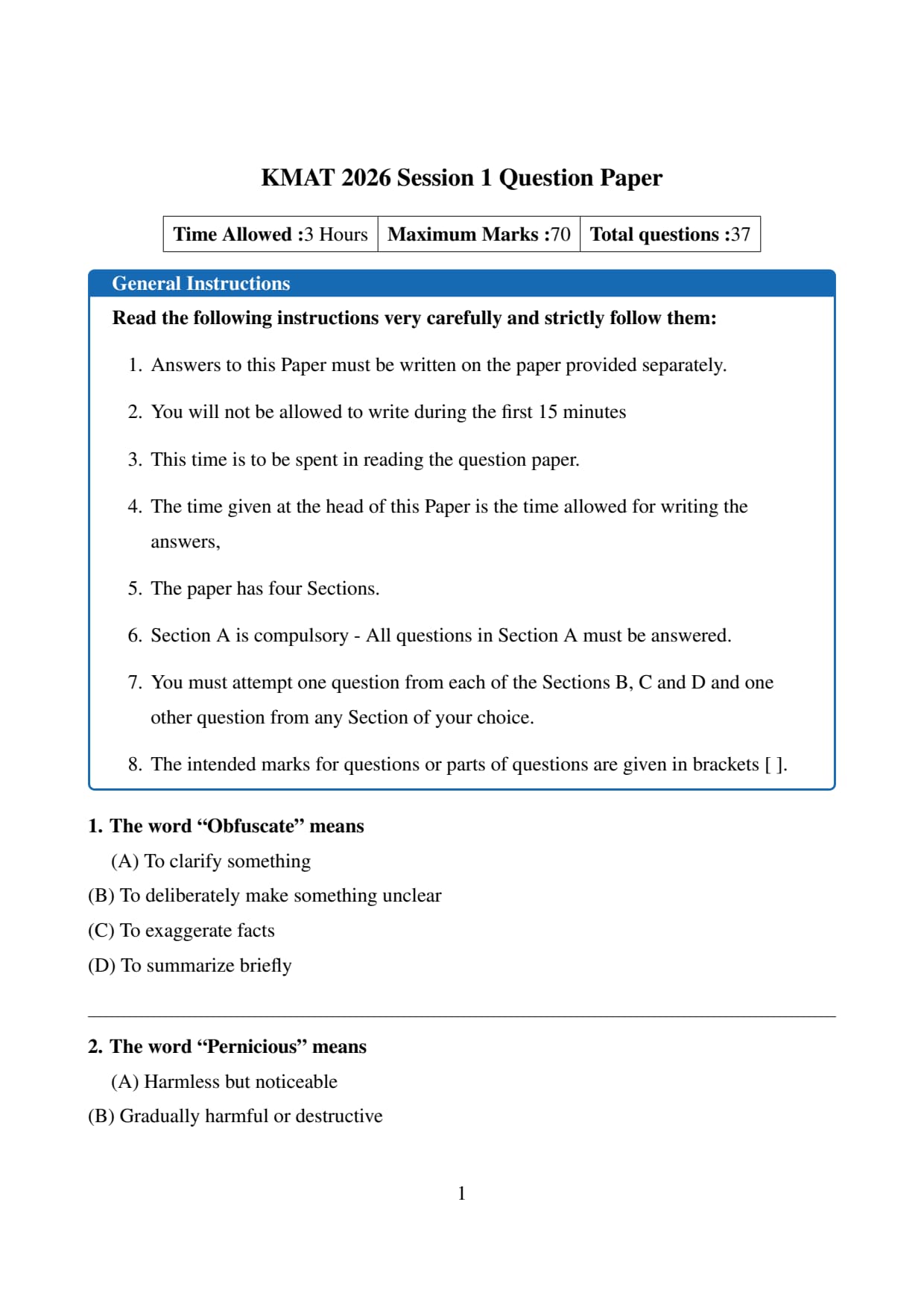
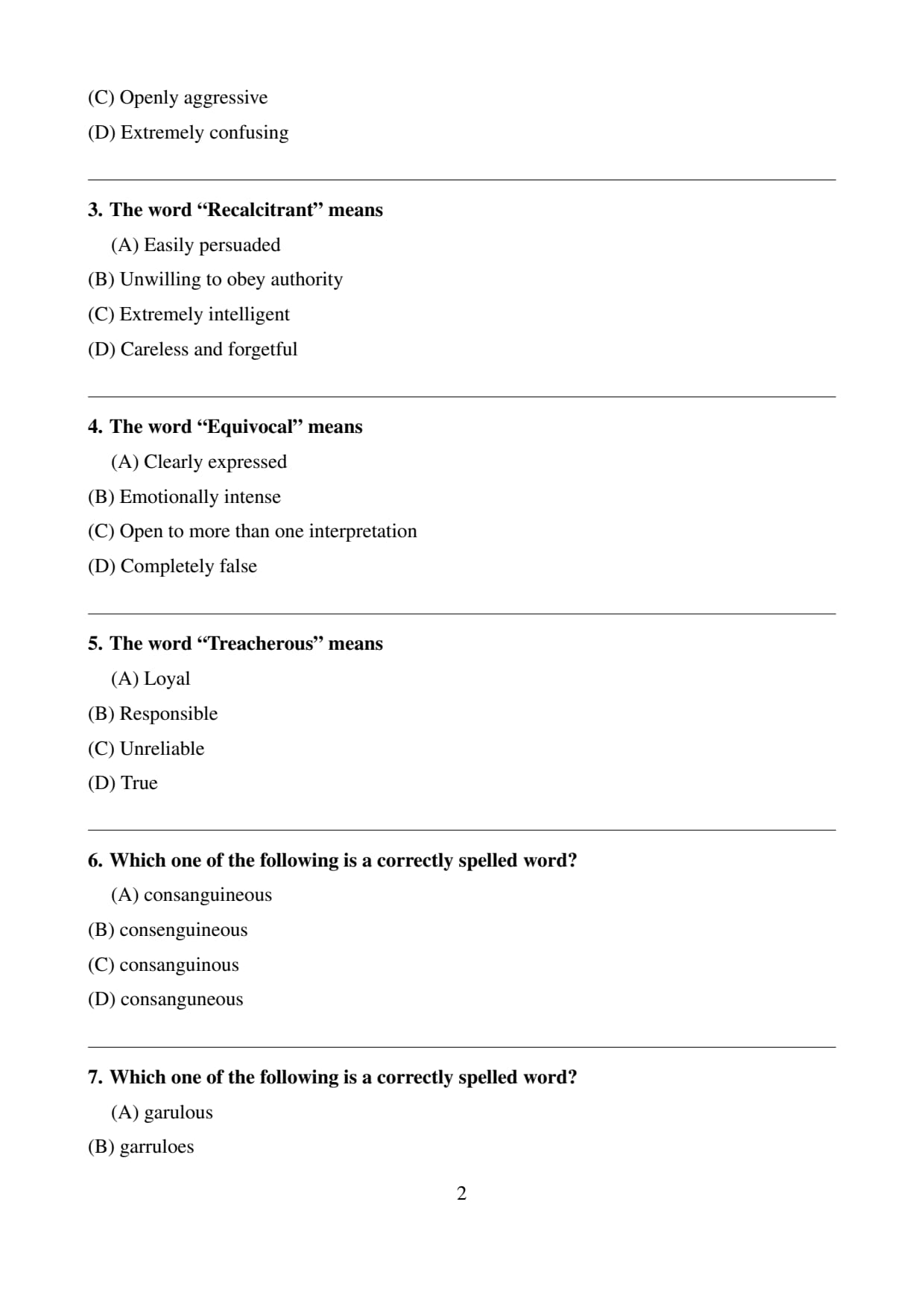
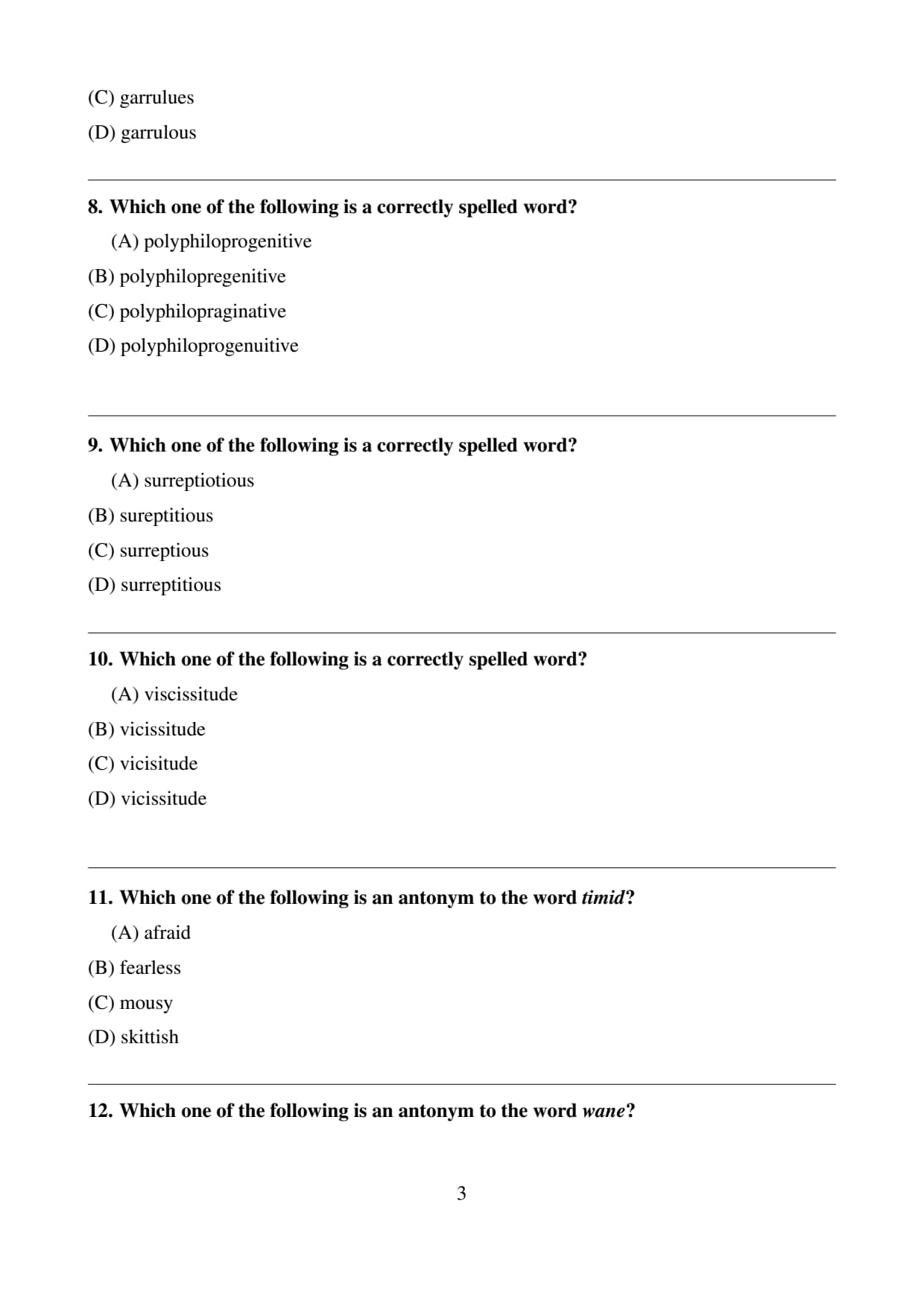
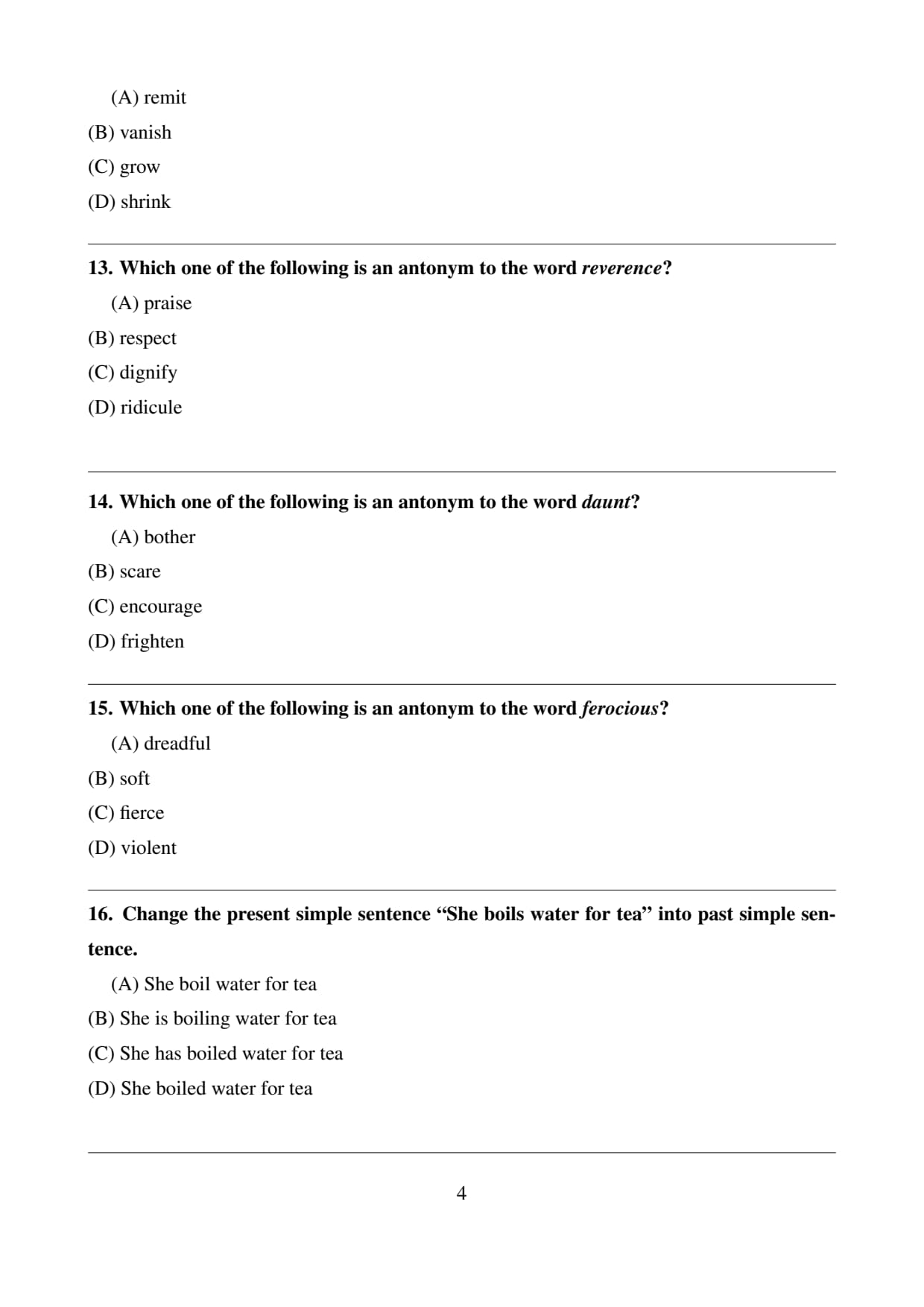
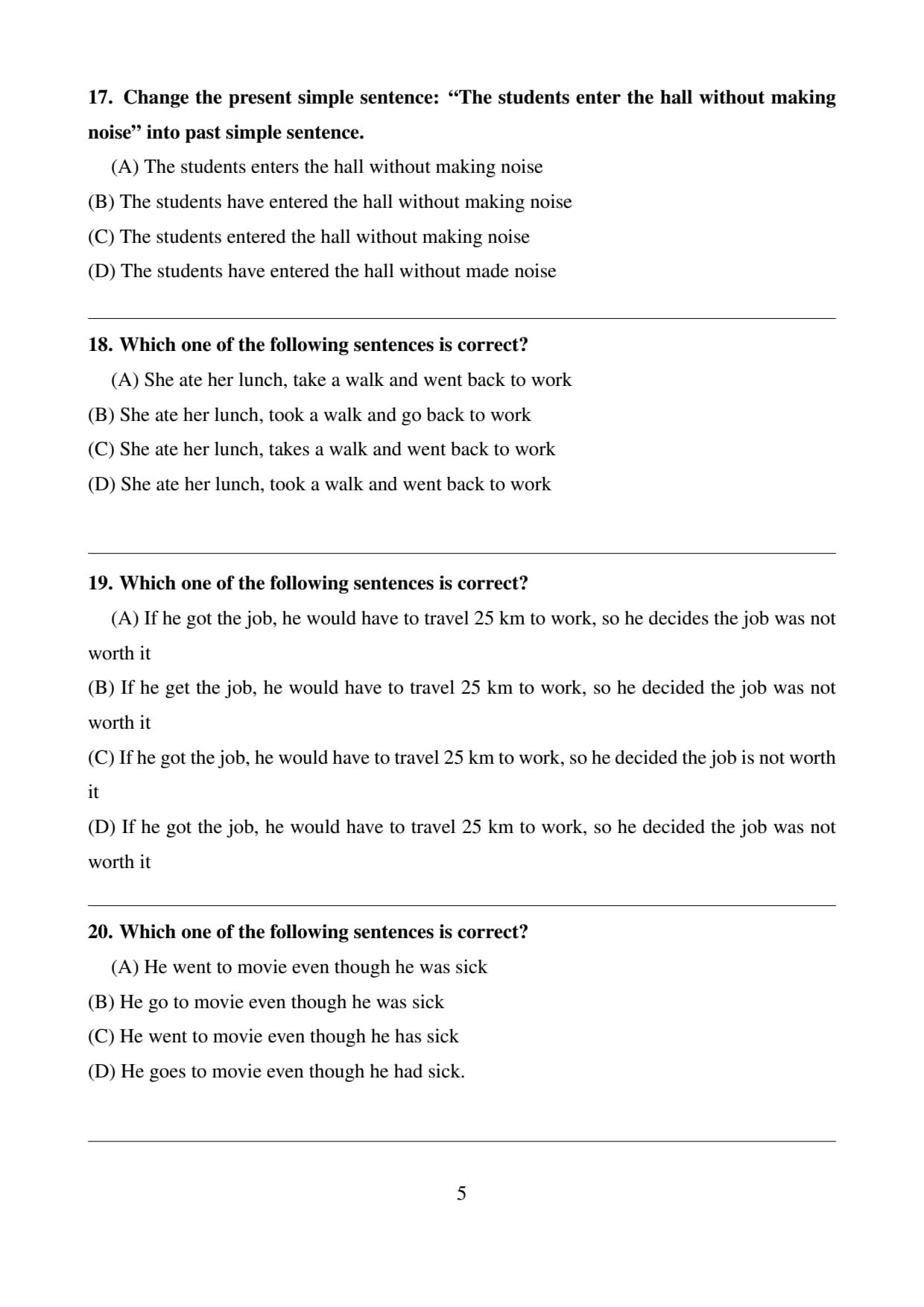
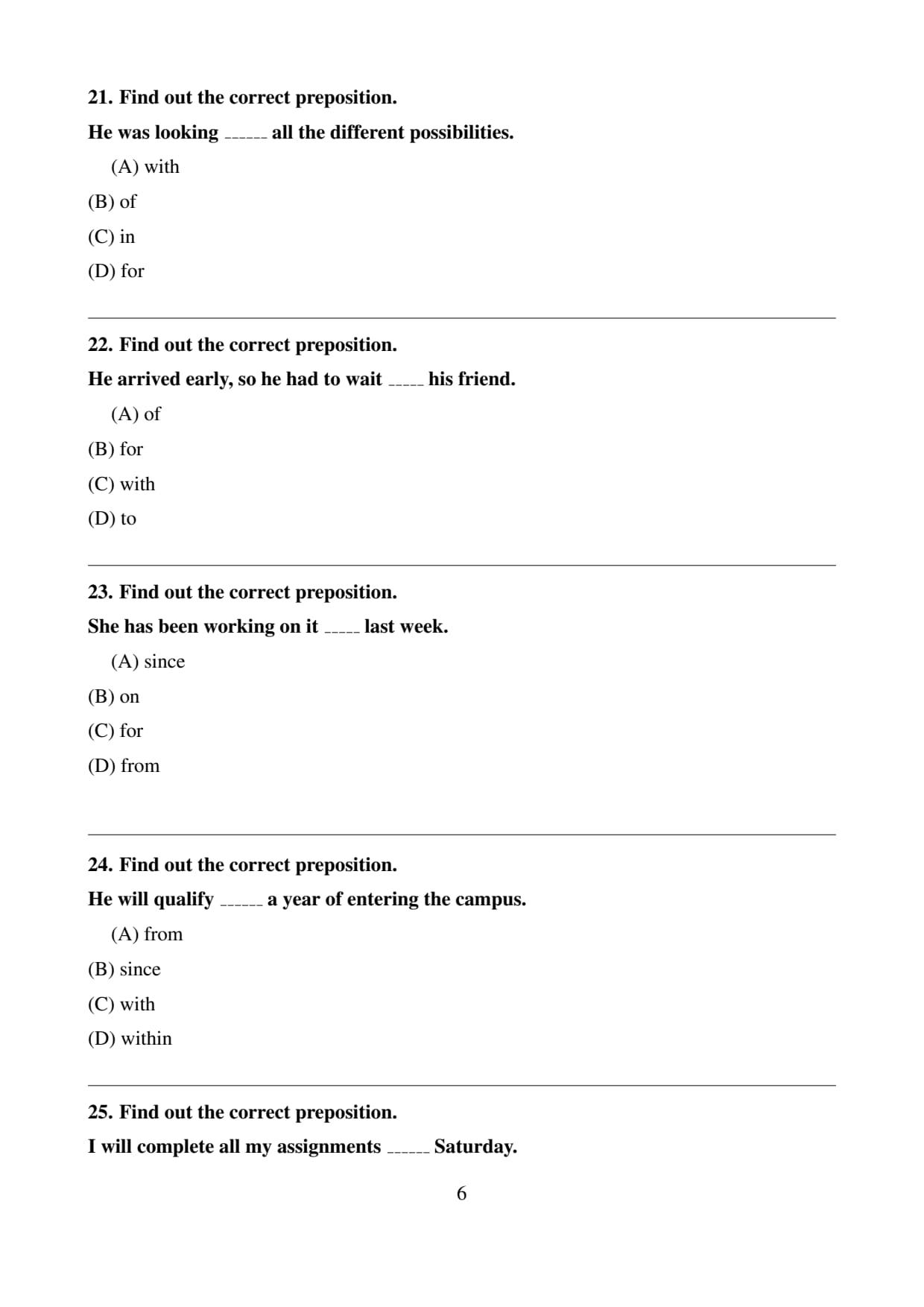
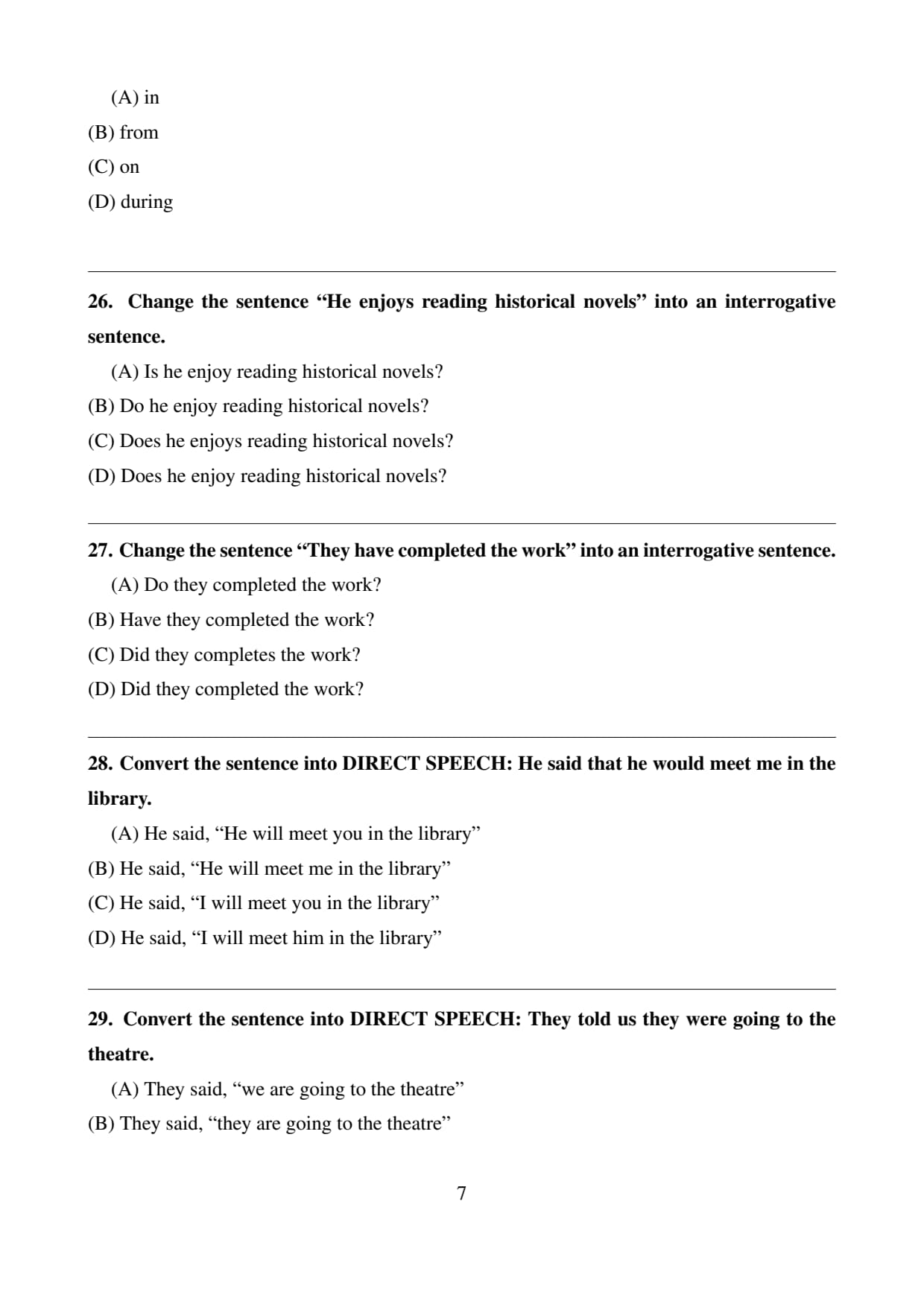
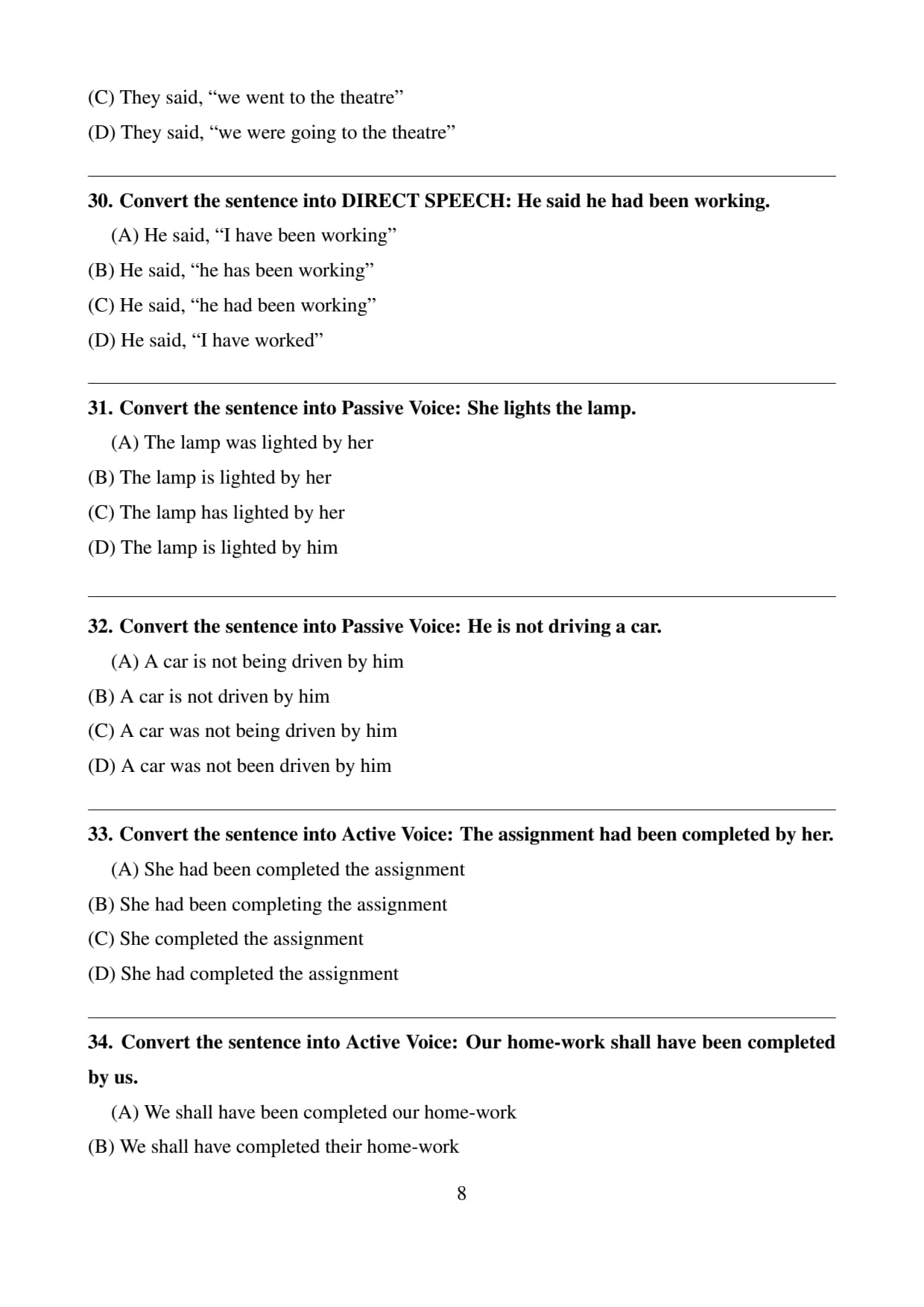
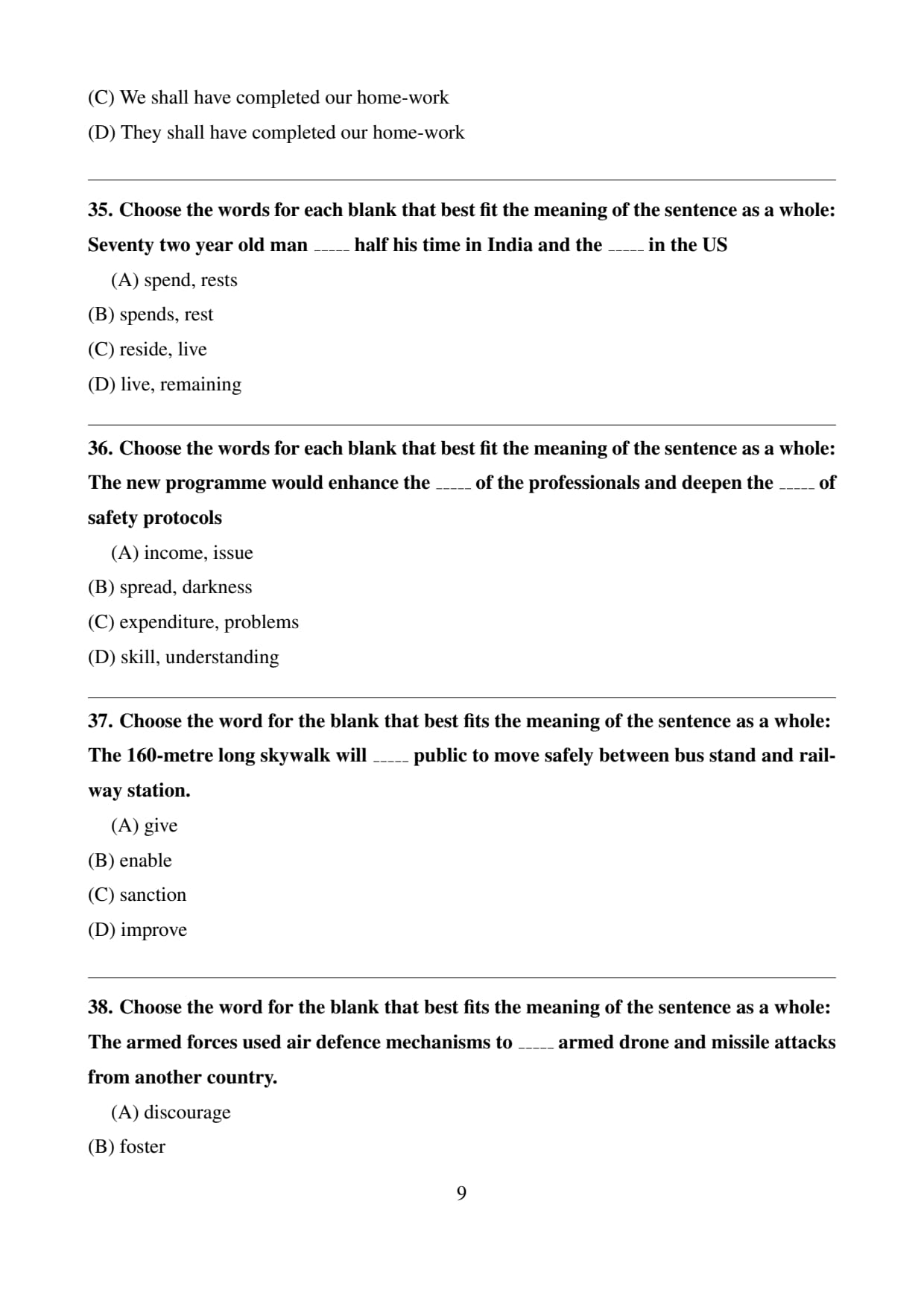
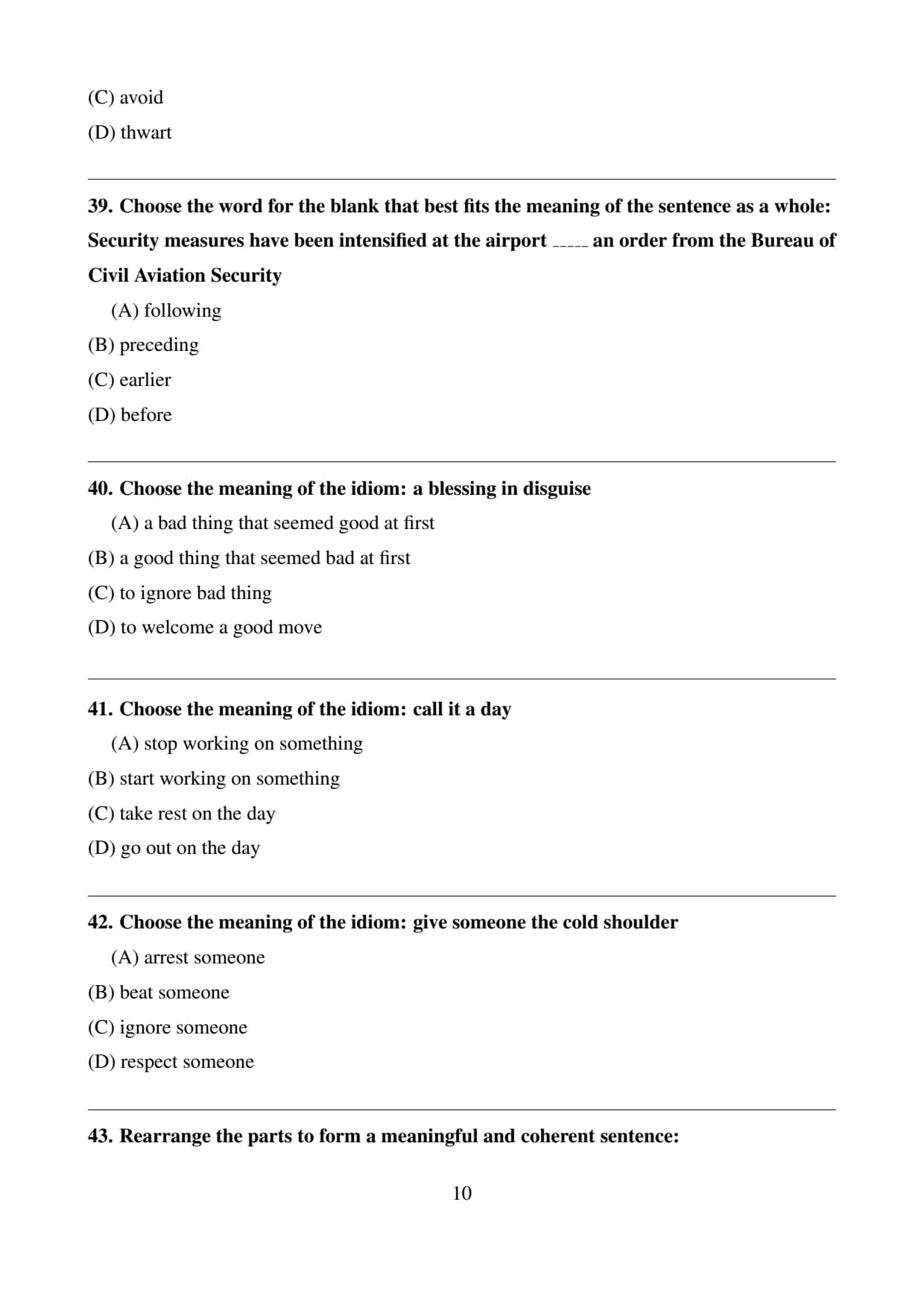
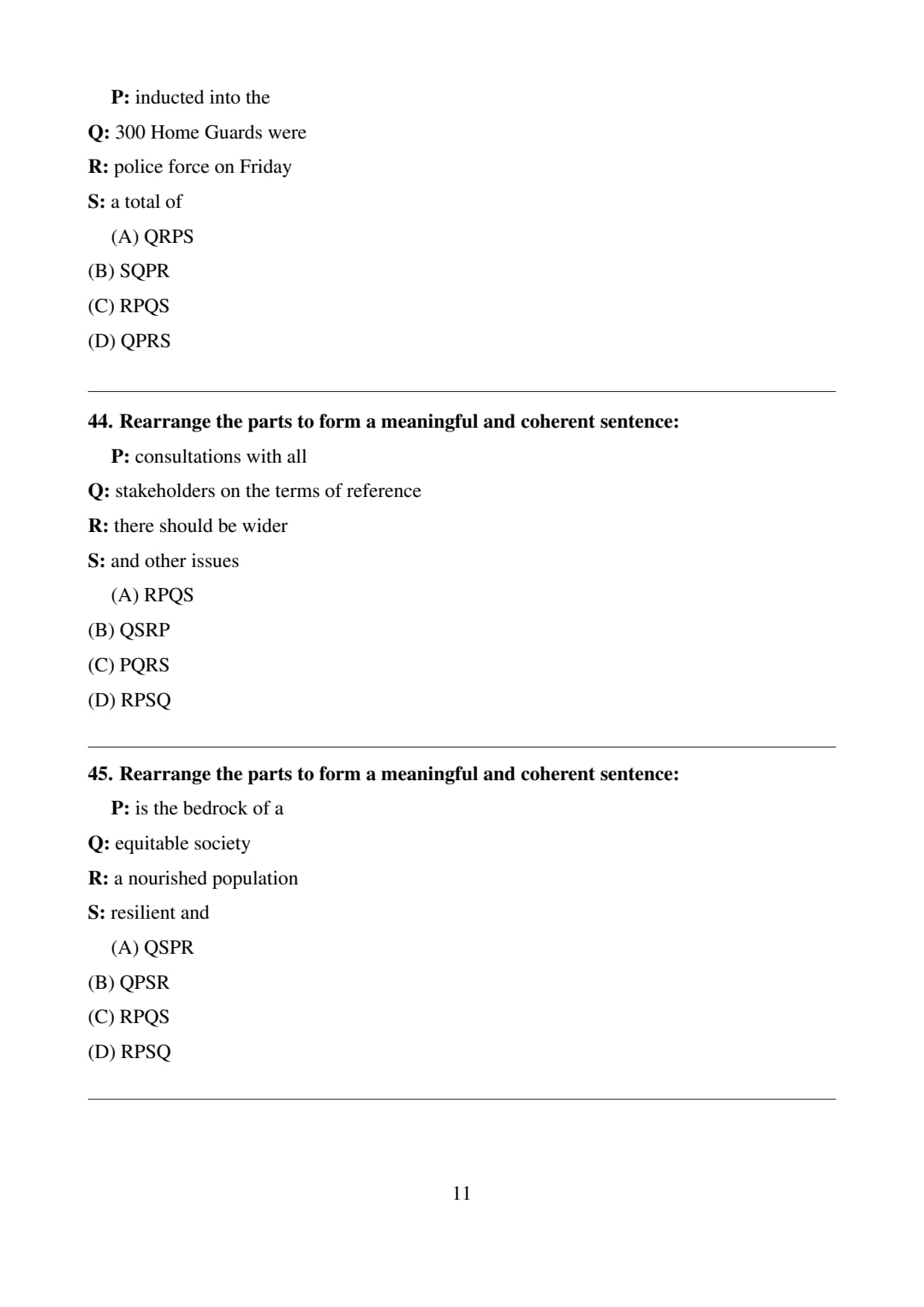
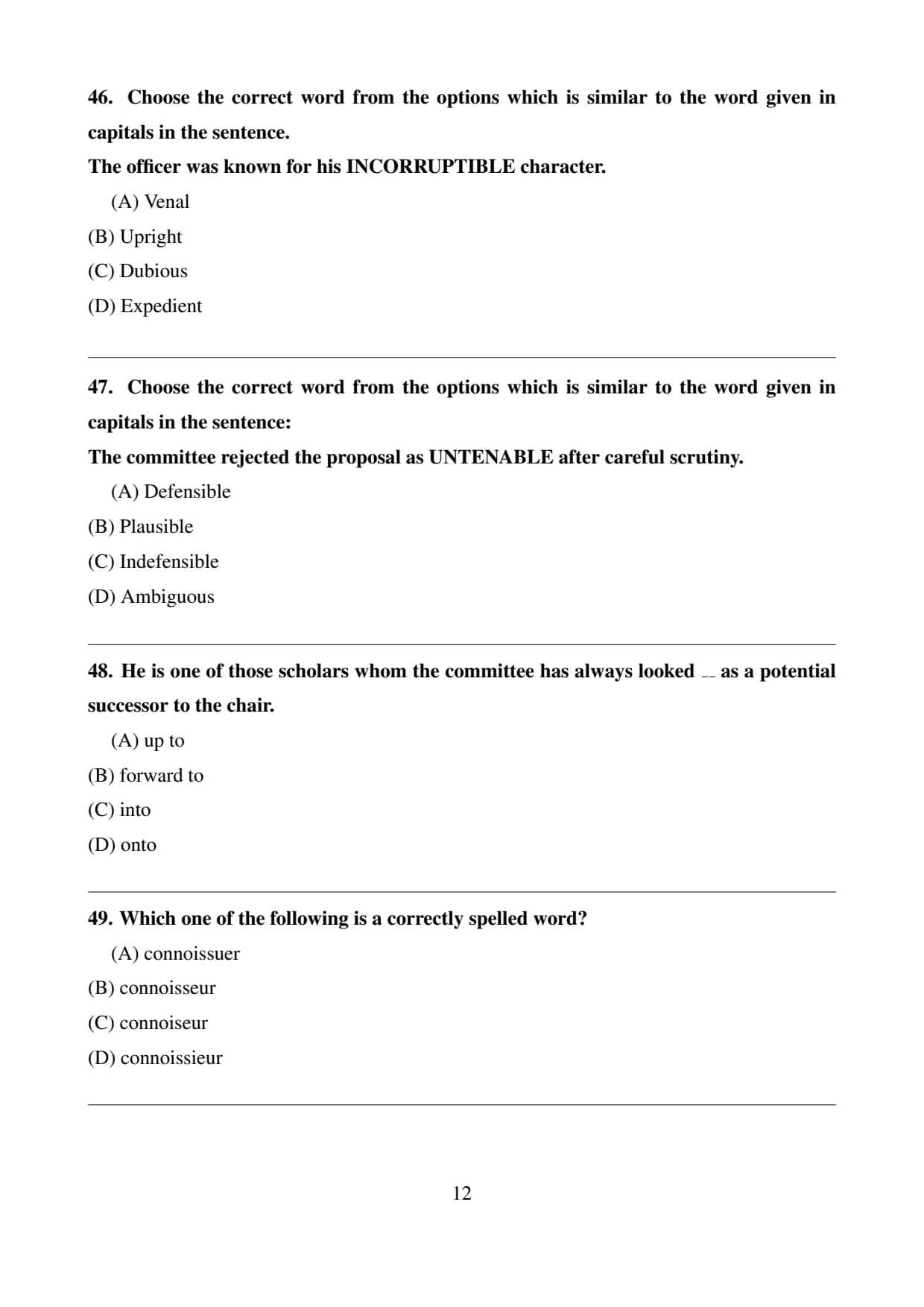
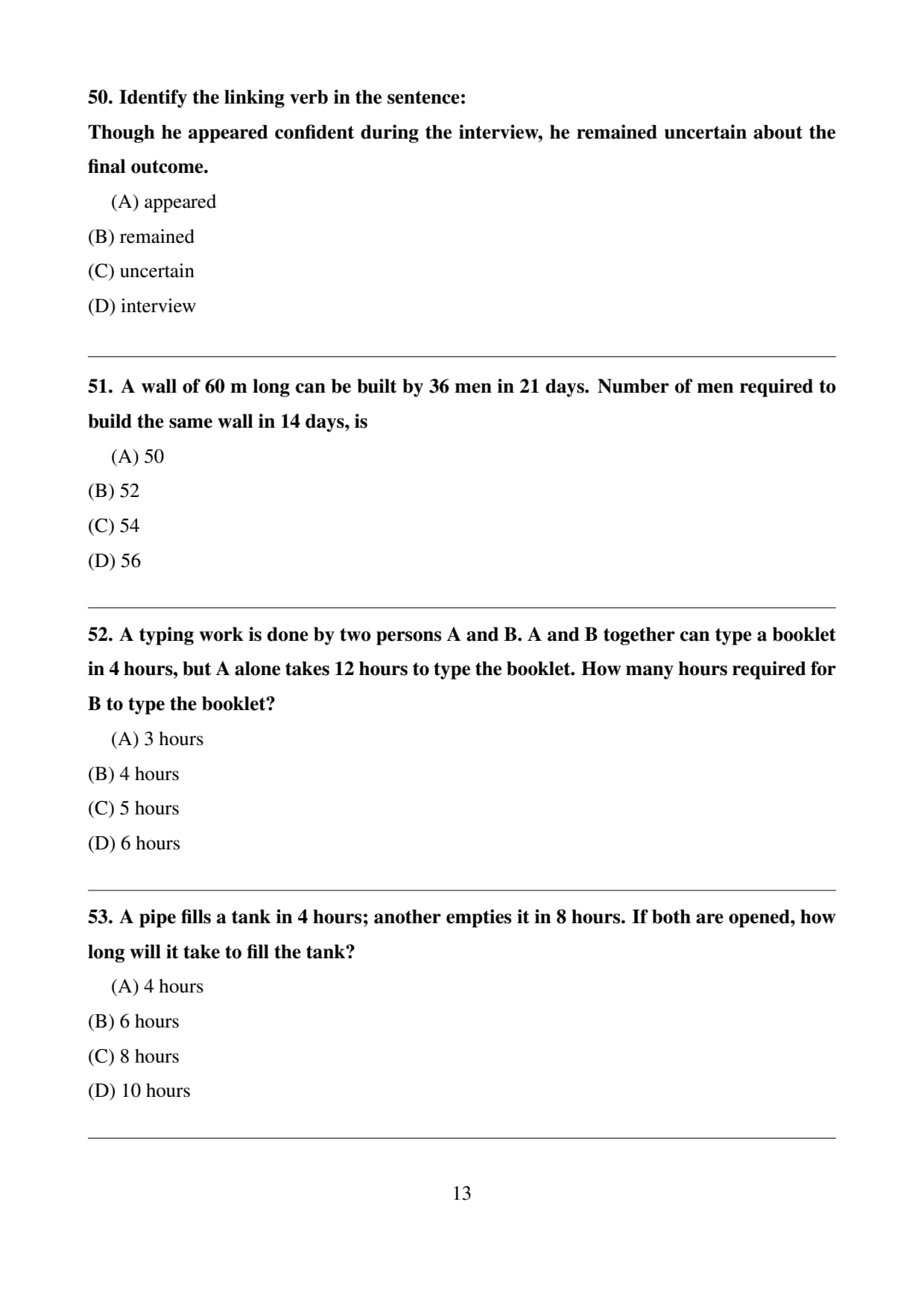
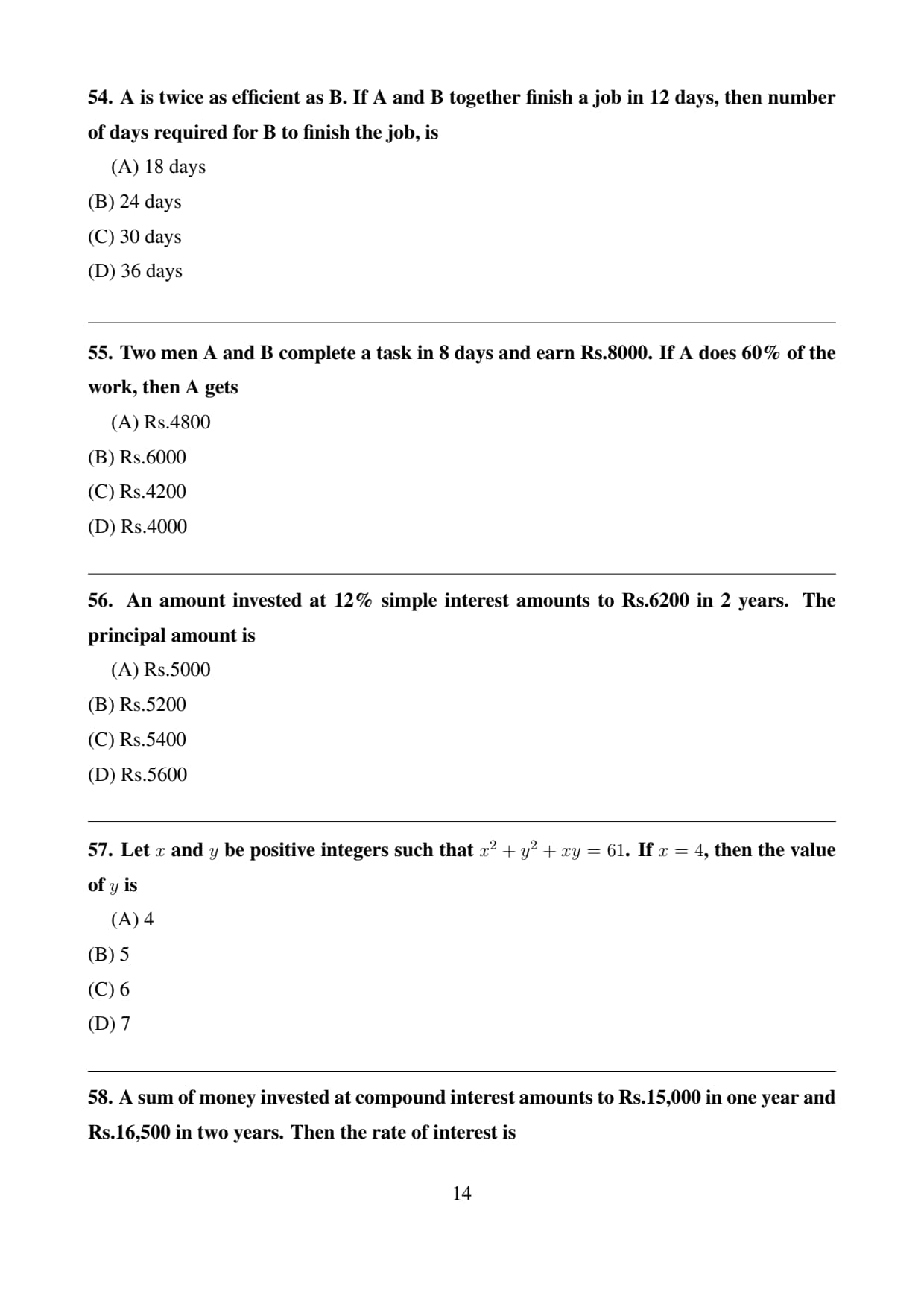
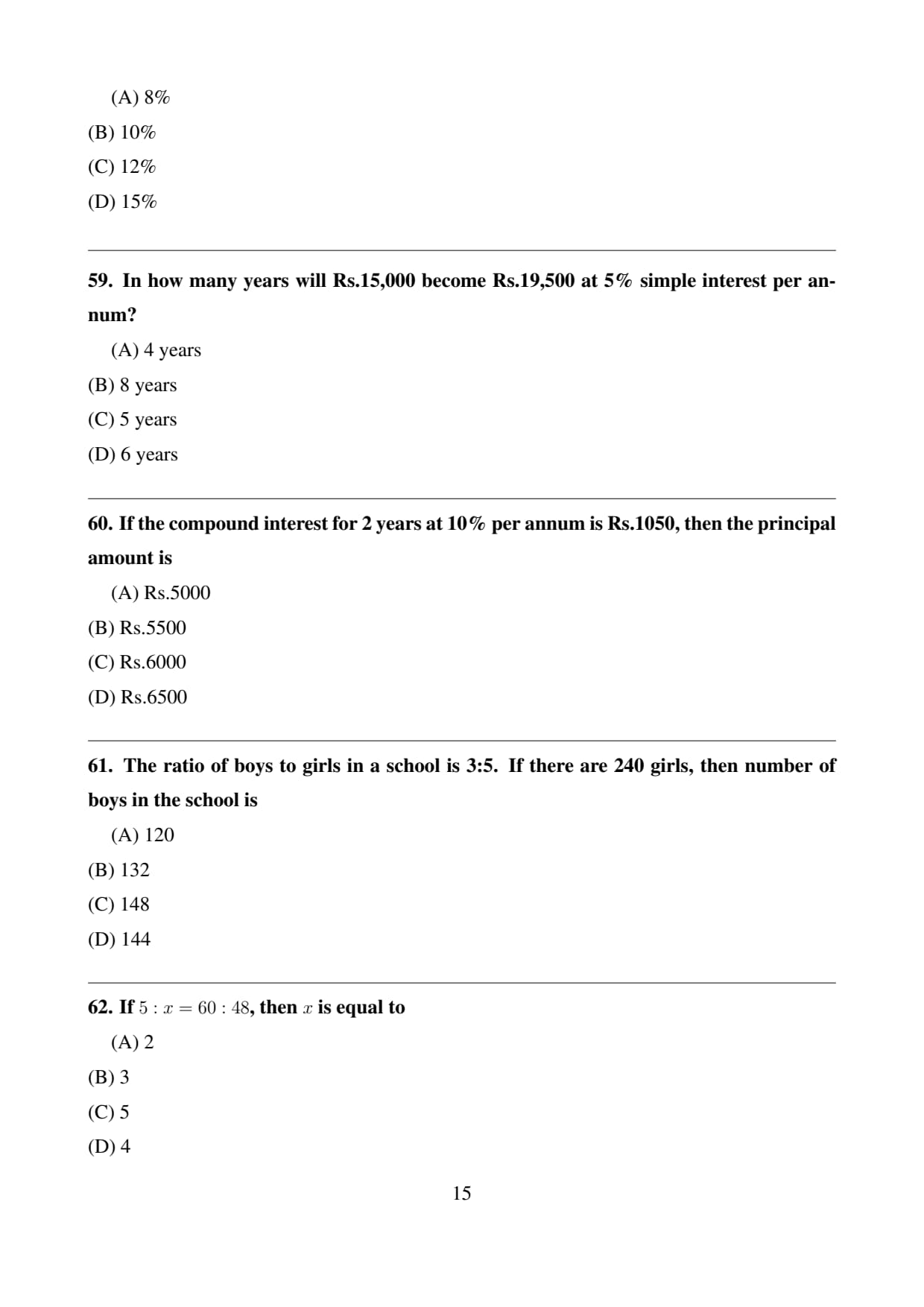
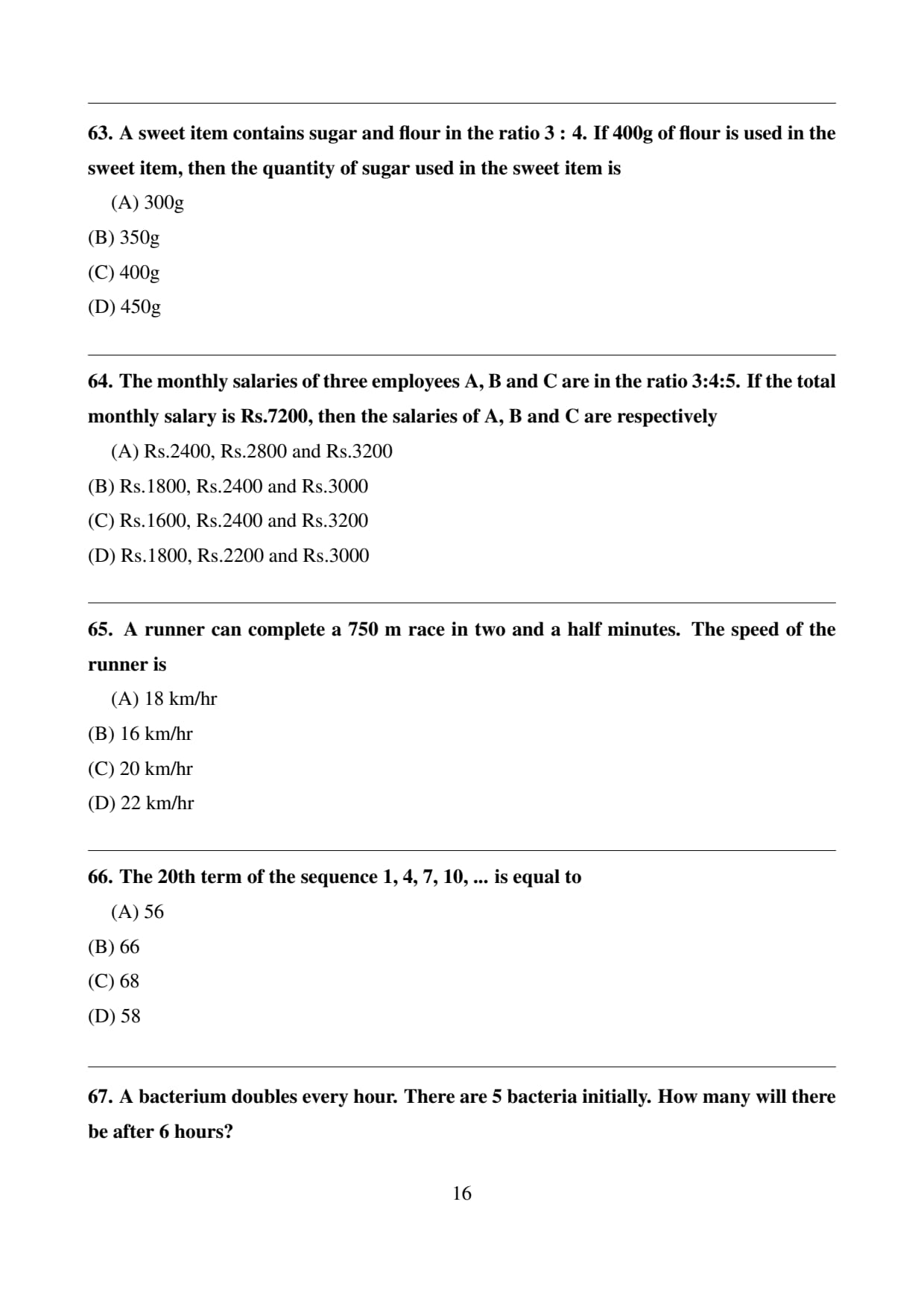
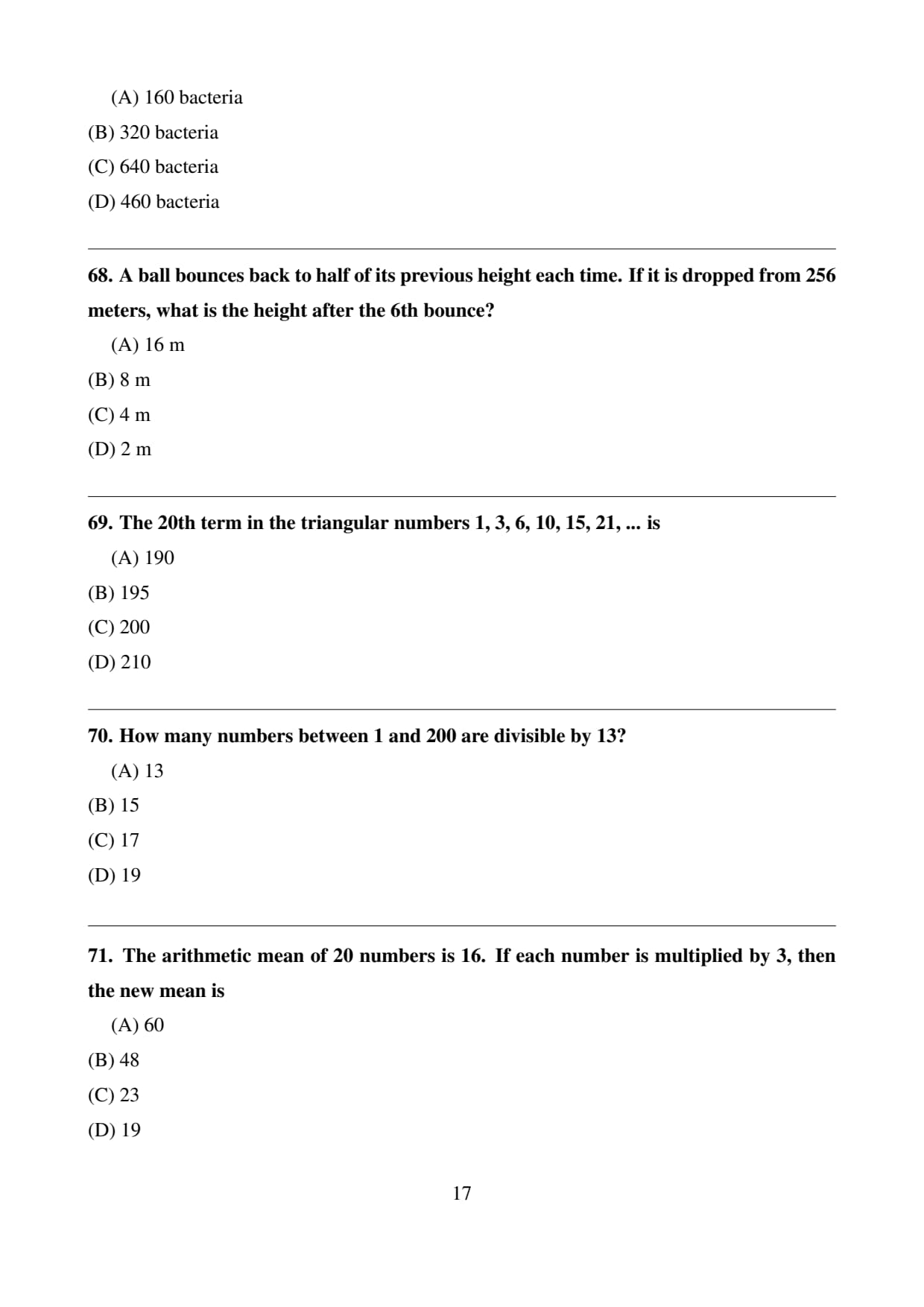
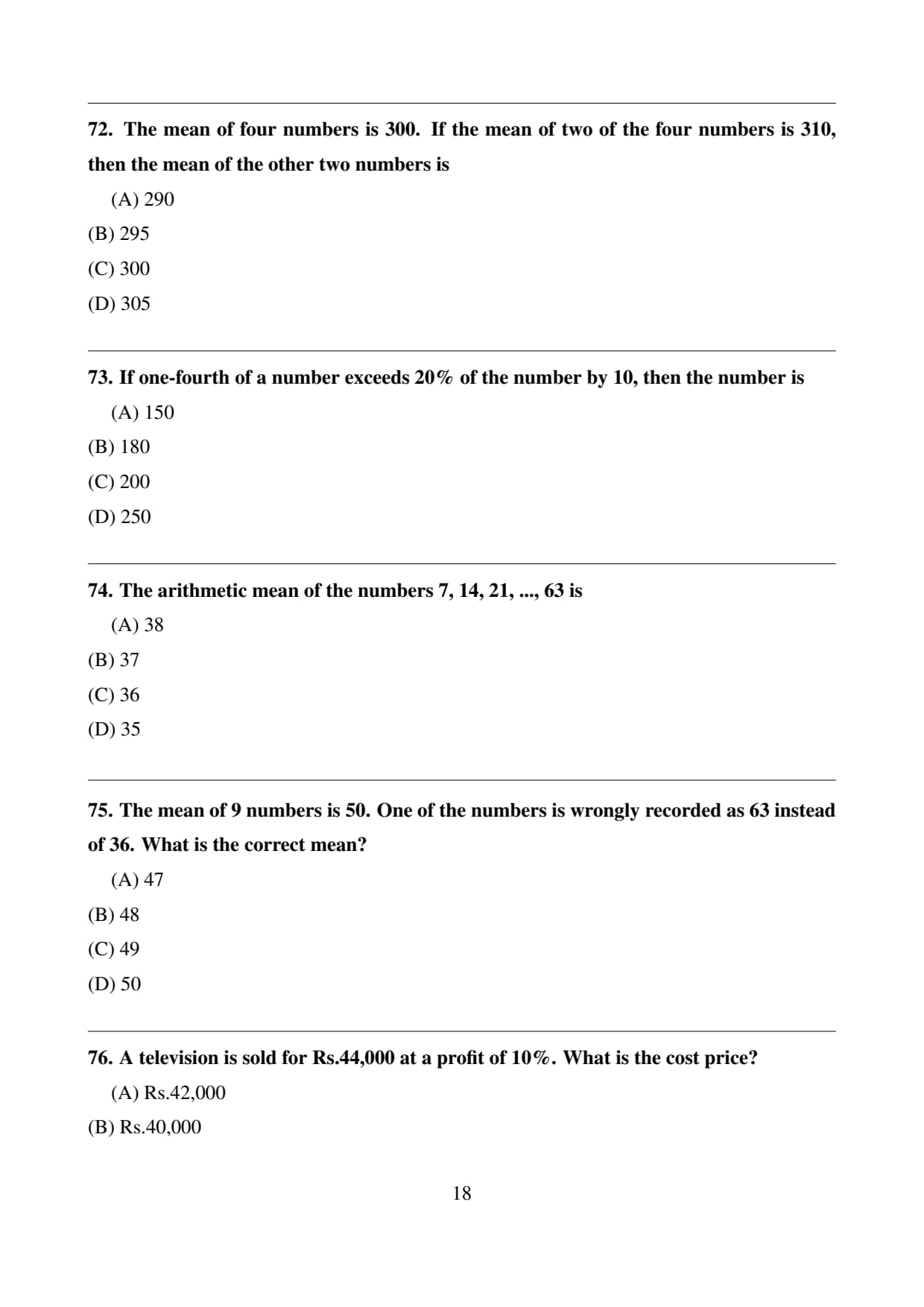
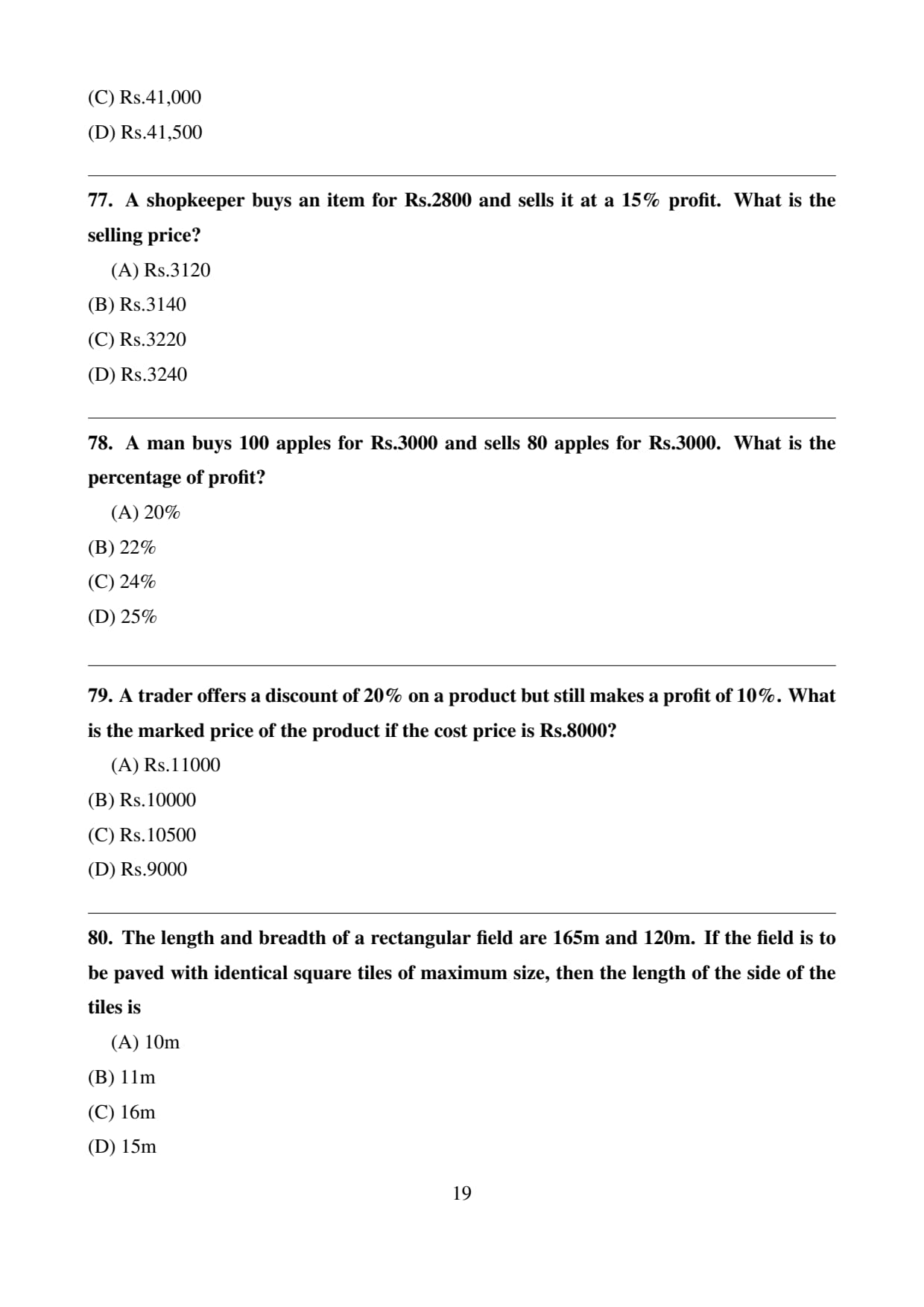
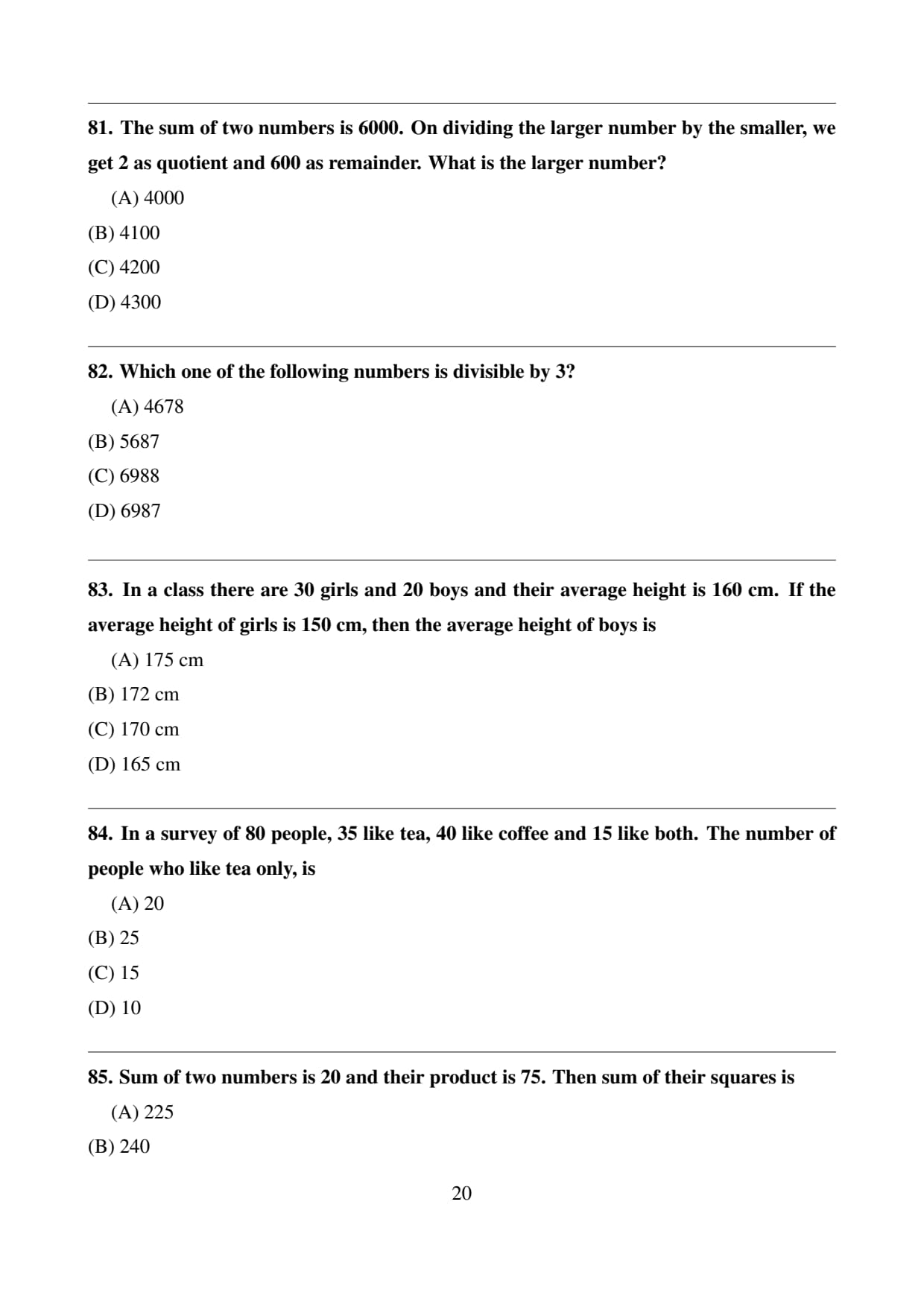
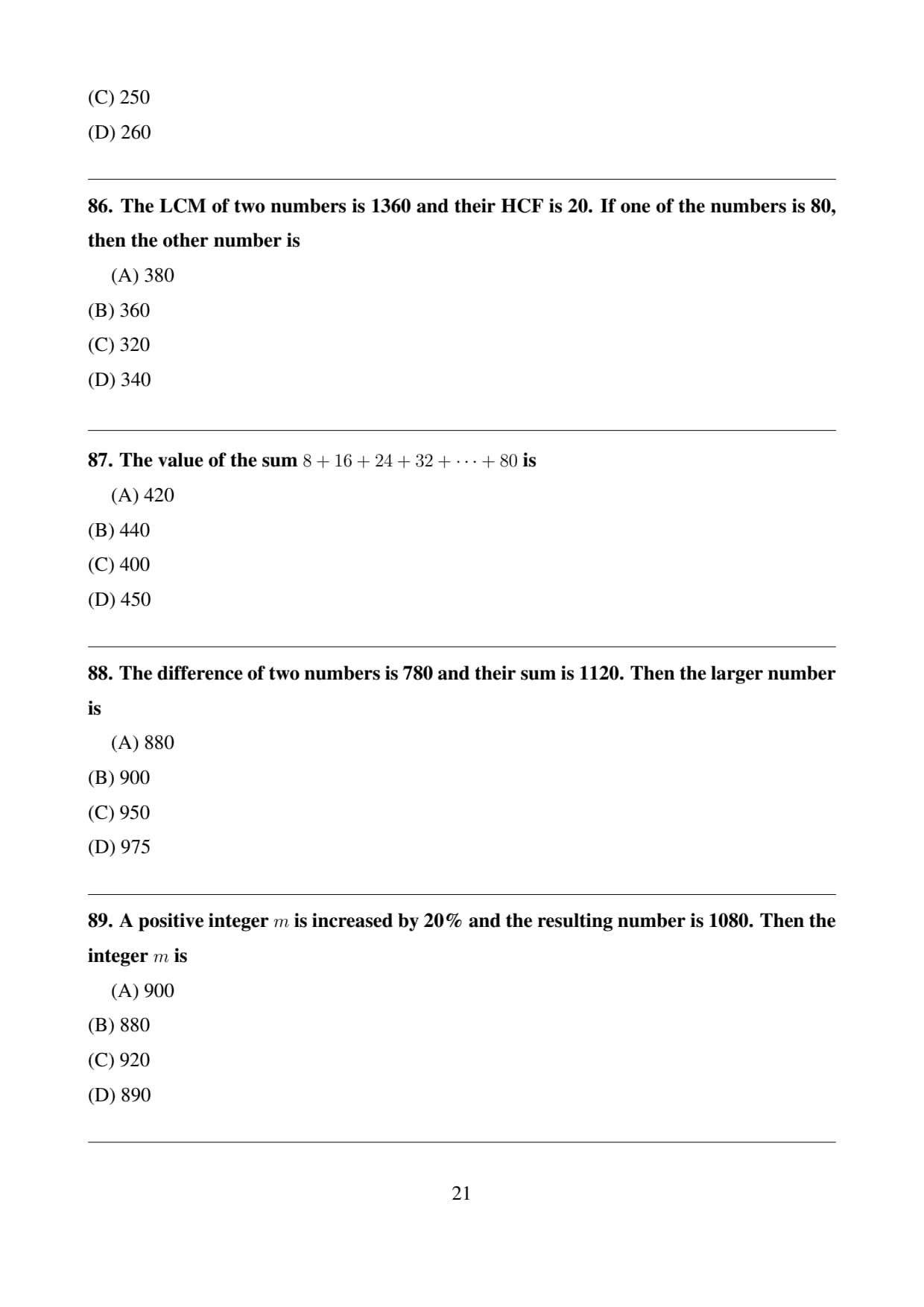
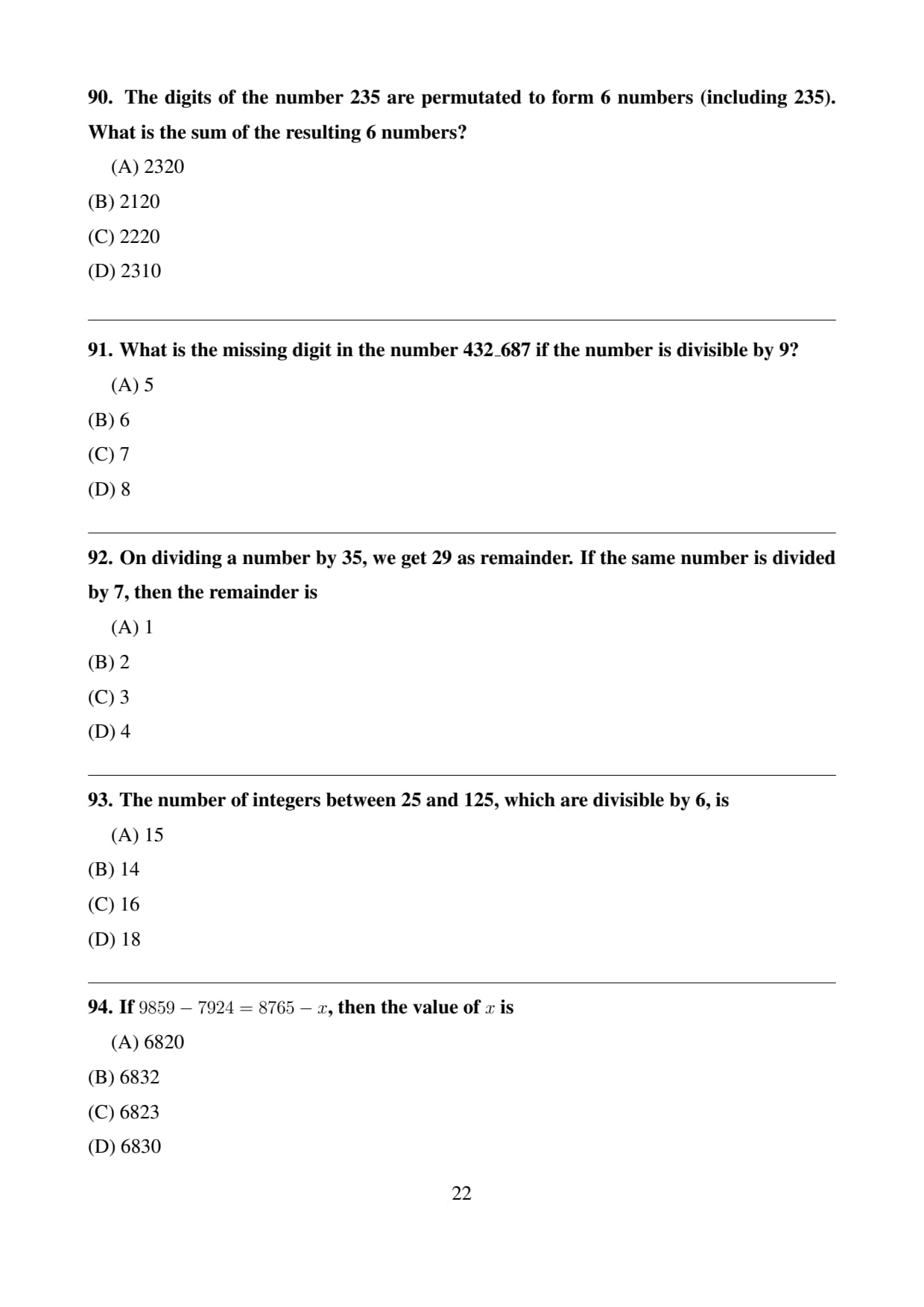
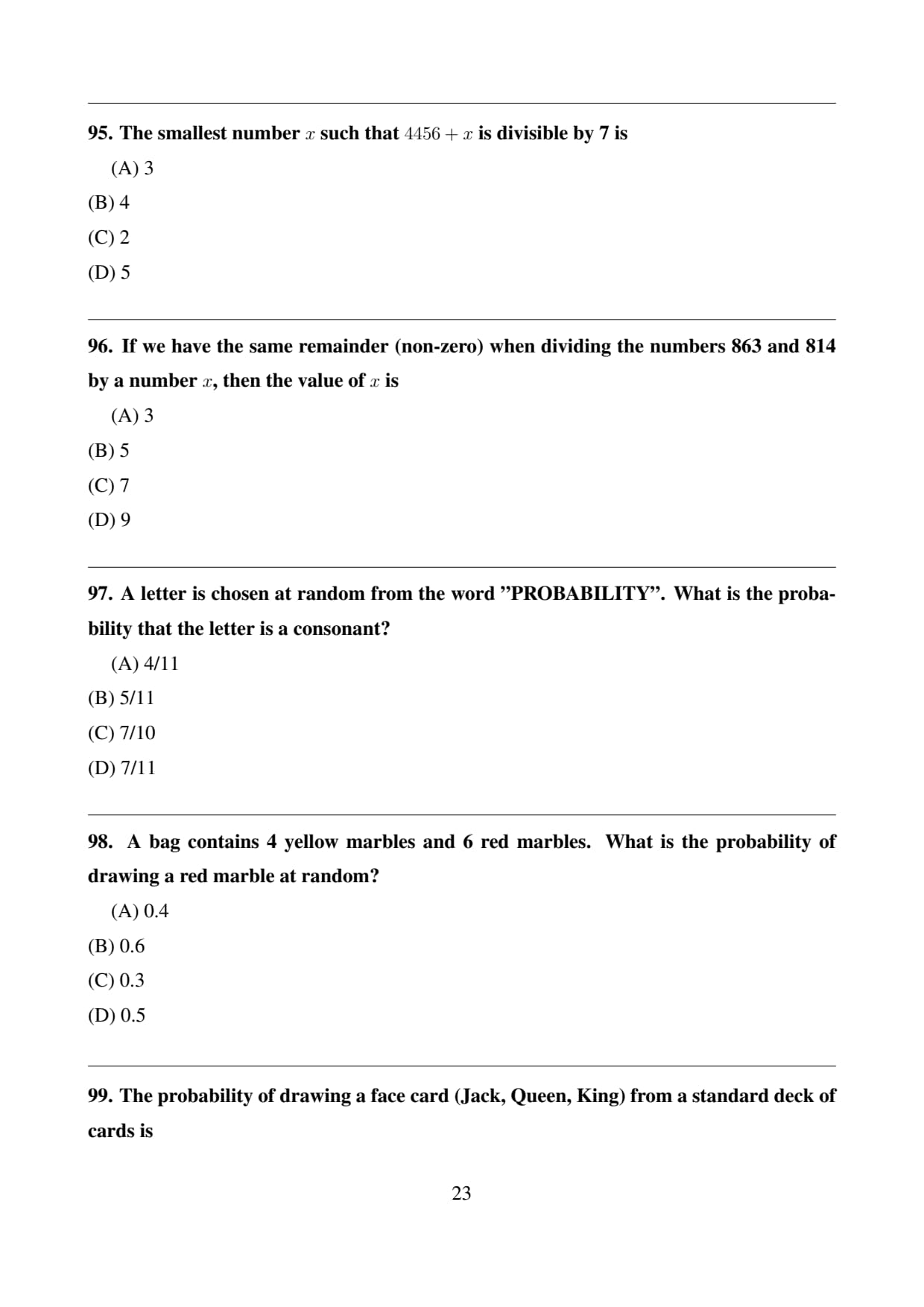
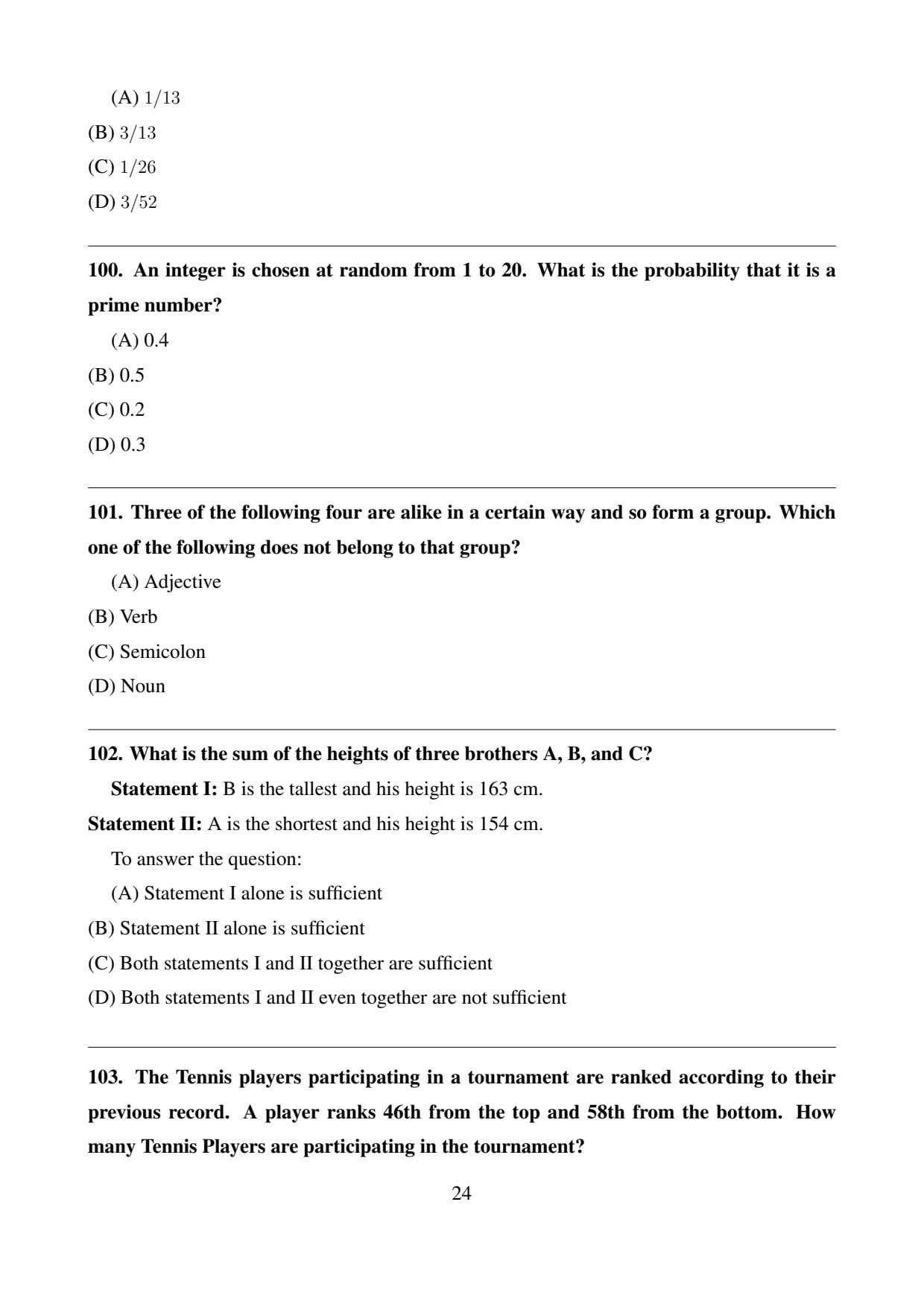
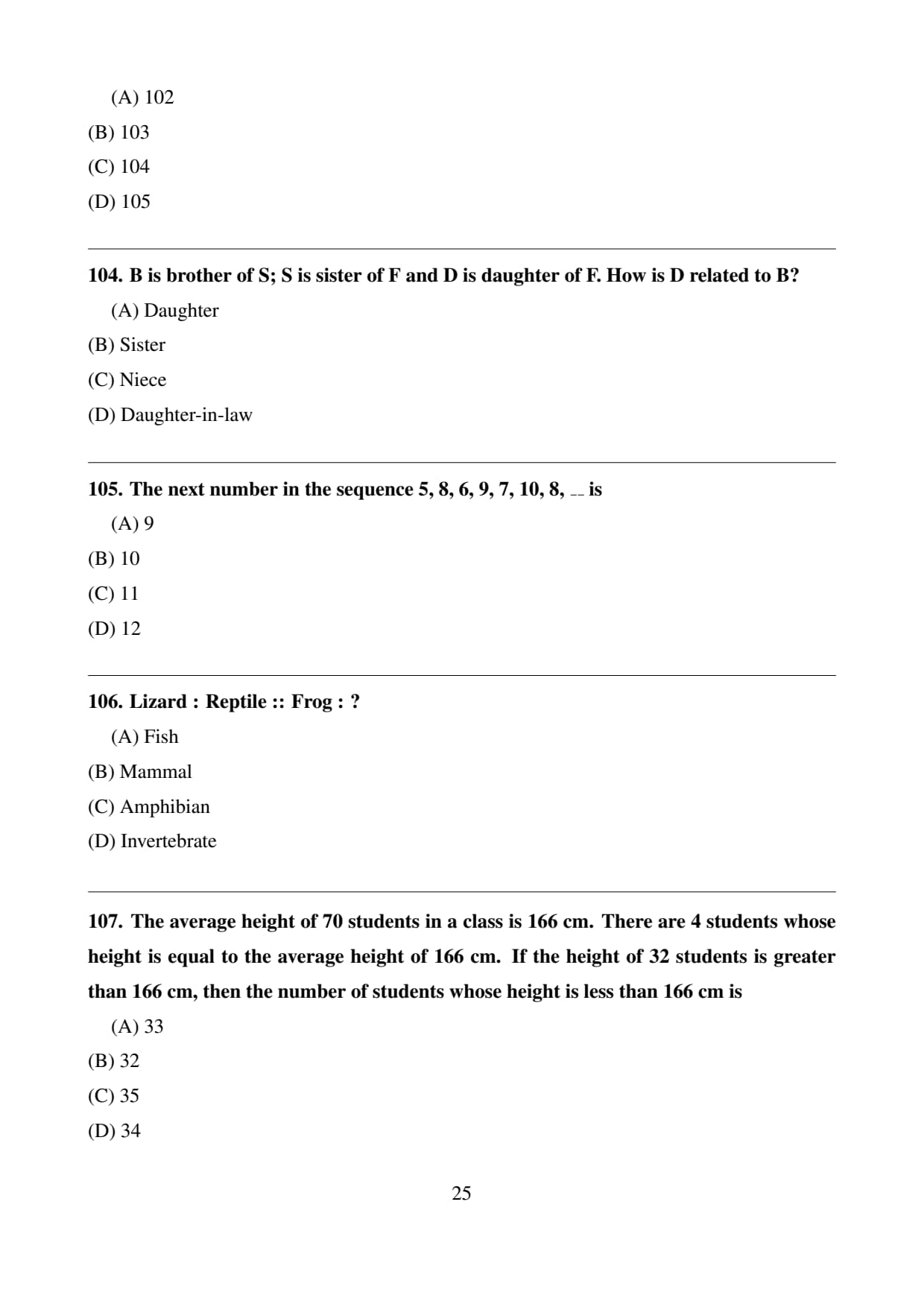
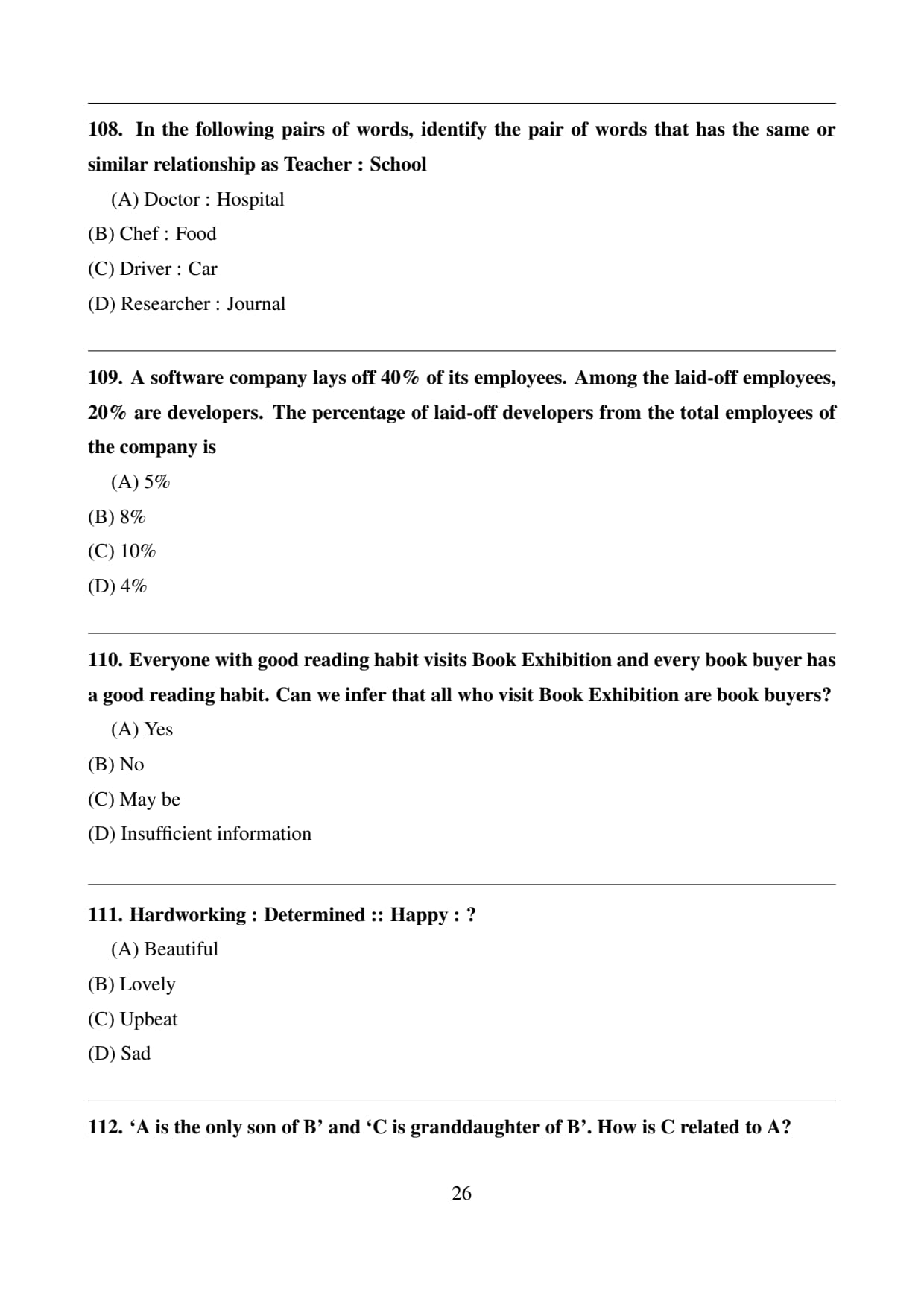
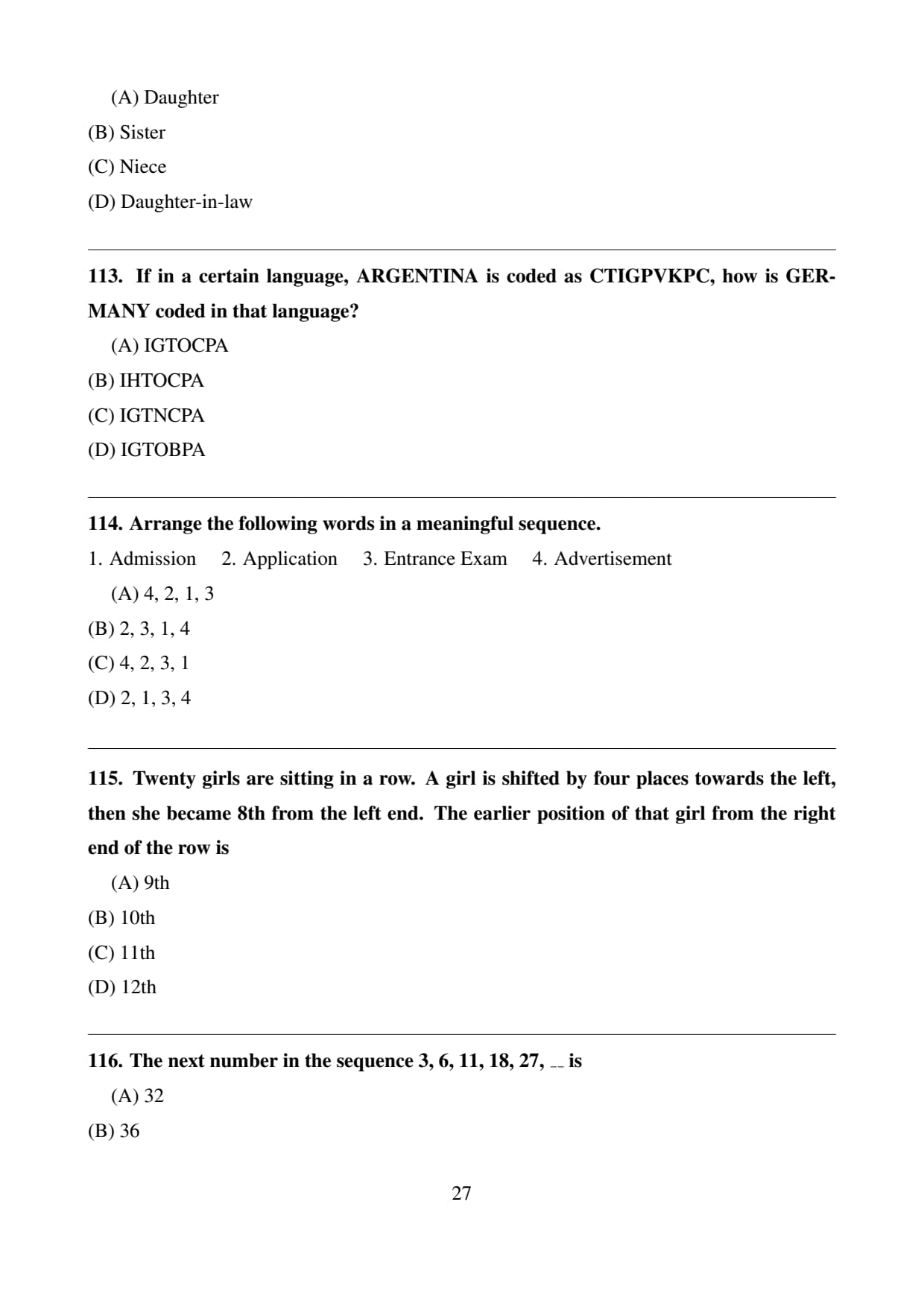
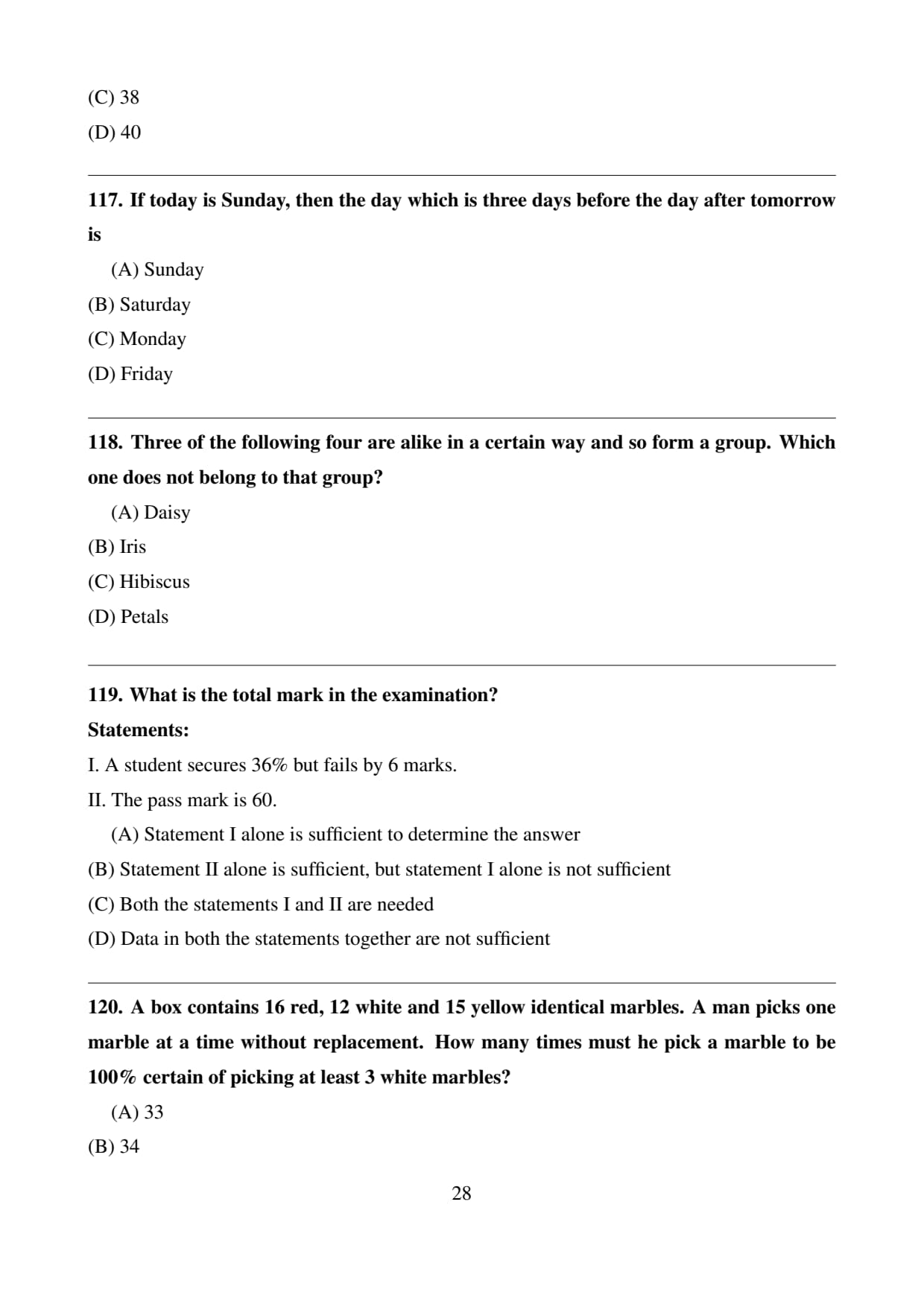
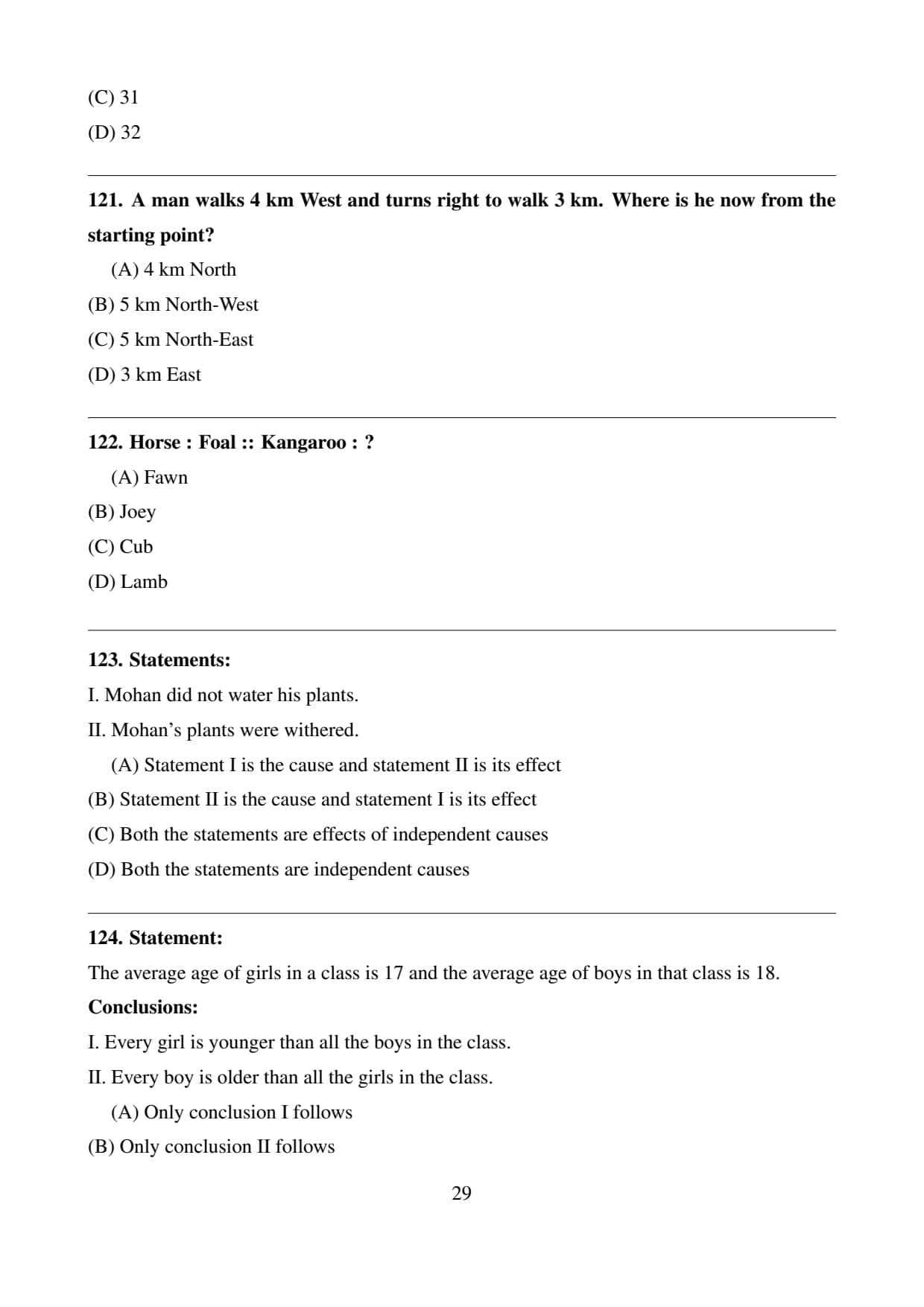
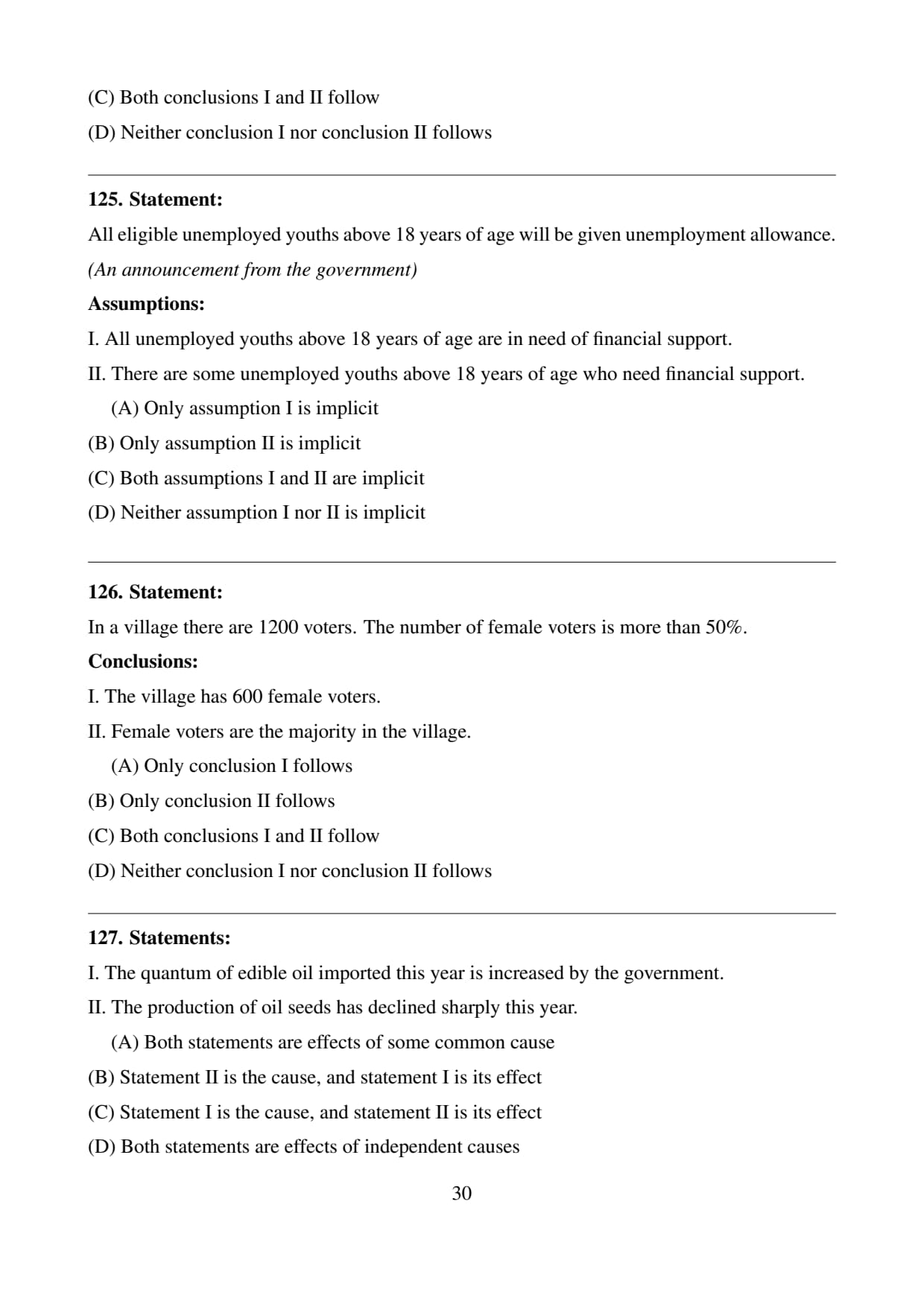
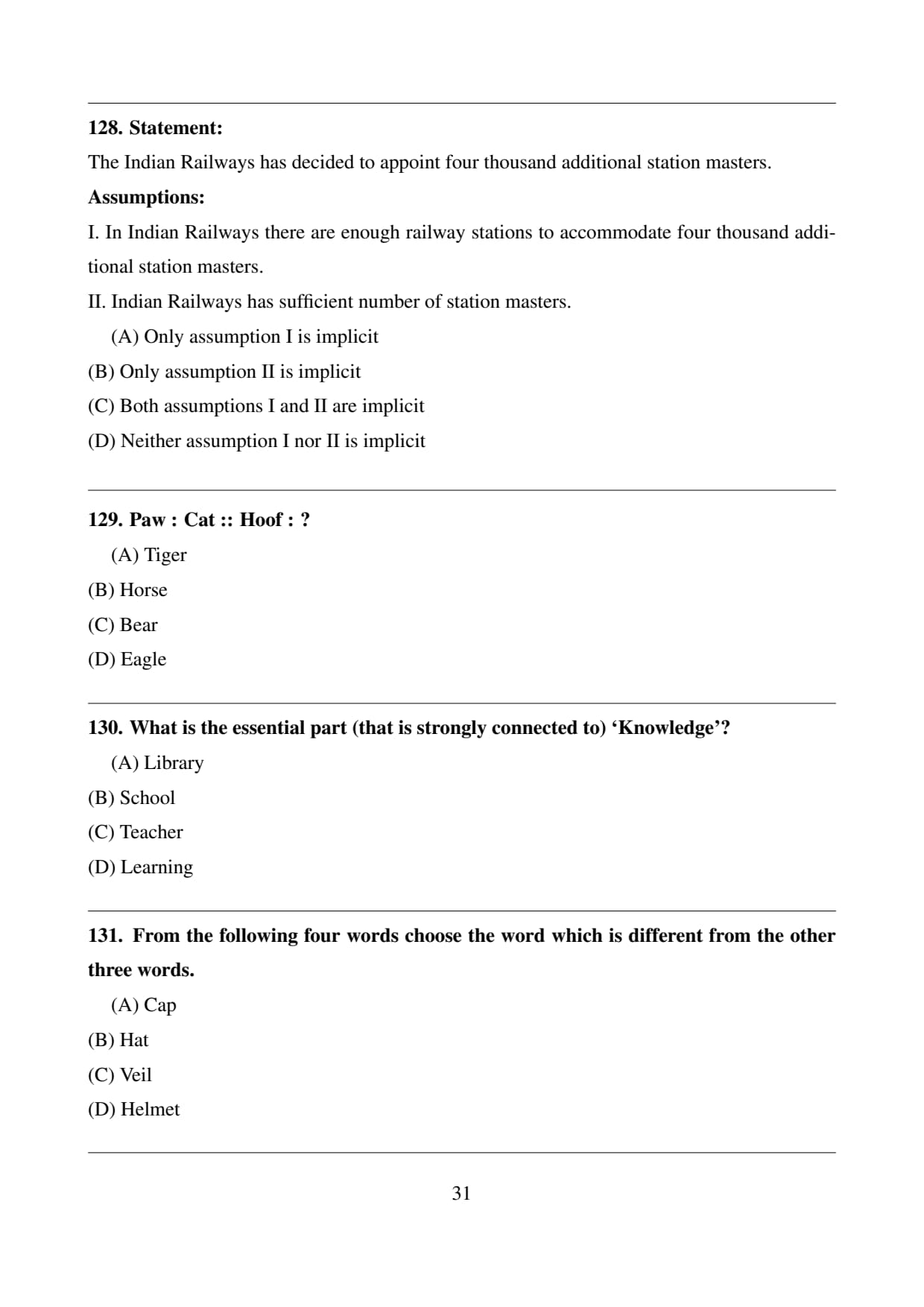
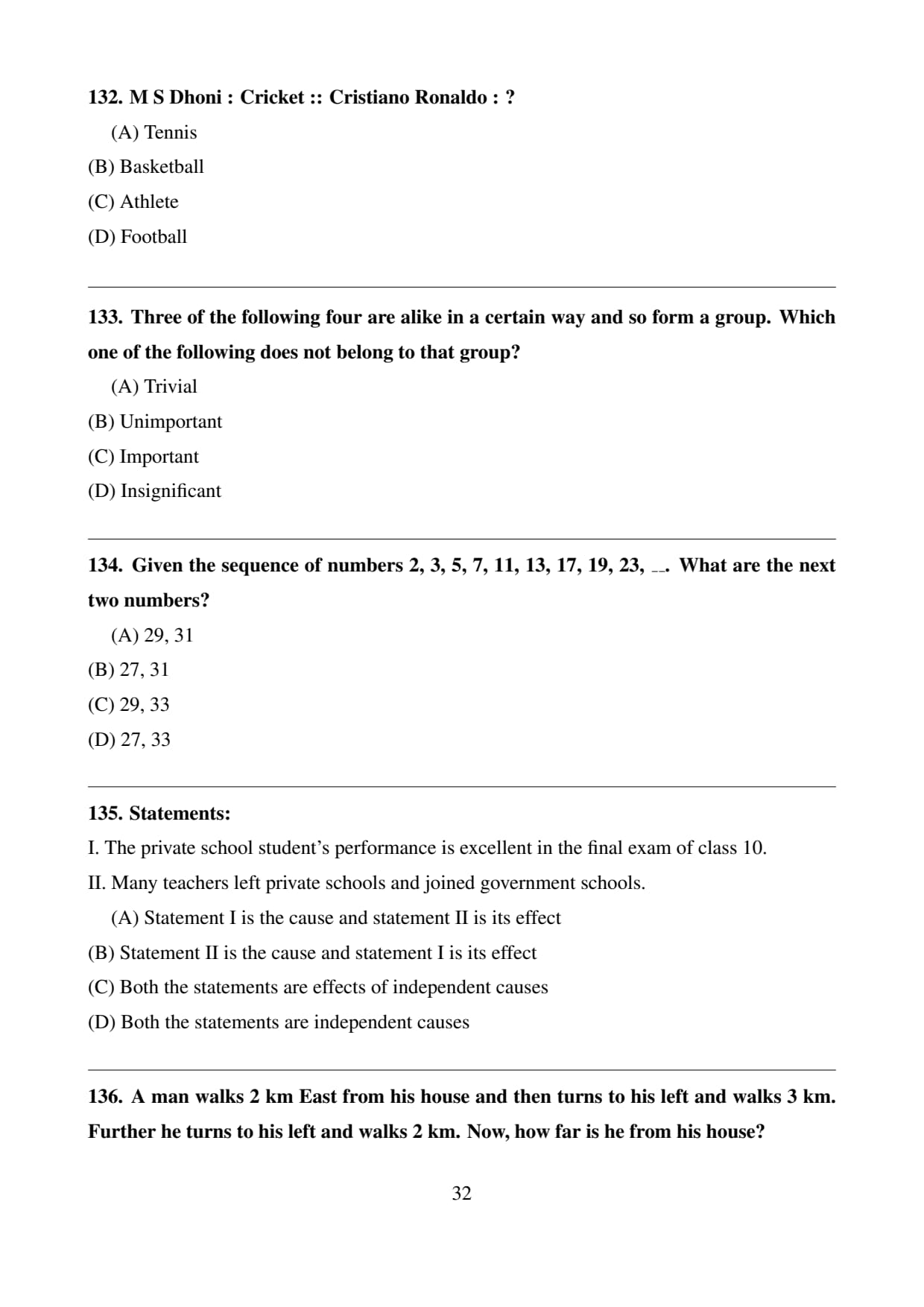
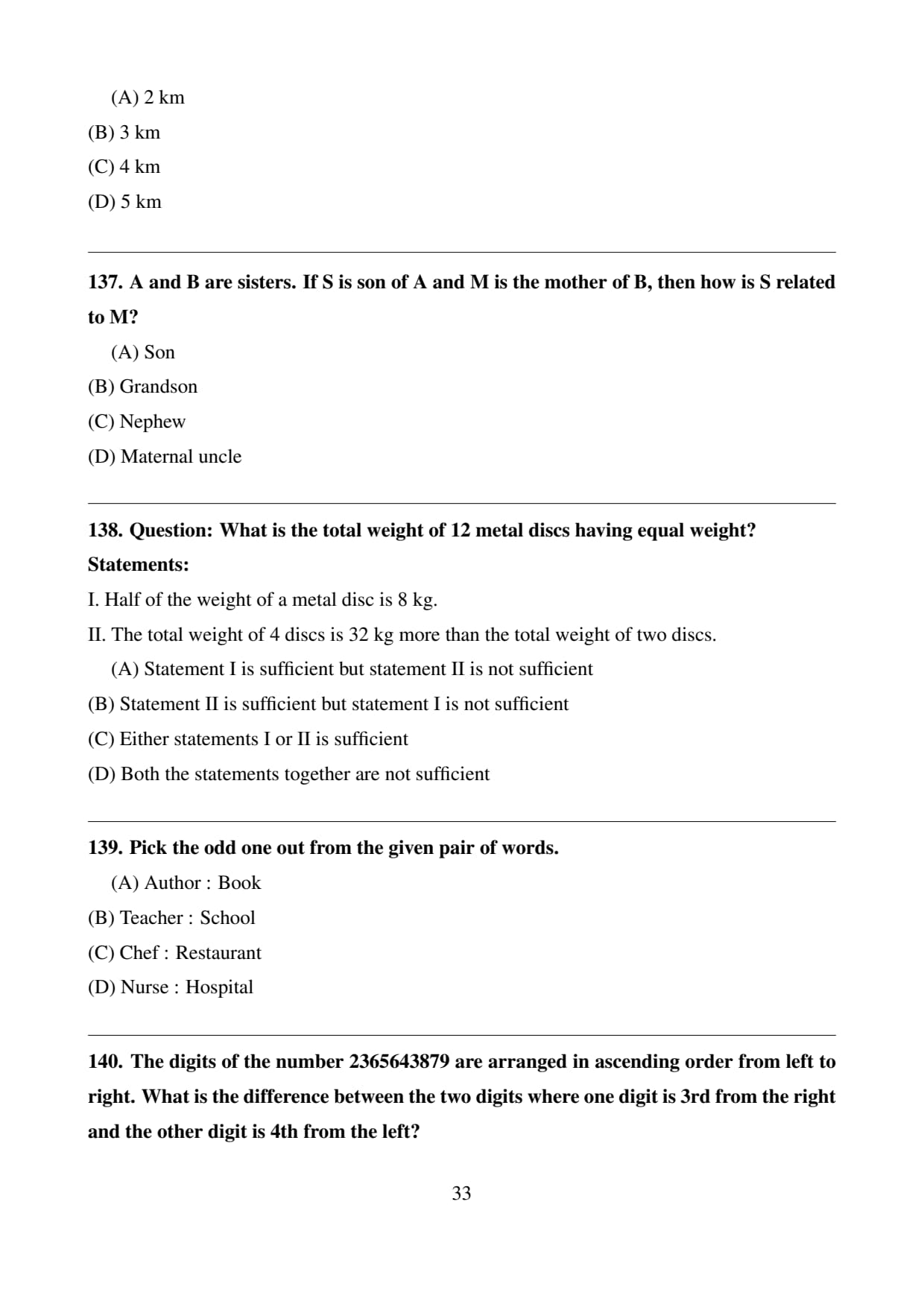
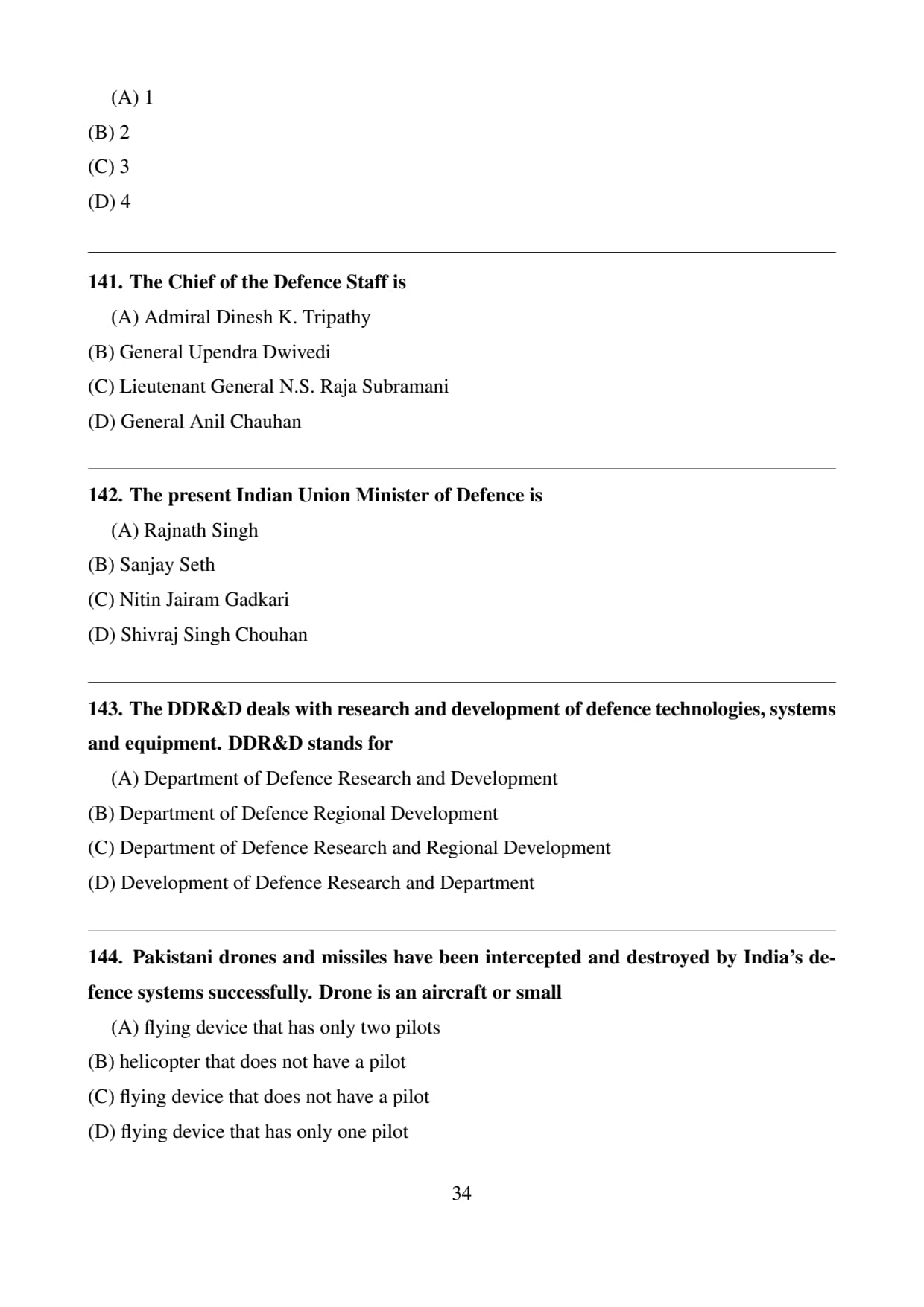
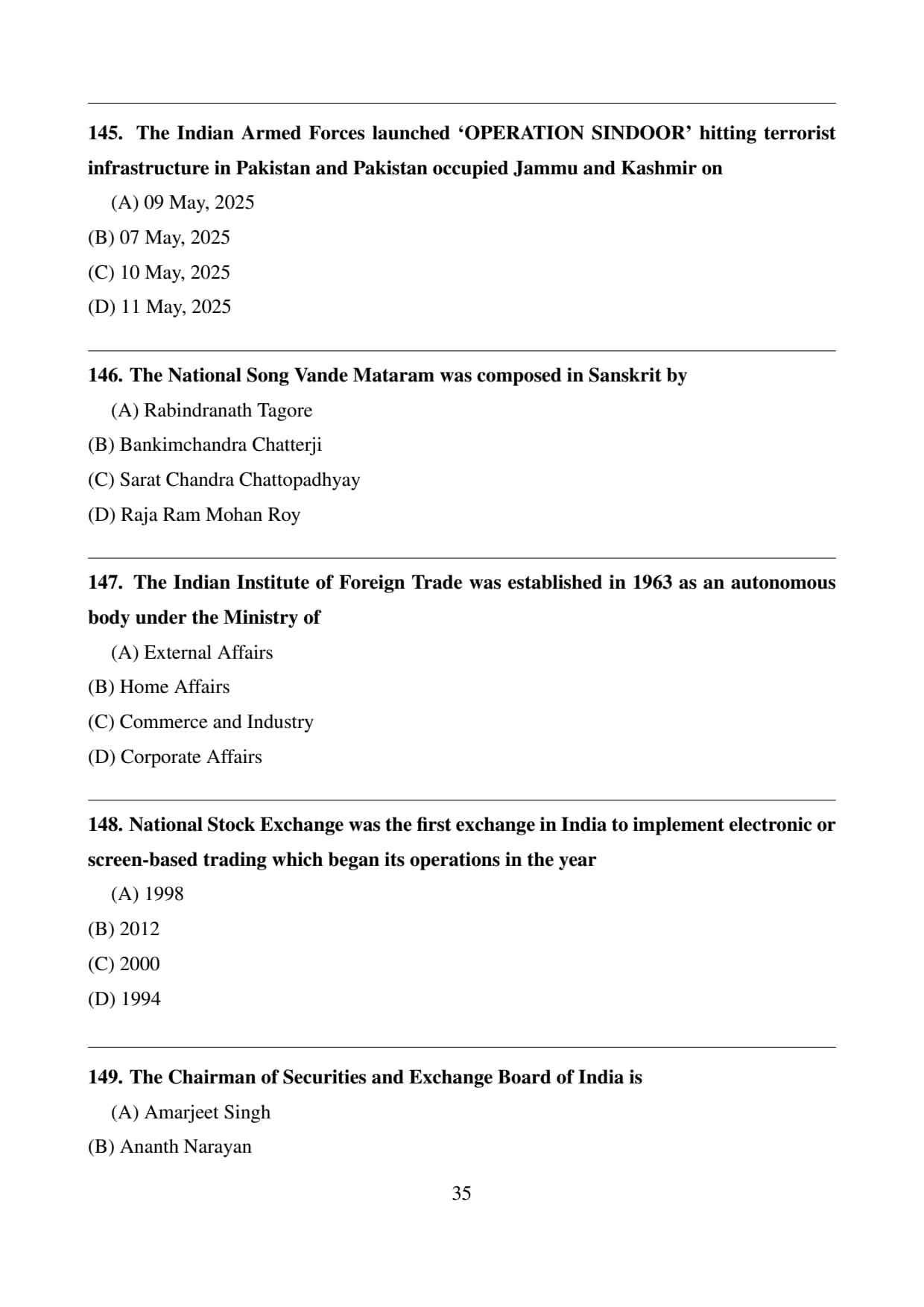
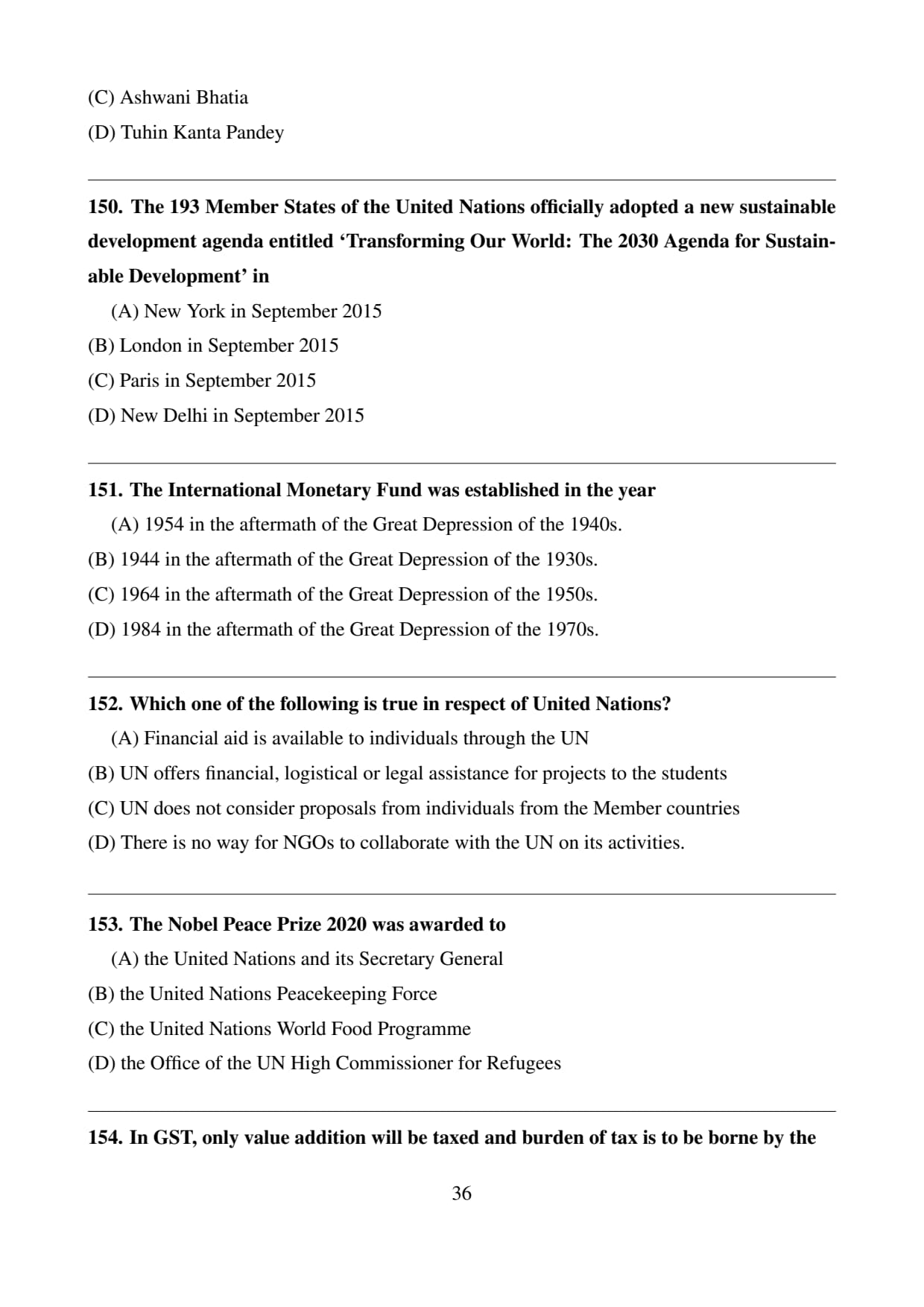



Comments