




GATE 2021 Biomedical Engineering (BM) Question Paper with Solutions are available for downloading. In 2021, IIT Bombay took.the responsibility for conducting GATE examinations. On 6th February, 2021 it concluded GATE 2021 BM in the Afternoon Session. The test-takers defined the difficulty level of the paper as easy. Almost 1684 aspirants took the exam out of which nearly 19.06 percent of students qualified.
GATE 2021 Biomedical Engineering (BM) Question Paper with Solutions
| GATE 2021 Biomedical Engineering (BM) Question Paper |  Download Download |
Check Solutions |

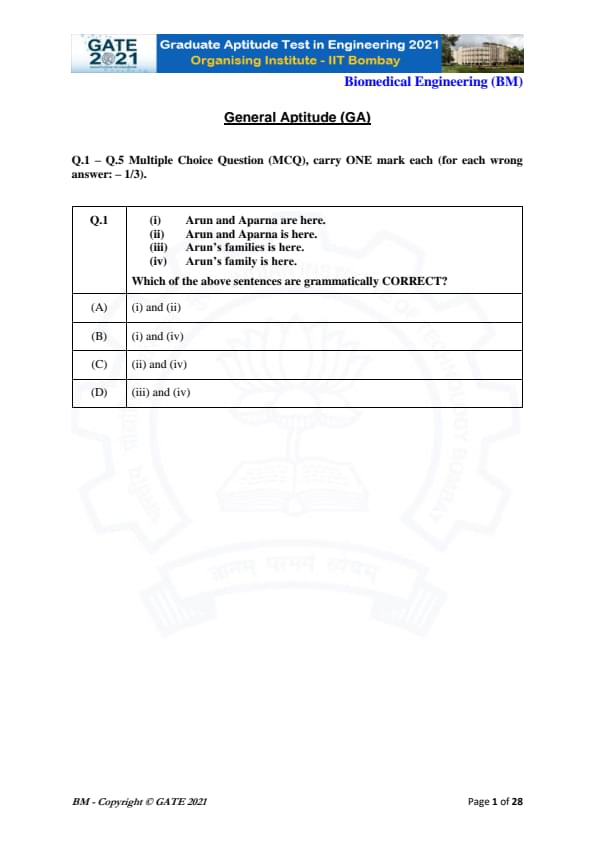
Which of the following sentences are grammatically CORRECT?
(i) Arun and Aparna are here.
(ii) Arun and Aparna is here.
(iii) Arun's families is here.
(iv) Arun's family is here.
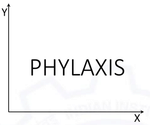
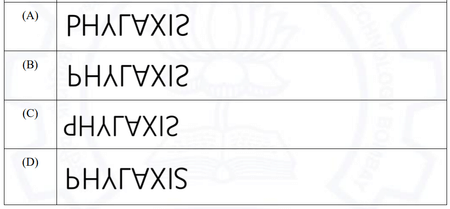
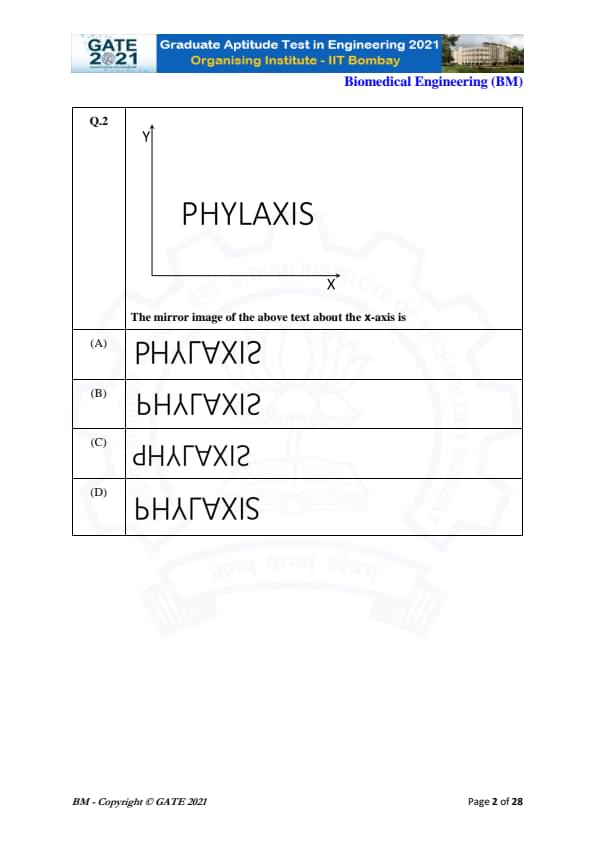
The mirror image of the above text about the x-axis is
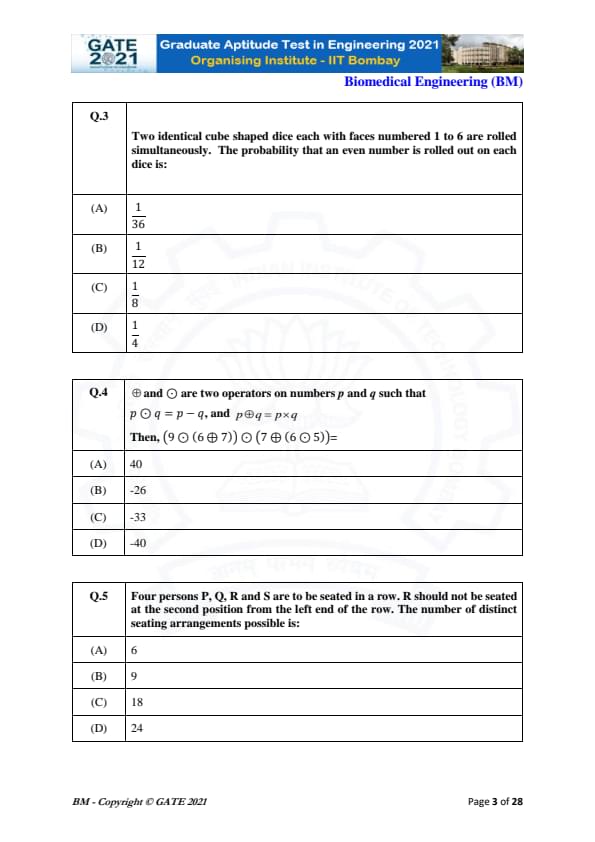
Two identical cube-shaped dice each with faces numbered 1 to 6 are rolled simultaneously. The probability that an even number is rolled out on each dice is:
\(\oplus\) and \(\odot\) are two operators on numbers \(p\) and \(q\) such that \(p \odot q = p - q\) and \(p \oplus q = p \times q\). Find the value of \((9 \odot (6 \oplus 7)) \odot (7 \oplus (6 \odot 5))\).
Four persons P, Q, R and S are to be seated in a row. R should not be seated at the second position from the left end. The number of distinct seating arrangements possible is:
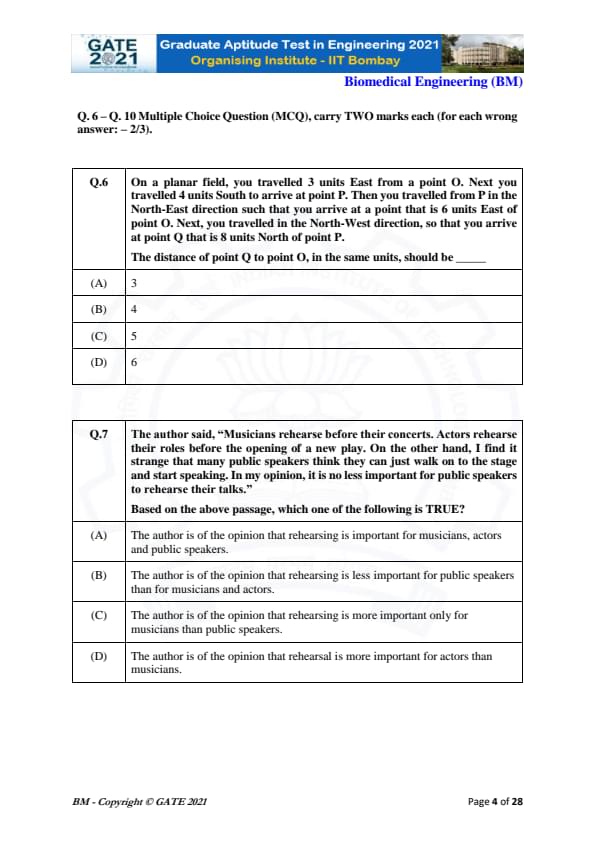
On a planar field, you travelled 3 units East from a point O. Next you travelled 4 units South to arrive at point P. Then you travelled from P in the North-East direction such that you arrive at a point that is 6 units East of point O. Next, you travelled in the North-West direction, so that you arrive at point Q that is 8 units North of point P. The distance of point Q to point O, in the same units, should be ________
Based on the author's statement about musicians, actors and public speakers rehearsing, which one of the following is TRUE?
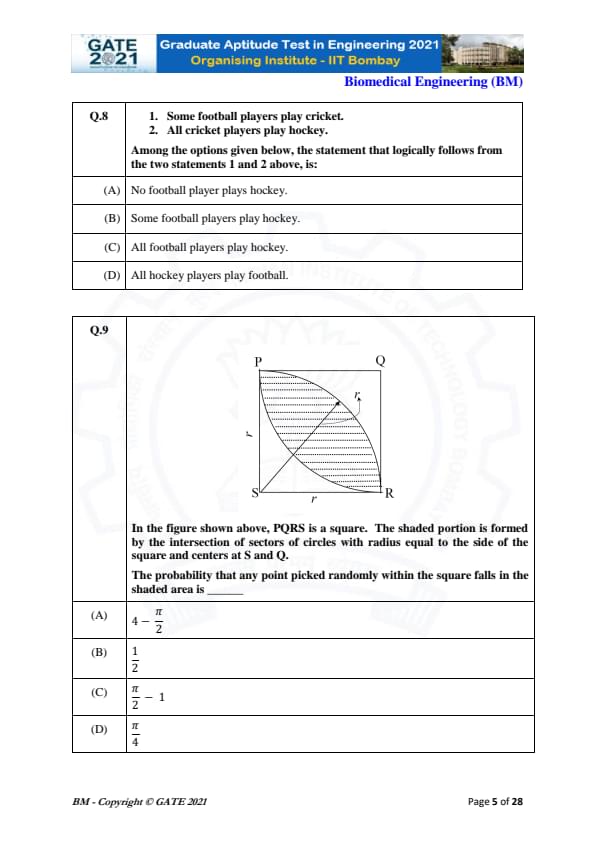
1. Some football players play cricket.
2. All cricket players play hockey.
Among the options given below, the statement that logically follows from the two statements 1 and 2 above, is:
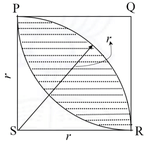
In the figure, PQRS is a square. The shaded part is formed by the intersection of sectors of two circles of radius equal to the side of the square and centers at S and Q.
The probability that a random point inside the square lies in the shaded region is:
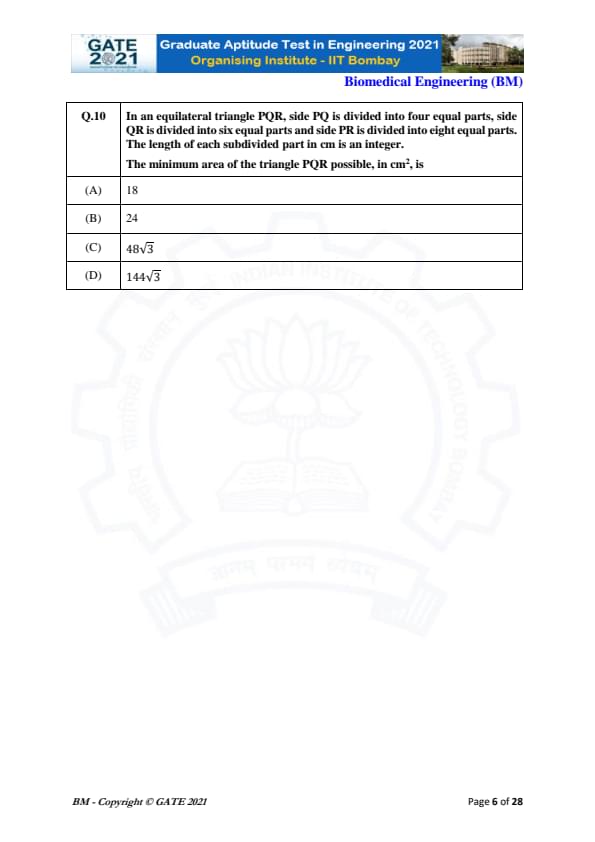
In an equilateral triangle PQR, side PQ is divided into four equal parts, side QR is divided into six equal parts and side PR is divided into eight equal parts.
The length of each subdivided part in cm is an integer.
The minimum area of the triangle PQR possible, in cm\(^2\), is:
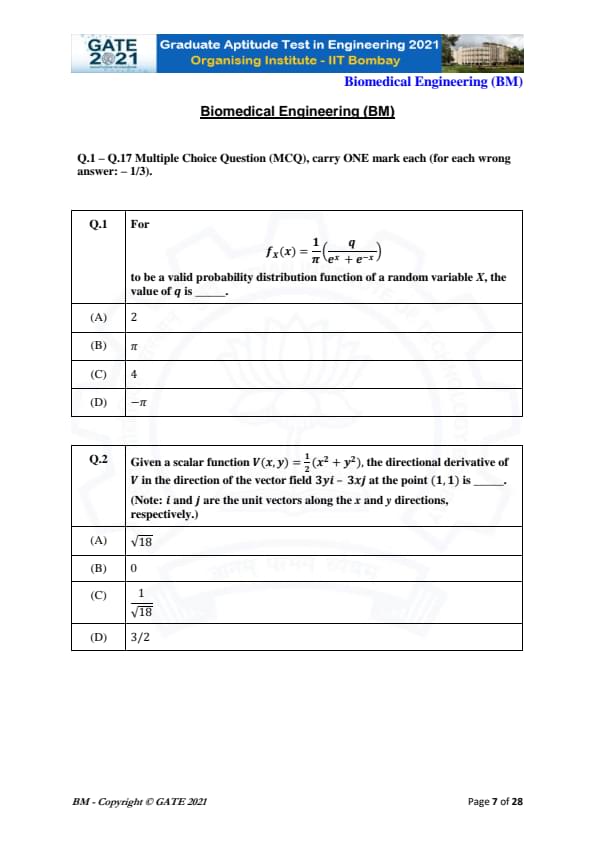
For \[ f_X(x) = \frac{1}{\pi} \left(\frac{q}{e^x + e^{-x}}\right) \]
to be a valid probability distribution function of a random variable X, the value of q is
Given a scalar function \[ V(x, y) = \frac{1}{2} (x^2 + y^2), \]
the directional derivative of V in the direction of the vector field \(3yi - 3xj\) at the point (1, 1) is
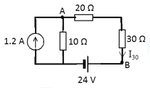
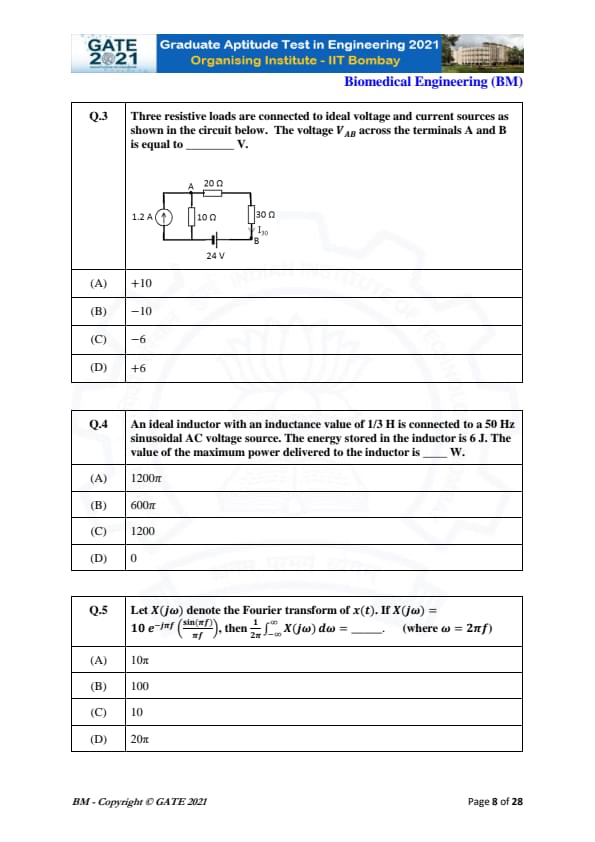
Three resistive loads are connected to ideal voltage and current sources as shown in the circuit below. The voltage \(V_{AB}\) across the terminals A and B is equal to ____ V.
An ideal inductor with an inductance value of 1/3 H is connected to a 50 Hz sinusoidal AC voltage source. The energy stored in the inductor is 6 J. The value of the maximum power delivered to the inductor is ______ W.
Let \(X(j\omega)\) denote the Fourier transform of \(x(t)\). If \(X(j\omega) = 10 e^{-j\pi f} \left( \frac{\sin(\pi f)}{\pi f} \right)\), then \( \frac{1}{2\pi} \int_{-\infty}^{\infty} X(j\omega) d\omega = \_\_\_.\) (where \(\omega = 2\pi f\))
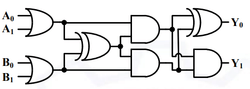
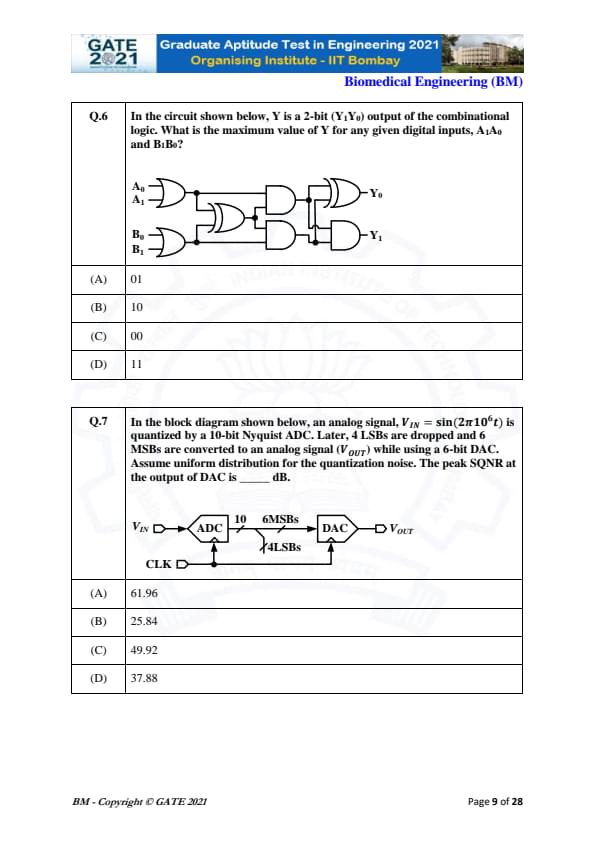
In the circuit shown below, Y is a 2-bit (Y\(_1\)Y\(_0\)) output of the combinational logic. What is the maximum value of Y for any given digital inputs, A\(_1\)A\(_0\) and B\(_1\)B\(_0\)?
In the block diagram shown below, an analog signal, \( V_{IN} = \sin(2\pi \cdot 10^6 t) \) is quantized by a 10-bit Nyquist ADC. Later, 4 LSBs are dropped and 6 MSBs are converted to an analog signal \( V_{OUT} \) while using a 6-bit DAC. Assume uniform distribution for the quantization noise. The peak SQNR at the output of DAC is ________ dB.
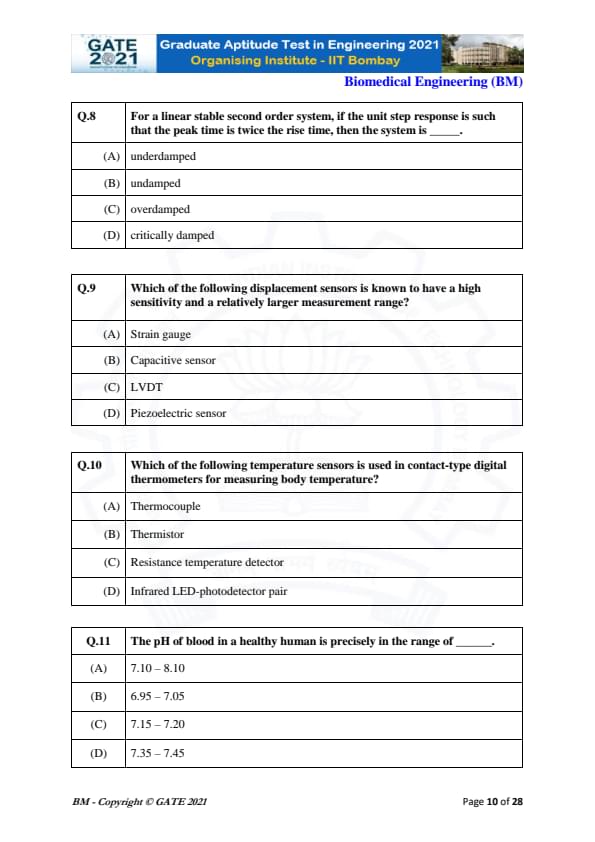
For a linear stable second order system, if the unit step response is such that the peak time is twice the rise time, the system is ________.
Which of the following displacement sensors is known to have high sensitivity and a relatively larger measurement range?
Which of the following temperature sensors is used in contact-type digital thermometers for measuring body temperature?
The pH of blood in a healthy human is precisely in the range of ________.
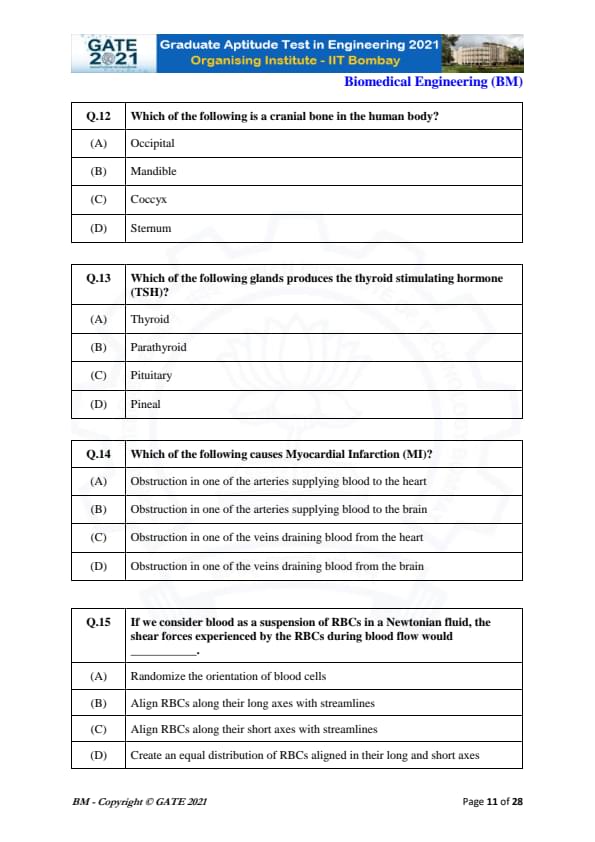
Which of the following is a cranial bone in the human body?
Which of the following glands produces the thyroid stimulating hormone (TSH)?
Which of the following causes Myocardial Infarction (MI)?
If we consider blood as a suspension of RBCs in a Newtonian fluid, the shear forces experienced by the RBCs during blood flow would
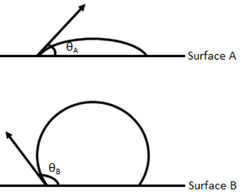
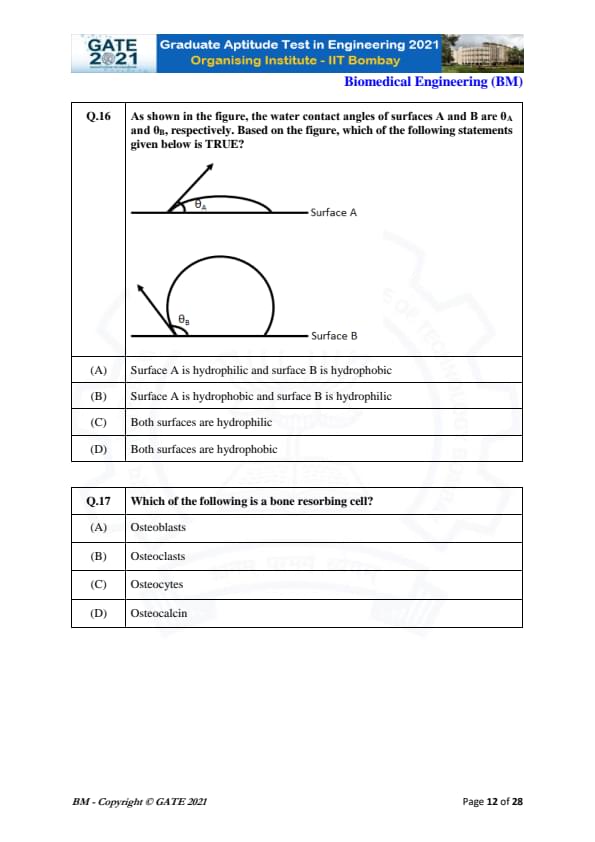
As shown in the figure, the water contact angles of surfaces A and B are \(\theta_A\) and \(\theta_B\), respectively. Based on the figure, which of the following statements given below is TRUE?
Which of the following is a bone resorbing cell?
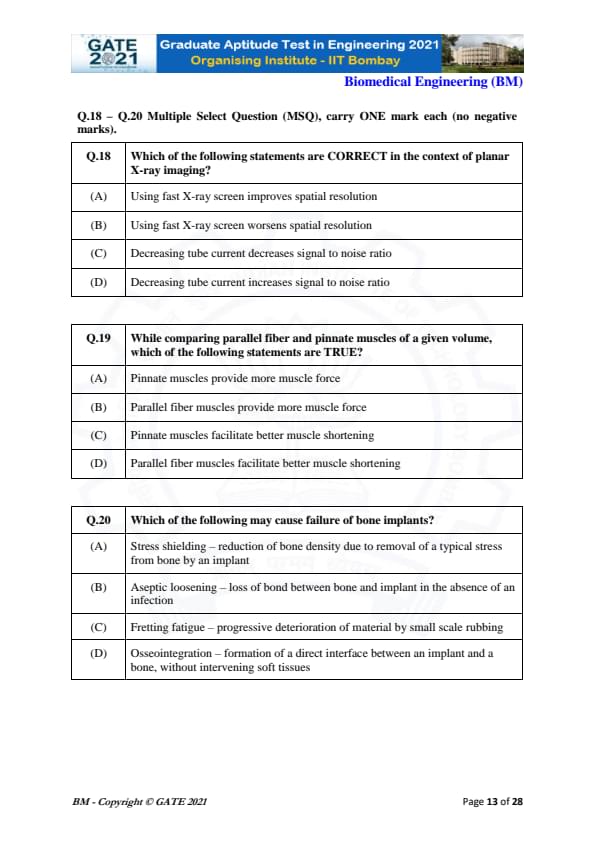
Which of the following statements are CORRECT in the context of planar X-ray imaging?
While comparing parallel fiber and pinnate muscles of a given volume, which of the following statements are TRUE?
Which of the following may cause failure of bone implants?
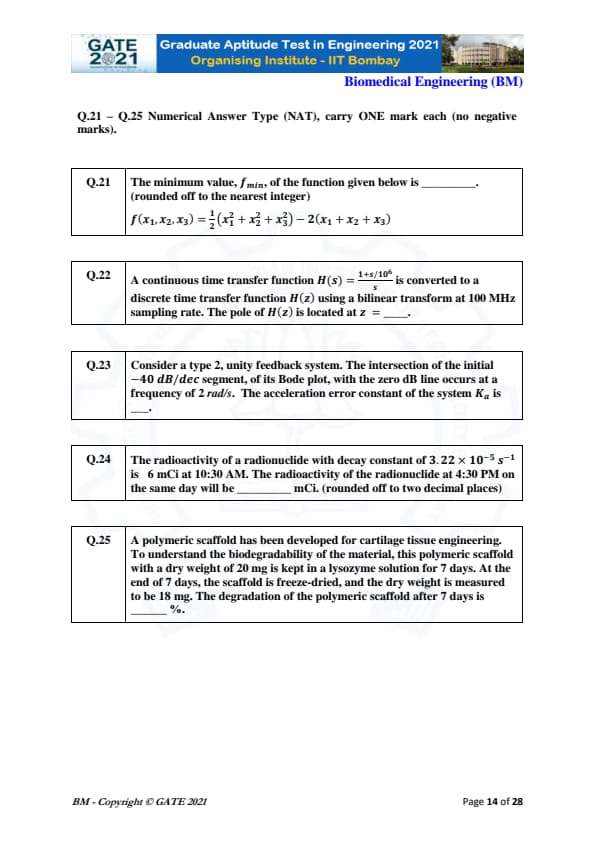
The minimum value, \(f_{min}\), of the function given below is: \[ f(x_1, x_2, x_3) = \frac{1}{2} (x_1^2 + x_2^2 + x_3^2) - 2(x_1 + x_2 + x_3) \]
(round off to the nearest integer).
A continuous time transfer function \( H(s) = \frac{1 + s}{s \times 10^6} \) is converted to a discrete time transfer function \( H(z) \) using a bilinear transform at a sampling rate of 100 MHz. The pole of \( H(z) \) is located at \( z = \) ________.
Consider a type 2, unity feedback system. The intersection of the initial -40 dB/dec segment of its Bode plot with the zero dB line occurs at a frequency of 2 rad/s. The acceleration error constant of the system \(K_a\) is ________.
The radioactivity of a radionuclide with decay constant \(3.22 \times 10^{-5}\) s\(^{-1}\) is 6 mCi at 10:30 AM. The radioactivity at 4:30 PM the same day will be ________ mCi. (rounded off to two decimal places)
A polymeric scaffold has an initial weight of 20 mg. After 7 days in a lysozyme solution, its weight is reduced to 18 mg. The degradation of the polymeric scaffold after 7 days is ________%.
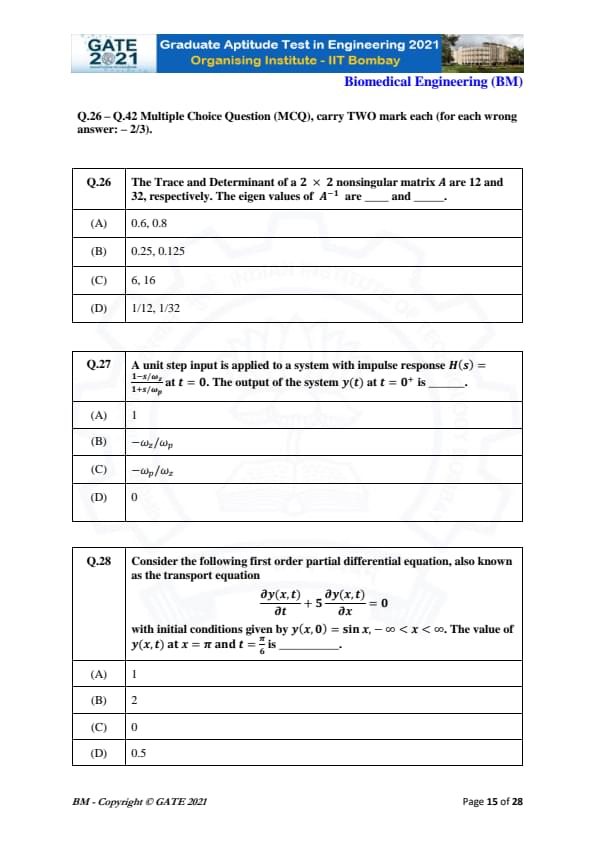
The Trace and Determinant of a 2 × 2 nonsingular matrix A are 12 and 32, respectively. The eigen values of \(A^{-1}\) are ________ and ________
A unit step input is applied to a system with impulse response \( H(s) = \frac{1-s/\omega_z}{1+s/\omega_p} \) at \( t = 0 \). The output of the system \( y(t) \) at \( t = 0^+ \) is
Consider the following first-order partial differential equation, also known as the transport equation \[ \frac{\partial y(x,t)}{\partial t} + 5 \frac{\partial y(x,t)}{\partial x} = 0 \]
with initial conditions given by \( y(x, 0) = \sin x, -\infty < x < \infty \). The value of \( y(x,t) \) at \( x = \pi \) and \( t = \frac{\pi}{6} \) is
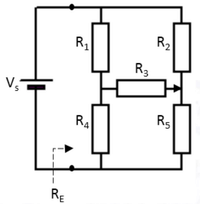
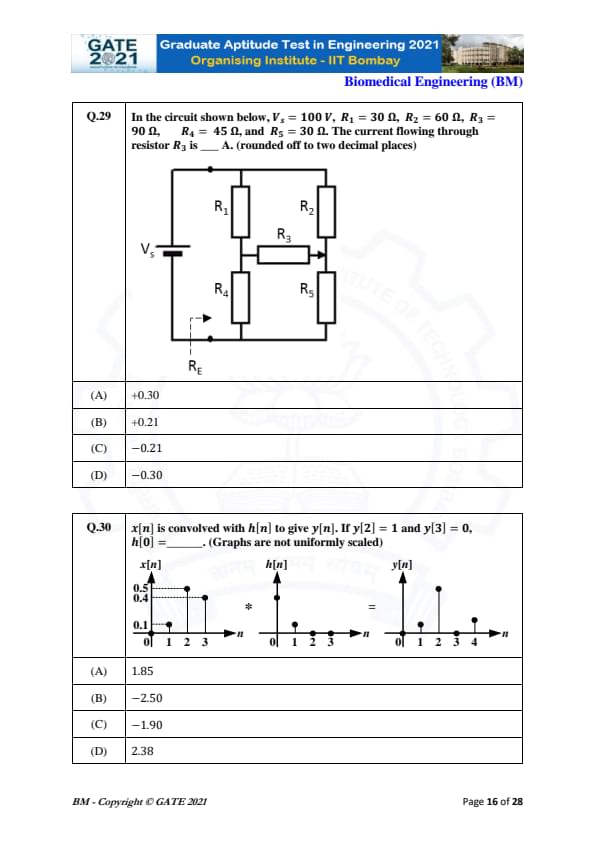
In the circuit shown below, \(V_5 = 100 V\), \(R_1 = 30 \Omega\), \(R_2 = 60 \Omega\), \(R_3 = 90 \Omega\), \(R_4 = 45 \Omega\), and \(R_5 = 30 \Omega\). The current flowing through resistor \(R_3\) is ______ A. (rounded off to two decimal places)
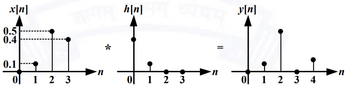
\(x[n]\) is convolved with \(h[n]\) to give \(y[n]\). If \(y[2] = 1\) and \(y[3] = 0\), then \(h[0] = \_\_\_\_\_\_.\) (Graphs are not uniformly scaled)
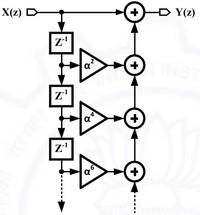
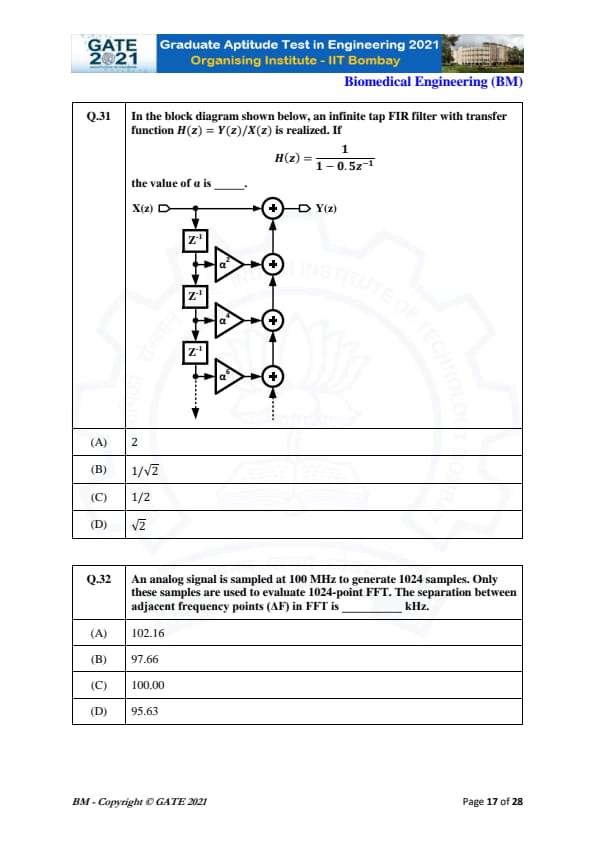
In the block diagram shown below, an infinite tap FIR filter with transfer function \( H(z) = \frac{Y(z)}{X(z)} \) is realized. If \[ H(z) = \frac{1}{1 - 0.5z^{-1}}, \]
the value of \( \alpha \) is ________
An analog signal is sampled at 100 MHz to generate 1024 samples. Only these samples are used to evaluate 1024-point FFT. The separation between adjacent frequency points (\( \Delta F \)) in FFT is ________ kHz.
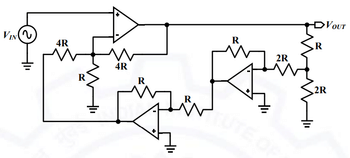
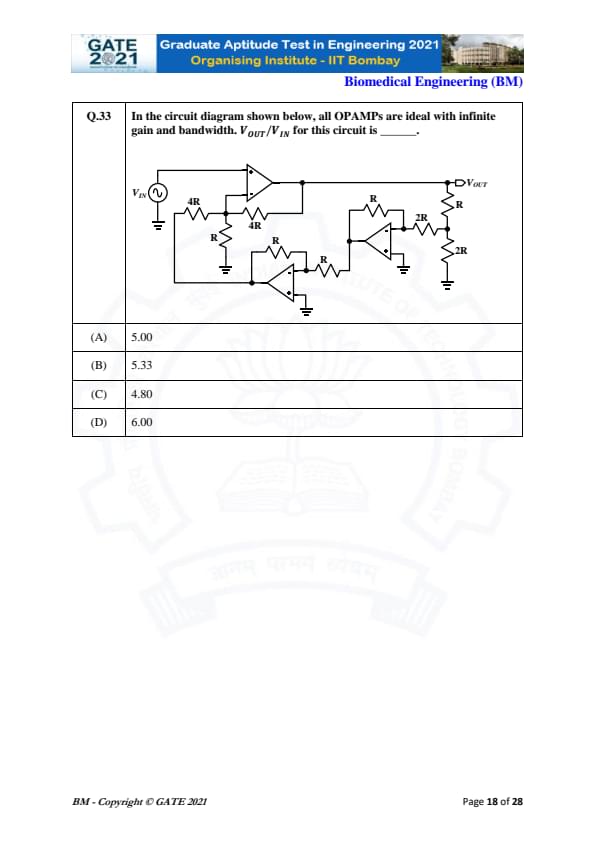
In the circuit diagram shown below, all OPAMPs are ideal with infinite gain and bandwidth. \(\frac{V_{OUT}}{V_{IN}}\) for this circuit is ________.
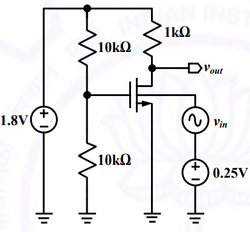
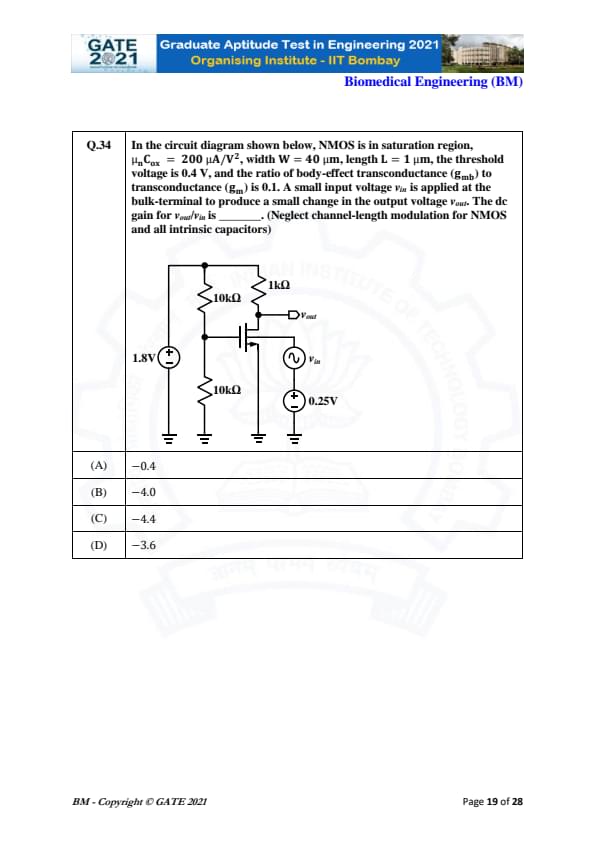
In the circuit diagram shown below, NMOS is in saturation region, \( \mu_n C_{ox} = 200 \, \mu A/V^2 \), width \( W = 40 \, \mu m \), length \( L = 1 \, \mu m \), the threshold voltage is 0.4 V, and the ratio of body-effect transconductance (\( g_m b \)) to transconductance (\( g_m \)) is 0.1. A small input voltage \( v_{in} \) is applied at the bulk-terminal to produce a small change in the output voltage \( v_{out} \). The dc gain for \( v_{out} / v_{in} \) is ________. (Neglect channel-length modulation for NMOS and all intrinsic capacitors.)
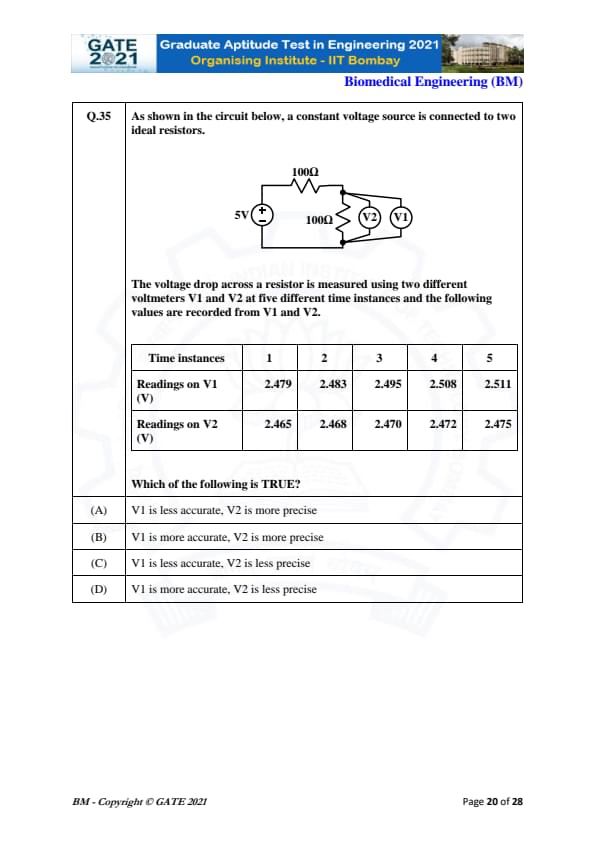
As shown in the circuit below, a constant voltage source is connected to two ideal resistors.
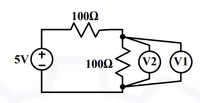
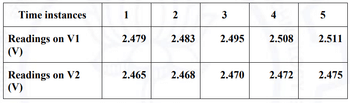
The voltage drop across a resistor is measured using two different voltmeters V1 and V2 at five different time instances and the following values are recorded from V1 and V2.
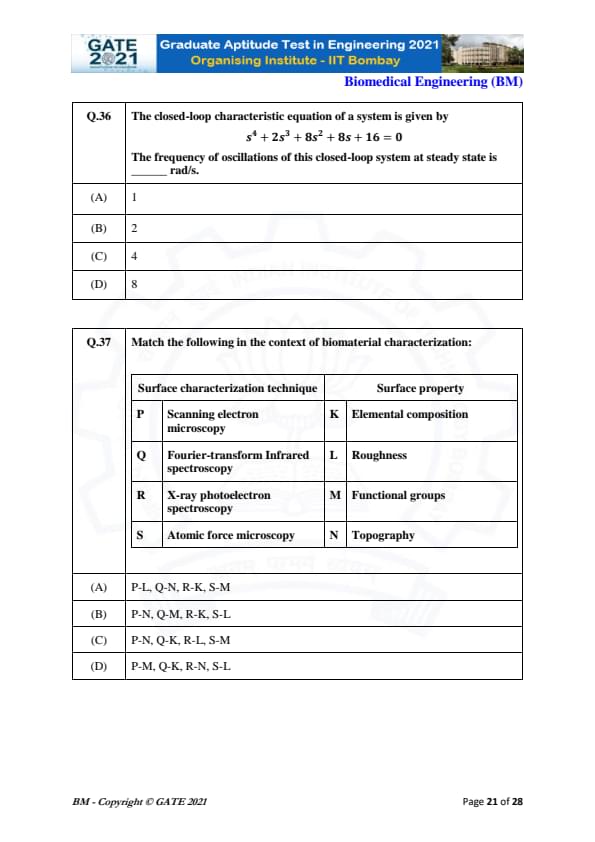
The closed-loop characteristic equation of a system is given by \[ s^4 + 2s^3 + 8s^2 + 8s + 16 = 0 \]
The frequency of oscillations of this closed-loop system at steady state is ________ rad/s.
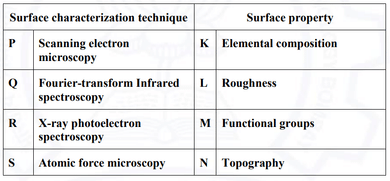
Match the following in the context of biomaterial characterization:
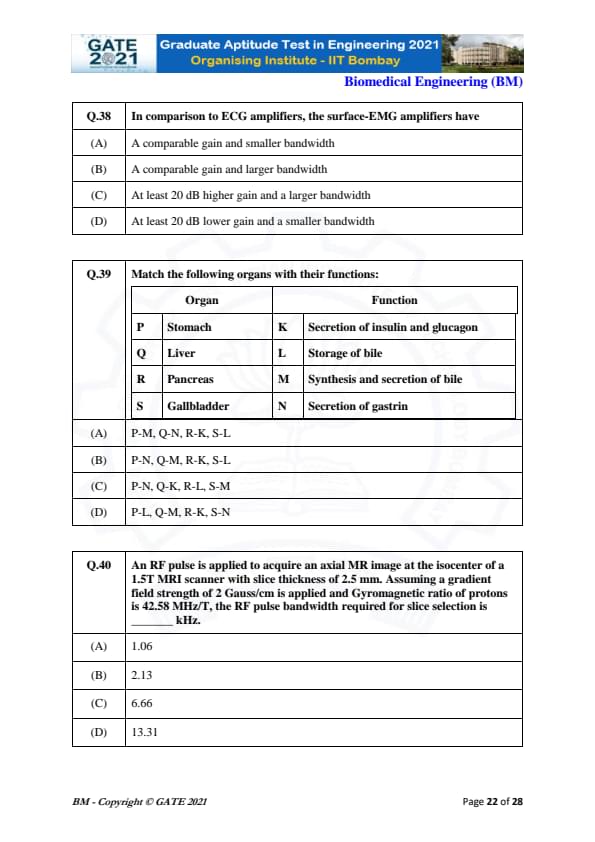
In comparison to ECG amplifiers, the surface-EMG amplifiers have
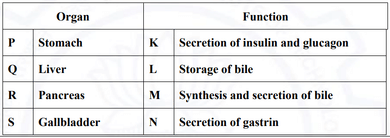
Match the following organs with their functions:
An RF pulse is applied to acquire an axial MR image at the isocenter of a 1.5T MRI scanner with slice thickness of 2.5 mm. Assuming a gradient field strength of 2 Gauss/cm is applied and Gyromagnetic ratio of protons is 42.58 MHz/T, the RF pulse bandwidth required for slice selection is ________ kHz.
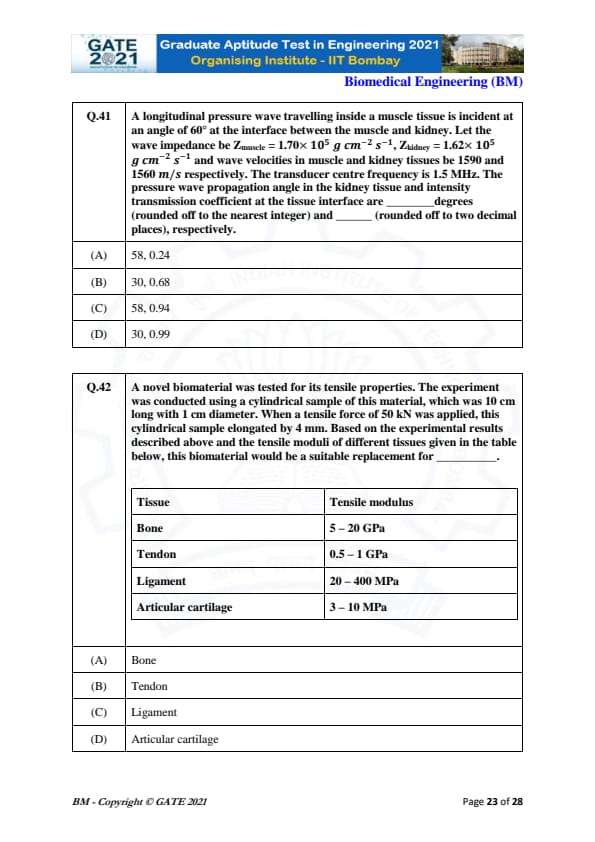
A longitudinal pressure wave travelling inside a muscle tissue is incident at an angle of 60° at the interface between the muscle and kidney. Let the wave impedance be \( Z_{muscle} = 1.70 \times 10^5 \, g cm^{-2} \, s^{-1} \), \( Z_{kidney} = 1.62 \times 10^5 \, g cm^{-2} \, s^{-1} \) and wave velocities in muscle and kidney tissues be 1590 and 1560 m/s respectively. The transducer centre frequency is 1.5 MHz. The pressure wave propagation angle in the kidney tissue and intensity transmission coefficient at the tissue interface are ________ degrees (rounded off to the nearest integer) and ________ (rounded off to two decimal places), respectively.
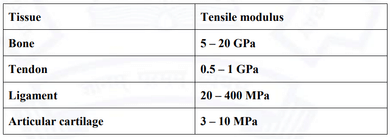
A novel biomaterial was tested for its tensile properties. The experiment was conducted using a cylindrical sample of this material, which was 10 cm long with 1 cm diameter. When a tensile force of 50 kN was applied, this cylindrical sample elongated by 4 mm. Based on the experimental results described above and the tensile moduli of different tissues given in the table below, this biomaterial would be a suitable replacement for ________.
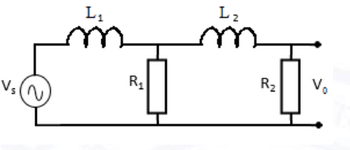
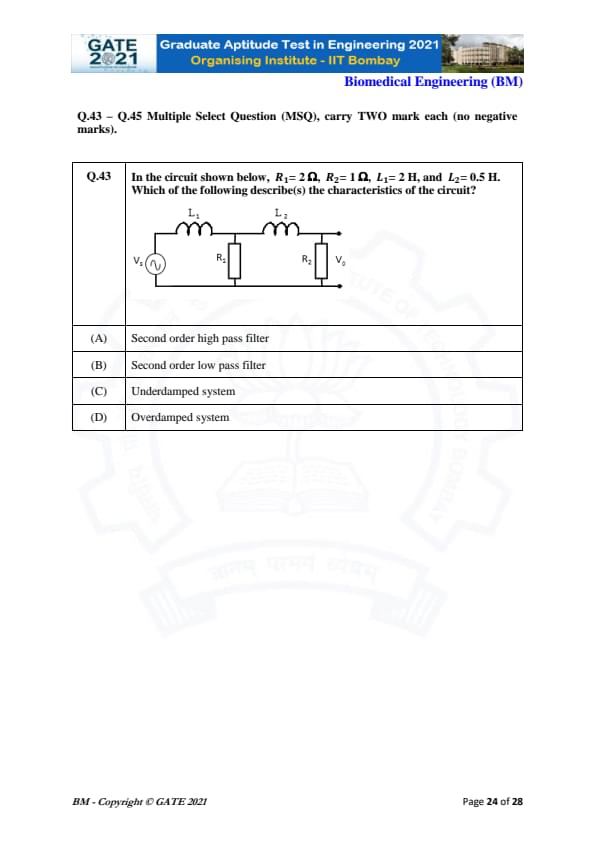
In the circuit shown below, \( R_1 = 2 \, \Omega \), \( R_2 = 1 \, \Omega \), \( L_1 = 2 \, H \), and \( L_2 = 0.5 \, H \). Which of the following describe(s) the characteristics of the circuit?
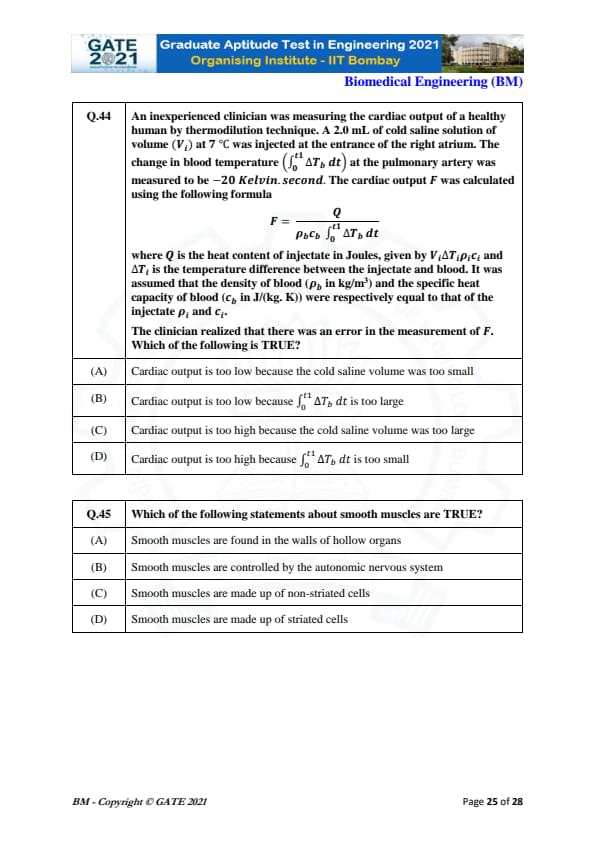
An inexperienced clinician was measuring the cardiac output of a healthy human by thermodilution technique. A 2.0 mL of cold saline solution of volume \( V_i \) at \( 7^\circ C \) was injected at the entrance of the right atrium. The change in blood temperature \( \int_0^{t_1} \Delta T_b \, dt \) at the pulmonary artery was measured to be \(-20\) Kelvin-second. The cardiac output \( F \) was calculated using the following formula \[ F = \frac{Q}{\rho_b c_b \int_0^{t_1} \Delta T_b \, dt}, \]
where \( Q \) is the heat content of injectate in Joules, given by \( V_i \Delta T_i \rho_i c_i \) and \( \Delta T_i \) is the temperature difference between the injectate and blood. It was assumed that the density of blood (\( \rho_b \) in kg/m\(^3\)) and the specific heat capacity of blood (\( c_b \) in J/(kg.K)) were respectively equal to that of the injectate \( \rho_i \) and \( c_i \).
The clinician realized that there was an error in the measurement of \( F \). Which of the following is TRUE?
Which of the following statements about smooth muscles are TRUE?
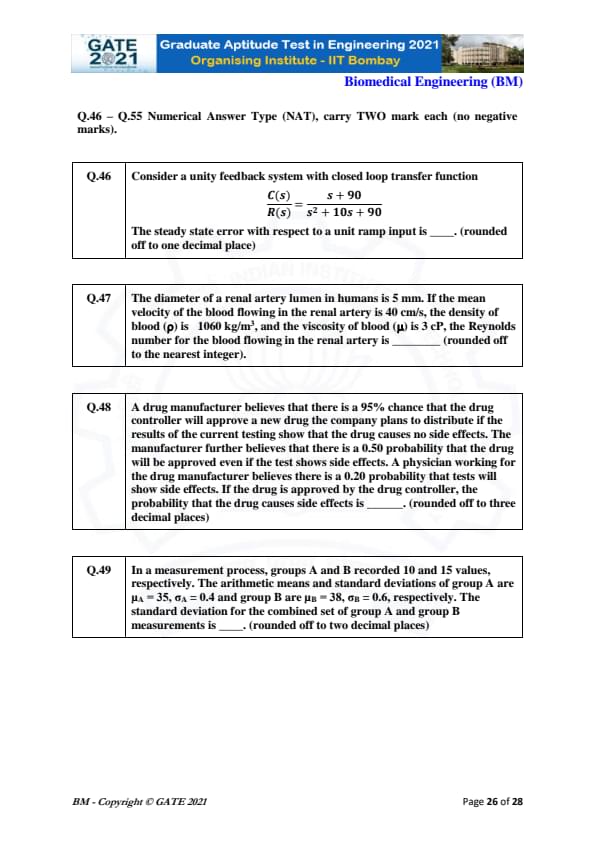
Consider a unity feedback system with closed-loop transfer function \[ C(s) = \frac{s + 90}{s^2 + 10s + 90} \]
The steady-state error with respect to a unit ramp input is ________. (rounded off to one decimal place)
The diameter of a renal artery lumen in humans is 5 mm. If the mean velocity of the blood flowing in the renal artery is 40 cm/s, the density of blood (ρ) is 1060 kg/m³, and the viscosity of blood (μ) is 3 cP, the Reynolds number for the blood flowing in the renal artery is ________. (rounded off to the nearest integer)
A drug manufacturer believes that there is a 95% chance that the drug controller will approve a new drug. The current testing shows no side effects. The manufacturer believes there is a 0.50 probability that the drug will be approved even if side effects occur. The drug manufacturer believes there is a 0.20 probability that tests will show side effects. If the drug is approved, the probability that it causes side effects is ________. (rounded off to three decimal places)
In a measurement process, groups A and B recorded 10 and 15 values, respectively. The arithmetic means and standard deviations of group A are \(\mu_A = 35\), \(\sigma_A = 0.4\) and group B are \(\mu_B = 38\), \(\sigma_B = 0.6\). The standard deviation for the combined set of group A and group B measurements is ________. (rounded off to two decimal places)
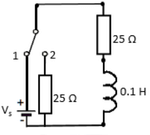
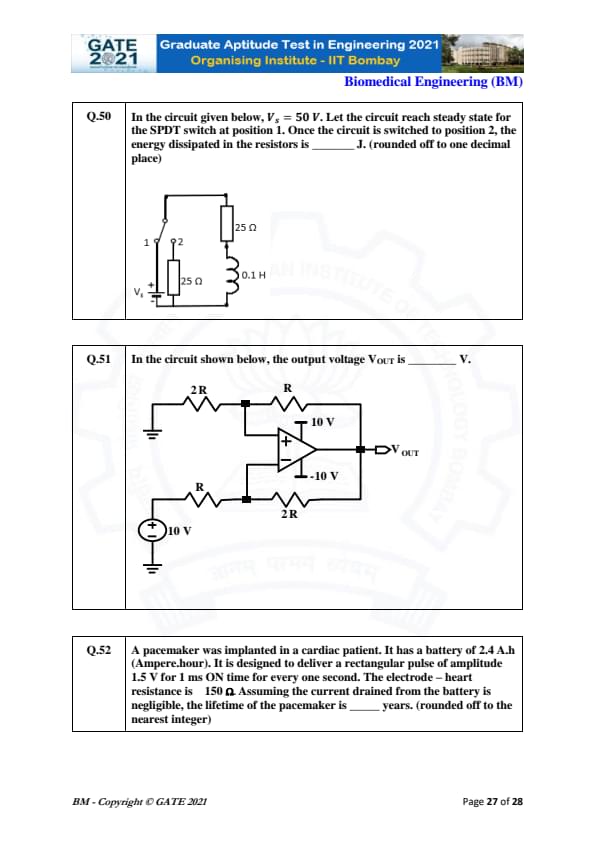
In the circuit given below, \(V_s = 50\ V\). Let the circuit reach steady state for the SPDT switch at position 1. Once the circuit is switched to position 2, the energy dissipated in the resistors is ______ J (rounded off to one decimal place).
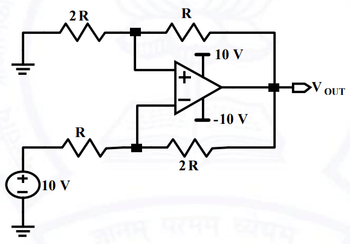
In the circuit shown below, the output voltage \(V_{out}\) is ______ V.
A pacemaker was implanted in a cardiac patient. It has a battery of 2.4 A·h (Ampere·hour). It is designed to deliver a rectangular pulse of amplitude 1.5 V for 1 ms ON time for every one second. The electrode-heart resistance is 150 Ω. Assuming the current drained from the battery is negligible, the lifetime of the pacemaker is ______ years (rounded off to the nearest integer).
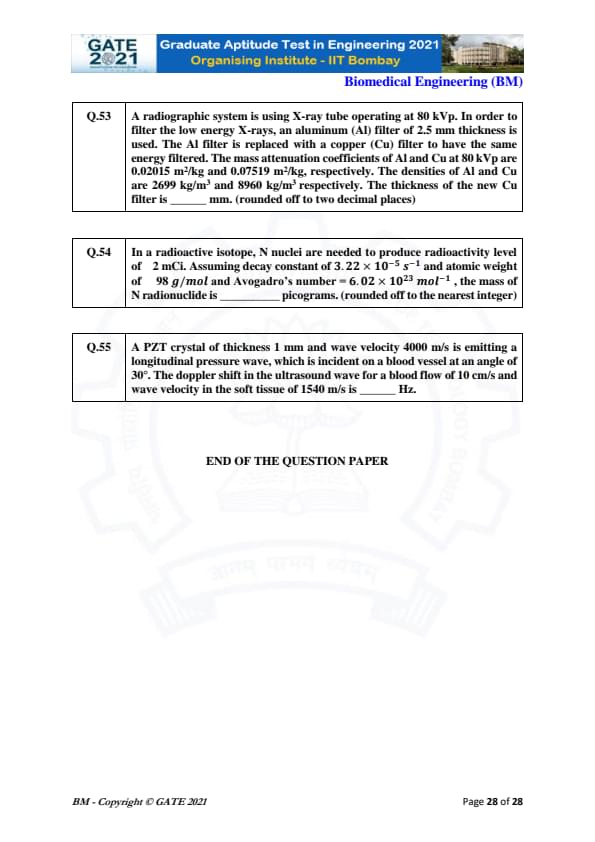
A radiographic system is using X-ray tube operating at 80 kVp. In order to filter the low energy X-rays, an aluminum (Al) filter of 2.5 mm thickness is used. The Al filter is replaced with a copper (Cu) filter to have the same energy filtered. The mass attenuation coefficients of Al and Cu at 80 kVp are 0.02015 m²/kg and 0.07519 m²/kg, respectively. The densities of Al and Cu are 2699 kg/m³ and 8960 kg/m³, respectively. The thickness of the new Cu filter is ________ mm. (rounded off to two decimal places)
In a radioactive isotope, \(N\) nuclei are needed to produce radioactivity level of 2 mCi. Assuming decay constant of \(3.22 \times 10^{-5}\) s\(^{-1}\) and atomic weight of 98 g/mol and Avogadro’s number \(6.02 \times 10^{23}\) mol\(^{-1}\), the mass of \(N\) radionuclide is ________ picograms.
A PZT crystal of thickness 1 mm and wave velocity 4000 m/s is emitting a longitudinal pressure wave, which is incident on a blood vessel at an angle of 30°. The Doppler shift in the ultrasound wave for a blood flow of 10 cm/s and wave velocity in the soft tissue of 1540 m/s is ________ Hz.
Quick Links:
GATE 2021 BM Detailed Paper Analysis
In 2021, IIT Bombay decided to bring a major in the Question pattern of GATE examination. From 2021, candidates will have to face MSQs (Multiple Select Questions).
Refer to the below-mentioned table to see the accurate number of MCQs, MSQs and NATs in GATE 2021 BM-
| Question Type | Question Frequency | Marks Carried | Important Topics |
|---|---|---|---|
No of 1 mark MCQs |
22 |
22 |
Biomedical Instrumentation, Devices, Anatomy, Physiology, Biomechanics,and Biomaterials |
| No of 2 marks MCQs | 22 | 44 | |
| No of 1 mark MSQs | 3 | 3 | |
| No of 2 marks MSQs | 3 | 6 | |
| No of 1 mark NTAs | 5 | 5 | |
| No of 2 marks NTAs | 10 | 20 |
- There were 65 questions in the question paper. The paper contained three types of questions i. e. MCQs, MSQs and NATs
- Equal number of questions appeared from MCQ and NAT
- MCQs hold nearly 66% weightage of the question paper
- Least number of questions were asked in the form of MSQs
Also Check:
GATE 2021 BM: Exam Pattern and Marking Scheme
- Students were given 180 minutes to attempt 65 questions which was a combination of MCQs, MSQs, and NATs
- MSQs and NATs questions were exempted from the negative marking scheme. However, marks would be deducted for wrong MCQs
- MCQs carried 1 and 2 marks would face negative marking of ⅓ marks and ⅔ marks respectively
GATE 2021 BM Cutoff
This year the cutoff goes up to 25 for General/Unreserved, 22.5 for OBC, and 16.6 for SC/ST students. There was no change in the cutoff released in 2021. The cutoffs for 2020 and 2021 were the same.
GATE Previous Year Question Papers:
| GATE 2022 Question Papers | GATE 2021 Question Papers | GATE 2020 Question Papers |
| GATE 2019 Question Papers | GATE 2018 Question Papers | GATE 2017 Question Papers |





Comments