




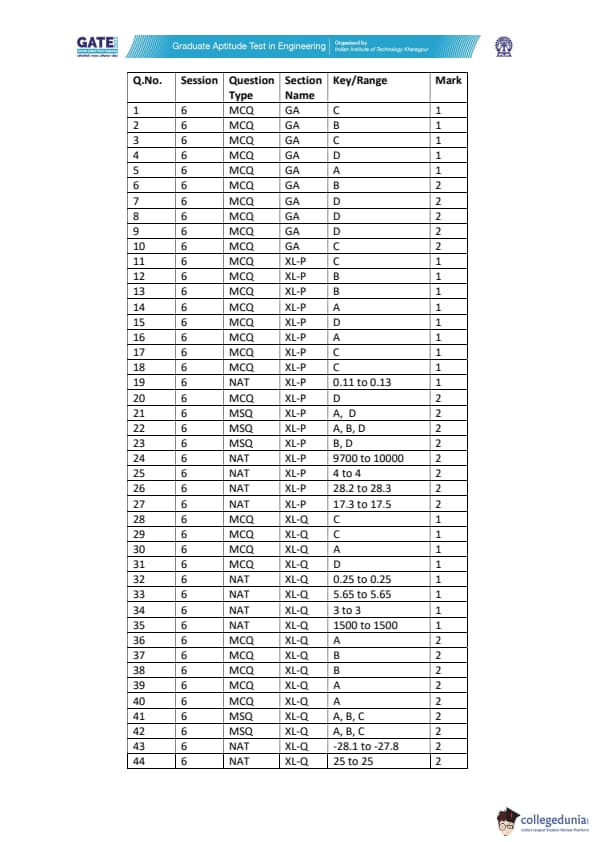
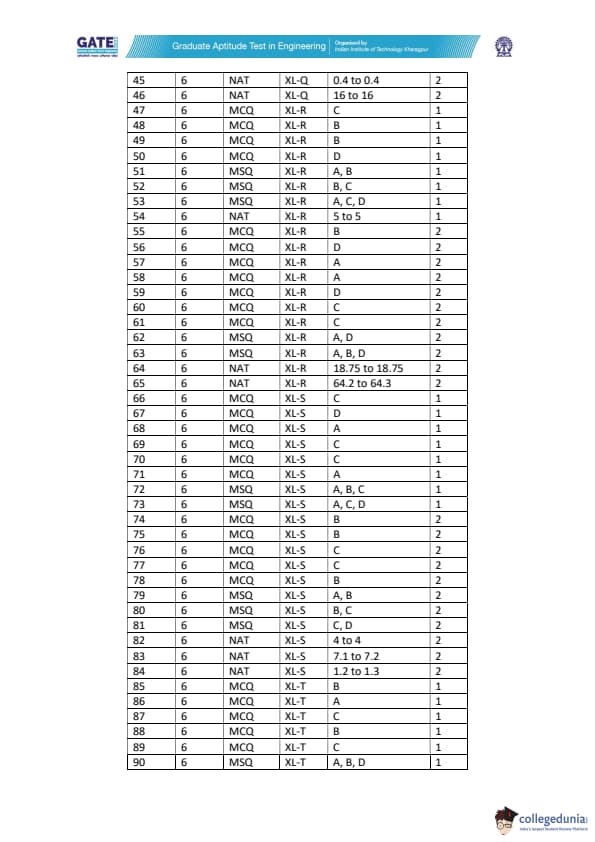
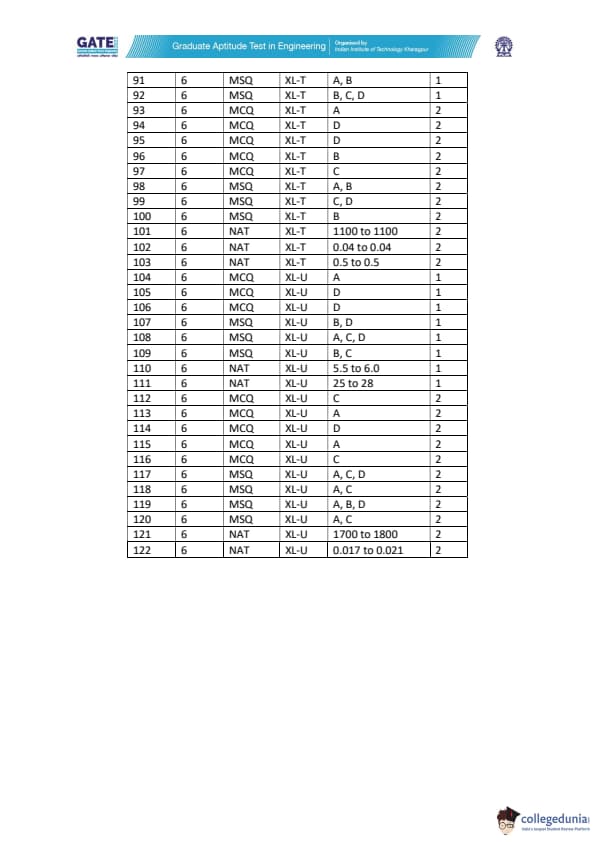
GATE 2022 Life Sciences (XL) Question Paper with Solutions PDFs are available for downloading. GATE 2022 XL was held in the afternoon session (2:30 PM to 5:30 PM) by IIT Kharagpur on 12th February, 2022. The overall difficulty level was rated moderate to difficult. GATE 2022 XL Question Paper comprises multiple sections such as Chemistry (XL-P), Biochemistry (XL-Q), Botany (XL-R), Microbiology (XL-S), Zoology (XL-T), and Food Technology (XL-U).
GATE 2022 Life Sciences (XL) Question Paper with Solutions
Candidates targeting GATE can download the PDFs for GATE 2022 XL Question Paper and Answer Key to know the important topics asked, and check their preparation level by solving the past question papers.
| GATE 2022 Life Sciences (XL) Question Paper |  Download Download |
Check Solutions |

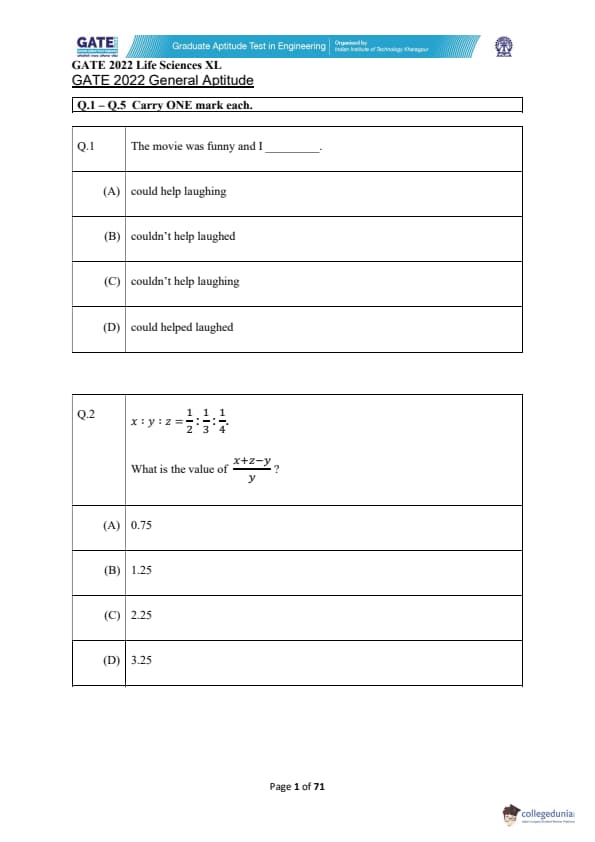
The movie was funny and I _________.
If \( x : y : z = \frac{1}{2} : \frac{1}{3} : \frac{1}{4} \), what is the value of \( \frac{x + z - y}{y} \)?
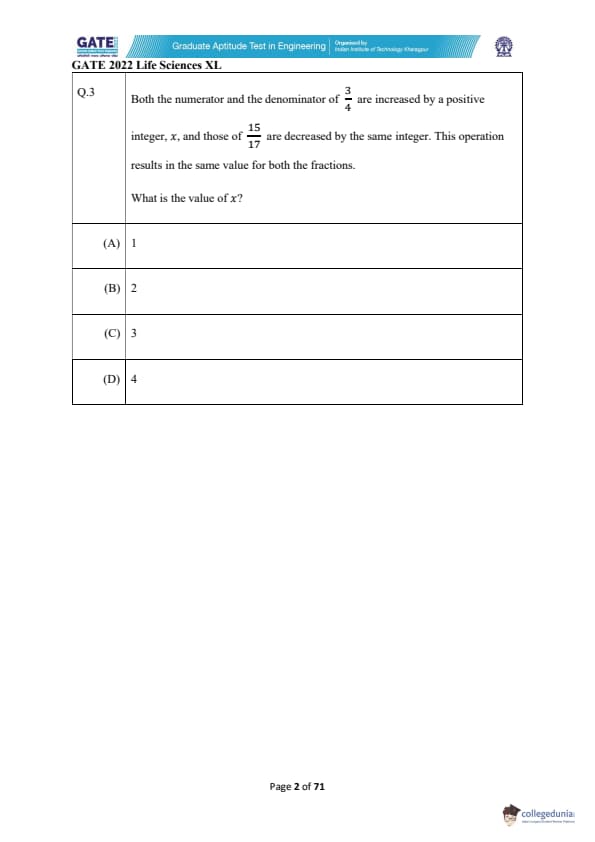
Both the numerator and the denominator of \( \frac{3}{4} \) are increased by a positive integer, \( x \), and those of \( \frac{15}{17} \) are decreased by the same integer. This operation results in the same value for both the fractions. What is the value of \( x \)?
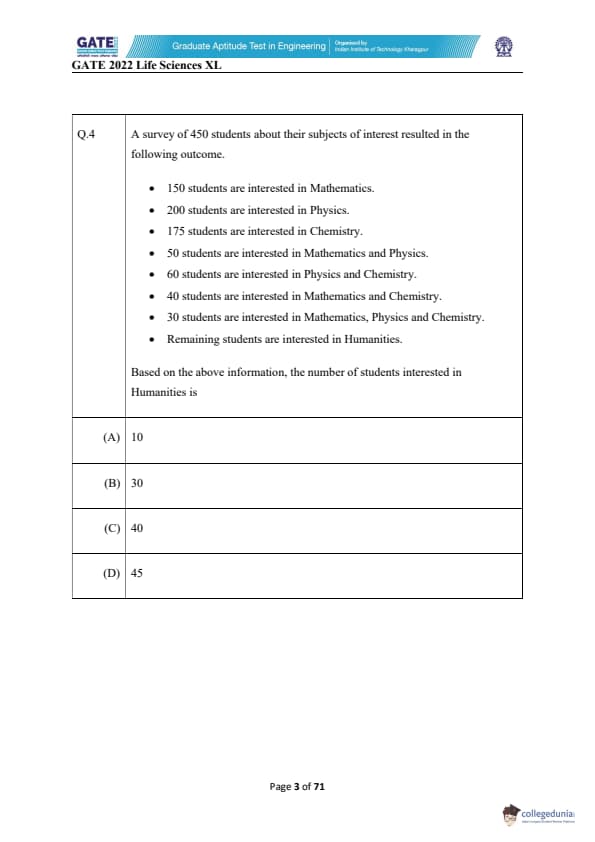
A survey of 450 students about their subjects of interest resulted in the following outcome.
150 students are interested in Mathematics.
200 students are interested in Physics.
175 students are interested in Chemistry.
50 students are interested in Mathematics and Physics.
60 students are interested in Physics and Chemistry.
40 students are interested in Mathematics and Chemistry.
30 students are interested in Mathematics, Physics and Chemistry.
Remaining students are interested in Humanities.
Based on the above information, the number of students interested in Humanities is:
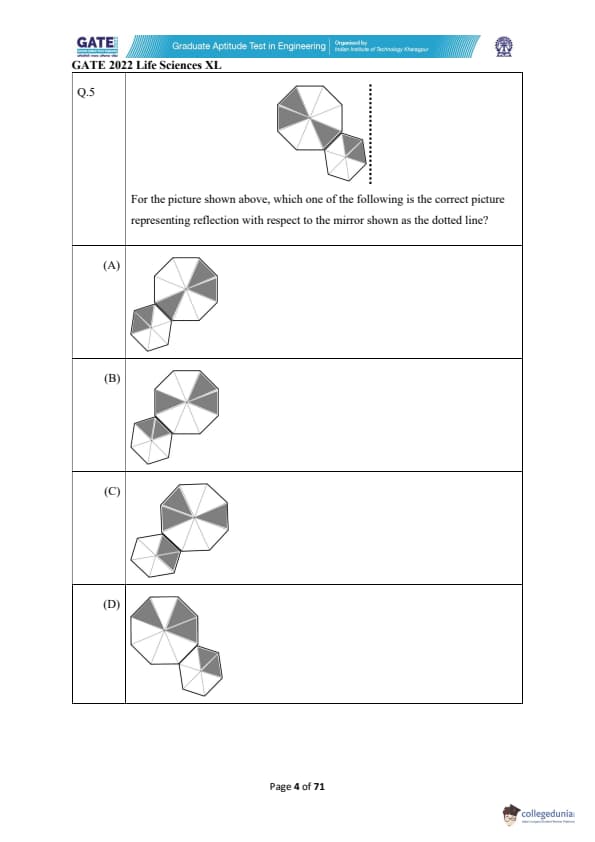
For the picture shown above, which one of the following is the correct picture representing reflection with respect to the mirror shown as the dotted line?


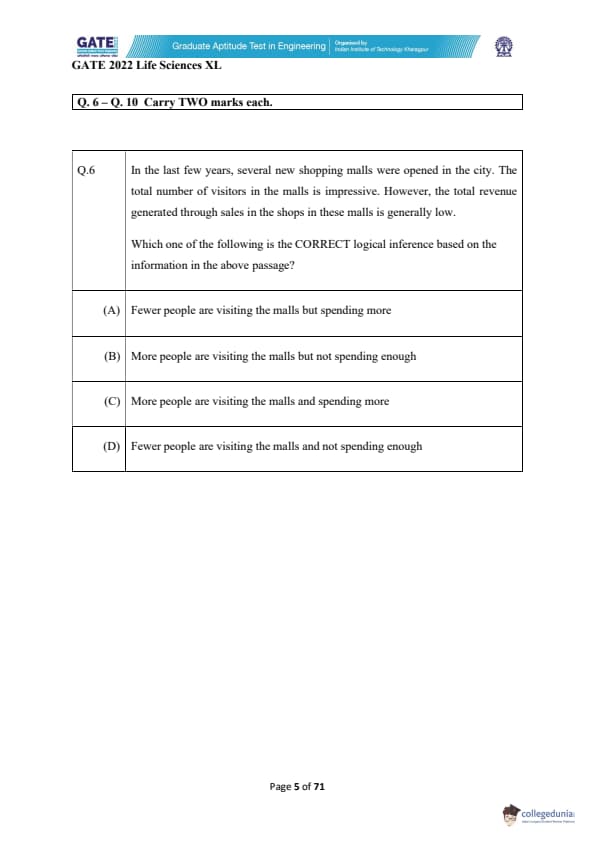
In the last few years, several new shopping malls were opened in the city. The total number of visitors in the malls is impressive. However, the total revenue generated through sales in the shops in these malls is generally low. Which one of the following is the CORRECT logical inference based on the information in the above passage?
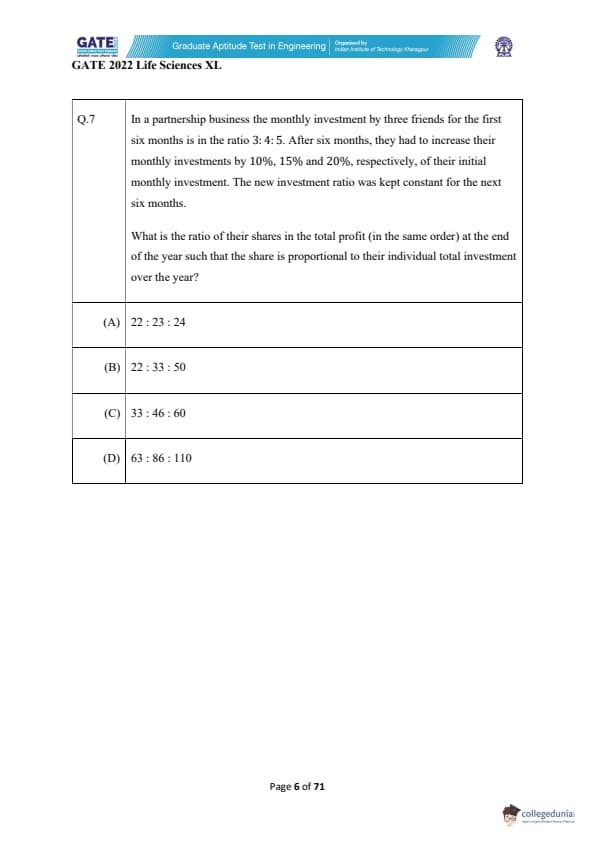
In a partnership business, the monthly investment by three friends for the first six months is in the ratio 3: 4: 5. After six months, they had to increase their monthly investments by 10%, 15%, and 20%, respectively, of their initial monthly investment. The new investment ratio was kept constant for the next six months. What is the ratio of their shares in the total profit (in the same order) at the end of the year such that the share is proportional to their individual total investment over the year?
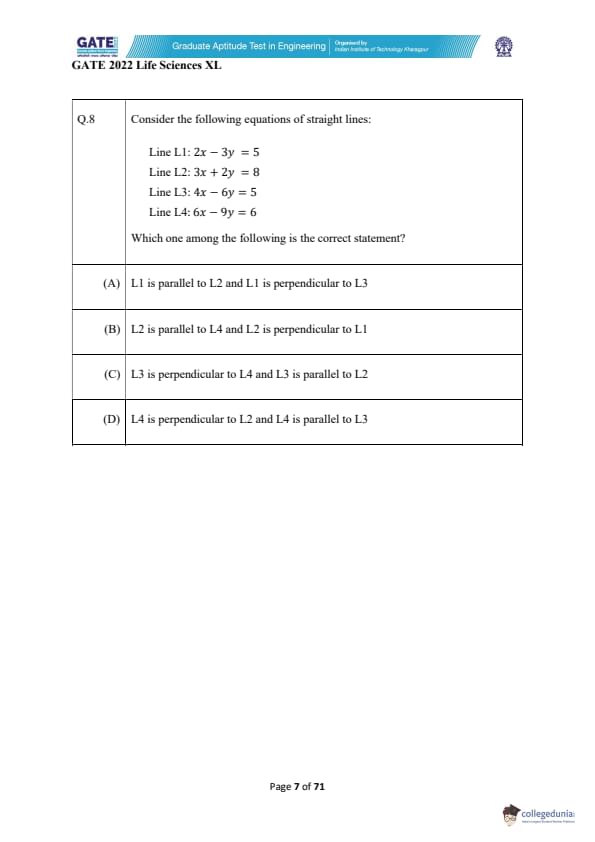
Consider the following equations of straight lines:
Line L1: \( 2x - 3y = 5 \)
Line L2: \( 3x + 2y = 8 \)
Line L3: \( 4x - 6y = 5 \)
Line L4: \( 6x - 9y = 6 \)
Which one among the following is the correct statement?
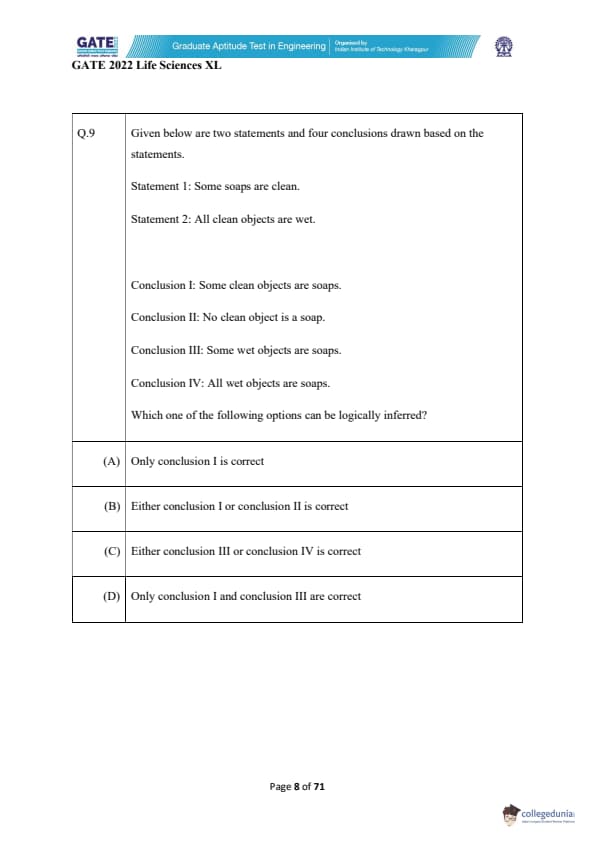
Given below are two statements and four conclusions drawn based on the statements.
Statement 1: Some soaps are clean.
Statement 2: All clean objects are wet.
Conclusion I: Some clean objects are soaps.
Conclusion II: No clean object is a soap.
Conclusion III: Some wet objects are soaps.
Conclusion IV: All wet objects are soaps.
Which one of the following options can be logically inferred?
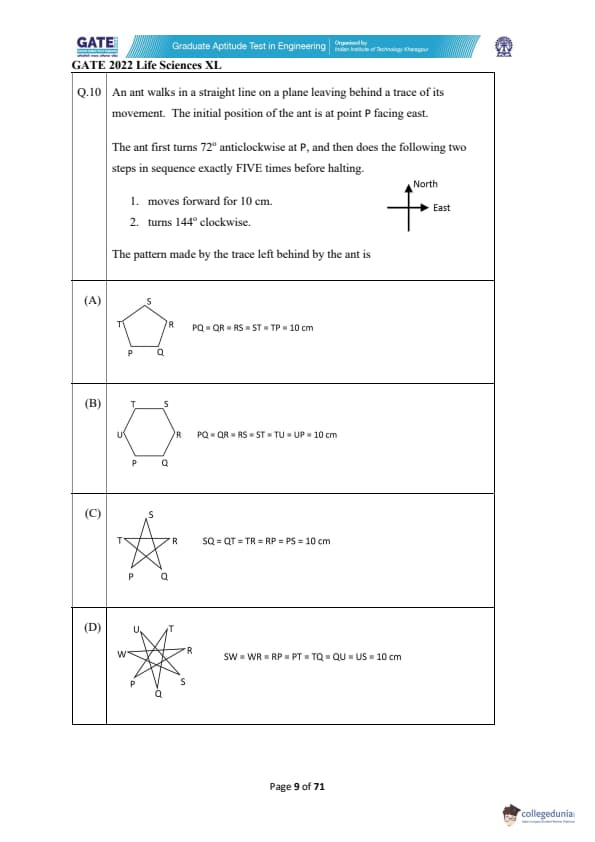
An ant walks in a straight line on a plane leaving behind a trace of its movement. The initial position of the ant is at point P facing east.
The ant first turns 72º anticlockwise at P, and then does the following two steps in sequence exactly FIVE times before halting.
1. Moves forward by 10 cm.
2. Turns 144º clockwise.
The pattern made by the trace left behind by the ant is:
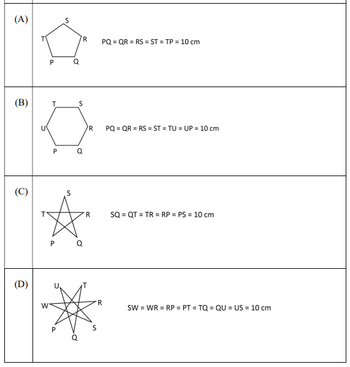
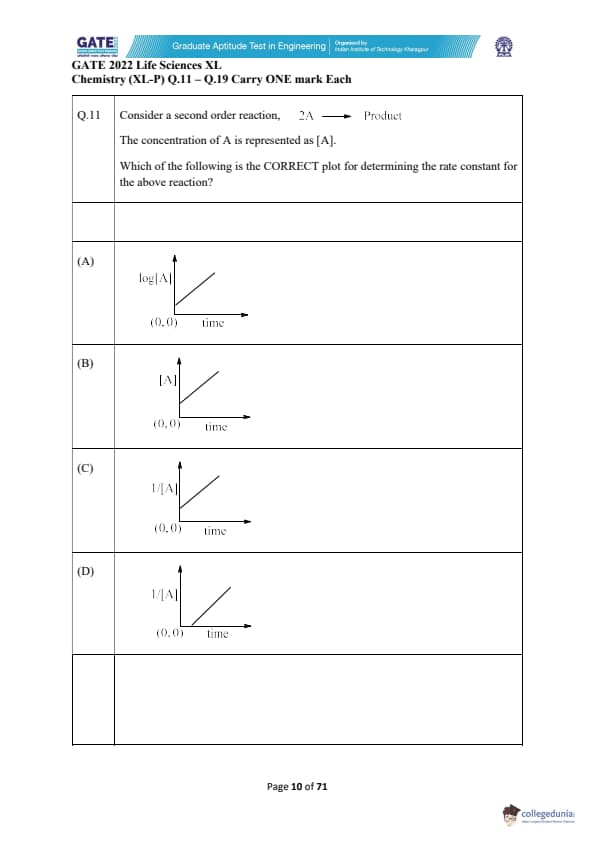
Consider a second order reaction, \( 2A \rightarrow Product \).
The concentration of A is represented as \( [A] \).
Which of the following is the CORRECT plot for determining the rate constant for the above reaction?

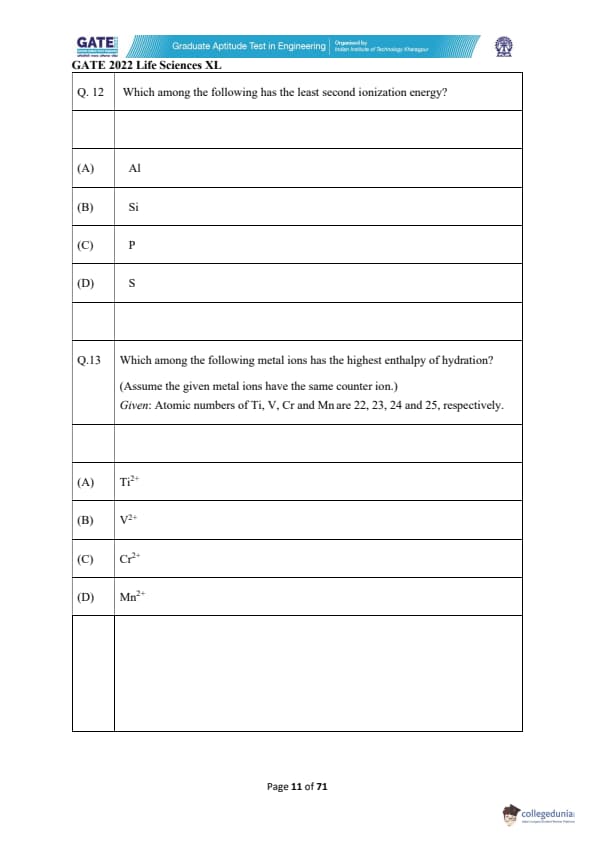
Which among the following has the least second ionization energy?
Which among the following metal ions has the highest enthalpy of hydration?
(Assume the given metal ions have the same counter ion.)
Given: Atomic numbers of Ti, V, Cr and Mn are 22, 23, 24 and 25, respectively.
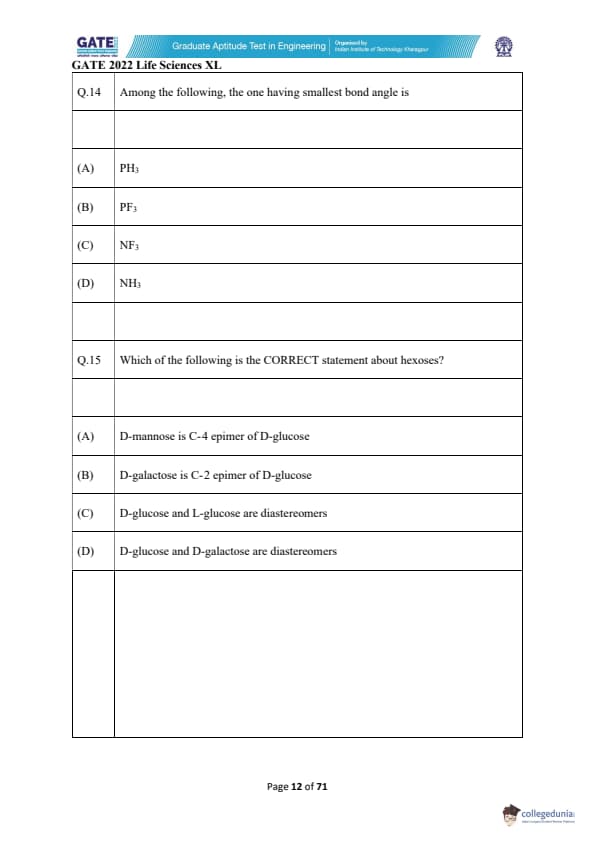
Among the following, the one having smallest bond angle is
Which of the following is the CORRECT statement about hexoses?
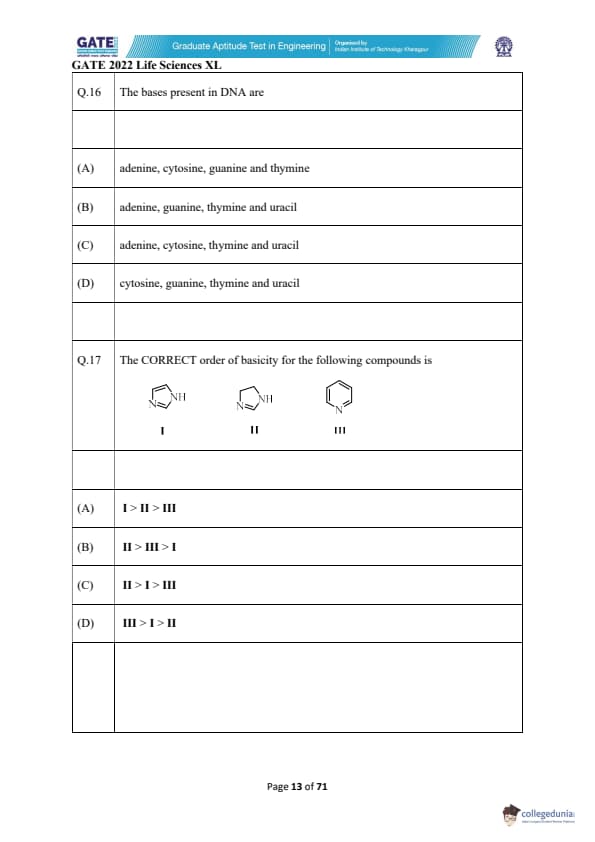
The bases present in DNA are
The CORRECT order of basicity for the following compounds is
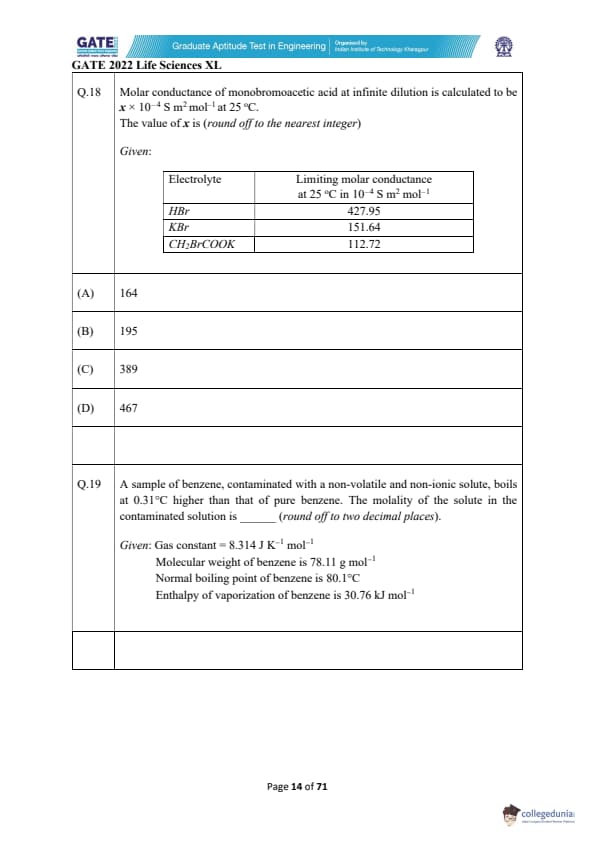
Molar conductance of monobromoacetic acid at infinite dilution is calculated to be \( x \times 10^{-4} \, S m^2 \, mol^{-1} \) at 25°C.
The value of \( x \) is (round off to the nearest integer).
% Given data \[ \begin{array{|c|c|} \hline Electrolyte & Limiting molar conductance at 25°C in 10^{-4} \, S m^2 \, mol^{-1}
\hline HBr & 427.95
KBr & 151.64
CH_2BrCOOK & 112.72
\hline \end{array} \]
A sample of benzene, contaminated with a non-volatile and non-ionic solute, boils at 0.31°C higher than that of pure benzene. The molality of the solute in the contaminated solution is ________ (round off to two decimal places).
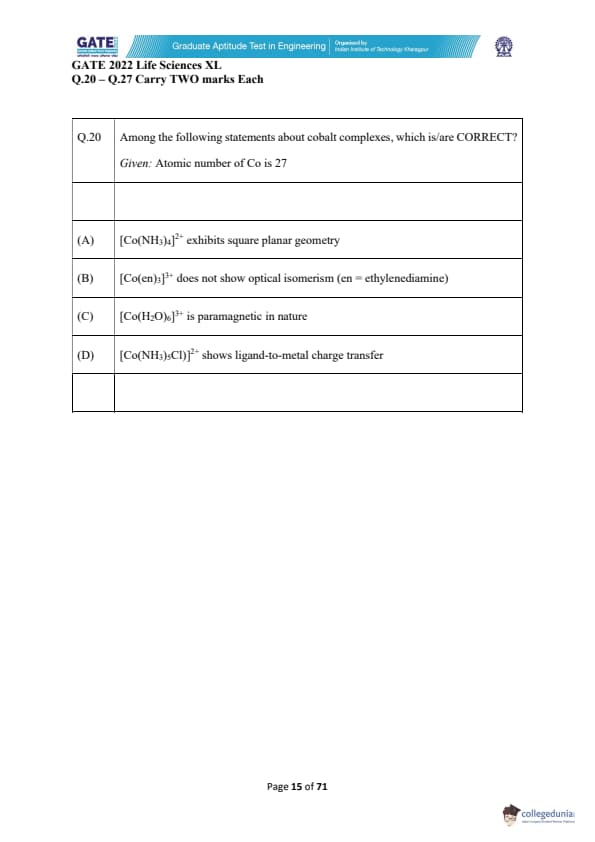
Among the following statements about cobalt complexes, which is/are CORRECT?
Given: Atomic number of Co is 27
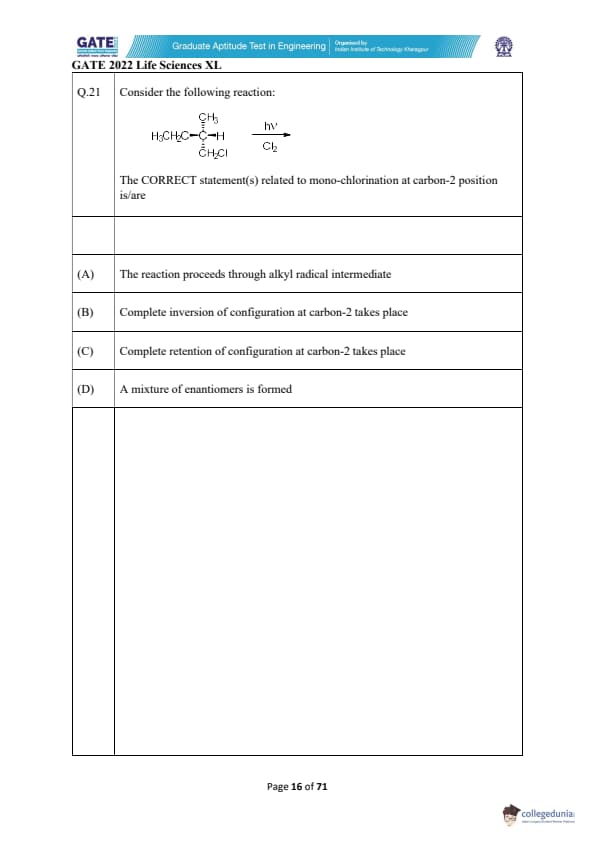
Consider the following reaction:
The CORRECT statement(s) related to mono-chlorination at carbon-2 position is/are
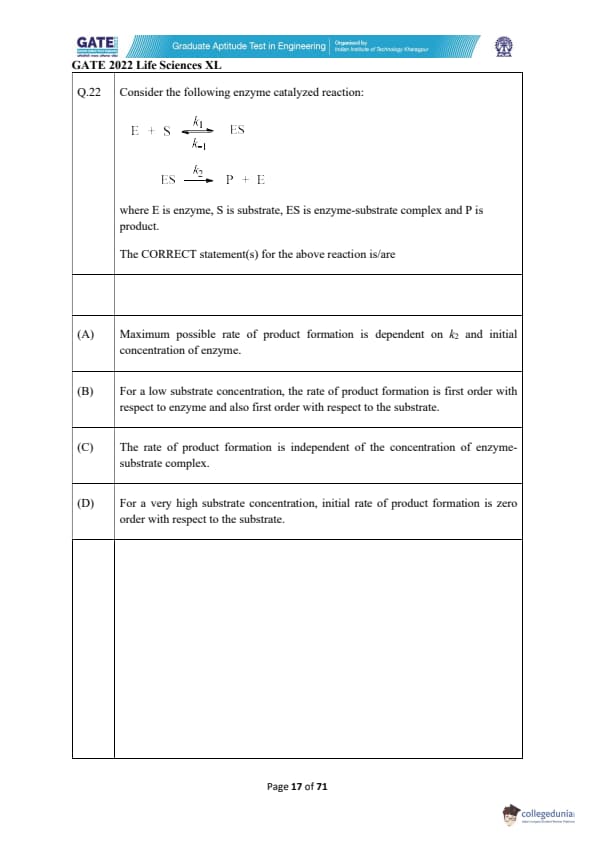
Consider the following enzyme catalyzed reaction:
where \( E \) is enzyme, \( S \) is substrate, \( ES \) is enzyme-substrate complex, and \( P \) is product.
The CORRECT statement(s) for the above reaction is/are
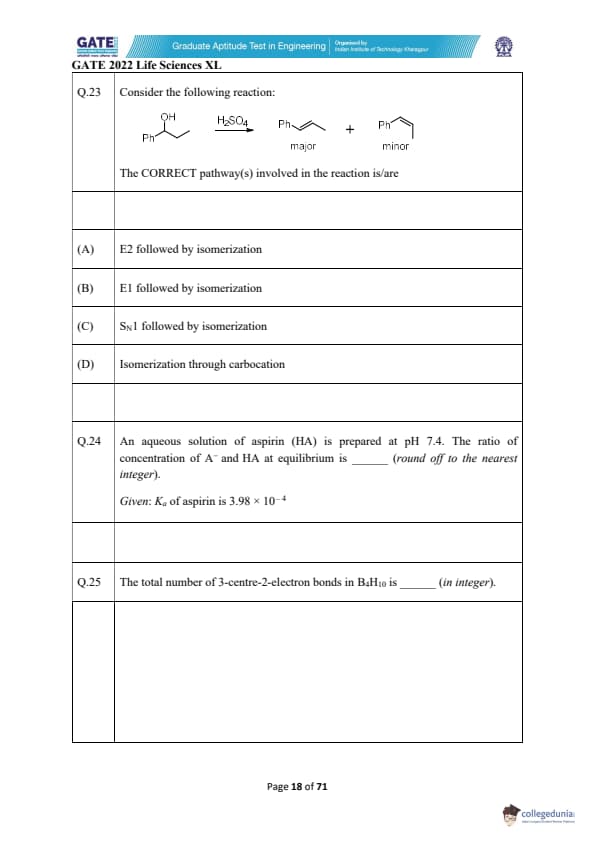
Consider the following reaction:
The CORRECT pathway(s) involved in the reaction is/are
An aqueous solution of aspirin (HA) is prepared at pH 7.4. The ratio of concentration of \( A^- \) and \( HA \) at equilibrium is ________. (round off to the nearest integer).
The total number of 3-centre-2-electron bonds in \( B_4H_{10} \) is ________. (in integer).
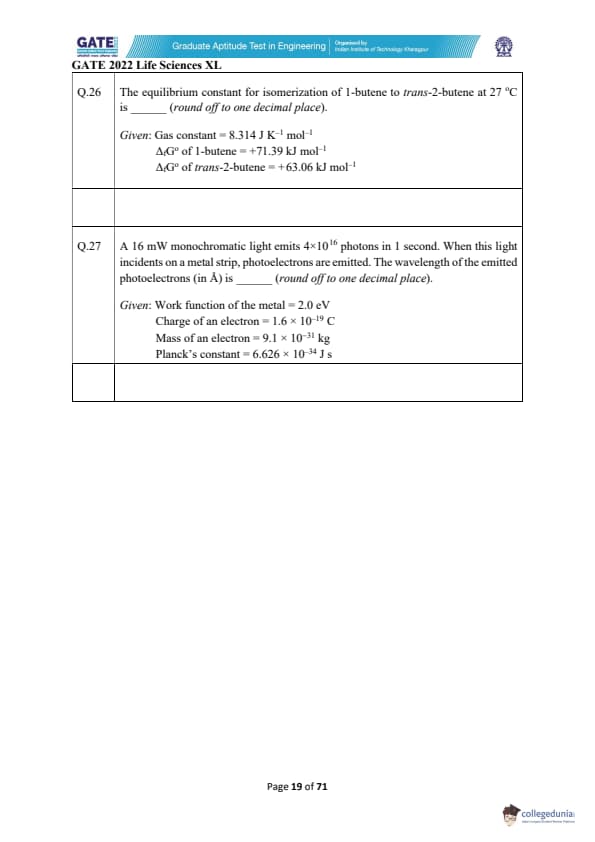
The equilibrium constant for isomerization of 1-butene to trans-2-butene at 27°C is ________ (round off to one decimal place).
A 16 mW monochromatic light emits \( 4 \times 10^{16} \) photons in 1 second. When this light incident on a metal strip, photoelectrons are emitted. The wavelength of the emitted photoelectrons (in Å) is ________ (round off to one decimal place).
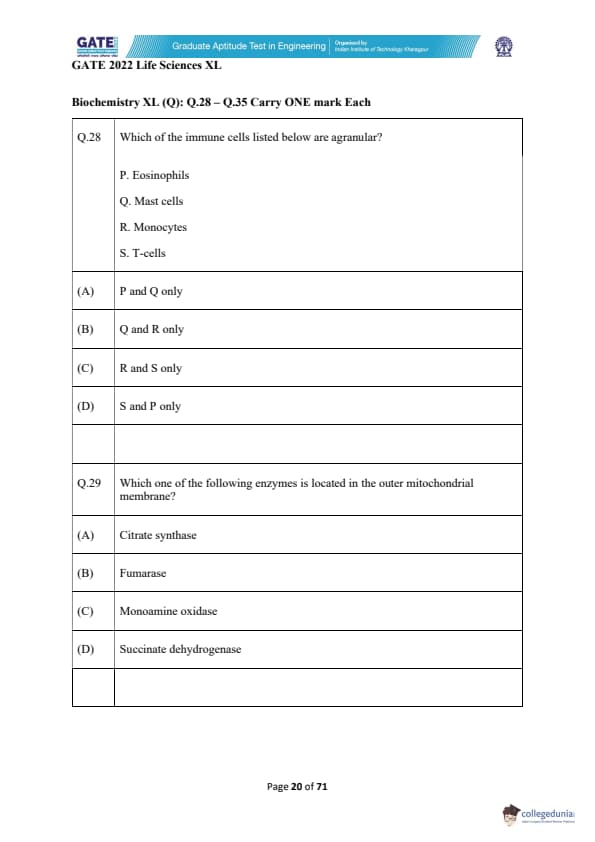
Which of the immune cells listed below are agranular?
P. Eosinophils
Q. Mast cells
R. Monocytes
S. T-cells
Which one of the following enzymes is located in the outer mitochondrial membrane?
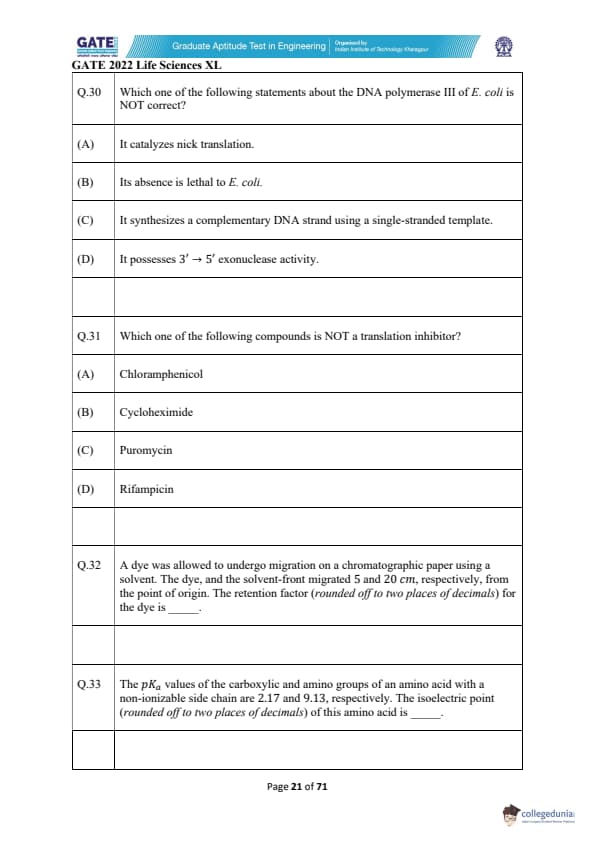
Which one of the following statements about the DNA polymerase III of E. coli is NOT correct?
Which one of the following compounds is NOT a translation inhibitor?
A dye was allowed to undergo migration on a chromatographic paper using a solvent. The dye, and the solvent-front migrated 5 and 20 cm, respectively, from the point of origin. The retention factor (rounded off to two places decimal) for the dye is ________.
The \( pK_a \) values of the carboxylic and amino groups of an amino acid with a non-ionizable side chain are 2.17 and 9.13, respectively. The isoelectric point (rounded off to two places decimals) of this amino acid is ________.
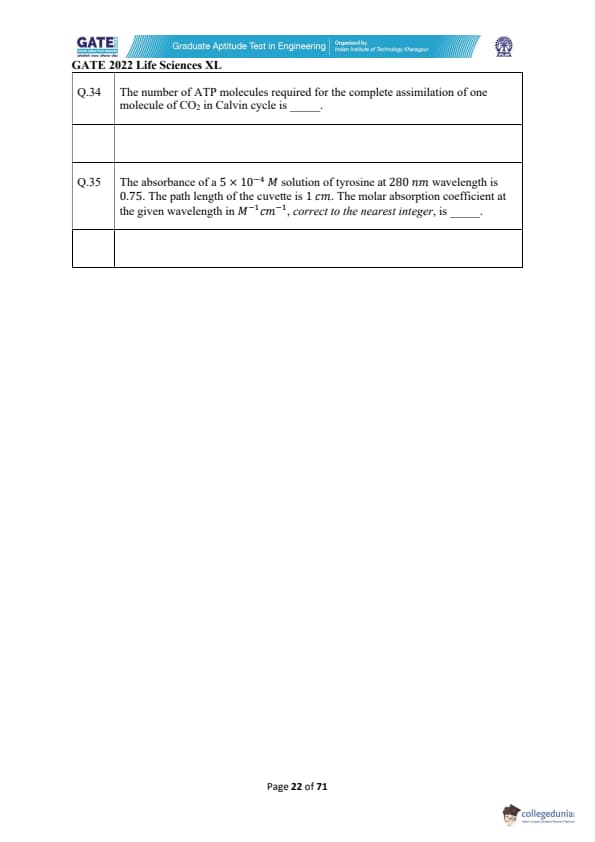
The number of ATP molecules required for the complete assimilation of one molecule of CO\(_2\) in the Calvin cycle is ______.
The absorbance of a \( 5 \times 10^{-4} \, M \) solution of tyrosine at 280 nm wavelength is 0.75. The path length of the cuvette is 1 cm. The molar absorption coefficient at the given wavelength in \( M^{-1} cm^{-1} \), correct to the nearest integer, is ______.
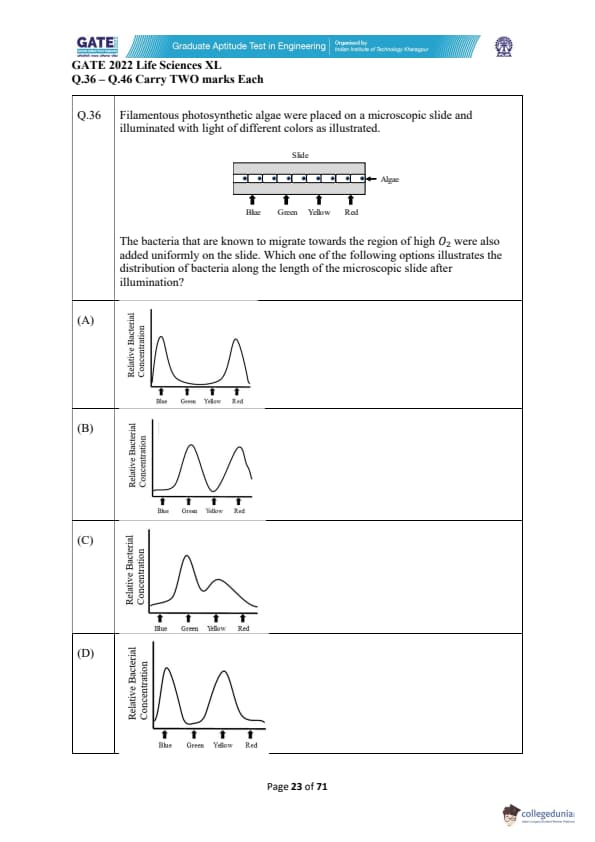
Filamentous photosynthetic algae were placed on a microscopic slide and illuminated with light of different colors as illustrated.
The bacteria that are known to migrate towards the region of high \( O_2 \) were also added uniformly on the slide. Which one of the following options illustrates the distribution of bacteria along the length of the microscopic slide after illumination?
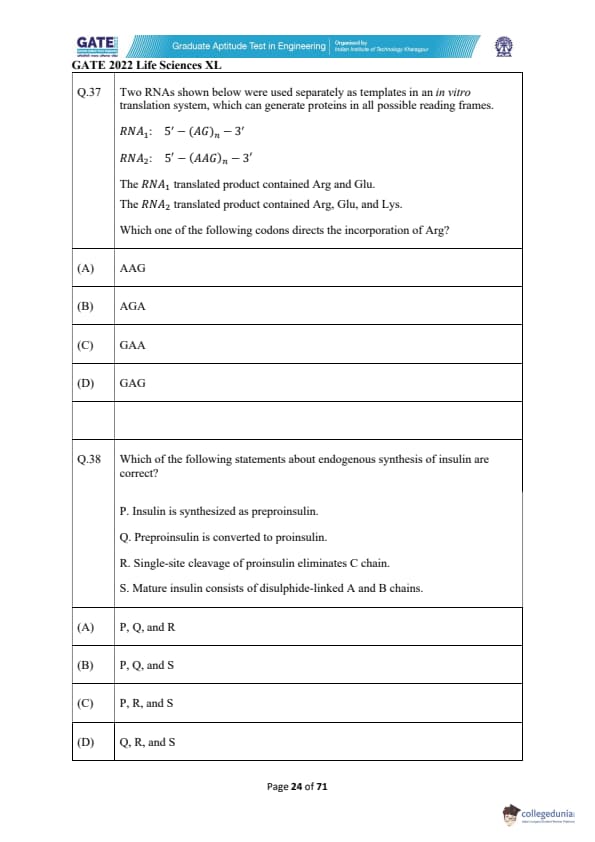
Two RNAs shown below were used separately as templates in an in vitro translation system, which can generate proteins in all possible reading frames.
\[ RNA_1: 5' - (AG)_n - 3' \quad and \quad RNA_2: 5' - (AAG)_n - 3' \]
The RNA_1 translated product contained Arg and Glu.
The RNA_2 translated product contained Arg, Glu, and Lys.
Which one of the following codons directs the incorporation of Arg?
Which of the following statements about endogenous synthesis of insulin are correct?
\[ P. Insulin is synthesized as preproinsulin. \quad Q. Preproinsulin is converted to proinsulin. \quad R. Single-site cleavage of proinsulin eliminates C chain. \quad S. Mature insulin consists of disulfide-linked A and B chains. \]
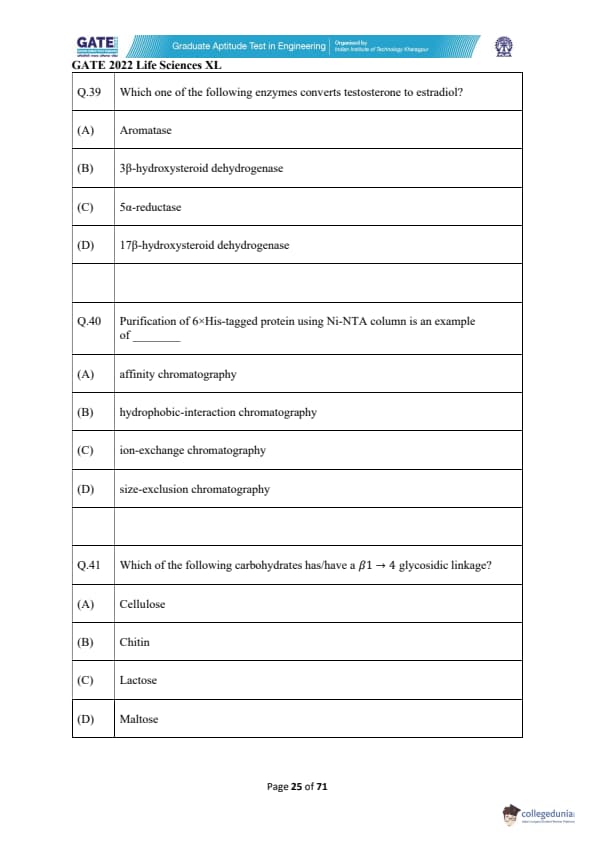
Which one of the following enzymes converts testosterone to estradiol?
Purification of 6×His-tagged protein using Ni-NTA column is an example of
Which of the following carbohydrates has/have a \( \beta 1 \to 4 \) glycosidic linkage?
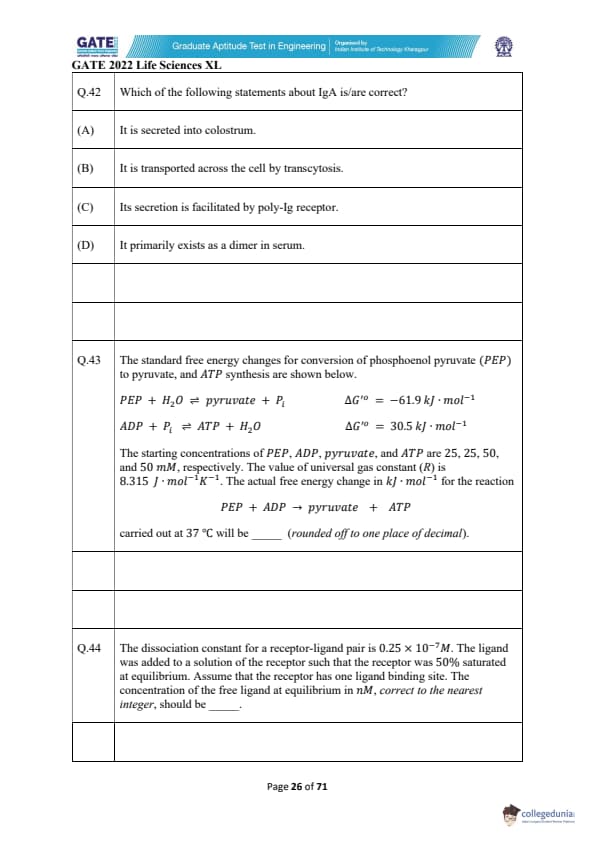
Which of the following statements about IgA is/are correct?
The standard free energy changes for conversion of phosphoenol pyruvate (PEP) to pyruvate, and ATP synthesis are shown below. \[ PEP + H_2O \rightleftharpoons pyruvate + P_i \quad \Delta G^\circ = -61.9 \, kJ/mol \] \[ ADP + P_i \rightleftharpoons ATP + H_2O \quad \Delta G^\circ = 30.5 \, kJ/mol \]
The starting concentrations of PEP, ADP, pyruvate, and ATP are 25, 25, 50, and 50 mM, respectively. The value of the universal gas constant (R) is 8.315 J·mol\(^{-1}\)·K\(^{-1}\). The actual free energy change in kJ·mol\(^{-1}\) for the reaction
\[ PEP + ADP \rightarrow pyruvate + ATP \]
carried out at 37°C will be ________ (rounded off to one place of decimal).
The dissociation constant for a receptor-ligand pair is \( 0.25 \times 10^{-7} \, M \). The ligand was added to a solution of the receptor such that the receptor was 50% saturated at equilibrium. Assume that the receptor has one ligand binding site. The concentration of the free ligand at equilibrium in nM, correct to the nearest integer, should be ________.
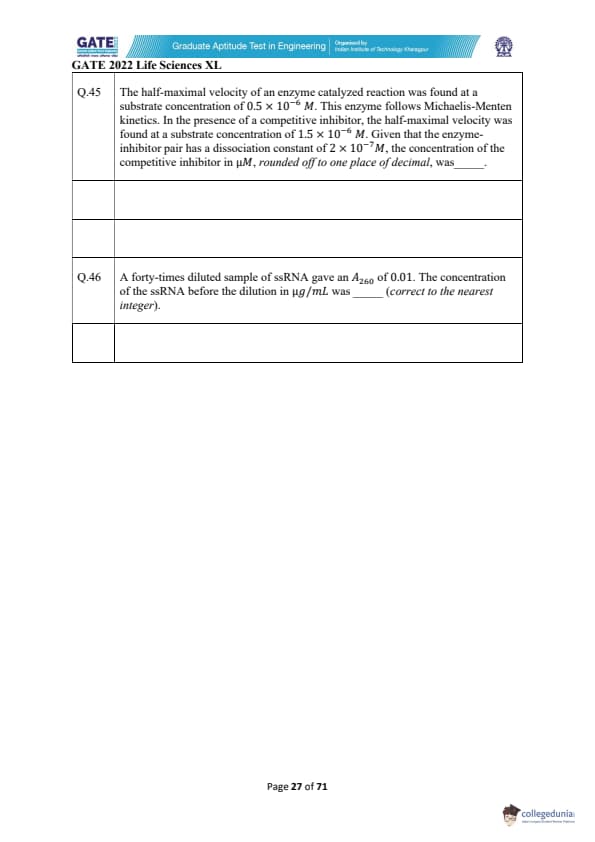
The half-maximal velocity of an enzyme catalyzed reaction was found at a substrate concentration of \(0.5 \times 10^{-6} \, M\). This enzyme follows Michaelis-Menten kinetics. In the presence of a competitive inhibitor, the half-maximal velocity was found at a substrate concentration of \(1.5 \times 10^{-6} \, M\). Given that the enzyme-inhibitor pair has a dissociation constant of \(2 \times 10^{-7} \, M\), the concentration of the competitive inhibitor in \(\mu M\), rounded off to one place of decimal, was ______.
A forty-times diluted sample of ssRNA gave an \( A_{260} \) of 0.01. The concentration of the ssRNA before the dilution in \(\mu g/mL\) was ______ (correct to the nearest integer).
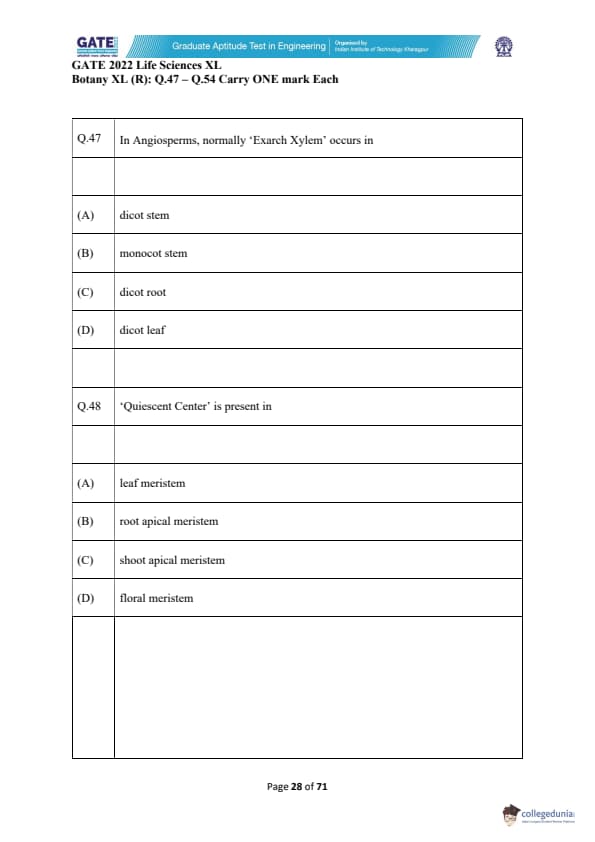
In Angiosperms, normally ‘Exarch Xylem’ occurs in
‘Quiescent Center’ is present in
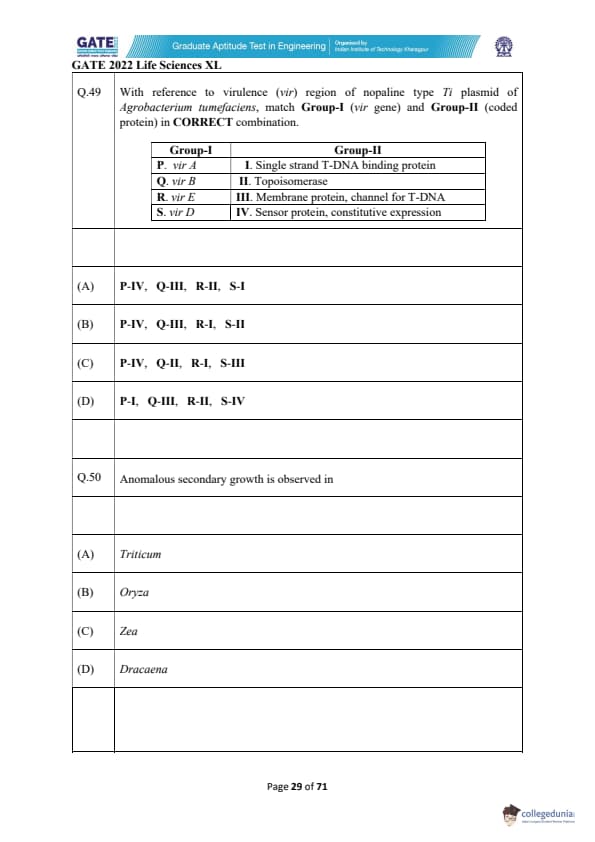
With reference to virulence (vir) region of nopaline type Ti plasmid of
Agrobacterium tumefaciens, match Group-I (vir gene) and Group-II (coded protein) in CORRECT combination.
\[ \begin{array}{|c|c|} \hline \textbf{Group-I} & \textbf{Group-II}
\hline P. vir A & I. Single strand T-DNA binding protein
Q. vir B & II. Topoisomerase
R. vir E & III. Membrane protein, channel for T-DNA
S. vir D & IV. Sensor protein, constitutive expression
\hline \end{array} \]
Which one of the following combinations is correct?
Anomalous secondary growth is observed in
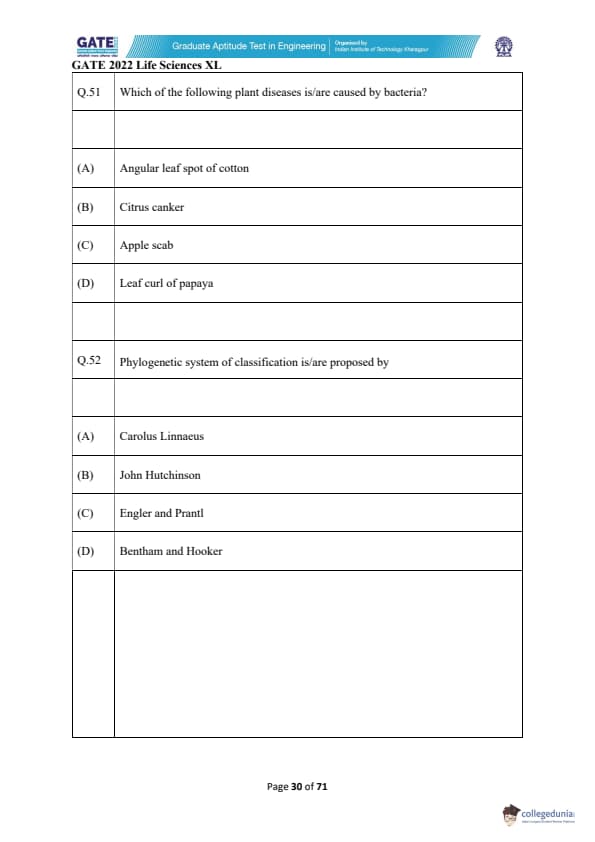
Which of the following plant diseases is/are caused by bacteria?
Phylogenetic system of classification is/are proposed by
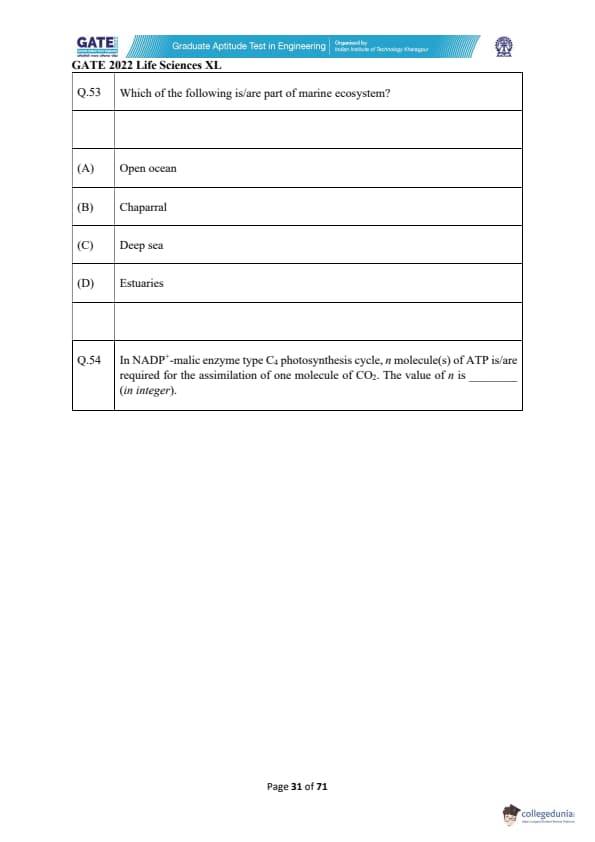
Which of the following is/are part of the marine ecosystem?
In NADP\(^+\)-malic enzyme type C\(_4\) photosynthesis cycle, \(n\) molecule(s) of ATP is/are required for the assimilation of one molecule of CO\(_2\). The value of \(n\) is ________ (in integer).
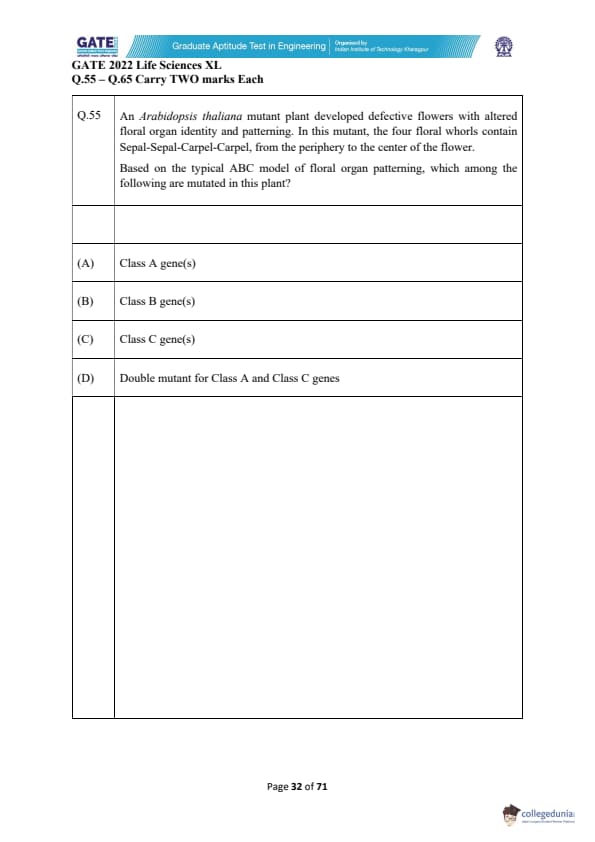
An Arabidopsis thaliana mutant plant developed defective flowers with altered floral organ identity and patterning. In this mutant, the four floral whorls contain Sepal-Sepal-Carpel-Carpel, from the periphery to the center of the flower. Based on the typical ABC model of floral organ patterning, which among the following are mutated in this plant?
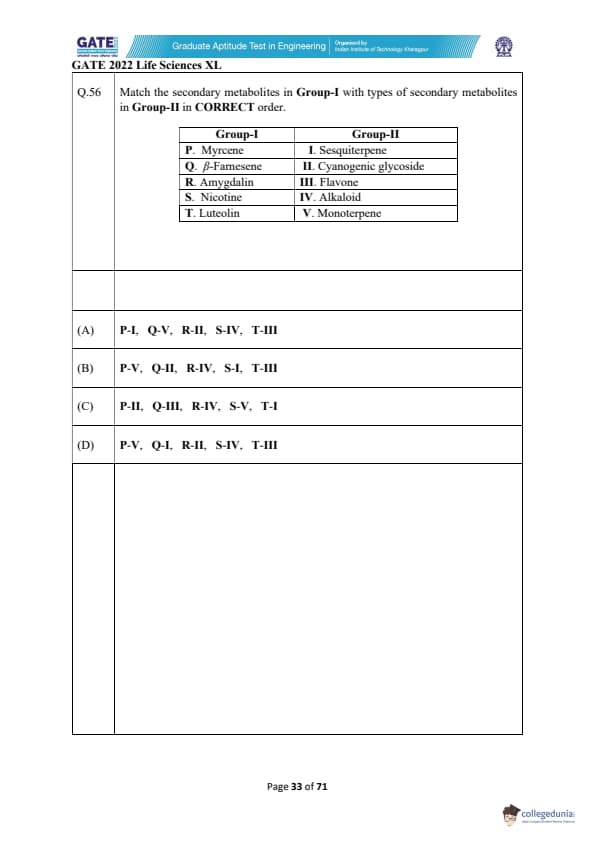
Match the secondary metabolites in Group-I with types of secondary metabolites in Group-II in CORRECT order.
Which one of the following combinations is correct?
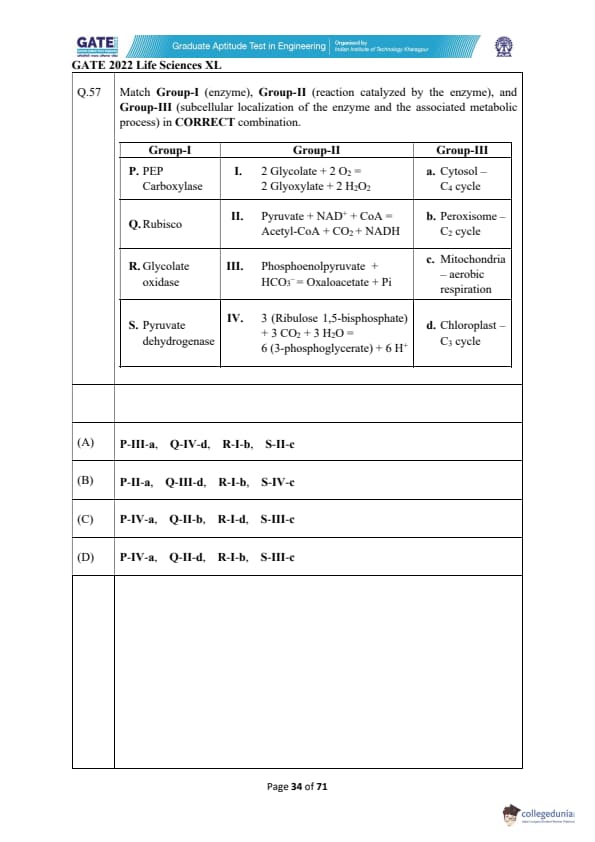
Match Group-I (enzyme), Group-II (reaction catalyzed by the enzyme), and Group-III (subcellular localization of the enzyme and the associated metabolic process) in the CORRECT combination.
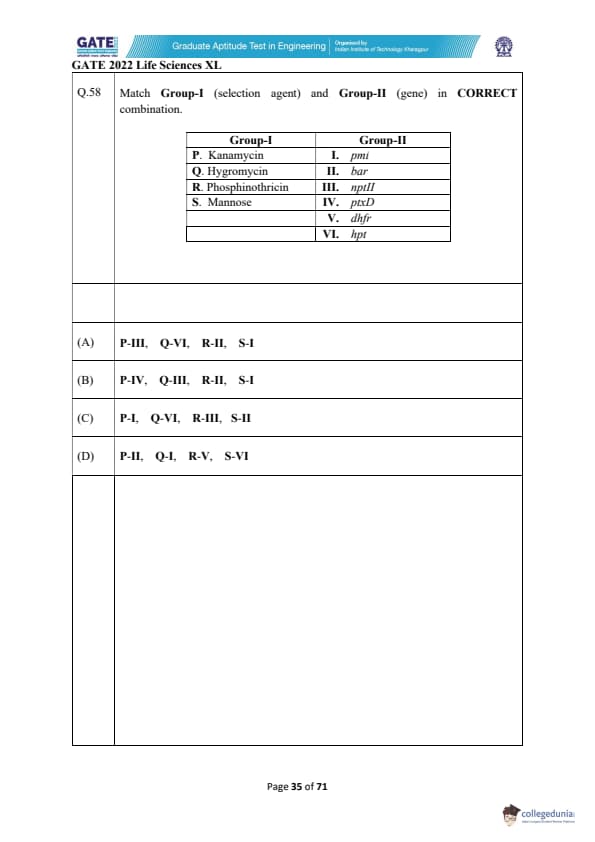
Match Group-I (selection agent) and Group-II (gene) in CORRECT combination.
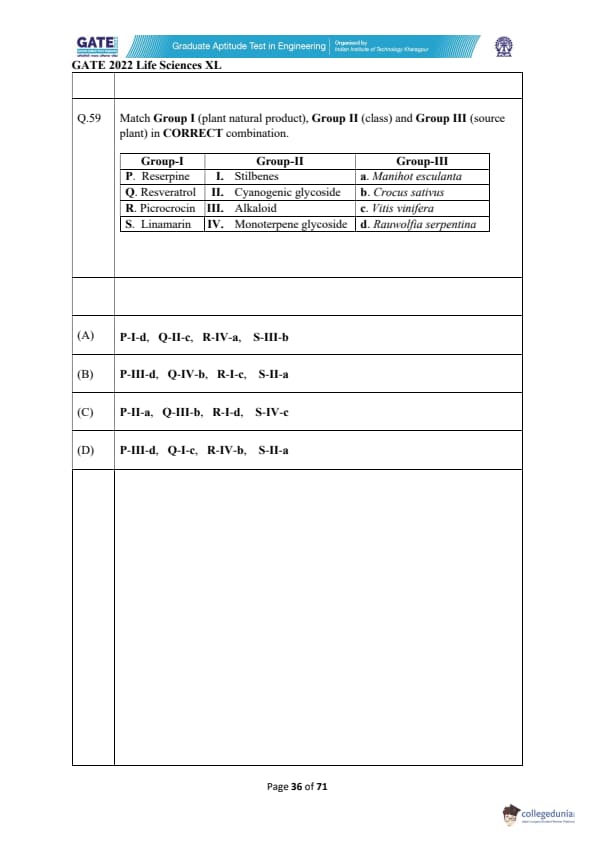
Match Group I (plant natural product), Group II (class) and Group III (source plant) in CORRECT combination.
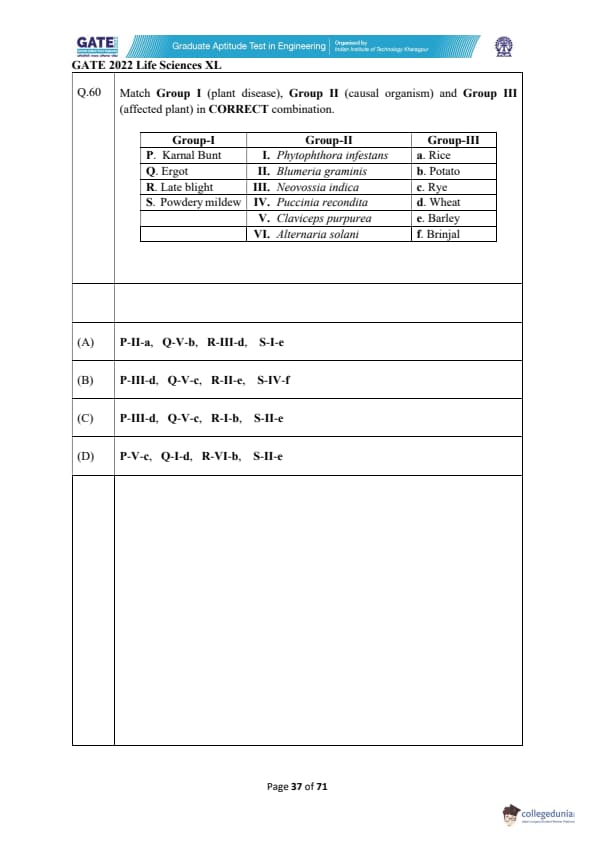
Match Group I (plant disease), Group II (causal organism) and Group III (affected plant) in \textbf{CORRECT} combination.
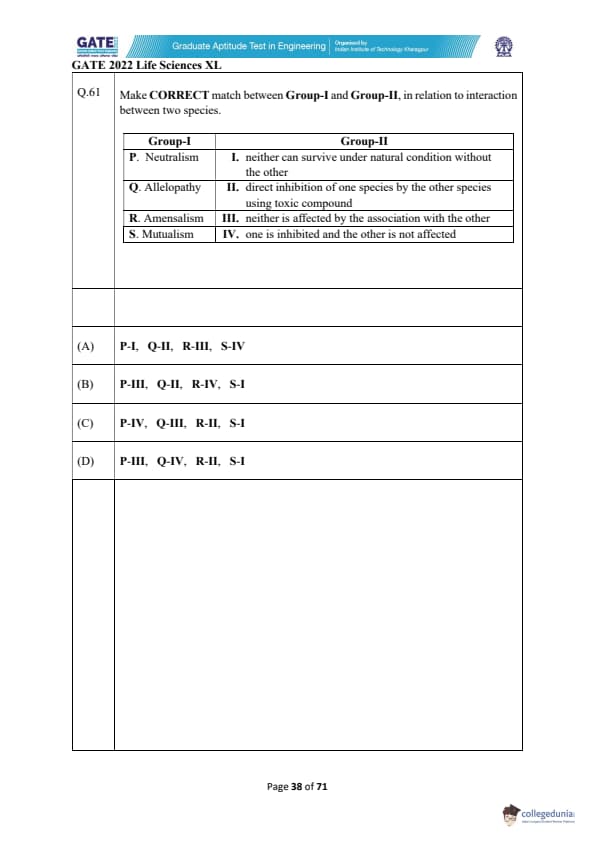
Make CORRECT match between Group-I and Group-II, in relation to interaction between two species.
Which one of the following combinations is correct?
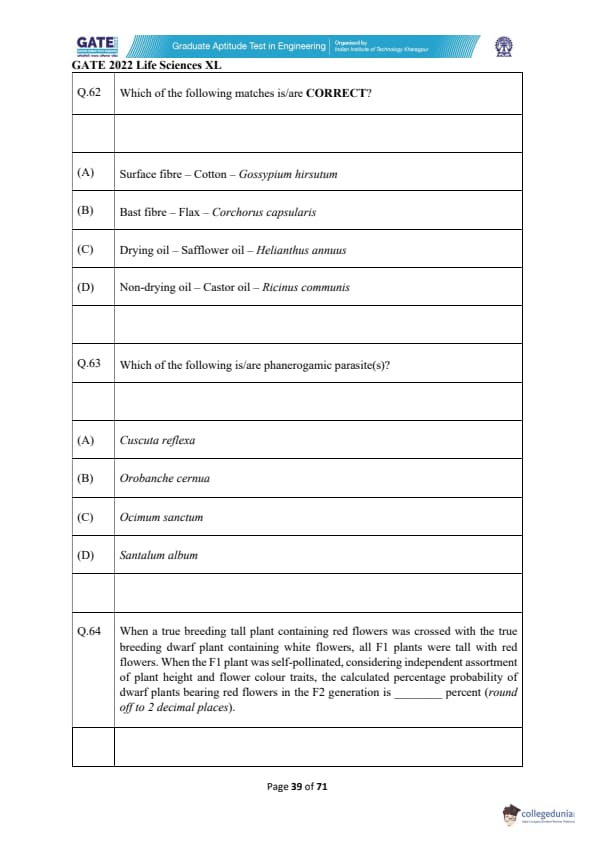
Which of the following matches is/are CORRECT?
Which of the following is/are phanerogamic parasite(s)?
When a true breeding tall plant containing red flowers was crossed with the true breeding dwarf plant containing white flowers, all F1 plants were tall with red flowers. When the F1 plant was self-pollinated, considering independent assortment of plant height and flower colour traits, the calculated percentage probability of dwarf plants bearing red flowers in the F2 generation is ________ percent (round off to 2 decimal places).
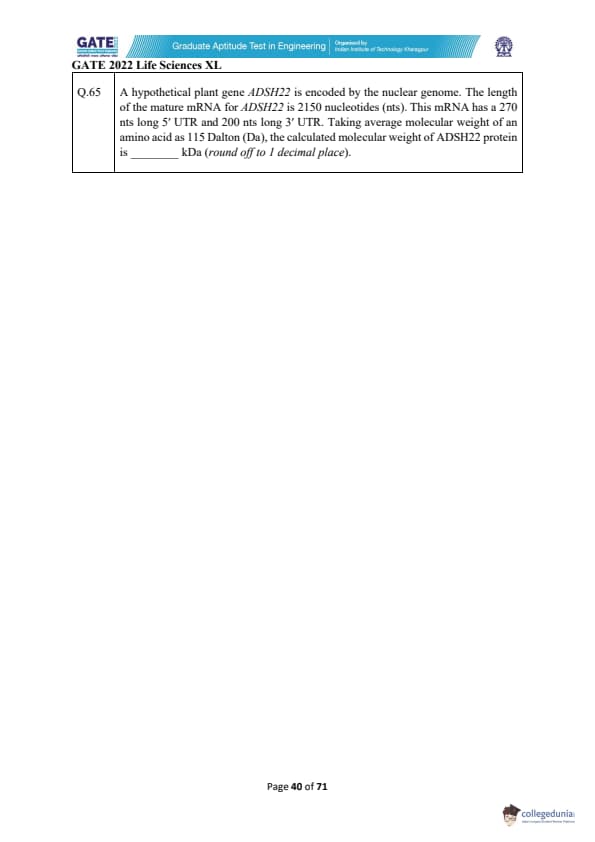
A hypothetical plant gene ADSH22 is encoded by the nuclear genome. The length of the mature mRNA for ADSH22 is 2150 nucleotides (nts). This mRNA has a 270 nts long 5' UTR and 200 nts long 3' UTR. Taking average molecular weight of an amino acid as 115 Dalton (Da), the calculated molecular weight of ADSH22 protein is ________ kDa (round off to 1 decimal place).
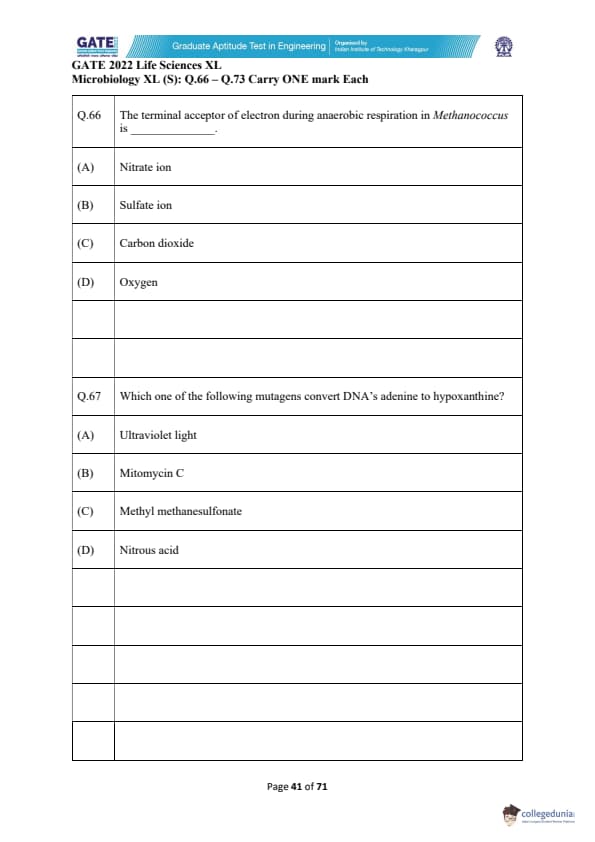
The terminal acceptor of electron during anaerobic respiration in Methanococcus is _________.
Which one of the following mutagens convert DNA’s adenine to hypoxanthine?
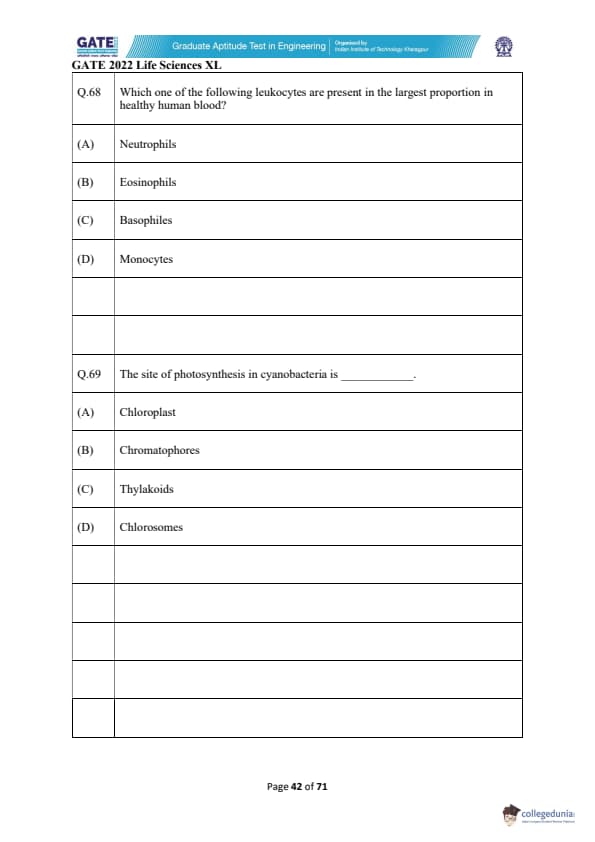
Which one of the following leukocytes are present in the largest proportion in healthy human blood?
The site of photosynthesis in cyanobacteria is ________.
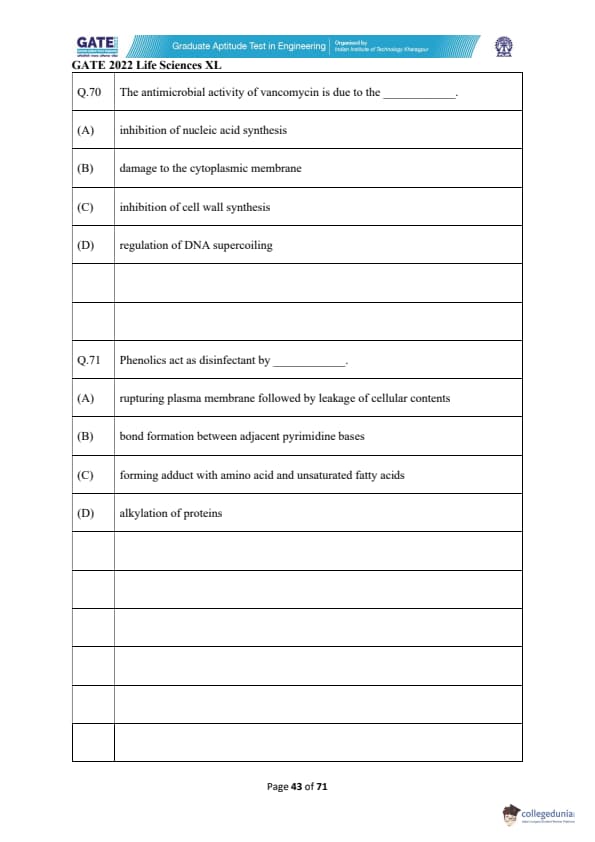
The antimicrobial activity of vancomycin is due to the _________.
Phenolics act as disinfectant by _________.
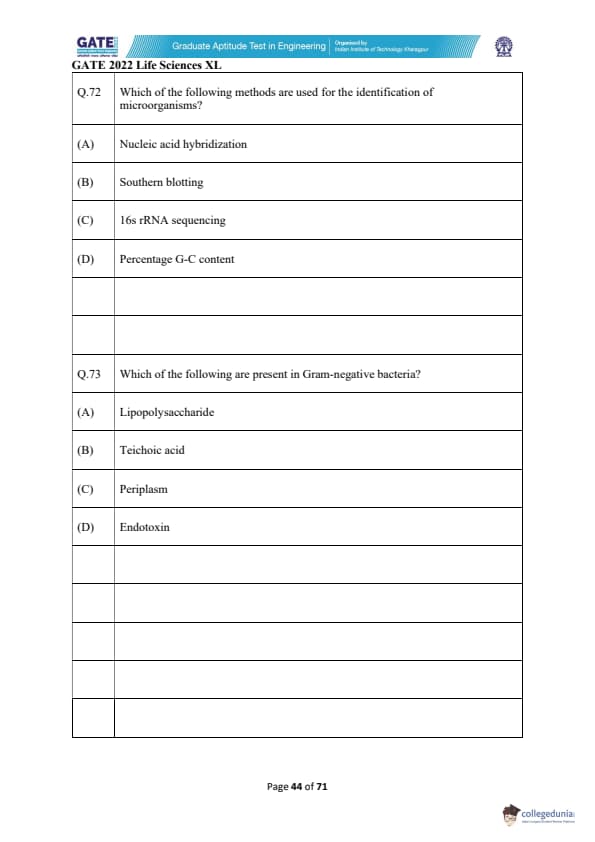
Which of the following methods are used for the identification of microorganisms?
Which of the following are present in Gram-negative bacteria?
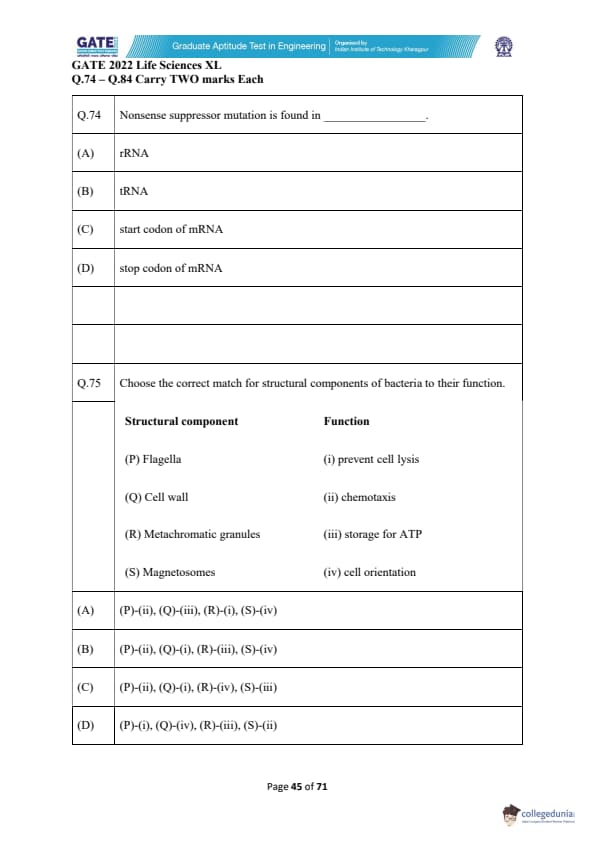
Nonsense suppressor mutation is found in _________.
Choose the correct match for structural components of bacteria to their function.
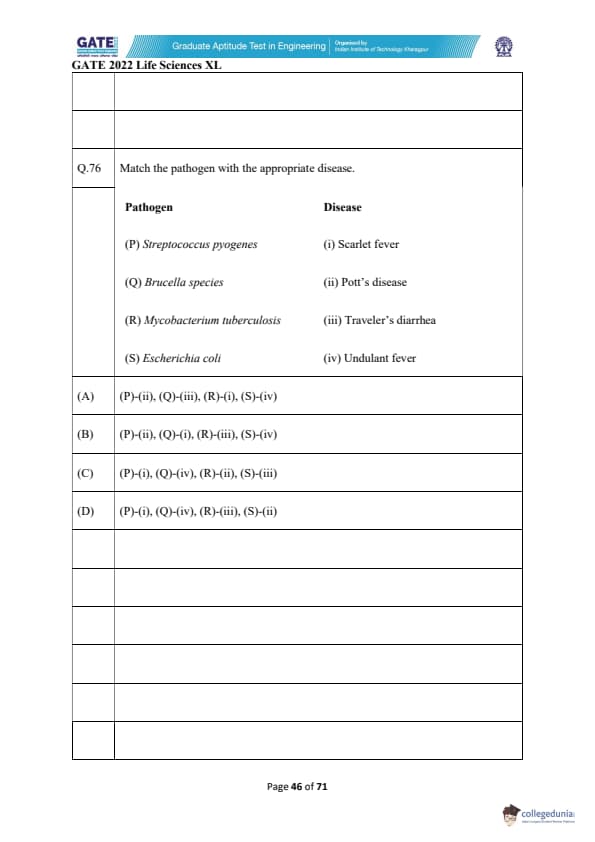
Match the pathogen with the appropriate disease.
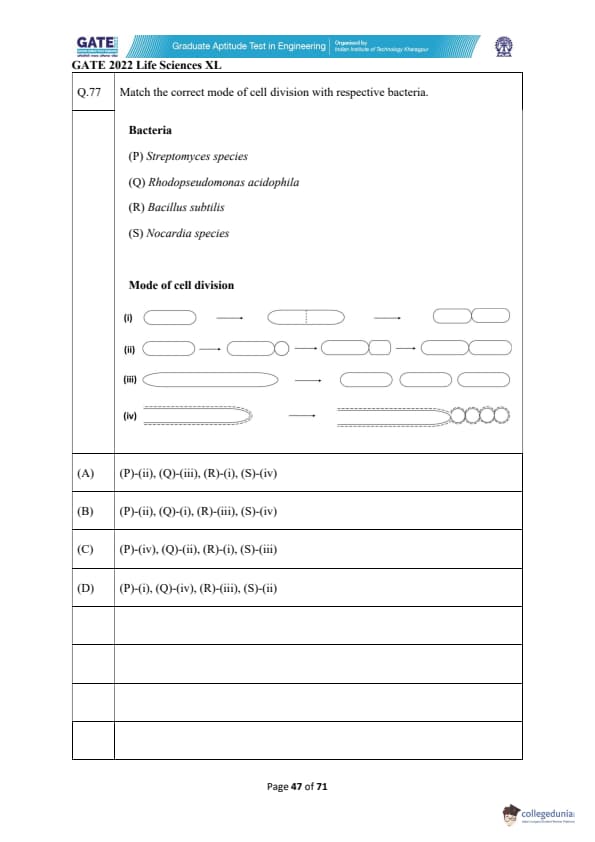
Match the correct mode of cell division with respective bacteria.
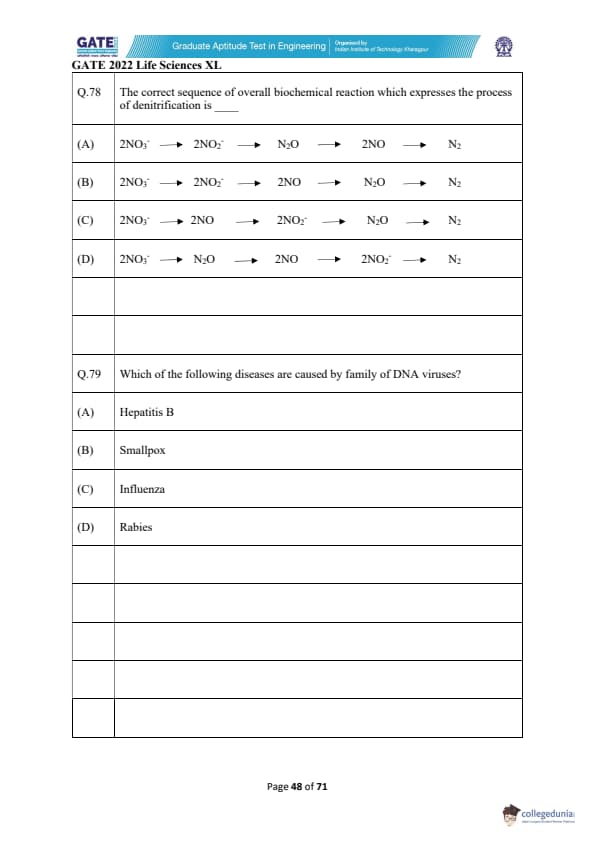
The correct sequence of overall biochemical reaction which expresses the process of denitrification is _________.
Which of the following diseases are caused by family of DNA viruses?
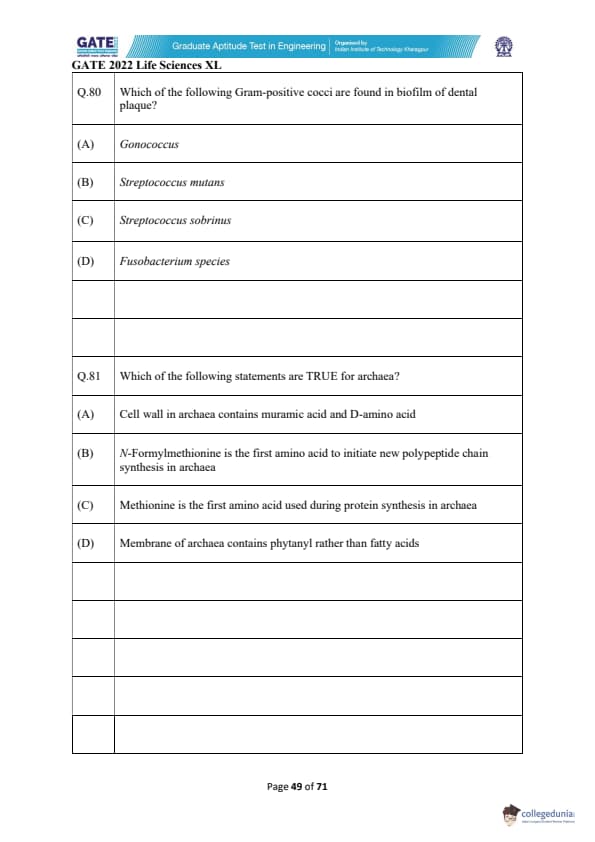
Which of the following Gram-positive cocci are found in biofilm of dental plaque?
Which of the following statements are TRUE for archaea?
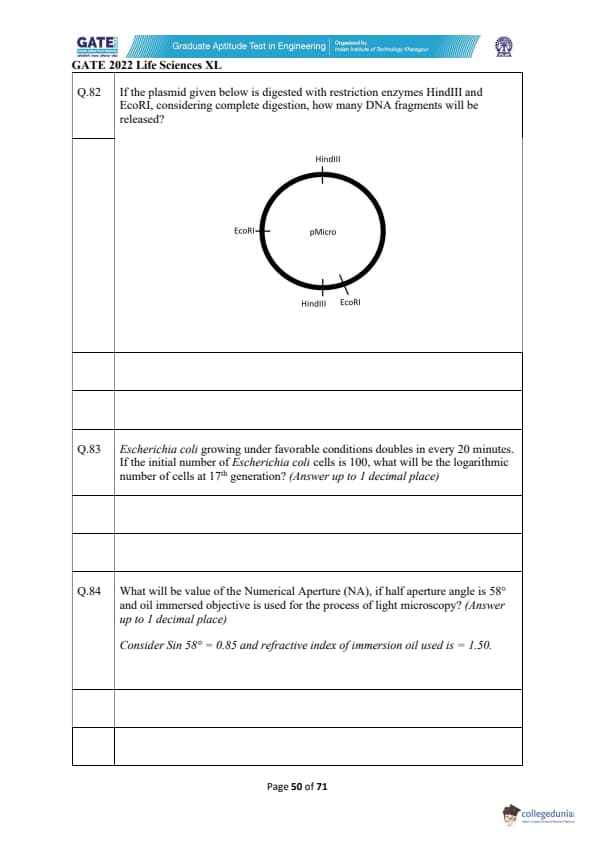
If the plasmid given below is digested with restriction enzymes HindIII and EcoRI, considering complete digestion, how many DNA fragments will be released?
Escherichia coli growing under favorable conditions doubles in every 20 minutes. If the initial number of Escherichia coli cells is 100, what will be the logarithmic number of cells at 17th generation? (Answer up to 1 decimal place)
What will be the value of the Numerical Aperture (NA), if the half aperture angle is 58° and oil-immersed objective is used for the process of light microscopy? (Answer up to 1 decimal place)
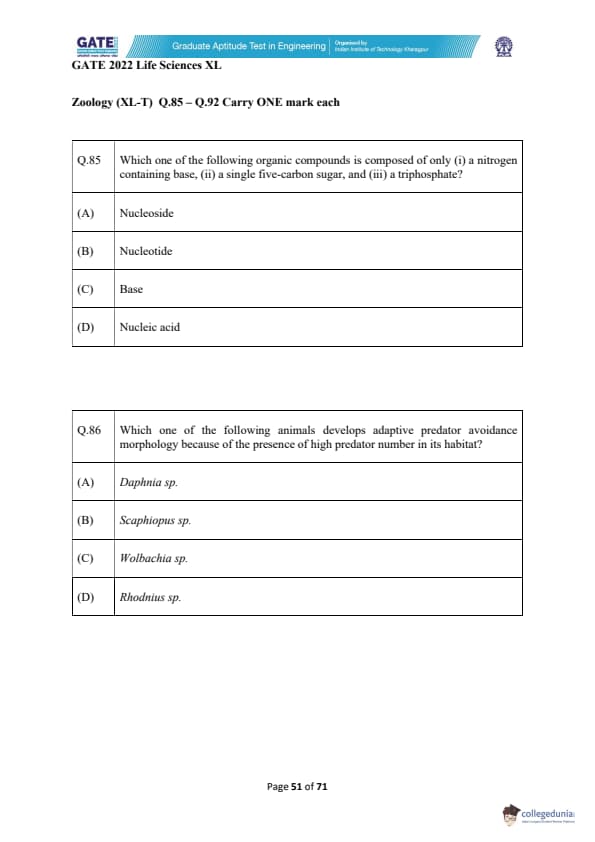
Which one of the following organic compounds is composed of only (i) a nitrogen containing base, (ii) a single five-carbon sugar, and (iii) a triphosphate?
Which one of the following animals develops adaptive predator avoidance morphology because of the presence of high predator number in its habitat?
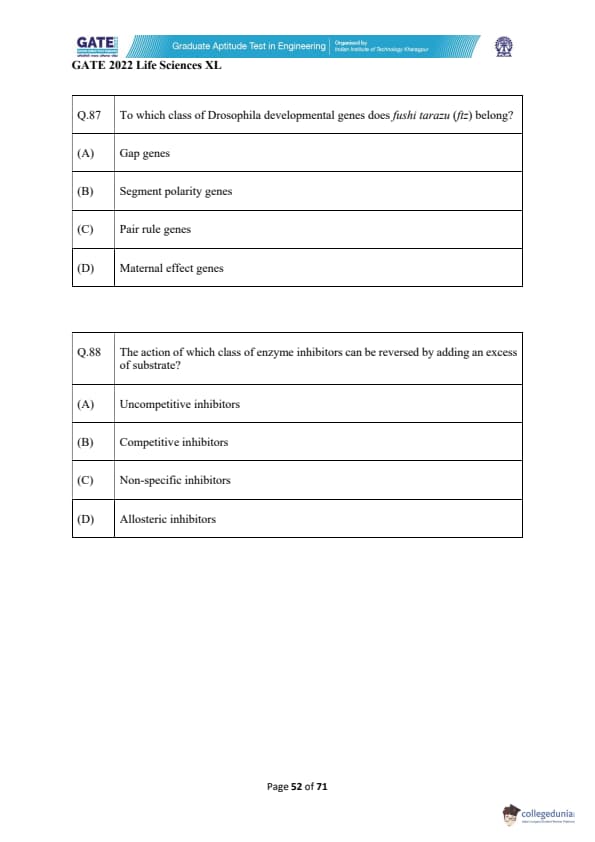
To which class of Drosophila developmental genes does fushi tarazu (ftz) belong?
The action of which class of enzyme inhibitors can be reversed by adding an excess of substrate?
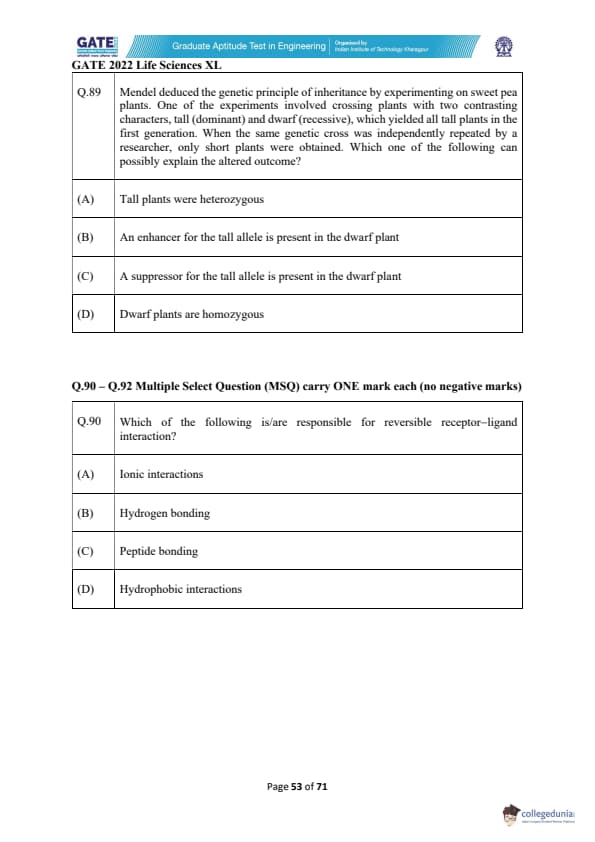
Mendel deduced the genetic principle of inheritance by experimenting on sweet pea plants. One of the experiments involved crossing plants with two contrasting characters, tall (dominant) and dwarf (recessive), which yielded all tall plants in the first generation. When the same genetic cross was independently repeated by a researcher, only short plants were obtained. Which one of the following can possibly explain the altered outcome?
Which of the following is/are responsible for reversible receptor–ligand interaction?
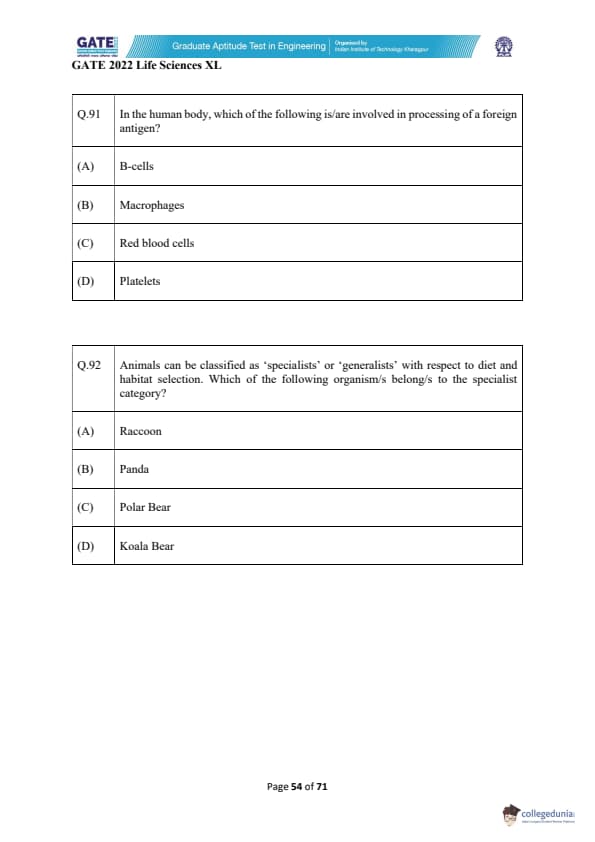
In the human body, which of the following is/are involved in processing of a foreign antigen?
Animals can be classified as ‘specialists’ or ‘generalists’ with respect to diet and habitat selection. Which of the following organism/s belong/s to the specialist category?
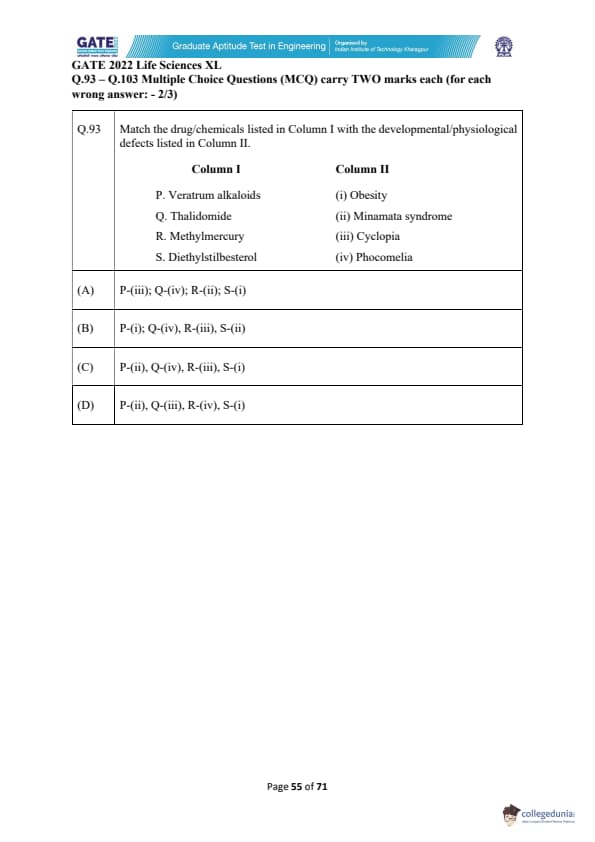
Match the drug/chemicals listed in Column I with the developmental/physiological defects listed in Column II.
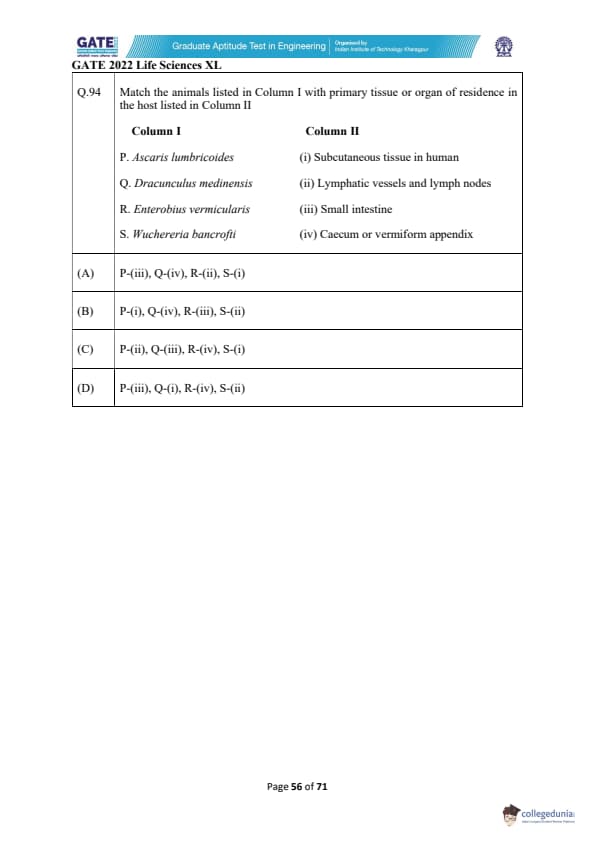
Match the animals listed in Column I with primary tissue or organ of residence in the host listed in Column II
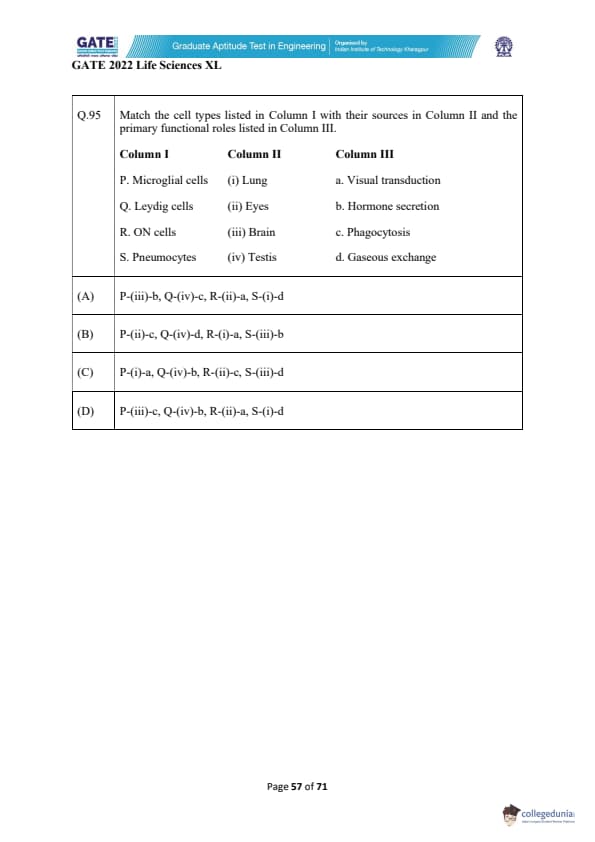
Match the cell types listed in Column I with their sources in Column II and the primary functional roles listed in Column III.
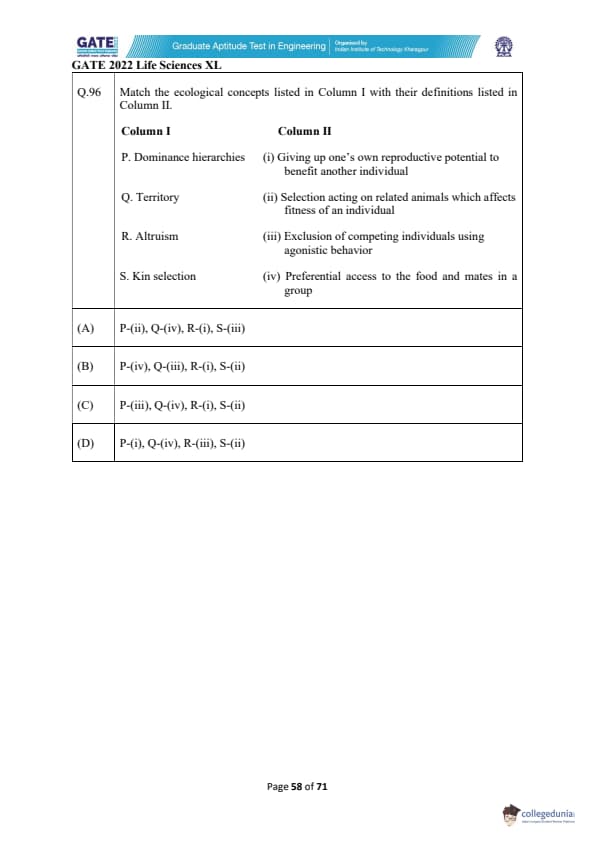
Match the ecological concepts listed in Column I with their definitions listed in Column II.
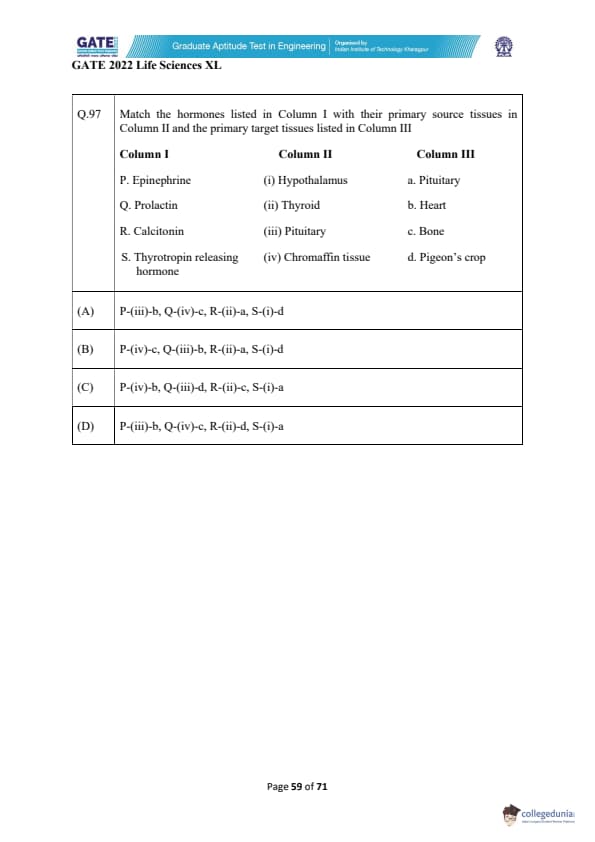
Match the hormones listed in Column I with their primary source tissues in Column II and the primary target tissues listed in Column III.
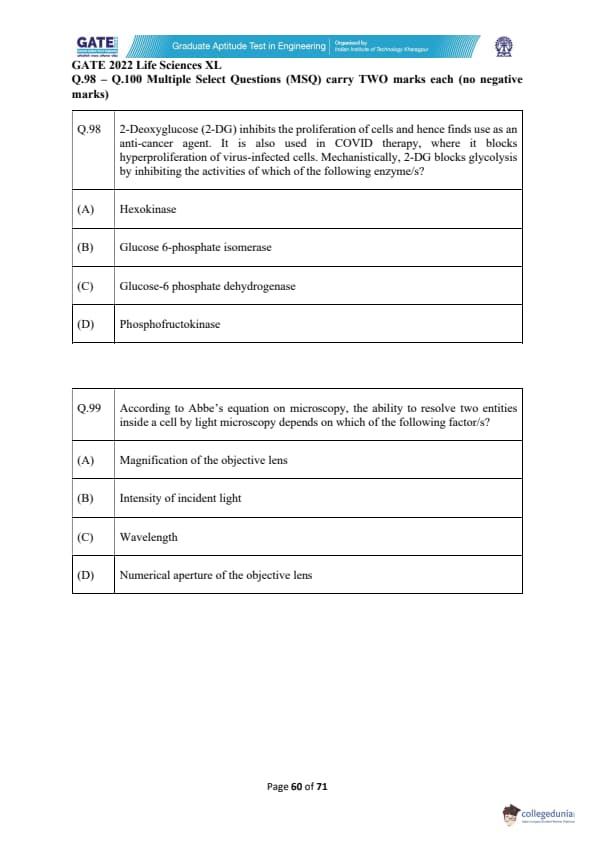
2-Deoxyglucose (2-DG) inhibits the proliferation of cells and hence finds use as an anti-cancer agent. It is also used in COVID therapy, where it blocks hyperproliferation of virus-infected cells. Mechanistically, 2-DG blocks glycolysis by inhibiting the activities of which of the following enzyme/s?
According to Abbe’s equation on microscopy, the ability to resolve two entities inside a cell by light microscopy depends on which of the following factor/s?
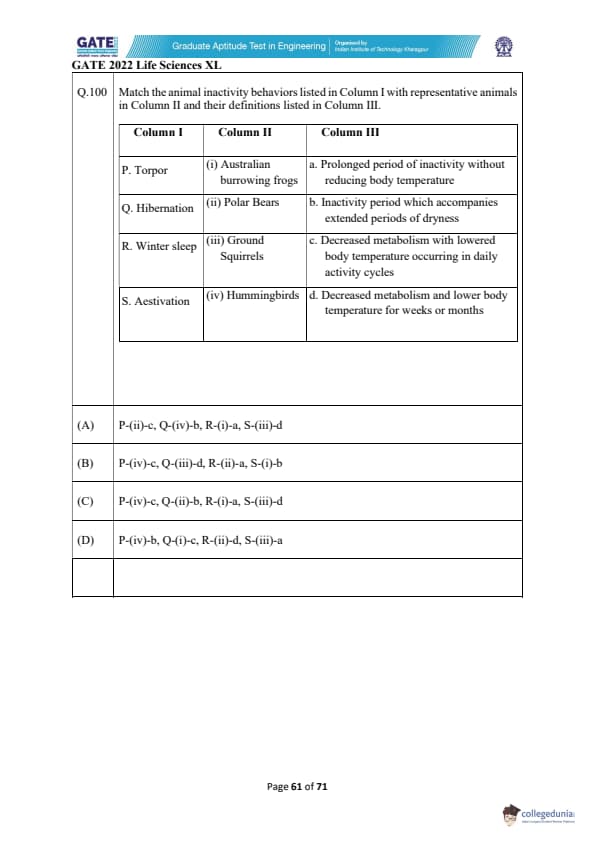
Match the animal inactivity behaviors listed in Column I with representative animals in Column II and their definitions listed in Column III.
Column III
(a) Prolonged period of inactivity without reducing body temperature
(b) Inactivity period which accompanies extended periods of dryness
(c) Decreased metabolism with lowered body temperature occurring in daily activity cycles
(d) Decreased metabolism and lower body temperature for weeks or months
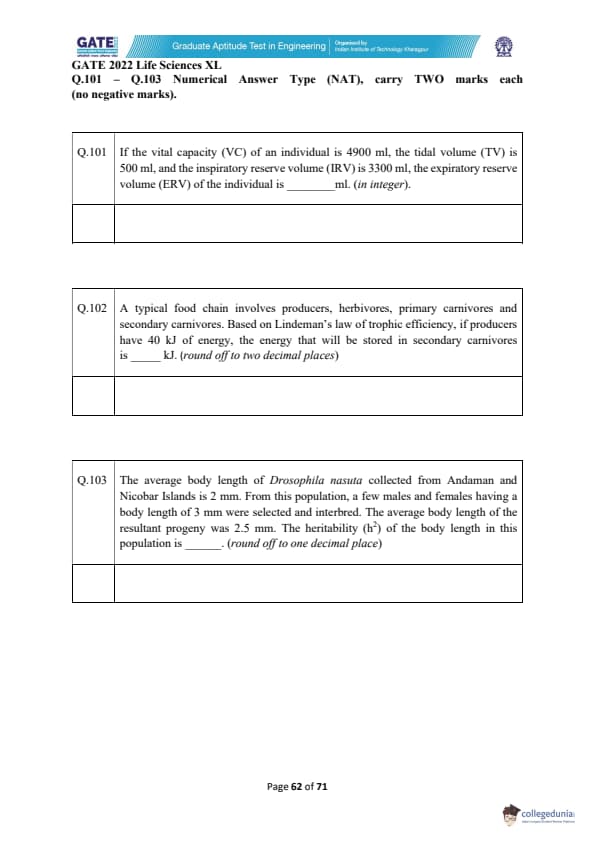
If the vital capacity (VC) of an individual is 4900 ml, the tidal volume (TV) is 500 ml, and the inspiratory reserve volume (IRV) is 3300 ml, the expiratory reserve volume (ERV) of the individual is ________ ml (in integer).
A typical food chain involves producers, herbivores, primary carnivores, and secondary carnivores. Based on Lindeman’s law of trophic efficiency, if producers have 40 kJ of energy, the energy that will be stored in secondary carnivores is ________ kJ (round off to two decimal places).
The average body length of Drosophila nasuta collected from Andaman and Nicobar Islands is 2 mm. From this population, a few males and females having a body length of 3 mm were selected and interbred. The average body length of the resultant progeny was 2.5 mm. The heritability (h²) of the body length in this population is ________. (round off to one decimal place)
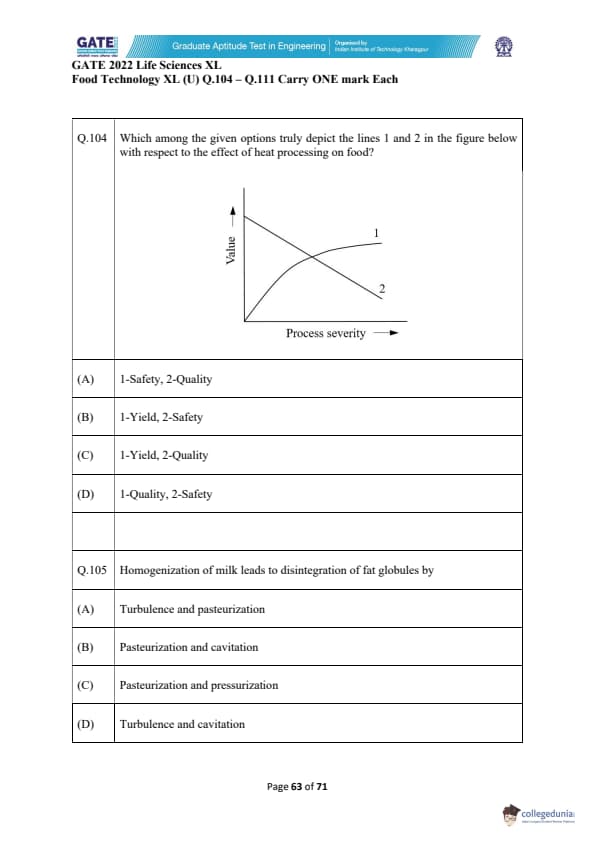
Which among the given options truly depict the lines 1 and 2 in the figure below with respect to the effect of heat processing on food?
Homogenization of milk leads to disintegration of fat globules by
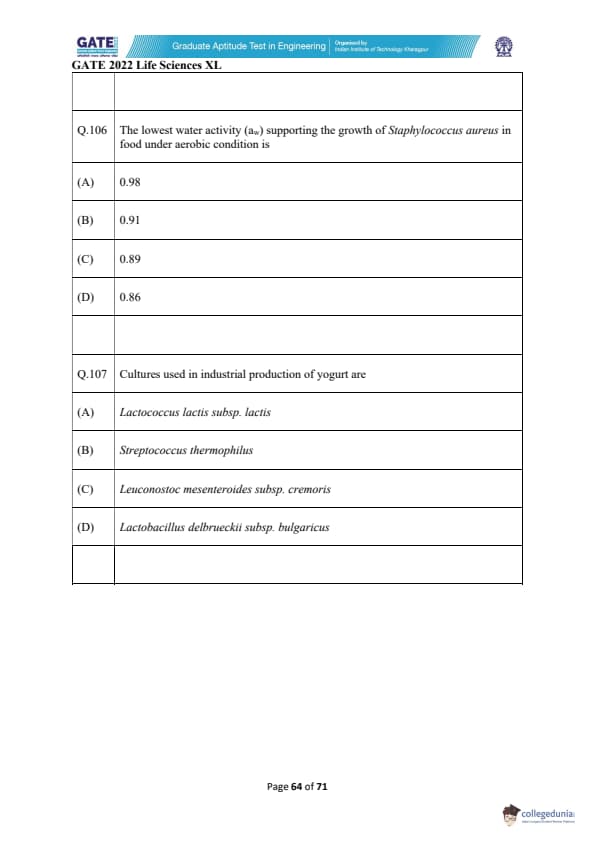
The lowest water activity (\(a_w\)) supporting the growth of Staphylococcus aureus in food under aerobic condition is
Cultures used in industrial production of yogurt are
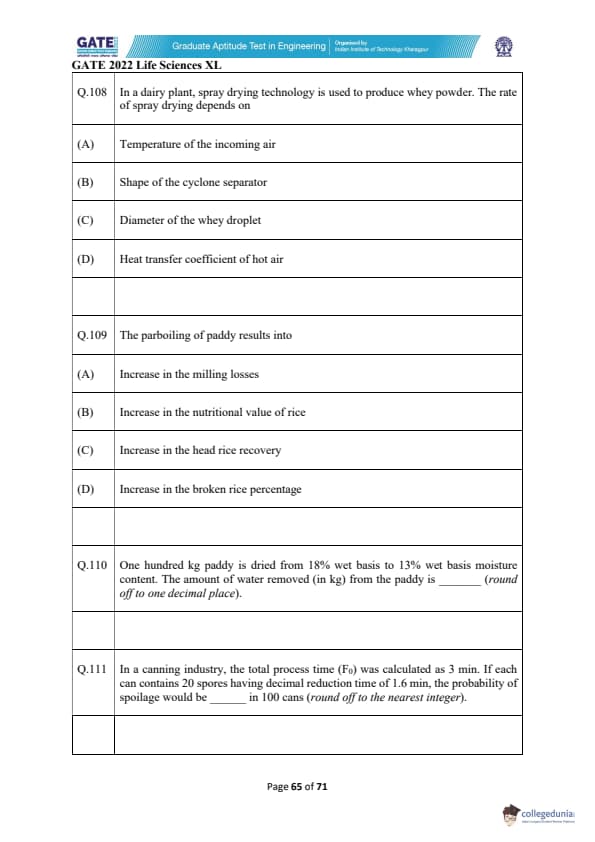
In a dairy plant, spray drying technology is used to produce whey powder. The rate of spray drying depends on
The parboiling of paddy results into
One hundred kg paddy is dried from 18% wet basis to 13% wet basis moisture content. The amount of water removed (in kg) from the paddy is ________ (round off to one decimal place).
In a canning industry, the total process time (F0) was calculated as 3 min. If each can contains 20 spores having decimal reduction time of 1.6 min, the probability of spoilage would be ________ in 100 cans (round off to the nearest integer).
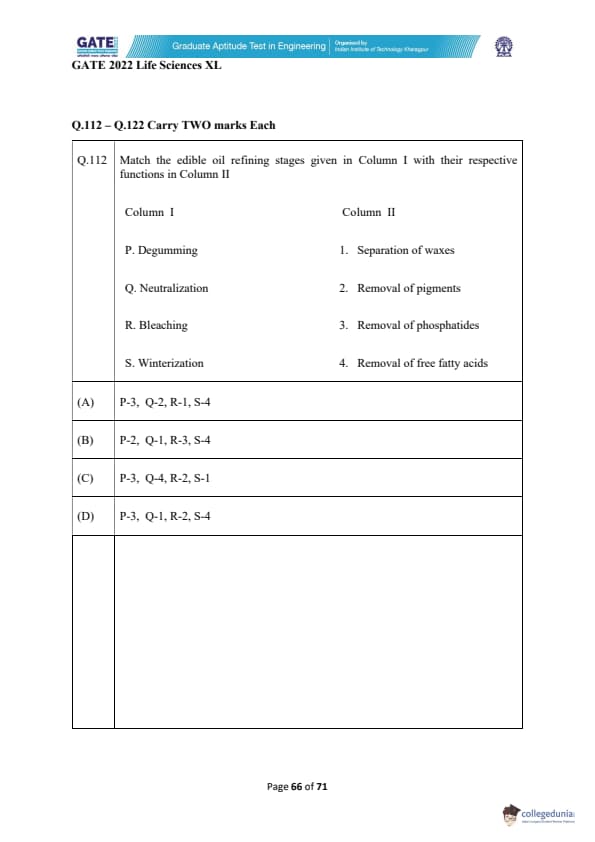
Match the edible oil refining stages given in Column I with their respective functions in Column II.
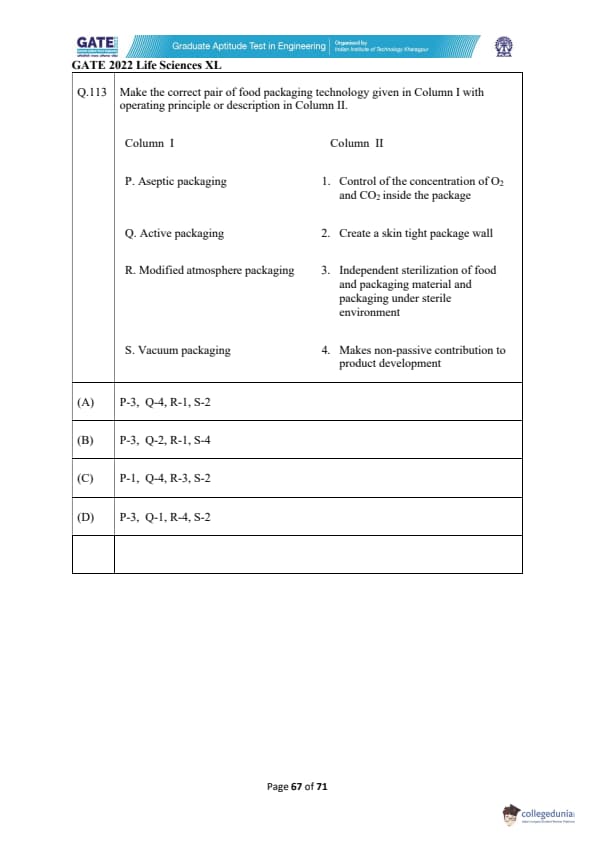
Make the correct pair of food packaging technology given in Column I with operating principle or description in Column II.
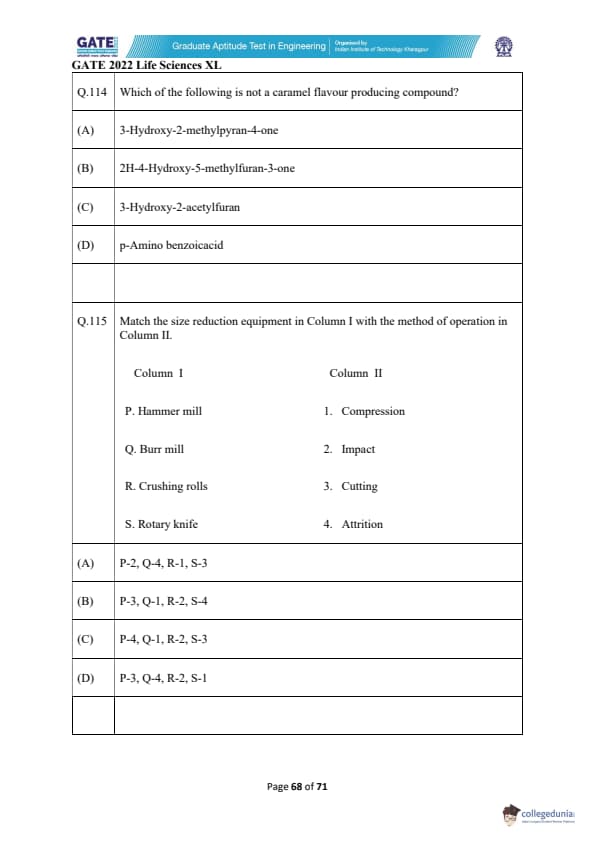
Which of the following is not a caramel flavour producing compound?
Match the size reduction equipment in Column I with the method of operation in Column II.
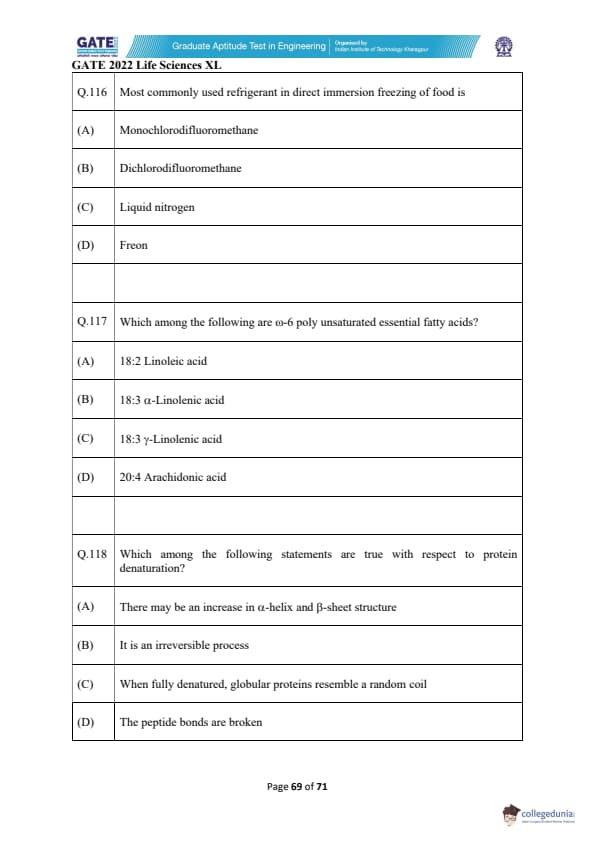
Most commonly used refrigerant in direct immersion freezing of food is
Which among the following are \(\omega\)-6 polyunsaturated essential fatty acids?
Which among the following statements are true with respect to protein denaturation?
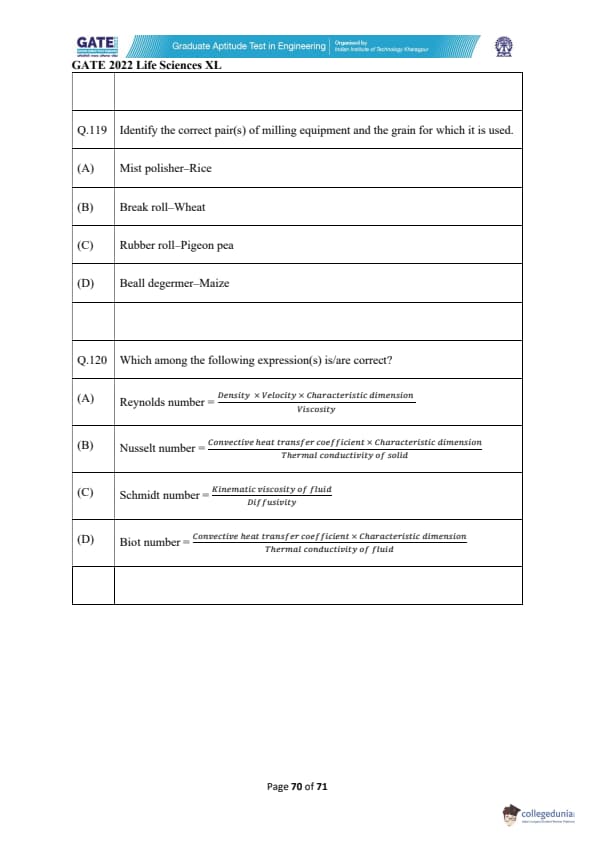
Identify the correct pair(s) of milling equipment and the grain for which it is used.
Which among the following expression(s) is/are correct?
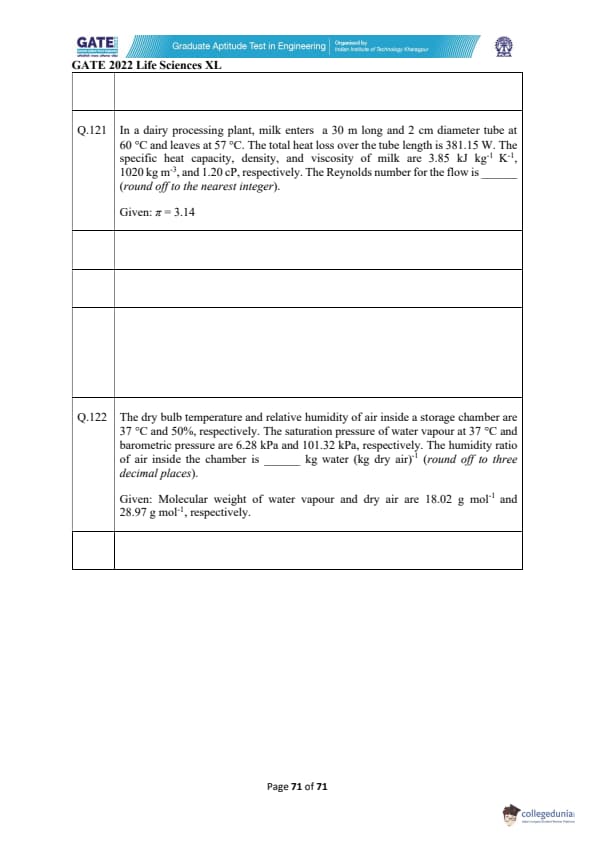
In a dairy processing plant, milk enters a 30 m long and 2 cm diameter tube at 60 °C and leaves at 57 °C. The total heat loss over the tube length is 381.15 W. The specific heat capacity, density, and viscosity of milk are 3.85 kJ kg\(^{-1}\) K\(^{-1}\), 1020 kg m\(^{-3}\), and 1.20 cP, respectively. The Reynolds number for the flow is ________ (round off to the nearest integer).
The dry bulb temperature and relative humidity of air inside a storage chamber are 37 °C and 50%, respectively. The saturation pressure of water vapour at 37 °C and barometric pressure are 6.28 kPa and 101.32 kPa, respectively. The humidity ratio of air inside the chamber is ________ kg water (kg dry air)⁻¹ (round off to three decimal places).
Given: Molecular weight of water vapour and dry air are 18.02 g mol⁻¹ and 28.97 g mol⁻¹, respectively.
Also Check:
Quick Links:
GATE 2022 XL Detailed Paper Analysis
Out of all the sections, students were supposed to attempt only 2 sections. It is important to note that Chemistry (XL-P) was a compulsory section to attempt. Students were asked to attempt one more section out of all the other sections. The below-mentioned table shows the details of questions asked in the Chemistry (XL-P) section of GATE 2022 XL-
| Question Types | Question Frequency | Carried Marks |
|---|---|---|
| No. Of 1 Mark MCQs | 8 | 8 |
| No. Of 2 Marks MCQs | 1 | 2 |
| No. Of 1 Mark MSQs | - | - |
| No. OF 2 Mark MSQs | 3 | 6 |
| No. Of 1 Mark NATs | 1 | 1 |
| No. Of 2 Marks NATs | 4 | 8 |
| Total | 17 | 25 |
- The Chemistry section was responsible for carrying 25% of the total weightage that were distributed between 17 questions
- Following the previous year's marking scheme, each question carried either 1 or 2 marks. Students were entitled to get 1 and 2 marks, depending on the marks carried by that particular question, for every correct answer
- As per the specified negative marking pattern, ⅓ marks and ⅔ marks must have been deducted as a penalty for every incorrect attempted question carried 1 and 2 marks respectively
- It must be noted that negative marking scheme is not applicable in case of wrong attempted NATs
Also Check:
GATE 2022 BM: Exam Pattern and Marking Scheme
- GATE 2022 XL asked both MCQs and NATs. It was held online via CBT mode
- As per the specified marking scheme by IIT Delhi, from the final score, ⅓ and ⅔ marks would be reduced for each wrong MCQ carried 1 and 2 marks
- Wrong attempted NATs were not supposed to bring any kind of deduction in the final achieved marks
GATE Previous Year Question Papers
| GATE 2022 Question Papers | GATE 2021 Question Papers | GATE 2020 Question Papers |
| GATE 2019 Question Papers | GATE 2018 Question Papers | GATE 2017 Question Papers |





Comments