




The CBSE Board conducted Class 12 Biology Exam Set 2 on March 27, 2026. Class 12 Biology Set 2 Question Paper with Solution PDF is available here for download.
The CBSE Class 12 Biology paper covers important topics from diversity in living organisms, human physiology, biotechnology, genetics, ecology, and reproduction. Students should focus on understanding concepts, memorizing diagrams, and practicing long-answer questions. The exam is typically marked out of 100 marks, with 70 marks for the theory paper and 30 marks for practical/internal assessment.
CBSE Class 12 2026 Biology Set 2 Question Paper with Solution PDF
| CBSE Class 12 2026 Biology Set 2 Question Paper with Solution PDF | Download PDF | Check Solution |
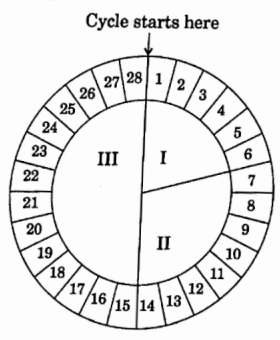
In a human female, the menstrual cycle of 28 days is represented by the diagram given below. Select the correct statement related to this diagram.
View Solution
Concept:
The menstrual cycle in human females typically lasts about 28 days and is divided into different phases:
Phase I – Menstrual phase (Day 1–5)
Phase II – Follicular / Proliferative phase (Day 6–14)
Phase III – Luteal / Secretory phase (Day 15–28)
Each phase is associated with specific hormonal changes and ovarian events.
Step 1: {\color{redAnalyze statement (A).
During the follicular phase (Phase II), the ovarian follicles develop progressively and the primary follicle matures into a Graafian follicle before ovulation occurs.
Thus, statement (A) is correct.
Step 2: {\color{redAnalyze statement (B).
In Phase III (luteal phase), the corpus luteum secretes large amounts of progesterone.
Progesterone plays a crucial role in:
Preparing the uterus for implantation
Maintaining pregnancy in early stages
Thus, statement (B) is also correct.
Step 3: {\color{redAnalyze statement (C).
The corpus luteum secretes progesterone during the luteal phase (Phase III), not in Phase I. Therefore, this statement is incorrect.
Step 4: {\color{redDetermine the correct option.
Since both (A) and (B) are correct:
\[ \boxed{Both (A) and (B)} \] Quick Tip: In the menstrual cycle: Follicular phase leads to Graafian follicle formation, ovulation occurs around day 14, and the luteal phase is dominated by progesterone secretion from the corpus luteum.
The cells of endosperm have 24 chromosomes. What will be the number of chromosomes in the gametes?
View Solution
Concept:
In flowering plants, the endosperm is formed as a result of triple fusion. It is therefore triploid (3n) in nature.
Step 1: {\color{redRelationship between endosperm and gametes.
Endosperm develops by fusion of:
One male gamete (n)
Two polar nuclei (n + n)
Thus,
\[ Endosperm = 3n \]
Step 2: {\color{redGiven chromosome number.
Number of chromosomes in endosperm cells:
\[ 3n = 24 \]
Step 3: {\color{redFind haploid number.
\[ n = \frac{24}{3} = 8 \]
Step 4: {\color{redChromosomes in gametes.
Gametes are haploid (n), therefore they contain:
\[ \boxed{8 chromosomes} \] Quick Tip: Endosperm in flowering plants is triploid (3n) because it forms after fusion of one male gamete with two polar nuclei.
Select the odd option in the context of convergent evolution.
View Solution
Concept:
Convergent evolution occurs when unrelated organisms independently evolve similar features due to adaptation to similar environments. Such structures are called analogous organs.
Step 1: {\color{redEvaluate the first three options.
Eyes of Octopus and Mammals – similar function but evolved independently.
Flippers of Penguins and Dolphins – similar adaptation for swimming.
Flying Squirrel and Flying Phalanger – independently evolved gliding membranes.
These are examples of analogous structures formed through convergent evolution.
Step 2: {\color{redAnalyze option (D).
Thorns of Bougainvillea and Tendrils of Cucurbita originate from the same plant part (axillary buds).
They have different functions but share the same origin.
Thus, they are homologous structures representing divergent evolution.
\[ \boxed{Therefore option (D) is the odd one} \] Quick Tip: Analogous organs arise due to convergent evolution, while homologous organs arise due to divergent evolution.
Monascus purpureus is a yeast used commercially in the production of which one of the following?
View Solution
Concept:
Certain microorganisms are used in biotechnology for producing medically important compounds.
Step 1: {\color{redIdentify the organism.
Monascus purpureus is a yeast used in industrial fermentation.
Step 2: {\color{redProduct obtained from this yeast.
It produces compounds called statins, which help in lowering blood cholesterol levels by inhibiting enzymes involved in cholesterol synthesis.
Step 3: {\color{redEliminate other options.
Ethanol – produced by Saccharomyces cerevisiae
Streptokinase – produced by Streptococcus
Citric acid – produced by Aspergillus niger
\[ \boxed{Hence the correct answer is Statins \] Quick Tip: Statins produced by Monascus purpureus are widely used as cholesterol-lowering drugs.
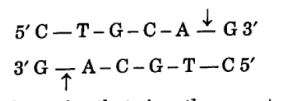
Given below is the restriction site of a restriction endonuclease Pst I and the cleavage sites on a DNA molecule. Choose the option that gives the correct resultant fragments.
View Solution
Concept:
Restriction endonucleases are enzymes that recognize specific DNA sequences called restriction sites and cut DNA at those positions. Many restriction enzymes produce sticky ends by making staggered cuts in the DNA strands.
The enzyme Pst I recognizes the palindromic sequence:
\[ 5' \; CTGCAG \; 3' \] \[ 3' \; GACGTC \; 5' \]
and cleaves between:
\[ CTGCA \downarrow G \]
\[ G \uparrow ACGTC \]
Step 1: {\color{redIdentify the cleavage positions.
The enzyme cuts after the nucleotide A in the upper strand and before A in the complementary strand, producing staggered ends.
Step 2: {\color{redSeparate the fragments after cleavage.
After cutting, the fragments produced are:
\[ 5' \; C-T-G-C \qquad A-G \; 3' \]
\[ 3' \; G-A-C-G \qquad T-C \; 5' \]
These fragments contain sticky ends that can easily pair with complementary DNA fragments.
Step 3: {\color{redMatch with the options.
The fragment arrangement exactly matches Option (C).
Thus, the correct resultant fragments correspond to:
\[ \boxed{Option (C)} \] Quick Tip: Restriction enzymes recognize palindromic DNA sequences and usually create sticky ends by cutting DNA in a staggered manner, which helps in recombinant DNA technology.
Which of the following ecosystem is most productive in terms of net primary productivity?
View Solution
Concept:
Net Primary Productivity (NPP) is the rate at which producers synthesize organic matter (biomass) after accounting for respiration losses. Ecosystems with abundant nutrients and favorable environmental conditions generally have higher productivity.
Step 1: {\color{redEvaluate each ecosystem.
Deserts – Very low productivity due to lack of water and vegetation.
Oceans – Moderate productivity but nutrient levels are often limited.
Tropical rainforests – High productivity due to dense vegetation and favorable climate.
Estuaries – Extremely high productivity because nutrient-rich river water mixes with seawater.
Step 2: {\color{redIdentify the most productive ecosystem.
Estuaries receive nutrients from both terrestrial and marine sources and support abundant plant and phytoplankton growth.
\[ \boxed{Estuaries show the highest net primary productivity} \] Quick Tip: Among natural ecosystems, estuaries are considered one of the most productive due to high nutrient availability.
Bt-toxin genes have been expressed in plants in order to provide resistance against:
\[ (i)\ Lepidopterans and fungi
(ii)\ Animals and bacteria
(iii)\ Coleopterans and dipterans
(iv)\ Lepidopterans \]
View Solution
Concept:
Bt-toxin is produced by the bacterium Bacillus thuringiensis. Genes encoding this toxin are inserted into crop plants to protect them from insect pests.
Step 1: {\color{redTarget organisms of Bt toxin.
Bt toxin specifically affects certain groups of insects such as:
Lepidopterans (moths and butterflies)
Coleopterans (beetles)
Dipterans (flies and mosquitoes)
Step 2: {\color{redEvaluate the statements.
(i) Lepidopterans and fungi – incorrect (Bt toxin does not target fungi).
(ii) Animals and bacteria – incorrect.
(iii) Coleopterans and dipterans – correct.
(iv) Lepidopterans – correct.
\[ \boxed{Correct option: (iii) and (iv) \] Quick Tip: Bt crops contain genes from Bacillus thuringiensis that produce toxins effective against specific insect pests.
According to IUCN, some of the extinctions include:
\[ (i)\ Dodo
(ii)\ Indian gazelle
(iii)\ Thylacine
(iv)\ Steller's Sea Cow \]
View Solution
Concept:
The IUCN Red List documents species that are threatened, endangered, or extinct.
Step 1: {\color{redIdentify extinct species.
Dodo – extinct bird from Mauritius.
Thylacine – also known as Tasmanian tiger; declared extinct.
Steller's Sea Cow – marine mammal hunted to extinction.
Step 2: {\color{redEvaluate Indian gazelle.
Indian gazelle (Chinkara) is not extinct; it is still found in parts of India.
\[ \boxed{Thus extinct species are (i), (iii) and (iv)} \] Quick Tip: Examples of recently extinct species include Dodo, Thylacine, and Steller's Sea Cow.
Assertion (A): Genetically modified microbes help in crop protection.
Reason (R): Bacillus thuringiensis (Bt) bacteria control insects by producing protoxins.
Choose the correct option:
View Solution
Concept:
Genetically modified microbes and genes derived from microorganisms are widely used in agriculture to protect crops from insect pests.
Step 1: {\color{redAnalyze Assertion (A).
Genetically modified microbes or microbial genes can be used to develop pest-resistant crops. For example, Bt genes inserted into crops enable them to resist insect attacks.
Thus, Assertion (A) is true.
Step 2: {\color{redAnalyze Reason (R).
The bacterium Bacillus thuringiensis produces crystalline protoxins. When insects ingest these protoxins, they are converted into active toxins in the alkaline gut of the insect, leading to the death of the pest.
Thus, Reason (R) is true.
Step 3: {\color{redCheck explanation relationship.
Bt genes from Bacillus thuringiensis are introduced into crops to produce insecticidal proteins that protect plants from pests. Hence, the reason correctly explains the assertion.
\[ \boxed{Both Assertion and Reason are true and Reason correctly explains the Assertion \] Quick Tip: Bt crops contain genes from Bacillus thuringiensis that produce toxins lethal to specific insect pests but safe for humans.
Assertion (A): Trichoderma species are free living fungi that are very common in the root ecosystems.
Reason (R): They are effective bio-control agents of several plant pathogens.
Choose the correct option:
View Solution
Concept:
Trichoderma is a genus of fungi commonly found in soil and plant root ecosystems. It plays an important role in agriculture as a biological control agent.
Step 1: {\color{redAnalyze Assertion (A).
Trichoderma species are free-living fungi widely present in soil, particularly in the rhizosphere (root ecosystem) of plants.
Thus, Assertion (A) is true.
Step 2: {\color{redAnalyze Reason (R).
These fungi are widely used as biocontrol agents because they inhibit the growth of harmful plant pathogens through competition, antibiosis, and parasitism.
Thus, Reason (R) is also true.
Step 3: {\color{redCheck explanation relationship.
Although both statements are correct, the fact that Trichoderma acts as a biocontrol agent does not explain why it is commonly found in root ecosystems.
\[ \boxed{Both Assertion and Reason are true, but Reason is not the correct explanation \] Quick Tip: Trichoderma species are widely used in agriculture as biological control agents to protect crops from fungal pathogens.
Assertion (A): The endometrium undergoes cyclic changes during the menstrual cycle.
Reason (R): Perimetrium contracts strongly during delivery of the baby.
Choose the correct option:
View Solution
Concept:
The uterus consists of three layers: perimetrium, myometrium, and endometrium. Each layer has different functions during the reproductive cycle.
Step 1: {\color{redAnalyze Assertion (A).
The endometrium (inner lining of the uterus) undergoes cyclic changes during the menstrual cycle. It thickens to prepare for implantation and is shed during menstruation if fertilisation does not occur.
Thus, Assertion (A) is true.
Step 2: {\color{redAnalyze Reason (R).
Strong contractions during childbirth are produced by the myometrium, the muscular middle layer of the uterus, not by the perimetrium.
Thus, Reason (R) is false.
\[ \boxed{Assertion is true but Reason is false} \] Quick Tip: Endometrium undergoes cyclic changes during menstruation, while myometrium is responsible for strong uterine contractions during childbirth.
Assertion (A): Repetitive sequences make up a very large portion of the human genome.
Reason (R): Repetitive sequences do not have direct coding functions in the genome.
Choose the correct option:
View Solution
Concept:
The human genome contains a large amount of non-coding DNA, including repetitive DNA sequences.
Step 1: {\color{redAnalyze Assertion (A).
The Human Genome Project revealed that a large portion of the human genome consists of repetitive sequences such as satellite DNA, minisatellites, and microsatellites.
Thus, Assertion (A) is true.
Step 2: {\color{redAnalyze Reason (R).
Most repetitive DNA sequences do not code for proteins and therefore lack direct coding functions in the genome.
Thus, Reason (R) is true.
Step 3: {\color{redCheck explanation relationship.
Because these sequences are non-coding, they accumulate extensively in the genome, which explains why they form a large portion of it.
\[ \boxed{Both Assertion and Reason are true and Reason correctly explains the Assertion} \] Quick Tip: Less than 2% of the human genome codes for proteins, while a large portion consists of repetitive non-coding DNA.
Draw a labelled diagram of the embryonic stage that gets implanted in the human uterus. State the functions of two labelled parts.
View Solution
Concept:
The embryonic stage that implants in the uterus is called the blastocyst. It is formed after several cleavage divisions of the zygote and contains specialized structures that aid in implantation and development.
Step 1: {\color{redLabelled diagram of blastocyst.
\[ \begin{array}{c} Trophoblast (outer layer)
\bigcirc \bigcirc \bigcirc \bigcirc \bigcirc
\quad \quad Inner Cell Mass
\quad \quad \bullet \bullet \bullet
\quad Blastocoel (cavity) \end{array} \]
Main labelled parts:
Trophoblast
Inner Cell Mass
Blastocoel
Step 2: {\color{redFunctions of labelled parts.
Trophoblast:
Forms the outer layer of the blastocyst.
Helps in implantation by attaching the embryo to the uterine wall.
Later contributes to the formation of the placenta.
Inner Cell Mass:
Gives rise to the embryo.
Develops into different tissues and organs of the developing fetus.
\[ \boxed{Blastocyst is the stage that implants into the uterine endometrium} \] Quick Tip: Blastocyst consists of trophoblast, inner cell mass, and blastocoel; implantation occurs when the trophoblast attaches to the uterine wall.
Mention the functions of each of the following:
(i) Tassels of Corn Cob
(ii) Scutellum
View Solution
Concept:
Different plant structures perform specific roles in reproduction and seed development. Understanding their functions helps in explaining plant physiology and reproduction.
Step 1: {\color{redFunction of Tassels of Corn Cob.
Tassels in maize represent the male inflorescence. Their main functions are:
Production of pollen grains.
Facilitation of pollination by releasing pollen into the air (wind pollination).
Step 2: {\color{redFunction of Scutellum.
The scutellum is a part of the embryo in monocot seeds (like maize). Its functions include:
Acting as a cotyledon.
Absorbing nutrients from the endosperm.
Transferring nutrients to the growing embryo during germination. Quick Tip: In maize, tassel = male reproductive part, while scutellum = nutrient-absorbing cotyledon of the embryo.
Farmers prefer apomictic seeds over hybrid seeds. Give any two reasons.
View Solution
Concept:
Apomixis is a type of asexual reproduction in plants where seeds are formed without fertilization. It results in offspring genetically identical to the parent plant.
Step 1: {\color{redUnderstand advantage of apomixis.
Apomictic seeds preserve desirable traits across generations without genetic variation.
Step 2: {\color{redState reasons for preference.
Farmers can reuse seeds every year without loss of hybrid vigor, unlike hybrid seeds.
Apomictic seeds maintain genetic uniformity and desirable traits (such as high yield) across generations.
\[ \boxed{Apomixis ensures stable, high-yielding crops without repeated seed purchase} \] Quick Tip: Hybrid seeds need to be purchased every season, whereas apomictic seeds can be reused without losing their superior traits.
Suggest how a virus-free healthy plant can be obtained from a diseased sugarcane plant.
View Solution
Concept:
Virus-free plants can be produced from infected plants using plant tissue culture techniques. The most commonly used method is meristem culture because viruses generally do not infect the actively dividing meristematic cells.
Step 1: {\color{redSelection of meristem tissue.
A small portion of the apical meristem is removed from the diseased sugarcane plant. Meristem cells divide rapidly and are usually free from viral infection.
Step 2: {\color{redIn vitro culture.
The meristem tissue is placed in a sterile nutrient culture medium containing appropriate growth regulators.
Step 3: {\color{redDevelopment of plantlets.
Under controlled laboratory conditions, the meristem develops into a complete plantlet.
Step 4: {\color{redTransfer to soil.
The plantlets are hardened and then transferred to soil, where they grow into virus-free healthy sugarcane plants.
\[ \boxed{This technique is known as meristem culture} \] Quick Tip: Meristem culture is widely used in agriculture to produce virus-free plants such as potato, banana, and sugarcane.
In order to force bacteria to take up the recombinant DNA, they must be made competent. Explain how it can be achieved.
View Solution
Concept:
For bacteria to take up recombinant DNA, their cell membranes must be made permeable. This process is called making the cells competent.
Step 1: {\color{redTreatment with divalent cations.
Bacterial cells are treated with calcium chloride (CaCl\(_2\)). Calcium ions increase the permeability of the bacterial cell membrane and facilitate the entry of DNA.
Step 2: {\color{redIncubation with recombinant DNA.
The competent bacterial cells are mixed with recombinant DNA so that the DNA can attach to the bacterial cell surface.
Step 3: {\color{redHeat shock treatment.
The mixture is briefly exposed to high temperature (around 42°C) followed by rapid cooling on ice. This heat shock creates pores in the membrane through which the DNA enters the bacterial cell.
Step 4: {\color{redRecovery and growth.
The bacteria are then allowed to grow in suitable culture media where the recombinant DNA replicates inside the host cells.
\[ \boxed{Thus bacteria become competent and can take up recombinant DNA} \] Quick Tip: Competent bacterial cells are commonly produced using calcium chloride treatment followed by heat shock to allow uptake of recombinant DNA.
Differentiate between grazing food chain and detritus food chain.
View Solution
Concept:
Food chains represent the flow of energy from one organism to another in an ecosystem. Two major types are the grazing food chain and the detritus food chain.
Step 1: {\color{redGrazing Food Chain.
Begins with living green plants (producers).
Energy flows from producers to herbivores and then to carnivores.
Example: Grass \(\rightarrow\) Deer \(\rightarrow\) Tiger.
Step 2: {\color{redDetritus Food Chain.
Begins with dead organic matter (detritus).
Energy flows through decomposers and detritivores.
Example: Dead leaves \(\rightarrow\) Earthworms \(\rightarrow\) Birds.
Step 3: {\color{redKey Differences.
\[ \begin{array}{|c|c|c|} \hline \textbf{Feature} & \textbf{Grazing Food Chain} & \textbf{Detritus Food Chain}
\hline Starting Point & Living producers & Dead organic matter
\hline Primary Consumers & Herbivores & Decomposers / Detritivores
\hline Energy Source & Photosynthesis & Decomposition
\hline \end{array} \] Quick Tip: Grazing food chains begin with green plants, whereas detritus food chains begin with dead organic matter.
Ecological pyramids are widely accepted but they still have some limitations. Write any two limitations.
View Solution
Concept:
Ecological pyramids represent the relationship between organisms at different trophic levels in terms of number, biomass, or energy. However, they have certain limitations.
Step 1: {\color{redLimitation 1.
Ecological pyramids do not account for organisms that occupy more than one trophic level. For example, humans may act as both herbivores and carnivores.
Step 2: {\color{redLimitation 2.
They do not represent food webs. In nature, organisms are connected through complex feeding relationships rather than simple linear food chains.
Step 3: {\color{redAdditional limitation (conceptual).
Ecological pyramids also do not adequately represent decomposers and detritivores, which play an essential role in ecosystems.
\[ \boxed{Thus ecological pyramids provide a simplified but incomplete representation of ecosystems} \] Quick Tip: Ecological pyramids simplify energy flow but cannot accurately represent complex food webs or organisms occupying multiple trophic levels.
One of the salient features of the genetic code is that it is nearly universal from bacteria to humans. Mention two exceptions to this rule. Why are some codes said to be degenerates?
View Solution
Concept:
The genetic code refers to the sequence of nucleotide triplets (codons) in mRNA that specify particular amino acids during protein synthesis. It is considered nearly universal, meaning the same codon generally codes for the same amino acid in most organisms.
Step 1: {\color{redExceptions to universality of genetic code.
Although the genetic code is almost universal, some exceptions exist:
In mitochondria of some organisms, certain codons code for different amino acids.
In some protozoans such as Paramecium, certain stop codons code for amino acids instead of acting as termination signals.
\[ \boxed{Exceptions occur mainly in mitochondria and some protozoans} \]
Step 2: {\color{redDegeneracy of genetic code.
The genetic code is described as degenerate because:
More than one codon can specify the same amino acid.
For example, the amino acid Leucine is coded by six different codons.
\[ \boxed{Degeneracy means multiple codons can code for the same amino acid} \] Quick Tip: There are 64 codons in total, but only 20 amino acids, which leads to degeneracy of the genetic code.
(a) Draw a sectional view of seminiferous tubule of a human. Label the following cells in the seminiferous tubule:
(i) Cells that divide by mitosis to increase their number
(ii) Cells that undergo meiosis I
(iii) Cells that undergo meiosis II
(iv) Cells that help in the process of spermiogenesis
(b) Mention the role of Leydig cells.
View Solution
Concept:
The seminiferous tubules in the testes are the sites of sperm production. Different stages of germ cells are arranged from the outer wall toward the lumen.
Step 1: {\color{redSectional view of seminiferous tubule.
\[ \begin{array}{c} Lumen
\quad Spermatozoa
\quad Secondary Spermatocytes
\quad Primary Spermatocytes
\quad Spermatogonia
Basement membrane \end{array} \]
Step 2: {\color{redLabelled cells.
(i) Spermatogonia – divide by mitosis to increase their number.
(ii) Primary spermatocytes – undergo meiosis I.
(iii) Secondary spermatocytes – undergo meiosis II.
(iv) Sertoli cells – help in the process of spermiogenesis and provide nourishment to developing sperms.
Step 3: {\color{redRole of Leydig cells.
Leydig cells are located in the interstitial spaces between seminiferous tubules.
They secrete the male sex hormone testosterone.
Testosterone regulates spermatogenesis and development of male secondary sexual characters.
\[ \boxed{Leydig cells produce testosterone essential for male reproductive functions} \] Quick Tip: Sertoli cells support sperm development, while Leydig cells produce testosterone in the testes.
Explain the polygenic inheritance pattern with the help of a suitable example.
View Solution
Concept:
Polygenic inheritance refers to the inheritance of a character that is controlled by two or more genes. Each gene contributes a small additive effect to the phenotype, resulting in continuous variation.
Step 1: {\color{redCharacteristics of polygenic inheritance.
A single trait is controlled by multiple genes.
Each gene contributes equally and additively to the phenotype.
The trait shows continuous variation rather than distinct categories.
Environmental factors may also influence the expression of the trait.
Step 2: {\color{redExample – Human skin colour.
Human skin colour is controlled by three pairs of genes.
Alleles represented as \(A, B, C\) contribute to darker skin.
Recessive alleles \(a, b, c\) contribute to lighter skin.
When individuals with very dark skin (\(AABBCC\)) are crossed with individuals having very light skin (\(aabbcc\)):
\[ AABBCC \times aabbcc \]
\(F_1\) Generation:
All offspring have intermediate skin colour.
\[ AaBbCc \]
\(F_2\) Generation:
A wide range of skin colour phenotypes appears due to different combinations of contributing alleles.
Step 3: {\color{redResult.
The phenotypic variation forms a continuous distribution from very light to very dark skin colour.
\[ \boxed{Polygenic inheritance produces continuous variation in traits} \] Quick Tip: Examples of polygenic traits include human skin colour, height, body weight, and wheat kernel colour.
Mention a product of human welfare obtained with the help of each one of the following:
(a) Saccharomyces cerevisiae
(b) Propionibacterium shermanii
(c) Aspergillus niger
(d) Trichoderma polysporum
(e) Acetobacter aceti
(f) Streptococcus
View Solution
Concept:
Many microorganisms are beneficial to humans and are widely used in industrial fermentation, medicine, and food production.
Step 1: {\color{red(a) Saccharomyces cerevisiae.
This yeast is used in fermentation processes to produce:
\[ \boxed{Ethanol / Alcohol \]
It is also commonly used in the baking industry for bread making.
Step 2: {\color{red(b) Propionibacterium shermanii.
This bacterium is used in the production of:
\[ \boxed{Swiss cheese \]
It produces carbon dioxide which forms the characteristic holes in the cheese.
Step 3: {\color{red(c) Aspergillus niger.
This fungus is used for the commercial production of:
\[ \boxed{Citric acid \]
Citric acid is widely used in the food and pharmaceutical industries.
Step 4: {\color{red(d) Trichoderma polysporum.
This fungus produces:
\[ \boxed{Cyclosporin A \]
Cyclosporin A is an immunosuppressive drug used during organ transplantation.
Step 5: {\color{red(e) Acetobacter aceti.
This bacterium converts alcohol into:
\[ \boxed{Acetic acid (Vinegar) \]
It is widely used in the food industry.
Step 6: {\color{red(f) Streptococcus.
Certain species of Streptococcus are used to produce:
\[ \boxed{Streptokinase \]
Streptokinase is used as a clot-busting drug to remove blood clots.
\[ \boxed{These microorganisms provide several products important for human welfare} \] Quick Tip: Microbes are widely used in industries to produce antibiotics, acids, enzymes, and fermented foods.
Study the given chart showing evolution of plants and answer the following questions.
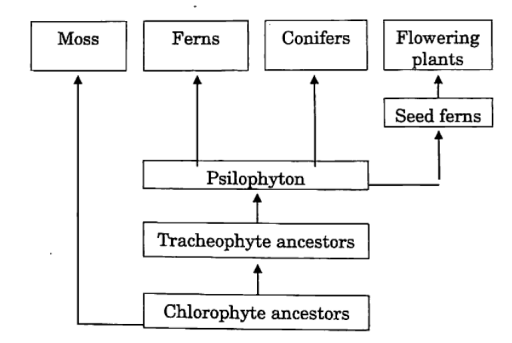
(a) Identify the plant which acts as an immediate ancestor of both ferns and conifers.
(b) Name the nearest ancestors of flowering plants.
(c) Name the most primitive group of plants.
(d) Psilophyton provides common ancestry to which classes?
(e) Name the common ancestor of Psilophyton and seed ferns.
(f) Name the common ancestor of mosses and tracheophytes.
View Solution
Concept:
Plant evolution shows a gradual progression from primitive aquatic plants to advanced flowering plants. Major groups evolved from common ancestors, leading to diversification of plant forms.
Step 1: {\color{red(a) Identify the plant which acts as an immediate ancestor of both ferns and conifers.
From the evolutionary chart, both ferns and conifers originate from Psilophyton.
\[ \boxed{Psilophyton} \]
Step 2: {\color{red(b) Name the nearest ancestors of flowering plants.
The chart shows that flowering plants evolved from seed ferns.
\[ \boxed{Seed ferns} \]
Step 3: {\color{red(c) Name the most primitive group of plants.
At the base of the evolutionary chart are chlorophyte ancestors, which represent the earliest plant forms.
\[ \boxed{Chlorophyte ancestors} \]
Step 4: {\color{red(d) Psilophyton provides common ancestry to which classes?
According to the chart, Psilophyton gives rise to:
Ferns
Conifers
Seed ferns
\[ \boxed{Ferns, Conifers, and Seed ferns} \]
Step 5: {\color{red(e) Name the common ancestor of Psilophyton and seed ferns.
Both Psilophyton and seed ferns arise from tracheophyte ancestors.
\[ \boxed{Tracheophyte ancestors} \]
Step 6: {\color{red(f) Name the common ancestor of mosses and tracheophytes.
The chart shows that both mosses and tracheophytes evolved from chlorophyte ancestors.
\[ \boxed{Chlorophyte ancestors} \] Quick Tip: Plant evolution generally follows the sequence: Chlorophyte ancestors \(\rightarrow\) Tracheophytes \(\rightarrow\) Psilophyton \(\rightarrow\) Ferns / Seed ferns \(\rightarrow\) Conifers \(\rightarrow\) Flowering plants.
(a) Write the scientific name of the nematode that infects tobacco plants. Also name the part of the plant that it infects.
(b) How is Agrobacterium used to protect tobacco plants from attack by this pest?
View Solution
Concept:
Some plant-parasitic nematodes attack crop plants and reduce productivity. Genetic engineering techniques have been used to develop resistance against such pests.
Step 1: {\color{red(a) Scientific name of the nematode and infected plant part.
The nematode that infects tobacco plants is Meloidogyne incognita.
It infects the roots of the tobacco plant and causes root-knot disease.
\[ \boxed{Meloidogyne incognita infects the roots of tobacco plants} \]
Step 2: {\color{red(b) Role of Agrobacterium.
The bacterium \textit{Agrobacterium tumefaciens is used as a vector in genetic engineering.
Scientists introduce a gene that produces RNA interference (RNAi) against the nematode.
The introduced gene produces RNA molecules that interfere with the nematode's essential gene expression.
As a result, the nematode cannot survive in the host plant.
\[ \boxed{RNA interference using Agrobacterium provides resistance to nematode infection} \] Quick Tip: RNA interference (RNAi) technology is used to develop nematode-resistant tobacco plants by silencing essential genes of the parasite.
Explain the level of biodiversity at genetic, species and ecological levels with the help of one example each.
View Solution
Concept:
Biodiversity refers to the variety of life forms present on Earth. It can be studied at three major levels: genetic diversity, species diversity, and ecosystem diversity.
Step 1: {\color{redGenetic diversity.
Genetic diversity refers to the variation of genes within a species. These genetic differences allow populations to adapt to environmental changes.
Example:
Different varieties of rice or wheat cultivated in different regions.
\[ \boxed{Example: Different varieties of rice} \]
Step 2: {\color{redSpecies diversity.
Species diversity refers to the variety of species present in a particular area or ecosystem.
Example:
A tropical rainforest contains numerous species of plants, animals, fungi, and microorganisms.
\[ \boxed{Example: High species diversity in tropical rainforests} \]
Step 3: {\color{redEcological (ecosystem) diversity.
Ecological diversity refers to the variety of ecosystems present in a geographical region.
Example:
Different ecosystems such as forests, grasslands, deserts, and wetlands.
\[ \boxed{Example: Forests, deserts, and wetlands in a region} \] Quick Tip: Biodiversity is studied at three levels: genetic diversity (within species), species diversity (among species), and ecosystem diversity (among ecosystems).
Explain Gause's `Competitive Exclusion Principle' with the help of a suitable example.
View Solution
Concept:
The Competitive Exclusion Principle, proposed by G. F. Gause, states that two species competing for the same limited resources cannot coexist indefinitely in the same habitat.
Step 1: {\color{redStatement of the principle.
If two species occupy the same ecological niche and compete for identical resources, one species will eventually outcompete and eliminate the other from that habitat.
Step 2: {\color{redExplanation.
When two species use the same food, space, or other environmental resources, competition occurs. Over time, the species that is better adapted to the environment will survive, while the weaker competitor will be excluded.
Step 3: {\color{redExample.
Gause conducted experiments using two species of Paramecium:
Paramecium aurelia
Paramecium caudatum
When both species were grown together in the same culture medium, Paramecium aurelia outcompeted and eliminated Paramecium caudatum.
\[ \boxed{This experiment demonstrated the Competitive Exclusion Principle \] Quick Tip: Two species with identical ecological niches cannot coexist permanently; one species will dominate and the other will be eliminated.
Read the following passage and answer the questions that follow:
We know that plasmids and bacteriophages are the most commonly used vectors in biotechnology experiments. If we can link an alien piece of DNA to the plasmid DNA, the alien DNA can be multiplied equal to the copy number of the plasmid. Engineered vectors are used these days. Study the diagram of the E. coli cloning vector pBR322 and answer the questions that follow.
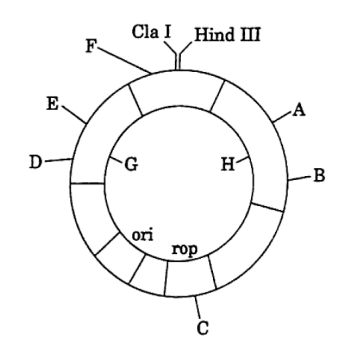
(a) Why are plasmids and bacteriophages used as cloning vectors?
View Solution
Concept:
A cloning vector is a DNA molecule used to carry foreign DNA into a host cell and replicate it.
Step 1: {\color{redIndependent replication.
Plasmids and bacteriophages contain an origin of replication (ori) which allows them to replicate independently inside host cells.
Step 2: {\color{redMultiplication of inserted DNA.
When a foreign DNA fragment is inserted into these vectors, it replicates along with the vector, producing many copies.
Step 3: {\color{redEase of genetic manipulation.
They are small, easy to isolate, and can be engineered with restriction sites and selectable markers.
\[ \boxed{Hence they efficiently carry and replicate foreign DNA} \] Quick Tip: Cloning vectors must contain an origin of replication, selectable markers, and restriction enzyme sites.
(b) (i) Identify:
(I) The gene in the cloning vector that controls the copy number of the vector.
(II) The restriction site -- C in the `rop' gene.
View Solution
Step 1: {\color{redGene controlling copy number.
The gene that regulates the copy number of plasmid pBR322 is the:
\[ \boxed{rop gene} \]
Step 2: {\color{redRestriction site C in rop gene.
The restriction enzyme site located at position C within the rop gene is:
\[ \boxed{Pvu II} \] Quick Tip: The rop gene in pBR322 regulates plasmid copy number and contains restriction enzyme sites used for cloning.
(b) (ii) Identify and name two selectable markers shown in the diagram.
View Solution
Concept:
Selectable markers are genes that help identify cells that have taken up the recombinant plasmid.
Step 1: {\color{redSelectable markers in pBR322.
Two selectable marker genes present in the vector are:
amp\textsuperscript{R} – Ampicillin resistance gene
tet\textsuperscript{R} – Tetracycline resistance gene
\[ \boxed{Ampicillin resistance and Tetracycline resistance} \] Quick Tip: Selectable markers help identify transformed bacteria by providing resistance to specific antibiotics.
(c) Name the two restriction sites each in the two genes you have identified as selectable markers.
View Solution
Concept:
Restriction enzyme sites within selectable marker genes allow insertion of foreign DNA and help in screening recombinant clones.
Step 1: {\color{redRestriction sites in tetracycline resistance gene.
Bam HI
Hind III
Step 2: {\color{redRestriction sites in ampicillin resistance gene.
Pst I
Sal I
\[ \boxed{Bam HI, Hind III, Pst I, and Sal I} \] Quick Tip: Insertion of foreign DNA into selectable marker genes disrupts antibiotic resistance and helps identify recombinant colonies.
Read the following passage and answer the questions that follow:
The process of copying genetic information from template strand of DNA into RNA is called transcription. It is mediated by RNA polymerase. Transcription takes place in the nucleus of eukaryotic cells. In transcription, only a segment of DNA and only one of the strands is copied into RNA.
(a) Why is the strand of DNA with 3' \(\rightarrow\) 5' polarity transcribed and not the other strand of 5' \(\rightarrow\) 3' polarity?
View Solution
Concept:
RNA polymerase synthesizes RNA only in the 5' \(\rightarrow\) 3' direction. Therefore, it must read the template strand in the opposite direction.
Step 1: {\color{redDirection of RNA synthesis.
RNA polymerase adds nucleotides in the 5' \(\rightarrow\) 3' direction.
Step 2: {\color{redTemplate strand requirement.
To synthesize RNA in this direction, the enzyme must read the DNA strand in the 3' \(\rightarrow\) 5' direction.
Step 3: {\color{redConclusion.
Hence, the DNA strand with 3' \(\rightarrow\) 5' polarity is transcribed, while the other strand is not used.
\[ \boxed{Because RNA polymerase synthesizes RNA in 5' \(\rightarrow\) 3' direction} \] Quick Tip: Template strand is always read in 3' \(\rightarrow\) 5' direction so that RNA can be synthesized in 5' \(\rightarrow\) 3' direction.
(b) (i) Why is hnRNA required to undergo splicing?
View Solution
Concept:
In eukaryotes, the primary RNA transcript (hnRNA) contains both coding and non-coding sequences.
Step 1: {\color{redStructure of hnRNA.
hnRNA contains:
Exons – coding sequences
Introns – non-coding sequences
Step 2: {\color{redNeed for splicing.
Introns do not code for proteins and must be removed to produce functional mRNA.
Step 3: {\color{redConclusion.
Splicing removes introns and joins exons to form mature mRNA.
\[ \boxed{To remove non-coding introns and form functional mRNA} \] Quick Tip: Splicing converts hnRNA into mature mRNA by removing introns and joining exons.
(b) (ii) Mention the two additional processes which hnRNA needs to undergo after splicing to become functional.
View Solution
Concept:
After splicing, hnRNA undergoes further processing to become mature mRNA.
Step 1: {\color{red5' capping.
Addition of a methyl guanosine cap at the 5' end which protects mRNA and helps in translation.
Step 2: {\color{red3' tailing.
Addition of a poly-A tail at the 3' end which increases stability and facilitates transport.
\[ \boxed{5' capping and 3' polyadenylation} \] Quick Tip: mRNA processing includes splicing, 5' capping, and 3' poly-A tailing.
(c) Why is only one strand of the DNA transcribed? Give two reasons.
View Solution
Concept:
Although DNA is double-stranded, only one strand is transcribed for each gene to ensure correct protein synthesis.
Step 1: {\color{redAvoidance of conflicting RNA.
If both strands were transcribed, two RNA molecules would be formed with complementary sequences, leading to non-functional or double-stranded RNA.
Step 2: {\color{redGene specificity.
Each gene is coded on only one strand, called the template strand, ensuring accurate transcription.
\[ \boxed{Only one strand is transcribed to ensure correct and functional RNA synthesis} \] Quick Tip: Only one DNA strand acts as template for a gene to prevent formation of non-functional RNA.
Work out separate monohybrid crosses up to \(F_2\) generation between two pea plants and two Antirrhinum plants, both having contrasting traits with respect to the colour of the flower. Comment on the patterns of inheritance in the crosses carried out in such two cases.
View Solution
Concept:
Monohybrid crosses help to understand patterns of inheritance. In pea plants the inheritance shows complete dominance, while in Antirrhinum (snapdragon) it shows incomplete dominance.
Step 1: {\color{redMonohybrid cross in pea plants (complete dominance).
Let: \[ P = Purple flower (dominant), \quad p = White flower (recessive) \]
Parental Generation (P):
\[ PP \; (Purple) \times pp \; (White) \]
\(F_1\) Generation:
All offspring: \[ Pp \; (Purple) \]
\(F_2\) Generation:
\[ Pp \times Pp \]
Genotypic ratio: \[ 1PP : 2Pp : 1pp \]
Phenotypic ratio: \[ 3 Purple : 1 White \]
Step 2: {\color{redMonohybrid cross in Antirrhinum (incomplete dominance).
Let: \[ R = Red flower, \quad r = White flower \]
Parental Generation:
\[ RR \; (Red) \times rr \; (White) \]
\(F_1\) Generation:
\[ Rr \; (Pink) \]
\(F_2\) Generation:
\[ Rr \times Rr \]
Genotypic ratio: \[ 1RR : 2Rr : 1rr \]
Phenotypic ratio: \[ 1 Red : 2 Pink : 1 White \]
Step 3: {\color{redConclusion.
Pea plants show complete dominance.
Antirrhinum shows incomplete dominance.
\[ \boxed{Thus different organisms may exhibit different inheritance patterns \] Quick Tip: Complete dominance gives a 3:1 phenotypic ratio, whereas incomplete dominance results in a 1:2:1 phenotypic ratio.
How does a chromosomal disorder differ from a Mendelian disorder? Write one example for each.
View Solution
Concept:
Genetic disorders can arise due to changes in individual genes or due to abnormalities in chromosome number or structure.
Step 1: {\color{redChromosomal disorders.
Caused by abnormal number or structure of chromosomes.
Usually occur due to errors in chromosome segregation.
Example: Down syndrome.
Step 2: {\color{redMendelian disorders.
Caused by mutation in a single gene.
Follow Mendelian patterns of inheritance.
Example: Sickle-cell anaemia.
\[ \boxed{Chromosomal disorders involve chromosomes; Mendelian disorders involve single genes} \] Quick Tip: Chromosomal disorders arise from chromosome abnormalities, while Mendelian disorders result from mutations in specific genes.
Name the phenomenon that leads to situations like `XO' abnormality in humans. Also name this genetic disorder. How are individuals with an XO chromosomal abnormality affected? Write its symptoms as well as karyotype.
View Solution
Step 1: {\color{redPhenomenon causing XO abnormality.
The condition arises due to non-disjunction during meiosis, where chromosomes fail to separate properly.
\[ \boxed{Phenomenon: Non-disjunction} \]
Step 2: {\color{redName of the genetic disorder.
The XO chromosomal abnormality results in:
\[ \boxed{Turner Syndrome} \]
Step 3: {\color{redSymptoms.
Individuals with Turner syndrome show:
Short stature
Webbed neck
Underdeveloped ovaries
Sterility
Lack of secondary sexual characters
Step 4: {\color{redKaryotype.
\[ \boxed{45, XO} \]
This indicates the presence of 45 chromosomes with only one X chromosome.
\[ \boxed{Thus Turner syndrome results from monosomy of the X chromosome} \] Quick Tip: Turner syndrome occurs due to loss of one X chromosome (45,XO) and affects only females.
Draw the structure of an antibody molecule and label any four of its parts.
View Solution
Concept:
Antibodies (immunoglobulins) are Y-shaped glycoproteins produced by B-lymphocytes in response to antigens. They consist of two heavy chains and two light chains linked by disulfide bonds.
Step 1: {\color{redStructure of antibody.
Step 2: {\color{redParts of an antibody molecule.
Heavy chains
Light chains
Antigen binding site
Hinge region
Disulfide bonds
\[ \boxed{Antibody consists of two heavy chains and two light chains forming a Y-shaped structure} \] Quick Tip: The tips of the Y-shaped antibody contain antigen-binding sites that specifically recognize antigens.
Differentiate between active and passive immunity. Write any three differences.
View Solution
Concept:
Immunity refers to the ability of the body to resist infections. It can be either active or passive depending on how antibodies are acquired.
\[ \begin{array}{|c|c|c|} \hline \textbf{Feature} & \textbf{Active Immunity} & \textbf{Passive Immunity}
\hline Source of antibodies & Produced by the body & Received from outside
\hline Time of response & Develops slowly & Provides immediate protection
\hline Memory & Immunological memory present & No immunological memory
\hline \end{array} \]
\[ \boxed{Active immunity is long lasting whereas passive immunity is temporary} \] Quick Tip: Vaccination produces active immunity, while antibodies transferred from mother to child provide passive immunity.
Write the scientific names of the two species of filarial worms causing filariasis.
View Solution
N/A
How do they affect the body of infected persons?
View Solution
N/A
How does the disease spread?
View Solution
N/A
Mention the source and the role of the following in providing defence against infection in the human body:
(I) Histamine
(II) Interferons
View Solution
(I) Histamine
Source: Mast cells and basophils
Role: Causes inflammation and increases blood flow to infected tissues.
(II) Interferons
Source: Virus-infected cells
Role: Protect neighbouring cells by inhibiting viral replication.
\[ \boxed{Both histamine and interferons help the body defend against infections} \] Quick Tip: Histamine is involved in inflammatory responses, whereas interferons provide defence against viral infections.
Briefly explain the events of fertilisation and implantation in an adult human female.
View Solution
Concept:
Fertilisation and implantation are two important stages in human reproduction that lead to the establishment of pregnancy.
Step 1: {\color{redFertilisation.
Fertilisation is the fusion of the male gamete (sperm) and the female gamete (ovum).
It usually occurs in the ampullary–isthmic junction of the fallopian tube.
During fertilisation, the sperm penetrates the ovum and their nuclei fuse to form a diploid zygote.
Step 2: {\color{redCleavage and blastocyst formation.
The zygote undergoes repeated mitotic divisions called cleavage.
It forms a solid mass of cells called morula.
The morula develops into a blastocyst consisting of an inner cell mass and trophoblast.
Step 3: {\color{redImplantation.
The blastocyst moves into the uterus and attaches to the endometrium.
The trophoblast helps the blastocyst embed within the uterine wall.
This process is called implantation and marks the beginning of pregnancy.
\[ \boxed{Implantation ensures nourishment and development of the embryo} \] Quick Tip: Fertilisation occurs in the fallopian tube, whereas implantation occurs in the uterine endometrium.
Arrange the following hormones in sequence of their secretion in a pregnant woman:
\[ hCG, LH, FSH, Relaxin \]
View Solution
Concept:
Hormones regulate ovulation and the maintenance of pregnancy.
Step 1: {\color{redHormones before fertilisation.
FSH stimulates development of ovarian follicles.
LH triggers ovulation and formation of corpus luteum.
Step 2: {\color{redHormones during pregnancy.
hCG is secreted by the developing placenta to maintain the corpus luteum.
Relaxin is secreted later during pregnancy.
\[ \boxed{Sequence: FSH \rightarrow LH \rightarrow hCG \rightarrow Relaxin} \] Quick Tip: To remember the sequence, use the mnemonic: \textbf{``F}lowers \textbf{L}ook \textbf{H}appy \textbf{R}ecently'' \textbf{F}SH: \textbf{F}irst (starts the follicle). \textbf{L}H: \textbf{L}iberates (ovulation). \textbf{hCG}: \textbf{C}onfirms (maintains pregnancy). \textbf{R}elaxin: \textbf{R}elaxes (prepares for birth).
Mention the source and the functions of the above mentioned hormones.
View Solution
FSH (Follicle Stimulating Hormone)
Source: Anterior pituitary gland
Function: Stimulates growth and maturation of ovarian follicles.
LH (Luteinising Hormone)
Source: Anterior pituitary gland
Function: Triggers ovulation and formation of corpus luteum.
hCG (Human Chorionic Gonadotropin)
Source: Placenta
Function: Maintains corpus luteum and stimulates secretion of progesterone during early pregnancy.
Relaxin
Source: Corpus luteum of ovary and placenta
Function: Relaxes pelvic ligaments and softens cervix to facilitate childbirth.
\[ \boxed{These hormones regulate ovulation, pregnancy maintenance and parturition} \] Quick Tip: hCG maintains pregnancy in early stages, while relaxin prepares the reproductive tract for delivery.



Comments