




CBSE Class 12 Biology Set 1 Question Paper PDF (57/3/1) is now available for download. CBSE conducted the Class 12 Biology examination on March 19, 2024, from 10:30 AM to 1:30 PM. The question paper consists of 33 questions carrying a total of 70 marks. Section A includes 16 MCQs for 1 mark each, Section B contains 5 very short-answer questions for 2 marks each, Section C comprises 7 short-answer questions for 3 marks each, Section D comprises 2 Case-based questions carries 4 marks each and Section E comprises 3 long-answer questions carries 5 marks each.
Candidates can use the link below to download the CBSE Class 12 Biology Set 1 Question Paper with detailed solutions.
CBSE Class 12 Biology Question Paper 2024 (Set 1- 57/3/1) with Answer Key
| CBSE Class 12 2024 Biology Question Paper with Answer Key |  Download Download |
Check Solution |
CBSE Class 12 2024 Biology Questions with Solutions
The part of the ovule that develops into protective coats of a seed after fertilization in a typical flowering plant is:
View Solution
After fertilization, the integuments of the ovule transform into the seed coat,
which acts as a protective barrier for the developing seed.
The seed coat prevents the seed
from physical damage, microbial infections, and desiccation, ensuring the embryo’s safety
until conditions are suitable for germination.
The other parts of the ovule play specific roles
in seed formation:
Embryo sac: Develops into the embryo, the young plant in the seed. -
Nucellus: Provides nourishment to the growing embryo.
Megaspore: Forms the embryosac, which houses the egg cell that gets fertilized by pollen.
The integuments of the ovule form the seed coat, safeguarding the seed during its dormancy. Quick Tip: The seed coat is essential in safeguarding the embryo, ensuring its survival under harsh conditions, and maintaining seed dormancy until environmental factors are ideal for germination.
A DNA fragment has 2000 nucleotides, out of which 140 are Adenine. How many bases does this DNA segment possess that have triple hydrogen bonds between them?
View Solution
1. Key Information:
Adenine (A) pairs with Thymine (T) with two hydrogen
bonds.
Cytosine (C) pairs with Guanine (G) with three hydrogen bonds.
2. Number of A-T pairs:
Given Adenine (A) = 140, hence Thymine (T) = 140.
Total A-T pairs = 140,
contributing to 280 bases with two hydrogen bonds.
3. Remaining Bases: - Total bases =2000.
Bases with triple bonds = Total bases - A-T bases.
Bases with triple hydrogen bonds = 2000 − 280 = 1720.
The DNA fragment has 1720 bases with triple hydrogen bonds.
Quick Tip: Keep in mind: Cytosine-Guanine (C-G) pairs are held together by three hydrogen bonds, while Adenine-Thymine (A-T) pairs are connected by two.
During the 1850s in the pre-industrialisation era in England, the expected effect of natural selection on the number of dark-winged moths as compared to white-winged moths was:
View Solution
In the pre-industrial era, the environment was unpolluted, and tree trunks were
light-colored.
White-winged moths were camouflaged and thus less likely to be preyed
upon by predators.
Dark-winged moths were easily spotted and eaten, making them less in
number due to natural selection.
Dark-winged moths were less in number in the pre-industrial era.
Dark-winged moths were less abundant during the pre-industrial era. Quick Tip: Natural selection favors traits that enhance survival in a specific environment.
In which one of the following floral plants are many embryos formed in the seeds without fertilisation of the egg cell?
View Solution
In Citrus, many embryos are formed through a process called polyembryony,
where embryos develop from cells other than the zygote (e.g., nucellus or integuments).
This occurs without fertilization, making it an example of apomixis.
Citrus exhibits polyembryony, forming many embryos without fertilization. Quick Tip: Polyembryony is a type of asexual reproduction that increases seed viability.
A Snapdragon plant bearing pink color flowers is crossed with a Snapdragon plant bearing white color flowers. The expected phenotypic percentage of the offspring is:
View Solution
Snapdragon flowers exhibit incomplete dominance. When a pink-flowered plant (Rr) is crossed with a white-flowered plant (rr), the following genotypic distribution is expected: \[ Genotypes: Rr : Rr : rr : rr. \]
The phenotypic distribution is as follows:
50% Pink (Rr)
50% White (rr)
Thus, the phenotypic ratio is 50% Pink : 50% White.
Quick Tip: Incomplete dominance results in intermediate traits, where the heterozygous individual displays a blend of both characteristics, as seen in Snapdragon flowers.
In which of the given chromosomal disorders does the individual have tall stature with feminized character?
View Solution
Klinefelter’s syndrome is caused by the presence of an extra X chromosome (47, XXY). This genetic condition leads to the following features:
Taller than average height.
Feminized traits such as gynecomastia (development of breast tissue).
Decreased fertility and reduced testosterone levels.
Klinefelter’s syndrome is characterized by tall stature and feminized features. Quick Tip: Klinefelter's syndrome arises due to a genetic abnormality involving extra sex chromosomes, which affects physical and reproductive characteristics.
S.L. Miller in 1953, to support the theory of chemical evolution, created conditions in the closed flask that included:
View Solution
S.L. Miller recreated early Earth's conditions by using a closed flask containing:
CH\(_4\), H\(_2\), NH\(_3\), and H\(_2\)O vapor in a reducing atmosphere.
Electric sparks were introduced to simulate lightning, while maintaining a temperature of 800\(^\circ\)C to mimic the harsh conditions of early Earth.
This experiment resulted in the formation of amino acids, providing evidence for the theory of chemical evolution.
S.L. Miller used CH\(_4\), H\(_2\), NH\(_3\), and H\(_2\)O vapor at 800\(^\circ\)C to simulate the conditions of early Earth. Quick Tip: Miller's experiment demonstrated that organic molecules could be synthesized abiotically, supporting the theory of chemical evolution.
In an experiment, \textbf{E. coli} is grown in a medium containing \(^{14}NH_4Cl\) (\(^{14}N\) is the light isotope of nitrogen) followed by growing it for six generations in a medium having heavy isotope of nitrogen (\(^{15}N\)). After six generations, their DNA was extracted and subjected to CsCl density gradient centrifugation. Identify the correct density (Light/Hybrid/Heavy) and ratio of the bands of DNA in CsCl density gradient centrifugation.
View Solution
Initially, all DNA was labeled with \(^{14}N\) (light nitrogen).
After six generations in \(^{15}N\) (heavy nitrogen), the DNA displayed two distinct bands in the CsCl density gradient:
A hybrid band (\(^{14}N/^{15}N\)) and
A heavy band (\(^{15}N/^{15}N\)).
The ratio of hybrid to heavy bands was 1 : 31, reflecting the number of generations and the resulting DNA mixture.
The hybrid to heavy band ratio is 1 : 31. Quick Tip: Density gradient centrifugation is a technique used to separate DNA based on differences in density, essential for studying DNA replication.
Which disease is the patient suffering from who is showing symptoms such as sustained high fever (39\(^\circ\)C to 40\(^\circ\)C), stomach pain, constipation, headache, loss of appetite, and weakness?
View Solution
Typhoid is an infection caused by the bacterium Salmonella typhi.
Typical symptoms include:
Persistent high fever (39\(^\circ\)C to 40\(^\circ\)C).
Abdominal pain and constipation.
Headache, fatigue, and loss of appetite.
Diseases such as pneumonia, malaria, and amoebiasis have distinct symptoms like respiratory problems, chills, or diarrhea.
Typhoid is caused by Salmonella typhi. Quick Tip: Good sanitation and hygiene practices are crucial in preventing the spread of typhoid.
Which native plasmid did Stanley Cohen and Herbert Boyer use for the construction of the first recombinant DNA?
View Solution
Stanley Cohen and Herbert Boyer utilized the plasmid pSC101 from Salmonella typhimurium to create the first recombinant DNA.
Plasmids are well-suited for genetic engineering because:
They are small and easily manipulated.
They can replicate independently within bacterial cells.
The plasmid from Salmonella typhimurium was used to create the first recombinant DNA. Quick Tip: Plasmids are essential vectors in gene cloning and recombinant DNA technology.
Which one of the following represents the correct annealing of primers to the DNA to be amplified in the PCR?
- (A)
![]()
- (B)
![]()
- (C)
![]()
- (D)
![]()


View Solution
In PCR (Polymerase Chain Reaction), primers are specifically designed to bind to the complementary DNA strands in a 5’ to 3’ direction.
The primers must attach to the template strand with their 3' end matching the 5' end of the complementary strand.
During this process, both primers are aligned in the 5' to 3' direction on their respective DNA strands.
Quick Tip: When designing primers for PCR, make sure they have complementary sequences and are correctly oriented for accurate DNA amplification.
The population growth curve applicable for a population growing in a geometric fashion, when the resources are not limiting in the habitat will be:
- (A)
![]()
- (B)
![]()
- (C)
![]()
- (D)
![]()


View Solution
In geometric population growth, the population expands rapidly with no resource constraints.
Initially, this growth follows an exponential curve, but as resources become limited, the growth rate begins to decrease.
This shift is depicted by a logarithmic growth curve (option C), where the growth rate gradually declines as the population approaches its carrying capacity.
The geometric population growth curve is represented by a logarithmic growth curve (Option C). Quick Tip: Logarithmic growth occurs when exponential growth slows due to resource constraints, resulting in a more stable population.
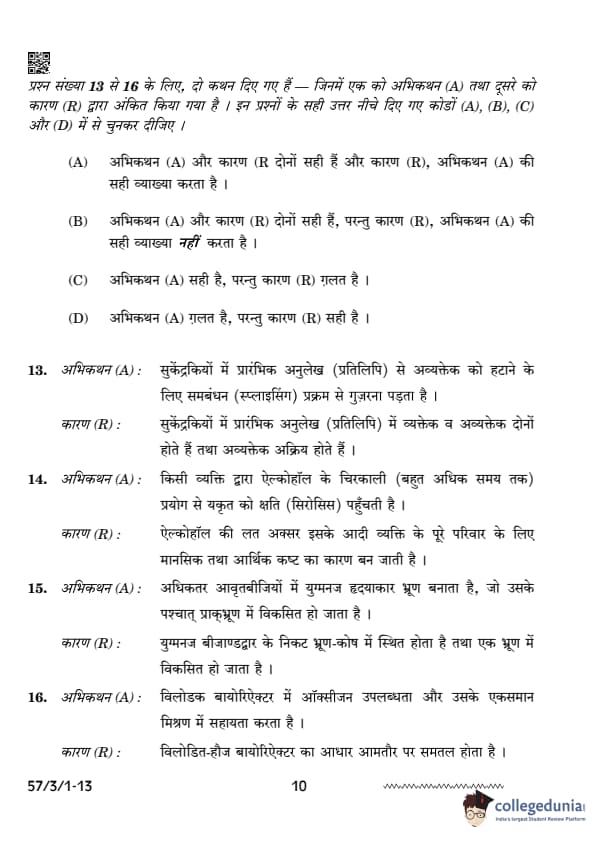
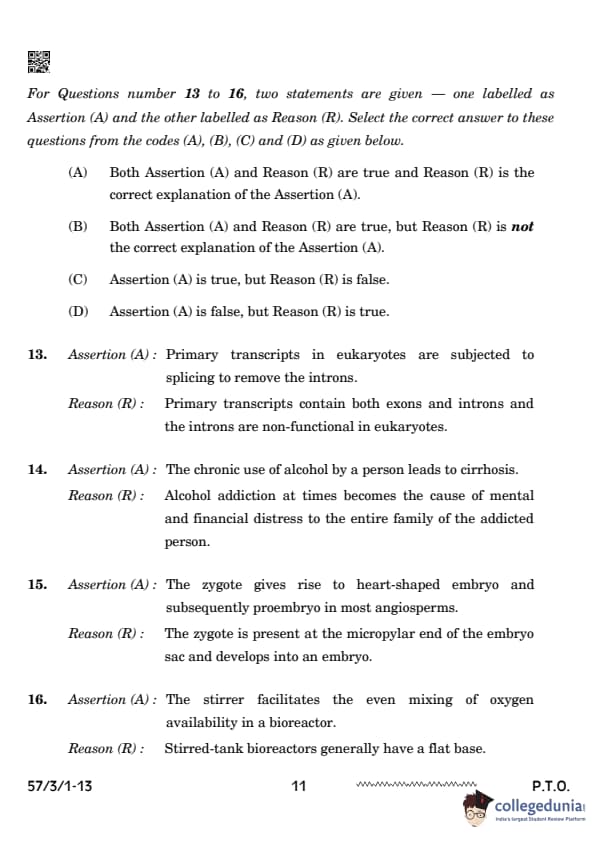
Assertion (A): Primary transcripts in eukaryotes are subjected to splicing to remove the introns.
Reason (R): Primary transcripts contain both exons and introns, and the introns are non-functional in eukaryotes.
View Solution
In eukaryotes, primary transcripts (pre-mRNA) undergo splicing to remove non-coding introns and retain the exons, which are responsible for coding the protein.
Splicing occurs because introns do not contribute to the functional proteins, so they are eliminated during mRNA maturation.
Both the Assertion and Reason are correct, and the Reason appropriately explains the Assertion. Quick Tip: Splicing ensures that only the functional regions of the gene (exons) remain in the mature mRNA, ready for translation.
Assertion (A): The chronic use of alcohol by a person leads to cirrhosis.
Reason (R): Alcohol addiction at times becomes the cause of mental and financial distress to the entire family of the addicted person.
View Solution
Chronic alcohol consumption can damage the liver leading to cirrhosis, a serious liver condition marked by scarring.
While alcohol addiction may contribute to mental and financial distress for the family, it does not directly cause cirrhosis.
Both Assertion and Reason are true, but Reason does not explain the Assertion correctly. Quick Tip: Long-term alcohol use affects multiple body systems and contributes to several diseases, including cirrhosis.
Assertion (A): The zygote gives rise to a heart-shaped embryo and subsequently proembryo in most angiosperms.
Reason (R): The zygote is present at the micropylar end of the embryo sac and develops into an embryo.
View Solution
The zygote, located at the micropylar end of the embryo sac, typically develops into an embryo in most angiosperms.
However, the statement about the heart-shaped embryo is not universally accurate, as embryos can take different forms and progress through various stages depending on the plant species.
The Assertion is false, but the Reason is true. Quick Tip: Embryo development can vary between species, with some angiosperms following a different sequence of stages.
Assertion (A): The stirrer facilitates the even mixing of oxygen availability in a bioreactor.
Reason (R): Stirred-tank bioreactors generally have a flat base.
View Solution
Stirred-tank bioreactors are equipped with stirrers to ensure consistent mixing and adequate oxygen distribution, promoting optimal microbial growth.
However, stirred-tank bioreactors generally have a curved base to enhance mixing and prevent dead zones, which contradicts the statement about having flat bases.
The Assertion is true, but the Reason is false. Quick Tip: Stirred-tank bioreactors are commonly used in industrial processes for efficient mixing and oxygen distribution.
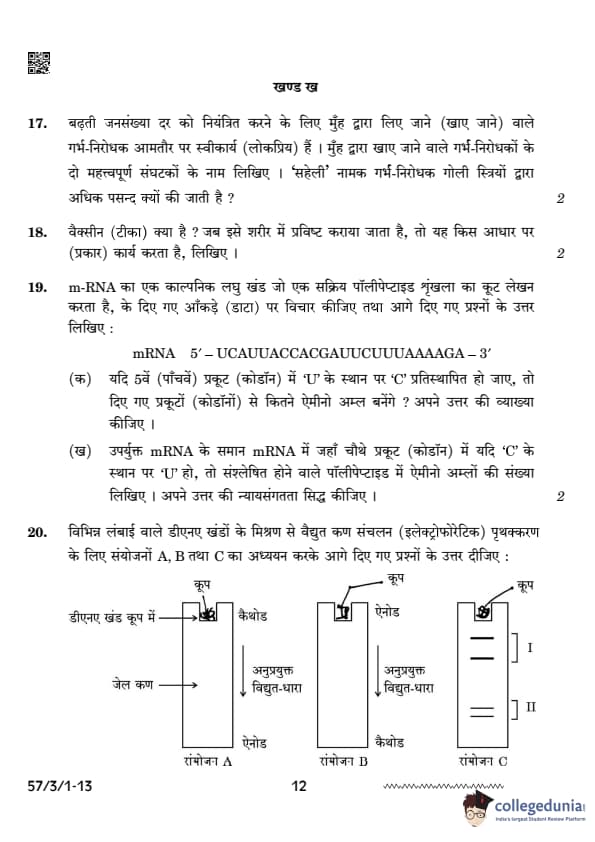
Oral contraceptives are widely accepted for controlling the increasing rate of population. Name the two important components of oral contraceptives. Why is ‘Saheli’ considered a preferred contraceptive by women?
View Solution
1. Two key components of oral contraceptives:
Progesterone
Estrogen
2. Why ‘Saheli’ is preferred:
Saheli is a non-steroidal oral contraceptive.
It has fewer side effects compared to steroid-based contraceptives.
Saheli is taken weekly, making it more convenient than daily pills.
Saheli is preferred due to its non-steroidal nature, convenience, and fewer side effects. Quick Tip: Non-steroidal contraceptives like Saheli are a safer alternative to traditional hormonal contraceptives.
What is a vaccine? Write the basis on which it acts when administered in the body.
View Solution
1. Definition of Vaccine:
A vaccine is a biological preparation containing inactivated or attenuated pathogens or their components that stimulate the immune system.
2. Basis of Action:
When administered, a vaccine triggers an immune response by stimulating the production of antibodies.
It induces immunological memory, protecting the body from future infections by the same pathogen.
Vaccines work by inducing an immune response and creating immunological memory. Quick Tip: Vaccines are crucial in preventing infectious diseases and controlling pandemics.
Consider the given data of a hypothetical small portion of mRNA that codes for a functional polypeptide chain and answer the questions that follow: \[ mRNA: 5’ – UCAUUAACCACGAUUCUUUAAAAAGA – 3’ \]
(a) How many amino acids will be formed from the given codons, if substitution of ‘U’ by ‘C’ takes place at the 5\(^th\) codon? Explain your answer.
View Solution
Codons are read in triplets, beginning from the first codon:
\[ UCA | UUA | ACC | ACG | AUU | CUU | UAA | AAA | GA \]
A substitution at the 5\(^th\) codon changes AUU to ACU, which still codes for the same amino acid (Threonine).
The stop codon is UAA, indicating that 7 amino acids will be synthesized.
A total of 7 amino acids will be produced from these codons. Quick Tip: Codon substitutions that do not change the amino acid sequence are called silent mutations and do not affect protein function.
(B) Write the number of amino acids that would be in the polypeptide synthesized by a similar mRNA as above, where in the fourth codon instead of ‘C’ there is ‘U’. Justify your answer.
View Solution
Modifying the 4\(^th\) codon from ACC to AUU results in the creation of a premature stop codon, AUU.
Translation halts at this stop codon, preventing the formation of a functional protein.
No amino acids will be produced due to the premature stop codon. Quick Tip: Mutations in codons can cause non-functional proteins or incomplete polypeptides due to premature stop codons.
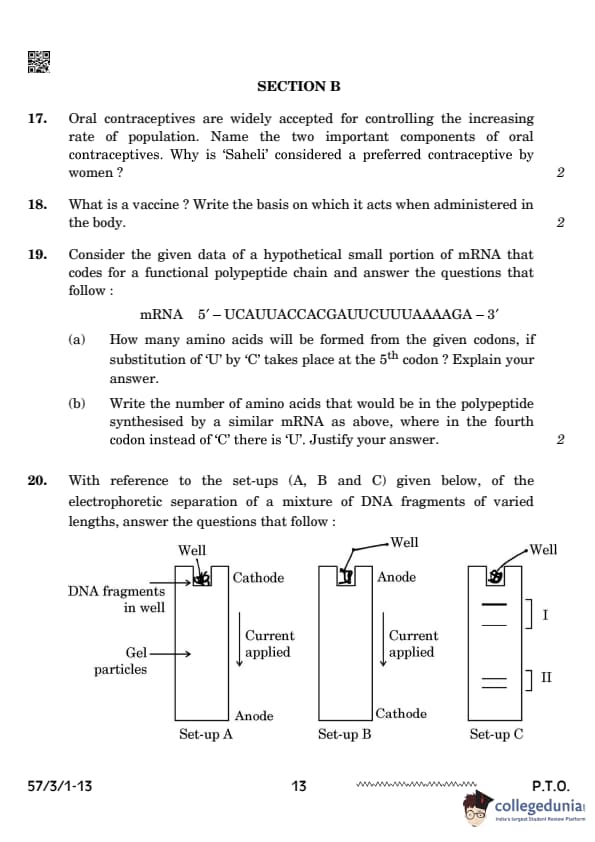
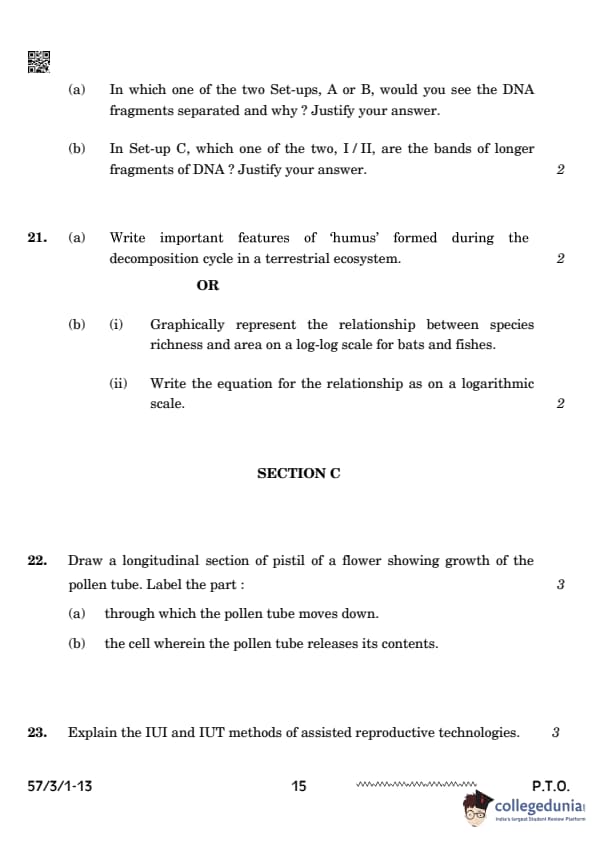
With reference to the set-ups (A, B, and C) given below, of the electrophoretic separation of a mixture of DNA fragments of varied lengths, answer the questions that follow:
(a) In which one of the two Set-ups, A or B, would you see the DNA fragments separated and why? Justify your answer.

View Solution
In Set-up B, the electrodes are properly aligned, allowing the DNA fragments to move towards the anode (positive electrode), resulting in separation.
In Set-up A, the reversed electrodes cause the DNA fragments to migrate in the wrong direction.
DNA fragments separate in Set-up B due to the correct alignment of the electrodes. Quick Tip: In gel electrophoresis, DNA fragments separate based on size, with smaller fragments moving faster through the gel. Proper electrode alignment is essential for the correct migration direction, from the negative to the positive electrode.
(b) In Set-up C, which one of the two, I/II, are the bands of longer fragments of DNA? Justify your answer.
View Solution
In Set-up C, the bands of longer DNA fragments are located at position I.
Larger DNA fragments move more slowly through the gel, causing them to stay closer to the well (position I).
The bands of longer DNA fragments are found at position I because they migrate more slowly through the gel. Quick Tip: Smaller DNA fragments travel further in gel electrophoresis due to less resistance in the gel matrix.
(a) Write important features of ‘humus’ formed during the decomposition cycle in a terrestrial ecosystem.
View Solution
1. Humus is a dark organic material formed by the decomposition of plant and animal matter.
2. It is resistant to microbial action and decomposes slowly.
3. Humus serves as a reservoir of nutrients, releasing them gradually to support plant growth.
4. It enhances soil fertility and improves the soil’s water retention capacity.
Humus plays a crucial role in maintaining soil health and supporting ecosystem productivity. Quick Tip: Humus formation is essential for nutrient cycling in ecosystems, improving soil quality and sustaining plant life.
(b)(i) Graphically represent the relationship between species richness and area on a log-log scale for bats and fishes.
View Solution
The relationship is depicted as a straight line on a log-log scale, indicating a positive correlation between species richness and area.
The graph will display distinct lines for bats and fishes, each illustrating the link between area and species richness.
 Quick Tip: Log-log plots are useful for showing relationships where both variables span several orders of magnitude, such as species richness and area.
(b)(ii) Write the equation for the relationship as on a logarithmic scale.
View Solution
The relationship between species richness (\(S\)) and area (\(A\)) is described by the equation: \[ \log S = \log C + Z \log A \]
Where:
\(S\) denotes species richness
\(A\) denotes the area
\(C\) is a constant
\(Z\) represents the slope of the line (species-area relationship constant).
The equation for the species-area relationship is \(\log S = \log C + Z \log A\). Quick Tip: Understanding the species-area relationship helps explain biodiversity trends in various ecosystems.
Draw a longitudinal section of pistil of a flower showing growth of the pollen tube. Label the part:
(a) Through which the pollen tube moves down.
(b) The cell wherein the pollen tube releases its contents.
View Solution
The pollen tube initially grows through the style, a tissue connecting the stigma to the ovary, allowing the pollen to move towards the ovule for fertilization.
The pollen tube then travels to the micropylar end of the ovule, where it reaches the embryo sac. Upon reaching the embryo sac, the tube releases its sperm cells into one of the synergid cells, which facilitates the sperm cells' entry into the egg cell, playing a key role in fertilization.
After releasing the sperm cells, the pollen tube breaks down. The sperm cells subsequently fuse with the egg cell and the central cell of the ovule to form a zygote and endosperm, respectively.
(a) The pollen tube moves through the style.
(b) The sperm cells are released into the synergid of the embryo sac.
Quick Tip: The growth of the pollen tube and its interaction with the synergid cells are essential for successful fertilization in flowering plants.
Explain the IUI and IUT methods of assisted reproductive technologies.
View Solution
1. IUI (Intrauterine Insemination):
Intrauterine Insemination is a fertility treatment where sperm is directly inserted into a woman’s uterus during ovulation. This method bypasses the cervix and increases the chances of sperm reaching the egg. It is most commonly used for individuals with low sperm count, low sperm motility, or unexplained infertility. IUI can also be used for women with cervical mucus problems or those who have ovulatory issues.
This procedure is often combined with ovulation induction to maximize the chances of successful fertilization.
2. IUT (Intrauterine Transfer):
In this method, embryos or zygotes are transferred into the uterus after fertilization has occurred outside the body. IUT is typically used in cases where the embryo faces difficulty implanting naturally due to conditions like endometrial issues or previous implantation failure. The embryo is transferred directly into the uterus through the cervix, allowing it to implant and develop.
This procedure is a crucial part of in vitro fertilization (IVF) and has helped many couples with infertility issues successfully conceive.
IUI involves the direct placement of sperm into the uterus during ovulation to aid fertilization.
IUT involves transferring embryos into the uterus after fertilization to enhance implantation. Quick Tip: Assisted reproductive technologies like IUI and IUT increase the success rates of pregnancy by bypassing natural barriers to fertilization and implantation.
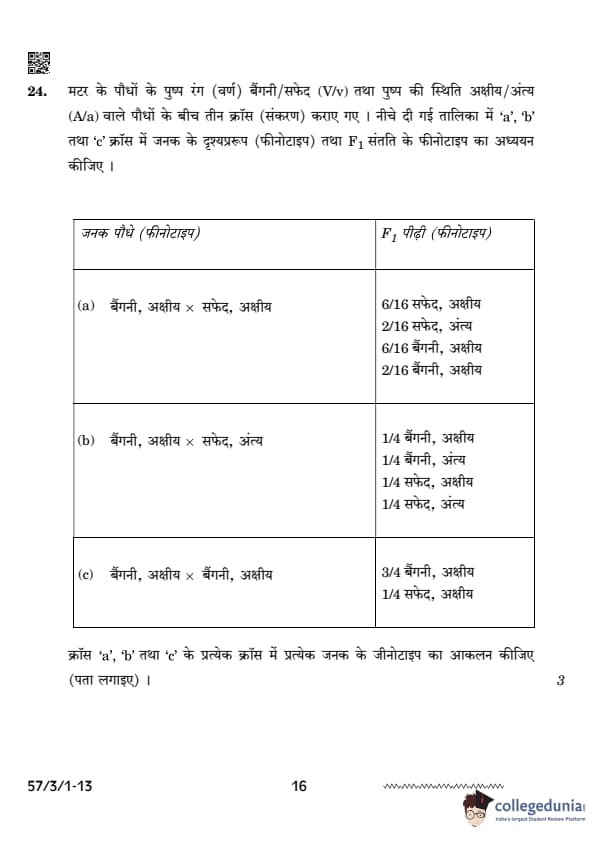
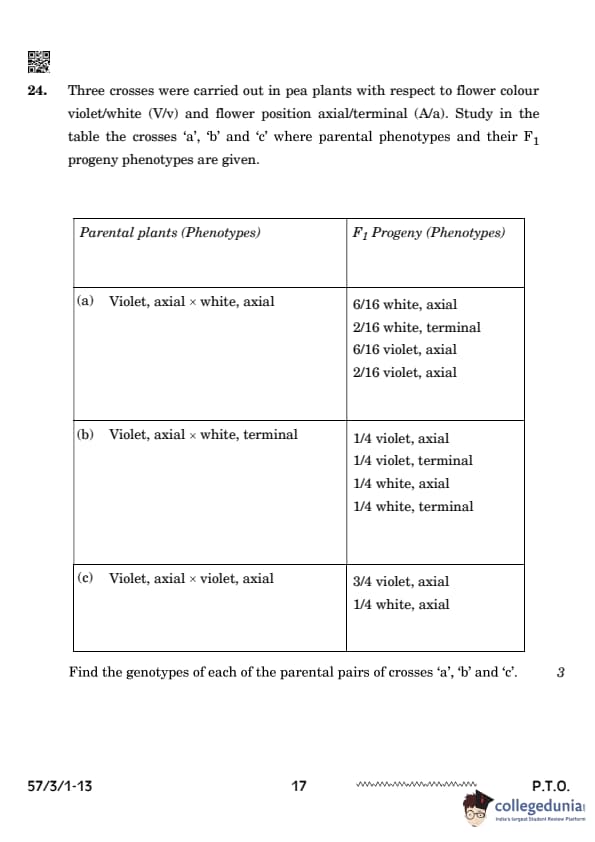
Three crosses were carried out in pea plants with respect to flower colour violet/white (\(V/v\)) and flower position axial/terminal (\(A/a\)). Study the table of crosses ‘a’, ‘b’ and ‘c’ where parental phenotypes and their F\(_1\) progeny phenotypes are given.
Find the genotypes of each of the parental pairs of crosses ‘a’, ‘b’, and ‘c’.

View Solution
1. Cross (a): Violet, axial \(\times\) White, axial
The progeny exhibits a phenotypic ratio of 6:2:6:2, indicating that both parents are heterozygous for both traits, meaning each parent carries one dominant and one recessive allele for each gene.
This results in a cross between \(VvAa \times vvAa\), where:
\(Vv\) represents the heterozygous violet allele,
\(vv\) is the homozygous recessive white allele,
\(Aa\) is the heterozygous axial allele.
2. Cross (b): Violet, Axial \(\times\) White, Terminal
The progeny shows a 1:1:1:1 phenotypic ratio, suggesting that one parent is heterozygous for both traits, while the other is homozygous recessive for one trait.
This results in a cross between \(VvAa \times vvAa\), where:
\(Vv\) represents the heterozygous violet allele,
\(vv\) is the homozygous recessive white allele,
\(Aa\) is the heterozygous axial allele.
3. Cross (c): Violet, Axial \(\times\) Violet, Axial
The progeny shows a phenotypic ratio of 3:1, which indicates that both parents are heterozygous for both traits.
This results in a monohybrid cross for both flower color and position, specifically \(VvAA \times VvAA\).
The resulting ratio is:
\(VvAA\) for 3/4 of the progeny, resulting in the violet, axial phenotype, and
\(vvAA\) for 1/4 of the progeny, resulting in the white, axial phenotype.
(a) \(VvAa \times vvAa\)
(b) \(VvAa \times vvAa\)
(c) \(VvAA \times VvAA\) Quick Tip: Punnett squares and phenotypic ratios help predict offspring traits and reveal patterns of inheritance.
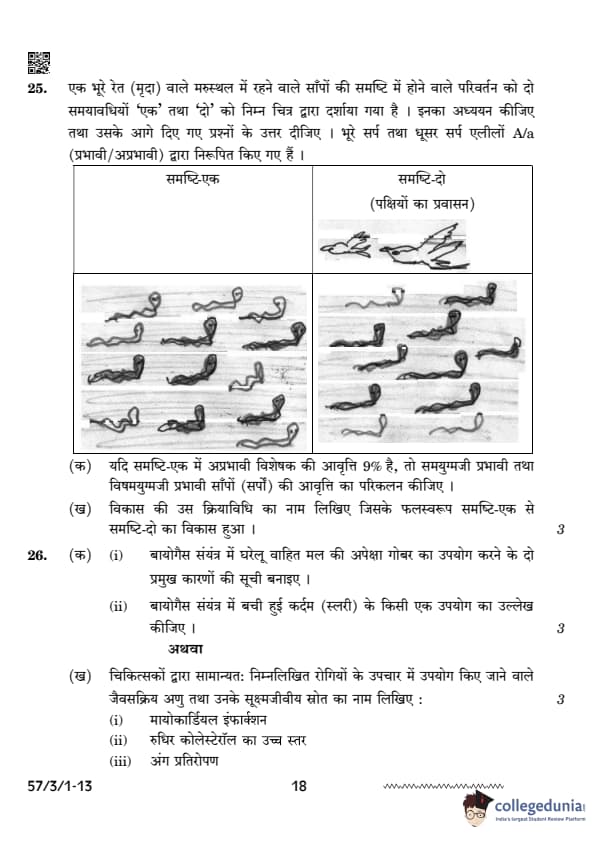
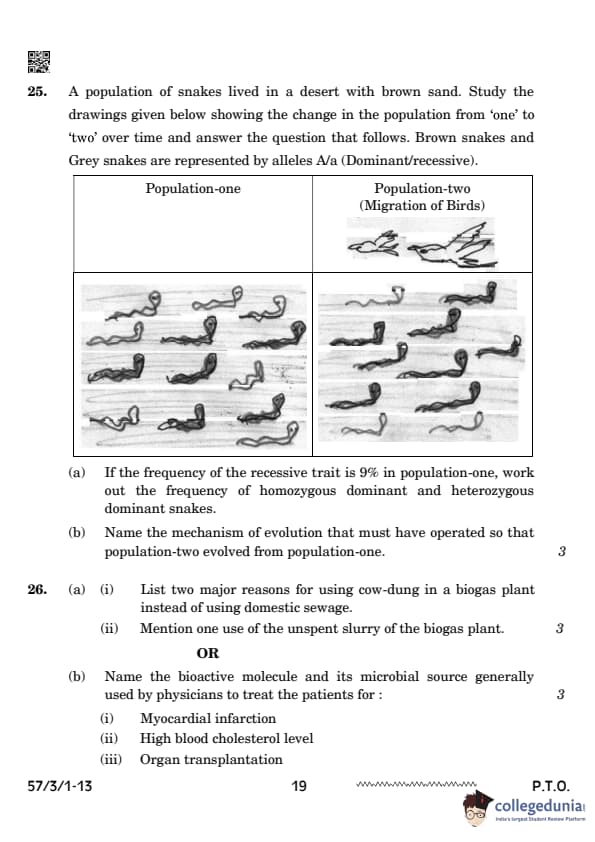
A population of snakes lived in a desert with brown sand. Study the drawings given below showing the change in the population from ‘one’ to ‘two’ over time and answer the question that follows. Brown snakes and Grey snakes are represented by alleles \textbf{A/a} (Dominant/recessive).
(a) If the frequency of the recessive trait is 9% in population-one, work out the frequency of homozygous dominant and heterozygous dominant snakes.

View Solution
The frequency of the recessive genotype (\(aa\)) = \(q^2 = 9%\) = 0.09.
The frequency of the recessive allele (\(q\)) = \(\sqrt{0.09} = 0.3\).
The frequency of the dominant allele (\(p\)) = \(1 - q = 1 - 0.3 = 0.7\).
Homozygous dominant (\(AA\)) frequency = \(p^2 = (0.7)^2 = 0.49\) (49%).
Heterozygous dominant (\(Aa\)) frequency = \(2pq = 2(0.7)(0.3) = 0.42\)
(42%).
Homozygous dominant snakes (\(AA\)) = 49%.
Heterozygous dominant snakes (\(Aa\)) = 42%.
Quick Tip: Natural selection favors traits that provide a survival advantage in a given environment. In this case, brown snakes had better camouflage in the desert sand, reducing predation and increasing their survival and reproduction rates.
(b) Name the mechanism of evolution that must have operated so that population-two evolved from population-one.
View Solution
Natural selection is the mechanism of evolution.
In the desert habitat, grey snakes, which blend in better with the brown sand, have a survival advantage over brown snakes.
As a result, over time, the frequency of grey snakes increases in the population due to selective pressure, driving evolutionary change.
The mechanism of evolution is natural selection. Quick Tip: Natural selection enables organisms to adapt to their surroundings, enhancing their chances of survival and reproduction.
(a)(i) List two major reasons for using cow-dung in a biogas plant instead of using domestic sewage.
View Solution
1. Cow-dung contains methanogenic bacteria, which are essential for the anaerobic breakdown of organic matter into methane gas during the biogas production process.
These bacteria help in efficiently producing biogas.
2. Cow-dung is readily available in large quantities and is biodegradable, making it an easily accessible and suitable feedstock for biogas plants. Domestic sewage may not have the necessary microorganisms in sufficient amounts for efficient biogas production. Quick Tip: Cow dung is preferred over domestic sewage in biogas plants due to its higher organic content and better methane yield. Additionally, it is safer to handle and reduces the risk of pathogenic contamination.
(a)(ii) Mention one use of the unspent slurry of the biogas plant.
View Solution
The unspent slurry, which is the leftover solid material after biogas extraction, serves as a high-quality organic fertilizer for crops. It adds essential nutrients like nitrogen, phosphorus, and potassium to the soil, supporting plant growth.
Cow dung is preferred for its methanogenic bacteria and availability.
The slurry is utilized as fertilizer to enhance soil quality.
Quick Tip: The unspent slurry from a biogas plant is a valuable organic fertilizer that improves soil health, boosts crop yield, and reduces reliance on chemical fertilizers.
(b) Name the bioactive molecule and its microbial source generally used by physicians to treat the patients for:
(i) Myocardial infarction:
(ii) High blood cholesterol level:
(iii) Organ transplantation:
View Solution
Microorganisms have provided us with a wide range of essential substances used in modern medicine. Some important examples include:
(i) Streptokinase:
Source: Streptokinase is an enzyme derived from the Streptococcus species, particularly Streptococcus pyogenes.
Use: Streptokinase is primarily used as a thrombolytic agent, meaning it helps dissolve blood clots. It is commonly used to treat conditions like heart attacks, strokes, and deep vein thrombosis by breaking down fibrin, the protein that forms clots in the blood vessels.
(ii) Statins:
Source: Statins are a class of compounds produced by Monascus purpureus, a type of red yeast.
Use: Statins are widely prescribed to lower cholesterol levels in the blood. They work by inhibiting the enzyme HMG-CoA reductase, which is involved in cholesterol production in the liver. Statins are commonly used to prevent cardiovascular diseases such as heart attacks and strokes by managing cholesterol levels effectively.
(iii) Cyclosporin A:
Source: Cyclosporin A is derived from the fungus Trichoderma polysporum.
Use: Cyclosporin A is an immunosuppressant used primarily to prevent organ rejection following transplants. It works by inhibiting T-cell activation, thereby suppressing the immune system's response to transplanted tissues or organs. Cyclosporin A has revolutionized organ transplantation and is also used in autoimmune diseases.
These microbial products, such as streptokinase, statins, and cyclosporin, have become invaluable tools in modern medicine. They are used to treat cardiovascular diseases, regulate cholesterol levels, and prevent organ rejection in transplant recipients. Quick Tip: Microbial products, such as streptokinase and cyclosporin, are invaluable tools in modern medicine for treating cardiovascular diseases, controlling cholesterol levels, and preventing organ rejection in transplants.
(a) Give the scientific name of the bacteria widely used in biotechnology to create a GM cotton crop resistant to bollworm attacks.
View Solution
The scientific name of the bacterium widely used in biotechnology to create genetically modified (GM) cotton crops resistant to bollworm attacks is Bacillus thuringiensis. This bacterium naturally produces a protein toxin, which, when ingested by certain insect pests, disrupts their digestive system and leads to their death. This property makes it highly effective in pest control.
Quick Tip: Bacillus thuringiensis (Bt) is a naturally occurring bacterium in the soil, known for its ability to produce insecticidal proteins that specifically target certain pests. Its use in genetically modified crops helps in reducing chemical pesticide usage.
(b) Explain how GM cotton crop is able to resist insect attacks.
View Solution
GM cotton crops are genetically engineered by inserting a gene from Bacillus thuringiensis (Bt), which produces a protein toxic to specific insect pests such as bollworms. The protein is embedded in every cell of the cotton plant, including its leaves, stems, and flowers. When the bollworm larvae consume parts of the plant, they ingest the toxin, which interferes with their digestive system, ultimately killing them. This allows the cotton crop to resist insect attacks without the need for external chemical insecticides.
Additionally, the gene insertion makes the cotton plant inherently resistant to these pests, reducing the environmental impact of pesticide use and promoting a more sustainable agricultural practice. This process also reduces the cost for farmers by decreasing the need for repeated pesticide applications.
Quick Tip: Genetically modified crops like Bt cotton not only help in controlling pest populations but also contribute to environmental sustainability by reducing the reliance on harmful chemical insecticides, which can have negative effects on non-target species and ecosystems.
Describe how fig tree and wasp relationship is a spectacular example of mutualism.
View Solution
The relationship between the fig tree and fig wasp is a fascinating example of mutualism, where both species derive benefits from the interaction. Fig trees rely on fig wasps for pollination, and fig wasps depend on fig trees for their reproduction. The fig tree produces a specialized fruit, called a syconium, which contains both the flowers and seeds of the tree. Female fig wasps enter the fig through a small opening to lay their eggs inside the fig's flowers. As they do this, they inadvertently pollinate the fig flowers. The wasp larvae feed on the fig's flowers, and once they mature, the male wasps mate with the females inside the fig and then die. The fertilized female wasps exit the fig, carrying pollen with them, and find another fig to lay their eggs in, thus continuing the cycle.
This mutualistic relationship ensures that the fig tree can reproduce through pollination, while the wasp species can reproduce by using the fig tree's flowers as a breeding ground. Both species rely on each other for survival, and neither would thrive without the other.
Quick Tip: The fig tree and fig wasp demonstrate how highly specialized mutualistic relationships can evolve between species. Such relationships benefit both parties involved, ensuring the survival and reproductive success of each.
Read the passage given below and answer the questions that follow.
Read the passage given below and answer the questions that follow.
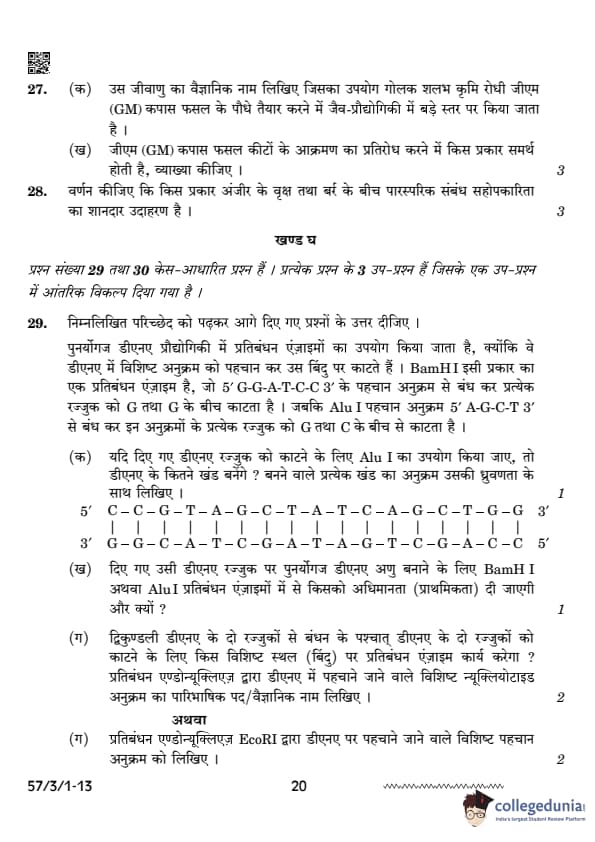
In recombinant DNA technology, restriction enzymes are used as they recognize and cut DNA within a specific recognition sequence. BamH I is one such restriction enzyme which binds at the recognition sequence 5 G-G-A-T-C-C 3 and cleaves this sequence between G and G on each strand, whereas Alu I binds at the recognition sequence 5 A-G-C-T 3and cleaves these sequences between G and C on each strand.
(a) If Alu I is used to cut the given DNA strand, how many DNA fragments would be formed? Write the sequence of each fragment formed with its polarity.
View Solution
The restriction enzyme Alu I identifies the sequence AG↓CT and cleaves the DNA at this recognition site.
The given DNA sequence will be cleaved into two fragments as follows:
Two fragments are produced:
1. 5' - CGT GAT AG - 3'
2. 5' - CTA TAG CTA C - 3' Quick Tip: Restriction enzymes like Alu I recognize specific palindromic sequences and cut DNA at defined sites. The number of resulting DNA fragments is (n+1), where n represents the number of recognition sites.
(b) Which one of the two restriction enzymes BamHI or Alu I will preferably be used on the same given DNA strand to make a recombinant DNA molecule and why?
View Solution
BamHI is preferred in recombinant DNA technology because it produces sticky ends, which enhance the ability to ligate foreign DNA into the target sequence.
In contrast, Alu I generates blunt ends, which are less efficient in terms of ligation, as they do not form overhangs that facilitate DNA joining.
BamHI is favored due to its ability to create sticky ends, which simplifies the process of recombinant DNA formation. Quick Tip: Restriction enzymes like BamHI create sticky ends, which enhance the efficiency of DNA ligation in recombinant DNA technology. In contrast, Alu I produces blunt ends, making ligation more challenging.
(c) After binding to the two strands of the double helix DNA, where specifically does the restriction enzyme act to cut the two strands of DNA? Write the specific term used for the specific nucleotide sequences of DNA recognized by a restriction endonuclease.
View Solution
Action of Restriction Enzymes: Restriction enzymes act at specific palindromic sequences
in the DNA. A palindromic sequence is a nucleotide sequence that reads the same forward
and backward on complementary strands.
Example of a Palindromic Sequence:
5’ GAATTC 3’
3’ CTTAAG 5’
Quick Tip: Restriction enzymes are essential tools in genetic engineering.
Sticky ends (produced by enzymes like BamH I) are better for DNA recombination.
Blunt ends (produced by Alu I) require additional steps for ligation.
OR
Question 29:
(c) Write the specific sequence of DNA segment recognised by the restriction endonuclease EcoRI.
View Solution
EcoRI recognizes the sequence: \[ 5' - G↓AATTC - 3' 3' - CTTAA↑G - 5' \]
This is the specific site where EcoRI cuts the DNA.
The EcoRI recognition sequence is 5' - G↓AATTC - 3'. Quick Tip: Restriction enzymes like EcoRI are essential tools in genetic manipulation as they create sticky ends for DNA ligation.
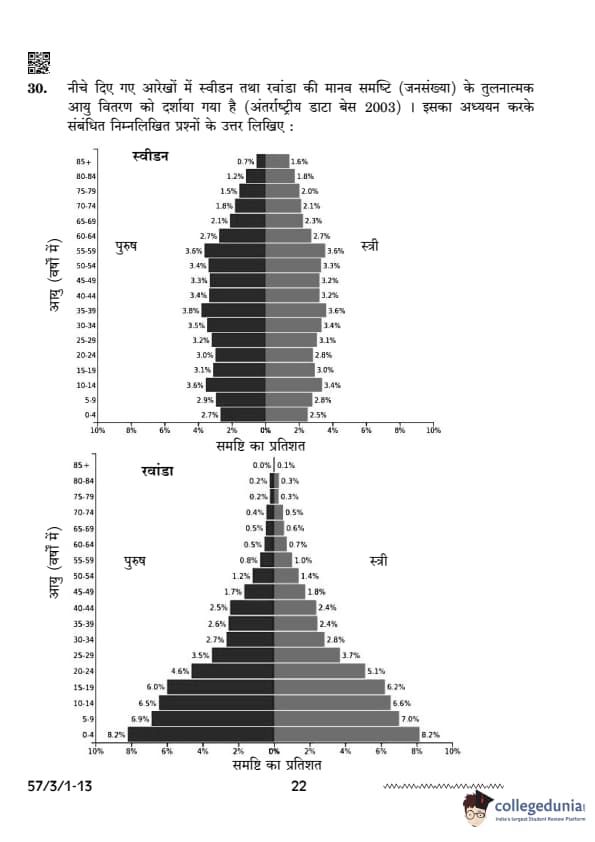
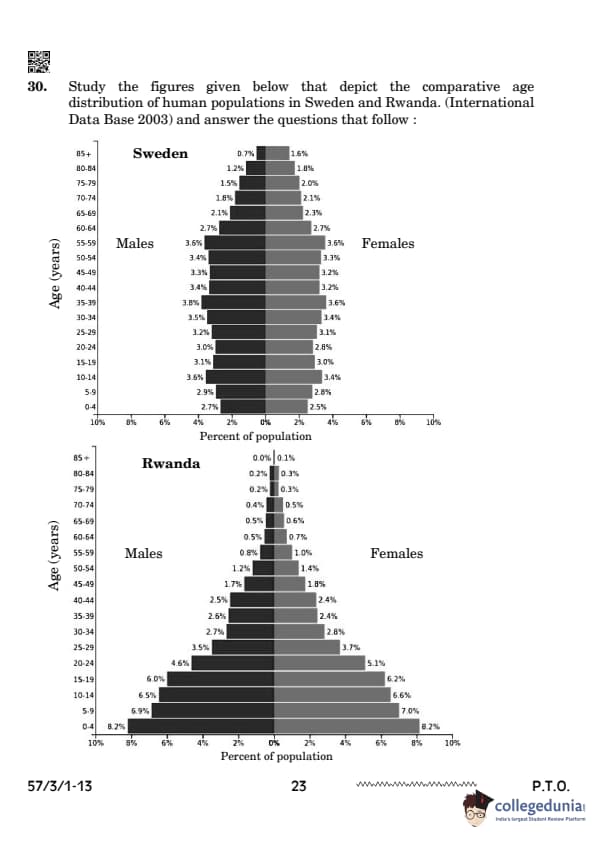
Study the figures given below that depict the comparative age distribution of human populations in Sweden and Rwanda (International Data Base 2003) and answer the questions that follow:
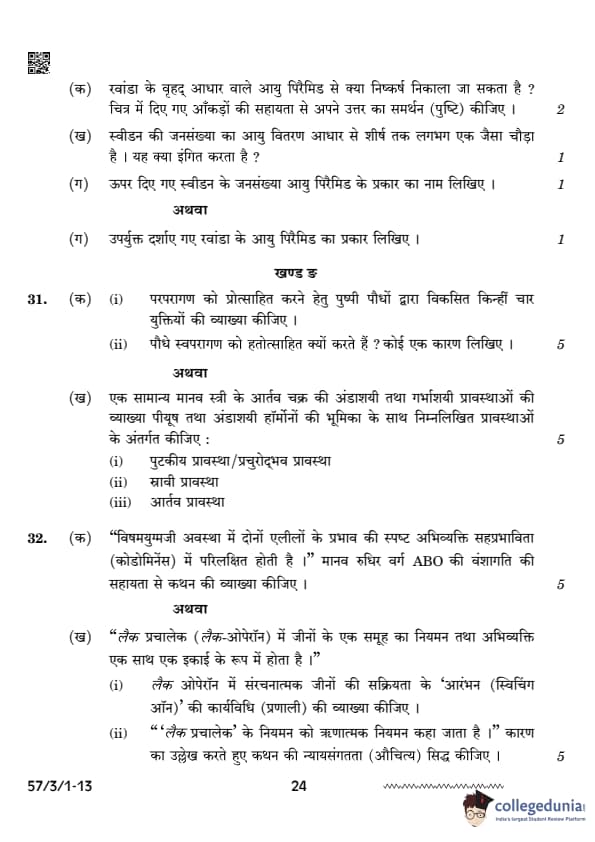
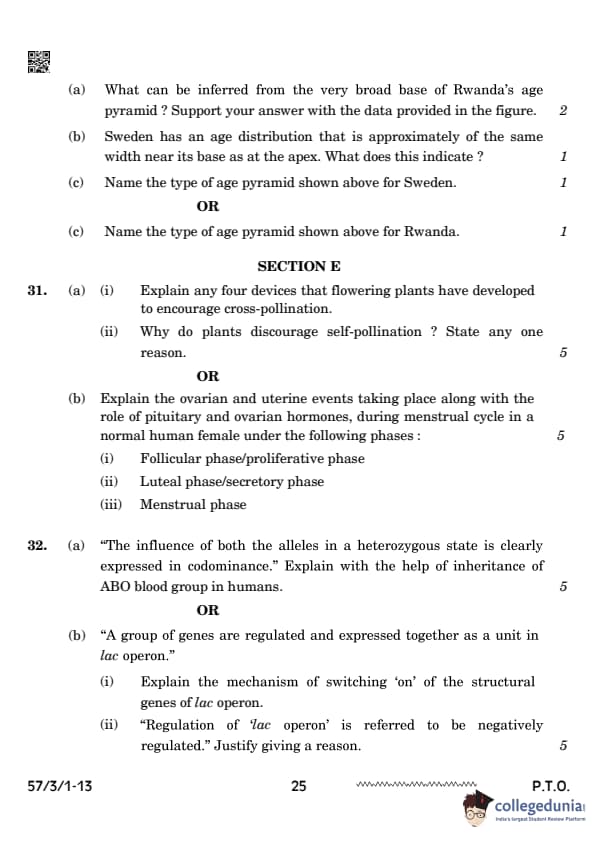
(a) What can be inferred from the very broad base of Rwanda’s age pyramid? Support your answer with the data provided in the figure.
View Solution
A broad base on the age pyramid reflects a high birth rate in Rwanda, which leads to a large proportion of the population being in the younger age brackets.
For example, 8.2% of males and 8.0% of females fall into the 0–4 age group, indicating that there are more births in the population.
Rwanda’s broad age pyramid indicates a high birth rate and rapid population growth. Quick Tip: A broad-based age pyramid indicates a high birth rate and young population, leading to rapid population growth and high dependency ratios.
(b) Sweden has an age distribution that is approximately of the same width near its base as at the apex. What does this indicate?
View Solution
The consistent width across Sweden’s age pyramid suggests that both birth and death rates are low, which is typical of a stable population.
The even distribution among age groups reflects balanced population growth and a high life expectancy.
Sweden’s population is stable, with low birth and death rates. Quick Tip: A uniform age distribution in a population pyramid, like Sweden's, indicates low birth and death rates, resulting in a stable or gradually growing population.
(c) Name the type of age pyramid shown above for Sweden.
View Solution
Sweden’s age pyramid is classified as stationary, with a balanced number of individuals across all age groups, indicating low growth and high stability.
Sweden’s age pyramid is stationary. Quick Tip: A stationary age pyramid, as seen in Sweden, indicates low birth and death rates, leading to a stable population.
OR
Question 30:
Name the type of age pyramid shown above for Rwanda.
View Solution
Rwanda’s pyramid is classified as expanding, as it has a wide base, which is characteristic of a high birth rate and rapidly growing population.
Rwanda’s age pyramid is expanding. Quick Tip: Age pyramids are valuable tools for understanding the demographic structure and growth patterns of a population.
(a)(i) Explain any four devices that flowering plants have developed to encourage cross-pollination.
View Solution
1. Dichogamy: The male and female reproductive parts mature at different times, preventing self-pollination.
2. Herkogamy: Physical separation of anthers and stigma prevents self-pollination by keeping male and female parts from interacting directly.
3. Unisexuality: Male and female flowers are on separate plants (dioecy), ensuring cross-pollination.
4. Self-incompatibility: The plant’s genetic makeup prevents fertilization with its own pollen, promoting cross-pollination.
These mechanisms—dichogamy, herkogamy, unisexuality, and self-incompatibility—facilitate cross-pollination. Quick Tip: Flowering plants encourage cross-pollination through mechanisms like dichogamy (different maturation times), herkogamy (spatial separation), self-incompatibility (genetic rejection), and unisexuality (separate male and female flowers). These adaptations promote genetic diversity and evolution.
(a) (ii) Why do plants discourage self-pollination? State any one reason.
View Solution
Self-pollination leads to inbreeding depression, reducing genetic diversity and the plant’s ability to adapt to environmental changes.
Plants discourage self-pollination to avoid inbreeding depression. Quick Tip: Self-pollination reduces genetic variation, making plants more susceptible to diseases and environmental changes.
(b) Explain the ovarian and uterine events taking place along with the role of pituitary and ovarian hormones, during the menstrual cycle in a normal human female under the following phases:
View Solution
(i) Follicular phase/proliferative phase:
Under the influence of FSH, follicles in the ovaries develop and secrete estrogen, which helps to proliferate the uterine lining (endometrium).
(ii) Luteal phase/secretory phase:
After ovulation, the ruptured follicle transforms into the corpus luteum, which secretes progesterone to prepare the endometrium for possible implantation.
(iii) Menstrual phase:
If fertilization does not occur, the corpus luteum degenerates, leading to a drop in progesterone, causing the shedding of the endometrial lining (menstruation).
The menstrual cycle involves follicular, luteal, and menstrual phases, regulated by hormones like FSH, LH, estrogen, and progesterone. Quick Tip: The menstrual cycle ensures the female reproductive system is prepared for pregnancy while maintaining a regular cycle of hormonal regulation.
(a) “The influence of both the alleles in a heterozygous state is clearly expressed in codominance.” Explain with the help of inheritance of ABO blood group in humans.
View Solution
In codominance, both alleles are equally expressed in the phenotype of heterozygous individuals.
In the ABO blood group system:
IA and IB are codominant, meaning that both A and B antigens are present on red blood cells in individuals with the genotype IAIB.
Codominance is demonstrated by the ABO blood group system, where both alleles are equally expressed in the heterozygous individual. Quick Tip: Codominance occurs when both alleles in a heterozygous organism are fully expressed. The ABO blood group system is a perfect example, where individuals with the I\(^A\)I\(^B\) genotype express both A and B antigens on their red blood cells, resulting in blood group AB.
OR
Question 32:
"A group of genes are regulated and expressed together as a unit in \textbf{lac} operon."
(i) Explain the mechanism of switching ‘on’ of the structural genes of lac operon.
View Solution
When lactose is present, it binds to the repressor protein, inactivating it.
This allows RNA polymerase to bind to the promoter region and transcribe the lac operon genes, which are involved in lactose metabolism. Quick Tip: The lac operon is an inducible operon in bacteria that controls lactose metabolism. It is switched on when lactose is present, as it binds to the repressor protein, preventing it from blocking the operon's promoter.
(ii) Regulation of ‘lac operon’ is referred to be negatively regulated. Justify giving a reason.
View Solution
The lac operon is negatively regulated because the repressor protein binds to the operator, blocking transcription of the operon when lactose is not available.
The lac operon is negatively regulated, as the repressor inhibits transcription in the absence of lactose. Quick Tip: The lac operon model is an important example of gene regulation, demonstrating how bacteria control enzyme production in response to environmental changes.
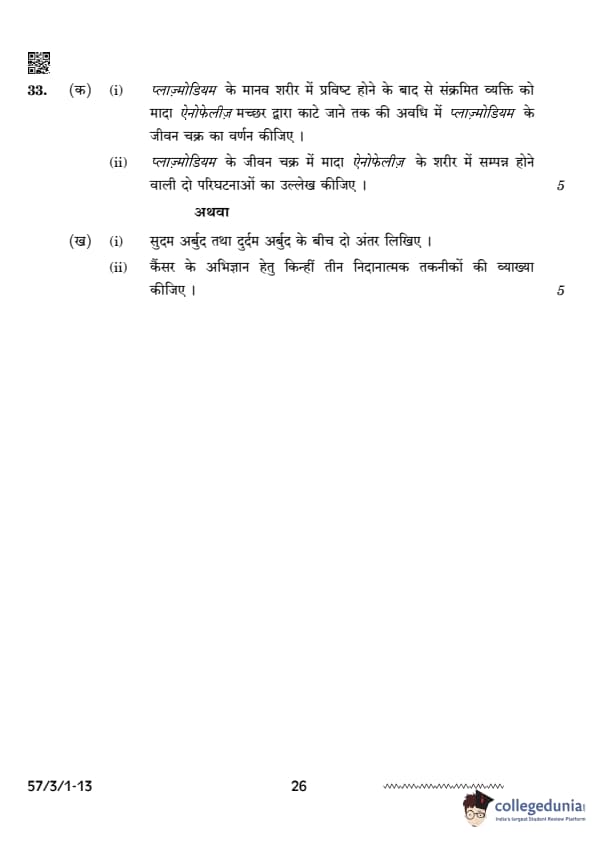
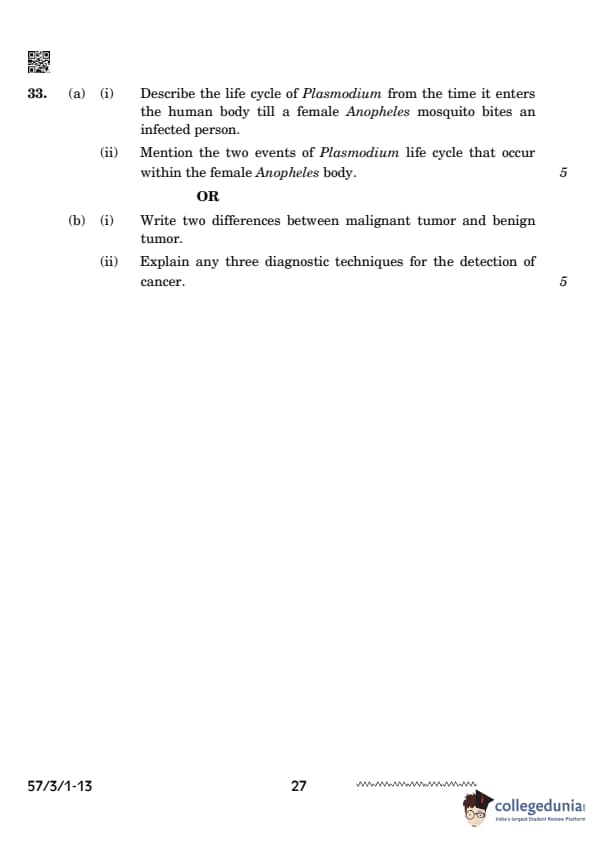
(a)(i) Describe the life cycle of Plasmodium from the time it enters the human body till a female Anopheles mosquito bites an infected person.
View Solution
1. Entry into the human body:
Infected female Anopheles mosquitoes inject sporozoites into the human bloodstream during a bite.
2. Liver stage:
Sporozoites travel to the liver, infect hepatocytes, and mature into merozoites.
3. RBC stage:
Merozoites enter red blood cells, replicate, and cause them to burst, releasing more merozoites.
4. Gamete formation:
Some merozoites differentiate into male and female gametocytes, which circulate in the blood.
5. Uptake by mosquito:
When a mosquito bites an infected human, it ingests the gametocytes, continuing the cycle.
The Plasmodium life cycle includes sporozoite entry, liver stage, RBC stage, gametocyte formation, and mosquito uptake. Quick Tip: The life cycle of \textbf{Plasmodium} involves two hosts: humans and female Anopheles mosquitoes.
(a) (ii) Mention the two events of Plasmodium life cycle that occur within the female Anopheles body.
View Solution
1. Fertilization: Male and female gametocytes fuse in the mosquito’s gut, forming a zygote.
2. Sporozoite formation: The zygote develops into sporozoites, which migrate to the mosquito’s salivary glands.
Fertilization and sporozoite formation occur within the mosquito’s body. Quick Tip: Plasmodium's lifecycle is digenetic, involving both humans and mosquitoes as hosts, making it a complex parasitic process.
(b)(i) Write two differences between malignant tumor and benign tumor.
View Solution
1. Malignant tumor:
Invasive, spreading to other parts of the body (metastasis).
Grows rapidly and is life-threatening.
2. Benign tumor:
Non-invasive, localized.
Grows slowly and is usually not life-threatening.
Malignant tumors are invasive and life-threatening, while benign tumors are localized and grow slowly. Quick Tip: Malignant tumors are cancerous, grow rapidly, invade nearby tissues, and can spread (metastasize). Benign tumors are non-cancerous, grow slowly, remain localized, and do not spread.
(b) (ii) Explain any three diagnostic techniques for the detection of cancer.
View Solution
1. Biopsy:
A sample of tissue is taken and analyzed for abnormal cells under a microscope.
2. Imaging techniques (e.g., CT scan, MRI):
These methods create images of tumors and their spread within the body.
3. Blood tests:
Detect specific biomarkers (e.g., PSA for prostate cancer) indicating the presence of cancer.
Diagnostic techniques for cancer include biopsy, imaging, and blood tests to detect abnormal cell growth and spread. Quick Tip: Early cancer detection through advanced diagnostic methods significantly improves treatment outcomes and survival rates.







Comments