




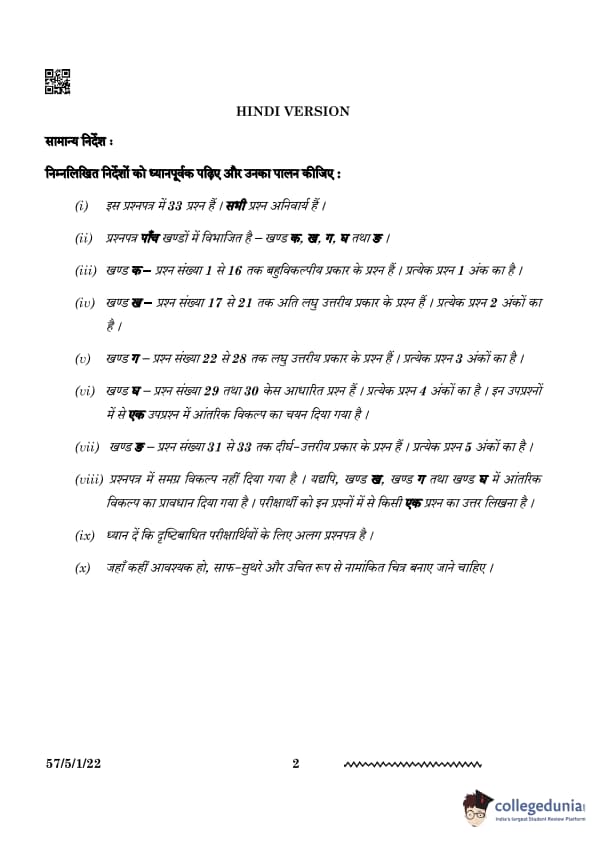
CBSE Class 12 Biology Set 3 Question Paper PDF (57/5/1) is now available for download. CBSE conducted the Class 12 Biology examination on March 19, 2024, from 10:30 AM to 1:30 PM. The question paper consists of 33 questions carrying a total of 70 marks. Section A includes 16 MCQs for 1 mark each, Section B contains 5 very short-answer questions for 2 marks each, Section C comprises 7 short-answer questions for 3 marks each, Section D comprises 2 Case-based questions carries 4 marks each and Section E comprises 3 long-answer questions carries 5 marks each.
Candidates can use the link below to download the CBSE Class 12 Biology Set 1 Question Paper with detailed solutions.
CBSE Class 12 Biology Question Paper 2024 (Set 1- 57/5/1) with Answer Key
| CBSE Class 12 2024 Biology Question Paper with Answer Key |  Download Download |
Check Solution |
CBSE Class 12 2024 Biology Questions with Solutions
SECTION A
Question 1:
A single gene that controls the expression of more than one trait is said to show:
View Solution
Solution: When a single gene can exhibit multiple phenotypic expressions, such a gene is called a pleiotropic gene. For example, the gene responsible for phenylketonuria in humans affects multiple traits, such as hair color, skin pigmentation, and mental ability.
Question 2:
A person with trisomy of 21st chromosome shows:
(i) Furrowed tongue
(ii) Characteristic palm crease
(iii) Rudimentary ovaries
(iv) Gynaecomastia
Select the correct option, from the choices given below:
View Solution
Solution: A person with trisomy of 21st chromosome will be afflicted with Down's syndrome. This condition is characterized by a small round head, furrowed tongue, partially open mouth, and characteristic palm crease.
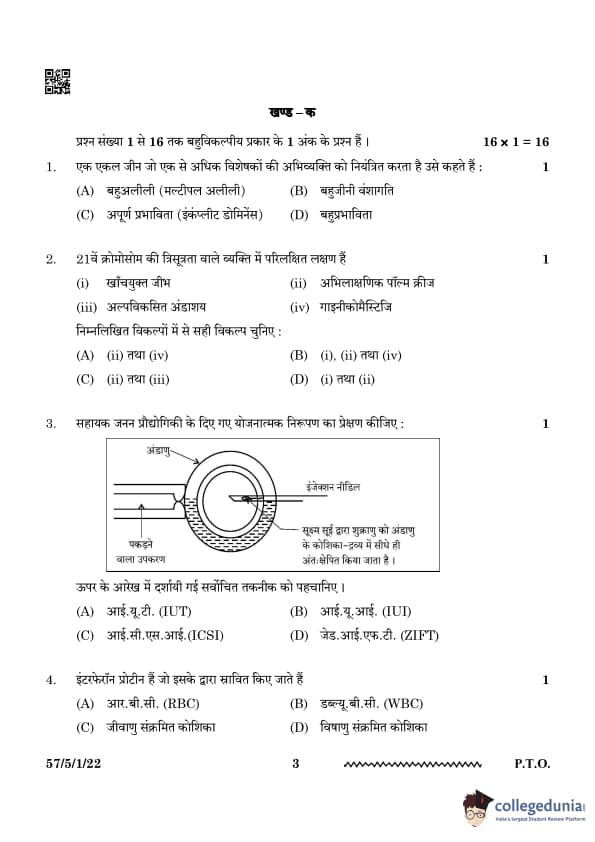
Question 3:
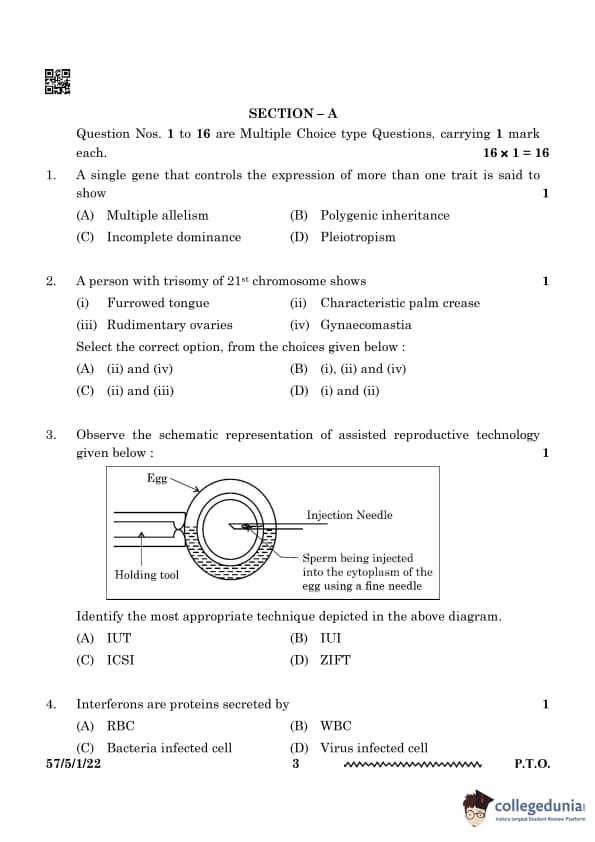
Observe the schematic representation of assisted reproductive technology given below:
![[Diagram of Egg with Injection Needle and Holding Tool]](https://assets.collegedunia.com/public/image/3_7c4551f98e49bd94f7608d7cdc060146.png?tr=w-456,h-186,c-force)
Identify the most appropriate technique depicted in the above diagram.
View Solution
Solution: The diagram represents Intracytoplasmic Sperm Injection (ICSI), where a single sperm is directly injected into the cytoplasm of the egg using a fine needle. This technique is used in cases of severe male infertility or failed fertilization in conventional IVF.
Question 4:
Interferons are proteins secreted by:
View Solution
Solution: Interferons are signaling proteins secreted by virus-infected cells to protect nearby uninfected cells. They play a crucial role in the immune response by interfering with viral replication.
Question 5:
During biological treatment of sewage, the masses of bacteria held together by fungal filaments to form mesh-like structures are called:
View Solution
Solution: In the biological treatment of sewage, flocs are masses of bacteria held together by fungal filaments, forming mesh-like structures. These flocs help in the breakdown of organic matter during secondary treatment.
Question 6:
Which one of the following statements is correct in the context of observing DNA separation by agarose gel electrophoresis?
View Solution
Solution: In agarose gel electrophoresis, DNA is separated based on size. Staining with ethidium bromide allows the DNA bands to be visualized under UV light. Ethidium bromide binds to DNA and fluoresces under UV light, making the bands visible.
Question 7:
A phenomenon where a male insect mistakenly identifies the patterns of an orchid flower as the female insect partner, and tries to copulate and thereby pollinates the flower is said to be:
View Solution
Solution: Pseudocopulation occurs when a male insect is deceived by the patterns or structures of a flower that resemble a female insect. The male attempts to copulate with the flower, leading to its pollination. This is a pollination strategy employed by certain orchids.
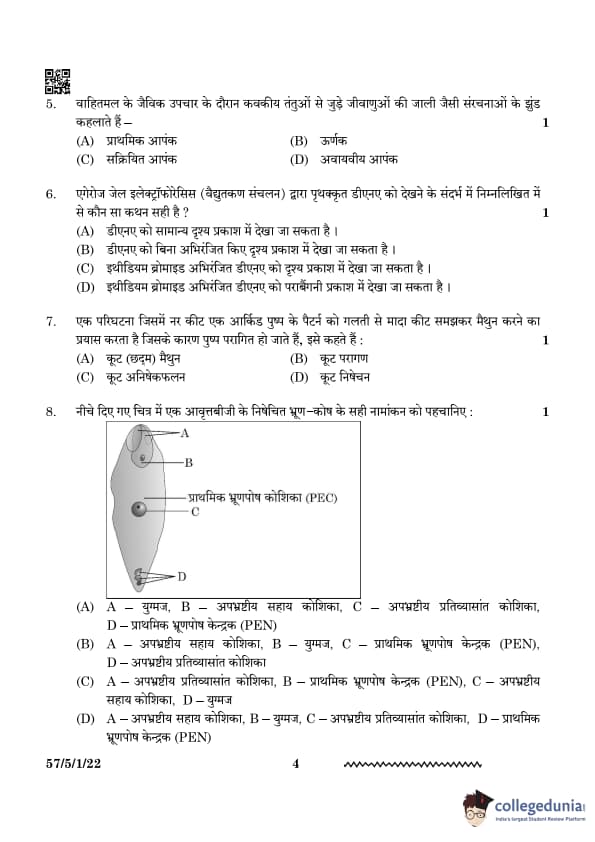
Question 8:
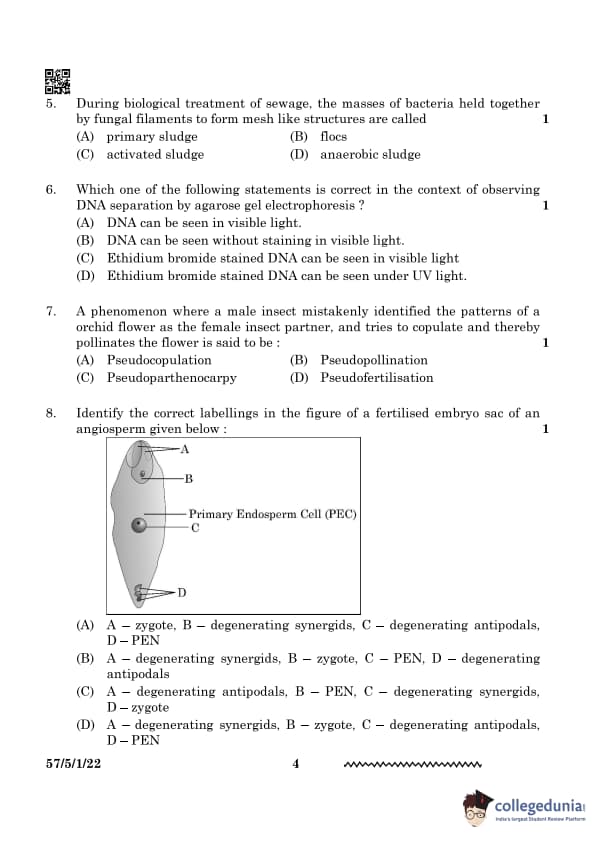
Identify the correct labellings in the figure of a fertilised embryo sac of an angiosperm given below:
![[Diagram of Fertilized Embryo Sac]](https://assets.collegedunia.com/public/image/8_5661ce087f73e9efd23fa33fab089125.png?tr=w-349,h-244,c-force)
View Solution
Solution: The correct labellings in the figure are:
- A represents degenerating synergids as they are no longer needed after fertilization.
- B is the zygote formed after the fusion of the male and female gametes.
- C is the primary endosperm nucleus (PEN) formed by the fusion of a sperm with two polar nuclei.
- D represents degenerating antipodals as their function is complete.
Question 9:
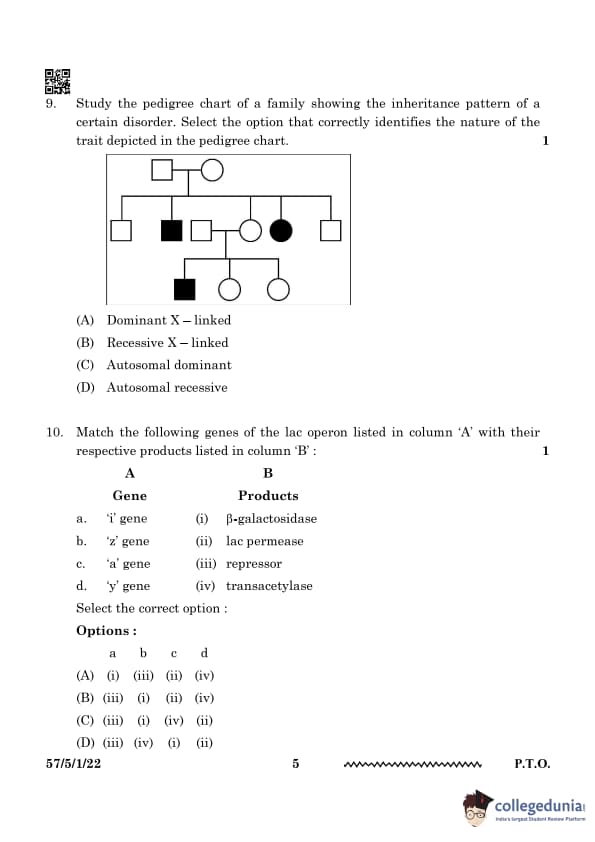
Study the pedigree chart of a family showing the inheritance pattern of a certain disorder. Select the option that correctly identifies the nature of the trait depicted in the pedigree chart:
![[Diagram of Pedigree Chart]](https://assets.collegedunia.com/public/image/9_946f4d316d44ce2b6e158a4823a20e33.png?tr=w-335,h-209,c-force)
View Solution
Solution: The disorder depicted in the pedigree chart follows an autosomal recessive inheritance pattern. This can be inferred from the following observations:
1. The trait skips generations, which is typical for recessive traits.
2. Both males and females are equally affected, indicating an autosomal pattern.
3. The trait is expressed only when an individual inherits two copies of the recessive allele, one from each parent.
Question 10:
Match the following genes of the lac operon listed in column ‘A’ with their respective products listed in column ‘B’:
| A (Gene) | B (Products) |
|---|---|
| a. ‘i’ gene | (i) β-galactosidase |
| b. ‘z’ gene | (ii) lac permease |
| c. ‘a’ gene | (iii) repressor |
| d. ‘y’ gene | (iv) transacetylase |
Select the correct option:
View Solution
Solution: In the lac operon:
- The ‘i’ gene codes for the repressor protein, which inhibits the operon when lactose is absent.
- The ‘z’ gene produces β-galactosidase, which breaks down lactose into glucose and galactose.
- The ‘a’ gene encodes transacetylase, which helps in lactose metabolism.
- The ‘y’ gene produces lac permease, which facilitates the entry of lactose into the cell.
Question 11:
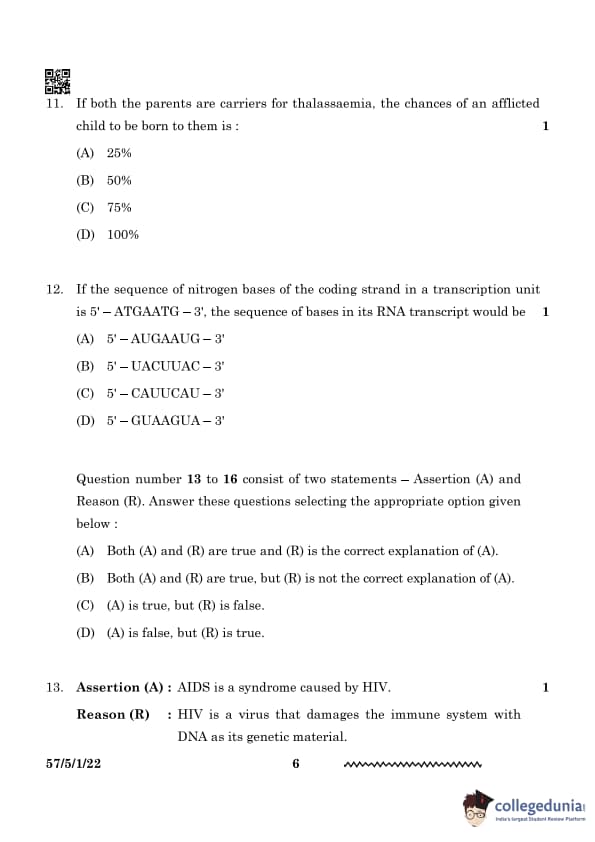
If both the parents are carriers for thalassaemia, the chances of an afflicted child to be born to them is:
View Solution
Solution: When both parents are carriers for thalassaemia (heterozygous), the genetic cross shows:
- 25% chance of an unaffected child (homozygous dominant).
- 50% chance of a carrier child (heterozygous).
- 25% chance of an afflicted child (homozygous recessive).
Thus, there is a 25% chance that the child will be afflicted with thalassaemia.
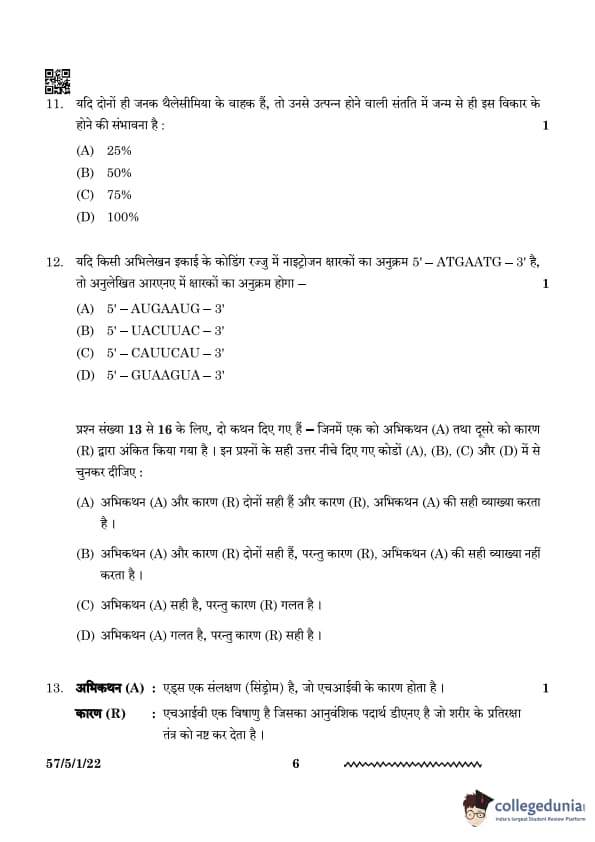
Question 12:
If the sequence of nitrogen bases of the coding strand in a transcription unit is 5’ - ATGAATG – 3’, the sequence of bases in its RNA transcript would be:
View Solution
Solution: The RNA transcript is complementary to the template strand and identical to the coding strand (except that uracil (U) replaces thymine (T) in RNA). Therefore, the RNA transcript of the sequence 5' – ATGAATG – 3' is 5' – AUGAAUG – 3'.
Question 13:
Assertion (A): AIDS is a syndrome caused by HIV.
Reason (R): HIV is a virus that damages the immune system with DNA as its genetic material.
View Solution
Solution: HIV (Human Immunodeficiency Virus) causes AIDS (Acquired Immunodeficiency Syndrome) by damaging the immune system. However, HIV is an RNA virus, not a DNA virus. Therefore, Assertion (A) is true, but Reason (R) is false.
Question 14:
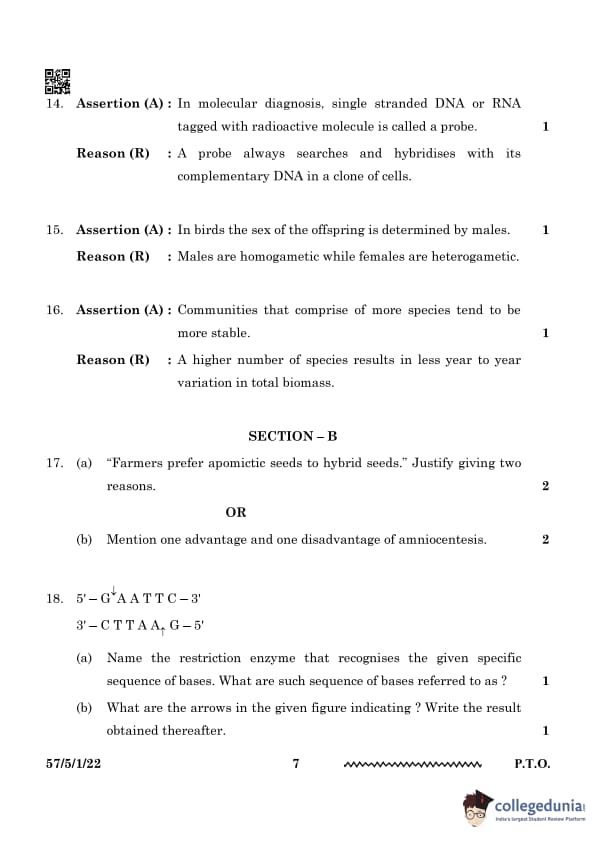
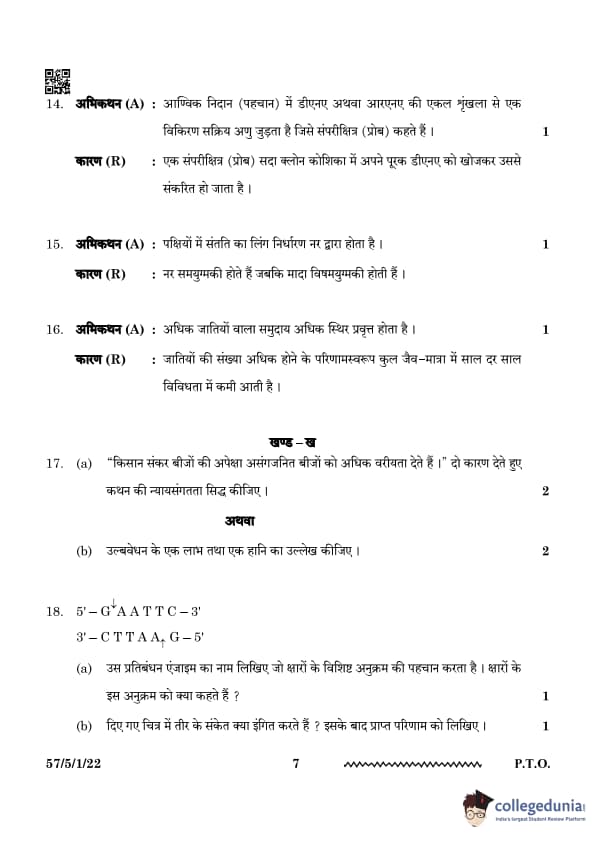
Assertion (A): In molecular diagnosis, single stranded DNA or RNA tagged with radioactive molecule is called a probe.
Reason (R): A probe always searches and hybridises with its complementary DNA in a clone of cells.
View Solution
Solution: A probe is a single-stranded DNA or RNA tagged with a radioactive or fluorescent molecule, used to identify complementary sequences by hybridization. The probe searches and hybridizes with its complementary DNA in a clone of cells, making both (A) and (R) correct, with (R) explaining (A).
Question 15:
Assertion (A): In birds, the sex of the offspring is determined by males.
Reason (R): Males are homogametic while females are heterogametic.
View Solution
Solution: In birds, the sex of the offspring is determined by females, not males, as females are heterogametic (ZW), while males are homogametic (ZZ). Therefore, Assertion (A) is false, but Reason (R) is true.
Question 16:
Assertion (A): Communities that comprise of more species tend to be more stable.
Reason (R): A higher number of species results in less year-to-year variation in total biomass.
View Solution
Solution: Communities with more species are more stable due to the complementary roles of species, reducing year-to-year variation in total biomass and ensuring ecological stability. Both (A) and (R) are true, and (R) correctly explains (A).
SECTION – B
Question 17(a):
"Farmers prefer apomictic seeds to hybrid seeds.” Justify giving two reasons.
View Solution
Solution: Farmers prefer apomictic seeds because:
• They do not require repeated hybridization, saving time and cost.
• They maintain the hybrid vigor (heterosis) over generations, as apomixis produces genetically identical offspring.
Question 17(b):
Mention one advantage and one disadvantage of amniocentesis.
View Solution
Solution:
Advantage: Amniocentesis can detect genetic abnormalities and chromosomal disorders in the fetus, aiding in early diagnosis and management.
Disadvantage: It carries a small risk of complications such as miscarriage or infection.
Question 18:
5' – G↓AATTC – 3'
3' – CTTAA↑G – 5'
(a) Name the restriction enzyme that recognizes the given specific sequence of bases. What are such sequences of bases referred to as?
(b) What are the arrows in the given figure indicating? Write the result obtained thereafter.
View Solution
Solution (a): The restriction enzyme that recognizes the given sequence is EcoRI. Such sequences are referred to as palindromic sequences, which read the same forward and backward on complementary strands.
Solution (b):
[Diagram of DNA with EcoRI cut sites and sticky ends]
The arrows indicate the sites where the restriction enzyme EcoRI cuts the DNA. The result obtained thereafter is the formation of sticky ends, which are single-stranded overhangs that facilitate the joining of DNA fragments during genetic engineering.
Question 19:
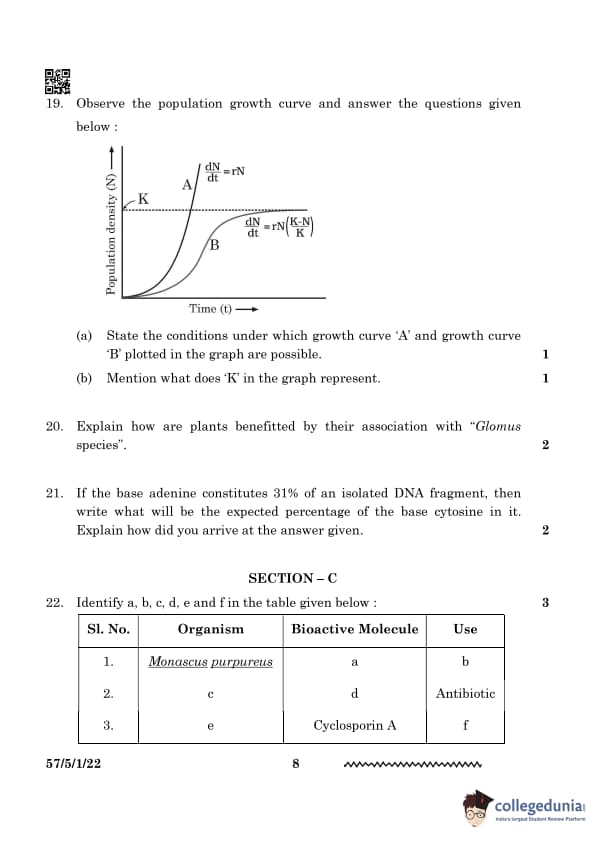
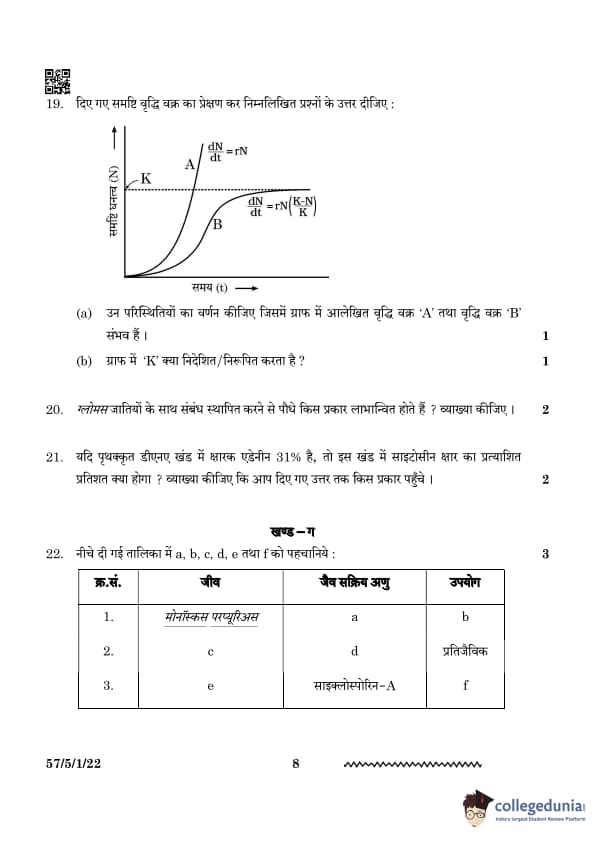
Observe the population growth curve and answer the questions given below:
![[Diagram of Population Growth Curve]](https://assets.collegedunia.com/public/image/19_07abb44d32eabe1f0e64cddd323864d6.png?tr=w-345,h-248,c-force)
(a) State the conditions under which growth curve ‘A’ and growth curve ‘B’ plotted in the graph are possible.
(b) Mention what does ‘K’ in the graph represent.
View Solution
Solution (a):
- Growth curve ‘A’ represents exponential growth, which is possible when resources are unlimited, and there are no environmental constraints.
- Growth curve ‘B’ represents logistic growth, which occurs when resources are limited, and the population stabilizes after reaching the carrying capacity.
Solution (b): ‘K’ in the graph represents the carrying capacity, which is the maximum population size that the environment can sustain indefinitely, given the available resources.
Question 20:
Explain how are plants benefitted by their association with Glomus species.
View Solution
Solution: Plants form symbiotic associations with Glomus species, a type of mycorrhiza. These fungi help the plants in:
• Efficient absorption of water and minerals, especially phosphorus.
• Enhancing resistance to pathogens and tolerance to salinity and drought.
Question 21:
If the base adenine constitutes 31% of an isolated DNA fragment, then write what will be the expected percentage of the base cytosine in it. Explain how did you arrive at the answer given.
View Solution
Solution: DNA follows Chargaff’s rule, which states:
• The percentage of adenine (A) equals the percentage of thymine (T), and the percentage of cytosine (C) equals the percentage of guanine (G).
• Since adenine constitutes 31%, thymine also constitutes 31%. Together, A + T = 62%.
• The remaining 38% is divided equally between cytosine and guanine. Thus, cytosine constitutes 19%.
SECTION – C
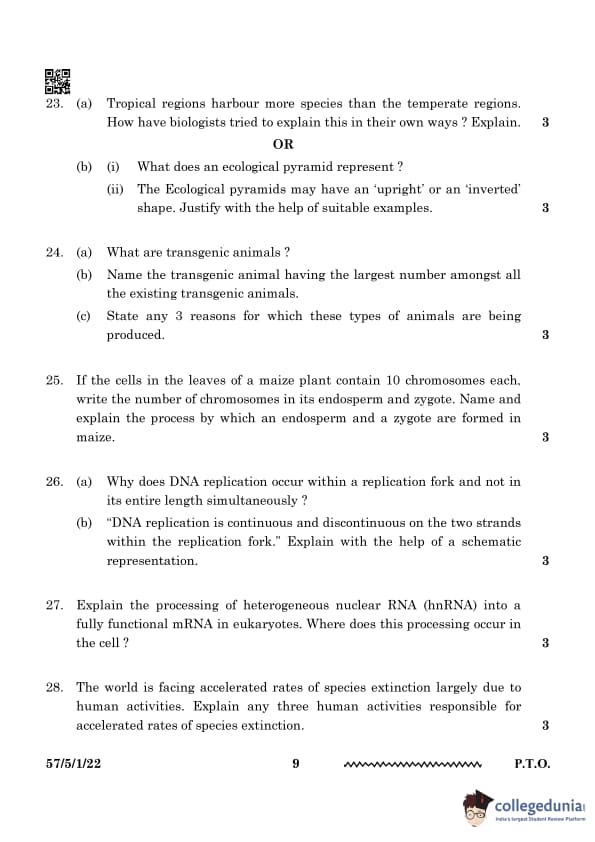
Question 22:
Identify a, b, c, d, e, and f in the table given below:
| Sl. No. | Organism | Bioactive Molecule | Use |
|---|---|---|---|
| 1 | Monascus purpureus | a | b |
| 2 | c | d | Antibiotic |
| 3 | e | Cyclosporin A | f |
View Solution
Solution: The completed table is as follows:
| Sl. No. | Organism | Bioactive Molecule | Use |
|---|---|---|---|
| 1 | Monascus purpureus | Statins | Lowers blood cholesterol |
| 2 | Streptomyces | Streptomycin | Antibiotic |
| 3 | Trichoderma polysporum | Cyclosporin A | Immunosuppressant |
Question 23(a):
Tropical regions harbour more species than the temperate regions. How have biologists tried to explain this in their own ways? Explain.
View Solution
Solution: Biologists explain the higher species richness in tropical regions due to:
• Favourable Climate: Stable climatic conditions in tropical regions support year-round growth and reproduction.
• Long Evolutionary Time: Tropical regions have remained undisturbed for millions of years, allowing species to diversify.
• Higher Productivity: High temperature and sunlight lead to higher productivity, supporting a larger variety of organisms.
Question 23(b):
(i) What does an ecological pyramid represent?
(ii) The ecological pyramids may have an ‘upright’ or an ‘inverted’ shape. Justify with the help of suitable examples.
View Solution
Solution:
(i) An ecological pyramid represents the trophic structure and function of an ecosystem, depicting energy, biomass, or numbers at each trophic level.
(ii)
• Upright Pyramid: In most ecosystems, energy pyramids are upright because energy decreases with each trophic level. Example: Grassland ecosystem.
• Inverted Pyramid: Some aquatic ecosystems have an inverted biomass pyramid. Example: Phytoplankton (low biomass) support a higher biomass of zooplankton.
Question 24:
(a) What are transgenic animals?
(b) Name the transgenic animal having the largest number amongst all the existing transgenic animals.
(c) State any 3 reasons for which these types of animals are being produced.
View Solution
Solution:
(a) Transgenic animals are animals whose genomes have been altered by introducing foreign DNA, enabling them to express desired traits.
(b) The transgenic animal with the largest number is mice.
(c) Transgenic animals are produced for:
• Studying Diseases: Used as models for studying human genetic diseases.
• Producing Medicines: Engineered to produce proteins or medicines like insulin and human growth hormone.
• Improving Livestock: Modified to enhance productivity and disease resistance.
Question 25:
If the cells in the leaves of a maize plant contain 10 chromosomes each, write the number of chromosomes in its endosperm and zygote. Name and explain the process by which an endosperm and a zygote are formed in maize.
View Solution
Solution:
The number of chromosomes in:
• Zygote: 10 chromosomes (formed by fusion of haploid male and female gametes, each with 5 chromosomes).
• Endosperm: 30 chromosomes (formed by triple fusion, involving two polar nuclei (10 + 10) and one male gamete (10)).
Process:
• Zygote Formation: Syngamy, where a male gamete fuses with an egg cell to form a diploid zygote.
• Endosperm Formation: Double fertilization, where one male gamete fuses with two polar nuclei to form a triploid endosperm.
Question 26(a):
(a) Why does DNA replication occur within a replication fork and not in its entire length simultaneously?
(b) “DNA replication is continuous and discontinuous on the two strands within the replication fork.” Explain with the help of a schematic representation.
View Solution
Solution:
(a) DNA replication occurs within a replication fork because DNA polymerase synthesizes new strands only in the 5' to 3' direction. This restricts replication to occur progressively as the fork unwinds.
(b)
• The leading strand is synthesized continuously in the 5' to 3' direction.
• The lagging strand is synthesized discontinuously in small fragments (Okazaki fragments), which are later joined by DNA ligase.
[Diagram of DNA replication fork showing leading and lagging strand synthesis]
Question 27:
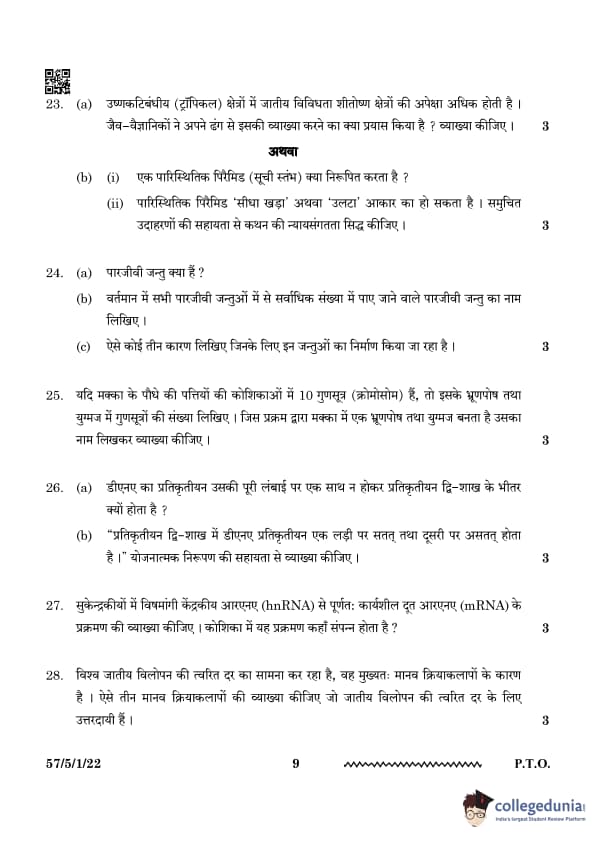
Explain the processing of heterogeneous nuclear RNA (hnRNA) into a fully functional mRNA in eukaryotes. Where does this processing occur in the cell?
View Solution
Solution: Processing of hnRNA into mRNA involves:
• Capping: Addition of a 5' methyl guanosine cap for stability and ribosome attachment.
• Splicing: Removal of introns (non-coding regions) and joining of exons (coding regions).
• Tailing: Addition of a poly-A tail at the 3' end for stability and nuclear export.
- This processing occurs in the nucleus of the eukaryotic cell.
Question 28:
The world is facing accelerated rates of species extinction largely due to human activities. Explain any three human activities responsible for accelerated rates of species extinction.
View Solution
Solution: Three human activities causing species extinction:
• Deforestation: Destruction of natural habitats reduces biodiversity.
• Pollution: Air, water, and soil pollution harm ecosystems and species survival.
• Overexploitation: Overfishing, hunting, and poaching lead to the depletion of species populations.
SECTION – D
Question 29:
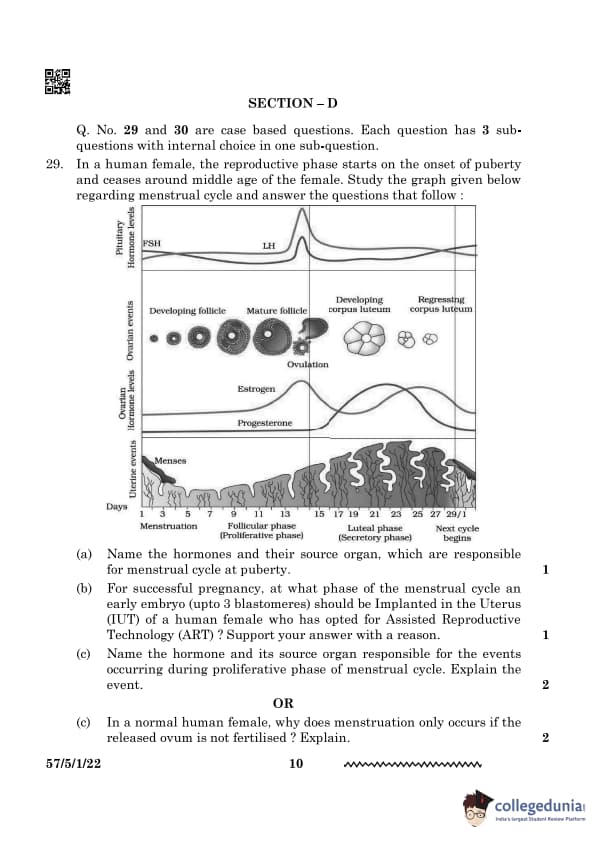
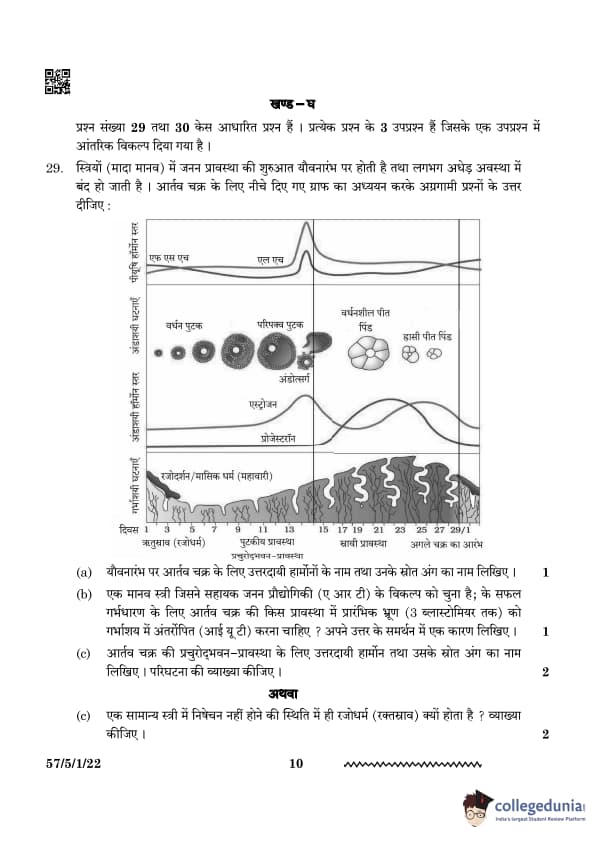
In a human female, the reproductive phase starts on the onset of puberty and ceases around the middle age of the female. Study the graph given below regarding the menstrual cycle and answer the questions that follow:
![[Diagram of Menstrual Cycle Graph]](https://assets.collegedunia.com/public/image/29_97e843af1060add0ba8b1d461b887c08.png?tr=w-531,h-463,c-force)
(a) Name the hormones and their source organ, which are responsible for the menstrual cycle at puberty.
(b) For successful pregnancy, at what phase of the menstrual cycle can an early embryo (up to 3 blastomeres) be implanted in the uterus (IUT) of a human female who has opted for Assisted Reproductive Technology (ART)? Support your answer with a reason.
(c) Name the hormone and its source organ responsible for the events occurring during the proliferative phase of the menstrual cycle. Explain the event.
OR
(c) In a normal human female, why does menstruation occur only if the released ovum is not fertilized? Explain.
View Solution
Solution:
(a) The hormones responsible for the menstrual cycle at puberty are:
• FSH (Follicle Stimulating Hormone): Secreted by the anterior pituitary gland, stimulates follicle development.
• LH (Luteinizing Hormone): Secreted by the anterior pituitary gland, triggers ovulation and corpus luteum formation.
• Estrogen and Progesterone: Secreted by the ovaries, regulate the uterine lining during the cycle.
(b) Implantation should occur during the secretory phase (days 15-28) of the menstrual cycle. During this phase, the uterine lining (endometrium) is thick and vascularized due to the action of progesterone, creating a suitable environment for embryo implantation.
(c) The hormone responsible for the proliferative phase is Estrogen, secreted by the developing ovarian follicles. It stimulates the regeneration and thickening of the uterine lining (endometrium) after menstruation.
OR
If the released ovum is not fertilized, the corpus luteum degenerates, leading to a drop in progesterone levels. This causes the uterine lining (endometrium) to break down and shed, resulting in menstruation.
Question 30:
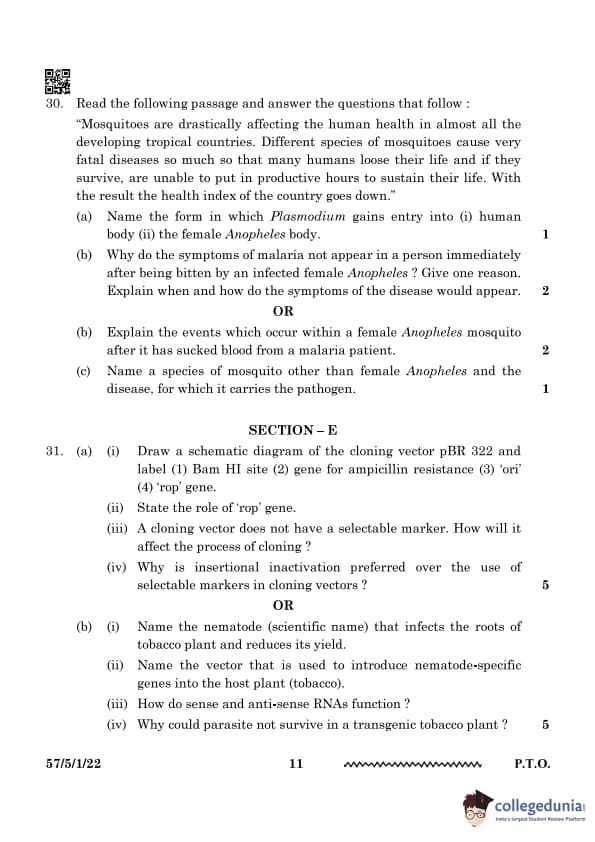
“Mosquitoes are drastically affecting human health in almost all the developing tropical countries. Different species of mosquitoes cause very fatal diseases so much so that many humans lose their life and if they survive, are unable to put in productive hours to sustain their life. With the result, the health index of the country goes down.”
(a) Name the form in which Plasmodium gains entry into (i) human body (ii) the female Anopheles body.
(b) Why do the symptoms of malaria not appear in a person immediately after being bitten by an infected female Anopheles? Give one reason. Explain when and how do the symptoms of the disease appear.
OR
(b) Explain the events which occur within a female Anopheles mosquito after it has sucked blood from a malaria patient.
(c) Name a species of mosquito other than female Anopheles and the disease for which it carries the pathogen.
View Solution
Solution:
(a)
• (i) In humans, Plasmodium enters in the form of sporozoites, which are injected by the female Anopheles mosquito during a bite.
• (ii) In the female Anopheles body, Plasmodium enters in the form of gametocytes, which are taken up with the blood meal from an infected person.
(b) The symptoms of malaria do not appear immediately after the bite because the parasite undergoes an incubation period inside the human liver and blood cells. Symptoms appear 10-14 days later when the parasite multiplies and ruptures red blood cells, releasing toxins. This results in fever, chills, and sweating.
OR
In the female Anopheles mosquito, after sucking blood from an infected person:
• The gametocytes of Plasmodium develop into sporozoites in the mosquito’s gut.
• The sporozoites migrate to the salivary glands of the mosquito, making it ready to infect another human during its next bite.
(c) A mosquito species other than Anopheles is Aedes aegypti, which carries the pathogen for dengue fever.
SECTION – E
Question 31(a):
- Draw a schematic diagram of the cloning vector pBR 322 and label (1) Bam HI site (2) gene for ampicillin resistance (3) ‘ori’ (4) ‘rop’ gene.
- State the role of ‘rop’ gene.
- A cloning vector does not have a selectable marker. How will it affect the process of cloning?
- Why is insertional inactivation preferred over the use of selectable markers in cloning vectors?
View Solution
Solution (a):
(i) A schematic diagram of the cloning vector pBR 322 is shown below:
[Diagram of pBR322 vector with labeled BamHI site, ampicillin resistance gene, ori, and rop gene]
(ii) The ‘rop’ gene in pBR 322 encodes proteins involved in maintaining the copy number of the plasmid.
(iii) If a cloning vector does not have a selectable marker, it would be difficult to differentiate between transformed and non-transformed cells, complicating the identification of successful clones.
(iv) Insertional inactivation is preferred because it allows direct identification of recombinant colonies. It inactivates a selectable marker gene (e.g., antibiotic resistance), so only recombinant cells are easily identified.
Question 31(b):
- Name the nematode (scientific name) that infects the roots of tobacco plant and reduces its yield.
- Name the vector that is used to introduce nematode-specific genes into the host plant (tobacco).
- How do sense and anti-sense RNAs function?
- Why could the parasite not survive in a transgenic tobacco plant?
View Solution
Solution (b):
(i) The nematode that infects the roots of tobacco plants is Meloidogyne incognita.
(ii) The vector used to introduce nematode-specific genes into the host plant is Agrobacterium tumefaciens.
(iii) Sense and anti-sense RNAs are complementary RNA strands. When expressed together, they form a double-stranded RNA that silences the target nematode gene through RNA interference (RNAi).
(iv) The parasite could not survive in the transgenic tobacco plant because the RNAi mechanism silences the nematode-specific genes, preventing its growth and reproduction.
Question 32(a):
- Draw a diagram of a human sperm. Label any four parts and write their functions.
- In a human female, the probability of an ovum getting fertilized by more than one sperm is impossible. Give a reason.
View Solution
Solution (a):
(i) Diagram of a human sperm:
[Diagram of human sperm with labeled parts: Acrosome, Head, Nucleus, Centrioles, Mitochondria, Middle Piece, Tail, Plasma Membrane, Axial Filament, Terminal ring, Principal piece, Endpiece]
Functions of labeled parts:
• Head: Contains the nucleus with genetic material and acrosome for penetrating the egg.
• Middle Piece: Contains mitochondria that provide energy for motility.
• Tail: Facilitates movement of the sperm towards the egg.
• Plasma Membrane: Encloses the sperm and maintains its structural integrity.
(ii) The probability of an ovum getting fertilized by more than one sperm is impossible due to a phenomenon called cortical reaction, where the egg membrane changes after the first sperm enters, preventing entry of additional sperms.
Question 32(b):
- With the help of a labeled diagram only, show the different stages of embryo development in a dicot plant.
- Endosperm development precedes embryo development. Justify.
View Solution
Solution (b):
(i) Diagram showing stages of embryo development in a dicot plant:
[Diagram showing stages of dicot embryo development: Zygote, Globular Embryo, Heart-Shaped Embryo, Mature Embryo with labeled Suspensor, Radicle, Plumule, and Cotyledon]
(ii) Endosperm development precedes embryo development because the endosperm provides nutrients to the developing embryo. It supports early stages of growth until the plant can photosynthesize independently.
Question 33(a):
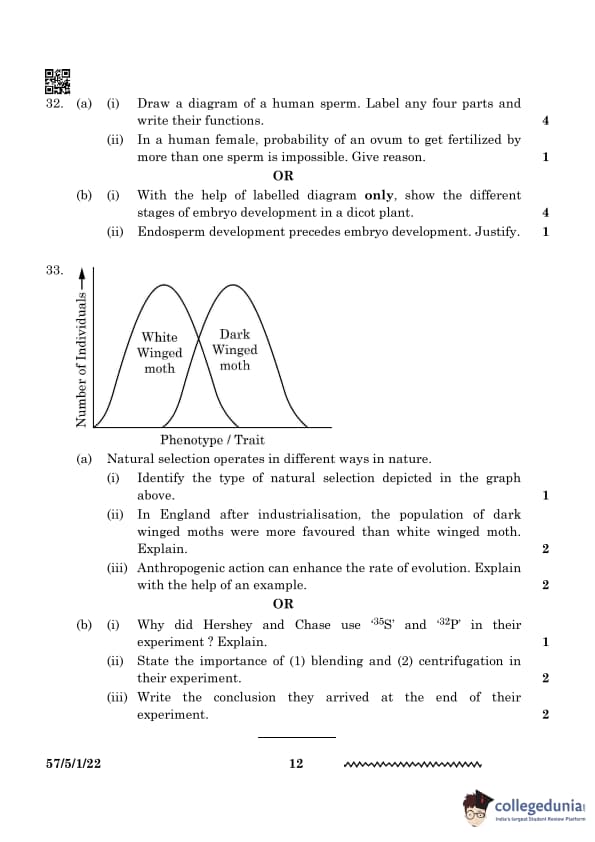
- Natural selection operates in different ways in nature. Identify the type of natural selection depicted in the graph above.
![[Graph depicting Directional Selection]](https://assets.collegedunia.com/public/image/33_fffe01d4f8a97bedab1097ab29b2ef31.png?tr=w-379,h-250,c-force)
- In England after industrialisation, the population of dark-winged moths was more favoured than white-winged moths. Explain.
- Anthropogenic action can enhance the rate of evolution. Explain with the help of an example.
View Solution
Solution (a):
(i) The type of natural selection depicted is directional selection, as one extreme phenotype (dark-winged moth) is favoured over the other (white-winged moth).
(ii) After industrialization, soot darkened tree trunks. Dark-winged moths were camouflaged and escaped predation, while white-winged moths were easily spotted by predators. This is an example of natural selection.
(iii) Anthropogenic actions like pesticide usage or antibiotic resistance drive evolution. Example: Overuse of antibiotics has led to the evolution of drug-resistant bacteria.
Question 33(b):
- Why did Hershey and Chase use 35S and 32P in their experiment? Explain.
- State the importance of (1) blending and (2) centrifugation in their experiment.
- Write the conclusion they arrived at the end of their experiment.
View Solution
Solution (b):
(i) Hershey and Chase used 35S to label protein and 32P to label DNA to distinguish which molecule entered bacterial cells during viral infection.
(ii)
• Blending: Removed phage particles attached to the bacterial surface.
• Centrifugation: Separated heavier infected bacterial cells from lighter viral components.
(iii) The conclusion was that DNA is the genetic material, as only 32P (DNA) was found inside the bacterial cells.






Comments