




CBSE Class 12 Biology Question Paper 2024 PDF (Set 2- 57/4/2) is available for download here. CBSE conducted the Biology exam on March 19, 2024 from 10:30 AM to 1:30 PM. The total marks for the theory paper are 70. The question paper will contain 20% MCQ-based questions, 40% competency-based questions, and 40% short and long answer type questions.
CBSE Class 12 Biology Question Paper 2024 (Set 2- 57/4/2) with Answer Key
| CBSE Class 12 Biology (Set 2 - 57/4/2) 2024 Question Paper with Answer key |  Download Download |
Check Solutions |
CBSE Class 12 Biology 2024 Question Paper with Solutions (Set 2- 57/4/2)
Section-A
Question 1:
In a fertilized ovule of an angiosperm, the cells in which n, 2n, and 3n conditions respectively occur are:
View Solution
The distribution of ploidy levels in a fertilized ovule of an angiosperm is as follows:
- n (haploid): Found in antipodal cells.
- 2n (diploid): Found in the zygote formed by fertilization.
- 3n (triploid): Found in the endosperm formed by double fertilization.
This distribution of ploidy levels is a characteristic feature of angiosperm reproduction.
Question 2:
Turner’s syndrome in humans occurs due to:
View Solution
Turner’s syndrome is caused by the absence of one X chromosome, resulting in a 45, XO chromosomal pattern. This is a type of aneuploidy, which refers to the presence of an abnormal number of chromosomes.
Question 3:
Which of the options has correct identification of ‘P’, ‘Q’, and ‘R’ in the illustration of ‘Central Dogma’ given below?
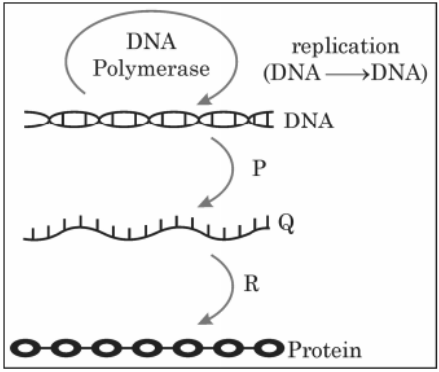
Illustration showing DNA replication, transcription, and translation. Labels P, Q, and R represent the processes leading to protein synthesis.
View Solution
The correct identification of the processes in the Central Dogma are as follows:
- Transcription (P): The process of synthesizing mRNA from DNA.
- mRNA (Q): Serves as a template for protein synthesis.
- Translation (R): The process where the mRNA sequence is decoded to synthesize a protein.
The Central Dogma describes the flow of genetic information from DNA to RNA to Protein.
Question 4:
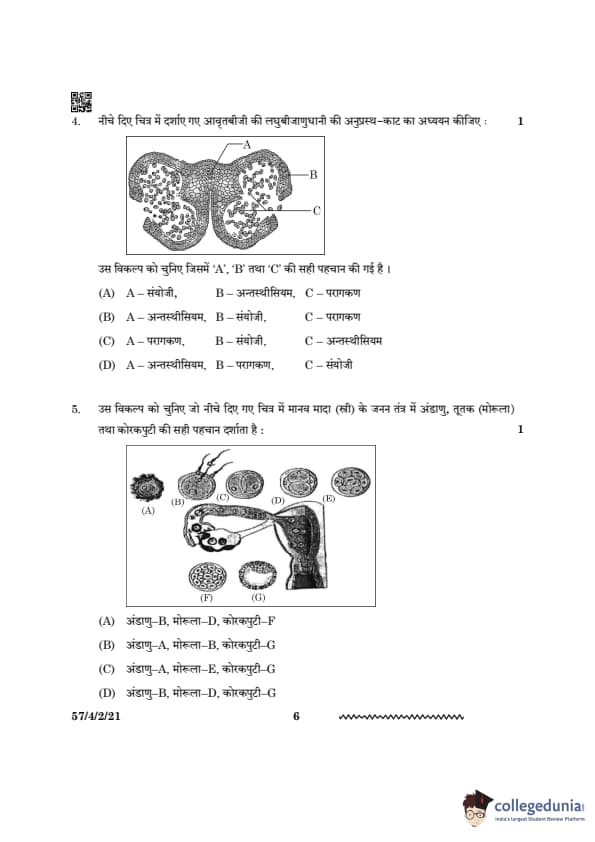
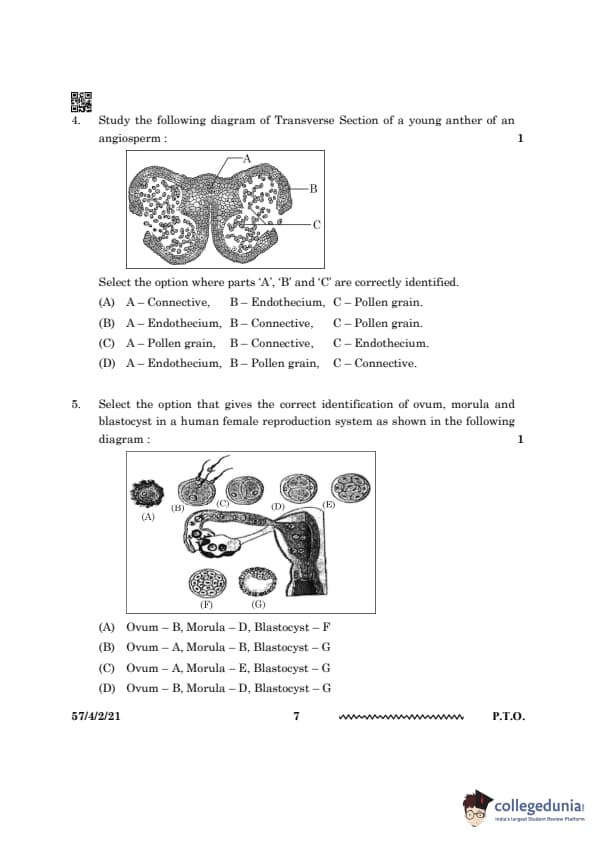
Study the following diagram of Transverse Section of a young anther of an angiosperm:
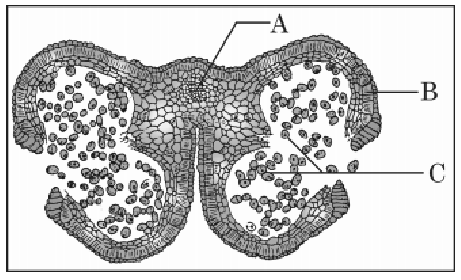
Cross-section of an anther. Labelled parts: A - Epidermis, B - Pollen sacs, C - Connective tissue.
Select the option where parts ‘A’, ‘B’ and ‘C’ are correctly identified.
View Solution
A – Connective: Tissue joining the two lobes of the anther.
B – Endothecium: The outer layer of the pollen sac that provides mechanical support.
C – Pollen grain: The male gametophyte formed within the pollen sac.
Question 5:
Select the option that gives the correct identification of ovum, morula, and blastocyst in a human female reproduction system as shown in the following diagram:
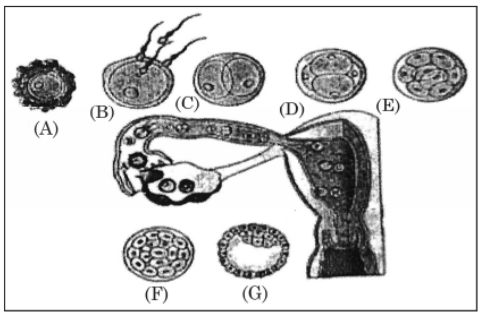
Stages of male gametophyte development in flowering plants. Labels: (A) Pollen mother cell, (B) Microspore tetrad, (C) Uninucleate microspore, (D) Binucleate pollen grain, (E) Mature pollen grain, (F) Pollen tube formation, (G) Pollen tube growth.
View Solution
Ovum (B): The unfertilized egg.
Morula (D): A solid ball of cells formed after a series of mitotic divisions.
Blastocyst (G): A hollow structure in early embryonic development that implants into the uterine wall.
Quick Tip: The blastocyst stage is critical for implantation into the uterine lining, marking the beginning of pregnancy.
Question 6:
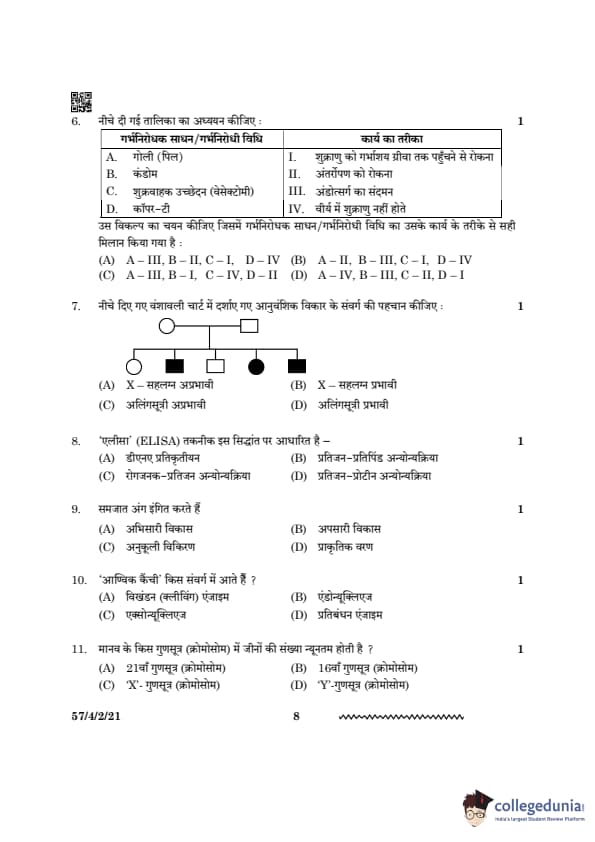
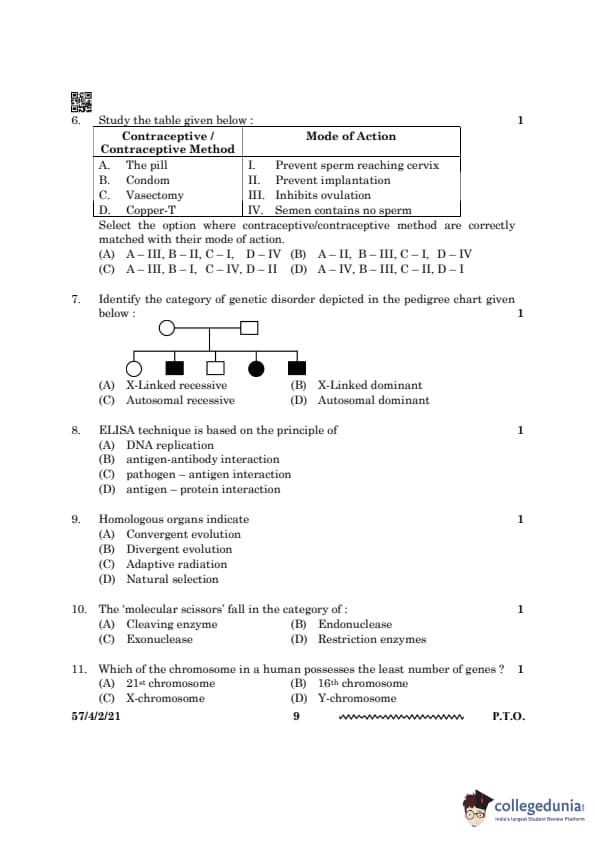
Study the table given below:
| Contraceptive/Contraceptive Method | Mode of Action |
|---|---|
| A. The pill | III. Inhibits ovulation |
| B. Condom | I. Prevent sperm reaching cervix |
| C. Vasectomy | IV. Semen contains no sperm |
| D. Copper-T | II. Prevent implantation |
Select the option where contraceptive/contraceptive method are correctly matched with their mode of action.
View Solution
A – The pill: Inhibits ovulation (III).
B – Condom: Prevents sperm from reaching the cervix (I).
C – Vasectomy: Semen contains no sperm after the vas deferens is cut or tied (IV).
D – Copper-T: Prevents implantation of the fertilized egg (II).
Quick Tip: Contraceptive methods are effective tools for family planning, with distinct mechanisms tailored to different needs.
Question 7:
Identify the category of genetic disorder depicted in the pedigree chart given below:
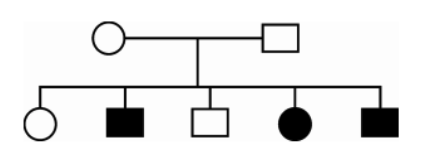
Pedigree diagram representing inheritance patterns.
View Solution
The disorder is seen in both males and females, indicating autosomal inheritance.
It skips generations, suggesting recessive inheritance.
The affected offspring have parents who are carriers of the recessive allele.
Quick Tip: Autosomal recessive disorders often require both parents to contribute the recessive allele for the disorder to manifest in offspring.
Question 8:
ELISA technique is based on the principle of:
View Solution
ELISA (Enzyme-Linked Immunosorbent Assay) detects specific antigens or antibodies using the principle of antigen-antibody interaction.
The binding is detected through an enzyme-linked reaction, often resulting in a color change.
Quick Tip: ELISA is extensively used in medical diagnostics, such as detecting infections like HIV and hepatitis.
Question 9:
Homologous organs indicate:
View Solution
Homologous organs have a similar structure but may perform different functions, e.g., human arm and bat wing.
These similarities suggest a common ancestor and illustrate divergent evolution.
Quick Tip: Divergent evolution demonstrates how species adapt differently to various environments while sharing a common ancestry.
Question 10:
The ‘molecular scissors’ fall in the category of:
View Solution
Restriction enzymes, also known as molecular scissors, cut DNA at specific recognition sequences.
They are widely used in genetic engineering and molecular biology for cloning and gene editing.
Quick Tip: Restriction enzymes revolutionized molecular biology, enabling precise DNA manipulation for research and therapeutic purposes.
Question 11:
Which of the chromosome in a human possesses the least number of genes?
View Solution
The Y chromosome is the smallest human chromosome and contains the least number of genes.
It carries genes essential for male sex determination and spermatogenesis.
Quick Tip: The Y chromosome's primary function is determining male sex characteristics, with limited genes compared to other chromosomes.
Question 12:
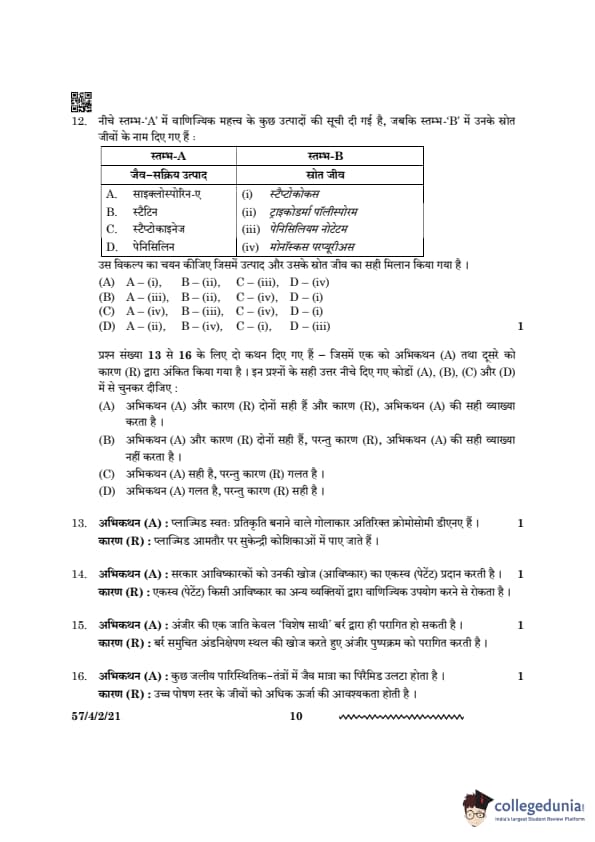
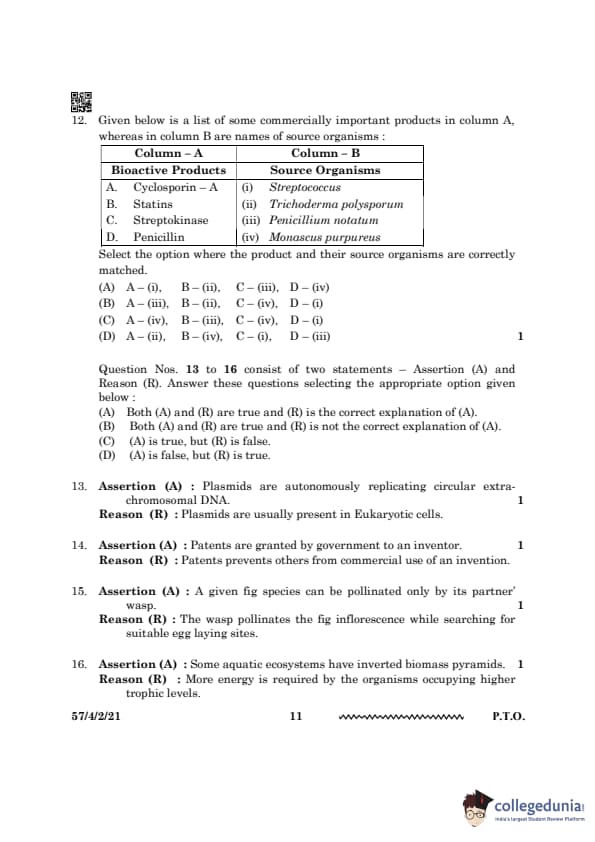
Given below is a list of some commercially important products in column A, whereas in column B are names of source organisms:
| Column A (Bioactive Products) | Column B (Source Organisms) |
|---|---|
| A. Cyclosporin – A | i. Streptococcus |
| B. Statins | ii. Trichoderma polysporum |
| C. Streptokinase | iii. Penicillium notatum |
| D. Penicillin | iv. Monascus purpureus |
Select the option where the product and their source organisms are correctly matched.
View Solution
- Cyclosporin – A: Produced by Monascus purpureus and used as an immunosuppressant.
- Statins: Derived from Trichoderma polysporum, these lower blood cholesterol.
- Streptokinase: Obtained from Streptococcus, used to remove blood clots.
- Penicillin: Produced by Penicillium notatum, an antibiotic effective against bacterial infections.
Quick Tip: Bioactive products derived from microorganisms have revolutionized medicine, saving millions of lives globally.
Question Nos. 13 to 16 consist of two statements – Assertion (A) and Reason (R).
Question 13:
Assertion (A): Plasmids are autonomously replicating circular extra-chromosomal DNA.
Reason (R): Plasmids are usually present in eukaryotic cells.
View Solution
- Plasmids are circular DNA molecules capable of autonomous replication.
- They are commonly found in prokaryotic cells like bacteria, not in eukaryotic cells.
Quick Tip: Plasmids are essential tools in genetic engineering for cloning and gene expression studies.
Question 14:
Assertion (A): Patents are granted by governments to an inventor.
Reason (R): Patents prevent others from commercial use of an invention.
View Solution
- Patents are legal rights granted to inventors for exclusive use of their inventions.
- Preventing unauthorized use is the primary reason for granting patents, as it ensures that inventors can commercialize their inventions without competition for a limited time.
Quick Tip: Patents encourage innovation by protecting intellectual property rights.
Question 15:
Assertion (A): A given fig species can be pollinated only by its partner wasp.
Reason (R): The wasp pollinates the fig inflorescence while searching for suitable egg-laying sites.
View Solution
- Fig and wasp share an obligate mutualistic relationship where each depends on the other for survival and reproduction.
- Wasps pollinate the fig while laying eggs, ensuring mutual benefit.
Quick Tip: The fig-wasp interaction is a classic example of obligate mutualism in nature.
Question 16:
Assertion (A): Some aquatic ecosystems have inverted biomass pyramids.
Reason (R): More energy is required by organisms occupying higher trophic levels.
View Solution
- Inverted biomass pyramids occur in aquatic ecosystems where the biomass of primary consumers exceeds that of producers.
- More energy is indeed required by organisms occupying higher trophic levels, but this does not explain why inverted biomass pyramids occur in aquatic ecosystems.
Section-B
Question 17:
(a) What is artificial insemination in ART?
(b) Under what conditions is the person medically advised to go for it?
View Solution
Answer (a):- Artificial insemination is a technique in Assisted Reproductive Technology (ART) where semen is artificially introduced into the female reproductive tract.
- When the male partner has low sperm count or motility.
- In cases of physical or anatomical issues in natural intercourse.
Question 18:
(a) Why does a patient of ADA-deficiency require repeated infusions of genetically engineered lymphocytes?
(b) Suggest a possible permanent remedy.
View Solution
Answer (a):- ADA (Adenosine Deaminase) deficiency leads to severe immune system dysfunction.
- Repeated infusions of genetically engineered lymphocytes temporarily restore immune function.
- Gene therapy to introduce a functional ADA gene into the patient's bone marrow cells, ensuring lifelong enzyme production.
Question 19:
Study the graph given below that represents the changes in the thickening of the uterine wall in women ‘X’ and women ‘Y’ over a period of one month:
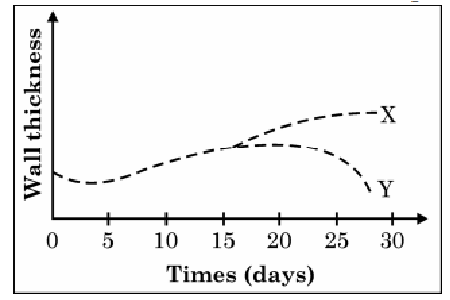
Graph depicting the change in wall thickness over time (days). X and Y represent two different trends observed.
(a) What does the graph with respect to women ‘X’ and woman ‘Y’ indicate?
(b) Give a suitable reason for the observed differences.
View Solution
Answer (a):- Woman X: Normal thickening of the uterine wall due to regular hormonal activity.
- Woman Y: Lack of thickening indicates hormonal imbalance or insufficient secretion of estrogen and progesterone.
- The hormonal imbalance in Woman Y may be addressed with medical intervention or hormonal therapy to ensure proper uterine wall development.
Question 20:
(a) Biodiversity hotspots cover less than 2% of Earth's land area. Strict protection of these areas can reduce the rate of ongoing extinctions. Explain.
(b) Name any two hotspots in India.
View Solution
Answer (a):- Biodiversity hotspots are regions with a high number of endemic species but face significant habitat destruction.
- Protection ensures the survival of species, maintains ecosystem stability, and preserves genetic resources for future use.
- Western Ghats.
- Indo-Burma region.
Question 21:
(a) Biodiversity hotspots cover less than 2% of Earth's land area. Strict protection of these areas can reduce the rate of ongoing extinctions. Explain.
(b) Name any two hotspots in India.
View Solution
Answer (a):- Biodiversity hotspots are regions with a high number of endemic species but face significant threats due to habitat loss, deforestation, and human activities.
- Protecting these areas ensures the survival of many species, maintains ecological balance, and safeguards genetic diversity.
- Hotspots are critical for ecosystem services such as water purification, soil fertility, and climate regulation.
- Western Ghats.
- Indo-Burma region.
Question 21 (OR):
(a) Differentiate between grazing food chain and detritus food chain.
(b) Explain Brood parasitism with the help of a suitable example.
View Solution
Answer (a):- Grazing Food Chain:
- Begins with producers (plants) consumed by herbivores.
- Example: Grass → Deer → Lion.
- Detritus Food Chain:
- Begins with dead organic matter broken down by decomposers.
- Example: Dead leaves → Fungi → Earthworms.
- Brood parasitism is a reproductive strategy where one species lays its eggs in the nest of another species.
- Example: The cuckoo lays its eggs in crow nests. Cuckoo chicks often hatch earlier and outcompete the host's chicks for food, ensuring survival.
Section-C
Question 22:
With reference to flower color, two independent crosses were made, one between true breeding garden pea plants and another between true breeding Antirrhinum plants. Write the phenotypes of their F1 progeny. Justify your answer giving reasons.
View Solution
- Garden Pea: F1 progeny exhibits complete dominance, showing the dominant flower color.
- Antirrhinum: F1 progeny exhibits incomplete dominance, resulting in an intermediate flower color (e.g., pink when red and white are crossed).
Question 23:
Draw a well-labelled diagram of the sectional view of a male gametophyte/microspore of an angiosperm and write the functions of any two parts labelled. (Any four labels).
View Solution
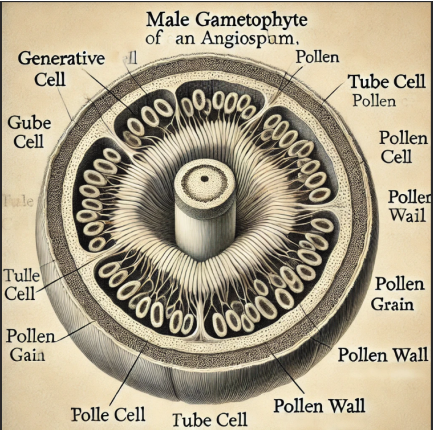
Diagram of male gametophyte.
- Labels:
- Generative Cell.
- Tube Cell.
- Pollen Wall.
- Pollen Grain.
- Functions:
- Generative Cell: Divides to form two male gametes.
- Tube Cell: Grows into a pollen tube to facilitate fertilization.
Question 24:
(a) (i) Name the group of drugs whose skeletal molecule is shown below:
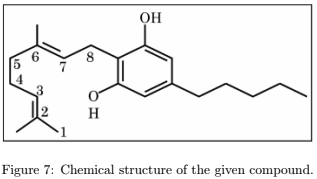
Chemical structure of the given compound.
(ii) How are such drugs consumed?
(iii) Name the human body organ affected by the consumption of these drugs.
(b) Draw a schematic diagram of an antibody molecule and label any 4 parts. Mention their chemical nature. Name the cells which produce them.
View Solution
Answer (a):- (i) Steroids.
- (ii) Steroids can be consumed orally, injected, or applied topically depending on their formulation.
- (iii) Liver.
- Antibody Diagram: Include the Y-shaped structure showing:
- Light Chain.
- Heavy Chain.
- Antigen Binding Site.
- Disulfide Bond.
- Chemical Nature: Antibodies are glycoproteins composed of polypeptide chains.
- Producing Cells: B-Lymphocytes or Plasma Cells.
Question 25:
(a) Explain the role of transgenic animals in the production of biological products.
(b) Explain the role of transgenic animals in studying diseases.
(c) Explain the role of transgenic animals in chemical safety testing.
View Solution
Answer (a):- Transgenic animals are used to produce important biological substances like proteins, enzymes, and hormones.
- Example: Transgenic goats producing antithrombin, a protein used to treat blood clotting disorders.
- They are used as model organisms to study human diseases, their progression, and treatment.
- Example: Transgenic mice are used to study cancer, diabetes, and Alzheimer's disease.
- Transgenic animals are used to test the safety and efficacy of chemicals and drugs before human use.
- Example: Toxicity testing using transgenic rodents.
Question 26:
The schematic representation below shows the linking of two DNA fragments.
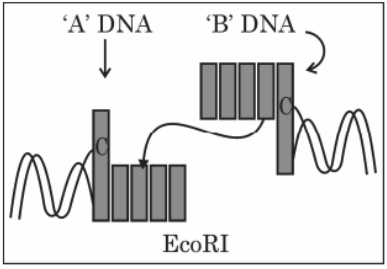
Diagram illustrating the cleavage of DNA by EcoRI enzyme.
(a) Name ‘A’ and ‘B’ fragments.
(b) Write the ‘palindrome’ recognized by EcoRI.
(c) Where does EcoRI cut the palindrome? Write the events followed thereafter to form a recombinant DNA.
View Solution
Answer (a):- A: Vector DNA.
- B: Foreign DNA.
- The palindrome sequence recognized by EcoRI is:
- 5'-GAATTC-3'
- 3'-CTTAAG-5'
- EcoRI cuts between G and A in the sequence, generating sticky ends.
- Events that follow:
- The sticky ends of vector DNA and foreign DNA pair through complementary base pairing.
- DNA ligase seals the nicks, forming recombinant DNA.
Question 27:
How do the following organisms act as bio-fertilizers? Explain.
(a) Mycorrhiza
(b) Anabaena
(c) Rhizobium
View Solution
Answer (a):- A symbiotic association between fungi and plant roots.
- Enhances water and nutrient absorption, particularly phosphorus.
- A cyanobacterium capable of nitrogen fixation.
- Provides nitrogen to plants in a usable form and enhances soil fertility.
- A bacterium that forms nodules on the roots of leguminous plants.
- Converts atmospheric nitrogen into ammonia, which is used by the plant.
Question 28:
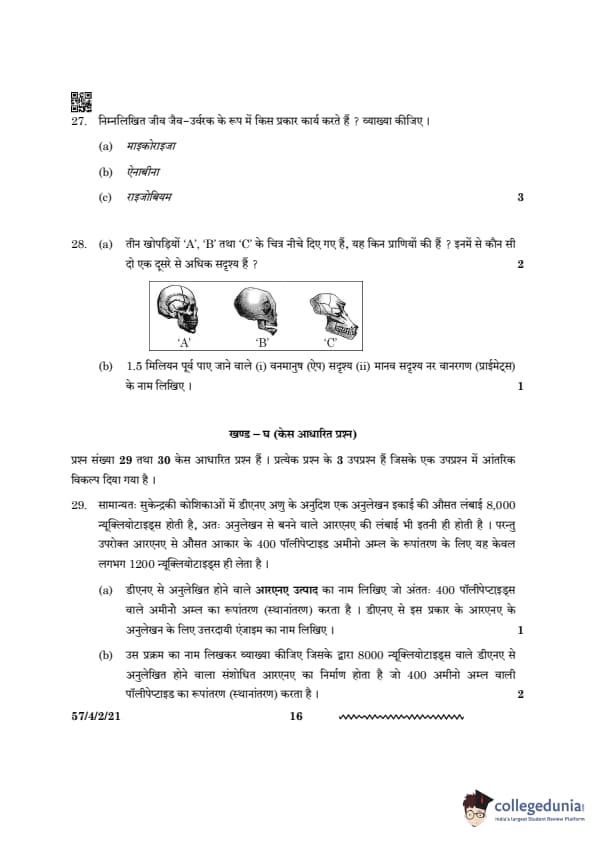
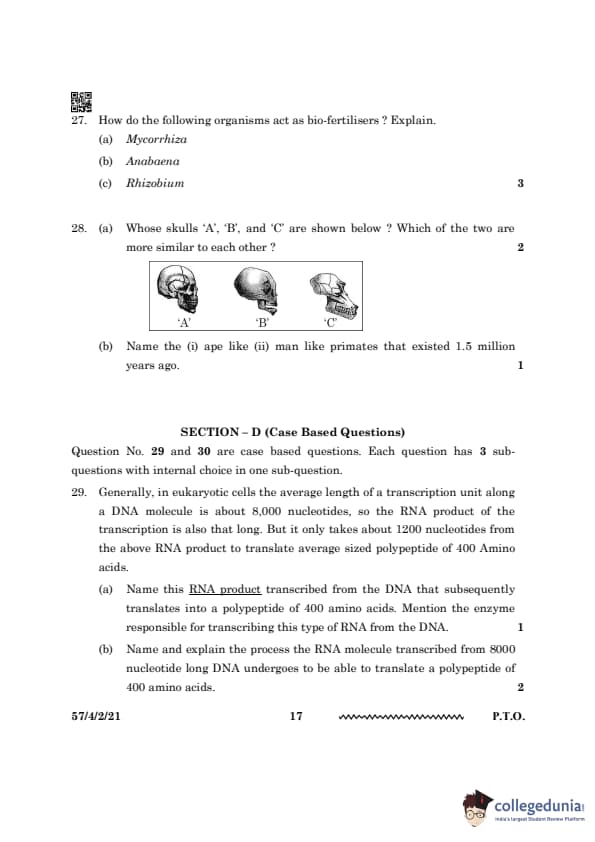
(a) Whose skulls ‘A’, ‘B’, and ‘C’ are shown below? Which of the two are more similar to each other?
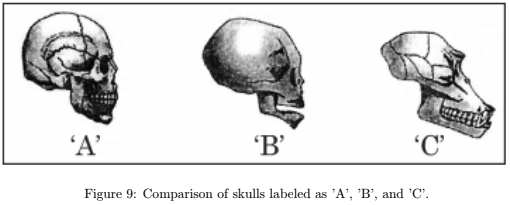
Comparison of skulls labeled as 'A', 'B', and 'C'.
(b) Name the (i) ape-like (ii) man-like primates that existed 1.5 million years ago.
View Solution
Answer (a):- Skull A: Homo sapiens.
- Skull B: Neanderthals.
- Skull C: Australopithecus.
- Skulls A and B (Homo sapiens and Neanderthals) are more similar to each other.
- (i) Ape-like: Australopithecus.
- (ii) Man-like: Homo erectus.
Section-D
Question 29:
Passage:
Generally, in eukaryotic cells, the average length of a transcription unit along a DNA molecule is about 8,000 nucleotides, so the RNA product of the transcription is also that long. But it only takes about 1200 nucleotides from the above RNA product to translate an average-sized polypeptide of 400 amino acids.
(a) Name this RNA product transcribed from the DNA that subsequently translates into a polypeptide of 400 amino acids. Mention the enzyme responsible for transcribing this type of RNA from the DNA.
(b) Name and explain the process the RNA molecule transcribed from 8000 nucleotide-long DNA undergoes to be able to translate a polypeptide of 400 amino acids.
(c) Write the number of RNA polymerases involved in the transcription of DNA in a prokaryote and eukaryotes.
View Solution
Answer (a):- RNA Product: Messenger RNA (mRNA).
- Enzyme: RNA Polymerase II.
- Process: Splicing.
- Explanation:
- The pre-mRNA transcribed from DNA contains both coding (exons) and non-coding (introns) regions.
- During splicing, introns are removed, and exons are joined to form a mature mRNA, which is translated into a protein.
- Prokaryotes have a single RNA polymerase.
- Eukaryotes have three RNA polymerases: RNA polymerase I, II, and III.
Question 30:
Populations evolve to maximise their reproductive fitness in the habitat in which they live. Ecologists suggest, the life history of organisms have evolved in relations to the constraints imposed by the biotic and abiotic components of the habitat in which they live. This gets reflected in the population growth pattern of all organisms including humans.
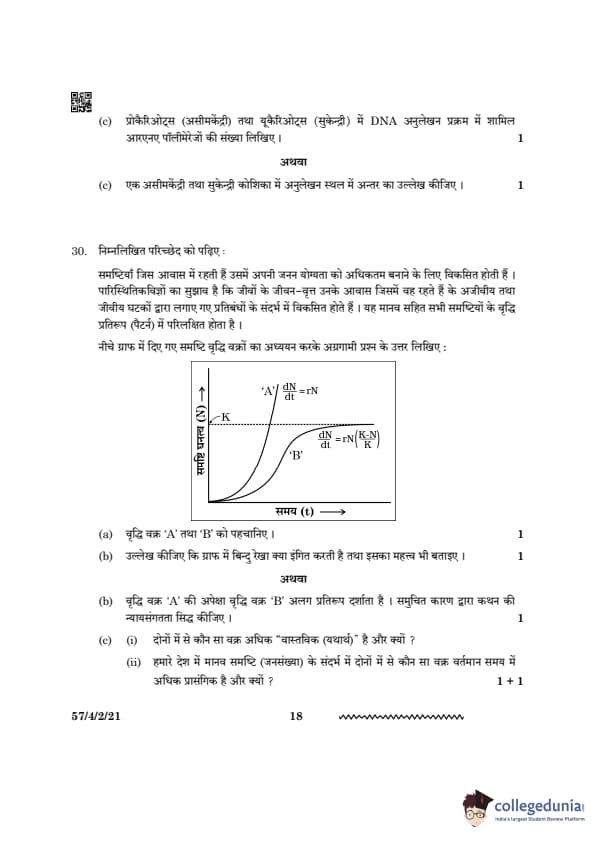
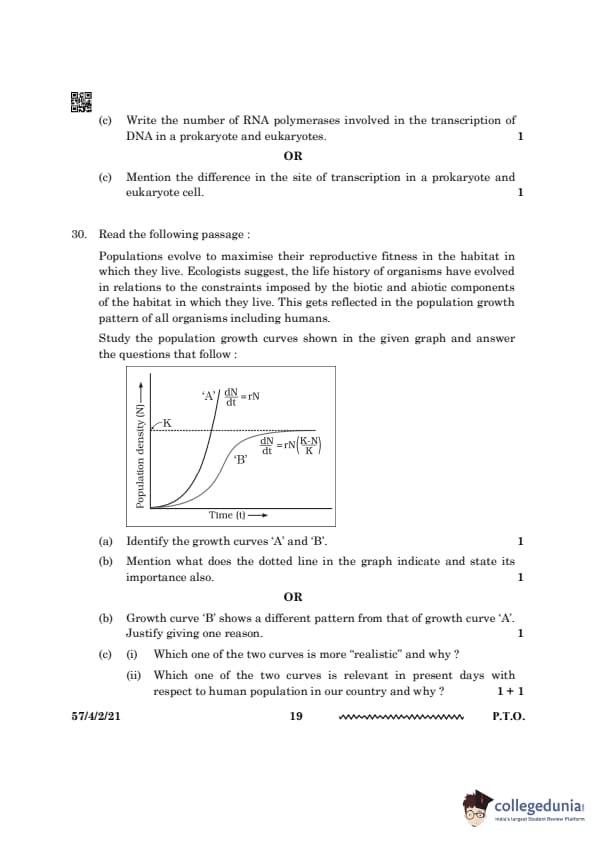
Study the population growth curves shown in the given graph and answer the questions that follow:
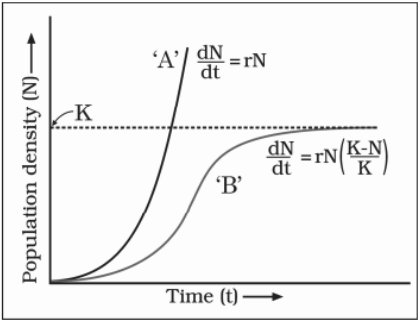
(a) Identify the growth curves ‘A’ and ‘B’.
View Solution
Answer:
-
Curve ‘A’: Exponential growth curve.
-
Curve ‘B’: Logistic growth curve.
(b) Mention what does the dotted line in the graph indicate and state its importance also.
View Solution
Answer:
-
The dotted line indicates the carrying capacity (K).
-
Importance: Carrying capacity represents the maximum population size that an environment can sustain indefinitely. It depends on resource availability and environmental constraints.
(c) Growth curve ‘B’ shows a different pattern from that of growth curve ‘A’. Justify giving one reason.
View Solution
Answer:
-
Growth curve ‘B’ (logistic growth) incorporates environmental resistance, which stabilizes population size as it approaches the carrying capacity.
-
Exponential growth (curve ‘A’) assumes unlimited resources, which is unrealistic in natural environments.
(d) Which one of the two curves is more “realistic” and why?
View Solution
Answer:
-
Curve ‘B’ is more realistic because it reflects real-world conditions, where resources are limited, and competition regulates population size.
(e) Which of the two curves is relevant in present days with respect to human population in our country and why?
View Solution
Answer:
-
The exponential growth curve (curve ‘A’) is more relevant because the human population continues to grow rapidly due to advancements in healthcare and technology.
-
However, environmental challenges may eventually enforce a transition to a logistic growth model.
SECTION - E
Question 31:
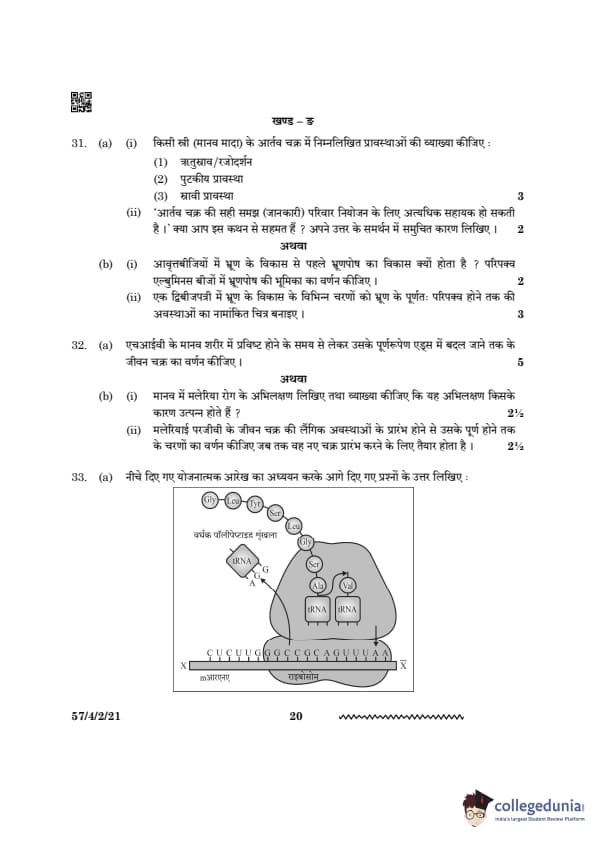
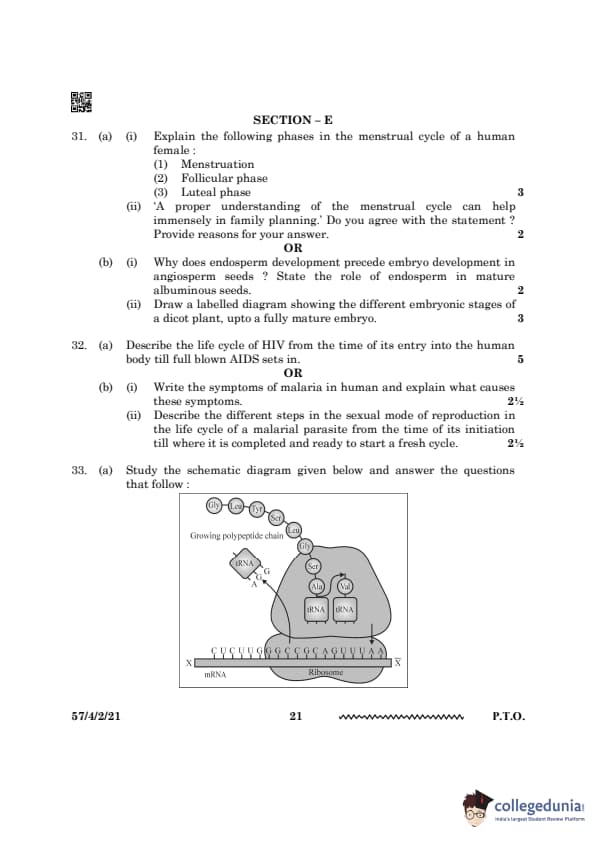
(a) Explain the following phases in the menstrual cycle of a human female:
- Menstruation
- Follicular phase
- Luteal phase
View Solution
Answer:- Menstruation: The uterine lining sheds due to a drop in progesterone levels, resulting in menstrual bleeding.
- Follicular Phase: FSH stimulates the development of follicles, and estrogen levels increase, thickening the uterine lining.
- Luteal Phase: After ovulation, the ruptured follicle forms the corpus luteum, secreting progesterone to maintain the uterine lining for possible implantation.
(b) ‘A proper understanding of the menstrual cycle can help immensely in family planning.’ Do you agree with the statement? Provide reasons for your answer.
View Solution
Answer:- Yes, understanding the menstrual cycle helps in:
- Identifying the fertile window for conception or avoiding pregnancy.
- Monitoring reproductive health and detecting irregularities.
OR
(b) (i) Why does endosperm development precede embryo development in angiosperm seeds? State the role of endosperm in mature albuminous seeds.
View Solution
Answer:- Endosperm development precedes embryo development in angiosperm seeds to provide the necessary nutrients for the developing embryo.
- The endosperm stores and supplies food materials to support the initial stages of embryo growth.
- In albuminous seeds, such as wheat and maize, the endosperm persists in the mature seed and acts as a storage tissue for nutrients, including starch, proteins, and oils, required for seed germination and growth.
(b) (ii) Draw a labelled diagram showing the different embryonic stages of a dicot plant, up to a fully mature embryo.
View Solution

- The embryonic development in dicots progresses through distinct stages:
- Globular stage: A spherical mass of cells forms.
- Heart-shaped stage: Cotyledons begin to emerge, giving the embryo a heart shape.
- Torpedo stage: The cotyledons elongate, and the shoot and root meristems become prominent.
- Mature embryo stage: The embryo has two cotyledons, a plumule (shoot tip), and a radicle (root tip), ready for germination.





Comments