




CBSE Class 12 Biology Set 3 Question Paper PDF (57/1/3) is now available for download. CBSE conducted the Class 12 Biology examination on March 19, 2024, from 10:30 AM to 1:30 PM. The question paper consists of 33 questions carrying a total of 70 marks. Section A includes 16 MCQs for 1 mark each, Section B contains 5 very short-answer questions for 2 marks each, Section C comprises 7 short-answer questions for 3 marks each, Section D comprises 2 Case-based questions carries 4 marks each and Section E comprises 3 long-answer questions carries 5 marks each.
Candidates can use the link below to download the CBSE Class 12 Biology Set 3 Question Paper with detailed solutions.
CBSE Class 12 Biology Question Paper 2024 (Set 3- 57/1/3) with Answer Key
| CBSE Class 12 2024 Biology Question Paper with Answer Key |  Download Download |
Check Solution |
CBSE Class 12 2024 Biology Questions with Solutions
SECTION A
Question 1:
Refer to the Venn diagram given below. Select the option with correct examples P, Q, and R:
![[Venn Diagram Image]](https://assets.collegedunia.com/public/image/1_5fffff024d30233ce11652b7744be934.png?tr=w-568,h-93,c-force)
View Solution
Solution: The Venn diagram illustrates the classification of seeds into dicotyledonous (P), endospermic (Q), and monocotyledonous (R). Based on the characteristics:
- P (Dicotyledonous): Bean is a dicot seed, which has two cotyledons.
- Q (Endospermic seed): Castor seed is an endospermic dicot seed, where the endosperm persists in the mature seed.
- R (Monocotyledonous): Maize is a monocot seed, having only one cotyledon.
Question 2:
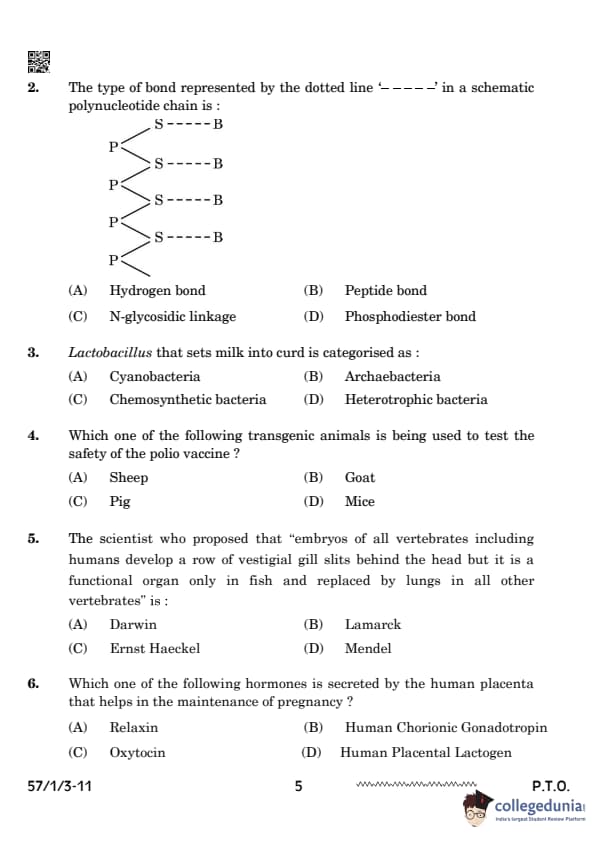
The type of bond represented by the dotted line ‘- -' in a schematic polynucleotide chain is:
![[Image of polynucleotide chain]](https://assets.collegedunia.com/public/image/6_23db60bb3cacc066dc5e3aa837b45885.png?tr=w-182,h-225,c-force)
View Solution
Solution: In a polynucleotide chain, the dotted line (‘—') represents the bond between the nitrogenous base (B) and the sugar (S). This bond is known as an N-glycosidic linkage. It connects the 1' carbon of the pentose sugar to the nitrogen atom of the nitrogenous base.
Other bonds in the polynucleotide structure: Phosphodiester bond: Links the sugar molecules of adjacent nucleotides. Hydrogen bond: Occurs between complementary nitrogenous bases in double-stranded DNA. Peptide bond: Found in proteins, not in polynucleotides.
Question 3:
Lactobacillus that sets milk into curd is categorised as:
View Solution
Solution: Lactobacillus is a heterotrophic bacterium that converts lactose in milk into lactic acid, setting the milk into curd.
Question 4:
Which one of the following transgenic animals is being used to test the safety of the polio vaccine?
View Solution
Solution: Transgenic mice are used to test the safety of the polio vaccine because they can be genetically modified to mimic human susceptibility to the polio virus.
Question 5:
The scientist who proposed that "embryos of all vertebrates including humans develop a row of vestigial gill slits behind the head but it is a functional organ only in fish and replaced by lungs in all other vertebrates” is:
View Solution
Solution: Ernst Haeckel proposed the "Biogenetic Law,” which states that embryonic development (ontogeny) recapitulates the evolutionary history (phylogeny) of an organism.
Question 6:
Which one of the following hormones is secreted by the human placenta that helps in the maintenance of pregnancy?
View Solution
Solution: Human Chorionic Gonadotropin (hCG) is secreted by the placenta and maintains pregnancy by supporting the corpus luteum, ensuring the continuous production of progesterone.
Question 7:
During an allergic reaction, the binding of antigen to IgE antibodies initiates release of:
View Solution
Solution: During an allergic reaction, histamine is released by mast cells and basophils, causing symptoms like swelling, itching, and inflammation.
Question 8:
Select the incorrect match from the following:
View Solution
Solution: In the case of 44 + XXY (Klinefelter syndrome), the individual is typically male but may have some characteristics of females, such as reduced fertility and mild developmental issues, but not overall feminine development.
Question 9:
Restriction Endonuclease - Hind II always cuts DNA molecules at a particular point by recognising a specific sequence of:
View Solution
Solution: Hind II is a restriction enzyme that recognizes the palindromic sequence of six base pairs (5'-AAGCTT-3') and cuts between the A and the G.
Question 10:
The periodic abstinence by a couple for family planning should be from:
View Solution
Solution: During days 10 to 17 of the menstrual cycle, ovulation occurs and the woman is most fertile, making it the period of high risk for conception if abstinence is not followed.
Question 11:
Which one of the following bacteria was used by Stanley Cohen and Herbert Boyer to accomplish the construction of the first rDNA?
View Solution
Solution: Stanley Cohen and Herbert Boyer are famous for their pioneering work in molecular genetics, particularly for the development of the first recombinant DNA (rDNA) technology. In their landmark experiment, they used the bacterium Salmonella typhimurium as part of their work. The process involved taking DNA from two different sources and combining them into a single molecule of recombinant DNA. The genetic material was introduced into Salmonella typhimurium, allowing for the transfer and expression of the recombinant DNA.
Here is a breakdown of the options:
- Option (A) Agrobacterium tumefaciens: While Agrobacterium tumefaciens is widely used in genetic engineering, particularly for introducing genes into plant cells, it was not involved in the construction of the first rDNA by Cohen and Boyer.
- Option (B) Mycobacterium sp.: Mycobacterium species, such as Mycobacterium tuberculosis, are known for causing diseases like tuberculosis. These bacteria were not used by Cohen and Boyer in their rDNA work.
- Option (C) E. coli: Although Escherichia coli (E. coli) is commonly used in modern recombinant DNA technology as a host for cloning, Cohen and Boyer initially worked with Salmonella typhimurium for their rDNA construction.
- Option (D) Salmonella typhimurium: Correct.
Question 12:
The organism that occupies more than one trophic level in a pond ecosystem is:
View Solution
Solution: Fish are often secondary consumers (feeding on zooplankton) and primary consumers (feeding on phytoplankton), occupying more than one trophic level.
Question 13:
Assertion (A): Indian Government has set up an organisation known as GEAC to decide the validity of GM research.
Reason (R): Genetic modification of organisms has no effect when such organisms are introduced in the ecosystem.
View Solution
Solution: The assertion is correct as GEAC (Genetic Engineering Approval Committee) evaluates the safety and environmental impact of GM crops in India. However, the reason is false because genetic modification can affect ecosystems in various ways, including unintended crossbreeding and ecological changes.
Question 14:
Assertion (A): Gene flow increases genetic variations.
Reason (R): The random introduction of new alleles into a recipient population and their removal from donor populations affects allele frequency.
View Solution
Solution: Gene flow introduces new genetic variations by mixing alleles between populations. The random introduction and removal of alleles do indeed affect allele frequencies, supporting the assertion.
Question 15:
Assertion (A): The laws of our country permit legal adoption and it is as yet one of the best methods for childless couples looking for parenthood.
Reason (R): Emotional, religious, and social factors are no deterrents to the legal adoption of orphaned and destitute children in India.
View Solution
Solution: The assertion is true as adoption is legally permitted in India. However, the reason is false because emotional, religious, and social factors can often act as barriers in adoption processes.
Question 16:
Assertion (A): Agrobacterium tumefaciens is a pathogen of several monocot plants.
Reason (R): It is able to deliver a piece of DNA known as ‘T-DNA' to transform normal plant cells into a tumor.
View Solution
Solution: Agrobacterium tumefaciens is not a pathogen of monocot plants but primarily infects dicot plants. The reason is correct as it delivers T-DNA, causing tumor formation in infected plants.
SECTION B
Question 17:
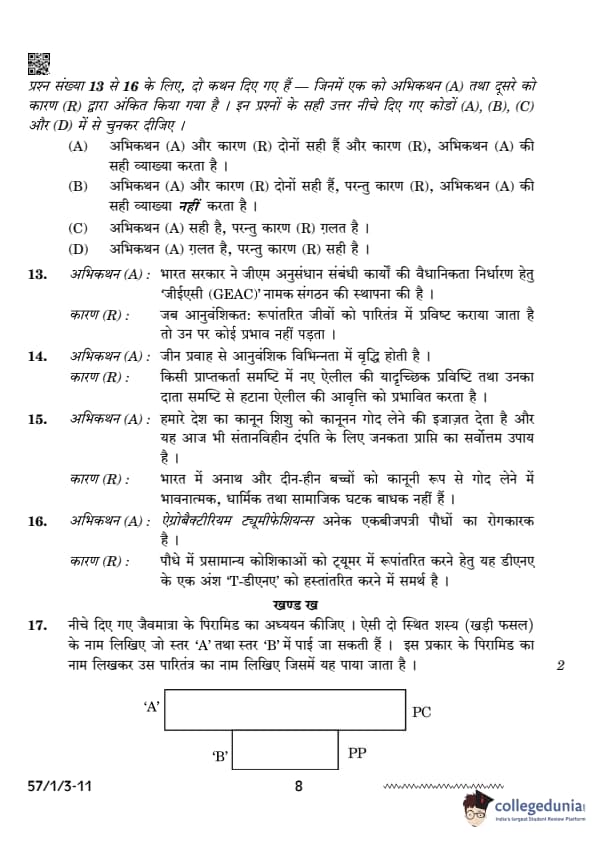
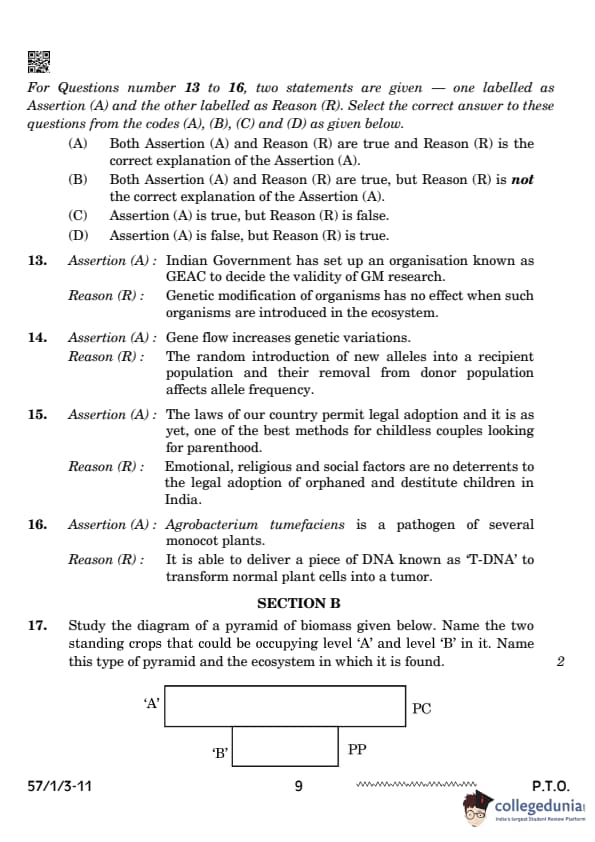
Study the diagram of a pyramid of biomass given below. Name the two standing crops that could be occupying level 'A' and level ‘B' in it. Name this type of pyramid and the ecosystem in which it is found.
![[Diagram of Inverted Pyramid]](https://assets.collegedunia.com/public/image/21_9e5e1812c675cf7c77de2d4697563550.png?tr=w-450,h-179,c-force)
View Solution
Solution: In the given pyramid of biomass:
- Level 'A' could be occupied by Producers (PC) such as plants, which have the highest biomass in most ecosystems.
- Level 'B' could be occupied by Primary Consumers (PP) like herbivores, which feed on plants.
This type of pyramid is known as an Inverted Pyramid of Biomass, and it is typically found in Aquatic Ecosystems where the biomass of producers (like phytoplankton) is lower than that of primary consumers (like zooplankton or small fish).
Question 18:
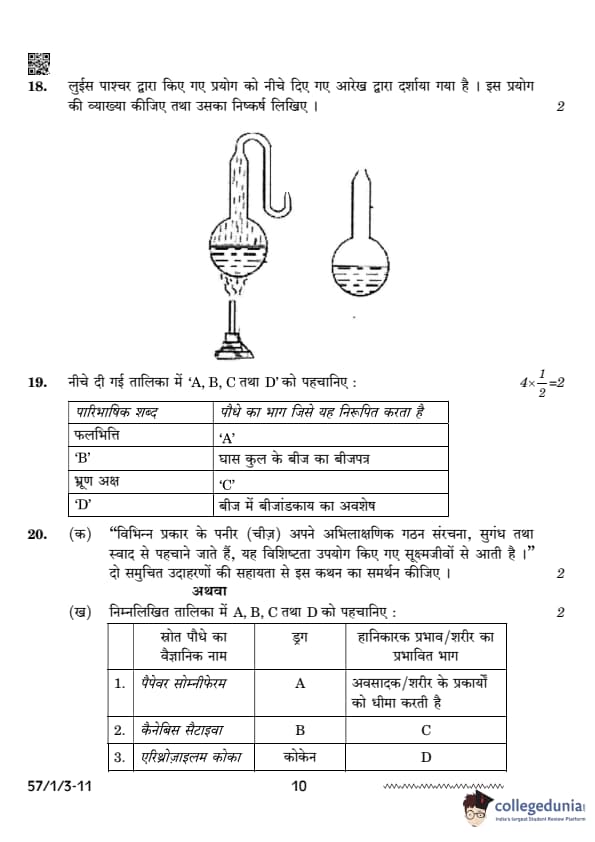
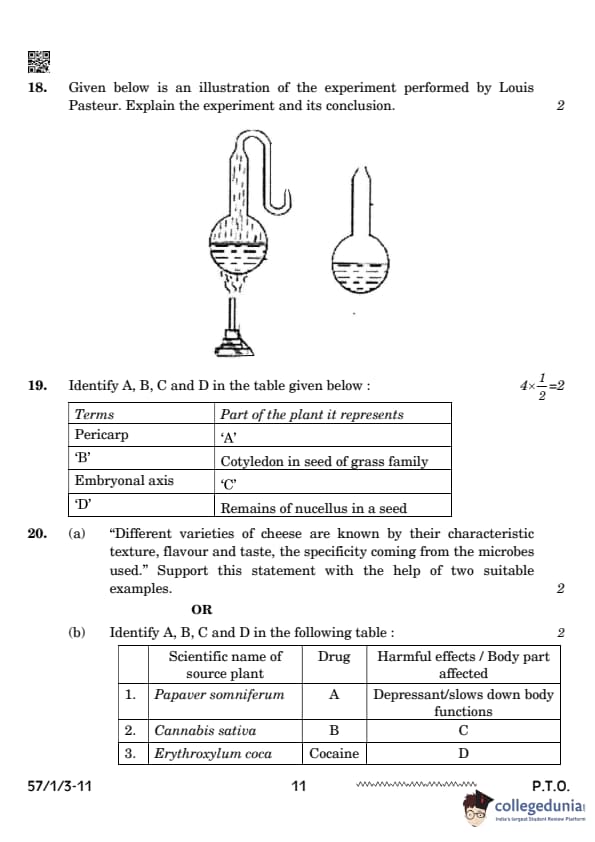
Given below is an illustration of the experiment performed by Louis Pasteur. Explain the experiment and its conclusion.
![[Image of Swan Neck Flask Experiment]](https://assets.collegedunia.com/public/image/18_8f4ed922943cfeae7e7792f28828adb5.png?tr=w-310,h-331,c-force)
View Solution
Solution: Louis Pasteur's experiment, known as the "swan-neck flask experiment,” was conducted to disprove the theory of spontaneous generation. In this experiment, Pasteur used a flask with a long curved neck (swan-neck) to allow air but prevent contaminants from entering the flask.
He boiled the nutrient broth in the flask to kill any existing microorganisms. The swan neck prevented dust and microbes from entering, and no microbial growth was observed in the broth. However, if the neck was broken, allowing dust and microorganisms to enter, microbial growth occurred.
Conclusion: This experiment concluded that microorganisms do not spontaneously arise from non-living matter but are introduced from the environment. It supported the theory of biogenesis.
Question 19:
Identify A, B, C, and D in the table given below:
| Terms | Part of the plant it represents |
|---|---|
| Pericarp | A |
| B | Cotyledon in seed of grass family |
| Embryonal axis | C |
| D | Remains of nucellus in a seed |
View Solution
Solution:
- A: Pericarp – The outer covering of the fruit, often referred to as the fruit wall.
- B: Cotyledon in seed of grass family – The seed leaves, which are important in providing energy during germination.
- C: Embryonal axis – The region of the seed that connects the embryo with the seed and helps in the development of the plant.
- D: Remains of nucellus in a seed – The remnant of the tissue that provides nutrition to the developing embryo in the seed.
Question 20(a):
"Different varieties of cheese are known by their characteristic texture, flavour and taste, the specificity coming from the microbes used.” Support this statement with the help of two suitable examples.
View Solution
Solution: Cheese varieties differ due to the microorganisms used in their fermentation, affecting the texture, flavor, and taste. Examples include:
- Swiss Cheese: The bacterium Propionibacterium shermanii produces holes and imparts a nutty flavor to Swiss cheese.
- Blue Cheese: Bacteria such as Penicillium roqueforti cause the blue veins in blue cheese and contribute to its distinct, sharp flavor.
Question 20(b):
Identify A, B, C, and D in the following table:
| Scientific name of source plant | Drug | Harmful effects / Body part affected |
|---|---|---|
| Papaver somniferum | A | Depressant/slows down body functions |
| Cannabis sativa | B | |
| C | ||
| Erythroxylum coca | Cocaine | D |
View Solution
Solution:
- Papaver somniferum: A: Morphine, which is a depressant and slows down body functions.
- Cannabis sativa: B: THC (Tetrahydrocannabinol), which affects the nervous system and causes altered perception.
- Erythroxylum coca: C: Cocaine, which stimulates the central nervous system, causes addiction, and can lead to heart issues.
Question 21:
Write the basic steps followed in the Assisted Reproductive Technologies (ART) programme to help childless couples. Why is it also known as the test tube baby programme?
View Solution
Solution: The basic steps followed in the Assisted Reproductive Technologies (ART) programme are:
- Step 1: Hormonal stimulation is provided to the female to induce the production of multiple ova.
- Step 2: The eggs (ova) are retrieved from the ovaries and fertilized with sperm in a laboratory setting.
- Step 3: The fertilized egg (zygote) undergoes early embryonic development in vitro (outside the body).
- Step 4: The resulting embryo is then implanted into the uterus for further development.
It is known as the test tube baby programme because fertilization and early embryonic development occur outside the female body in a laboratory setting, commonly in a petri dish or test tube.
SECTION C
Question 22(a):
Explain the significance of the experiment carried out by S.L. Miller. Name the scientists whose hypothesis prompted him to carry out this experiment.
View Solution
Solution: S.L. Miller's experiment was significant because it simulated the conditions of early Earth and demonstrated that organic molecules, including amino acids, could be synthesized from inorganic compounds under primitive conditions. This experiment supported the idea of abiogenesis, the origin of life from non-living matter.
The hypothesis prompting the experiment was proposed by Alexander Oparin and J.B.S. Haldane, who suggested that life originated from simple molecules under reducing conditions.
Question 22(b):
How does meteorite analysis favour this hypothesis?
View Solution
Solution: Meteorite analysis has shown that many organic compounds, including amino acids, are present in meteorites. This supports the hypothesis that organic molecules could have formed in space and later arrived on Earth, potentially aiding in the origin of life.
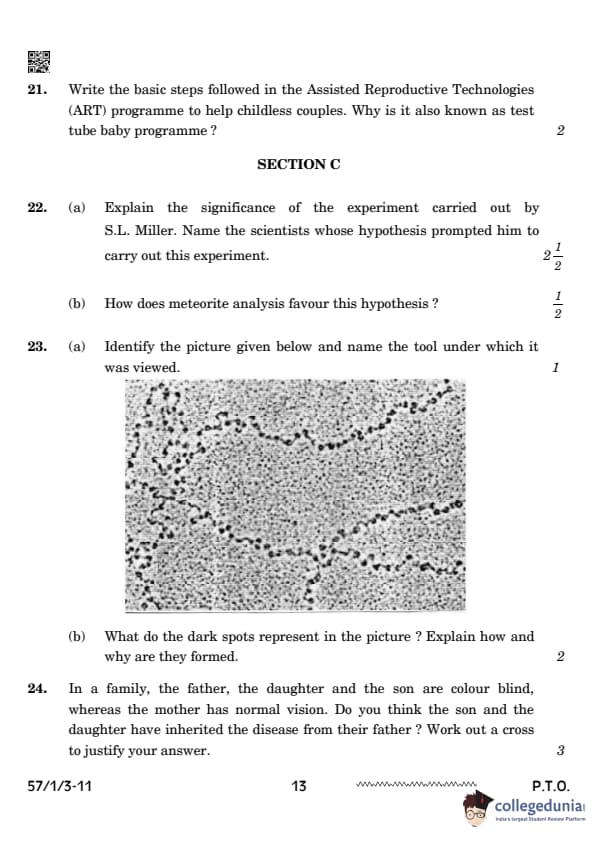
Question 23(a):
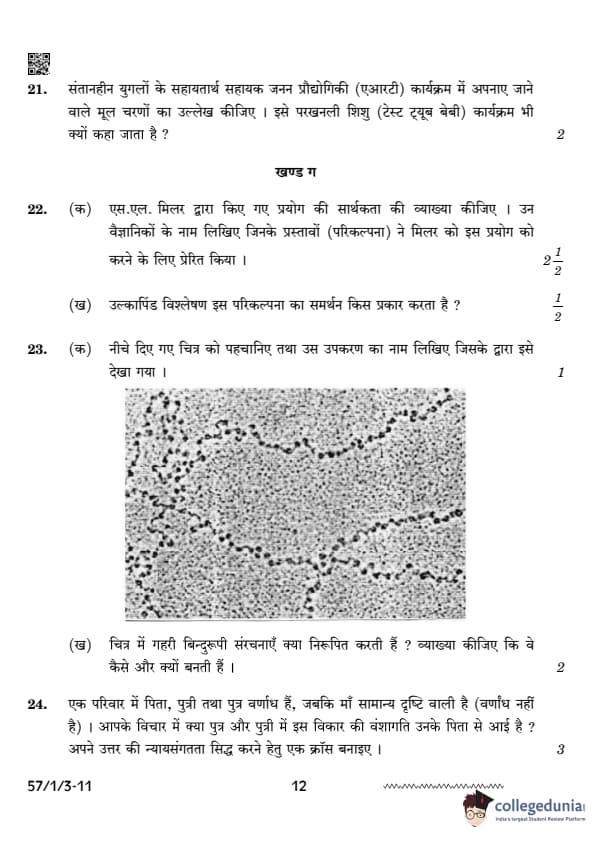
Identify the picture given below and name the tool under which it was viewed.
![[Microscopic Image]](https://assets.collegedunia.com/public/image/23_1085b5b1ec878784b0f4f1848a1e3d80.png?tr=w-462,h-316,c-force)
View Solution
Solution: The picture shows a cellular structure at a very high magnification. It is likely a microscopic image viewed under a Transmission Electron Microscope (TEM).
Question 23(b):
What do the dark spots represent in the picture? Explain how and why they are formed.
View Solution
Solution: The dark spots in the image represent ribosomes or dense areas of the cell that are involved in protein synthesis. These structures appear darker in electron microscopy because they absorb more electrons due to their dense, compact structure.
Question 24:
In a family, the father, the daughter and the son are colour blind, whereas the mother has normal vision. Do you think the son and the daughter have inherited the disease from their father? Work out a cross to justify your answer.
View Solution
Solution: In humans, color blindness is a sex-linked recessive trait carried on the X chromosome. For a male to be color blind, he must inherit the X chromosome carrying the color blindness allele from his mother (because males have only one X chromosome). A female would need to inherit two copies of the color blindness allele (one from each parent) to be color blind.
Cross:
- Father (color blind): XcY
- Mother (normal vision): XNXN
Father: XcY Mother: XNXN
Possible offspring:
- Daughter: XNXc (Carrier, not color blind)
- Son: XcY (Color blind)
Thus, the daughter is a carrier (XNXc) and does not have the disease, while the son inherits color blindness from his mother (XcY), not from his father.
Conclusion: The son inherited the disease from the mother, not the father. The daughter, being a carrier, did not inherit the disease from the father but can pass the gene on to her offspring.
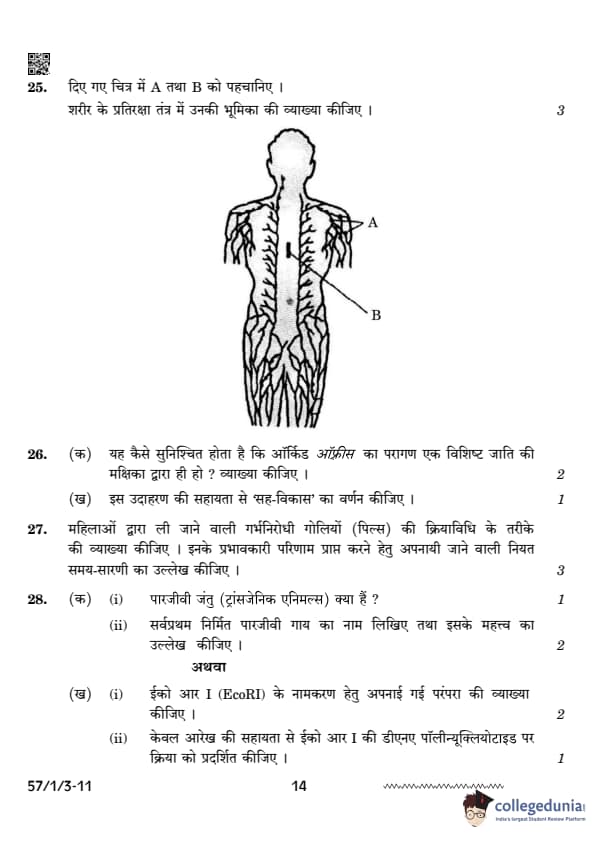
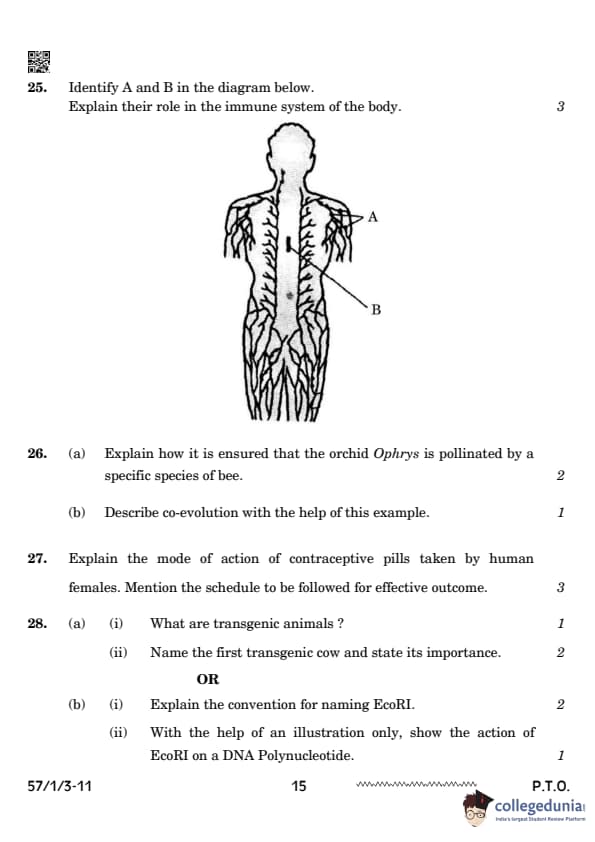
Question 25:
Identify A and B in the diagram below. Explain their role in the immune system of the body.
![[Diagram of Lymphatic System]](https://assets.collegedunia.com/public/image/25_9968870f9bab48cf696bd923b4a82b9a.png?tr=w-231,h-420,c-force)
View Solution
Solution: In the diagram:
- A represents the Lymph nodes.
- B represents the Lymphatic vessels.
The role of each in the immune system is as follows:
Lymph nodes (A): Lymph nodes are small, bean-shaped structures that filter lymph (a fluid that circulates in the lymphatic system) and trap foreign particles like bacteria, viruses, and cancer cells. They contain immune cells, such as lymphocytes, that help in recognizing and attacking harmful pathogens.
Lymphatic vessels (B): These vessels are part of the lymphatic system, which transports lymph, immune cells, and waste products throughout the body. The lymphatic vessels also transport the filtered lymph back to the bloodstream, thus playing an important role in immune surveillance and response.
Question 26(a):
Explain how it is ensured that the orchid Ophrys is pollinated by a specific species of bee.
View Solution
Solution: The orchid Ophrys ensures pollination by a specific species of bee through a mechanism called sexual deception. The flower of Ophrys mimics the appearance, scent, and texture of a female bee, attracting the male bee of a particular species. When the male bee attempts to mate with the flower, it brushes against the flower's anthers and picks up pollen, which is transferred to another flower, facilitating pollination.
Question 26(b):
Describe co-evolution with the help of this example.
View Solution
Solution: Co-evolution refers to the reciprocal evolutionary change in interacting species. In the case of Ophrys and the specific bee species, both the orchid and the bee have evolved in response to each other. The orchid has evolved to mimic the female bee, attracting the male for pollination, while the male bee evolves to recognize the orchid as a mate, thus ensuring pollination. This mutual evolution benefits both species.
Question 27:
Explain the mode of action of contraceptive pills taken by human females. Mention the schedule to be followed for effective outcome.
View Solution
Solution: Contraceptive pills work primarily by:
- Inhibiting ovulation: The hormones in the pill prevent the release of eggs from the ovaries.
- Thickening cervical mucus: This makes it more difficult for sperm to enter the uterus.
- Changing the uterine lining: This prevents implantation of a fertilized egg.
Schedule: The pill is typically taken daily for 21 days, followed by a 7-day break during which menstruation occurs. A new pack is started after the break.
Question 28(a)(i):
What are transgenic animals?
View Solution
Solution: Transgenic animals are animals that have been genetically modified to carry a foreign gene, which is incorporated into their DNA. These genes can be from different species and are typically inserted to study gene function or to produce useful substances like pharmaceuticals.
Question 28(a)(ii):
Name the first transgenic cow and state its importance.
View Solution
Solution: The first transgenic cow was Rosie, genetically engineered to produce milk containing human protein. This was an important breakthrough for biopharmaceuticals, as it demonstrated the potential of animals to produce therapeutic proteins.
Question 28(b)(i):
Explain the convention for naming EcoRI.
View Solution
Solution: EcoRI is named using the following convention:
- E is the first letter of the genus Escherichia.
- co refers to the species coli.
- R indicates that it was isolated from strain R of Escherichia coli.
- I denotes that it is the first enzyme identified from this strain.
Question 28(b)(ii):
With the help of an illustration only, show the action of EcoRI on a DNA polynucleotide.
View Solution
Solution: EcoRI cuts DNA at the specific recognition site 5'-GAATTC-3', producing sticky ends. The enzyme cuts between the G and the A on both strands of the DNA molecule, resulting in overhanging ends that can be used for further recombination or ligation.
EcoRI cuts between G and A:
5' G | AATTC 3'
3' CTTAA | G 5'
Sticky ends:
5'G AATTC 3'
3'CTTAA G 5'
SECTION D
Question 29(a):
Read the following passage and answer the questions that follow.
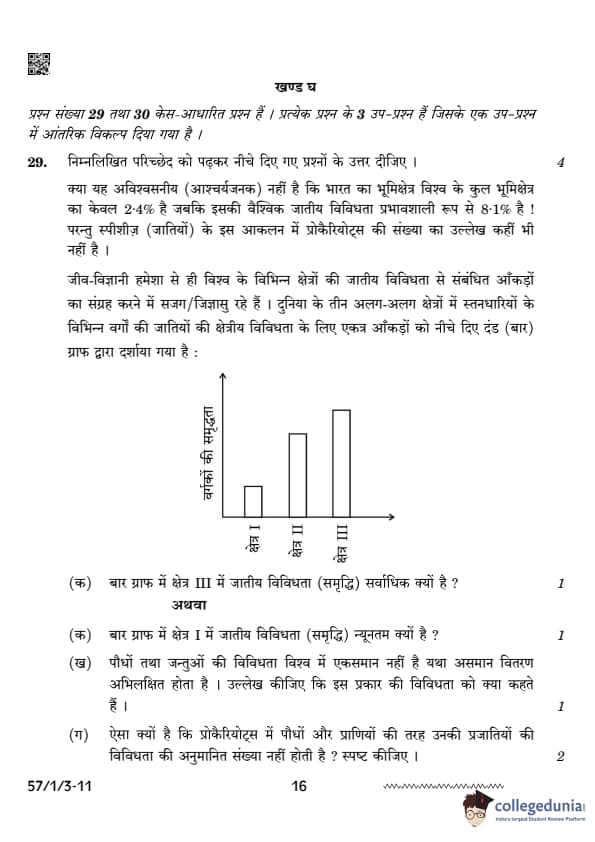
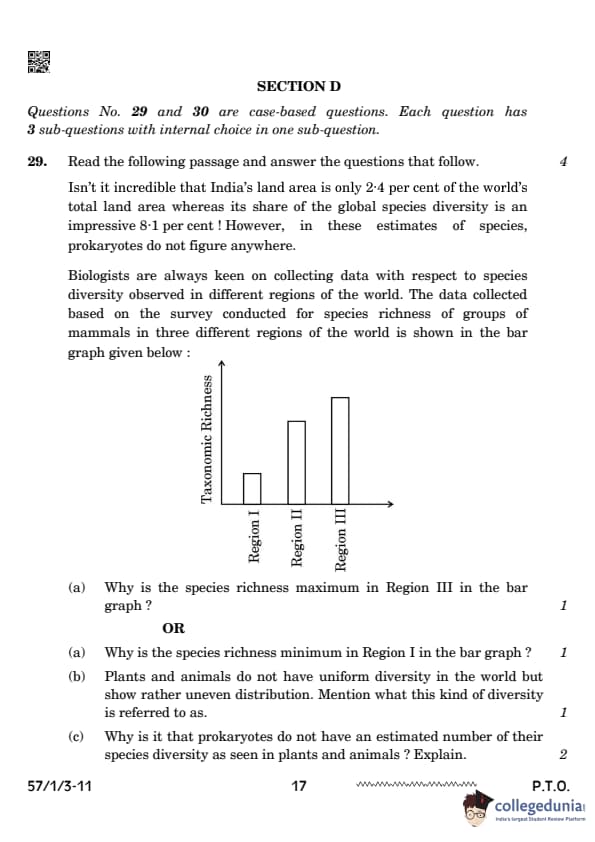
Isn't it incredible that India's land area is only 2.4 percent of the world's total land area whereas its share of the global species diversity is an impressive 8-1 percent! However, in these estimates of species, prokaryotes do not figure anywhere. Biologists are always keen on collecting data with respect to species diversity observed in different regions of the world. The data collected based on the survey conducted for species richness of groups of mammals in three different regions of the world is shown in the bar graph below.
![[Bar Graph Image]](https://assets.collegedunia.com/public/image/29_35fb6535cb7a33aaa497269b9932c05a.png?tr=w-283,h-298,c-force)
(a) Why is the species richness maximum in Region III in the bar graph?
View Solution
Solution: Region III has maximum species richness due to:
- Favourable climatic conditions such as tropical climate with high rainfall and temperature.
- High resource availability and ecological niches supporting a large number of species.
Question 29(a) OR:
(a) Why is the species richness minimum in Region I in the bar graph?
View Solution
Solution: Region I has minimum species richness because:
- It likely represents a cold or arid climate, which is less suitable for supporting diverse life forms.
- Limited resource availability and harsh environmental conditions restrict the number of species.
Question 29(b):
Plants and animals do not have uniform diversity in the world but show rather uneven distribution. Mention what this kind of diversity is referred to as.
View Solution
Solution: This uneven distribution of species diversity is referred to as Beta Diversity. It reflects the variation in species composition between different ecosystems or regions.
Question 29(c):
Why is it that prokaryotes do not have an estimated number of their species diversity as seen in plants and animals? Explain.
View Solution
Solution:
- Prokaryotes lack morphological diversity, making species identification challenging.
- Many prokaryotic species cannot be cultured in laboratories, limiting data collection.
- Molecular techniques like DNA sequencing are required to identify them, which is time-consuming and resource-intensive.
Question 30(a):
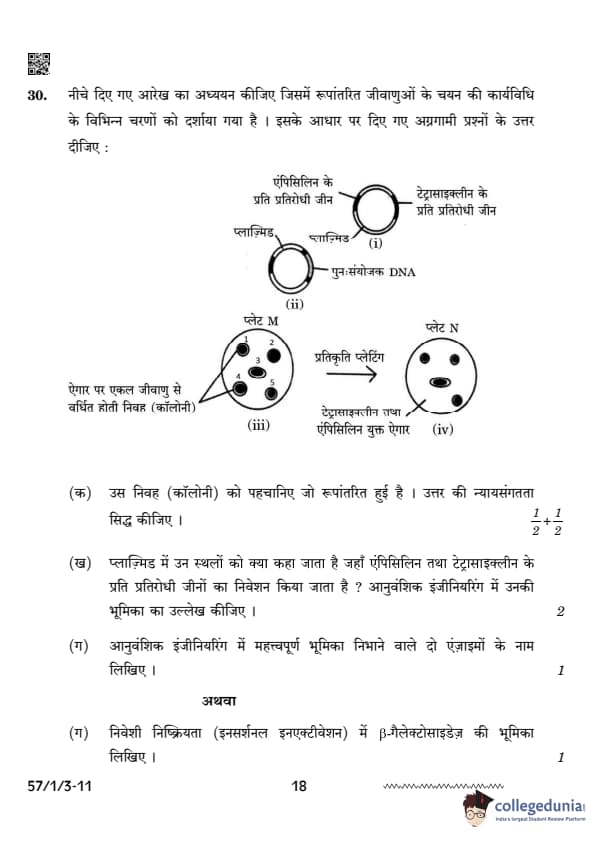
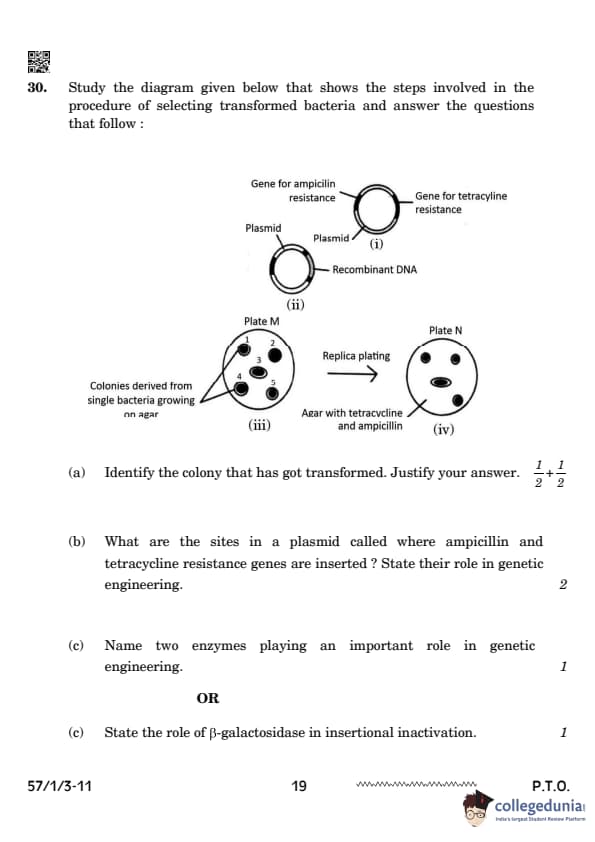
Study the diagram given below that shows the steps involved in the procedure of selecting transformed bacteria and answer the questions that follow:
![[Diagram Image]](https://assets.collegedunia.com/public/image/30_ed94272eeb5a58232eb357c84c1bc757.png?tr=w-652,h-412,c-force)
(a) Identify the colony that has got transformed. Justify your answer.
View Solution
Solution: The transformed colony is the one that grows on Plate M (with ampicillin) but does not grow on Plate N (with both ampicillin and tetracycline).
Justification: The recombinant DNA disrupts the tetracycline resistance gene, making the bacteria sensitive to tetracycline, but retains ampicillin resistance, allowing growth on Plate M.
Question 30(b):
What are the sites in a plasmid called where ampicillin and tetracycline resistance genes are inserted? State their role in genetic engineering.
View Solution
Solution: The sites are called selectable marker sites.
Role: These genes help in identifying and selecting transformed cells:
- Ampicillin resistance gene ensures growth on ampicillin-containing media.
- Tetracycline resistance gene helps distinguish recombinant bacteria (tetracycline-sensitive) from non-recombinant ones.
Question 30(c):
Name two enzymes playing an important role in genetic engineering.
View Solution
Solution:
- Restriction endonucleases: Cut DNA at specific sequences.
- DNA ligase: Joins DNA fragments to form recombinant DNA.
Question 30(c) OR:
State the role of β-galactosidase in insertional inactivation.
View Solution
Solution: Insertional inactivation of the β-galactosidase gene prevents the production of the enzyme, resulting in white colonies (instead of blue) on media with X-gal. This helps identify recombinant bacteria.
SECTION E
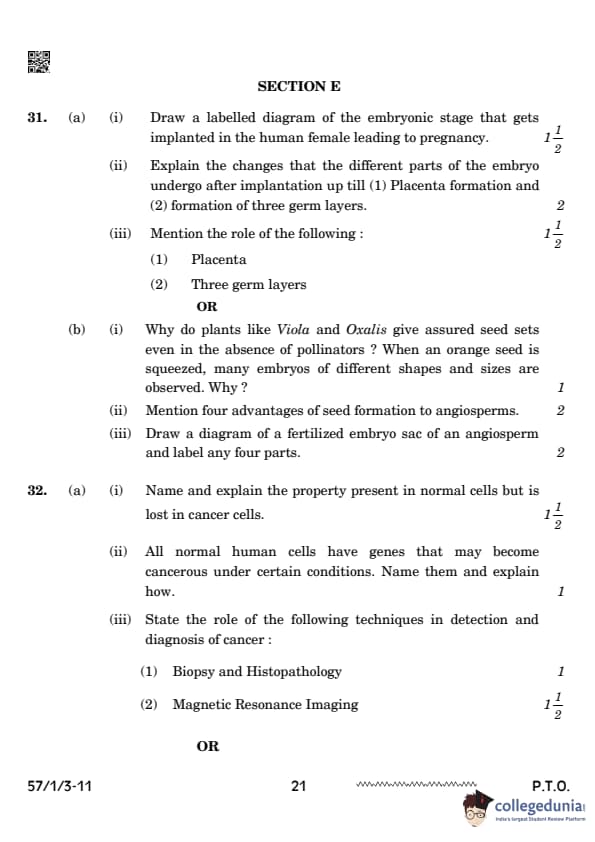
Question 31(a)(i):
Draw a labelled diagram of the embryonic stage that gets implanted in the human female leading to pregnancy.
View Solution
Solution: The diagram shows the blastocyst, which is the stage of the embryo that gets implanted in the uterine lining during pregnancy. The blastocyst has the following structure:
- Inner cell mass (which will develop into the embryo).
- Trophoblast (outer layer that forms the placenta).
- Blastocoel (fluid-filled cavity).
![[Labelled Diagram Image]](https://assets.collegedunia.com/public/image/31a_3fc3ce4421b1cee15a4e23fcd41b8871.png?tr=w-694,h-432,c-force)
Question 31(a)(ii):
Explain the changes that the different parts of the embryo undergo after implantation up till (1) Placenta formation and (2) Formation of three germ layers.
View Solution
Solution: After implantation, the embryo undergoes several developmental stages:
- Placenta Formation: The trophoblast layer of the blastocyst grows and invades the uterine lining, forming the placenta, which allows nutrient and gas exchange between mother and embryo.
- Formation of Three Germ Layers: The inner cell mass undergoes gastrulation, forming three germ layers:
- Ectoderm: Forms the skin and nervous system.
- Mesoderm: Forms muscles, bones, and the circulatory system.
- Endoderm: Forms the digestive and respiratory systems.
Question 31(a)(iii):
Mention the role of the following:
- Placenta
- Three Germ Layers
View Solution
Solution:
- Placenta: The placenta provides nutrients and oxygen to the developing fetus, removes waste products, and produces hormones to support pregnancy.
- Three Germ Layers: These layers give rise to all the organs and tissues of the body, forming the basis for the development of the fetus.
Question 31(b)(i):
Why do plants like Viola and Oxalis give assured seed sets even in the absence of pollinators?
View Solution
Solution: Viola and Oxalis are examples of plants that exhibit self-pollination, which ensures that seeds are formed even without pollinators. These plants have both male and female reproductive organs in the same flower, and pollen can fertilize the ovule within the same flower or between flowers of the same plant.
Question 31(b)(ii):
Mention four advantages of seed formation to angiosperms.
View Solution
Solution:
- Protection of the embryo: Seeds protect the embryo from harsh environmental conditions.
- Dispersal: Seeds can be dispersed to new areas, helping the plant species spread.
- Dormancy: Seeds can remain dormant for long periods, allowing them to germinate when conditions are favorable.
- Genetic variation: Seeds result from fertilization, leading to genetic variation, which is important for evolution and adaptation.
Question 31(b)(iii):
Draw a diagram of a fertilized embryo sac of an angiosperm and label any four parts.
View Solution
Solution:
![[Diagram of Fertilized Embryo Sac with labels: Zygote, Endosperm, Integuments, Micropyle]](https://assets.collegedunia.com/public/image/31b_9ad55cf33352509acaf6d1b254706948.png?tr=w-305,h-404,c-force)
A fertilized embryo sac in an angiosperm consists of the following parts:
- Zygote: The fertilized egg cell that develops into the embryo.
- Endosperm: Provides nourishment to the developing embryo.
- Integuments: Surround the embryo sac and later form the seed coat.
- Micropyle: The opening through which the pollen tube enters to deliver sperm to the ovule.
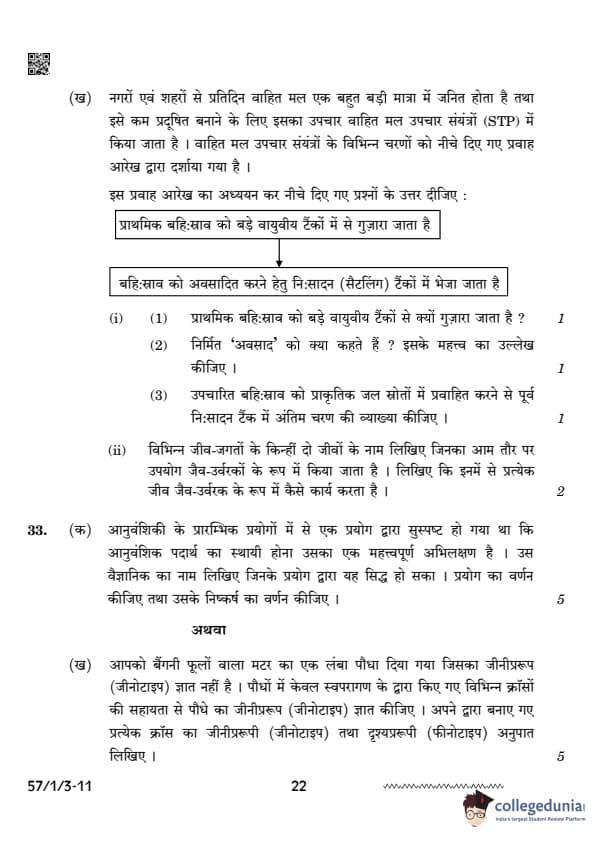
Question 32(a)(i):
Name and explain the property present in normal cells but is lost in cancer cells.
View Solution
Solution: The property that is present in normal cells but is lost in cancer cells is contact inhibition. In normal cells, when they come into contact with each other, they stop dividing. This prevents uncontrolled cell growth and maintains tissue structure. In cancer cells, contact inhibition is lost, leading to uncontrolled cell division and tumor formation.
Question 32(a)(ii):
All normal human cells have genes that may become cancerous under certain conditions. Name them and explain how.
View Solution
Solution: The genes that may become cancerous under certain conditions are called oncogenes and tumor suppressor genes.
- Oncogenes: These are mutated forms of proto-oncogenes (normal genes that regulate cell growth). When they mutate, they cause excessive cell growth and division.
- Tumor suppressor genes: These genes regulate the repair of damaged DNA and control cell division. When these genes are inactivated or mutated, they fail to stop uncontrolled cell division, leading to cancer.
Question 32(a)(iii):
State the role of the following techniques in detection and diagnosis of cancer:
- Biopsy and Histopathology
- Magnetic Resonance Imaging (MRI)
View Solution
Solution:
- Biopsy and Histopathology: A biopsy involves taking a tissue sample from the suspected area to examine under a microscope. Histopathology helps in identifying abnormal or cancerous cells in the tissue.
- Magnetic Resonance Imaging (MRI): MRI uses magnetic fields and radio waves to create detailed images of internal organs. It is used to detect tumors, their size, and location, helping in cancer diagnosis.
Question 32(b)(i):
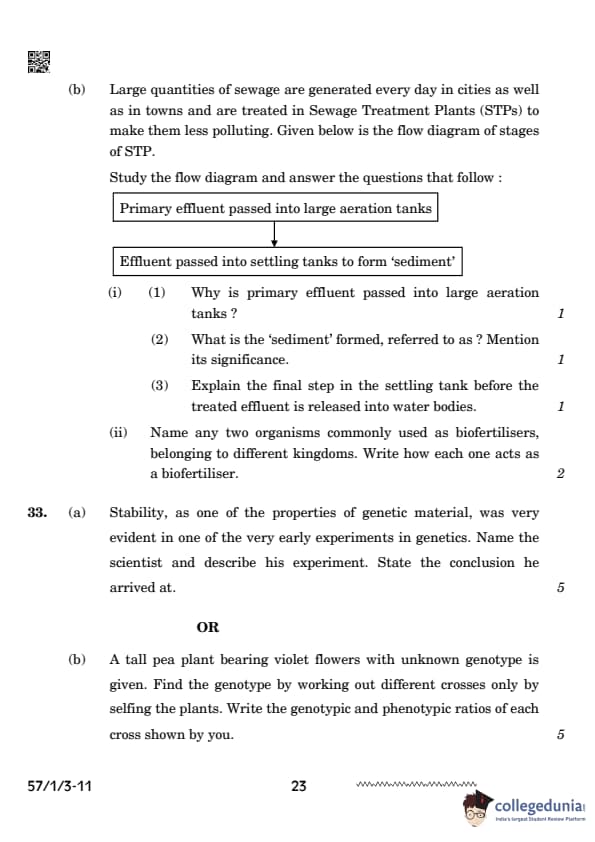
Large quantities of sewage are generated every day in cities as well as in towns and are treated in Sewage Treatment Plants (STPs) to make them less polluting. Given below is the flow diagram of stages of STP. Study the flow diagram and answer the questions that follow:
![[Flow Diagram Image]](https://assets.collegedunia.com/public/image/33_a76dbbf48e5568372bcdb47d421b4b39.png?tr=w-515,h-127,c-force)
(i) Why is primary effluent passed into large aeration tanks?
View Solution
Solution: The primary effluent is passed into large aeration tanks to introduce oxygen into the water. The oxygen promotes the growth of aerobic microorganisms that decompose organic matter, reducing the pollution load of the effluent.
Question 32(b)(ii):
(2) What is the 'sediment' formed, referred to as? Mention its significance.
View Solution
Solution: The 'sediment' formed in the settling tanks is called sludge. It consists of organic matter, microorganisms, and debris that settle down after the aeration process. Sludge is important because it can be further processed to recover valuable materials or treated for safe disposal.
Question 32(b)(iii):
(3) Explain the final step in the settling tank before the treated effluent is released into water bodies.
View Solution
Solution: In the final step, the effluent in the settling tank undergoes a process where it is allowed to settle, and the remaining solid particles (sludge) are removed. The treated effluent is then passed through filtration to remove any remaining impurities before being released into water bodies.
Question 32(b)(ii)(1):
Name any two organisms commonly used as biofertilisers, belonging to different kingdoms. Write how each one acts as a biofertiliser.
View Solution
Solution: Two organisms commonly used as biofertilizers are:
- Rhizobium (Kingdom: Bacteria): Rhizobium bacteria form symbiotic relationships with leguminous plants by fixing atmospheric nitrogen into a form that plants can use for growth.
- Mycorrhiza (Kingdom: Fungi): Mycorrhiza fungi form symbiotic relationships with plant roots, enhancing nutrient uptake, especially phosphorus, and improving plant growth.
Question 33(a):
Stability, as one of the properties of genetic material, was very evident in one of the very early experiments in genetics. Name the scientist and describe his experiment. State the conclusion he arrived at.
View Solution
Solution: The scientist who demonstrated the stability of genetic material through early experiments was Gregor Mendel. His famous experiments involved crossing pea plants to study inheritance patterns.
Experiment: Mendel performed monohybrid and dihybrid crosses using pea plants, focusing on traits such as plant height and flower color. In his monohybrid cross, he crossed a tall plant (T) with a short plant (t) and observed that the F1 generation had all tall plants. When F1 plants were self-pollinated, the F2 generation exhibited a 3:1 ratio of tall to short plants.
Conclusion: Mendel concluded that inheritance follows specific ratios (such as 3:1 for a monohybrid cross), and that genetic material is inherited in a stable manner, maintaining the ratio generation after generation. This laid the foundation for the laws of inheritance (Mendel's Laws).
Question 33(b):
A tall pea plant bearing violet flowers with unknown genotype is given. Find the genotype by working out different crosses only by selfing the plants. Write the genotypic and phenotypic ratios of each cross shown by you.
View Solution
Solution: Let the tallness (T) be dominant over shortness (t), and violet color (V) be dominant over white color (v). The given pea plant is tall with violet flowers, but its genotype is unknown.
Cross 1: Selfing Tall Violet (T? V?) - Assume the genotype of the plant is heterozygous for both traits: TtVv.
Parental Cross: TtVv × TtVv
The Punnett square for this cross gives the following genotypic ratio:
Genotypic ratio: 1 TTVV : 2TtVV : 2TTVv : 4TtVv : 1ttVV : 2ttVv : 1 Ttvv : 1 ttvv
Phenotypic ratio:
Tall, Violet: 15 : Short, Violet: 3




Comments