




CBSE conducted the Class 12 Chemistry Board Exam on February 27, 2025, from 10:30 AM to 1:30 PM. The Chemistry theory paper has 70 marks, while 30 marks are allocated for the practical assessment.The paper is divided into Physical, Organic, and Inorganic Chemistry, with MCQ (1 mark each), short-answer questions (3 marks each), and long-answer questions (5 marks each).
CBSE Class 12 Chemistry 56-6-2 Question Paper and Detailed Solutions PDF is available for download here.
CBSE Class 12 2025 Chemistry 56-6-2 Question Paper with Solution PDF
| CBSE Class 12 Chemistry Question Paper With Answer Key | Download PDF | Check Solutions |

Which by-product is obtained in the manufacture of phenol from cumene ?
View Solution
Which reagents are required for one step conversion of chlorobenzene to toluene?
View Solution
Coordination number of Fe in [Fe(C\textsubscript{2}O\textsubscript{4})\textsubscript{3}]\textsuperscript{3-} is :
View Solution
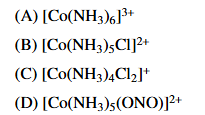
Which of the following complexes shows geometrical isomerism?
View Solution
Which of the following does not show variable oxidation state?
View Solution
The reagent that can be used to convert benzenediazonium chloride to benzene is:
View Solution
The gas evolved when methylamine reacts with HNO\textsubscript{2} is:
View Solution
A solution of acetone in chloroform:
View Solution
The freezing point of one molal KCl solution, assuming KCl to be completely dissociated in water, is : (K\textsubscript{f} for water = 1.86 K kg mol\textsuperscript{-1})
View Solution
The depression in freezing point is given by the formula: \[ \Delta T_f = K_f \times m \]
Where: \( K_f \) = Freezing point depression constant, \( m \) = molality of the solution.
For a 1 molal KCl solution, \[ \Delta T_f = 1.86 \times 1 = 1.86 \, K \]
Since KCl dissociates into two ions (K\textsuperscript{+ and Cl\textsuperscript{-), the total depression is \( 1.86 \times 2 = 3.72 \, K \).
Thus, the freezing point decreases by 3.72°C. Therefore, the freezing point of the solution is \( -3.72°C \).
Quick Tip: Remember, for ionic compounds like KCl, the van't Hoff factor (i) is 2, because it dissociates into two ions.
A galvanic cell can behave like an electrolytic cell when

View Solution
The value of rate constant for a pseudo first order reaction:
View Solution
Furanose ring of fructose is formed due to reaction between :
View Solution
Assertion (A): Actinoids show wide range of oxidation states.
Reason (R): This is due to comparable energies of 5f, 6d and 7s orbitals.
View Solution
Assertion (A): Order of the reaction can be zero or fractional.
Reason (R): We cannot determine order from balanced chemical equation.
View Solution
The order of reaction can be zero or fractional, but the order of a reaction cannot be directly determined from the balanced chemical equation. Experimental methods are needed to determine the order.
Quick Tip: To determine reaction order, rate laws must be derived from experimental data, not from the balanced equation.
Assertion (A): Boiling point of (C2H5)2NH is lower than that of n-C4H9NH2.
Reason (R): Hydrogen bonding is much more extensive in n-C4H9NH2 as compared to(C2H5)2NH.
View Solution
Assertion (A): Phenoxide ion is more stable than alcohol.
Reason (R): Phenoxide ion is stabilized by resonance.
View Solution
State Raoult’s law for a solution containing volatile components. Why is the vapour pressure of an aqueous solution of glucose lower than that of water?
(a) Write IUPAC names of the following coordination compounds:
(b) Differentiate between:
Observe the graph in the given figure and answer the following questions:

How do you explain the following?
Draw the structures of the major monohalo products in each of the following reactions:
 % Add the image to the document
How can you obtain the following from aniline? Give only chemical equations.
A compound (A) with molecular formula C{4},H{5}N on reduction with DIBAL-H followed by hydrolysis, gives a compound (B). Compound (B) gives positive Tollens’ test but does not give iodoform test. Compound (B) can also be obtained when ethanol is treated with dilute NaOH followed by heating. Identify (A) and (B). Write the reactions of (A) with DIBAL-H followed by hydrolysis.
View Solution
Compound (A) is an imine or a nitrile. On reduction with DIBAL-H followed by hydrolysis, it forms an aldehyde (compound B). The positive Tollens' test indicates the presence of an aldehyde group, while the negative iodoform test indicates it is not a methyl ketone. The compound (B) is likely an aldehyde, such as butanal. The reaction of (A) with DIBAL-H followed by hydrolysis can be written as:
\[ C\textsubscript{4H\textsubscript{5}N} + DIBAL-H \xrightarrow{hydrolysis} C\textsubscript{4H\textsubscript{8}O} \] Quick Tip: DIBAL-H selectively reduces nitriles and imines to aldehydes, making it useful for controlling the reduction to stop at the aldehyde stage.
Write any two differences between S{N}1 and S{N}2 reactions. Which of the following compounds would undergo S{N}1 reaction faster and why?

View Solution
Differences between S\textsubscript{N}1 and S\textsubscript{N}2:
1. Mechanism:
- S\textsubscript{N1 reactions involve a two-step mechanism where the leaving group departs before the nucleophile attacks the carbon center.
- S\textsubscript{N2 reactions proceed via a one-step mechanism where the nucleophile attacks the carbon center while the leaving group departs.
2. Kinetics:
- S\textsubscript{N1 reactions are unimolecular and depend only on the concentration of the substrate.
- S\textsubscript{N2 reactions are bimolecular and depend on the concentration of both the substrate and nucleophile.
Which compound undergoes S\textsubscript{N}1 faster?
The compound C\textsubscript{6}H\textsubscript{5}CH\textsubscript{2}-Cl undergoes S\textsubscript{N1 reaction faster. This is because the benzyl carbocation (formed after the leaving group departs) is highly stabilized by resonance with the aromatic ring. This stabilization makes the S\textsubscript{N1 pathway more favorable for this compound.
Quick Tip: S\textsubscript{N}1 reactions are favored by stable carbocations, while S\textsubscript{N}2 reactions are favored by strong nucleophiles and less sterically hindered carbons.
Vapour pressure of pure water at 298 K is 24.8 mm Hg. Calculate the lowering in vapour pressure of an aqueous solution which freezes at -0.3°C. (K\textsubscript{f} for water = 1.86 K kg mol\textsuperscript{-1})
View Solution
The lowering of the vapour pressure \(\Delta P\) is related to the freezing point depression by the formula:
\[ \Delta T_f = \frac{K_f \times m}{1000} \]
Where:
- \(\Delta T_f\) is the freezing point depression,
- \(K_f\) is the cryoscopic constant of the solvent,
- \(m\) is the molality of the solution.
Given that the freezing point depression is \( \Delta T_f = -0.3°C\), the equation becomes:
\[ -0.3 = \frac{1.86 \times m}{1000} \]
Solving for \(m\), we get: \[ m = \frac{-0.3 \times 1000}{1.86} = 161.29 \, mol/kg \]
Next, we calculate the lowering of the vapour pressure using the formula: \[ \Delta P = X_{solvent} \cdot P_0 \]
Where:
- \(X_{solvent}\) is the mole fraction of the solvent,
- \(P_0\) is the vapour pressure of the pure solvent.
Since the molality of the solution is \(m = 161.29 \, mol/kg\), the mole fraction of the solvent is given by:
\[ X_{solvent} = \frac{1}{1 + m} \]
Substitute the value of \(m\): \[ X_{solvent} = \frac{1}{1 + 161.29} = 0.0061 \]
Finally, we calculate the lowering of vapour pressure: \[ \Delta P = 0.0061 \times 24.8 = 0.151 \, mm Hg \] Quick Tip: Freezing point depression is directly proportional to the molality of the solution, and it helps in calculating the lowering of vapour pressure.
Answer the following about the complexes \([FeF_6]^{3-}\) and \([Fe(CN)_6]^{4-}\):
View Solution
(i) The hybridization of \([FeF_6]^{3-}\) involves \(d^2sp^3\), while \([Fe(CN)_6]^{4-}\) involves \(dsp^2\).
(ii) \([FeF_6]^{3-}\) is an outer orbital complex, while \([Fe(CN)_6]^{4-}\) is an inner orbital complex.
(iii) \([FeF_6]^{3-}\) is paramagnetic due to the presence of unpaired electrons, while \([Fe(CN)_6]^{4-}\) is diamagnetic due to all electrons being paired.
Quick Tip: Outer orbital complexes tend to be more magnetic due to the presence of unpaired electrons, while inner orbital complexes are typically diamagnetic.
Answer the following about the complex \([Ti(H_2O)_6]^{3+}\):
Give reasons for the following:
Define the following:
View Solution
(i) A peptide linkage is a covalent bond formed between the carboxyl group of one amino acid and the amino group of another amino acid, releasing a molecule of water. This bond forms a dipeptide and is a key component in protein structure.
(ii) A denatured protein refers to a protein that has lost its secondary and tertiary structures due to external factors such as heat, pH changes, or chemicals, thus losing its biological activity. The primary structure remains intact.
Quick Tip: Peptide bonds are crucial in linking amino acids, and protein denaturation leads to the loss of biological function.
Why do amino acids show amphoteric behaviour?
View Solution
Amino acids show amphoteric behaviour because they possess both a basic amino group (\(-NH_2\)) and an acidic carboxyl group (\(-COOH\)). This dual nature allows them to act as both acids and bases, depending on the pH of the solution. In acidic conditions, the amino group can accept a proton, while in basic conditions, the carboxyl group can donate a proton.
Quick Tip: Amphoteric behaviour allows amino acids to buffer solutions and participate in a wide range of biochemical reactions.
(i) How can you differentiate between Fibrous protein and Globular protein?
View Solution
Fibrous proteins are elongated, insoluble in water, and mainly structural, such as collagen and keratin. They form long fibers or sheets and are involved in providing structural support. In contrast, globular proteins are compact, water-soluble, and have diverse functions like catalysis, transport, and immune response. Examples of globular proteins include enzymes and antibodies.
Quick Tip: Fibrous proteins are structural, while globular proteins are functional and soluble in water.
(ii) Write the names of two different secondary structures of proteins.
View Solution
Two common secondary structures of proteins are:
1. Alpha helix
2. Beta pleated sheet
Quick Tip: Secondary structures like alpha helix and beta pleated sheets are stabilized by hydrogen bonds between the backbone atoms.
What happens when phenol is treated with the following?
View Solution
(i) When phenol is treated with bromine water, it undergoes electrophilic substitution to give a tribromophenol, which is a white precipitate. The –OH group in phenol activates the aromatic ring, making it more reactive towards electrophiles like \( Br_2 \).
(ii) When phenol reacts with concentrated nitric acid, it undergoes nitration to form 2,4,6-trinitrophenol (picric acid), a yellow crystalline compound.
Quick Tip: The –OH group in phenol is electron-donating and activates the aromatic ring, leading to substitution reactions at the ortho and para positions.
(i) Write the mechanism of alcohol reacting as nucleophile in a reaction with CH₃⁺.
View Solution
In this reaction, alcohol acts as a nucleophile. The mechanism proceeds as follows:
1. The alcohol’s lone pair of electrons on the oxygen atom attacks the methyl cation (CH₃⁺).
2. This results in the formation of a methyl ether (CH₃-O-R) and the generation of a new bond between the methyl group and the oxygen of the alcohol.
Quick Tip: Alcohols are nucleophilic due to the lone pair on oxygen, making them capable of attacking electrophiles like carbocations.
(ii) Why do phenols not undergo reactions involving cleavage of C–OH bond?
View Solution
Phenols do not undergo reactions involving the cleavage of the C–OH bond because the phenolic oxygen is involved in resonance with the aromatic ring, which stabilizes the bond. This resonance makes the C–OH bond stronger and less likely to break compared to alcohols, where the lone pair on oxygen is not involved in resonance.
Quick Tip: The resonance effect in phenols stabilizes the C–OH bond, preventing its cleavage under normal conditions.
How can you distinguish between Butan-1-ol and 2-Methylpropan-2-ol by using HCl in the presence of anhydrous ZnCl₂?
View Solution
\textit{Butan-1-ol and \textit{2-methylpropan-2-ol can be distinguished by their reactivity in the presence of HCl and anhydrous \(ZnCl_2\) (Lucas reagent). \textit{Butan-1-ol, a primary alcohol, reacts slowly with the Lucas reagent to form an alkyl chloride after a prolonged reaction, while \textit{2-methylpropan-2-ol, a tertiary alcohol, reacts rapidly at room temperature to form the corresponding alkyl chloride almost immediately due to its tertiary structure.
Quick Tip: Tertiary alcohols react faster with Lucas reagent than primary alcohols due to the formation of a more stable tertiary carbocation.
(a) (i) Identify A, B, and C in the following reactions:

View Solution
A is \(Acetone\), B is \(Acetaldehyde\), and C is \(Acetate\). The reaction shows the oxidation of the methyl group of a compound under acidic conditions, which leads to the formation of acetaldehyde. Upon treatment with a strong base like NaOH, a carboxylate anion is formed.
Quick Tip: The oxidation of methyl groups to aldehydes is a common reaction, and the use of NaOH forms carboxylate anions from the corresponding carboxylic acids.
Write the reaction involved in the following reactions:
View Solution
(I) Wolff-Kishner Reduction: This reaction involves the reduction of carbonyl compounds (aldehydes and ketones) to alkanes by treating them with hydrazine (\(H_2NNH_2\)) in the presence of a strong base like KOH.
(II) Decarboxylation Reaction: This reaction involves the removal of a carboxyl group from carboxylic acids to form a hydrocarbon, usually carried out by heating the acid with soda lime (\(NaOH\) + \(CaO\)).
Quick Tip: Wolff-Kishner reduction is useful for removing carbonyl groups, while decarboxylation is used to eliminate carboxyl groups and form hydrocarbons.
(a) (i) Calculate \(E_{cell}\) of a galvanic cell in which the following reaction takes place at 25°C:
\[ Zn(s) + Pb^{2+}(0.02 \, M) \xrightarrow{} Zn^{2+}(0.1 \, M) + Pb(s) \]
Given: \(E^\circ_{Zn^{2+}/Zn} = -0.76 \, V, \, E^\circ_{Pb^{2+}/Pb} = -0.13 \, V, \, \log 2 = 0.3010, \, \log 4 = 0.6021, \, \log 5 = 0.6990\)
View Solution
To calculate the cell potential, use the Nernst equation: \[ E_{cell} = E^\circ_{cell} - \frac{0.0591}{n} \log Q \]
where \( E^\circ_{cell} = E^\circ_{cathode} - E^\circ_{anode} \), and \( Q = \frac{[Zn^{2+}]_{cathode}}{[Pb^{2+}]_{anode}} \).
For this reaction, \(E^\circ_{cell} = (-0.13) - (-0.76) = 0.63 \, V\).
Next, calculate the reaction quotient \( Q \): \[ Q = \frac{[Zn^{2+}]_{cathode}}{[Pb^{2+}]_{anode}} = \frac{0.1}{0.02} = 5 \]
Substituting into the Nernst equation: \[ E_{cell} = 0.63 - \frac{0.0591}{2} \log 5 = 0.63 - 0.0591 \times 0.69897 = 0.63 - 0.0413 = 0.5887 \, V \] Quick Tip: The Nernst equation accounts for the effect of concentration on the cell potential, and we adjust for it using the reaction quotient \( Q \).
(a) (i) Account for the following:
View Solution
(I) The orange colour of \(Cr_2O_7^{2-}\) changes to yellow due to the formation of \(CrO_4^{2-}\), which is a yellow ion. The conversion occurs when the acidic \(Cr_2O_7^{2-}\) is treated with an alkali, and the chromium changes from the +6 oxidation state to the +6 state in \(CrO_4^{2-}\).
(II) Zn, Cd, and Hg are considered non-transition elements because they do not have partially filled d-orbitals in their ground states, unlike transition elements which have d-orbitals in the partial filling state.
(III) The \(E^\circ\) value for the \(Mn^{3+}/Mn^{2+}\) couple is higher than that for \(Cr^{3+}/Cr^{2+}\) because the \(Mn^{3+}\) ion is more stable due to its electron configuration and its ability to achieve a stable oxidation state compared to the \(Cr^{3+}\) ion. Quick Tip: The colour change in chromium species is due to changes in the oxidation state and the resulting differences in the electronic configurations, which affect their absorption spectra.
What is 'Misch metal'? Give its one use.
Write the formula of an oxoanion of chromium in which it shows the oxidation state equal to its group number.
Why does Vanadium pentoxide (V₂O₅) act as a catalyst?
View Solution
Vanadium pentoxide (\(V_2O_5\)) acts as a catalyst in the Contact Process for the production of sulfuric acid because it can easily change its oxidation state. It facilitates the oxidation of sulfur dioxide to sulfur trioxide by providing an alternate reaction pathway with lower activation energy, without being consumed in the process.
Quick Tip: Vanadium pentoxide works as a catalyst by cycling between oxidation states, which allows it to speed up reactions without being consumed.
Why do transition elements have high enthalpies of atomisation?
How do you prepare Na₂Cr₂O₇ from Na₂CrO₄?
View Solution
To prepare sodium dichromate (\(Na_2Cr_2O_7\)) from sodium chromate (\(Na_2CrO_4\)), you can add an acid such as concentrated sulfuric acid to sodium chromate. This results in the formation of sodium dichromate through the following reaction: \[ Na_2CrO_4 + H_2SO_4 \rightarrow Na_2Cr_2O_7 + H_2O \]
Quick Tip: Sodium dichromate is produced by acidifying sodium chromate, which involves the reduction of the chromium species in the reaction.



Comments