



.png?h=35&w=35&mode=stretch)
The CBSE Class 12 Geography Set 3 (64-2-3) Question Paper 2026 is available for download here of CBSE Board Exam 2026. This CBSE 12th Geography solved question paper includes detailed solutions, answer key, and the latest CBSE marking scheme to help students understand the exam pattern and important topics.
By practicing the CBSE Class 12 Geography 2026 board exam paper PDF, students can improve answer-writing strategy, time management, and overall exam performance.
CBSE Class 12 Geography Question Paper Set 3(64-2-3)
| CBSE Class 12 Geography Question Paper 2026 with Solution PDF | Download PDF | Check Solution |
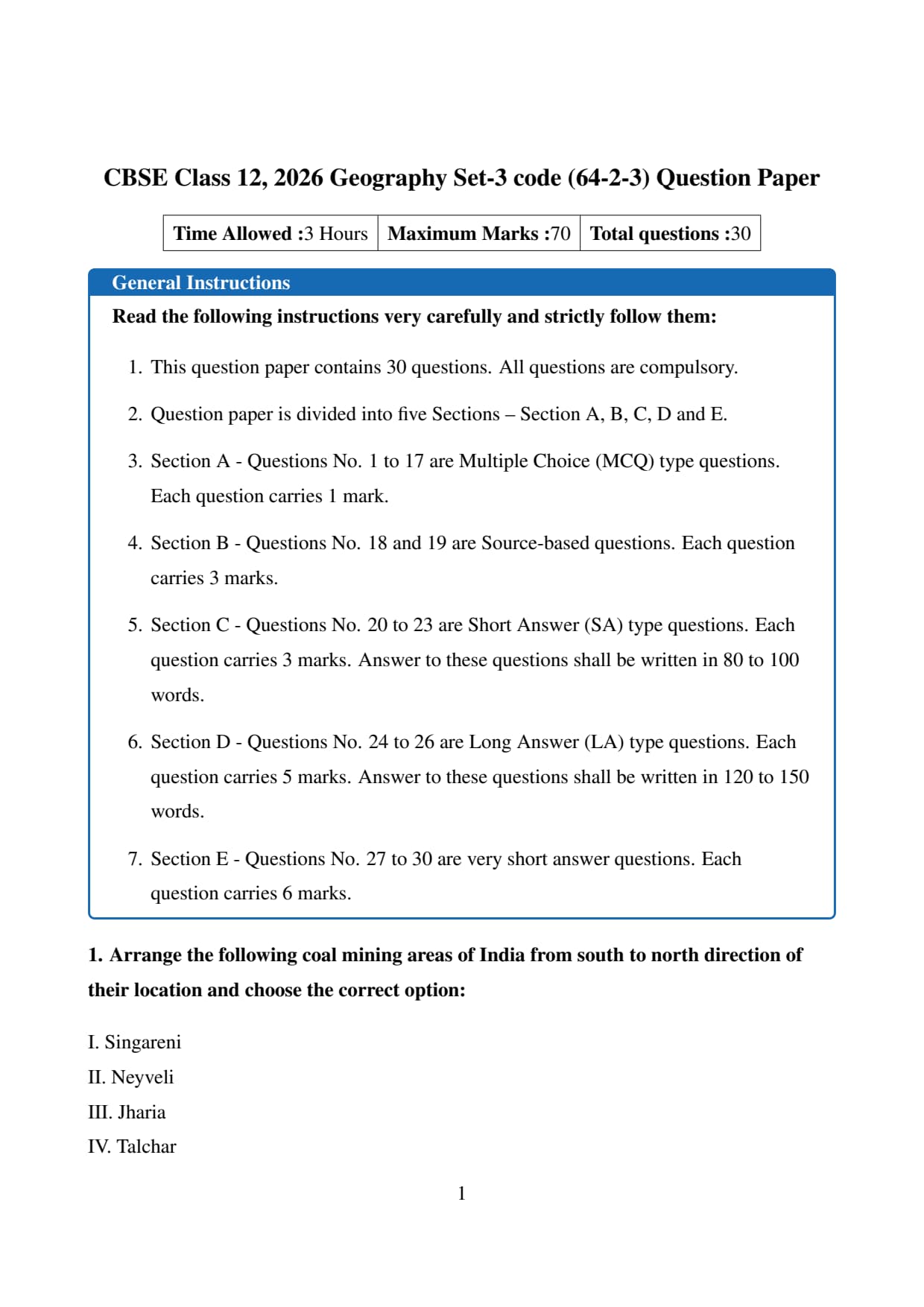
Arrange the following coal mining areas of India from south to north direction of their location and choose the correct option:
I. Singareni
II. Neyveli
III. Jharia
IV. Talchar
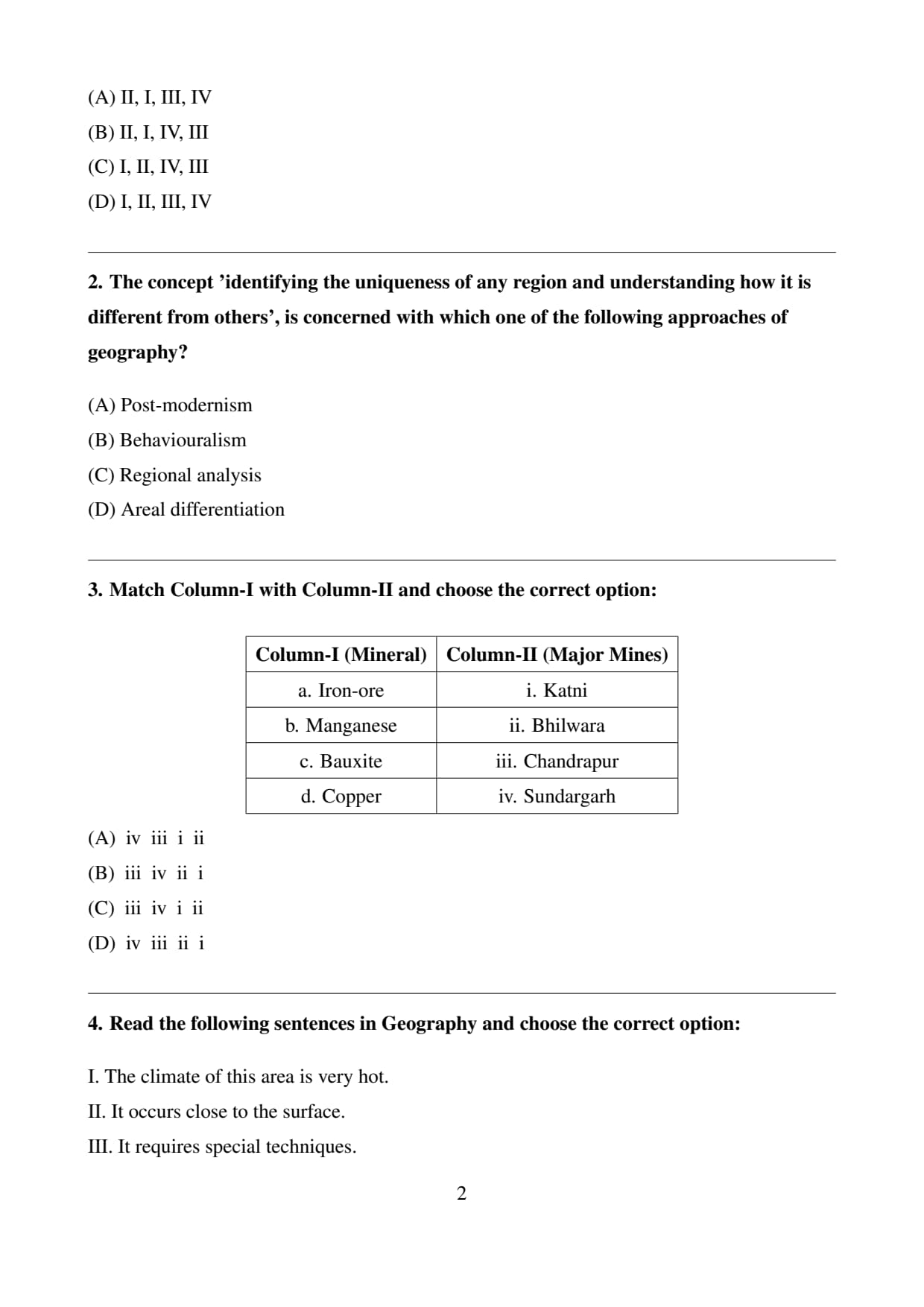
The concept 'identifying the uniqueness of any region and understanding how it is different from others', is concerned with which one of the following approaches of geography?
Match Column-I with Column-II and choose the correct option:

Read the following sentences in Geography and choose the correct option:
I. The climate of this area is very hot.
II. It occurs close to the surface.
III. It requires special techniques.
IV. Safety equipment is relatively low.
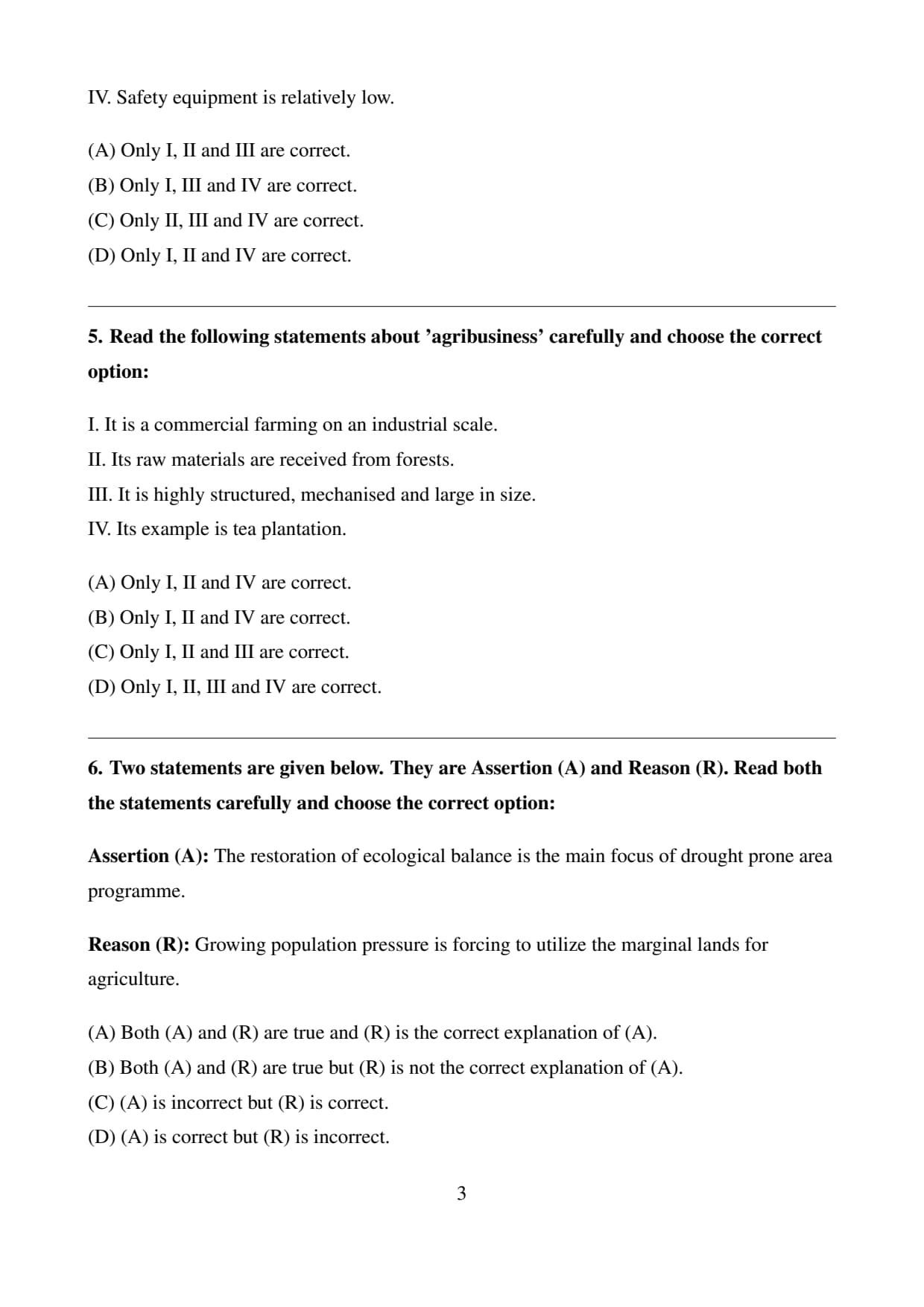
Read the following statements about 'agribusiness' carefully and choose the correct option:
I. It is a commercial farming on an industrial scale.
II. Its raw materials are received from forests.
III. It is highly structured, mechanised and large in size.
IV. Its example is tea plantation.
Two statements are given below. They are Assertion (A) and Reason (R).
Read both the statements carefully and choose the correct option:
Assertion (A): The restoration of ecological balance is the main focus of drought prone area programme.
Reason (R): Growing population pressure is forcing to utilize the marginal lands for agriculture.
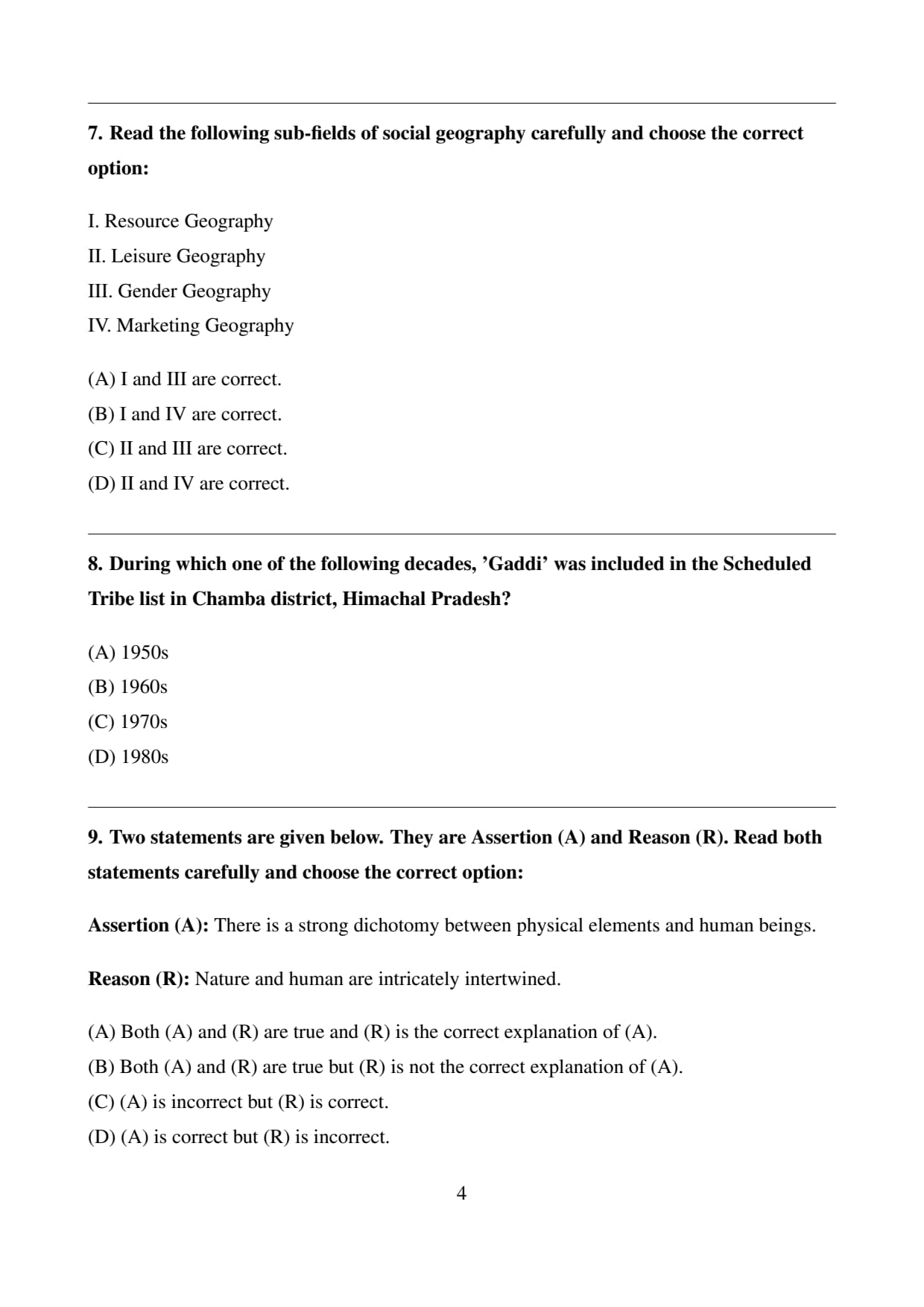
Read the following sub-fields of social geography carefully and choose the correct option:
I. Resource Geography
II. Leisure Geography
III. Gender Geography
IV. Marketing Geography
During which one of the following decades, 'Gaddi' was included in the Scheduled Tribe list in Chamba district, Himachal Pradesh?
Two statements are given below. They are Assertion (A) and Reason (R). Read both statements carefully and choose the correct option:
Assertion (A): There is a strong dichotomy between physical elements and human beings.
Reason (R): Nature and human are intricately intertwined.
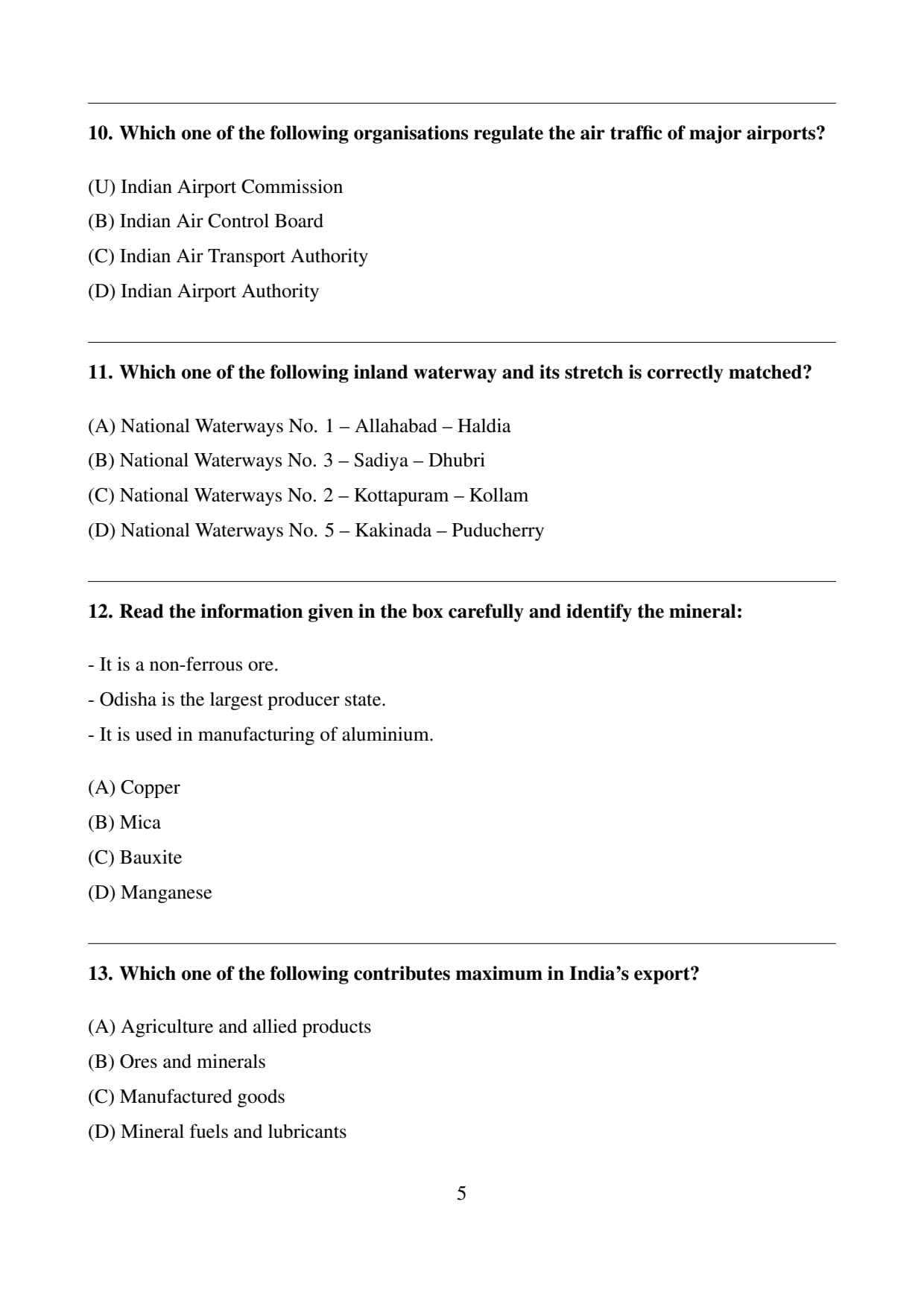
Which one of the following organisations regulate the air traffic of major airports?
Which one of the following inland waterway and its stretch is correctly matched?
Read the information given in the box carefully and identify the mineral:
- It is a non-ferrous ore.
- Odisha is the largest producer state.
- It is used in manufacturing of aluminium.
Which one of the following contributes maximum in India's export?
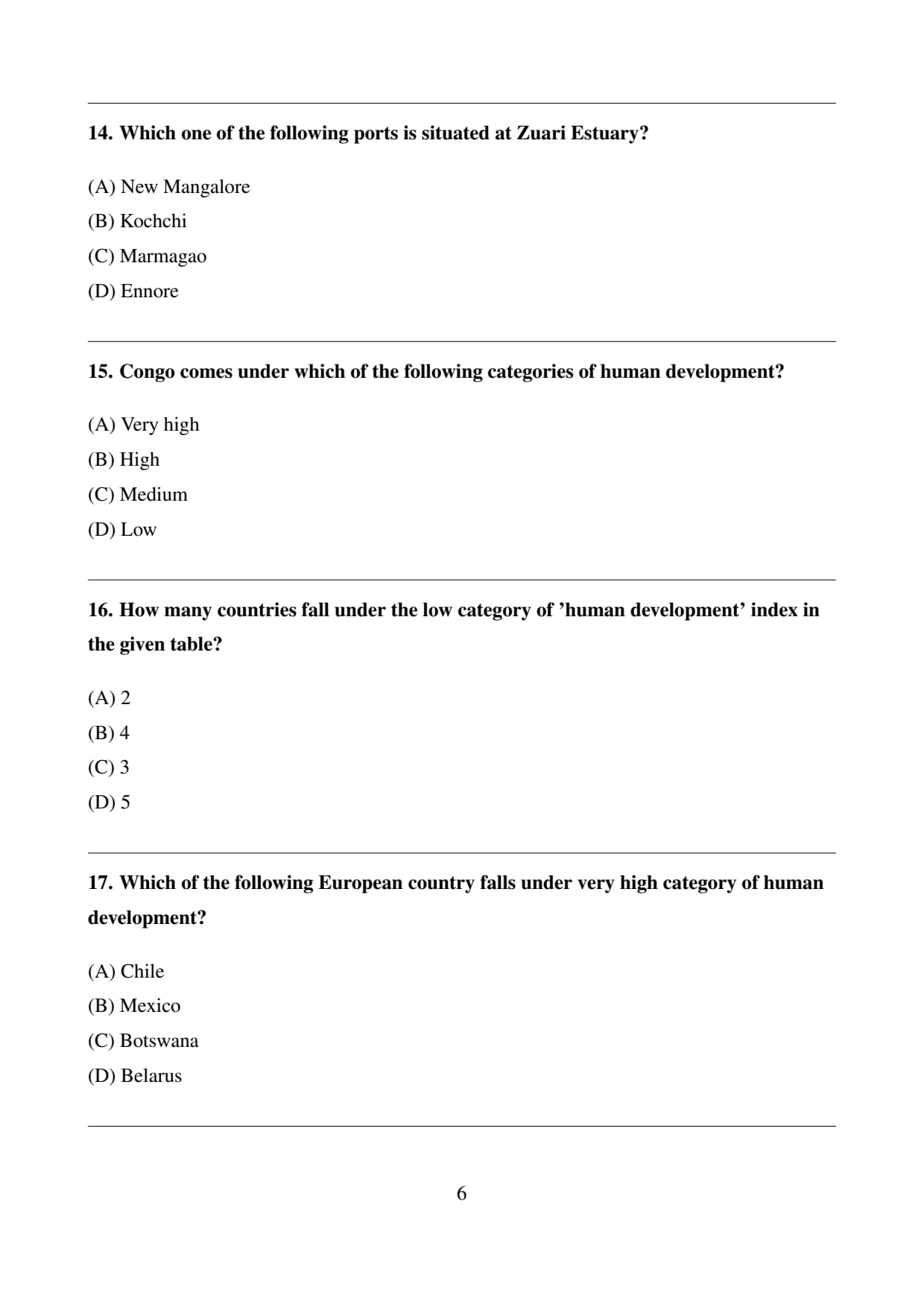
Which one of the following ports is situated at Zuari Estuary?
Congo comes under which of the following categories of human development?
How many countries fall under the low category of 'human development' index in the given table?
Which of the following European country falls under very high category of human development?
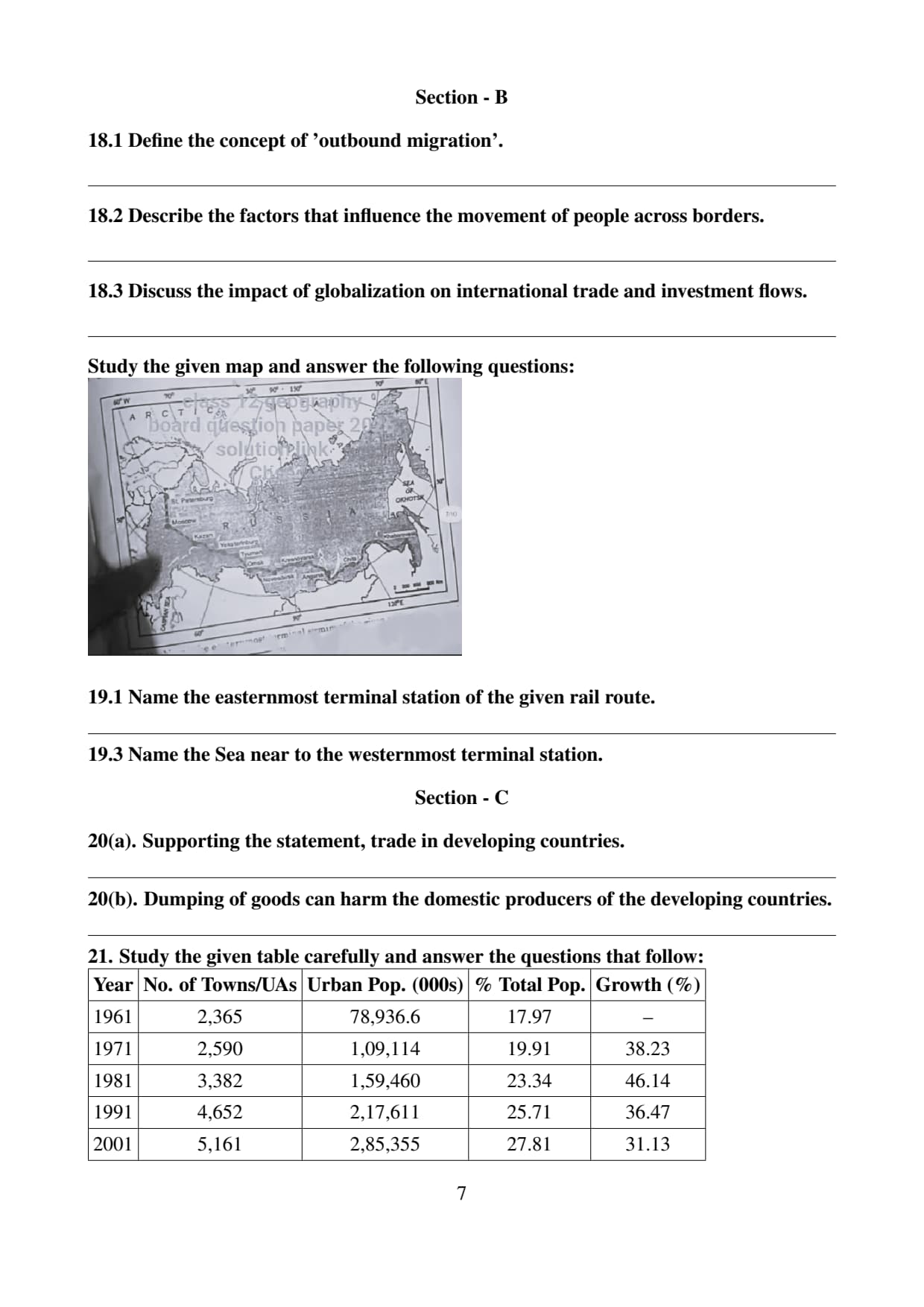
Define the concept of 'outbound migration'.
Describe the factors that influence the movement of people across borders.
Discuss the impact of globalization on international trade and investment flows.
Name the easternmost terminal station of the given rail route.
Name the most important agro centre along the rail route.
Name the Sea near to the westernmost terminal station.
Supporting the statement, trade in developing countries.
Dumping of goods can harm the domestic producers of the developing countries.
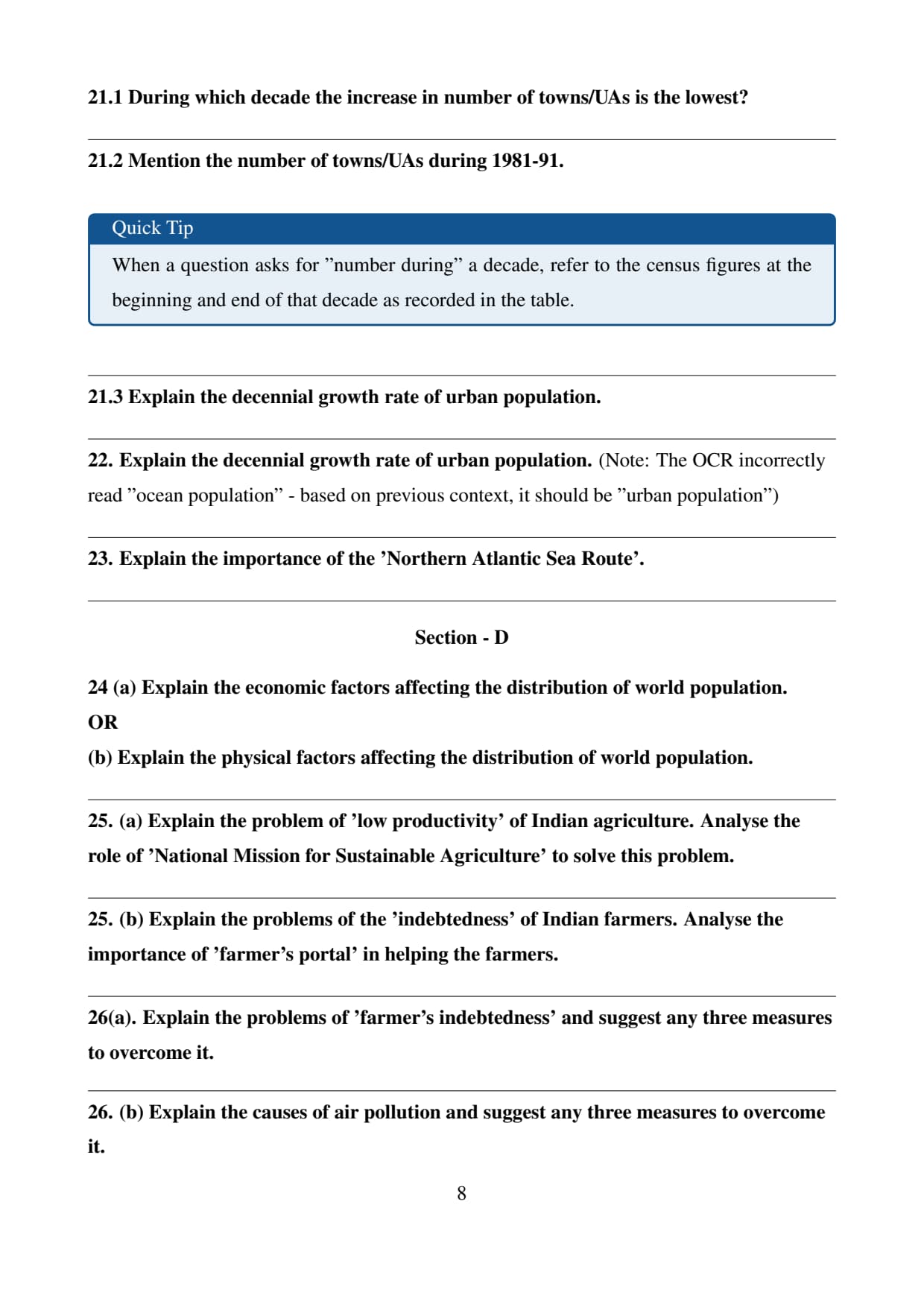
During which decade the increase in number of towns/UAs is the lowest?
Mention the number of towns/UAs during 1981-91.
Explain the decennial growth rate of urban population.
Explain the decennial growth rate of urban population.
(Note: The OCR incorrectly read "ocean population" - based on previous context, it should be "urban population")
Explain the importance of the 'Northern Atlantic Sea Route'.
(a) Explain the economic factors affecting the distribution of world population.
OR
(b) Explain the physical factors affecting the distribution of world population.
Explain the problem of 'low productivity' of Indian agriculture.
Analyse the role of 'National Mission for Sustainable Agriculture' to solve this problem. + 3 = 5
Explain the problems of the 'indebtedness' of Indian farmers.
Analyse the importance of 'farmer's portal' in helping the farmers. + 3 = 5
Explain the problems of 'farmer's indebtedness' and suggest any three measures to overcome it. + 3 = 5
Explain the causes of air pollution and suggest any three measures to overcome it. + 3 = 5
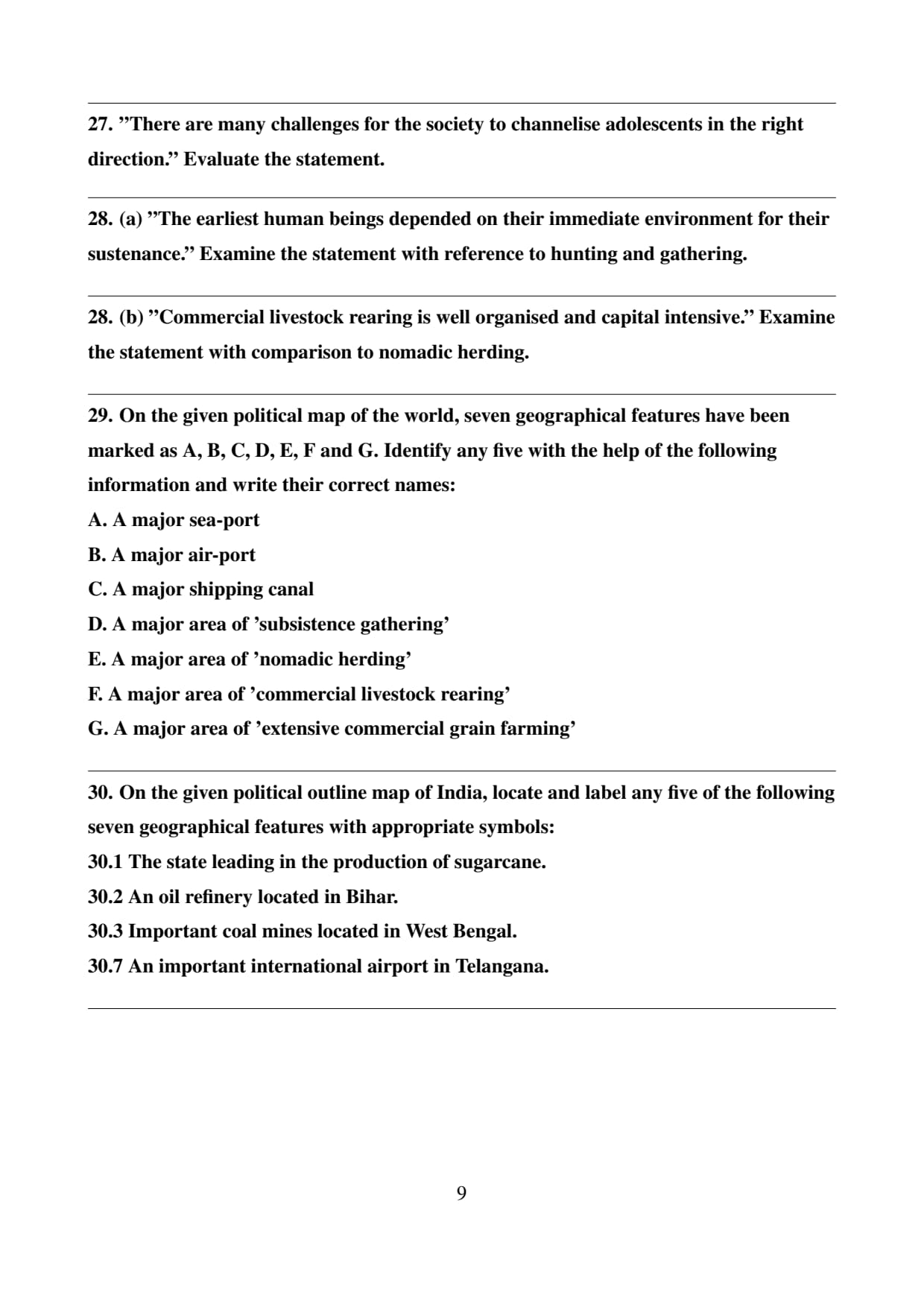
Explain the causes of noise pollution and suggest any three measures to overcome it. + 3 = 5
"There are many challenges for the society to channelise adolescents in the right direction." Evaluate the statement.
"The earliest human beings depended on their immediate environment for their sustenance." Examine the statement with reference to hunting and gathering.
"Commercial livestock rearing is well organised and capital intensive." Examine the statement with comparison to nomadic herding.
On the given political map of the world, seven geographical features have been marked as A, B, C, D, E, F and G. Identify any five with the help of the following information and write their correct names:
A. A major sea-port
B. A major air-port
C. A major shipping canal
D. A major area of 'subsistence gathering'
E. A major area of 'nomadic herding'
F. A major area of 'commercial livestock rearing'
G. A major area of 'extensive commercial grain farming'
On the given political outline map of India, locate and label any five of the following seven geographical features with appropriate symbols:
30.1 The state leading in the production of sugarcane.
30.2 An oil refinery located in Bihar.
30.3 Important coal mines located in West Bengal.
30.7 An important international airport in Telangana.



Comments