




The CBSE Board conducted Class 12 Political Science Exam 2026 on March 23, 2026. Class 12 Political Science Question Paper 2026 – Set 1 with Solution PDF is available here for download.
The CBSE Class 12 Political Science Set 1 paper covers key topics from Indian Politics, Comparative Politics, and Political Theory and considered moderately difficult. The exam is marked out of 100, with 80 marks for the theory paper and 20 for internal assessment.
CBSE Class 12 Political Science Question Paper 2026 with Solution PDF – Set-1
| CBSE Class 12 Political Science Question Paper 2026 – Set 1 | Download PDF | Check Solutions |
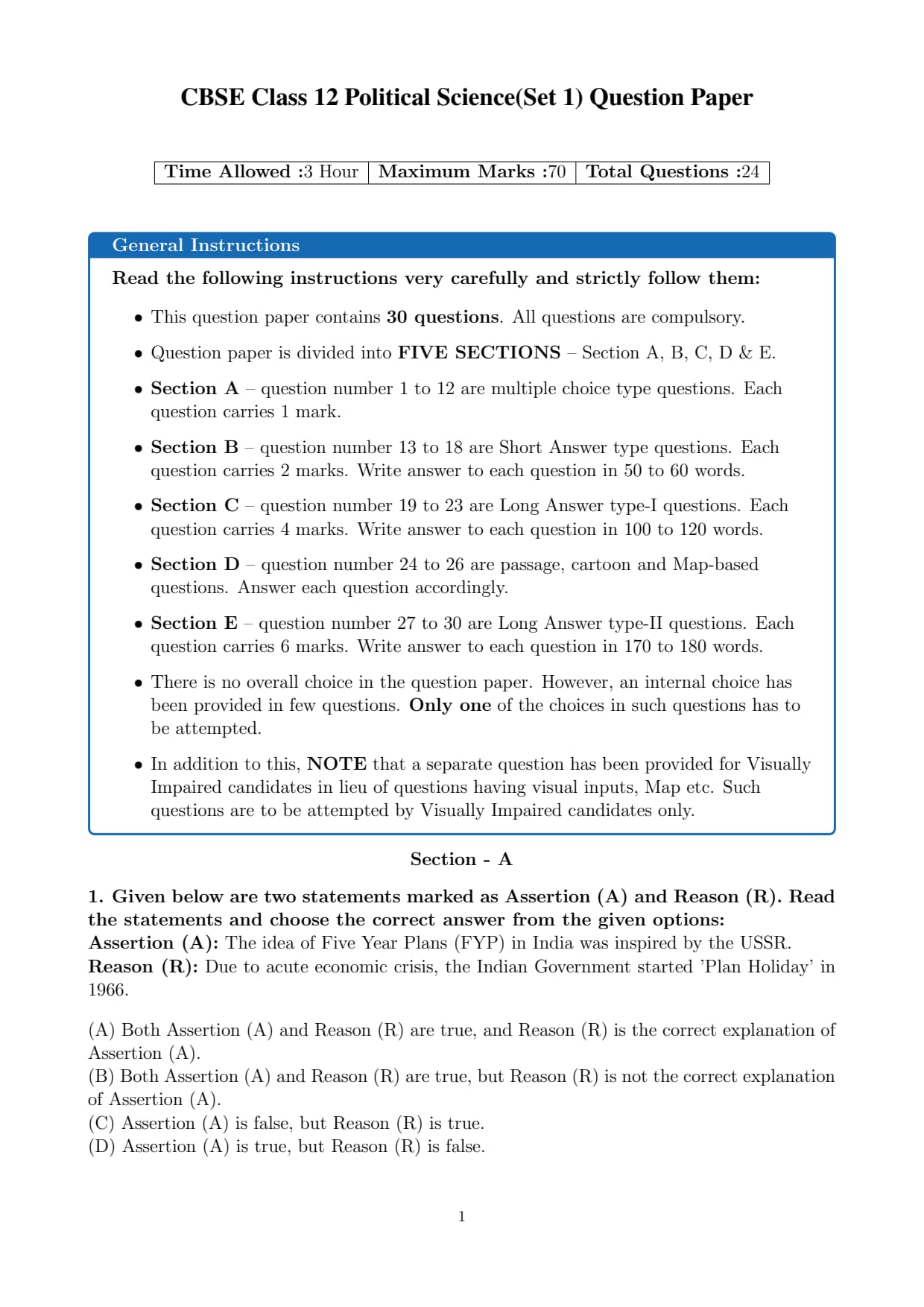
Given below are two statements marked as Assertion (A) and Reason (R). Read the statements and choose the correct answer from the given options:
Assertion (A): The idea of Five Year Plans (FYP) in India was inspired by the USSR.
Reason (R): Due to acute economic crisis, the Indian Government started 'Plan Holiday' in 1966.
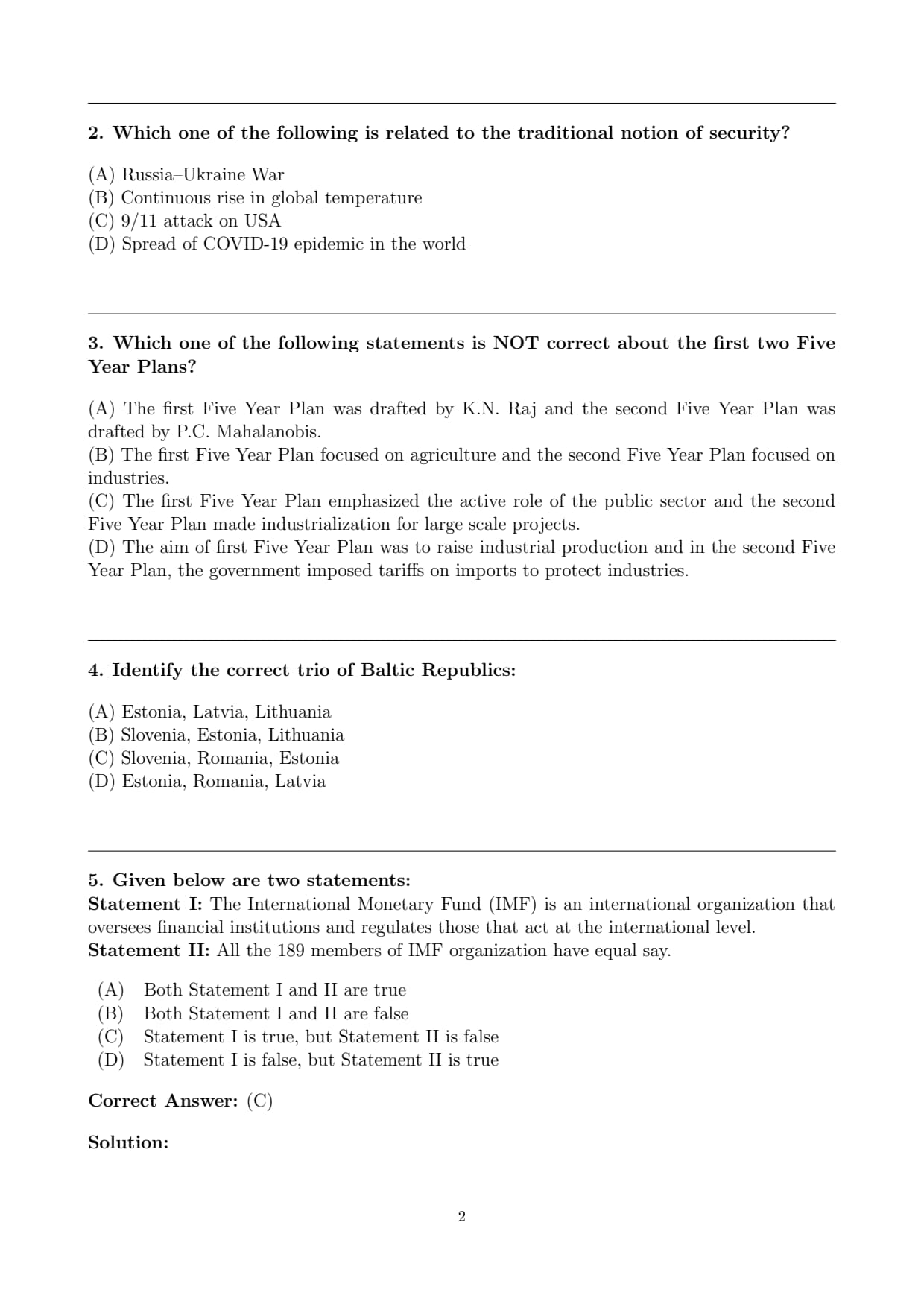
Which one of the following is related to the traditional notion of security?
Which one of the following statements is NOT correct about the first two Five Year Plans?
Identify the correct trio of Baltic Republics:
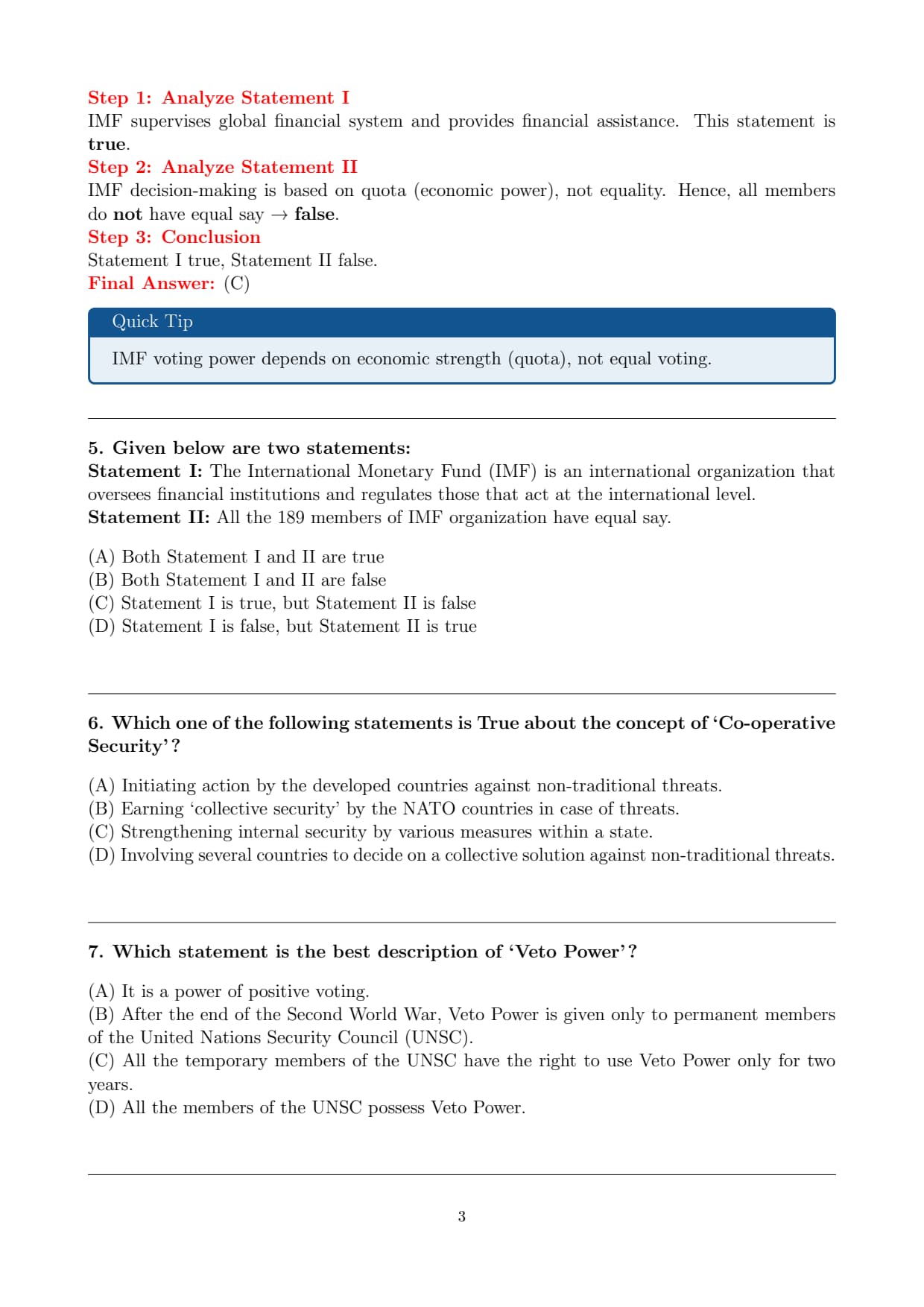
Given below are two statements:
Statement I: The International Monetary Fund (IMF) is an international organization that oversees financial institutions and regulates those that act at the international level.
Statement II: All the 189 members of IMF organization have equal say.
Which one of the following statements is True about the concept of ‘Co-operative Security’?
Which statement is the best description of ‘Veto Power’?
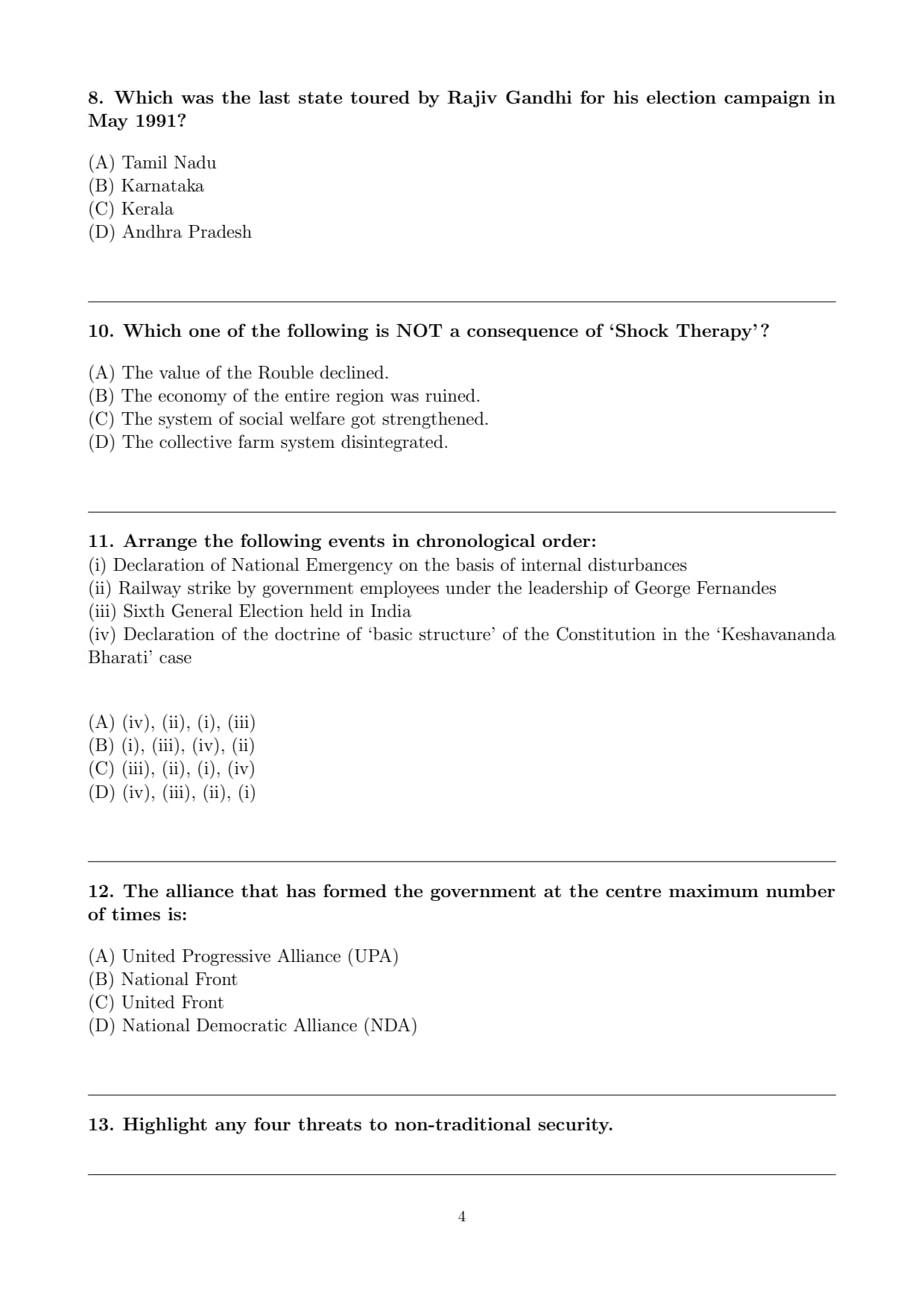
Which was the last state toured by Rajiv Gandhi for his election campaign in May 1991?
Which one of the following is NOT a consequence of ‘Shock Therapy’?
Arrange the following events in chronological order:
(i) Declaration of National Emergency on the basis of internal disturbances
(ii) Railway strike by government employees under the leadership of George Fernandes
(iii) Sixth General Election held in India
(iv) Declaration of the doctrine of ‘basic structure’ of the Constitution in the ‘Keshavananda Bharati’ case
The alliance that has formed the government at the centre maximum number of times is:
Highlight any four threats to non-traditional security.
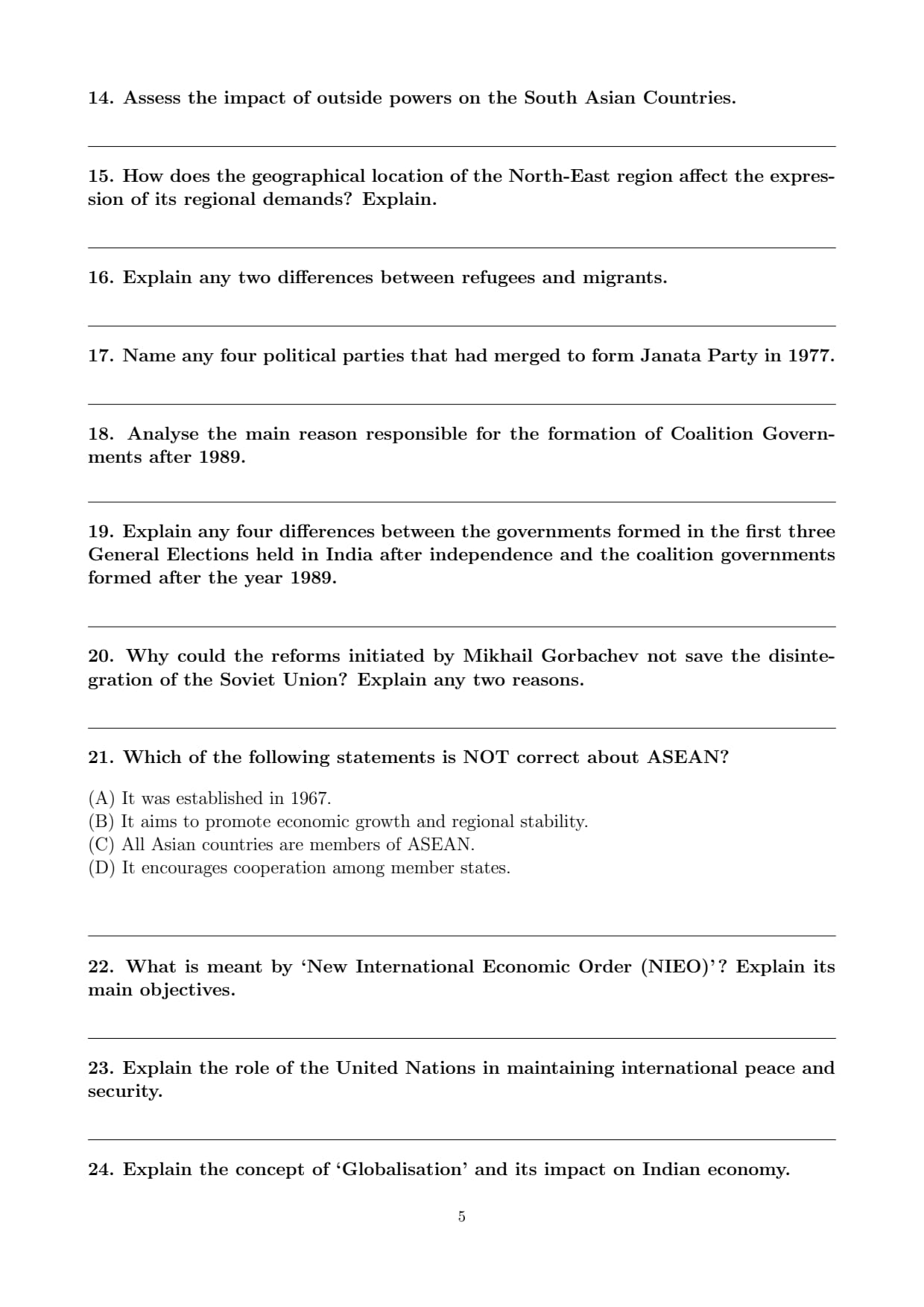
Assess the impact of outside powers on the South Asian Countries.
How does the geographical location of the North-East region affect the expression of its regional demands? Explain.
Explain any two differences between refugees and migrants.
Name any four political parties that had merged to form Janata Party in 1977.
Analyse the main reason responsible for the formation of Coalition Governments after 1989.
Explain any four differences between the governments formed in the first three General Elections held in India after independence and the coalition governments formed after the year 1989.
Why could the reforms initiated by Mikhail Gorbachev not save the disintegration of the Soviet Union? Explain any two reasons.
Which of the following statements is NOT correct about ASEAN?
What is meant by ‘New International Economic Order (NIEO)’? Explain its main objectives.
Explain the role of the United Nations in maintaining international peace and security.
Explain the concept of ‘Globalisation’ and its impact on Indian economy.
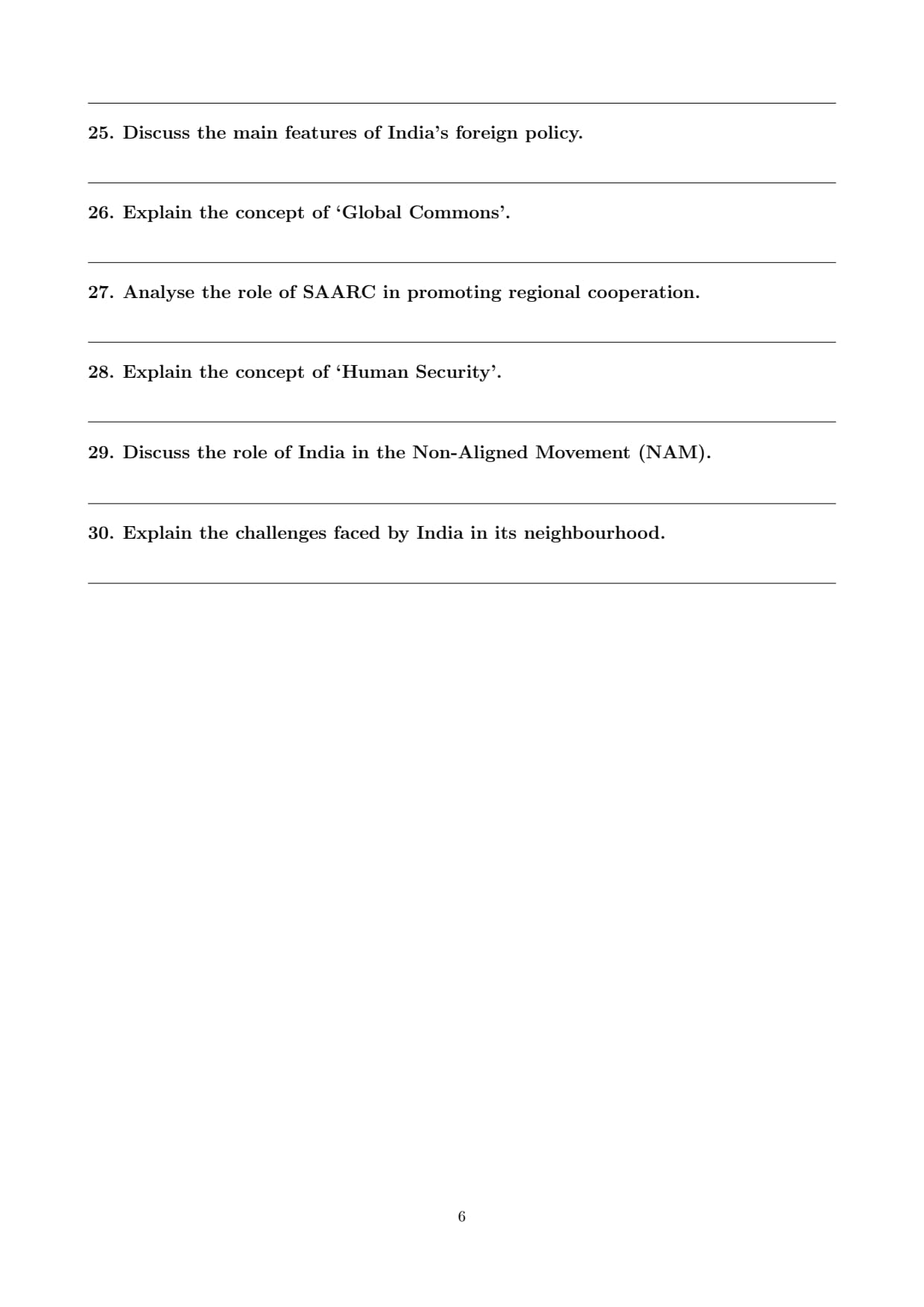
Discuss the main features of India’s foreign policy.
Explain the concept of ‘Global Commons’.
Analyse the role of SAARC in promoting regional cooperation.
Explain the concept of ‘Human Security’.
Discuss the role of India in the Non-Aligned Movement (NAM).




Comments