




CBSE Class 12 Psychology Question Paper 2024 PDF is available for download here. CBSE conducted the Psychology exam on March 15, 2024 from 10:30 AM to 1:30 PM. The total marks for the theory paper are 70. The question paper contains 20% MCQ-based questions, 40% competency-based questions, and 40% short and long answer type questions.
Candidates can use the link below to download the CBSE Class 12 Physics Set 1 Question Paper with detailed solutions.
CBSE Class 12 Psychology Question Paper 2024 with Answer Key
| CBSE Class 12 2024 Psychology Question Paper with Answer Key |  Download Download |
Check Solution |
CBSE Class Psychology Questions with Solutions
SECTION A
Question 1:
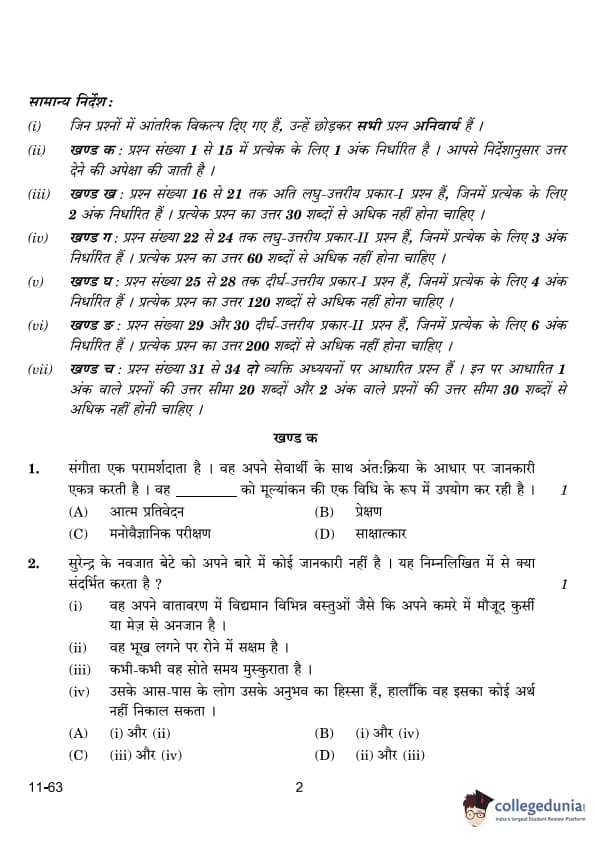
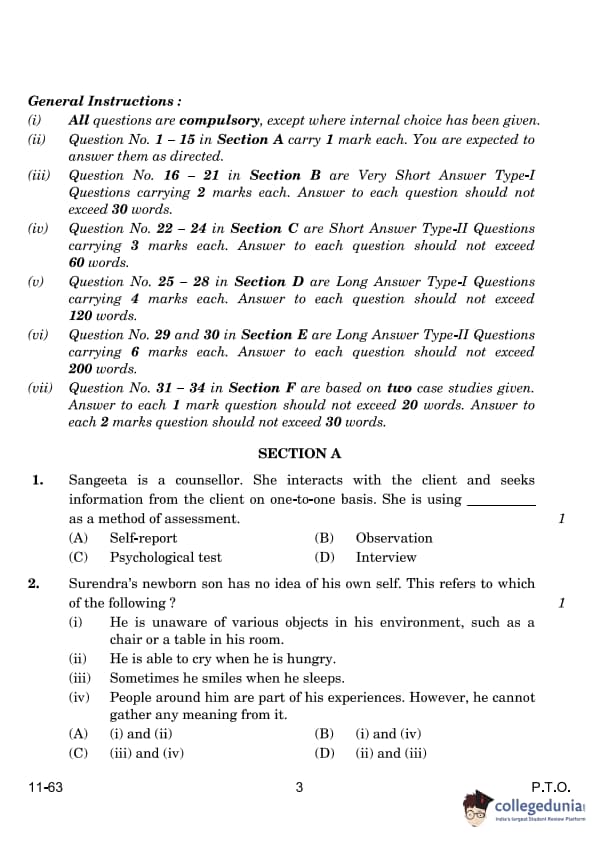
Sangeeta is a counsellor. She interacts with the client and seeks information from the client on one-to-one basis. She is using _____________ as a method of assessment.
View Solution
Interview: An interview is a method of assessment where a professional (like a counselor) interacts with a client, usually on a one-on-one basis, asking questions and gathering information. This method is used to gain insights into a client's thoughts, feelings, experiences, and behaviors directly.
Self-report: Self-report is a method where individuals provide information about themselves through questionnaires, surveys, or diaries. It is not characterized by a direct interaction between the assessor and the assessee.
Observation: Observation involves watching and recording the behaviors of individuals in their natural setting or a controlled environment. It is an indirect method of data collection and does not depend on direct interaction.
Psychological tests: Psychological tests are standardized instruments designed to measure specific psychological variables, such as intelligence, personality, and aptitude. It does not necessarily involve interaction between the assessor and assessee. Quick Tip: Understand the key differences among various psychological assessment methods. Pay close attention to how information is collected in each approach.
Surendra's newborn son has no idea of his own self. This refers to which of the following?
(i) He is unaware of various objects in his environment, such as a chair or a table in his room.
(ii) He is able to cry when he is hungry.
(iii) Sometimes he smiles when he sleeps.
(iv) People around him are part of his experiences. However, he cannot gather any meaning from it.
View Solution
(i) He is unaware of various objects in his environment, such as a chair or a table in his room: Newborn infants at this stage lack a sense of their own self as a separate entity, and hence are unable to perceive the external objects in their surroundings in a meaningful way. They don't have an understanding of the distinction between self and environment.
(ii) He is able to cry when he is hungry: Crying when hungry is a basic, innate reflex and is not related to self-awareness. It is an involuntary action.
(iii) Sometimes he smiles when he sleeps: Smiling during sleep is another involuntary reflex seen in newborns and not related to any self-awareness.
(iv) People around him are part of his experiences. However, he cannot gather any meaning from it: At this stage of life, people are part of their sensorial world but they cannot create any meaning or make sense of the external world. They are simply part of their sensory input, which is not directly related to self-awareness. Quick Tip: Remember that self-awareness develops gradually. Newborns are mostly driven by reflexes and do not have self-awareness yet.
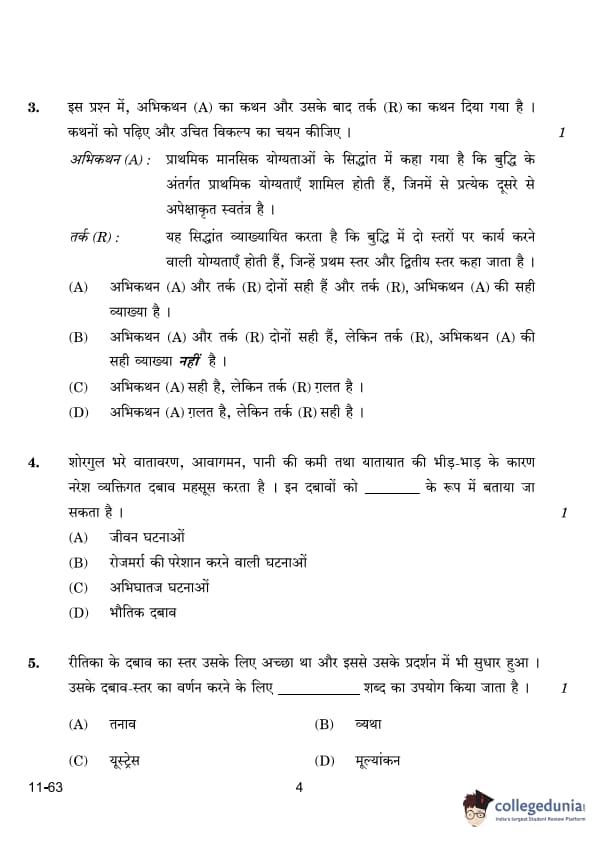
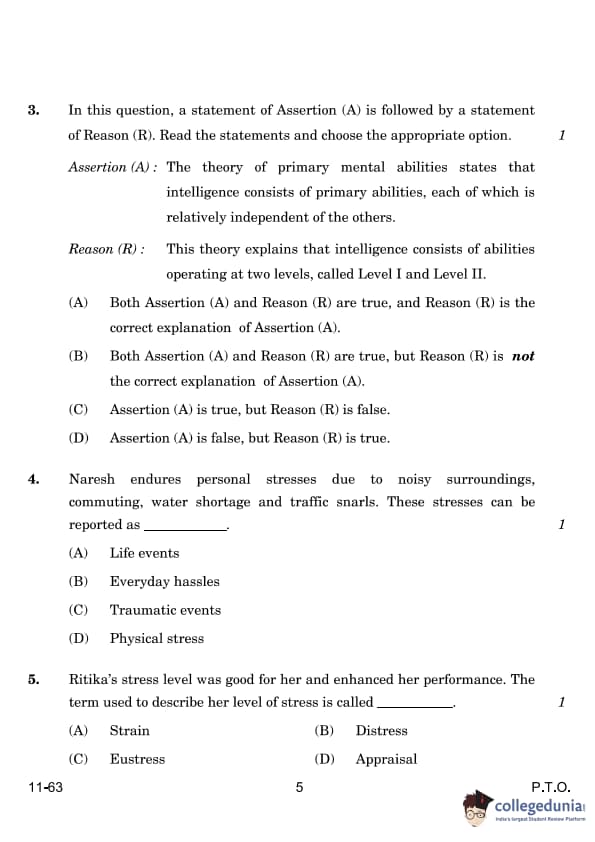
In this question, a statement of Assertion (A) is followed by a statement of Reason (R). Read the statements and choose the appropriate option:
Assertion (A): The theory of primary mental abilities states that intelligence consists of primary abilities, each of which is relatively independent of the others.
Reason (R): This theory explains that intelligence consists of abilities operating at two levels, called Level I and Level II.
View Solution
Assertion (A): The assertion that the theory of primary mental abilities emphasizes that intelligence is made up of several distinct abilities, which are independent from each other, is correct. This theory was proposed by Louis Thurstone and challenged the idea of intelligence as one single general factor.
Reason (R): The reason that the theory of intelligence is based on two levels called level I and level II is false. This is actually a model by Arthur Jensen and not Louis Thurstone. Hence, the reason is false. Quick Tip: When working with theories of intelligence, know who proposed the theory and its main tenets.
Naresh endures personal stresses due to noisy surroundings, commuting, water shortage and traffic snarls. These stresses can be reported as _____________.
View Solution
Everyday hassles: The given scenario includes minor but frequent stressors that individuals experience in their daily lives, such as noise, commuting, water shortage, and traffic. These are examples of everyday hassles that can cause stress.
Life events: Life events are major life changes, such as marriage, divorce, job loss, etc. These are not related to daily hassles.
Traumatic events: Traumatic events are significant, disturbing incidents like accidents, violence, or natural disasters, and not daily occurrences.
Physical stress: Physical stress refers to the stress caused by physical demands on the body (like injury), not the day to day occurrences described in the question. Quick Tip: Always remember to differentiate between various types of stressors like hassles, trauma, and life events.
Ritika's stress level was good for her and enhanced her performance. The term used to describe her level of stress is called _____________.
View Solution
Eustress: Eustress is the term used to describe positive stress that can enhance performance, motivation, or creativity. It is a moderate level of stress that is seen as beneficial.
Strain: Strain is the negative physical or mental effect of prolonged or excessive stress.
Distress: Distress is a type of stress that is overwhelming and debilitating.
Appraisal: Appraisal is a cognitive process through which individuals evaluate events as stressful or not, and it is not a form of stress itself. Quick Tip: Remember the different forms of stress: eustress is positive stress, while distress is the harmful stress that can impair functioning.
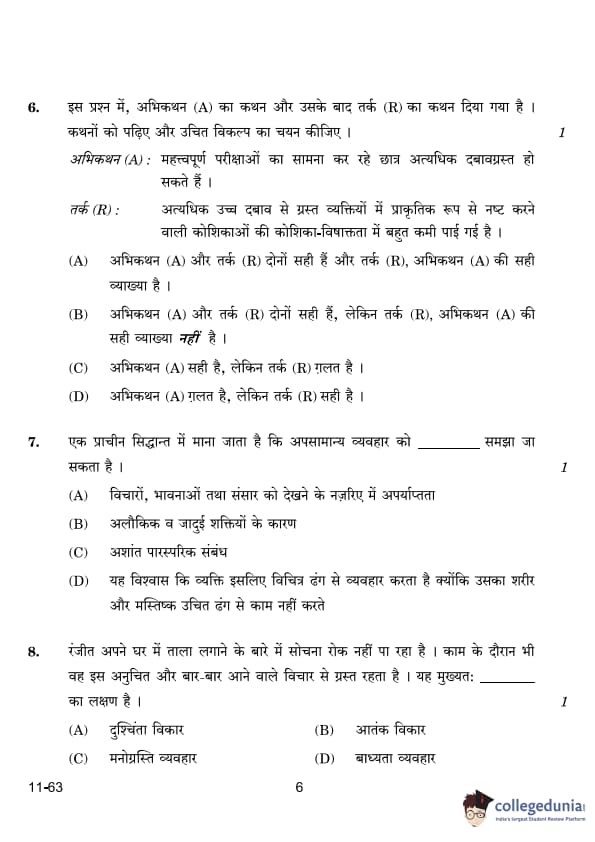
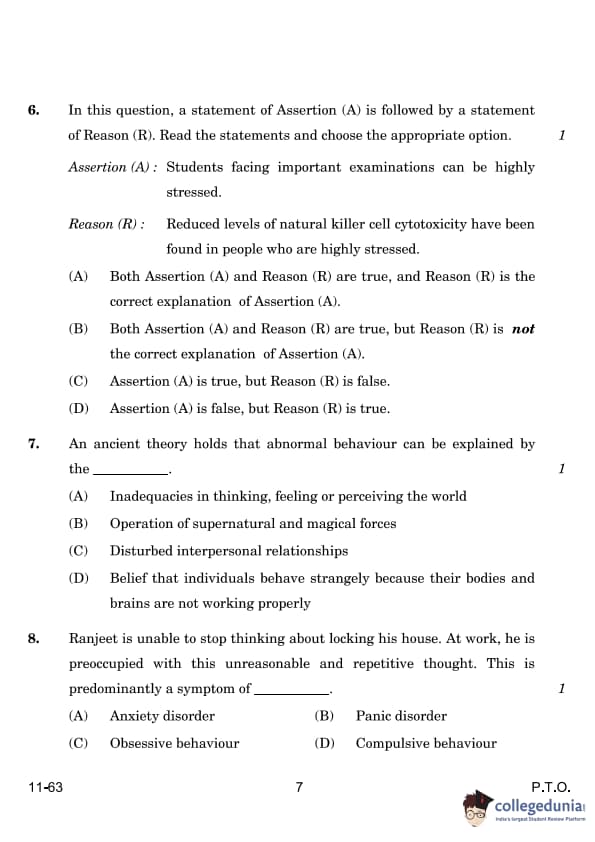
In this question, a statement of Assertion (A) is followed by a statement of Reason (R). Read the statements and choose the appropriate option:
Assertion (A): Students facing important examinations can be highly stressed.
Reason (R): Reduced levels of natural killer cell cytotoxicity have been found in people who are highly stressed.
View Solution
Assertion (A): The assertion that students can experience high levels of stress during examinations is true. Examinations are significant events that can be very demanding, and this can create a lot of stress.
Reason (R): It is also true that reduced levels of natural killer (NK) cell cytotoxicity (NK cells are important in immune function) have been found in people experiencing high levels of stress. This is a well documented biological response to chronic stress.
Explanation: However, reduced NK cell cytotoxicity is a consequence of stress and does not explain why the students are stressed. Hence, while both are true, the reason does not explain the assertion. Quick Tip: In Assertion and Reason type questions, it is crucial to distinguish between correlation and causation. Even if both are true, the reason may not explain the assertion.
An ancient theory holds that abnormal behavior can be explained by the _____________.
View Solution
Operation of supernatural and magical forces: Ancient theories often attributed abnormal behavior to the influence of spirits, demons, or supernatural powers. This approach is rooted in the belief that psychological disorders result from the influence of forces outside the individual's control.
Inadequacies in thinking, feeling or perceiving the world: This perspective refers to the cognitive models which consider abnormal behavior to be a result of distorted thought processes or an incorrect perception of reality.
Disturbed interpersonal relationships: Disturbed interpersonal relationships is a concept from the interpersonal approach to psychology, where abnormal behavior is seen as a result of a person's relationship with others.
Belief that individuals behave strangely because their bodies and brains are not working properly: This statement points towards the biomedical or physiological perspective, which states that abnormal behavior is linked to physiological dysfunctions in the brain and body, not ancient theories. Quick Tip: Always remember the origin of different perspectives in psychology and their main arguments.
Ranjeet is unable to stop thinking about locking his house. At work, he is preoccupied with this unreasonable and repetitive thought. This is predominantly a symptom of _____________.
View Solution
Obsessive behavior: Ranjeet’s continuous, unwanted, and persistent thought about locking his house is characteristic of obsessive behavior. Obsessions are recurrent and intrusive thoughts, images, or urges that cause anxiety or distress.
Anxiety disorder: An anxiety disorder is a more general condition of excessive fear and worry that is not specific to repetitive thoughts.
Panic disorder: Panic disorder involves sudden episodes of intense fear, which are not necessarily related to a specific thought.
Compulsive behavior: Compulsive behavior refers to the repetitive actions or rituals that one performs in response to obsessive thoughts to reduce anxiety. This is not mentioned in the case. Quick Tip: To answer this question, always understand the difference between obsessions and compulsions. Obsessions are unwanted thoughts, compulsions are actions that one feels compelled to do.
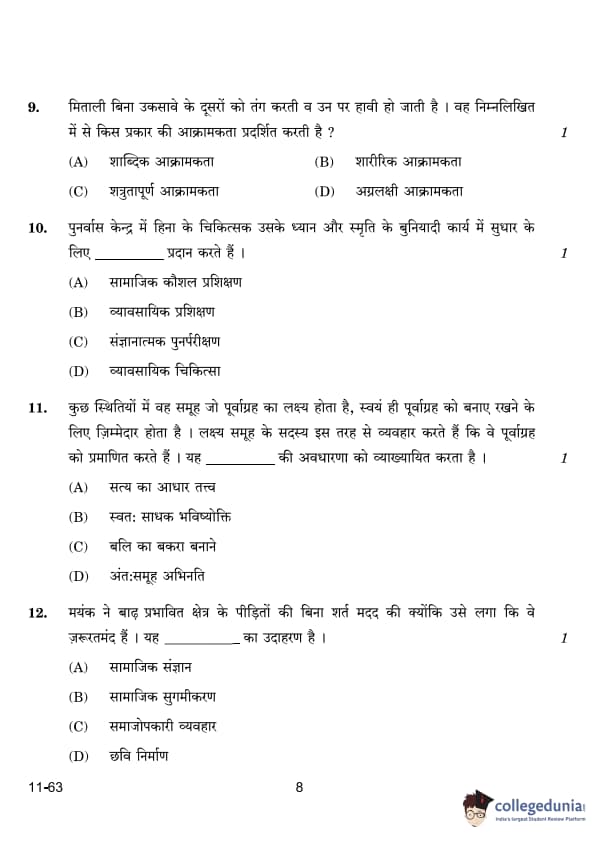
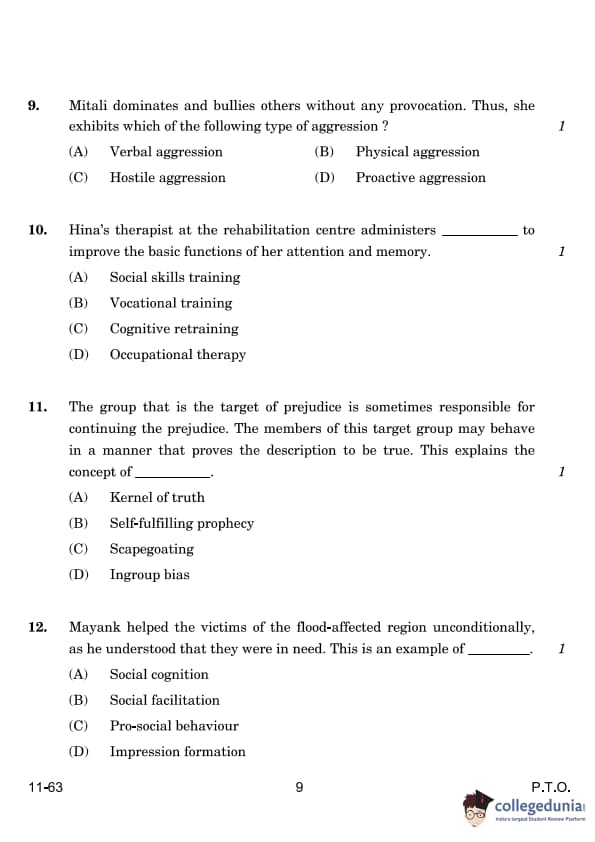
Mitali dominates and bullies others without any provocation. Thus, she exhibits which of the following type of aggression?
View Solution
Proactive Aggression: Proactive aggression is characterized by actions taken with a deliberate intention to harm others, without any prior provocation. The given scenario depicts this.
Verbal Aggression: Verbal aggression includes using words to harm someone. It can be used in proactive as well as hostile aggression.
Physical Aggression: Physical aggression is characterized by physical actions like hitting, slapping, etc., with the intent to harm someone. This is not stated in the given scenario.
Hostile Aggression: Hostile aggression is impulsive, primarily driven by anger, and is a response to perceived threats, or frustration. The given scenario does not state any such thing. Quick Tip: To solve such questions always understand the difference between proactive aggression and hostile aggression, which is crucial for analyzing the intent behind violent behaviour.
Hina's therapist at the rehabilitation center administers ______________ to improve the basic functions of her attention and memory.
View Solution
Cognitive Retraining: Cognitive retraining is a set of techniques designed to improve cognitive functions like attention, memory, planning, and problem-solving. Since the question is focused on improving attention and memory, this is the correct choice.
Social Skills Training: Social skills training focuses on enhancing social interaction and communication skills, and it does not specifically address attention and memory deficits.
Vocational Training: Vocational training aims to enhance skills that are required for a specific job. This is not what is needed in the given scenario.
Occupational Therapy: Occupational therapy is aimed to help people with activities of daily living, and although it does help with cognitive functions, it is not specific to attention and memory. Quick Tip: When encountering therapy-related questions, make sure that you are aware of the unique techniques associated with each approach.
The group that is the target of prejudice is sometimes responsible for continuing the prejudice. The members of this target group may behave in a manner that proves the description to be true. This explains the concept of _____________.
View Solution
Self-fulfilling prophecy: This term describes the situation where the target group ends up acting in a way that reinforces the prejudice against them. It is a vicious cycle, in which prejudice is acted upon.
Kernel of truth: “Kernel of truth" suggests that there might be some truth to stereotypes, but this theory is often criticized due to being used to legitimize stereotypes.
Scapegoating: Scapegoating is the process of blaming an individual or a group for problems, without a basis for it.
Ingroup bias: Ingroup bias is the tendency to favor one's own group, and not about the behavior of the target group. Quick Tip: Learn about key terms related to prejudice like stereotypes, discrimination and self-fulfilling prophecy.
Mayank helped the victims of the flood-affected region unconditionally, as he understood that they were in need. This is an example of _____________.
View Solution
Pro-social behavior: Pro-social behavior refers to actions that are meant to benefit others or society at large. Mayank’s act of helping flood victims is an example of this as he was helping unconditionally.
Social cognition: Social cognition is the way we process and interpret social information and it includes the way people think about others.
Social facilitation: Social facilitation is the tendency for people to perform differently when in the presence of others. It is not about helping others in need.
Impression formation: Impression formation is the process through which we form opinions of others based on the information available to us, and this does not connect to Mayank’s actions. Quick Tip: Differentiate between various social behaviors like pro-social behavior, altruism and aggression.
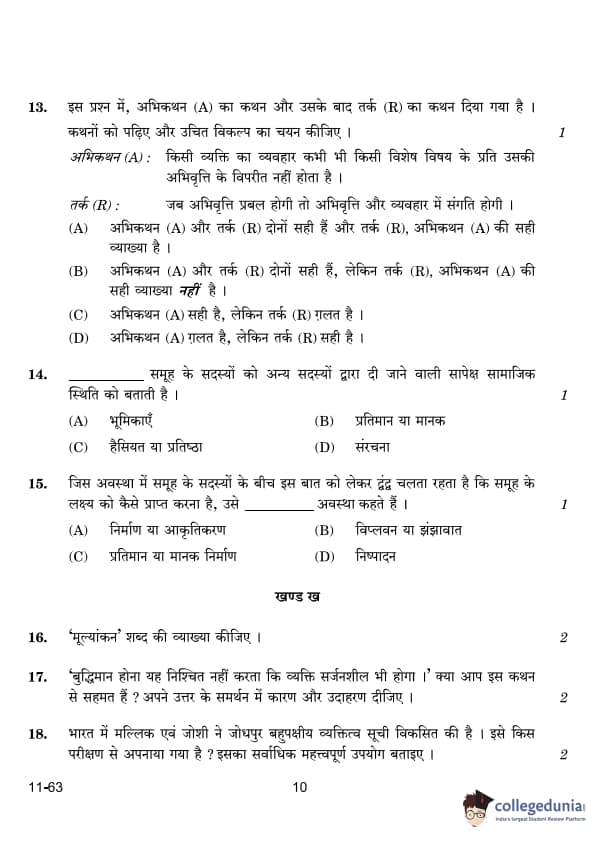
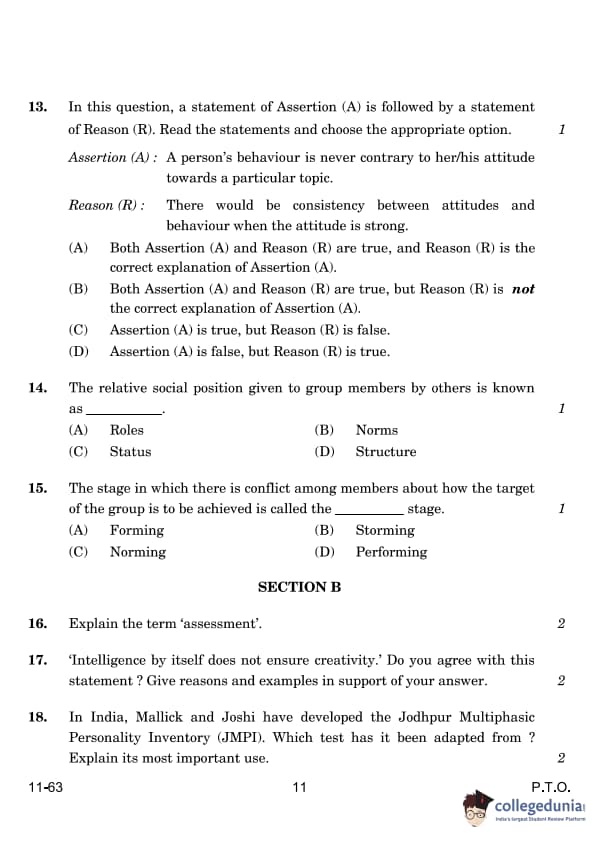
In this question, a statement of Assertion (A) is followed by a statement of Reason (R). Read the statements and choose the appropriate option:
Assertion (A): A person's behavior is never contrary to her/his attitude towards a particular topic.
Reason (R): There would be consistency between attitudes and behaviour when the attitude is strong.
View Solution
Assertion (A): The assertion is false. It states that behavior always aligns with attitudes, but that is not true. People often exhibit behavior that contradicts their attitudes.
Reason (R): The reason is true. When an attitude is strong, it does tend to show greater consistency with a person’s behavior. Hence, the relationship between behaviour and attitude is often determined by the strength of an attitude. Quick Tip: While answering assertion-reason questions, always pay attention to the accuracy of both the statements before connecting them.
The relative social position given to group members by others is known as _____________.
View Solution
Status: Status refers to the relative social position given to group members by others. It signifies a person's importance and power within the group.
Roles: Roles are specific duties and expectations of different group members.
Norms: Norms are the standards of behavior expected from people in a group.
Structure: Structure refers to the organization and relationships within a group. Quick Tip: Learn the differences between status, roles and norms. These are important terms related to group dynamics.
The stage in which there is conflict among members about how the target of the group is to be achieved is called the _____________ stage.
View Solution
Storming: Storming is the stage of group formation where conflicts arise about how the group should pursue its goal. It is characterised by differences in opinions.
Forming: Forming is the initial stage of group formation, characterized by uncertainty and defining the group goals.
Norming: Norming is the stage where the group establishes rules and norms, and members have settled down to an acceptable way of working together.
Performing: Performing is the final stage where the group is working effectively towards a common goal. Quick Tip: You should be aware of the different stages of group formation (Tuckman’s stages) to solve questions related to group dynamics.
SECTION B
Question 16:
Explain the term ‘assessment'.
View Solution
Definition of Assessment: In psychology, assessment refers to the process of collecting and evaluating information about an individual's psychological attributes, such as intelligence, personality, aptitude, or psychopathology. It aims at understanding a person’s psychology, in order to make diagnoses, or to plan treatments.
Use of Multiple Methods: The assessment process often involves using multiple methods, such as tests, interviews, observations, and case studies, to get a complete understanding of the person.
Comparison to Standards: Evaluation is done using different methods by comparing the gathered information against specific standards or norms. This provides context to the data and allows to draw interpretations. Quick Tip: When explaining psychological terms, try to include the important processes, methods and goals of the concept.
‘Intelligence by itself does not ensure creativity.' Do you agree with this statement? Give reasons and examples in support of your answer.
View Solution
Agreement with the Statement: Yes, I agree with the statement that intelligence by itself does not ensure creativity. While intelligence involves cognitive capabilities such as learning, comprehension, reasoning, and problem-solving, creativity encompasses originality, uniqueness, and the generation of novel ideas.
Reasons for Agreement:
Separate Cognitive Abilities: Intelligence and creativity are two separate, though often related, cognitive abilities. Intelligence can help in analysis and problem solving, but it cannot produce a unique perspective or novel idea.
Creativity Requires Divergent Thinking: Creativity requires divergent thinking, which means thinking out of the box to create new associations and original ideas, while intelligence is more about convergent thinking which requires focus on existing solutions and strategies.
Intelligence Can Exist Without Creativity: Individuals with high intelligence might be proficient in various tasks, but lack the creativity to generate new or unique ideas. For instance, a brilliant student might have excellent academic skills but may not be able to generate innovative ideas.
Creativity Can Exist Without High Intelligence: Conversely, highly creative individuals may not necessarily score high on traditional intelligence tests. Many artists or musicians might have exceptional creative abilities but may not have high IQ.
Both Require Different Skill sets: Intelligence is about finding correct answers to existing questions, while creativity is about finding new questions and original ways to answer them.
Examples:
Thomas Edison: A creative person may be like Thomas Edison who was not a very good student but made countless important inventions.
Academic Achievers: On the other hand, some people excel in academics and score high in intelligence tests, but may not be innovative or creative in any way. Quick Tip: When discussing intelligence and creativity, it is always good to keep in mind that they are distinct concepts, even if they are related.
In India, Mallick and Joshi have developed the Jodhpur Multiphasic Personality Inventory (JMPI). Which test has it been adapted from? Explain its most important use.
View Solution
Adapted from MMPI: The Jodhpur Multiphasic Personality Inventory (JMPI) has been adapted from the Minnesota Multiphasic Personality Inventory (MMPI). The MMPI is a widely used personality test that helps assess an individual’s psychopathology and has various clinical scales.
Most Important Use: The JMPI, like the MMPI, is used to identify psychopathology. It is also a helpful tool in psychiatric diagnoses as it assists in identifying and understanding various psychological conditions, such as anxiety, depression, and schizophrenia. Quick Tip: Learn about the key psychological tests and their origins to understand their features and uses.
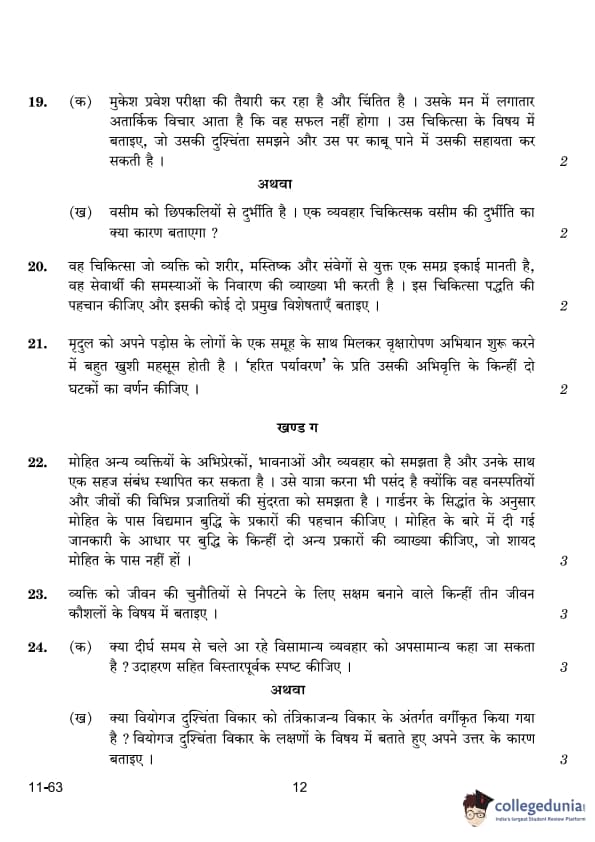
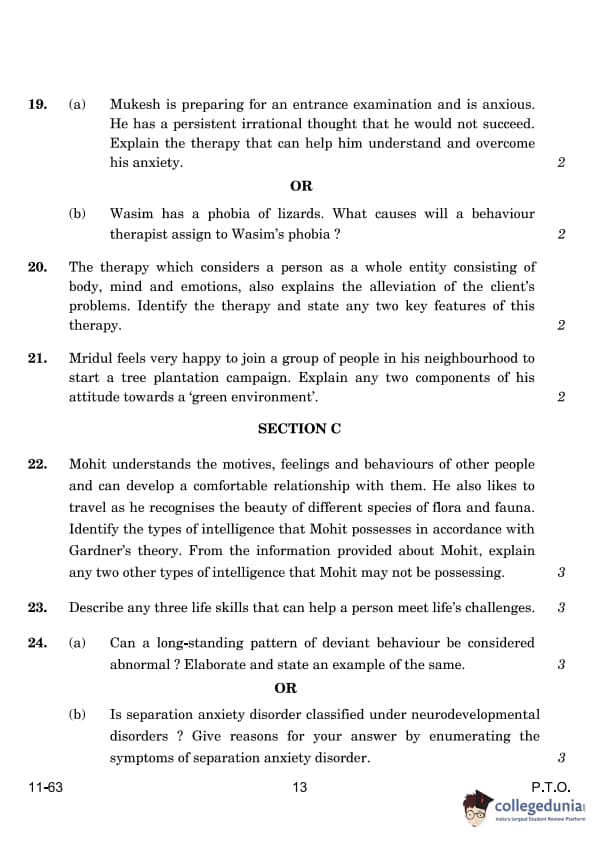
(a) Mukesh is preparing for an entrance examination and is anxious. He has a persistent irrational thought that he would not succeed. Explain the therapy that can help him understand and overcome his anxiety.
View Solution
Rational Emotive Therapy (RET): Rational Emotive Therapy (RET), also known as Rational Emotive Behavior Therapy (REBT), is the most appropriate therapy for Mukesh. It was developed by Albert Ellis.
The ABC Model: RET uses the ABC model, which is: A for activating event, B for belief system, and C for consequences. The therapy helps patients recognize and change irrational beliefs that contribute to their anxiety. The first thing will be to recognize that his ‘irrational thoughts’ are actually not true.
Focus on Beliefs: The therapy will aim to help him recognize that his ‘irrational thought’ is his subjective opinion, and not necessarily the absolute truth. Quick Tip: Always remember that the focus of REBT/RET is to change the way people think about the situations rather than the situations itself.
Question 19:
(b) Wasim has a phobia of lizards. What causes will a behaviour therapist assign to Wasim's phobia?
View Solution
Faulty Learning Patterns: A behavior therapist is likely to explain Wasim’s phobia of lizards as a consequence of faulty learning patterns. This usually results due to classical conditioning.
Conditioning Patterns: It is possible that Wasim experienced an earlier trauma associated with lizards, which has led to a negative association of fear.
Faulty beliefs: They could also point towards certain kinds of beliefs or ideas that he may have about lizards. Quick Tip: When analyzing the cause of phobias in the context of behavior therapy, focus on learning, conditioning, and reinforcement patterns.
The therapy which considers a person as a whole entity consisting of body, mind and emotions, also explains the alleviation of the client's problems. Identify the therapy and state any two key features of this therapy.
View Solution
Gestalt Therapy: The therapy is Gestalt therapy. This approach sees a person as a whole with inter-related parts like body, mind and emotions. The therapy also seeks to understand their social and cultural surroundings.
Key Features:
Emphasis on Self-Awareness and Self-Acceptance: The goal of Gestalt therapy is to increase an individual's self-awareness and self-acceptance. It seeks to encourage them to identify and integrate their own personality and understand the different aspects of it.
Bodily Processes and Emotions: Gestalt therapy focuses on the recognition of bodily processes and emotions that are blocked out from awareness. This helps the patient get a more complete understanding of their feelings and emotions. Quick Tip: Remember that Gestalt therapy focuses on ‘wholeness’ and integration, not just fragmented aspects of a person.
Mridul feels very happy to join a group of people in his neighbourhood to start a tree plantation campaign. Explain any two components of his attitude towards a ‘green environment’.
View Solution
Affective/Emotional Component: Mridul's happiness at joining the tree plantation campaign is an indication of his positive emotions toward the ‘green environment’. This component involves feelings of liking, disliking or other kinds of emotions which are connected with the object of an attitude.
Behavioral Component: His decision to join the campaign indicates his intention and actions related to environmental conservation. This component is related to actions a person undertakes as a result of attitude. It shows an active commitment towards a green environment. Quick Tip: Remember that attitudes consist of three main components: Affective, Behavioral, and Cognitive.
SECTION C
Question 22:
Mohit understands the motives, feelings and behaviours of other people and can develop a comfortable relationship with them. He also likes to travel as he recognises the beauty of different species of flora and fauna. Identify the types of intelligence that Mohit possesses in accordance with Gardner's theory. From the information provided about Mohit, explain any two other types of intelligence that Mohit may not be possessing.
View Solution
Types of Intelligence Mohit possesses: According to Gardner's theory of multiple intelligences, Mohit possesses the following types of intelligence:
Interpersonal Intelligence: This is the ability to understand others' feelings, motives, and intentions, and is reflected in his comfortable relationships with them. He has an awareness of people's emotions.
Naturalistic Intelligence: This refers to his ability to recognize and appreciate flora and fauna. He has a keen ability to differentiate among various species of plants and animals.
Types of Intelligence Mohit May Not Possess: Based on the information provided, it is likely that Mohit may not possess the following types of intelligence:
Spatial Intelligence: This is the ability to visualize and manipulate objects in space. Since he is primarily focussed on people and nature, he may not possess it.
Linguistic Intelligence: This is the ability to use language effectively. There is no indication that he is a proficient user of language or a writer.
Logical-Mathematical Intelligence: This intelligence involves the ability to reason logically and solve numerical problems, and there is nothing to suggest if he has this.
Bodily-Kinesthetic Intelligence: This involves the ability to use one's body effectively and skillfully, like in sports. There is no information to suggest that Mohit has this skill set.
Musical Intelligence: Musical intelligence involves sensitivity to musical sounds and rhythms. Since the paragraph has no mention of musical talents, it is likely he does not possess it.
Intrapersonal Intelligence: This is the ability to understand oneself, including one's own feelings, goals, and values. Since the paragraph focuses on his understanding of others and external environment, it may be argued that he does not have an acute intrapersonal understanding of himself. Quick Tip: When describing different types of intelligence, be sure to mention key aspects of each and how those are reflected in the given information.
Describe any three life skills that can help a person meet life's challenges.
View Solution
Assertiveness: Assertiveness is the ability to confidently communicate one’s needs, wants, and boundaries without being aggressive or passive. It enables people to have healthy boundaries and interact confidently in their social and professional lives.
Time Management: Time management is the ability to organize and use one’s time effectively. It is necessary to prioritize tasks, meet deadlines, reduce stress, and improve productivity and overall efficiency. This allows one to plan the work they need to accomplish in a systematic and organized manner.
Rational Thinking: Rational thinking refers to the process of analyzing situations objectively, considering logical evidence, and avoiding emotional or biased reasoning. This is necessary to make informed decisions, avoid irrational choices, and solve problems in a systematic way.
Improving Relationships: The ability to manage and improve interpersonal relationships is essential for social health and success in life. It involves effective communication, empathy and conflict resolution skills, which helps in forming healthy relationships with family, friends and colleagues.
Self-care: Self-care involves taking steps to look after your physical, mental and emotional health and well being. It involves healthy eating, sleeping and exercise which is crucial to manage daily stress and deal with challenges.
Overcoming Unhelpful Habits: It involves the ability to identify and deal with bad habits that are detrimental to your health and progress. Overcoming unhelpful habits is important to improve your productivity and efficiency in life. Quick Tip: To answer such questions, always list the skills that are essential to cope with the challenges of everyday life.
(a) Can a long-standing pattern of deviant behaviour be considered abnormal? Elaborate and state an example of the same.
View Solution
Abnormal Behavior and Deviation from Social Norms: Yes, a long-standing pattern of deviant behavior can be considered abnormal. In psychology, behavior is considered abnormal when it deviates significantly from social or cultural norms. These are usually behavior patterns that are not acceptable in the group or community that an individual belongs to.
Social and Cultural Norms: What is considered ‘normal’ behavior varies across cultures. For example, a society that values aggression might consider an individual's assertive behavior as acceptable, whereas another society that prioritizes cooperation may consider such actions as ‘abnormal’.
Maladaptive Behavior: Many psychologists consider behavior as abnormal when it becomes maladaptive. Maladaptive behaviors negatively impact one’s day to day life. For example, persistent aggression can be considered abnormal if it significantly interferes with a person's relationships, education or workplace.
Example: A person who has a persistent pattern of lying to people to manipulate them, and has had this behavior for a long time, can be considered abnormal. This pattern not only deviates from normal behaviour but is also maladaptive as it damages their relations with others. Quick Tip: When discussing abnormality, you must understand that it can be a relative term, dependent on the context and that maladaptive behaviors are always considered to be ‘abnormal’.
Question 24:
(b) Is separation anxiety disorder classified under neurodevelopmental disorders? Give reasons for your answer by enumerating the symptoms of separation anxiety disorder.
View Solution
Separation Anxiety Disorder is not a neurodevelopmental disorder: No, separation anxiety disorder (SAD) is not classified under neurodevelopmental disorders. It is a type of anxiety disorder with a specific pattern of symptoms that differentiates it from neurodevelopmental conditions.
Symptoms of Separation Anxiety Disorder:
Fear and Anxiety: The primary symptoms of SAD include excessive fear and anxiety about separation from attachment figures, such as parents, siblings or other family members. The intensity of the fear is extreme in most cases.
Inappropriate Distress: The fear and anxiety are developmentally inappropriate, often causing more worry than what is expected for a person of that age and developmental level.
Difficulty in Being Alone: Individuals with SAD struggle to be alone in a room or to go to school by themselves. They may be extremely worried about entering new institutions and cling to or shadow their parents.
Avoidance Behaviours: To avoid separation, they may exhibit extreme behaviors like fussing, screaming, having severe tantrums or making suicidal gestures. Quick Tip: Learn to differentiate between different types of psychological disorders, and know which broader category they fall into, such as anxiety, mood, or neurodevelopmental disorders.
SECTION D
Question 25:
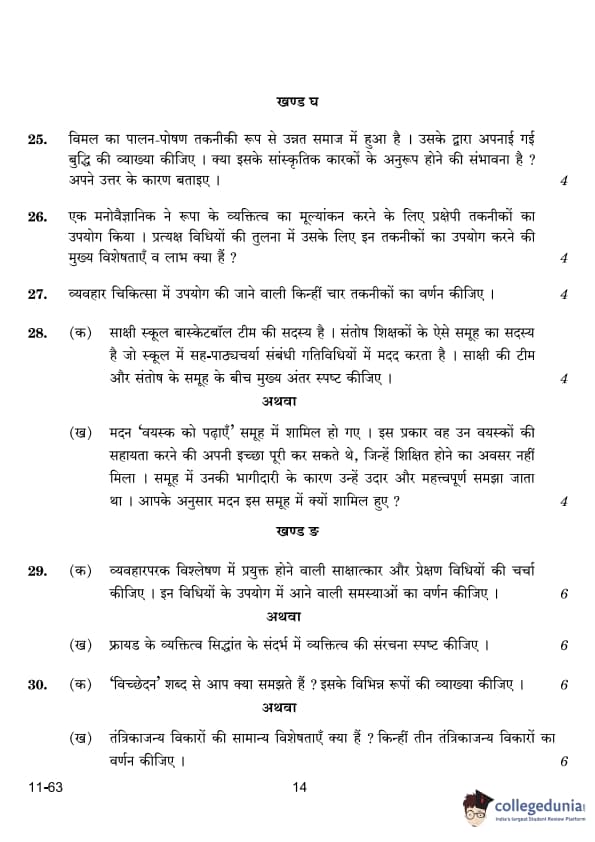
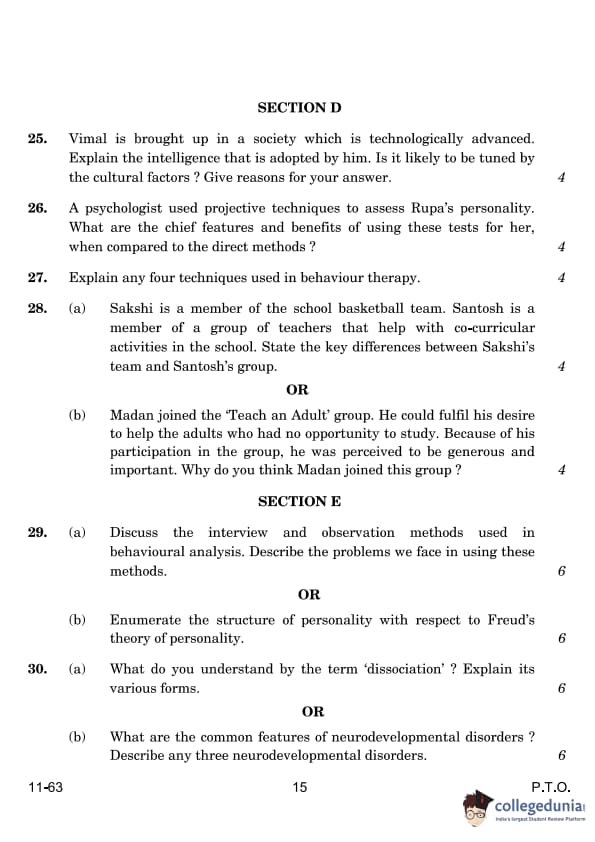
Vimal is brought up in a society which is technologically advanced. Explain the intelligence that is adopted by him. Is it likely to be tuned by the cultural factors? Give reasons for your answer.
View Solution
Technological Intelligence: Vimal, having grown up in a technologically advanced society, is likely to adopt what can be called “technological intelligence.”
Key features of Technological Intelligence:
Generalization and Abstraction: Such individuals are adept at generalization and abstraction, which are important for developing technological abilities.
Speed and Minimal Moves: They are skilled at tasks involving speed and minimal moves, reflecting the efficiency required in technological systems.
Mental Manipulation: They have high ability in mental manipulation of objects and concepts, which is needed for dealing with complex systems and programs.
Influence of Cultural Factors: Yes, Vimal's intelligence is very likely to be tuned by his cultural factors, because:
Contextual or Practical Intelligence: Sternberg's notion of contextual or practical intelligence suggests that intelligence is a product of the cultural context. In his theory, the intelligence that is valued in any given culture is something that will determine people’s abilities.
Cultural Shaping of Intelligence: Vygotsky believed that cultures are dynamic entities which change with time, and in that process they shape what is considered to be the ideal or successful form of intellectual development.
Universality of Basic Functions: While basic mental functions such as sensitivity to stimuli are universal, the ways in which higher functions (like problem solving) develop are strongly influenced by culture.
Skills Valued by Society: Technologically advanced societies value certain types of skills and knowledge, which in turn get promoted in the educational and cultural environments.
Emphasis on Specific skills: These societies often reward skills such as attention, observation, analysis, performance, and speed, and their intelligence tests often look for these features in people. Quick Tip: Remember that intelligence is shaped by cultural experiences. Different cultures value and promote different types of skills. Always try to connect social and cultural factors to psychological development.
A psychologist used projective techniques to assess Rupa's personality. What are the chief features and benefits of using these tests for her, when compared to the direct methods?
View Solution
Chief Features of Projective Techniques:
Unstructured Stimuli: Projective techniques use stimuli that are unstructured or poorly defined. They include ambiguous images or inkblots.
Unawareness of Purpose: The person being assessed is usually unaware of the actual purpose of the assessment. This is to prevent any conscious manipulation of responses.
No Right or Wrong Answers: The test-takers are told that there are no correct or incorrect answers. The focus is more on spontaneous and honest responses from them.
Subjective Interpretation: Each response is considered as a reflection of the test taker’s personality, and this can be subjective and sometimes difficult to interpret.
Lengthy Scoring and Interpretation: Scoring and interpretation are often lengthy, complex, and at times, subjective, as they need expert analysis.
Benefits of Projective Techniques Compared to Direct Methods:
Accessing Unconscious Motives: Projective tests can get insights into the unconscious part of a person’s personality, while direct methods may not be able to uncover these aspects. They use the person’s responses to the ambiguous stimuli to get insights into deeper emotions.
Revealing Hidden Feelings and Motives: Projective tests help individuals reveal hidden feelings and unconscious motives because people may not express this through self-report measures.
Less Response Bias: Since the objective of the tests are not revealed, test takers may not be able to fake or manipulate their responses, which are common in questionnaires and interviews.
Holistic Picture: They give a more holistic and complete picture of a person’s personality, as opposed to specific traits measured in direct methods. Quick Tip: Projective techniques are used to explore the unconscious, whereas direct methods rely on conscious and self-reported information. Remember to learn the different contexts in which they are used.
Explain any four techniques used in behavior therapy.
View Solution
Negative Reinforcement: Negative reinforcement involves removing an unpleasant stimulus to increase the frequency of a desired behavior. For example, removing the restriction on a child's playtime after they have completed their homework.
Aversive Conditioning: Aversive conditioning involves associating undesirable behavior with an unpleasant stimulus. For example, pairing alcohol with a drug that causes nausea in an attempt to reduce alcohol addiction.
Positive Reinforcement: Positive reinforcement involves giving a pleasant stimulus after a desired behavior has occurred. This helps in strengthening the desired behaviour. An example is rewarding a student with a treat after they complete their assignment.
Token Economy: Token economy involves giving tokens after the display of a desired behavior, which can be exchanged for a reward later. For instance, giving tokens to children for doing household chores, which can then be exchanged for gifts or extra playtime.
Systematic Desensitization: Systematic desensitization is a therapy used to reduce phobias and anxiety. The person is gradually exposed to anxiety-provoking stimuli while using relaxation techniques. For example, using relaxation to approach the situation one fears.
Modeling: Modeling involves learning a behavior by observing another person. It can involve demonstrating a desired behavior and getting the person to replicate it. Quick Tip: When explaining therapy techniques, focus on the specific mechanisms of change that each technique seeks to achieve.
(a) Sakshi is a member of the school basketball team. Santosh is a member of a group of teachers that help with co-curricular activities in the school. State the key differences between Sakshi's team and Santosh's group.
View Solution
Sakshi's Team (Basketball Team):
Performance based on individual contribution: In this group, individual skills and contribution of each member is very important for the overall success of the team.
Leader's Responsibility: The leader or whoever is heading the group holds the responsibility for the work that is done by the team, which is how performance is tracked.
Santosh's Group (Teachers for co-curricular activities):
Teamwork Matters: The overall performance of the group is based on teamwork and cooperation, where individual efforts alone are not as useful.
Shared Responsibility: Although there is a leader, all members are equally responsible for completing the task, which makes the group work as a unit. Quick Tip: When comparing groups, you can differentiate on the basis of their goals, leadership structures and working styles.
Question 28:
(b) Madan joined the ‘Teach an Adult' group. He could fulfil his desire to help the adults who had no opportunity to study. Because of his participation in the group, he was perceived to be generous and important. Why do you think Madan joined this group?
View Solution
Status: Madan joined the group as it is likely to increase his position and status among his friends and colleagues. He also gains power as his help is crucial to the functioning of this group.
Self-esteem: Helping others allows one to feel positive about oneself and one’s work. It increases a sense of importance and boosts self-esteem.
Satisfaction of Psychological and Social Needs: The activities in the group allowed him to fulfill some of his psychological and social needs, such as the need to be useful to society.
Goal Achievement: This also aligns with a goal of social good, as he is working towards the upliftment of the underprivileged. Quick Tip: Always remember the different motivations people have when they join a group, which can be power, status, self-esteem and other altruistic motives.
SECTION E
Question 29:
(a) Discuss the interview and observation methods used in behavioral analysis. Describe the problems we face in using these methods.
View Solution
Interview Methods:
Face-to-Face Interaction: Interviews involve a conversation where a psychologist or researcher talks to a person and asks direct questions. This allows a direct assessment of behaviors.
Diagnostic Interviewing: Diagnostic interviewing is used to gather in-depth information beyond surface responses. This kind of interviewing tries to get beyond the direct answers provided by the individual.
Flexibility: Interviews can be structured or unstructured, depending on the goal of the assessment. Structured interviews use a set of questions, while unstructured ones are flexible.
Observation Methods:
Observing behavior: Observation involves watching a person's behaviors in a natural setting, such as at home or in school. This provides an insight into the behavior in its natural settings.
Use in Personality Assessment: Observation is an important method for personality assessments, because you get real life responses.
Problems in using these methods:
Observer Bias: Observer bias is a problem where the observer may influence or interpret the behavior they are observing. This is more prevalent in subjective measures.
Lack of Standardization: Interview protocols are not always standardized, which can lead to inconsistent data collection. This is especially true for unstructured interviews.
Subjective Interpretation: Interpretation of observation data can be subjective and is dependent on the training and expertise of the observer.
Time-Consuming: Both observation and diagnostic interviewing can be very time-consuming and can require a trained observer or researcher.
Artificial Behaviour: In observation, it is possible that the people may alter their behavior due to being aware that they are being watched, which may contaminate the results.
Ethical Considerations: Interviews may be ethically problematic if not done properly. Sensitive information should not be asked or recorded, especially without the consent of the interviewee. Quick Tip: While explaining research methods, make sure to include the key processes involved and also point out limitations or potential problems.
Question 29:
(b) Enumerate the structure of personality with respect to Freud's theory of personality.
View Solution
Freud's Theory of Personality: According to Sigmund Freud, personality is structured into three components: Id, Ego and Superego.
The Id:
Pleasure Principle: The id operates on the pleasure principle, seeking immediate gratification of desires. It is entirely unconscious and the most instinctive part of one’s personality.
Libido and Instincts: It is the source of psychic energy (libido) and encompasses all basic instincts, including life and death instincts.
Example: An infant crying for food or comfort is an example of Id functions.
The Ego:
Reality Principle: The ego operates on the reality principle, balancing the demands of the id with the constraints of the external world.
Executive Function: It is responsible for higher functions, such as logical thought and conscious decision-making.
Example: When you choose to work for your examination instead of going out for an outing, you are exercising your ego.
The Superego:
Morality and Ethics: The superego represents the moral and ethical aspects of personality. It embodies internalized parental and societal standards.
Internalization of Authority: It is formed through the internalization of parental and cultural values and standards and is responsible for feelings like shame and guilt.
Example: A person feeling remorse for cheating on an examination is an example of superego in action. Quick Tip: Remember the key principles on which Id, Ego and Superego work. This is central to Freud's theory of personality.
(a) What do you understand by the term ‘dissociation'? Explain its various forms.
View Solution
Definition of Dissociation: Dissociation can be understood as a kind of severance between one’s conscious thoughts, memories and emotions. It often happens as a defence against trauma, stress or other intense experiences.
Key Characteristics:
Feeling of Unreality: It often involves a feeling of unreality, estrangement from the self or depersonalization where one feels detached from their own body or surroundings.
Loss of Identity: It can also result in a loss of identity or shift in a person’s sense of self.
Defense Mechanism: It is used as a defence mechanism to protect a person from intense emotional pain.
Types of Dissociative Disorders:
Dissociative Amnesia: This involves an inability to recall important personal information which is too extensive to be explained by normal forgetfulness. This amnesia includes dissociative fugue, where one may unexpectedly travel to another place.
Dissociative Identity Disorder: This disorder is characterised by the presence of two or more distinct identities or personality states, that take control over a person's behavior.
Depersonalization/Derealization Disorder: This disorder includes persistent feelings of being detached from one’s own body (depersonalization) or from one’s surroundings (derealization). Quick Tip: Learn about the key characteristics of dissociative disorders and how they affect a person's perceptions and memory.
Question 30:
(b) What are the common features of neurodevelopmental disorders? Describe any three neurodevelopmental disorders.
View Solution
Common Features of Neurodevelopmental Disorders:
Early Manifestation: These disorders usually manifest in the early stages of development. Symptoms are often seen before a child enters school or during the early stages of schooling, and have a lasting impact on development.
Impairment in Functioning: They result in significant functional impairments, especially in personal, social, academic and occupational functioning. The difficulties are usually persistent and are seen in various aspects of life.
Deficits or Excesses: These disorders are characterized by deficits or excesses in a particular behavior, or delays in achieving an appropriate behavior for the individual’s age.
Three Neurodevelopmental Disorders:
Attention-Deficit/Hyperactivity Disorder (ADHD): ADHD is characterized by inattention, hyperactivity, and impulsivity. It often impacts academic, social and occupational performance. It usually begins during childhood.
Autism Spectrum Disorder (ASD): ASD is characterized by impairments in social interactions, communication, and repetitive behaviors. It is often detected at a young age and has a lasting impact on an individual’s relationships.
Intellectual Disability: Intellectual disability involves limitations in intellectual functioning and adaptive behavior. It has its origin during the developmental stage and leads to various challenges in life.
Specific Learning Disorder: Specific learning disorder involves difficulties in learning and using academic skills such as reading, writing or mathematics. Quick Tip: When answering questions about neurodevelopmental disorders, highlight their impact on development and functioning of individuals.
SECTION F
Case Study-Based Questions
Case Study-1
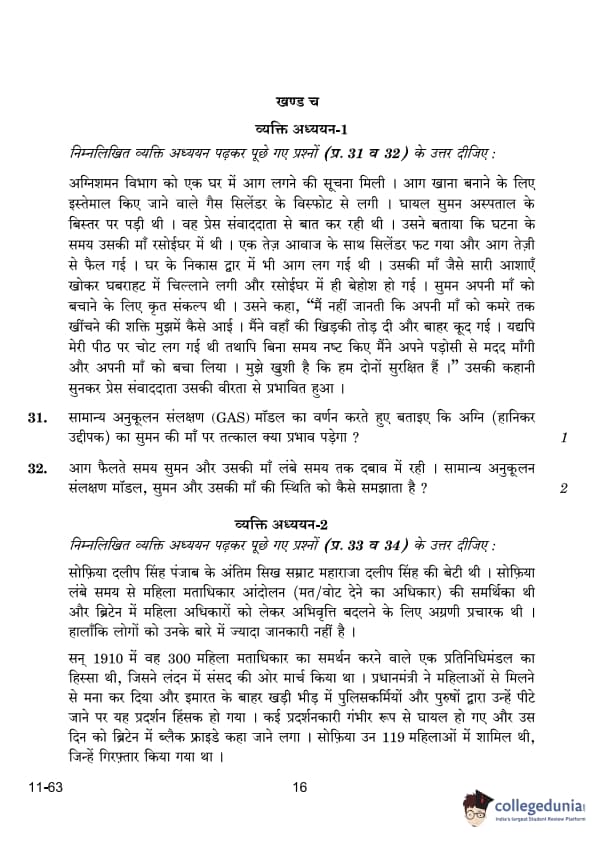
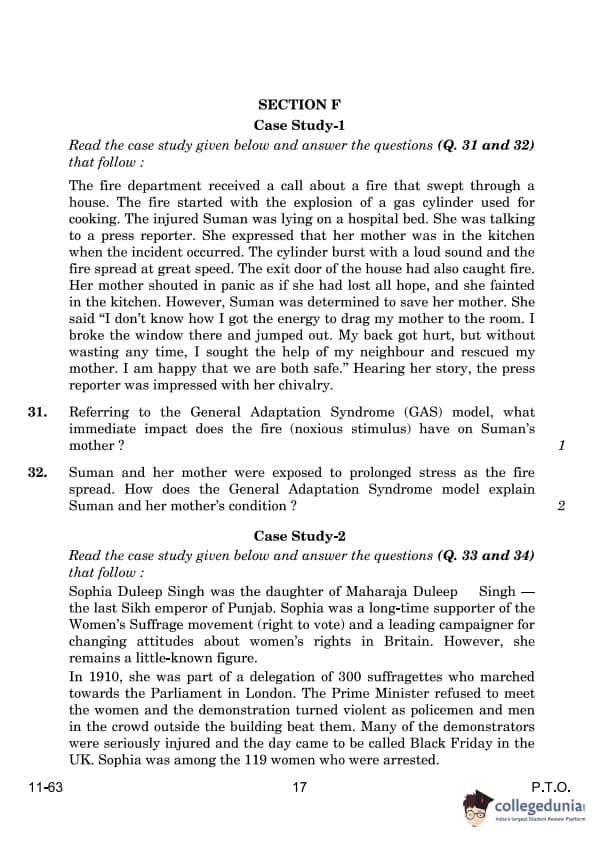
Read the case study given below and answer the questions (Q. 31 and 32) that follow:
The fire department received a call about a fire that swept through a house. The fire started with the explosion of a gas cylinder used for cooking. The injured Suman was lying on a hospital bed. She was talking to a press reporter. She expressed that her mother was in the kitchen when the incident occurred. The cylinder burst with a loud sound and the fire spread at great speed. The exit door of the house had also caught fire. Her mother shouted in panic as if she had lost all hope, and she fainted in the kitchen. However, Suman was determined to save her mother. She said “I don’t know how I got the energy to drag my mother to the room. I broke the window there and jumped out. My back got hurt, but without wasting any time, I sought the help of my neighbour and rescued my mother. I am happy that we are both safe.” Hearing her story, the press reporter was impressed with her chivalry.
Referring to the General Adaptation Syndrome (GAS) model, what immediate impact does the fire (noxious stimulus) have on Suman’s mother?
View Solution
Alarm Reaction Stage: According to the General Adaptation Syndrome (GAS) model, the immediate impact on Suman's mother due to the fire (noxious stimulus) is the alarm reaction stage.
Activation of System: This stage is marked by the activation of the adrenal-pituitary-cortex system in her body, and the body prepares for action.
Hormonal Release: The alarm stage also triggers the release of hormones, which is why her body becomes prepared to cope with the situation. Quick Tip: Remember that the initial stage of the GAS model involves a physiological response to stress, and is characterized by an immediate activation of the body’s systems to cope with the situation.
Suman and her mother were exposed to prolonged stress as the fire spread. How does the General Adaptation Syndrome model explain Suman and her mother's condition?
View Solution
Resistance Stage for Suman:
Since Suman was exposed to stress for a prolonged period, it is possible to assume that a resistance stage might have started. In this stage the parasympathetic nervous system gets activated and calls for more cautious use of the body’s resources.
The person makes efforts to cope with the threat, as through the actions of Suman trying to save her mother.
Exhaustion Stage for Suman’s Mother:
The mother fainted at the beginning, which indicates that she could have reached the exhaustion phase earlier.
If the stress persists, like the fire raging for longer time, the body would drain itself of its resources, which can lead to fainting and the collapse of an individual. Quick Tip: When explaining stress responses, use the different stages of General Adaptation Syndrome model.
Case Study-2
Read the case study given below and answer the questions (Q. 33 and 34) that follow:
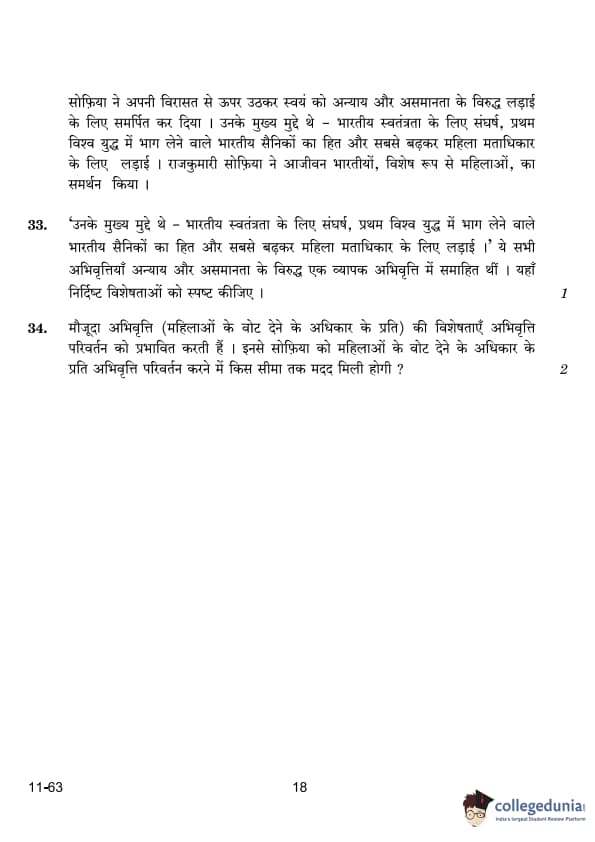
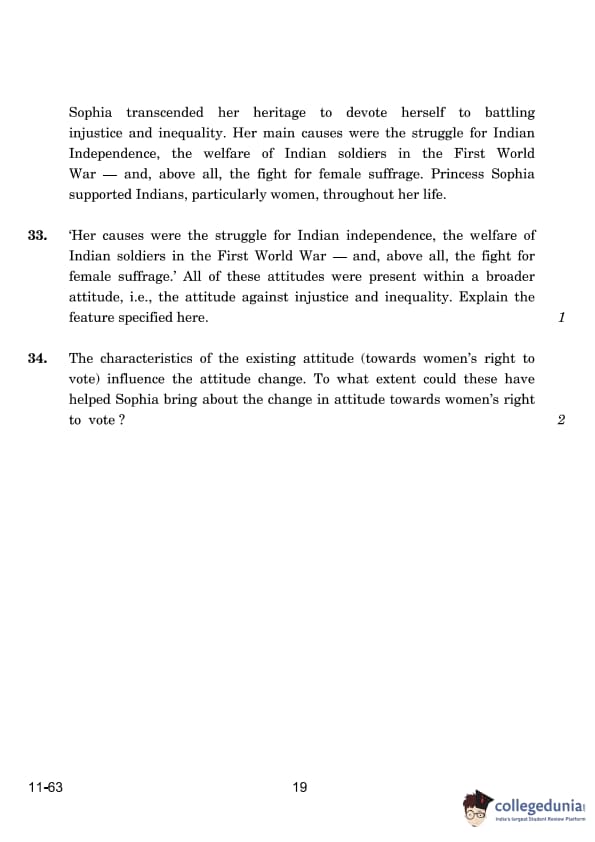
Sophia Duleep Singh was the daughter of Maharaja Duleep Singh – the last Sikh emperor of Punjab. Sophia was a long-time supporter of the Women’s Suffrage movement (right to vote) and a leading campaigner for changing attitudes about women’s rights in Britain. However, she remains a little-known figure. In 1910, she was part of a delegation of 300 suffragettes who marched towards the Parliament in London. The Prime Minister refused to meet the women and the demonstration turned violent as policemen and men in the crowd outside the building beat them. Many of the demonstrators were seriously injured and the day came to be called Black Friday in the UK. Sophia was among the 119 women who were arrested.
‘Her causes were the struggle for Indian independence, the welfare of Indian soldiers in the First World War — and, above all, the fight for female suffrage.' All of these attitudes were present within a broader attitude, i.e., the attitude against injustice and inequality. Explain the feature specified here.
View Solution
Centrality: The overarching feature of Sophia’s attitude is centrality. This is because her attitudes towards Indian independence, the welfare of Indian soldiers and the women’s suffrage movement are interlinked with a larger attitude, which is against injustice and inequality.
Centrality Explained: Centrality is the way an attitude is connected to the overall attitude system. The more central an attitude is to a person’s belief system, the greater will be its influence on one’s overall approach to life. Quick Tip: Remember the terms related to attitudes, like valence, extremeness and centrality.
The characteristics of the existing attitude (towards women's right to vote) influence the attitude change. To what extent could these have helped Sophia bring about the change in attitude towards women's right to vote?
View Solution
Factors Affecting Attitude Change:
Valence: Valence of an attitude refers to whether it is positive or negative. Her campaign for women's rights aimed to turn negative views about women voting into a more positive one. She used a range of techniques to promote the cause.
Extremeness: Extremeness is related to how extreme the attitude is. The fact that she was actively involved and was not just sympathetic to the cause, points towards an attitude which is high in extremeness, which would have affected people.
Simplicity or Complexity: This point suggests that if an attitude system is very complex, it will be much more difficult to change. Her attitude was clear and simple, which would have helped in better communication to the larger public.
Centrality: If a person is very central to the issue, they are likely to affect greater change than others. Since her campaigns were all interlinked with a core ideology, they would all have complemented each other and helped in forming an overall consistent and strong opinion regarding the issue of women rights. Quick Tip: Always focus on how different qualities of an attitude (like valence, extremeness, etc) impact change.




Comments