




UP Board Class 12 Geography Question Paper 2024 PDF (Code 322 EK) is available for download here. The Geography exam was conducted on March 5, 2024 in the Evening Shift from 2 PM to 5:15 PM. The total marks for the theory paper are 70. Students reported the paper to be easy to moderate.
UP Board Class 12 Geography Question Paper 2024 (Code 322 EK) with Solutions
| UP Board Class 12 Geography Question Paper with Answer Key |  Download Download |
Check Solution |
UP Board Class 12 Geography Questions with Solutions
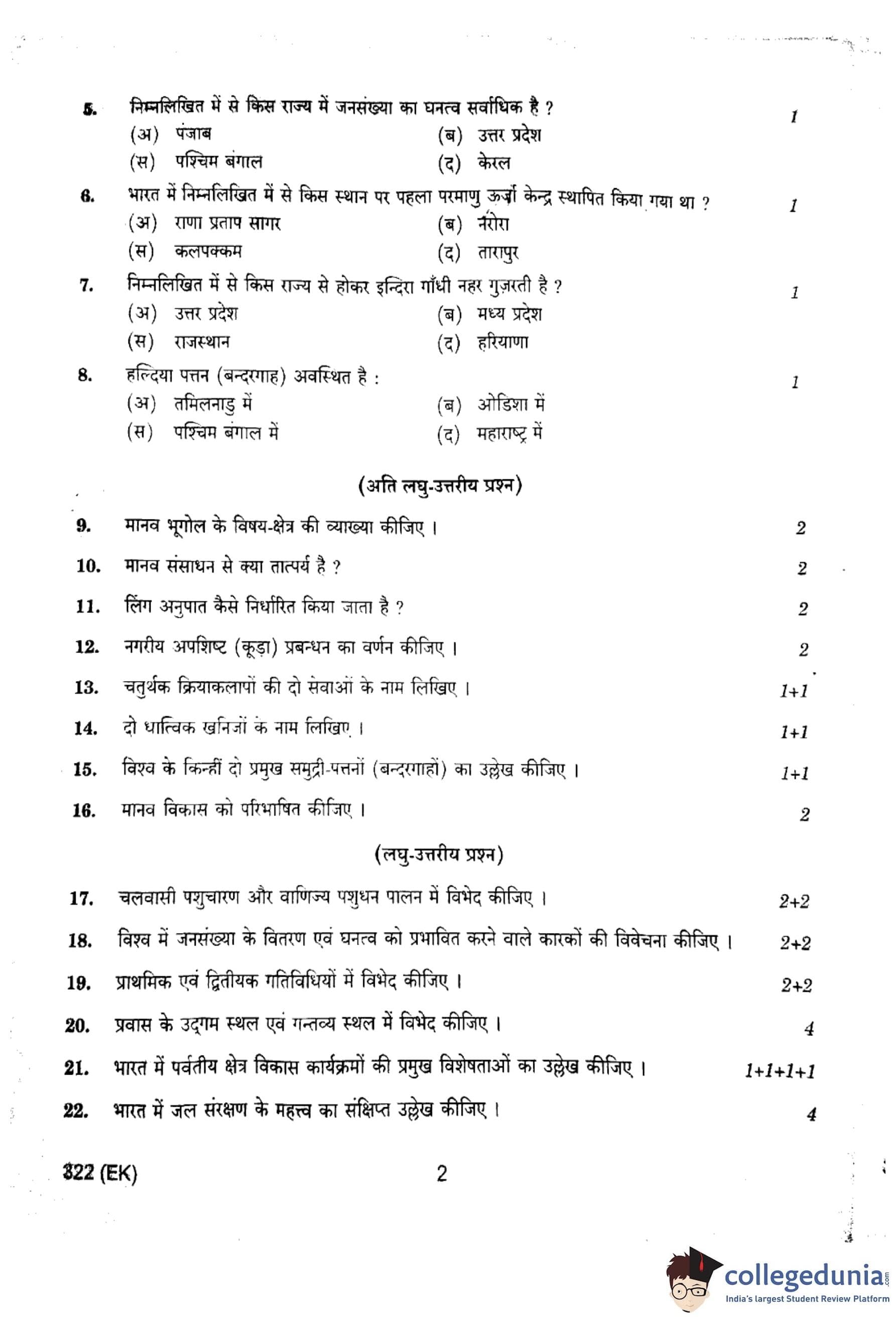
Question 1:
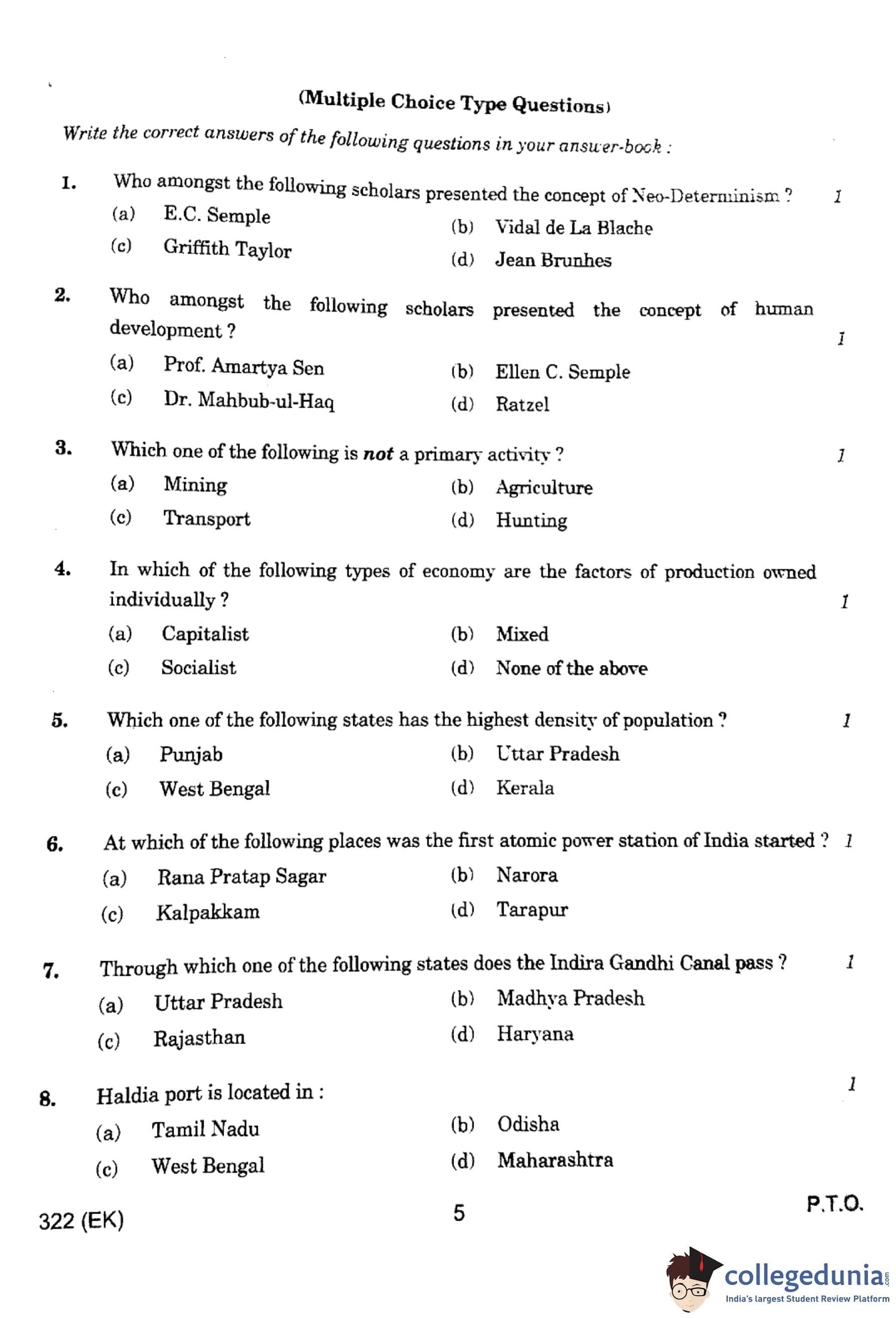
Who amongst the following scholars presented the concept of Neo-Determinism?
View Solution
Neo-Determinism, also known as "Stop-and-Go Determinism," was introduced by Griffith Taylor. It emphasizes the balance between environmental constraints and human adaptability. Quick Tip: Remember Griffith Taylor as the geographer who focused on balancing nature and human influence.
Who amongst the following scholars presented the concept of human development?
View Solution
Dr. Mahbub-ul-Haq is known for his pioneering work on human development, especially the Human Development Index (HDI), which measures the quality of life and well-being rather than just economic performance. Quick Tip: Dr. Mahbub-ul-Haq is associated with HDI and quality-of-life metrics in development studies.
Which one of the following is \(\textbf{not}\) a primary activity?
View Solution
Transport is considered a secondary or tertiary activity because it involves the movement of goods and services, unlike primary activities that directly involve natural resources. Quick Tip: Primary activities are about resource extraction (e.g., mining, agriculture). Transport is not one of them.
In which of the following types of economy are the factors of production owned individually?
View Solution
A capitalist economy is characterized by private ownership of production factors, with the market driving decision-making and resource allocation. Quick Tip: Capitalism focuses on private ownership and profit-driven markets, unlike socialism.
Which one of the following states has the highest density of population?
View Solution
West Bengal has the highest population density among Indian states due to its relatively small geographic area and large population. Quick Tip: Population density is calculated as the number of people per square kilometer. West Bengal ranks highest in India.
At which of the following places was the first atomic power station of India started?
View Solution
The first atomic power station of India was started at Tarapur in Maharashtra. It became operational in 1969 and was a significant milestone in India's nuclear energy program. Quick Tip: Tarapur is India’s first and oldest nuclear power plant, located in Maharashtra.
Through which one of the following states does the Indira Gandhi Canal pass?
View Solution
The Indira Gandhi Canal passes through Rajasthan. It is one of the largest irrigation canals in India, providing water to the arid regions of the state. Quick Tip: Think of the Indira Gandhi Canal as a lifeline for Rajasthan’s desert areas.
Haldia port is located in:
View Solution
Haldia port is located in West Bengal. It is a major river port and plays a crucial role in the handling of bulk cargo and petroleum products. Quick Tip: Haldia port is a significant port in West Bengal, located near Kolkata.
Explain the scope of Human Geography.
View Solution
Human Geography studies the relationship between humans and their environment. It explores how human activities such as settlement, agriculture, industrialization, and trade shape the Earth’s surface. The scope includes analyzing cultural landscapes, population dynamics, urban development, and the spatial distribution of economic activities. Human Geography also addresses global challenges like migration, resource management, and environmental sustainability by understanding how humans adapt to and modify their surroundings. This field connects the physical and social sciences, providing insights into how human societies interact with natural environments over time.
The scope of Human Geography bridges physical and social sciences, focusing on human-environment interactions and spatial patterns.
Quick Tip: The scope of Human Geography bridges physical and social sciences, focusing on human-environment interactions and spatial patterns.
What is meant by Human Resource?
View Solution
Human resource refers to the skills, knowledge, talents, and abilities possessed by individuals that contribute to economic and social development. It includes the productive capacity of people engaged in various sectors like education, healthcare, industry, and services. Human resources are essential for innovation, productivity, and the growth of an economy. Investments in education, skill development, and healthcare enhance the quality of human resources, making them more effective in addressing societal challenges and driving sustainable development.
Human resources are the backbone of economic and social progress, emphasizing the importance of skill development and education.
Quick Tip: Human resources are the backbone of economic and social progress, emphasizing the importance of skill development and education.
How is sex ratio determined?
View Solution
The sex ratio is determined by calculating the number of females per 1,000 males in a population. It is expressed using the formula:
\[ Sex Ratio = \left( \frac{Number of Females}{Number of Males} \right) \times 1000 \]
This demographic indicator helps in analyzing gender balance within a population. A balanced or favorable sex ratio reflects societal progress and gender equity, while an imbalanced sex ratio may indicate social and cultural challenges, such as gender discrimination or differences in health outcomes. The sex ratio varies across regions and is influenced by factors like birth rates, mortality rates, and migration patterns.
A higher or balanced sex ratio is often seen as a marker of gender equality and improved social conditions.
Quick Tip: A higher or balanced sex ratio is often seen as a marker of gender equality and improved social conditions.
Describe urban waste management.
View Solution
Urban waste management involves the systematic collection, segregation, recycling, treatment, and disposal of solid and liquid wastes generated in urban areas. It aims to minimize environmental pollution and ensure public health by managing waste effectively. Key steps include:
1. Collection: Regular collection of waste from households, commercial establishments, and industries.
Segregation: Sorting waste into biodegradable, recyclable, and hazardous categories to facilitate appropriate treatment.
2. Recycling and Reuse: Converting recyclable materials into usable products to reduce waste and conserve resources.
3. Disposal: Safe disposal of non-recyclable waste through landfills or incineration, ensuring minimal environmental impact.
Efficient urban waste management requires public awareness, strict regulations, and advanced technologies to address the growing waste challenges in cities.
Urban waste management promotes sustainability by reducing landfill dependence and encouraging recycling and reuse.
Quick Tip: Urban waste management promotes sustainability by reducing landfill dependence and encouraging recycling and reuse.
Write the names of two services of quaternary activities.
View Solution
Quaternary activities involve knowledge-based services that contribute to the economy through information and intellectual pursuits. Two examples of quaternary activities are:
1. Research and Development (R&D): This includes scientific research, technological innovation, and product development that drive progress in various industries like healthcare, engineering, and manufacturing.
2. Information Technology (IT) Services: IT services involve data analysis, software development, and digital solutions that enable businesses and organizations to operate efficiently in the global economy.
These services are essential for fostering innovation, improving productivity, and supporting modern economies.
Quaternary activities focus on intellectual services, emphasizing knowledge creation and technological advancements.
Quick Tip: Quaternary activities focus on intellectual services, emphasizing knowledge creation and technological advancements.
Write the names of two metallic minerals.
View Solution
Metallic minerals are those that contain metal in their raw form and can be extracted through mining and processed for various applications. Two examples are:
1. Iron Ore: This is a primary raw material used in the production of steel, which is essential for construction, transportation, and manufacturing industries.
2. Copper: Copper is widely used in electrical wiring, plumbing, and the production of electronic devices due to its excellent conductivity and corrosion resistance.
These metallic minerals are crucial for industrial development and technological advancements.
Metallic minerals like iron ore and copper are vital for infrastructure, electronics, and industrial growth.
Quick Tip: Metallic minerals like iron ore and copper are vital for infrastructure, electronics, and industrial growth.
Mention any two major sea-ports of the world.
View Solution
Sea-ports are critical hubs for global trade, facilitating the import and export of goods across countries. Two major sea-ports of the world are:
1. Port of Shanghai (China): The busiest container port in the world, it handles massive volumes of trade, serving as a vital link in global shipping networks and supporting China's economic growth.
2. Port of Rotterdam (Netherlands): Known as the "Gateway to Europe," this port is one of the largest in the world, strategically located to serve inland Europe through extensive waterways and rail connectivity.
These ports play a significant role in facilitating international trade and boosting regional economies.
The Port of Shanghai leads global trade in Asia, while the Port of Rotterdam connects Europe to global shipping routes.
Quick Tip: The Port of Shanghai leads global trade in Asia, while the Port of Rotterdam connects Europe to global shipping routes.
Define Human Development. :
View Solution
Human Development refers to the process of enhancing people's freedoms, capabilities, and opportunities to improve their quality of life and overall well-being. It focuses on expanding access to education, healthcare, and a decent standard of living while promoting social and economic equality. Human Development emphasizes creating an environment where individuals can lead long, healthy, and creative lives, contributing to societal progress. It is measured using indicators like life expectancy, literacy rates, and per capita income, as highlighted by the Human Development Index (HDI).
Human Development is about enhancing capabilities and opportunities to empower individuals for a better quality of life.
Quick Tip: Human Development is about enhancing capabilities and opportunities to empower individuals for a better quality of life.
Differentiate between Nomadic Herding and Commercial Livestock Rearing. :
View Solution
Nomadic Herding and Commercial Livestock Rearing differ in several aspects:
1. Nomadic Herding:
- It involves the small-scale raising of livestock such as sheep, goats, and camels.
- Practiced by nomads in search of natural pastures and water, particularly in arid and semi-arid regions like Central Asia, Northern Africa, and parts of India.
- It is a subsistence activity aimed at fulfilling the herders' basic needs.
- Traditional practices dominate, with little use of advanced technology.
2. Commercial Livestock Rearing:
- It involves large-scale farming of animals such as cattle, poultry, and pigs for profit.
- Practiced in developed countries with advanced technology, infrastructure, and organized farming techniques.
- Focused on the production of meat, milk, wool, and other animal products for domestic and international markets.
- Requires high capital investment, mechanization, and scientific methods of breeding and disease control.
Quick Tip: Nomadic herding is subsistence-based and dependent on nature, while commercial livestock rearing is profit-driven and highly mechanized.
Discuss the factors influencing the distribution and density of population in the world.
View Solution
The distribution and density of population across the world are influenced by several factors:
1. Physical factors:
- Climate: Moderate climates, such as those found in temperate regions, attract higher populations, while extreme climates (e.g., deserts or polar regions) discourage settlement.
- Soil fertility: Fertile areas like river valleys (e.g., the Nile and Ganges) support dense populations due to agricultural productivity.
- Availability of water: Regions with abundant freshwater resources tend to have higher population densities.
2. Economic factors:
- Industrialization: Areas with developed industries and infrastructure attract workers and support dense urban populations (e.g., New York and Tokyo).
- Job opportunities: Economic hubs with diverse employment options lead to population concentration.
3. Social factors:
- Healthcare: Regions with advanced healthcare facilities attract people and sustain higher population densities.
- Education and urbanization: Urban areas with better education systems, social amenities, and higher standards of living attract migrants, increasing population density.
Quick Tip: Population density is highest in regions with moderate climates, fertile land, and economic opportunities, while harsh environments lead to sparse settlements.
Differentiate between primary and secondary activities.
View Solution
Primary and secondary activities differ as follows:
1. Primary Activities:
- These involve the direct extraction and utilization of natural resources. Examples include farming, fishing, forestry, and mining.
- Primary activities are predominantly practiced in rural areas and form the base of the economy in many developing countries.
2. Secondary Activities:
- These involve the processing of raw materials obtained from primary activities into finished goods. Examples include manufacturing, construction, and factory production.
- Secondary activities are mainly concentrated in urban and industrial areas, contributing to economic growth and development.
Quick Tip: Primary activities extract resources directly from nature, while secondary activities transform these resources into usable products.
Differentiate between place of origin and place of destination of migration.
View Solution
Place of origin and place of destination in migration are described as follows:
1. Place of Origin:
- Refers to the location from which migrants move out.
- It is often associated with push factors such as unemployment, poverty, lack of education, or political instability.
- For example, rural areas with limited opportunities often serve as places of origin.
2. Place of Destination:
- Refers to the location where migrants move in and settle.
- It is associated with pull factors such as better job prospects, improved living conditions, access to education, and social stability.
- For instance, cities and industrial hubs serve as common destinations for rural-to-urban migration.
Quick Tip: Migration involves a shift from the place of origin (push factors) to the place of destination (pull factors), driven by socio-economic opportunities.
Mention the major characteristics of Hill Area Development Programmes in India.
View Solution
Hill Area Development Programmes in India focus on the sustainable development of hilly regions with the following characteristics:
1. Focus on afforestation and soil conservation: These programs aim to combat deforestation and erosion, ensuring ecological balance in hill areas.
2. Development of infrastructure: Initiatives include building roads, schools, and healthcare facilities to improve accessibility and living conditions in remote hill regions.
3. Promotion of tourism: Hill areas are developed as tourist destinations, providing livelihood opportunities and boosting the local economy.
4. Empowering local communities: Training programs are organized to enhance the skills of local populations, encouraging self-sufficiency and active participation in development.
Quick Tip: Hill Area Development Programmes integrate environmental protection, infrastructure growth, and community empowerment for sustainable development.
Briefly mention the importance of water conservation in India.
View Solution
Water conservation is critical for India due to its growing population and agricultural dependence. Its importance includes:
1. Ensures sustainable use: Conservation practices support the availability of water for agriculture, drinking, and industrial purposes, ensuring long-term sustainability.
2. Prevents desertification: By preserving water resources, water conservation helps in maintaining soil moisture and combating desertification in arid and semi-arid regions.
3. Supports ecosystems and biodiversity: Adequate water resources maintain wetlands, rivers, and forests, which are essential for biodiversity and ecological health.
4. Enhances groundwater recharge: Conservation measures like rainwater harvesting and watershed management improve groundwater levels, reducing dependency on erratic rainfall.
Quick Tip: Water conservation ensures sustainability, ecological balance, and resilience against water scarcity in India.
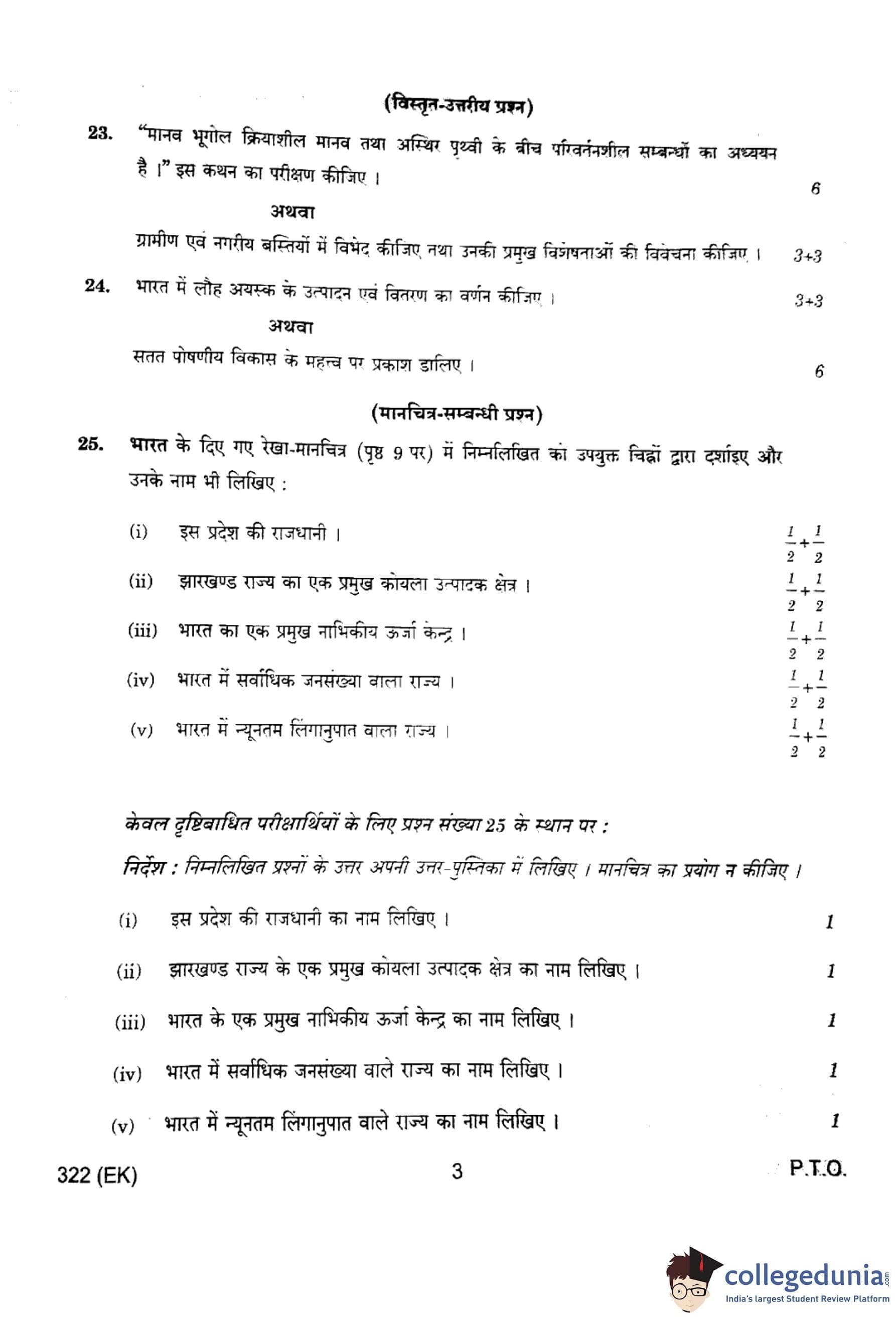
Human geography is the study of the changing relationship between the unresting man and the unstable earth. Examine this statement.
View Solution
Human geography focuses on the dynamic relationship between human societies and their environment. This relationship is constantly changing, as humans adapt to and modify their surroundings in response to various challenges. The key aspects of this evolving relationship include:
1. It studies how humans adapt, modify, and respond to environmental challenges: Climate change, natural disasters, and the uneven distribution of resources are key challenges. Human societies adapt by developing technologies, modifying landscapes, and creating infrastructure to meet their needs.
2. It examines the impact of human activities on the earth: Human actions like deforestation, urbanization, and industrialization have significant impacts on the environment. These activities alter ecosystems, contribute to pollution, and affect biodiversity.
3. This statement highlights the evolving interdependence between human progress and environmental sustainability: The pursuit of development must consider environmental sustainability, as unchecked human progress can lead to resource depletion and environmental degradation.
This analysis underscores the complex interaction between human societies and the earth, emphasizing the need for balanced development that considers both human needs and environmental protection.
Quick Tip: Human geography highlights the changing, reciprocal relationship between people and the environment, focusing on adaptation and impact.
Describe the production and distribution of iron ore in India.
View Solution
1. \(\textbf{Rural Settlements:}\)
- Primarily agriculture-based: Most rural settlements are dependent on farming, forestry, and other resource-based activities.
- Low population density and simpler infrastructure: These areas have fewer people and less-developed facilities compared to urban areas.
- Close-knit communities: Social interactions in rural areas are often more personal, with strong familial and community ties.
2. \(\textbf{Urban Settlements:}\)
- Industrial and service-sector based: Urban areas are the centers for industries, commerce, and services, offering a wide range of employment opportunities.
- High population density and advanced infrastructure: Urban settlements are characterized by dense populations and well-developed systems for transportation, healthcare, education, and utilities.
- Diverse and multicultural populations: Cities are home to people from various cultural, social, and ethnic backgrounds, creating a rich cultural mix.
Quick Tip: Odisha leads in iron ore production, while Chhattisgarh and Karnataka also play important roles in meeting domestic and international demand.
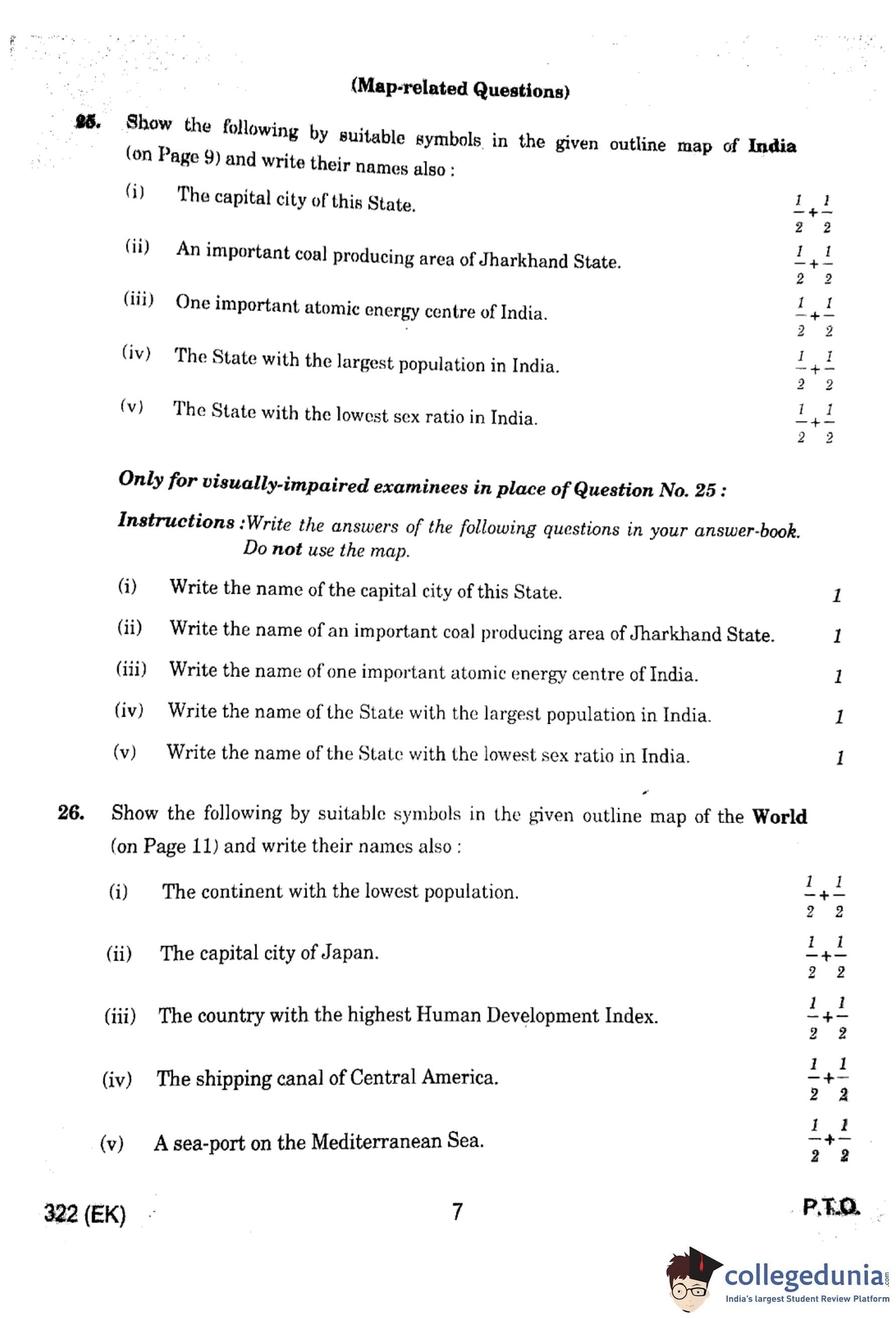
Show the following by suitable symbols in the given outline map of India (on Page 9) and write their names also:
View Solution
The capital city of India is New Delhi. As the political capital, New Delhi serves as the seat of the Indian government, housing the Rashtrapati Bhavan (President's House), the Parliament House, and the Supreme Court of India. Known for its historical significance, New Delhi is a vibrant city, marked by colonial-era architecture, cultural landmarks, and a bustling economy. It also plays a key role in the country's education and business sectors.
Quick Tip: New Delhi is the political, cultural, and economic center of India, making it one of the most important cities in the country.
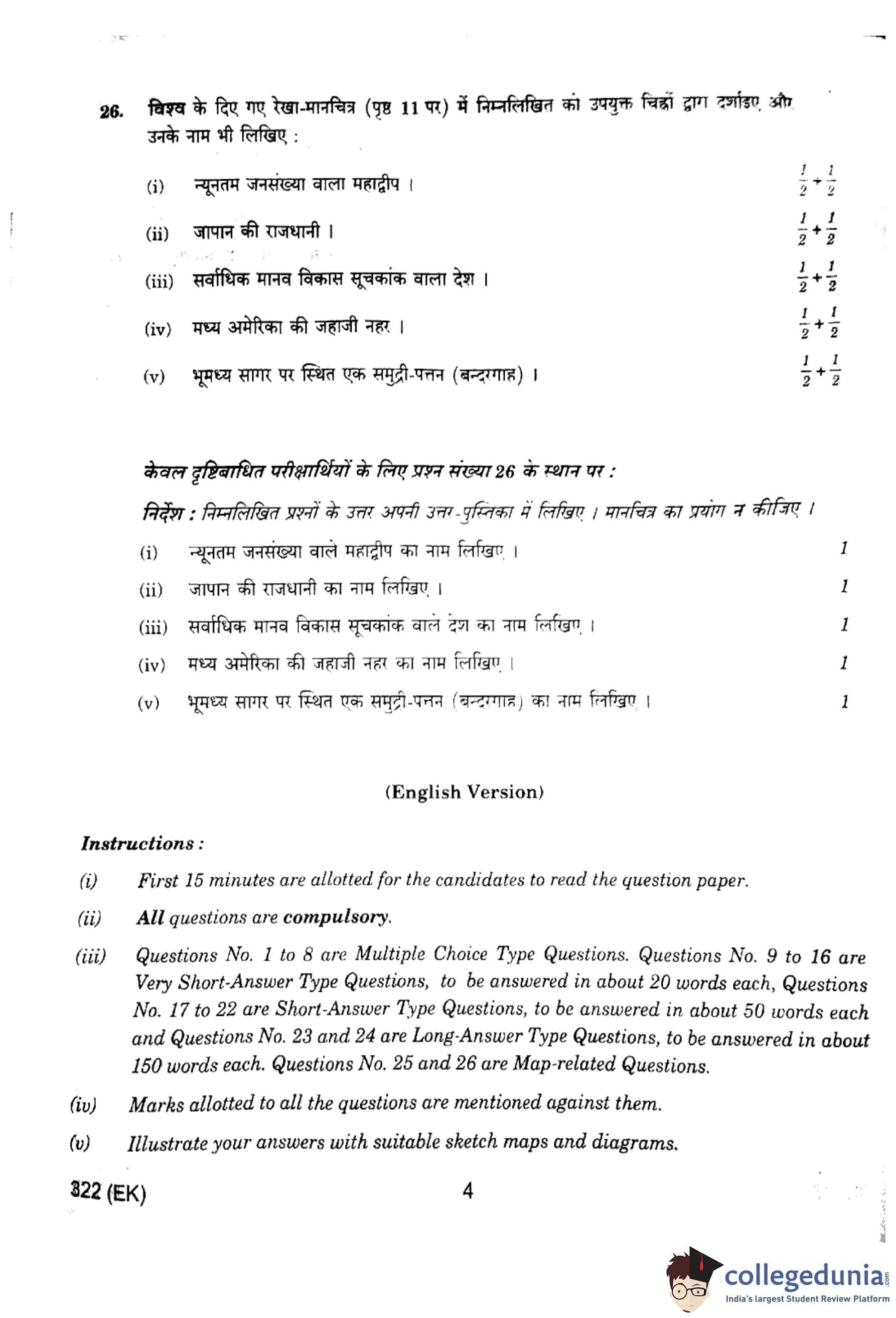
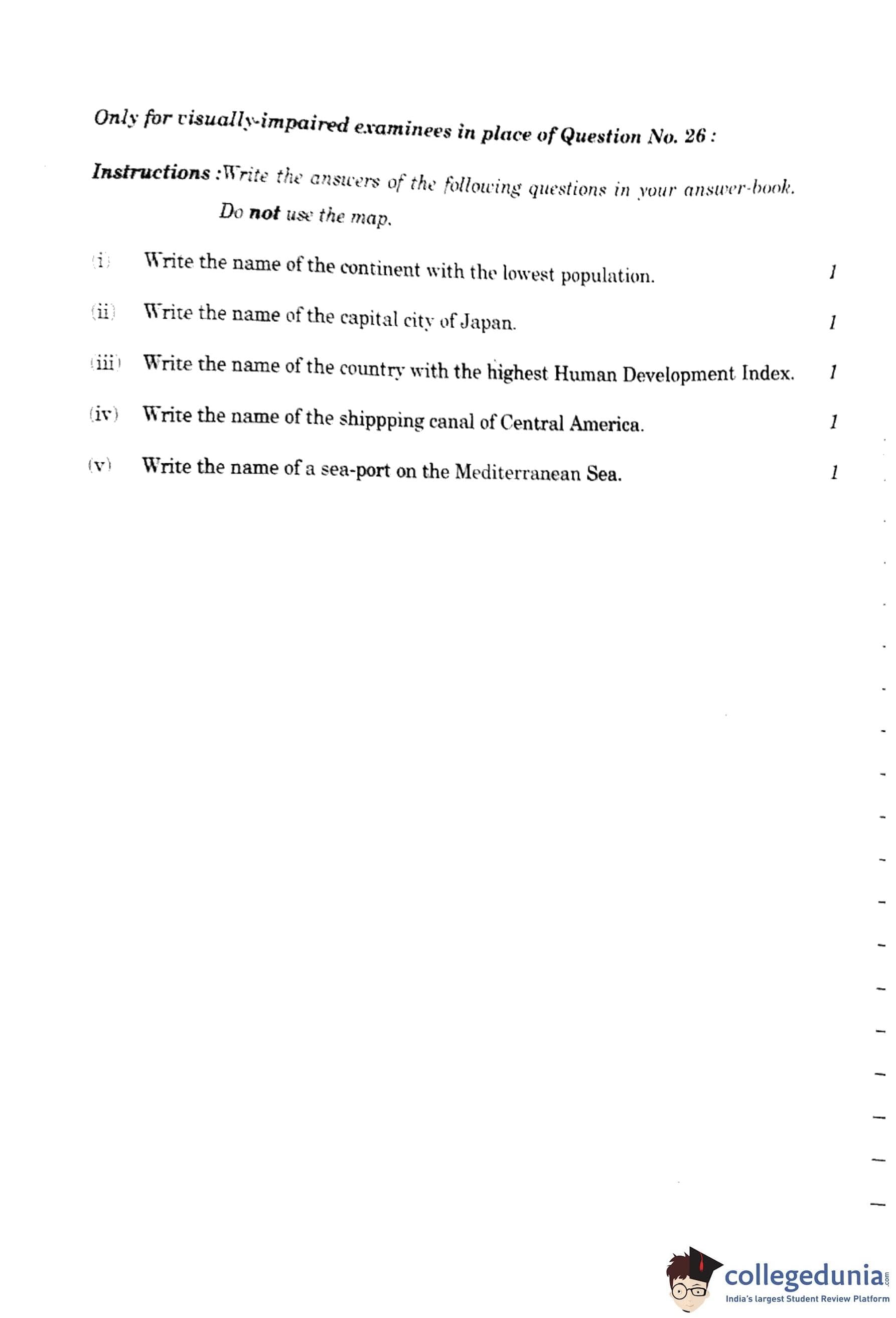
Show the following by suitable symbols in the given outline map of the World (on Page 11) and write their names also:
View Solution
Antarctica is the continent with the lowest population. Due to its harsh climate and lack of permanent human settlements, Antarctica has no indigenous population. Its population consists mainly of temporary research staff and scientists who reside in research stations. The continent is governed by international treaties that focus on scientific research and environmental conservation. Quick Tip: Antarctica has no permanent population, with human presence limited to research personnel.





Comments