




UP Board Class 12 Geography Question Paper 2024 PDF (Code 322 EL) is available for download here. The Geography exam was conducted on March 5, 2024 in the Evening Shift from 2 PM to 5:15 PM. The total marks for the theory paper are 70. Students reported the paper to be easy to moderate.
UP Board Class 12 Geography Question Paper 2024 (Code 322 EL) with Solutions
| UP Board Class 12 Geography Question Paper with Answer Key |  Download Download |
Check Solution |
UP Board Class 12 Geography Questions with Solutions
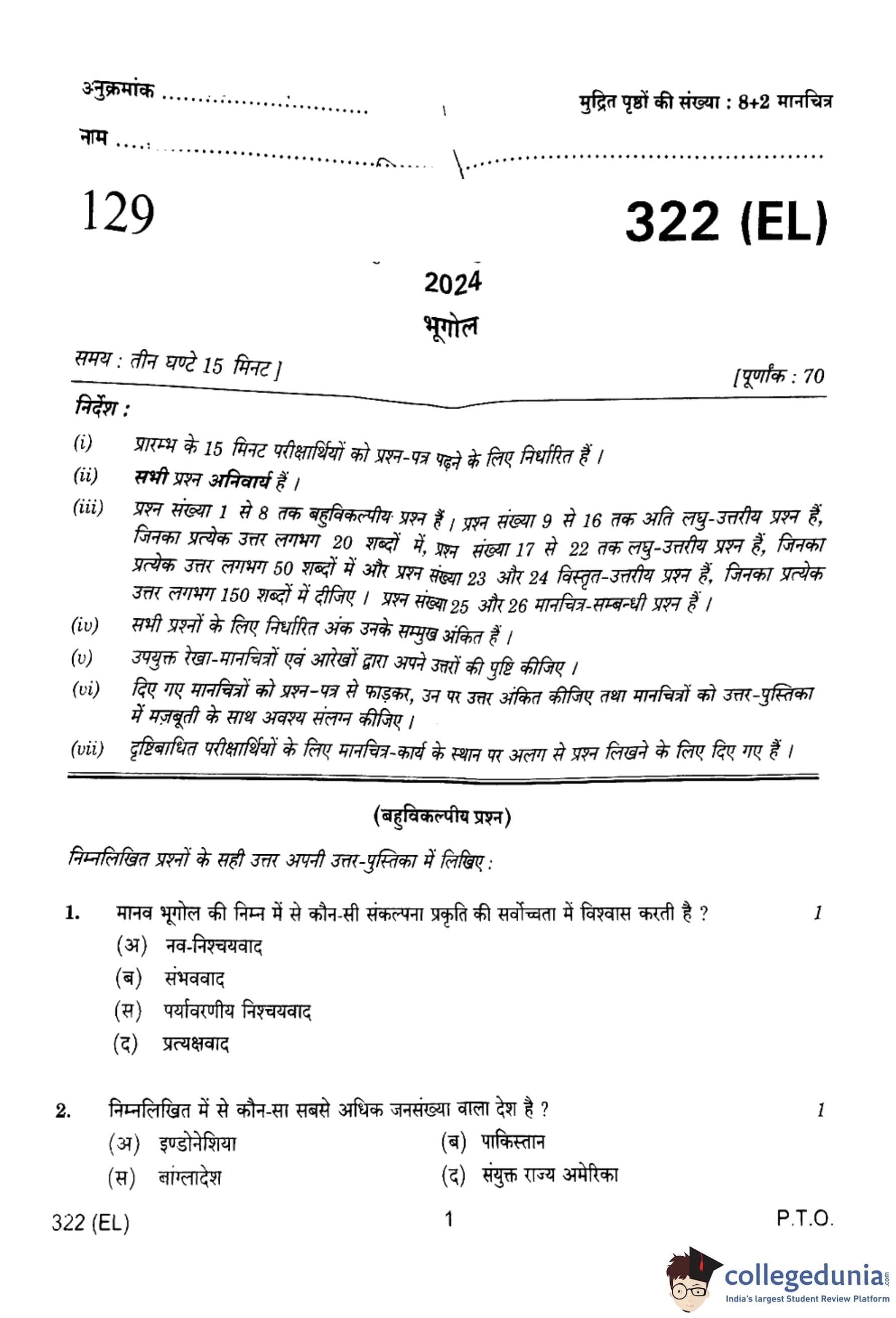
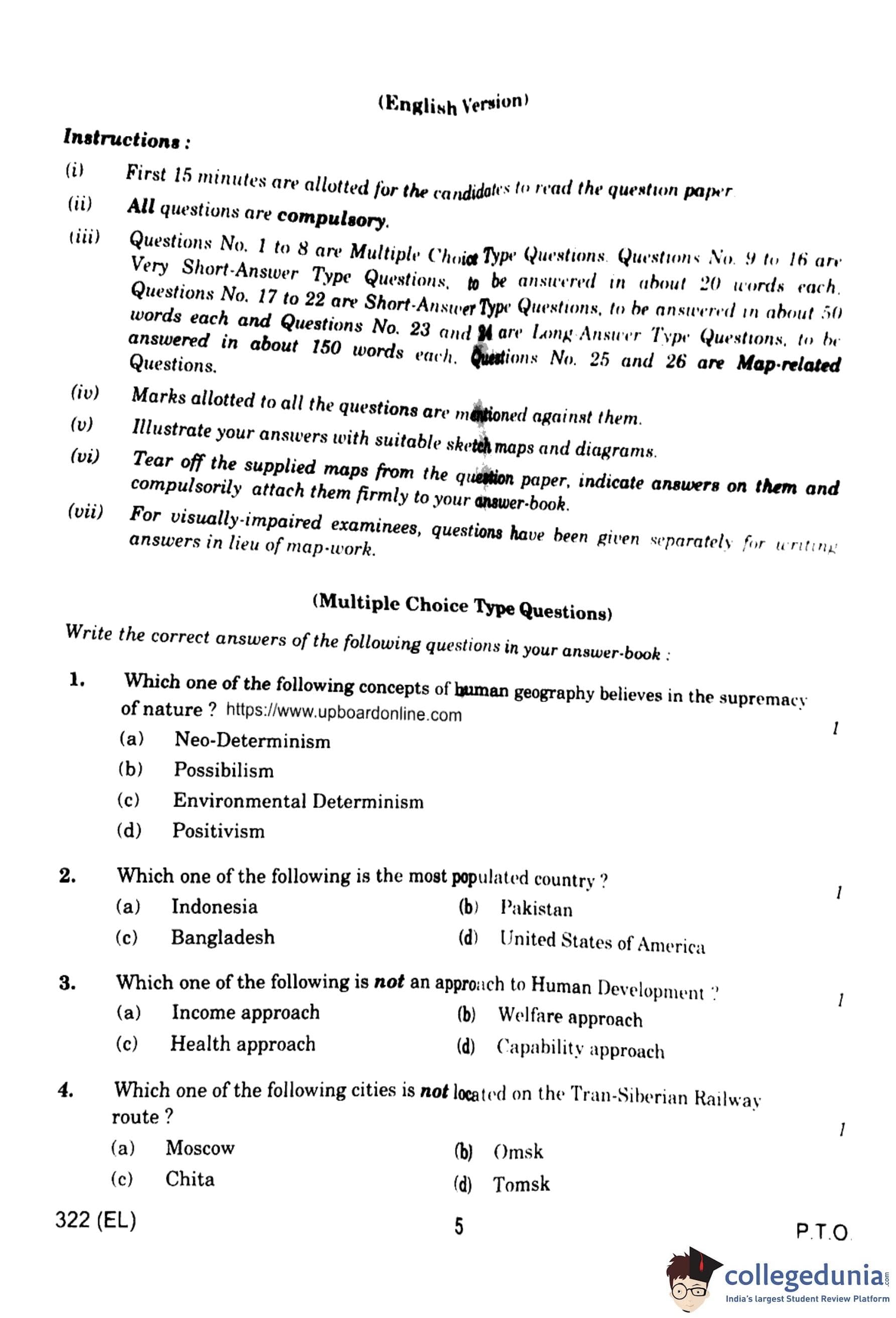
Which one of the following concepts of human geography believes in the supremacy of nature?
View Solution
Environmental Determinism is the concept in human geography that believes nature shapes human activities and imposes limitations, emphasizing nature's supremacy. Quick Tip: Environmental Determinism sees nature as the dominant force shaping human behavior and activities.
Which one of the following is the most populated country?
View Solution
Indonesia, with a population of over 270 million, is the most populated country among the options listed, followed by the United States. Quick Tip: Indonesia is the fourth most populated country in the world and the largest in Southeast Asia.
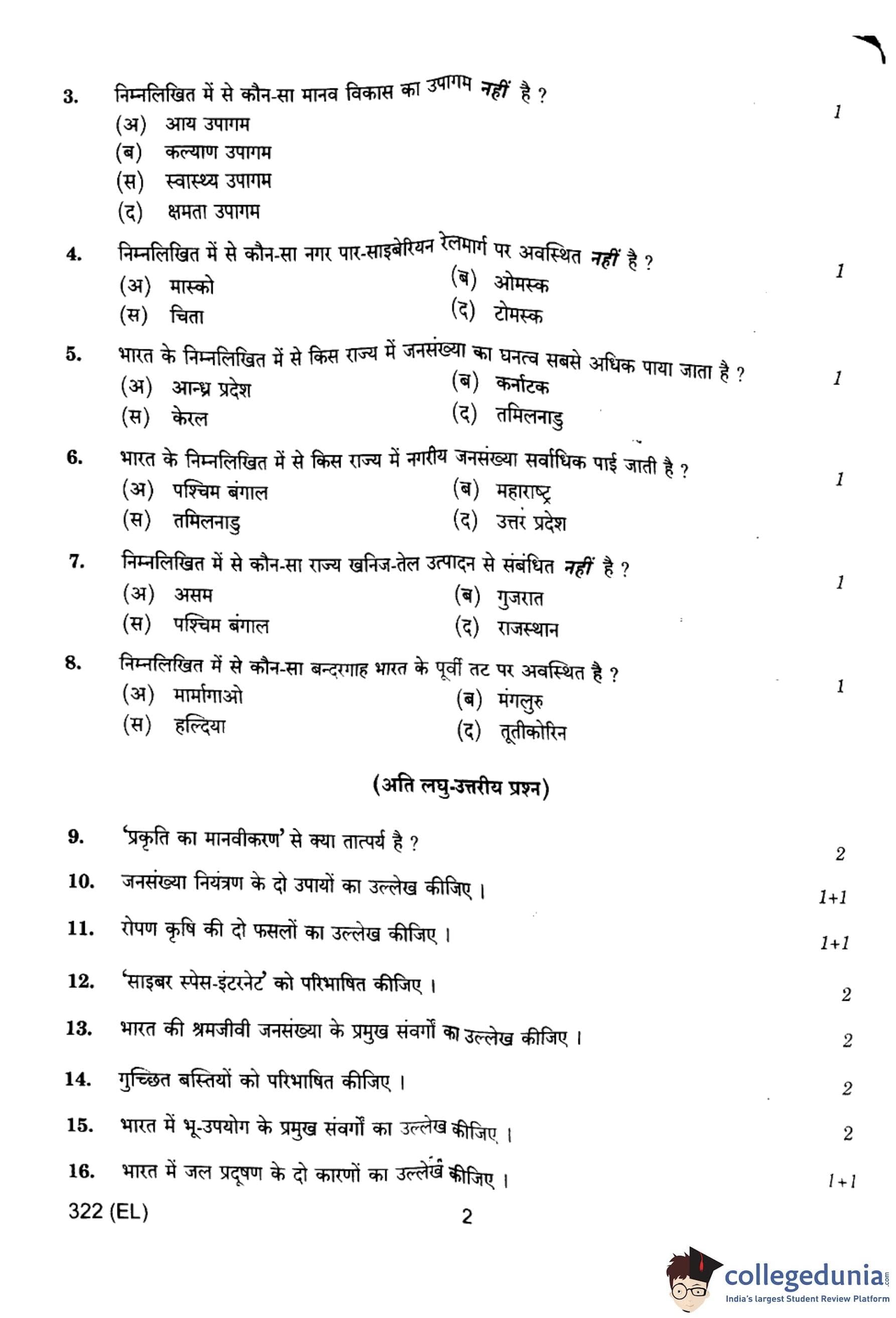
Which one of the following is \textbf{not} an approach to Human Development?
View Solution
The health approach is not considered a formal approach to Human Development. Key approaches include the income, welfare, and capability approaches. Quick Tip: Focus on formal approaches like income, welfare, and capability in the context of Human Development.
Which one of the following cities is \textbf{not} located on the Trans-Siberian Railway route?
View Solution
Tomsk is not located on the main Trans-Siberian Railway route. It is situated in Siberia but requires a detour from the mainline. Quick Tip: The Trans-Siberian Railway connects key cities like Moscow, Omsk, and Chita but bypasses Tomsk.
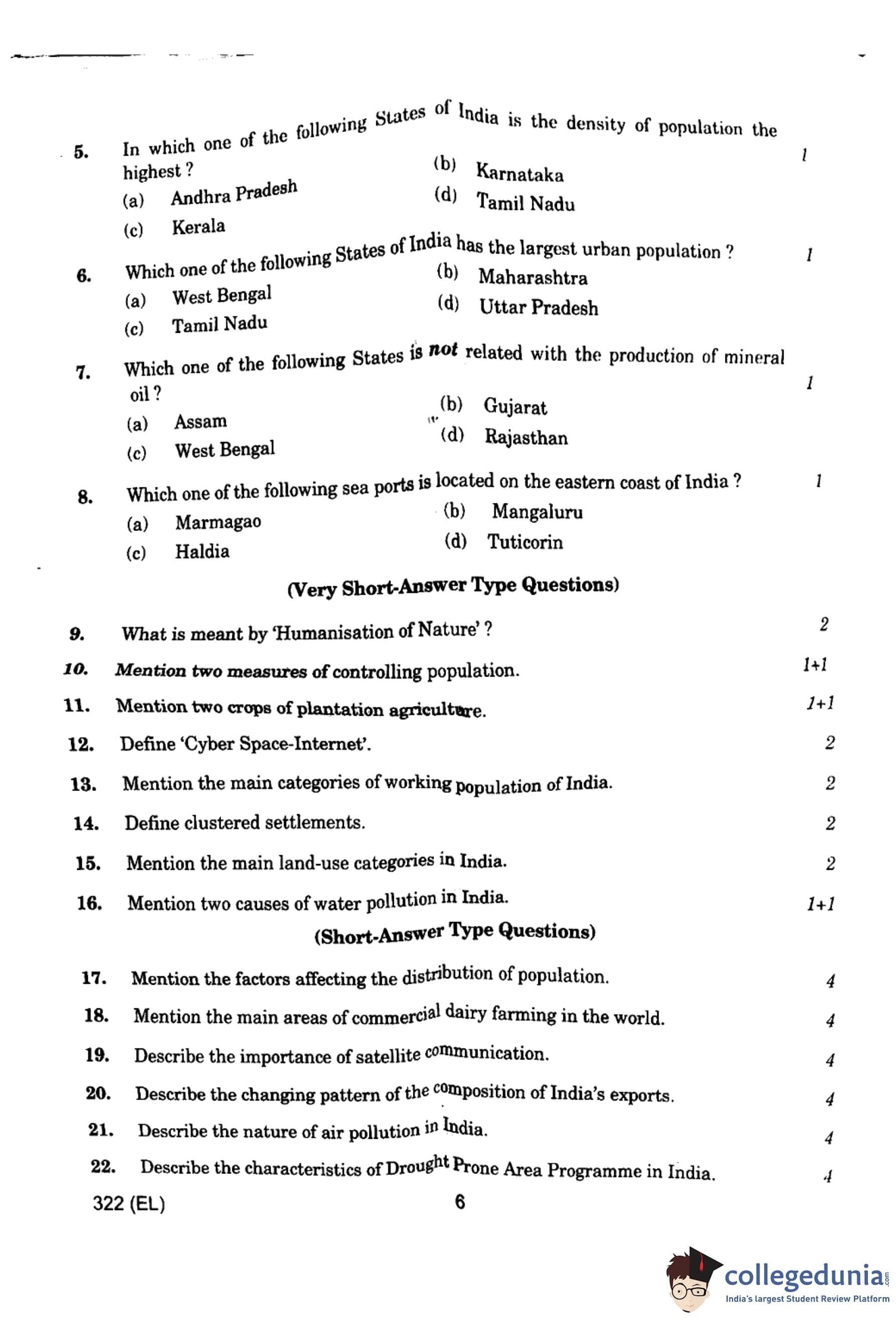
In which one of the following States of India is the density of population the highest?
View Solution
Kerala has one of the highest population densities in India due to its relatively small area and large population. Quick Tip: Kerala is known for its high literacy rate and population density compared to other states in India.
Which one of the following States of India has the largest urban population?
View Solution
Maharashtra, with cities like Mumbai and Pune, has the largest urban population in India. Quick Tip: Urban centers like Mumbai make Maharashtra the state with the largest urban population.
Which one of the following States is \textbf{not} related to the production of mineral oil?
View Solution
West Bengal is not a major producer of mineral oil, unlike Assam, Gujarat, and Rajasthan, which are known for oil production. Quick Tip: Major oil-producing states include Assam, Gujarat, and Rajasthan; West Bengal focuses more on coal production.
Which one of the following sea ports is located on the eastern coast of India?
View Solution
Tuticorin, located in Tamil Nadu, is a major seaport on the eastern coast of India, while ports like Marmagao and Mangaluru are on the western coast. Quick Tip: Remember that Tuticorin is a prominent eastern coast seaport in Tamil Nadu.
What is meant by ‘Humanisation of Nature’?
View Solution
Humanisation of Nature refers to the process by which humans interact with nature, adapt to its conditions, and modify it to meet their needs using knowledge, skills, and technology. This concept highlights how human beings transform natural environments into cultural landscapes, shaping them for agriculture, urbanization, and industrial development. By understanding and utilizing natural resources, humans influence the environment while also being shaped by its constraints. This process demonstrates the dynamic relationship between humans and their surroundings, emphasizing adaptability and innovation in achieving societal progress.
Quick Tip: Humanisation of Nature reflects the transformation of natural environments into cultural landscapes through human effort and technology.
Mention two measures of controlling population.
View Solution
Controlling population growth is crucial for sustainable development and resource management. Two effective measures are:
1. Promoting family planning and contraceptive use: Providing access to affordable contraceptives and family planning services helps in managing birth rates and empowering individuals to make informed decisions about family size.
2. Spreading awareness about population control through education: Educational campaigns emphasize the benefits of smaller families, gender equality, and delayed marriages, encouraging responsible reproductive behavior.
These measures help in reducing population pressures on resources and ensuring better quality of life for future generations.
Quick Tip: Family planning and education are key tools for population control, promoting sustainable growth and resource utilization.
Mention two crops of plantation agriculture.
View Solution
Plantation agriculture involves large-scale cultivation of cash crops, primarily for export and industrial use. Two examples are:
1. Tea: Grown extensively in regions with tropical and subtropical climates, such as Assam and Darjeeling in India, tea is one of the most significant plantation crops, supporting livelihoods and trade globally.
2. Coffee: Cultivated in high-altitude regions with moderate temperatures, such as Karnataka and Kerala in India, coffee is another major plantation crop, known for its economic importance in international trade.
These crops are cultivated on large estates, employing a significant labor force and contributing to the global economy.
Quick Tip: Tea and coffee are key plantation crops, thriving in specific climatic conditions and driving global trade.
Define ‘Cyber Space-Internet’.
View Solution
Cyber Space-Internet refers to the virtual environment created by a global network of interconnected computers and servers, enabling the exchange of information and communication across the world. It encompasses all online platforms, digital services, and data-sharing systems that allow users to access, share, and interact with information. Cyber Space has revolutionized communication, commerce, education, and entertainment by creating a borderless world where people and organizations can connect instantly. It also plays a crucial role in modern economies and social structures, driving innovation and global collaboration.
Quick Tip: Cyber Space-Internet enables seamless global connectivity, fostering communication, knowledge sharing, and innovation.
Mention the main categories of working population of India.
View Solution
The working population of India is divided into three main categories based on the nature of their work:
1. Primary sector: This includes activities directly related to natural resources, such as agriculture, fishing, forestry, and mining. Farmers and agricultural laborers form a significant portion of this sector.
2. Secondary sector: This sector involves industrial and manufacturing activities, including factory workers, construction laborers, and artisans who process raw materials into finished goods.
3. Tertiary sector: This includes service-oriented professions such as teachers, doctors, IT professionals, and retail workers. These occupations focus on providing services rather than goods.
These categories reflect the diversity of India’s workforce and highlight the importance of each sector in the nation's economy.
Quick Tip: India’s working population spans primary, secondary, and tertiary sectors, showcasing a balanced mix of agriculture, industry, and services.
Define clustered settlements.
View Solution
Clustered settlements are compact areas where houses are closely built together, typically found in fertile agricultural regions. These settlements often feature narrow lanes and a high density of population. They develop in areas with favorable conditions like availability of water, fertile soil, and good transportation networks. Such settlements promote social cohesion and collective farming practices but may face challenges related to overcrowding and limited space.
Quick Tip: Clustered settlements are common in fertile plains and valleys, reflecting social and agricultural interdependence.
Mention the main land-use categories in India.
View Solution
The main land-use categories in India include:
1. Agricultural land: Used for growing crops and practicing horticulture, constituting the largest land-use type in India.
2. Forest land: Reserved for conservation and forestry activities, contributing to ecological balance.
3. Wasteland: Includes barren and uncultivable land, which has limited productive use but can be reclaimed for development.
4. Land for settlements and infrastructure: Includes areas allocated for housing, industries, roads, and public utilities to support urbanization and economic activities.
These categories represent the diverse utilization of land resources, balancing economic and environmental priorities.
Quick Tip: India’s land-use reflects its focus on agriculture, conservation, and infrastructure to meet growing demands.
Mention two causes of water pollution in India.
View Solution
The primary causes of water pollution in India are:
1. Industrial discharge of untreated effluents: Factories release harmful chemicals like heavy metals, dyes, and oils into rivers and lakes, degrading water quality and harming aquatic life.
2. Agricultural runoff containing pesticides and fertilizers: Excessive use of agrochemicals washes into water bodies, causing eutrophication and contaminating drinking water sources.
These factors significantly impact water ecosystems and public health, requiring immediate attention and sustainable practices.
Quick Tip: Controlling industrial effluents and promoting sustainable farming can help reduce water pollution in India.
Mention the factors affecting the distribution of population.
View Solution
The distribution of population is influenced by the following factors:
1. Physical factors: Climate, topography, and soil fertility significantly affect population distribution. Favorable climates and fertile soils attract dense populations, while harsh terrains and extreme climates discourage settlement.
2. Economic factors: Job opportunities, industrialization, and urbanization drive population concentration in areas with thriving industries and developed infrastructure.
3. Social factors: Availability of healthcare, education, and cultural significance attracts people to certain regions, improving the quality of life.
4. Political factors: Stability and government policies, such as those promoting migration or settlement, influence population distribution. Areas with political stability are more attractive for living and investment.
Mention the main areas of commercial dairy farming in the world.
View Solution
Commercial dairy farming is practiced in regions with suitable climates and advanced farming techniques. The main areas include:
1. The prairies of North America: These regions have vast grasslands ideal for cattle grazing and large-scale dairy farming.
2. The steppes of Europe: Countries like the Netherlands and Germany are known for their dairy industries, supported by fertile pastures and efficient farming practices.
3. The grasslands of New Zealand: Known for its temperate climate and vast grazing lands, New Zealand is a leading exporter of dairy products.
4. The southern regions of Australia: These areas have favorable conditions for dairy farming, with a focus on milk production and export.
Describe the importance of satellite communication. :
View Solution
Satellite communication plays a vital role in modern technology and global connectivity. Its importance includes:
1. Enables long-distance communication: Satellites transmit television signals, radio broadcasts, and internet services, bridging the gap across vast distances.
2. Supports weather forecasting and disaster management: Satellites provide real-time data on weather conditions, helping in accurate forecasting and early warnings during natural disasters.
3. Aids in navigation: GPS technology, powered by satellites, ensures precise navigation for transportation, aviation, and logistics.
4. Enhances global connectivity and economic growth: Satellite communication facilitates seamless communication across borders, supporting international business and economic integration.
Describe the changing pattern of the composition of India’s exports.
View Solution
The composition of India’s exports has undergone significant changes over time. The key trends include:
1. Shift from agricultural products to manufactured goods: Earlier dominated by exports like spices, tea, and jute, India now focuses on textiles, machinery, and engineering goods.
2. Growth in software and IT services: India has become a global leader in software exports and IT-enabled services, contributing significantly to foreign exchange earnings.
3. Decline in traditional goods: The export share of goods like jute and leather has decreased due to competition and changing global demands.
4. Increase in petroleum product exports: With the development of refining capacity, petroleum products have become a significant component of India’s exports.
Describe the nature of air pollution in India.
View Solution
Air pollution in India is a serious environmental issue, characterized by the following:
1. Caused by vehicular emissions, industrial discharges, and construction dust: Major sources of pollutants like particulate matter (PM2.5 and PM10), carbon monoxide, and nitrogen oxides.
2. Leads to smog in urban areas: High concentrations of pollutants form smog, especially during winters, reducing visibility and air quality in cities like Delhi and Mumbai.
3. Adversely impacts health: Exposure to polluted air causes respiratory and cardiovascular diseases, particularly among vulnerable groups like children and the elderly.
4. Contributes to climate change: Greenhouse gases like carbon dioxide and methane exacerbate global warming, altering weather patterns and increasing the frequency of extreme events.
Describe the characteristics of Drought Prone Area Programme in India.
View Solution
The Drought Prone Area Programme (DPAP) in India focuses on mitigating the impact of droughts with the following characteristics:
1. Aims to minimize the impact of droughts: Emphasizes water conservation and irrigation through measures like watershed development and rainwater harvesting.
2. Focuses on afforestation and soil conservation: Enhances soil fertility and reduces erosion, improving agricultural productivity in drought-prone regions.
3. Encourages the development of alternative livelihoods: Promotes agroforestry, animal husbandry, and other sustainable practices to reduce dependence on rain-fed agriculture.
4. Promotes the use of drought-resistant crops: Encourages farmers to adopt resilient crop varieties that require less water and withstand dry conditions.
Quick Tip: Maharashtra, with its large population, is one of the most economically developed states in India.
Discuss the components of population change.
View Solution
Population change is influenced by three main components:
1. Birth Rate:The birth rate refers to the number of live births per 1,000 people in a given year. A high birth rate leads to a higher growth rate of the population, while a low birth rate can contribute to a slowing of population growth or even population decline in some cases. Factors that affect birth rates include cultural norms, economic conditions, the availability of healthcare, family planning access, and government policies. For instance, countries with family planning programs tend to have lower birth rates. In contrast, countries with limited access to healthcare may experience higher birth rates.
2. Death Rate: The death rate measures the number of deaths per 1,000 people in a year. A high death rate can often indicate poor healthcare, inadequate nutrition, and high levels of disease, which can lead to a decline in population. Conversely, a low death rate suggests better healthcare systems, improved sanitation, and higher life expectancy, contributing to a slower increase in population size. Significant changes in the death rate, especially declines due to medical advancements and better living conditions, can result in population growth.
3. Migration:
Migration refers to the movement of people from one region or country to another, and it is a critical factor in population change. Migration can be internal (within a country) or international (across countries). Migration patterns are often driven by economic opportunities, political stability, natural disasters, or conflicts. For instance, people tend to migrate to cities and urban areas in search of better employment and education opportunities. On a global scale, international migration has become a key factor in redistributing populations, especially in regions experiencing conflict or economic instability. Migration impacts both the origin and destination areas by altering population size, composition, and demographic trends.
These three components—birth rate, death rate, and migration—interact with one another and shape the overall population dynamics. By analyzing these components, policymakers can better understand population trends and plan for future growth, resource distribution, and development initiatives. For example, countries with high birth rates and low death rates may face challenges related to overpopulation, whereas countries with low birth rates may need to address issues like an aging population and labor shortages.
Quick Tip: Population change is shaped by the balance of birth rates, death rates, and migration patterns, which influence a country’s demographic, economic, and social policies.
Discuss the importance of air transport.
View Solution
Air transport plays a vital role in various aspects of modern society and economic development. Its importance can be discussed under the following points:
1. Quick Connectivity: Air transport provides the fastest mode of travel, significantly reducing travel time over long distances. This is especially beneficial for international travel, where air transport can cover large distances in a matter of hours, facilitating business, tourism, and personal travel.
2. Economic Development: Air transport plays a crucial role in boosting the economy by facilitating international and domestic trade. It allows for the rapid movement of goods, including perishable items, and connects markets across the globe. Tourism, which is heavily dependent on air travel, also contributes significantly to the economy of countries.
3. Disaster Management: Air transport is essential in disaster management, especially during natural calamities. It enables the swift delivery of humanitarian aid, medical supplies, and rescue teams to affected areas, where ground transportation may be disrupted.
4. Globalization: Air transport enhances globalization by promoting cultural exchange, international trade, and business collaboration. It helps people, goods, and information to move across borders easily, fostering interconnectedness between countries and contributing to a global economy.
5. Military Use: Air transport plays a crucial role in national defense. It facilitates the rapid deployment of troops, equipment, and resources in times of conflict or emergencies, ensuring strategic military advantage and security.
Quick Tip: Air transport is key to quick connectivity, economic growth, disaster relief, globalization, and national defense.
Describe the characteristics of rail transport in India.
View Solution
Rail transport in India is one of the most important modes of transportation, with several key characteristics:
1. Large Rail Network: India has one of the largest rail networks in the world, stretching over 67,000 kilometers. It connects various regions across the country, facilitating the movement of both passengers and freight. The vastness and reach of the network make rail transport a crucial part of India’s infrastructure.
2. Backbone of Freight and Passenger Transport: Railways are considered the backbone of both freight and passenger transport in India. They carry a significant share of goods like coal, iron ore, and agricultural products, and also transport millions of passengers daily. The affordability, efficiency, and extensive coverage of the rail network make it an essential transport mode.
3. Division into Zones: The Indian Railways is divided into various zones like Northern, Southern, and Central Railways. Each zone is further subdivided into divisions, helping in the efficient management and operation of the network. These zones ensure better regional coordination and administration.
4. Connecting Remote Areas to Urban Centers: Railways play a critical role in connecting remote and rural areas to urban centers. This helps in improving access to education, healthcare, and job opportunities in cities, thereby contributing to balanced regional development.
5. Facilitates Industrial Development: Railways are vital for industrial development, as they enable the efficient transportation of raw materials like coal, minerals, and oil to factories and deliver finished goods to markets. This contributes significantly to the growth of industries and the overall economy of India
Quick Tip: India’s extensive rail network is essential for transporting goods, connecting regions, and supporting industrial growth.
Describe the production and distribution of iron ore in India.
View Solution
The production and distribution of iron ore in India are crucial to the country’s economy and its position as one of the largest producers of iron ore in the world. Key aspects include:
1. Production: India is one of the world’s leading producers of iron ore, with major production centers in the states of Odisha, Chhattisgarh, and Karnataka. These regions have vast reserves of high-quality iron ore, which support the domestic steel industry. Odisha is the largest producer, followed by Chhattisgarh and Karnataka, with these states contributing a significant share to India’s total iron ore production. The total production of iron ore has been steadily increasing due to increased demand from both domestic and international markets. - The high-grade iron ore found in India is mainly of hematite and magnetite types, which are important raw materials for steel manufacturing. Mining operations are supported by both open-pit and underground methods, with advanced technologies improving extraction and processing efficiency.
2. Distribution: Odisha contributes over 50 percent of India’s total iron ore production, with mines located in areas like Keonjhar, Sundergarh, and Jajpur. These regions are home to large-scale mining operations that produce both hematite and magnetite iron ore, making Odisha the leading iron ore producer in the country. The rich iron ore deposits have attracted significant investments in mining and infrastructure development.
- Chhattisgarh is another major producer of iron ore in India, particularly with the Bailadila mines, which are known for their high-quality iron ore. The state’s central and southern regions are rich in iron ore deposits, contributing significantly to the national output. The mining activity in these regions is essential for supplying raw materials to the steel and alloy industries.
- Karnataka is renowned for its magnetite deposits, with Kudremukh being one of the key mining centers in the state. The state’s contribution to iron ore production is vital for the southern part of India’s iron ore supply chain, ensuring that industries in this region have a steady supply of raw materials. Other key mining areas in Karnataka include Hospet, Bellary, and Chitradurga.
3. Exports: India exports a significant amount of iron ore, particularly to countries like China, Japan, and South Korea, which are the largest consumers of raw materials for steel production. The demand from these countries has driven India’s iron ore export industry, making it a critical contributor to foreign exchange earnings. Exports to China alone account for a large portion of India’s total iron ore exports, as China is the world’s largest producer and consumer of steel. The major export ports for iron ore include Paradip, Vishakhapatnam, and Mangalore.
- However, India has also faced challenges such as export bans and environmental concerns in recent years, which have impacted iron ore exports. Despite these challenges, the country remains a major player in the global iron ore market.
Quick Tip: Odisha, Chhattisgarh, and Karnataka are key regions for iron ore production in India, which is essential for both domestic steel industries and exports, contributing significantly to the economy.
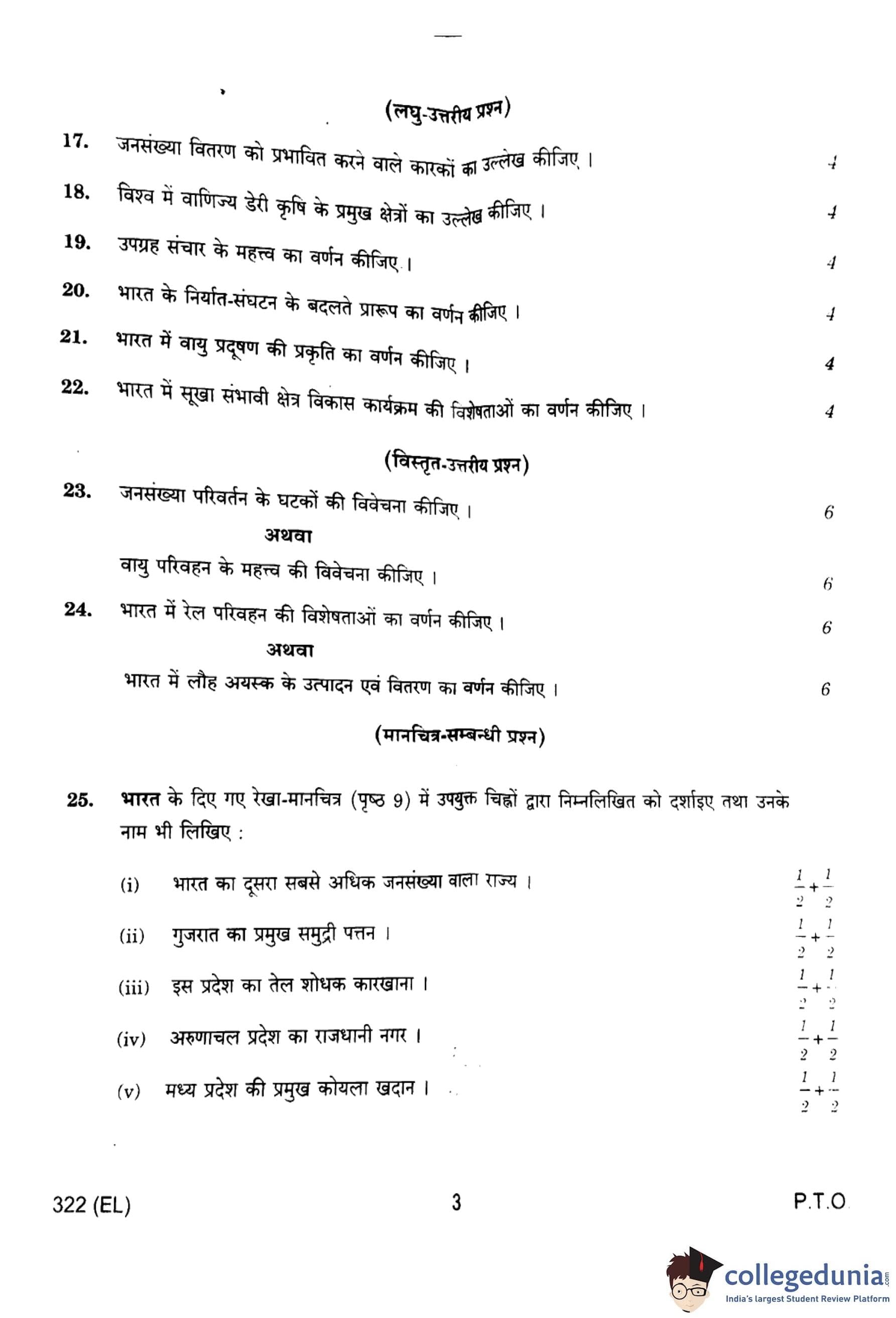
Show the following by suitable symbols in the given outline map of India (on Page 9) and write their names also:
View Solution
Maharashtra is the State with the second largest population in India. It has a population of over 120 million people and is home to Mumbai, the financial capital of India. Maharashtra is a highly industrialized state, with a large economy driven by industries such as textiles, chemicals, and information technology. The state also plays a key role in India’s economy due to its vast industrial base and infrastructure development.
Quick Tip: Maharashtra, with its large population, is one of the most economically developed states in India.
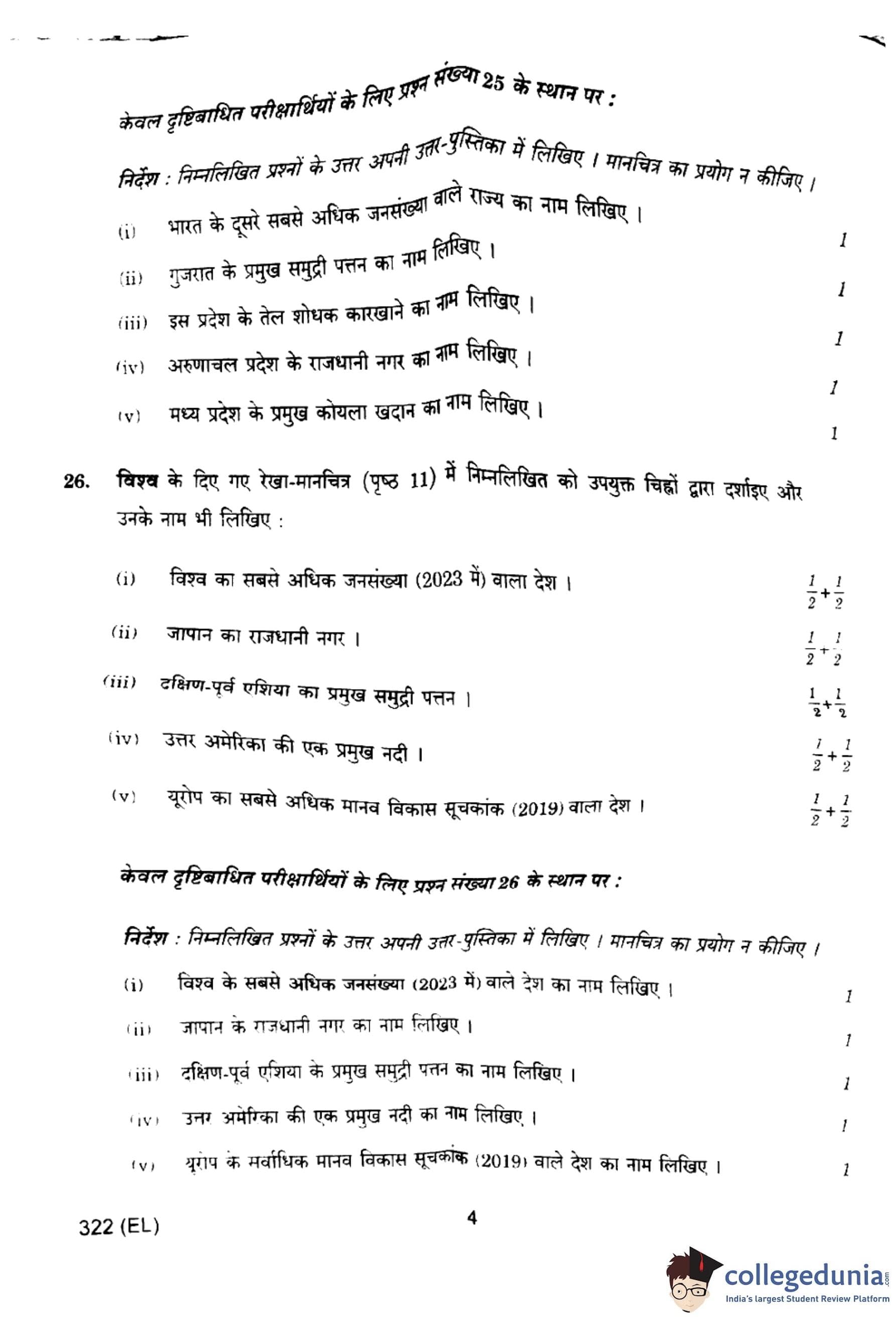
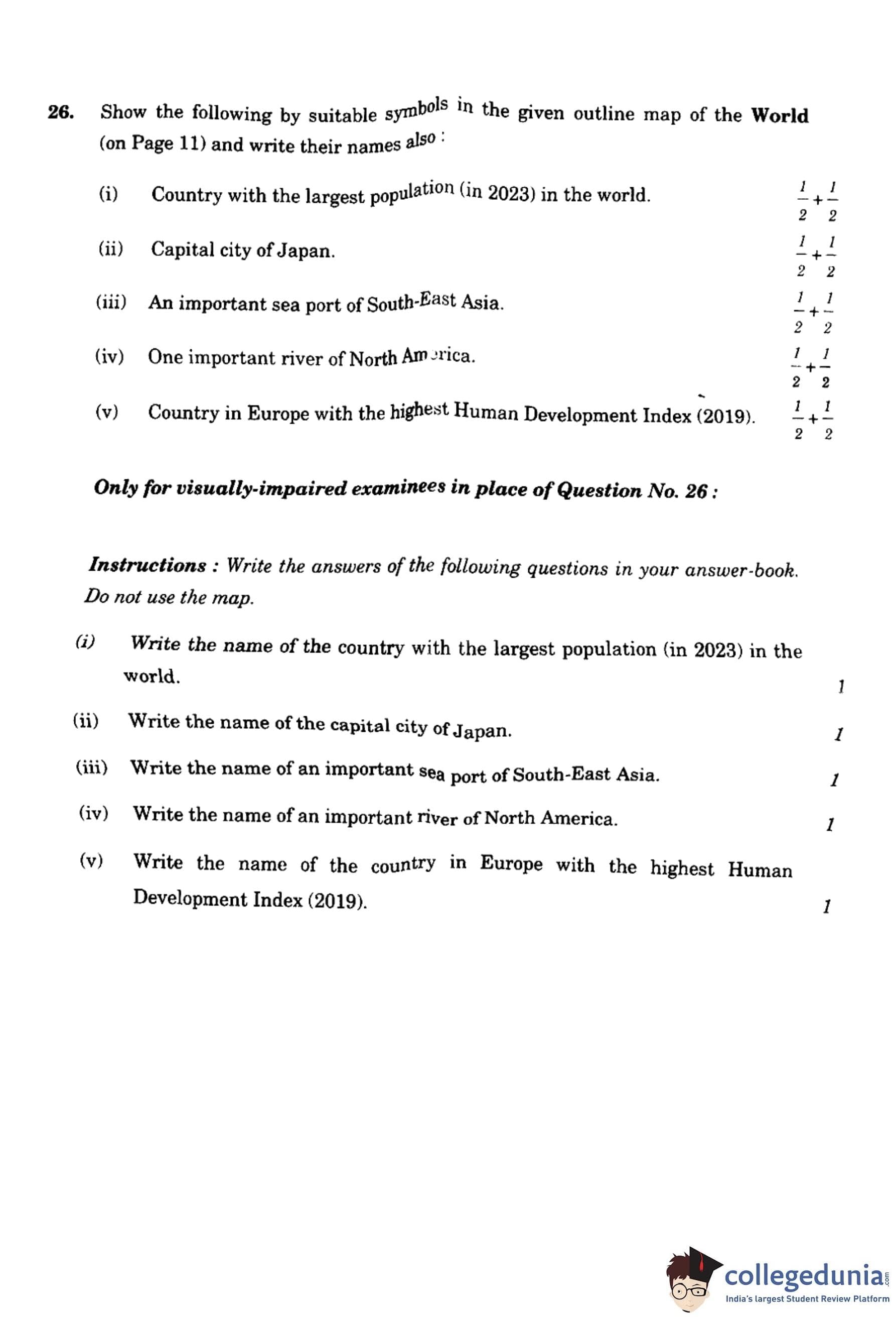
Show the following by suitable symbols in the given outline map of the World (on Page 11) and write their names also:
View Solution
India is the country with the largest population in 2023. With over 1.4 billion people, India has surpassed China in population size. This rapid population growth is due to a combination of factors, including high birth rates and improved healthcare, which has led to longer life expectancy. India’s demographic shift is expected to have a significant impact on its economy, social structures, and infrastructure needs in the coming years.
Quick Tip: India, with its large and young population, is expected to be a major player in global economic trends in the near future.




Comments