




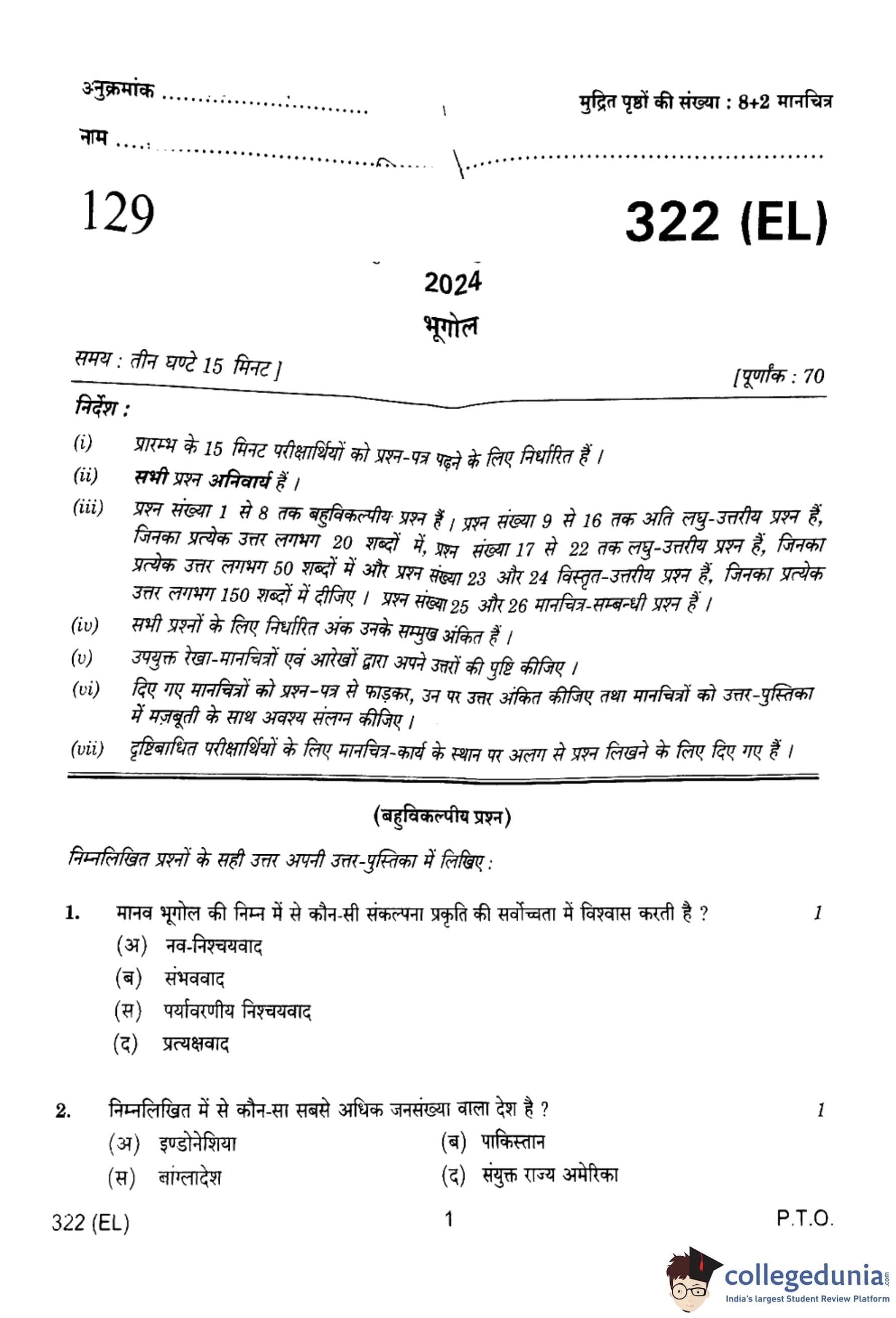
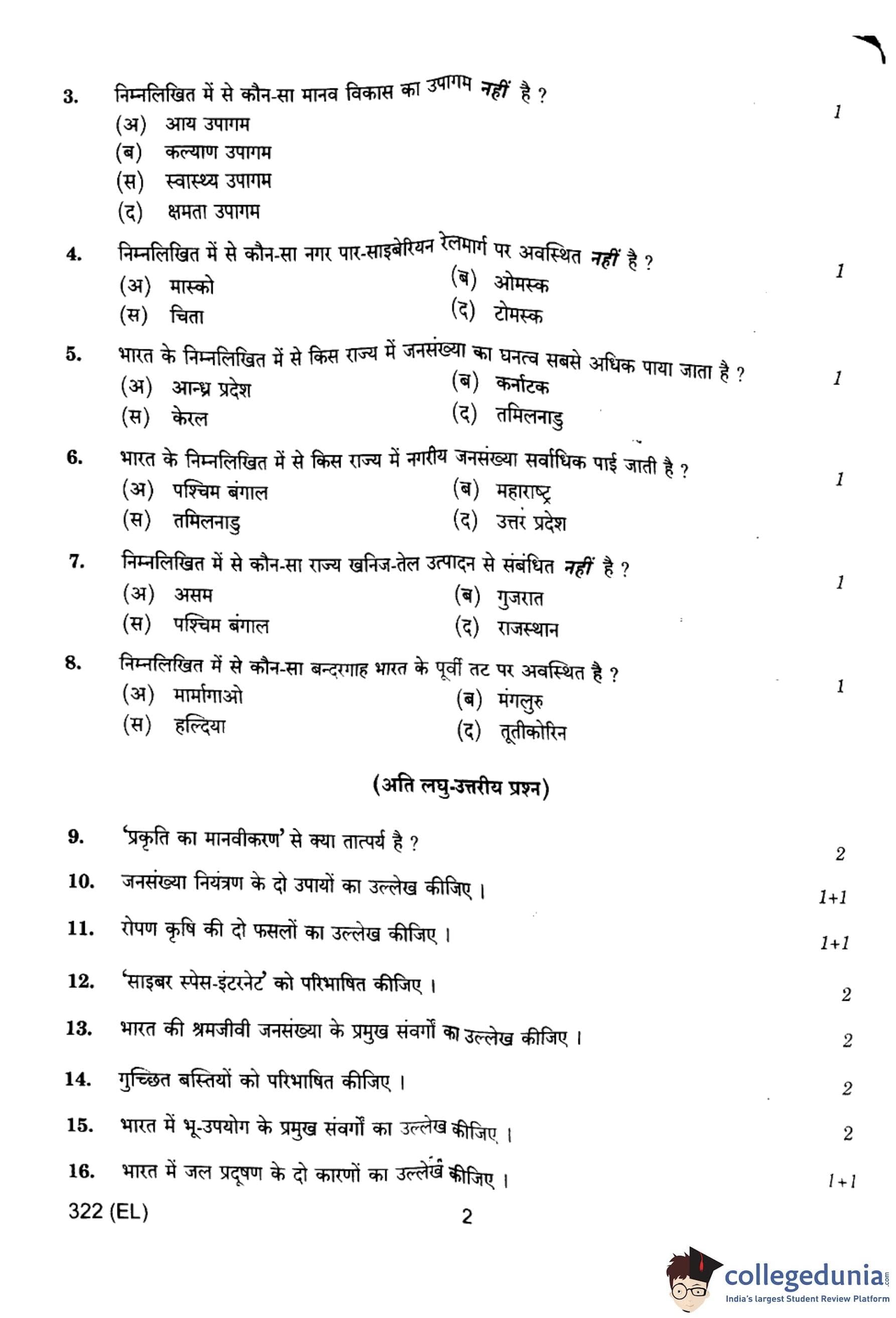
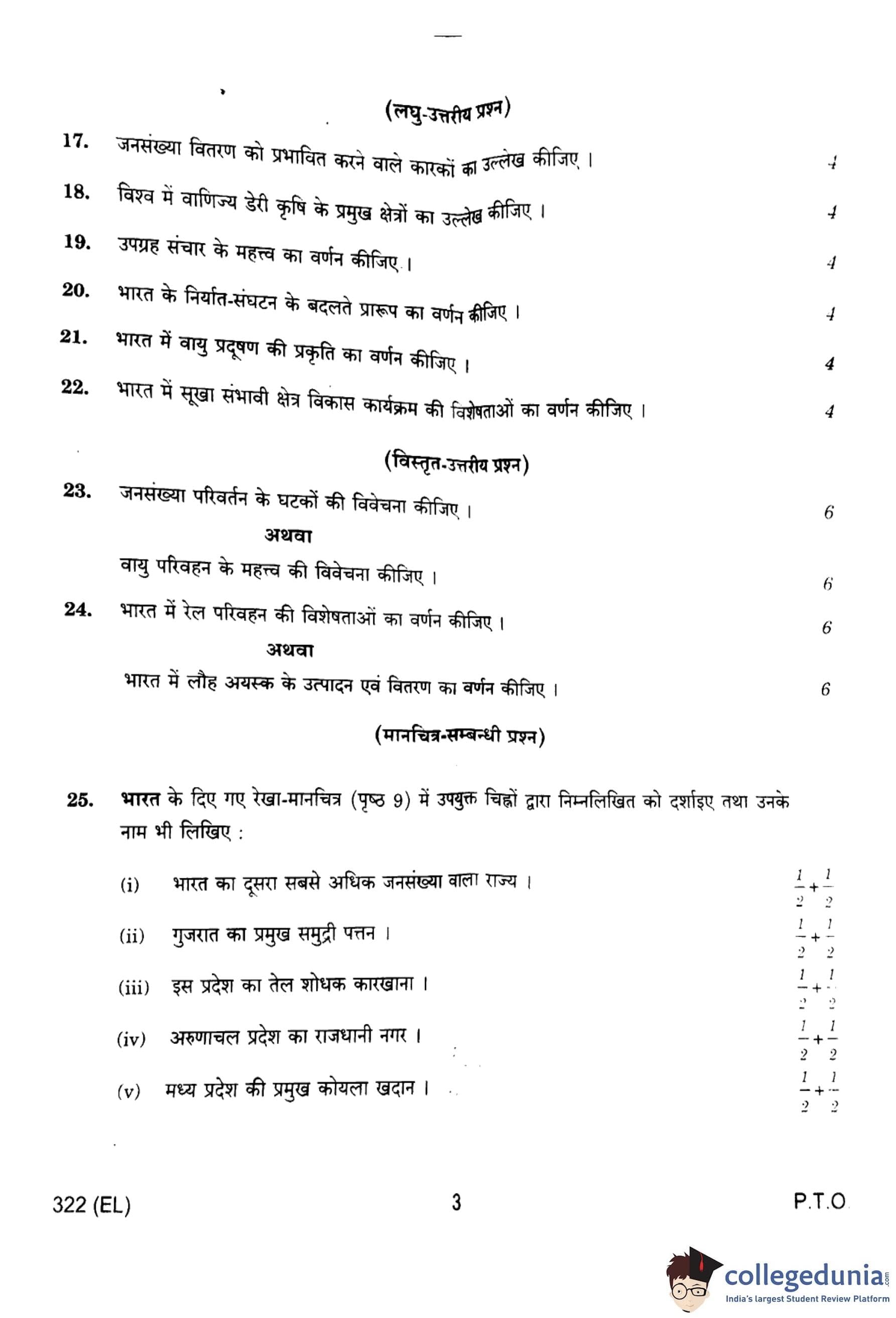
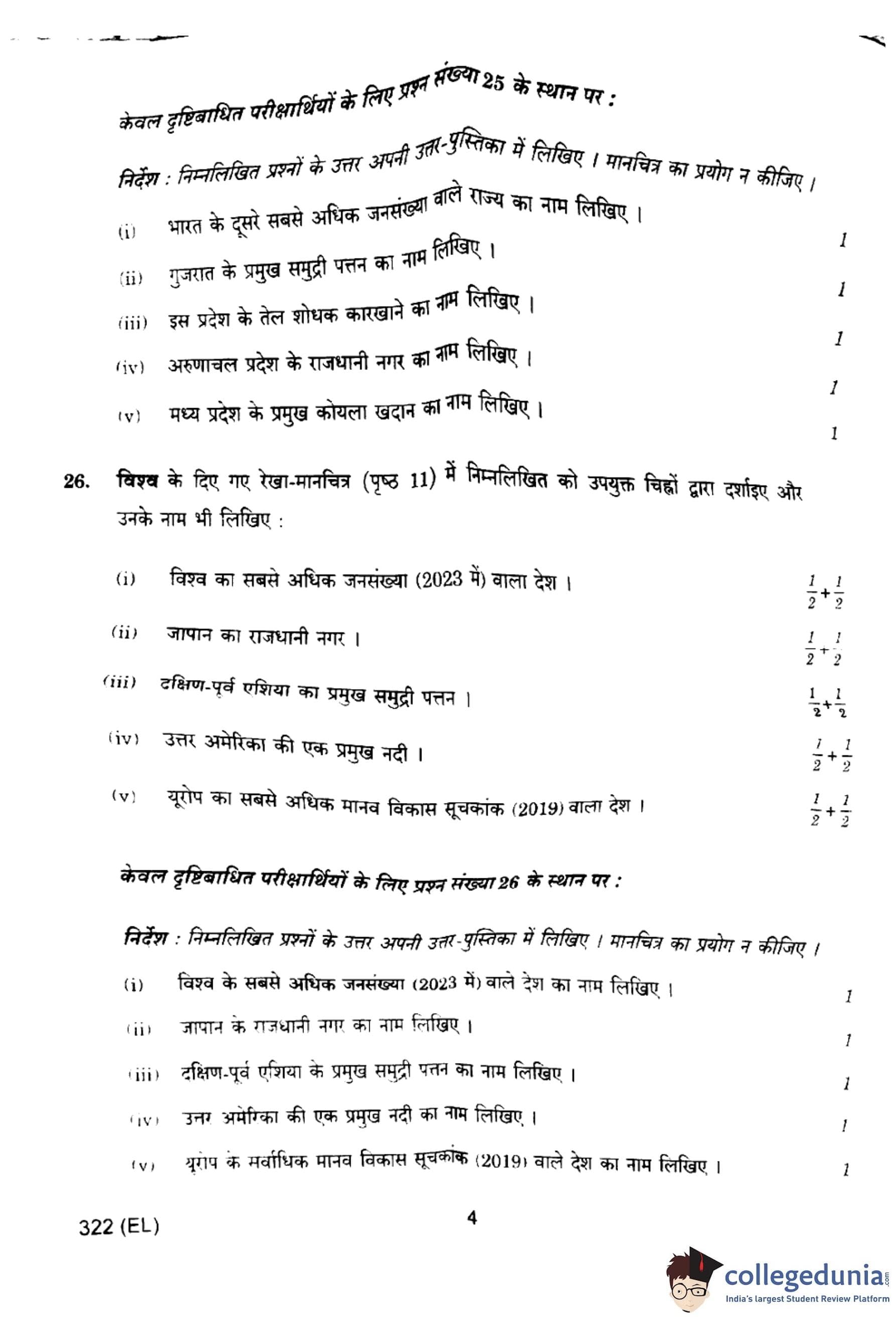
UP Board Class 12 Geography Question Paper 2024 (Code 322 EM) with Solutions
| UP Board Class 12 Geography Question Paper with Answer Key |  Download Download |
Check Solution |
UP Board Class 12 Geography Questions with Solutions
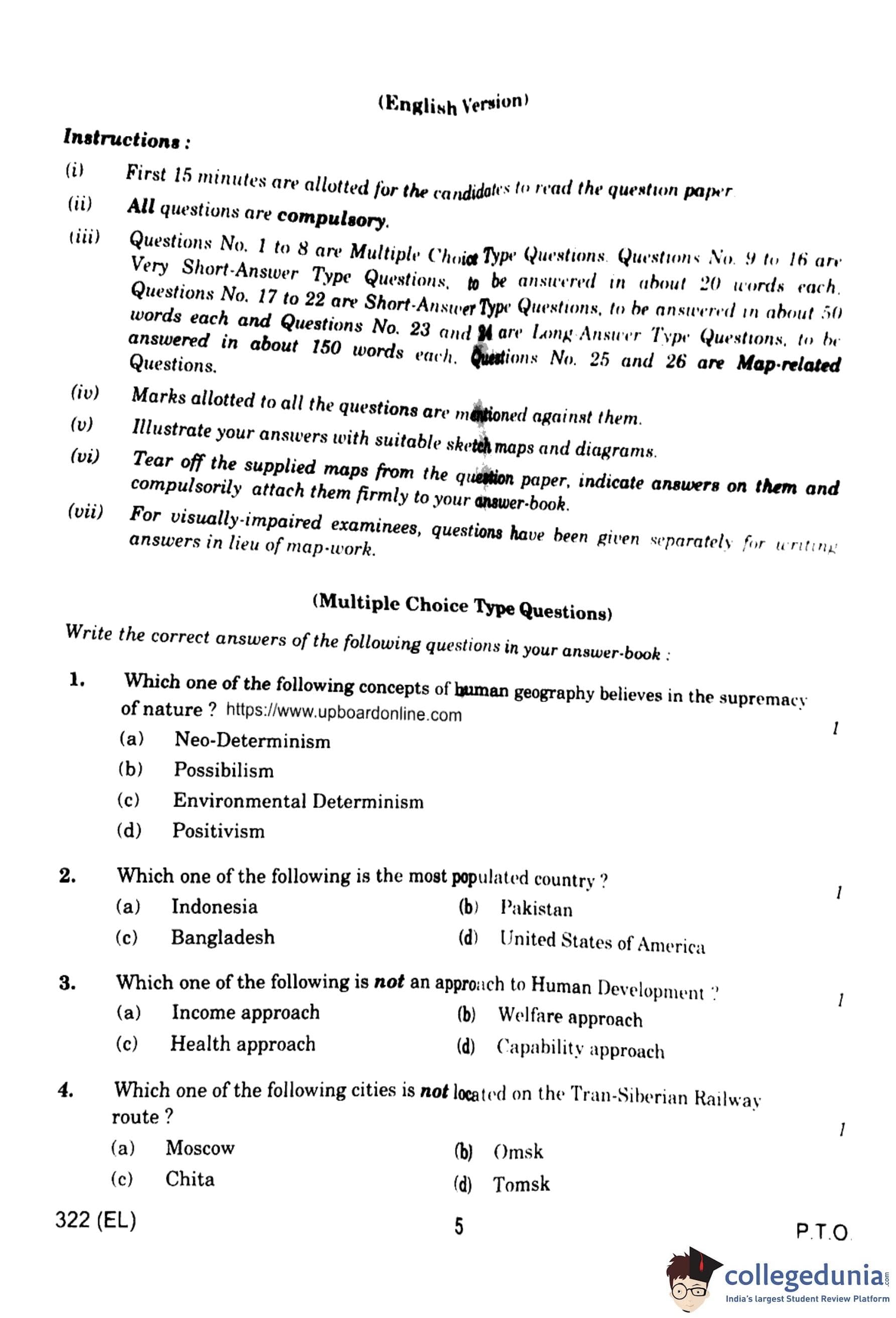
"Human geography is the synthesized study of relationship between human societies and earth's surface." Who among the following scholars has given this definition of Human Geography?
View Solution
Friedrich Ratzel, a geographer, introduced the idea of human geography and its relationship with nature, focusing on the interaction between societies and the earth's surface. Quick Tip: Friedrich Ratzel is considered the father of modern human geography.
Which one of the following is the continent of the fastest growth rate of population?
View Solution
Africa has the highest population growth rate due to high fertility rates and improvements in healthcare, leading to reduced mortality. Quick Tip: Africa leads in population growth due to high birth rates and developing healthcare systems.
For which one of the following crops of plantation agriculture is Malaysia famous?
View Solution
Malaysia is one of the largest producers of natural rubber in the world due to its tropical climate and plantation farming practices. Quick Tip: Malaysia is globally recognized for its rubber plantations.
Suez Canal connects:
View Solution
The Suez Canal is a man-made waterway connecting the Red Sea and the Mediterranean Sea, facilitating maritime trade between Europe and Asia. Quick Tip: The Suez Canal is one of the world's most important shipping lanes.
Which one of the following is the largest linguistic family of India?
View Solution
The Indo-European linguistic family is the largest in India, encompassing languages like Hindi, Bengali, and Marathi. Quick Tip: Indo-European languages dominate northern and central India.
Which one of the following is the largest urban agglomeration (2011) of India?
View Solution
According to the 2011 Census, Greater Mumbai is the largest urban agglomeration in India. Quick Tip: Greater Mumbai, including surrounding suburbs, is India's largest urban agglomeration.
Korba is famous coal mine of:
View Solution
Korba is located in Chhattisgarh and is known for its extensive coal reserves and power production facilities. Quick Tip: Korba is a significant coal-producing region in Chhattisgarh.
The correct descending order of rice-producing states of India is:
View Solution
Uttar Pradesh leads in rice production, followed by West Bengal and Punjab in the correct descending order. Quick Tip: Remember Uttar Pradesh is a top rice producer, followed by West Bengal and Punjab.
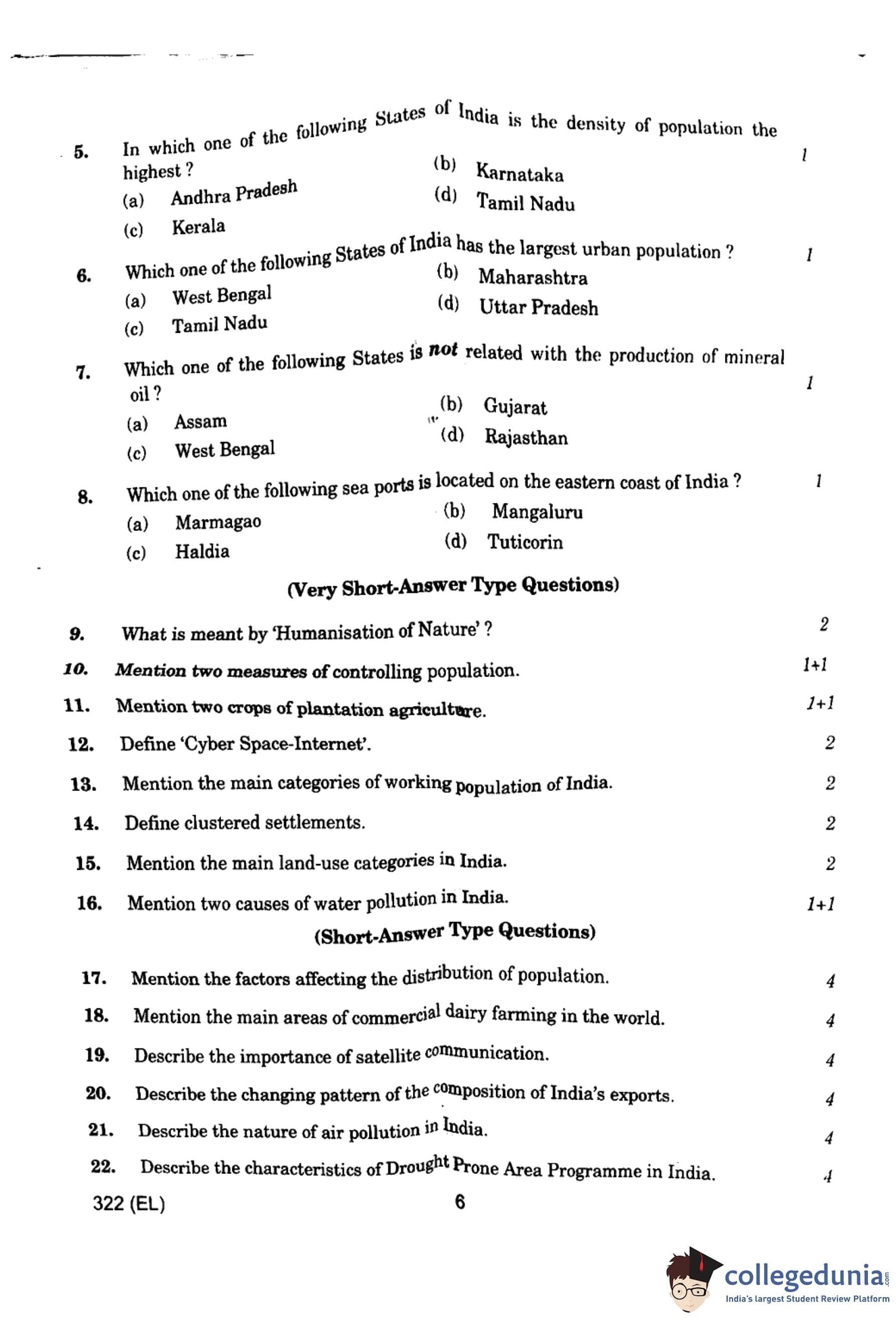
Explain ‘Naturalisation of Human’.
View Solution
Naturalisation of Human refers to the process by which humans adapt to and conform to the natural environment without making significant modifications to it. In this process, human behavior and activities are shaped by the limitations and opportunities provided by the environment. Examples include traditional agricultural practices that rely on seasonal rainfall or nomadic lifestyles adapted to arid regions. This concept highlights the dependency of early human societies on nature and their minimal interference with natural processes, reflecting harmony with the environment.
Quick Tip: Naturalisation of Human reflects the reliance on and harmony with nature, especially in early human societies.
Define ‘Population Density’.
View Solution
Population Density is defined as the number of people living per unit area, typically measured in people per square kilometer. It reflects the spatial distribution of population and helps in understanding resource allocation and infrastructure needs. High population density is often seen in urban areas with abundant resources and employment opportunities, whereas low density is common in remote or harsh environments.
Quick Tip: Population Density = Total Population ÷ Total Land Area (in square kilometers).
Differentiate between Growth and Development.
View Solution
Growth and development are distinct but related concepts:
- Growth refers to a quantitative increase, such as a rise in population, income, or production levels. For example, an increase in agricultural output signifies growth.
- Development refers to a qualitative improvement in living standards, infrastructure, healthcare, and education. It focuses on enhancing human well-being and achieving long-term economic stability. For instance, access to better healthcare and education reflects development.
Quick Tip: Growth measures quantity, while development focuses on quality and sustainability.
Write the names of any two agro-based industries.
View Solution
Agro-based industries rely on agricultural products as raw materials. Two examples are:
1. Cotton Textile Industry: Utilizes cotton as the raw material to produce fabrics and garments, contributing significantly to employment and exports.
2. Sugar Industry: Processes sugarcane to produce sugar and other by-products, playing a vital role in rural economies and the agro-industrial sector.
Quick Tip: Agro-based industries, like cotton textiles and sugar, support rural livelihoods and add value to agricultural produce.
Define Hamleted settlement.
View Solution
Hamleted settlements are small clusters of houses that are physically separated from each other by some distance, such as agricultural fields, forests, or water bodies. These settlements are commonly found in rural areas where natural barriers or the need for agricultural land separates communities. Hamleted settlements often maintain close social ties despite their physical separation.
Quick Tip: Hamleted settlements reflect rural living patterns, shaped by the need for space and agricultural land.
Mention the main methods of rainwater harvesting.
View Solution
The main methods of rainwater harvesting include:
1. Rooftop rainwater harvesting: Collecting rainwater from rooftops and directing it into storage tanks or recharge pits to replenish groundwater.
2. Storing water in ponds and underground tanks: Capturing surface runoff during rains and storing it in ponds, reservoirs, or underground tanks for future use.
Quick Tip: Rainwater harvesting helps conserve water resources and combat water scarcity, especially in drought-prone areas.
Mention any two sources of non-conventional energy.
View Solution
Non-conventional energy sources are renewable and eco-friendly. Two examples are:
1. Solar energy: Harnessed using solar panels to generate electricity or heat water, contributing to clean energy production.
2. Wind energy: Generated by wind turbines, it is a sustainable alternative to fossil fuels for producing electricity.
Quick Tip: Non-conventional energy sources like solar and wind reduce dependence on fossil fuels and mitigate environmental pollution.
Mention the main sources of noise pollution.
View Solution
The main sources of noise pollution include:
1. Vehicular traffic and industrial activities: Heavy traffic and machinery in factories generate significant noise, affecting urban and industrial areas.
2. Construction work and loudspeakers: Activities like building construction and the use of loudspeakers during events contribute to excessive noise levels in cities.
Quick Tip: Reducing vehicular emissions and regulating construction activities can help control noise pollution.
Analyse different stages of Demographic Transition Theory.
View Solution
The Demographic Transition Theory explains the transition of a country’s population from high birth and death rates to low birth and death rates through the following stages:
1. Stage 1 (High Stationary): Both birth and death rates are high, resulting in a stable and low population growth. This stage is characterized by subsistence economies, poor healthcare, and high infant mortality.
2. Stage 2 (Early Expanding): Death rates decline significantly due to improvements in healthcare, sanitation, and nutrition, while birth rates remain high. This leads to a rapid increase in population growth.
3. Stage 3 (Late Expanding): Birth rates begin to decline due to increased urbanization, education, and access to contraception. Death rates remain low, causing population growth to slow down.
4. Stage 4 (Low Stationary): Both birth and death rates are low, leading to a stable and low population growth rate. Countries at this stage enjoy high levels of economic and social development.
5. Stage 5 (Declining): In some cases, birth rates fall below replacement levels, leading to population decline. This stage is seen in some developed countries with aging populations.
Quick Tip: Demographic Transition Theory reflects how socio-economic development impacts population growth, transitioning from high to low growth stages.
Describe the types of tertiary activities.
View Solution
Tertiary activities involve the provision of services rather than goods and can be classified as:
1. Trade and Commerce: These activities focus on buying, selling, and distributing goods through retail and wholesale networks, connecting producers to consumers.
2. Transport and Communication: These services enable the movement of goods and people (e.g., railways, airlines) and the exchange of information (e.g., telecommunication, postal services).
3. Finance and Insurance: This category includes banking, investments, insurance, and other services that manage financial transactions and risks.
4. Public Services: These are governmental and community services such as education, healthcare, administration, and public safety, which cater to the needs of the society.
Quick Tip: Tertiary activities are essential for economic growth, focusing on services like trade, transport, finance, and public welfare.
Throw light on the importance of pipeline transport.
View Solution
Pipeline transport plays a crucial role in modern logistics and infrastructure due to the following reasons:
1. Efficient transportation of liquids and gases: Pipelines are extensively used to transport crude oil, natural gas, water, and refined products efficiently over long distances.
2. Reduced environmental impact: Unlike road or rail transport, pipelines produce fewer emissions and reduce traffic congestion, making them an eco-friendly option.
3. Cost-effectiveness: Pipelines are a cost-effective mode of transport over long distances, especially for bulk materials, as they minimize operational and maintenance costs.
4. Minimal loss and spillage: Pipelines ensure safe and secure transportation with minimal losses, reducing risks of contamination and environmental hazards.
Quick Tip: Pipeline transport is a sustainable and efficient solution for moving bulk liquids and gases over long distances.
Describe the problems of Indian agriculture.
View Solution
Indian agriculture faces several challenges that affect its productivity and sustainability:
1. Dependence on monsoons: A significant portion of Indian agriculture relies on monsoon rains, making it vulnerable to droughts and erratic weather patterns due to the lack of sufficient irrigation facilities.
2. Fragmented land holdings: The division of agricultural land into small and scattered plots leads to inefficiency and limits the adoption of modern farming techniques.
3. Lack of modern technology and credit: Farmers often lack access to advanced machinery, high-quality seeds, and affordable credit facilities, hindering agricultural productivity.
4. Soil degradation and overuse of fertilizers: Excessive use of chemical fertilizers and pesticides has led to soil depletion, reducing fertility and posing environmental risks.
Quick Tip: Addressing irrigation issues, promoting modern farming practices, and tackling soil degradation are vital for improving Indian agriculture.
Explain the concept of sustainable development.
View Solution
Sustainable development refers to the process of meeting the needs of the present without compromising the ability of future generations to meet their own needs. This concept emphasizes the integration of economic, social, and environmental objectives. Key principles of sustainable development include:
1. Focus on environmental conservation and renewable resources: Sustainable development advocates for the protection of ecosystems, reducing pollution, and promoting the use of renewable resources like solar, wind, and hydropower.
2. Balances economic growth, social equity, and environmental protection: It aims for inclusive growth that benefits all sections of society while ensuring minimal harm to the environment.
3. Promotes responsible consumption and production: Encouraging resource efficiency, waste reduction, and sustainable practices in manufacturing and consumption is central to sustainable development.
Quick Tip: t is about balancing current needs with the well-being of future generations.
Discuss the labour participation in India.
View Solution
Labour participation in India is characterized by several factors influencing the workforce dynamics, including:
1. The workforce largely engaged in the unorganized sector: A significant portion of the workforce is involved in informal sectors such as agriculture, small-scale industries, and domestic services. This sector is characterized by low wages, lack of job security, and absence of social benefits.
2. Low participation rates among women: Socio-economic factors, cultural norms, and limited access to education and employment opportunities contribute to the lower workforce participation rate among women, especially in rural areas.
3. Regional disparities in employment opportunities: There are significant differences in labour participation across regions, with urban areas offering more employment opportunities, while rural areas often rely on agriculture.
4. Government initiatives like MGNREGA: Programs like the Mahatma Gandhi National Rural Employment Guarantee Act (MGNREGA) aim to provide guaranteed employment to rural workers, enhancing their participation in the economy and improving livelihoods.
Quick Tip: Labour participation in India is shaped by socio-economic factors, regional disparities, and government policies targeting employment.
Discuss the factors influencing the distribution and growth of population in the world.
View Solution
1. Factors Influencing Distribution of Population:
- Physical factors: Climate, soil fertility, and availability of water significantly influence the distribution of population. Fertile plains, moderate climates, and abundant water resources typically support higher population densities. Regions like river valleys (e.g., Nile, Ganges) are densely populated due to their fertile soils and easy access to water for irrigation and daily needs. Conversely, harsh climates like deserts and polar regions have low population densities due to the difficulty in sustaining human life.
- Economic factors: Industrialization, urbanization, and the availability of jobs play a crucial role in population distribution. Industrial hubs, metropolitan cities, and areas with strong economic opportunities attract migrants from rural areas, leading to higher population density in urban regions. The presence of transport networks, commercial opportunities, and infrastructure also contributes to urbanization and the growth of cities.
- Social and political stability: Regions with social stability, good governance, and better healthcare systems tend to support larger populations. Political stability leads to better economic conditions, which encourages people to settle in these areas. Countries that invest in education, healthcare, and welfare programs often have a more stable and growing population.
2. Factors Influencing Population Growth:
- Birth rate, death rate, and migration patterns: Population growth is heavily influenced by birth rates (number of live births per 1,000 people), death rates (number of deaths per 1,000 people), and migration. A high birth rate and low death rate contribute to population growth, while high death rates and low birth rates can lead to population decline. Migration, both internal and international, can also lead to population shifts and growth in certain regions.
- Improvements in healthcare reducing mortality rates: Advances in healthcare, medicine, and sanitation have significantly reduced mortality rates, especially infant and child mortality. Better access to healthcare services, vaccines, and improved nutrition have increased life expectancy and reduced the number of deaths, contributing to population growth.
- Socio-economic factors, including education and cultural norms: Education, particularly for women, plays a significant role in determining family size and birth rates. In societies with high literacy rates and better access to education, birth rates tend to be lower due to increased awareness and the adoption of family planning practices. Additionally, cultural norms and religious beliefs can influence birth rates, with some societies encouraging larger families, while others promote smaller family sizes due to economic considerations.
Quick Tip: Population distribution is influenced by physical, economic, and political factors, while growth is determined by birth rates, death rates, healthcare, and migration patterns.
Explain the main bases of international trade.
View Solution
1. Availability of surplus production for export:
- Countries with a surplus production of goods, whether agricultural, industrial, or technological, are more likely to engage in international trade. These surpluses allow them to sell products to foreign markets, increasing their economic revenue and fostering trade relations. For example, India exports agricultural products like rice and tea, while Germany exports high-tech machinery and automobiles.
2. Geographical location and access to ports:
- The location of a country plays a significant role in determining its trade patterns. Nations that are geographically located near important sea routes or have natural harbors benefit from easier access to international markets. For instance, Singapore, being strategically located on key shipping routes, serves as one of the busiest ports for global trade. Access to ports reduces transportation costs and encourages more trade.
3. Comparative advantage in production due to factors like natural resources, labor, or technology:
- A country’s comparative advantage in production is a critical factor in international trade. Countries tend to export goods and services in which they have an advantage in terms of natural resources, labor costs, or technological capabilities. For example, Saudi Arabia exports oil due to its vast reserves, while Japan exports high-tech electronics due to its technological advancements.
4. Trade agreements and political relations among countries:
- Bilateral and multilateral trade agreements significantly influence the flow of trade between nations. Trade agreements such as NAFTA (North American Free Trade Agreement) or the European Union (EU) allow countries to trade with reduced tariffs and barriers. Political relations also play a crucial role in facilitating or hindering trade; favorable diplomatic relations can lead to stronger trade agreements, while conflicts or sanctions can disrupt trade.
5. Infrastructure like transport and communication networks:
- The quality of a country’s infrastructure is crucial in determining how efficiently it can engage in international trade. Well-developed transport and communication networks, including roads, railways, airports, and ports, enable the quick movement of goods and information. Efficient logistics systems reduce costs, improve the speed of trade, and make a country more competitive in the global market. For instance, the extensive and modern infrastructure in the United States and China facilitates smooth trade flows.
Quick Tip: Trade is influenced by surplus production, geographical location, comparative advantage, trade agreements, and infrastructure, all of which shape international trade flows.
Examine the problems of slums in India.
View Solution
Slums in India face numerous problems that affect the quality of life for millions of people. These issues include:
1. Overcrowding and Poor Living Conditions:
- Slums are often characterized by overcrowded housing, with many families living in cramped spaces. This lack of space and poor ventilation contributes to unhealthy living conditions. Inadequate access to clean water, proper sanitation, and waste disposal systems exacerbates these conditions. The absence of basic amenities such as reliable electricity and clean drinking water increases the vulnerability of residents to diseases and makes everyday life more challenging.
2. High Levels of Unemployment and Poverty:
- Slums often house individuals from lower socio-economic backgrounds who struggle to find stable, well-paying employment. High levels of unemployment and underemployment lead to persistent poverty, making it difficult for families to afford basic necessities like food, healthcare, and education. The lack of formal employment opportunities further perpetuates the cycle of poverty, limiting residents' prospects for upward mobility.
3. Health Risks:
- Due to the lack of proper sanitation, limited healthcare access, and overcrowding, slum dwellers face significant health risks. The unhygienic conditions in slums contribute to the spread of infectious diseases such as malaria, tuberculosis, and waterborne illnesses like cholera and dysentery. The absence of proper healthcare facilities and the high cost of private healthcare make it difficult for slum residents to access treatment, leading to high mortality rates, especially among children.
4. Vulnerability to Natural Disasters and Evictions:
- Slums are often located in areas prone to flooding, landslides, or other natural disasters. Poorly constructed housing and inadequate infrastructure make these areas highly vulnerable during extreme weather events like heavy rains or cyclones. Additionally, slum residents face the constant threat of eviction, as many live on land without legal ownership or protection. Government policies and urban development projects often result in forced displacement, further destabilizing the lives of slum dwellers.
The problems of slums in India are complex and multifaceted, requiring integrated approaches that address infrastructure, employment, healthcare, and housing to improve the lives of millions of people living in these conditions.
Quick Tip: Slums in India face overcrowding, poverty, poor healthcare, and vulnerability to disasters, making comprehensive development efforts essential for improvement.
Evaluate the role of road transport in the economic development of India.
View Solution
Road transport plays a critical role in the economic development of India. It connects people, industries, and regions, contributing significantly to the country’s growth. The key contributions include:
1. Connects Rural and Urban Areas:
- Road transport acts as a vital link between rural and urban areas, facilitating the movement of goods and people. This connectivity is especially important for farmers and small producers who depend on roads to access markets in urban centers. It helps rural areas receive essential goods, services, and information, thus improving the quality of life and integrating rural economies with urban ones.
2. Supports Industries:
- Road transport is crucial for the smooth functioning of industries by enabling the rapid transportation of raw materials to factories and finished products to markets. Industries like manufacturing, construction, and agriculture heavily depend on road networks for supply chain management. The flexibility and efficiency of road transport reduce production costs and contribute to industrial growth. For example, industries like cement, steel, and textiles rely on roads for timely delivery of inputs and products.
3. Contributes to Employment:
- The road transport sector generates significant employment opportunities in various sub-sectors, including logistics, freight, passenger transport, and tourism. Millions of people work in transportation-related jobs, such as truck drivers, logistics managers, and vehicle maintenance personnel. Additionally, the development of road networks has contributed to the growth of the tourism industry by making remote destinations more accessible, thus creating more jobs in hospitality and related services.
4. Helps in Regional Development:
- The development of road transport fosters regional development by improving access to markets, services, and resources. Well-maintained roads enhance the flow of goods, reduce transportation costs, and encourage investment in rural and remote areas. For instance, roads connecting industrial hubs with agricultural regions help stimulate trade and boost regional economies. This connectivity ensures that regions with potential for growth can thrive, contributing to balanced economic development across the country.
In conclusion, road transport is a backbone of India’s economic development, facilitating trade, promoting industrial growth, generating employment, and ensuring regional integration. With continued investment in road infrastructure, the country’s economic potential will further expand.
Quick Tip: Road transport is key to economic development in India, linking rural areas, supporting industries, generating employment, and promoting regional growth.
Show the following by suitable symbols in the given outline map of India (on Page 9) and write their names also:
View Solution
Bihar has the highest population density in India. With a population density exceeding 1,100 people per square kilometer, Bihar is the most densely populated state in India. The high density is due to the state's relatively small land area and a large population. Despite facing challenges related to infrastructure and development, Bihar's population density highlights the demand for improved social and economic resources in the region.
Quick Tip: Bihar’s high population density underscores the need for better infrastructure, healthcare, and social services.
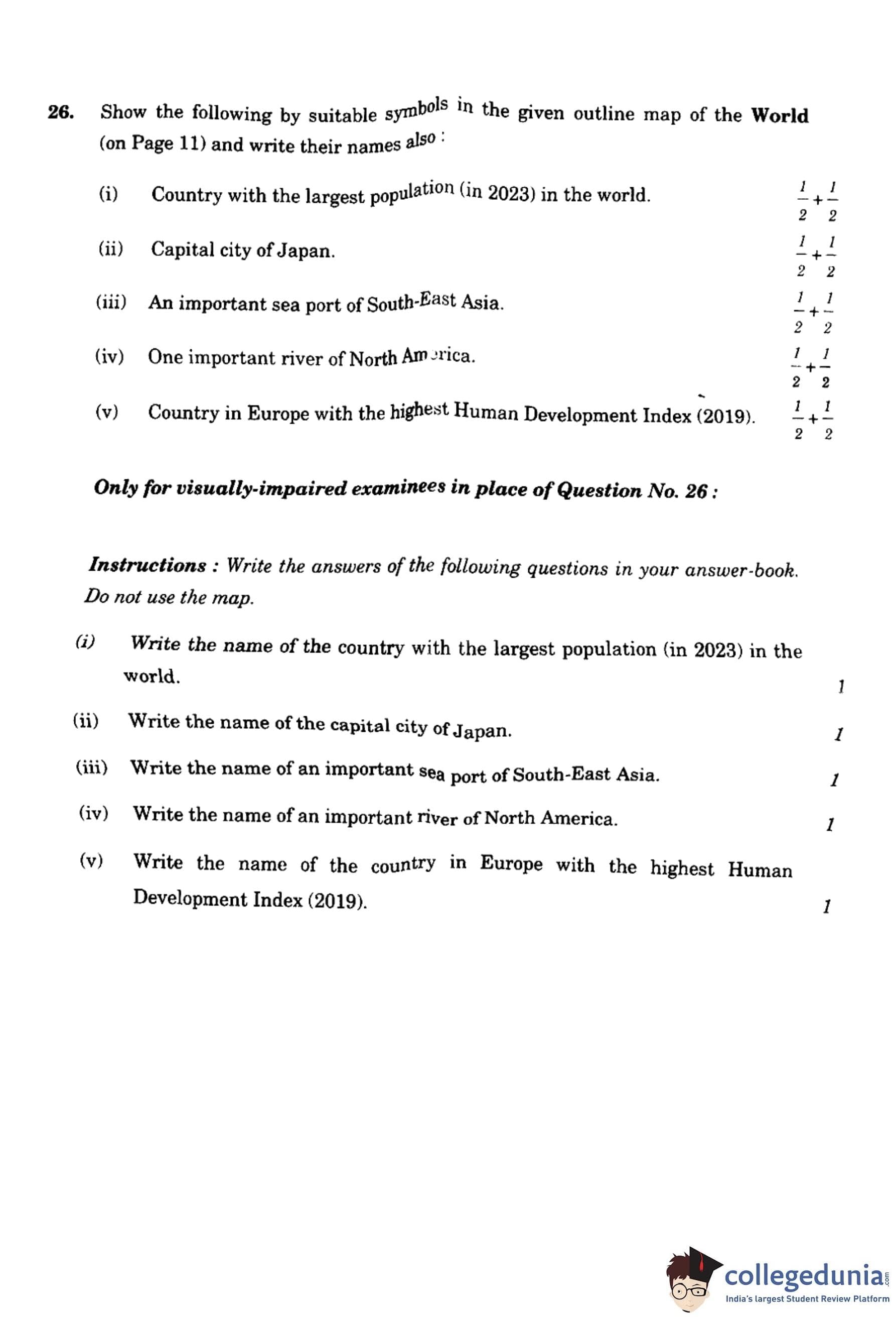
Show the following by suitable symbols in the given outline map of the World (on Page 11) and write their names also:
View Solution
Norway has the highest Human Development Index (HDI) in the world. Norway consistently ranks at the top of the HDI due to its excellent healthcare, education system, and high standard of living. The country's high GDP per capita, along with its focus on social welfare and environmental sustainability, has helped it secure the top position. Norway also has one of the lowest poverty rates and provides strong social security benefits to its citizens.
Quick Tip: Norway ranks highest in HDI due to its comprehensive social welfare programs and high quality of life.




Comments