




Haryana Board conducted the Class 12 Physical Education (NSQF) Board Exam on April 1, 2026. Class 12 Physical Education (NSQF) Question Paper with Solution PDF is available here for download.
The Haryana Board Class 12 2026 Physical Education (NSQF) paper covers important topics from fitness training, sports skills, health education, yoga, and sports management. Students should focus on improving physical fitness, understanding the principles of sports training, and learning the rules and techniques of various sports. The exam is typically marked out of 100 marks, with 70 marks for the theory paper and 30 marks for practical/internal assessment.
Haryana Board Class 12 2026 Physical Education (NSQF) Question Paper with Solution PDF
| Haryana Board Class 12 Physical Education (NSQF) Question Paper 2026 | Download PDF | Check Solution |
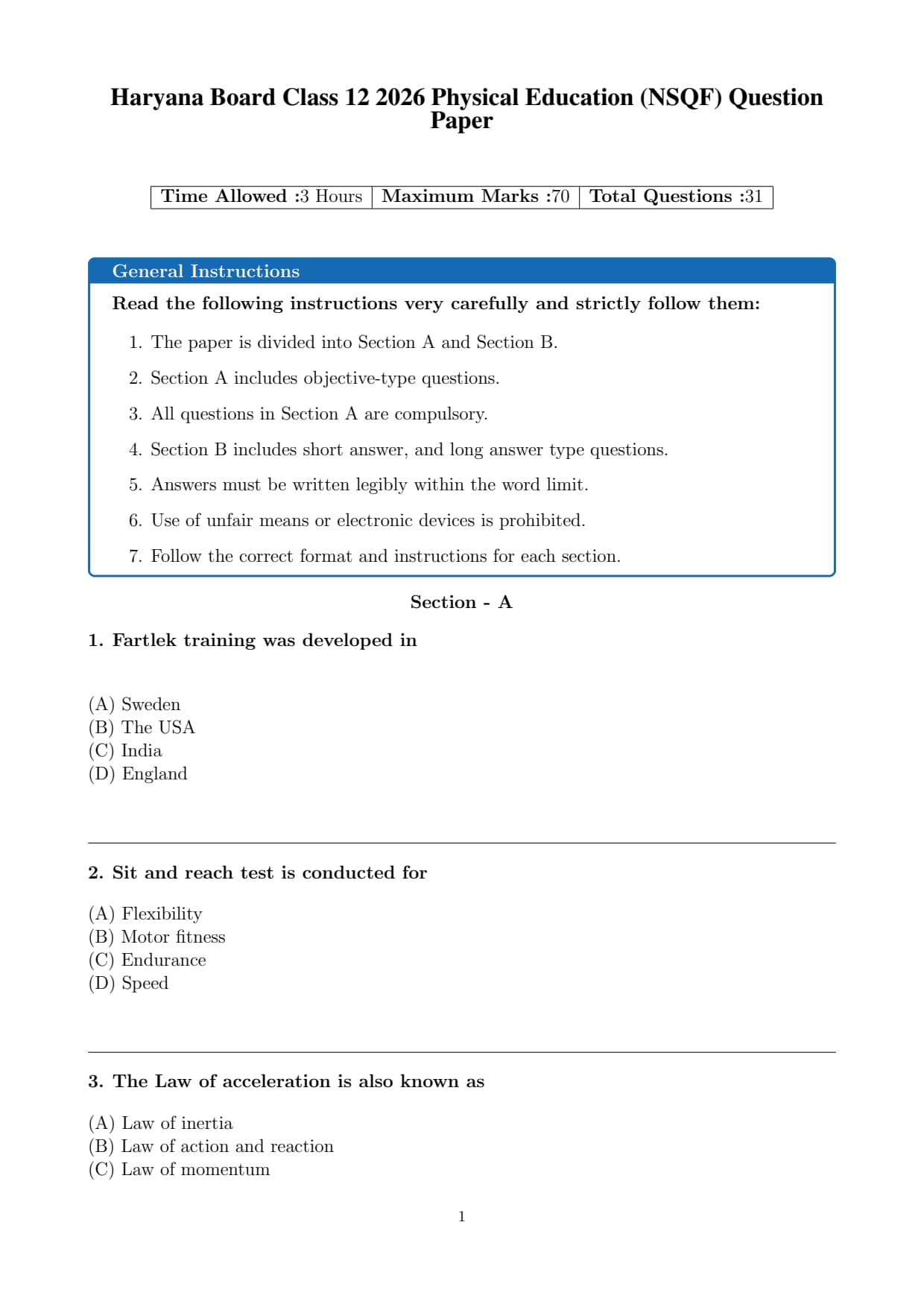
Fartlek training was developed in
Sit and reach test is conducted for
The Law of acceleration is also known as
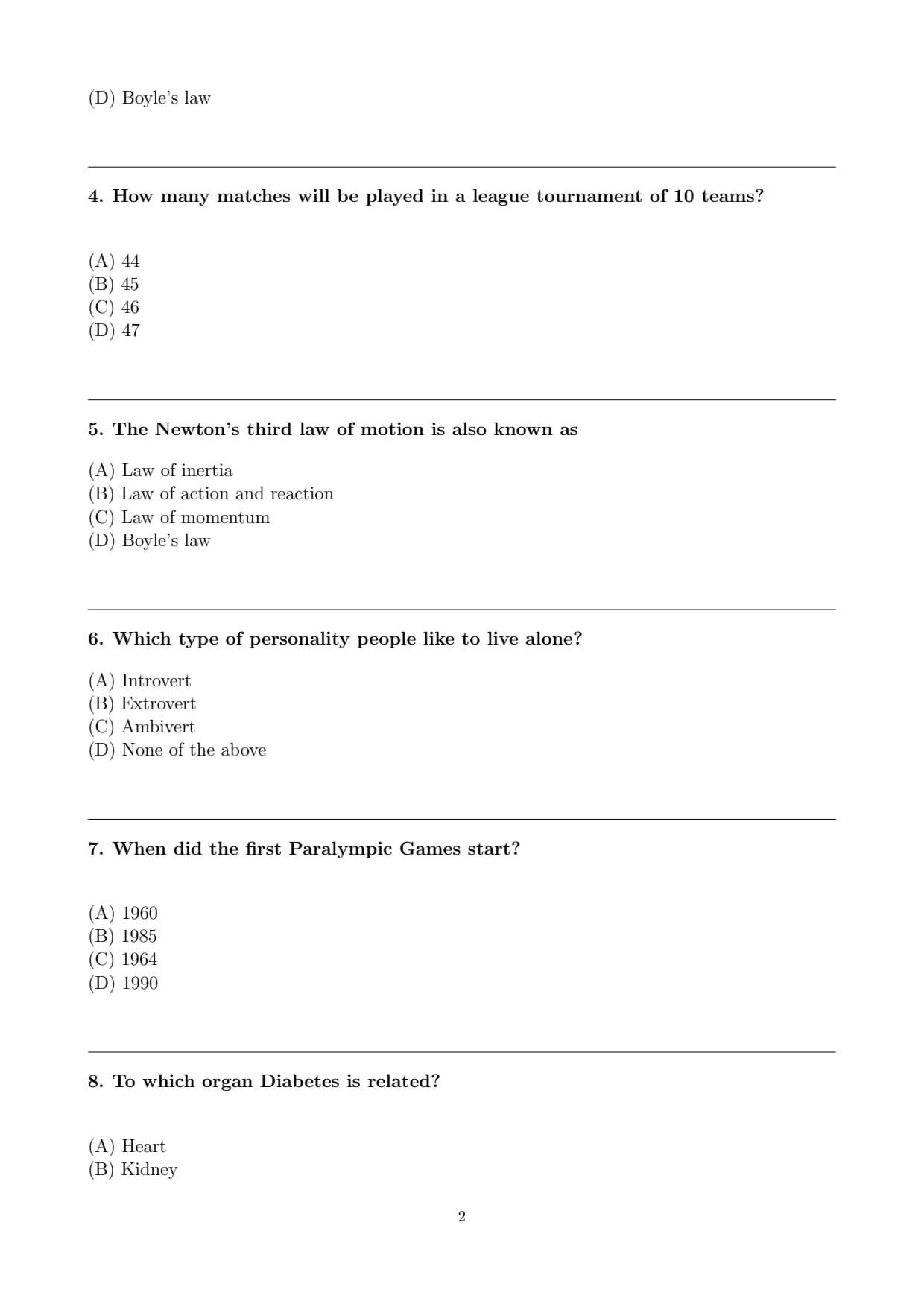
How many matches will be played in a league tournament of 10 teams?
The Newton’s third law of motion is also known as
Which type of personality people like to live alone?
When did the first Paralympic Games start?
To which organ Diabetes is related?
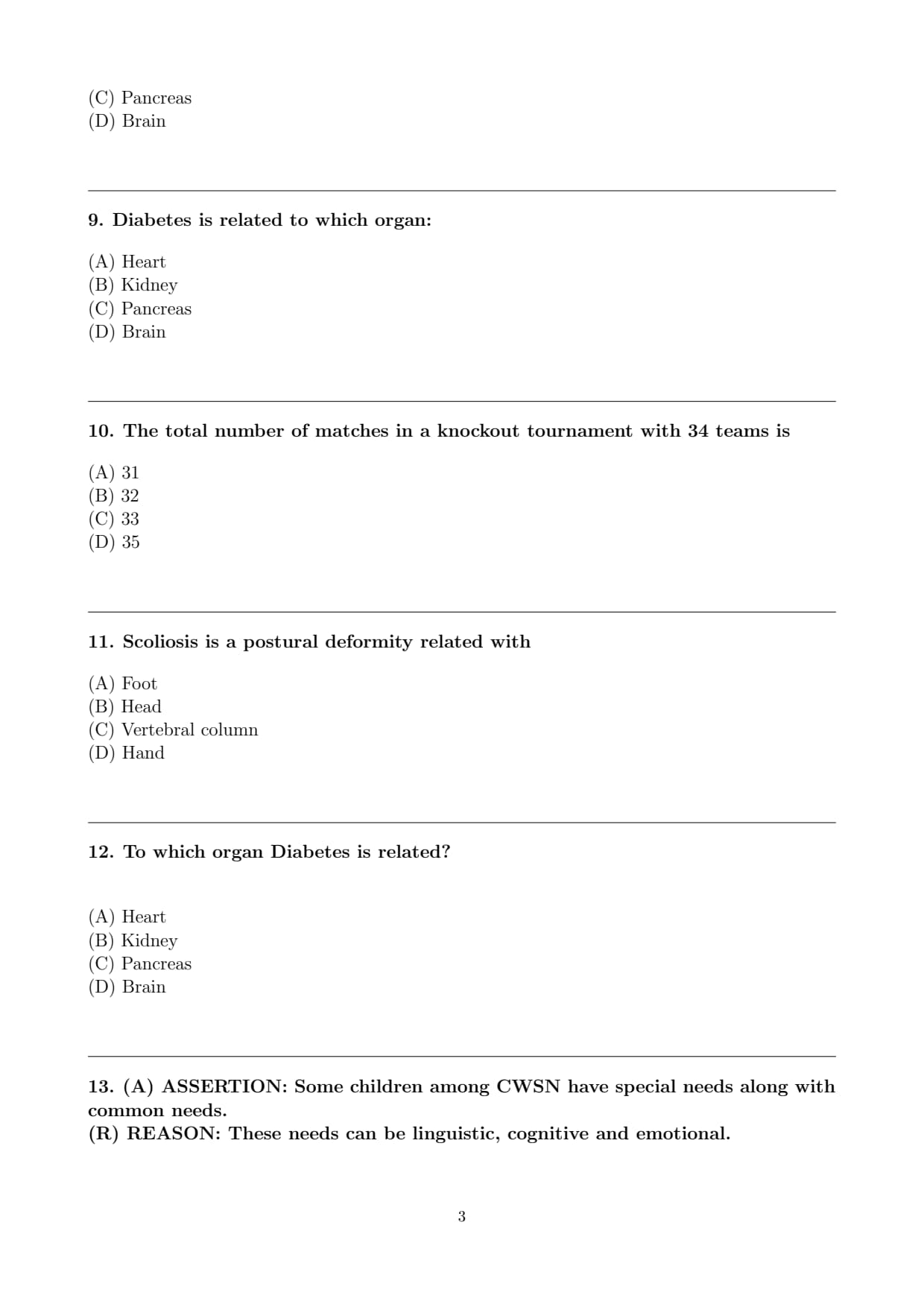
Diabetes is related to which organ:
The total number of matches in a knockout tournament with 34 teams is
Scoliosis is a postural deformity related with
To which organ Diabetes is related?
(A) ASSERTION: Some children among CWSN have special needs along with common needs.
(R) REASON: These needs can be linguistic, cognitive and emotional.
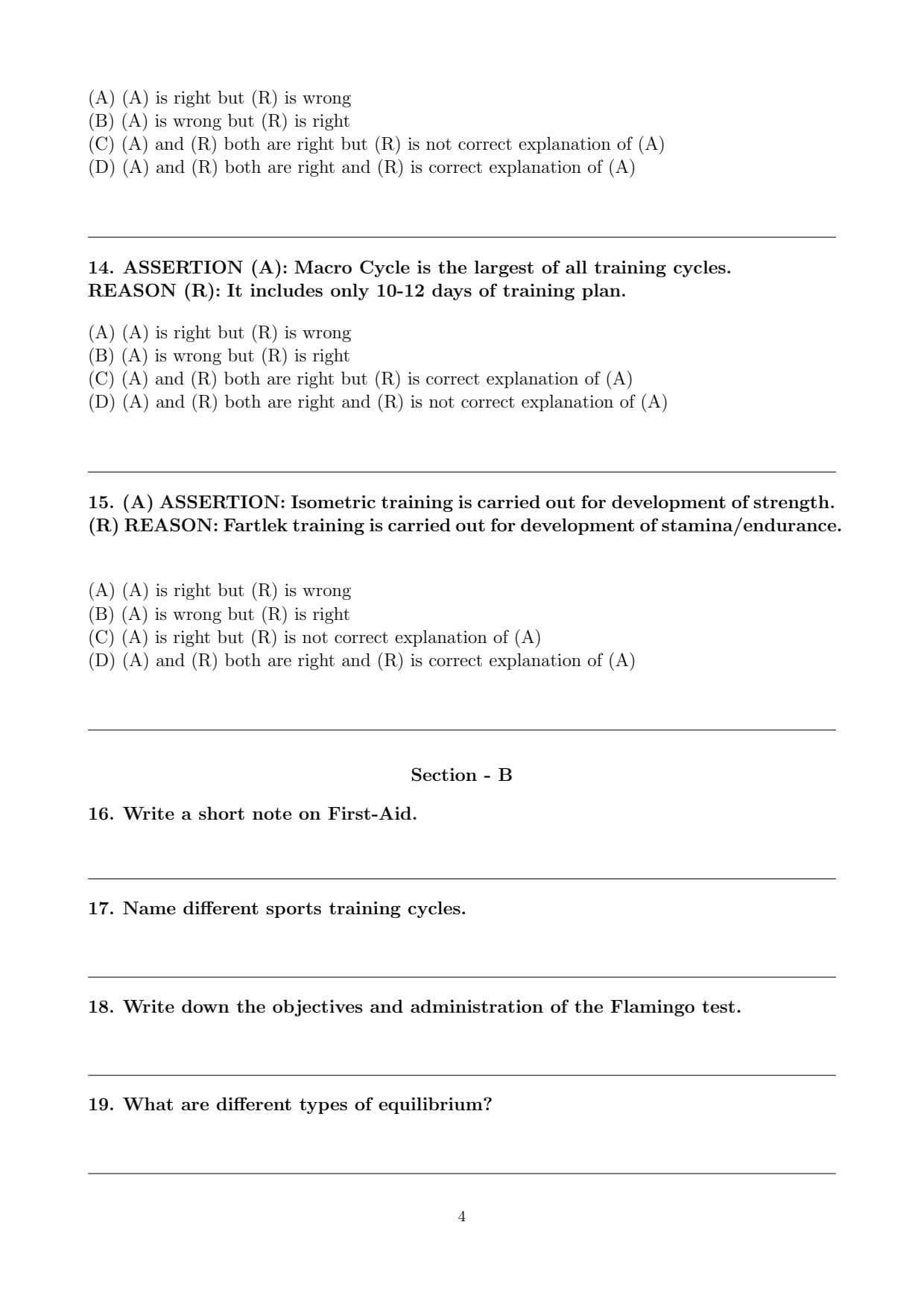
ASSERTION (A): Macro Cycle is the largest of all training cycles.
REASON (R): It includes only 10-12 days of training plan.
(A) ASSERTION: Isometric training is carried out for development of strength.
(R) REASON: Fartlek training is carried out for development of stamina/endurance.
Write a short note on First-Aid.
Name different sports training cycles.
Write down the objectives and administration of the Flamingo test.
What are different types of equilibrium?
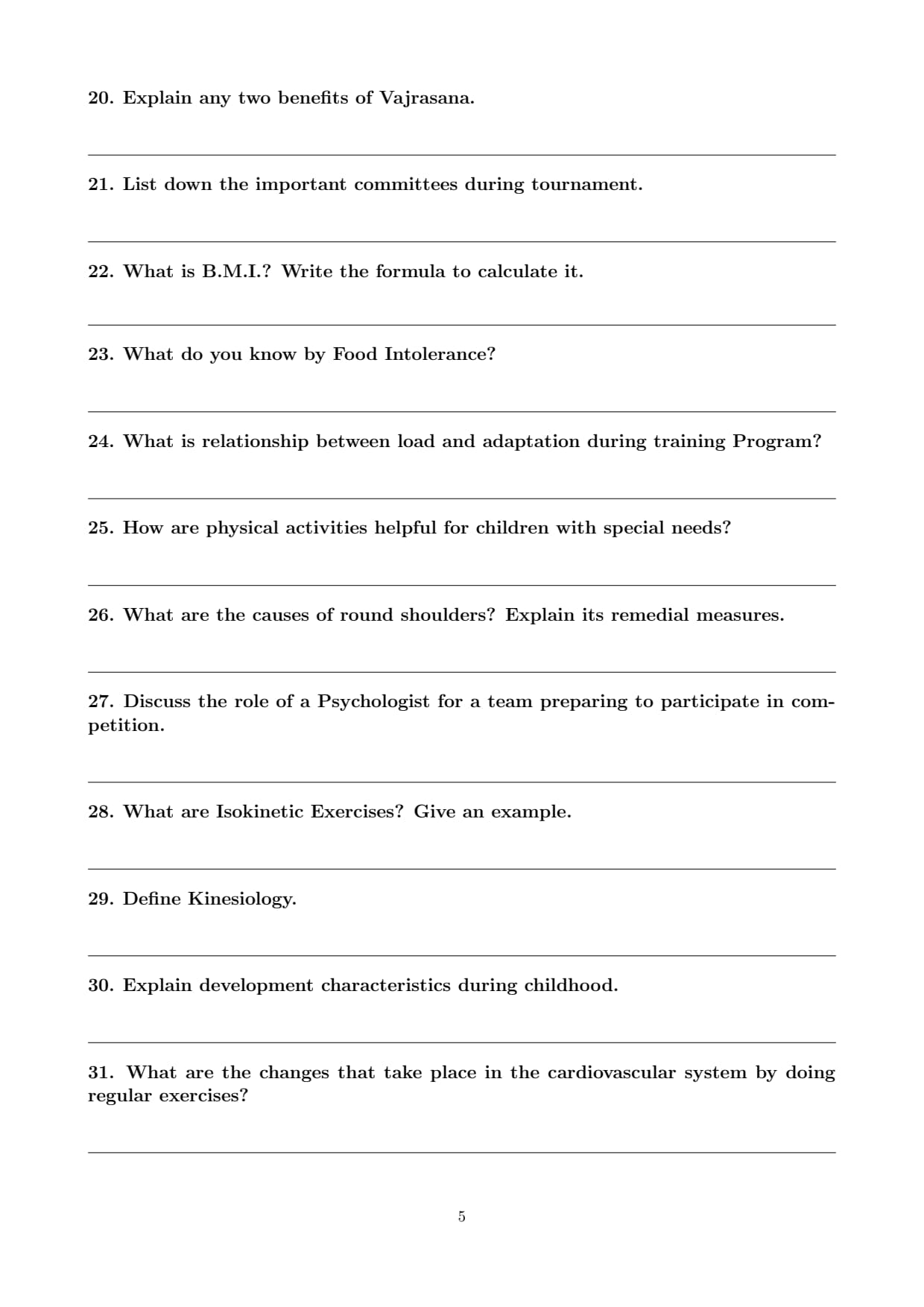
Explain any two benefits of Vajrasana.
List down the important committees during tournament.
What is B.M.I.? Write the formula to calculate it.
What do you know by Food Intolerance?
What is relationship between load and adaptation during training Program?
How are physical activities helpful for children with special needs?
What are the causes of round shoulders? Explain its remedial measures.
Discuss the role of a Psychologist for a team preparing to participate in competition.
What are Isokinetic Exercises? Give an example.
Define Kinesiology.
Explain development characteristics during childhood.
What are the changes that take place in the cardiovascular system by doing regular exercises?



Comments