




The Council for the Indian School Certificate Examinations (CISCE) successfully conducted the ICSE Class 10 History & Civics – H.C.G. Paper 1 Exam 2026 on March 16, 2026. The ICSE Board Class 10 History and Civics (H.C.G. Paper 1) Question Paper with Solution PDF is now available for download.
The ICSE Board Class 10 History & Civics – H.C.G. Paper 1 covered key topics from the Indian National Movement, world history, the Constitution of India, and the structure of government. Students should focus on understanding historical events, important dates, constitutional features, and functions of different branches of government. The exam is marked out of 100, with 80 marks for the theory paper and 20 for internal assessment.
ICSE Board Class 10 2026 History & Civics – H.C.G. Paper 1 Question Paper with Solution PDF
| ICSE Board Class 10 History & Civics – H.C.G. Paper 1 Question Paper 2026 | Download PDF | Check Solution |
Choose the correct option to replace the underlined word. The collection of State Revenue falls under the Consultative Jurisdiction of the High Court.
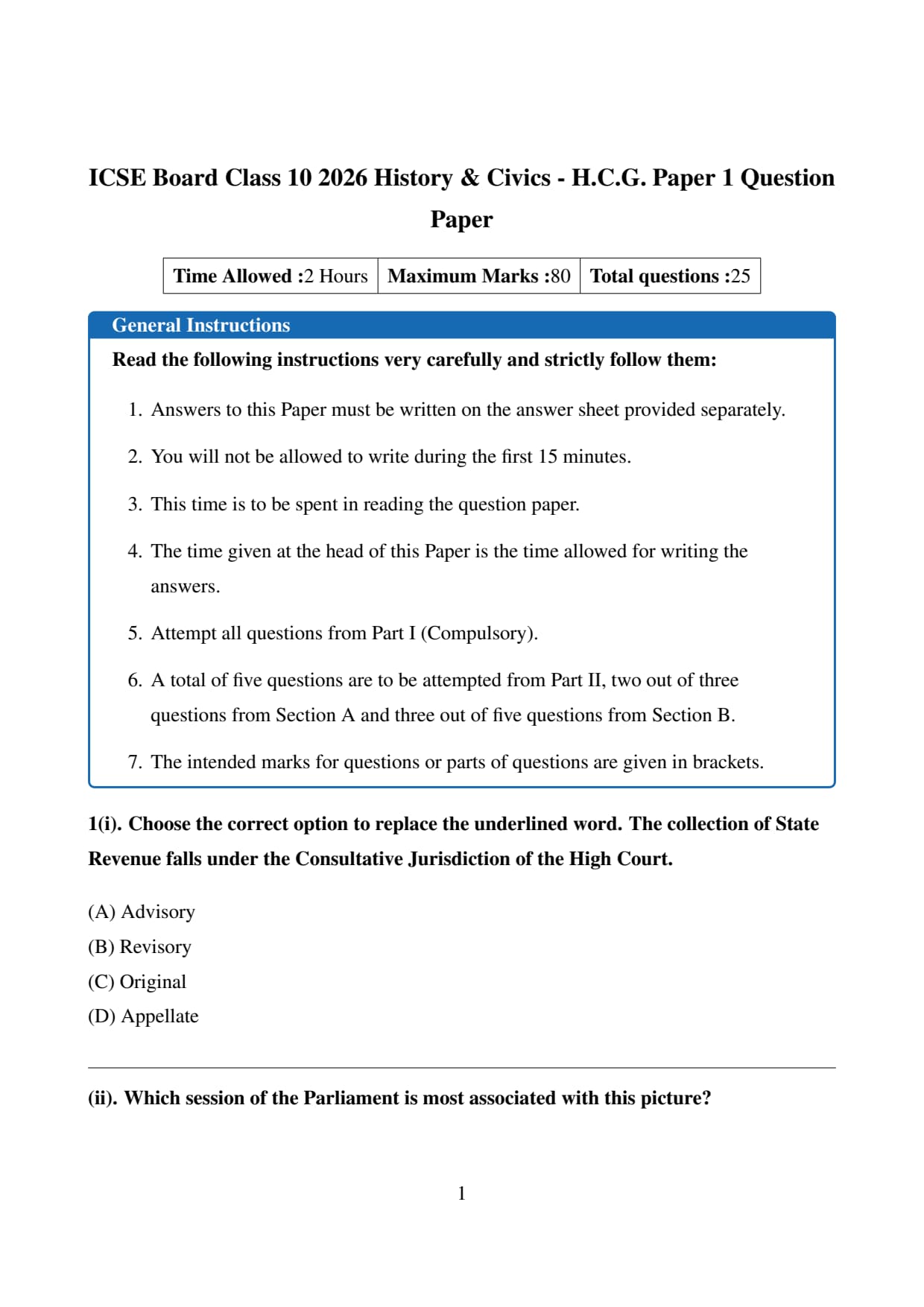
Which session of the Parliament is most associated with this picture?

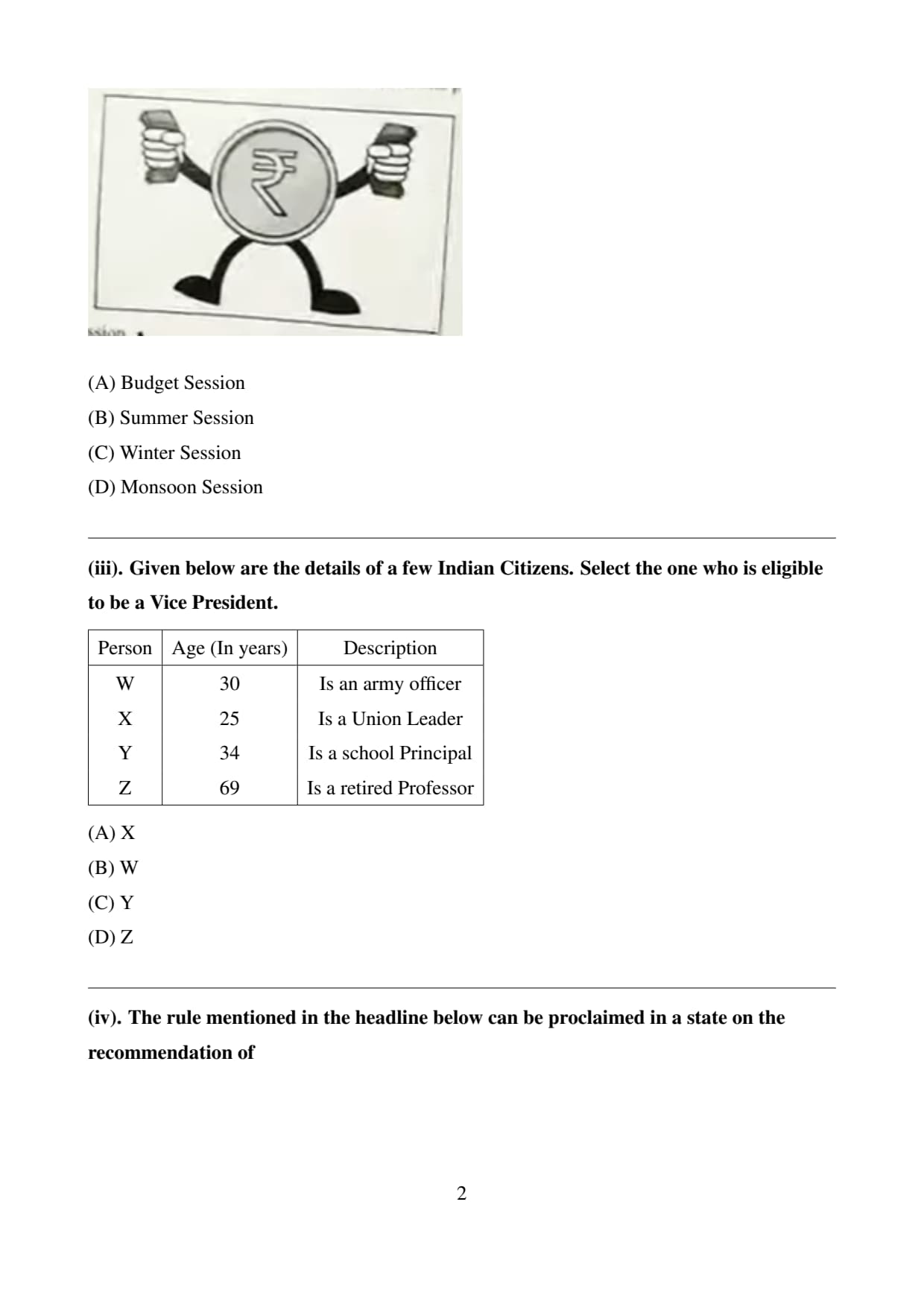
Given below are the details of a few Indian Citizens. Select the one who is eligible to be a Vice President.

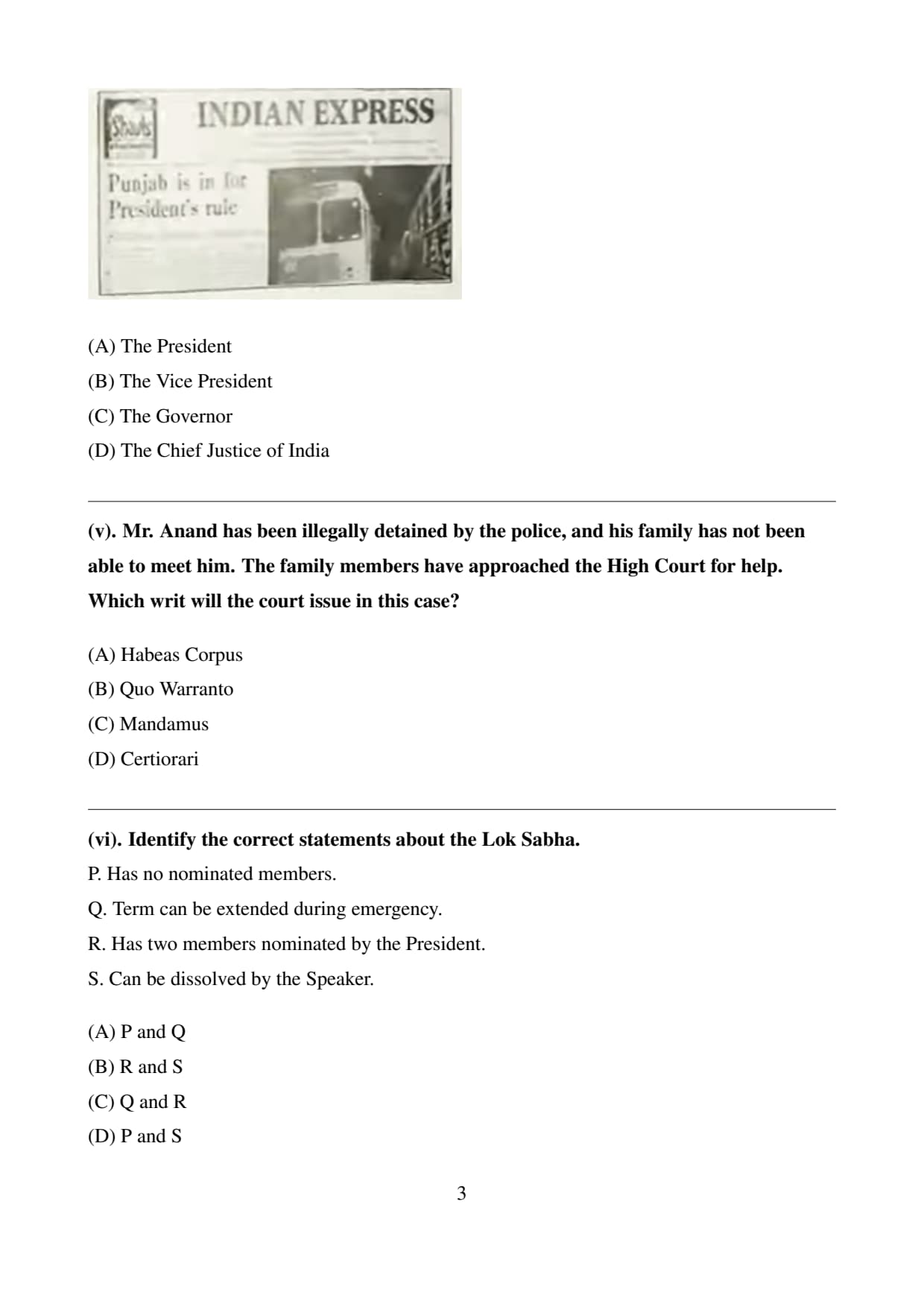
The rule mentioned in the headline below can be proclaimed in a state on the recommendation of

Mr. Anand has been illegally detained by the police, and his family has not been able to meet him. The family members have approached the High Court for help. Which writ will the court issue in this case?
Identify the correct statements about the Lok Sabha.
P. Has no nominated members.
Q. Term can be extended during emergency.
R. Has two members nominated by the President.
S. Can be dissolved by the Speaker.
Assertion (A): Hitler attacked Poland to capture the Danzig Port.
Reason (R): Poland was accused of committing atrocities against the Germans.
Identify the option which shows the correct chronology of the following events:
1. The Lucknow Pact
2. The Surat Split
3. The establishment of the Muslim League
Identify the odd one out of the following signatories of the Triple Entente.
In the town of Sundar Nagar, the local government decided to cut down a large number of trees to build a shopping mall. The children were upset because the trees provided a place to play. A group of school students decided to take action based on the lesson they had studied about the Earth Nationalists. Which of the following actions are they NOT likely to adopt?
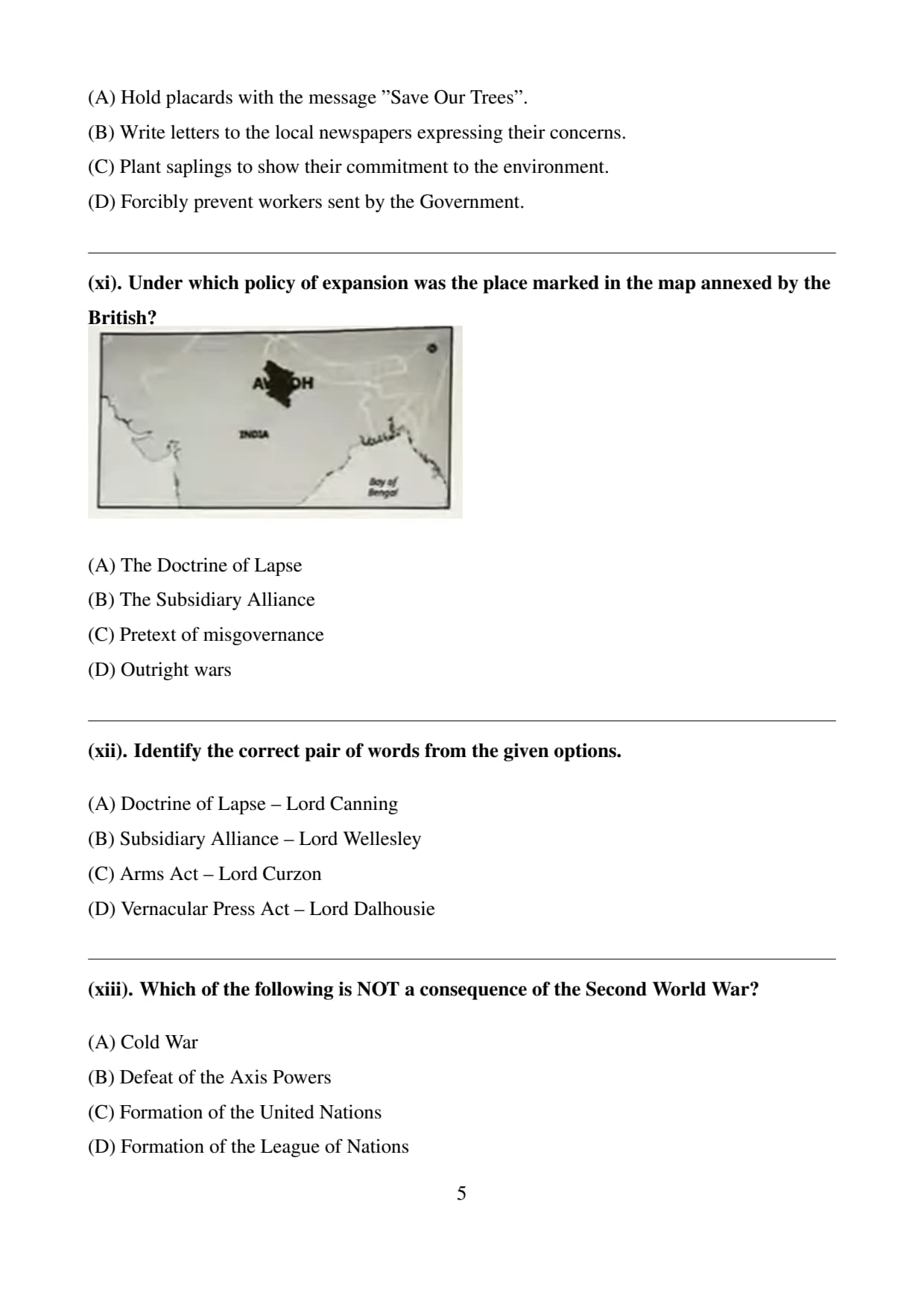
Under which policy of expansion was the place marked in the map annexed by the British?

Identify the correct pair of words from the given options.
Which of the following is NOT a consequence of the Second World War?
He was an early nationalist leader who presided over the second session of the Indian National Congress. Choose the correct option.
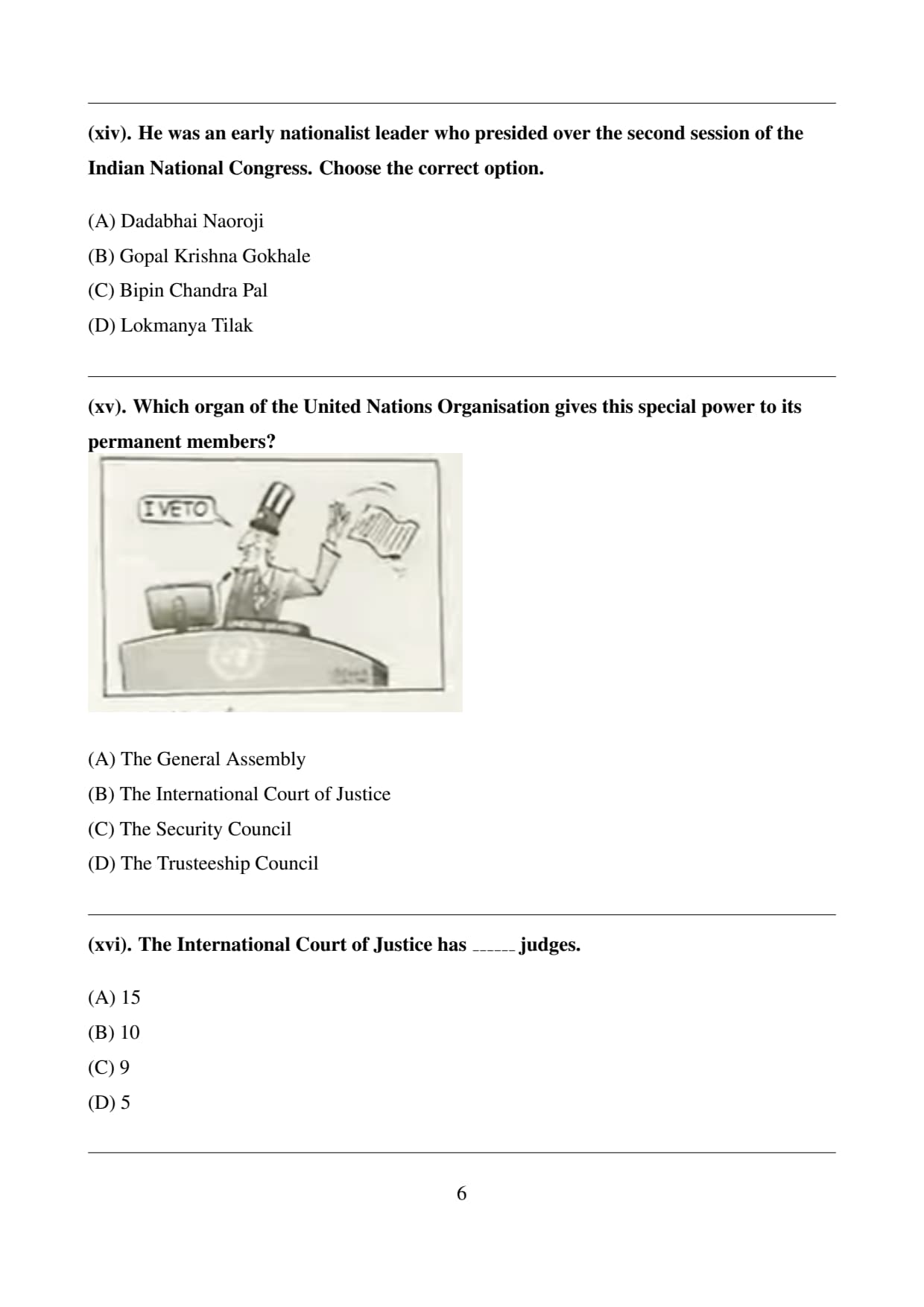
Which organ of the United Nations Organisation gives this special power to its permanent members?

The International Court of Justice has ______ judges.
Name the major regions of Andhra Pradesh.



Comments