




The Council for the Indian School Certificate Examinations (CISCE) successfully conducted the ICSE Class 10 Environmental Science (Group II Elective) Exam on March 30, 2026. The ICSE Class 10 Environmental Science (Group II Elective) Question Paper with Solution PDF is now available for download.
The ICSE Class 10 Environmental Science (Group II Elective) paper covers important topics from ecosystems, natural resources, pollution, biodiversity, and environmental conservation. Students should focus on understanding concepts, learning case studies, and writing structured answers with relevant examples. The exam is typically marked out of 100 marks, with 80 marks for the theory paper and 20 marks for internal assessment.
ICSE Class 10 2026 Environmental Science (Group II Elective) Question Paper with Solution PDF
| ICSE Class 10 Environmental Science (Group II Elective) Question Paper 2026 | Download PDF | Check Solution |
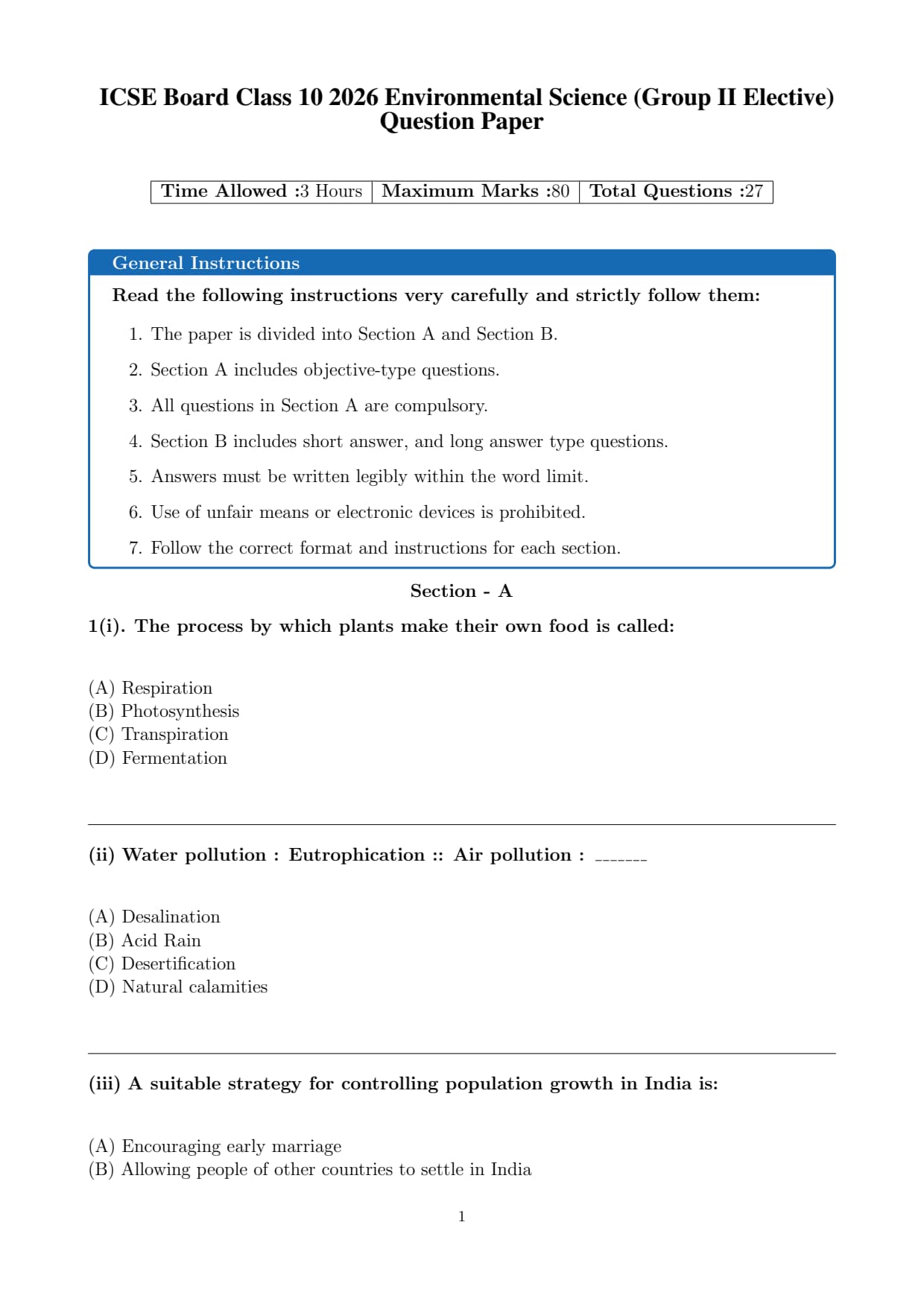
The process by which plants make their own food is called:
Water pollution : Eutrophication :: Air pollution : _____ .
A suitable strategy for controlling population growth in India is:
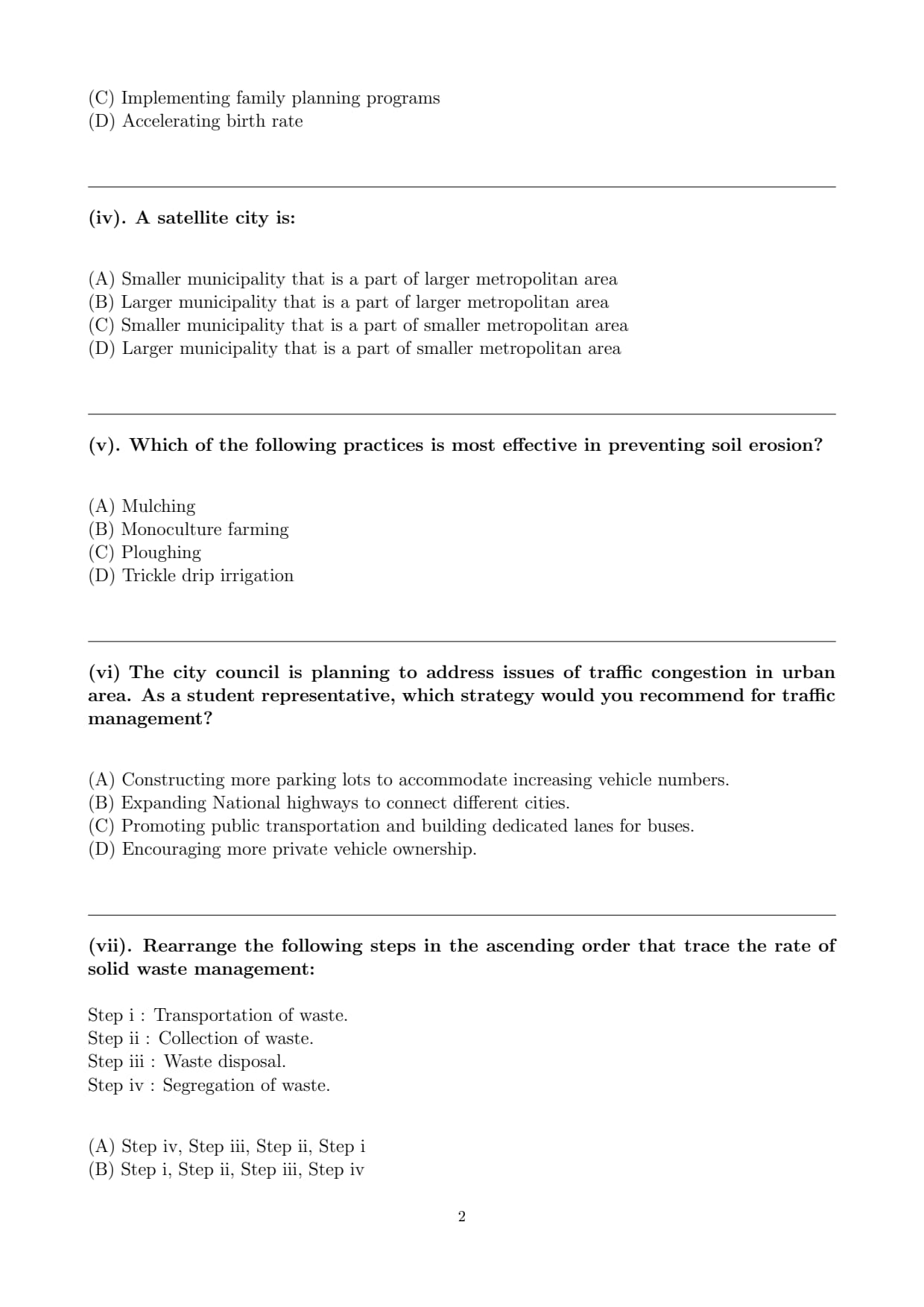
A satellite city is:
Which of the following practices is most effective in preventing soil erosion?
The city council is planning to address issues of traffic congestion in urban area. As a student representative, which strategy would you recommend for traffic management?
Rearrange the following steps in the ascending order that trace the rate of solid waste management:
Step i : Transportation of waste.
Step ii : Collection of waste.
Step iii : Waste disposal.
Step iv : Segregation of waste.
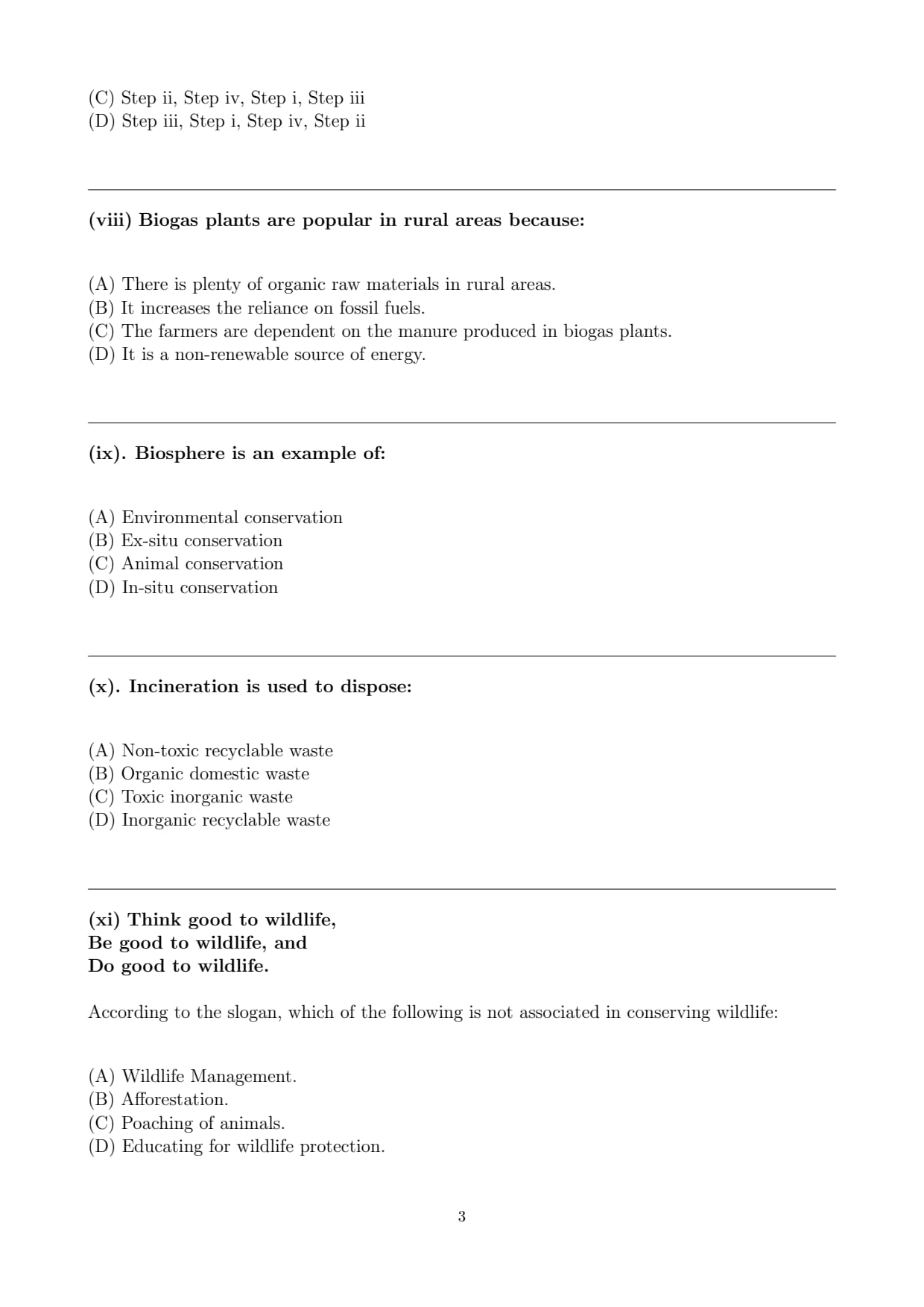
Biogas plants are popular in rural areas because:
Biosphere is an example of:
Incineration is used to dispose:
Think good to wildlife,
Be good to wildlife, and
Do good to wildlife.
According to the slogan, which of the following is not associated in conserving wildlife:
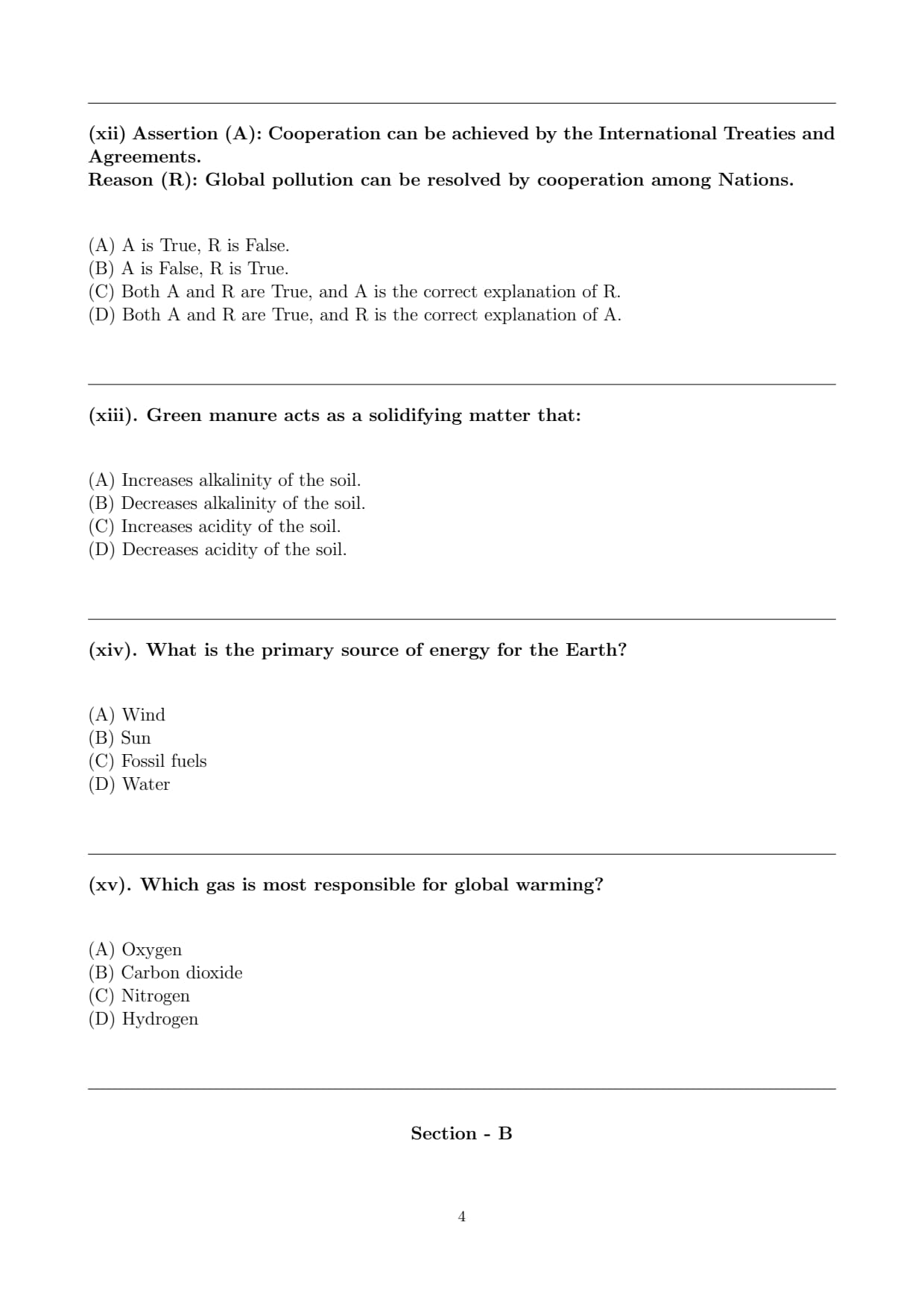
Assertion (A): Cooperation can be achieved by the International Treaties and Agreements.
Reason (R): Global pollution can be resolved by cooperation among Nations.
Green manure acts as a solidifying matter that:
What is the primary source of energy for the Earth?
Which gas is most responsible for global warming?
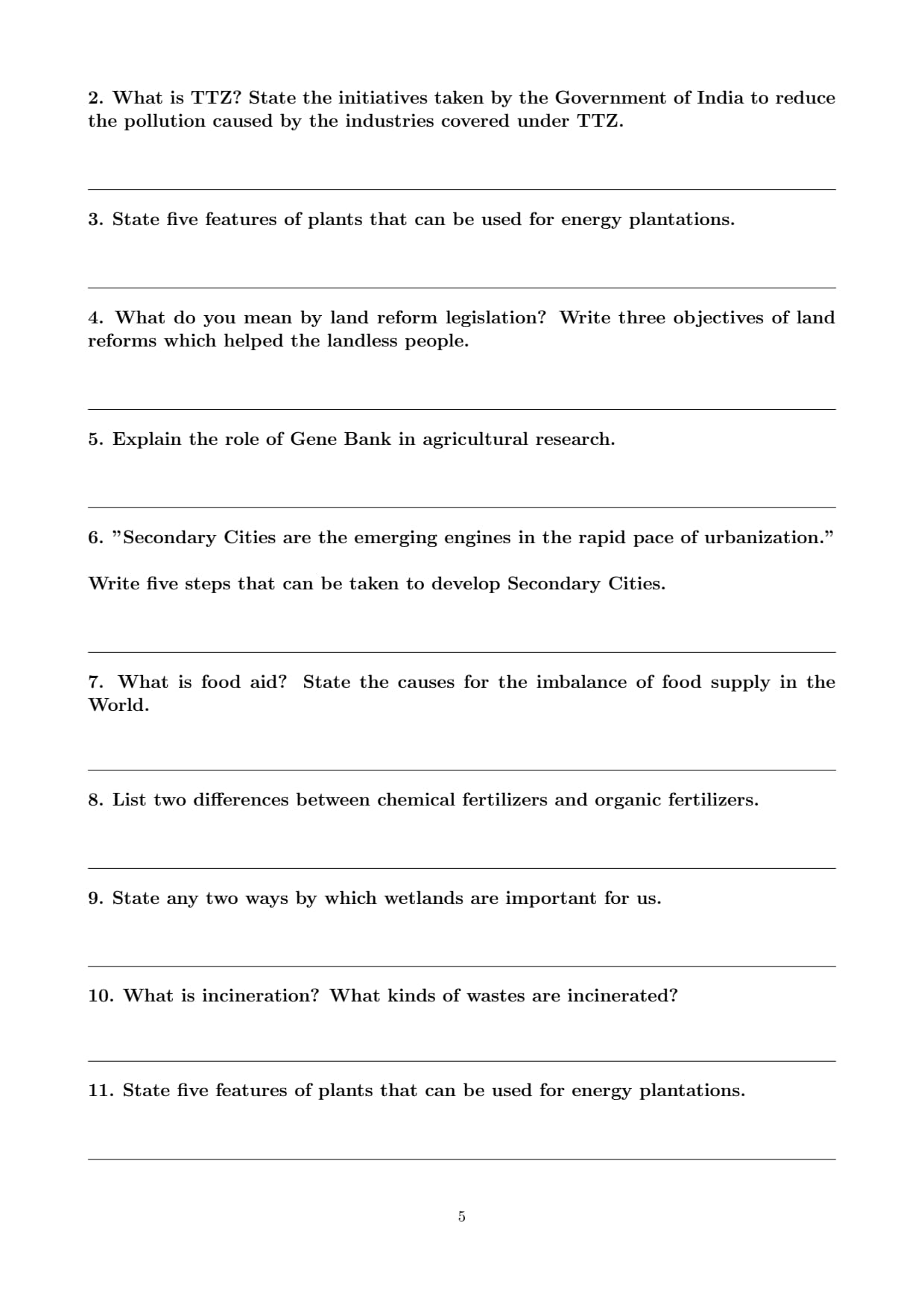
What is TTZ? State the initiatives taken by the Government of India to reduce the pollution caused by the industries covered under TTZ.
State five features of plants that can be used for energy plantations.
What do you mean by land reform legislation? Write three objectives of land reforms which helped the landless people.
Explain the role of Gene Bank in agricultural research.
"Secondary Cities are the emerging engines in the rapid pace of urbanization."
Write five steps that can be taken to develop Secondary Cities.
What is food aid? State the causes for the imbalance of food supply in the World.
List two differences between chemical fertilizers and organic fertilizers.
State any two ways by which wetlands are important for us.
What is incineration? What kinds of wastes are incinerated?
State five features of plants that can be used for energy plantations.
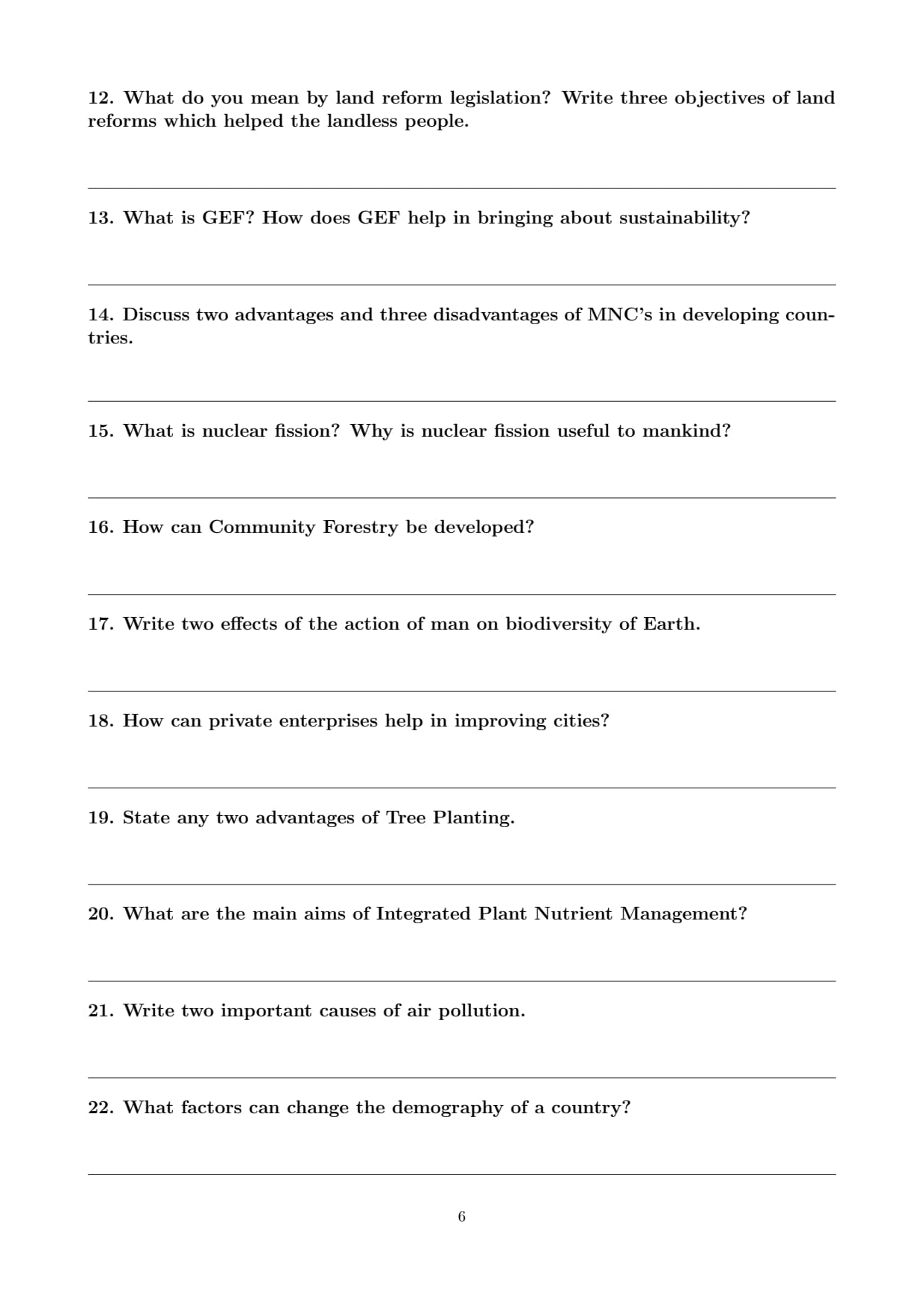
What do you mean by land reform legislation? Write three objectives of land reforms which helped the landless people.
What is GEF? How does GEF help in bringing about sustainability?
Discuss two advantages and three disadvantages of MNC's in developing countries.
What is nuclear fission? Why is nuclear fission useful to mankind?
How can Community Forestry be developed?
Write two effects of the action of man on biodiversity of Earth.
How can private enterprises help in improving cities?
State any two advantages of Tree Planting.
What are the main aims of Integrated Plant Nutrient Management?
Write two important causes of air pollution.
What factors can change the demography of a country?
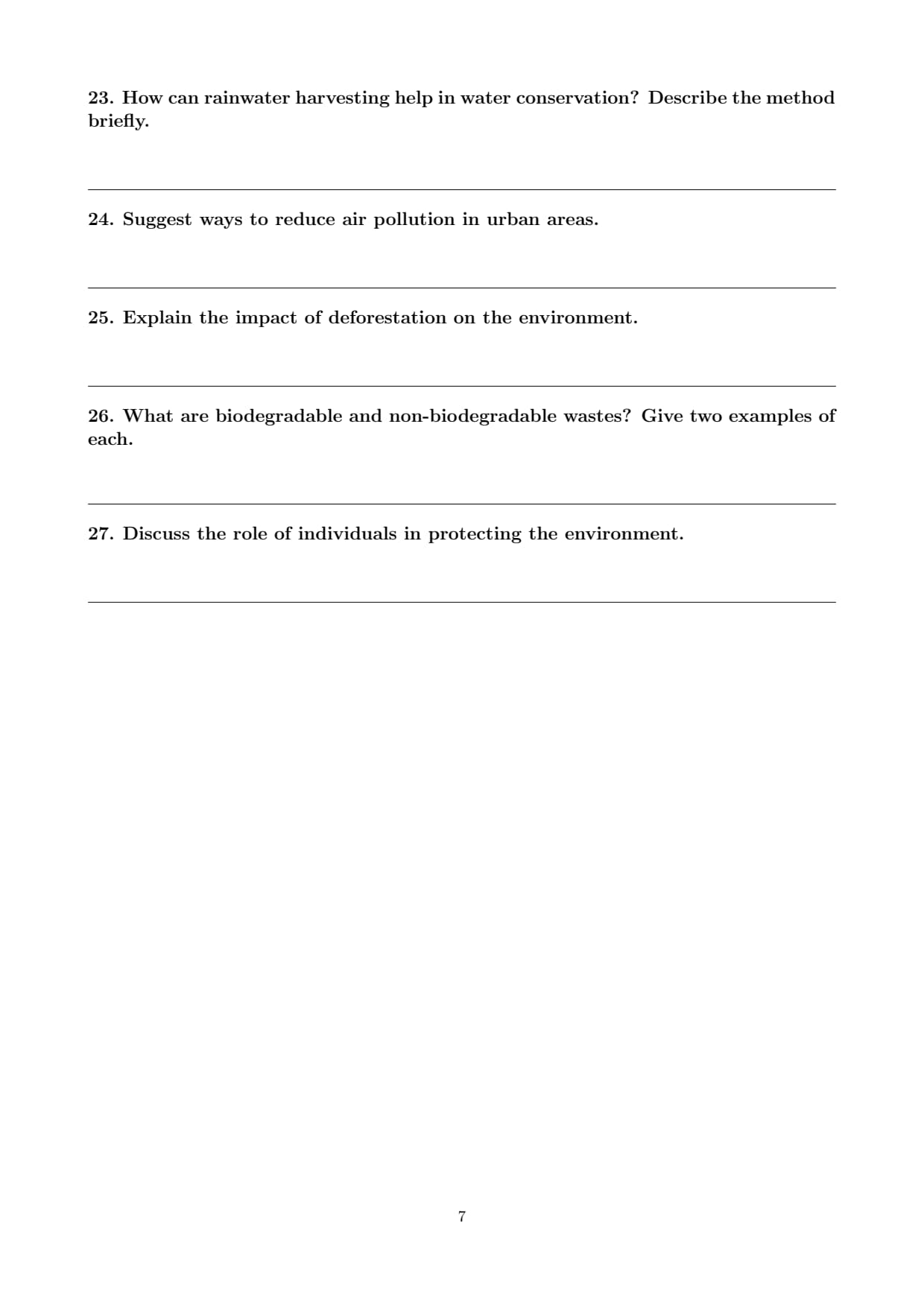
How can rainwater harvesting help in water conservation? Describe the method briefly.
Suggest ways to reduce air pollution in urban areas.
Explain the impact of deforestation on the environment.
What are biodegradable and non-biodegradable wastes? Give two examples of each.
Discuss the role of individuals in protecting the environment.



Comments