



Content Curator
Body fluids are any fluids that circulate throughout the body, transporting oxygen, nutrition, and other substances.
- Blood and lymph are the chief components of human body fluids.
- There is no life without these two elements in higher animals.
- In lower animals like sponges, water itself acts as a fluid to transport oxygen, carbon dioxide, food materials and waste substances.
- With evolution, advancement occurred in the composition of body fluids and the mechanism of transport.
| Table of Content |
Key Terms: Body Fluids, Blood, Red Blood Cells, White Blood Cells, Platelets, Plasma, Lymph, Circulatory System, Heart, Blood Vessels
Body Fluids
[Click Here for Sample Questions]
Liquid substances in the animal or human body are called body fluids.
- About 60-67% of the human body consists of body fluids.
- Blood and lymph are the chief components of human body fluids.
- Blood consists of a matrix called plasma with blood corpuscles floating in it.
- The blood cells are red blood cells, white blood cells, and platelets.
- Lymph consists of lymph cells.
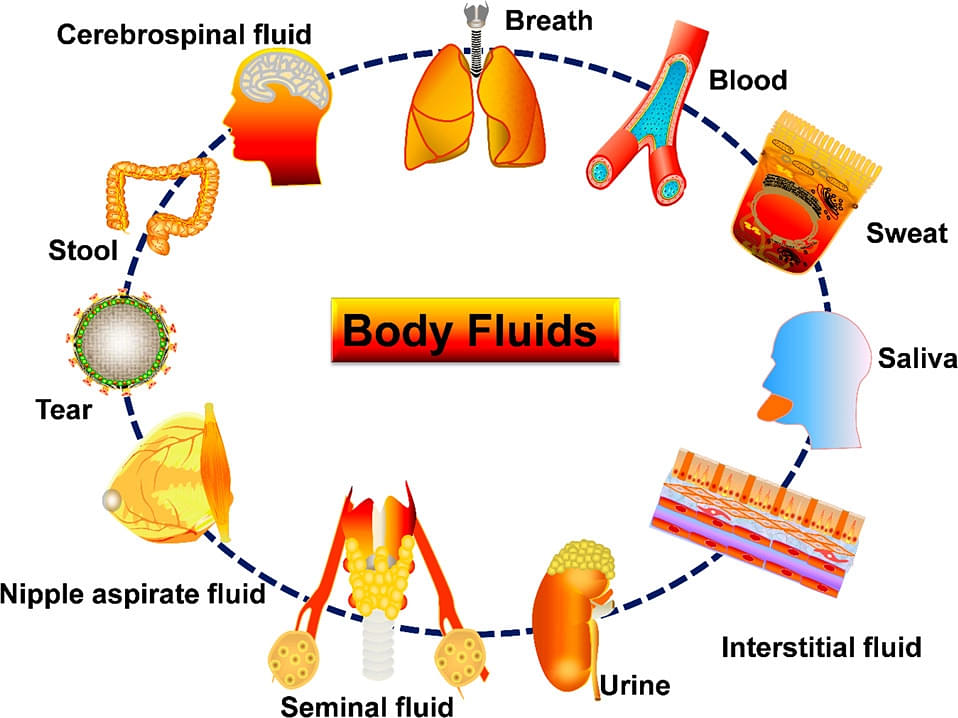
Body Fluids
Also Read:
| Related Articles | ||
|---|---|---|
Blood
[Click Here for Sample Questions]
Blood is a chief fluid connective tissue in the body.
- It connects all the body tissues.
- It has different functions.
- It supplies oxygen, nutrients, enzymes, and hormones to body cells.
- It also takes away carbon dioxide and waste materials to the lungs, and excretory system respectively.
- 7% of the total body weight of an average human adult is nothing, but blood.
- In other words, an average human adult consists of about 5 litres of blood.
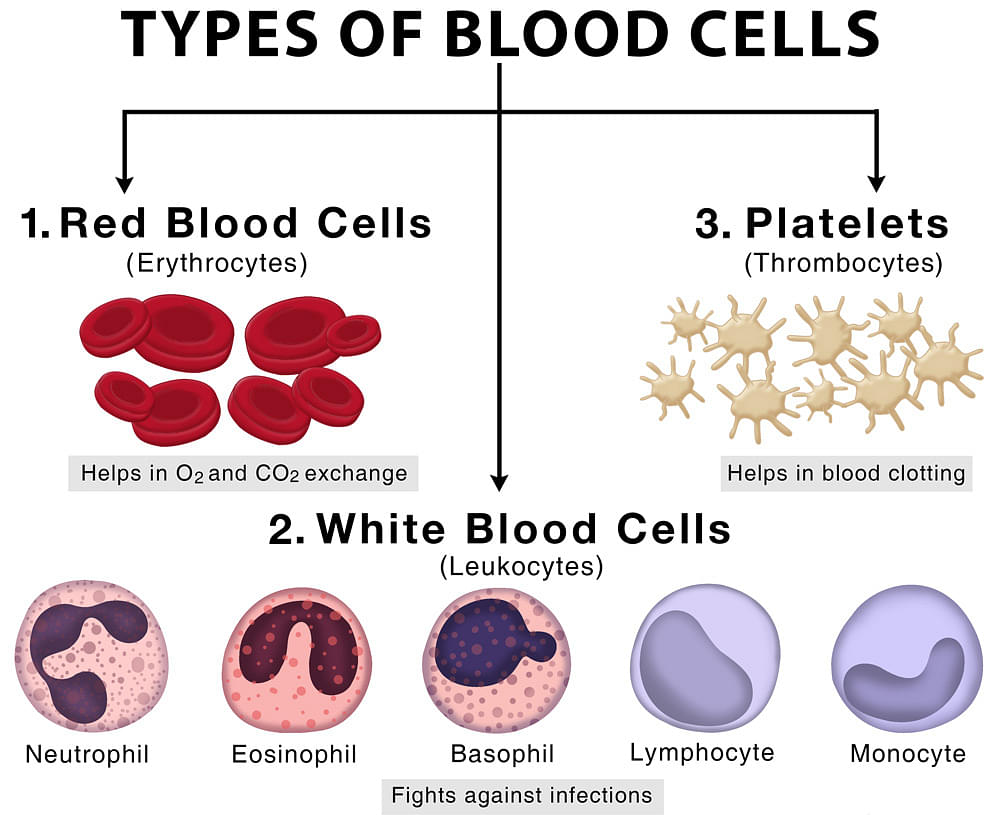
Types of Blood Cells
Plasma
[Click Here for Sample Questions]
The fluid part of the blood is a straw-coloured plasma with blood cells floating in it.
It also consists of respiratory gases, nutrients, vitamins, enzymes, hormones, minerals, and excretory products.
Blood cells
Human blood cells are red blood cells (erythrocytes), white blood cells (leucocytes), and platelets (thrombocytes).
Red Blood Cells (RBC)
Red blood cells are also called erythrocytes. RBC consists of haemoglobin for carrying oxygen.

Elements of Blood
White Blood Cells (WBC)
White blood cells are also called leucocytes.
- White blood cells are of two types, namely granulocytes and agranulocytes.
- Granulocytes are of three types, namely eosinophils, basophils, and neutrophils.
- Agranulocytes are of two types, namely lymphocytes. and monocytes.
- Lymphocytes may be of different types like T-lymphocytes and B-lymphocytes.
Platelets
These blood components are also called thrombocytes. They are meant for clotting blood.
Also Read: Human Digestive System
Lymph
[Click Here for Sample Questions]
The colourless fluid connective tissue is called lymph.
- It is present in between cells or tissues.
- The body system through which lymph is present is called the lymphatic system.
- It is nothing but blood without red blood cells.
- The lymphatic system carries out different functions like the interexchange of gases, nutrients, and hormones.
- The major part of the lymph is lymph cells called lymphocytes.
- The most important function of the lymphatic system is providing immunity to the body.

Human lymphatic system
Also Read:
Circulatory System
[Click Here for Sample Questions]
Circulatory system consists of four main parts: heart, blood, blood vessels, and the lymphatic system.
The human circulatory system is a closed double circulatory system with blood flowing in tubes called blood vessels.

Human Circulatory System
Heart
The pumping organ of the body is the heart.
- It is a muscular organ with continuous activity.
- It is made up of cardiac muscles with cardiac cells abundant in mitochondria.
- The cardiac muscles are very special in that they never undergo fatigue.
- It is four-chambered with two auricles and two ventricles.
- The circulation of blood within and outside the heart is due to some valves.

Human Heart
Also Read:
| Relevant Articles | ||
|---|---|---|
Blood Vessels
Human blood vessels are arteries, veins and capillaries.
- Arteries carry blood from the heart to different parts of the body.
- Veins carry blood from different parts of the body to the heart.
- The interconnected minute blood vessels are called blood capillaries.

Blood Vessels
Also Read: Genetics
Things to Remember
- Liquid substances in the animal or human body are called body fluids.
- 7% of the total body weight of an average human adult is blood. In other words, an average human adult consists of about 5 litres of blood.
- Human blood cells are red blood cells (erythrocytes), white blood cells (leucocytes), and platelets (thrombocytes).
- Red blood cells are also called erythrocytes. RBC consists of haemoglobin for carrying oxygen.
- White blood cells are also called leucocytes. White blood cells are of two types, namely granulocytes and agranulocytes.
- The colourless fluid connective tissue is called lymph.
- The human circulatory system is a closed double circulatory system with blood flowing in tubes called blood vessels.
- The pumping organ of the body is the heart, It is made up of cardiac muscles with cardiac cells abundant in mitochondria.
Also Read:
Sample Questions
Ques: What are body fluids? What are they? (2 marks)
Ans: Liquid substances in the animal or human body are called body fluids. Blood and lymph are the chief components of human body fluids.
Ques: What is the chief body fluid? What are its functions? (3 marks)
Ans: Blood is the chief body fluid. It is of different functions. It supplies oxygen, nutrients, enzymes, and hormones to body cells. It also takes away carbon dioxide and waste materials to the lungs, and excretory system respectively.
Ques: What is the red body fluid? How does it get red colour? (2 marks)
Ans: Blood is the red body fluid. It is red due to the presence of an iron-rich pigment called haemoglobin.
Ques: What are leukocytes? What are its types? (3 marks)
Ans: White blood cells are also called leukocytes. White blood cells are of two types, namely granulocytes and agranulocytes. Granulocytes are of three types, namely eosinophils, basophils, and neutrophils. Agranulocytes are of two types, namely lymphocytes. and monocytes.
Ques: What is the blood component that stops bleeding in human beings? (2 marks)
Ans: Platelets are the blood components that stop bleeding in human beings. They are also called thrombocytes. They are present in plasma along with red blood cells and white blood cells.
Ques: What is lymph? What are its functions? (3 marks)
Ans: The colourless fluid connective tissue is called lymph. It is nothing but blood without red blood cells. The lymphatic system carries out different functions like the interexchange of gases, nutrients, and hormones. The major part of the lymph is lymph cells called lymphocytes. The most important function of the lymphatic system is providing immunity to the body.
Ques: What tissue makes the heart functional throughout human life? (2 marks)
Ans: The heart is a muscular organ with continuous activity. It is made up of cardiac muscles with cardiac cells abundant in mitochondria. The cardiac muscles are very special in that they never undergo fatigue.
Ques: Draw a well-labelled diagram of the human heart? (5 marks)
Ans: The following is the diagram of the human heart.

Human heart
Check-Out:





Comments