



Content Curator
Plants are eukaryotes that are photosynthetic and belong to the Plantae kingdom. The plant kingdom used to include all non-animal living organisms, particularly algae and fungi. Although, all modern Plantae categories exclude fungi and some algae, as well as prokaryotes (the archaea and bacteria). Flowering plants, conifers, and other gymnosperms, ferns and their associates, hornworts, liverworts, mosses, and green algae, but not red or brown algae, are categorised as members of the clade Viridiplantae (Latin for "green plants").
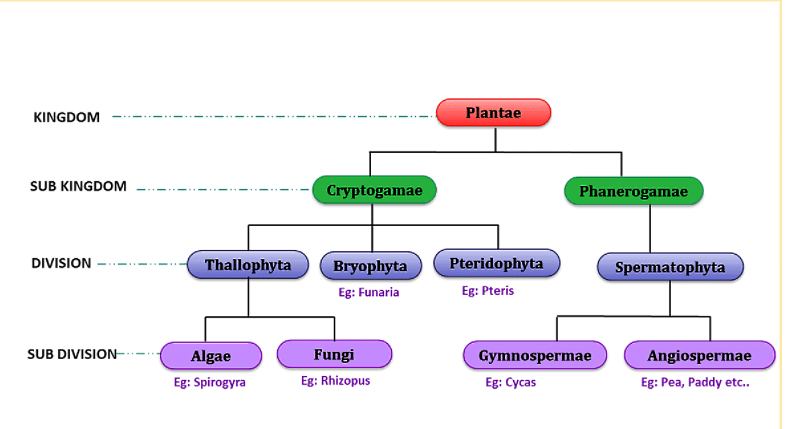
Plant Kingdom Classification
Plants are multicellular organisms in the majority of cases. Photosynthesis, that is carried out by primary chloroplasts created by endosymbiosis with cyanobacteria, provides the majority of the energy in green plants. Chlorophylls a and b, that give them their green colour, are found in their chloroplasts. Several plants are parasitic or mycotrophic, meaning they lack the capacity to make chlorophyll or photosynthesize yet nevertheless produce blooms, fruits, and seeds. Sexual reproduction and generational alternation are prevalent in plants, however, asexual reproduction is also prevalent.
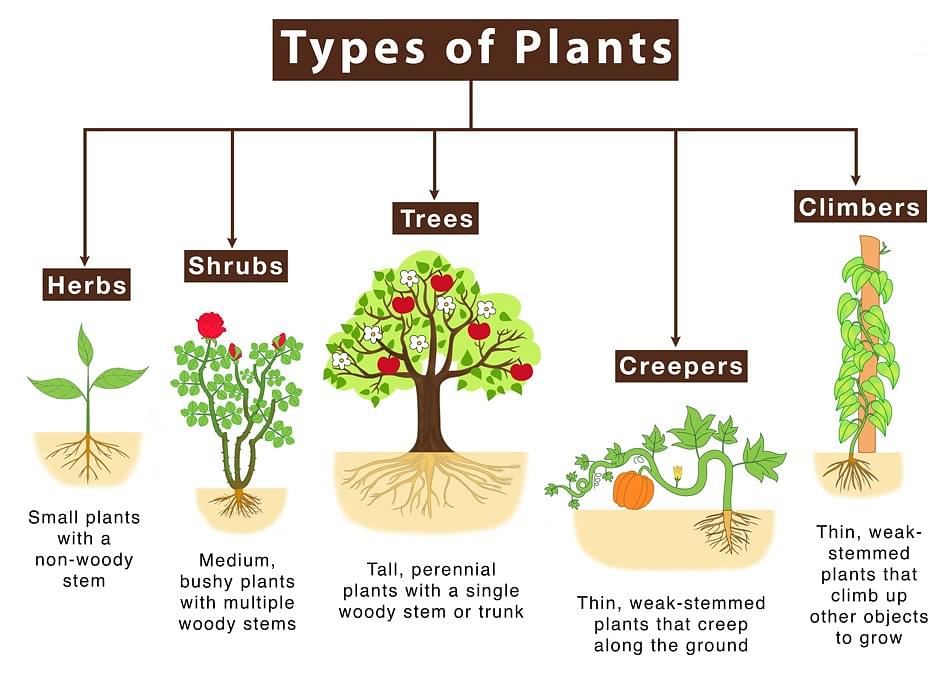
Classification of Plants
Ques 1. Plants with spores and embryos but no vascular tissues or seeds?
- Bryophyta
- Pteridophyta
- Phaeophyta
- Rhodophyta
Click here for the answer
Ans: (a) Bryophyta
Explanation: Bryophytes are a proposed taxonomic division that includes the liverworts, hornworts, and mosses, which are non-vascular terrestrial plants. They are typically small and prefer damp surroundings, however, they can thrive in drier ones as well. About 20,000 plant species make up the bryophytes.
Ques 2. Find the colonial alga
- Chlorella
- Ulothrix
- Spyrogyra
- Volvox
Click here for the answer
Ans: (d) Volvox
Explanation: Volvox is a spherical multicellular green alga that swims with a distinctive rolling motion and contains many microscopic biflagellate somatic cells and a few big, non-motile reproductive cells called gonidia. Volvox is a genus of chlorophyte green algae belonging to the Volvocaceae family. It grows up to 50,000 cells in spherical colonies.
Ques 3. Spirogyra's cell wall contains
- Suberin
- Chitin
- Cellulose
- Lignin
Click here for the answer
Ans: c. Cellulose
Explanation: Spirogyra is a filamentous green colored alga of the Zygnematales order, so named because of the helical or spiral structure of the chloroplasts. Green plants, algae, and oomycetes all have cellulose as a structural component of their major cell walls. Some bacteria emit it in order to create biofilms. The most common organic polymer on the planet is cellulose.
Ques 4. Which of the following has no cell wall at all?
- Saccharomyces
- Blue-green algae
- Sea fan
- Cyanobacteria
Click here for the answer
Ans: c. Sea fan
Explanation: The Venus Sea Fan is a delicate colonial soft coral with a fan-like form and a lattice of branching on a single plane. The coral grows from a small base to produce several main branches, side branches, and a network of little branchlets. The Venus sea fan has a similar look to Gorgonia ventalina, but with an untidy shape and short, stubby side growths coming from the main plane.
Ques 5. The pollen grain exine is made by
- Lignocellulose
- Pollenkit
- Sporopollenin
- Pectin and cellulose
Click here for the answer
Ans: c. Sporopollenin
Explanation: Sporopollenin is a biological polymer that is chemically inert. It's a big part of what makes plant spores and pollen grains rough on the outside (exine). It has a high chemical stability and is typically well retained in soils and sediments. Material retrieved from (for example) lake sediments can provide significant information to palynologists about historical plant and fungus populations since the exine layer is frequently finely sculptured in species-specific patterns.
Ques 6. Selaginella's evolutionarily significant feature is
- Ligule
- Strobili
- Rhizophore
- Heterosporous nature
Click here for the answer
Ans: d. Heterosporous nature
Explanation: Selaginella species are creeping or ascending plants that grow roots and have delicate scale-like leaves (microphylls) on branching stems. Selaginella kraussiana has aerial stems that creep laterally on the substratum and are either sub-erect (Selaginella trachyphylla) or upright (Selaginella trachyphylla) (as in Selaginella erythropus). The vascular steles are made up of polystelic protosteles. In heterosporous plants, megaspores and microspores are two different size classes of spores.
Ques 7. Which of the following is responsible for peat formation?
- Riccia
- Sphagnum
- Marchantia
- Funaria
Click here for the answer
Ans: b. Sphagnum
Explanation: Sphagnum is a genus of over 380 recognised species of mosses that is frequently referred to as "peat moss," however the term is also applied to peat. Sphagnum clumps can store water because both living and dead plants can contain significant amounts of water inside their cells; depending on the species, plants can hold 16 to 26 times their dry weight in water. In drier situations, the empty cells aid in water retention.
Ques 8. Because of____, conifers can withstand harsh conditions.
- Thick cuticles
- Presence of vessels
- Superficial stomata
- Broad hardy leaves
Click here for the answer
Ans: a. thick cuticles
Explanation: Conifers are a subcategory of gymnosperms that produce cone-bearing seed plants. Pinophyta, often referred to as Coniferophyta or Coniferae, is the scientific division they belong to. Pinopsida is the only living class within the division. Conifers comprise perennial woody plants having secondary growth that are found across the world. The majority of the plants are trees, with a few shrubs thrown in for good measure. Cedars, Douglas-firs, cypresses, firs, junipers, kauri, larches, pines, hemlocks, redwoods, spruces, and yews are among the many examples. Pinophyta had eight families, 68 genera, and 629 extant species as of 1998. Many conifers produce a distinctively fragrance resin that protects the tree from insect invasion and wound fungus infection.
Ques 9. Zygotic meiosis is seen in?
- Marchantia
- Chlamydomonas
- Funaria
- Fucus
Click here for the answer
Ans: b. Chlamydomonas
Explanation: Chlamydomonas is a green algae genus with over 150 species, all of which are unicellular flagellates that can be seen in stagnant water and damp soil, freshwater, seas, and even snow as "snow algae." Chlamydomonas is a model organism for molecular biology research, particularly in the areas of flagellar motility and chloroplast movements, biogenesis, and genetics. A zygotic meiosis occurs when a zygote undergoes meiosis immediately following karyogamy, or the fusing of two cell nuclei. The organism's diploid phase is thus ended, and many haploid cells are produced. These cells divide into larger, multicellular individuals or additional haploid cells through mitotic division. These individuals or cells unite two types of gametes (male and female) to form a zygote.
Ques 10. Pteridophytes differ from mosses in _____
- Independent gametophyte
- Dependent gametophyte
- Flagellate antherozoids
- Independent and dominant sporophyte
Click here for the answer
Ans: d. Independent and dominant sporophyte
Explanation: Pteridophytes are vascular plants that distribute spores and have xylem and phloem. Pteridophytes are also called "cryptogams" because they develop neither blooms nor seeds. Pteridophytes include ferns, horsetails (which are often mistaken for ferns), and lycophytes (which include club mosses, spikemosses, and quillworts). Ferns (and horsetails) are more strongly related to seed plants than lycophytes, hence they do not comprise a monophyletic group.
Read more:




Comments