



Content Curator
The NCERT Solutions for Class 6 Maths Chapter 13: Symmetry is provided in this article. Symmetry is defined as a balanced and proportionate similarity that is found in two halves of an object. It means one-half is the mirror image of the other half. The imaginary line or axis along which you can fold a figure to obtain the symmetrical halves is called the line of symmetry. Class 6 Maths Chapter 13 covers important concepts like symmetrical figures, lines of symmetry, and reflection and symmetry.
Download: NCERT Solutions for Class 6 Maths Chapter 13 pdf
NCERT Solutions for Class 6 Maths Chapter 13




Class 6 Maths Chapter 13 Symmetry: Important Topics
The important topics of class 6 maths chapter 13 include the following:
- Symmetrical Figures – The figures whose each half is exactly a mirror image of the other are called symmetrical figures.
- Lines of Symmetry – The imaginary line that divides a figure or object into two exactly similar halves is called a line of symmetry.
| An object can have one, two, or multiple lines of symmetry. For example, rectangles have two lines of symmetry. |
- Reflection and Symmetry – Whenever an object is placed in front of a mirror, its reflection can be seen on the other side of the mirror. This reflection is symmetrical to the original image.
| In such cases, the mirror acts as a line of symmetry. Reflections can also be observed in nature like the reflection of trees in the water. |
NCERT Solutions for Class 6 Maths Chapter 13: Exercises
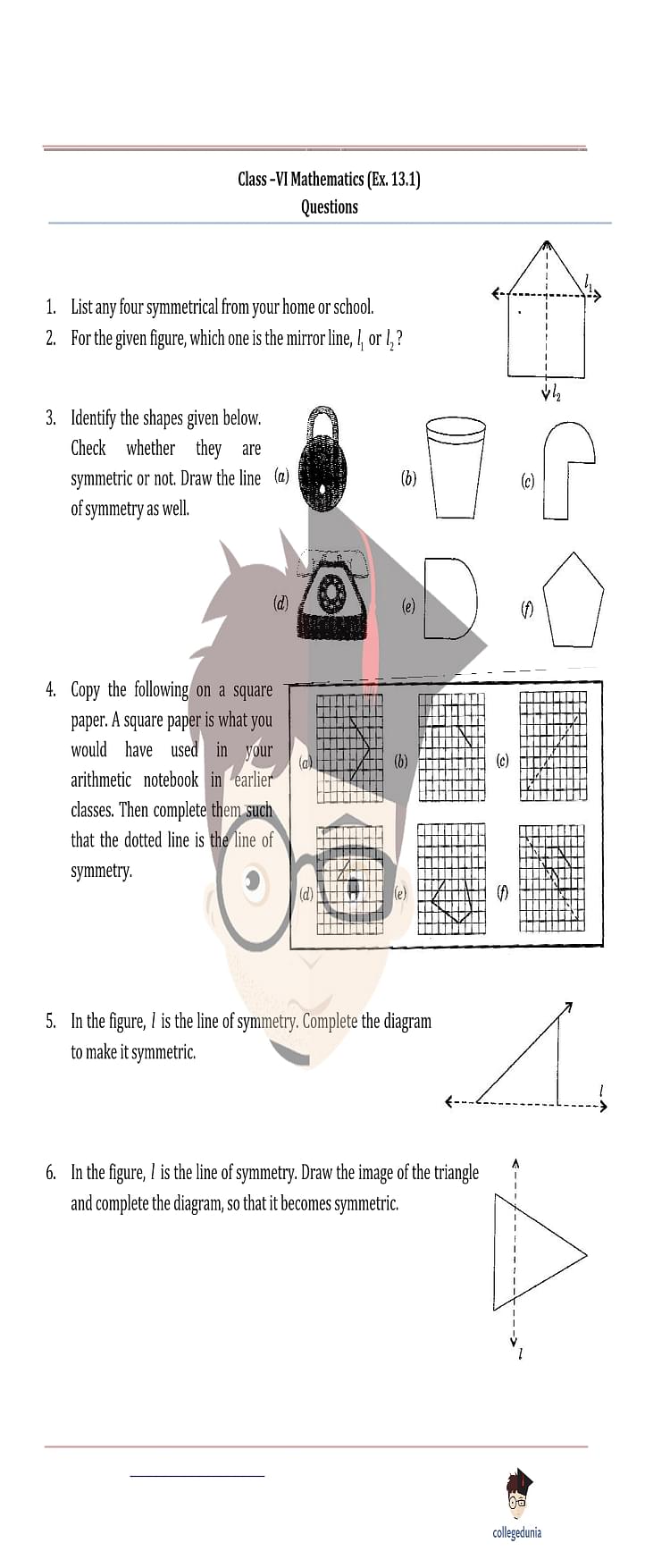
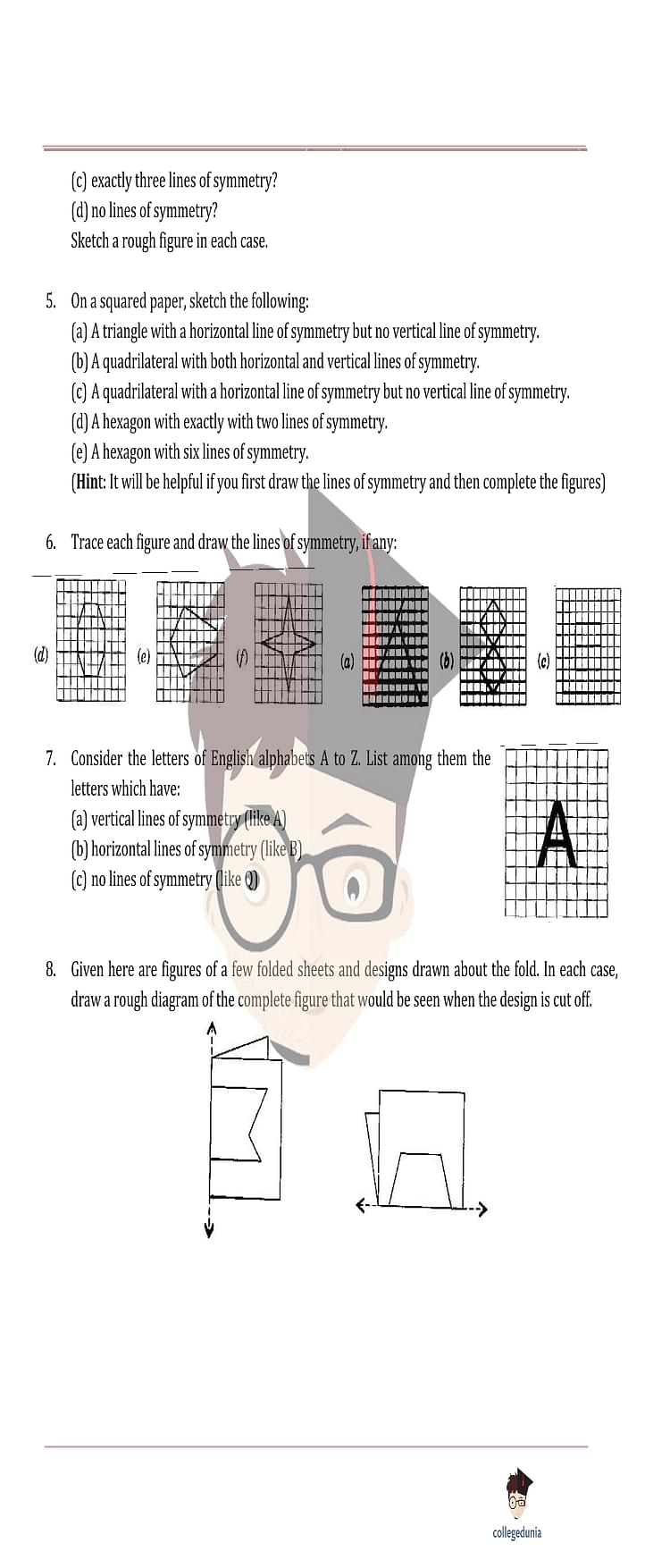
The NCERT solutions of all the exercises of class 6 maths chapter 13 are given below:
Class 6 Maths Chapter 13 Related Links:
| Rotational Symmetry | Area of Rectangle | LCM Formula |
| Difference Between Square and Rectangle | Divisor | Roman Numerals |
| Estimation of Numbers | Prime Numbers | Even and Odd Numbers |
Check Also:



Comments