

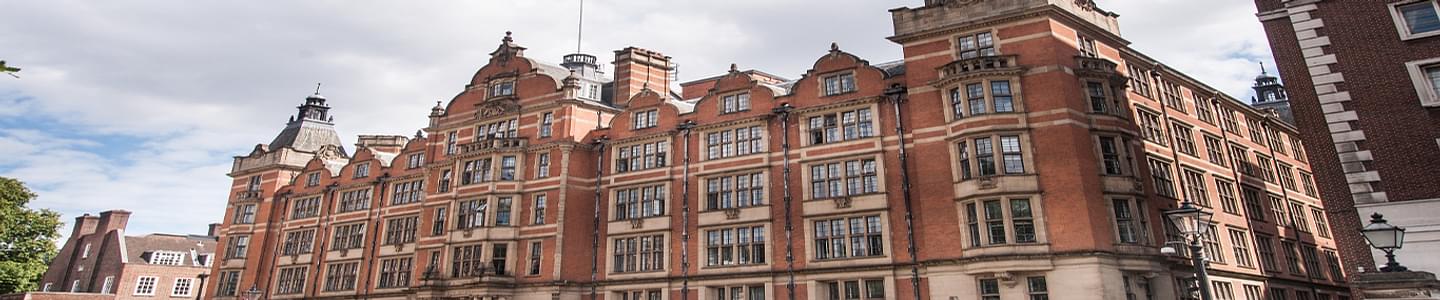



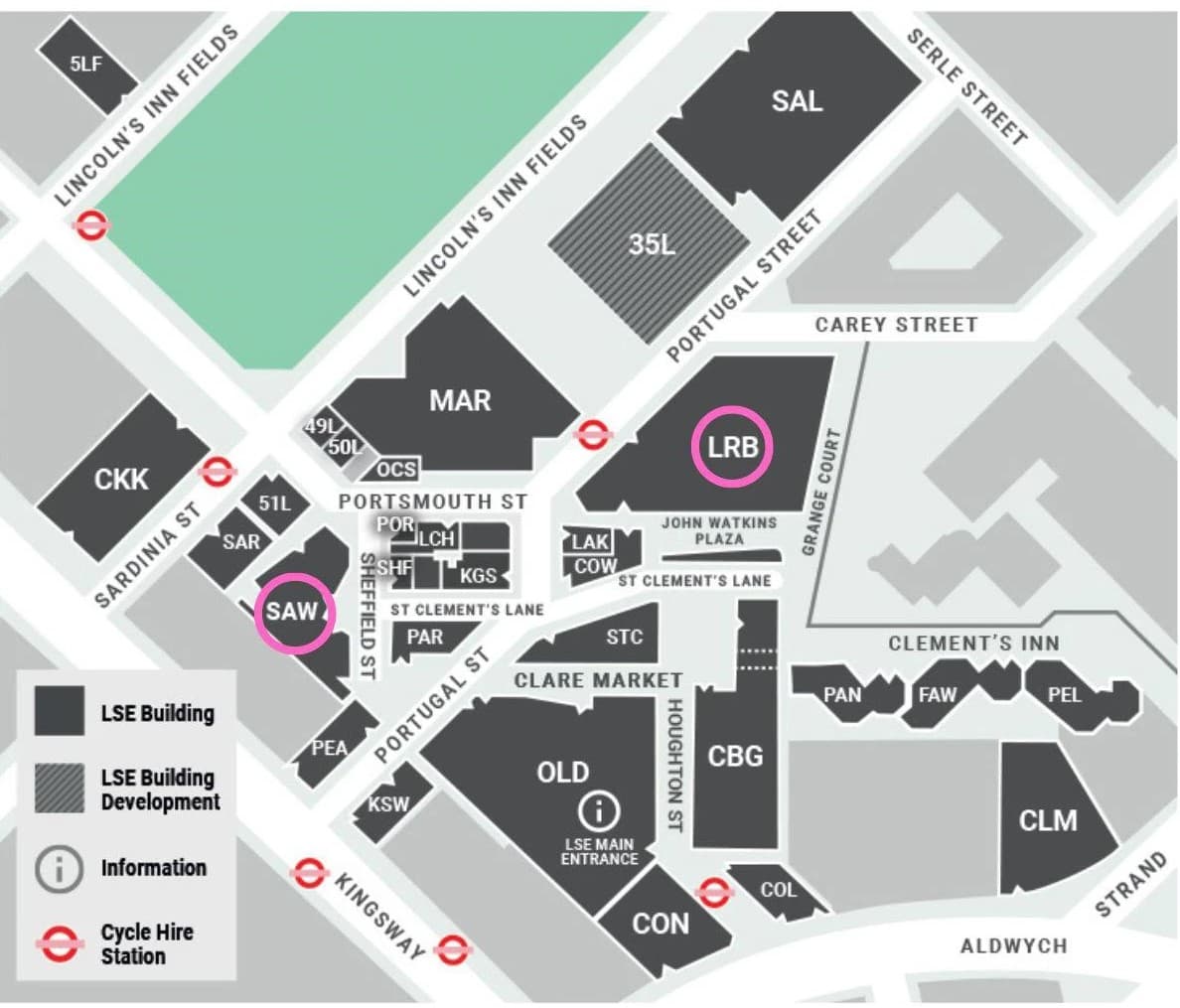
The London School of Economics and Political Science (LSE) is located at Houghton Street in central London (Zone 1). It is close to areas like Covent Garden and Aldwych. LSE has only one campus, which consists of 31 academic buildings along with 10 halls of residence, all within a compact, walkable area around Houghton Street and Lincoln’s Inn Fields.
LSE offers extensive facilities for international students, including visa support, academic assistance through LSE LIFE, and wellbeing services. LSE has 200+ student societies and 40+ sports clubs. Students also have access to multiple on-campus food outlets, including Indian options like Shree Krishna Vada Pav, along with affordable cafes and nearby markets.
The institution has strong transport connectivity via nearby Tube stations (Holborn, Temple, Charing Cross), rail hubs, and bus routes. Students typically spend around £171.70 (INR 21,200) per month on travel (Zones 1–2), while bus-only commuting costs about £84 (INR10,400) per month. This article covers all key aspects of the LSE campus, including infrastructure, student life, food options, and daily commuting details for Indian students.
Study in the UK Guide for Indian Students
- Where is LSE Located?
1.1 LSE Campus Buildings and Infrastructure
1.2 LSE Facilities for International Students
- Student Life at LSE Campus
- Food Spots in LSE for Indian Students
3.1 On-Campus Food Options for Students
- How to Commute to LSE daily as an International Student?
4.1 By Tube/Underground stations
4.2 By Rail Stations
4.3 By Bus
4.4 By Cycle
- FAQs
Where is LSE Located?
The London School of Economics and Political Science is located in the heart of London. The proper address of the institute is Houghton Street, London, WC2A 2AE, United Kingdom.
- The campus sits in the Holborn area: a central and well-connected part of the city, making it easily accessible by public transport.
- LSE is surrounded by some of London’s most famous areas, including Covent Garden, the Strand, and Aldwych.
- The location places students close to major institutions, businesses, and cultural attractions, offering excellent exposure to real-world opportunities.
The campus is also within walking distance of the River Thames and key landmarks like Somerset House. Nearby Underground stations, such as Holborn and Temple, provide strong connectivity across London.
Check out the latest details about the London School of Economics and Political Science
Read about the LSE's Popular Courses and Fees for 2026
LSE Campus Buildings and Infrastructure
According to the official estate information of the London School of Economics and Political Science, LSE has 31 campus buildings.
- These are part of the main academic campus in central London.
- In addition, LSE also has:
- 10 halls of residence
- Other facilities, like sports grounds and social spaces.
The campus of the LSE consists of a compact network of modern and historic buildings located around Houghton Street and Lincoln’s Inn Fields. The university operates a large estate with multiple academic, administrative, and student-focused buildings, all within walking distance.
Key buildings include:
- The Centre Building: serves as a central academic hub with lecture theatres, seminar rooms, study spaces, and a student learning commons. It also houses cafes, meeting rooms, and collaborative spaces for students and faculty.
- Cheng Kin Ku Building: accommodates departments such as Geography & Environment and the Law School. It features lecture theatres, multiple teaching rooms, cafés, and dedicated spaces for academic events and discussions.
- Marshall Building: includes academic departments, innovative teaching spaces, and dedicated sports facilities for students.
Check out details on LSE Admission and Important Deadlines 2026
This video offers valuable insights from an LSE graduate on what to expect before starting your journey. It highlights the academic challenges, lifestyle changes, and realities of studying at a top global university.
Read about Scholarships available for Indian students at LSE in 2026
Student Life at LSE Campus
Student life at the London School of Economics and Political Science combines academic focus with a wide range of extracurricular opportunities. The campus is designed not only for studying but also for engaging in activities beyond the classroom.
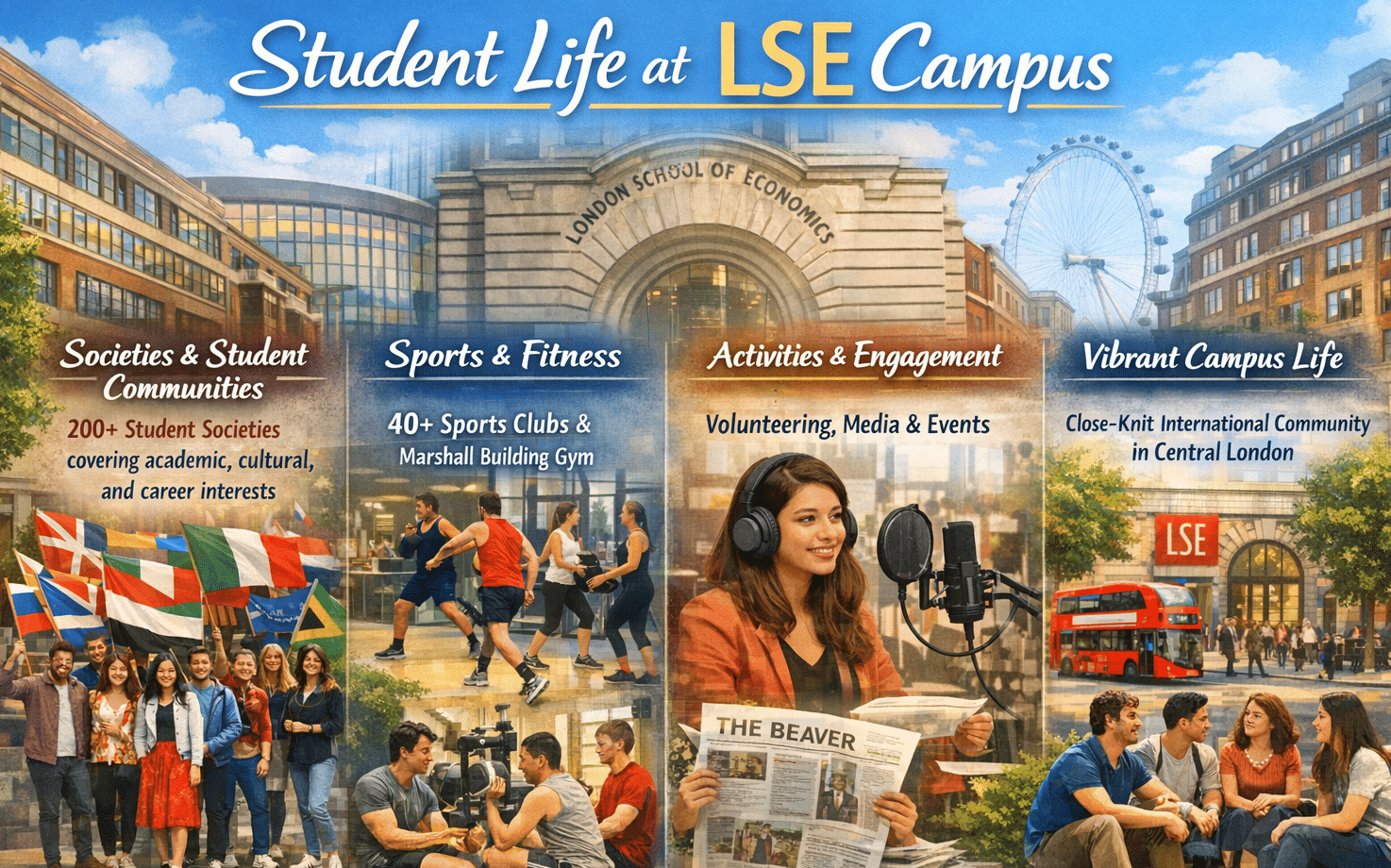
- Societies and Student Communities: LSE offers 200+ student societies run by the Students’ Union. These societies cover academic, cultural, creative, media, charity, and career-related interests, allowing students to explore hobbies and build connections.
- Sports and Fitness: Students can join 40+ sports clubs and teams. Facilities include gyms, fitness classes, and a sports centre in the Marshall Building with spaces like a sports hall and squash courts.
- Activities and Student Engagement: LSE encourages students to take part in volunteering, fundraising, student media, and public events. Opportunities include working on newspapers, radio, and student-led initiatives, as well as participating in development and training programs.
- Campus Environment: The university has a close-knit and international community, with all buildings located within a few streets in central London. This creates a highly interactive and engaging student environment.
Tip for Students: LSE recommends using the Student Hub app, which helps students navigate campus using maps, check timetables, track deadlines, and stay updated with events and services. It is available on both mobile and web platforms and serves as a key tool for managing daily student life at LSE.
Food Spots in LSE for Indian Students
The London School of Economics and Political Science offers a variety of on-campus cafes, restaurants, and nearby eateries that cater to different dietary needs, including vegetarian and Indian-friendly options.
Key Highlights for Indian Students:
- Wide availability of vegetarian and vegan food across campus.
- Presence of Indian dishes and flavours (especially at Garrick).
- Affordable meal deals and loyalty rewards via the LSE Food Club app.
- Option to bring and heat your own food on campus.
On-Campus Food Options for Students
- LSE Garrick: One of the most popular food spots on campus
- LSE Fourth Floor Restaurant: Buffet-style meals for lunch and early dinner. Good for students looking for full meals at affordable prices.
- The Shaw Cafe (Plant-Based Option): Fully vegan cafe with global dishes.
- Shree Krishna Vada Pav (SKVP): London School of Economics: Dedicated Indian food outlet inside LSE Garrick. Popular among Indian students.
Nearby Food Spots (Around LSE):
- Leather Lane Market: diverse street food options (affordable lunches).
- Fields Bar & Kitchen: student-friendly cafe with discounts.
- Multiple global cuisine options available within walking distance.
How to Commute to LSE daily as an International Student?
LSE is located in central London (Zone 1). Being located in Zone 1, LSE offers excellent connectivity and shorter commute times; however, students travelling from outer zones may face higher daily transport costs, making accommodation choices a key factor in overall expenses.
As an international student at the London School of Economics and Political Science, there are several convenient ways to commute daily. Here’s a clear breakdown:
By Tube/Underground stations
Mentioned below are the nearest Tube stations along with an idea of typical London commuting costs.
- All three stations are in Zone 1, which is central London, so students living nearby can commute easily without crossing multiple fare zones.
- A monthly Travelcard for Zones 1–2 (the area covering most central London, including LSE) costs about £171.70 (INR 21,200) and gives unlimited travel on buses and the Tube across those zones.
| Tube Station | Lines/Routes | Approximate Frequency | Notes |
|---|---|---|---|
| Holborn | Piccadilly and Central lines | Every 2–6 minutes | On the corner of Kingsway and High Holborn. Approximately five minutes away. |
| Temple | District and Circle lines | Every 3–6 minutes | On the Embankment at the bottom of Arundel Street. Approximately five minutes away. |
| Charing Cross | Jubilee, Northern and Bakerloo lines | Every 2–5 minutes | On the Strand at the Trafalgar Square end. Approximately ten minutes away. |
By Rail Stations
For students commuting to LSE from nearby rail stations in central London, a monthly Travelcard for Zones 1–2 costs £171.70 (INR 21,200).
- These costs assume students use Oyster or contactless payment for commuting within Zones 1–2.
- Students travelling from outer zones (3–5) will have higher monthly costs:
- Zone 1–3: £215.30 ( INR 26,600)
- Zone 1–5: £288.10 (INR 35,600)
| Rail Station | Location / Notes | Walk to LSE | Train Routes |
|---|---|---|---|
| Waterloo | Across the River from the Strand, over Waterloo Bridge | 10–15 min | Trains to/from south coast & south-west England |
| Charing Cross | On the Strand at the Trafalgar Square end | 10 min | Mainly trains to south-east London & Kent |
| Blackfriars | On the Embankment near Blackfriars Bridge | 10–15 min | Trains to south & south-east England; Thameslink line through north London |
| St Pancras International | Euston Road, near King’s Cross | Piccadilly Line to Holborn + 5-min walk | Eurostar, trains to the Midlands, international destinations |
By Bus
The monthly cost of £84 (INR 10,400) is for a Zone 1–2 bus pass (unlimited travel). Students can also use an Oyster card or contactless payment, which automatically caps daily/weekly fares, saving money for occasional travel.
| Bus No. | Where it mainly goes (from Aldwych) | How often (daytime) | Why useful for Indian/international LSE students |
|---|---|---|---|
| 1 | Waterloo | Elephant & Castle | south areas | Every 8–12 min | Quick to Waterloo (Eurostar, trains to Heathrow/Gatwick, flights home) |
| 59 | Brixton | Waterloo | Aldwych | Euston | Every 8–12 min | Popular south London spots like Brixton/Tulse Hill (affordable student flats) + Euston trains |
| 68 | Camberwell | Waterloo | Aldwych | Euston | Every 8–12 min | South London housing + north to Euston/King's Cross (big stations for India flights/trains) |
| 87 | Clapham Junction | Wandsworth | Aldwych | Every 10–12 min | Southwest areas like Clapham (very common for international student shared houses) |
| 91 | King's Cross | Aldwych | Every 10–12 min | Direct to King's Cross (Eurostar to Europe, trains north, easy international travel) |
| 188 | Waterloo | North Greenwich (O2/Greenwich) | Aldwych | Every 8–12 min | Crosses the river to east/southeast London + Waterloo links |
By Cycle
LSE’s campus has 540 open-access bicycle racks. The largest racks are located at Clements Inn, John Watkins Plaza (outside the LSE Library), and Lincoln’s Inn Fields (opposite the Cheng Kin Ku Building).
- Cyclists are required to secure their bikes with a padlock, rather than a D-lock or chain.
- LSE community members have access to additional secure bicycle parking, along with showers and bike repair facilities.
- The LSE campus has three Santander Cycle Hire docking stations located on Houghton Street, Portugal Street, and Sardinia Street.
- Students can also find useful guidance on cycling in London.
Note: Please note that bicycle theft can occur in central London, including on campus, so any theft should be reported to LSE Security.
Tip: Students typically combine modes, for example, a Tube from outer zones to central London, then a short walk or bus ride to LSE.
Money Saving Tip for Indian Students: Using an Oyster card or a contactless debit/credit card is the easiest and most cost-effective way to travel around London. Simply tap in and out on buses, trains, DLR, and the Tube. Daily and weekly fare caps are applied automatically, so you never pay more than necessary. Students who commute regularly can use the 18+ Student Oyster Photocard to get 30% off weekly or monthly passes. For occasional travel, contactless payment works well.
Take a look at the cost of Living in London for Indian Students
The London School of Economics and Political Science offers a compact, centrally located campus in London with 31 academic buildings. Strong student support services and a highly active student community of 200+ societies and 40+ sports clubs are offered by the institution. With accessible Indian food options, well-developed facilities, and efficient transport links costing around £171.70 ( INR 21,200) per month, LSE provides both convenience and a high-quality student experience.
For Indian students, understanding these practical aspects, especially living, food, and commuting, can make a significant difference in planning and adapting to life at LSE.
FAQs
Ques: How to book a guided tour around the LSE campus?
Ans: Students can book a guided campus tour through the official LSE “Visit LSE” page. Tours are led by current students, last around 40 minutes, and take place weekly (usually Wednesdays during term time). Booking is mandatory, and slots are limited. Alternatively, students can explore the campus anytime using the LSExplorer self-guided tour tool.
Ques: Where to buy student essentials near the LSE campus?
Ans: According to LSE’s official student life guidance, students can access a variety of shops in central London near campus areas like Covent Garden and Holborn. These include supermarkets, convenience stores, and retail outlets within walking distance, making it easy to purchase daily essentials, groceries, and study materials.
Ques: What are the Top cafes and restaurants on or near the LSE campus?
Ans: LSE provides multiple on-campus dining options through its catering services, including cafes and restaurants offering hot meals, snacks, and vegetarian/vegan options. In addition, students can explore nearby food markets and eateries around central London, such as areas close to Aldwych and Covent Garden, which offer a wide range of international cuisines.
Ques: Suggest some of the best apps for navigating the LSE campus?
Ans: LSE recommends using the Student Hub app, which helps students navigate campus using maps, check timetables, track deadlines, and stay updated with events and services. It is available on both mobile and web platforms and serves as a key tool for managing daily student life at LSE.




interested in this College ?
Follow & Share this college to get information about admission.



Comments