

![Vignana Jyothi Institute of Management - [VJIM]](https://image-static.collegedunia.com/public/college_data/images/logos/1738657872download20.jpeg?h=71.7&w=71.7&mode=stretch)
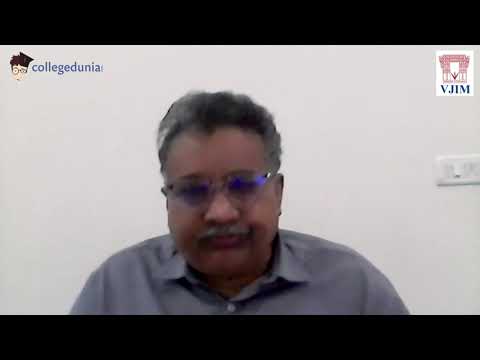
Professor (Dr.) P. Srinivas Subbarao is the Director of Vignana Jyothi Institute of Management. He is an award-winning management educator, researcher, and institution builder. He has also worked as a faculty member of Management Studies at Sri Sri University, and CEO of SSU Innovation Pvt. Ltd., and Registrar and Dean of Student Welfare (DSW) at Sri Sri University. In the last five years, Dr. Subbarao received his second PhD in Corporate Law from National Law University Odisha, received an invitation from the University of Bristol to share his experience in developing a campus startup culture in 2020, and received the LEAP Fellowship, MHRD, Government of India, IIT Kharagpur, and the University of Cambridge for 2019-20. Moreover, he has worked as a CMI (UK) Certified Trainer in Leadership and Management and as an Empaneled Innovation Trainer for the MHRD Government of India in 2019.
Professor Subbarao was selected for the highly prestigious Leadership for Academicians Programme (LEAP, 2019-2020) Fellowship of the Ministry of HRD from the Government of India. As part of this fellowship, he was trained in academic leadership at IIT Kharagpur and the University of Cambridge. In Prof. Subbrao’s last 30 years of academic life, he has developed cutting-edge experience and expertise in teaching management, conducting interdisciplinary research in business studies, and building academic centers and institutions in areas of innovation, climate change, sustainability, indigenous studies, and peacebuilding. He also has the unique distinction of being a scholar-practitioner who brings in his experience of entrepreneurship to mentor students in developing new ventures. He has so far mentored more than 50 startups in India and has been credited with developing a nascent startup culture in the last five years.

Can you tell us about your background and experience in higher education?
I started my journey in higher education over 30 years ago as an academic in management. Over the years, I've held several administrative roles at top universities, including Professor, Director, Dean, CEO, Director General, Registrar, and in-charge Vice-Chancellor. This journey gave me a holistic view of academic processes, administration, and the challenges and opportunities that come with them.
What attracted you to the role of Director at Vignana Jyothi Institute of Management (VJIM)?
The reputation of Vignana Jyothi Institute of Management (VJIM) as a progressive institution aligns with my personal vision of driving innovation in education. VJIM has been serving the industry for the last three decades by producing industry-ready professionals in the fields of Marketing, Finance, HR, Operations and Business Analytics. More than 85% of our alumni are placed in good positions in various industries across the world. We also have leading companies as our placement partners. For example, consulting giant Deloitte has been recruiting our students for the last 15 years.
The role of Director at VJIM offers me a platform to make a significant impact in molding our future leaders, which is what excites me the most. Along with this, I would like to realise the vision of the founders to make VJIM a leading B-school in the country with global ranking, international engagement, and a high reputation in the industry.
What do you believe are the key challenges facing higher education today, and how do you plan to address them in your role as Director?
One of the pressing challenges is keeping the curriculum relevant in the face of rapidly changing industry demands. In my role, I'd like to establish a robust feedback mechanism with industry experts to ensure our courses remain cutting-edge. Additionally, I see student engagement in virtual learning environments as another area we can improve upon. Internationalisation of Indian higher education, engagement with industry, and global ranking are the major challenges for Indian higher education institutes.
The landscape of higher education today is marked by multiple challenges. Firstly, there's an undeniable imperative to make higher education not only relevant to the ever-evolving needs of the industry, government, and society but also to instill a sense of sustainable practices in the upcoming generation. This transformation demands an innovative curriculum that is in tandem with real-world applications. In my role as Director, I plan to foster close collaborations with industry leaders and experts to continuously refine our courses, innovate in our pedagogy while ensuring they remain ahead of the curve.
Secondly, there's a clear shift in the industry's preference for practical skills over mere academic qualifications. This is a call to action for institutions to adapt and perhaps even reinvent their approach to higher education. Embracing this shift, I intend to spearhead initiatives that emphasize hands-on experiences and real-world applications over traditional theoretical teaching methods.
Thirdly, the advent of emerging technologies is already reshaping the realm of higher education. The rise of open and digital universities, backed by the power of technology, challenges the traditional monopoly of campus based higher education institutions. The notions of 'Learn from Anywhere' and 'Work from Anywhere' aren't mere slogans; they are the future. Recognizing this, I aim to harness the potential of digital tools and platforms to make education more accessible and inclusive.
Lastly, the challenges of internationalizing Indian higher education, developing deep engagements with industries, and improving our global ranking cannot be overlooked. These will be some of the critical areas I will focus on during my tenure, with the overarching aim to elevate our institution's reputation both nationally and globally.
How do you envision your role as Director in supporting the mission and goals of the Vignana Jyothi Institute of Management?
I see my role as a bridge between the institute's rich legacy and its bright future. While honouring our traditional values and strengths, I aim to infuse a culture of innovation, research, and global thinking, aligning with the institute's mission and goals. Hyderabad is strategically located, connecting the north-south and east-west of India. The city is also emerging as the new capital of India in areas of IT, Pharma, and BFSI sectors and I would like to integrate the business dynamism of Hyderabad into our education, training, internships, innovations, and placements.
Our industry partners have suggested that we start programmes in areas like Agri-Business Management (ABM), Innovation and Family Business Management (IFBM), Healthcare and Pharma Management (HPM), and Advanced and Emerging Technologies Management (AETM). We have recently launched Agri Business Management and we are planning to start programmes in other areas of industry demand as well.
Check Vignana Jyothi Institute of Management Courses & Fees
How do you plan to engage with students, faculty, and other stakeholders in your role as Director?
Open communication is key. I intend to have regular town hall meetings, feedback sessions with students, and collaborative workshops with faculty. Establishing open-door policies will ensure that all stakeholders feel heard and valued. I am keen on Faculty Development and Student Development go hand in hand. Faculty members are being encouraged through both financial and non-financial incentives to stay updated with the latest trends in the industry and academia. It is important to develop new skills to meet the demands of the new-age Gen Z learners. I am developing Faculty Development Programmes in collaboration with the industry and will soon start in-house training programs while encouraging faculty members to pursue training programs from other reputed institutions like B-Schools in India and abroad.
Can you discuss any specific initiatives or projects that you hope to implement as Director?
One of my primary initiatives is to establish a Research and Innovation Centre to foster a culture of research. I'm also keen on launching international exchange programs to provide our students and faculty with a global perspective. I am keen on the Green Campus Programme of The Climate Reality Project (TCRP), the UI GreenMetric World University Rankings and Time Higher Education’s SDG Impact Rankings. Apart from this, we have recently established a Centre for Management Research (CMR), which will conduct training programs by industry and academic experts for our faculty members and for faculty members of other institutions on campus.
How do you plan to foster a culture of collaboration and inclusivity at the Vignana Jyothi Institute of Management?
I believe in leading by example. By actively collaborating across departments and with external partners, I hope to set a precedent. Additionally, organising team-building exercises, hands-on workshops on diversity, equity, and inclusion, and promoting interdisciplinary projects will ensure a collaborative environment. I am also keen to embed both local and global business thinking and practices with Indian business thinking and practices. Recently, we signed an MoU with Harvard Business Publishing (HBP) to use their case studies and simulation exercises, in addition to offering their courses and certifications for students and faculty members. We are also developing a partnership with the Asian Institute of Management (AIT) in Thailand. As a part of it, our students will be trained at the IT campus in Thailand as part of the academic exchange and cross-cultural learning in business innovation and practices.
Can you speak to your experience in financial management and budgeting in higher education?
During my tenure as Dean, Director, Registrar, and In-Charge Vice Chancellor at previous institutions, I oversaw the budgeting for several significant small to large-scale projects, ensuring optimal resource allocation and financial sustainability. My approach is always data-driven, ensuring transparency and accountability in financial matters while creating a team of dynamic and high-integrity professionals. At my earlier institutions, I raised funds through government and industry channels to establish and maintain centres of innovation, climate change, indigenous studies, and peace studies. I have generated revenue through MDPs and Consultancy. I also strongly believe that faculty members should get maximum support and incentives for generating revenue from industry-backed and government-sponsored projects, including for their academic knowledge productivity in the areas of peer-reviewed publications and patents.
How do you plan to address issues of affordability and accessibility for students at the Vignana Jyothi Institute of Management?
Affordability is crucial to ensuring inclusive education. I plan to explore collaborations with industry partners for scholarship programs and sponsorships. Additionally, launching online courses and hybrid programs can provide flexibility and reduce costs for students. We also offer academic merit scholarships to waive off a certain percentage of the tuition fees for meritorious students.
What do you see as the greatest opportunities for growth and development at the Vignana Jyothi Institute of Management, and how do you plan to support these efforts?
VJIM is uniquely positioned to be a leader in technology-driven management education. As an innovation driven B-School, our focus is on technology, innovation, sustainability, and wellness. Our curriculum, training, and student engagements are in these areas. By strengthening our ties with industry leaders in emerging technologies, pharma, health and wellness, and sustainability and conducting impactful industry-oriented research in these sectors, we can provide our students with unparalleled opportunities. My role will be to facilitate these connections, ensuring continuous growth and development for the institute.
 (1).png?h=132&w=263&mode=stretch)

.png?h=132&w=263&mode=stretch)
.png?h=132&w=263&mode=stretch)
 (1).png?h=132&w=263&mode=stretch)

 (1).png?h=78&w=78&mode=stretch)


.png?h=78&w=78&mode=stretch)










![MBA/PGDM | admission | 2024 | Narsee Monjee Institute of Management Studies - [NMIMS Deemed to be University]](https://image-static.collegedunia.com/public/college_data/images/logos/1506323004Logo.jpg?h=72&w=72&mode=stretch)


![MBA/PGDM | admission | 2024 | Indian Institute of Management - [IIMC]](https://image-static.collegedunia.com/public/college_data/images/logos/1488950580d2.png?h=72&w=72&mode=stretch)


 (1).png?h=72&w=72&mode=stretch)

.png?h=72&w=72&mode=stretch)


.png?h=72&w=72&mode=stretch)





Comments