

![Integral Institute of Advanced Management - [IIAM]](https://image-static.collegedunia.com/public/college_data/images/logos/1502359458sde.jpg?h=71.7&w=71.7&mode=stretch)

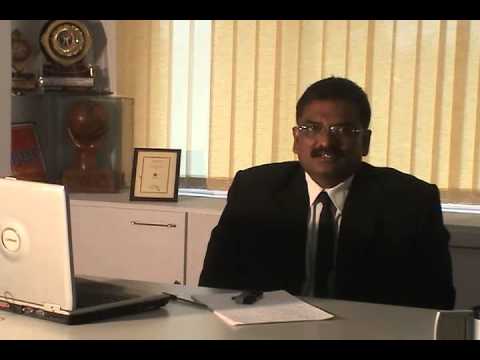
Dr. Satish Ailawadi, the Director-General of the Integral Institute of Advanced Management, is a graduate of Chemical Engineering from the University of Roorkee, now known as IIT Roorkee and an MBA from the University of Poona with dual specialisation in Marketing and Operations Management. He has also completed an M.Phil. in Entrepreneurship from Madurai Kamraj University and a PhD in R&D Management from Pandit Ravi Shankar Shukla University, Raipur. Dr. Ailawadi has worked in the areas of Sales Administration, Product Management, International Trade, Vendor Development, Materials Management, Supply Chain Management and General Management for 27 years in reputed business organisations such as Mitsubishi Corporation, NELCO, NIRLON, Bombay Dyeing and Mfg. Co. Ltd.
Dr. Satish has 15 years of experience in academics at institutions like Vivekanand Education Society’s Institute of Management Studies and Research, ICFAI Business School, and K.J. Somaiya Institute of Management Studies, Mumbai. Prior to joining IMT, Hyderabad, he held the position of Director at the K.J. Somaiya Institute of Management Studies and Research, Mumbai for four years. He has authored books on ‘Logistics Management’ and 'Entrepreneurship', which are referred to as textbooks in various management programs. He has also published and presented several research papers in journals/ conferences of repute.
Apart from this, Dr. Satish is a Fellow of the Institution of Engineers (India), a Life Member of the Indian Institute of Materials Management, and a member of the Indian Institution of Industrial Engineering. His interests in research are mainly in the area of Supply Chain Management and Total Quality Management. Dr. Satish was nominated by the Government of Maharashtra as a part of the delegation to the South Asia Initiative of Harvard University, USA for a workshop on ‘Multi-disciplinary Approach to University Development’. He has also participated in an MDP on “Innovating for Excellence: Program for Leaders in Management Education” organized by the Indian Institute of Management, Ahmedabad. In the year 2014, he was also given the “Best Director” (West India) award by MBA By Choice.

What are some challenges you faced as the Director-General of Integral Institute of Advanced Management?
There have been quite a few challenges that we have faced. However, we have leveraged opportunities instead of looking at them as obstacles. A few of the major challenges were the quality of students’ intake, executive education, and the number of companies offering ‘Analytics Roles’ to the students during their final placement.
What is the student-industry interaction like at Integral Institute of Advanced Management?
The USP of Integral Institute of Advanced Management has been identified as ‘Corporate-Connect’. An ecosystem has been created wherein adequate student-industry interaction is provided by ensuring 15-20% of sessions in every course, including advanced-level electives, are facilitated by senior corporate professionals. We have also introduced a 14-16 week summer internship program where the students are closely mentored by industry guides under the close supervision of faculty members.
Apart from this, we invite CXOs at regular intervals to interact with students on industry-specific issues and challenges that they faced and how they overcame those. These interactions are invariably sector-specific. Moreover, an annual sports event ‘Ace Connect’ is organised by our students every year, wherein we invite corporate professionals who compete with our students in various sports such as Basketball, Volleyball, Cricket, table tennis, etc. This enables our students to get connected to corporate professionals.
How do you manage time in your role?
I do not find any difficulty in time management, as I strongly believe in delegation and empowering my team members. Once the goals and targets for every activity and process are set with timelines, my job involves providing adequate resources to facilitate the process owners to of the task on time. Faculty meetings are held regularly to review the progress and suitable steps are taken immediately if any deviations are observed.
Check IIAM Courses & Fees
How does the Indian education system differ from the education system in other countries, both for students as well as teachers/professors?
The Indian education system is quite different as compared to the one prevailing in Western countries. This difference starts from the primary level itself, which continues to affect the quality of education at both graduation and post-graduation levels. Though the situation is changing in certain elite schools at the primary and secondary levels, the education system remains more or less the same across the country. Since we emphasise rote learning at the primary and secondary school level, the creative thinking skills of the students remain dormant, and it becomes difficult for the teachers and professors at the graduation and post-graduation levels to make students think outside the box and be more innovative. There is a heavy emphasis on research by faculty members in Western universities, whereas academic institutions in India have not yet been able to achieve high standards in research and publications. Academicians in India must get involved in serious research, both scholarly and application-based research.
What are some qualities that have helped Dr. Satish and the entire management, in creating a brand name for IIAM?
It is my firm belief that for building an institution, the essential ingredients in leadership style should be able to empower the faculty members and the support staff. We should also inspire and facilitate the team members to stretch themselves, come out of their comfort zone, and have the ability to benchmark and continuously improve upon the existing process.
Do you have a message for the students pursuing higher studies and are under the influence of their peers and the society?
The parents must understand that their children should be permitted to pursue the vocation which their wards are passionate about, because in the long run that helps a person to grow in their careers and feel happy about it. In my experience, pursuing higher studies under the influence of their peers and society is a very myopic approach. This is so obvious that if a student takes up a program in which they are not interested, in all probabilities they will not be able to perform well on the job and hence their growth will be stunted. On the contrary, if a student takes a vocation of their interest, they are bound to perform well and become successful though they may not get a high-paying job initially.
Do you have a message for the students wishing to join the Integral Institute of Advanced Management in the near future?
The only message I would like to give students aspiring to join IIAM is to be ready to undergo academic rigour during their two years stay with us. They must also be able to withstand the pressure of meeting deadlines. Keep in mind to not worry about mundane aspects such as ‘Return on Investment.’ Focus on learning and upskilling.














![MBA/PGDM | admission | 2024 | Narsee Monjee Institute of Management Studies - [NMIMS Deemed to be University]](https://image-static.collegedunia.com/public/college_data/images/logos/1506323004Logo.jpg?h=72&w=72&mode=stretch)


![MBA/PGDM | admission | 2024 | Indian Institute of Management - [IIMC]](https://image-static.collegedunia.com/public/college_data/images/logos/1488950580d2.png?h=72&w=72&mode=stretch)


 (1).png?h=72&w=72&mode=stretch)
.png?h=72&w=72&mode=stretch)





Comments