




CAT 2008 Question Paper with Answer Key PDF is available for download. CAT 2008 paper was conducted on November 16, 2008. Around 250000 students registered for the exam that year. CAT 2008 question paper carried 90 questions and the weightage of the VARC section was the highest.
- The overall difficulty level of the VARC section in CAT exam was moderate while the difficulty level of the QA and DILR sections was higher than last year.
Candidates preparing for CAT 2025 can download the CAT QA question paper with the solution PDF to get a better idea about the type of questions asked in the paper and their difficulty level.
Also Check:
CAT 2008 VARC Question Paper with Solution PDF
| CAT 2008 VARC Question Paper with Answer Key | Download PDF | Check Solutions |
Question 1:
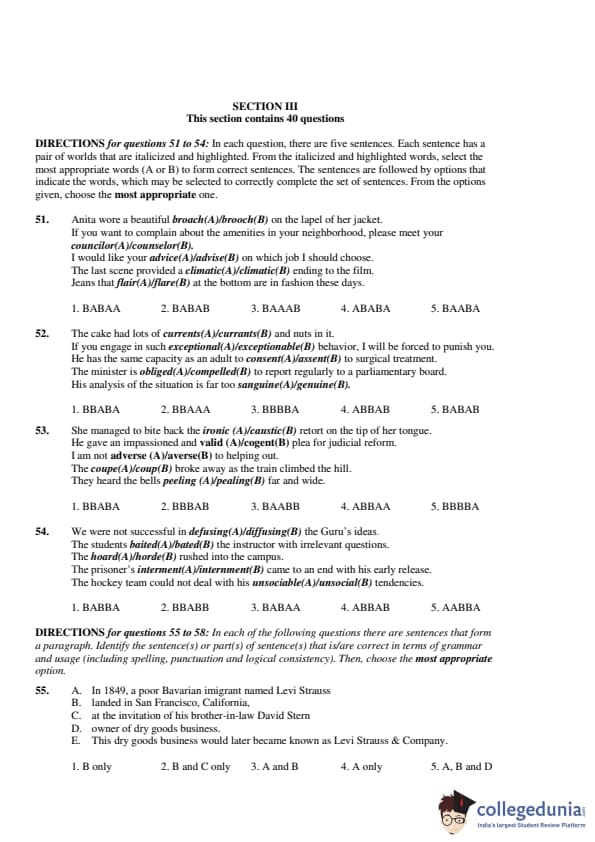
In 1849, a poor Bavarian immigrant named Levi Strauss... (choose the logically connected sentences)
View Solution
Logical order:
A (introduces Levi Strauss) → B (tells location San Francisco) → D (mentions dry goods business) → E (business became Levi Strauss \& Co.). C is extra detail not necessary for the core sequence. Quick Tip: When arranging facts, maintain chronological order and relevance to the main subject.
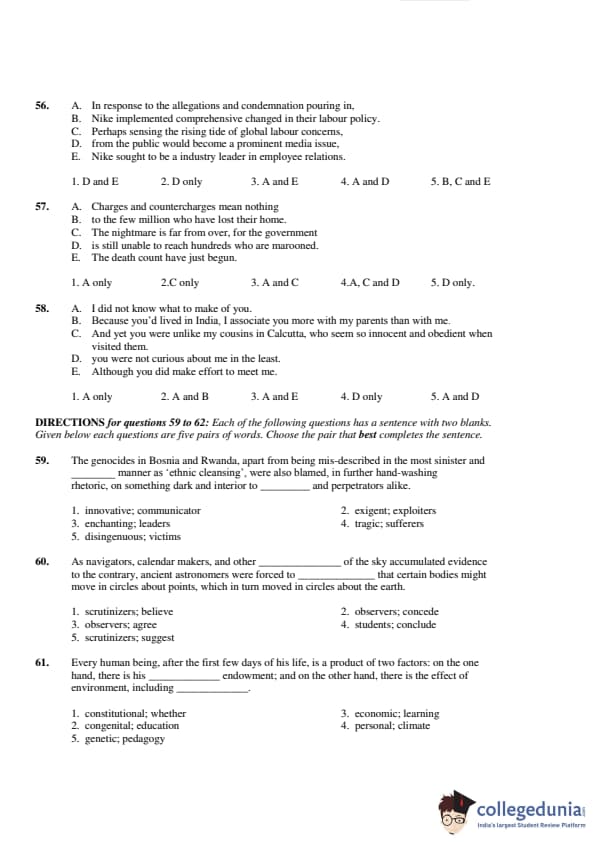
In response to the allegations and condemnation pouring in, Nike... (choose the logically connected sentences)
View Solution
B (implemented changes) → C (context of global labour concerns) → E (result: industry leader in employee relations). Fits flow from problem to action to outcome. Quick Tip: Look for a cause–action–result structure when ordering statements in response to an issue.
Charges and countercharges mean nothing... (choose the logically connected sentences)
View Solution
A (introduces irrelevance of charges) → C (explains seriousness for govt) → D (states people still stranded). This is a logical progression. Quick Tip: Check each option for logical consistency and ensure continuity of subject.
I did not know what to make of you... (choose the logically connected sentences)
View Solution
A (expresses uncertainty) → E (adds concessive contrast: although you did make effort). Fits the contrastive relationship naturally. Quick Tip: When two statements are linked, check for transitions like “although” to spot contrastive pairing.
Anita wore a beautiful broach(A)/brooch(B) on the lapel of her jacket.
If you want to complain about the amenities in your neighbourhood, please meet your councillor(A)/counselor(B).
I would like your advice(A)/advise(B) on which job I should choose.
The last scene provided a climactic(A)/climatic(B) ending to the film.
Jeans that flair(A)/flare(B) at the bottom are in fashion these days.
View Solution
- brooch (B) = ornamental pin.
- councillor (A) = elected member.
- advice (A) = noun.
- climactic (A) = climax-related.
- flare (B) = widen out. Sequence = BBAAB.
Quick Tip: Check part of speech and meaning; some pairs differ by grammatical function, others by definition.
The cake had lots of currents(A)/currants(B) and nuts in it.
If you engage in such exceptional(A)/exceptionable(B) behaviour, I will be forced to punish you.
He has the same capacity as an adult to consent(A)/assent(B) to surgical treatment.
The minister is obliged(A)/compelled(B) to report regularly to a parliamentary board.
His analysis of the situation is far too sanguine(A)/genuine(B).
View Solution
N/A Quick Tip: Watch for subtle meaning changes—especially false friends like “exceptional” vs “exceptionable.”
She managed to bite back the ironic(A)/caustic(B) retort on the tip of her tongue.
He gave an impassioned and valid(A)/cogent(B) plea for judicial reform.
I am not adverse(A)/averse(B) to helping out.
The coup(A)/coupe(B) broke away as the train climbed the hill.
They heard the bells pealing(A)/pealing(B) far and wide.
View Solution
N/A Quick Tip: Context usually makes the correct synonym clear—check tone and subject.
We were not successful in defusing(A)/diffusing(B) the Guru’s ideas.
The students baited(A)/bated(B) the instructor with irrelevant questions.
The hoard(A)/horde(B) rushed into the campus.
The prisoner’s interment(A)/internment(B) came to an end with his early release.
The hockey team could not deal with his unsociable(A)/unsocial(B) tendencies.
View Solution
N/A Quick Tip: Distinguish between similar-sounding words by checking literal vs figurative meanings.
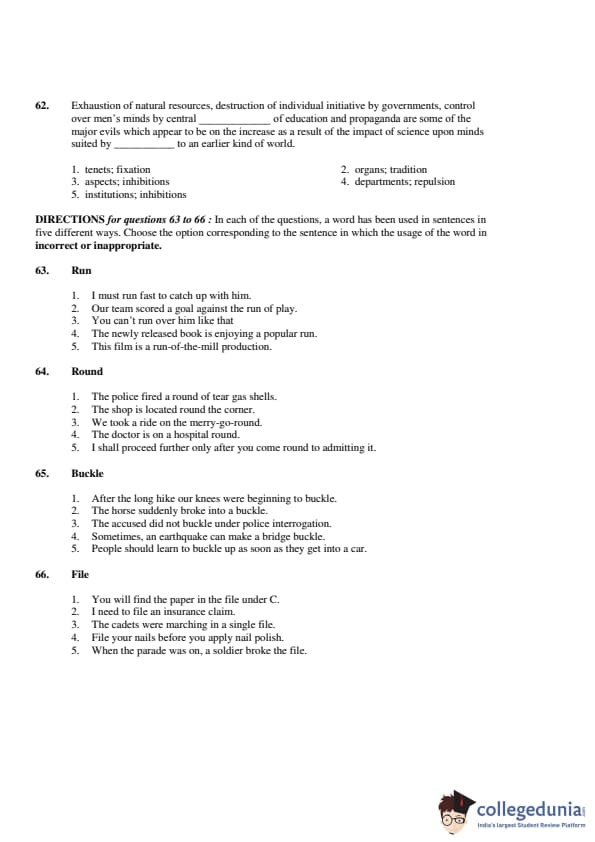
Run —
(1) I must run fast to catch up with him.
(2) Our team scored a goal against the run of play.
(3) You can’t run over him like that.
(4) The newly released book is enjoying a popular run.
(5) This film is a run-of-the-mill production.
View Solution
Options (1) to (4) are valid uses of "run" in literal and idiomatic contexts:
- (1) Literal meaning: move fast on foot.
- (2) Idiom: "against the run of play" (sports phrase).
- (3) Phrasal verb "run over" meaning physically pass over or figuratively dominate.
- (4) "A popular run" refers to a period of popularity.
Option (5) "run-of-the-mill" is correct idiomatically but here "run" is not acting independently — it’s part of a fixed compound where its base meaning is absent. Quick Tip: Check whether the core word retains its individual meaning in idioms; if it’s purely part of a fixed phrase, it may not count in polysemy questions.
Round —
(1) The police fired a round of tear gas shells.
(2) The shop is located round the corner.
(3) We took a ride on the merry-go-round.
(4) The doctor is on a hospital round.
(5) I shall proceed further only after you come round to admitting it.
View Solution
All five sentences use valid meanings of "round":
- (1) "A round" = a volley or set of shots.
- (2) "Round the corner" = nearby.
- (3) "Merry-go-round" = a circular amusement ride.
- (4) "On a hospital round" = regular visits to patients.
- (5) "Come round" = change opinion or recover consciousness. Quick Tip: Words with many senses (polysemous words) can apply in military, spatial, entertainment, and figurative contexts.
Buckle —
(1) After the long hike our knees were beginning to buckle.
(2) The horse suddenly broke into a buckle.
(3) The accused did not buckle under police interrogation.
(4) Sometimes, an earthquake can make a bridge buckle.
(5) People should learn to buckle up as soon as they get into a car.
View Solution
- (1) "Knees beginning to buckle" = give way physically.
- (3) "Buckle under" = yield to pressure.
- (4) "Bridge buckle" = collapse or bend under stress.
- (5) "Buckle up" = fasten seatbelt.
Option (2) is incorrect — "buckle" is not a type of horse gait. Quick Tip: Discard options where the supposed meaning doesn’t exist in standard usage; verify idiomatic uses.
File —
(1) You will find the paper in the file under C.
(2) I need to file an insurance claim.
(3) The cadets were marching in a single file.
(4) File your nails before you apply nail polish.
(5) When the parade was on, a soldier broke the file.
View Solution
All five are correct:
- (1) "File" = folder of papers.
- (2) "File" = submit formally.
- (3) "Single file" = one behind another.
- (4) "File" = smooth or shape with a tool.
- (5) "Broke the file" = disrupted the formation. Quick Tip: Polysemy mastery involves recognizing both literal and metaphorical applications of a word across domains.
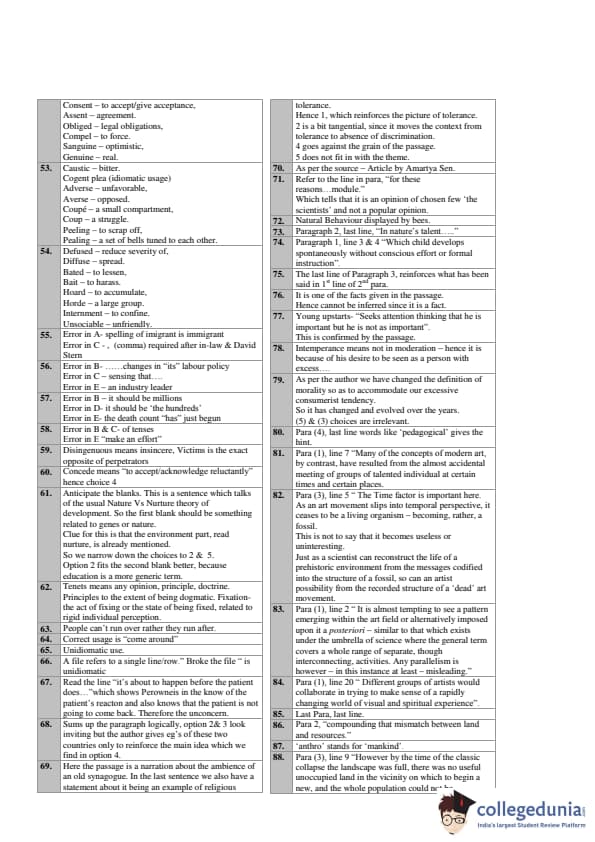
The genocides in Bosnia and Rwanda, apart from being mis-described in the most sinister and _____ manner as ‘ethnic cleansing’, were also blamed, in further hand-washing rhetoric, on something dark and interior to _____ and perpetrators alike.
View Solution
"Disingenuous" means insincere, which fits the description of mislabeling genocide. The victims are the ones suffering, making the phrase "victims and perpetrators alike" logical in context. Other options either break meaning or tone. Quick Tip: Look for tone alignment: in serious topics, vocabulary must match the gravity and intended criticism.
As navigators, calendar makers, and other _____ of the night sky accumulated evidence to the contrary, ancient astronomers were forced to _____ that certain bodies might move in circles about points, which in turn moved in circles about the earth.
View Solution
"Observers" fits for people studying the sky. "Concede" fits because they had to reluctantly accept evidence against established belief. Quick Tip: When both words are missing, check subject logic first, then find the verb that matches the described attitude or reaction.
Every human being, after the first few days of his life, is a product of two factors: on the one hand, there is his _____ endowment; and on the other hand, there is the effect of environment, including _____.
View Solution
"Congenital" means present from birth, fitting "endowment." "Education" is an environmental factor shaping a person. Other combinations are awkward or illogical. Quick Tip: In analogy-type blanks, first match the tone and meaning of the first blank to the category (innate vs acquired).
Exhaustion of natural resources, destruction of individual initiative by governments, control over men’s minds by central _____ of education and propaganda are some of the major evils which appear to be on the increase as a result of the impact of science upon minds suited by _____ to an earlier kind of world.
View Solution
"Institutions" of education is a standard collocation. "Inhibitions" describes mental attitudes resistant to change, fitting the idea of being suited to an older world. Quick Tip: Check for standard collocations first — they often decide the correct pairing in double-blank questions.
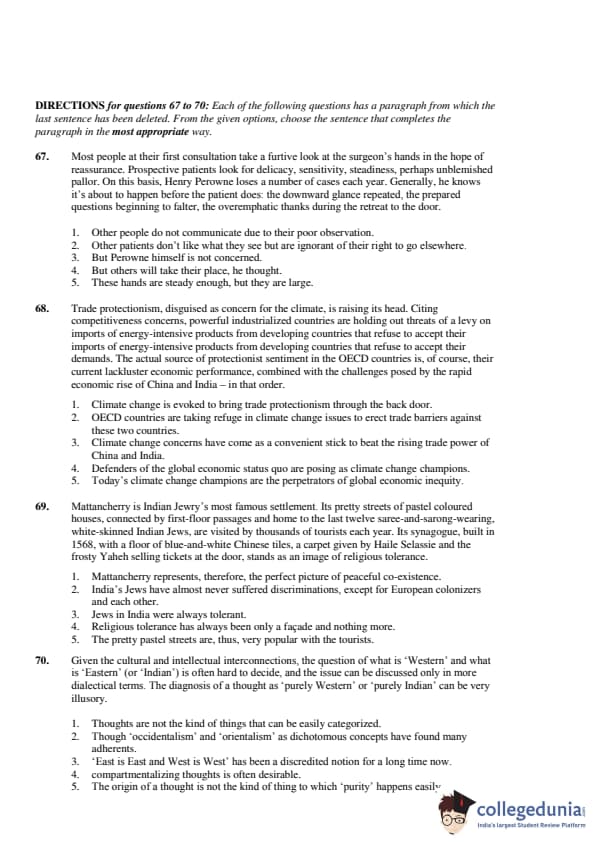
Most people at their first consultation take a furtive look at the surgeon’s hands in the hope of reassurance. Based on this, Henry Perowne loses a number of cases each year. He knows it’s about to happen before the patient does: the downward glance, repeated questions, overemphatic thanks during retreat to the door. Which statement explains his loss of cases?
View Solution
The passage focuses on the patients' observation of the surgeon’s hands. Their large size might cause hesitation despite being steady. This matches the context of patients deciding against surgery with him. Quick Tip: When selecting the answer, focus on the specific visual cue mentioned and its potential interpretation by others.
Trade protectionism, disguised as concern for the climate, is raising its head. Which statement summarises the author’s main point?
View Solution
The passage asserts that climate change is being used as a pretext for trade barriers. This matches option (1) precisely, as it describes the hidden intent behind the climate change rhetoric. Quick Tip: When multiple options are similar, choose the one that captures the essence without adding extra assumptions.
Mattancherry is Indian Jewry’s most famous settlement, symbolising religious tolerance and peace. Which statement best captures this idea?
View Solution
The description of Mattancherry focuses on harmony, history, and peaceful coexistence. Option (1) summarises the intended depiction accurately without extra detail. Quick Tip: Look for the core theme repeated in descriptive sentences — here it’s peaceful coexistence.
Given cultural and intellectual interconnections, the question of what is ‘Western’ and what is ‘Eastern’ is hard to decide. Which statement reflects the author’s conclusion?
View Solution
The passage highlights the difficulty in classifying thoughts as purely Western or Eastern, supporting the conclusion that such categorization is inherently flawed. Quick Tip: When a passage questions a dichotomy, the correct answer often rejects rigid categorization entirely.
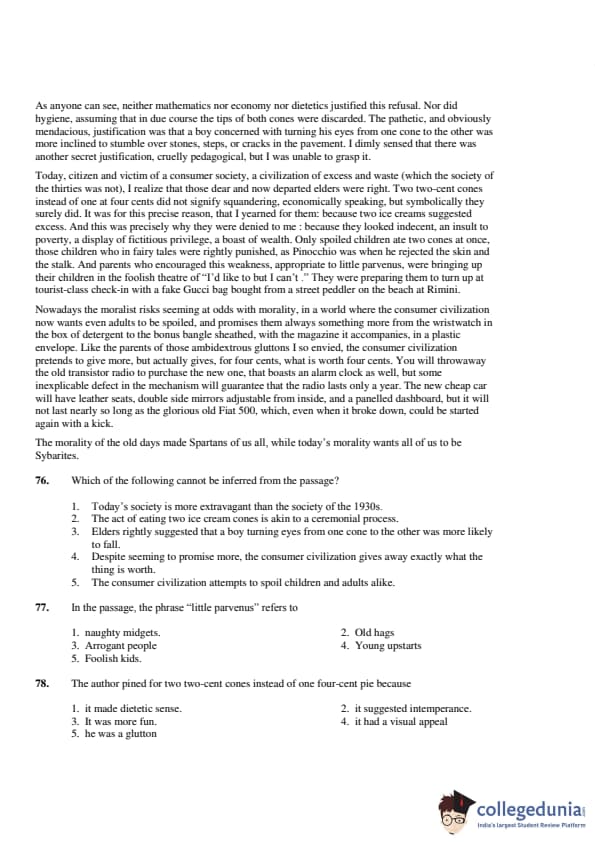
Which of the following cannot be inferred from the passage?
View Solution
The elders’ comment about stumbling was presented as a justification, but the author implies it was not valid. Therefore, inferring it as “right” is incorrect, making option (3) the one that cannot be inferred. All other statements are supported by the passage. Quick Tip: For inference questions, eliminate options contradicted by the author’s stance or described as invalid reasoning.
In the passage, the phrase “little parvenus” refers to:
View Solution
“Parvenu” means someone newly risen in status, often arrogant. The context describes children indulged to display status, which aligns with “young upstarts.” Quick Tip: Always match figurative labels to the broader context rather than literal meanings of words.
The author pined for two two-cent cones instead of one four-cent pie because:
View Solution
The author envied the ceremony and enjoyment of switching between cones, finding it more entertaining, not for diet or appearance reasons. Quick Tip: Distinguish between the stated emotional reason and other possible but unstated justifications.
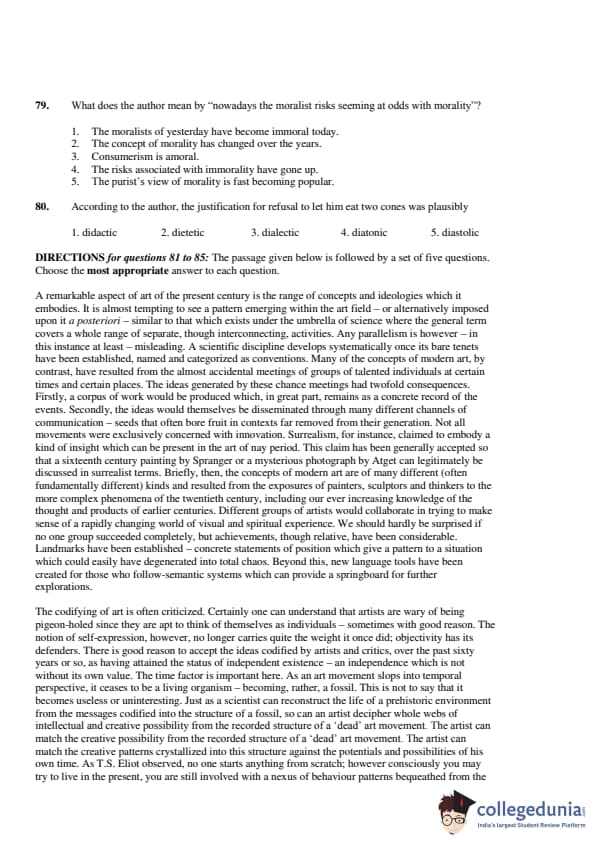
What does the author mean by “nowadays the moralist risks seeming at odds with morality”?
View Solution
The author contrasts old strictness with modern indulgence, showing that what was once moral now appears outdated, reflecting a shift in moral perception. Quick Tip: Look for contrast indicators in the passage to understand how meanings evolve over time.
According to the author, the justification for refusal to let him eat two cones was plausibly:
View Solution
The refusal was linked to health and moderation — matters of diet — making “dietetic” the most accurate term. Quick Tip: Match answer choices to the domain of reasoning used — here, diet and health link directly to “dietetic.”
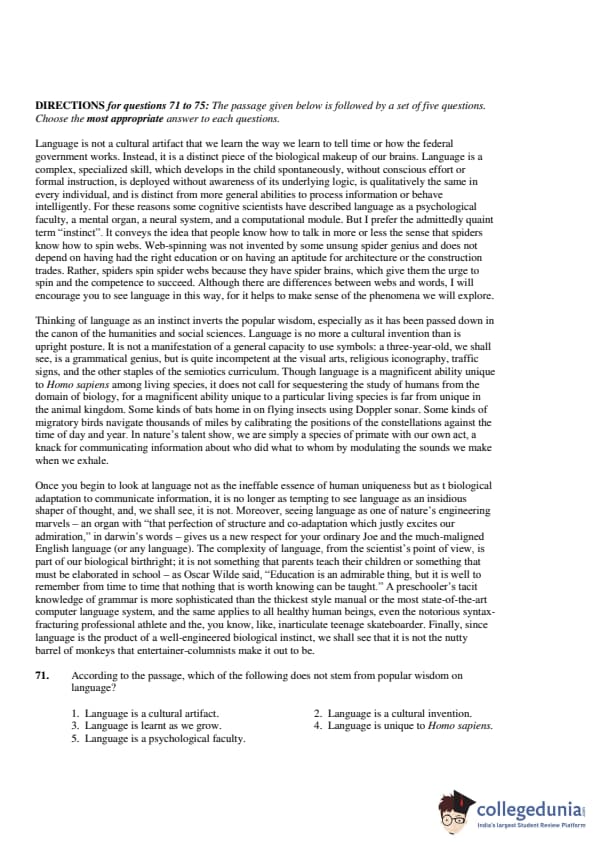
According to the passage, which of the following does not stem from popular wisdom on language?
View Solution
Popular wisdom, as described in the passage, treats language as something cultural, learned during life, and unique to humans. The idea that it is a \textit{psychological faculty comes from modern cognitive science and is not part of traditional thinking. Therefore, (5) is the one that does not stem from popular wisdom.
Quick Tip: When asked to find what is “not” from popular wisdom, focus on ideas introduced as new or contrasting with tradition.
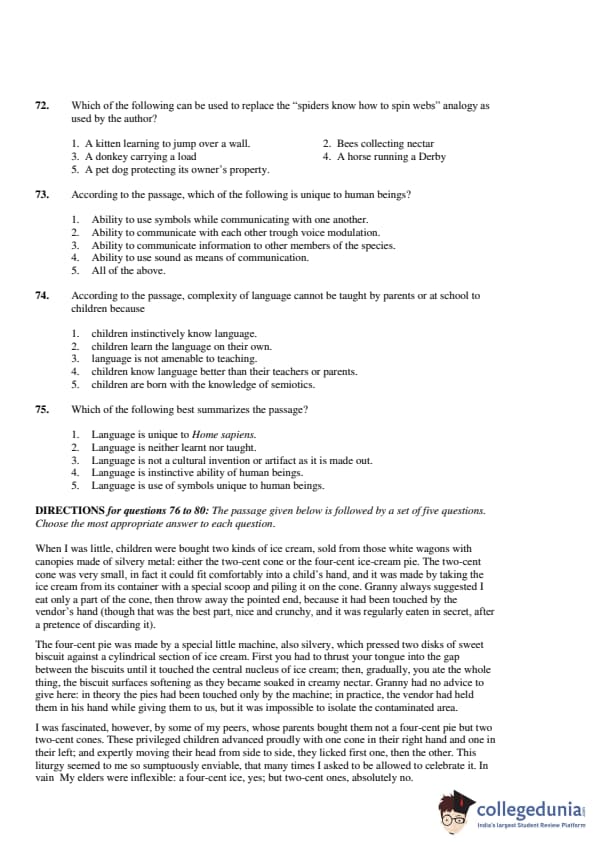
Which of the following can be used to replace the "spiders know how to spin webs" analogy as used by the author?
View Solution
The spider web analogy describes an instinctive biological skill, not learned through teaching. Bees collecting nectar is also an innate behavior — they do it naturally without instruction. Other examples involve learning, training, or external influence, so they do not fit the analogy.
Quick Tip: When matching an analogy, find the option that shares the same core principle — here, an inborn, instinctive action.
According to the passage, which of the following is unique to human beings?
View Solution
The passage points out that human language is special because it combines several unique features — symbolic communication, voice modulation, and complex information transfer. All of these abilities together distinguish humans from other animals, making (5) the correct answer.
Quick Tip: In reading comprehension, when all listed features are supported by the passage, choose “All of the above.”
According to the passage, complexity of language cannot be taught by parents or at school to children because:
View Solution
The author explains that language is a biological instinct, part of human birthright. A child’s grasp of grammar develops naturally without formal teaching. This means its complexity cannot be “taught” in the usual sense, making (3) the accurate reason.
Quick Tip: Look for the specific reason stated in the text, not just a restatement of an effect or example.
Which of the following best summarizes the passage?
View Solution
The passage’s core message is that language is not cultural or learned, but an instinct — a biological adaptation humans are born with. This makes option (4) the most comprehensive summary, as it encapsulates the argument and main evidence presented.
Quick Tip: When summarizing, pick the option that captures the passage’s overall argument, not just a detail.
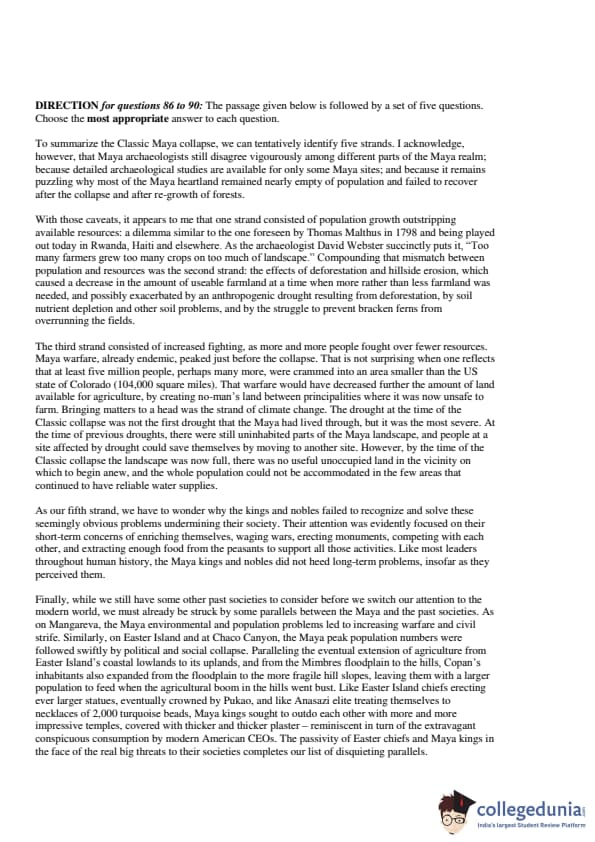
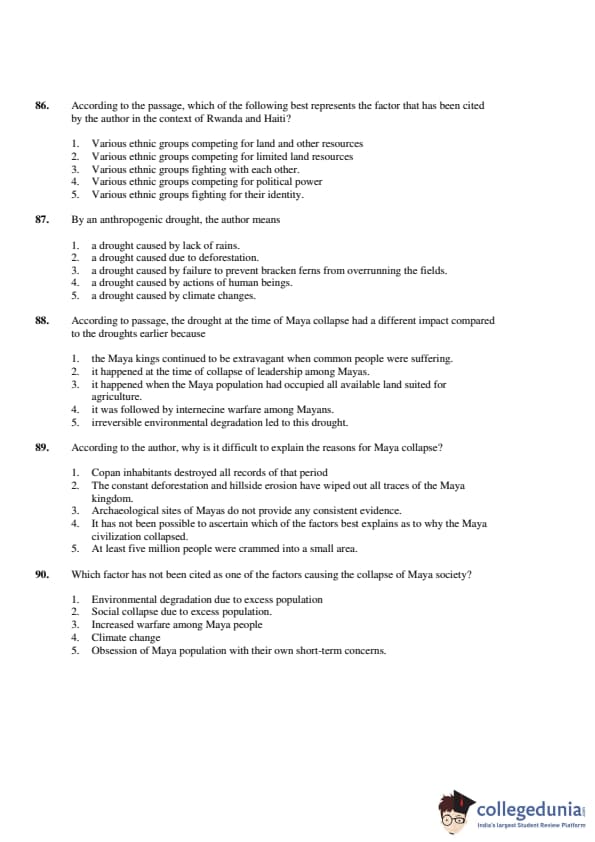
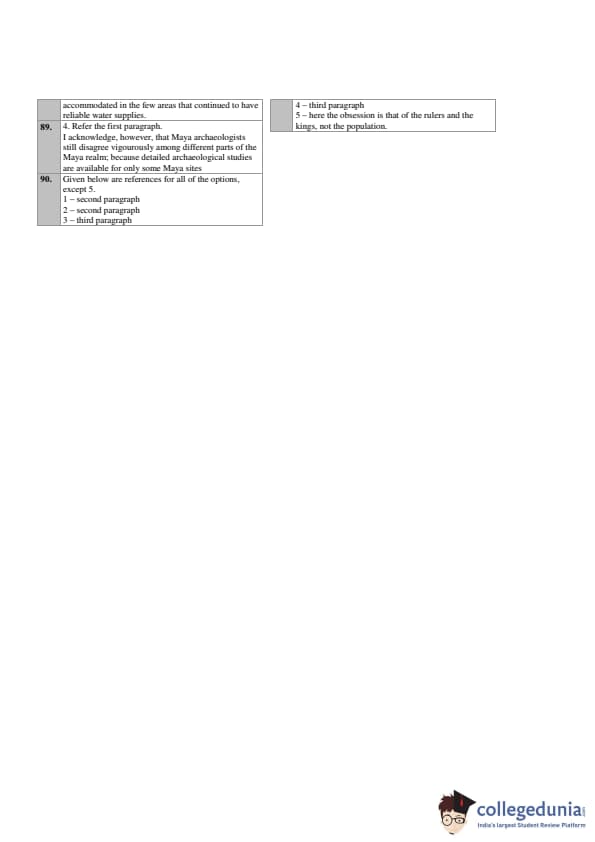
According to the passage, which of the following best represents the factor that has been cited by the author in the context of Rwanda and Haiti?
View Solution
The passage draws a parallel between population growth outstripping resources in the Maya collapse and the situation in Rwanda and Haiti. The specific issue highlighted is the struggle over limited land resources, which aligns with option (2). While conflict is mentioned, the core problem here is scarcity of arable land due to overpopulation.
Quick Tip: When passages mention historical parallels, focus on the key factor being compared, not just related consequences like fighting.
By an anthropogenic drought, the author means:
View Solution
The prefix \textit{anthropo- refers to humans, and the passage specifies that deforestation, soil nutrient depletion, and land mismanagement by humans contributed to the drought. Hence, it is a drought caused by human actions, making (4) correct.
Quick Tip: When dealing with technical terms, break down their root meanings to understand the definition in context.
According to the passage, the drought at the time of Maya collapse had a different impact compared to the droughts earlier because:
View Solution
The passage states that earlier droughts could be survived by moving to unoccupied land. However, during the Classic Maya collapse, the landscape was already full, leaving no land to relocate to, making the impact much more severe. This is captured by option (3).
Quick Tip: Look for contrasts in historical timelines — the difference between earlier and later events often reveals the answer.
According to the author, why is it difficult to explain the reasons for Maya collapse?
View Solution
The author clearly mentions that while multiple factors have been identified, archaeologists disagree on their relative importance, and no single cause can be definitively established. This makes (4) correct.
Quick Tip: When the question asks “why is it difficult…,” focus on the uncertainty or disagreement expressed in the text.
Which factor has not been cited as one of the factors causing the collapse of Maya society?
View Solution
The passage lists environmental degradation, warfare, climate change, and the ruling class’s obsession with short-term gains as causes. However, “social collapse due to excess population” is not explicitly stated — instead, social collapse is presented as a \textit{result, not a direct cause.
Quick Tip: Be careful to distinguish between causes and consequences when interpreting the passage.
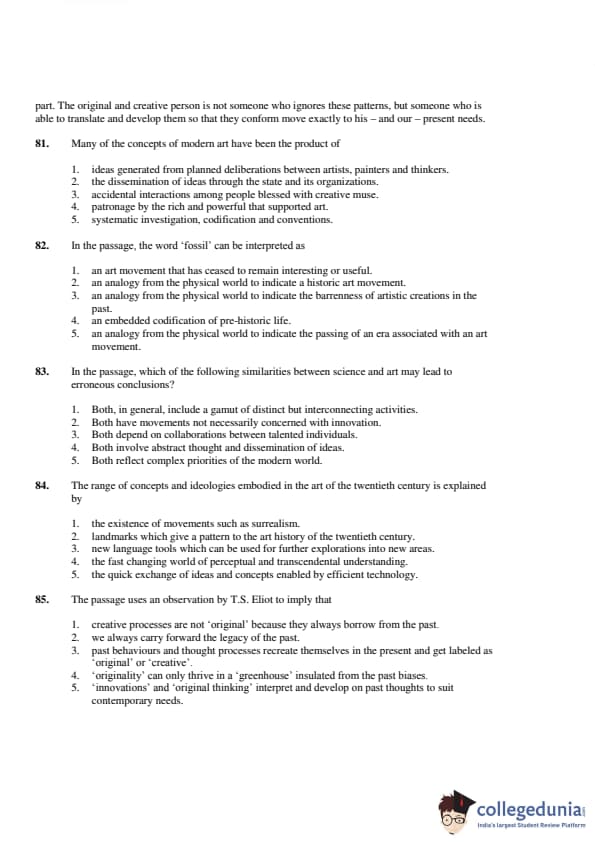
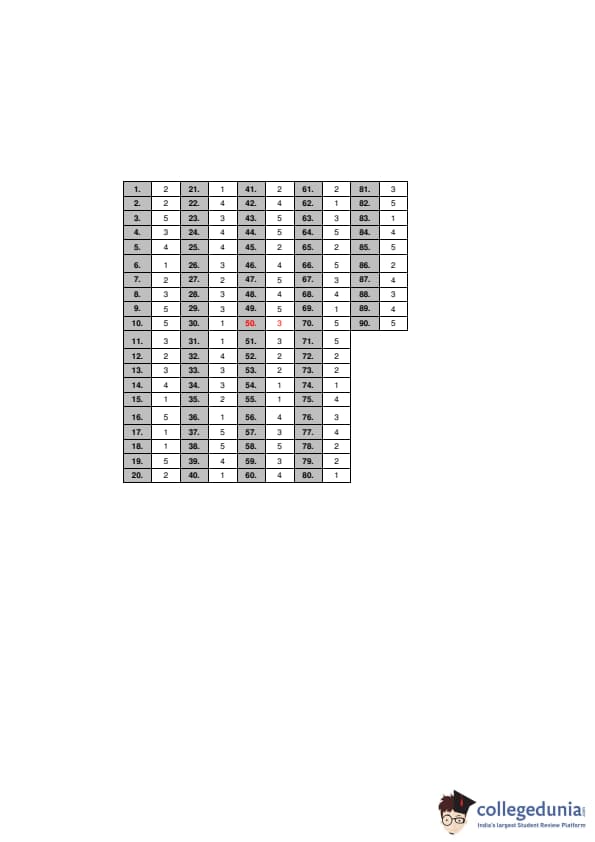
Many of the concepts of modern art have been the product of:
View Solution
The passage states that many modern art concepts resulted from "almost accidental meetings of groups of talented individuals at certain times and certain places." These chance encounters led to new artistic ideas and movements, rather than planned or systematic efforts. Hence, (3) best reflects this origin.
Quick Tip: Look for phrases in the passage that indicate spontaneity or chance — they point toward "accidental" rather than deliberate or systematic creation.
In the passage, the word 'fossil' can be interpreted as:
View Solution
The passage compares a stagnant or outdated art movement to a fossil — something no longer alive, dynamic, or relevant. This analogy emphasizes that when art loses its evolving creative essence, it becomes like a fossil: preserved but no longer active or inspiring.
Quick Tip: When interpreting metaphors, identify what qualities from the comparison object (here, a fossil) are being applied to the subject (an art movement).
In the passage, which of the following similarities between science and art may lead to erroneous conclusions?
View Solution
The opening lines compare art and science by noting both cover a range of separate but interconnected activities. However, the author warns that this kind of parallelism can be misleading if taken too far. Therefore, (1) is the similarity that can lead to wrong conclusions.
Quick Tip: Check the introduction of the passage for comparisons — they often reveal the exact point the question is targeting.
The range of concepts and ideologies embodied in the art of the twentieth century is explained by:
View Solution
The passage attributes the diversity of modern art concepts to the complex phenomena of the twentieth century — including changes in perception, knowledge, and ways of understanding. This is best captured in option (4).
Quick Tip: Look for the broader cultural or intellectual context the author gives when explaining diversity in movements.
The passage uses an observation by T.S. Eliot to imply that:
View Solution
The T.S. Eliot reference supports the idea that no creation starts from a completely blank slate — all artistic innovation is shaped by inherited ideas, which are adapted to fit present-day contexts. Option (5) expresses this most accurately.
Quick Tip: When a literary quote is used, focus on the author's explanation after the quote to find the intended implication.
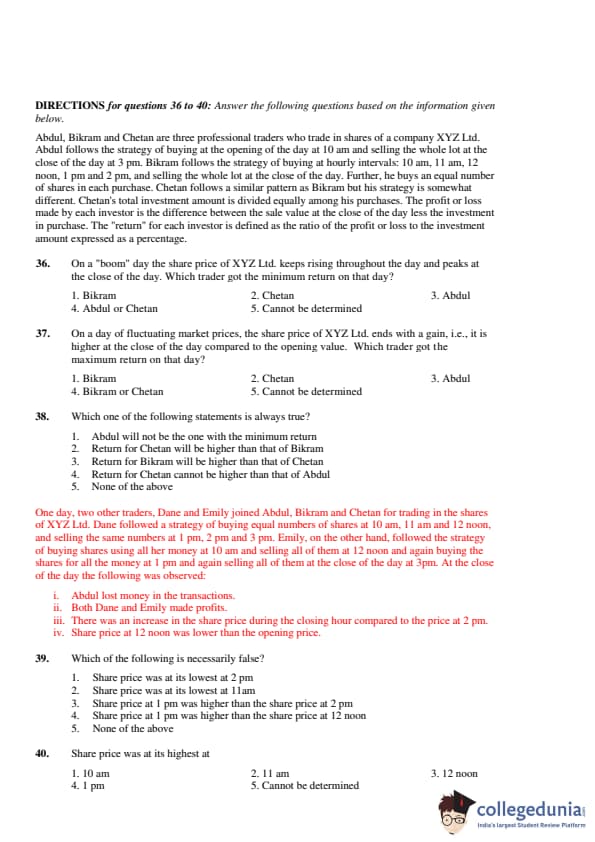
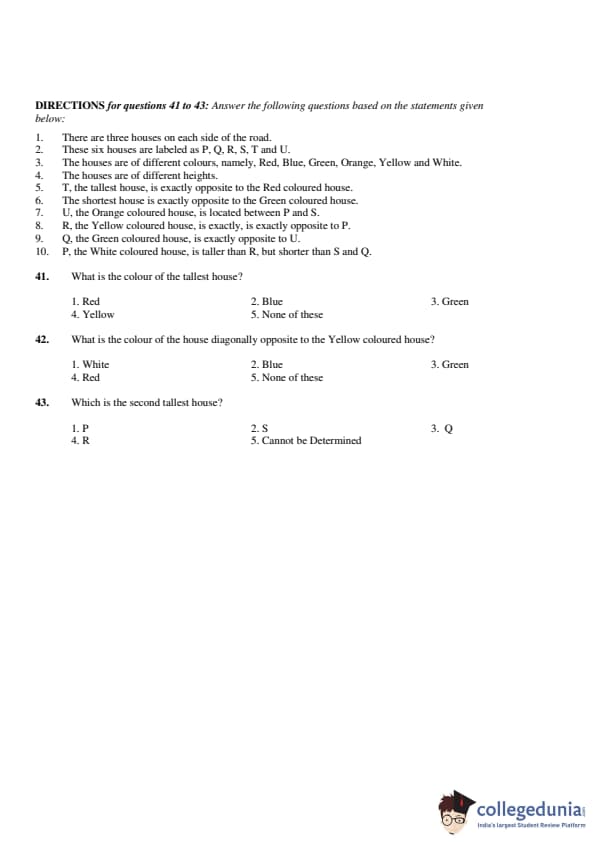
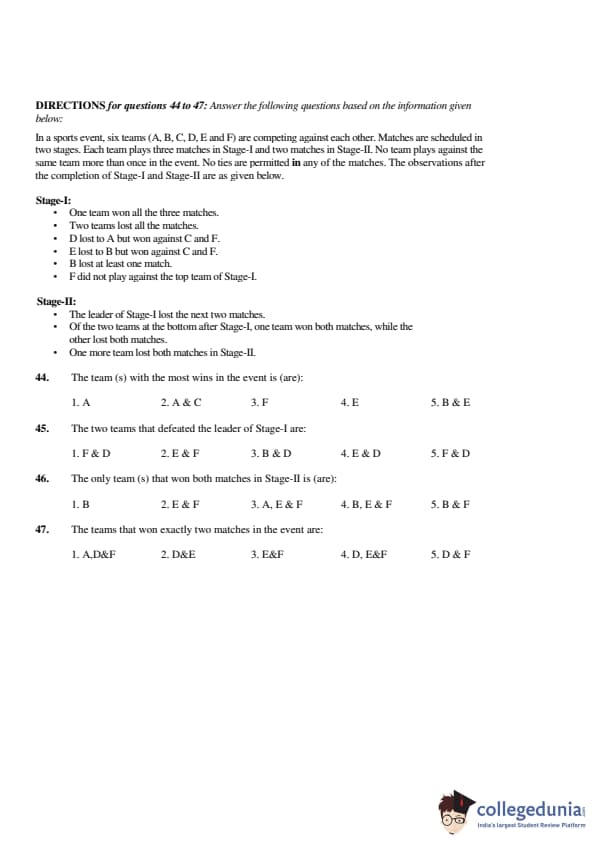
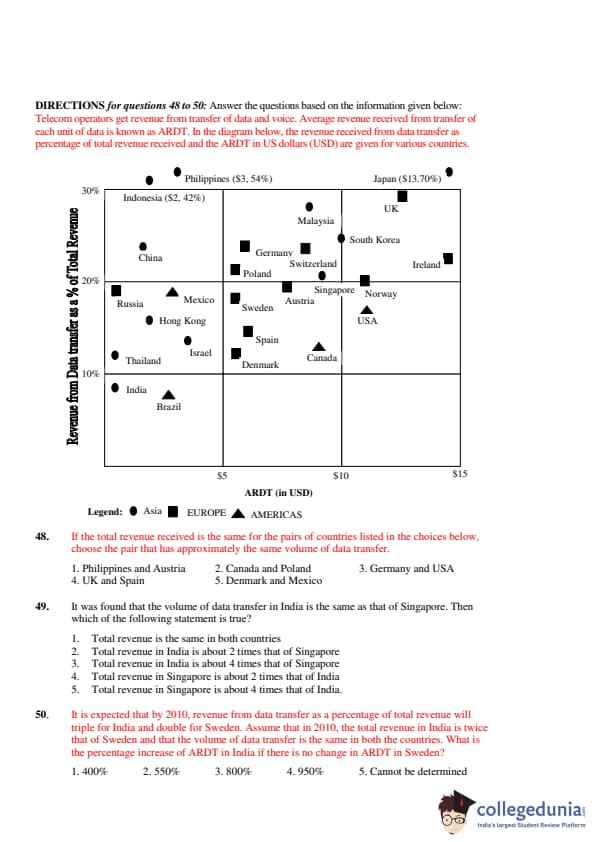
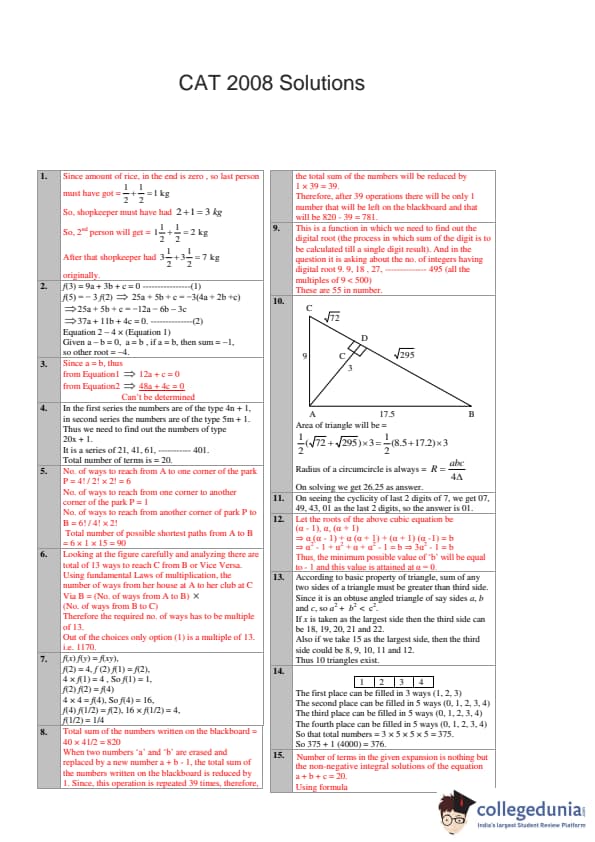
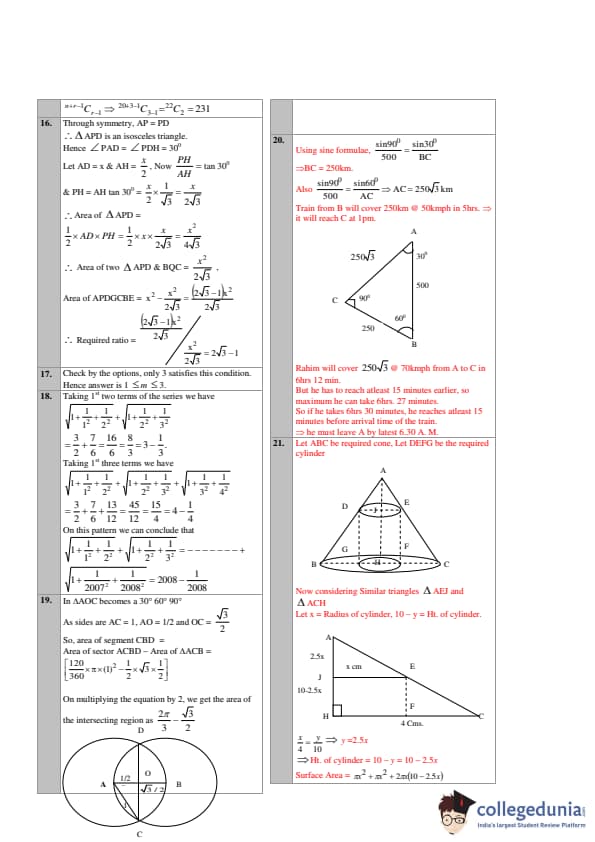
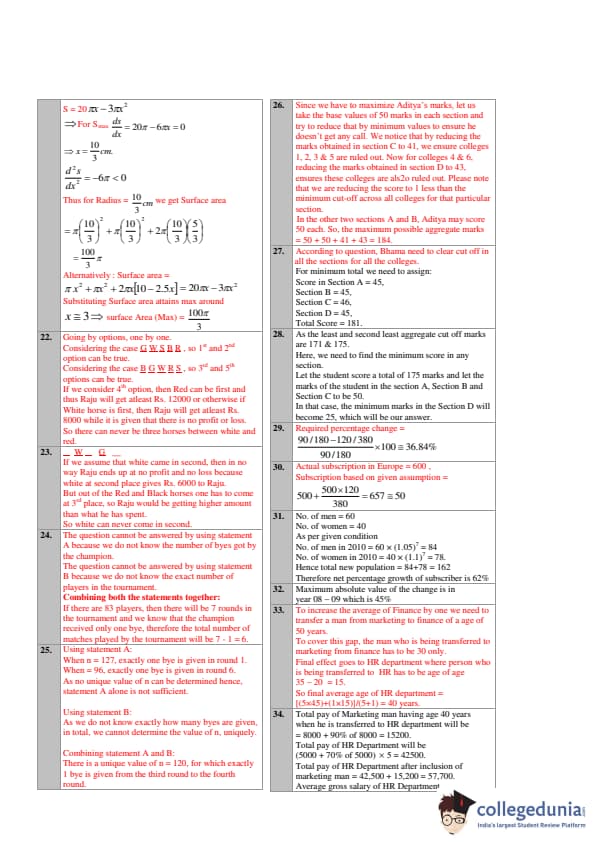
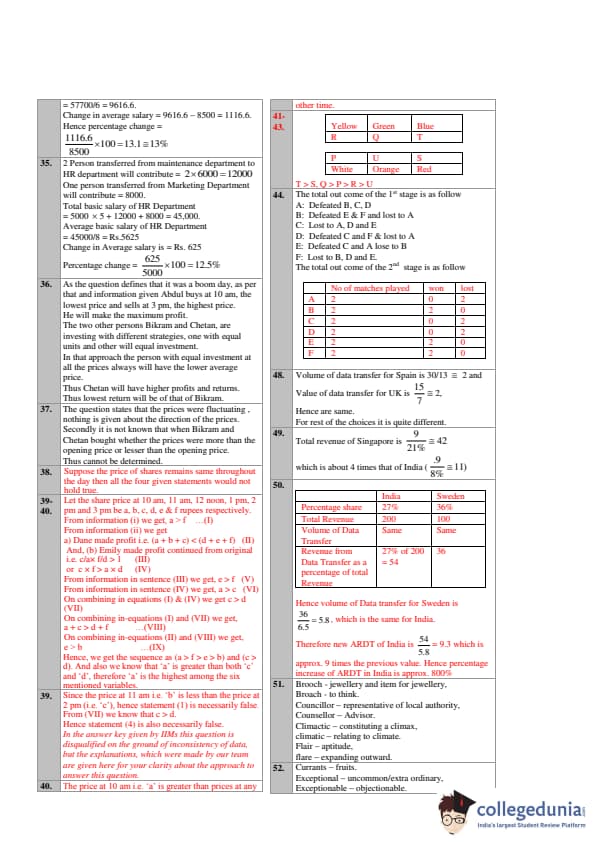
Also Check:
CAT 2008 Paper Analysis
Out of the total 90 questions that appeared in CAT 2008, 40 came from the Verbal Ability section, while the QA and DILR section contributed 25 questions each. Have a look at the below-mentioned table in order to get detailed analysis of CAT 2008 question paper
| Sections | No. Of Questions | Difficulty Level | Good Attempts |
|---|---|---|---|
| Verbal Ability | 40 | Easy to moderate | 22 |
| Quantitative Ability | 25 | Easy to moderate | 13 |
| Data Interpretation and Logical Reasoning | 25 | Difficult | 14 |
| Total | 90 | - | 46 |
- CAT QA section carried more logical- based questions.
- DILR section was tougher than last year. Most of the questions in DILR section were tricky and time-consuming
- Questions from Reading Comprehension were easy to attempt.
CAT Question Papers of Other Years
| CAT 2024 Question Papers | CAT 2023 Question Papers |
| CAT 2022 Question Papers | CAT 2020 Question Papers |
| CAT 2019 Question Papers | CAT 2018 Question Papers |
| CAT 2017 Question Papers | CAT 2016 Question Papers |



Comments