




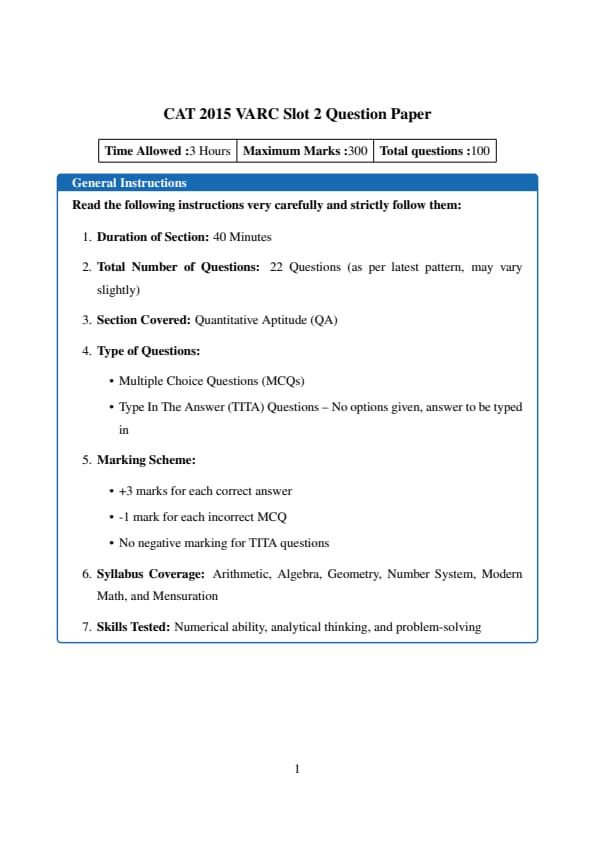
CAT 2015 Question Paper for VARC was rated easy to moderate. This section of CAT 2015 Question Paper was dominated by Reading Comprehension questions as 24 out of 34 questions were from RC. CAT 2015 question paper had no questions from vocabulary and grammar. Questions from Verbal Logic were based on para jumbles, summary, and odd sentences. An attempt of 25-27 questions with 90% accuracy was considered good to get 95 + percentile.
Students preparing for CAT 2025 can download CAT 2015 Question Paper with Answer Key PDFs (VARC) from below:
Also Check: CAT Question Paper With Solution Pdf
CAT 2015 Question Paper with Solution PDF – VARC Slot 2
| CAT 2015 Question Paper With Answer Key – VARC Slot 2 | Check Solutions |
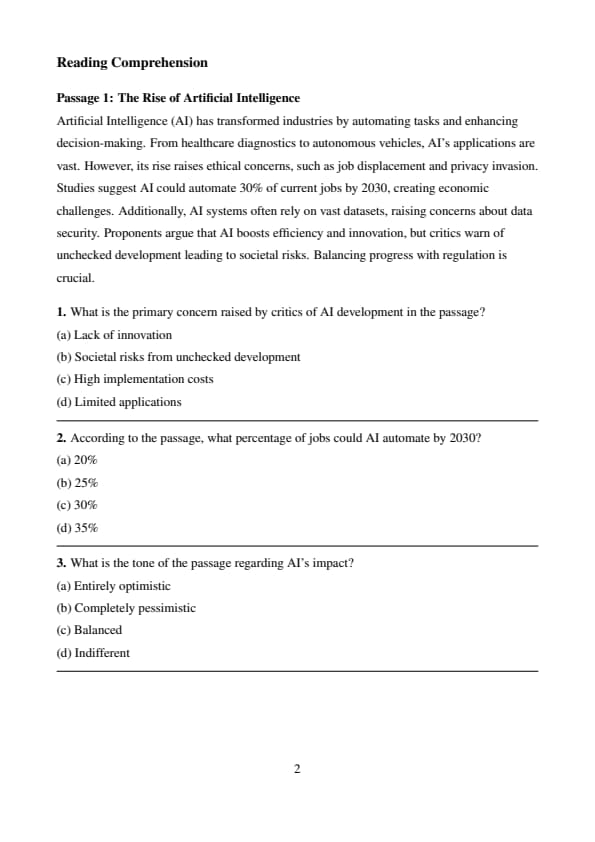
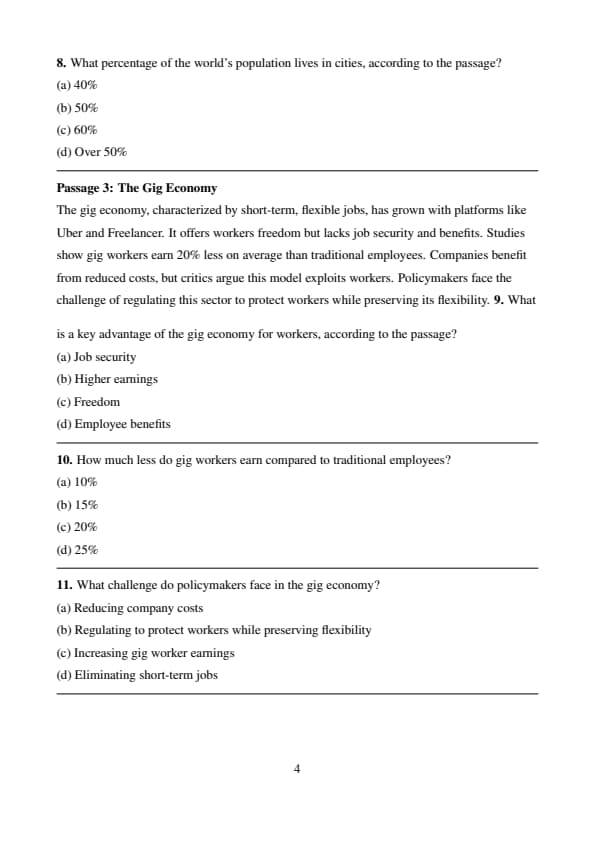
What is the primary concern raised by critics of AI development in the passage?
According to the passage, what percentage of jobs could AI automate by 2030?
What is the tone of the passage regarding AI’s impact?
What does the passage suggest is crucial for AI’s development?
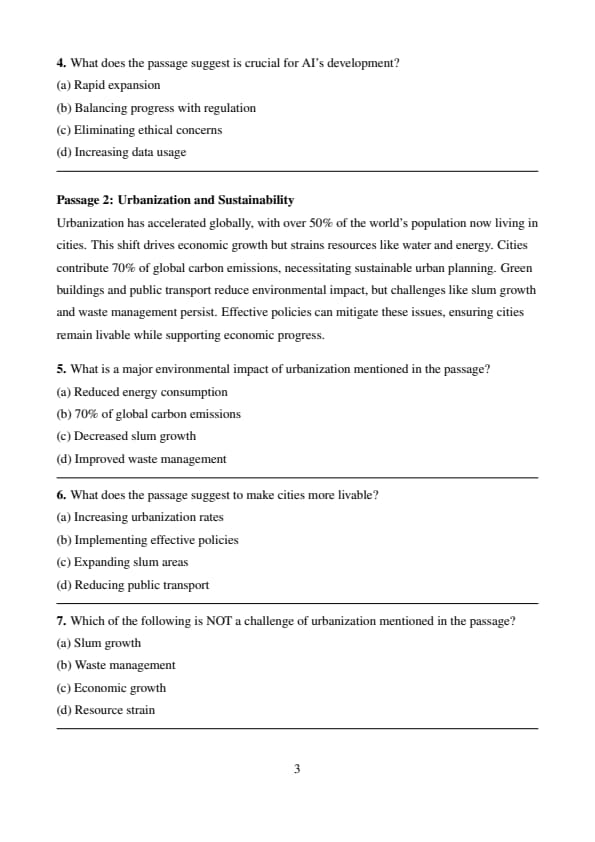
What is a major environmental impact of urbanization mentioned in the passage?
What does the passage suggest to make cities more livable?
Which of the following is NOT a challenge of urbanization mentioned in the passage?
What percentage of the world’s population lives in cities, according to the passage?
What is a key advantage of the gig economy for workers, according to the passage?
How much less do gig workers earn compared to traditional employees?
What challenge do policymakers face in the gig economy?
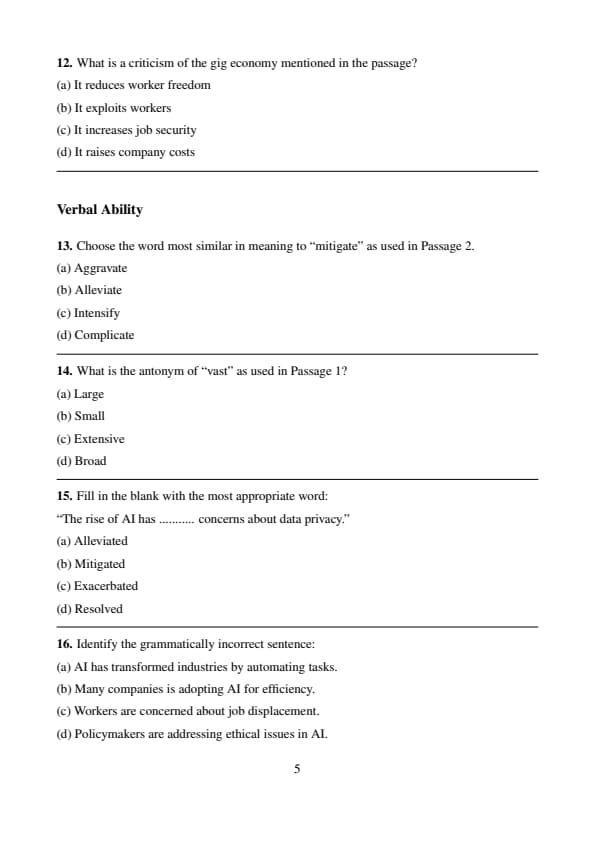
What is a criticism of the gig economy mentioned in the passage?
Choose the word most similar in meaning to “mitigate” as used in Passage 2.
What is the antonym of “vast” as used in Passage 1?
Fill in the blank with the most appropriate word:
“The rise of AI has ........... concerns about data privacy.”
Identify the grammatically incorrect sentence:
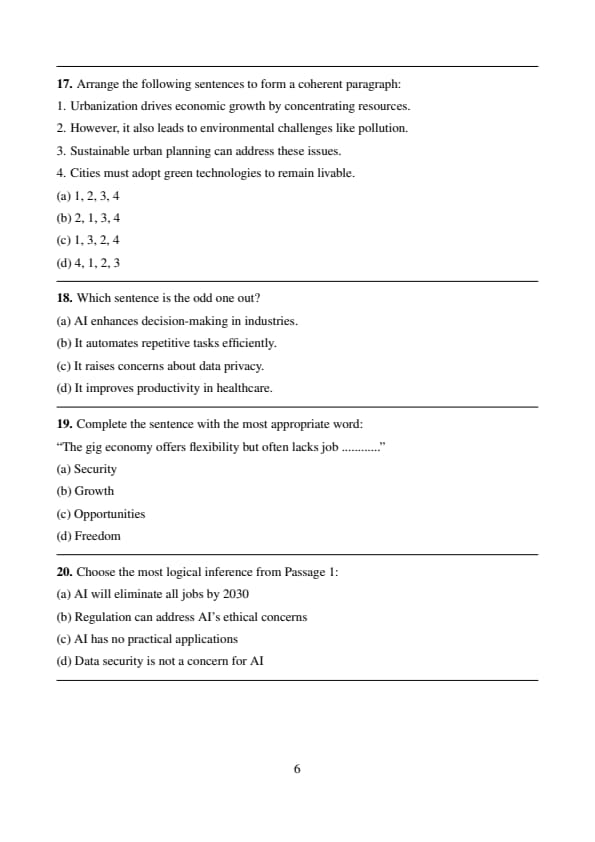
Arrange the following sentences to form a coherent paragraph:
1. Urbanization drives economic growth by concentrating resources.
2. However, it also leads to environmental challenges like pollution.
3. Sustainable urban planning can address these issues.
4. Cities must adopt green technologies to remain livable.
Which sentence is the odd one out?
Complete the sentence with the most appropriate word:
“The gig economy offers flexibility but often lacks job ............”
Choose the most logical inference from Passage 1:
CAT 2015 VARC Paper Analysis:
IIM Ahmedabad conducted CAT 2015 on 29 November 2015. CAT 2015 was conducted in two sessions: Forenoon and Afternoon.
- There were a total of 5 passages - three passages were 450 words each and the other two passages had 300 words. The passages were easy to read but the options were tricky.
- CAT 2015 Question Paper had 5 sentence types. Two were easy and the other two were very difficult, as they were Non-MCQs.
- There were no questions from the vocabulary and grammar part.
- The verbal ability questions did not carry any negative marking but the questions needed prior practice for better results.
Follow the table below to understand the complete CAT 2015 VARC Question Paper analysis- distribution of questions:
| Topic | Number of Questions |
|---|---|
| Reading Comprehension | 24 |
| Para-jumble | 4 |
| Summary | 3 |
| Para-jumble (Odd sentence out) | 3 |
CAT Question Papers of Previous Years
| CAT 2024 Question Papers | CAT 2023 Question Papers | CAT 2022 Question Papers | CAT 2021 Question Papers |
| CAT 2020 Question Papers | CAT 2019 Question Papers | CAT 2018 Question Papers | CAT 2017 Question Papers |



Comments