




Aldehydes, Ketones, and Carboxylic Acids are important topics in Organic Chemistry for JEE Advanced and an integral part of conceptual and application-based questions. The chapter consists of numerous types of reactions, mechanisms of action, and the reactivity of these functional groups. All of these are critical for organic transformations and synthesis.
In JEE Advanced, Aldehydes, Ketones, and Carboxylic Acids are important organic chemistry topics that normally constitute around 3-5% of the total marks (1-2 questions per year). Each question typically carries 4 marks and focuses on reactions, mechanisms, and application. Though the weightage might seem small compared to other chapters, the importance of mastering this section cannot be overstated due to its frequent appearance and connection to numerous other topics in organic chemistry.
Related Articles
Analysis of Aldehydes, Ketones, and Carboxylic Acids Previous Year Questions in JEE Advanced
1. Year-wise Weightage & Question Types
| Year | Questions | Marks | Key Topics Tested |
|---|---|---|---|
| 2024 | 2 (1 MCQ + 1 Assertion) | 7 | Cannizzaro reaction, Hell-Volhard-Zelinsky (HVZ) reaction |
| 2023 | 1 (Numerical) | 3 | % yield calculation in aldol condensation |
| 2022 | 2 (MCQ + Matching) | 6 | Carboxylic acid derivatives (amide formation), Tollen’s test |
| 2021 | 1 (Assertion) | 3 | Acidity comparison (phenol vs. carboxylic acid) |
| 2020 | 1 (MCQ) | 3 | Haloform reaction (iodoform test) |
| 2019 | 2 (MCQ + Paragraph) | 8 | Benzoin condensation, Clemmensen reduction |
| 2018 | 1 (Matching) | 3 | Named reactions (Rosenmund, Etard) |
| 2017 | 1 (MCQ) | 3 | Nucleophilic addition (cyanohydrin formation) |
| 2016 | 1 (Assertion) | 3 | Keto-enol tautomerism |
| 2015 | 1 (MCQ) | 3 | Dicarboxylic acid heating (decarboxylation) |
| 2014 | 1 (MCQ) | 3 | Oxidation of aldehydes (Fehling’s test) |
Subtopic-wise Weightage and Importance
Here is a detailed sub-topic wise weightage and important terms which are essential for JEE Advanced.
| Subtopic | Weightage in JEE Advanced | Key Importance |
| Aldehydes and Ketones | 30% | different nucleophilic addition reactions (for example, Grignard reagents or cyanide), reduction, and electrophilic substitution. |
| Carboxylic Acids | 25% | talks about acidity, esterification, decarboxylation, and derivatives of carboxylic acids like acid chlorides, esters, or amides |
| Reduction Reactions | 15% | It is used to reduce aldehydes and ketones to alcohols, using reducing agents such as NaBH₄ or LiAlH₄ |
| Electrophilic Substitution | 10% | It focuses on reactions with benzaldehyde and aromatic aldehydes with nitrating agents, and in halogenation. |
| Esterification | 10% | It facilitates the formation of esters from carboxylic acids and alcohols, a key reaction in organic synthesis. |
| Functional Group Transformations | 10% | It can convert one functional group to another (for example, carboxylic acids to esters, aldehydes to alcohols). |
Here are some most important JEE Advanced Previous year questions of topic Aldehydes, Ketones, and Carboxylic Acids
Question 1:
An organic compound P having molecular formula C6H6O3 gives ferric chloride test and does not have intramolecular hydrogen bond. The compound P reacts with 3 equivalents of NH2OH to produce oxime Q. Treatment of P with excess methyl iodide in the presence of KOH produces compound R as the major product. Reaction of R with excess iso-butylmagnesium bromide followed by treatment with H3O+ gives compound S as the major product. The total number of methyl (−CH3) group(s) in compound S is ____.
Question 2:
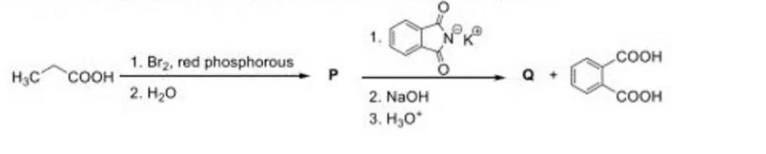
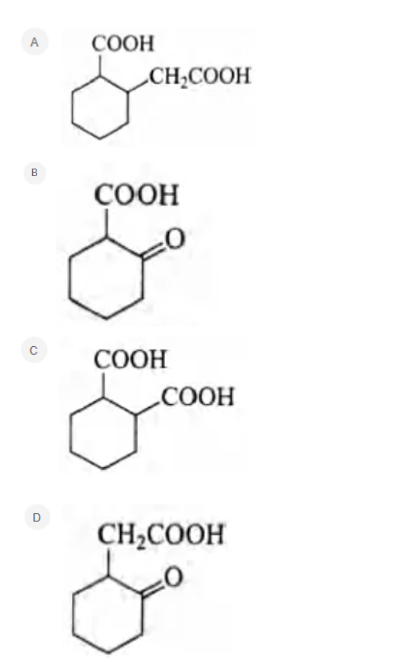
In the following reaction sequence, the major product Q is

Question 3:
Complete reaction of acetaldehyde with excess formaldehyde, upon heating with conc. NaOH solution, gives P and Q. Compound P does not give Tollens' test, whereas Q on acidification gives positive Tollens' test. Treatment of P with excess cyclohexanone in the presence of catalytic amount of p-toluenesulfonic acid (PTSA) gives product R. Sum of the number of methylene groups (-CH2-) and oxygen atoms in R is _______
Question 4:
Considering the reaction sequence given below, the correct statement(s) is(are)
Question 5:
Identify the binary mixture(s) that can be separated into individual compounds, by differential extraction, as shown in the given scheme.
Question 6:
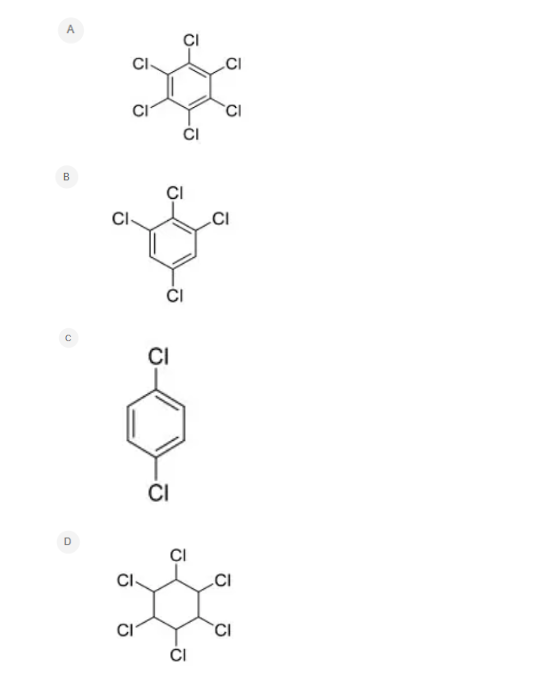
The compound that undergoes decarboxylation most readily under mild condition is
Question 9:
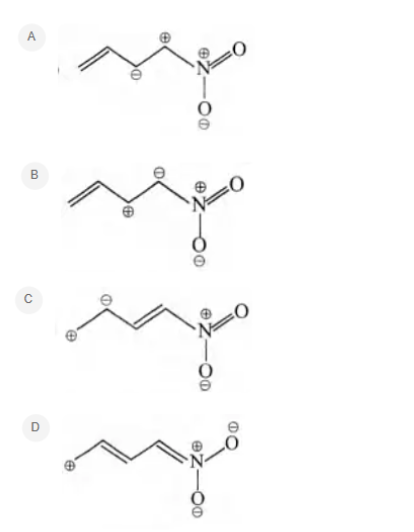
Among the following, the least stable resonance structure is
Question 10:
The smallest ketone and its next homologue are reacted with NH2OH to form oxime
Question 11:
An enantiomerically pure acid is treated with racemic mixture of an alcohol having one chiral carbon. The ester formed will be
Organic Chemistry for JEE Advanced
Organic Chemistry plays an important role in the JEE Advanced exam, covering a range of topics that are vital for a complete understanding of carbon-based compounds. This covers hydrocarbons including alkanes, alkenes, alkynes, and aromatic compounds where the basic understanding of their reactivity in context to addition, substitution, and elimination reactions is important. Another important area of study is functional groups, that of the alcohols, aldehydes, ketones, carboxylic acids, and amines. Understanding their properties, reactions, and mechanisms will be a basic familiarity which is essential to ensure you can predict reactivity in different conditions.
Organic Chemistry generally includes a significant weightage on the JEE Advanced exam. Typically 20-25% of the total marks are based on Organic Chemistry. Most questions tend to test conceptual understanding, reaction mechanisms, and functional change, thus grounding your study basis on these foundational principles will significantly enhance your chances during the exam and can help with highest overall marks.
Topic-Wise Weightage in Organic Chemistry
Organic Chemistry is an essential part of the JEE Advanced exam, with a significant number of questions being asked from this subject. Below is a breakdown of the weightage of important topics and the expected number of questions from each area in Organic Chemistry:
| Topic | Sub-Topics | Weightage (%) | Expected Number of Questions |
|---|---|---|---|
| Hydrocarbons | Alkanes, Alkenes, Alkynes, Aromatic Compounds, Reactions (Addition, Substitution, Elimination), Mechanisms (Electrophilic Substitution) | 15-20% | 3-4 |
| Functional Groups | Alcohols, Phenols, Ethers, Aldehydes, Ketones, Carboxylic Acids, Amines, Nitriles, Halides, Reaction Mechanisms (Nucleophilic Substitution, Electrophilic Addition) | 25-30% | 4-5 |
| Stereochemistry | Chirality, Optical Isomerism, Geometrical Isomerism, Cahn-Ingold-Prelog Rules, Enantiomers, Diastereomers, Racemic Mixtures | 10-12% | 2-3 |
| Reaction Mechanisms | SN1, SN2, Electrophilic Addition, Radical Mechanisms, Carbocation Stability, Rearrangements | 20-25% | 3-4 |
| Aromatic Compounds | Electrophilic Aromatic Substitution, Nitration, Sulfonation, Friedel-Crafts Reactions, Resonance Effects, Activating/Deactivating Substituents | 10-12% | 2-3 |
| Organic Synthesis and Named Reactions | Retrosynthetic Analysis, Multi-step Synthesis, Named Reactions (Grignard Reactionr>, Aldol Condensation, Wittig Reaction, etc.) | 10-15% | 2-3 |
JEE Advanced Exam Pattern
The JEE Advanced exam is considered as one of the top engineering entrance examinations in India, which takes place annually for enrollment at IITs and other top institutions to undergraduate programs. JEE Advanced consists of two compulsory papers, Paper 1 and Paper 2, each with three hours of duration. It challenges students’ knowledge of Physics, Chemistry and Mathematics. The exam consists of different question types including Multiple Choice Questions (MCQs), Numerical Value-based Questions and Assertion-Reasoning questions to evaluate the foundational knowledge of topics and ability to solve problems. Both papers have a total of 180 marks, with marks deducted for incorrect answers in a few question types.
| Aspect | Details |
|---|---|
| Mode | Computer-Based Test (CBT) |
| Papers | 2 (Paper 1 & Paper 2) – Both mandatory |
| Duration | 3 hours per paper (with break between papers) |
| Total Subjects | Physics, Chemistry, Mathematics (Equal weightage) |
| Total Questions | ~54–60 (18–20 per subject, split across question types) |
| Language | English & Hindi (option to switch during exam) |
The exam is known for its challenging nature and is conducted in English and Hindi. It is essential to clear the JEE Main exam before appearing for JEE Advanced.
Marking Scheme with Question types in JEE Advanced
Here is a detailed marking scheme for different questions in JEE Advanced exam.
| Question Type | Marks per Q | Negative Marking | Examples |
|---|---|---|---|
| Single Correct MCQ | +3 | -1 | Basic theory/direct formula questions |
| Multiple Correct MCQ | +4 (full) | -2 (if all wrong) / Partial marks* | "Which of the following is/are true?" |
| Numerical Value (NV) | +3 | No negative | Calculations (e.g., wavelength) |
| Paragraph-Based | Varies (2–4) | Depends on sub-type | Linked to a common scenario |
| Match the Following | +2 per match | -1 per wrong match | Column matching (e.g., graphs) |
Partial Marks: For Multiple Correct MCQs, +1 per correct option (if not all selected).
Subject-Wise Distribution
Here is the subject wise questions distribution in the JEE Advanced exam describing number of questions in each subject.
| Subject | MCQs | Numerical | Paragraph/Matching | Total |
|---|---|---|---|---|
| Physics | 6–8 | 4–5 | 2–3 | 12–16 |
| Chemistry | 6–8 | 4–5 | 2–3 | 12–16 |
| Maths | 6–8 | 4–5 | 2–3 | 12–16 |
Subject wise Syllabus: JEE Advanced 2025
Here is a quick syllabus of JEE Advanced 2025 subject wise which helps in preparation of the students. Check JEE Advanced Syllabus for a detailed Syllabus.
| Subject | Key Topics |
|---|---|
| Physics | Mechanics, Electrodynamics, Modern Physics, Optics, Thermodynamics, Error Analysis |
| Chemistry | Physical (Thermo, Kinetics), Organic (Reactions), Inorganic (Coordination, P-Block) |
| Maths | Algebra, Calculus, Coordinate Geometry, Trigonometry, Vectors |
Note:
- Physics: Focus on Modern Physics (20% weightage) & Electrodynamics.
- Chemistry: Organic reactions & Coordination compounds are high-scoring.
- Maths: Calculus (35% weightage) is most critical.
In addition to conceptual knowledge, you should practice multiple mock tests before your exam.
Check:
JEE Advanced Chemistry Paper Analysis (2024 & Trends)
The JEE Advanced Chemistry Paper evaluates candidates on their conceptual understanding, application skills, and problem-solving abilities in Physical, Organic, and Inorganic Chemistry. The exam consists of two papers (Paper 1 & Paper 2), each lasting 3 hours and containing 15–18 questions covering the entire syllabus. Questions range from theoretical concepts to numerical problems, with an emphasis on multi-disciplinary applications.
Overview (2024)
| Aspect | Details |
|---|---|
| Total Questions | 15–18 per paper (2 papers) |
| Difficulty | Moderate to Hard (30% easy, 40% moderate, 30% difficult) |
| Question Types | Single/Multiple MCQs, Numerical Value, Paragraph-based, Match-the-Column |
| Key Focus Areas | Thermodynamics, Organic Mechanisms, Coordination Compounds, Electrochemistry |
Chapter-Wise Weightage (2024)
| Topic | Weightage | Difficulty | Remarks |
|---|---|---|---|
| Thermodynamics | 15–20% | Moderate-Hard | Focus on Gibbs free energy, Hess’s Law, and numerical applications |
| Organic Mechanisms | 18–22% | Hard | Named reactions, stereochemistry, and reaction intermediates |
| Coordination Chem | 15–18% | Moderate | Isomerism, CFSE, spectrochemical series (NCERT-based but analytical) |
| Electrochemistry | 12–15% | Moderate-Hard | Nernst equation, conductance, battery-related problems |
| Chemical Kinetics | 10–12% | Moderate | Rate laws, Arrhenius equation, mechanism-based questions |
| Periodic Table | 8–10% | Easy-Moderate | Periodic trends, anomalies (e.g., 3rd period elements) |
| Biomolecules | 5–8% | Easy | Theory-based (carbohydrates, proteins, nucleic acids) |
| P-Block Elements | 10–12% | Moderate | NCERT-focused, but application-based questions on oxides and halides |
Difficulty Trends (2019–2024)
| Year | Difficulty Level | Key Observations |
|---|---|---|
| 2024 | Moderate-Hard | Increased numerical problems, integration of multiple concepts (e.g., Thermo + Kinetics) |
| 2023 | Moderate | Balanced theory and numericals; Organic Chemistry was lengthy |
| 2022 | Hard | Heavy emphasis on Physical Chemistry calculations and complex Organic mechanisms |
| 2021 | Very Hard | Unconventional Inorganic questions, tricky coordination chemistry problems |
| 2020 | Moderate | More NCERT-aligned, straightforward Organic and Physical Chemistry questions |
Key Takeaways for 2025
- Physical Chemistry: Strengthen numerical problem-solving in Thermodynamics, Electrochemistry, and Kinetics.
- Organic Chemistry: Master reaction mechanisms, named reactions, and stereochemistry.
- Inorganic Chemistry: Focus on NCERT (especially P-Block and Coordination Compounds) with analytical applications.
- Practice: Solve previous years’ papers (2021–2024) to understand evolving patterns.
JEE Advanced Previous Year Question Papers with Detailed Solutions
JEE Advanced 2024 Question Paper Pdf with Solutions
| Paper Name | Question Paper with Solutions |
|---|---|
| JEE Advanced 2024 Paper 1 Question Paper (English) | Check Solutions |
| JEE Advanced 2024 Paper 2 Question Paper (English) | Check Solutions |
| JEE Advanced 2024 Paper 1 Question Paper (Hindi) | Check Solutions |
| JEE Advanced 2024 Paper 1 Question Paper (Hindi) | Check Solutions |
| Architecture Aptitude Test | Check Solutions |
JEE Advanced Question Paper has 4 sections- Section 1 (Maximum marks-12), Section 2 (Maximum marks-12), Section 3 (Maximum marks- 24) and Section 4 (Maximum marks-12)
JEE Advanced 2023 Question Paper PDF Download With Solutions
| Paper | Answer Key PDF |
|---|---|
| Question Paper 1 PDF | Check Solutions |
| Question Paper 2 PDF | Check Solutions |
| Question Paper AAT PDF | Check Solutions |
JEE Advanced 2022 Question Paper
| 2022 Question Paper | PDF Download |
|---|---|
| Question Paper 1 PDF | Click here |
| Question Paper 2 PDF | Click here |
JEE Advanced 2021 Question Paper
| Question Paper | PDF Download | ||
|---|---|---|---|
| Question Paper 1 PDF | Physics | Chemistry | Maths |
| Question Paper 2 PDF | Physics | Chemistry | Maths |
JEE Advanced 2020 Question Paper
| Question Paper | PDF Download |
| Question Paper 1 PDF | Click here |
| Question Paper 2 PDF | Click here |
Frequently Asked Questions (FAQs)
Q1. How many questions come from aldehyde, ketone and carboxylic acid in JEE Advanced?
Answer. Every year in JEE Advanced, on average, 1-2 questions come from the subjects of Aldehydes, Ketones, and Carboxylic Acids. The questions will usually ask about reactions, mechanisms, and properties associated with these three functional groups and, commonly, the questions are worth 4 marks each. While it would generally be accepted that the mark allocation for the three functional groups would be approximately 3-5% of the overall marks, it is important to learn it specific to its representation, because it continues to appear every year, and it is often used alongside other subjects in organic chemistry.
Q2. What are the important topics in aldehyde, ketone and carboxylic acid?
Answer. Here are some important topics of aldehyde, ketone and carboxylic acid:
| Topic | Subtopics |
| Aldehydes and Ketones | Nucleophilic addition, reduction reactions, electrophilic substitution, aldol condensation |
| Carboxylic Acids | Acidity, esterification, reduction, decarboxylation, carboxylic acid derivatives (esters, amides) |
| Functional Group Transformations | Conversion between carboxylic acids, esters, amides, acid chlorides |
Q3. What is the priority order of aldehyde, ketone and carboxylic acid?
Answer. The priority order of Aldehydes, Ketones, and Carboxylic Acids based on reactivity is:
Carboxylic Acids > Aldehydes > Ketones
Carboxylic acids are the most reactive because of the electron-withdrawing carboxyl group, while aldehydes are more reactive than ketones due to one of their carbonyl groups having an attached hydrogen atom. Therefore, ketones are less reactive because the alkyl groups attached to the carbonyl carbon donate electrons.



Comments