




Electrostatics is among the most important and repeated topics in the JEE Advanced 2025 syllabus (Physics). Over the past 10 years, concepts such as Coulomb’s Law, Electric Field, Gauss’s Law, and Capacitance on electrostatics have been consistently asked in the JEE Advanced exam.
Most important Topics for JEE Advanced 2025 (Electrostatics):
Based on the JEE Advanced previous year paper trends, the following are the high-weightage topics in JEE Advanced 2025:
- Coulomb’s Law & Superposition Principle
- Electric Field & Electric Potential
- Gauss’s Theorem & its Applications
- Electric Dipole & Dipole Moment
- Capacitance & Energy Stored in Capacitors
- Effect of Dielectrics on Capacitance
JEE Advanced previous year question papers can assist IIT Aspirants to achieve higher rankings in JEE Advanced 2025.
Must Read Articles:
- Download JEE Advanced Last 10 year PYQ for Free
- Download JEE 2024 Question Paper with Detailed Solutions
- JEE Advanced 2025 Syllabus
Listed below the most repeated questions JEE Advanced Previous Year Questions (PYQs) for Electrostatics along with detailed solutions

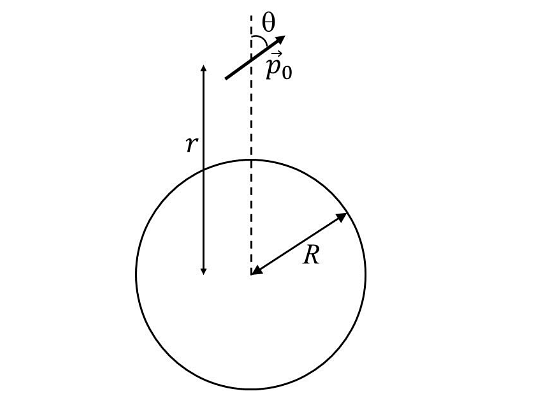
(Note that for three coplanar forces keeping a point mass in equilibrium, F/sinθ is the same for all forces, where F is any one of the forces and θ is the angle between the other two forces)
JEE Advanced 2025 Exam Pattern For Physics
| Aspect | Paper 1 (Physics Section) | Paper 2 (Physics Section) |
|---|---|---|
| Total Questions | 17 questions | 17 questions |
| Total Marks | 60 marks | 60 marks |
| Sections | 4 sections | 4 sections |
| Types of Questions | - Multiple-Choice Questions (MCQs) with single correct answer - MCQs with multiple correct answers - Numerical Value Questions - Matching-Type Questions |
Similar to Paper 1: MCQs (single and multiple correct), Numerical Value, Matching-Type |
| Marking Scheme | - Full marks for correct answers (varies: +3 or +4 per question) - Partial marks for partially correct MCQs (e.g., +1 or +2) - Negative marking for incorrect answers in some sections (-1 or -2) - Zero marks for unattempted questions |
Similar to Paper 1: Full, partial, and negative marking apply, with specifics varying by section |
| Duration | 3 hours (shared with Chemistry and Mathematics) | 3 hours (shared with Chemistry and Mathematics) |
JEE Advanced Difficulty Level 2025 For Physics (Expected)
| Aspect | Paper 1 (Physics Section) | Paper 2 (Physics Section) |
|---|---|---|
| Overall Difficulty | Moderate | Moderate to Difficult |
| Conceptual Questions | Moderate, focusing on fundamentals like Mechanics, Thermodynamics, and Optics | Slightly tougher, with more application-based questions on Electromagnetism and Modern Physics |
| Numerical Complexity | Moderate, with some lengthy calculations | Higher, involving complex problem-solving in topics like Rotational Dynamics and Fluid Mechanics |
| Topic Focus | Balanced between Class 11 and 12; more weight on Mechanics, Thermodynamics | Slightly more Class 12 topics like Magnetism, Electromagnetic Induction, and Capacitors |
| Student Feedback | Likely to be manageable with strong basics | Expected to feel tougher due to intricate calculations and abstract concepts |
Download Last 10 years JEE Advanced Previous Year Question Papers (2024 - 2016)
IIIT JEE Advanced Previous Year Question Papers
You can download free IIT JEE Advanced Previous Year Question Paper PDFs from the table provided below:-
| JEE Advanced Paper Name | Question Paper Link |
| JEE Advanced 2024 Question Paper PDF | Click Here |
| JEE Advanced 2023 Question Paper PDF | Click Here |
| JEE Advanced 2022 Question Paper PDF | Click Here |
| JEE Advanced 2021 Question Paper PDF | Click Here |
| JEE Advanced 2020 Question Paper PDF | Click Here |
| JEE Advanced 2019 Question Paper PDF | Click Here |
| JEE Advanced 2018 Question Paper PDF | Click Here |
| JEE Advanced 2017 Question Paper PDF | Click Here |
| JEE Advanced 2016 Question Paper PDF | Click Here |
Frequently Asked Questions:-
1. Is electrostatics important for JEE Advanced?
Yes, electrostatics is important in JEE Advanced, because it is a foundation for several concepts in physics.
Questions about Coulomb's law, electric fields, potential, and capacitance are ubiquitous. Besides, questions can even test your know-how regarding conductors' and dielectrics' behavior within electric fields.
2. Can I get IIT with 75 marks in JEE Advanced?
For 75 marks, it may be difficult to obtain admission into premier IITs since JEE Advanced cutoff tends to require a higher mark, especially when admission into popular streams is sought. However, the cutoff varies from year to year, depending on the level of difficulty and the number of students. For open category students, scores are normally expected to be more than 150-200 in order to obtain a seat in an IIT.
3. Is it easy to score 150 in JEE Advanced?
Scoring 150 in JEE Advanced is possible, but it must be achieved strategically. Master important topics, solve a lot of problems, and learn how to handle time during the exam. Difficulty level in JEE Advanced varies annually, but a consistent preparation schedule on the basis of topics like mechanics, electrostatics, and modern physics can be effective.
4. Which is the toughest chapter in JEE Advanced Physics?
Optics, Modern Physics, and Electrostatics are considered to be the most difficult chapters in JEE Advanced Physics by many students. Optics needs a clear concept of waves. Modern Physics checks your quantum mechanics and atomic model knowledge. Electrostatics also has conceptual problems in electric fields and potential.





Comments