

Get Answers on Test Preparation, Admissions & Campus Life
Study Abroad Countries
What are the job prospects after completing the course of Master's in Applied Computer Science from Dalhousie University, Halifax in Canada?
There is no parameter called job prospects, if you have the skill and potential you will definitely get a job. University doesn’t play a role in a Job interview your skill and passion do. The Master of Applied Computer Science program at Dalhousie University is a 16-month graduate degree. It's experiential-based learning, connection to industry, in-demand curriculum, a wide range of backgrounds, and a growing network in computer science prepares you for a career in the industry by developing technical skills in systems, communications, analysts, and data management.
Many students think that a degree in Applied Computer Science will guarantee great jobs which is not true. Even if you get scholarship or straight As, without skills and talent your gradesheet won't help you that much. If you have plans for entrepreneurship then Dalhousie is a great place famous for a number of startups and accelerator programs.
Here are some highlights for Dalhousie's Masters in Applied Computer Science:
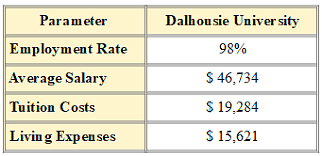
Job prospects after MACS include roles of Analysts, Chief Technology Officers, Data Warehouse Architects, Technical Consultants, Senior Mobile Developers, Senior Technical Leads, Solutions Architects, Software Developers, etc
Average Salaries for Dalhousie University Graduates & Alumni by Emolument:

There are some software service companies in Halifax that provide job prospects for the students who are willing to stay there, but most of the students leave to other places for better opportunities.
Which university is better for a Masters in applied computer science, the University of Concordia, or the University of Dalhousie?
For Masters in Applied Computer Science, Concordia University is better. The university has a locational advantage. It is in Montreal, which is becoming an IT hub. You can get good exposure to the programming and gemming industry. Concordia has demanding coursework. You will have to clear programming tests in the first year of the degree, itself. If you are good at coding and think analytically to implement the solution in a practical way, this course is ideal for you.
Here is a brief highlight of Concordia’s Masters in Applied Computer Science.
| 1st year tuition fees | INR 12,76,002 |
| Other costs | INR 10,23,672 |
| Eligibility | 4-year bachelor's degree or 3-year program and 2-year master’s in a relevant field related to computer science. |
| Language proficiency test scores | TOFEL - 85/120 PTE - 57/90 IELTS - 6.5/9 |
| Program acceptance rate | 49.3% |
| Student-teacher ratio | 1:16 |
| Average CTC | INR 6,406,125 (82,500 USD) |
Dalhousie University is located in a small city Halifax, full-time opportunities after Masters are fewer there compared to Montreal. However, Montreal is a French city, you will have to learn basic French to get part-time jobs.
What is MBA salary in Canada?
According to salary trends, the average salary for MBA jobs in Canada ranges from CAD 83,000 to CAD 90,000. Here are the average annual salary statistics for MBA graduates from top-rated colleges in Canada.
| University | Average Annual Salary (CAD) |
| University of Toronto | 116,000 |
| McGill University | 83,000 - 118,000 |
| Western University | 101,000 |
| York University | 93,000 |
| University of Alberta | 94,000 |
| Concordia University | 117,000 |
Does the University of Toronto require a GRE for a MS in computer science?
Short answer, yes. It won’t hurt your case unless the score is too bad but the Computer science department website of University of Toronto states that there is no requirement of GRE test score for the admission process. Submitting IELTS or TOEFL scores will suffice the process of admission for international students. The online application form does provide a field where you can submit your GRE scores, but it is made optional.
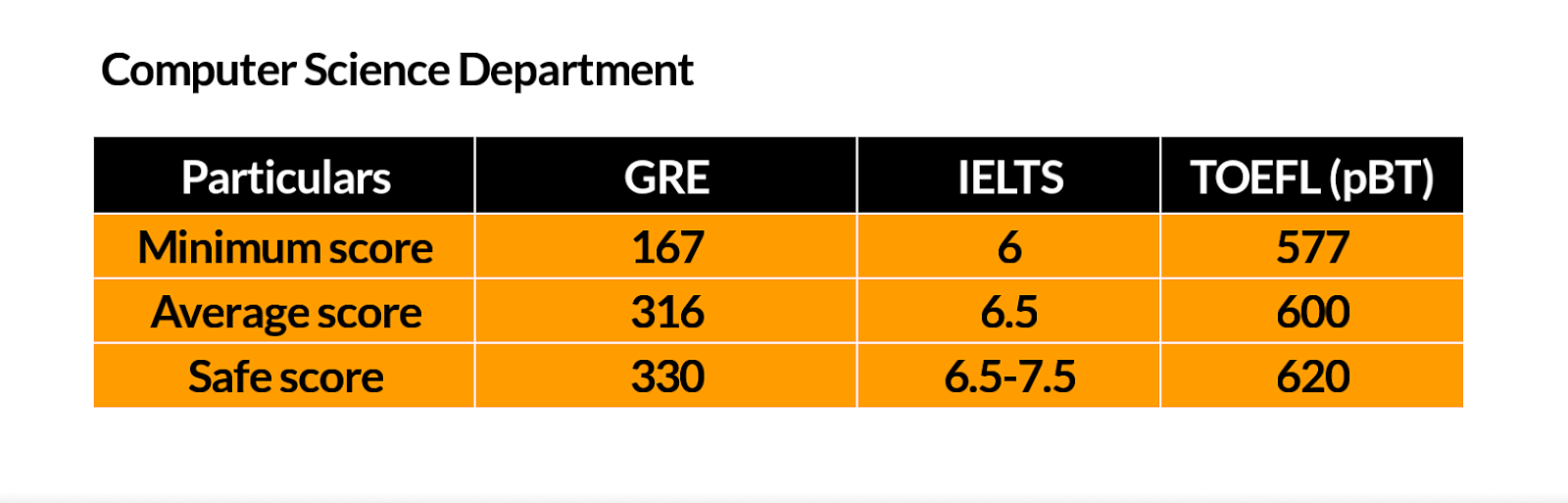
However it is recommended to upload a GRE score as it will create an edge over other applicants. Target for a safe score of 320+ in GRE so that you leave no stone unturned to create a good impression.
Tabulation below gives a brief overview on expected test scores of University of Toronto:
When you are applying for such competitive programs, it's always wise to present yourself in the best way possible by keeping your best foot ahead.
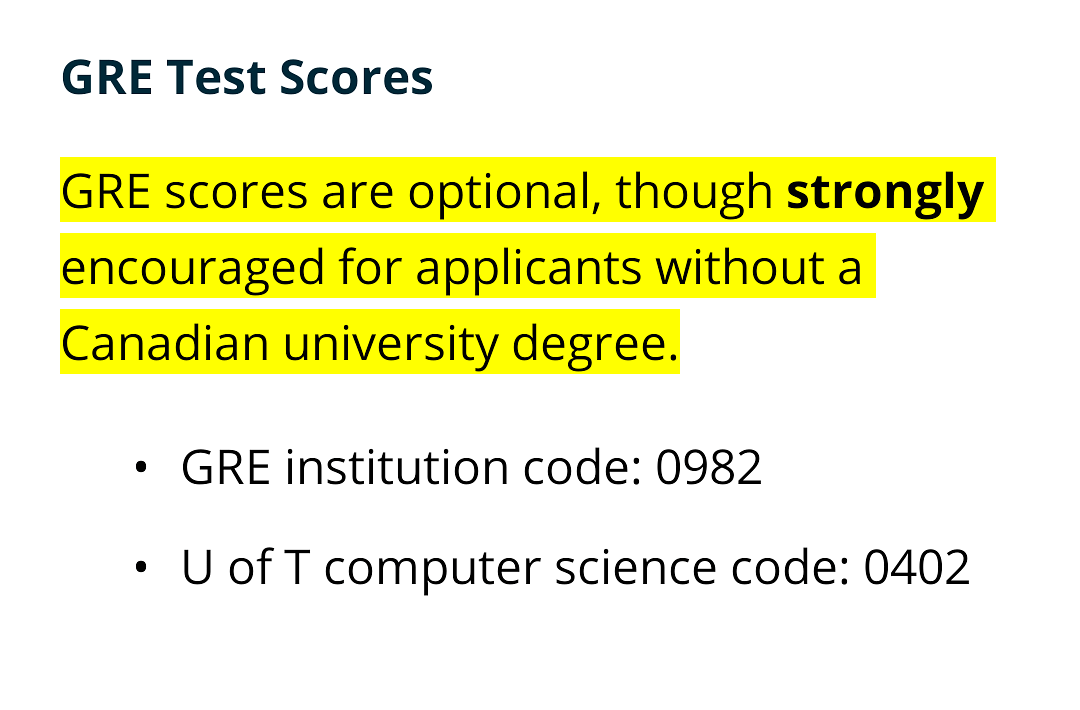
Submitting a GRE score along with a good GPA and resume will definitely enhance the chances of your selection.
In what ways can McGill University surpass the reputation of the University of Toronto??
Both McGill University and the University of Toronto are widely reputed. If you have to choose between these, make a choice based on the subject and the department you are interested in.
Don’t put too much emphasis on the university rankings. It changes each year. Here is a brief comparison of the two. Currently, McGill University world ranking is #44 (THE World University Ranking). While University of Toronto is ranked #18 by THE World University Ranking.
Here is a brief comparison of these two.
| Parameters | McGill University | University of Toronto |
| Tuition fees (undergraduate) | 29,200 CAD (International students) | 45,690 CAD (International students) |
| Acceptance rate | 48.9% | 43% |
| Popular courses | Medical and Health Science, Computer Science, Social Science & Humanities | Psychology, Medical Technology, Automation and Control, Human and Biological Sciences |
| Average salary | CAD 62k | CAD 68k |
You can’t go wrong with either of these schools.
What is it like to be a graduate student in computer science at McGill University??
McGill University is an amazing place, specially as an international graduate. From its comparatively affordable fees to the amazing education and environment experience, it gives you one of the best experience out there.
Situated in Montreal, McGill University is pretty organized and renowned among international students. It ranked #1 in Canada among clinical doctoral institutes for 15 continuous years by Maclean's University, and #35th as per QS News World University 2020 Ranking. It has 400+ courses through its many research environments and frameworks, thus popular among graduate students.
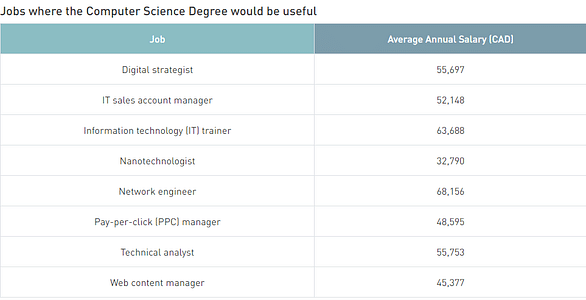
The University has a general score of 58.5% in computer science engineering according to usnews.com. Computer Science at McGill University is a great choice due to its rankings and placements. Here are some factors that make it a great experience:
- Placements: Microsoft being the major player in university recruitment, there are numerous good placement opportunities at McGill when compared to other similar universities in Canada.
- Location: Montreal is (economical) than Toronto or Vancouver, a $200 is sufficient to make you go (barring the lease) If you're an international student, at that point McGill is a promising alternative.
- Diversity: Approximately 30% of the University students are international students, which means a lot of instant friends!
- Campus Life: Free food, free tutorials on topics such as how to write your thesis, Artificial Intelligence & Machine Learning in Python are among the other programs. For students, the swimming pool at the McGill gym is accessible. Athletics, gymnastics, dancing, etc are among the amazing activities that McGill has to offer with a designated fee for the same.
In short, McGill is a good option for international graduate students gearing up for their careers in Computer science. The University reported 6,318 undergraduate students and 2,387 graduate students for fall 2019, with an acceptance rate of about 41 percent, the career opportunities for a graduate student from computer science at McGill University are abundant.
Which university should one select in Canada for graduate studies from the following two, University of Windsor or Dalhousie University?
Ranking wise Dalhousie University is good and the Job opportunity-wise University of Windsor is better, Halifax has more part-time job opportunities and fewer full-time jobs and the pay scale is lower and the tax is higher. As an international student, you might face difficulty with tuition and funding. At Halifax you will get plenty of parttime jobs. Since Halifax is also larger than Windsor, you will have more options.

Both universities have good placement with an 85.91% Employment rate of the University of Windsor and 84% Employment rate of Dalhousie University.
The University of Windsor is known for many leading programs like Arts, Humanities, and Social Sciences, Education, Engineering, Graduate Studies, Human Kinetics, Law, Nursing, Business, and Science whereas Dalhousie University is known for its programs like Arts & Humanities, Clinical, pre-clinical & health, Engineering & Technology, Life sciences, Physical sciences, Social sciences, and Business & Economics.
QS Graduate Employability Rankings 2020 has ranked only Dalhousie University at #301-500. Selecting a university depends upon your priority. If you want to get a good education go for Dalhousie University but to get settled early in Canada go for Windsor University. Overall Dalhousie University is the potential choice as you can always move to Ontario if you don't find any job in Nova Scotia.
Should I go to Mcgill University (finance) or Concordia University (finance)??
Both McGill University and Concordia Universities are known for their top-notch finance programs. One of my friends shared his experience at his finance-related job. He told me that he was hired just because the other candidate was a graduate of JMSB.
Concordia gives you more hands-on experience because even undergrad students manage multimillion-dollar portfolios, while McGill has more brand value. This may give you an edge in international prospects especially in the U.S. since most Americans don't really know too much about schools outside of their country.
I know many companies in Montréal that specifically ask for JMSB and HEC students, but I have never heard much about McGill's finance program. So, from the limited information I have, lJMSB has a great co-op program and hands-on experience while McGill is typically more ideology and theory focused, based on its recognition.
Ultimately, the decision of which school to attend will depend on your personal preferences and priorities. It’s crucial to go for the school that best aligns with your career goals and personal needs.
Will I get accepted into University of Toronto?
Securing admission at University of Toronto is really difficult. You will find it very competitive which is fair- it’s currently ranked at #29 among world universities by QS. The overall acceptance rate of the University is 43% but things are harder if you are an international student. There will be a lot of extra formalities like English proficiency, LORs, funding abilities that the university will consider. This is around 23.1%
Factors to be considered:
GPA requirements:
For admission in undergraduate programs, an average score of 90 in class 12th can be considered competitive. Expected scores for some courses are mentioned below:
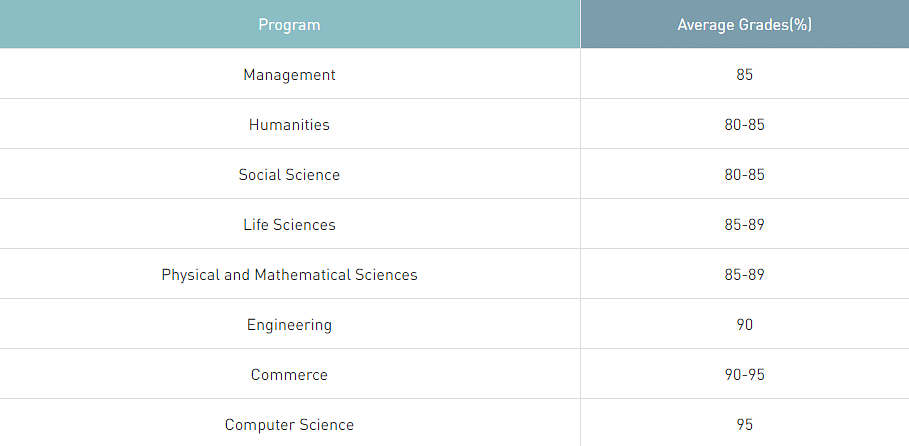
In case of graduate program admission, the minimum GPA requirement is 3.0 while 3.4 out of 4.0 is considered as a competitive score.
English language proficiency:
TOEFL or IELTS scores are accepted and It is mandatory for international students to submit one of these test scores.
- TOEFL score: 93(iBT)
- IELTS score : 7.0 with no band below 6.0
GRE score:
Few courses demand GRE test scores for the admission process whereas Courses like CS , material science have made it optional, however submitting a GRE with a score around 320+ will definitely create an edge to your profile which may enhance your chances of selection.
GMAT:
Minimum GMAT score of 570 is demanded for admission in MBA courses at University of Toronto while the average score of the University is 665.
Other requirements:
Minimum 3 letters of recommendations along with good resume and Participation in Co-Curricular activities are expected.
If you fulfill all the above mentioned criteria including good grades, standard test scores and LORs you will be good to go. Ultimately it depends on the competition in the course which you are inclined towards.
What are the best reasons to attend Sheridan college?
Sheridan College has a diverse curriculum of programs to advance and flourish, these programs offer a large-scale array of courses and diplomas, it flaunts a modern campus which at all turns offers an everlasting learning experience. It has an employment rate of 83% and an affordable tuition ranging from USD 12,790-21,369.
Some of the key benefits of Sheridan College are sport, arts, nightlife, nature, food, and fun. You will also find a lot of diversity with 30% of its students coming from outside Canada.
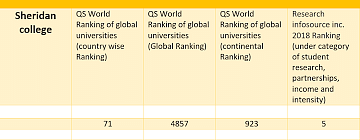
Here are some of the good reasons to attend Sheridan college:
- Sheridan is known for its animation program that includes a bachelor's degree in animation and post-graduate, visual effects, and animation of the digital character.
- It launched a gaming design bachelor program in 2013, which already has a reputation for excellence.
- It is the first school to equip every student in every faculty with a ‘creativity course’.
- The campuses of Oakville, Brampton, and Mississauga are housed in three cities, in the city of Ontario, which is very close to Toronto.
The Sheridan students enjoy unrestricted access to the biggest city, cultural capital, and business center of Canada in the Greater Toronto Area. Everything is available nearby the campus at quite a few minimal distances.
SUBSCRIBE TO OUR NEWS LETTER


